
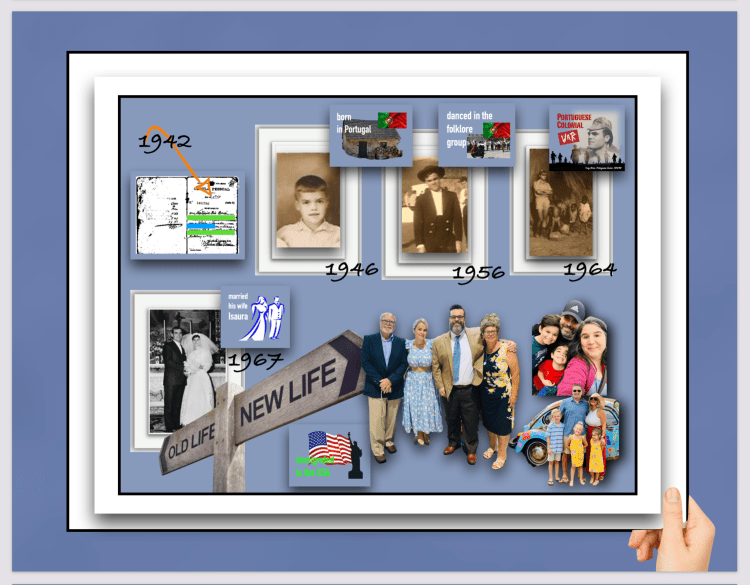
…mas na realidade, fomos realmente felizes…, com tanta carência?. Não tínhamos as tecnologias, os objectos, a cultura, os fogões, os frigoríficos, o aquecimento central, o ar condicionado, os automóveis, os computadores, as viagens pelo mundo, o acesso ao progresso e às oportunidades com que hoje a todo o momento tropeçamos!.
…but in reality, we were really happy…, with so much need?. We didn’t have the technologies, the objects, the culture, the stoves, the refrigerators, the central heating, the air conditioning, the cars, the computers, the trips around the world, the access to progress and the opportunities with which today at all times we stumbled!.
…podemos realmente recordar alguns momentos mais felizes mas…, na nossa juventude os dias ligavam-se numa faina interminável e, a Igreja com o seu poderio reinava, orientando as famílias para o bem, ameaçando com o inferno aqueles que sonhavam ir mais além das regras impostas por uma sociedade feudal, porque o pecado dominava as mentes ou o medo dele…, desde o nascer até ao fim da vida!.
…we can really remember some happier moments but…, in our youth the days were connected in an endless task and the Church with its power reigned, guiding families towards good, threatening with hell those who dreamed of going beyond rules imposed by a feudal society, because sin dominated the minds or fear of it…, from birth to the end of life!.
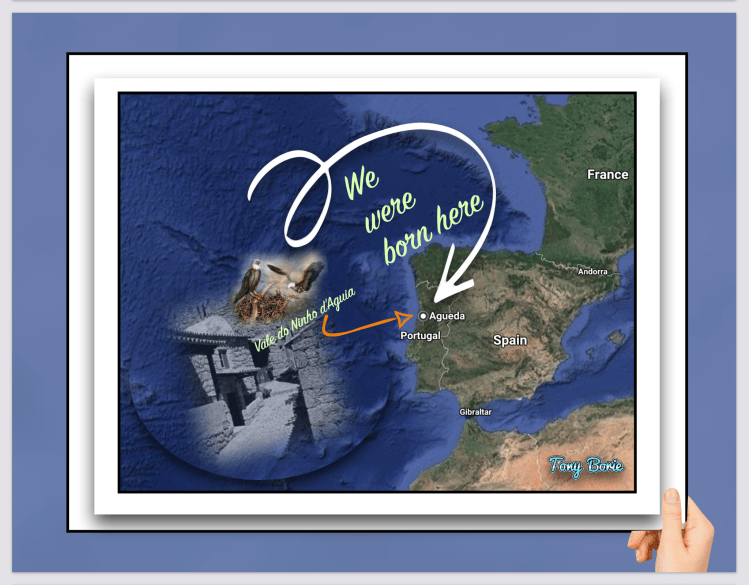
…assim, num regime colonial onde os governantes nos diziam que eram os pais da nação, com uma população pobre e quase toda rural, que afogava as mágoas nos balcões das tavernas, contando sempre as mesmas histórias, repetidas vezes sem conta, que eram as doenças, as mortes ou a pobreza desmedida em que viviam, e mesmo assim, a comunidade ia sobrevivendo, sempre com um sorriso nos lábios e a cantar…, pelo menos nos dias de romaria!.
…so, in a colonial regime where the rulers told us they were the fathers of the nation, with a poor and almost entirely rural population, who drowned their sorrows on the counters of taverns, always telling the same stories, over and over again, which were the illnesses, deaths or the extreme poverty in which they lived, and even so, the community was surviving, always with a smile on its lips and singing…, at least on the days of pilgrimage!.
…ali, nas ditas tavernas, jogavam às cartas e punham a conversa em dia!. Tudo em redor de uma mesa, conversava-se e decidia-se quando os copos já faziam efeito, mas sempre com um petisco pela frente, porque os petiscos eram uma das culturas e tradições mais marcantes da sociedade de então e…, os pratos eram invariávelmente pequenos, tal como os talheres, porque um garfo de ferro e um pedaço de pão cortado pela “navalha petisqueira”, eram o suficiente para levar o petisco à boca!.
…there, in the so-called taverns, they played cards and caught up with the conversation!. All around a table, people talked and decided when the glasses had already taken effect, but always with a snack in front of them, because snacks were one of the most important cultures and traditions of society at the time and…, the dishes were invariably small, such as cutlery, because an iron fork and a piece of bread cut by the “snack razor”, were enough to bring the snack to the mouth!.
…uns anos mais tarde, com o aparecimento das fábricas e o aumento de alguma produção agrícola, as condições de vida melhoraram…, passando a haver menos fome, no entanto, os vegetais eram a base da alimentação, tal como o pão de milho ou centeio, as azeitonas, algum bacalhau ou sardinha, vinho e sopa feita de batatas e legumes frescos, e claro, temperada com azeite!. Depois, a pouco e pouco, já iam comprando café ou arroz e os enchidos ou alguma ave de capoeira, entraram na alimentação…, pelo menos em dias festivos!.
…a few years later, with the appearance of factories and the increase of some agricultural production, living conditions improved…, with less hunger, however, vegetables were the basis of food, such as corn bread or rye, olives, some cod or sardines, wine and soup made from potatoes and fresh vegetables, and of course, seasoned with olive oil!. Then, little by little, they started buying coffee or rice and sausages or some poultry, they entered the diet…, at least on festive days!.
…praticava-se um regime alimentar muito pobre em proteínas, assim era frequente haver doenças, porque a carne era um luxo e só era comida de tempos a tempos e por quem tinha algumas posses, mas na realidade, vivia-se com grandes dificuldades e o pouco dinheiro que havia servia apenas para comprar o tal café, azeite, sardinha, sal ou sabão e…, a história dizia que nessa época “uma sardinha era para três pessoas”!.
…a diet very low in protein was practiced, so there were often illnesses, because meat was a luxury and was only eaten from time to time and by those who had some possessions, but in reality, people lived with great difficulties and the little money there was used only to buy that coffee, olive oil, sardines, salt or soap and…, the story said that at that time “a sardine was for three people”!.
…já o repetimos algumas vezes nos nossos escritos que na realidade…, nós não nascemos crianças, éramos apenas mais dois braços para trabalhar, mais um futuro para os nossos pais em fim de vida, mais gente para desbravar as terras secas do pinhal e mais vozes para cantar em tempo de colheitas!.
…we have already repeated it a few times in our writings that in reality…, we were not born children, we were just two more arms to work with, one more future for our parents at the end of their lives, more people to explore the dry lands of the pine forest and more voices to sing in harvest time!.
…porque afinal, os meninos eram homens com calos nas mãos, pés descalços e um pedaço de broa no bolso das calças remendadas e, as meninas eram mulheres de tranças feitas ao domingo de manhã antes da missa, de saias de cotim, braços cansados de dar colo aos irmãos mais novos e de rodilha na cabeça para aguentar o peso dos alguidares de roupa para lavar no rio ou dos molhos de erva para alimentar o gado!.
…because after all, the boys were men with calluses on their hands, bare feet and a piece of bread in the pocket of their mended pants, and the girls were women with braids done on Sunday mornings before mass, in cotton skirts, arms tired of give your younger brothers a lap and a roller on your head to support the weight of laundry bowls to wash in the river or bunches of grass to feed the cattle!.
…nós vivemos assim nos primeiros anos da nossa juventude, no entanto, alguns anos passados apareceram os Cafés e a Televisão em algumas localidades, e claro, foi uma evolução em relação às tabernas, onde também se vendia vinho e tabaco mas com a inovação, talvez para alargar a sua clientela às gerações mais novas e ofereciam uma série de produtos que não existiam nas tabernas, como “bolos, café, garotos, galões ou meias de leite”!.
…we lived like this in the early years of our youth, however, a few years later Cafés and Television appeared in some locations, and of course, it was an evolution in relation to the taverns, where wine and tobacco were also sold but with innovation, perhaps to expand their clientele to the younger generations and offered a series of products that did not exist in taverns, such as “cakes, coffee, boys, gallons or milk socks”!.
…e o aparecimento da Televisão transportou consigo uma época de ouro para os tais cafés, que vieram revolucionar a vida de algumas comunidades, porque tinham um espaço mais moderno com uma dimensão superior às tavernas que o povo estava habituado, onde havia momentos especiais, principalmente aos sábados e domingos com transmissão de filmes de cowbóis, desportos, noticiários com informação do governo e outras actividades!.
…and the appearance of Television brought with it a golden age for those cafés, which came to revolutionize the life of some communities, because they had a more modern space with a dimension superior to the taverns that the people were used to, where there were special moments, mainly on Saturdays and Sundays with transmission of cowboy films, sports, news with government information and other activities!.
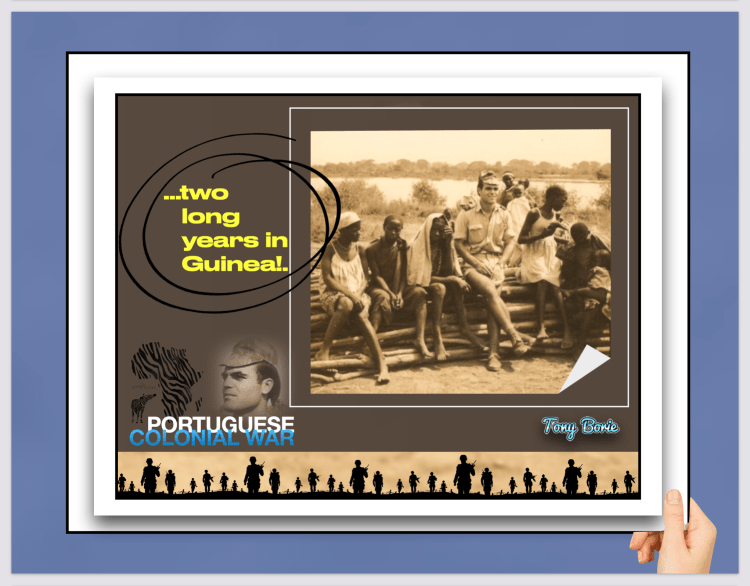
…depois…, depois os governantes diziam na dita Televisão do estado, “vamos para a guerra já e em força”, e claro, veio a mobilização forçada para a maldita Guerra Colonial em África, onde passámos dois longos anos e que destruiu parte da nossa geração, marcando-a em toda a sua plenitude, tal um “ferrete em braza”, que penetrou nas mais íntimas entranhas do nosso já frágil corpo, para o resto das nossas vidas!.
…then…, then the rulers said on the so-called State Television, “we are going to war now and in force”, and of course, came the forced mobilization for the damned Colonial War in Africa, where we spent two long years and which destroyed part of the our generation, marking it in all its fullness, like a “hot iron”, which penetrated the most intimate entrails of our already fragile body, for the rest of our lives!.
…e hoje, muitos desses companheiros combatentes, mantendo ainda o orgulho de terem defendido a bandeira da sua Pátria, alguns vivem abandonados, dormindo debaixo de pontes e outras estrocturas, num completo desprezo, principalmente das novas gerações, incluindo os responsáveis pelos diferentes governos que têm dirigido os destinos desse país “à beira mar plantado”, que dá pelo nome de Portugal!.
…and today, many of these fellow fighters, still proud of having defended the flag of their homeland, some live abandoned, sleeping under bridges and other structures, in complete contempt, especially of the new generations, including those responsible for the different governments that have directed the destinations of that country “by the sea planted”, which goes by the name of Portugal!.

…depois e para terminar…, vindos de África daquela maldita guerra, regressámos à Europa como veteranos de guerra, passando por algumas experiências de vida mais traumáticas que se possam imaginar!. A família e os vizinhos que nos receberam, sabiam, notavam imediatamente que alguma coisa estava mal connosco, pela nossa linguagem e maneira de nos comportar, que estávamos diferentes, talvez um pouco loucos e algo agressivos, no entanto, felizmente encontrámos a nossa “cara metade”, a dedicada esposa Isaura, casámos e imigrámos, constituindo a nossa própria família de quem muito nos orgulhamos, claro, vivendo já noutro continente!.
…then and finally…, coming from Africa from that cursed war, we returned to Europe as war veterans, going through some of the most traumatic life experiences imaginable!. The family and neighbors who received us, knew, noticed immediately, that something was wrong with us, due to our language and way of behaving, that we were different, perhaps a little crazy and a little aggressive, however, fortunately we found our “better half”, the dedicated wife Isaura, we got married and immigrated, constituting our own family of whom we are very proud, of course, already living on another continent)!.

…hoje, neste dia de Setembro completamos mais um ano de vida!. Obrigado a todos pelos votos de que este dia se vá repetindo!. Trago-vos no coração!.
…today, on this September day, we complete another year of life! Thank you all for your wishes that this day will be repeated! I carry you in my heart!.
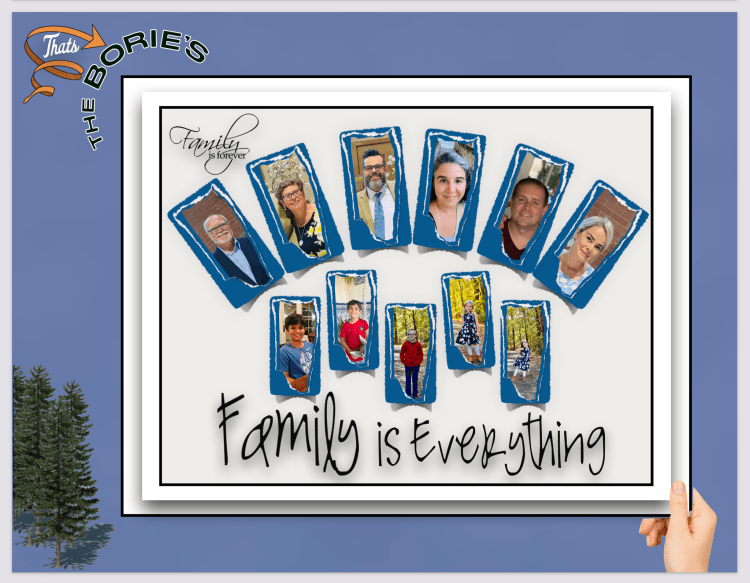
…especialmente a família, pois são a principal razão de toda a nossa resistência!.
…especially my family, as they are the main reason for our entire resistance!
Tony Borie, Século XXI. (Tony Borie, 21st Century).
 Tony Borie - "Pieces of my life"