
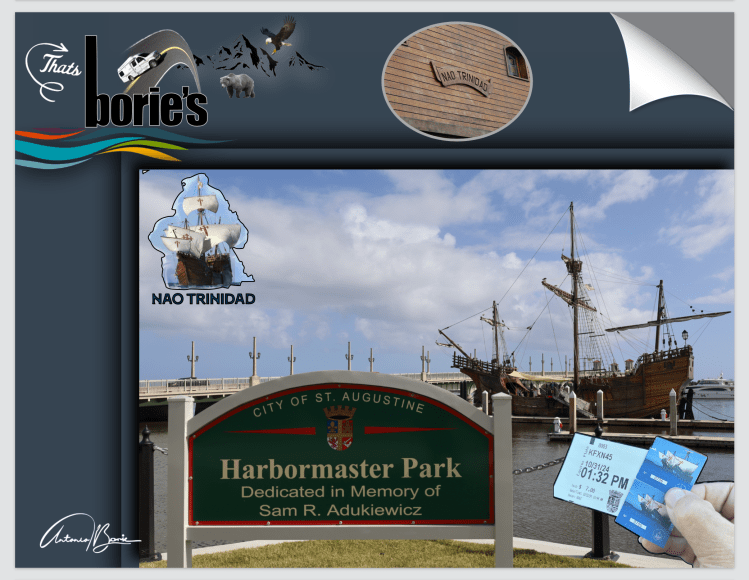
…uma réplica da “Nau Trinidade” voltou a St. Augustine!.(…a replica of the “Nao Trinidad” returned to St. Augustine)!.
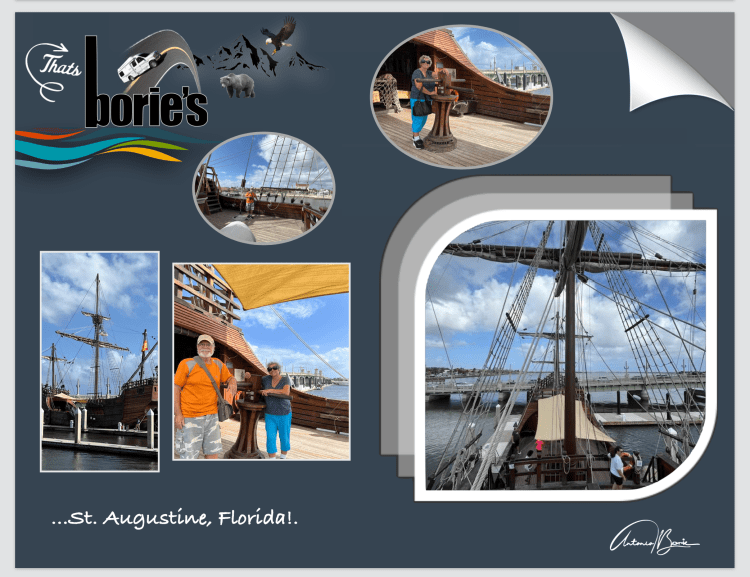
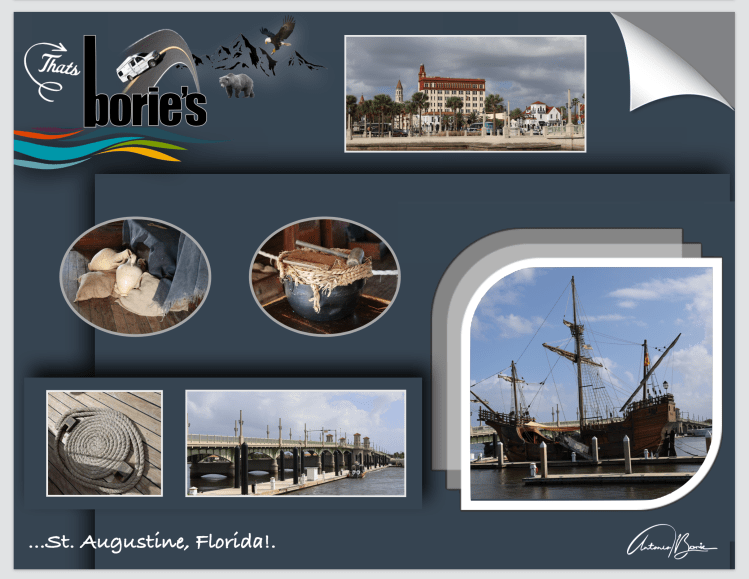
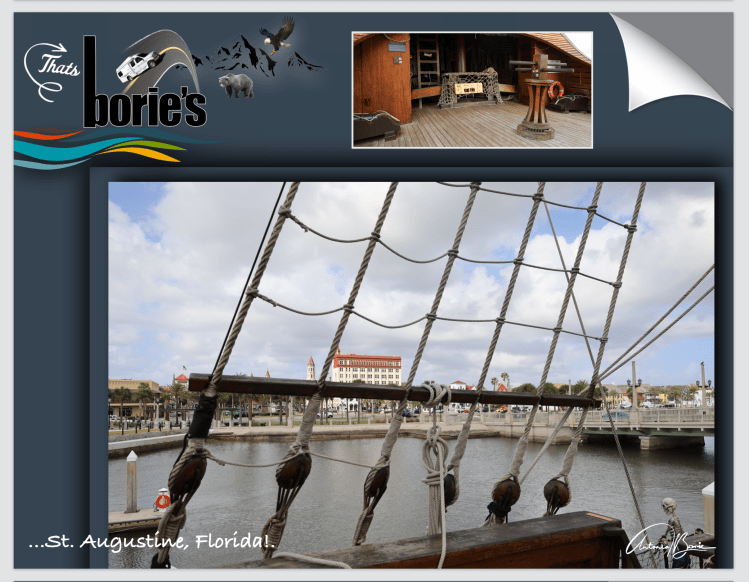
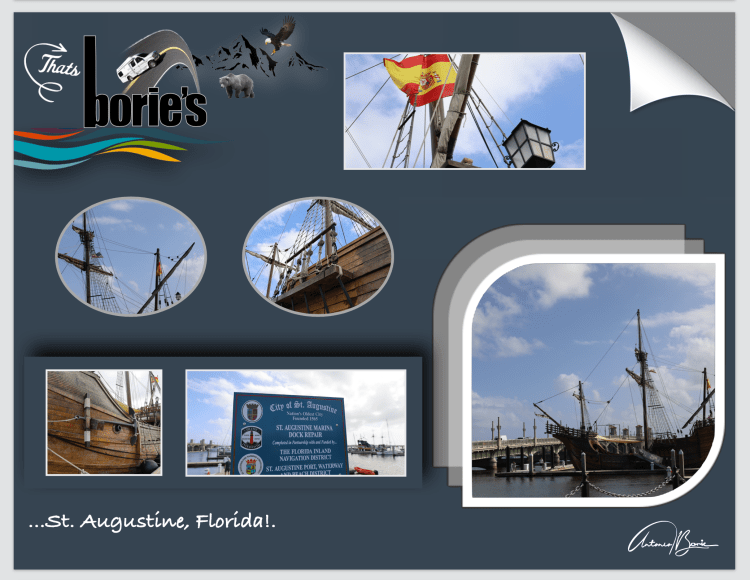
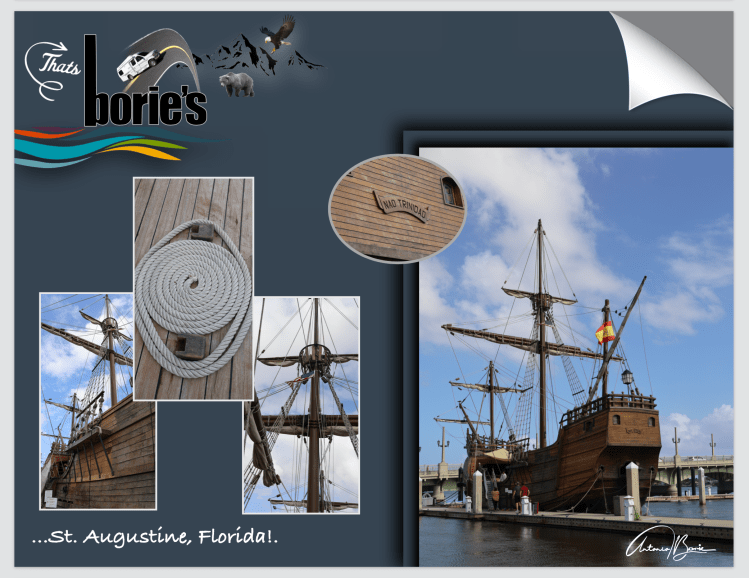
…fizemos um completo “tour” a esta réplica do histórico veleiro “Nau Trinidade” que está presentemente ancorado no cais, próximo à Ponte dos Leões, no porto da Marina Municipal, podendo ser visto diariamente das 10h00 às 19h00, até domingo 17 de Novembro de 2024!.
…we took a complete “tour” of this replica of the historic sailboat “Nao Trinidad” which is currently anchored at the pier, close to Ponte dos Leões, in the Municipal Marina port, and can be seen daily from 10:00 am to 7:00 pm, until Sunday, November 17th 2024!.
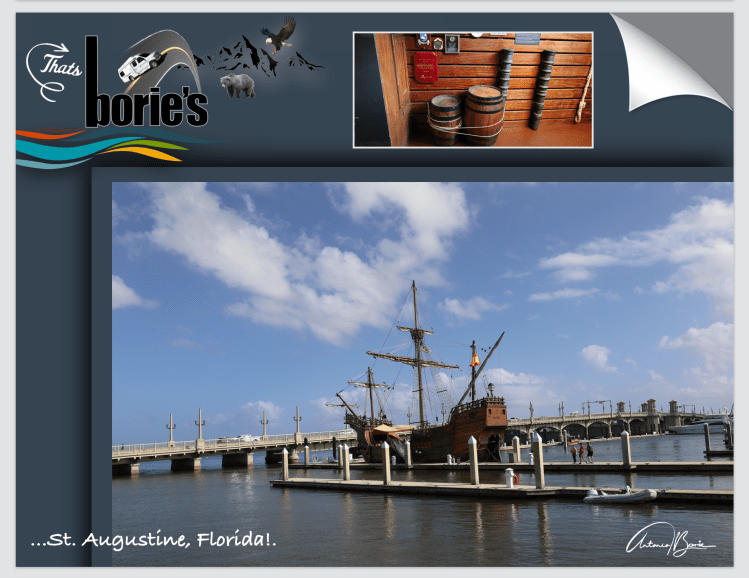
…este atual veleiro é uma réplica da “Nau Trinidade” e foi construído em fibra de vidro e madeira em Espanha, no ano de 2018!. Pesa 200 toneladas brutas, tem três mastros e um gurupés, atingindo mais de 25 metros desde a linha d’água até o topo do mastro principal!.
…this current sailboat is a replica of the “Nao Trinidad” and was built in fiberglass and wood in Spain, in 2018!. It weighs 200 gross tons, has three masts and a bowsprit, reaching more than 25 meters from the waterline to the top of the main mast!.
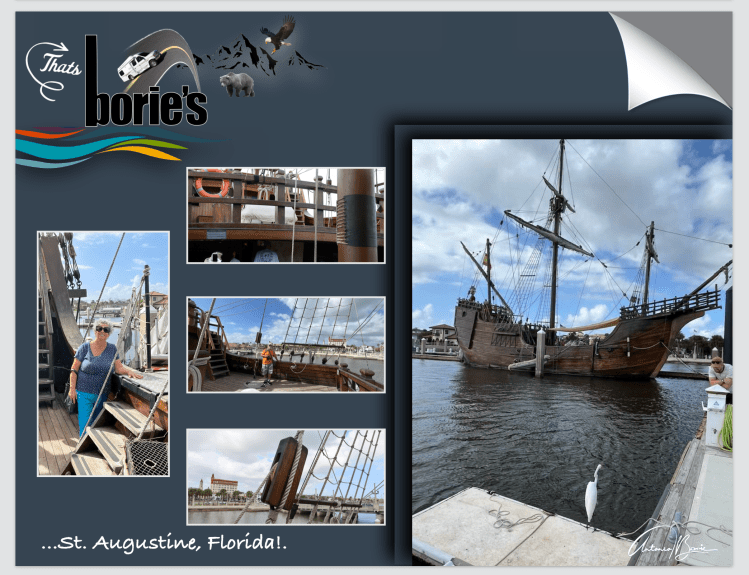
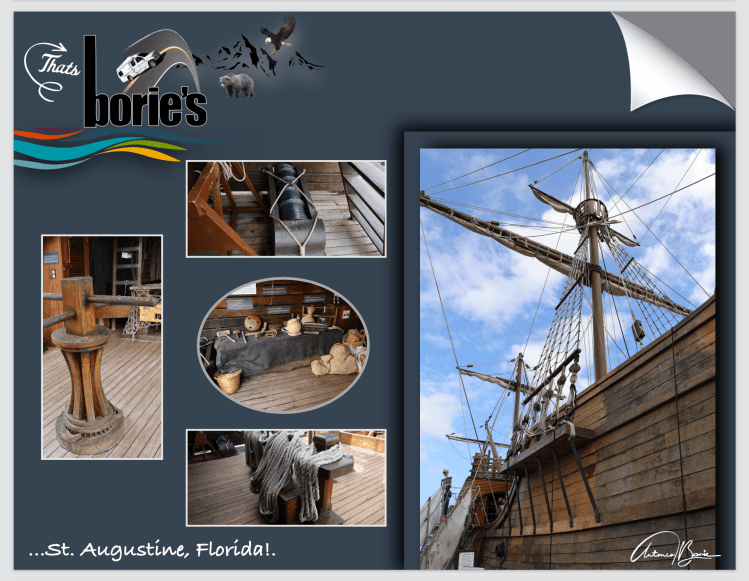
…andámos por lá, subimos a bordo, e vimos, o que consideramos um museu flutuante, incluindo os quatro conveses do navio, completos com painéis informativos que relatam a história do navio e a experiência dos marinheiros espanhóis há mais de 500 anos!.
…we walked around, got on board, and saw what we considered to be a floating museum, including the ship’s four decks, complete with information panels that recount the history of the ship and the experience of Spanish sailors over 500 years ago!.
…esta Nau original foi o navio-chefe da ”Expedição Magalhães-Elcano” que deixou a Espanha em 1519 com outros quatro navios, que cruzaram o Atlântico e descobriram o “Estreito de Magalhães” passando até o Oceano Pacífico, numa viagem que levou à descoberta de novas rotas para os europeus, e claro, de novas terras, à medida que tocavam o Brasil, a Argentina, as Ilhas Marianas, as Filipinas, a Indonésia e as Molucas, tudo “Ilhas das Especiarias”!.
…this original ship was the flagship of the “Magellan-Elcano Expedition” that left Spain in 1519 with four other ships, which crossed the Atlantic and discovered the “Strait of Magellan” passing to the Pacific Ocean, on a journey that led to the discovery of new routes for Europeans, and of course, new lands, as they touched Brazil, Argentina, the Mariana Islands, the Philippines, Indonesia and the Moluccas, all “Spice Islands”!
…no entanto, apenas dois navios sobreviveram para chegar às Molucas, que foram, a “Nau Trinidade e a Nau Victoria”!. Depois…, só a “Nau Victoria” finalmente completou a primeira circunavegação mundial e…, com estaprimeira viagem ao redor do mundo entre 1519 e 1522, o que foi o maior feito marítimo da história, ficou confirmado pela primeira vez que a Terra era redonda!.
…however, only two ships survived to reach the Moluccas, which were the “Nao Trinidad and the Nao Victoria”!. After…, only the “Nao Victoria” finally completed the first world circumnavigation and…, with this first trip around the world between 1519 and 1522, which was the greatest maritime feat in history, it was confirmed for the first time that the Earth was round!

…no entanto, a “Nau Trinidade”, tentou, mas não conseguiu navegar para leste através do Pacífico porque teve um vazamento, que foi consertado, mas nunca mais voltou para a Espanha!.
…however, the “Nao Trinidad” tried, but was unable to sail east across the Pacific because it had a leak, which was repaired, but never returned to Spain!.
…e o que aconteceu à “Nau Trinidade”?.
…com a sua tripulação original, ambos os navios tentaram partir carregados com 50 toneladas de “cravo”, mas a “Nau Trinidade” quase imediatamente começou a vazar muito e, devido a este problema, entretanto foi acordado que a “Nau Victoria” partiria para a Espanha e a “Nau Trinidade” permaneceria para reparos!.
…and what happened to the “Nao Trinidad”?
…with their original crew, both ships tried to leave loaded with 50 tons of “cravo”, but the “Nao Trinidad” almost immediately began to leak a lot and, due to this problem, it was agreed that the “Nao Victoria” would leave to Spain and the “Nao Trinidad” would remain for repairs!.
…reparada, fez-se de novo ao mar e um tempo depois, atracou numa das Marianas, onde três homens desertaram!. Depois rumou para nordeste na tentativa de chegar aos ventos de oeste, mas não os encontrou, provavelmente por causa das monções de verão e…, entretanto o “escorbuto” (doença mortal) instalou-se a bordo matando 30 homens e deixando apenas 17 para navegar no navio e…, finalmente chegou às Molucas!.
…repaired, it set sail again and a while later, it docked in one of the Marianas, where three men deserted!. Then he headed northeast in an attempt to reach the westerly winds, but he did not find them, probably because of the summer monsoons and…, in the meantime “scurvy” (deadly disease) took hold on board, killing 30 men and leaving only 17 for sail the ship and…, finally arrived at the Moluccas!.
…onde os esperava uma frota de sete navios portugueses que ao se confrontar com a “Nau Trinidade”, encontraram apenas um navio à beira de se afundar e uma tripulação à beira da morte!. Ali, a carga, as suas velas e cordame foram removidos e o navio foi pegado por uma tempestade que o despedaçou!..
…where a fleet of seven Portuguese ships awaited them. When confronted with the “Nao Trinidad”, they found only one ship on the verge of sinking and a crew on the verge of death!. There, the cargo, its sails and rigging were removed and the ship was caught in a storm that tore it apart!
…resumindo, após seis meses de sofrimento e luta contra o mar, com apenas 17 sobreviventes, desistindo…, o navio regressou às Molucas!. Lá, os portugueses esperavam por eles e, capturaram a tripulação e abandonaram o navio agredido naquelas águas, onde, exausto e danificado, encontrou o seu fim!.
…in short, after six months of suffering and fighting against the sea, with only 17 survivors, giving up…, the ship returned to the Moluccas!. There, the Portuguese were waiting for them and captured the crew and abandoned the battered ship in those waters, where, exhausted and damaged, it met its end!.
Tony Borie.
 Tony Borie - "Pieces of my life"