
…na história dos descobrimentos Portugueses que quase todos nós conhecíamos porque no ensino primário, o professor explicava-nos, havia uma parte que sempre esteve encoberta e…, só frequentando a escola em outros países se fica a conhecer!. Vamos repartir um pequeno resumo com todos, cá vai:
…in the history of Portuguese discoveries that almost all of us knew because in primary education, the teacher explained to us, there was a part that was always covered and…, just attending school in other countries becoming known!. Let’s share a small summary with everyone, here goes:
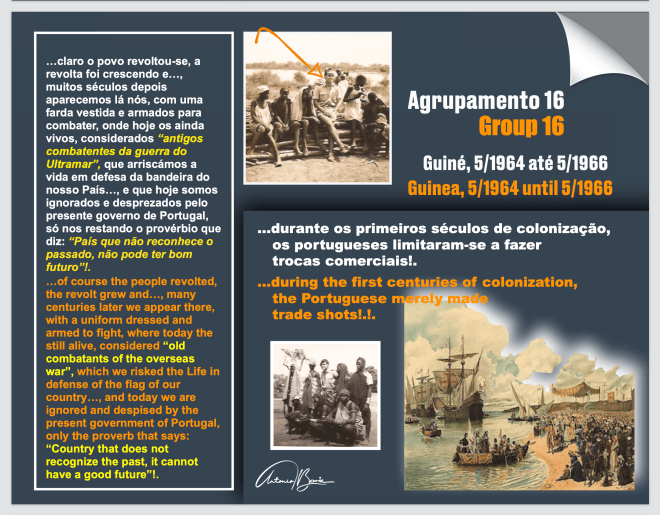
…a então província colonial da Guiné, apesar de geograficamente ser a mais próxima de Portugal das então colónias, sempre foi a que esteve mais longe, porque a primazia era o Brasil, depois Angola e Moçambique!. Lá na Guiné, durante os primeiros séculos de colonização os portugueses limitaram-se a fazer trocas comerciais em pequenas comunidades do litoral, situadas junto aos rios e canais que eram muito frequentes naquela região pantanosa do Golfo da Guiné!.
…the then colonial province of Guinea, although geographically being the closest to Portugal in the then colonies, has always been the one that was further, because the primacy was Brazil, then Angola and Mozambique!. There in Guinea, during the first centuries of colonization the Portuguese were limited to making trade in small coastal communities, located next to the rivers and channels that were very frequent in that swamp region of the Gulf of Guinea!.
…naquelas trocas entre os portugueses e os régulos africanos, os portugueses levavam para lá aguardente, pólvora, tabaco, quinquilharias ou outras coisas parecidas e em troca traziam o melhor que a terra dava!. E claro, com a expansão dos Europeus a caminho das Américas onde se estabeleciam com grandes plantações que requeriam muito trabalho manual, rapidamente o tráfico de escravos se tornou na principal motivação, terminando somente à volta do século dezanove por imposição de algumas potências, tanto Europeias como do resto do mundo, em que Portugal se viu forçado a renunciar ao já mencionado tráfico de escravos!
…iIn those exchanges between the Portuguese and the African rules, the Portuguese took the brandy, gunpowder, tobacco, trinkets or other similar things and in return brought the best that the earth gave!. And of course, with the expansion of Europeans on their way to the Americas where they settled with large plantations that required a lot of manual work, slave trafficking quickly became the main motivation, ending only around the nineteenth century for the imposition of some, both European powers as from the rest of the world, in which Portugal was forced to renounce the aforementioned slave trade!..
…depois, não podendo mais roubar à Guiné a sua principal riqueza que eram as pessoas, começou então a colonização, ocupando o interior do território, e para isso organizaram as “campanhas de pacificação”, que na verdade, eram campanhas levadas a cabo contra o povo guinéu que já por lá vivia com as suas leis há muitos séculos!. Assim, começaram por impor novas regras já existentes na Europa, como por exemplo a religião ou entre outras, pagar o “imposto de palhota”, onde se pretendia introduzir um modo de produção onde os guinéus tinham de produzir excedentes para poderem pagar esse imposto!. No entanto, esses excedentes depois seriam comercializados pelos colonos, e cujos lucros deveriam ser investidos no território, mas não…, os lucros eram enviados para Portugal!. Claro, tudo isto imediatamente revoltou o povo guineense…, contra as leis dos invasores!.
…then, and could no longer steal to Guinea their main wealth that were the people, then the colonization began, occupying the interior of the territory, and for that they organized the “pacification campaigns”, which were actually campaigns carried out against The Guinea people who have lived there with their laws for many centuries!. Thus, they began by imposing new rules already existing in Europe, such as religion or others, paying the “Palhota Tax”, where it was intended to introduce a mode of production where Guinea had to produce surpluses to pay this tax!. However, these surpluses would later be marketed by the settlers, and whose profits should be invested in the territory, but not…, profits were sent to Portugal!. Of course, all this immediately revolted the Guinean people…, against the laws of the invaders!.
…e quem não pagasse o tal “imposto de palhota”, (quase nenhum guinéu produzia excedentes, portanto quase nenhum pagava o imposto), era submetido a trabalho forçado, trabalho esse usado principalmente na construção de carreiros e estradas com piso em terra, desbravando aquelas selvas e pântanos, tudo feito com mão de obra forçada e só podiam ser utilizadas na época seca!.
…and those who did not pay such a “Palhota Tax” (almost no guinea produced surpluses, so almost none paid the tax), was subjected to forced labor, which is mainly used in the construction of carclims and roads with ground floor those jungles and marshes, all made with forced labor and could only be used in dry season!.
…como tal, nada foi investido, não foi construído nenhum hospital, escola superior ou nenhuma barragem!. Só fortalezas para defesa e alguns edifícios foram sendo feitos para albergar os serviços coloniais, pequenos templos de religião católica, (e os guinéus não eram católicos), bem como algumas casas para os colonos em locais estratégicos onde podiam recolher madeiras ou produtos que a terra dava…, tudo isto para enviar para Portugal!.
…as such, nothing has been invested, no hospital, higher school or no dam!. Only fortresses for defense and some buildings were being made to host colonial services, small temples of Catholic religion (and the Guinea were not Catholics), as well as some houses for the settlers in strategic locations where they could collect wood or products that the earth It was… all this to send to Portugal!.
Tony Borie
 Tony Borie - "Pieces of my life"