

…o dia estava excelente, a manhã a raiar com algum sol, o céu estava quase azul, a temperatura era de uma primavera semi-tropical, nem parecia que estávamos no norte do Alaska!.
…the day was excellent, the morning dawned with some sun, the sky was almost blue, the temperature was that of a semi-tropical spring, it didn’t even feel like we were in northern Alaska!.
…era um dia especial!. Queríamos completar uma aventura que já se prolongava por alguns anos, que era viajar na famosa “Estrada Dalton”!. No passado já a havíamos tentado, estando no início desta famosa estrada, percorrendo mesmo algumas milhas…, mas a chuva, o nevoeiro, o vento, o frio, a neve e os acidentes que havia pelo percurso, além dos avisos feitos pelas pessoas de uniforme, alguns eram militares, que frequentemente nos apareciam, fizeram com que desanimados, voltasse-mos para trás, desistindo, percorrendo um caminho de regresso, de alguma revolta, jurando que um dia havia-mos de nela viajar, pelo menos até ao “Circulo Polar Ártico”!.
…it was a special day! We wanted to complete an adventure that had been going on for a few years, which was traveling on the famous “Dalton Highway”!. In the past we had already tried it, being at the beginning of this famous road, covering just a few miles…, but the rain, the fog, the wind, the cold, the snow and the accidents along the way, in addition to the warnings given by people from uniform, some were military, who frequently appeared to us, made us discouraged, turned back, giving up, following a path of return, of some revolt, swearing that one day we would travel in it, at least until the “Arctic Circle”!.
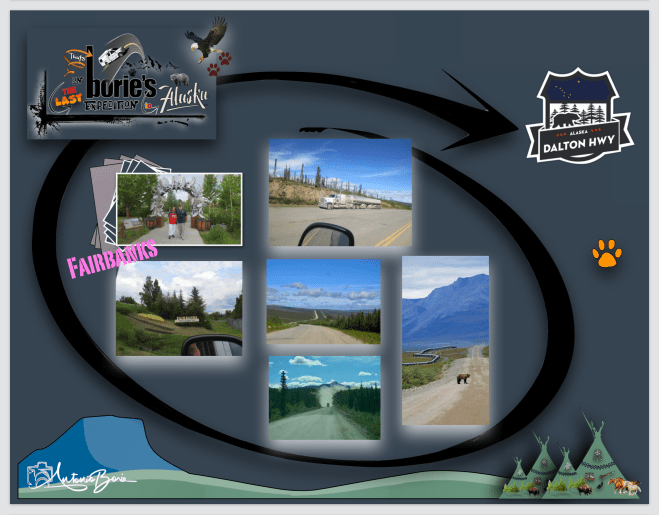
…e anos depois, numa segunda tentativa fomos abençoados com ventos suaves e céu limpo!. Aqui e ali ainda nos apareciam…, alguma lama, poeira, pedra miúda ou buracos, mas a tal chuva, neve ou granizo, enormes geadas, buracos e rachaduras na estrada, felizmente não!. Como tal…, perfeitamente nos adaptámos!.
…and years later, on a second attempt we were blessed with gentle winds and clear skies!. Here and there we still saw some mud, dust, small stones or holes, but not so much rain, snow or hail, huge frosts, holes and cracks in the road, fortunately not! As such… we adapted perfectly!
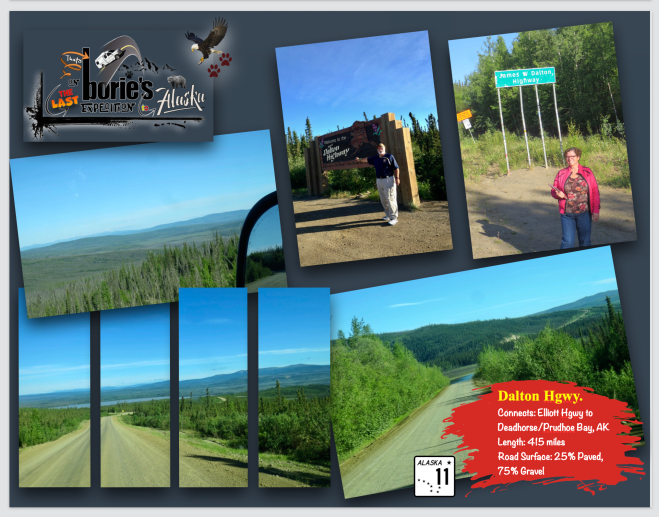
…a ”Estrada Dalton” é uma estrada de 414 milhas (666 km) que começa na“Estrada Elliott, ao norte da cidade de Fairbanks e termina em Deadhorse, uma comunidade da Baía de Prudhoe, perto do Oceano Ártico e dos Campos Petrolíferos da Baía de Prudhoe!. Hoje chama-se “Estrada Dalton”, em homenagem ao engenheiro James W. Dalton, especialista em engenharia do Ártico, actuando como consultor em exploração de petróleo no norte do Alaska, todavia já foi chamada de “North Slope Haul Road”, um nome pelo qual ainda é conhecida às vezes e que, foi construída como uma estrada de suprimento para apoiar o Sistema de Oleodutos Trans-Alaska no ano de 1974!.
…the “Dalton Highway” is a 414-mile (666 km) road that begins at “Elliott Highway”, north of the city of Fairbanks and ends in Deadhorse, a Prudhoe Bay community near the Arctic Ocean and the Oil Fields Prudhoe Bay!. Today it is called “Dalton Highway”, in honor of the engineer James W. Dalton, a specialist in Arctic engineering, acting as a consultant in oil exploration in northern Alaska, however it was once called “North Slope Haul Road”, a name which it is still sometimes known as, was built as a supply road to support the Trans-Alaska Pipeline System in 1974!.
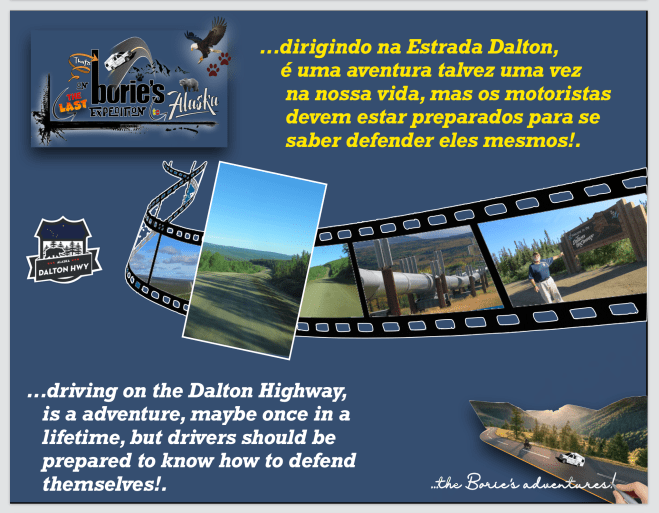
…aqui recomeçou a aventura que frustrados e revoltados, fomos obrigados a desistir uns anos atrás!. O dia estava mesmo a nosso favor, estava um céu limpo e não era necessário esperar por outros aventureiros, como tal fomos em frente, sabendo que o lema era, “conduzir na Estrada Dalton, é uma aventura, talvez uma vez na vida, mas os motoristas devem preparar-se para se saber defender sózinhos”!.
…here the adventure that frustrated and angry, we were forced to give up a few years ago, began again!. The day was really in our favor, it was a clear sky and there was no need to wait for other adventurers, so we went ahead, knowing that the motto was, “driving the Dalton Highway, it’s an adventure, maybe once in a lifetime, but Drivers must prepare themselves to know how to defend themselves”!
…a “Estrada Dalton” é a única estrada no estado do Alaska que atravessa o “Círculo Polar Ártico”, que é o ponto mais ao norte, dos abstratos ou imaginários principais círculos de latitude, como é mostrado nos mapas da Terra!. Ele marca o ponto mais setentrional no qual o sol do meio-dia é visível no solstício de inverno do norte, e o ponto mais ao sul no qual o sol da meia-noite é visível no solstício de verão do norte!. A região ao norte deste círculo é conhecida como o Ártico, e a zona apenas para o sul é chamada de Zona Temperada Norte!.
…the “Dalton Highway” is the only road in the state of Alaska that crosses the “Arctic Circle”, which is the northernmost point of the abstract or imaginary main circles of latitude, as shown on maps of the Earth! . It marks the northernmost point at which the midday sun is visible on the northern winter solstice, and the southernmost point at which the midnight sun is visible on the northern summer solstice!. The region north of this circle is known as the Arctic, and the zone just to the south is called the North Temperate Zone!

…e nós ao cruzarmos este ponto, ficámos fascinados e algo surpresos por ver este fenómeno, pois ao norte do “Círculo Polar Ártico”, o sol está acima do horizonte por vinte e quatro horas contínuas pelo menos uma vez por ano, portanto, visível à meia-noite e, abaixo do horizonte por vinte e quatro horas contínuas pelo menos uma vez por ano, portanto, não visíveis ao meio dia, isso também é verdade dentro do Círculo Polar equivalente no Hemisfério Sul, o Círculo Antártico. A posição do Círculo Ártico não é fixa, mas o normal é 66º33’46.8 graus ao norte do Equador!.
…and when we crossed this point, we were fascinated and somewhat surprised to see this phenomenon, because north of the “Arctic Circle”, the sun is above the horizon for twenty-four continuous hours at least once a year, therefore visible at midnight and, below the horizon for twenty-four continuous hours at least once a year, therefore not visible at noon, this is also true within the equivalent Polar Circle in the Southern Hemisphere, the Antarctic Circle. The position of the Arctic Circle is not fixed, but the normal is 66º33’46.8 degrees north of the Equator!.
…algumas curiosidades do “Círculo Polar Ártico” é que passa por sete países que possuem uma porção considerável de terra dentro do seu círculo, que são países como os USA, Groenlândia, Canadá, Rússia, Noruega, Suécia ou Finlândia, no entanto, a Islândia tem uma pequena região, menos de um quilómetro quadrado, dentro do mesmo círculo!.
…some interesting facts about the “Arctic Circle” is that it passes through seven countries that have a considerable portion of land within their circle, which are countries such as the USA, Greenland, Canada, Russia, Norway, Sweden or Finland, however, the Iceland has a small region, less than a square kilometer, within the same circle!.
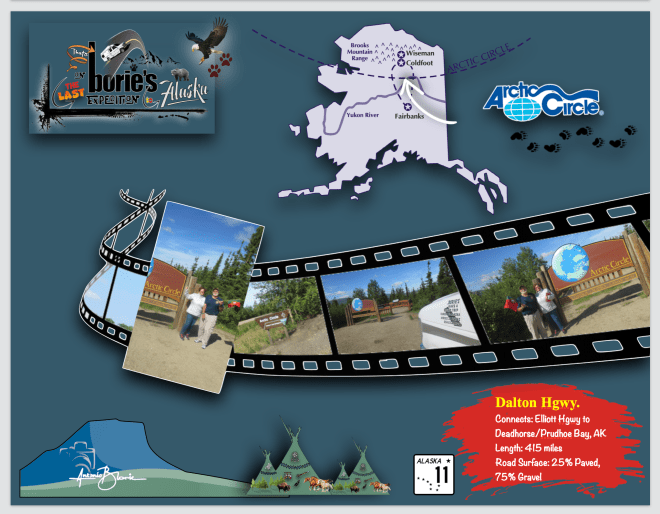
…a sua posição, que como acima explicámos é normalmente localizada a 66º33’46.8 graus ao norte do Equador, no entanto, a sua localização real muda ligeiramente todos os anos e.., este fenómeno deve-se à flutuação da inclinação axial da Terra, que é influenciada pela órbita da Lua e pelas consequentes mudanças nas marés!. A mesma inclinação axial causa as diferentes estações que vivemos na Terra, e actualmente, o círculo está a mover-se para o norte a uma taxa de cerca de 15 metros por ano!.
…its position, which as we explained above is normally located at 66º33’46.8 degrees north of the Equator, however, its actual location changes slightly every year and…, this phenomenon is due to the fluctuation of the Earth’s axial tilt , which is influenced by the Moon’s orbit and the resulting changes in tides!. The same axial tilt causes the different seasons we experience on Earth, and currently, the circle is moving north at a rate of about 15 meters per year!.
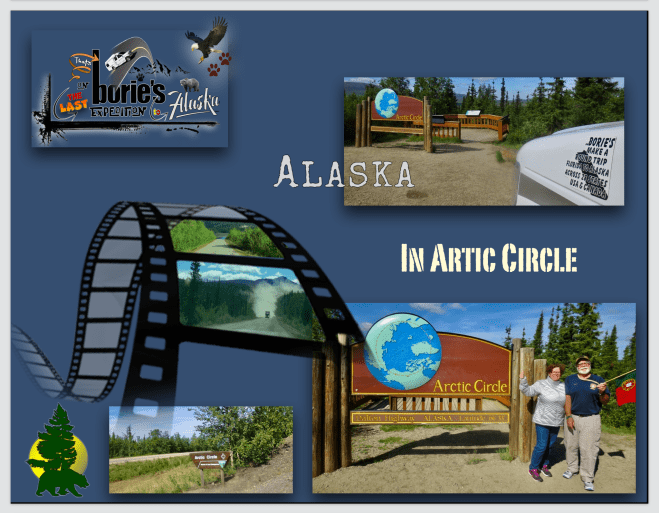
…para muitos, o “Círculo Polar Ártico”, ou “Pólo Norte” como é costume dizer-se, e que é frequentemente associado ao “Pai Natal” eàs renas voadoras…, no entanto, o que a maioria das pessoas não sabe é que na verdade existem quatro “Pólos Norte” reconhecidos, que são: O “Pólo Norte Geográfico”, que é o ponto mais setentrional do planeta e onde todas as linhas de longitude da Terra se encontram!.. O “Pólo Norte Magnético”, que é o local onde todas as linhas de força magnética do planeta apontam verticalmente para baixo e o seu ponto atrai a agulha de uma bússola!. O “Pólo Norte Geomagnético”, que é o extremo norte de onde o eixo da magnetosfera, ou seja, o campo magnético que envolve a Terra e se estende pelo espaço e cruza o planeta!. E finalmente, o ”Pólo Norte da Inacessibilidade”, que é o ponto do Oceano Ártico mais distante de qualquer costa!.
…for many, the “Arctic Circle”, or “North Pole” as it is customary to say, and which is often associated with “Santa Claus” and flying reindeer…, however, what most people don’t know is that there are actually four recognized “North Poles”, which are: The “Geographic North Pole”, which is the northernmost point on the planet and where all the Earth’s longitude lines meet!.. The “Magnetic North Pole” , which is the place where all the planet’s magnetic lines of force point vertically downwards and its point attracts the needle of a compass!. The “Geomagnetic North Pole”, which is the extreme north of where the axis of the magnetosphere, that is, the magnetic field that surrounds the Earth and extends through space and crosses the planet!. And finally, the “North Pole of Inaccessibility”, which is the point in the Arctic Ocean furthest from any coast!.
…e, dizem-nos que os maiores predadores terrestres da Terra são exclusivos desta região, que dão pelo nome de Ursos Polares e que são os maiores carnívoros terrestres do mundo, residindo em torno de águas cobertas de gelo e dependendo do gelo marinho para se alimentar, descansar e procriar!..
…and, we are told that the largest land predators on Earth are exclusive to this region, which they call Polar Bears and that they are the largest land carnivores in the world, residing around ice-covered waters and depending on sea ice for food. feed, rest and procreate!

…também dezenas de grupos indígenas prosperam dentro da sua região e, entre a grande população do “Círculo Polar Ártico” residem mais de 40 grupos étnicos diferentes!. Embora variem muito em cultura, língua e história, estes grupos indígenas têm uma forte ligação com as terras árticas que habitam há milhares de anos. Muitos mantêm actividades tradicionais de pesca, pastoreio de renas e caça!.
…dozens of indigenous groups also thrive within its region and, among the large population of the “Arctic Circle” there are more than 40 different ethnic groups!. Although they vary greatly in culture, language and history, these indigenous groups have a strong connection to the Arctic lands they have inhabited for thousands of years. Many maintain traditional fishing, reindeer herding and hunting activities!
…no entanto e infelizmente, os seus meios de subsistência e produtividade estão ameaçados pelas dramáticas mudanças climáticas e pelo desaparecimento do gelo marinho!.
…however, unfortunately, their livelihoods and productivity are threatened by dramatic climate change and the disappearance of sea ice!.
Tony Borie, Século XXI. (Tony Borie, 21st Century).
 Tony Borie - "Pieces of my life"