…continuamos a viver!. Somos obrigados a isso, não temos outra alternativa, porque ao nascer entrámos neste calhau, perdido no Universo, a que todos chamam Planeta Terra!. No entanto, quando por aí caminhamos esbarramos frequentemente com muitos cenários com coisas do quotidiano e…, às vezes registamo-las!.
…we continue to live!. We are forced to do this, we have no other alternative, because at birth we entered this rock, lost in the Universe, which everyone calls Planet Earth!. However, when we walk around we often come across many scenes with everyday things and…, sometimes we register them!.
…por exemplo, esta semana ao caminhar na trilha que vai ao longo do canal de água salgada, o “Jenny”, pessoa amável e solitária que quase todos os dias por lá caminha, ia a falar sozinho, numa lamúria triste, quase de choro!. Ao dizer-lhe “bom dia”, ele aproveitou para falar, e em poucos minutos explicou-nos a razão daquela lamúria, que era o efeito da dor que sentia e queria libertar-se, porque a única saída que tinha era…, falar, contar, comentar e ter alguém para o ouvir!.
…for example, this week while walking on the trail that goes along the salt water canal, “Jenny”, a kind and lonely person who walks there almost every day, started talking to himself, in a sad whine, almost like crying!. When we said “good morning”, he took the opportunity to speak, and in a few minutes he explained to us the reason for his whining, which was the effect of the pain he felt and wanted to free himself, because the only way out was…, to speak. , tell, comment and have someone to listen to you!.
…e começou a contar-nos: “foi tudo muito rápido!. Começou com vómitos, falta de apetite e muito cansaço!. Começou por ir aos médicos, ao hospital, até que um exame revelou ter um cancro no fígado e…, se fosse só no fígado!. Também já tinha nos pulmões e sabe-se lá mais aonde!. Ficou internada uns dias, começando por me dizer muito baixinho “quero morrer, quero morrer”!. Passados quatro dias morreu agarrada à minha mão!. Agora sou viúvo!. A minha mulher faz-me muita falta, não para cuidar de mim, tomar conta da casa ou fazer a comida!. Nada disso!. Faz-me muito falta…, porque era a minha companhia”!.
…and began to tell us: “it all happened very quickly!. It started with vomiting, lack of appetite and a lot of tiredness! He started by going to the doctors, to the hospital, until an exam revealed that he had liver cancer and…, if it was only in the liver!. I also had it in my lungs and who knows where else!. She was hospitalized for a few days, starting by saying to me very quietly “I want to die, I want to die”!. After four days, she died clinging to my hand!. Now I’m a widower!. I miss my wife a lot, not to take care of me, take care of the house or cook the food!. None of that!. I miss it very much…, because it was my company”!.
…nós ouvimos em silêncio, porque durante a nossa estadia forçada na Guerra Colonial Portuguesa em África, aprendemos que o silêncio por vezes é uma porta aberta para eliminar a dor!. O amável “Jenny”, no final, agradeceu-nos vivamente por o ter-mos escutado e pediu-nos desculpa por nos ter incomodado!.
…we listen in silence, because during our forced stay in the Portuguese Colonial War in Africa, we learned that silence is sometimes an open door to eliminate pain!. The kind “Jenny”, at the end, thanked us warmly for listening to him and apologized for having disturbed us!.
Tony Borie, Século XXI. (Tony Borie, 21st Century).
…era o nosso primeiro dia nesta Terceira Expedição ao Alaska, e de repente, percebemos que estávamos aqui, realmente aqui, e poderíamos ir fazer o que quiséssemos!. Isto deixou-nos um tanto atordoados, porque havia tanto para ver e fazer…, e o que seria primeiro?. Decidimos então estabelecer uma meta facilmente alcançável, talvez uma semana mais uns dias, o máximo duas semanas, e para começar viajámos para sul!.
…it was our first day on this Third Alaska Expedition, and suddenly, we realized that we were here, really here, and we could go do whatever we wanted!. This left us somewhat stunned, because there was so much to see and do…, and what would be first?. So we decided to set an easily achievable goal, maybe a week plus a few days, maximum two weeks, and to start we traveled south!.
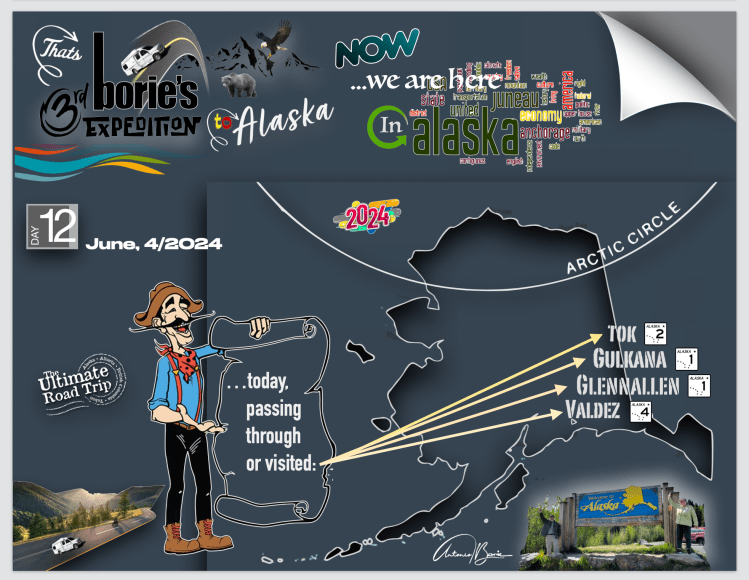
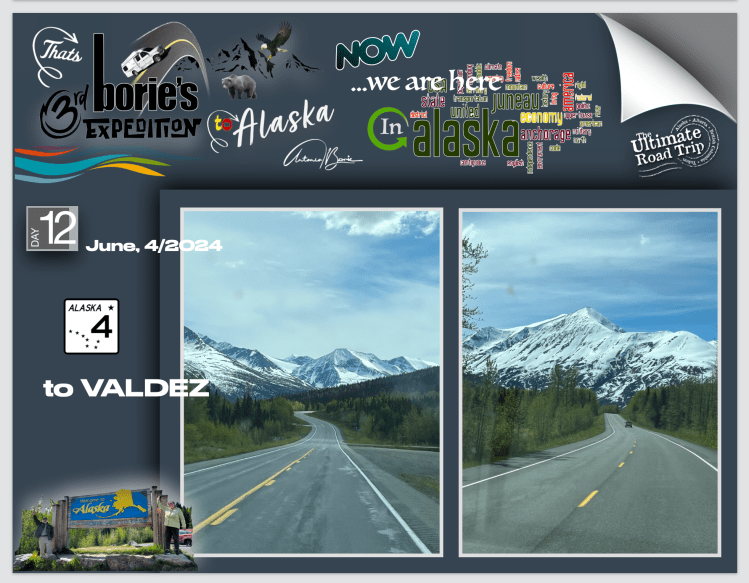
…seguimos pela estrada #2, antes de entrar na #1!. Foi um bom plano para começar a nossa aventura no Alaska!. Íamos também viajar pela estrada #4 que tem longas retas e curvas suaves através de algumas paisagens montanhosas impressionantes!. Sabíamos que a nossa visita ao Alaska no início de Junho seria um pouco complicada!. Porquê?. Porque tão perto da chegada do Verão, os dias são incrivelmente longos e na verdade, perdemos a ideia de quando são horas para ir dormir…, e às vezes a tão desejada “hora de ouro” tarda sempre em aparecer, porque a luz do dia é constante por quase 22 horas!.
…we followed road #2, before entering #1!. It was a good plan to start our Alaskan adventure!. We were also going to travel along road #4 which has long straights and gentle curves through some stunning mountain scenery!. We knew our visit to Alaska in early June would be a bit complicated!. Why?. Because so close to the arrival of Summer, the days are incredibly long and in fact, we lose the idea of when it is time to go to sleep…, and sometimes the much-desired “golden hour” always takes a while to appear, because daylight It is constant for almost 22 hours!.
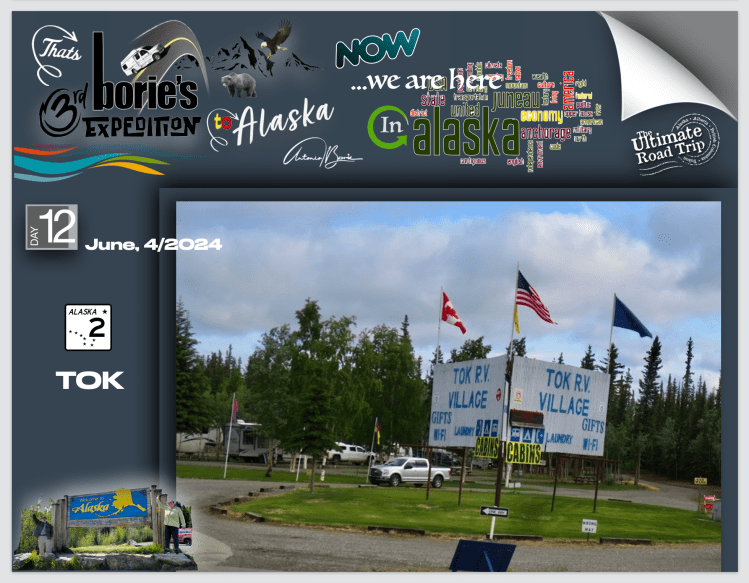
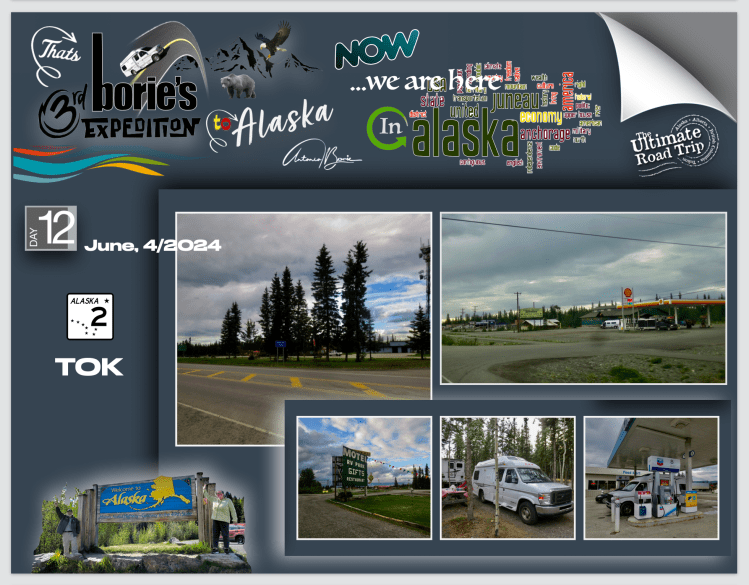
…a manhã estava fresca quando saímos da cidade de Tok, que é a comunidade com mais facilidades, pelo menos para viajantes, que se situa mais perto da fronteira, e que se encontra numa planície aluvial muito grande e plana, do Vale Tanana, entre o Rio Tanana e o Alaska Range, que é uma cordilheira de montanhas que se avista ao norte!.
…the morning was cool when we left the town of Tok, which is the community with the most facilities, at least for travelers, which is located closest to the border, and which is on a very large and flat alluvial plain, of the Tanana Valley, between the Tanana River and the Alaska Range, which is a mountain range that can be seen to the north!.
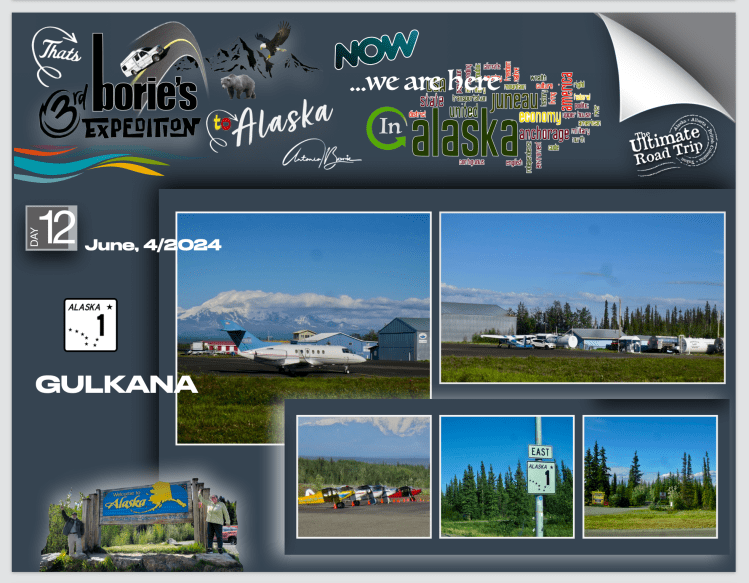
…e, depois de abastecer com gasolina a nossa “White Fox” (caravana) e comprar café e biscoitos, iniciámos viajem!. Passado umas dezenas de milhas já na Estrada Richardson, (estrada #4), e com alguma curiosidade própria de viajantes, parámos para ver os pequenos aviões no aeroporto de Gulkana, que é uma aldeia que começou com a “Gulkana Roadhouse”, que foi construída no início de 1900 por um negociante de peles que administrou esta estalagem até 1916!.
…and, after filling up our “White Fox” (caravan) with gasoline and buying coffee and cookies, we started our journey!. After a few dozen miles on Richardson Road, (road #4), and with some curiosity typical of travelers, we stopped to see the small planes at Gulkana airport, which is a village that began with the “Gulkana Roadhouse”, which It was built in the early 1900s by a fur trader who ran this inn until 1916!.
…sempre rumo ao sul, parámos em Glennallen, que é um pequeno “oasis”, num cruzamento de estradas!. Aqui, quem segue para sul, vai para Valdez que era o nosso destino!. A povoação, tem um Centro de Visitas e encontra-se ao longo da Estrada Glenn na sua junção com a Estrada de Richardson, e apenas um pouco fora do limite ocidental do Parque de Wrangell-St. Elias!.
…always heading south, we stopped at Glennallen, which is a small “oasis”, at a crossroads!. Here, whoever heads south goes to Valdez, which was our destination! The village, has a Visitor Center, and lies along Glenn Road at its junction with Richardson Road, and just outside the western boundary of Wrangell-St. Elijah!
…no já referido Centro de Visitas, a uma pergunta nossa, o amável funcionário explicou que não era lá muito recomendável viajar pelo desvio de estrada, com um piso onde frequentemente aparece terra e cascalho e, também era um pouco difícil caminhar nas magníficas trilhas do Wrangell-St. O Elias National Park & Preserve que é, sem qualquer dúvida, o maior e mais magnífico dos vastos parques nacionais do Alaska, com nove dos 16 picos mais altos dos USA!.
… at the aforementioned Visitor Center, when asked by us, the kind employee explained that it was not very advisable to travel along the road detour, with a surface where dirt and gravel often appear, and that it was also a little difficult to walk on the magnificent trails of the Wrangell-St. Elias National Park & Preserve is, without a doubt, the largest and most magnificent of Alaska’s vast national parks, with nine of the 16 highest peaks in the USA!.
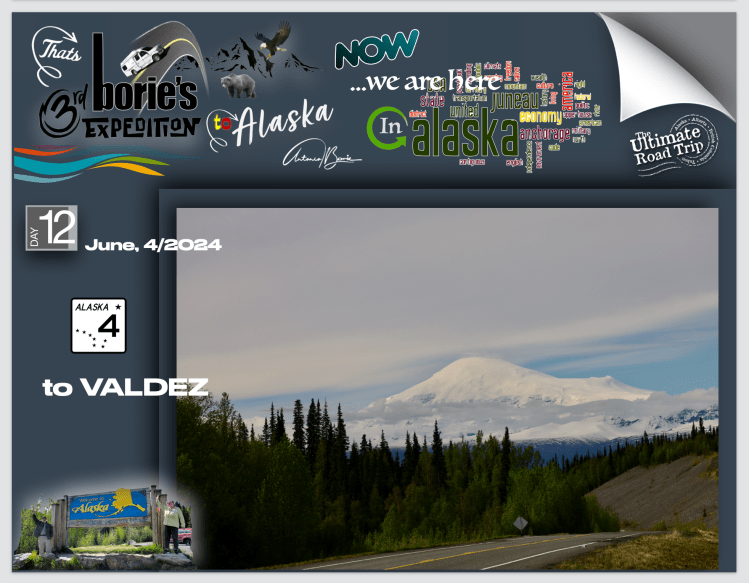
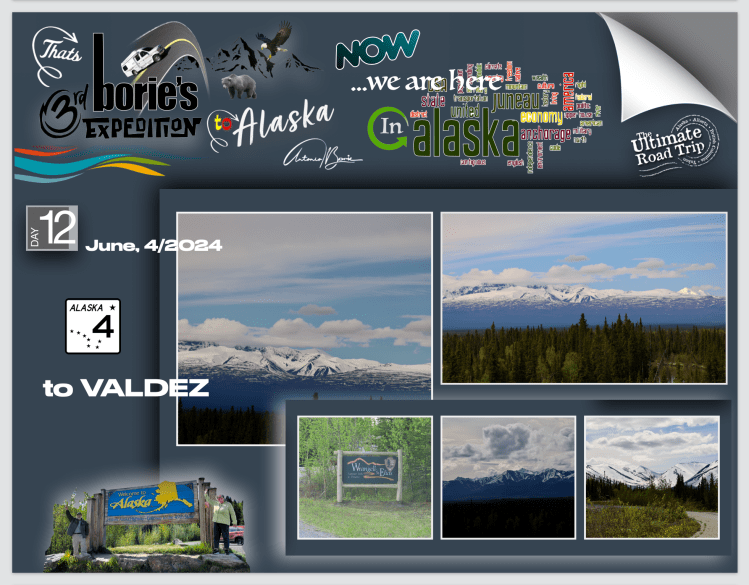
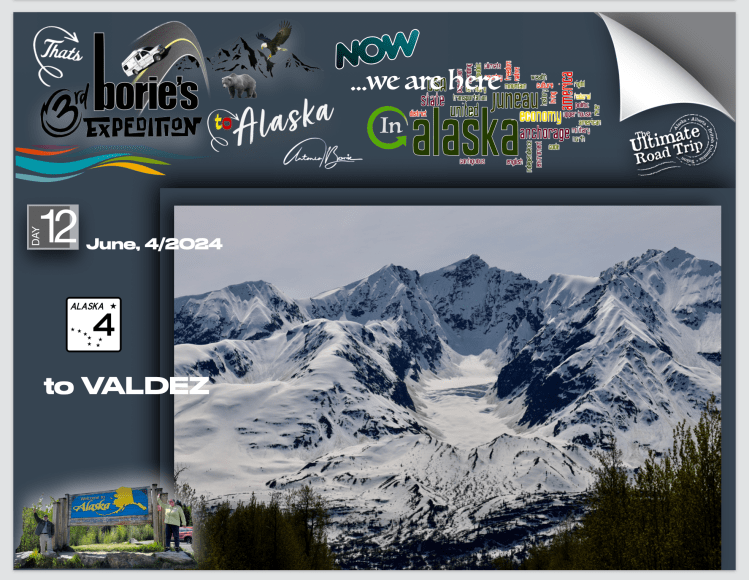
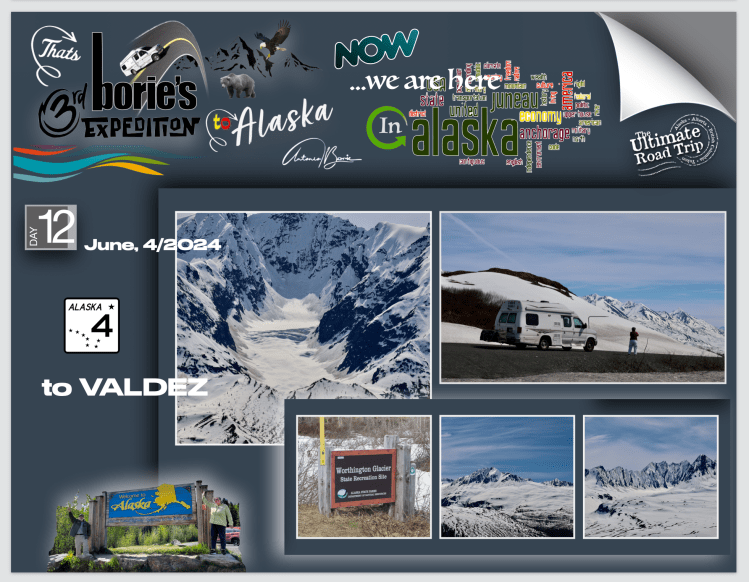
…no entanto, a caminho da cidade de Valdez, saímos aproximadamente na milha 106, em Copper Center e lá fomos caminhando por algum tempo nesta grandiosa região montanhosa na fronteira com o Canadá que contém inúmeros glaciers, lagos e córregos da montanha e…, é o lar de uma rica variedade de vida selvagem!. Fomos apreciando ao longe até onde nos foi possível mas, vêem-se picos sobre picos e glaciers após glaciers, acreditando que, se flutuar-mos por qualquer rio ou ribeiro seguindo até a sua fonte, com toda a certeza que iríamos encontrar um qualquer glacier derretendo-se lentamente!.
…however, on the way to the city of Valdez, we exited at approximately mile 106, in Copper Center and there we walked for some time in this great mountainous region on the border with Canada that contains countless glaciers, lakes and mountain streams and…, yeah home to a rich variety of wildlife!. We appreciated as far as we could, but we saw peaks upon peaks and glaciers after glaciers, believing that if we floated down any river or stream following its source, we would certainly find some glacier. slowly melting!.
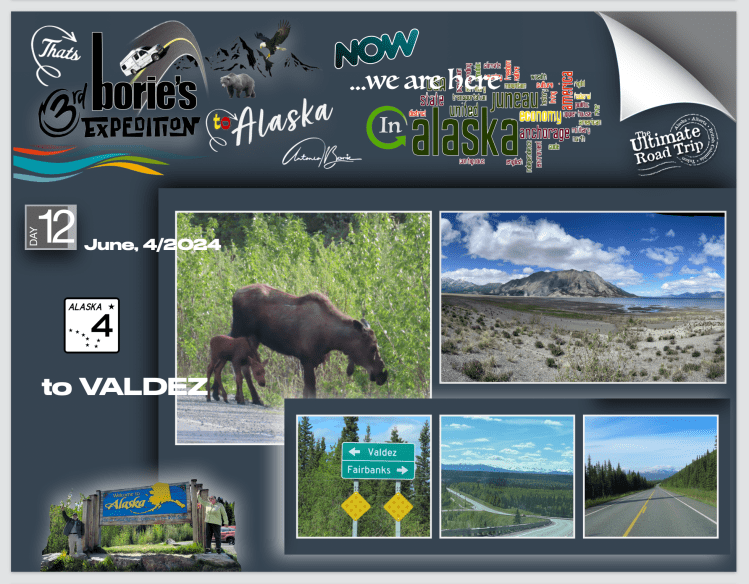
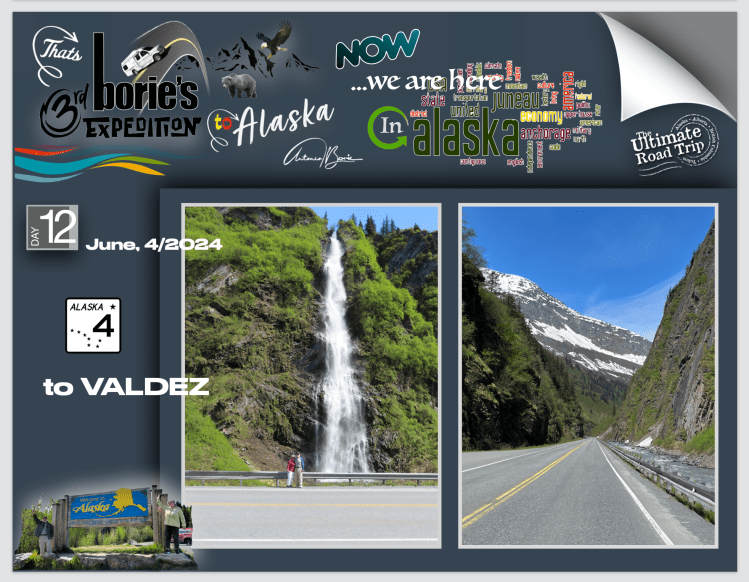
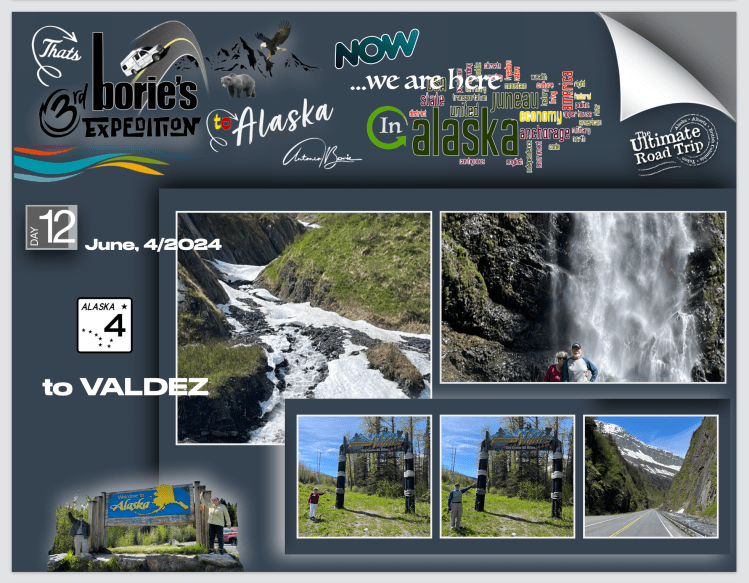
…voltando à Estrada de Richardson, e já próximo da milha 16, derivado à área da cidade de Valdez, que se situa na “milha 0” da já referida estrada, ser aquela que recebe níveis épicos de neve no inverno, eser considerada o “lugar onde cai mais neve nos USA”, podemos apreciar grandes cascatas de água e…, quando toda a neve se derrete, ela escapa-se, derramando pelas encostas das montanhas em algumas das mais belas cascatas do mundo!.
…returning to Richardson Road, and already close to mile 16, derived from the area of the city of Valdez, which is located at “mile 0” of the aforementioned road, being the one that receives epic levels of snow in winter, and being considered the “the place where the most snow falls in the USA”, we can enjoy large waterfalls of water and…, when all the snow melts, it escapes, spilling down the mountainsides in some of the most beautiful waterfalls in the world!.
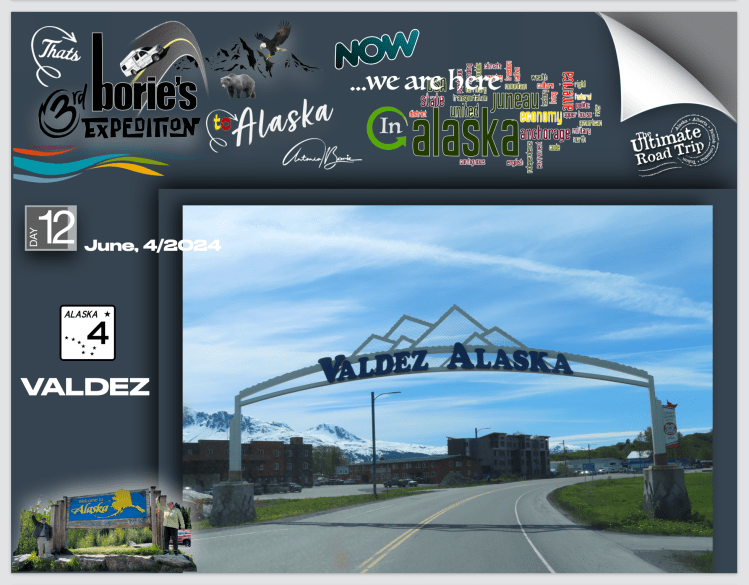
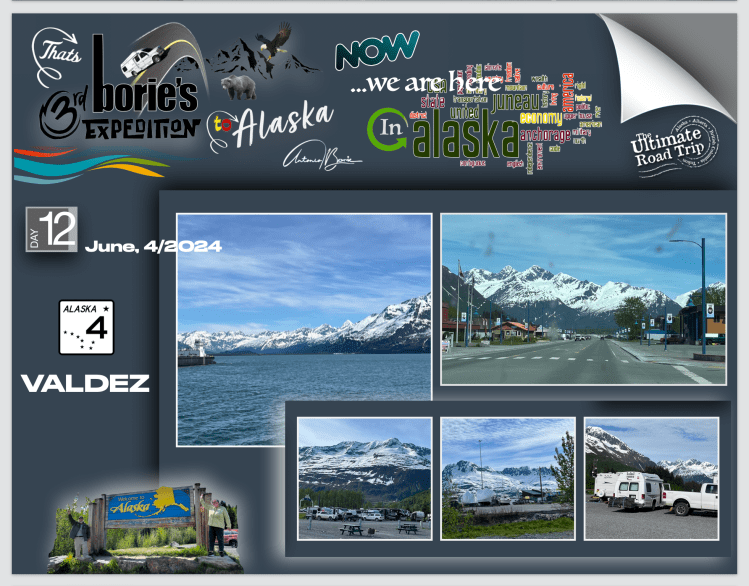
…entretanto chegámos ao nosso destino que era a cidade de Valdez na “milha 0” da Estrada Richardson!. Esta hoje pequena cidade, tal como muitas outras no Alaska, tem uma história da “Corrida ao Ouro”, fundada no ano de 1790, pelo explorador espanhol Salvador Fidalgo, em homenagem ao ministro da Marinha espanhol Antonio Valdés e, está localizada na cabeça de um fiorde, no lado leste do Prince William Sound!.
…in the meantime we arrived at our destination, which was the city of Valdez at “mile 0” on the Richardson Road!. This small town, like many others in Alaska, has a history of the “Gold Rush”, founded in 1790, by Spanish explorer Salvador Fidalgo, named after Spanish Minister of the Navy Antonio Valdés, is located at the head of a fjord on the east side of Prince William Sound!.
…caminhámos e pernoitámos lá num parque de RV, e tem uma pitoresca história onde, como sempre…, entra a “corrida ao ouro” e, tudo começou com uma “mentira”, para atrair garimpeiros da trilha Klondike Gold Rush, que levou esta hoje cidade a ser desenvolvida lá pelo ano de 1898!. Algumas empresas de navios a vapor promoveram a “Valdez Glacier Trail” como sendo uma rota melhor para os mineiros alcançarem os campos de ouro de Klondike, e assim, descobrir novos campos na região do rio Copper do interior do Alaska!.
…we walked and spent the night there in an RV park, and it has a picturesque story where, as always…, the “gold rush” enters and, it all started with a “lie”, to attract prospectors from the Klondike Gold Rush trail, which led This is now a city being developed around 1898! Some steamship companies promoted the “Valdez Glacier Trail” as a better route for miners to reach the Klondike gold fields and thus discover new fields in the Copper River region of interior Alaska!
…os garimpeiros que acreditavam na promoção, descobriram que haviam sido enganados!. A trilha, caminhando pelos icebergs, era duas vezes mais longa e íngreme do que a relatada, e muitos homens morreram tentando a travessia, ou em parte contraindo escorbuto durante o longo inverno frio sem suprimentos adequados!.
…the miners who believed in the promotion discovered that they had been deceived!. The trail, walking through the icebergs, was twice as long and steep as reported, and many men died attempting the crossing, or in part from contracting scurvy during the long cold winter without adequate supplies!.
..assim, esta pequena cidade não floresceu até depois da construção de uma estrada rudimentar, por volta do ano de 1899, só aberta apenas no verão até ao ano de 1950, quando finalmente se construiu a actual Estrada Richardson operada como uma rota durante todo o ano, que liga Valdez a Fairbanks!.
…thus this small town did not flourish until after the construction of a rudimentary road, around the year 1899, open only in the summer until the year 1950, when finally the present Richardson Road operated as a year-round route, which connects Valdez to Fairbanks!.
…só e para terminar, aqui em Valdez, usam helicópteros, tal como lá em baixo no sul, depois do paralelo 48, usam aquelas camionetas descobertas e com dois pisos, com desenhos floridos de turismo, para dar a volta e apreciar as cidades, em qualquer lugar de qualquer estado dos USA!.
…just to finish, here in Valdez, they use helicopters, just like down in the south, after the 48th parallel, they use those open, double-decker vans, with flowery tourism designs, to go around and enjoy the cities, anywhere in any state in the USA!.
…viajar, por vezes não é um luxo é uma necessidade do espírito humano…, e nós, nesta um pouco avançada idade, uma das entre outras razões, viajamos porque nos sentimos desconfortáveis por estar confortáveis demais!. E quando viajamos, o mundo é a nossa casa, o céu é o nosso teto onde penduramos o boné e…, todas as pessoas que encontramos nos locais mais remotos por onde andamos…, são parte da nossa família, porque preferimos olhar para a nossa vida, e dizer: “não acredito que fiz isto” em vez de dizer: “se ao menos tivesse feito isto”!.
…travel, sometimes is not a luxury, it is a necessity of the human spirit…, and we, at this slightly advanced age, one of the other reasons, we travel because we feel uncomfortable because we are too comfortable!. And when we travel, the world is our home, the sky is our roof where we hang our cap and…, all the people we meet in the most remote places we travel…, are part of our family, because we prefer to look at our life, and say, “I can’t believe I did this” instead of saying, “If only I had done this”!
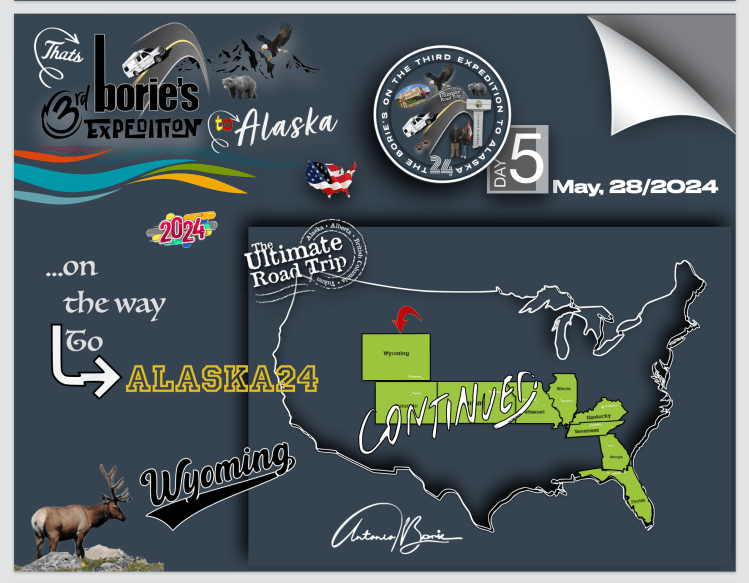
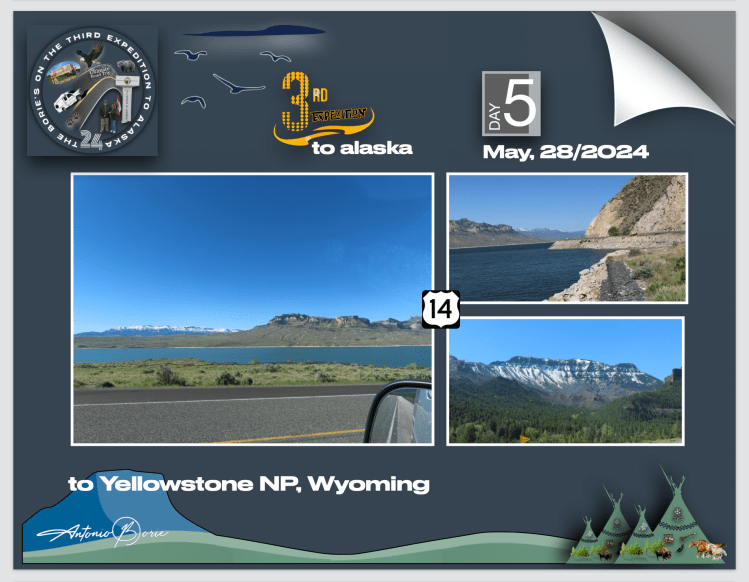
…vamos então explicar por onde andámos neste quinto dia!.
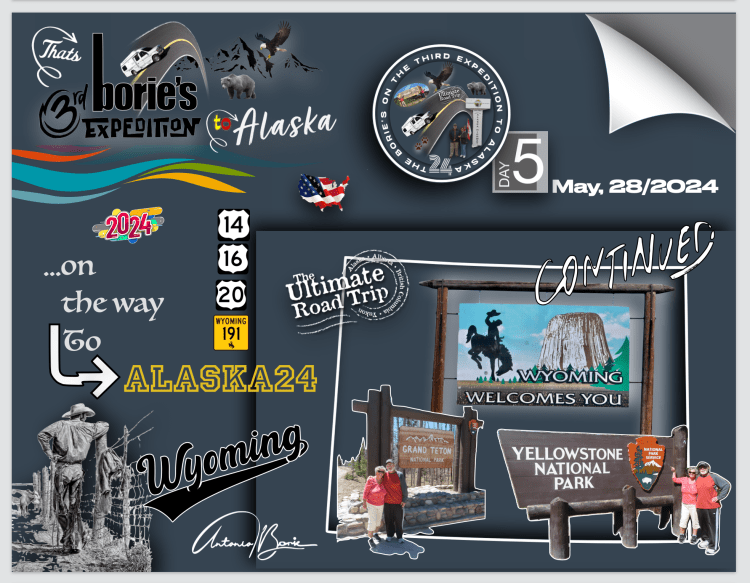
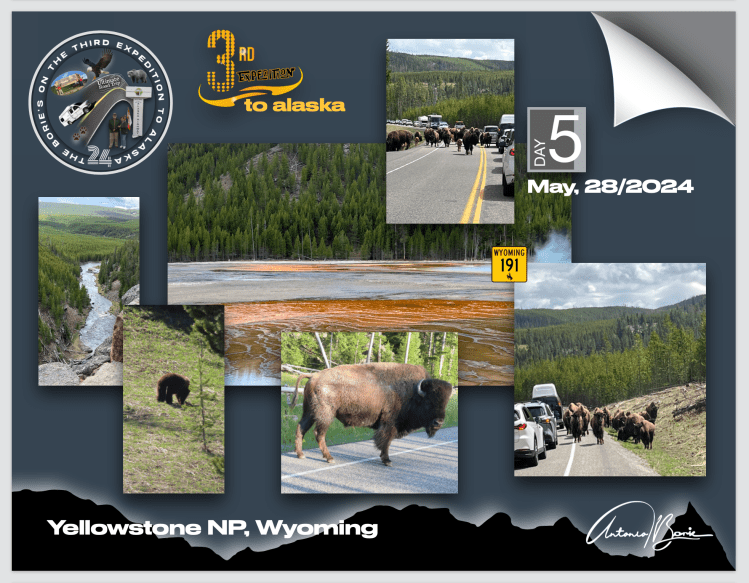
…no início da manhã saímos da cidade de Cody, Wyoming em direcção ao oeste, naquela que é considerada a estrada com o cenário mais bonito do estado de Wyoming (SR #16-20-14) que nos levou até ao Yellowstone National Park!. Íamos de encontro à Cordilheira das Montanhas Rochosas, o céu estava limpo e com tonalidade azul e…, a um certo ponto do nossa rota surge-nos um cenário um pouco invulgar!.
…so let’s explain where we’ve been on this fifth day!
…early in the morning we left the city of Cody, Wyoming heading west, on what is considered the road with the most beautiful scenery in the state of Wyoming (SR #16-20-14) that took us to Yellowstone National Park! . We were heading towards the Rocky Mountain Range, the sky was clear and blue and…, at a certain point on our route a slightly unusual scenery appeared!.
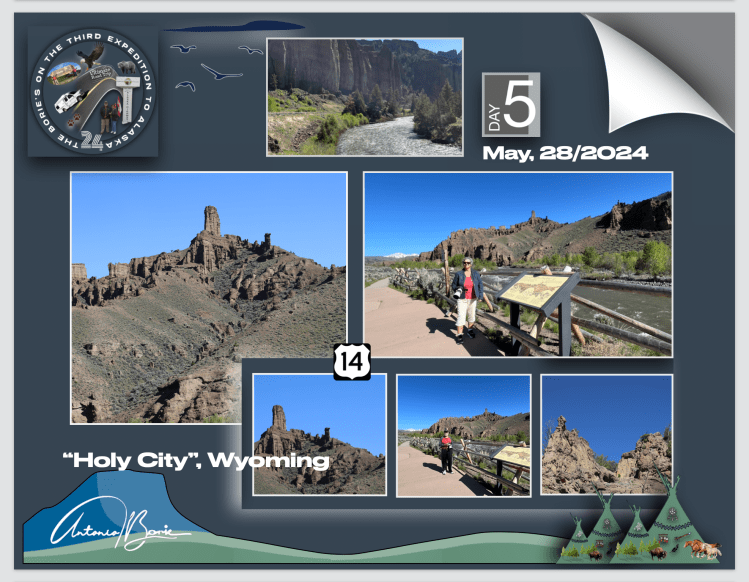
…era uma formação rochosa para lá de um pequeno rio que deslizava suavemente e que…, depois de ler a legenda escrita num painel, dizia que aquela área ficou conhecida como “Cidade Santa”, claro, tudo isto depois que alguns grupos turísticos que visitavam a área de Yellowstone dizerem: “que o seu perfil lembrava da antiga Jerusalém”!.
…it was a rock formation beyond a small river that flowed gently and that…, after reading the caption written on a panel, it said that that area became known as “Holy City”, of course, all this after some tourist groups that visited the Yellowstone area to say: “its profile was reminiscent of ancient Jerusalem”!.
…e o nome de “Cidade Santa”, pegou!. E nós, depois de admirar o cenário verificamos que toda aquela área é uma formação rochosa única criada há milhões de anos, talvez através de violentas erupções vulcânicas!. Havia outros viajantes tal como nós que paravam e iam admirar o cenário e alguns diziam que conheciam a lenda e que: “cada vez que passavam é diferente porque o sol é diferente, de manhã há muitas sombras e vêem-se torres”!. Outros diziam: “não pensamos que sejam torres nem tanto como uma cidade, mas como uma colecção de torres”!. A nós, também nos pareceu uma colecção de torres e…, eram deslumbrantes e valeu a pena parar!.
…and the name of the “Holy City” stuck! And we, after admiring the scenery, realized that the entire area is a unique rock formation created millions of years ago, perhaps through violent volcanic eruptions! There were other travelers like us who stopped and admired the scenery and some said that they knew the legend and that: “every time they pass by it is different because the sun is different, in the morning there are many shadows and you can see towers”!. Others said: “we don’t think of them as towers, not so much as a city, but as a collection of towers”!. To us, it also seemed like a collection of towers and…, they were stunning and worth stopping by!
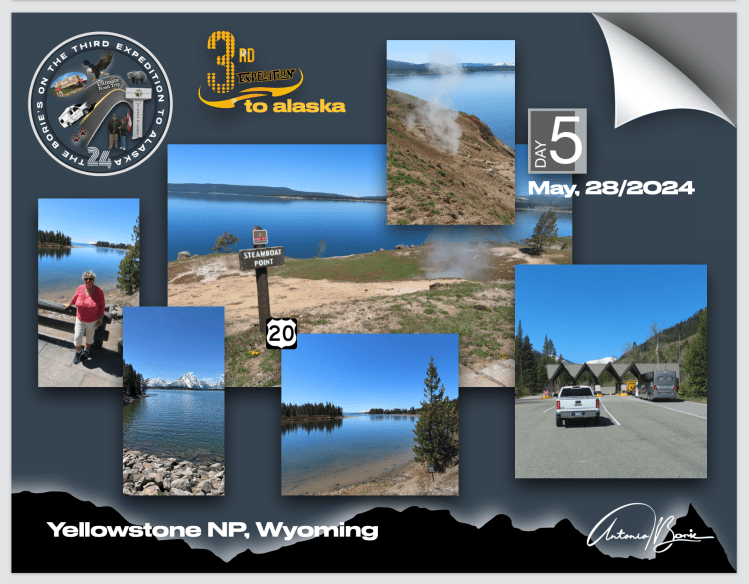
…continuámos a nossa rota rumo ao oeste parando na entrada leste do Yellowstone National Park para a foto junto do painel informativo!. Este parque é famoso por entre outras atrações, tem os seus “Geysers”, que são umas fontes termais, que entram em erupção periodicamente, lançando uma coluna de água quente e vapor para o ar…, que podemos observar, caminhando por umas “passadeiras”, em madeira que nos dão acesso, mesmo em frente às colunas de água quente e vapor, que se perdem na atmosfera!.
…we continued our route westwards, stopping at the eastern entrance to Yellowstone National Park for a photo next to the information panel!. This park is famous for, among other attractions, it has its “Geysers”, which are hot springs, which erupt periodically, releasing a column of hot water and steam into the air…, which we can observe, walking along some “treadmills”. ”, in wood that gives us access, right in front of the columns of hot water and steam, which are lost in the atmosphere!.
…o centro do grande ecosistema de Yellowstone, é um dos maiores ecosistemas de clima temperado ainda restantes no planeta e…, o “Geyser” mais famoso do mundo, denominado “Old Faithful”, do qual nos podemos aproximar, encontra-se neste parque!.
…the center of the great Yellowstone ecosystem, is one of the largest remaining temperate climate ecosystems on the planet and…, the most famous “Geyser” in the world, called “Old Faithful”, which we can get close to, is located in this park!.
…felizmente não durante a nossa visita, mas Yellowstone já registou três grandes eventos eruptivos nos últimos 2,2 milhões de anos, o último dos quais ocorreu há aproximadamente 640.000 anos!. Estas erupções são as de maiores proporções ocorridas neste “calhau” a que chamamos Terra e…, durante esse período de tempo, provocou alguma alteração no clima em períodos posteriores à sua ocorrência!.
…fortunately not during our visit, but Yellowstone has recorded three major eruptive events in the last 2.2 million years, the last of which occurred approximately 640,000 years ago!. These eruptions are the largest to occur on this “pebble” that we call Earth and…, during that period of time, they caused some changes in the climate in periods subsequent to their occurrence!.
…e mais ainda, porque também nos dizem que, muito antes de haver presença humana em Yellowstone, pois essa presença remonta mais ou menos a 11.000 anos, uma grande erupção vulcânica, ejectou um volume imenso de cinza vulcânica que cobriu todo o oeste dos USA, a maioria do centro-oeste, o norte do México e algumas áreas da costa leste do Oceano Pacífico, deixando uma enorme caldeira vulcânica, assentada sobre uma câmara magmática!.
…and even more so, because we are also told that, long before there was a human presence in Yellowstone, as this presence dates back more or less 11,000 years, a large volcanic eruption ejected an immense volume of volcanic ash that covered the entire western USA , most of the Midwest, northern Mexico and some areas of the east coast of the Pacific Ocean, leaving a huge volcanic caldera, sitting on a magma chamber!.
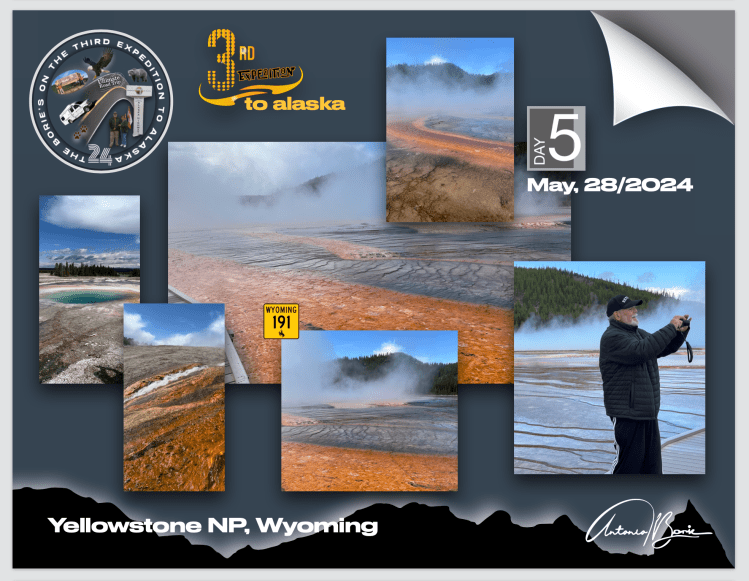
…depois de explicar este rol de acontecimentos, percorremos o parque, em quase todo o lugar em podíamos ter acesso!. Parando aqui e ali, vimos os “Geysers”, com as suas diferentes cores, que correspondem aos diferentes minerais, que brotam do seu interior, cascatas de água pura, saindo das montanhas, rios de água quente, atravessámos o “Continental Divide”, que é o nome dado ao conjunto de linhas formado por uma série de cumes na América do Norte, que separam as bacias hidrográficas que drenam para o oceano Pacífico, oceano Atlântico, incluindo o Golfo do México e mesmo até o oceano Ártico, onde uma das suas linhas divisórias, passa aqui no Parque de Yellowstone!.
…after explaining this list of events, we walked around the park, almost everywhere we could access it!. Stopping here and there, we saw the “Geysers”, with their different colors, which correspond to the different minerals, that spring from their interior, waterfalls of pure water, coming out of the mountains, rivers of hot water, we crossed the “Continental Divide”, which is the name given to the set of lines formed by a series of ridges in North America, which separate the river basins that drain into the Pacific Ocean, the Atlantic Ocean, including the Gulf of Mexico and even the Arctic Ocean, where one of the its dividing lines, passes here in Yellowstone Park!.
…também tivemos a felicidade de ver alguns animais, dos quais dizem haver no parque uma grande variedade de vida selvagem, na qual se incluem ursos pretos e castanhos, lobos, búfalos, alces e muitos outros animais!.
…we were also fortunate to see some animals, of which the park is said to have a wide variety of wildlife, including black and brown bears, wolves, buffalo, elk and many other animals!.
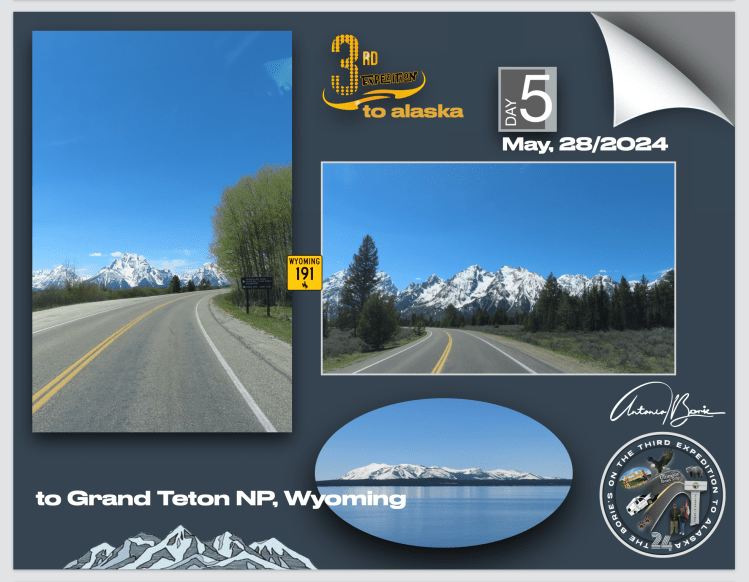
…e o dia era de um céu azul deslumbrante…, com tempo suficiente para ir em direcção ao sul e entrar no Grand Teton National Park, que ocupa um vale, alimentado pelo rio Snake, que com muita frequência forma pequenos lagos, ou de um dos seus afluentes, o rio Gros Ventre, que também por aqui passa antes de entrar no Parque Nacional de Yellowstone!.
…and the day was a dazzling blue sky…, with enough time to head south and enter Grand Teton National Park, which occupies a valley, fed by the Snake River, which very often forms small lakes, or a one of its tributaries, the Gros Ventre River, which also passes through here before entering Yellowstone National Park!.
…a vida selvagem aqui também é constante, mesmo vista da estrada ou nas nossas frequentes paragens, apreciando entre outras, o pico mais alto das montanhas de Teton, o “Grand Teton”, que foi baptizado por um caçador francês, que devia de ser uma pessoa romântica, pois ao observá-lo, do lado do estado de Idaho, logo lhe chamou “tétons”, que dizem que é um calão francês que designa “mamilos” e…, cuja elevação média do vale é de mais de 6.500 pés acima do nível do mar, onde aparecem as grandes montanhas da Cordilheira Teton, que podem atingir mais de outros 6.500 pés de altura!.
..wildlife here is also constant, even seen from the road or in our frequent stops, enjoying among others, the highest peak of the Teton mountains, the “Grand Teton”, which was named by a French hunter, who must of being a romantic person, because when observing it, from the side of the state of Idaho, he immediately called it “tetons”, which is said to be a French slang term that designates “nipples” and…, whose average elevation of the valley is more than 6,500 feet above sea level, where the great mountains of the Teton Range appear, which can reach more than another 6,500 feet in height!.
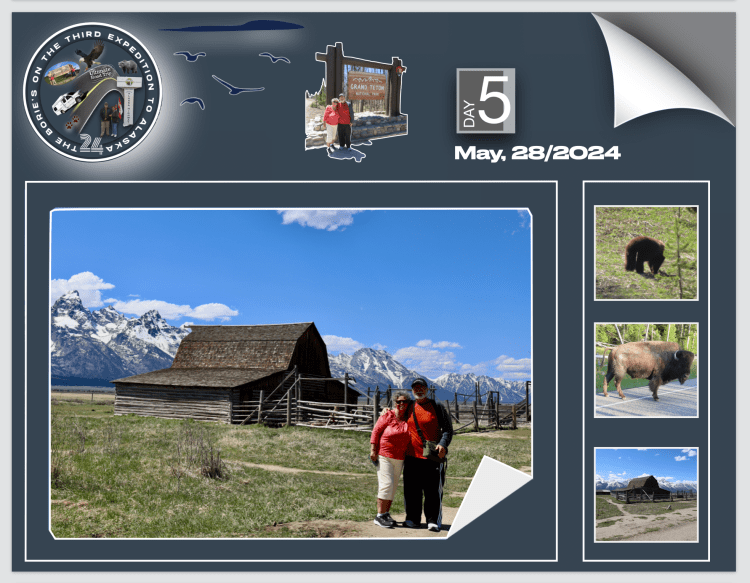
…da última vez que visitámos este parque, em algumas áreas e em alguns momentos estava nevando, tornando quase impossível parar em alguns locais onde o cenário era deslumbrante, no entanto, desta vez havia céu quase azul, e houve tempo para fotografar as ruínas do que é o celeiro considerado mais fotografado dos USA, a oeste da estrada conhecida como Mormon Row, próximo da cadeia de montanhas que está quase sobre ele, formando uma composição visual impressionante!. No entanto, o local não é apenas famoso porque é fotogênico, porque o celeiro é tudo o que resta da propriedade construída por Thomas Alma Moulton e seus filhos entre 1912 e 1945!.
…the last time we visited this park, in some areas and at times it was snowing, making it almost impossible to stop in some places where the scenery was stunning, however, this time there were almost blue skies, and there was time to photograph the ruins of the park. which is considered the most photographed barn in the USA, west of the road known as Mormon Row, close to the mountain range that is almost above it, forming an impressive visual composition!. However, the site is not just famous because it is photogenic, because the barn is all that remains of the property built by Thomas Alma Moulton and his sons between 1912 and 1945!.
…e o fim do dia aproximava-se e…, como mandam os regulamentos do Parque Nacional Yellowstone, ninguém pode dormir dentro do parque sem ser autorizado e, como nesta época ainda só um ou dois Parques de RV lá dentro estão abertos e com reservas de há alguns meses, claro, estão esgotados, ou seja não existe nenhum lugar!. Resultado!. Saímos, vindo dormir fora do lado oeste, já no estado de Montana, e regressámos ao parque ao outro dia pela manhã!.
…and the end of the day approached and…, as per Yellowstone National Park regulations, no one can sleep inside the park without authorization and, as at this time of year, only one or two RV parks inside are open and with reservations a few months ago, of course, they are sold out, that is, there is no place!. Result!. We left, sleeping outside on the west side, in the state of Montana, and returned to the park the next morning!.
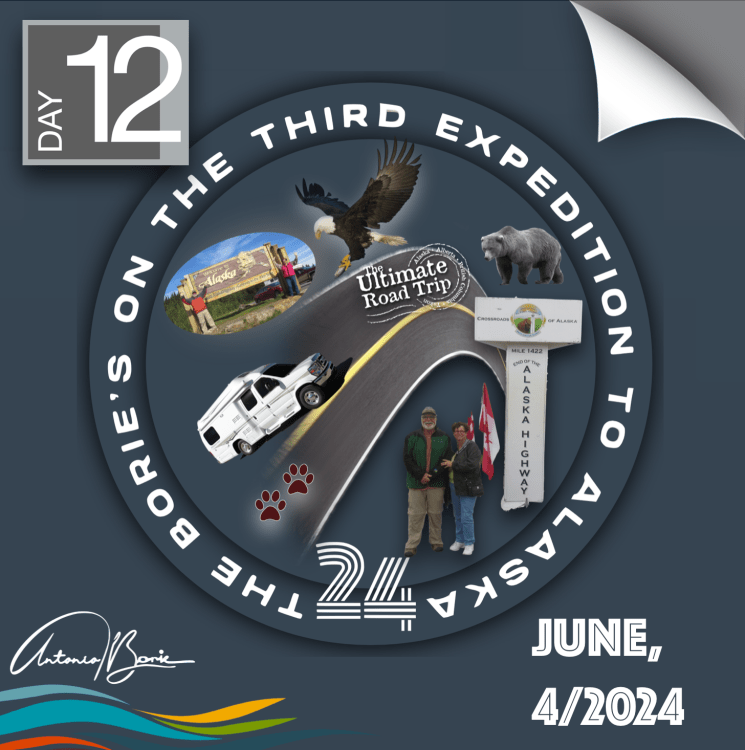
…já éramos um pouco veteranos quando iniciámos esta nossa “Terceira Expedição ao Território do Alaska”!. Era um retorno à natureza ainda pura numa jornada quase sem limites onde felizmente ainda existem alguns dos ambientes mais extremos que a Mãe Natureza tem para nos oferecer!.
…we were already a bit of a veteran when we started our “Third Expedition to the Territory of Alaska”!. It was a return to pure nature on an almost limitless journey where fortunately there are still some of the most extreme environments that Mother Nature has to offer us!.
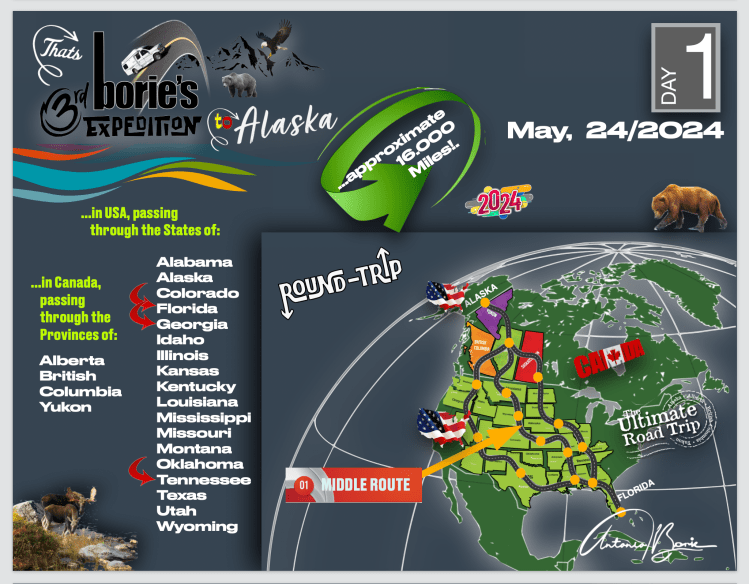
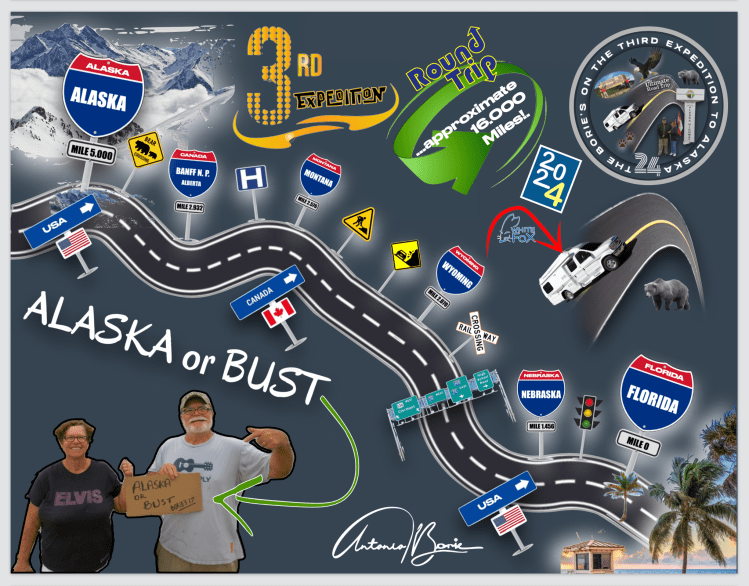
…e, não era lá muito fácil nesta já um pouco avançada idade organizar uma expedição de aproximadamente 16.000 milhas, onde as dificuldades iriam ser muitas, porque nesta altura do ano é que começam as reparações nas estradas, pontes e outras estruturas, resultado das avalanches e descongelamentos das neves que cobrem as montanhas que iríamos atravessar, sobretudo no norte do Canadá!.
…and, it was not very easy at this early age to organize an expedition of approximately 16,000 miles, where the difficulties would be many, because at this time of year repairs will begin on roads, bridges and other structures, as a result of avalanches and Thawing of the snow that covers the mountains that we would cross, mainly in northern Canada!.
…para nos preparar-mos, antes fizemos visitas médicas, grandes caminhadas diárias, cuidados na alimentação e sobretudo um completo diagnóstico à nossa “White Fox” (caravana), que sempre reagiu positivamente às dificuldades que aqui e ali iam surgindo…, tanto no longo percurso de ida e volta como nos diferentes cantos por onde andámos nesse território ainda bastante selvagem do Alaska, onde as temperaturas caem muito abaixo de zero e as pessoas caminham em dois mundos, “um dos modos tradicionais e um dos desafios do século XXI”!.
…to prepare ourselves, we first made medical visits, long daily walks, careful eating and above all a complete diagnosis of our “White Fox” (caravan), which always reacted positively to the difficulties that arose here and there…, both in long journey there and back like in the different corners where we walked in this still very wild territory of Alaska, where temperatures drop well below zero and people walk in two worlds, “one of the traditional ways and one of the challenges of the 21st century” !.
…tudo isto, não mencionando a vida selvagem da última fronteira da América, onde no sul do território as sobrevivências são ditadas pelas marés, que em certas regiões podem atingir uma diferença de aproximadamente 20 a 25 pés, e no norte estas mesmas sobrevivências são ditadas pelas temperaturas dos climas árticos onde designadamente o inverno não torna tudo num país das maravilhas e mostra-nos as dificuldades vividas pelos que vivem nas terras próximas do Rio Yukon, onde ainda usam o conhecimento transmitido de geração em geração para poderem sobreviver e prosperar!.
…all this, not mentioning the wildlife of America’s last frontier, where in the south of the territory survivals are dictated by the tides, which in certain regions can reach a difference of approximately 20 to 25 feet, and in the north these same survivals are dictated (by the temperatures of arctic climates where, in particular, winter does not turn everything into a wonderland and shows us the difficulties experienced by those who live in the lands close to the Yukon River, where they still use the knowledge transmitted from generation to generation to survive and prosper!.
…depois deste pequeno diálogo, vamos então iniciar a nossa “Terceira Expedição ao Alaska”!.
…after this little dialogue, let’s start our “Third Expedition to Alaska”!.
…convictos de seríamos agraciados e aquecidos pela maravilhosa luz do sol que, depois de passar aproximadamente pelo paralelo 43º N, nos beneficia de 16 a 20 horas por dia, às vezes mais e, nos ia iluminar em algumas das mais belas paisagens do mundo!.
…convinced that we would be graced and warmed by the wonderful sunlight that, after passing approximately the 43º N parallel, we benefited from 16 to 20 hours a day, sometimes more, and would illuminate us in some of the most beautiful landscapes in the world!.
…era no final do mês de Maio quando iniciámos uma viajem em direcção ao oeste, um pouco antes de começar uma curva para norte, depois outra vez para oeste, mas sempre no sentido norte, que sabíamos que iria ser completa com tempestades de neve, chuva, pedras e poeira, lama, inundações e áreas de reparação de estradas, pontes improvisadas em madeira, atravessando alguns rios em jangadas!.
…it was at the end of May when we began a journey towards the west, just before beginning a curve to the north, then again to the west, but always in a northerly direction, which we knew would be complete with snow storms, rain , rocks and dust, mud, floods and road repair areas, improvised wooden bridges, crossing some rivers on rafts!.
…dormindo e às vezes cozinhando, ou frequentando alguns restaurantes económicos em localidades rurais, usufruindo apenas do conforto limitado da nossa “White Fox” (caravana), enquanto iríamos ver coisas novas e também conhecer novas pessoas, porque para nós, não existe nada melhor do que o silêncio e o cenário de uma montanha coberta de neve, de um lago natural, cujo fundo é uma montanha ao contrário, tomar banho num rio selvagem de água quente e cristalina, que brota das profundezas da terra, ou mesmo de um longo trecho de estrada deserta, que para nós viajantes do mundo, nos ensina mais, do que cem anos de tranquilidade!.
…sleeping and sometimes cooking, or going to some cheap restaurants in rural locations, enjoying only the limited comfort of our “White Fox” (caravan), while we went to see new things and also meet new people, because for us, there is no nothing better than the silence and the scenery of a mountain covered in snow, a natural lake, whose bottom is a mountain in reverse, bathing in a wild river with warm and crystal clear water, which springs from the depths of the earth, or even from A long stretch of desert road, which for us world travelers, teaches us more than a hundred years of tranquility!.
…como tal, ainda madrugada fizemos os últimos preparativos para a nossa “Terceira Expedição ao Alaska”, saindo de nossa casa no estado da Florida, que fica localizada na região sudeste, sendo o estado mais meridional dos 48 estados da parte continental dos USA, levando alguns géneros alimentícios de primeira necessidade, algumas roupas, tanto para o calor como para chuva ou frio, algum equipamento de pesca, mapas, informação sobre os estados a cruzar, algumas ferramentas, no caso da “White Fox” (caravana) necessitar de ajuda, e claro, sem esquecer a medicina diária!.
…as such, in the early hours of the morning the final preparations for our “Third Expedition to Alaska”, leaving our home in the state of Florida, which is located in the southeast region, being the southernmost state of the 48 states in the continental part of the USA, taking some basic necessities of food, some clothes, both for heat, rain or cold, some fishing equipment, maps, information about the states to cross, some tools, in case the “White Fox” (caravan) needs helps, and of course, without forgetting daily medicine!
…rumo ao norte, quase sempre guiados pelo “sabe tudo do GPS”, desviando-nos um pouco para oeste, passámos pelo estado da Georgia, atravessando a cidade de Atlanta com alguma dificuldade com o tráfico, pois existe uma grande rede de estradas que se cruza nesta área e, se não se vai com muita atenção, não existe GPS que nos valha!.
…heading north, almost always guided by the “know-it-all GPS”, diverting a little west, passing through the state of Georgia, crossing the city of Atlanta with some difficulty with traffic, as there is a large network of roads that If you cross this area and, if you don’t go very carefully, there is no GPS available!
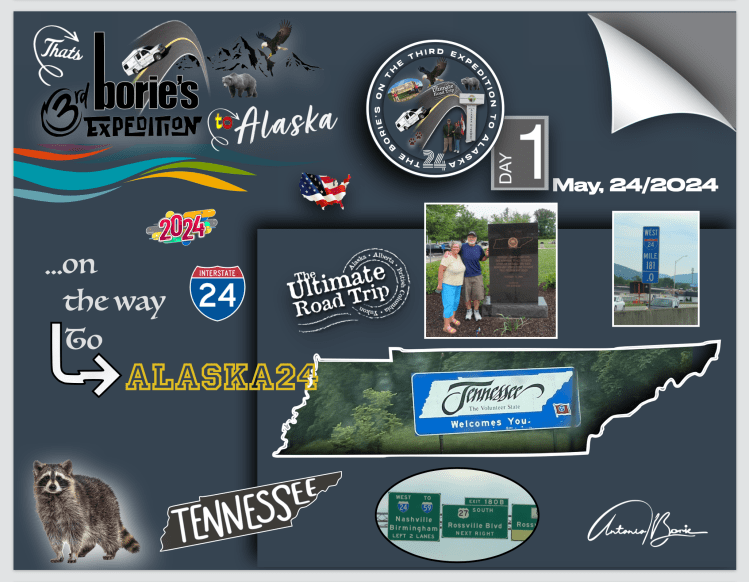
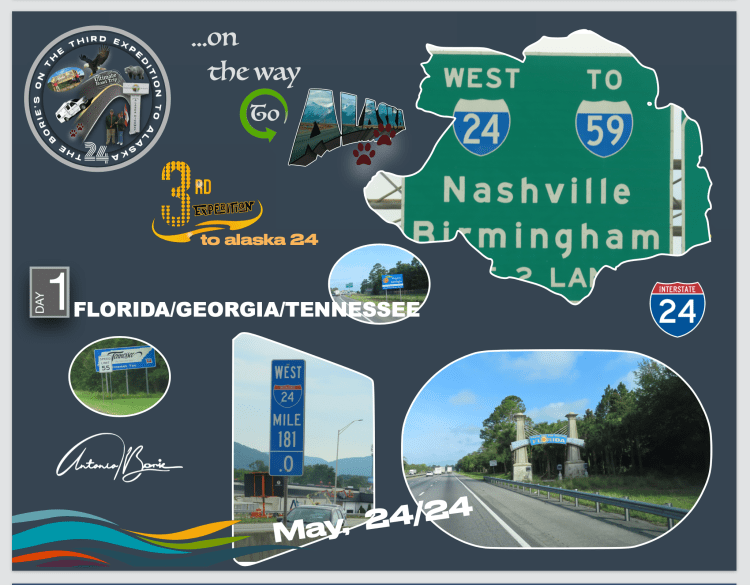
…continuávamos atravessando parte deste estado do Tennessee, passando por algumas vilas ou cidades, que durante o período da colonização britânica era a tal região das Treze Colónias, que na altura faziam parte do atual estado da Carolina do Norte!. No entanto já próximo do escurecer, pernoitámos próximo da cidade de Nashville, num Parque de Rv, depois de viajar por aproximadamente 628 milhas!.
…we continue crossing part of this state of Tennessee, passing through some towns or cities, which during the period of British colonization was the region of the Thirteen Colonies, which at the time were part of the current state of North Carolina!. However, as it approached dark, we spent the night near the city of Nashville, in an RV Park, after traveling approximately 628 miles!.
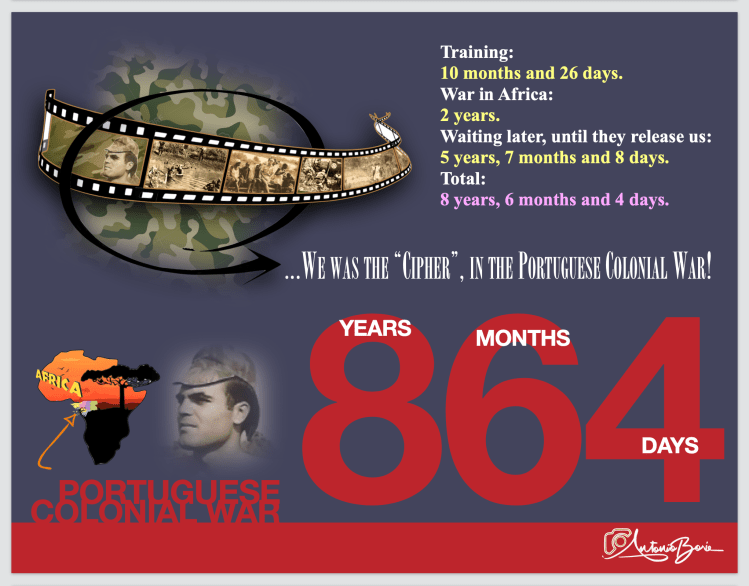
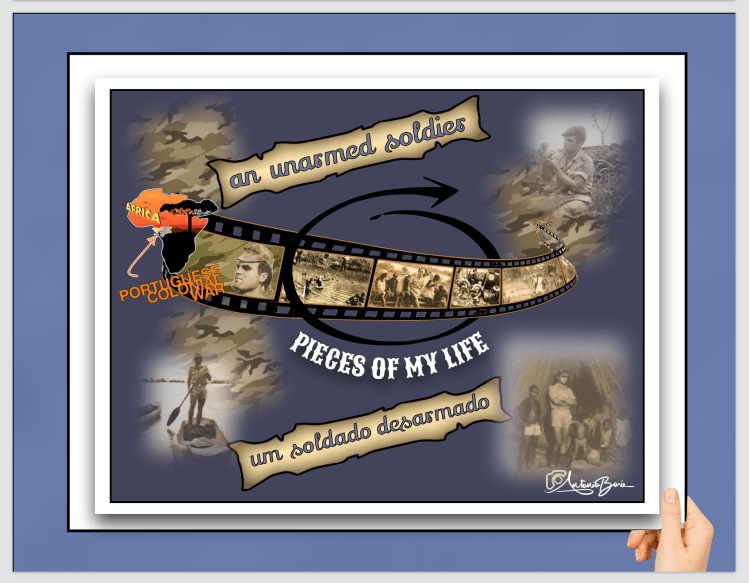
…nas nossas tarefas militares estava incluido a distribuição de “material classificado”, que era o novo código do sistema de cifra e que era feito antes de todos os finais de mês, entregue por mão ao comando de todas as forças militares que se encontravam em cenário de guerra, na zona sob o comando do Agrupamento de que fazíamos parte!.
…our military tasks included the distribution of “classified material”, which was the new code of the cipher system and which was done before every end of the month, delivered by hand to the command of all military forces that were in war scenario, in the area under the command of the Group of which we were part!.
…assim, aproveitávamos a viajem em qualquer coluna militar, mas o mais frequente era aproveitar e voar na avioneta do correio, que pelo menos uma vez por semana passava pelo “posto avançado” onde estávamos estacionados!. Normalmente íamos sentados atrás, ao lado dos sacos do correio e quase sempre levávamos uma “Kodac”, que o Movimento Nacional Feminino nos ofereceu numa das suas visitas!.
…so, we took advantage of the trip in any military column, but the most frequent thing was to take advantage and fly in the mail plane, which at least once a week passed by the “outpost” where we were stationed!). We usually sat in the back, next to the mail bags and almost always carried a “Kodac”, which the National Women’s Movement offered us on one of their visits!
…o piloto era um furriel, a quem carinhosamente chamavam “Pardal”, que todos conhecíamos no nosso “posto avançado”, pelas suas acrobacias!. Íamos aterrar numa povoação perto da fronteira com outro país africano!. Voávamos baixo, pois o “Pardal” conhecia a pista, que não era mais do que uma clareira no capim!. Havia alguma água no solo e não se apercebeu, fez-se à pista e tentou aterrar!.
…the pilot was a furriel, who they affectionately called “Sparrow”, who we all knew in our “outpost”, due to his acrobatics!. We were going to land in a village close to the border with another African country!. We flew low, because “Sparrow” knew the runway, which was nothing more than a clearing in the grass! There was some water on the ground and he didn’t realize it, he got on the runway and tried to land!
…ao tocar o solo molhado a aeronave guinou para o lado esquerdo, voando mais uns tantos metros, rodopia um pouco, para a direita e de novo para a esquerda, seguindo em frente, embora balançando para um lado e para o outro, mas ficando completamente parada e em segurança um pouco mais à frente!.
…when touching the wet ground, the aircraft swerved to the left, flying a few more meters, rotating a little, to the right and again to the left, moving forward, although swaying from one side to the other, but remaining completely stopped and safely a little further ahead!
…por momentos ficámos em pânico!. Com o impacto do aparelho no solo, devíamos de ter dado umas cambalhotas dentro da aeronave…, ou talvez não, nunca chegámos a saber, pois não levávamos qualquer cinto de protecção!. No entanto, recuperado o sentido de orientação, apalpamos a cabeça com as mãos e não vendo qualquer sinal de ferimento, afastámos um saco do correio, batendo com os pés, não nos recordamos se era janela ou porta, que estava na nossa frente!. Com tal impacto, se era porta ou janela, abriu-se!.
…for a moment we were in panic!. With the impact of the device on the ground, we must have done some somersaults inside the aircraft…, or maybe not, we never found out, as we were not carrying any protective belts!. However, once we regained our sense of orientation, we felt our head with our hands and, not seeing any sign of injury, we moved a mail bag aside, stamping it with our feet, we didn’t remember if it was a window or a door, which was in front of us!. With such an impact, whether it was a door or a window, it opened!
…saímos e vimos o alferes miliciano que viajava na frente e ia ficar nessa unidade militar, sentado com a cabeça baixa, sinal de que talvez tivesse perdido os sentidos!. Forçámos a porta que se abriu, e nesse momento olha-nos assustado, fazendo algumas perguntas, parecendo estar em pânico!. Do outro lado, no assento do piloto, “O Pardal”, que nunca chegámos a saber se perdeu o control da aeronave ou o seu sentido de orientação, diz, com a maior calma do mundo: “Vai à volta e abre esta merda, que estou farto de empurrar a porta”!.
…we went out and saw the militia ensign who was traveling in front and was going to stay in that military unit, sitting with his head down, a sign that perhaps he had lost consciousness!. We forced the door to open, and at that moment he looked at us scared, asking some questions, seeming to be in a panic!. On the other side, in the pilot’s seat, “The Sparrow”, who we never got to know if he lost control of the aircraft or his sense of orientation, says, with the greatest calm in the world: “Go around and open this shit, I’m tired of pushing the door”!.
…felizmente, ninguém sofreu qualquer ferimento, a não ser o susto e no dizer do “Pardal”, a aeronave estava operacional!. Em seguida, surgiram os militares, que vinham prestar protecção e levar os sacos do correio que ajudaram a colocar de novo a aeronave em outra posição e passando nós para o lugar da frente, levantando voo de novo usando um lado da clareira no capim, com bastante receio nosso!.
…fortunately, no one suffered any injuries, other than the scare and in the words of “Sparrow”, the aircraft was operational! Then, the military appeared, who came to provide protection and take the mail bags that helped to put the aircraft back in another position and moving us to the front seat, taking off again using one side of the clearing in the grass, with We are very afraid!
…passado um tempo, e perante os sorrisos do “Pardal”, aterrámos de novo no nosso “posto avançado”, depois de fazer umas tantas acrobacias no ar, pois sempre que via uma árvore mais alta, dava uma volta a rasar em seu redor, fazendo a passarada fugir, ou quando surgia um rio ou um pântano passava a rasar a água e sempre que fazia estas manobras, nós agarrávamo-nos à cadeira e às vezes fechávamos os olhos e…, o “Pardal”, logo dizia: “Está visto que não és um militar de acção”!.
…after a while, and with the smiles of the “Sparrow”, we landed again at our “outpost”, after doing a few acrobatics in the air, because whenever I saw a taller tree, I would do a lap around it. , making the birds flee, or when a river or a swamp appeared, it would skim the water and whenever it did these maneuvers, we would hold on to the chair and sometimes close our eyes and…, the “Sparrow”, would immediately say: “It’s obvious that you’re not an action soldier”!
…o alferes miliciano que viajava na frente, a quem abrimos a porta para sair ficou nosso eterno amigo e sempre que passava no nosso “posto avançado”, bebíamos um copo juntos, fazendo juramentos de que nunca se devia dizer nada do medo que na altura sentimos!.
…the militia ensign who was traveling in front, to whom we opened the door to leave, remained our eternal friend and whenever he passed by our “outpost”, we would drink a glass together, swearing that nothing should ever be said about the fear that at the time we feel it!
…o “Kodac” das fotografias desapareceu, talvez fosse juntamente com os sacos do correio!. Gostávamos mesmo daquele “Kodac”, era do tipo que para se tirar uma fotografia, tinha que se puxar uma pequena alavanca do lado do caixote!.
…the “Kodac” in the photographs disappeared, perhaps along with the mail bags! We really liked that “Kodac”, it was the type that to take a photo, you had to pull a small lever on the side of the crate!
Tony Borie, Século XXI. (Tony Borie, 21st Century).
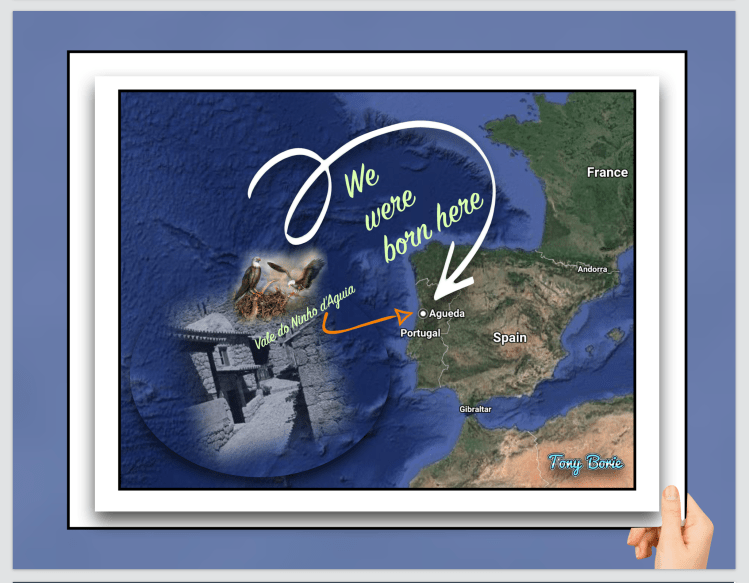
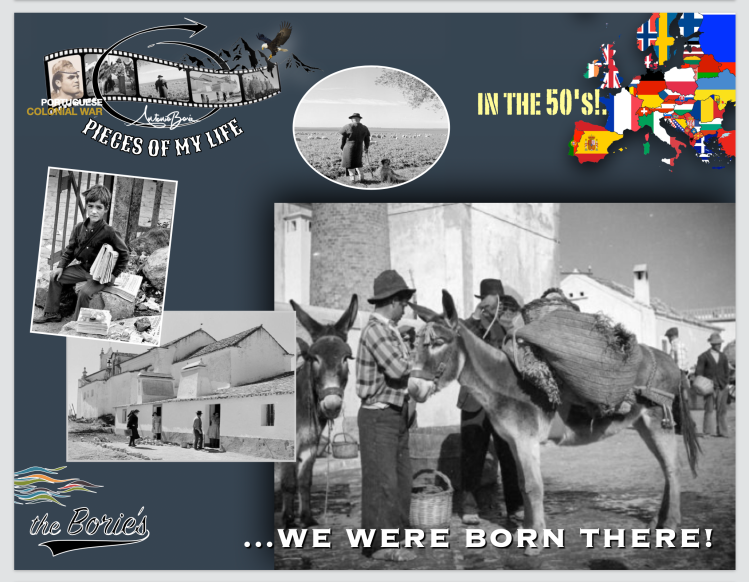
…nas décadas de quarenta e cinquenta do século passado, logo após a segunda guerra mundial, pelo menos no sul da Europa de onde somos oriundos, as experiências das famílias diferiam com base na sua localização, estatuto económico e em algumas circunstâncias individuais, cobriam uma paisagem grande e variada, sempre com base na agricultura!.
…in the forties and fifties of the last century, right after the second world war, at least in southern Europe where we come from, the experiences of families differed based on their location, economic status and in some individual circumstances, covering a large and varied landscape, always based on agriculture!.
…havia crenças, tradições e estilos de vida que vinham dos seus antepassados e, pelo menos nas aldeias e vilas não variavam muito de outros centros urbanos, fossem eles do interior de montanha ou das terras da beira mar, onde as famílias continuaram aspectos de cultura que incluíam práticas agrícolas e técnicas culinárias, para sobreviver!.
…there were beliefs, traditions and lifestyles that came from their ancestors and, at least in the villages and towns, they did not vary much from other urban centers, whether in the interior of the mountains or in the lands by the sea, where families continued aspects of culture which included agricultural practices and culinary techniques, to survive!.
…não importava que fosse agricultor, pescador, ferreiro, carpinteiro, criança, esposa ou mãe, a jornada de trabalho normalmente começava antes do amanhecer e durava até ao pôr do sol, onde ao longo do dia, todos se dedicavam às tarefas essenciais pela sobrevivência e bem de toda a família!.
…it didn’t matter if you were a farmer, fisherman, blacksmith, carpenter, child, wife or mother, the workday normally began before dawn and lasted until sunset, where throughout the day, everyone dedicated themselves to essential tasks for survival and good luck to the whole family!.
…a manhã começava com um modesto desjejum de pão de milho, leite de cabra ou ovelha, chicória, (uma mistura parecida com café), sopa de cebola e batata antes do início do trabalho, dependendo da época do ano, do clima e da estação, e esse sustento era muito necessário, porque uma jornada de trabalho típica poderia durar até 12 horas, praticada seis dias por semana!.
…the morning began with a modest breakfast of cornbread, goat’s or sheep’s milk, chicory, (a coffee-like mixture), onion and potato soup before starting work, depending on the time of year, the weather and the season, and this support was very necessary, because a typical workday could last up to 12 hours, carried out six days a week!.
…as mulheres, quando necessário também ajudavam nas tarefas da agricultura, da pesca ou qualquer outro trabalho, mas normalmente trabalhavam em casa administrando todos os aspectos da casa e dos cuidados com os filhos, incluindo a preparação das refeições e a educação básica dos filhos, como tal, os filhos adoravam a mãe, que sempre lembravam ao longo de toda a sua vida!.
…women, when necessary, also helped with farming, fishing or any other work, but they normally worked at home managing all aspects of the home and childcare, including preparing meals and providing basic education for their children, As such, the children adored their mother, whom they always remembered throughout their lives!.
…além disso, as mulheres casadas de famílias não agrícolas muitas vezes trabalhavam ao lado dos maridos em lojas, comércios ou tavernas, e as mulheres solteiras ou viúvas trabalhavam como costureiras, parteiras ou taberneiras e as crianças muitas vezes ajudavam os pais no seu trabalho, aprendendo competências valiosas para o seu futuro!.
…in addition, married women from non-agricultural families often worked alongside their husbands in shops, businesses or taverns, and single women or widows worked as seamstresses, midwives or innkeepers and children often helped their parents with their work, learning valuable skills for your future!.
…naquela época, o almoço era chamado de “jantar” e era a maior e mais farta refeição do dia à base de sopa de batatas e outros vegetais da estação, como milho ou couves, onde também podia entrar alguma carne salgada de porco ou mesmo aves, seguindo-se um curto período de descanso, onde às vezes se permitia que as famílias se conectassem com os vizinhos e fortalecessem os laços sociais!.
…at that time, lunch was called “dinner” and was the biggest and most filling meal of the day, based on potato soup and other seasonal vegetables, such as corn or cabbage, which could also include some salted pork or even birds, followed by a short period of rest, where families were sometimes allowed to connect with neighbors and strengthen social ties!.
…também havia algumas excepções, como por exemplo durante os períodos de pico agrícola, como o plantio na primavera e a colheita no outono, a jornada de trabalho das famílias era ampliada, pois todos os membros da família se dedicavam às tarefas essenciais, onde as mulheres preparavam a comida de madrugada a que chamavam “o farnel” e era levada e comida nos campos agrícolas, porque a natureza era mais exigente nestas épocas exigindo mais horas para garantir uma colheita bem-sucedida!.
…there were also some exceptions, for example during peak agricultural periods, such as planting in spring and harvesting in autumn, families working hours were extended, as all family members dedicated themselves to essential tasks, where the Women prepared the food early in the morning, which they called “farnel” and it was taken and eaten in the agricultural fields, because nature was more demanding at these times, requiring more hours to guarantee a successful harvest!.
…por outro lado, nos meses de inverno ou durante condições climáticas adversas, quando as atividades ao ar livre eram mais limitadas, a jornada de trabalho poderia ser mais curta, onde as famílias se concentravam nas tarefas internas e domésticas, como preparar alimentos para armazenamento ou tecer e remendar roupas!.
…conversely, in the winter months or during adverse weather conditions when outdoor activities were more limited, the workday could be shorter where families focused on indoor and domestic tasks such as preparing food for storage or weave and mend clothes!.
…continuando…, as roupas eram geralmente feitas de materiais de origem local, especialmente lã de ovelha e algodão e linho cultivados, e as famílias produziam os seus próprios têxteis através da fiação e da tecelagem!. As roupas do dia a dia eram modestas e simples, refletindo as necessidades práticas da vida diária!. Os homens normalmente usavam tamancos, camisas, coletes e calças, enquanto as mulheres vestiam vestidos com saias rodadas cobertas por longos aventais!.
…continuing…, clothes were generally made from locally sourced materials, especially sheep’s wool and cultivated cotton and linen, and families produced their own textiles through spinning and weaving!. Everyday clothes were modest and simple, reflecting the practical needs of daily life!. Men typically wore clogs, shirts, vests and pants, while women wore dresses with full skirts covered by long aprons!.
…e para terminar…, as famílias à noite retiravam-se para as suas camas, que eram feitas e recheadas com colchões de palha, e como havia poucos móveis na casa, raramente havia dormitórios designados, em vez disso, as pessoas dormiam em áreas de convivência com vários membros da família compartilhando o mesmo quarto, onde as crianças mais velhas dormiam numa cama e os bebés e as crianças muito pequenas dormiam ao lado da mãe e…, com o ritmo natural da luz do dia e a iluminação artificial muito limitada, as horas de dormir eram cedo, porque havia a necessidade de preparação para os longos dias de trabalho físico!.
…and to finish…, families at night retired to their beds, which were made and stuffed with straw mattresses, and as there was little furniture in the house, there were rarely designated bedrooms, instead, people slept in areas of coexistence with several family members sharing the same room, where older children slept in one bed and babies and very young children slept next to their mother and…, with the natural rhythm of daylight and very limited artificial lighting, bedtimes were early, because there was a need to prepare for long days of physical work!.
Tony Borie, Século XXI. (Tony Borie, 21st Century).
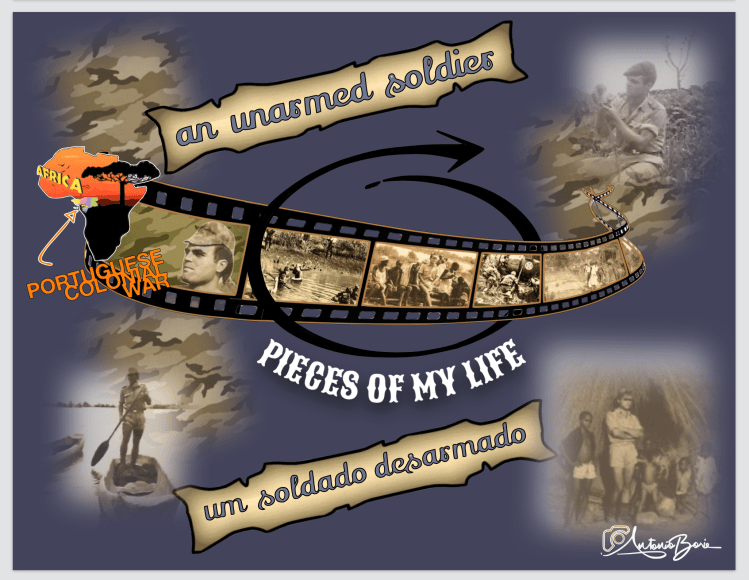
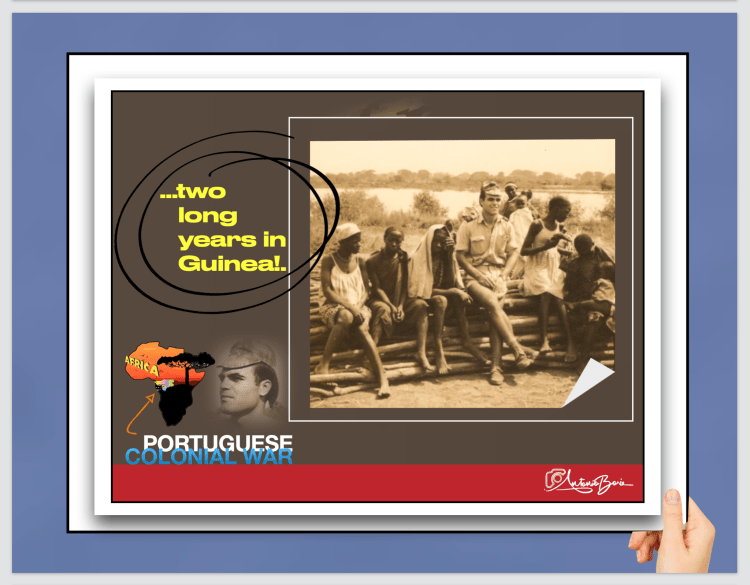
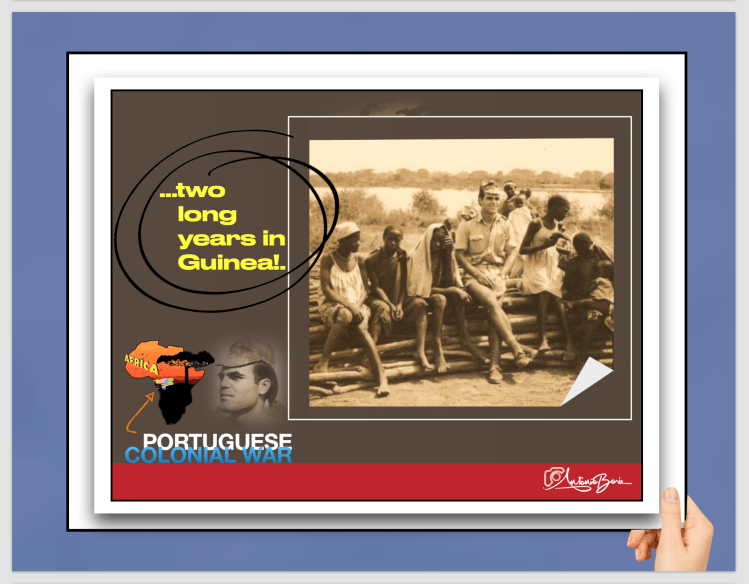
…chegámos lá, àquele enclave onde o mapa do continente africano faz aquela curva na costa do oceano Atlântico, à então Província Colonial Portuguesa da Guiné, em Maio de 1964 e…, passado cinco ou seis dias fomos transportados até próximo de uma aldeia a mais ou menos sessenta quilómetros do interior onde ajudámos a construir um “posto avançado”, que fomos obrigados a defender durante os já algumas vezes mencionados dois longos anos em que lá permanecemos, onde sempre tivemos uma sensação sinistra de estar ali, quase sobrevivendo, enterrando as vítimas, tanto os nossos companheiros combatentes como alguns inimigos…, em valas comuns!.
…we arrived there, to that enclave where the map of the African continent makes that curve on the coast of the Atlantic Ocean, to the then Portuguese Colonial Province of Guinea, in May 1964 and…, after five or six days we were transported close to another village or less sixty kilometers of the interior where we helped to build an “outpost”, which we were forced to defend during the sometimes mentioned two long years that we remained there, where we always had a sinister feeling of being there, almost surviving, burying the victims, both our fellow combatants and some enemies…, in mass graves!.
…e ainda hoje, a nossa memória por vezes desperta-nos, relembrando os ataques a esse nosso “posto avançado”, podendo mesmo ouvir o barulho contínuo de tiros e explosões de granadas, foguetes e morteiros e, depois de algum tempo podemos mesmo ver a fumaça roxa, amarela ou verde subindo acima das copas das árvores da selva pantanosa em volta do nosso “posto avançado”, enquanto os nossos companheiros combatentes tentavam sair e ir marcar as suas posições para repelir aqueles malditos ataques inimigos!.
…and even today, our memory sometimes awakens us, remembering the attacks on our “outpost”, and we can even hear the continuous noise of shots and explosions of grenades, rockets and mortars and, after some time, we can even see the purple, yellow or green smoke rising above the treetops of the swampy jungle around our “outpost”, while our fellow fighters tried to get out and mark their positions to repel those damned enemy attacks!.
…e…, quando os audazes companheiros combatentes dos diversos pelotões de combate saíam em patrulha a qualquer hora da noite ou do dia, à medida que eles passavam por nós, um por um, trocávamos olhares em câmara lenta nos seus olhos, que revelavam um pressentimento sobre os perigos que iriam viver durante aquelas malditas patrulhas sobre aquelas selvas e florestas pantanosas!.
…and…, when the daring fellow fighters from the different combat platoons went out on patrol at any time of the night or day, as they passed us, one by one, we exchanged slow-motion glances into their eyes, which revealed a I had a premonition about the dangers they would experience during those damned patrols in those jungles and swampy forests!.
…e também…, mesmo ao redor do nosso “posto avançado” existiram cenas chocantes e sem explicação, como por exemplo um companheiro combatente, dos mais audazes, que uns dias depois de ser condecorado com a medalha cruz de guerra de segunda classe, tudo pela sua valentia debaixo de fogo inimigo, ajudando assim para que o seu grupo de combate não fosse totalmente dizimado, foi encontrado enforcado numa árvore na floresta pantanosa que existia ao redor do nosso “posto avançado”, e…, que na época este seu acto foi chamado de “suicídio”, mas nunca nenhum de nós soube…, o verdadeiro motivo!.
…and also…, right around our “outpost” there were shocking and inexplicable scenes, such as a fellow combatant, one of the most daring, who a few days after being decorated with the second class war cross medal, all for his bravery under enemy fire, thus helping to ensure that his combat group was not completely decimated, he was found hanging from a tree in the swampy forest that existed around our “outpost”, and…, that at the time this act of his It was called “suicide”, but none of us ever knew…, the real reason!.
Tony Borie, Século XXI. (Tony Borie, 21st Century).







 Tony Borie - "Pieces of my life"