
…viajar, por vezes não é um luxo é uma necessidade do espírito humano…, e nós, nesta um pouco avançada idade, uma das entre outras razões, viajamos porque nos sentimos desconfortáveis por estar confortáveis demais!. E quando viajamos, o mundo é a nossa casa, o céu é o nosso teto onde penduramos o boné e…, todas as pessoas que encontramos nos locais mais remotos por onde andamos…, são parte da nossa família, porque preferimos olhar para a nossa vida, e dizer: “não acredito que fiz isto” em vez de dizer: “se ao menos tivesse feito isto”!.
…travel, sometimes is not a luxury, it is a necessity of the human spirit…, and we, at this slightly advanced age, one of the other reasons, we travel because we feel uncomfortable because we are too comfortable!. And when we travel, the world is our home, the sky is our roof where we hang our cap and…, all the people we meet in the most remote places we travel…, are part of our family, because we prefer to look at our life, and say, “I can’t believe I did this” instead of saying, “If only I had done this”!
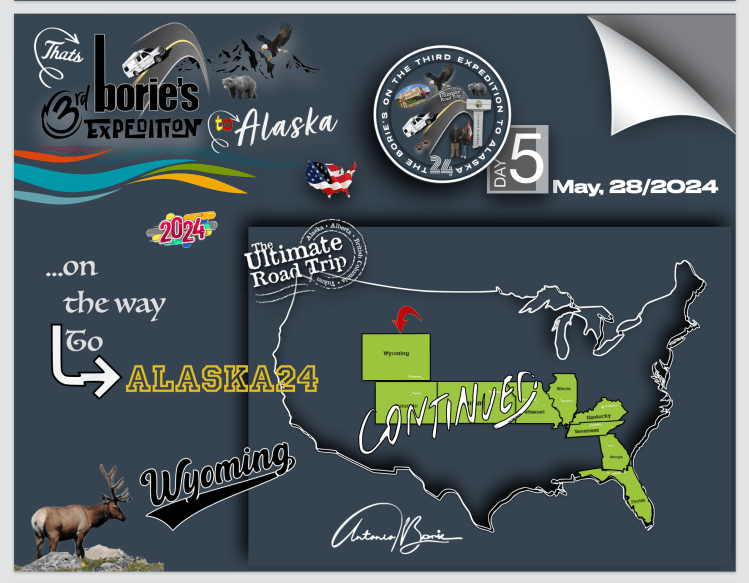

…vamos então explicar por onde andámos neste quinto dia!.
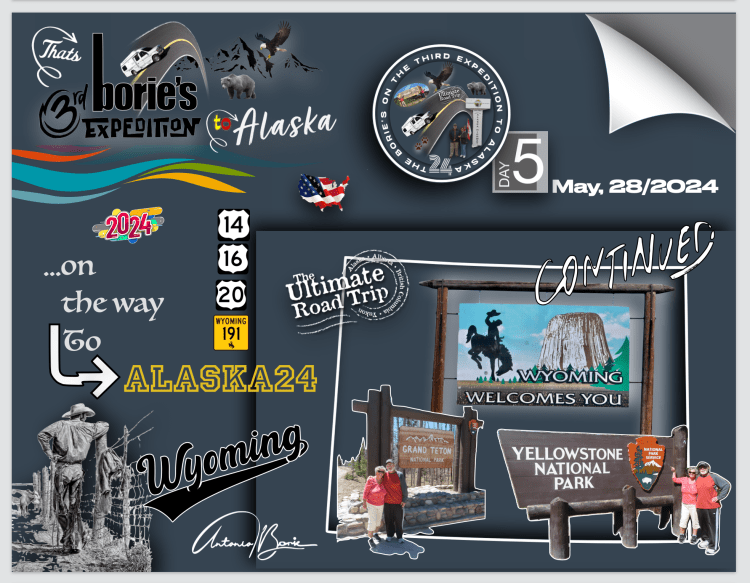
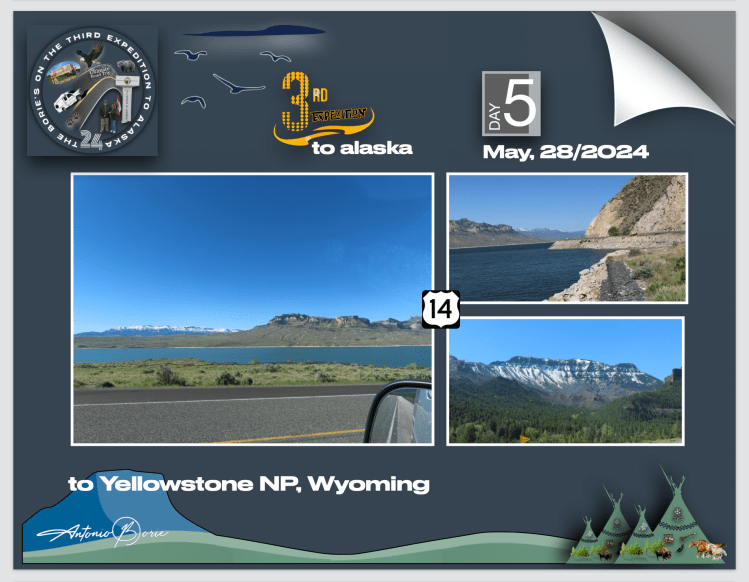
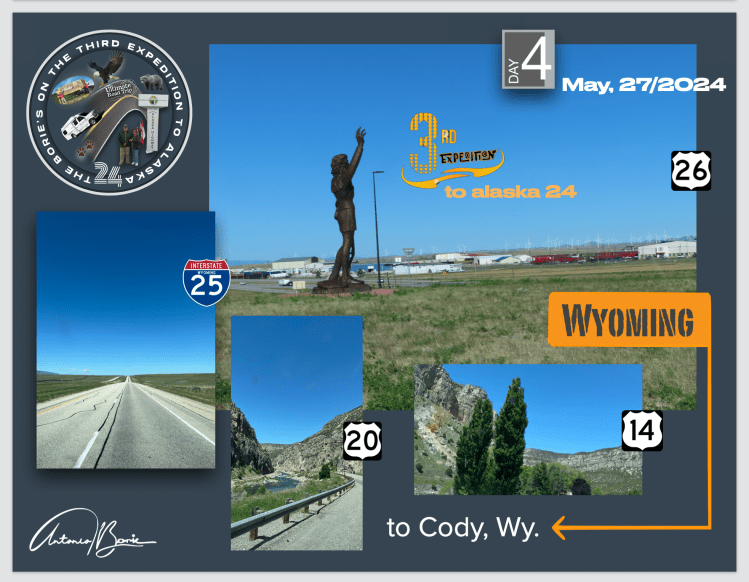
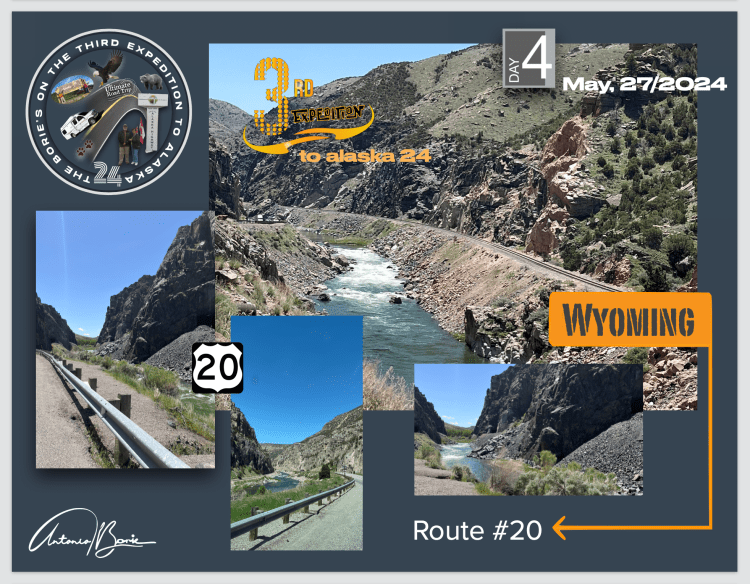
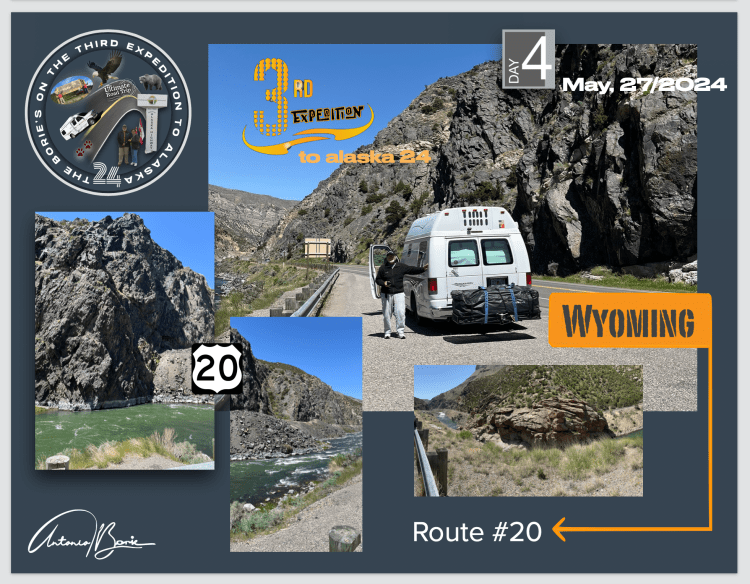
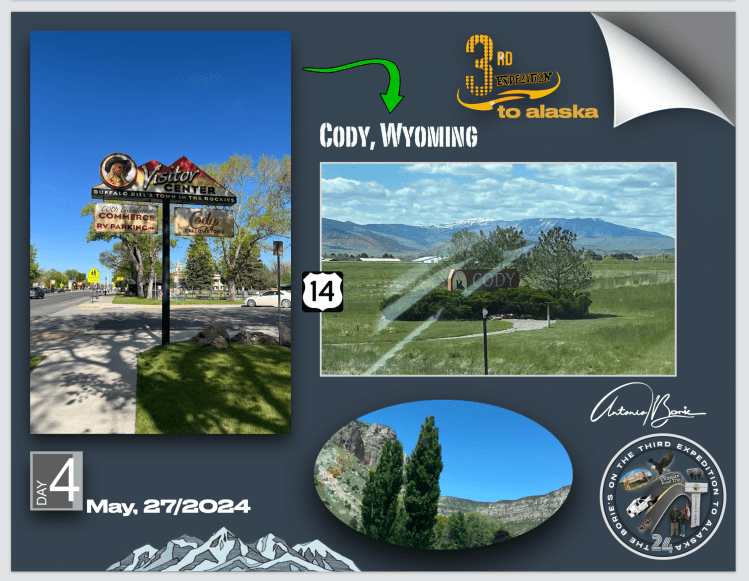
…no início da manhã saímos da cidade de Cody, Wyoming em direcção ao oeste, naquela que é considerada a estrada com o cenário mais bonito do estado de Wyoming (SR #16-20-14) que nos levou até ao Yellowstone National Park!. Íamos de encontro à Cordilheira das Montanhas Rochosas, o céu estava limpo e com tonalidade azul e…, a um certo ponto do nossa rota surge-nos um cenário um pouco invulgar!.
…so let’s explain where we’ve been on this fifth day!
…early in the morning we left the city of Cody, Wyoming heading west, on what is considered the road with the most beautiful scenery in the state of Wyoming (SR #16-20-14) that took us to Yellowstone National Park! . We were heading towards the Rocky Mountain Range, the sky was clear and blue and…, at a certain point on our route a slightly unusual scenery appeared!.
…era uma formação rochosa para lá de um pequeno rio que deslizava suavemente e que…, depois de ler a legenda escrita num painel, dizia que aquela área ficou conhecida como “Cidade Santa”, claro, tudo isto depois que alguns grupos turísticos que visitavam a área de Yellowstone dizerem: “que o seu perfil lembrava da antiga Jerusalém”!.
…it was a rock formation beyond a small river that flowed gently and that…, after reading the caption written on a panel, it said that that area became known as “Holy City”, of course, all this after some tourist groups that visited the Yellowstone area to say: “its profile was reminiscent of ancient Jerusalem”!.
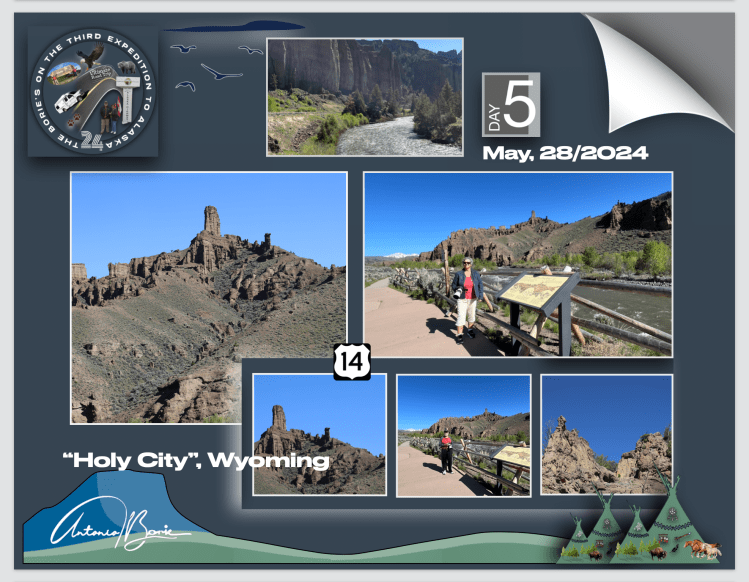
…e o nome de “Cidade Santa”, pegou!. E nós, depois de admirar o cenário verificamos que toda aquela área é uma formação rochosa única criada há milhões de anos, talvez através de violentas erupções vulcânicas!. Havia outros viajantes tal como nós que paravam e iam admirar o cenário e alguns diziam que conheciam a lenda e que: “cada vez que passavam é diferente porque o sol é diferente, de manhã há muitas sombras e vêem-se torres”!. Outros diziam: “não pensamos que sejam torres nem tanto como uma cidade, mas como uma colecção de torres”!. A nós, também nos pareceu uma colecção de torres e…, eram deslumbrantes e valeu a pena parar!.
…and the name of the “Holy City” stuck! And we, after admiring the scenery, realized that the entire area is a unique rock formation created millions of years ago, perhaps through violent volcanic eruptions! There were other travelers like us who stopped and admired the scenery and some said that they knew the legend and that: “every time they pass by it is different because the sun is different, in the morning there are many shadows and you can see towers”!. Others said: “we don’t think of them as towers, not so much as a city, but as a collection of towers”!. To us, it also seemed like a collection of towers and…, they were stunning and worth stopping by!
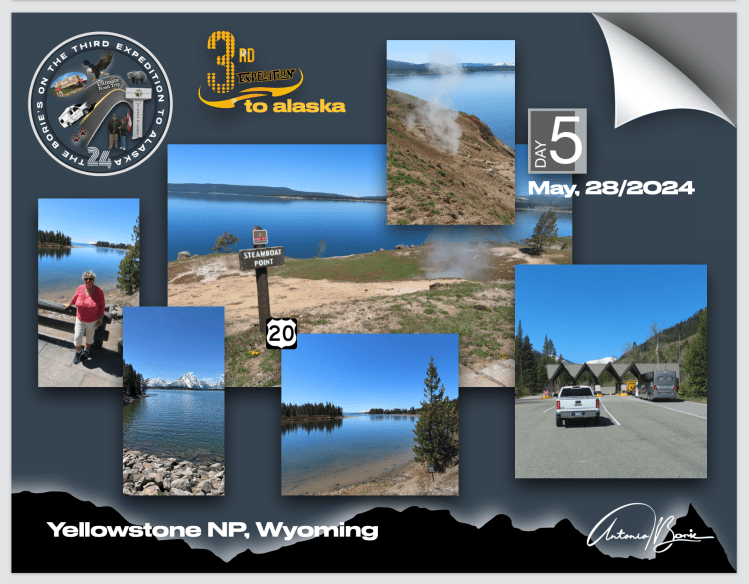
…continuámos a nossa rota rumo ao oeste parando na entrada leste do Yellowstone National Park para a foto junto do painel informativo!. Este parque é famoso por entre outras atrações, tem os seus “Geysers”, que são umas fontes termais, que entram em erupção periodicamente, lançando uma coluna de água quente e vapor para o ar…, que podemos observar, caminhando por umas “passadeiras”, em madeira que nos dão acesso, mesmo em frente às colunas de água quente e vapor, que se perdem na atmosfera!.
…we continued our route westwards, stopping at the eastern entrance to Yellowstone National Park for a photo next to the information panel!. This park is famous for, among other attractions, it has its “Geysers”, which are hot springs, which erupt periodically, releasing a column of hot water and steam into the air…, which we can observe, walking along some “treadmills”. ”, in wood that gives us access, right in front of the columns of hot water and steam, which are lost in the atmosphere!.
…o centro do grande ecosistema de Yellowstone, é um dos maiores ecosistemas de clima temperado ainda restantes no planeta e…, o “Geyser” mais famoso do mundo, denominado “Old Faithful”, do qual nos podemos aproximar, encontra-se neste parque!.
…the center of the great Yellowstone ecosystem, is one of the largest remaining temperate climate ecosystems on the planet and…, the most famous “Geyser” in the world, called “Old Faithful”, which we can get close to, is located in this park!.
…felizmente não durante a nossa visita, mas Yellowstone já registou três grandes eventos eruptivos nos últimos 2,2 milhões de anos, o último dos quais ocorreu há aproximadamente 640.000 anos!. Estas erupções são as de maiores proporções ocorridas neste “calhau” a que chamamos Terra e…, durante esse período de tempo, provocou alguma alteração no clima em períodos posteriores à sua ocorrência!.
…fortunately not during our visit, but Yellowstone has recorded three major eruptive events in the last 2.2 million years, the last of which occurred approximately 640,000 years ago!. These eruptions are the largest to occur on this “pebble” that we call Earth and…, during that period of time, they caused some changes in the climate in periods subsequent to their occurrence!.
…e mais ainda, porque também nos dizem que, muito antes de haver presença humana em Yellowstone, pois essa presença remonta mais ou menos a 11.000 anos, uma grande erupção vulcânica, ejectou um volume imenso de cinza vulcânica que cobriu todo o oeste dos USA, a maioria do centro-oeste, o norte do México e algumas áreas da costa leste do Oceano Pacífico, deixando uma enorme caldeira vulcânica, assentada sobre uma câmara magmática!.
…and even more so, because we are also told that, long before there was a human presence in Yellowstone, as this presence dates back more or less 11,000 years, a large volcanic eruption ejected an immense volume of volcanic ash that covered the entire western USA , most of the Midwest, northern Mexico and some areas of the east coast of the Pacific Ocean, leaving a huge volcanic caldera, sitting on a magma chamber!.
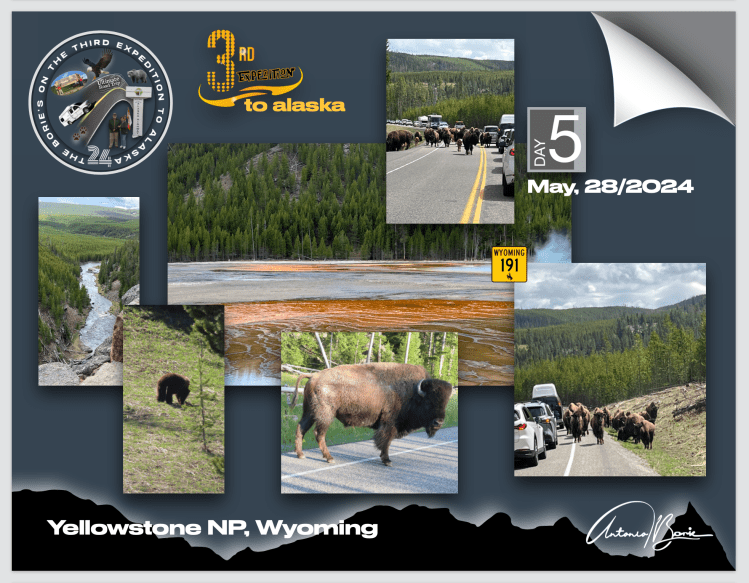
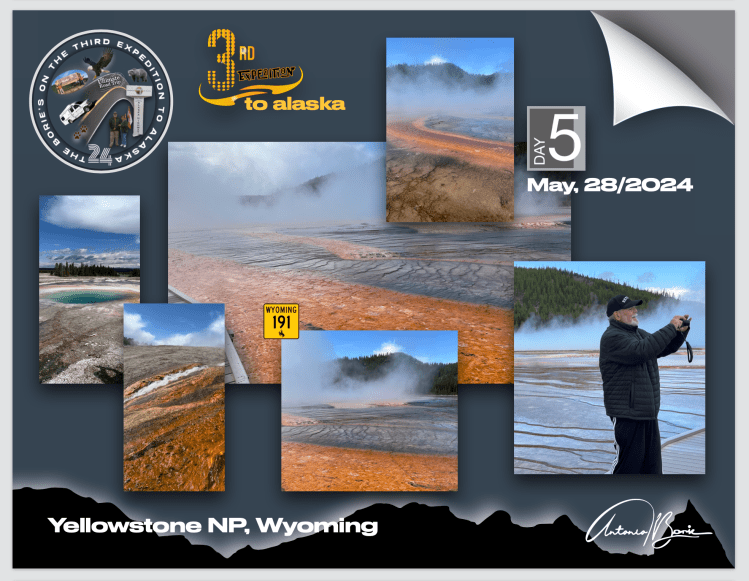
…depois de explicar este rol de acontecimentos, percorremos o parque, em quase todo o lugar em podíamos ter acesso!. Parando aqui e ali, vimos os “Geysers”, com as suas diferentes cores, que correspondem aos diferentes minerais, que brotam do seu interior, cascatas de água pura, saindo das montanhas, rios de água quente, atravessámos o “Continental Divide”, que é o nome dado ao conjunto de linhas formado por uma série de cumes na América do Norte, que separam as bacias hidrográficas que drenam para o oceano Pacífico, oceano Atlântico, incluindo o Golfo do México e mesmo até o oceano Ártico, onde uma das suas linhas divisórias, passa aqui no Parque de Yellowstone!.
…after explaining this list of events, we walked around the park, almost everywhere we could access it!. Stopping here and there, we saw the “Geysers”, with their different colors, which correspond to the different minerals, that spring from their interior, waterfalls of pure water, coming out of the mountains, rivers of hot water, we crossed the “Continental Divide”, which is the name given to the set of lines formed by a series of ridges in North America, which separate the river basins that drain into the Pacific Ocean, the Atlantic Ocean, including the Gulf of Mexico and even the Arctic Ocean, where one of the its dividing lines, passes here in Yellowstone Park!.
…também tivemos a felicidade de ver alguns animais, dos quais dizem haver no parque uma grande variedade de vida selvagem, na qual se incluem ursos pretos e castanhos, lobos, búfalos, alces e muitos outros animais!.
…we were also fortunate to see some animals, of which the park is said to have a wide variety of wildlife, including black and brown bears, wolves, buffalo, elk and many other animals!.
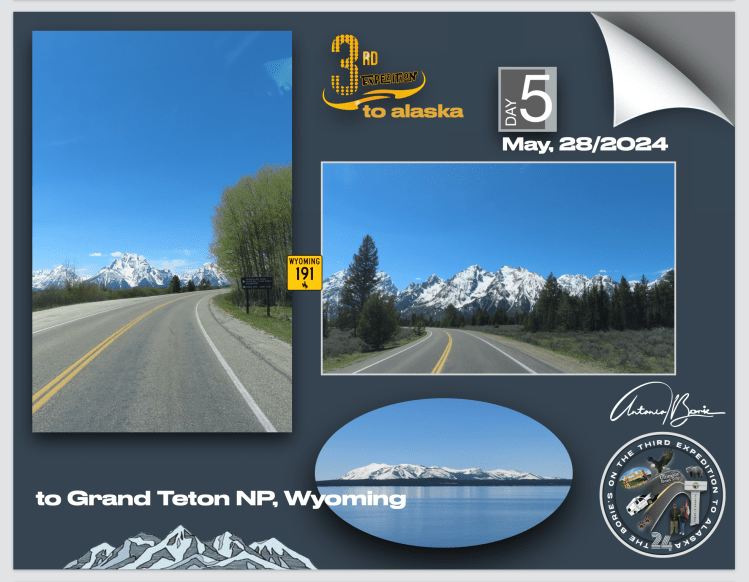
…e o dia era de um céu azul deslumbrante…, com tempo suficiente para ir em direcção ao sul e entrar no Grand Teton National Park, que ocupa um vale, alimentado pelo rio Snake, que com muita frequência forma pequenos lagos, ou de um dos seus afluentes, o rio Gros Ventre, que também por aqui passa antes de entrar no Parque Nacional de Yellowstone!.
…and the day was a dazzling blue sky…, with enough time to head south and enter Grand Teton National Park, which occupies a valley, fed by the Snake River, which very often forms small lakes, or a one of its tributaries, the Gros Ventre River, which also passes through here before entering Yellowstone National Park!.
…a vida selvagem aqui também é constante, mesmo vista da estrada ou nas nossas frequentes paragens, apreciando entre outras, o pico mais alto das montanhas de Teton, o “Grand Teton”, que foi baptizado por um caçador francês, que devia de ser uma pessoa romântica, pois ao observá-lo, do lado do estado de Idaho, logo lhe chamou “tétons”, que dizem que é um calão francês que designa “mamilos” e…, cuja elevação média do vale é de mais de 6.500 pés acima do nível do mar, onde aparecem as grandes montanhas da Cordilheira Teton, que podem atingir mais de outros 6.500 pés de altura!.
..wildlife here is also constant, even seen from the road or in our frequent stops, enjoying among others, the highest peak of the Teton mountains, the “Grand Teton”, which was named by a French hunter, who must of being a romantic person, because when observing it, from the side of the state of Idaho, he immediately called it “tetons”, which is said to be a French slang term that designates “nipples” and…, whose average elevation of the valley is more than 6,500 feet above sea level, where the great mountains of the Teton Range appear, which can reach more than another 6,500 feet in height!.
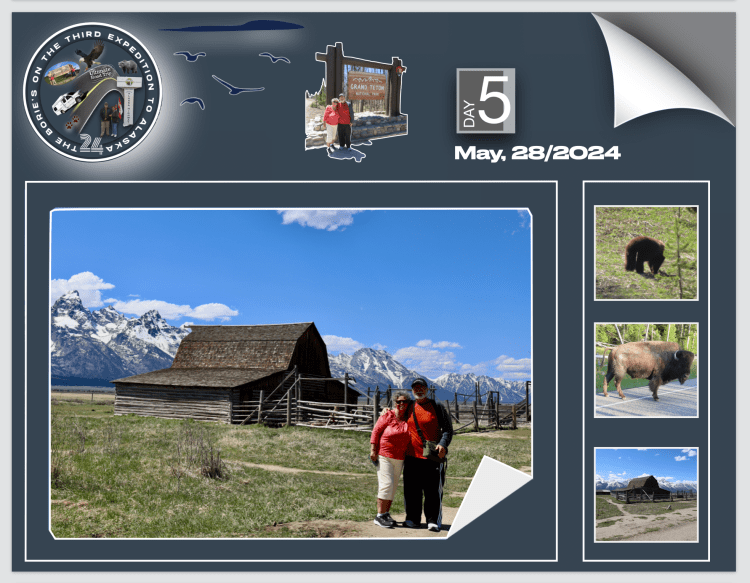
…da última vez que visitámos este parque, em algumas áreas e em alguns momentos estava nevando, tornando quase impossível parar em alguns locais onde o cenário era deslumbrante, no entanto, desta vez havia céu quase azul, e houve tempo para fotografar as ruínas do que é o celeiro considerado mais fotografado dos USA, a oeste da estrada conhecida como Mormon Row, próximo da cadeia de montanhas que está quase sobre ele, formando uma composição visual impressionante!. No entanto, o local não é apenas famoso porque é fotogênico, porque o celeiro é tudo o que resta da propriedade construída por Thomas Alma Moulton e seus filhos entre 1912 e 1945!.
…the last time we visited this park, in some areas and at times it was snowing, making it almost impossible to stop in some places where the scenery was stunning, however, this time there were almost blue skies, and there was time to photograph the ruins of the park. which is considered the most photographed barn in the USA, west of the road known as Mormon Row, close to the mountain range that is almost above it, forming an impressive visual composition!. However, the site is not just famous because it is photogenic, because the barn is all that remains of the property built by Thomas Alma Moulton and his sons between 1912 and 1945!.
…e o fim do dia aproximava-se e…, como mandam os regulamentos do Parque Nacional Yellowstone, ninguém pode dormir dentro do parque sem ser autorizado e, como nesta época ainda só um ou dois Parques de RV lá dentro estão abertos e com reservas de há alguns meses, claro, estão esgotados, ou seja não existe nenhum lugar!. Resultado!. Saímos, vindo dormir fora do lado oeste, já no estado de Montana, e regressámos ao parque ao outro dia pela manhã!.
…and the end of the day approached and…, as per Yellowstone National Park regulations, no one can sleep inside the park without authorization and, as at this time of year, only one or two RV parks inside are open and with reservations a few months ago, of course, they are sold out, that is, there is no place!. Result!. We left, sleeping outside on the west side, in the state of Montana, and returned to the park the next morning!.
Tony Borie.








 Tony Borie - "Pieces of my life"