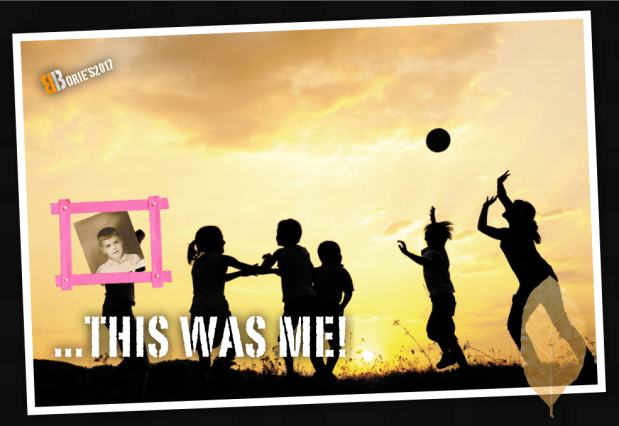
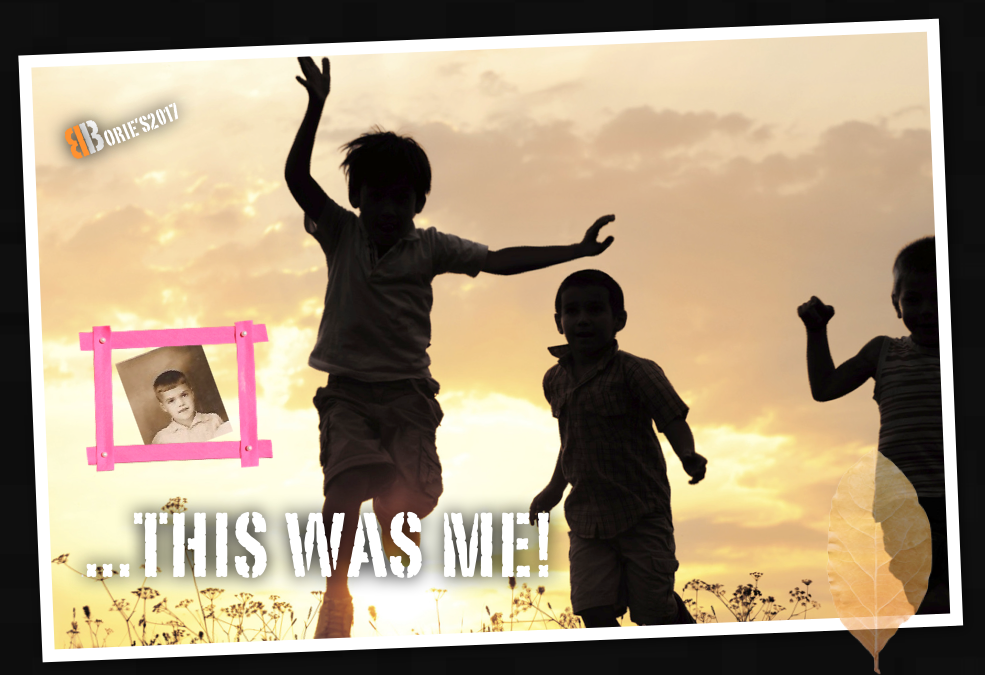
…this was me!

…this was me!

…this was me!

…esta personagem fui eu, mas penso que, talvez em parte,  também eras tu, que nasceste entre os anos trinta e cinquenta do século passado, ou talvez até antes, ou depois, andas-te por aí, sobreviveste e, hoje até tens a pachorra de me estar a ler! (this character was me, but I think, perhaps partly also was you, you were born between thirty and fifty of the past century or maybe even before or after you went out there, survived and now to have the apathy of being me to read)!.

…isto não é impressionante!. Sobrevivemos, sendo filhos de mães que não se alimentavam com todas aquelas proteínas necessárias para o bom funcionamento do organismo, comiam queijo e touchinho gorduroso, andavam de “de barriga à boca”, até ao último dia, sempre a trabalhar na agricultura, sujas, com as pernas cheias de “varizes”, que eram umas veias, saídas nas pernas, muito perigosas, devido ao esforço despendido e, talvez não só, algumas bebiam álcool, enquanto estavam grávidas, sem nunca fazer um simples teste de diabetes!. (this is not impressive? Survived being born to mothers who did not feed with all the proteins necessary for the proper functioning of the body, ate cheese and greasy bacon, they went from “belly to his mouth,” until the last day, always working in agriculture, dirty, with full legs “varicose veins”, which were a outputs veins in the legs, very dangerous due to the effort expended and perhaps beyond, some drank alcohol while they were pregnant, without ever making a simple diabetes test)!.
…nascemos!. Fomos colocados para dormir, em berços, ou numa simples canastra, cobertos com cobertores, farrapos ou panos feitos com tintas coloridas, feitas à base de chumbo, à base de brilhantes, de barriga para baixo ou para cima, um farrapo borrado e molhado por horas, chorando, às vezes chupando num pano molhado em água de açúcar, ou quando as nossas mães queriam trabalhar sem ouvir o nosso choro, nos colocavam um pouco de pão molhado em vinho, na boca, para assim, “adormecer-mos”!. (born. We were put to sleep on cots or in simple canasta, covered with blankets, rags or cloths made with colored inks, made lead-based, bright-based, face down or up, a blurred rag and wet for hours crying, sometimes sucking a cloth soaked in sugar water, or when our mothers wanted to work without hearing our cry, put on a bit of bread soaked in wine in the mouth, thus “fall asleep”)!.

…ouviam-te chorar!. Talvez com dores em qualquer parte do corpo, embalavam-te por alguns momentos e ficavas em silêncio, não te administrando qualquer medicamento!. (I heard you cry. Perhaps with pain anywhere in the body, cradled you for a few moments and stay in silence, not administering any medicine)!.
…mais tarde!. Com a tal baba e ranho no nariz, às vezes sujo e com pouca roupa no corpo, pois normalmente usavas o resto da roupa ds teus irmãos, ou até do teu  pai, fazendo chuva, frio ou calor, vias as outras pessoas andarem de bicicleta, sem capacetes ou outros utensílios de segurança, os que andavam de carro, não usavam cintos de segurança, as crianças não tinham acentos especiais, os pneus estavam carecas, não havia “air bags” e às vezes nem travões!. (Later. With such drool and snot nose, sometimes dirty and with little clothes on, because normally usavas the rest of the outfit of your brothers, or even your father, making rain, cold or heat, way other people walk by bike without helmets or other safety items, those who were by car, not wearing seat belts, children did not have special seats, the tires were bald, there was no “air bags” and sometimes no brakes)!.

…bebíamos água dos ribeiros, das fontes, dos poços ou das minas e, não da garrafa!. Compartilháva-mos um “pirolito” com quatro amigos, bebendo da mesma garrafa e, ninguém realmente morreu por isso!. Comíamos biscoitos, brôa, pão branco, manteiga real, toucinho, batatas, nabos, couves, feijão, arroz, mal ou bem cozinhado, bem ou mal lavado, na tal panela de três pernas, comunitária, que cozinhava para a família, às vezes para os vizinhos e, entalava alguns legumes para os animais, tudo temperado às vezes com sal “amarelo e rançoso”, que se tirava da caixa, a que se chamava “salgadeira”, onde se guardava a carne salgada do porco. Bebiamos laranjadas ou pirolitos, feitos de água com açúcar, o que queríamos era “encher a barriga” e, nunca  estáva-mos acima do peso!. (We drank water from streams, of sources, wells or mines, and not from a bottle. We shared a ‘Jawbreaker “with four friends, drinking from the same bottle and no one actually died from this. We ate cookies, bread, white bread, real butter, bacon, potatoes, turnips , cabbages, beans, rice, badly or well cooked, well or badly washed in such a pot with three legs, Community, who cooked for the family, sometimes for neighbors and entalava some vegetables for the animals, all seasoned sometimes salt “yellow and rancid”, which took the box, which was called “salting”, where he held the salted meat pig, orangeades or pirolitos, made of sugar water, what we wanted was to “fill the belly” and , we were never overweight)!.

…porquê?. Porque, estávamos sempre a brincar, ou a trabalhar na agricultura, lá fora, pois saíamos de casa pela manhã e andávamos lá fora o dia todo, estávamos de volta quando o sol desaparecia! Chegámos até aos dias de hoje, talvez porque passávamos horas construindo os nossos brinquedos, como por exemplo carrinhos de madeira com rodas de toros de pinheiros e, montá-los ladeira abaixo, sem travões, caindo, levantando-nos, sem nunca nos queixar-mos, aprendendo assim a resolver os nossos problemas!. (Why? Because we were always playing or working in agriculture, out there since we left home in the morning and we walked out there all day, we were back when the sun disappeared. We have come to the present day, perhaps because we would spend hours building our toys, such as wooden carts with pine logs wheels and ride them downhill without brakes, falling and rising in without ever moaning about, learning so to solve our problems)!.
…e claro, aprendemos o “a, e, i, o, u”, ou a “a, b, c”, naquela “lousa” de pedra preta, onde um lápis era um “riscador”, também de pedra preta, sabíamos a “tabuada” de cor e salteado, nas salas de aula não havia tecto, víamos as telhas, onde fazia frio no inverno e eram quentes a partir de Maio e, estava lá, ao lado daquele quadro, que nos parecia muito grande, uma cana comprida, para manter o respeito, não tínhamos Playstations, Nintendos, jogos de vídeo, 150 canais na TV a cabo, não havia filmes de vídeo ou DVDs, com som surround, telefones celulares, computadores pessoais, com Internet!. (And of course, learn the “a, e, i, o, u,” or “a, b, c” in that “slate” of black stone where a pencil was a “scribe” also black stone, knew the “multiplication tables” by heart, in the classroom there was no ceiling, saw the tiles where it was cold in the winter and were hot from May and was there, next to that framework, in seemed very large, one reed long to maintain respect, we did not have Playstations, Nintendo’s, video games, 150 channels on cable, there was no video movies or DVDs with surround sound, mobile phones, personal computers with Internet)!.

…mas tínhamos amigos, era só vir à rua e encontrá-los! Só havia dois modelos de corte de cabelo, era comprido, de vários meses, talvez até anos, sem nunca ser cortado, onde havia os tais insectos, que nós chamáva-mos “lendias e piolhos”, ou rapado, onde o barbeiro, deixava uma “franginha” na frente a cobrir parte da testa, caíamos das árvores, ficávamos cortados, quebrávamos os ossos ou até os dentes e não se ia ao hospital, nem havia acções contra as companhias de seguro, por esses acidentes!. Comíamos vermes, terra e lama, enquanto brincávamos em terreno sujo e, os vermes não continuavam a viver em nós por toda a vida!. (But we had friends, was only come to the streets and find them. There were only two haircut models, was long, several months, perhaps even years, without ever being cut where there were such insects which we called “nits and lice,” or shaved, where the barber left a ” franginha “on the front cover of the forehead, we fell the trees, we were hurt, quebrávamos bones or to the teeth and is not going to the hospital or had actions against insurance companies for these accidents. We ate worms, dirt and mud, at play in foul ground and not the worms continued to live in us for life)!.

…pelo nosso aniversário, nunca nos deram brinquedos, tais como cópias de armas modernas, como pistolas e metralhadoras último modelo, mas sim brinquedos feitos por familiares, com paus ou bolas de trapos! Aprendíamos a lidar com a decepção, se não éramos escolhidos para a equipa de futebol, da nossa rua ou bairro!. (For our birthday ever gave us toys, such as copies of modern weapons such as pistols and metralhadorasdo latest model, but toys made by family members, with sticks or balls of rags. We learned to deal with disappointment if we were not chosen for the team football of our street or neighborhood)!.

…era inédita a ideia que os nossos pais, iam socorrer-nos, se por acaso quebrássemos a lei, pois eles realmente, estavam sempre do lado da lei! (It was unprecedented the idea that our parents would help us in case quebrássemos the law, because they really were always on the side of the law)!.

…a nossa geração, passou entre outras, pela Segunda Guerra Mundial, por aquela maldita Guerra do Ultramar,  produziu alguns dos melhores inventores, tendo sido em parte, uma explosão de inovação e ideias novas, nasceram líderes, claro, com algumas excepções, que têm solucionado a maior parte dos problemas que vão afectando o mundo de hoje, num mundo onde cada vez existem mais facilidades para alguns, mas muito mais dificuldades de sobrevivência, pelo menos para nós, os tais que nascemos entre aquelas datas, alguns até antes ou depois e, tanto no fracasso, como no sucesso, sempre assumimos a nossa responsabilidade, os nossos compromissos, a palavra dada, para nós conta e, aprendemos a lidar com tudo isso, embora agora, como já mencionámos antes, com muito mais  dificuldade!. (our generation, passed through World War II, through that accursed War of the Overseas, produced some of the best inventors, having been in part an explosion of innovation and new ideas, born leaders, of course, with some exceptions, who have solved most of the problems that are affecting the world today, in a world where there are more and more facilities for some, but much more difficulties of survival, at least for us, such that we were born between those dates, some even before or after and, both in failure and in success, we always take our responsibility, our commitments, the word given, account for us, and we have learned to deal with all this, although now, as we have mentioned before, with much more difficulty)!.

Se tu, que me estás a ler, és um deles, PARABÉNS e, tenta sobreviver, companheiro de jornada! (if you, that you are reading to me, you are one of them, CONGRATULATIONS and, try to survive, companion of journey)!.

Tony Borie, October 2017.
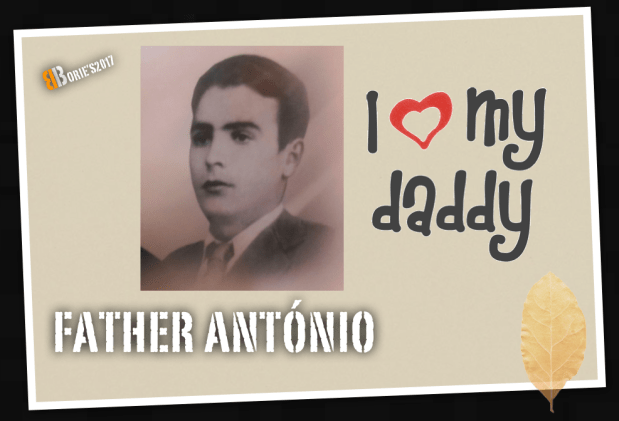
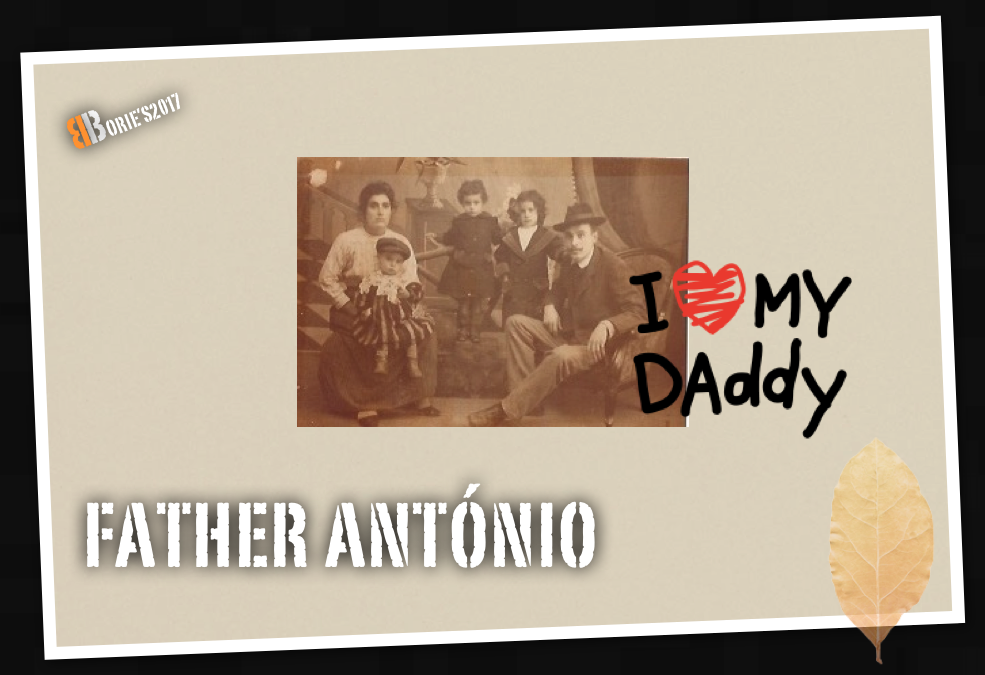
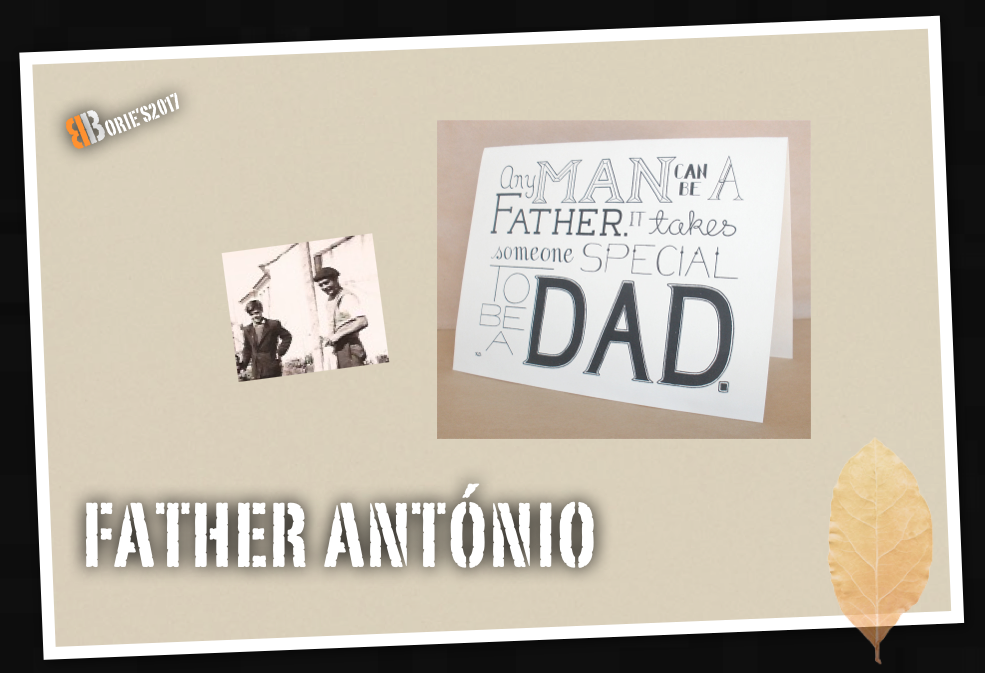
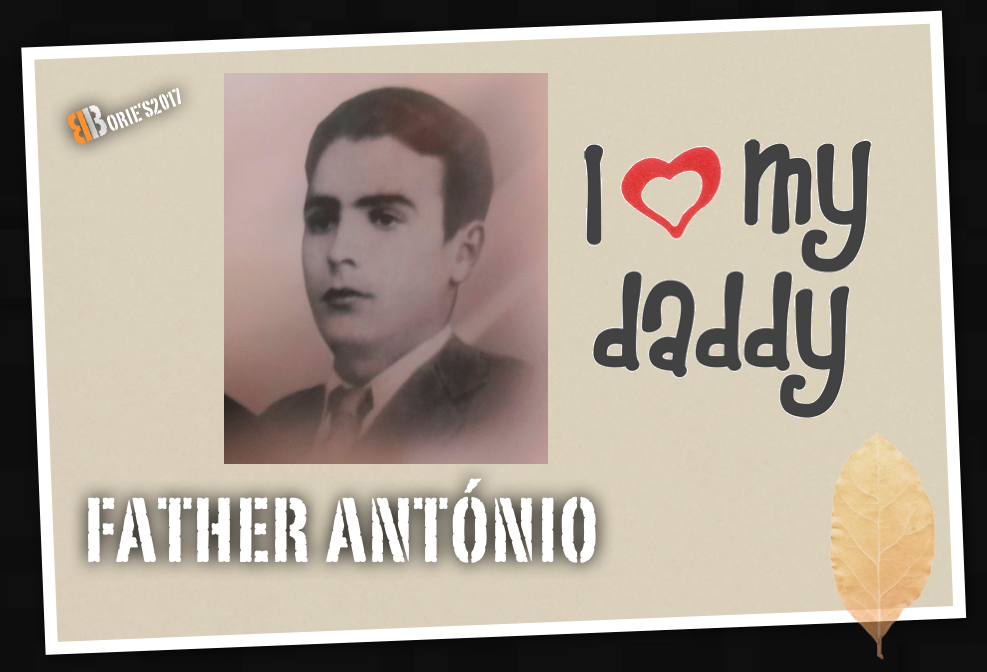
Antonio, the Father!!

Antonio, the Father!!

O Pai António!

… por altura da primeira guerra mundial, onde não havia paz, o nosso Avô Geraldo, nasceu em França, na parte norte da região dos Pirinéus, a Avó Maria, na região de Navarra, em Espanha, eram tempos de guerra, mais de setenta milhões de militares, incluindo sessenta milhões de Europeus, foram mobilizados para uma das maiores guerras da história. Frentes de batalha abriram-se por quase toda a Europa, mais de nove milhões de combatentes foram mortos, em grande parte por causa de alguns avanços tecnológicos, sobretudo em armamento e estratégica de combate militar. Foi o sexto conflito mais mortal na história da humanidade e, posteriormente abriu caminho para várias mudanças políticas, como revoluções em muitas das nações envolvidas, como tal, houve deslocações de milhares de pessoas que, entre outras razões, fugiam deste maldito conflito, na procura de alguma paz e sobrevivência!. (by the time of the First World War, where there was no peace, our Grandfather Geraldo was born in France, in the northern part of the Pyrenees region, the Maria Grandmother, in the Navarra region of Spain, were times of war, of seventy million military personnel, including sixty million Europeans, have been mobilized for one of the greatest wars in history. Battle fronts have been opened across most of Europe, more than nine million combatants have been killed, largely because of some technological advances, especially in armamemt and strategic military combat. It was the sixth most deadly conflict in the history of mankind and later paved the way for a number of political changes, such as revolutions in many of the nations involved, as such, there were displacements of thousands of people who, among other reasons, fled from this cursed conflict, of some peace and survival)!.

…estas são as origens dos nossos Avós Paternos, Geraldo e Maria, que percorrendo os caminhos rurais da Península Ibérica, caminhando, com centenas de outros refugiados, seguiam em direcção ao sul, numa aventura forçada, espoliados de tudo, mas dentro da sua sacola, onde traziam alguns haveres que lhes restaram, tanto o Avô Geraldo como a Avó Maria, eram portadores de duas coisas, que ninguém, nem nenhum conflito lhes conseguiu roubar, eram, “A ESPERANÇA E A FORÇA DE VIVER”!. (these are the origins of our Paternal Grandparents, Geraldo and Maria, who, traveling along the rural roads of the Iberian Peninsula, walking with hundreds of other refugees, headed southwards in a forced adventure, plundered by everything but inside their bag, where they carried some of their remaining assets, both Grandfather Geraldo and Grandmother Maria, were carriers of two things that no one, nor any conflict could steal, were “HOPE AND THE STRENGTH TO LIVE”!

…conheceram-se numa aldeia, ainda em Espanha, num desses acampamentos de refugiados e, caminhando de aldeia em aldeia, pela estrada de São Tiago, vieram parar a Portugal e, gostando um do outro, casaram, onde viveram alguns anos, numas terras baldias e pantanosas do Baixo Vouga, na vertente oeste da montanha agreste  do Caramulo. Tiveram três filhos, duas meninas e um rapaz, antes da nossa Avó Maria morrer, com a doença naquele tempo mortal, da “tuberculose”, que mais tarde também viria a vitimar uma das suas filhas. O Avô Geraldo, sem a companhia da esposa Maria, sem recursos, vendo que não podia alimentar, vestir e educar os seus filhos, pensando que mais cedo ou mais tarde iam também acabar por morrer, entrega-os a algumas famílias mais abastadas na região, entrando num qualquer navio que atracou em Portugal e, seguiu como “pioneiro”, (dizia o Pai António, que o nosso Avô Geraldo, foi para as Áfricas)!. Por muitos anos, já nós éramos criança e, sempre que o correio parava no Vale do Ninho D’Águia, que era a aldeia onde viviamos, o Pai António dizia: “vai lá  ver, deve ser carta do Avô Geraldo”!. Mas não era, o Avô Geraldo, nunca mais deu notícias!. (they met in a village, still in Spain, in one of these refugee camps and, walking from village to village, along the road to San Tiago, came to Portugal and, enjoying each other, married, where they lived for some years, and swamps of Baixo Vouga, on the western slope of the rugged mountain of Caramulo. They had three children, two girls and a boy, before our Grandmother Maria died, with the disease in that mortal time, of “tuberculosis”, which would later also victimize one of her daughters. Grandfather Geraldo, without the company of his wife Maria, who could not afford to feed, clothe and educate his children, thinking that sooner or later they would also die, and gave them to some of the wealthiest families in the region, entering a ship that landed in Portugal and followed as a “pioneer” (said Father Antonio, that our Grandfather Geraldo, went to Africa)! For many years, we were already a child, and whenever the mail stopped at Vale do Ninho D’Águia, which was the village where we lived, Father Antonio said: “Go and see, it must be a letter from Grandfather Geraldo!” But it was not, Grandfather Geraldo, he never heard!

…o Pai António, foi entregue a uma família, que tinha um negócio de taverna, onde também serviam comida, fazendo dele um escravo, trabalhava de dia e de noite, servindo, limpando, fazendo os serviços mais sujos, ajudando a alimentar os animais, junto do local onde dormia algumas horas, animais esses que ajudava a matar, para consumo na taverna, era espancado por toda a família, que viam nele um estranho e para mais abandonado, alimentava-se dos restos, quando os havia e, nunca frequentou a escola!. Mais crescido, revoltado, quase vivia na rua, ajudava quem lhe desse alguma roupa  ou comida!. Foi numa dessas ocasiões que, ajudando em alguns serviços pesados, numa pensão, onde também trabalhava a nossa Mãe Ilda, se conheceram!. (Father Antonio, was given to a family, who had a tavern business, where they also served food, making him a slave, working night and day, serving, cleaning, doing the most dirty services, helping to feed the animals, a place where he slept a few hours, which he helped kill, for consumption in the tavern, was beaten by the whole family, who saw in him a stranger and for the most abandoned, fed on the remains, when he had them, and never attended the school!. More grown up, revolted, almost lived in the street, it helped who gave him some clothes or food !. It was on one of those occasions that, helping in some heavy services, in a pension, where our Mother Ilda also worked, they met)!.

…e assim ela, a Mãe Ilda, com um vestido emprestado por alguma senhora caridosa, ele, o Pai António, com umas calças, com alguns remendos, já curtas e velhas, onde se faziam ver umas botas usadas que um militar lhe ofereceu, sem meias, uma camisa, com as mangas um pouco arregaçadas, pois também eram curtas, não chegavam ao fim dos seus braços, mas ambos com um sorriso de felicidade nos lábios, apareceram em frente ao senhor padre Rachão, que por sinal era padre, mas pai de uma  filha, que lhes leu a epístola, fazendo-os marido e mulher, perante Deus e os homens, para o resto das suas vidas!. (and so she, Mother Ilda, with a dress borrowed by some charitable lady, he, Father Antonio, in some trousers, with some patches, already short and old, where one could see used boots that a soldier offered him, without socks, and a shirt, their sleeves a little flat, for they were short, they did not reach the end of their arms, but both with a smile of happiness on their lips appeared in front of Father Rachão, who by the way was a priest, but father of a daughter, who read them the epistle, making them husband and wife, to God and to men, for the rest of their lives)!.

…o Pai António, era um homem trabalhor, cultivava algumas leiras de terra, ajudava os vizinhos, era uma pessoa com bons sentimentos, mas não sabia dar carinho  nem ouvir ninguém, pelo menos não o demonstrava, era uma pessoa que sofreu, porque também nunca recebeu qualquer gesto carinhoso, a sua juventude tinha sido muito difícil, tinha sido uma juventude de luta, sobrevivência e discriminação constante. O Pai António, nunca teve boas relações com a Avó Agar, havia ciúmes, porque talvez, ambos adoravam a Mãe Ilda!. Não sabia ler nem escrever, mas sabia que existiam quatro pipas, num cabanal que existia ao fundo dos casebres onde vivíamos, eram quatro, assim como duas enxadas, dois porcos, quinze coelhos, doze galinhas e frangos, sabia contar, mas não sabia desenhar os números!. (Father Antonio, was a hardworking man, he cultivated a few acres of land, he helped the neighbors, he was a person with good feelings, but he did not know how to give affection or hear anyone, at least he did not show it, he was a person who suffered, received any kind gesture, his youth had been very difficult, had been a youth fighting, survival and constant discrimination. Father Antonio, never had good relations with Grandma Agar, was jealous, because perhaps they both worshiped Mother Ilda!. I could not read or write, but I knew that there were four kites, in a hut that existed in the back of the huts where we lived, there were four, like two hoes, two pigs, fifteen rabbits, twelve chickens and chickens, he knew how to count, but he could not draw the numbers)!.

…era raro, mas de vez em quando, parava junto de nós, tocáva-nos na cabeça, olháva-nos, queria dizer qualquer coisa, não dizia e, apareciam lágrimas nos seus olhos, talvez não soubesse exprimir-se, talvez a sua juventude  o fizesse ter um pensamento diferente do que é a família, mas sempre trabalhou para nós e, fez com que não nos faltasse, pelo menos uma refeição por dia!. (it was rare, but every now and then he would stop by us, touch us on the head, look at us, he would say anything, he would not say, and tears would appear in his eyes, perhaps he could not express himself, perhaps his youth it made him have a different thought than the family, but it always worked for us and made us miss at least one meal a day)!.

…a nosso convite, vieram ver-nos aqui nos USA, com a Mãe Ilda. Como homem com uma “juventude cruel, de abandono de rua”, habituado a  sobreviver, sabia tudo, que ali era Nova Yorque, os taxis eram amarelos, o Empire State Building, era o mais alto, talvez tivesse visto as imagens na televisão!. Depois de aqui estar uns meses, ver o que mais gostava, pediu-nos para regressar para junto da sua aldeia, que estava desejoso de voltar a ver!. (to our invitation, came to see us here in the USA, with Mother Ilda. As a man with a “ruthless, street-dwelling youth”, accustomed to surviving, he knew everything, that it was New York, taxis were yellow, the Empire State Building was the tallest, he might have seen the pictures on television!. After being here for a few months, seeing what he liked best, asked us to return to his village, which he was looking forward to seeing again)!.

…quando já doente, pois morreu com a doença de câncer, fomos vê-lo a Portugal, mais uma vez nos pediu para dele nos aproximar-mos, tocou-nos na cabeça e falou, baixinho, pois não tinha forças para falar alto e, disse: “lembras-te, quando eu saía da mesa um pouco antes de vocês acabarem de comer?. Não era porque não tivesse fome, era que via que o comer não ia chegar para todos”!. (when he was already ill, for he died of cancer, we went to see him in Portugal, he again asked us to approach him, he touched our heads, and he spoke softly, for he did not have the strength to speak loudly, said, “Do you remember when I left the table a little before you finished eating? It was not because I was not hungry, I saw that eating was not going to reach everyone”)!.

…sim, lembro-me ainda hoje Pai António e, também me lembro daquele “carrinho” que me fizeste, que não era mais do que um pau, com uma roda de madeira na ponta, que eu levava quando ia atrás de ti, quando ias descalço, trabalhar nas terras alagadiças do lameiro, tu também não me sais do pensamento, descansa em paz e, até qualquer dia Pai António!.  (Yes, I still remember Father Antonio, I also remember that “cart” you made me, which was no more than a stick, with a wooden wheel on the end, which I carried when I went behind you, when you went barefoot, working in the marshy lands of the mire, and you also do not leave me of the thought, rest in peace and, until one day, Father Antonio)!.

Tony Borie, October 2017.

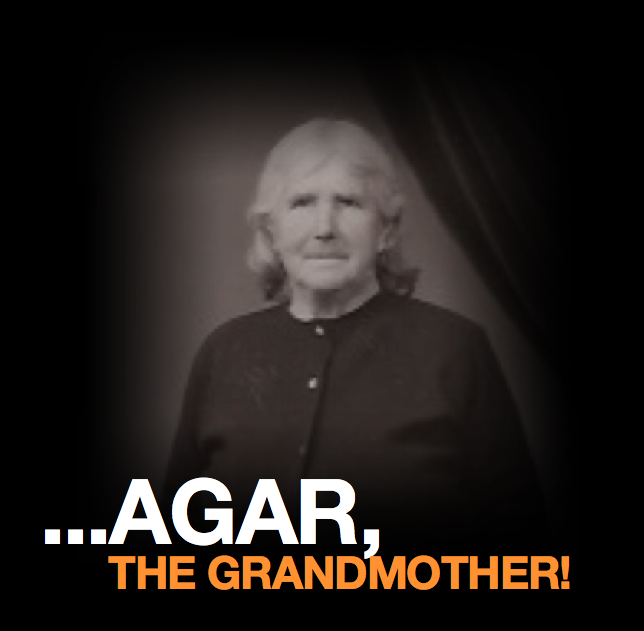
The Grandmother Agar!

A Avó Agar!

…o tronco de uma árvore, era o lugar onde se sentava, andava sempre na companhia do seu cão amigo, que era um descendente, talvez na sexta ou sétima geração, do cão de guarda “lobo”, o seu primeiro cão, e de um pequeno pau, ao qual se amparava e, ajudava a dar uns passos sózinha. O tronco da árvore e ela, juntos, deviam de andar próximo das duas centenas de anos, pois ela, a Avó Agar, não se lembrava da idade, mas dizia: “havia guerra, entre o norte e sul, houve um grande combate aqui, no Vale do Ninho D’Águia, os soldados, alguns feridos, com muita fome, vinham aqui a casa roubar comida e, diziam nessa altura que aqueles soldados, que aqui combatiam, traziam doenças, tal como o “tifo”, a “difteria” ou a “tuberculose”, que não perdoavam, pois matavam mesmo e, pensando que eu também ia morrer, a minha mãe levou-me à frente do padre, para me baptizar, eu já era uma menina”!. (the trunk of a tree, it was the place where he sat, she was always in the company of his friendly dog, who was a descendant, perhaps in the sixth or seventh generation, of the “wolf” guard dog, his first dog, and a small stick, and helped she to take a few steps alone! The tree trunk and she, together, must have been close to two hundred years, for she, Grandmother Agar, did not remember her age, but said: “There was war between north and south, there was a great fight here, in Vale do Ninho D’Águia, soldiers, some wounded, very hungry, came here to steal food and they said at the time that those soldiers, who were fighting here, brought diseases, such as “typhus”, “diphtheria” or “tuberculosis”, which they did not forgive because they killed and even thinking that I too was going to die, my mother took me to the front of the priest, to baptize me, I was already a girl”)!.

…estas eram as palavras da Avó Agar, que trazia nos pés umas chinelas, que tinham sido sapatos no Brazil. Andava embrulhada num xaile preto, com um lenço da mesma cor, amarrado na cabeça, que lhe cobria o seu cabelo já quase branco, também trazia uma cinta, bem amarrada, que a fazia segurar-se a si mesma, a saia grossa, de burel também preto, sobre a qual pendia uma pequena bolsa, bordada com um desenho imitando um coração, que sempre continha um “cruzado”, para dar ao seu neto António, para comprar alguma “guloseima” na loja da “Ti  Glória”, essa saia, que era comprida até aos seus pés,  cobria-lhe as pernas, dando-lhe algum conforto!. (these were the words of Grandmother Agar, who had on her feet slippers, which had been shoes in Brazil. She was wrapped in a black shawl, with a handkerchief of the same color, tied to her head, which covered her almost white hair, and she wore a strap, tightly tied, that made her hold herself, the thick skirt of black burel, on which hung a small bag, embroidered with a design imitating a heart, which always contained a “crusader”, to give his grandson Antonio, to buy some “delicacy” in the store of “Ti Gloria”, that skirt, which was long up to her feet, covered her legs, giving her some comfort)!.

…sentada, agarrada ao pau, a cabeça, um pouco caída para a frente, parecia que estava dormindo, mas despertava com as palavras do neto António, que correndo, lhe dizia: “Bom dia, hó Avó”!. Ela, ficava pensando, “fui eu que assisti a minha filha Ilda, quando este garoto nasceu, era uma manhã de Setembro, já quase no final das colheitas, andávamos na vindima das uvas”!. (seated, clinging to the stick, her head a little fallen forward, she seemed to be asleep, but she woke up at the words of her grandson Antonio, who ran to him and said, “Good morning, Grandmother!” She kept thinking: “It was I who watched my daughter Ilda, when this boy was born, it was a September morning, almost at the end of the harvests, we were in the grape harvest)!.

…algumas dezenas de anos antes, quando a Avó Agar, se estava a tornar numa rapariga bonita, sempre que vinha à vila, na companhia do “lobo”, o seu fiel cão de guarda, não lhe faltavam rapazes a rondar-lhe as saias, mas não se aproximavam dela, com receio do cão, mas se algum era mais atrevido, lhe dirigia um piropo, ela, olhando pelo canto dos seus lindos olhos castanhos, respondia: “Vai trabalhar rapaz, pois se trabalhasses como eu, não tinhas vontade de dizer essas parvoíces”!. E seguia em frente, descalça, desembaraçada, caminhando com alguma graça, movendo o seu jovem corpo com a beleza de uma camponesa bonita, que estava a ser desejada pelos rapazes da sua idade!. (a few dozen years before, when Grandma Agar was becoming a pretty girl, whenever she came to the village with the “wolf,” her faithful guard dog, she was not lacking in boys skirting her skirts, but they did not approach her, for fear of the dog, but if someone more daring, he would send her a compliment, she, looking at the corner of his beautiful brown eyes, answered: “will work boy, because if you worked like me, you did not want to say such silly things! ” And she went on, barefoot, unkempt, walking with some grace, moving her young body with the beauty of a beautiful peasant, who was being desired by the boys her age)!.

…em casa diziam-lhe: “hó Agar, mais cedo ou mais tarde, tens que arranjar homem, pois mulher não se põe ao fumeiro para se guardar, chega a altura e, tem que ser usada, senão já ninguém a quer”!. E ela respondia: “Homem para mim, tem que ser que eu goste a valer, de contrário, vou ficar solteira!. E mais, não me importo que seja casado, velho, novo ou viúvo, logo que eu goste dele, tudo está bem comigo”!. (at home they said to her, “Agar, sooner or later, you have to find a man, for a woman does not go to the firehouse to guard herself, the time comes, and it has to be used, if no one wants it!”. She would say,  “Man for me, it has to be that I like it, otherwise I’m going to be single! And besides, I do not care if I’m married, old, new or widower, as soon as I like him, I’m fine with me”)!.

…era assim, a Avó Agar, orgulhosa e frontal, nas suas palavras, talvez por tal, a Avó Agar, ainda jovem, já era mãe solteira de quatro filhos. Esteve apaixonada, quatro vezes e, o resultado dessas paixões, foram quatro filhos, que teve que criar sózinha. Um morreu com a doença do “tifo”, os outros sobreviveram!. As palavras de amor e carinho que sabia dizer, o carácter, o orgulho e a dignidade, que mostrava ter, marcaram-nos para toda a vida!. Alguns anos depois, já com quatro filhos, teve algumas propostas de casamento, mas o seu coração não deixava. Às vezes, chamava-nos a nós, seu neto António para junto de si e, dizia com os olhos fixos em qualquer ponto, que ninguém sabia onde era: “meu querido netinho, alguns dos homens que conheci, traíram-me, foram cobardes, não assumiram as suas responsabilidades. Nunca procedas dessa maneira, tens que ter carácter, orgulho e dignidade, assumindo sempre os teus compromissos, por favor, anda de cara levantada e, olha as pessoas nos olhos”!. (Grandmother Agar, proud and frontal in her words, perhaps because of this, Grandma Agar, still young, was already a single mother of four children, who had to raise her own. One died of “typhus” disease, the others survived !. The words of love and affection that he knew how to say, the character, the pride and the dignity, which he showed, have marked them for life!. Some years later, already with four children, had some proposals of marriage, but his heart did not leave. Sometimes he would call us, his grandson Antonio, next to him and, with his eyes fixed at any point, no one knew where it was: “my dear little grandson, some men I met, they betrayed me, they were cowards, do not assume your responsibilities. Never do it in this way, you have to have character, pride and dignity, always taking your commitments, please walk with your face up and look people in the eyes”)!.

…era uma pessoa com coragem, sabia fazer de tudo um pouco, explicava e ajudava em todas as lides da lavoura, enquanto se pode movimentar!. A Avó Agar, era maravilhosa,  gentil e forte, sempre se importava com os outros, em especial com os seus netos. Fazia-nos acreditar, explicando passagens da sua difícil vida,  sendo sempre uma fonte de orientação, ouvindo,  perguntando,  confortando,  enfim,  era fantástica,  era um calmante,  era uma fonte de segurança,  em cada ou qualquer tarefa, que nós jovens, naquele tempo de dificuldades,  estivésse-mos envolvidos!. (was a person with courage, knew how to do everything a little, explained and helped in all the fields, while you could move!. Grandma Agar, was wonderful, kind and strong, always cared for others, especially her grandchildren. It made us believe, explaining passages from his difficult life, always being a source of guidance, listening, asking, comforting, it was fantastic, it was a soothing, it was a source of security, in every task, in that time of difficulties, we were involved)!.

…pariu os seus quatro filhos sózinha, sem a ajuda de ninguém!. Quando sentia as dores e, via que era o momento certo do nascimento, ia para a sua cama, agarrando-se às barras de pau preto, de que era feita a cama, que tinham vindo do Brazil, como ela sempre nos dizia, sofria, juntando a agonia das dores, à alegria que sentia, com o nascimento de mais uma criança!. Em seguida, como mulher desembaraçada, por vezes arrastando-se, fazia todos os cuidados necessários, tanto a ela, como à criança!. (he gave birth to his four children alone, without the help of anyone! When she felt the pains, and saw that it was the right moment of birth, she went to her bed, clutching at the bars of black wood, from which the bed was made, which had come from Brazil, as she always told us, he suffered, joining the agony of pain, to the joy he felt, with the birth of yet another child!. Then, as a selfless woman, sometimes dragging herself, she did all the necessary care, both to her and to the child)!.

…era a “parteira”, da sua aldeia, no Vale do Ninho d’Aguia. Sabia medicinas caseiras que curavam as enxaquecas, que eram frequentes no inverno. Apareciam lá por casa,  mulheres de diferentes aldeias, que a vinham consultar, pois os seus filhos não “pegavam na mama”. Ela, a Avó Agar, depois de recitar diferentes rezas, a criança, agarrava-se ao peito da mãe e não parava de mamar!. Um dia, na nossa presença, um “rachador”, (homem que com um machado, cortava lenha na montanha), espetou uma farpa de madeira numa perna, que a atravessou de um lado ao outro. O homem apareceu junto da Avó Agar, gritando aflito com dores. Ela, com a maior calma do mundo, fez uma fogueira no chão, aproximou o homem do calor do lume, com um pano molhado e com algumas rezas, a farpa de madeira, aos poucos vai saindo e, no espaço de umas horas, o homem, com a perna limpa e um farrapo amarrado, continuou o seu trabalho!. (was the “midwife” of her village, in the Vale do Ninho D’Águia. He knew home-made medicines that cured migraines, which were common in winter. They showed up at the house, women from different villages, who came to consult her, because her children did not “get on the breast”! She, Grandma Agar, after reciting different prayers, the child, clung to the breast of the mother and did not stop breastfeeding!. One day, in our presence, a “splinter,” (a man with an ax chopping wood on the mountain), stuck a wooden splinter into a leg, which crossed it from side to side. The man appeared with Grandmother Agar, screaming in pain. Grandmother Agar, with the greatest calm of the world, made a bonfire on the floor, approached the man from the heat of the fire, with a wet cloth and with some prayers, the wooden splinter, gradually it leaves and, in the space of a few hours, the man, with his leg clean and a ragged tied, continued his work)!.

…a Avó Agar, morreu apaixonada, dizendo que não valia a pena viver mais, pois o seu último amor, há muito falecido, esperava-a de braços abertos, lá no outro mundo!. (Grandmother Agar, died in love, saying that it was not worth living any longer, because her last love, long dead, awaited her with open arms, in the other world)!

…hoje, já lá vão muitas décadas, eu, o teu neto António, lembro-me de ti, Avó Agar, onde quer que te encontres, continuo a adorar-te,  ganhei o teu respeito,  pessoa como tu, Avó Agar,  será muito difícil de encontrar,  eras especial, obrigado pelo teu calor, pelo teu conforto, e por, quando criança, me deixares chorar nos teus braços, nos momentos que eu mais precisava!. (today, many decades have gone by, I, your grandson Antonio, I remember you, Grandma Agar, wherever you may be, I continue to adore you, I have gained your respect, a person like you, Grandma Agar, it will be very hard to find, you were special, thank you for your warmth, for your comfort, and for, as a child, you let me cry in your arms, in the moments that I most needed)!.

…já no século vinte, com uma nova urbanização no Vale do Ninho d’Aguia, em sua homenagem, deram o seu nome à aldeia onde nasceu!. (already in the twentieth century, with a new urbanization in the Vale do Ninho D’Águia, in his honor, gave his name to the village where he was born)!.

Tony Borie, October 2017.

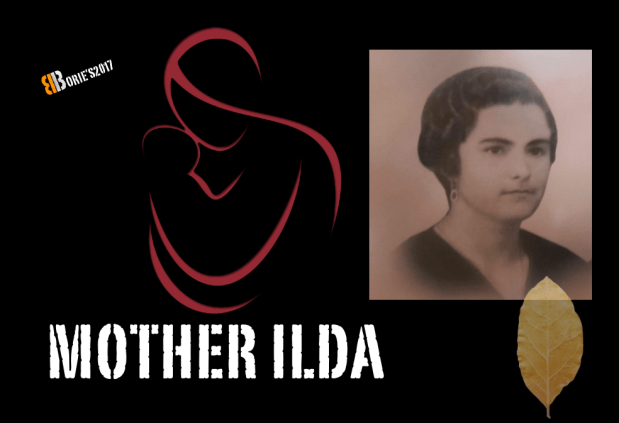
…ILDA, the Mother!

…ILDA, the Mother!

…não sei bem se me lembro, pois eu era pequeno, mesmo muito pequeno, era um bébé, ainda não andava, nem falar sabia, mas lembro-me que, quando queria algo, chorava e, devia de chorar de diferentes maneiras, pelo menos ela compreendia-me, sabia quando tinha fome, quando tinha frio, quando me estava a doer em qualquer parte do corpo, ou quando estava molhado, sabia tudo, era como se fosse eu, estava lá sempre, olhava para mim e os seus olhos falavam-me e, eu lembro-me que gostava que ela me olhasse e eu falava-lhe, perdão chorava-lhe, e ela, a Mãe Ilda, era uma espécie de guerreira, ninguém me podia tocar, sempre vigilante, logo dizia: Cuidado, muito cuidado, é o meu filho, que é o meu mundo! (I do not know if I remember, because I was small, even very small, I was a baby, I still did not walk, I did not even know it, but I remember that I still did not walk or speak, but I remember that when I wanted to something, I was crying and I had to cry in different ways, at least she understood me, I knew when I was hungry, when I was cold, when it was hurting anywhere in my body, when I was wet, I knew everything, it was like I was always there, she was looking at me and her eyes were talking to me, and I remember that I liked her to look at me and, I told her, I was crying for her, and she, Ilda, was a kind of warrior, nobody could touch me, always vigilant, soon said: Beware, very carefully, it is my son, that is my world)!.

…a Mãe Ilda, ensinou-me a andar, vestiu-me uma espécie de “bibe”, andava todo o dia em seu redor, em outras palavras, não saía de volta das suas saias, sabia quando tinha fome e, dáva-me o comer na boca, sabia quando tinha ranho no nariz e, vinha assoar-me, com o seu avental, às vezes encardido, e dizia: Puxa, puxa, que é para o ranho sair!. (Mother Ilda, taught me how to walk, put on a kind of “bibe”, walked all day around her, in other words, did not leave her skirts, knew when she was hungry and gave me the eating in my mouth, I knew when I had snot on my nose, and he would come and blow me, with his apron, sometimes grimy, and he would say: Pull it, pull it, it’s for the snot to come out!

…ainda hoje, já lá vão mais de sete décadas, ainda faço isso, e quando o faço, fico mais aliviado!. A Mãe Ilda, levou-me à escola, quando tinha alguma zanga com qualquer companheiro, era a ela que me dirigia, chorando ou berrando, e ela, colocando a mão na minha cara, acariciando-me, mesmo muito encostada a mim, se chorava, limpava as minhas lágrimas, se berrava, acalmava-me de tal modo, que não me lembrava mais da zanga, protegia-me, eu era “seu”, e quando andava na rua pela sua mão, ela orgulhosa dizia: É o meu filho!. (even today, it’s been going on for more than seven decades, I still do it, and when I do, I’m relieved! Mother Ilda, took me to school, when I had some anger with a companion, it was she who was going to me, crying or screaming, and she, putting her hand to my face, caressing me, even very close to me, if she was crying, she wiped away my tears, she screamed, she calmed me so much that I could not remember her anger anymore, she protected me, I was “her”, and when she was walking in the street by her hand, she proudly said: my son!.

…cresci, conheci outras pessoas, mas ela sempre vigilante, aconselhou-me, verificava quais eram as minhas companhias, não me deixava, como ela dizia, “ir por maus caminhos”, explicáva-me as surpresas da vida, e eu procurava nela toda a informação, pois ela era sempre a voz final, era a minha Mãe Ilda!. (I grew up, I met other people, but she was always vigilant, she advised me, checked my companies, did not let me, as she said, “go by bad ways”, she explained the surprises of life, and I searched all over her the information, because she was always the final voice, it was my Mother Ilda!.

…a Mãe Ilda, fazia um dia nublado, num dia de sol!. Quando estava doente, beijava o lugar onde me doia, o seu sorriso dizia-me que ia ficar bem e, sempre lá estava para mim, de dia ou de noite, a sua voz suave, tiráva-me o medo, a sua mão apagava as minhas lágrimas, o seu carinho tão puro e honesto, manteve durante toda a minha vida, num homem seguro, ela era, o anjo da guarda, que me guiava e me amparou, nos meus primeiros passos, os seus olhos diziam-me, quanto se importava comigo e, davam-me alívio, quanto me sentia sózinho ou assustado!. (Mother Ilda was going to be cloudy on a sunny day!. When she was sick and kissed the place where she ached for her smile told me that she would be fine, and always there for me day or night, his soft voice, he took away my fear, his hand erased my tears, his affection, so pure and honest, he kept my whole life, a safe man, she was, the guardian angel, who guided me and he supported me, in my first steps, his eyes told me, how much he cared for me and gave me relief when I felt alone or frightened)!

…a Mãe Ilda, não sabia ler nem escrever, nem sequer desenhar o seu nome, mas sabia amar, sabia o bem e o mal, sabia os princípios de família, era uma senhora que nasceu e cresceu numa aldeia, na vertente oeste da montanha do Caramulo, sem conhecimento deste mundo, que às vezes é ingrato, mas para mim, seu filho António, tinha o maior e mais bom coração, que eu, caminheiro do mundo, já conheci!. (Mother Ilda, could not read or write or even draw her name, but she knew how to love, knew good and evil, knew the principles of family, was a woman born and raised in a village on the western slope of the mountain Caramulo, without knowledge of this world, who is sometimes ungrateful, but for me, his son Antonio, had the highest and the fairest heart, that I, a world-healer, I have known)!.

…a Mãe Ilda, tinha uma força como um gigante, pois podiam dizer-me um milhão de palavras, que um simples sim, ou não, da sua boca, derrotava todas as palavras que me tinham dito!. (Mother Ilda, had a giant strength, because she could tell me a million words, that a simple yes or no, from her mouth, defeated all the words they had told me)!.

… a Mãe Ilda, chorou comigo, quando fui para a guerra em África e, as suas lágrimas, eram lágrimas do coração, pois nessa altura da minha vida, já pensava que era um homem, fui para outro continente, fui para uma guerra, que muitos anos depois, verificámos que era injusta, como são todas as guerras, todavia, todas as agruras que vivi nesse conflito armado, não eram nada comparado com a sua ausência, faltava-me a sua companhia, o seu carinho, não era lá muito “piegas”, mas faltava-me a Mãe Ilda!. As suas notícias, contando-me, as novidades dos vizinhos da minha aldeia, da minha rua, eram como um alento tão grande, que me tornava um “super homem”!. Regressei, continuando a pensar que já era um homem, criei a minha própria família, e ela sempre vigilante, não me deixava “ir por maus caminhos”, fiz dela uma “avó babada”, como sempre me dizia, quando me continuava a perguntar se estava bem e se tinha fome, ou se queria aquela comida que eu gostava muito, quando era o seu filho pequeno, e eu na verdade, na sua companhia sentia-me pequeno, como fosse um “garotito”, necessitava da sua protecção, e ela compreendia-me, conhecia todos os meus gestos, e eu, talvez sem reparar, continuava a beber toda a sua informação!. (Mother Ilda, cried with me, when I went to war in Africa, and her tears were tears of the heart, for at this point in my life I thought I was a man, I went to another continent, I went to war, many years later, we realized that it was unfair, as all wars are, yet all the hardships I experienced in this armed conflict were nothing compared to their absence, I lacked their company, their affection, it was not much “corny”, Ilda mother was missing !. His news, telling me, the news of the neighbors of my village, of my street, was such a breath that I became a “super man”! I returned, continuing to think that I was already a man, I created my own family, and she was always vgilante, did not let me “go by bad ways”, made her a “grandmother drool”, as she always told me, when I kept asking myself if he was well and hungry, or if he wanted the food that I liked very much when he was his youngest son, and I actually felt small in his company, like a “little boy”, he needed his protection, and she understood me, knew all my gestures, and I, perhaps unmindful, continued to drink all her information)!.

…a Mãe Ilda, já “avó babada”, continuava a aconselhar os meus filhos, e eu às vezes sentia ciúmes, de ela ensinar, o que eu lhes tinha ensinado, que era precisamente a mesma coisa, que ela me tinha ensinado por um milhão de vezes, mas ela explicava de maneira diferente na voz, no olhar, no amor de avó, e eles, ouviam a “avó babada”, e às vezes respondiam-me: Mas a avó diz que é assim!. (Mother Ilda, already a “grandmother,” continued to advise my children, and I was sometimes jealous of her teaching, what I had taught them, that it was precisely the same thing she had taught me for a million sometimes, but she explained differently, in the voice, in the look, in the love of a grandmother, and they, listened to the “grandmother ruffle”, and sometimes they would answer me: But the grandmother says it is so)!.

…já muitos anos depois, um pouco frágil, quase como quando digo no princípio, que não sei se me lembra, pois era pequeno, mesmo muito pequeno, era um bébé, ela, a minha minha Mãe Ilda, às vezes também precisava que lhe dessem o comer na boca, e um simples lamento, era um sinal de que precisava de alguma coisa, tal como eu fazia, quando chorava, e ela conhecia o meu choro, e para andar, também precisava de ir agarrada a alguma coisa, tal como eu fazia, que andava agarrado às suas saias, era uma cópia do que eu fui, mas eu compreendia com amor tudo isso, só não compreendi e sofri, foi quando ela, a minha Mãe Ilda, mudou de lugar, foi para junto de Deus, se é que ele existe e… ABANDONOU-ME! (many years later, a little fragile, almost like when I say at the beginning, I do not know if you remember, because it was small, even very small, it was a baby, she, my Mother Ilda, sometimes also needed to be given the eating in her mouth, and a simple lament, was a sign that she needed something, just like I did, when I cried, and she knew my crying, and to walk, I also needed to be clinging to something, just like I was doing, when I was clinging to her skirts, it was a copy of what I was, but I understood with love all this, I just did not understand and I suffered, it was when she, my Mother Ilda, moved, went to God , if it exists and … ABANDONED ME)!.

Tony Borie, October 2017.