…love in war!

…love in war!

…amor na guerra! (love in war)!
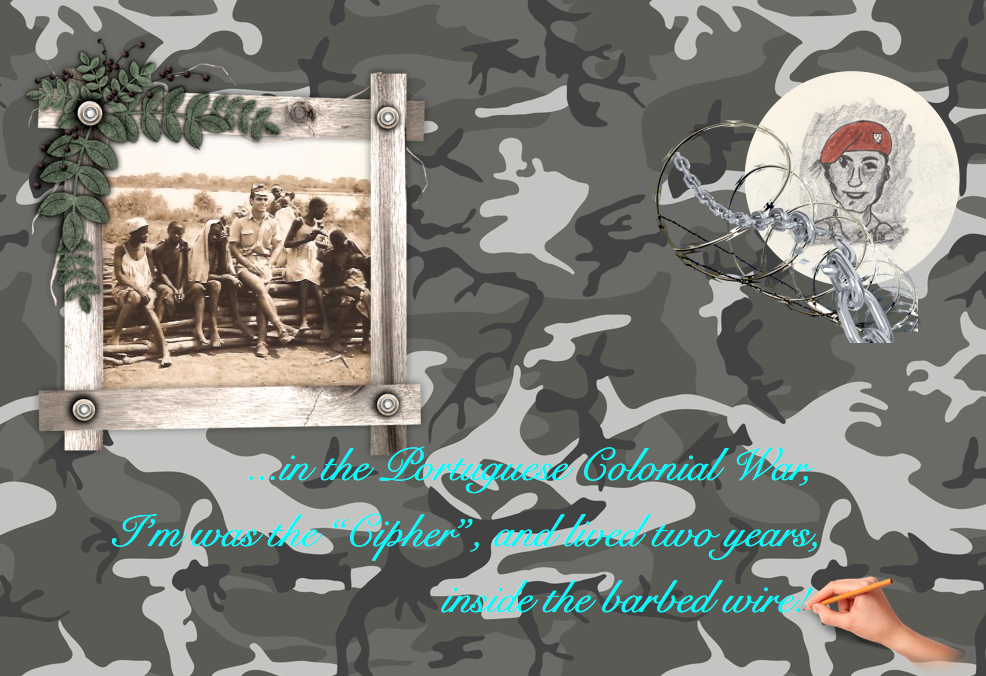
…elas eram exóticas, tal como o seu perfume, que inundava a pequena igreja colonial, durante a missa que ali se celebrava, pelo menos ao domingo, que existia na aldeia de Mansoa, que era a área onde estava o aquartelamento cercado de arame farpado, na então Província Colonial Portuguesa da Guiné, em África, para onde nós, jovens que despertávamos para uma vida, vivendo em paz e em família, na nossa aldeia do Vale do Ninho DÁguia, na vertente oeste da montanha do Caramulo, em Portugal, na Europa, fomos arrancados, treinados para combate e enviados, pelo então governo de Portugal, para África, para defender estranhos interesses, combatendo homens e mulheres, que queriam a independência do seu território, livres das decisões dos Europeus, com a esperança de poderem viver em liberdade, decidir o seu futuro, continuar os seus usos e costumes, que só eles sabiam!. (they were exotic, like their perfume, which flooded the small colonial church during the Mass celebrated there, at least on Sunday, which existed in the village of Mansoa, which was the area where the barracks were surrounded by barbed wire, in the then Portuguese Colonial Province of Guinea, in Africa, to where we, young people who woke up to a life, living in peace and in our family, in our village of the DÁguia Nest Valley, in the western slope of Caramulo mountain, in Portugal, in Europe, we were uprooted, trained to fight and sent by the then Portuguese government to Africa, to defend strange interests, fighting men and women, who wanted the independence of their territory, free from the decisions of the Europeans, with the hope to be able to live in freedom, to decide their future, to continue their customs and customs, which only they knew!
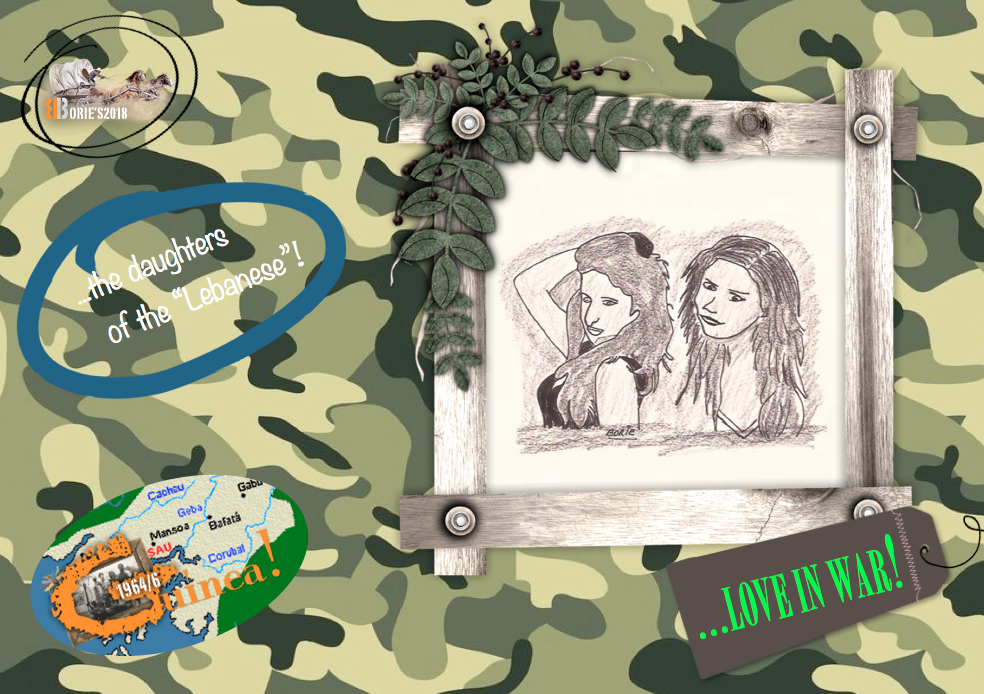
…sim eram elas, as “filhas do Libanês”, como eram conhecidas entre os militares, que eram as filhas de um pequeno comerciante que existia na aldeia de Mansoa, inundavam a pequena igreja colonial, com o seu perfume exótico!. (yes they were, the daughters of the Lebanese, as they were known among the military, who were the daughters of a small merchant who existed in the village of Mansoa, flooded the small colonial church with its exotic scent)!.
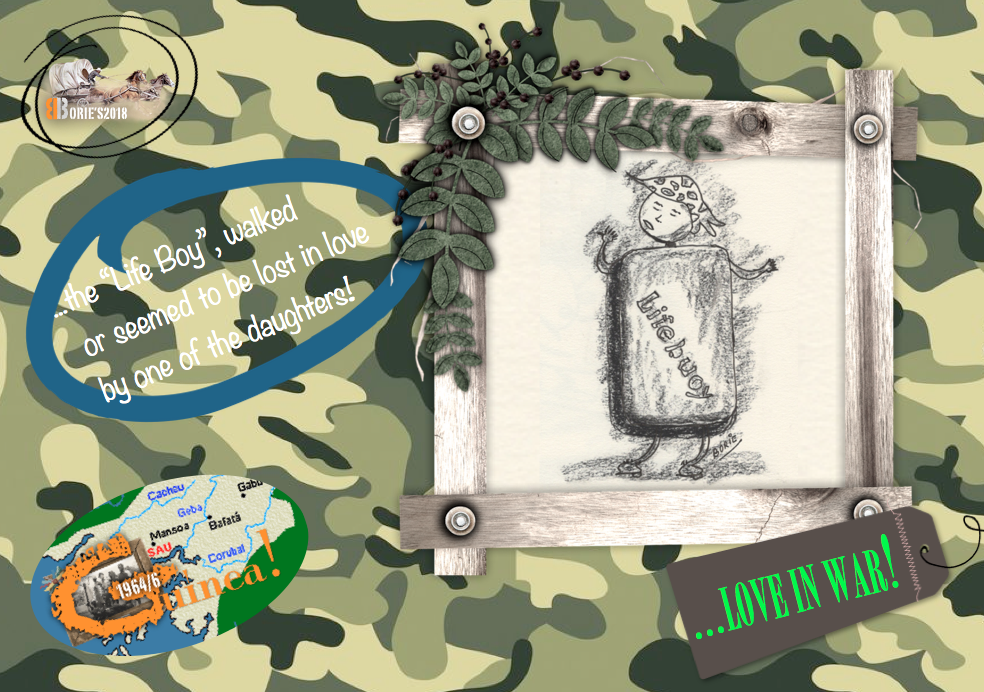
…despertavam a curiosidade de alguns militares europeus, onde o “Life Boy”, que era um “soldado condutor auto”, de uma companhia de Artilharia que ali estava estacionada, também talvez tivesse um costela de “Libanês”, pois tinha no aquartelamento, um pequeno negócio, onde vendia braceletes para relógios, pasta e escovas dos dentes, que só os sargentos, furriéis e oficiais compravam, lenços tabaqueiros, que era o maior negócio, pois quase todos os militares de acção usavam, ou ao pescoço ou no bolso dos calções, com um bocado de fora, para se ver, ou pendurado no cinto das cartucheiras, quando saíam em patrulha, dizendo eles que era para lhes dar sorte em combate!. Também vendia sabonetes “lifebuoy”, (daí lhe nasceu o nome de guerra), carrinhos de linhas e agulhas, alguns botões, baterias para o rádio portátil e outros produtos que se usavam no dia a dia, relógios de pulso com cronómetro da marca “Cauny”, só por encomenda e, outros produtos que não interesa agora mencionar!. (aroused the curiosity of some european military personnel, where the “Life Boy”, who was a “self-guiding soldier”, of an Artillery company stationed there, might also have a “Lebanese” rib, a small business, where he sold bracelets for clocks, toothpaste and toothbrushes, which only sergeants and officers bought, handkerchiefs, which was the biggest business, since almost every action officer wore them, either on his neck or in the pocket of their breeches, with a bit out, to be seen, or hanging from the belt of the cartridge cases, when they were on patrol, telling them it was to give them luck in combat!. He also sold “lifebuoy” soaps, (hence the name of the war), strollers and needles, a few buttons, batteries for portable radio and other products that were used on a daily basis, wristwatches with “Cauny”, only to order and, other products not interested to mention now)!.

…o amor é como uma guerra, fácil de começar, mas muito difícil de acabar!. Não sabemos onde ouvimos ou já vimos esta frase escrita, mas estando num local, onde o cenário de guerra era constante, o “Life Boy”, andava ou parecia que andava perdido de amores por uma das filhas do “Libanês”!. (love is like a war, easy to start, but very difficult to end!. We do not know where we heard or have already seen this written phrase, but being in a place where the scene of war was constant, the “Life Boy” walked or seemed to be lost in love by one of the daughters of “Lebanese”)!.

…quando lhe compravam uma bateria para o rádio portátil, ele olháva para o infinito, fixando ninguém sabia o quê, abria as mãos e clamava algumas frases, que só na sua mente teriam algum senso, tais como:

– nós estamos na linha da frente, ela é bonita, a bomba vai cair, ficamos tão difíceis um para o outro que   perdemos o control, o fogo começa, nós explodimos, o fumo ou os estilhaços da granada passam, secamos as lágrimas, apenas fica o amor na guerra)!

(when they bought a battery for the portable radio, he looked at the infinite, fixing no one knew what, opened his hands and he cried a few sentences that only in his mind would have some sense, such as:

– We’re on the front line, she’s beautiful, the bomb is going to fall, we get so hard on each other that we lose control, the fire starts, we explode, the smoke or grenade splinters pass, we dry the tears, only the love is in the war)!.

…o mesmo cenário se passava quando lhe compravam um sabonete e, então declamava:

– ela é linda, se tiver que chorar, chorarei na frente de uma emboscada, esperarei que o fogo comece, explodirei junto daquele rebentamento, para mim, não existem “terroristas”, leva este sabonete como se fossem, granadas e rosas, apenas fica o amor na guerra!.

(the same scenario happened when they bought a soap and then said:

– she is beautiful, if she has to cry, I will cry in front of an ambush, I will wait for the fire to begin, I will explode next to that burst, for me, there are no “terrorists”, take this soap as it were, grenades and roses, love in war)!.

…claro, quando isso acontecia, o “Curvas, alto e refilão”, cheio de experiência, pois passou a sua juventude em algumas ruas escuras de Lisboa, respondia-lhe, na linguagem que todos lhe conheciam, mais ou menos nestas palavras:

– deves ser filho de algum chinês, essa cara “achinezada”, não me engana!. Vai-te fod.., não percebes mesmo nada de “garinas”, (moças), tu não vez que apesar do teu focinho ser achinezado, és branco e europeu, estás aqui de passagem, essa rapariga, que por sinal até é bastante bonita, não digo que não daria uma boa esposa, mas é do tipo que, primeiro a aliança no dedo, depois sim, vem o namoro e, se der para torto, manda-te dar uma volta ao “bilhar grande”, que tu, apesar dessa cara achinezada, és um “patêgo”, não tens sensibilidade para acariciar uma mulher daquelas, nem sabes o que isso é, pois ela, não está para aturar um palerma como tu, arranja outro, que goste mesmo dela, que saiba acariciá-la e que afaça feliz!. Nem tu nem ela sabem se gostam um do outro, na cama!. Sabes o que tu és em questões de amor?. És um atrasadinho mental!.

(Of course, when that happened, “Curvas, high and complicative”, full of experience, since he spent his youth in some dark streets of Lisbon, he answered, in the language that everyone knew him, more or less in these words :

– you must be the son of some Chinese, this face “flattened”, do not fool me!. Go fuck yourself, you do not even know anything about “garinas”, (girls), you do not turn that although your muzzle is achinesado, you are white and european, you are here in passing, this girl, who by the way is quite pretty, I do not say no would make a good wife, but he is the type that first the ring on the finger, then yes, comes the courtship and, if you get crooked, have you take a look at the “big billiard”, which you, you are a “patêgo”, you do not have the sensitivity to caress a woman of those, you do not know what that is, because she is not to put up with a fool like you, get another, who really likes her, who caresses her and who loses happy!. Neither you nor she know if they like each other in bed! Do you know what you are in matters of love? You’re a retard)!

…o “Curvas, alto e refilão”, até tinha uma certa razão, pois ao certo o “Life Boy”, podia dizer-se que namorava com uma das filhas do “Libanês”, semana sim, semana não, pois quando estava de bem com ela, era só sorrisos, abraços e talvez beijos, dizendo que ela era a rapariga mais bonita e jeitosa que havia no mundo e, quando estava zangado, (talvez o pai não lhe fornecesse os produtos de que precisava), dizia que ela era muito feia, que eram só perfumes e pinturas, que era um “paninho de armar”, que se fosse sorrir lá para os da terra dela, pois ele era europeu, apesar da sua cara ter feições “achinezadas”, pelos menos nos olhos, mas era europeu!. (the “Curvas, high and complicative”, even had a certain reason, because to be sure “Life Boy”, it could be said that he dated with one of the daughters of “Lebanese”, week yes, week no, because when she was just fine with her, it was just smiles, hugs and maybe kisses, telling her that she was the most beautiful and all-around girl in the world, and when she was angry (maybe her father did not give her the products she needed) that she was very ugly, that it was only perfumes and paintings, that it was a “dressing-gown”, that if she were to smile there for those of her land, since he was european, although his face had “wrinkled” features, at least in the eyes, but it was european)!.
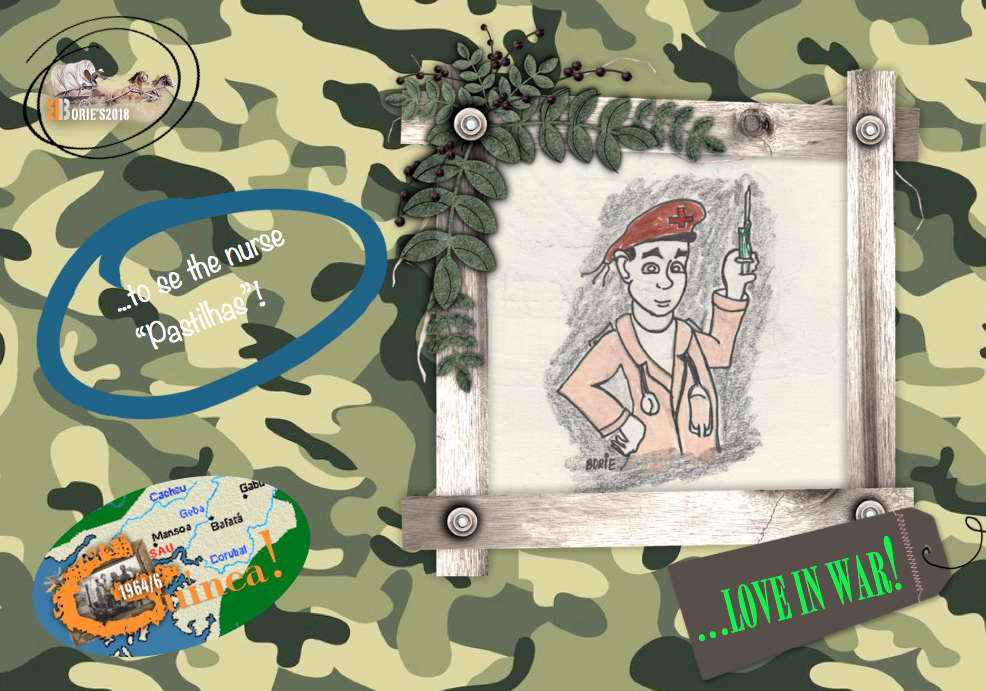
…o “Life Boy”, tinha conhecimento com dois tripulantes do navio “Ana Mafalda”, que visitava a então Província da Guiné Portuguesa periodicamente, descarregando militares e equipamento de combate, navegando em seguida para o continente Americano, normalmente indo carregar tabaco ao porto de Philadélfia e, na altura em que atracava na capital da província, o “Life Boy”, ia ver o enfermeiro “Pastilhas”, arranjando licença de doente, indo no respectivo veículo, que saía do aquartelamento às sextas-feiras, para acapital, onde ia ao encontro dos tripulantes do navio, abastecer-se de todo o material para o seu pequeno negócio!. (the “Life Boy”, was acquainted with two crew members of the “Ana Mafalda” ship, who then visited the then Portuguese Guinean Province, discharging military and combat equipment, then sailing to the American continent, usually carrying tobacco to the port of Philadelphia and, at the time it docked in the capital of the province, the “Life Boy” was about to see the nurse “Pastilhas”, getting sick leave, going in the respective vehicle, that left the barracks on Fridays, to acapital, where it went to meet the ship’s crew, make sure you have all the material for your small business)!.

…esta personagem do companheiro de guerra “Life Boy”, negociava dentro do aquartelamento, tudo estava bem para ele, pedia desculpa, trocava os produtos, se podesse cobrava duas vezes, em caso de dúvida, ele era o culpado, emprestava um lance de linha com uma agulha na ponta para pregar um botão, depois, vendia o carrinho de linhas e a agulha, tal como se fossem novos, ia vendendo, no fim do mês cobrava mais uns “pesos” na conta, se dessem por ela, pedia desculpa, se não dessem, era lucro no negócio!. (this character of the war boy “Life Boy”, negotiated inside the quarter, everything was fine for him, he apologized, he exchanged the products, if he could charge twice, in case of doubt, he was to blame, bid a line with a needle at the end to nail a button, then sell the line cart and the needle, as if they were new, were selling, at the end of the month charged a few more “pesos” in the account, if they gave it, he was sorry, if they did not, it was profit in the business)!.
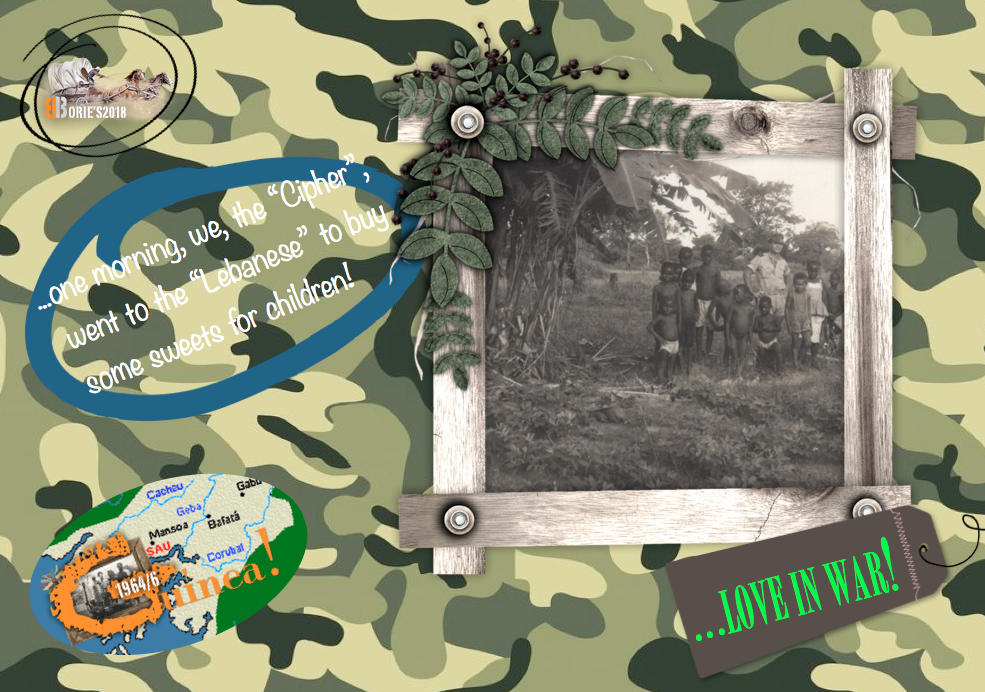
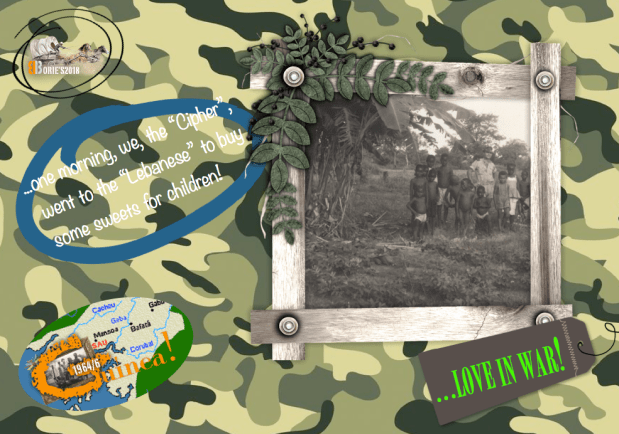
…uma certa manhã, nós, o “Cifra”, fomos ao estabelecimento do “Libanês” comprar alguns rebuçados, pois íamos visitar algumas “bajudas” (moças naturais da aldeia), e crianças a uma aldeia com casas cobertas de colmo, que existiam perto do aquartelamento e, ainda hoje, já lá vão mais de cinquenta anos, não sabemos a certeza se o “Life Boy”, estava tentando roubar um anel muito lindo, com uma pedra azul turquesa, que a filha do “Libanês” usava no dedo, ou se já tinha aprendido a acariciá-la, tal como o “Curvas, alto e refilão” lhe tinha dito anteriormente!. (one morning, we, the “Cipher”, went to the “Lebanese” establishment to buy some sweets, as we were going to visit some “bajudas” (natural girls in the village), and children in a village with thatched houses that existed near the barracks and, even today, more than fifty years ago, we do not know for sure if the “Life Boy” was trying to steal a very beautiful ring with a turquoise blue stone that the daughter of the “Lebanese” wore on her finger, or if already had learned to caress it just as the “Curves, high and complicative” had told him before)!.
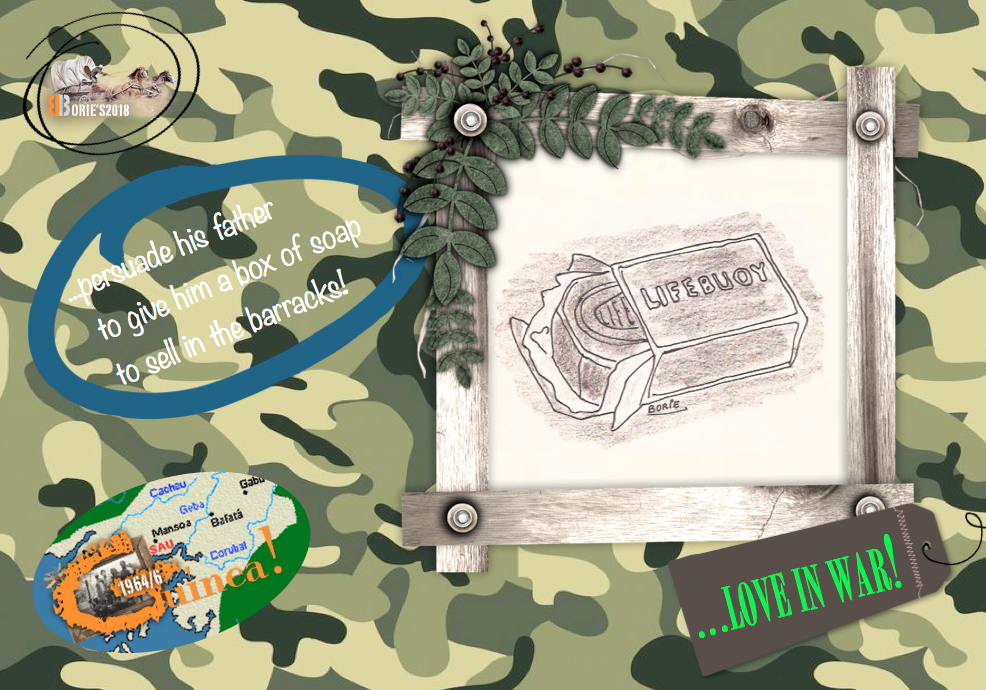
…a verdade, isso vimos nós, com estes olhos que a terra há-de comer, sim eram eles, os dois juntos, o “Life Boy” com a filha do “Libanês”, estavam de frente um para o outro, ela dentro e ele fora do balcão, mas olhando-se de frente, nos olhos, não reparavam em mais ninguém, pois dissémos “bom dia” e ninguém respondeu, estavam concentrados um no outro, com as mãos juntas, passando os dedos um pelo outro, tal com se via nos filmes de Hollywood, falando baixinho, não sabemos nós, se estavam trocando promessas de amor para o resto das suas vidas, ou se o “Life Boy” lhe estava tentando roubar o anel!. Nesse dia cremos mesmo que não, devia de estar pedindo-lhe para convencer o seu pai, para lhe dispensar uma caixa de sabonetes, para vender no aquartelamento, pois pela manhã, pedimos-lhe uma barra de sabão, dizendo-nos ele, que não tinha mais produto e, o navio “Ana Mafalda”, só visitava a então Província Colonial da Guiné, no mês seguinte!. (the truth, this we saw, with these eyes that the earth will eat, yes they were, the two together, the “Life Boy” with the daughter of the “Lebanese”, were facing each other, she in and out of the balcony, but looking straight in the eyes, they did not notice anyone else, for we said “good morning” and no one answered, they were concentrating on each other, hands clasped together, running their fingers one at a time another, as seen in the Hollywood movies, talking softly, we do not know if they were exchanging promises of love for the rest of their lives, if Life Boy was trying to steal the ring!. On that day, we do not think we should be asking him to persuade his father to give him a box of soap to sell in the barracks, because in the morning we asked him for a bar of soap, telling us that had no more product, and the ship “Ana Mafalda” visited the then Colonial Province of Guinea the following month)!.

…de uma maneira ou de outra, nessa semana sim, namovam e, lá tínhamos que o ouvir declamando, sempre algum de nós lhe comprava qualquer produto e, dizia bem alto:

– às vezes és o meu General, outras o meu inimigo, isto custa 50 centavos, chega-te um pouco para lá que estou lançando granadas, ela é maravilhosa quando o fogo começa, ficamos tão difíceis que perdemos o control, explodimos, da luz dum rebentamento, fica simplesmente o amor na guerra!.

(in one way or another, this week, yes, they were dating, and we had to hear him declaiming, some of us would always buy him any product and said very loudly:

– sometimes you are my General, sometimes my enemy, it costs 50 cents, a little comes to me that I am throwing grenades, it is wonderful when fire begins, we are so difficult that we lose control, we explode, the light of a bursting, is simply love in the war)!.

…ouvindo isto, o “Curvas, alto e refilão”, aproximava-se, com uma granada na mão, juntando a sua cara à dele, dizendo-lhe:

– hó palerma, “labrego com cara achinezada”, ninguém percebe nada do que estás para aqui a “palrar”, cála-te, eu é que rebento esta granada no teu focinho!.

(hearing this, the “Curvas, high and complicative” approaches, with a grenade in his hand, joins his face to his and says:

– Oh fool, “labrego with a flattened face”, nobody notices anything of what you are here to “speak”, shut up, or I’ll smash this grenade in your nose)!.
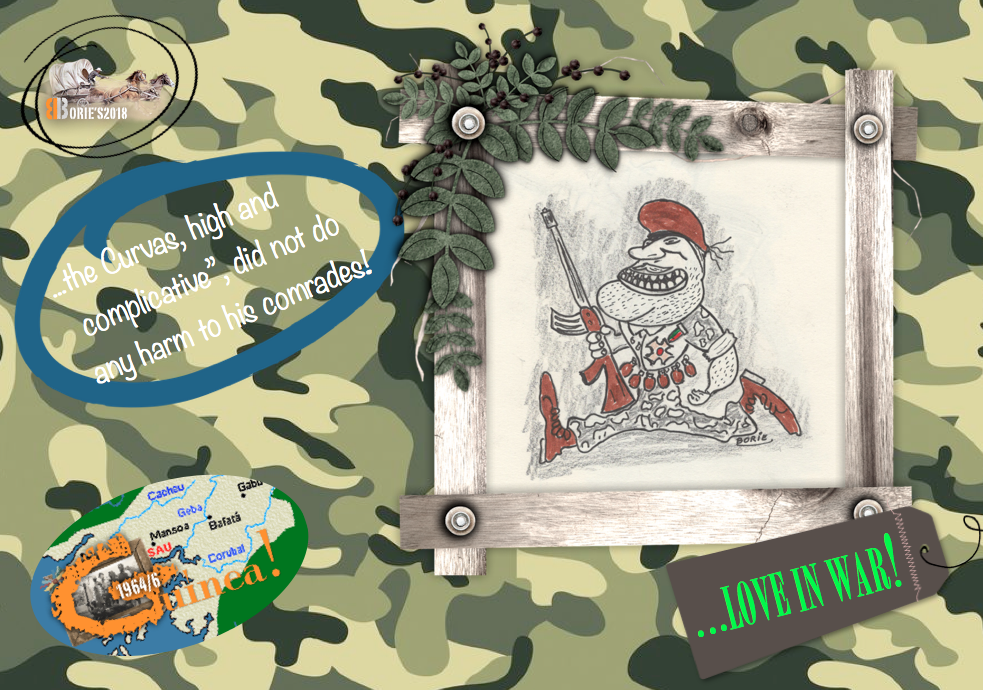
…todos sabíamos que o “Curvas, alto e refilão”, não fazia nada de mal aos seus companheiros de combate, pois éramos uma família unida, que sofriamos juntos num cenário, onde existia o amor de “irmãos de guerra”!. (we all knew that the “Curvas, high and complicative” did not do any harm to his comrades fighting, because we were a united family, that we suffered together a scenario, where the love of “war brothers” existed)!.

…o amor é como uma guerra, fácil de começar, mas muito difícil de parar! (love is like a war, easy to start, but very difficult to stop)!.

Tony Borie, February 2018.
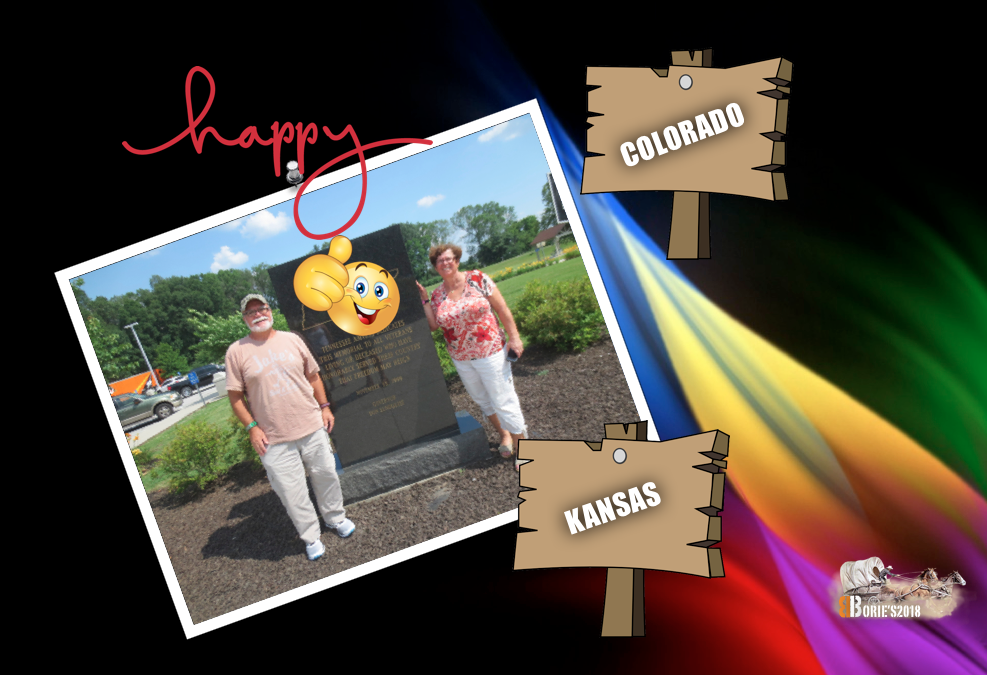
…traveling East!

…traveling East!

…viajando para leste! (traveling east)!

…já lá vão três quartos de século e, a curiosidade aumenta, pois não sabemos o que fazer mais quando cair-mos, e depois o que fazer, quando estivermos lá!. Continuamos na esperança de não cair, vamos caminhando, embora mais devagar, sem nunca esquecer que alguma sabedoria vem com a idade mas, ninguém sabe porquê, às vezes a idade vem sózinha, mas nós quanto mais velhos vamos ficando, menos coisas nos parecem valer a pena esperar, portanto a vontade de ver tudo aumenta, andamos por aí, apreciamos quase tudo, uma simples flor que nasce, o sol brilhante ou não, a água limpa e pura correndo em alguns rios, ou em algumas praias do oceano, o cair da chuva, consideramos um previlhégio poder ver a luz do dia, dizer “bom dia” a quem por nós passa, ou simplesmente, sentados no nosso quintal, poder apreciar o voo atribulado de uma borboleta!. (it’s been three-quarters of a century, and curiosity increases, because we do not know what to do more when we fall, and then what to do when we’re there! We continue hoping not to fall, we walk, although slower, never forgetting that some wisdom comes with age but no one knows why, sometimes age comes alone, but the older we get, the less things seem to us to be worth It is worth waiting for, so the will to see everything increases, we walk around, enjoy almost everything, a simple flower that is born, the bright sun or not, the clean and pure water running in some rivers, or in some beaches of the ocean, the rain fall, we consider a privilege to be able to see the light of day, say “good morning” to those who pass by us, or simply, sitting in our yard, to enjoy the troubled flight of a butterfly)!.

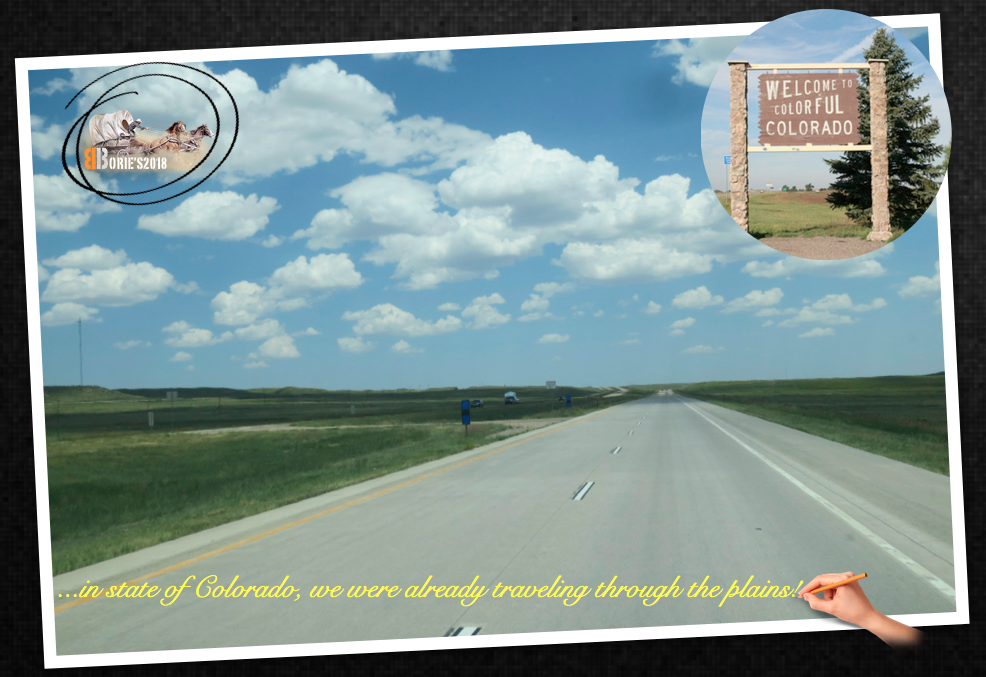
…querendo sempre ver mais e mais, sobretudo a natureza pura, viajávamos em direção ao leste, já havíamos passado as Montanhas Rochosas que existem na parte oeste do estado de Colorado, que há muitos anos atrás, os viajantes Espanhóis, derivado aos sedimentos de cor vermelha trazidos das montanhas, que um grande rio levava, decidiram dar o nome de Colorado e, é por este motivo que ainda hoje se chama Colorado!. (always wanting to see more and more, especially pure nature, we were traveling eastwards, we had already passed the Rocky Mountains that exist in the western part of the state of Colorado, that many years ago, Spanish travelers, derived from the red sediments brought from the mountains, that a great river led, decided to give the name of Colorado and, that is why it is still called Colorado)!.

…já viajávamos pelas planícies, lembrando que este estado, foi habitado por nativos americanos por mais de 13.000 anos!. Existem alguns artefactos que datam de aproximadamente 11.200 anos AC a 3000 AC, onde a parte oriental das Montanhas Rochosas, era uma rota de migração muito importante para os povos primitivos em toda a América, que sempre povoaram os vales, montanhas, planaltos e planícies do espaço que hoje chamam Colorado!. A “Nação Ute”, habitava os vales do sul da cordilheira das Montanhas Rochosas, por onde já tínhamos passado e, as “Nações Apache e Comanche”, habitavam as partes leste e sudeste, onde às vezes a “Nação Arapato e a Cheyenne”, se mudavam para oeste, para caçar nas planícies mais altas!. (we were already traveling through the plains, remembering that this state was inhabited by Native Americans for more than 13,000 years!. There are some artifacts dating from approximately 11,200 years BC to 3000 BC, where the eastern part of the Rocky Mountains was a very important migration route for primitive peoples throughout America, who have always populated the valleys, mountains, plateaus and plains of the space that today they call Colorado!. The “Ute Nation” inhabited the southern valleys of the Rocky Mountain Range, where we had passed, and the “Apache and Comanche Nations” inhabited the eastern and southeastern parts, where sometimes the “Cheetah Nation and Cheyenne”, they moved west to hunt on the higher plains)!.

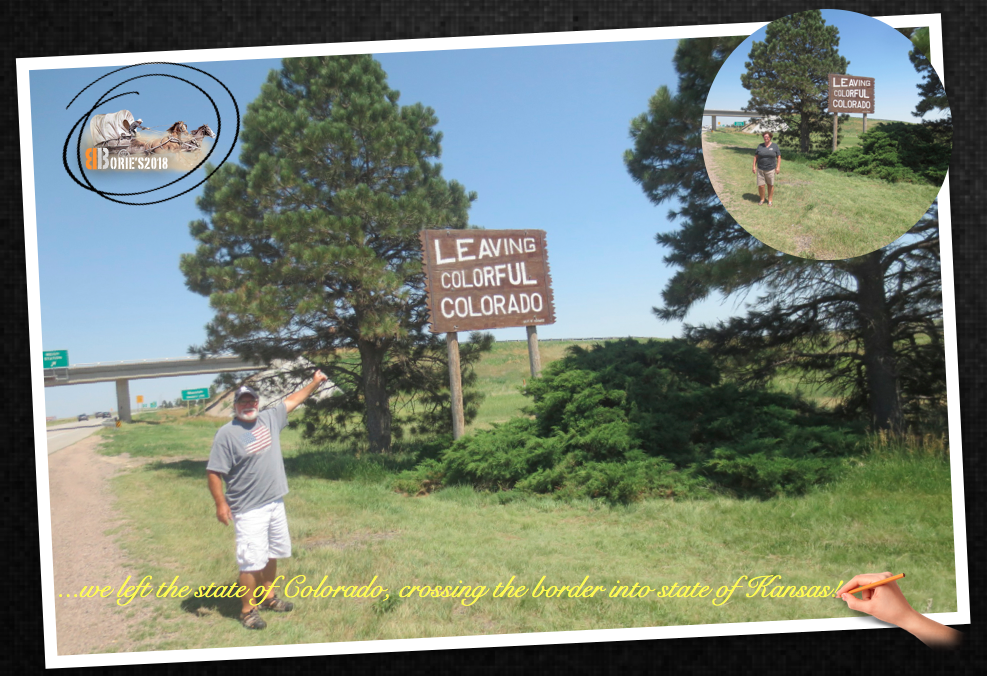
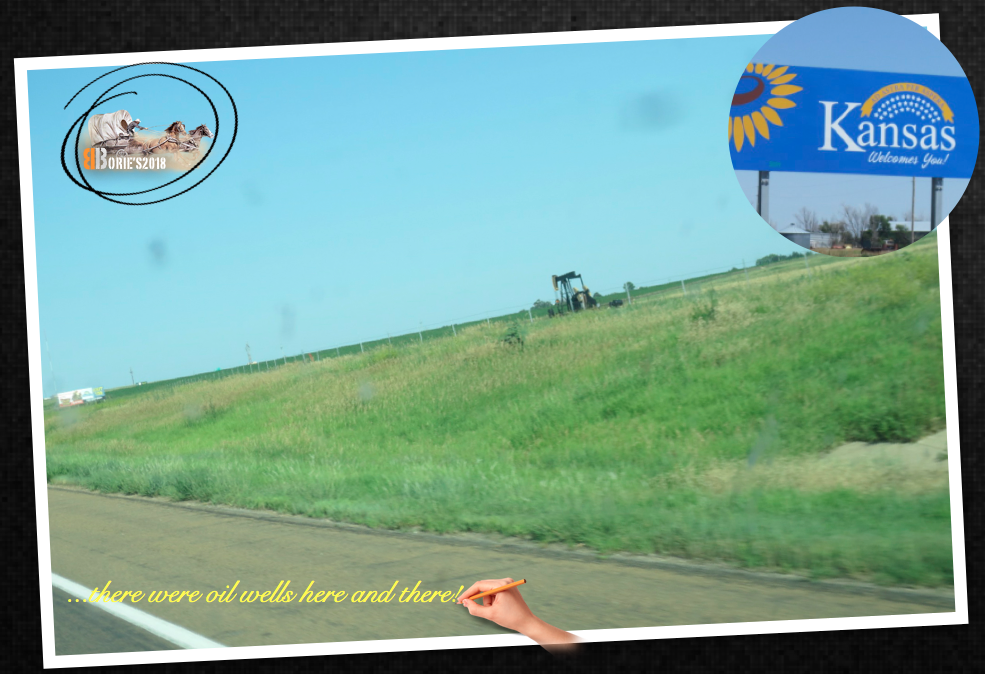
…com o pensamento e muito respeito por estes povos primitivos, deixámos o estado de Colorado, atravessando a fronteira para o estado de Kansas! (with the thought and a lot of respect for these primitive peoples, we left the state of Colorado, crossing the border into the state of Kansas)!.

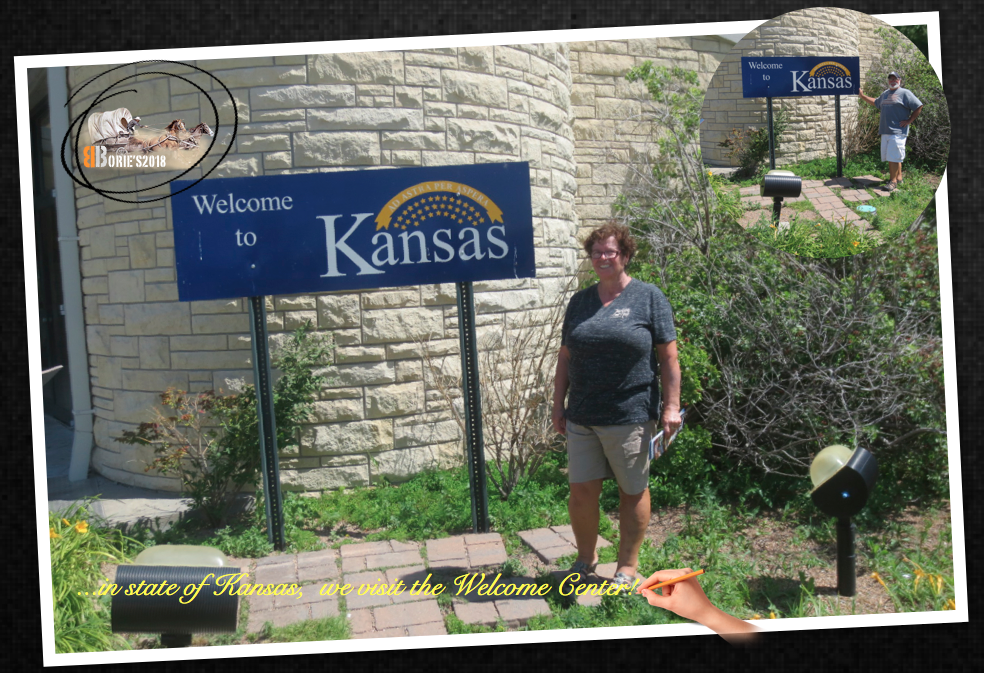
…como sempre fazemos, ao entrar em qualquer estado, sendo possível, pois por vezes atravessamos a fronteira em horas em que não estão abertos, visitamos o centro de boas vindas, colhendo informação, que sempre é muito útil, para quem como nós, adoramos a história e a natureza!. (as we always do, when entering any state, being possible, because sometimes we cross the border in hours when they are not open, we visit the welcome center, gathering information, which is always very useful, for those who like us we love history and nature)!.

…a planície continuou, a região que constitui o estado de Kansas era habitado por algumas tribos nativas, antes da chegada dos primeiros exploradores Europeus, entre as quais os “Kansa”, daí a origem do nome do estado, onde também existiam os “Osage”, os “Pawnee” e os “Whicita”, que viviam da caça do búfalo e do cultivo de milho, que ainda hoje podemos ver grandes plantações ao lado da estrada!. (the plain continued, the region constituting the state of Kansas was inhabited by some native tribes, before the arrival of the first European explorers, among them the “Kansa”, hence the origin of the name of the state, where there were also the “Osage”, the “Pawnee” and the “Whicita”, who lived from the hunting of buffalo and the cultivation of corn, that even today we can see large plantations beside the road)!.

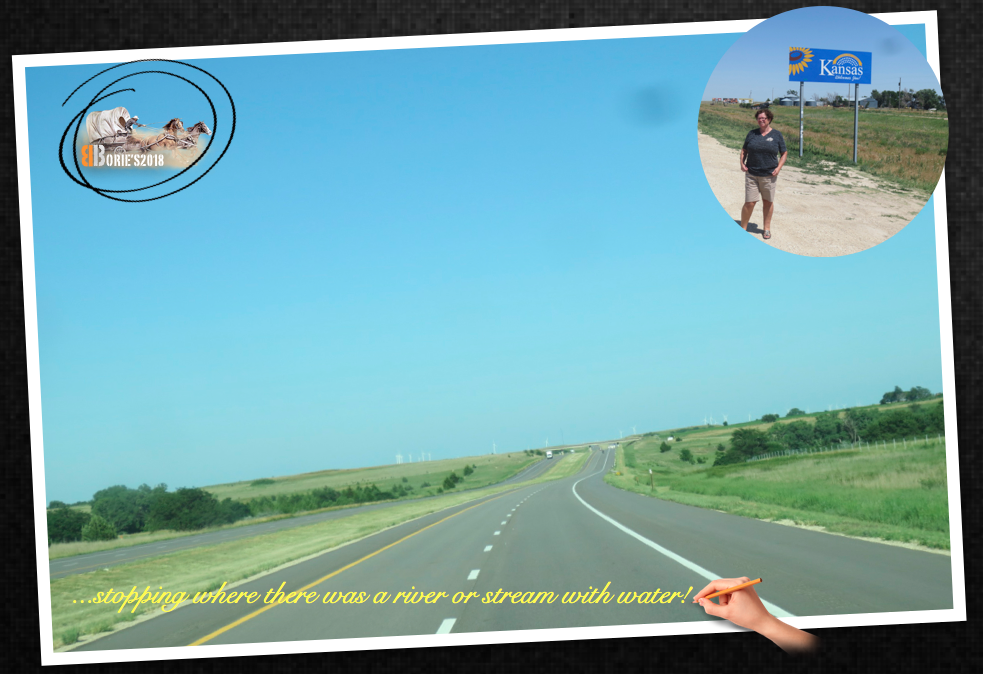
…como em toda a história da humanidade, as povoações nasciam com a deslocação das pessoas para outras regiões, alguns procurando uma sobrevivência melhor, outras por outros motivos, como a célebre “Corrida ao Ouro”, parando onde houvesse um rio ou riacho com água e o terreno podesse ser cultivado, onde houvesse vegetação, podessem praticar a caça ou a pesca, onde o clima fosse agradável, para esses alguns, procuravam uma sobrevivência com mais facilidades e, no caso do que hoje se chama estado de Kansas, uma expedição Espanhola, liderada por um tal Francisco Vásquez de Coronado, no ano de 1541, buscava uma região chamado “Qirira”, onde, segundo o guia nativo da expedição, possuía grandes minas de ouro!. Era o ouro, sempre o ouro, a ganância de enriquecimento rápido, a “Corrida ao Ouro”, fazia estas pessoas deslocarem-se, mas desta vez, não foram felizes, pois não encontraram ouro e, desanimados abandonaram a região!. (as in the whole history of humanity, the settlements were born with the displacement of people to other regions, some seeking a better survival, others for other reasons, such as the famous “Gold Rush”, stopping where there was a river or stream with water and the land could be cultivated, where there was vegetation, hunting or fishing, and the climate was pleasant, for these some, sought a more comfortable survival and, in the case of what is now called the state of Kansas, a Spanish expedition led by a certain Francisco Vásquez de Coronado, in the year 1541, he was searching for a region called “Qirira”, where, according to the native guide of the expedition, he owned large gold mines!. It was gold, always gold, greed for quick enrichment, the “Gold Rush”, made these people move, but this time, they were not happy, because they found no gold and, discouraged left the region)!.

…só mais um pormenor, o actual estado de Kansas, até ao ano de 1830, fazia parte do Distrito de Luisiana, do Território de Luisiana e do Território do Missouri, pois por volta do ano de 1825, o governo havia confiscado grandes pedaços de terras de tribos nativas do leste, decidindo fazer da região que actualmente constitui o estado de Kansas, outrora uma região escassamente povoada por brancos, uma reserva indígena, para abrigar as tribos nativas que fossem obrigadas a ceder as suas terras no leste, deste modo, 30 tribos de nativos instalaram-se em Kansas!. (just one more detail, the present state of Kansas, until the year 1830, was part of the District of Louisiana, the Territory of Louisiana and the Territory of Missouri, for by the year 1825, the government had confiscated large pieces of land from native tribes of the east, deciding to make the region that presently constitutes the state of Kansas, once a region sparsely populated by whites, an Indian reservation, to house the native tribes that were forced to cede their lands in the east, that way, 30 tribes of natives settled in Kansas)!.

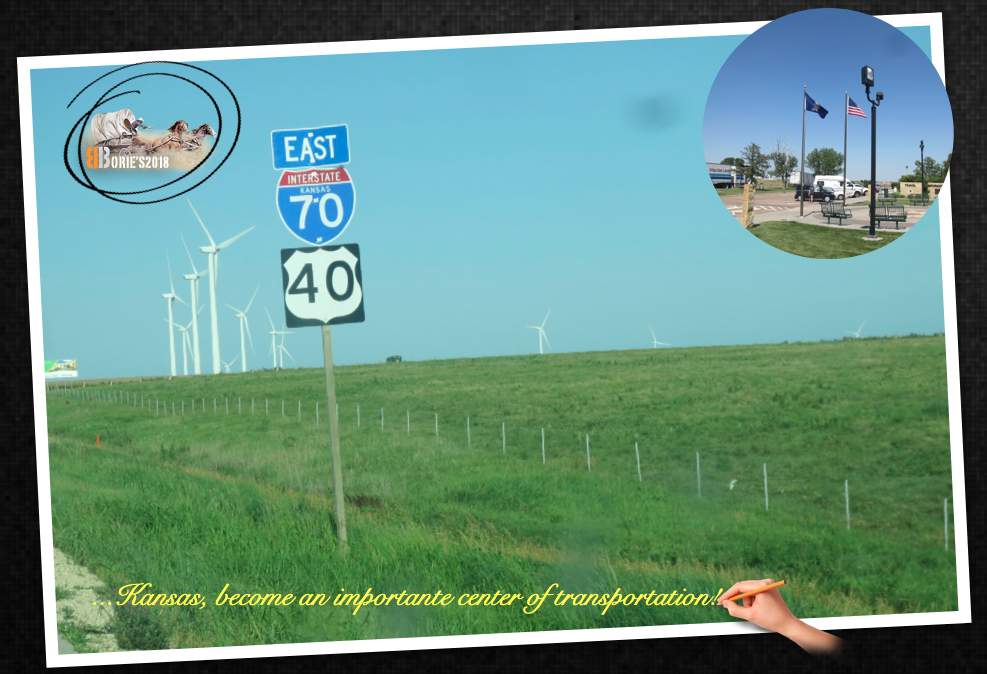
…entretanto, o espaço onde se encontra o actual estado de Kansas, localizado na região central dos USA, tornara-se um importante centro de transportes, graças à expansão em direcção ao oeste, onde por volta do ano de 1827, um tal coronel Henry Leavenworth, estabeleceu o primeiro forte na região, o “Forte Leavenworth”, região esta, onde a maioria dos brancos se instalavam e que eram “abolicionistas”, do norte, que queriam acabar, pelo menos tentavam parar, com a expansão do trabalho escravo no país!. (however, the present state of Kansas, located in the central region of the USA, had become an important center of transportation, thanks to the expansion towards the west, where around the year 1827, a Colonel Henry Leavenworth, established the first fort in the region, the “Leavenworth Fort,” a region where most whites settled and were “abolitionists” from the north who wanted to stop, at least tried to stop, with the expansion of slave labor in the country)!.

…anos depois a região passou a atrair maior número de pessoas interessadas na busca de melhores condições de vida, primáriamente imigrantes Europeus, entre eles, Alemães, Irlandeses, Ingleses, Suecos e Russos, onde o povoamento por parte dos colonos brancos fez com que a pressão no governo tornasse um território independente, e claro, forçasse a remoção dos nativos da região, onde o governo, passou a negociar com cada uma das tribos instaladas em Kansas e, gradualmente, todas as tribos nativas foram removidas da região, sendo a sua maioria enviadas para a região do que hoje constitui o actual estado de Oklahoma!. (years later the region began to attract more people interested in the search for better living conditions, primarily European immigrants, including Germans, Irish, English, Swedes and Russians, where settlement by white settlers made that the pressure on the government would become an independent territory, and of course, force the removal of the natives from the region, where the government began to negotiate with each of the tribes settled in Kansas and gradually all native tribes were removed from the region. mostly sent to the region of what now constitutes the present state of Oklahoma)!.

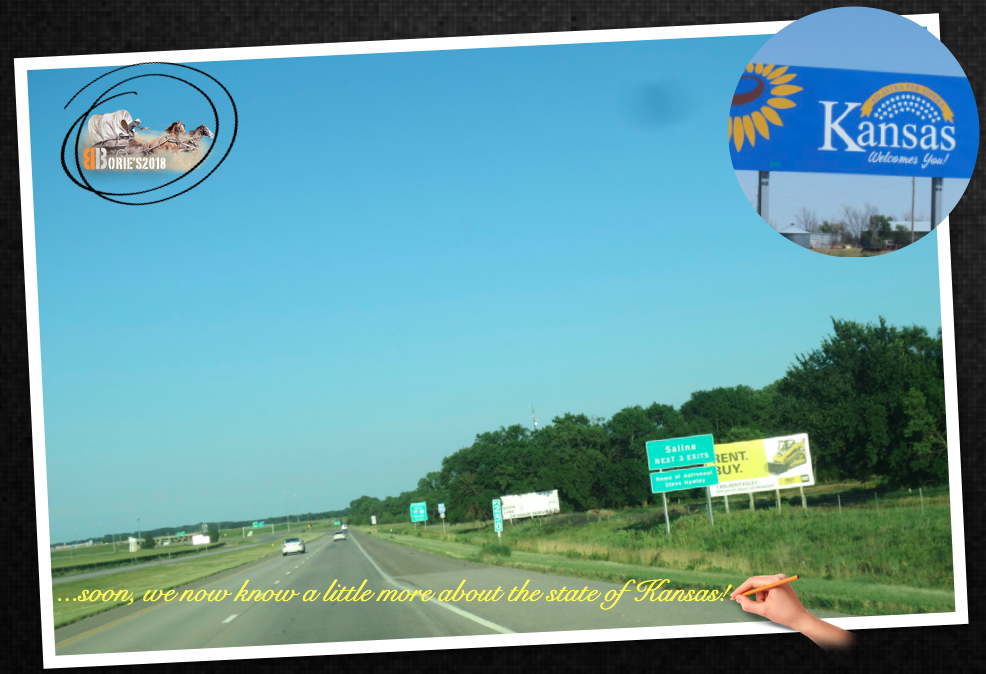
…pronto, agora ficámos a conhecer um pouco mais do estado do Kansas, que nas eleições territoriais de 1855 foram vencidas pelo partido político abolicionista, o “Free State Party” (Partido do Estado Livre) e, em 1861, após a saída de 11 estados do sul da União, que formaram os “Estados Confederados da América”, Kansas tornou-se o 34º estado Norte Americano!. (soon, we now know a little more about the state of Kansas, which in the territorial elections of 1855 were defeated by the abolitionist political party, the “Free State Party”, and in 1861, after leaving of 11 southern states of the Union, which formed the “Confederate States of America,” Kansas became the 34th state of North America)!.

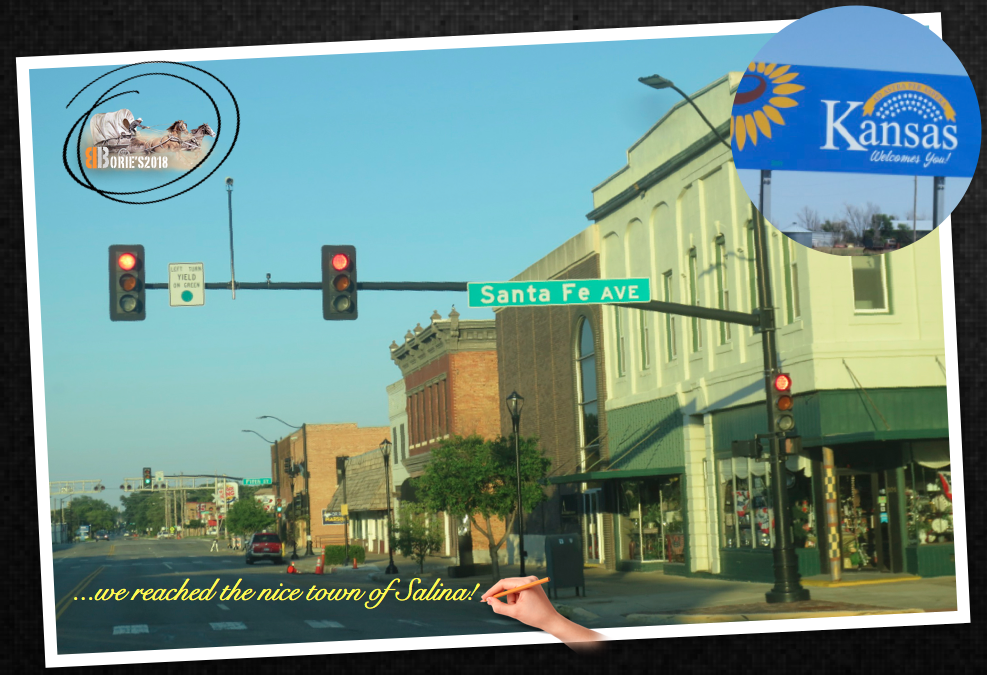
…tínhamos atravessado quase o estado de Kansas, quando chegámos à simpática cidade de Salina, que no passado se estabeleceu com um posto comercial para imigrantes a oeste, prospectores ligados ao Pikes Peak (uma montanha no Front Range das montanhas rochosas do sul, perto de Colorado Springs, no estado do Colorado) e tribos nativas na área e, onde o crescimento da cidade se interrompeu com o surgimento da Guerra Civil Americana, quando grande parte da sua população masculina deixou a cidade, para se juntar ao Exército dos USA!. (we had crossed almost Kansas, when we reached the nice town of Salina, which in the past settled with a commercial post for immigrants to the west, prospectors attached to the Pikes Peak (a mountain in the Front Range of the southern Rocky Mountains, near Colorado Springs, in Colorado) and native tribes in the area and where the growth of the city was interrupted with the outbreak of the American Civil War, when much of its male population left the city to join the US Army)!.

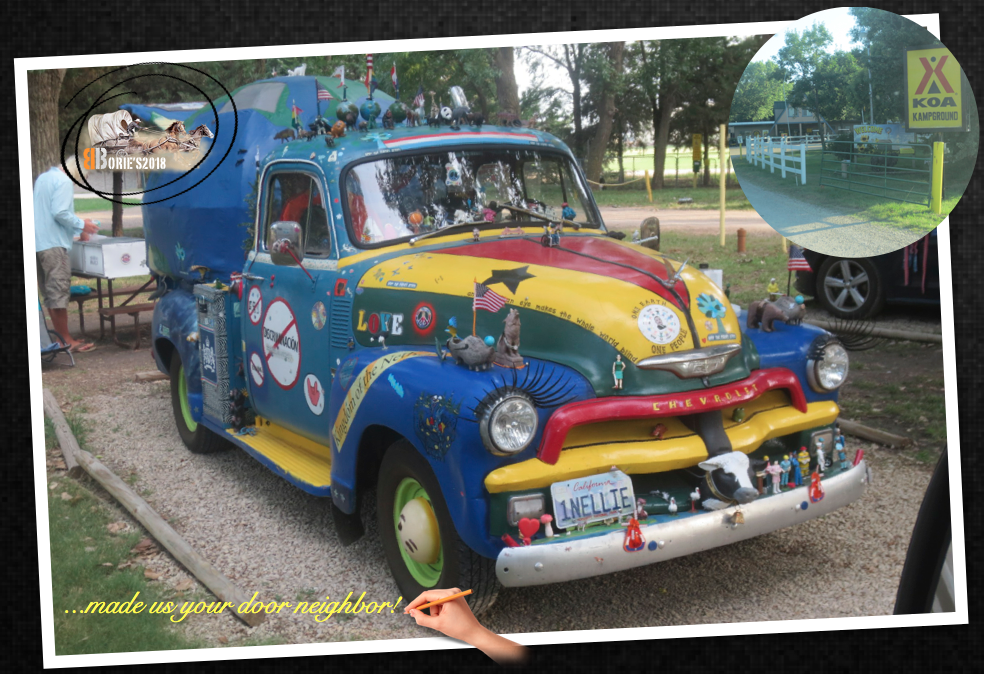
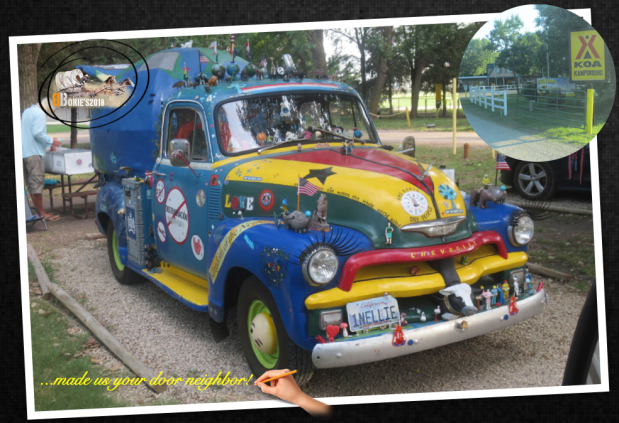
…começámos este texto dizendo entre outras coisas que, “a vontade de ver tudo aumenta, andamos por aí, apreciamos quase tudo”, e quem poderia ficar indiferente a esta simpática personagem, que lá ao fundo, do lado esquerdo desta maravilhosa fotografia, (a quem pedimos se o podíamos fotografar, respondendo com um sorriso, que sim), onde naquele momento, arrumava todos os bens de primeira necessidade para sobreviver, preparando-se para ir conhecer novos horizontes, onde pode usufruir do privilégio e da liberdade, de ter um cenário diferente quase todos os dias, quando se levanta pela manhã e vê outro dia nascer, neste veículo que construiu “à sua maneira”, com carinho, onde cada detalhe tinha o seu significado, a sua história, a sua mensagem, colocado lá em diferentes momentos, talvez assinalado uma data histórica, ou simplesmente embelezando o seu lar, fazendo com que tornasse aquele veículo, que era mesmo o seu lar, onde naquele parque de campismo, que também usámos naquele dia, fez de nós o seu vizinho do lado!. (we started this text saying among other things that, “the will to see everything increases, we walk around, we enjoy almost everything”, and who could be indifferent to this nice character, that in the background, on the left side of this wonderful photograph, (to whom we asked if we could photograph him, answering with a smile, that yes), where at that moment, he arranged all the basic necessities to survive, preparing to go to know new horizons, where you can enjoy the privilege and the freedom, to have a different scenario almost every day, when you get up in the morning and watch another day be born, in this vehicle that constructed “in his way” with affection, where every detail had its meaning, its history, its message, put there at different times, perhaps marked a historical date, or simply beautifying your home, making it that vehicle, which was really your home, where at that campsite, which we also used that day, made us your next door neighbor !.

Tony Borie, February 2018.
…the “Pen”!

…the “Pen”!

…o “Caneta”!. (the “Pen”)!.

…com a idade, deixámos de fazer alguns disparates, finalmente temos a cabeça no lugar, agora o corpo, esse está caindo aos bocados e, quando escolhemos o cereal, é por causa da fibra, não por causa do brinquedo, que costuma vir lá dentro!. (with age, we stop doing some nonsense, finally we have the head in place, now the body, this is falling to bits, and when we choose the cereal, it is because of the fiber, not because of the toy, which usually come inside)!.

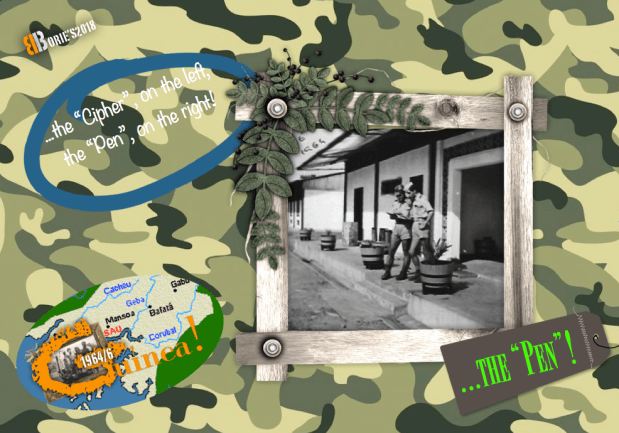
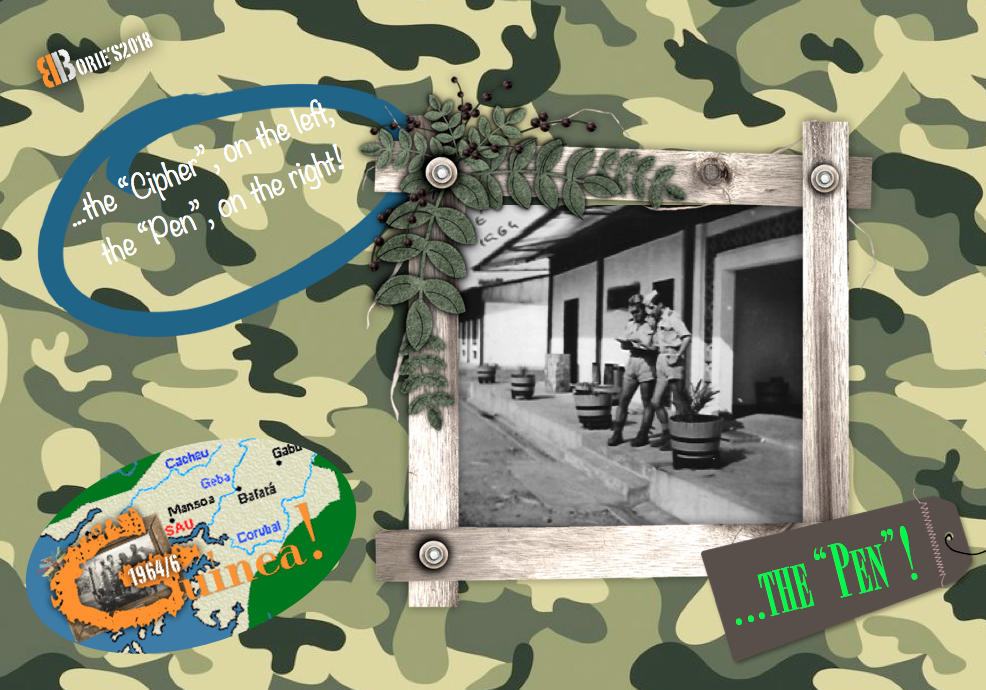
…são pequenas verdades e, talvez derivado ao não estarmos muito ocupados, vamos lembrando com mais frequência as pessoas que nos marcaram durante a vida de jovem, principalmente os companheiros da nossa vivência em África, no tal miserável cenário de guerra e, hoje vamos contar a história, lembrando a pessoa bondosa do companheiro “Caneta”, cá vai!. (are small truths and, perhaps derived from not being too busy, we are remembering more often the people who marked us during the life of a young person, especially the companions of our experience in Africa, in such miserable war scenario and today let’s tell the story, remembering the kind person of the companion “Pen”, here it goes)!.

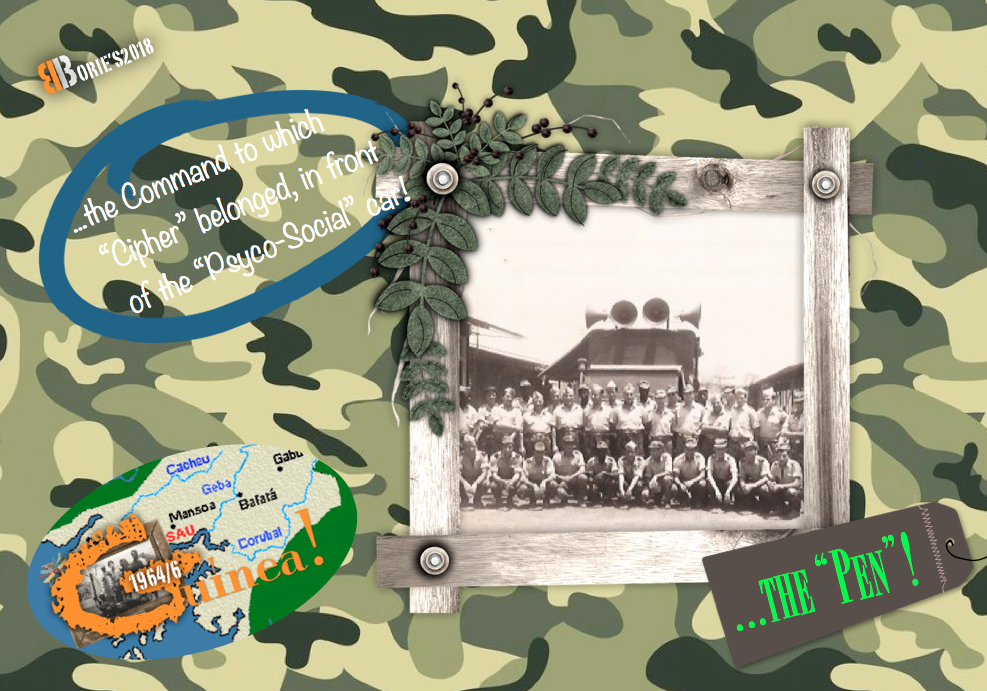
…o carro da “Psico-Social”, foi um invento do comando a que pertencíamos, era uma viatura da marca Unimog, coberto com uma cobertura de pano oleado, tanto na cabine como na zona de carga, tinha instalado uma aparelhagem sonora, com quatro altifalantes colocados no topo da viatura, tipo funil, tal como se usava nos arraiais das festas e romarias, nas aldeias e vilas de Portugal!. (the “Social-Psycho” car was an invention of the command to which we belonged, it was a Unimog brand vehicle, covered with an oiled cloth covering both in the cabin and in the cargo area, had installed a sound system , with four loudspeakers placed on the top of the vehicle, funnel type, as used in the festivals and pilgrimages, in the villages and towns of Portugal)!.

…a sua missão era percorrer algumas aldeias nas redondezas do aquartelamento e não só, distribuindo panfletos, alguns com a fotografia de um militar com uma arma à tiracolo, com uma criança africana ao colo, dizendo num português acrioulado, que os militares estavam ali para proteger, ajudar, ensinar, curar feridas, dar medicamentos, enfim, fazer tudo o que o Criador ainda não tivesse oportunidade de ter feito!. Esses panfletos, também deviam de dizer, mas não diziam que, estávamos lá, para proteger a “Companhia Ultramarina”, que nós, não sabíamos com que capitais, mas também não queremos ir ao ponto de a associar à, “Royal African Company” muitos anos atrás, longe de nós semelhante comparação, mas na verdade era a “Companhia Ultramarina”, quem controlava toda a vida comercial da então província da Guiné Portuguesa, pois todos os armazéns, barcos de transporte e cais de embarque, nas principais vilas ou lugares importantes, negociava e transportava quase todos os produtos que saíam da então província da Guiné Portuguesa!. (his mission was to visit some villages in the vicinity of the barracks, not only distributing pamphlets, some with the photograph of a soldier with a gun in his arms, with an African child in his lap, saying in an acriled Portuguese that the military were there to protect, to help, to teach, to heal wounds, to give medicines, in short, to do everything that the Creator had not yet had opportunity to have done!. These pamphlets should also say, but they did not say that, we were there to protect the “Overseas Company”, that we did not know with what capital, but we do not want to go so far as to associate it with the “Royal African Company” many years ago, far from us a similar comparison, but in fact it was the “Overseas Company”, who controlled the entire commercial life of the then province of Portuguese Guinean, since all the warehouses, shipping boats and embarkation docks in the main towns or important places, negotiated and carried almost all the products that left the then province of Portuguese Guinean)!.

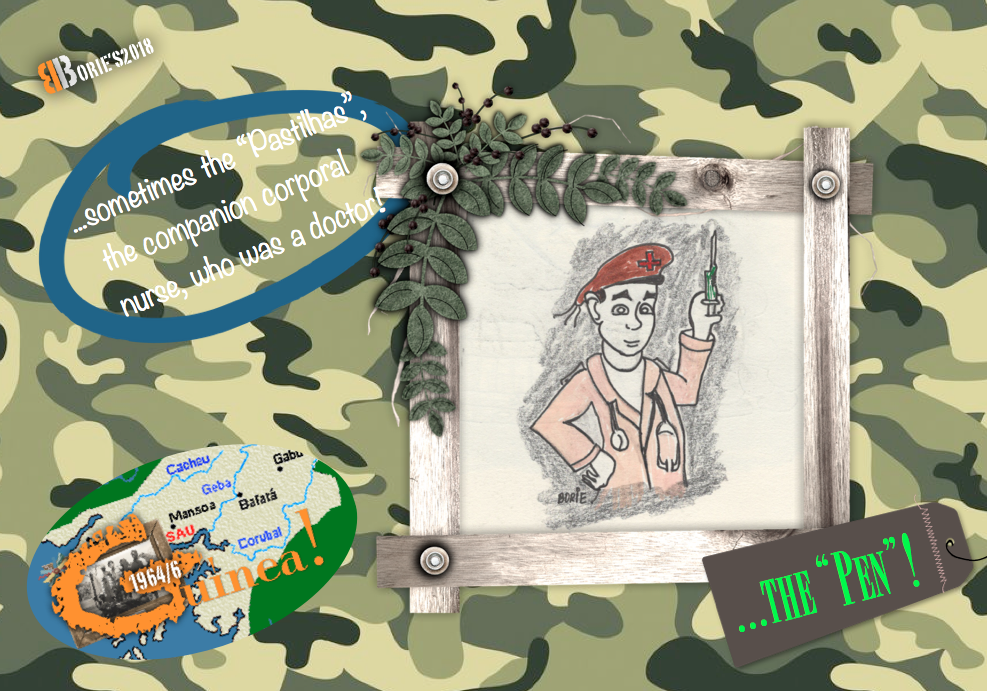
…continuando, algumas vezes o “Pastilhas”, o tal companheiro cabo enfermeiro, que fazia de doutor, ia nesta viatura da “Psico-Social”, com uma mala à tiracolo, com uma cruz vermelha desenhada na frente, onde levava, entre outras coisas, comprimidos, álcool medicinal, tintura e ligaduras, e desinfectava com álcool, depois pincelava com mercúrio cromo, deitando em seguida um pó branco, envolvendo com ligaduras, algumas feridas nas pernas e nos pés, que alguns africanos, já com idade avançada, tinham principalmente dos joelhos para baixo, dizendo mais ou menos isto:

– Mézinho do sinhô dotô, faz manga di bom!.

…era só o que o “Pastilhas” sabia dizer, em português acrioulado!.

(continuing, sometimes the “Pastilhas”, the companion corporal nurse, who was a doctor, went in this vehicle of “Social-Psycho”, with a suitcase in tow, with a red cross drawn in front, which led, among other things, tablets, medicinal alcohol, dye and bandages, and disinfected with alcohol after pinned with mercury chrome, laying then a white powder, wrapping with bandages, some wounds in the legs and feet, some African, late in life, especially had the knees down, saying more or like this:

– Mézinho of suh Doto makes manga di good!.

Was just what the “Pastilhas” could say, in Portuguese Creole!.

…quase todos sabiam, que após a viatura abandonar o local, as ligaduras eram removidas, para os mais novos enrolarem e fazerem uma pequena bola de futebol, sendo as feridas lavadas com água, às vezes suja, e as moscas e outros insectos iriam poisar de novo nelas!. (Almost everyone knew that after the vehicle leaving the scene, the bandages were removed, to the newest curl and make a small soccer ball, and the wounds washed with water, sometimes dirty, and the flies and other insects would poisar of new in them)!.

…a aparelhagem sonora era utilizada por um africano em quem os militares confiavam, que falava em crioulo, ou outro dialecto, dizendo o que só ele entendia, pois os militares não percebiam!. (The stereo system was used by an African whom trusted the military, speaking in Creole or another dialect, saying that only he understood, because the military did not understand)!.

…agora sim, vamos começar a história de sofrimento, do bom companheiro “Caneta”!. A viatura da “Psico-Social”, depois de fazer a sua viagem, quase diária, ficava estacionada, dentro do aquartelamento, perto do local onde nós, a quem nos chamavam “Cifra” dormíamos e, era aí que o “Caneta”, pegando no colchão, no travesseiro e no rádio portátil, ia dormir, quando os ataques de tosse contínua o apoquentavam, e ele não queria acordar ou molestar, com os ruídos da sua tosse, os seus companheiros!. (Now, let’s start the story of suffering, the good companion “Pen”!. The vehicle of the “Social-Psycho”, after traveling almost daily, was parked inside the barracks, near the place where we, who were called “Cipher”, slept, and that was where the “Pen” picking up the mattress, the pillow, and the portable radio, went to sleep, when the attacks of continuous coughing made him sick, and he did not want to disturb his companions with the noise of his cough)!

…o “Caneta” era um cabo escriturário, de estatura média, cara de criança, pois quase não tinha barba, com uma madeixa de cabelo preto, caída para a frente, que lhe cobria os olhos e parte do nariz, que ele arredava para os lados com a mão, segurando sempre um lápis ou uma caneta, de onde, talvez daí lhe viesse o nome. Era ele quem fazia as “ordens do dia”. Fazia cinco cópias, que distribuía por diversas repartições do aquartelamento e arquivava o original, às vezes fazia mais uma cópia, quando algum militar era louvado ou qualquer outra coisa digna de registo e, entregava por mão própria a esse militar. Também escrevia, e lia, os aerogramas e as cartas a alguns militares menos habilitados para o fazerem, portando sabia coisas privadas, desses militares, que confiavam nele e gostavam da maneira com ele escrevia, porque começava sempre os seus escritos com uma letra maiúscula cheia de floreados, pois tinha alguma habilidade para o desenho e, às vezes fazia o rosto de alguns, mais populares, como era o caso do “Curvas, alto e refilão”, com uma arma na mão!. (The “Pen” was a corporal clerk, of medium height, man child, because he had almost no beard, with a black hair strand, tumbling forward, covering his eyes and part of the nose, he left sideways with hand, always holding a pencil or pen, where perhaps there would his name. It was he who made the “agendas”. He made five copies, which distributed by various departments of the barracks and shelved the original, sometimes made another copy, when some military was praised or any other thing worthy of registration and delivered by hand to this soldier. Also wrote and read the letter cards and letters to some less qualified military to do so, bearing knew private things, those soldiers who trusted him and liked the way he wrote, because he always began his writing with a capital full letter flowery, for he had some skill for drawing, and sometimes did the face of some-more popular, as was the case of “Curvas, high and complicative” with a gun)!.

…o “Caneta” não comia quase nada, quando a comida vinha para a mesa, ele procurava uns bocaditos de qualquer coisa, que colocava na boca, mastigava e raras vezes engolia, só gostava de pão, bebia muita água, por vezes quando lhe apertava a sede, bebia dos bidons de água, que estavam a arrefecer dos três furos que havia ao fundo do aquartelamento, de onde saía água quente, mesmo muito quente, a cheirar a enxofre ou coisa parecida, por vezes com pó e insectos mortos ao de cima, onde ele soprava a superfície, mergulhando a sua cara de criança, incluindo a madeixa de cabelo preto, bebendo por alguns segundos, levantando a cara e com alguma satisfação dizia:

– é suja, mas é boa!.

(The “Pen” did not eat almost anything, when the food came to the table, he sought a snacks anything, which placed in the mouth, chewed and rarely swallowed, just like bread, drank a lot of water, sometimes when pressed his thirst and drank the water cans, which were cooled from the three holes that had the quartering the bottom, where left hot water, even very hot, the smell of sulfur or the like, sometimes with dust and dead insects at the top, where he blew the surface, plunging your child’s face, including black hair bundle, drinking for a few seconds, lifting the face and with some satisfaction saying:

– It’s dirty, but it’s good)!.

…mais ou menos aos treze meses de estadia na província, começou-lhe aquela tosse!. Primeiro era só um catarro, depois era mesmo tosse, ficava aflito quando alguém estava a fumar perto dele e a tosse quase o sufocava, os olhos ficavam vermelhos, colocando a mão na garganta em sinal de aflição!. Os colegas sabendo dessa situação, não fumavam junto dele. Foi ver o “Pastilhas”, o tal cabo enfermeiro, que o analisou, mandou-lhe abrir a boca, escutou-lhe o peito e logo lhe disse:

– Tens que ir amanhã, no carro dos doentes, a uma consulta ao hospital da província, estás a ficar muito “infezado”!.

(About thirteen months of stay in the province, began her that cough. First it was just a snot, then it was even cough, was distressed when someone was smoking next to him and coughing almost choked, his eyes were red, placing his hand on the throat distress signal!. Colleagues learned of this situation, not smoked with him. Went to see the “Pastilhas”, the one corporal nurse, which analyzed it, sent him open his mouth, listened to his chest, then I said to him:

– You have to go tomorrow, in the car of the patients, a query to the hospital province, you are getting too “infested”)!.

…lá foi à consulta, onde o doutor o analisou, lhe mandou tirar algumas radiografias e o mandou embora de regresso à unidade militar e, que fosse de novo à consulta na semana seguinte, para mais detalhes!. Vai à consulta na semana seguinte e muitas outras. Anda com uns comprimidos e com um frasquito de xarope no bolso, de onde toma uns goles, sempre que é atacado pela tosse contínua!. A tosse agora, prolonga-se por minutos, fica com cor vermelha no rosto, os olhos chorosos e, passado uns minutos de tosse, na sua boca, aparece alguma saliva com uma cor vermelha, que limpa a um farrapo, restos de uma camisa do “Cifra”, pois o “Caneta” já tinha gasto todos os farrapos da sua farda!. (There was consultation where the doctor examined him sent to take some X-rays and sent him away back to the military unit, and it was back to the consultation next week for more details!. Go to consultation next week and many others. Walks with some pills and a small bottle syrup in his pocket, from which takes a few sips, whenever it is attacked by continuous coughing!. Coughing now goes on for minutes, gets red in the face, the tearful eyes, and after a few minutes of coughing in your mouth, appears some saliva with a red, wiping a rag, remains of a shirt the “Cipher”, because the “Pen” had already spent all the tatters of his uniform)!.

…a próxima sexta-feira vai de novo ao hospital da capital da província, no carro dos doentes, vê um novo doutor, pois o antigo tinha ido para Portugal, faz novas radiografias e regressa à unidade militar, dizendo no dormitório, para quem o quisesse ouvir:

– Não comam nem bebam por objectos que eu tenha tocado, pois estou tuberculoso!.

…todos os presentes ficaram tristes e admirados com a informação, guardando silêncio, excepto o “Curvas, alto e refilão”, que num ataque de fúria diz:

– Filhos da puta, são todos uns filhos da puta!

…a guerra para o Caneta acabou!.

(Next Friday will again to the hospital in the provincial capital, in the car of the sick, see a new doctor, as the former had gone to Portugal, makes new X-rays and returned to the military unit, saying the dormitory, for whom wanted hear:

– Do not eat or drink for objects I have touched, for I am suffering from tuberculosis!.

All present were saddened and amazed with the information, keeping silent, except “Curvas, high and complicative”, that a jealous rage says:

– motherfuckers, they’re all motherfuckers!.

The war for the “Pen” over)!.

…começou outra guerra, agora não combatia guerrilheiros, combatia uma doença que naquela época era quase mortal. Recolhe todos os seus haveres, que coloca no saco do exército e numa malita, incluindo o seu rádio portátil, onde ouvia entre outras coisas, o relato de futebol do seu clube em Portugal. Na semana seguinte vem para a “metrópole”, como então se dizia, para um sanatório numa montanha, no centro de Portugal. (He started another war, not now fighting guerrillas fighting a disease which at that time was almost deadly. Collect all its assets, laying on the army bag and another little bag, including his portable radio, which heard among other things, the football account of his club in Portugal. The following week come to the “Metropolis”, as it was then called, to a sanatorium on a mountain in central Portugal)!.

…nós, o “Cifra”, não mais tivémos notícias do “Caneta”, mas nunca o esquecemos e, quando regressámos a Portugal, como a nossa aldeia ficava não muito distante dessa montanha, fomos um dia de bicicleta, a essa região de hospitais sanatórios, para tentar encontrar o “Caneta”!. Encontrámos um velho, com cara de criança!. Magro, muito magro, o cabelo raro e cinzento, uns olhos iguais, com algum brilho, as orelhas finas e saídas, trazia vestido uma bata branca que lhe cobria o corpo até aos pés, estava sentado na borda da cama, com um lápis na mão direita e um bloco de papel branco na mão esquerda, tentando desenhar a cara de um militar com uma arma na mão, cercado de arame farpado, talvez lembrando o seu antigo aquartelamento, na província de onde foi evacuado, já doente. (we, the “Cifra”, no longer had news of the “Pen”, but we never forgot it, and when we returned to Portugal, as our village was not too far from this mountain, we went for a day of cycling to this region of sanatorium hospitals, to try to find the “Pen”!. We found an old man, with a child’s face!. Thin, very thin, the rare and gray hair, a same eyes, with some luster, the fine and outputs ears, was wearing a white robe that covered his body to the feet, was sitting on the edge of the bed, with a pencil in right hand and a white pad of paper in his left hand, trying to draw the face of a military with a gun in hand, surrounded by barbed wire, perhaps remembering his old barracks in the province where it was evacuated, already sick)!.

…o rádio portátil, estava lá!.

..assim que nos viu, levanta a cara, larga o bloco de papel, que caiu no chão, fica com o lápis na mão direita, levanta-se com algum custo da cama, dá uns passos para nós, dizendo:

– só podias ser tu, mais ninguém!. Ainda nenhum militar do nosso comando me veio ver!.

…e abraça-nos, chorando, com alguns soluços, tentando conter-se. Dava a impressão que lhe custava chorar!.

…conversámos, fez algumas perguntas a custo, pois não dizia duas palavras seguidas, sem abrir a boca e tentar pôr algum ar dentro de si, tinha mesmo muita dificuldade em falar, nós respondemos a tudo o que nos lembrávamos, incluindo o regresso, mas o “Caneta” sempre nos perguntava:

– Mas… morreu mais alguém?

…e por fim diz, com bastante dificuldade:

– olha, se não tens receio de comer a comida tocada por um tuberculoso, aceita estes figos, que a minha mãe que ontem esteve aqui, me deixou!.

(The portable radio, was there!.

So he saw us, raises the face, large paper block, which fell to the ground, gets the pencil in his right hand, gets up at some cost of the bed, takes a few steps for us, saying:

– Only you could be you, nobody else. Still no military of our command came to see me!.

And hugs us, crying, with a few hiccups, trying to hold back. It seemed that cost him cry!.

We talked, asked a few questions at a cost, not to say two words in a row, without opening his mouth and trying to put some air inside him, he was very difficult to speak, we responded to everything we remembered, including the return, but the “Pen” always asked us:

– But … died anyone else?.

And finally say, with some difficulty:

– Look if you have not afraid to eat the food touched by a consumptive, accept these figs, that my mother was here yesterday, left me)!.

…o sabor dos figos da mãe do “Caneta”, são a última recordação que guardamos do companheiro daquela frente de guerra, que foi o “Caneta”, pois passado algum tempo, fomos de novo para o visitar, mas já lá não se encontrava, informaram-nos que mesmo débil, foi embora, queria regressar à sua aldeia, porque queria morrer na sua aldeia, junto da sua família!. Nunca mais soubemos nada do “Caneta”, que era oriundo de uma aldeia próximo da cidade da Guarda, junto à fronteira com a Espanha, para onde naquela altura mandámos duas cartas, uma pelo Natal e outra pela Páscoa, nunca obtendo resposta!. (the taste of the figs of the mother of the “Pen”, are the last remembrance that we had of the companion of that front of war, that was the “Pen”, since after some time, we went again to visit, but already there was not, informed us that even weak, he left, wanted to return to his village, because he wanted to die in his village, next to his family!. We never knew anything about the “Pen,” which came from a village near Guarda, near the border with Spain, where at that time we sent two letters, one for Christmas and one for Easter, never getting an answer)!.

Tony Borie, January 2018.