…Expedição ao Alaska24 (Dia 10) …Alaskan Expedition24 (Day 10)

…já chegámos ao Território do Yukon!. Hoje foi um dia de estrada!. Era sempre aos zig-zags subidas e descidas com vistas de rios, ribeiros, lagos e montanhas, muitos animais selvagens, principalmente ursos negros!. Contámos mais de duas dezenas!. É o “Histórico Alaska Highway” que adoramos!. Gasolina?. Sim, havia em muitos lugares, não como no passado em que levávamos depósitos extras!.

 …we’ve already reached Yukon Territory!.Today was a day on the road!. It was always zig-zagging ups and downs with views of rivers, streams, lakes and mountains, lots of wild animals, especially black bears!. We counted more than two dozen! It’s the “Historic Alaska Highway” that we love! Gasoline?. Yes, there were in many places, not like in the past when we took extra deposits!.
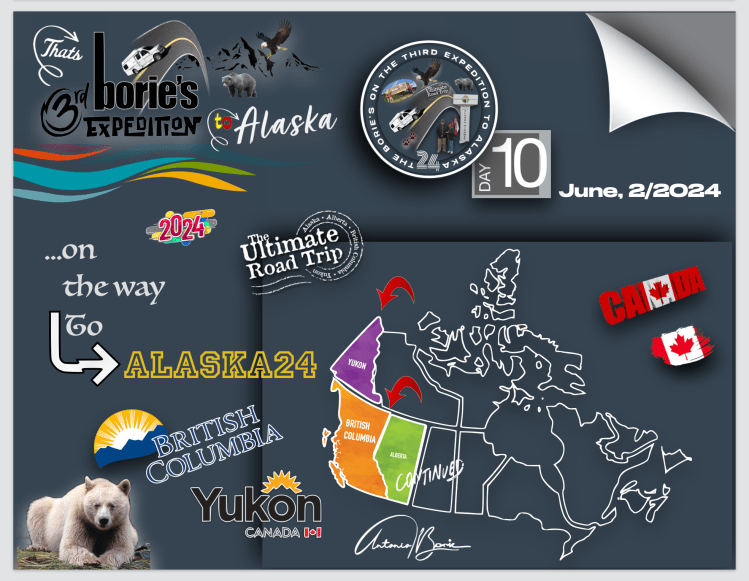
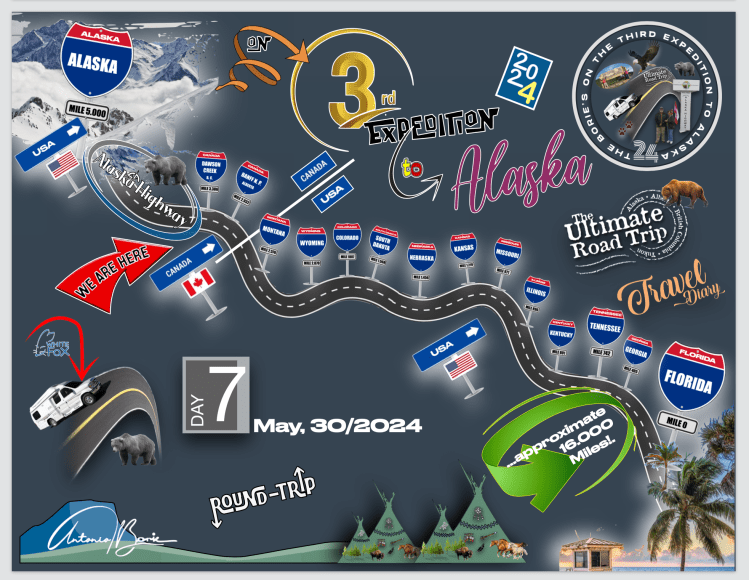
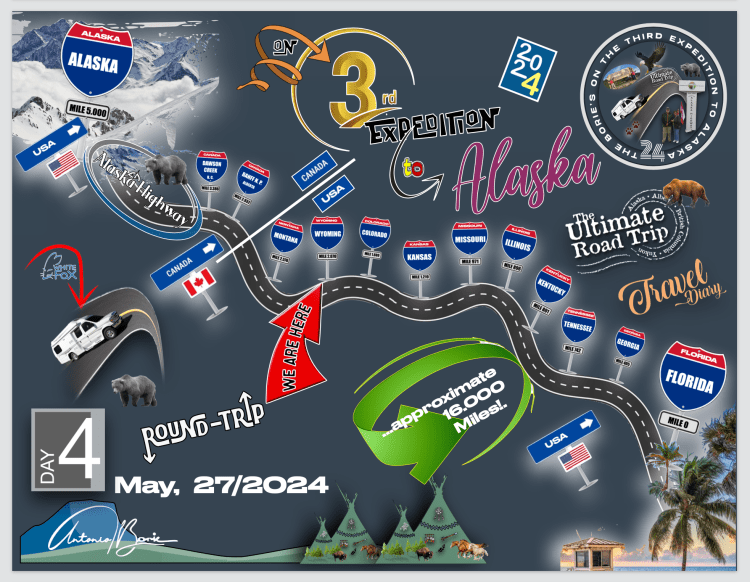
…viajar pelo hoje lendário e “Histórico Alaska Highway” não é muito complicado, pelo menos para nós, veteranos!. Porquê?. Porque é só uma estrada, e para tornar ainda menos complicado, fomos contando as milhas no contador da nossa “White Fox’ (caravana)!. Assim, sabemos onde estamos quantas milhas já fizemos e quantas nos faltam para chegar ao nosso destino…, que é o Alaska!.

…traveling the legendary and “Historic Alaska Highway” is not very complicated, at least for us veterans!. Why?. Because it’s just a road, and to make it even less complicated, we counted the miles on the meter of our “White Fox” (caravan)!. This way, we know where we are, how many miles we have already covered and how many miles we have left to reach our destination…, which is Alaska!.

..como tal, nas fotos que publicamos para as identificar…, mencionamos apenas o número de milhas percorridas a partir do início, que é a cidade de Dawson Creek!. Então cá vai a lista das povoações e lugares históricos por onde passámos, saindo de Fort Nelson, na província de British Columbia onde pernoitámos num parque de RV, que é aproximadamente na milha 300!.

…as such, in the photos we posted to identity them…, we only mention the number of miles traveled since the beginning, which is the city of Dawson Creek!. So here is the list of towns and historic places that we passed through, leaving Fort Nelson, in the province of British Columbia, where we spent the night in an RV park, which is approximately at mile 300!.
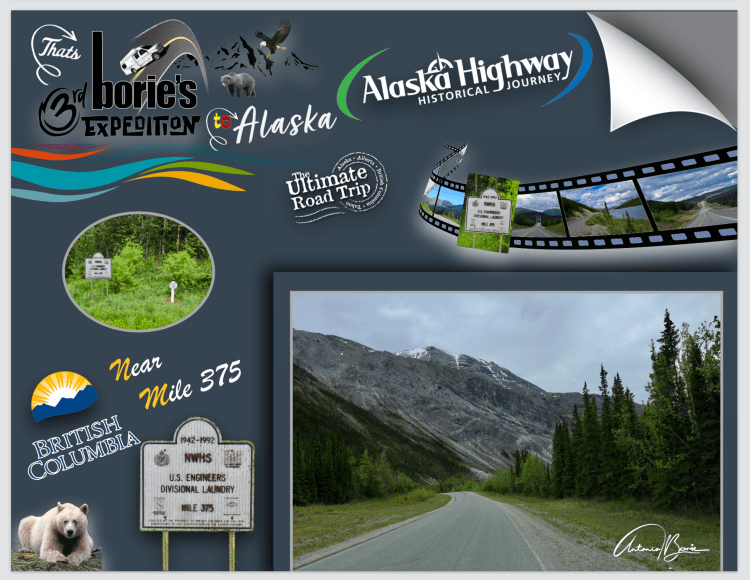
 …milha 375– parámos aqui porque era a primeira civilização que encontrávamos depois de Fort Nelson!. Existem algumas casas e uma placa anunciando um motel com cabines e um campo de campismo, convidando os viajantes a parar e ir caminhar até ao rio que é próximo!. O local é convidativo e tem um poste anunciando a sua localização, dando-nos a ideia de que durante a construção desta hoje histórica estrada foi uma estação de trabalho de engenheiros!. 

…mile 375 – we stopped here because it was the first civilization we encountered after Fort Nelson!. There are some houses and a sign advertising a motel with cabins and a campsite, inviting travelers to stop and go for a walk to the nearby river!. The place is inviting and has a post announcing its location, giving us the idea that during the construction of this now historic road it was an engineers’ work station!.
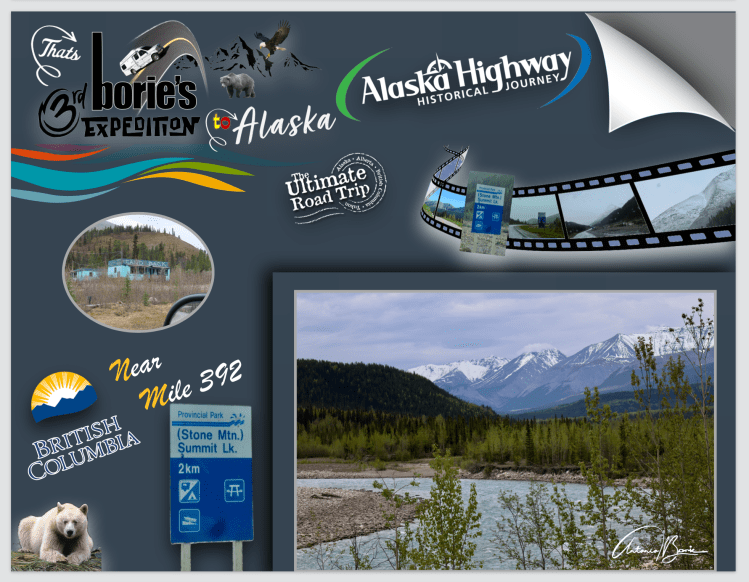
…milha 392 – nesta área passamos por montanhas com neve e em baixo lagos de água pura!.Estava frio e havia chuviscos, no entanto, o “Stone Mountain Provincial Park” é uma área maravilhosa de deserto montanhoso!. Das curvas na estrada que circundavam as montanhas, podemos admirar um cenário único, com alguns rebanhos de caribus tentando entrar nos lagos que por ali havia!. Era um cenário que só se pode admirar talvez uma vez na vida!.

…mile 392 – in this area we passed through snowy mountains and below lakes of pure water!.It was cold and there was drizzle, however, “Stone Mountain Provincial Park” is a wonderful area of ​​mountainous desert!. From the curves in the road that surround the mountains, we can admire a unique scene, with some herds of caribou trying to enter the lakes that were there!. It was a scene that you can only admire maybe once in your life!.
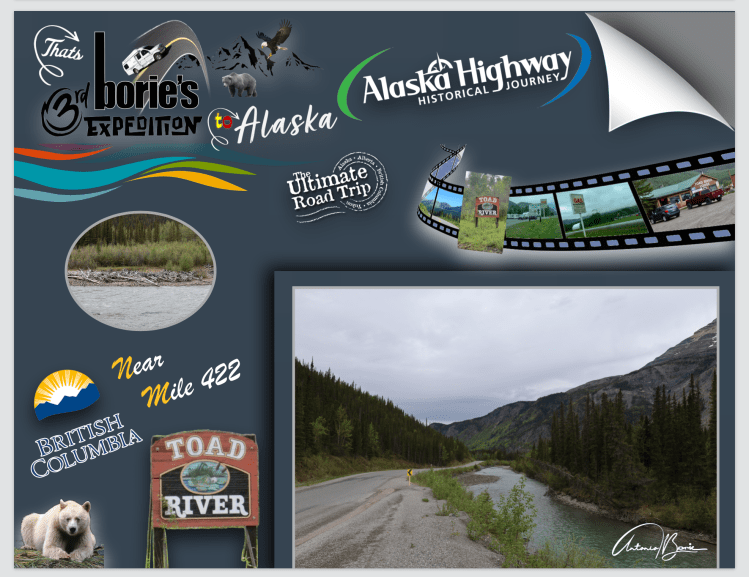
…milha 422 – durante o nosso percurso, cruzámo-nos com muitas caravanas oriundas dos mais exóticos lugares no mundo, até da Austrália!. Todavia existem muitas histórias de como lugares diferentes receberam seus nomes ao longo desta hoje famosa e histórica estrada e, este pequeno oásis no meio de nada, dá pelo nome de “Pousada Rio Sapo”, quando por volta de 1942, os exércitos canadense e norte-americano estavam ocupados construindo esta estrada!. Tem uma curiosidade, é que no tecto do salão de entrada tem mais de 7.500 chapéus de todo o mundo!.

…mile 422 – during our journey, we came across many caravans coming from the most exotic places in the world, even Australia!. However, there are many stories of how different places received their names along this now famous and historic road, and this little oasis in the middle of nowhere is called “Pousada Rio Sapo”, when around 1942, the Canadian and Northern armies -American were busy building this road!. What’s interesting is that on the ceiling of the entrance hall there are more than 7,500 hats from all over the world!
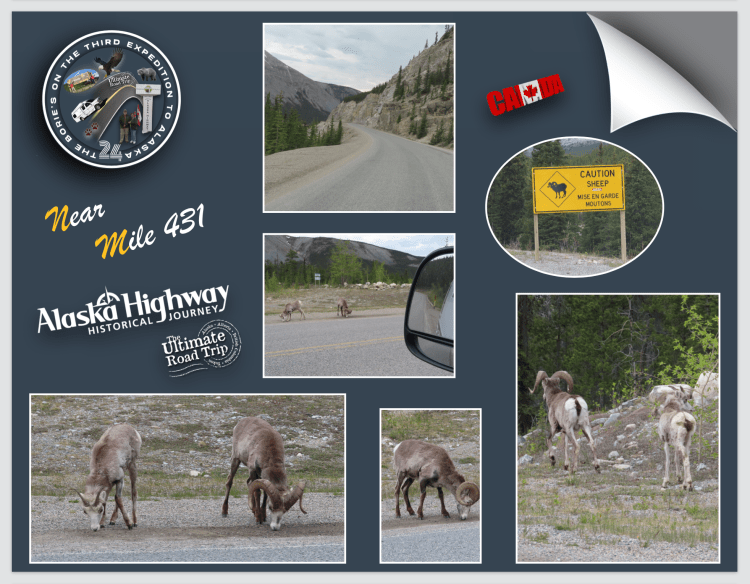
…milha 431 – foi um pouco antes de entrar na área do “Lago Muncho”, quando as cabras de montanha apareceram na estrada procurando comer algo entre a pedra miúda que aparecia ao lado da estrada numa zona montanhosa!. Eram muitas que iam e vinham sem se preocupar com alguns veículos que transitavam!. 

…mile 431 – it was just before entering the “Muncho Lake” area, when the mountain goats appeared on the road looking to eat something among the small rocks that appeared on the side of the road in a mountainous area!. There were many who came and went without worrying about some vehicles passing by!.
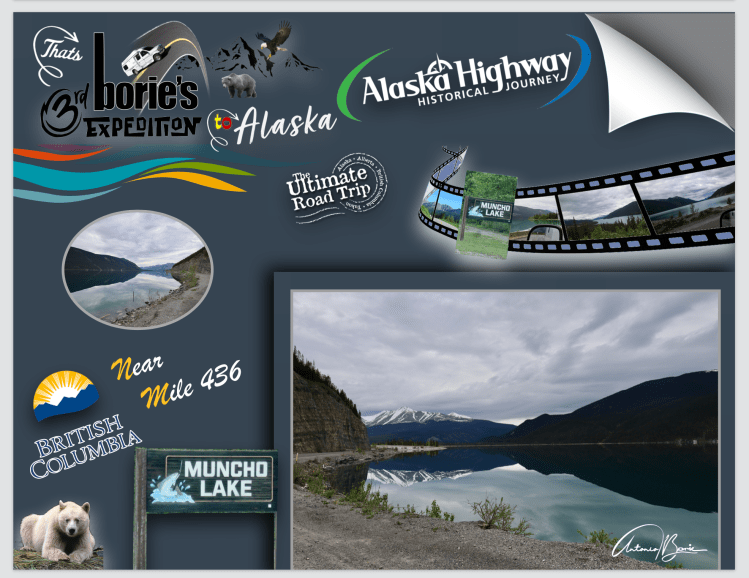
…milha 436 – começamos a ver uma cordilheira de montanhas sem qualquer vegetação, a estrada ia encostada a algumas rochas, começando a descer e prosseguindo junto à água cor de jade!. Chegámos ao “Lago Muncho”, um refúgio perfeito para fazer uma caminhada cénica à beira do lago, com água também pura, vinda da neve acumulada em milhares, talvez milhões de anos, onde existe entre outras coisas, uma boa opção para acampar no “Strawberry Campground”, onde já pernoitámos duas vezes em viagens anteriores e que, pela manhã quando abrimos a porta da caravana, deparamos com um cenário de montanha e lagos que talvez custasse “um milhão de dolares”!.      

…mile 436 – we begin to see a range of mountains without any vegetation, the road leaned against some rocks, starting to descend and continuing along the jade-colored water!. We arrived at “Muncho Lake”, a perfect refuge to take a scenic walk along the lake, with also pure water, coming from the snow accumulated over thousands, perhaps millions of years, where there is, among other things, a good option for camping in the “Strawberry Campground”, where we have already stayed the night twice on previous trips and, in the morning when we opened the caravan door, we found a mountain and lake scenery that perhaps cost “a million dollars”!.
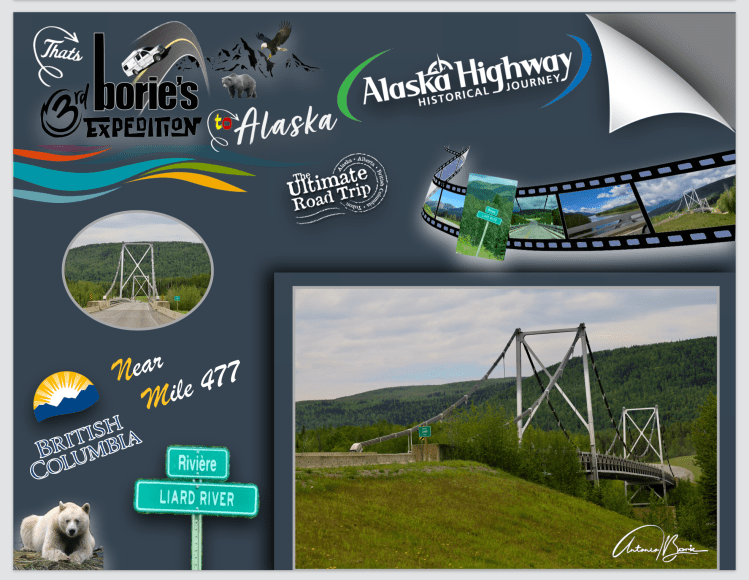
 …milha 477 – reduzindo a velocidade, parámos surpreendidos com a vista da ponte “Lower Liard River”, pairando sobre uma paisagem isolada, imponente e graciosamente simétrica, construída em aço!. É uma das seis “passagens especiais” nesta hoje histórica estrada e é a única ponte suspensa em toda a sua rota!. Os engenheiros decidiram que uma ponte suspensa tinha que ser construída neste local porque as condições do gelo tornavam impossível manter os andaimes temporários necessários por tempo suficiente para construir o tipo usual da normal ponte de extensão de “treliça” em ambos os lados, construídos abaixo e não acima do leito da ponte, tal como as outras que por aqui ainda vão resistindo!.   

…mile 477 – slowing down, we stopped in surprise at the view of the “Lower Liard River” bridge, hovering over an isolated, imposing and gracefully symmetrical landscape, built of steel!. It is one of six “special crossings” on this now historic road and is the only suspension bridge along its entire route!. Engineers decided that a suspension bridge had to be built at this location because ice conditions made it impossible to maintain the necessary temporary scaffolding long enough to build the usual type of normal “truss” span bridge on both sides, built below and not above the bridge bed, just like the others that are still resisting here!.        
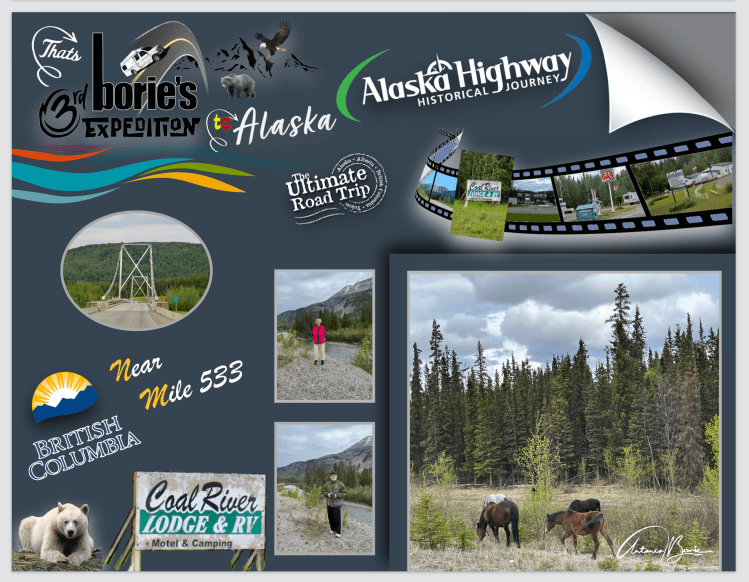
 …milha 533 – viajando de caravana, de moto ou até de bicicleta, a beleza  natural que ainda se pode ver por aqui é maravilhosa, tal como estes cavalos selvagens!. Alguns nomes de povoações que nos apareciam, estavam encerradas, casas sem ninguém, árvores e ramagem nascida dentro das casas, mas não deixavam de ter o seu encanto, todavia e continuando, parámos no “Coal River Lodge & RV”, onde se pode podia acampar e comprar gasolina!. 

…mile 533 – traveling by caravan, motorbike or even bicycle, the natural beauty that can still be seen here is wonderful, as are these wild horses!. Some names of towns that appeared to us were closed, houses without anyone, trees and branches growing inside the houses, but they still had their charm, however, and continuing, we stopped at the “Coal River Lodge & RV”, where you could camping and buying gas!.

…até à Milha 550 – a hoje famosa e “Histórica Alaska Highway” tem quase tudo com que a natureza nos contempla!. Tem icebergs, montanhas cobertas de neve por milhar de anos, rios selvagens e lagos perdidos em florestas onde os animais vivem livres da presença humana e, ao longo da estrada, numa área que se estende por mais de 60 milhas existem letreiros avisando que existem muitos rebanhos de búfalos, compostos por machos, fêmeas, bezerros e sub adultos!. Os búfalos velhos, são solitários ou formam pequenos grupos!. 

…up to Mile 550 – the now famous and “Historic Alaska Highway” has almost everything that nature contemplates!. There are icebergs, mountains covered in snow for thousands of years, wild rivers and lakes lost in forests where animals live free from human presence and, along the road, in an area that extends for more than 60 miles, there are signs warning that there are many herds of buffalo, composed of males, females, calves and sub adults!. Old buffaloes are solitary or form small groups!
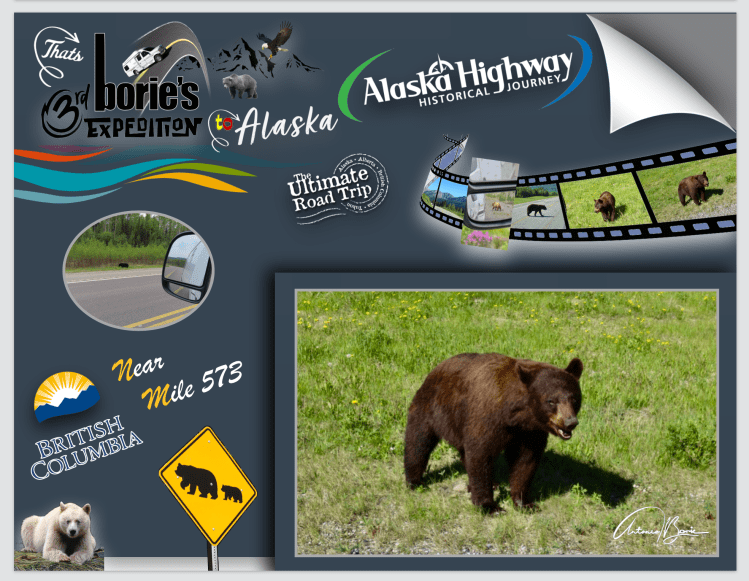
…milha 573 – viajando em todo o seu percurso nesta hoje histórica estrada, temos a oportunidade de apreciar, algumas planícies, montanhas, “glacieres”, animais e aves selvagens, lagos, rios revoltosos, alguns de água quente, árvores, vistas de montanha que não se tem oportunidade nunca na vida de um ser humano poder ver, tal como ursos que ou atravessam a estrada ou se alimentam ao seu redor, demarcando sempre o seu território!.     

…mile 573 – traveling along its entire route on this now historic road, we have the opportunity to appreciate some plains, mountains, “glaciers”, wild animals and birds, lakes, wild rivers, some with hot water, trees, mountain views that you never have the opportunity in your life for a human being to see, such as bears that either cross the road or feed around it, always demarcating their territory!.
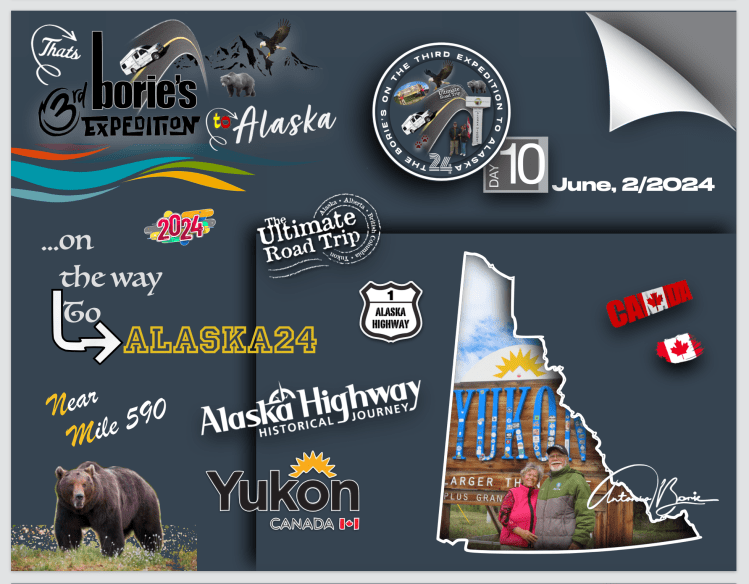
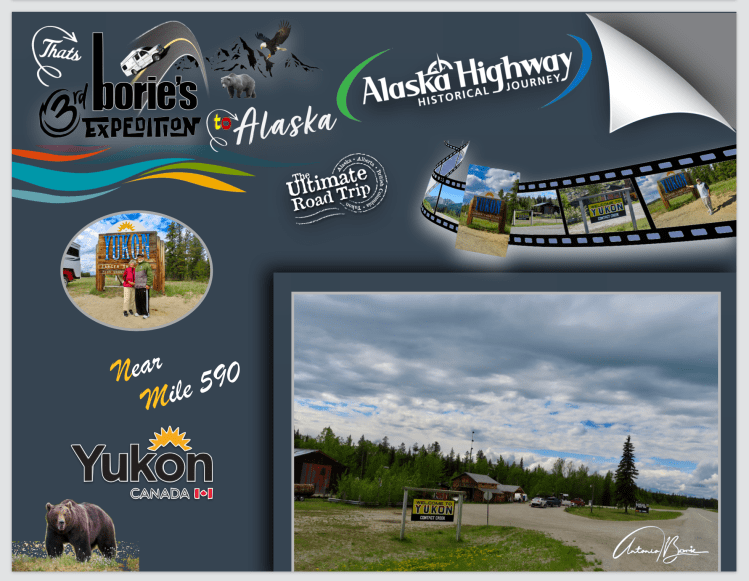
…milha 590 – entretanto, somos Bem-Vindos ao território do Yukon!. Parámos aqui por momentos no histórico lugar de Contact Creek, nome dado pelos soldados do 35.º Regimento do sul e pelo 340.º Regimento do norte, que se encontraram aqui em Setembro de 1942, completando o sector sul da hoje famosa e “Histórica Alaska Highway”!. O Yukon, é um território no noroeste do Canadá, é selvagem, montanhoso e pouco povoado!.    

 …mile 590 – in the meantime, we are Welcome to the Yukon Territory!. We stop here for a moment at the historic site of Contact Creek, named for the soldiers of the southern 35th Regiment and the northern 340th Regiment, who met here in September 1942, completing the southern sector of the now famous “Historic Alaska Highway”!. The Yukon, a territory in northwestern Canada, is wild, mountainous and sparsely populated!.
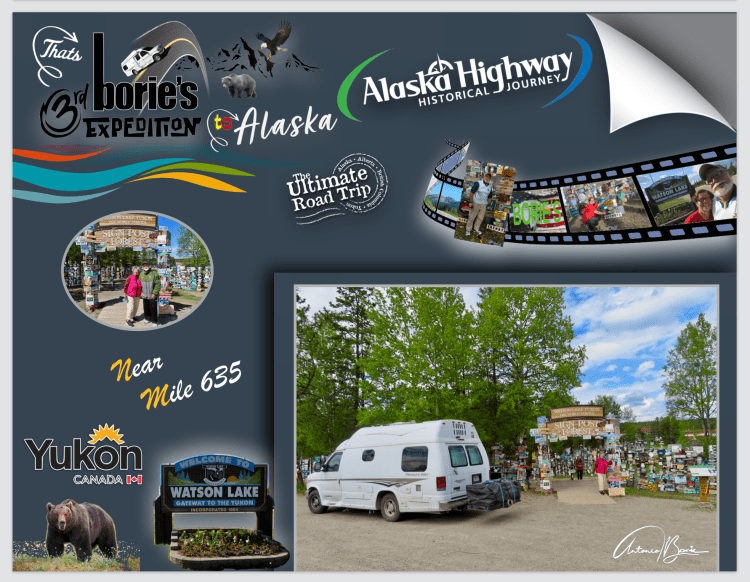
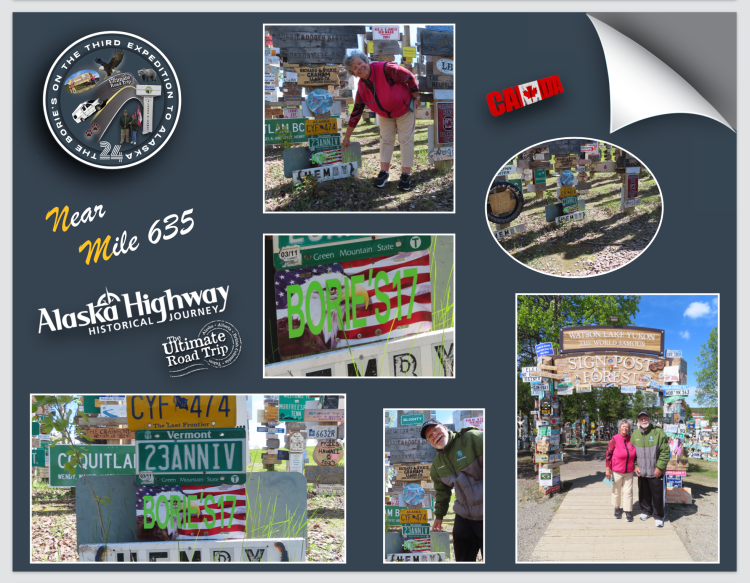
…milha 635 – chegámos ao Lago Watson, que é uma cidade já no território do Yukon!. Aqui, fomos ver a placa que há sete anos deixámos neste local, assinalando uma das nossas passagens, na atracção turística que dá pelo nome de “Signpost Forest” iniciada no ano de 1942, por um soldado do Exército dos USA que se encontrava doente e trabalhava na hoje famosa “Histórica Estrada do Alaska”, e com saudades da sua cidade natal, colocou um sinal com o  nome de sua cidade natal e a distância!. Tal como nós, outros seguiram o exemplo e a tradição continua até hoje, onde já existem mais de 76,000 sinais de vários tipos que retratam locais em todo o mundo!.

…mile 635 – we arrive at Watson Lake, which is a city already in the Yukon Territory!. Here, we went to see the sign that we left in this place seven years ago, marking one of our passages, in the tourist attraction that goes by the name “Signpost Forest”, started in 1942, by a US Army soldier who was sick and working on the now famous “Historic Alaska Highway”, and missing his hometown, he put up a sign with the name of his hometown and the distance!. Just like us, others followed suit and the tradition continues today, where there are now over 76,000 signs of various types depicting places around the world!.

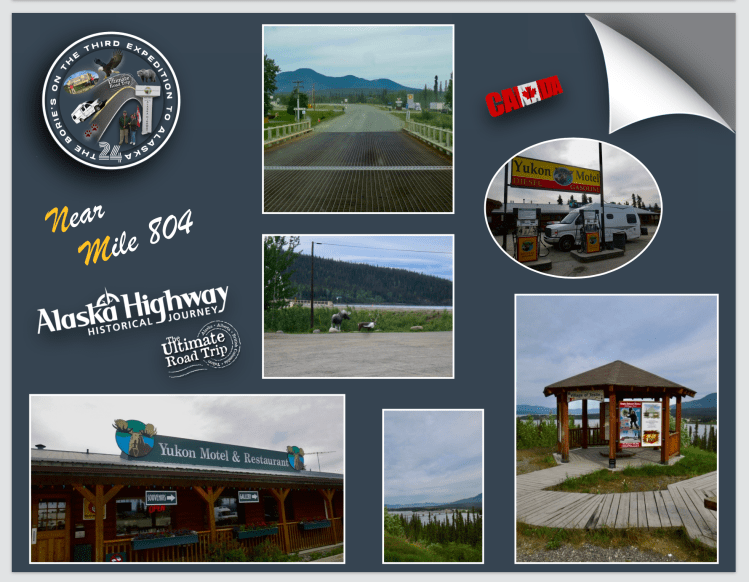
…milha 804 – Aqui pernoitámos num parque de RV, terminando a nossa aventura por hoje!. Foi na pequena localidade de Teslin, que está situada ao longo do Lago com o mesmo nome e onde no ano de 1903 a Hudson’s Bay Company estabeleceu uma pequena posição comercial, sendo também o lar da primeira nação “Teslin Inland Tlingit First”, tendo assim uma das maiores populações nativas do território do Yukon, de onde parte da sua subsistência gira em torno da caça tradicional, usando por vezes ratoeiras e da pesca!. Parámos antes, num lindo miradouro sobre o lago de Teslin, onde se pode admirar a ponte e a povoação!. 

..mile 804 – We spent the night here at an RV park, ending our adventure for today!. It was in the small town of Teslin, which is located along the Lake of the same name and where in 1903 the Hudson’s Bay Company established a small commercial position, and is also home to the “Teslin Inland Tlingit First” nation, thus having a one of the largest native populations in the Yukon Territory, where part of their subsistence revolves around traditional hunting, sometimes using mousetraps and fishing!. We stopped first, at a beautiful viewpoint over Lake Teslin, where you can admire the bridge and the village!.

Tony Borie

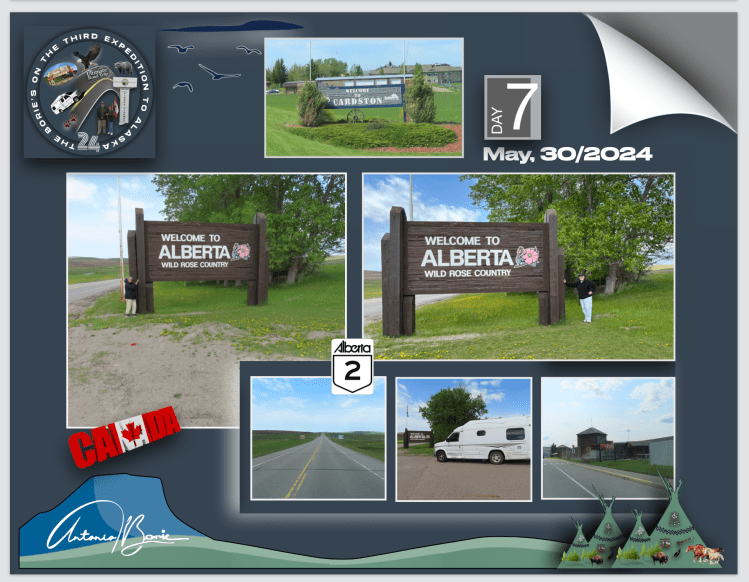
…Expedição ao Alaska24 (Dia 7) …Alaskan Expedition24 (Day 7)

…quando viajamos esperamos sempre que o sol nos possa trazer uma nova energia a cada milha percorrida, que a brisa sopre em nós uma nova força, que a chuva nos lave as nossas preocupações e que a luz reflectida pela lua nos restabeleça as forças durante a noite, para que no dia seguinte…, tudo nos ajude a continuar a nossa jornada suavemente através do mundo e admirar toda a sua beleza!.

…when we travel we always hope that the sun can bring us new energy with each mile we travel, that the breeze will breathe new strength into us, that the rain will wash away our worries and that the light reflected by the moon will restore our strength during the journey. night, so that the next day…, everything helps us to continue our journey smoothly through the world and admire all its beauty!.

…vamos então explicar o resumo deste sétimo dia nesta “Terceira Expedição ao Alaska”!.

…so let’s explain the summary of this seventh day on this “Third Expedition to Alaska”!

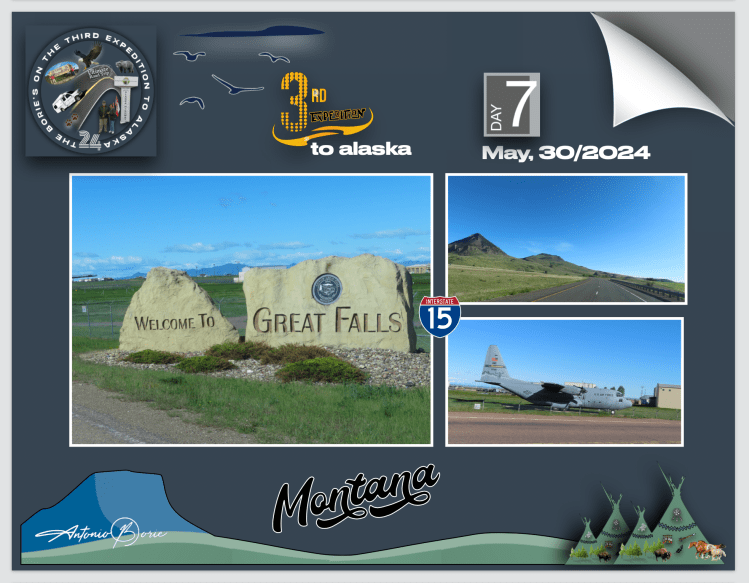
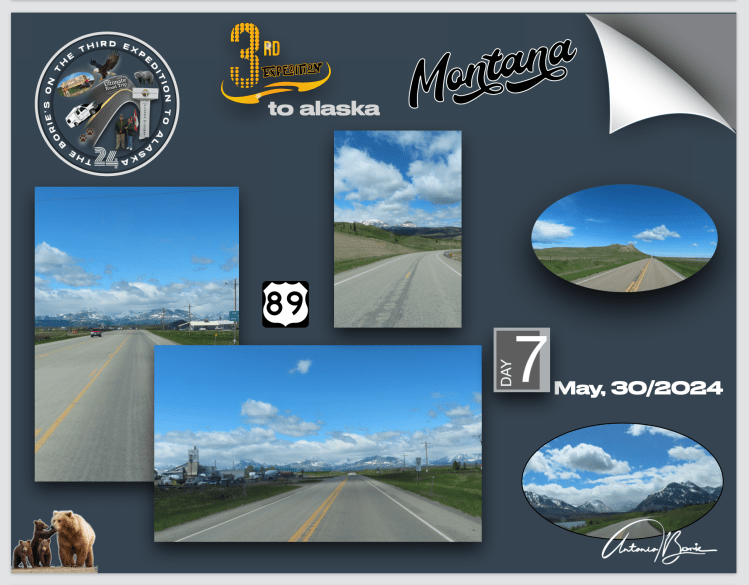
…nas 459 milhas percorridas, andámos por estradas rápidas com boa circulação e quase desertas!.

…in the 459 miles covered, we traveled on fast, well-circulated and almost deserted roads!

…por outras atravessando planícies e pequenas vilas e aldeias, com troços em reparação e control de velocidade quando pelas ditas vilas e aldeias passávamos!.

…on others, crossing plains and small towns and villages, with sections under repair and speed control when we passed through said towns and villages!.

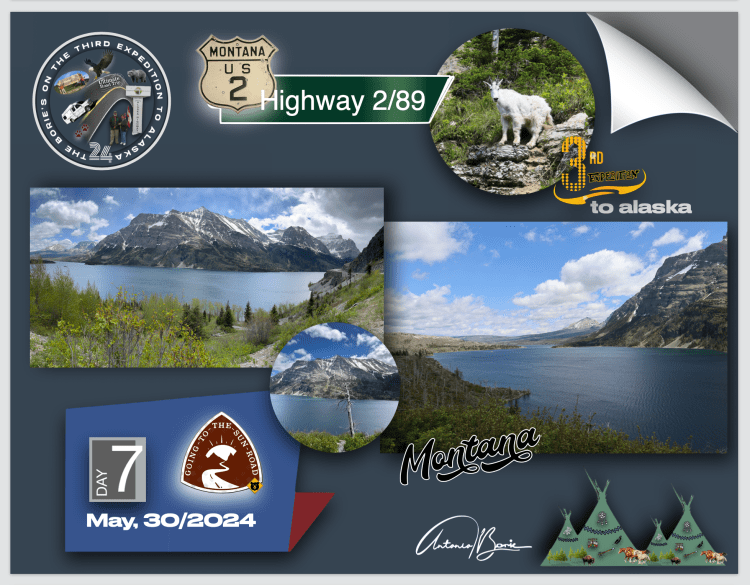
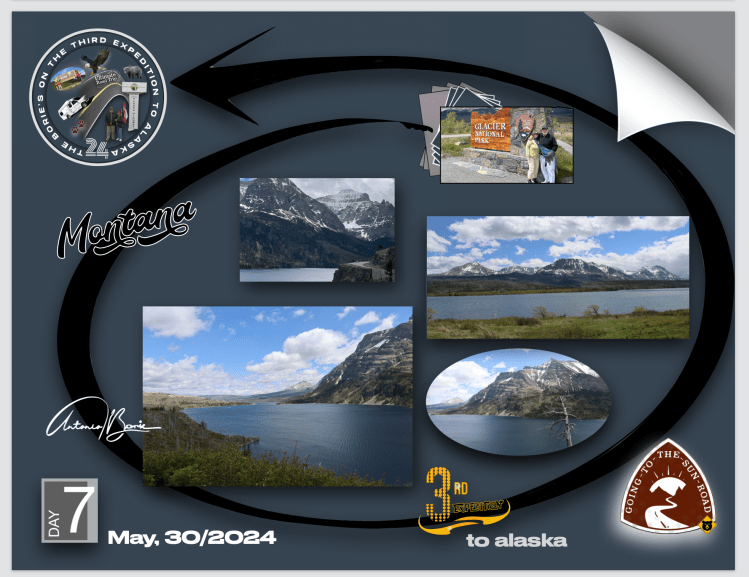
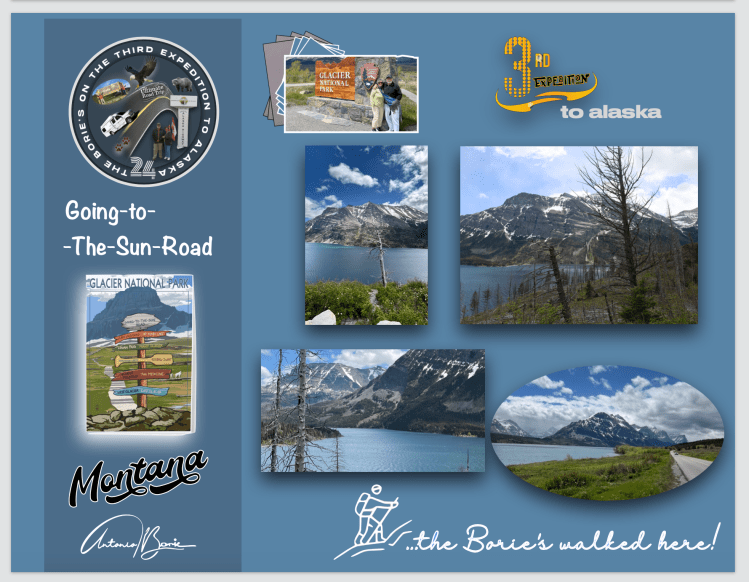
…e, finalmente chegámos ao local desejado para percorrer e admirar, que dá pelo nome de “Going-to-the-Sun Road”, que é uma estrada pitoresca de montanha nas Montanhas Rochosas, e é a única estrada que atravessa o Parque Glacier em Montana, cruzando a Continental  Divide através de Logan Pass a uma altitude de 6.646 pés!.

…and finally we arrived at the desired place to travel and admire, which is called “Going-to-the-Sun Road”, which is a picturesque mountain road in the Rocky Mountains, and is the only road that crosses Glacier Park in Montana, crossing the Continental Divide through Logan Pass at an elevation of 6,646 feet!.

… na sua entrada, a guarda florestal, depois de nos identificar-mos como viajantes do mundo, amavelmente nos disse que a estrada está fechada para reparação das avalanches mas…, nos deixava percorrer uma distância à volta de 30 a 35 milhas, claro, tudo com nossa responsabilidade!. Agradecendo-lhe…, foi o que fizemos!.

…at the entrance, the ranger, after identifying ourselves as world travelers, kindly told us that the road is closed for avalanche repairs but…, allowed us to travel a distance of around 30 to 35 miles, of course , all under our responsibility! Thanking you…, that’s what we did!

…esta maravilhosa estrada, originalmente construída para promover o turismo e encorajar as pessoas a visitar os parques nacionais da América, tem alcançado o seu objetivo desde sua conclusão no ano de 1932, com uma artéria de aproximadamente 60 milhas que atravessa o “Parque Nacional Glacier de Montana”, atravessando as Montanhas Rochosas e sobre o Continental Divide em Logan Pass!. 

…this wonderful road, originally built to promote tourism and encourage people to visit America’s national parks, has achieved its purpose since its completion in 1932, with an approximately 60-mile artery running through “Glacier National Park” of Montana”, across the Rocky Mountains and over the Continental Divide at Logan Pass!.

…recomendam-nos para nos certificar de tomar cuidado com curvas cegas e quedas dramáticas, e evitar passar nela nos meses de inverno, (nós estávamos em MAIO-FLORES), quando os bancos de neve podem chegar a 80 pés de profundidade!. A estrada eleva-se a uma altitude de 6.646 pés, com vistas amplas, cabras de montanha pastando e coberta de prados de flores silvestres em tons de arco-íris!. Valeu a pena!.

…we are advised to be sure to watch out for blind curves and dramatic drops, and to avoid going through them in the winter months, (we were in MAY-FLOWERS) when the snowbanks can be up to 80 feet deep!. The road rises to an elevation of 6,646 feet, with expansive views, grazing mountain goats and covered in rainbow-hued wildflower meadows!. Worth it!.

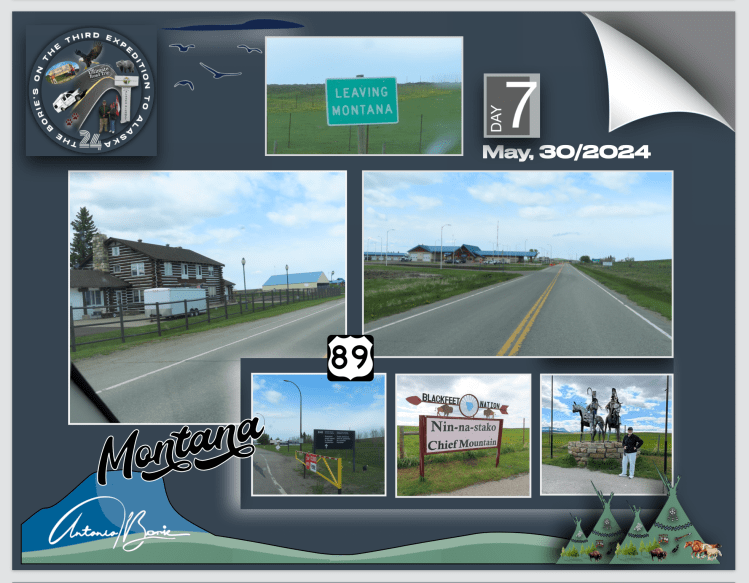
…continuando, estávamos perto da fronteira com o Canada, que atravessámos…, depois da simpática guarda de fronteira nos pedir os documentos e fazer aquelas perguntas regulamentares, incluindo se transportávamos “marijuana”!. A todas as perguntas, respondemos “NÃO”, e ela, com um sorriso nos entregou os documentos e nos desejou “boa viajem”!.

…continuing, we were close to the border with Canada, which we crossed…, after the friendly border guard asked us for our documents and asked those regulatory questions, including whether we were carrying “marijuana”!. To all the questions, we answered “NO”, and she, with a smile, handed us the documents and wished us “have a good trip”!

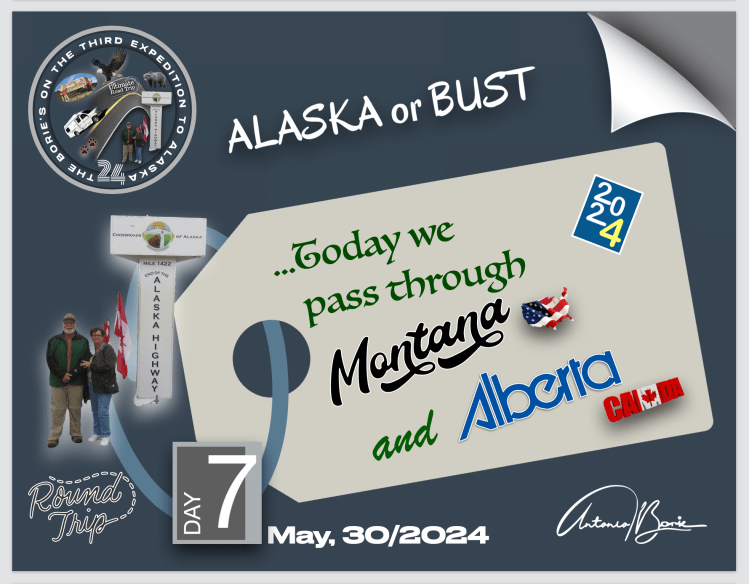
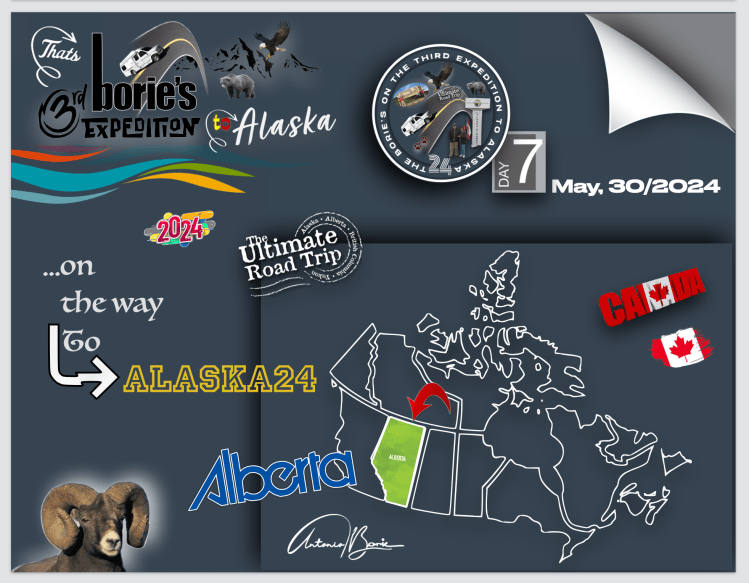
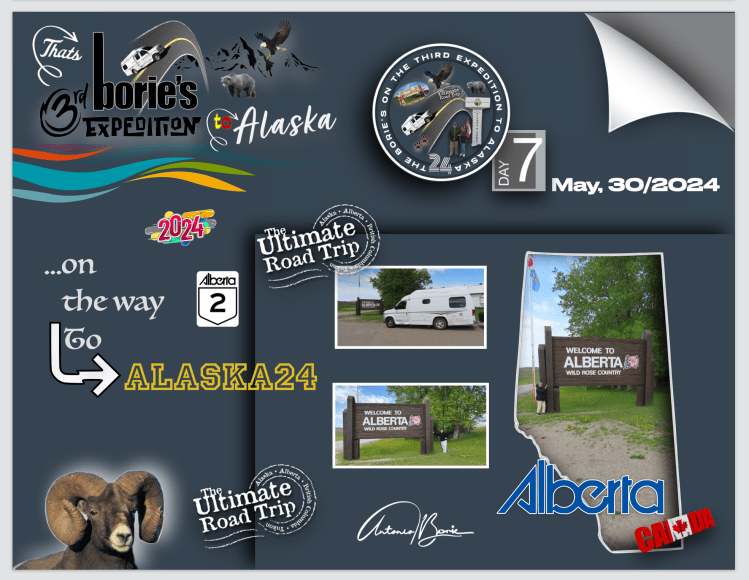
…e assim acabámos por ao sétimo dia de viagem atravessar a fronteira para o Canadá!. Como tal, vamos fazendo algum progresso e lentamente nos vamos aproximando do objectivo que é o…, Alaska!. 

…and so we ended up crossing the border into Canada on the seventh day of our journey!. As such, we are making some progress and slowly getting closer to the goal that is…, Alaska!.

…próximo da cidade de Cardston, na província de Alberta, pernoitámos num parque de RV, para amanhã continuar a nossa rota em direcção ao norte por estradas boas ou más, e isto faz-nos pensar que as viagens nunca acabam…, só os viajantes acabam!. Assim, nós veteranos vamos tentando prolongá-las em memórias, em lembranças, em narrativas…, agora, para os mais novos!. 

…near the city of Cardston, in the province of Alberta, we spent the night in an RV park, and tomorrow we continue our route towards the north along good or bad roads, and this makes us think that trips never end…, only travelers end! So, we veterans are trying to prolong them in memories, in memories, in narratives…, now, for the younger ones! 

Tony Borie. 

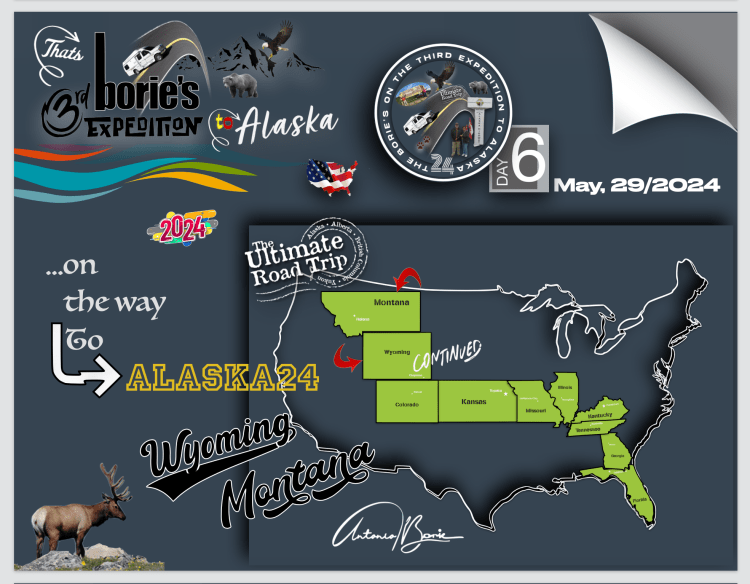
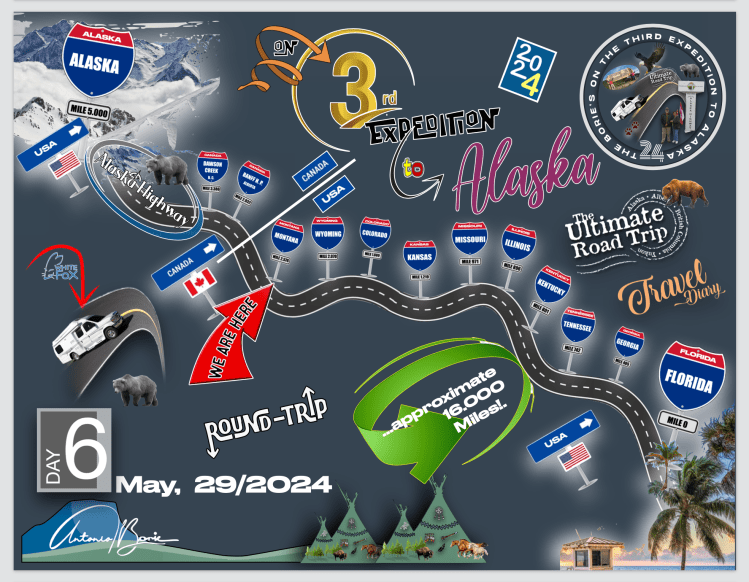
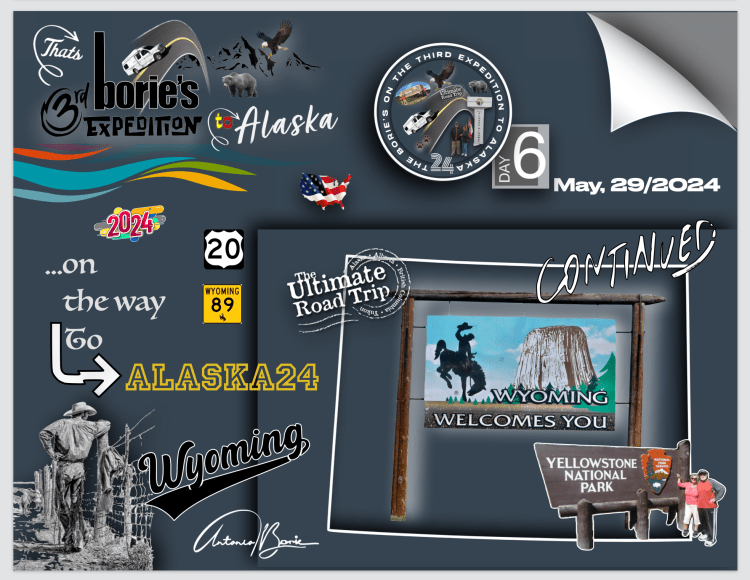
…Expedição ao Alaska24 (Dia 6) …Alaskan Expedition24 (Day 6)

…nas 397 milhas percorridas no dia de hoje, tivemos céu azul, nevoeiro, chuva quase torrencial e céu um pouco enevoado!. Isto é um exemplo da aventura que é…, de quem já pensou na “sua viagem de uma vida”…, que é sem sombra de qualquer dúvida, uma viagem por terra até ao Alaska!.

…in the 397 miles covered today, blue sky, fog, almost torrential rain and a slightly misty sky!. This is an example of the adventure that it is…, for anyone who has ever thought about “their trip of a lifetime”…, which is without a shadow of a doubt, an overland trip to Alaska!.

…cá vai a continuação!.

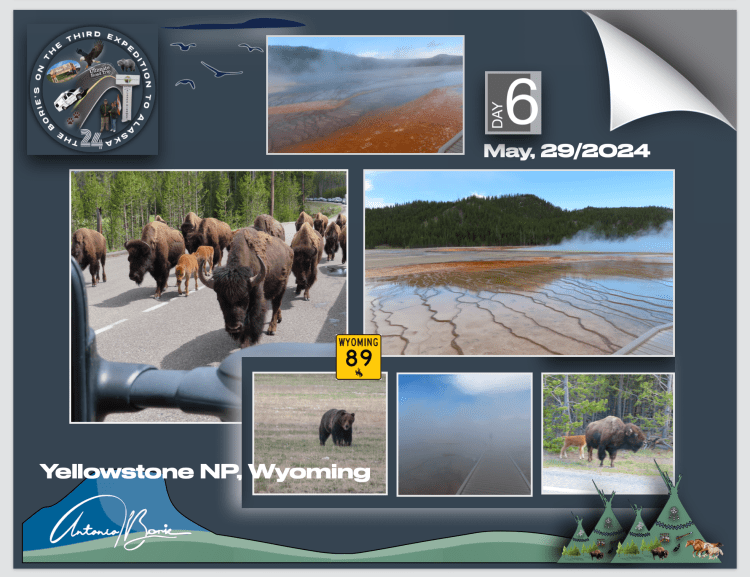
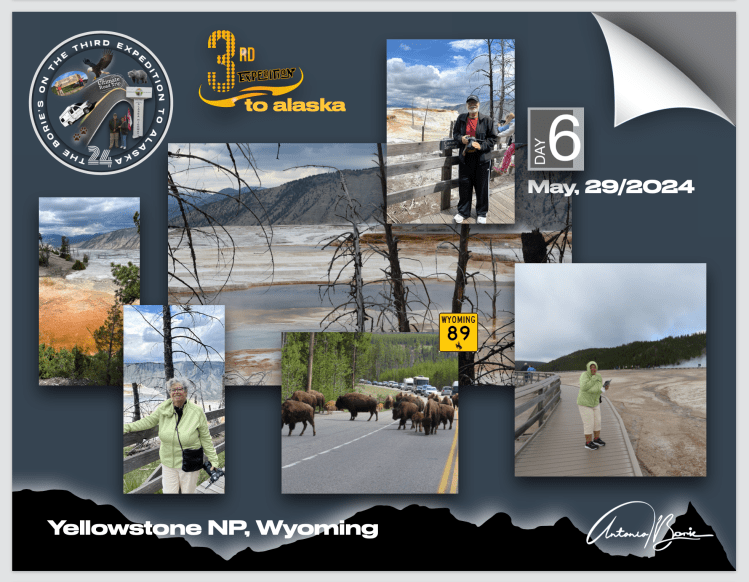
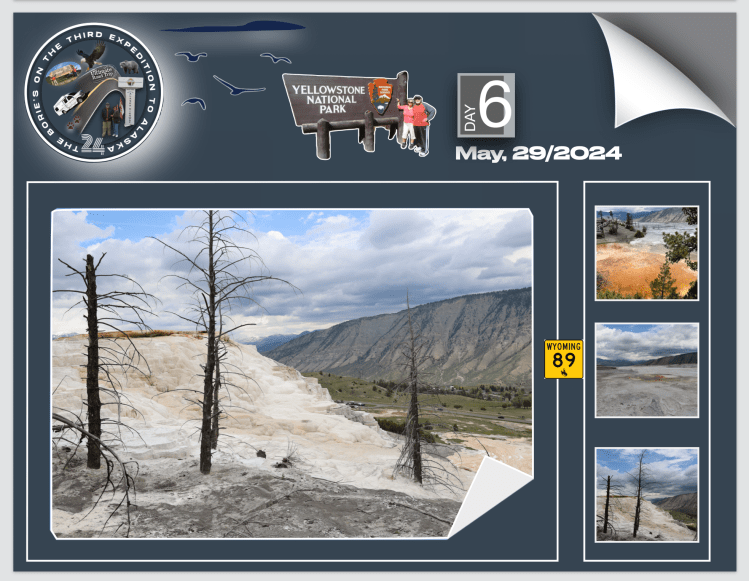
…era manhã quando retornámos de novo ao Parque Nacional de Yellowstone rumo ao norte, pela estrada do estado #89!. Parando aqui e ali, seguindo o caminho mais lento e panorâmico possível, para atrasar ao máximo o fim inevitável de ter que deixar de observar este cenário agradável e panorâmico, serpenteando à volta desta maravilha da natureza que é o norte do Parque Nacional de Yellowstone!.

…here goes the continuation!

…it was morning when we returned to Yellowstone National Park heading north, along state road #89!. Stopping here and there, following the slowest and most scenic route possible, to delay as long as possible the regular end of having to stop observing this scenic and panoramic scenery, winding around this wonder of nature that is the north of Yellowstone National Park!.

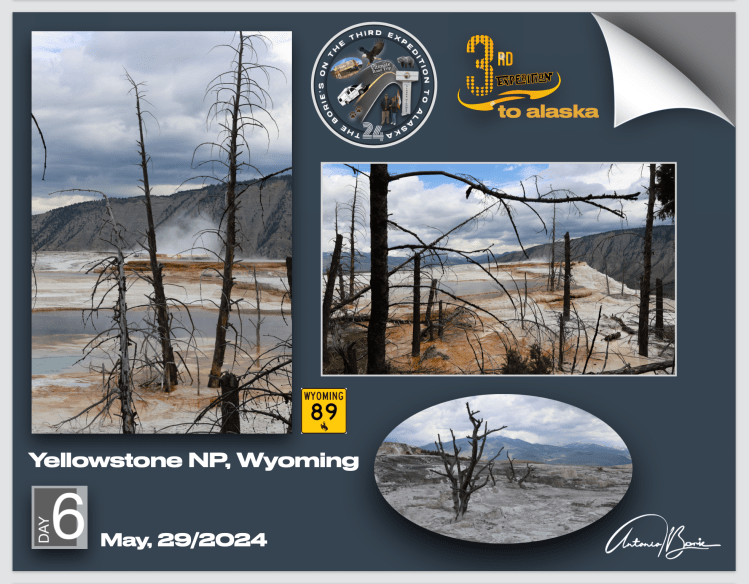
…em algumas áreas os búfalos, alces, ursos ou lobos, tal como outros  animais pastavam ou atravessavam a estrada e em outras áreas parecia um cenário lunar, com áreas queimadas pela água quente que brotava das profundezas deste planeta a que chamamos Terra!.

…in some areas buffaloes, elk, bears or wolves, as well as other animals grazed or crossed the road and in other areas it looked like a lunar scenario, with areas burned by the hot water that sprang from the depths of this planet we call Earth!.

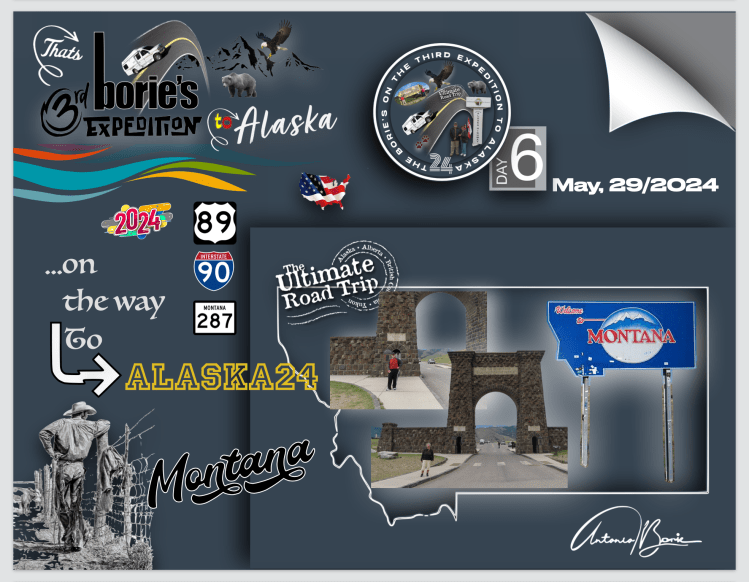
…tudo isto até que chegámos (para sair), a uma das cinco entradas do Parque, sendo esta a segunda entrada mais popular de Yellowstone, situada próximo da pequena cidade de Gardiner, já em Montana, fundada 8 anos depois que Yellowstone foi considerado um parque nacional, onde estão localizados o “Roosevelt Arch” e a “Mammoth Hot Springs”!. 

…all this until we arrived (to leave) at one of the five entrances to the Park, this being the second most popular entrance to Yellowstone, located close to the small town of Gardiner, in Montana, founded 8 years after Yellowstone was considered a national park, where “Roosevelt Arch” and “Mammoth Hot Springs” are located!. 

…o “Roosevelt Arch” é um arco triunfal rústico!. Foi construído sob a supervisão do Exército dos EUA em Fort Yellowstone, e a sua pedra fundamental foi lançada pelo presidente Theodore Roosevelt no ano de 1903!.. No topo do arco está inscrito uma citação da Lei Orgânica de 1872, a legislação que criou Yellowstone, que diz: “Para o benefício e prazer do povo”. Hoje, este arco é contornado pela Estrada #89, e é quase obrigatório passar debaixo do Arco para se entrar nesta estrada!.

…the “Roosevelt Arch” is a rustic triumphal arch!. It was built under the supervision of the US Army at Fort Yellowstone, and its cornerstone was laid by President Theodore Roosevelt in the year 1903!.. At the top of the arch is inscribed a quote from the Organic Act of 1872, the legislation that created Yellowstone, which says: “For the benefit and pleasure of the people.” Today, this arch is bypassed by Road #89, and it is almost mandatory to pass under the Arch to enter this road!.  

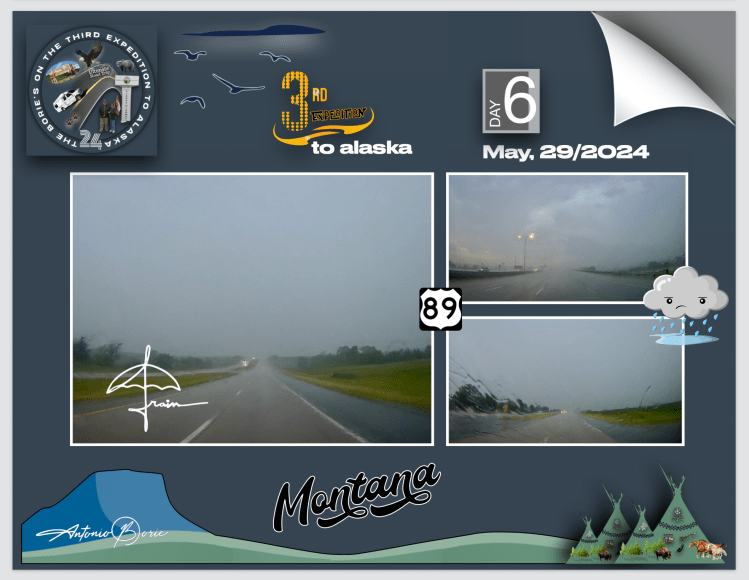
…foi quase como uma entrada cerimonial, no entanto…, algum tempo depois de entrar-mos nesta estrada com algum cenário, iniciámos a travessia de uma das maiores tempestades já vividas em viajem, com rajadas de vento ciclónico, chuva e alguma trovoada!.

…it was almost like a ceremonial entry, however…, some time after entering this road with some scenery, we began to cross one of the biggest storms ever experienced while traveling, with gusts of cyclonic wind, rain and some thunder!.

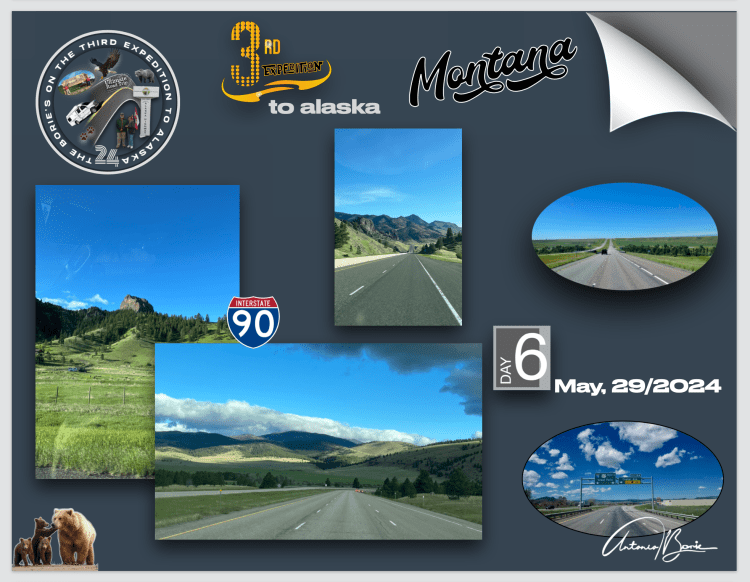
…até que chegámos à cidade de Livingston, entrando na estrada rápida I-90 no sentido oeste…, onde já havia sol e céu limpo!.

…until we arrived in the city of Livingston, entering the fast highway I-90 heading west…, where there was already sun and clear skies!.

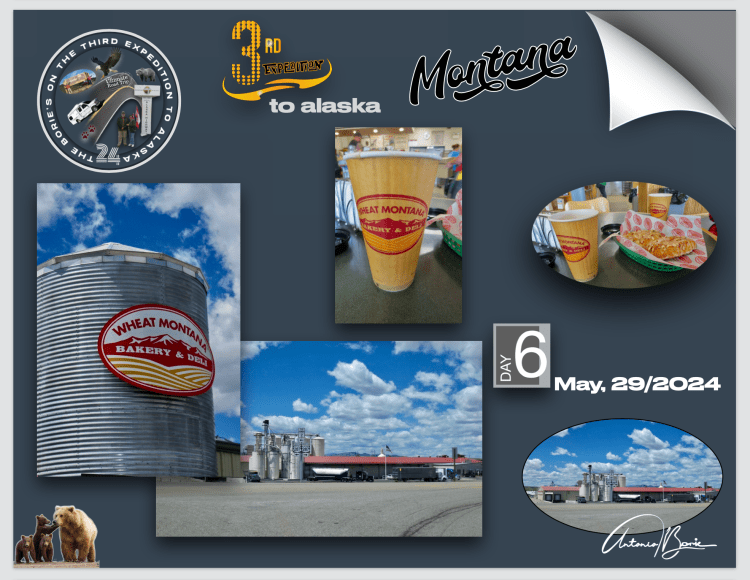
…e, antes de entrar na estrada SR #287 rumo ao norte, parámos num lugar que já conhecíamos de viagens anteriores!. É a “Wheat Montana Bakery & Deli”, é uma propriedade familiar, com centenas de anos, que foi paragem de diligências, onde os viajantes se podiam refugiar e reabastecer, e hoje  confecciona pão de muitas qualidades!. As simpáticas empregadas, perguntam sempre se querem o pão quente, se querem manteiga, o café quente é muito bom, podendo ainda comprar pão fresco para levar, e foi o que fizemos!.

…and, before entering the SR #287 road heading north, we stopped at a place we already knew from previous trips!. It’s “Wheat Montana Bakery & Deli”, a family property, hundreds of years old, that was a stagecoach stop, where travelers could take refuge and refuel, and today bread of many qualities is made! The friendly waitresses always ask if you want hot bread, if you want butter, the hot coffee is very good, and you can even buy fresh bread to take away, and that’s what we did!

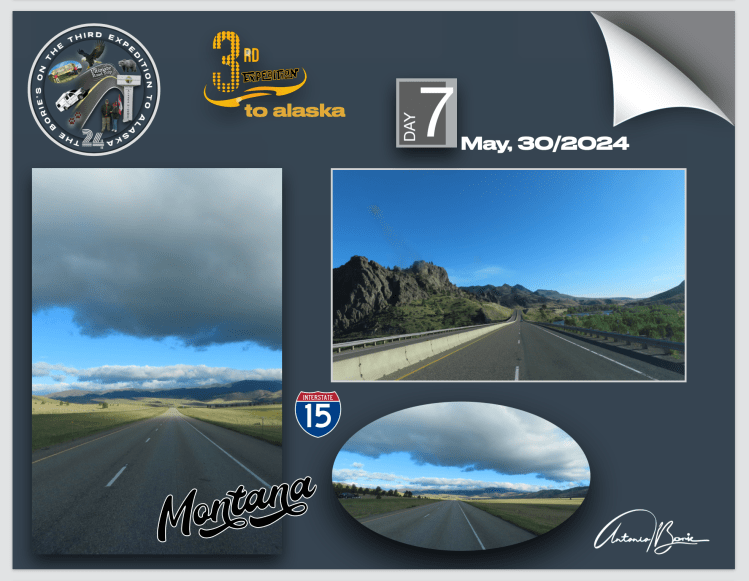
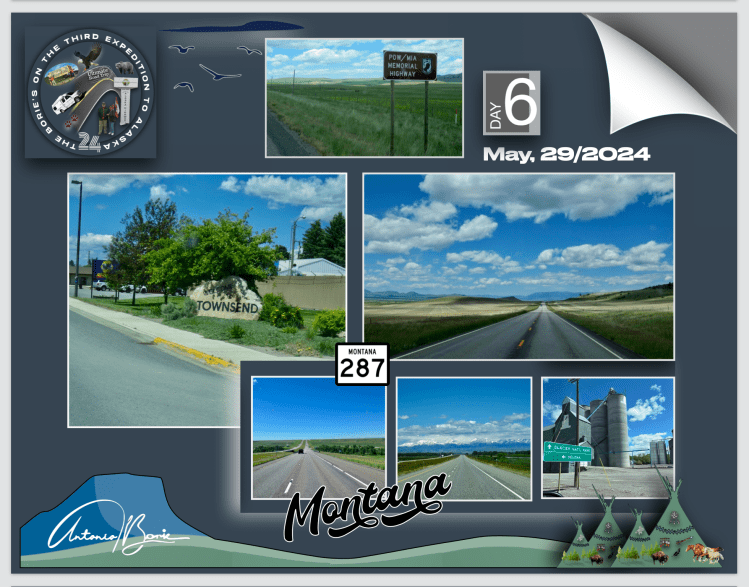
…e com a continuação de bom tempo, continuamos a nossa jornada rumo ao norte pela estrada US Route 287, com um cenário “panorâmico e autêntico de Montana”, com vistas deslumbrantes do “Big Sky”, fazendas autênticas da América do século XIX, com passagens por pequenas montanhas e planícies, com alguma vida selvagem onde ainda se podem ver búfalos, ovelhas e alces ou algum pássaro incrível, em áreas com plantação de trigo e outros cereais!. 

…and with the continuation of good weather, we continued our journey north along US Route 287, with a “scenic and authentic Montana” setting, with stunning views of the “Big Sky”, authentic farms of 19th century America, with passes through small mountains and barriers, with some wildlife where you can even see buffaloes, sheep and elk or some incredible birds, in areas with wheat and other cereals plantations!. 

…enfim, um cenário muito agradável ao longo de um extenso planalto no coração de “Big Country”, que na verdade…, não é para os pouco aventureiros!. Pernoitámos num parque de RV já próximo da cidade de Helena!.

…all in all, a very pleasant setting along an extensive plateau in the heart of the “Big Country”, which in truth… is not for the unadventurous!. We spent the night in an RV park close to the city of Helena!

Tony Borie. 

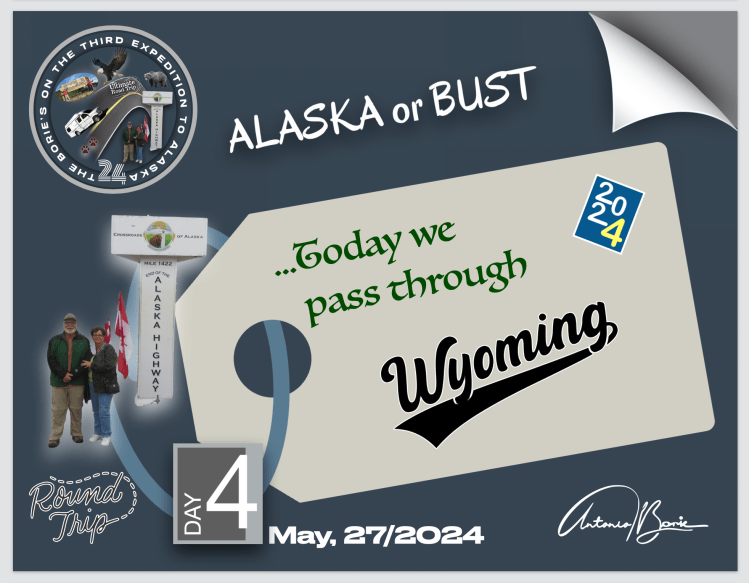
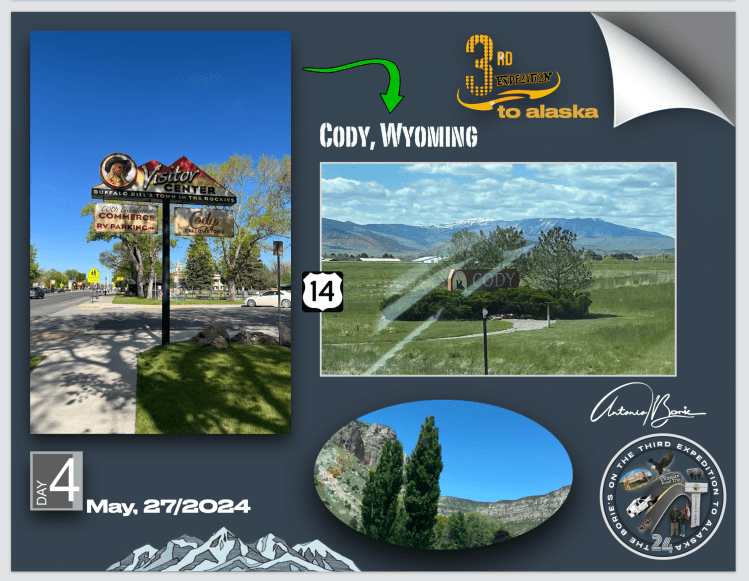
…Expedição ao Alaska24 (Dia 4) …Alaskan Expedition24 (Day 4)

…o nosso objetivo sempre foi viver de acordo com a natureza, ouvir o murmúrio da água, observar as nuvens flutuando num céu às vezes azul, com alguma neve ainda cobrindo a Cordilheira das Montanhas Rochosas, (esta nossa “Terceira Expedição ao Alaska” começou no Sol de Maio-Flores), que se podiam ver ao longe, quando viajávamos pelo interior do estado de Wyoming!. 

…our goal has always been to live in accordance with nature, to hear the murmur of the water, to watch the clouds float in a sometimes blue sky, with some snow still covering the Rocky Mountain Range, (this our “Third Alaska Expedition” has begun in the May sun-Flowers), which could be seen in the distance, when we traveled through the interior of the state of Wyoming!. 

…como tal, não foi de forma alguma uma perda de tempo e…,  ao descrever as rotas dos dias que passámos viajando, o nosso cérebro era constantemente bombardeado com mensagens para nos importarmos com tudo, quando na verdade o que pretendíamos era só e simplesmente fixar o que estávamos a ver, porque depois…, no recanto da nossa casa, iríamos descrever e pintar as imagens!. 

…as such, it was in no way a waste of time and…, when describing the routes of the days we spent traveling, our brain was constantly bombarded with messages to care about everything, when in fact what we wanted was just and simply fix what we were seeing, because later…, in the corner of our house, we would describe and paint the images!. 

…porque afinal, ao descrever estas rotas dos dias passados, sentimos alguma emoção com os resultados obtidos…, e nem sabemos se alguma vez alguém vai ler o que escrevemos!. Nós sim, lemos dezenas de vezes, transformamos, acrescentamos, querendo ser o mais fiel possível daquilo que vimos!. 

…because after all, when describing these routes from past days, we feel some emotion with the results obtained…, and we don’t even know if anyone will ever read what we wrote!. Yes, we read it dozens of times, we transformed it, we added it, wanting to be as faithful as possible to what we saw! 

…no entanto, é quase impossível descrever o cenário que os nossos olhos apreciaram, e claro, uma pequena frase ou até um texto que pode ter várias interpretações e…, sem o querer, pode não ser fiel ao que se passou, porque o nosso “sótão digital” está já um pouco cheio, como tal, pedimos antecipadamente perdão se isto alguma vez acontecer!.

…however, it is almost impossible to describe the scenario that our eyes appreciated, and of course, a small sentence or even a text that can have several interpretations and…, without meaning to, may not be faithful to what happened, because our “digital attic” is already a little full, so we ask for forgiveness in advance if this ever happens!

…vamos então à narrativa daquilo que se passou neste quarto dia!. 

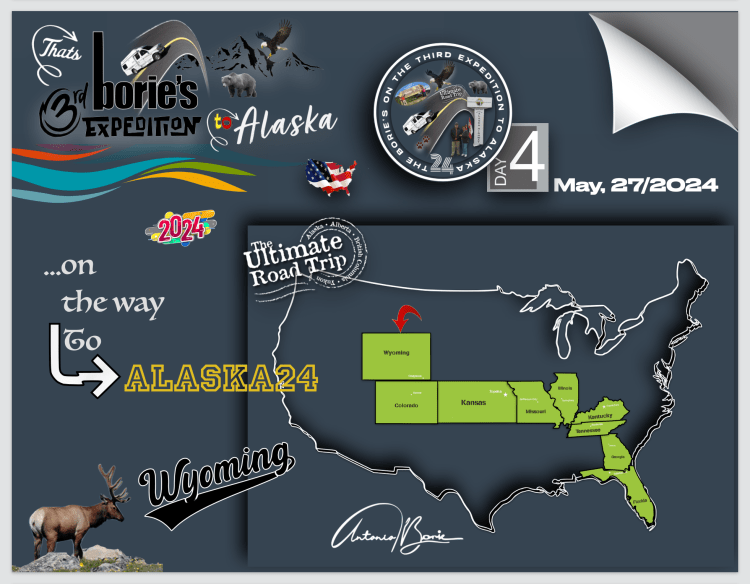
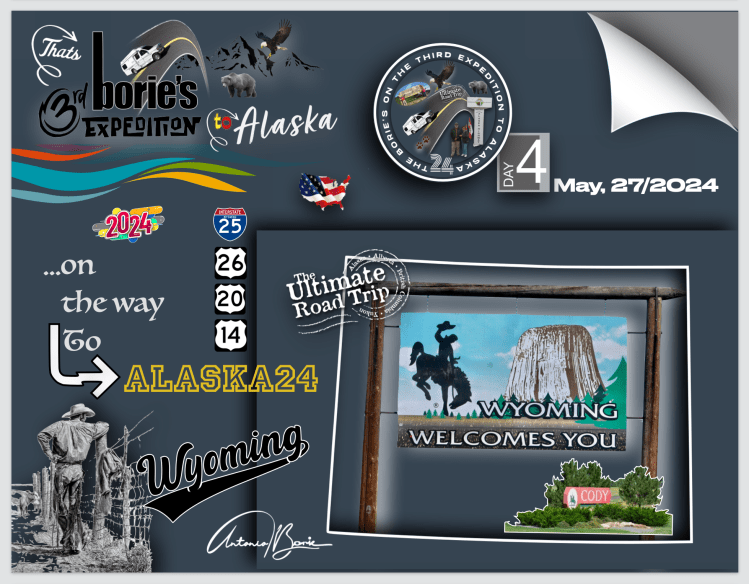
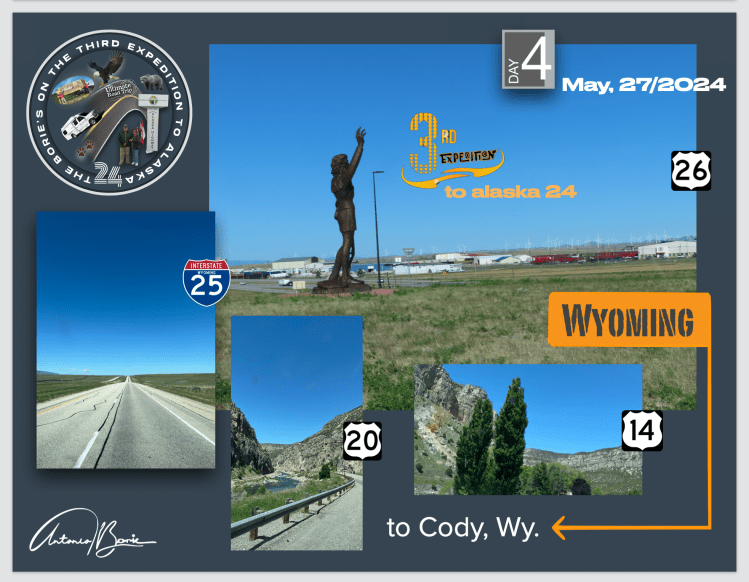
…atravessando a fronteira para o estado de Wyoming, viajámos pela estrada rápida I-25 até à cidade de Casper, depois pela estrada estatal 26 até à cidade de Shoshoni e…, olhando para o norte/oeste, a vista é parcialmente bloqueada por uma crista longa e plana!. Logo a seguir existe uma planície rasa entre a estrada e aquela maravilhosa Cordilheira das Montanhas Rochosas, que vêm do sul e seguem até ao território do Canadá, e nós…, parando ao lado da estrada quase deserta, admirando este cenário, levantamos o braço em direcção àquelas montanhas com a intenção de nelas tocar!.
…let’s go back to the narrative of what happened on this fourth day! 

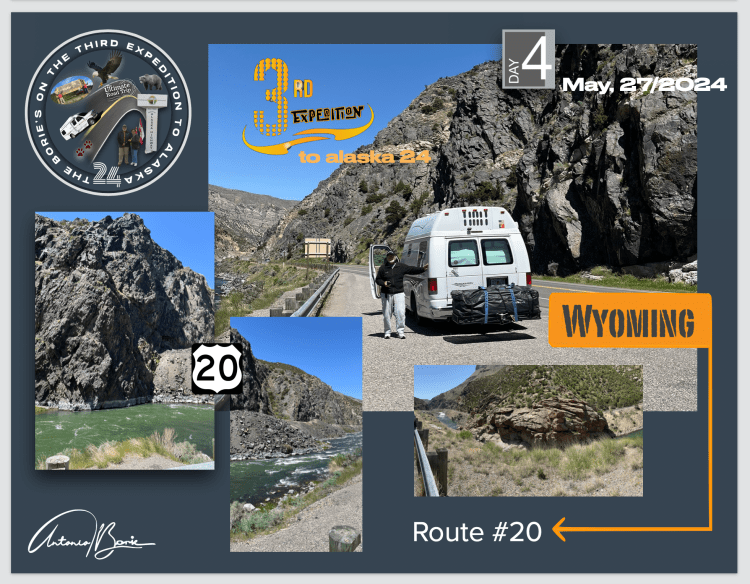
…crossing the border into the state of Wyoming, we traveled on fast highway I-25 to the town of Casper, then state highway 26 to the town of Shoshoni and…, looking north/west, the view is partially blocked by a long, flat crest!. Soon after, there is a shallow plain between the road and that wonderful mountain range of the Rocky Mountains, which come from the south and continue to the territory of Canada, and we…, stopping next to the almost deserted road, admiring this scenery, we raised our arms in towards those mountains with the intention of touching them!.

…na cidade de Shoshoni, entrámos na estrada 20, também estatal, que até lhe chamam “Yellowstone Highway”, que embora longe da maravilhosa Cordilheira já mencionada, tem potencial para ser uma das melhores estradas nesta área onde outra montanha rochosa começa num lago e sobe rapidamente até o topo de uma cordilheira parcialmente escondida mas…, felizmente iluminada pelas nuvens reluzentes da luz do sol que naquele momento se fazia sentir!.

…in the city of Shoshoni, we entered road 20, also state-owned, which they even call it “Yellowstone Highway”, which although far from the wonderful Cordillera already mentioned, has the potential to be one of the best roads in this area where another rocky mountain begins at a lake and climbs quickly to the top of a mountain range that is partially hidden but…, fortunately illuminated by the shining clouds of sunlight that was being felt at that moment!.

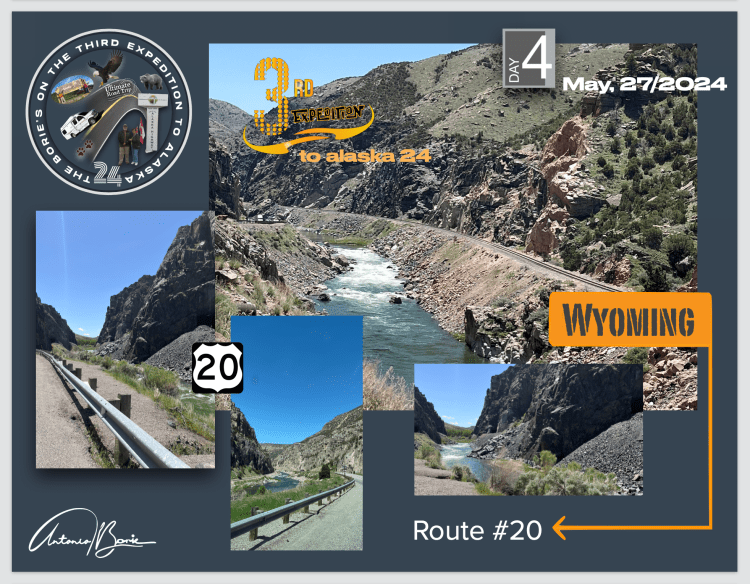
…esta área tem um cenário maravilhoso!. A estrada segue com curvas apertadas, subidas e descidas, lagos, túneis atravessando as rochas, cascatas de água revoltosa, uma linha de caminho de ferro ao longo dum rio e áreas de descanso para se poder apreciar melhor o cenário!. Depois…, já na cidade de Greybull, entrámos na estrada 14, também estatal, com algum cenário de planície e montanha que nos levou ao nosso destino para este dia, que era a cidade de Cody, Wyoming!. 

…this area has wonderful scenery!. The road continues with tight curves, ups and downs, lakes, tunnels crossing the rocks, waterfalls of raging water, a railway line along a river and rest areas to better appreciate the scenery!. Afterwards…, already in the city of Greybull, we entered highway 14, also state-owned, with some plain and mountain scenery that took us to our destination for this day, which was the city of Cody, Wyoming!.

…cidade esta que testemunhando a história do Velho Oeste, é frequentemente chamada de “Capitólio do Rodeio do Mundo” pelos seus shows de rodeio iniciados por volta do ano de 1919, nascidos do “Wild West Show de Buffalo Bill”, homenageando um legado do Velho Oeste!.

…this city, which bears witness to the history of the Wild West, is often called the “Rodeo Capital of the World” for its rodeo shows that began around 1919, born from “Buffalo Bill’s Wild West Show”, honoring a legacy of the Old West!

…aqui, depois de estacionar num Parque de RV, andámos por esta pequena e pacata cidade, visitando pequenas lojas e…, frequentando um restaurante onde depois de ser servidos por uma simpática senhora, ao dar-nos a conta da despesa, nos deu um papel saído do computador, onde constava simplesmente o que tínhamos consumido, sem “tantos e tantos por cento de gratificação”, como é normal em outros estados!.

…here, after parking in an RV Park, we walked around this small and peaceful town, visiting small stores and…, going to a restaurant where, after being served by a friendly lady, upon giving us an account of our expenses, she gave us a paper coming from the computer, which simply stated what we had consumed, without “so many and so many percent of bonus”, as is normal in other states!.

…isto é porque somos caminhantes do mundo e…, em cada caminhada com a natureza ou passando por pequenas cidades ou vilas rurais, recebemos sempre muito mais do que procuramos!.

…this is because we are world walkers and…, on every walk with nature or passing through small towns or rural villages, we always receive much more than we are looking for!.

Tony Borie.

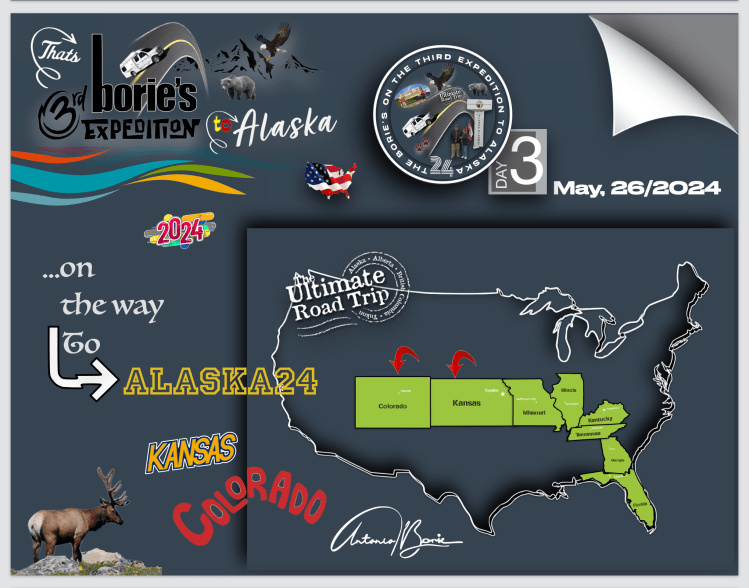
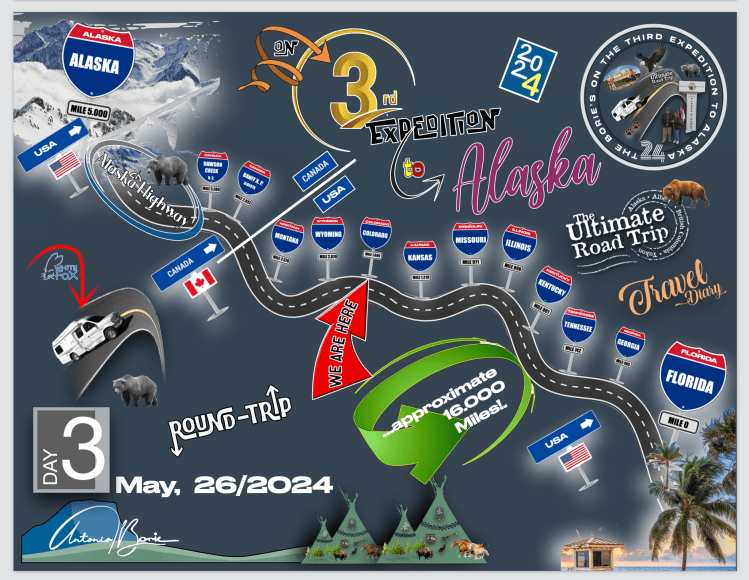
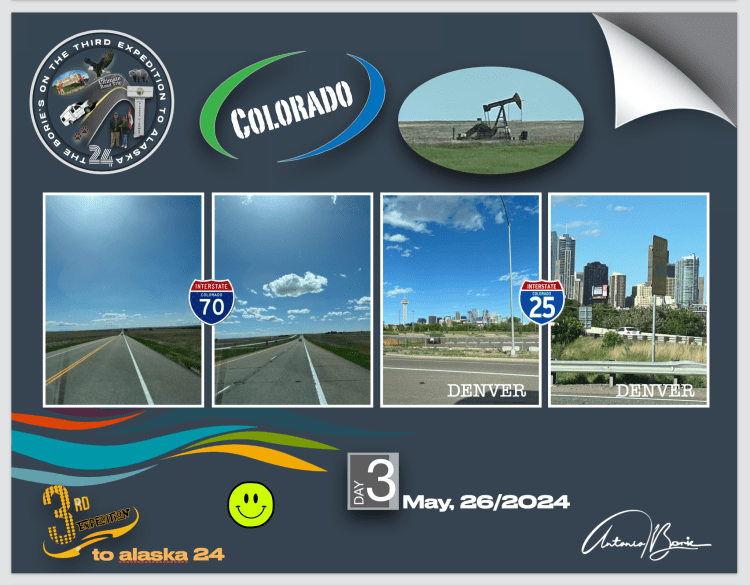
…Expedição ao Alaska24 (Dia 3) …Alaskan Expedition24 (Day 3)

…o dia começou com mais sol do que no dia anterior, felizmente e para nós o céu azul tornou a viagem muito mais agradável!.

…the day started with more sunshine than the previous day, fortunately, and for us the blue sky made the trip much more pleasant!.

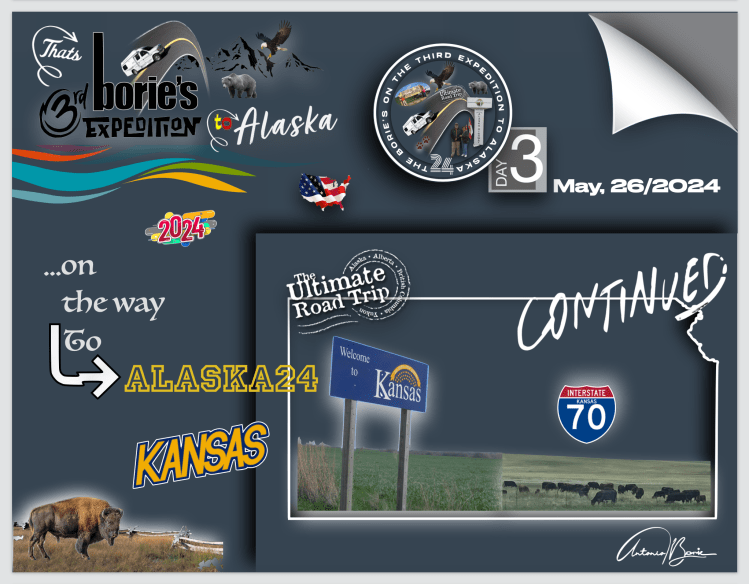
…e, nas 687 milhas percorridas, continuámos a nossa jornada rumo ao oeste e tal como no dia anterior, o cenário da estrada rápida número 70, era de longas zonas desertas, quintas abandonadas em locais às vezes  isolados, mas lá estavam as árvores em seu redor, algumas já velhas, talvez da idade da casa!.  

…and, in the 687 miles covered, we continued our journey towards the west and just like the previous day, the scenery of fast road number 70, was of long deserted areas, abandoned farms in sometimes isolated places, but there were the trees in around it, some of them already old, perhaps as old as the house! 

…aqui e ali, também existiam algumas plantações de milho ou trigo, algumas manadas de vacas, áreas transformadas em zonas de caça, poços de petróleo trabalhando ou moinhos de energia movidos a vento!. 

…here and there, there were also some corn or wheat plantations, some herds of cows, areas transformed into hunting areas, working oil wells or wind-powered energy mills!. 

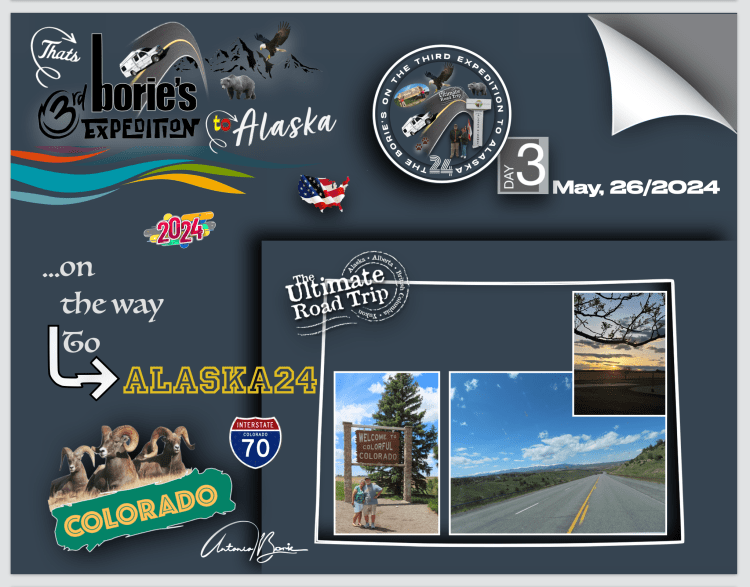
…era o típico cenário das planícies do Kansas!. Tudo isto até à fronteira com o estado de Colorado, porque a partir daí o cenário modificou-se um pouco, já havendo mais movimento na estrada, que até estava bastante danificada, com buracos e necessitando de reparação e as povoações eram mais frequentes!. No entanto, olhando o horizonte, já se via a Cordilheira das Montanhas Rochosas com neve no topo, que vêm do sul e vão até ao Canadá!.

…it was typical Kansas plains scenery!. All this up to the border with the state of Colorado, because from there the scenario changed a little, with there being more movement on the road, which was actually quite damaged, with potholes and in need of repair and the towns were more frequent)!. However, looking at the horizon, one could already see the Rocky Mountain Range with snow at the top, coming from the south and going all the way to Canada!.

…num certo ponto da nossa rota começámos a desviarmo-nos um pouco para sul na intenção de viajar pela estrada pavimentada mais alta dos USA, na Cordilheira das Montanhas Rochosas, ou seja, ir passar pelo Mount Blue Sky Scenic Byway, anteriormente conhecido como Monte Evans, onde podemos ter vistas deslumbrantes da Cordilheira das Montanhas Rochosas, no entanto, à sua chegada verificámos que existe um sistema de entrada cronometrada que exige reserva antecipada…, com 30 dias de antecedência!. Claro, desanimados…, desistimos desta aventura!

…at a certain point on our route we started to deviate a little south with the intention of traveling along the highest paved road in the USA, in the Rocky Mountain Range, that is, passing through the Mount Blue Sky Scenic Byway, formerly known as Mt. Evans, where we can have stunning views of the Rocky Mountain Range, however, upon arrival we found that there is a timed entry system that requires advance reservation…, 30 days in advance!. Of course, discouraged…, we gave up on this adventure!

…até que chegámos à cidade de Denver!. Passámos a cidade depois de fazer alguns retrocessos e avanços, porque o “sabe-tudo do GPS”, indica-nos sempre a menor distância entre dois pontos, mas às vezes esses dois pontos por um qualquer motivo estão em reparação e necessitam de desvios e aí…, já é um problema para quem vive muito longe desta bonita e próspera cidade!.

…until we arrived in the city of Denver! We passed the city after making some backwards and forwards, because the “GPS know-it-all” always tells us the shortest distance between two points, but sometimes those two points, for whatever reason, are under repair and require detours and So… it’s already a problem for those who live very far from this beautiful and prosperous city!

…já lá vão uns anos quando pela primeira vez passámos pela cidade de Denver e…, sempre ambicionámos visitar esta cidade com algum tempo disponível mas…, isto nunca aconteceu e hoje a tarde já ia no fim e a nossa rota do dia teria que ser cumprida!. Todavia ainda procurámos ir ver a Rua Larimer, onde a Larimer Square é facilmente o quarteirão mais típico da cidade, onde se pode apreciar vitrines em boutiques chiques, ver  entre outras atracções, restaurantes ou assistir a um show de rua, ou mesmo ver de perto a estação ferroviária histórica, a Union Station que foi revitalizada como o coração do centro de Denver!.

…it was a few years ago when we first passed through the city of Denver and…, we always wanted to visit this city with some available time but…, this never happened and today the afternoon was already ending and our route for the day would have to be followed!. However, we still tried to go and see Larimer Street, where Larimer Square is easily the most typical block in the city, where you can enjoy window shopping in chic boutiques, see among other attractions, restaurants or watch a street show, or even see up close the historic train station, Union Station which has been revitalized as the heart of downtown Denver!.

…enfim, o tempo era curto e tínhamos que prosseguir a nossa viajem para norte, como tal lá fomos outra vez ao sabor do “sabe-tudo do GPS”, sabendo onde encontrar um parque de RV para pernoitar, mantimentos ou gasolina, e o melhor do que tudo e como o dia estava quase a chegar ao fim…, também sabíamos que iríamos encontrar um bom lugar para ver o pôr do sol!, que nos surgiu já numa pequena localidade na estrada rápida número 25 rumo ao norte, vindos da movimentada cidade de Denver, já quase na fronteira com o estado de Wyoming!. 

…anyway, time was short and we had to continue our journey north, so we went there again at the mercy of the “GPS know-it-all”, knowing where to find an RV park to spend the night, supplies or gasoline, and the better than anything and as the day was almost coming to an end…, we also knew that we would find a good place to watch the sunset!, which came to us in a small town on fast road number 25 heading north, coming from bustling city of Denver, almost on the border with the state of Wyoming!. 

Tony Borie.

…fragmentos do tempo, do tempo que nos resta!. (…fragments of time, of the time we have left)!

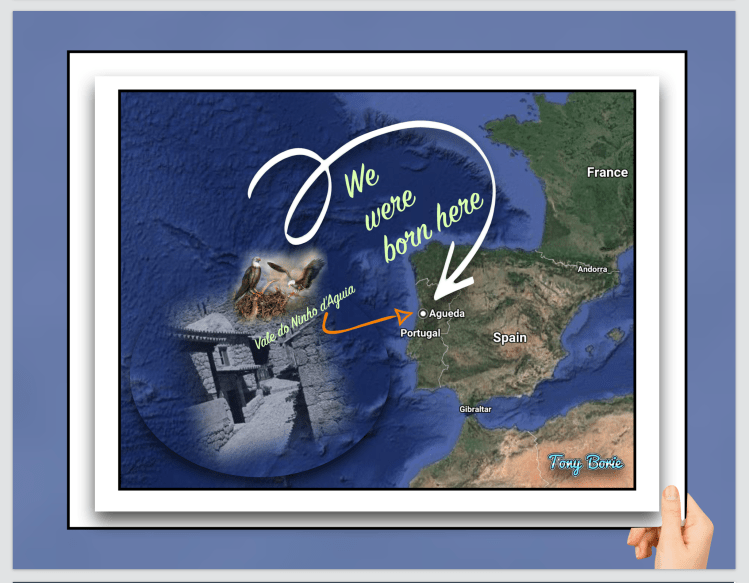
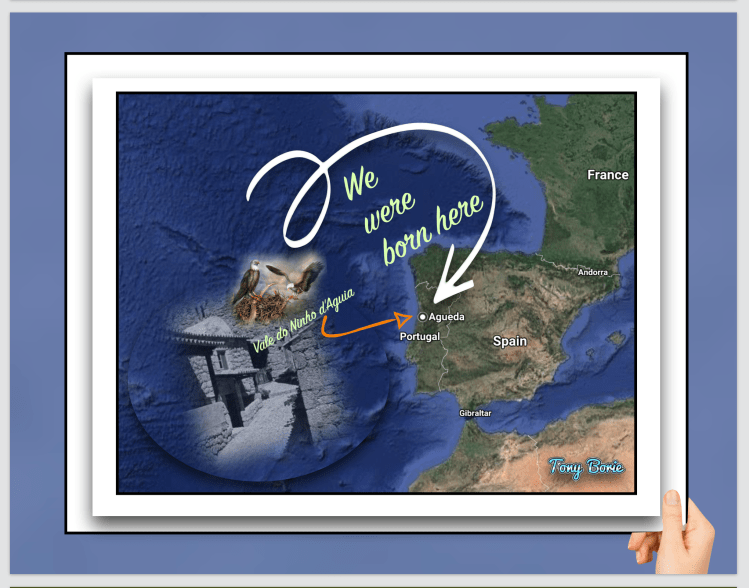
…na aldeia onde nascemos, lá naquela encosta de uma montanha na Europa, onde toda a gente era pobre…, com excepção de uma pequenina parte da população, que eram os ricos!. Na vila mais próxima, havia uma rua onde também havia uma mercearia, uma loja de fazendas e pano crú e…, uma taberna!. 

…in the village where we were born, there on that mountainside in Europe, where everyone was poor…, with the exception of a tiny part of the population, who were the rich!. In the nearest village, there was a street where there was also a grocery store, a farm and raw cloth store and…, a tavern!.

…a mercearia vendia açúcar, arroz, sal e farinha, às vezes bacalhau, e.., era tudo fiado, onde os clientes pagavam os géneros a prestações ou por ocasião das colheitas, quando faziam algum dinheiro da sua agricultura de subsistência, onde normalmente criavam algumas aves de capoeira e matavam um porco uma vez por ano!. Bifes, peixe fino, café ou pão de trigo com manteiga…, eram um luxo!.

…the grocery store sold sugar, rice, salt and flour, sometimes cod, and…, it was all on credit, where customers paid for the items in installments or during the harvest, when they made some money from their subsistence farming, where they normally They raised some poultry and killed a pig once a year!. Steaks, fine fish, coffee or wheat bread with butter… they were a luxury!

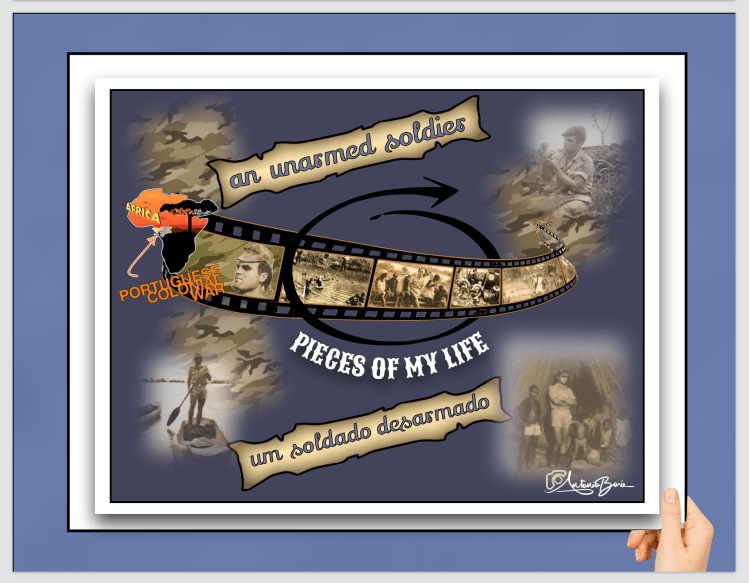
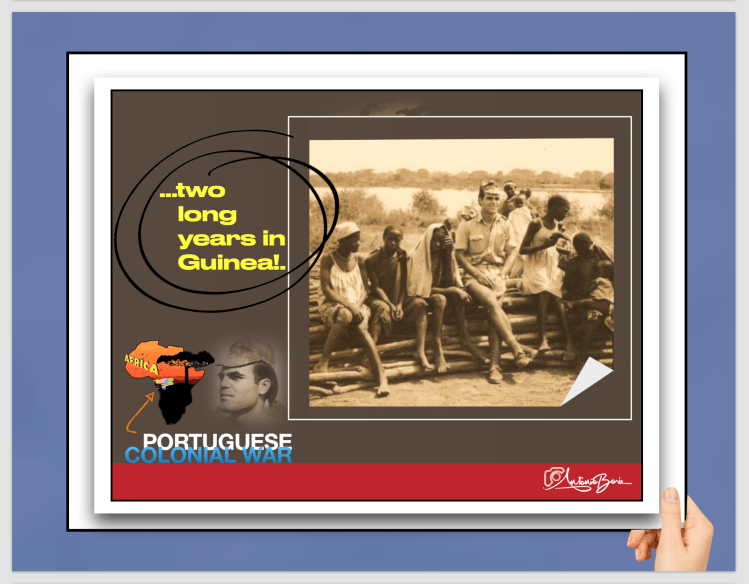
…depois de quase crianças, ser-mos recrutados, mobilizados, treinados à pressa para a Guerra Colonial, “encaixotados” no porão de um navio de carga, navegando no mar do Atlântico, rumo ao sul com destino à costa africana, para combater pessoas que lutavam pela liberdade dos seus territórios, e que nunca antes tínhamos visto e nada tínhamos em contra e…, ao final de dois longos anos, vivendo num cenário de medo e angustia nos pântanos e florestas da então Província Colonial da Guiné, quando regressámos de novo à Europa, decidimos fugir…, ou seja, imigrar!.

…after we were almost children, we were recruited, mobilized, trained in a hurry for the Colonial War, “boxed” in the hold of a cargo ship, sailing in the Atlantic sea, heading south towards the African coast, to fight people who were fighting for the freedom of their territories, and which we had never seen before and had nothing against and…, at the end of two long years, living in a scenario of fear and anguish in the swamps and forests of the then Colonial Province of Guinea, when we returned from new to Europe, we decided to escape…, that is, to immigrate!.

…escolhemos este continente do lado de cá do Atlântico, vindo viver para este país que nos recebeu de “braços abertos”!. Como tal, apesar de termos jurado a cidadania, possuir-mos passaporte deste grande país e termos dado o nosso contributo possível para com a ajuda da nossa dedicada esposa Isaura, criarmos e educarmos uma família com princípios honestos, que por sua vez, já criaram as suas próprias famílias, continuamos a ser imigrantes, descendentes da Europa!.

…we chose this continent on this side of the Atlantic, coming to live in this country that welcomed us with “open arms”!. As such, despite having sworn citizenship, holding a passport from this great country and having given our possible contribution to, with the help of our dedicated wife Isaura, creating and educating a family with honest principles, which in turn, have already created their own families…, we continue to be immigrants, descendants of Europe!.

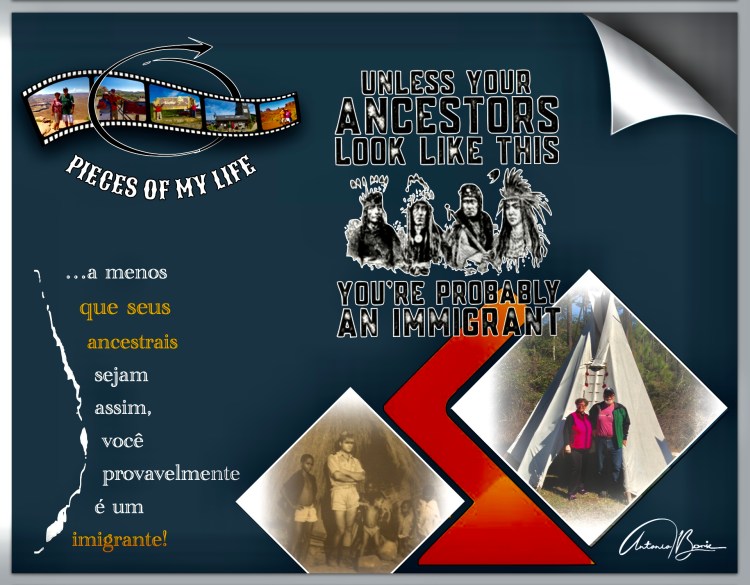
…e, talvez, pelo sotaque da voz ou qualquer outra qualquer anomalia, é frequente perguntarem-nos: é imigrante, de que país veio?. E a resposta para estas perguntas podem ler-se neste cartaz, que completámos com uma bonita foto tirada da internet e da qual não sabemos o nome do autor, mas com muito respeito lhe agradecemos, e que pode dizer-nos: “a menos que seus ancestrais sejam assim, você provavelmente é um imigrante”!.

…and, perhaps, due to the accent of the voice or any other anomaly, we are often asked: are you an immigrant, what country did you come from?. And the answer to these questions can be read on this poster, which we have completed with a beautiful photo taken from the internet and of which we do not know the name of the author, but with great respect we thank him, and who can tell us: “unless your ancestors are like this, you are probably an immigrant”!.

Tony Borie, Século XXI. (Tony Borie, 21st Century). 

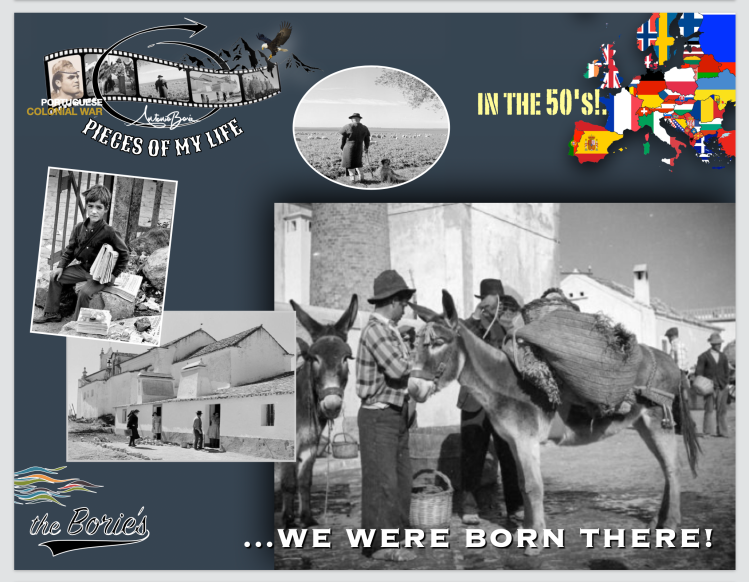
…nascemos lá!. (…we were born there)!.

…nas décadas de quarenta e cinquenta do século passado, logo após a segunda guerra mundial, pelo menos no sul da Europa de onde somos oriundos, as experiências das famílias diferiam com base na sua localização, estatuto económico e em algumas circunstâncias individuais, cobriam uma paisagem grande e variada, sempre com base na agricultura!.

…in the forties and fifties of the last century, right after the second world war, at least in southern Europe where we come from, the experiences of families differed based on their location, economic status and in some individual circumstances, covering a large and varied landscape, always based on agriculture!.

…havia crenças, tradições e estilos de vida que vinham dos seus antepassados e, pelo menos nas aldeias e vilas não variavam muito de outros centros urbanos, fossem eles do interior de montanha ou das terras da beira mar, onde as famílias continuaram aspectos de cultura que incluíam práticas agrícolas e técnicas culinárias, para sobreviver!. 

…there were beliefs, traditions and lifestyles that came from their ancestors and, at least in the villages and towns, they did not vary much from other urban centers, whether in the interior of the mountains or in the lands by the sea, where families continued aspects of culture which included agricultural practices and culinary techniques, to survive!.

…não importava que fosse agricultor, pescador, ferreiro, carpinteiro, criança, esposa ou mãe, a jornada de trabalho normalmente começava antes do amanhecer e durava até ao pôr do sol, onde ao longo do dia, todos se dedicavam às tarefas essenciais pela sobrevivência e bem de toda a família!. 

…it didn’t matter if you were a farmer, fisherman, blacksmith, carpenter, child, wife or mother, the workday normally began before dawn and lasted until sunset, where throughout the day, everyone dedicated themselves to essential tasks for survival and good luck to the whole family!.

…a manhã começava com um modesto desjejum de pão de milho, leite de cabra ou ovelha, chicória, (uma mistura parecida com café), sopa de cebola e batata antes do início do trabalho, dependendo da época do ano, do clima e da estação, e esse sustento era muito necessário, porque uma jornada de trabalho típica poderia durar até 12 horas, praticada seis dias por semana!. 

…the morning began with a modest breakfast of cornbread, goat’s or sheep’s milk, chicory, (a coffee-like mixture), onion and potato soup before starting work, depending on the time of year, the weather and the season, and this support was very necessary, because a typical workday could last up to 12 hours, carried out six days a week!.

…as mulheres, quando necessário também ajudavam nas tarefas da agricultura, da pesca ou qualquer outro trabalho, mas normalmente trabalhavam em casa administrando todos os aspectos da casa e dos cuidados com os filhos, incluindo a preparação das refeições e a educação básica dos filhos, como tal, os filhos adoravam a mãe, que sempre lembravam ao longo de toda a sua vida!. 

…women, when necessary, also helped with farming, fishing or any other work, but they normally worked at home managing all aspects of the home and childcare, including preparing meals and providing basic education for their children, As such, the children adored their mother, whom they always remembered throughout their lives!.

…além disso, as mulheres casadas de famílias não agrícolas muitas vezes trabalhavam ao lado dos maridos em lojas, comércios ou tavernas, e as mulheres solteiras ou viúvas trabalhavam como costureiras, parteiras ou taberneiras e as crianças muitas vezes ajudavam os pais no seu trabalho, aprendendo competências valiosas para o seu futuro!.

…in addition, married women from non-agricultural families often worked alongside their husbands in shops, businesses or taverns, and single women or widows worked as seamstresses, midwives or innkeepers and children often helped their parents with their work, learning valuable skills for your future!.

…naquela época, o almoço era chamado de “jantar” e era a maior e mais farta refeição do dia à base de sopa de batatas e outros vegetais da estação, como milho ou couves, onde também podia entrar alguma carne salgada de porco ou mesmo aves, seguindo-se um curto período de descanso, onde às vezes se permitia que as famílias se conectassem com os vizinhos e fortalecessem os laços sociais!. 

…at that time, lunch was called “dinner” and was the biggest and most filling meal of the day, based on potato soup and other seasonal vegetables, such as corn or cabbage, which could also include some salted pork or even birds, followed by a short period of rest, where families were sometimes allowed to connect with neighbors and strengthen social ties!.

…também havia algumas excepções, como por exemplo durante os períodos de pico agrícola, como o plantio na primavera e a colheita no outono, a jornada de trabalho das famílias era ampliada, pois todos os membros da família se dedicavam às tarefas essenciais, onde as mulheres preparavam a comida de madrugada a que chamavam “o farnel” e era levada e comida nos campos agrícolas, porque a natureza era mais exigente nestas épocas exigindo mais horas para garantir uma colheita bem-sucedida!.

…there were also some exceptions, for example during peak agricultural periods, such as planting in spring and harvesting in autumn, families working hours were extended, as all family members dedicated themselves to essential tasks, where the Women prepared the food early in the morning, which they called “farnel” and it was taken and eaten in the agricultural fields, because nature was more demanding at these times, requiring more hours to guarantee a successful harvest!.

…por outro lado, nos meses de inverno ou durante condições climáticas adversas, quando as atividades ao ar livre eram mais limitadas, a jornada de trabalho poderia ser mais curta, onde as famílias se concentravam  nas tarefas internas e domésticas, como preparar alimentos para armazenamento ou tecer e remendar roupas!. 

…conversely, in the winter months or during adverse weather conditions when outdoor activities were more limited, the workday could be shorter where families focused on indoor and domestic tasks such as preparing food for storage or weave and mend clothes!.

…continuando…, as roupas eram geralmente feitas de materiais de origem local, especialmente lã de ovelha e algodão e linho cultivados, e as famílias produziam os seus próprios têxteis através da fiação e da tecelagem!. As roupas do dia a dia eram modestas e simples, refletindo as necessidades práticas da vida diária!. Os homens normalmente usavam tamancos, camisas, coletes e calças, enquanto as mulheres vestiam vestidos com saias rodadas cobertas por longos aventais!. 

…continuing…, clothes were generally made from locally sourced materials, especially sheep’s wool and cultivated cotton and linen, and families produced their own textiles through spinning and weaving!. Everyday clothes were modest and simple, reflecting the practical needs of daily life!. Men typically wore clogs, shirts, vests and pants, while women wore dresses with full skirts covered by long aprons!.

…e para terminar…,  as famílias à noite retiravam-se para as suas camas, que eram feitas e recheadas com colchões de palha, e como havia poucos móveis na casa, raramente havia dormitórios designados, em vez disso, as pessoas dormiam em áreas de convivência com vários membros da família compartilhando o mesmo quarto, onde as crianças mais velhas dormiam numa cama e os bebés e as crianças muito pequenas dormiam ao lado da mãe e…, com o ritmo natural da luz do dia e a iluminação artificial muito limitada, as horas de dormir eram cedo, porque havia a necessidade de preparação para os longos dias de trabalho físico!.

…and to finish…, families at night retired to their beds, which were made and stuffed with straw mattresses, and as there was little furniture in the house, there were rarely designated bedrooms, instead, people slept in areas of coexistence with several family members sharing the same room, where older children slept in one bed and babies and very young children slept next to their mother and…, with the natural rhythm of daylight and very limited artificial lighting, bedtimes were early, because there was a need to prepare for long days of physical work!.

Tony Borie, Século XXI. (Tony Borie, 21st Century).

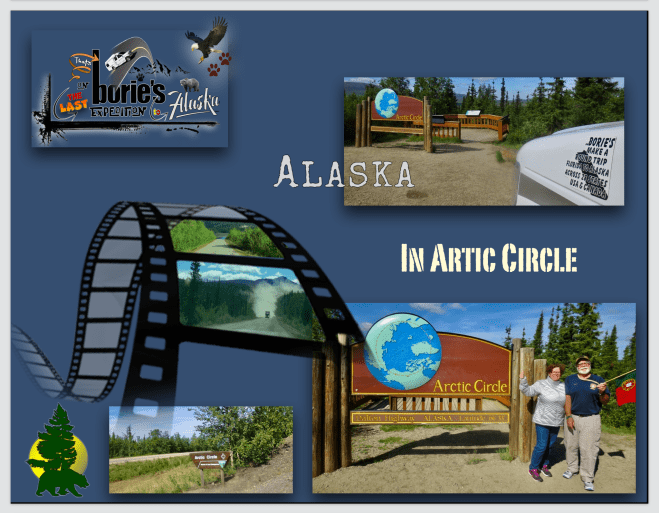
…fomos ao Arctic Circle!. (…we went to Arctic Circle)!.

…o dia estava excelente, a manhã a raiar com algum sol, o céu estava quase azul, a temperatura era de uma primavera semi-tropical, nem parecia que estávamos no norte do Alaska!.

…the day was excellent, the morning dawned with some sun, the sky was almost blue, the temperature was that of a semi-tropical spring, it didn’t even feel like we were in northern Alaska!.

…era um dia especial!. Queríamos completar uma aventura que já se prolongava por alguns anos, que era viajar na famosa “Estrada Dalton”!. No passado já a havíamos tentado, estando no início desta famosa estrada, percorrendo mesmo algumas milhas…, mas a chuva, o nevoeiro, o vento, o frio, a neve e os acidentes que havia pelo percurso, além dos avisos feitos pelas pessoas de uniforme, alguns eram militares, que frequentemente nos apareciam, fizeram com que desanimados, voltasse-mos para trás, desistindo, percorrendo um caminho de regresso, de alguma revolta, jurando que um dia havia-mos de nela viajar, pelo menos até ao “Circulo Polar Ártico”!.

…it was a special day! We wanted to complete an adventure that had been going on for a few years, which was traveling on the famous  “Dalton Highway”!. In the past we had already tried it, being at the beginning of this famous road, covering just a few miles…, but the rain, the fog, the wind, the cold, the snow and the accidents along the way, in addition to the warnings given by people from uniform, some were military, who frequently appeared to us, made us discouraged, turned back, giving up, following a path of return, of some revolt, swearing that one day we would travel in it, at least until the “Arctic Circle”!.

…e anos depois, numa segunda tentativa fomos abençoados com ventos suaves e céu limpo!.  Aqui e ali ainda nos apareciam…, alguma lama, poeira, pedra miúda ou buracos, mas a tal chuva, neve ou granizo, enormes geadas, buracos e rachaduras na estrada, felizmente não!. Como tal…, perfeitamente nos adaptámos!.

…and years later, on a second attempt we were blessed with gentle winds and clear skies!. Here and there we still saw some mud, dust, small stones or holes, but not so much rain, snow or hail, huge frosts, holes and cracks in the road, fortunately not! As such… we adapted perfectly!

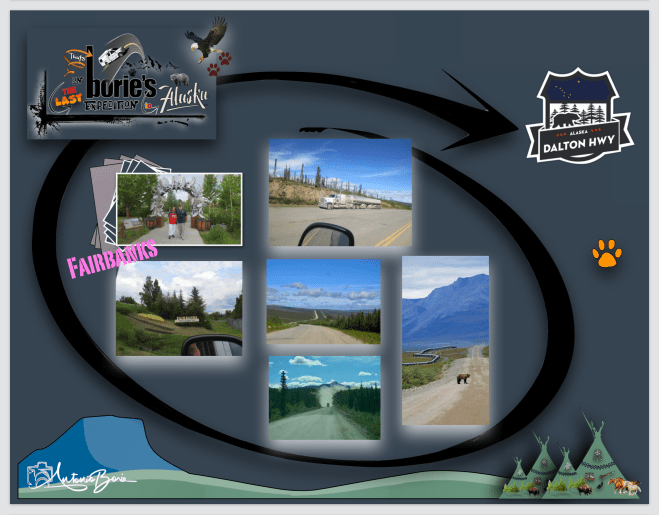
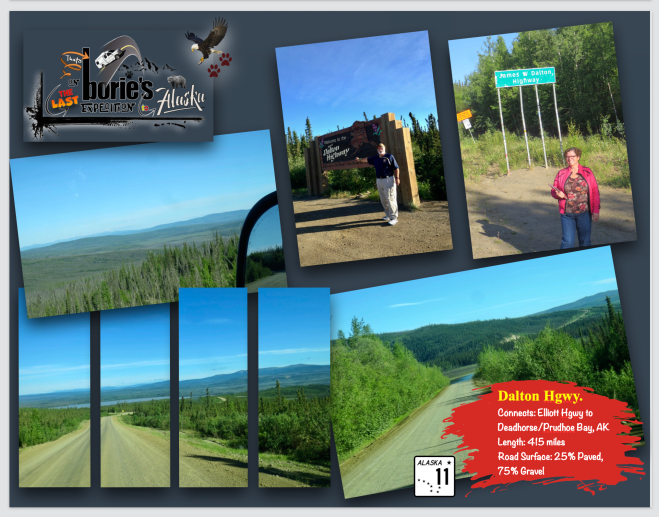
…a ”Estrada Dalton” é uma estrada de 414 milhas (666 km) que começa na“Estrada Elliott, ao norte da cidade de Fairbanks e termina em  Deadhorse, uma comunidade da Baía de Prudhoe, perto do Oceano Ártico e dos Campos Petrolíferos da Baía de Prudhoe!. Hoje chama-se “Estrada Dalton”, em homenagem ao engenheiro James W. Dalton, especialista em engenharia do Ártico, actuando  como consultor em exploração de petróleo no norte do Alaska, todavia já foi chamada de “North Slope Haul Road”, um nome pelo qual ainda é conhecida às vezes e que, foi construída como uma estrada de suprimento para apoiar o Sistema de Oleodutos Trans-Alaska no ano de 1974!. 

…the “Dalton Highway” is a 414-mile (666 km) road that begins at “Elliott  Highway”, north of the city of Fairbanks and ends in Deadhorse, a Prudhoe Bay community near the Arctic Ocean and the Oil Fields Prudhoe Bay!. Today it is called “Dalton Highway”, in honor of the engineer James W. Dalton, a specialist in Arctic engineering, acting as a consultant in oil exploration in northern Alaska, however it was once called “North Slope Haul Road”, a name which it is still sometimes known as, was built as a supply road to support the Trans-Alaska Pipeline System in 1974!.

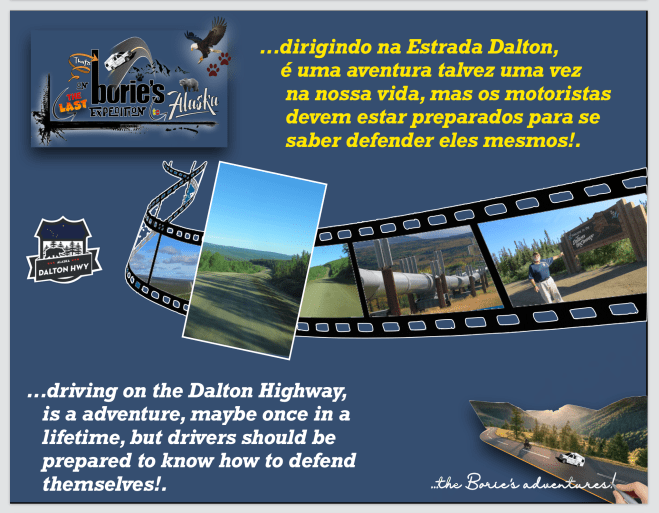
…aqui recomeçou a aventura que frustrados e revoltados, fomos obrigados a desistir uns anos atrás!. O dia estava mesmo a nosso favor, estava um céu limpo e não era necessário esperar por outros aventureiros, como tal fomos em frente, sabendo que o lema era, “conduzir na Estrada Dalton, é uma aventura, talvez uma vez na vida, mas os motoristas devem preparar-se para se saber defender sózinhos”!.

…here the adventure that frustrated and angry, we were forced to give up a few years ago, began again!. The day was really in our favor, it was a clear sky and there was no need to wait for other adventurers, so we went ahead, knowing that the motto was, “driving the Dalton Highway, it’s an adventure, maybe once in a lifetime, but Drivers must prepare themselves to know how to defend themselves”!

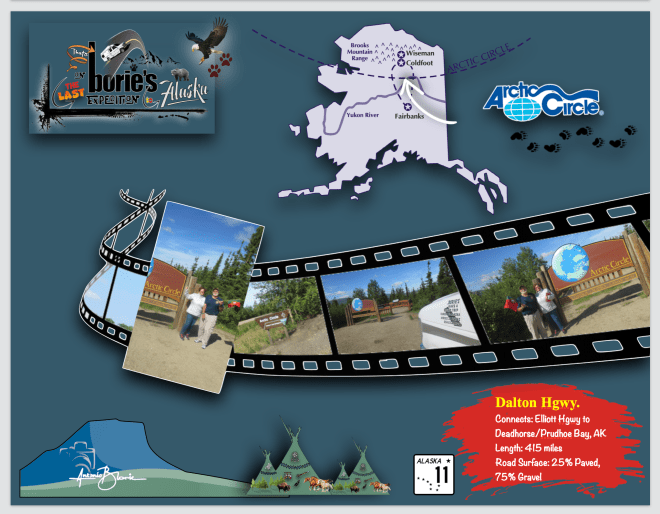
…a “Estrada Dalton” é a única estrada no estado do Alaska que atravessa o “Círculo Polar Ártico”, que é o ponto mais ao norte, dos abstratos ou imaginários principais círculos de latitude, como é mostrado nos mapas da Terra!. Ele marca o ponto mais setentrional no qual o sol do meio-dia é visível no solstício de inverno do norte, e o ponto mais ao sul no qual o sol da meia-noite é visível no solstício de verão do norte!. A região ao norte deste círculo é conhecida como o Ártico, e a zona apenas para o sul é chamada de Zona Temperada Norte!.

…the “Dalton Highway” is the only road in the state of Alaska that crosses the “Arctic Circle”, which is the northernmost point of the abstract or imaginary main circles of latitude, as shown on maps of the Earth! . It marks the northernmost point at which the midday sun is visible on the northern winter solstice, and the southernmost point at which the midnight sun is visible on the northern summer solstice!. The region north of this circle is known as the Arctic, and the zone just to the south is called the North Temperate Zone!

…e nós ao cruzarmos este ponto, ficámos fascinados e algo surpresos por ver este fenómeno, pois ao norte do “Círculo Polar Ártico”, o sol está acima do horizonte por vinte e quatro horas contínuas pelo menos uma vez por ano, portanto, visível à meia-noite e, abaixo do horizonte por vinte e quatro horas contínuas pelo menos uma vez por ano, portanto, não visíveis ao meio dia, isso também é verdade dentro do Círculo Polar equivalente no Hemisfério Sul, o Círculo Antártico. A posição do Círculo Ártico não é fixa, mas o normal é 66º33’46.8 graus ao norte do Equador!.

…and when we crossed this point, we were fascinated and somewhat surprised to see this phenomenon, because north of the “Arctic Circle”, the sun is above the horizon for twenty-four continuous hours at least once a year, therefore visible at midnight and, below the horizon for twenty-four continuous hours at least once a year, therefore not visible at noon, this is also true within the equivalent Polar Circle in the Southern Hemisphere, the Antarctic Circle. The position of the Arctic Circle is not fixed, but the normal is 66º33’46.8 degrees north of the Equator!.

…algumas curiosidades do “Círculo Polar Ártico” é que passa por sete países que possuem uma porção considerável de terra dentro do seu círculo, que são países como os USA, Groenlândia, Canadá, Rússia, Noruega, Suécia ou Finlândia, no entanto, a Islândia tem uma pequena região, menos de um quilómetro quadrado, dentro do mesmo círculo!.

…some interesting facts about the “Arctic Circle” is that it passes through seven countries that have a considerable portion of land within their circle, which are countries such as the USA, Greenland, Canada, Russia, Norway, Sweden or Finland, however, the Iceland has a small region, less than a square kilometer, within the same circle!.

…a sua posição, que como acima explicámos é normalmente localizada a 66º33’46.8 graus ao norte do Equador, no entanto, a sua localização real muda ligeiramente todos os anos e.., este fenómeno deve-se à flutuação da inclinação axial da Terra, que é influenciada pela órbita da Lua e pelas consequentes mudanças nas marés!. A mesma inclinação axial causa as diferentes estações que vivemos na Terra, e actualmente, o círculo está a mover-se para o norte a uma taxa de cerca de 15 metros por ano!.

…its position, which as we explained above is normally located at 66º33’46.8 degrees north of the Equator, however, its actual location changes slightly every year and…, this phenomenon is due to the fluctuation of the Earth’s axial tilt , which is influenced by the Moon’s orbit and the resulting changes in tides!. The same axial tilt causes the different seasons we experience on Earth, and currently, the circle is moving north at a rate of about 15 meters per year!.

…para muitos, o “Círculo Polar Ártico”, ou “Pólo Norte” como é costume dizer-se, e que é frequentemente associado ao “Pai Natal” eàs renas voadoras…, no entanto, o que a maioria das pessoas não sabe é que na verdade existem quatro “Pólos Norte” reconhecidos, que são: O “Pólo Norte Geográfico”, que é  o ponto mais setentrional do planeta e onde todas as linhas de longitude da Terra se encontram!.. O “Pólo Norte Magnético”, que é o local onde todas as linhas de força magnética do planeta apontam verticalmente para baixo e o seu ponto atrai a agulha de uma bússola!. O “Pólo Norte Geomagnético”, que é o extremo norte de onde o eixo da magnetosfera, ou seja, o campo magnético que envolve a Terra e se estende pelo espaço e cruza o planeta!. E finalmente, o ”Pólo Norte da Inacessibilidade”, que é o ponto do Oceano Ártico mais distante de qualquer costa!. 

…for many, the “Arctic Circle”, or “North Pole” as it is customary to say, and which is often associated with “Santa Claus” and flying reindeer…, however, what most people don’t know is that there are actually four recognized “North Poles”, which are: The “Geographic North Pole”, which is the northernmost point on the planet and where all the Earth’s longitude lines meet!.. The “Magnetic North Pole” , which is the place where all the planet’s magnetic lines of force point vertically downwards and its point attracts the needle of a compass!. The “Geomagnetic North Pole”, which is the extreme north of where the axis of the magnetosphere, that is, the magnetic field that surrounds the Earth and extends through space and crosses the planet!. And finally, the “North Pole of Inaccessibility”, which is the point in the Arctic Ocean furthest from any coast!.

…e, dizem-nos que os maiores predadores terrestres da Terra são exclusivos desta região, que dão pelo nome de Ursos Polares e que são os maiores carnívoros terrestres do mundo, residindo em torno de águas cobertas de gelo e dependendo do gelo marinho para se alimentar, descansar e procriar!..

 …and, we are told that the largest land predators on Earth are exclusive to this region, which they call Polar Bears and that they are the largest land carnivores in the world, residing around ice-covered waters and depending on sea ice for food. feed, rest and procreate!

…também dezenas de grupos indígenas prosperam dentro da sua região e, entre a grande população do “Círculo Polar Ártico” residem mais de 40 grupos étnicos diferentes!. Embora variem muito em cultura, língua e história, estes grupos indígenas têm uma forte ligação com as terras árticas que habitam há milhares de anos. Muitos mantêm actividades tradicionais de pesca, pastoreio de renas e caça!.

…dozens of indigenous groups also thrive within its region and, among the large population of the “Arctic Circle” there are more than 40 different ethnic groups!. Although they vary greatly in culture, language and history, these indigenous groups have a strong connection to the Arctic lands they have inhabited for thousands of years. Many maintain traditional fishing, reindeer herding and hunting activities!

…no entanto e infelizmente, os seus meios de subsistência e produtividade estão ameaçados pelas dramáticas mudanças climáticas e pelo desaparecimento do gelo marinho!. 

…however, unfortunately, their livelihoods and productivity are threatened by dramatic climate change and the disappearance of sea ice!.

Tony Borie, Século XXI. (Tony Borie, 21st Century).

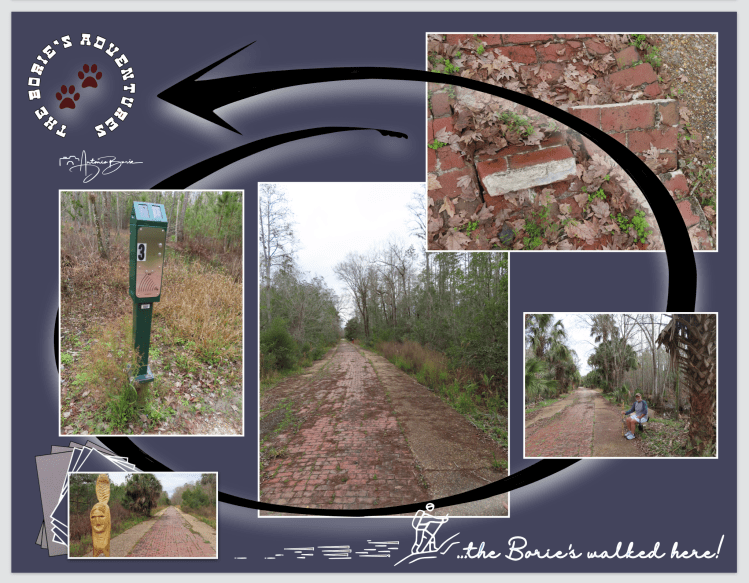
…Trilha interpretativa da Estrada Pershing!. (…Pershing Highway Interpretive Trail!).

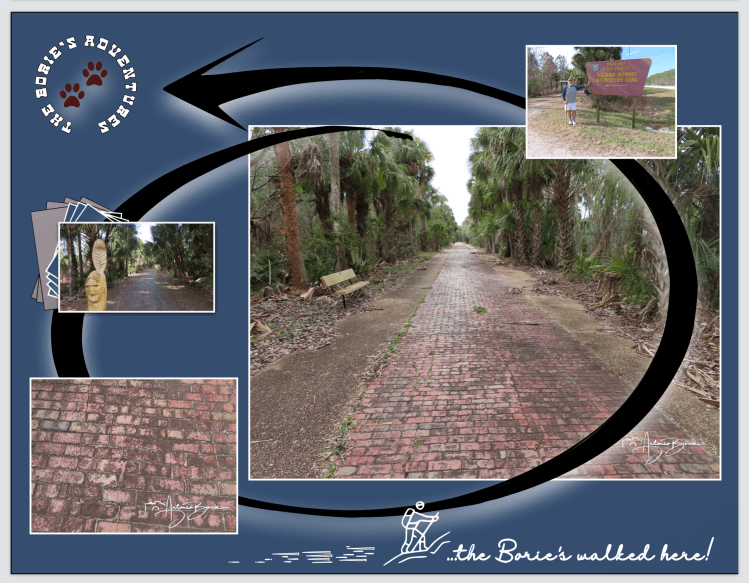
…é uma excelente caminhada localizada na área da cidade de Daytona Beach, com um comprimento de aproximadamente 2,4 milhas de ida e volta e…, para lá chegar podemos seguir pela estrada US 92 para oeste por uma distância de 4.2 milhas até ao semáforo para Indian Lake Road, onde devemos entrar na faixa da esquerda e observar a sinalização do início da trilha no lado oposto da estrada, usando a próxima curva para entrar nas pistas no sentido leste da estrada US 92 para chegar ao início da trilha!. 

…is an excellent hike located in the area of ​​the city of Daytona Beach, with a length of approximately 2.4 miles round trip and…, to get there we can follow US 92 west for a distance of 4.2 miles to the traffic light to Indian Lake Road, where we should enter in the left lane and watch for trailhead signage on the opposite side of the road, using the next turn to enter the eastbound lanes of US 92 to reach the trailhead!.

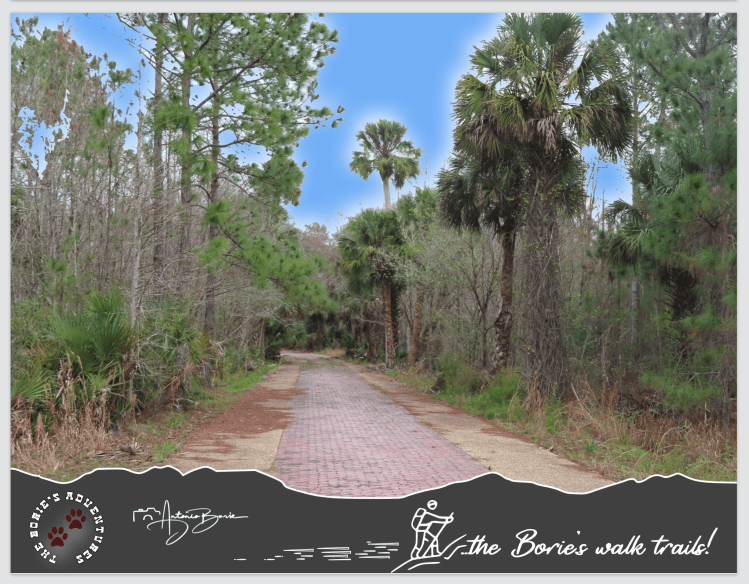
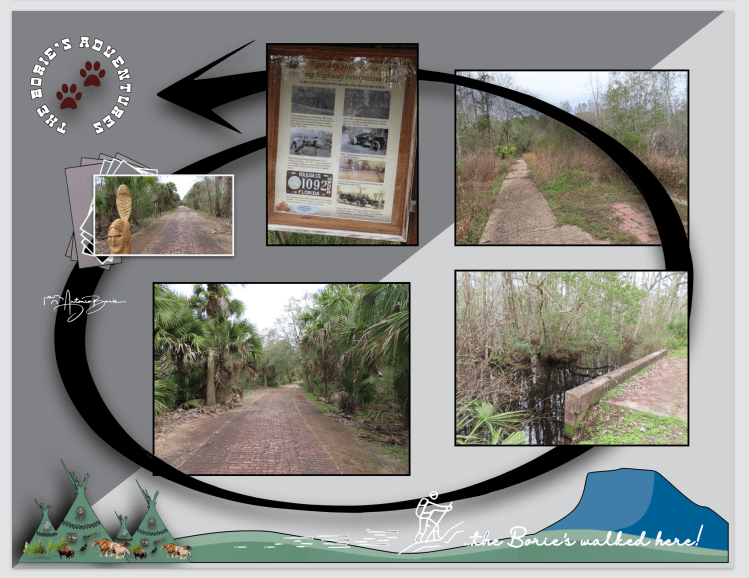
…esta excelente trilha, embora tenha permanecido lá por mais de um século, apenas escondida na floresta ao lado da sua substituta, que é a hoje estrada US 92, no seu início era a Estrada Pershing, que  praticamente desapareceu da memória das pessoas e vai abrindo um túnel numa vasta floresta pantanosa, agora protegida como Tiger Bay State Forest, numa faixa de extensão de estrada de tijolos preservados desde o ano de 1917, oferecendo-nos uma visão do início das viagens de automóvel na Flórida!.

…this excellent trail, although it remained there for more than a century, just hidden in the forest next to its replacement, which is today US Highway 92, at its beginning was the Pershing Road, which has practically disappeared from people’s memory and will Tunneling through a vast swamp forest, now protected as Tiger Bay State Forest, on a stretch of brick road preserved since 1917, offering us a glimpse into the beginning of automobile travel in Florida!.

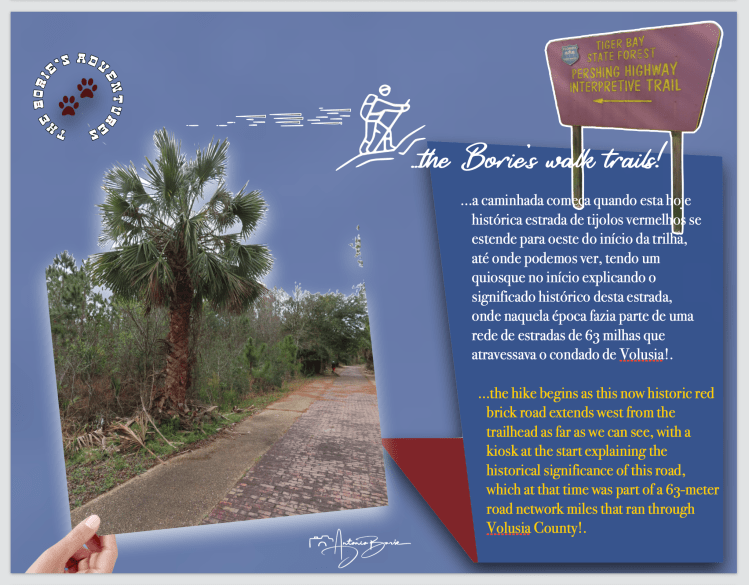
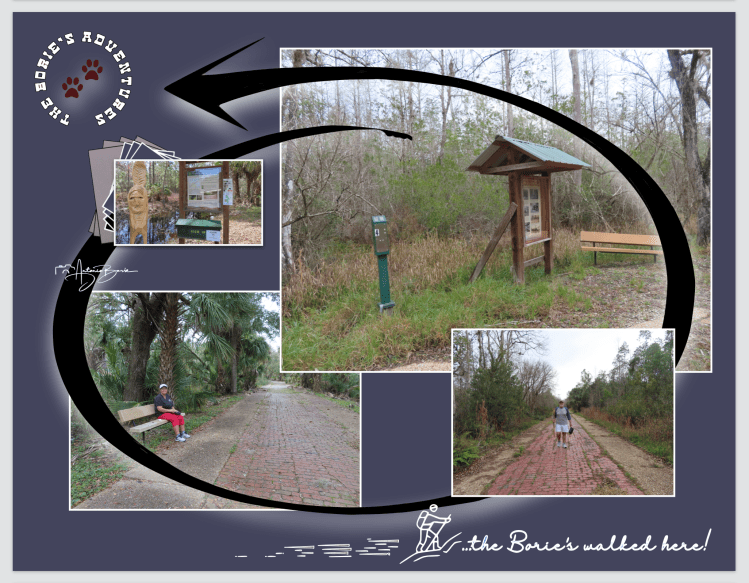
…a caminhada começa quando esta hoje histórica estrada de tijolos vermelhos se estende para oeste do início da trilha, até onde podemos ver, tendo um quiosque no início explicando o significado histórico desta estrada, onde naquela época fazia parte de uma rede de estradas de 63 milhas que atravessava o condado de Volusia!.

…the hike begins as this now historic red brick road extends west from the trailhead as far as we can see, with a kiosk at the start explaining the historical significance of this road, which at that time was part of a 63-meter road network miles that ran through Volusia County!.

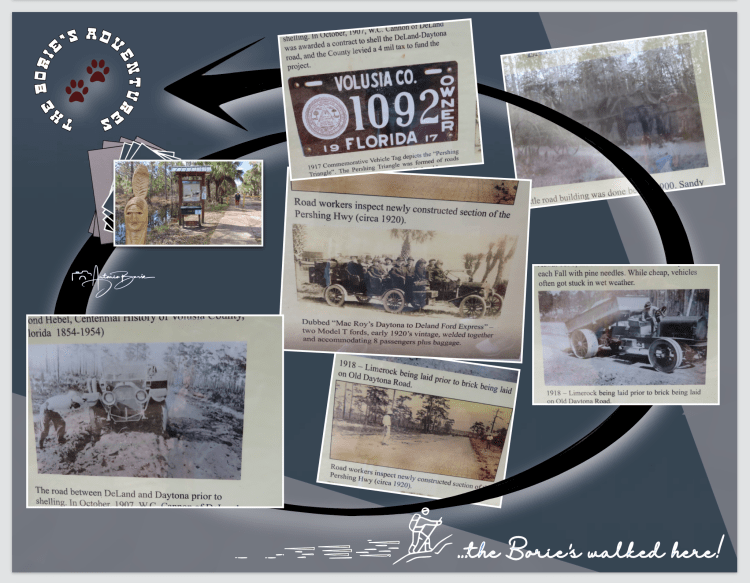
…a história diz-nos que o seu nome foi nomeado em homenagem a um general da Primeira Guerra Mundial com ligações com a área, e claro, a Estrada Pershing depressa atingiu a maioridade, pelo menos para carros na área do Modelo A!. Este segmento específico foi iniciado em 1917 para conectar as cidades de Daytona Beach com DeLand, havendo mesmo outra parte que ia de DeLand a Ormond Beach, conectando-se de volta a Daytona!. Como tal, juntas, elas eram conhecidas como Triângulo de Pershing, uma das primeiras estradas da Flórida, e foram lembradas quando a Tiger Bay State Forest construiu o início desta excelente trilha, que foi também quando esta jóia histórica que estava escondida, finalmente voltou aos holofotes!.

…history tells us that it was named after a World War I general with ties to the area, and of course, the Pershing Road soon came of age, at least for cars in the Model A area! This specific segment was started in 1917 to connect the cities of Daytona Beach with DeLand, there was even another part that went from DeLand to Ormond Beach, connecting back to Daytona!. As such, together they were known as the Pershing Triangle, one of Florida’s first roads, and were remembered when the Tiger Bay State Forest built the beginning of this excellent trail, which was also when this once-hidden historical gem finally returned to the spotlight!.

…naquela época, poucas pessoas possuíam carros!. A estrada tinha apenas a largura da superfície de tijolos, com quase dois metros e meio de largura!. Depois que o trânsito aumentou e os carros precisaram passar uns pelos outros, foi necessário alargar a estrada e assim, flancos de pedra Chattahoochee foram adicionados em ambos os lados!.

…at that time, few people owned cars! The road was only as wide as the brick surface, nearly eight feet wide! After traffic increased and cars needed to pass each other, it was necessary to widen the road and so Chattahoochee stone flanks were added on both sides!.

…depois, anos mais tarde quando a US 92 foi inaugurada no ano de 1947, esta estrada desapareceu da vista e da memória das pessoas, no entanto podemos ver com que facilidade a floresta a recuperou e…, só depois dos devastadores incêndios florestais de 1998 é que foi redescoberta!. Em 2011, tropas escoteiras e voluntários de Daytona limparam o mato para permitir que o serviço florestal a abrisse de novo, agora como uma trilha!.

…then, years later when US 92 was opened in 1947, this road disappeared from people’s sight and memory, however we can see how easily the forest recovered it and…, only after the devastating forest fires of 1998 is that it was rediscovered! In 2011, Boy Scout troops and Daytona volunteers cleared the brush to allow the Forest Service to open it again, now as a trail!.

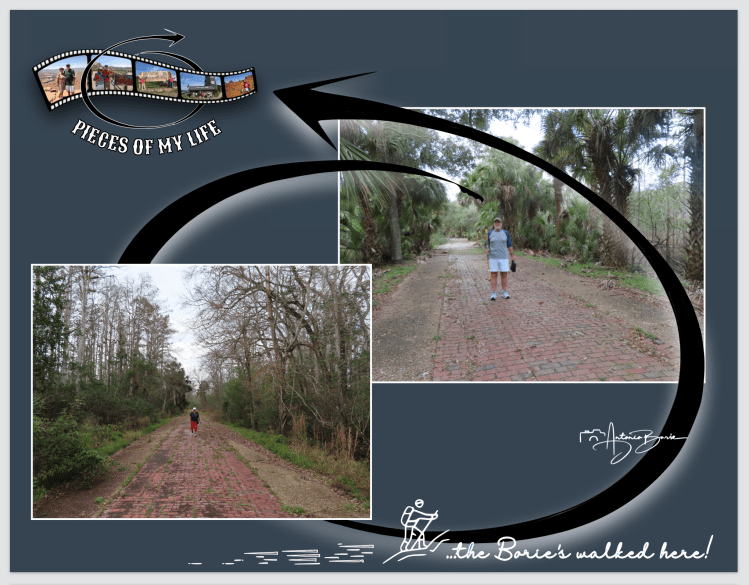
…voltando ao que vimos durante a nossa caminhada, o habitat circundante são florestas de pinheiros, existindo aqui e ali alguns bancos e um marcador de quilometragem que nos aparece após o primeiro quarto de milha e continuam por quarto de milha até o último banco!. A floresta faz a transição para uma planície húmida, com pinheiros e ciprestes e vegetação mista de pântano abaixo!. 

…returning to what we saw during our walk, the surrounding habitat is pine forests, with here and there some benches and a mile marker that appears after the first quarter of a mile and continues for a quarter of a mile until the last bench!. The forest transitions to a moist plain, with pine and cypress trees and mixed swamp vegetation below!.

…depois de alguma distância percorrida, existem duas pequenas pontes que permitem que uns riachos escuros ladeados de ciprestes fluam sob a estrada!. Na trilha também existem algumas curvas lentas onde os salgueiros e algumas palmeiras rasteiras formam uma parede densa em frente aos ciprestes e pinheiros mais altos e quanto mais avançamos, mais selvagem a floresta parece, aglomerando-se de ambos os lados!.

…after some distance covered, there are two small bridges that allow dark streams lined with cypress trees to flow under the road!. On the trail there are also some slow curves where the willows and some low-lying palms form a dense wall in front of the taller cypresses and pines and the further we go, the wilder the forest seems, crowding on both sides!.

…a trilha termina oficialmente num quiosque e banco na marca de 1 milha!. Aqui, podemos ler todas as informações, pois elas falam mais detalhadamente sobre o sistema rodoviário do Pershing Triangle!. Os tijolos continuam passando pelo quiosque e a estrada desmorona no pântano que divide esta histórica estrada da US 92!. 

…the trail officially ends at a kiosk and bench at the 1 mile mark!. Here, we can read all the information as it talks in more detail about the Pershing Triangle road system!. The bricks continue to pass the kiosk and the road collapses into the swamp that divides this historic road from US 92!.

…ufff…, dizem-nos também que já viram ursos ao longo desta excelente trilha!. Nós, felizmente não vimos nenhum!. 

…ufff…, they also tell us that they have seen bears along this excellent trail! We luckily didn’t see any!

Tony Borie, Século XXI. (Tony Borie, 21st Century).

…entrámos na vida de adulto feridos e incuráveis!. (…we entered adult life wounded and incurable)!.

…nós, uma criança da época de quarenta do século passado que nasceu e vivia numa aldeia de montanha, mas perto do mar…, num país da Europa com regime então colonial que, quase a entrar na idade de adulto, foi “arrancado” do lugar onde nasceu, mobilizado, recebido à pressa treino de guerra de guerrilha num campo de treino improvisado e…, obrigado a entrar e navegar para sul, no porão dum navio de carga com destino aos pântanos do Golfo da Guiné, em África, para lutar contra guerrilheiros que queriam a independência dos seus territórios e que…, nunca tinha visto antes e também nada tinha em contra!.

…we, a child from the 40s of the last century who was born and lived in a mountain village, but close to the sea…, in a European country with a colonial regime that, almost reaching adulthood, was “ripped away” from place where he was born, mobilized, hastily received guerrilla warfare training in an improvised training camp and…, forced to enter and sail south, in the hold of a cargo ship bound for the swamps of the Gulf of Guinea, in Africa, to fight against guerrillas who wanted the independence of their territories and who… I had never seen before and had nothing against them either!.

…e, ao fim de dois longos anos…, quando regressámos à Europa vindos dessa maldita Guerra Colonial em África, a família e os vizinhos viam, sabiam, notavam que estávamos diferentes e ainda aterrorizados e algo agressivos…, para nos refugiar do medo que ainda sentíamos…, afastando-nos das pessoas e, sem acreditar que ainda existíamos, perguntávamos a nós mesmos,“que mal fizemos para nunca mais descansar, mesmo quando nos afastamos para um cantinho mais escondido”!.

…and, after two long years…, when we returned to Europe from that damned Colonial War in Africa, our family and neighbors saw, knew, noticed that we were different and still terrified and somewhat aggressive…, to take refuge from the fear that We still felt…, moving away from people and, without believing that we still existed, we asked ourselves, “what wrong did we do to never rest again, even when we moved away to a more hidden corner”!.

…e, pela vida fora o medo que sempre sentimos, principalmente quando nos encontramos entre alguns adultos é doloroso e…, quebrou muito do potencial que sempre nos revestiu até aos dias de hoje e…, nesta já avançada idade continuamos a construir memórias que nos atormentam, no entanto, vamos sobrevivendo e resistindo, embora em alguns momentos sentindo ser “um zero”, principalmente quando recebemos algumas “cagadelas de alguns pássaros predadores, jovens e até adultos, que infelizmente voam e governam no país onde nascemos e por quem cuja bandeira combatemos, que dá pelo nome de Portugal”!.

…and, throughout life, the fear that we have always felt, especially when we find ourselves among some adults, is painful and…, it has broken much of the potential that has always possessed us until today and…, at this advanced age we continue to build memories that give us torment, however, we survive and resist, although at times we feel like we are “a zero”, especially when we receive some “shits” from some predatory birds, young and even adults, who unfortunately fly and govern in the country where we were born and by whom whose flag we fight, which is called Portugal”!

…poderíamos escrever uma centena de frases com a temática do medo, de momentos intensos da Guerra Colonial, marcados a fogo nas entranhas da nossa memória, pegando-se à pele como se uma segunda pele se tratasse, e não era só os ataques mortíferos dos guerrilheiros que nos combatiam, eram também as ferradelas daqueles mosquitos selvagens dos pântanos africanos do golfo da Guiné, onde vinham aos milhares, talvez aos milhões, zumbindo ao redor, mordendo-nos, fazendo-nos sofrer ainda mais, porque vinham às montanhas mais altas que as do Himalaia, todos para cima de nós, parecendo que só nós existíamos por ali!.  

…we could write a hundred sentences with the theme of fear, of intense moments of the Colonial War, burned into the depths of our memory, clinging to the skin as if it were a second skin, and it wasn’t just the deadly attacks of the guerrillas who fought us, were also the stingers of those wild mosquitoes from the African swamps of the Gulf of Guinea, where they came in thousands, perhaps in millions, buzzing around, biting us, making us suffer even more, because they came to the highest mountains than those in the Himalayas, all on top of us, looking like we were the only ones there!.

…todos temos a nossa historia de que vamos deixando marcas no caminho e…, os outros também sofrem, só que para alguns a vida é um autêntico naufrágio e…, pelo meio aparecem aqueles que nos falam na defesa das fronteiras e da terra que dizem ser deles…, como se a terra pertencesse a alguém!. Esses são “uns verdadeiros mausoléus da estupidez”, que continuam a defender as tais fronteiras e os pedaços de terra que não são de ninguém, mas…, infelizmente os homens através dos séculos amaram sempre ser estúpidos!.

…we all have our story that we leave marks along the way and…, others also suffer, but for some life is a real shipwreck and…, in between appear those who speak to us in defense of the borders and the land that they say be theirs…, as if the land belonged to someone! These are “true mausoleums of stupidity”, which continue to defend such borders and pieces of land that belong to no one, but…, unfortunately, men over the centuries have always loved to be stupid!

…e o pior…, é que ainda hoje nos continuamos a refugiar no nosso medo, perguntando ao nosso Deus, que mal fizemos para nunca mais poder descansar, e tal como acima mencionamos, mesmo quando nos afastamos para o nosso cantinho mais escondido, porque os nossos medos continuam a construir a grande travessia da qual somos um sobrevivente duma história muito longa e que a todo o momento nos fazem lembrar as tais “cagadelas de alguns pássaros  predadores, jovens e até adultos, que infelizmente voam e governam no país onde nascemos e por quem cuja bandeira combatemos, que dá pelo nome de Portugal”!.

…and the worst thing…, is that even today we continue to take refuge in our fear, asking our God, what wrong did we do to never be able to rest again, and as we mentioned above, even when we move away to our most hidden corner, because our fears continue to build the great crossing of which we are a survivor of a very long history and which at all times remind us of the “shits” of some predatory birds, young and even adults, that unfortunately fly and govern in the country where we were born and for those whose flag we fight, who goes by the name of Portugal”!.

Tony Borie, Século XXI. (Tony Borie, 21st Century).