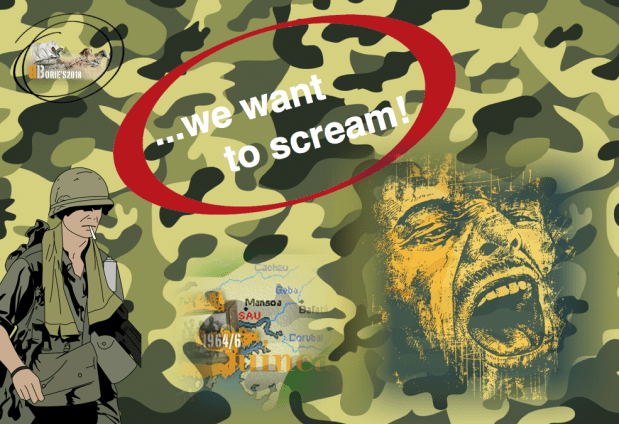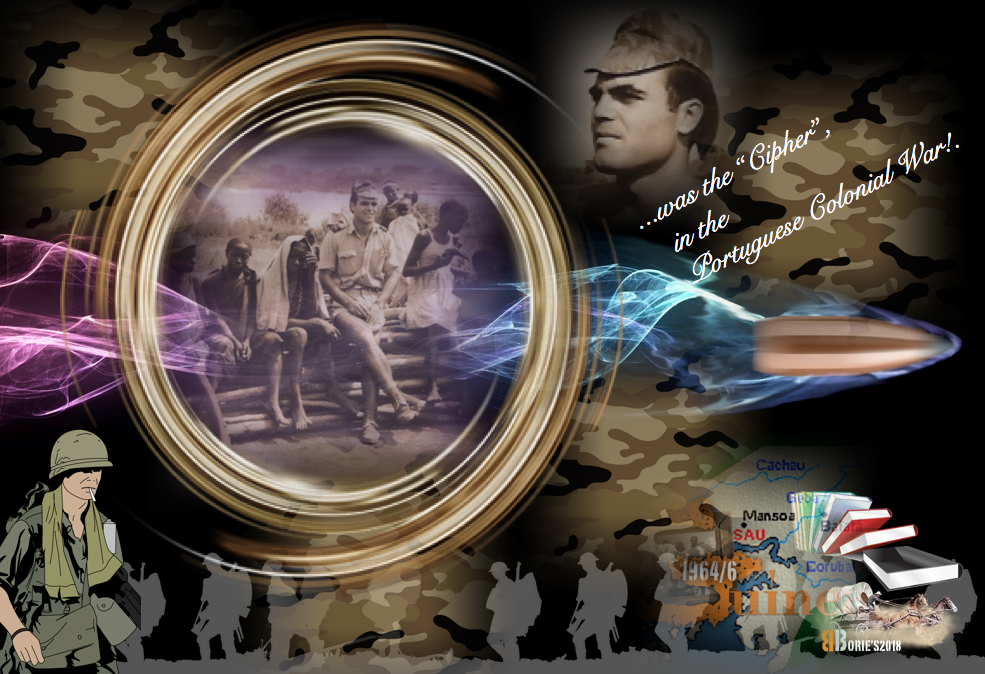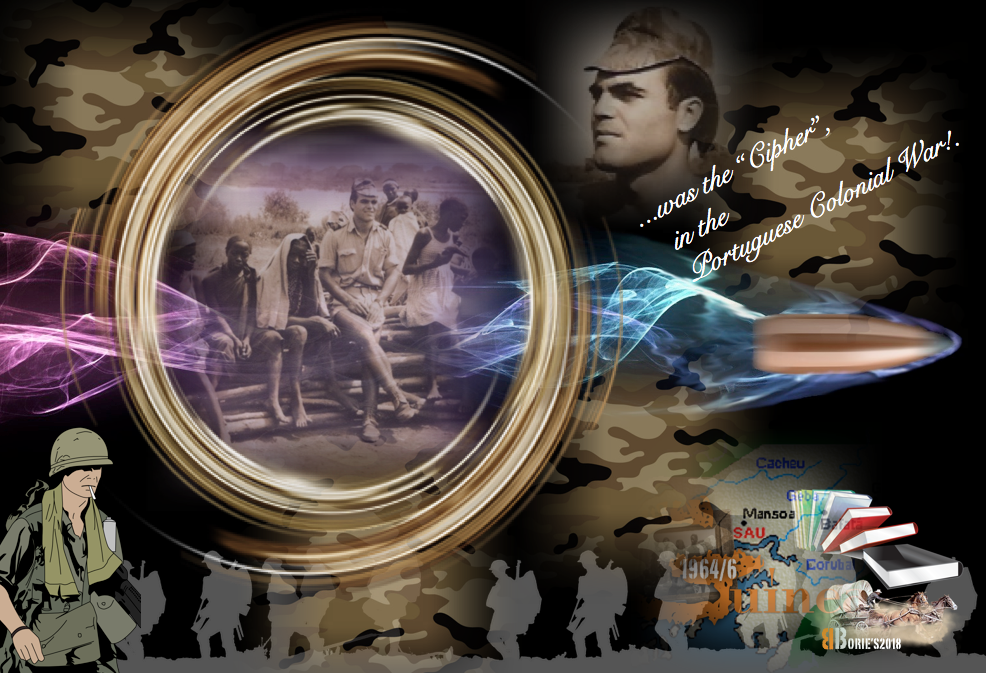
…the uniform were gray, just like our destination!

…the uniform were gray, just like our destination!

…a farda era cinzenta, tal como o nosso destino!. (the uniform were gray, just like our destination)!.

…nós, que participámos na Guerra Colonial Portuguesa em África, sofriamos as emboscadas naquelas savanas tórridas de terra vermelha, naquelas “bolanhas”, (pântanos), ou naqueles malditos bombardeamentos ao aquartelamento, (bombardeamentos rápidos, não duravam mais do que 25 ou 30 minutos, era do género bombardear, matar e fugir), onde o refúgio nos abrigos nos salvavam duma morte, onde um corpo humano podia ficar reduzido a pequenos pedaços!. (we, who participated in the Portuguese Colonial War in Africa, were ambushed in those torrid savannas of red earth, in those “bolanhas” (swamps), or in those damn bombardments to barracks, (rapid bombardments did not last more than 25 or 30 minutes, was to bomb, kill, and flee), where the shelter in the shelters saved us from death, where a human body could be reduced to small pieces)!.

…era uma guerra de guerrilha convencional, com armas convencionais, com tácticas de campo de batalha entre nós, ao serviço do então governo Colonial Português e os guerrilheiros, que lutavam pela independência do seu território!. As forças de cada um dos lados, visavam enfraquecer ou destruir as forças do oponente com armas convencionais e, do nosso conhecimento em cenário de guerra, nunca foram usadas armas químicas, biológicas ou nucleares!. Hoje, infelizmente, talvez já não será assim, no final de uma qualquer guerra, entre países civilizados, tudo ficará destruído, talvez por séculos!. (was a conventional guerrilla war, with conventional weapons, with battlefield tactics among us, at the service of the then Portuguese Colonial Government and the guerrillas, who fought for the independence of their territory! The forces on either side were intended to weaken or destroy the opponent’s forces with conventional weapons, and, to our knowledge in a war scenario, chemical, biological or nuclear weapons have never been used! Today, unfortunately, perhaps it will not be so, at the end of any war, between civilized countries, everything will be destroyed, perhaps for centuries)!.

…sim, por séculos, mas já lá vai mais de meio século, ainda por cá andamos, para contar alguns episódios dessa vivência e, para que sobretudo os jovens nunca, mas mesmo nunca, se envolvam em qualquer esquema ou organização, que termine no começo de uma qualquer guerra, mas hoje vamos deixar o cenário de combate, vamos fazer um pequeno resumo por onde passámos, antes de navegar-mos pelo oceano, rumo a África, tem algumas partes pitorescas, cá vai!. (yes, for centuries, but more than half a century ago, we are still here to tell some episodes of this experience and, especially, that young people never, but never ever, become involved in any scheme or organization that it ends at the beginning of any war, but today we will leave the scene of combat, let’s make a brief summary of where we went, before navigating the ocean, towards Africa, there are some picturesque parts, here it goes)!.
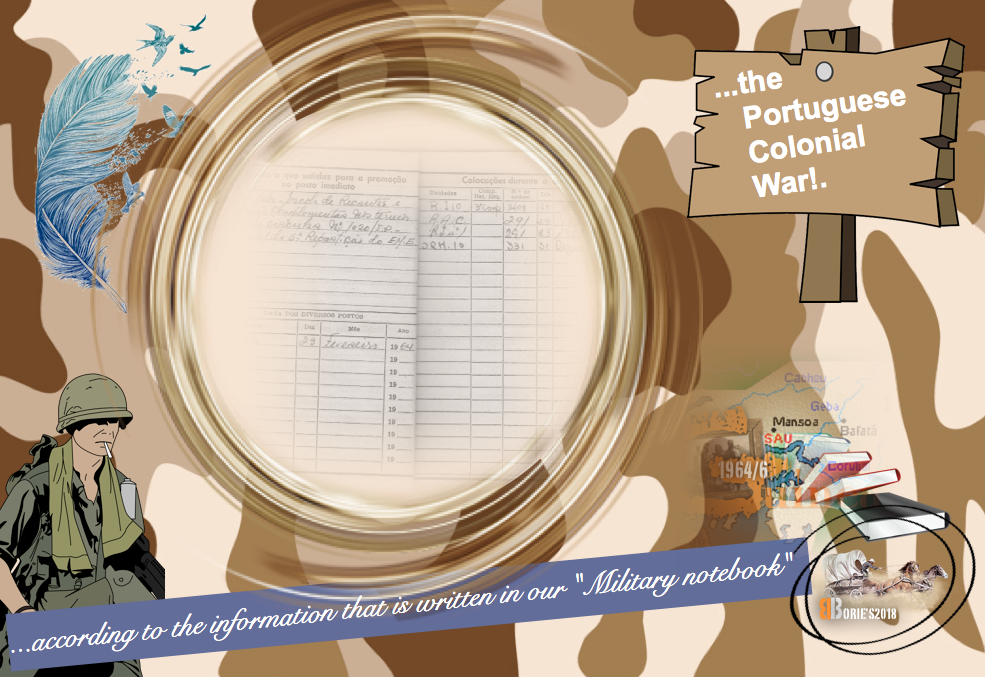
…a farda era cinzenta, feita de pano grosso, tinha que andar sempre ou quase sempre com os botões apertados, podia ser primavera, verão ou inverno!. De acordo com a informação que está escrita na nossa “Caderneta militar”, cuja cópia partilho com todos, “assentámos praça”, no Regimento de Infantaria 10, na cidade de Aveiro, no Quartel de Sá, que era próximo da estação do caminho de ferro, onde terminava o percurso do “nosso combóio”, o tal que acordava as ovelhas no curral, quando passava a toda a velocidade na nossa aldeia do Vale do Ninho d’Águia, lá na encosta agreste da montanha do Caramulo, descendo em direcção ao mar!. (the uniform was gray, made of thick cloth, had to walk always or almost always with the tight buttons, could be spring, summer or winter!. According to the information that is written in our “Military notebook”, whose copy I share with everyone, “we settled squares”, in Infantry Regiment 10, in the city of Aveiro, in Sá Quartel, which was near the station of the where the “our train” ended, the one that woke up the sheep in the corral, when it passed at full speed in our village of the Vale do Ninho d’Águia, (Nest of Eagle Valley), on the rugged slope of Caramulo mountain, descending toward to the sea)!.
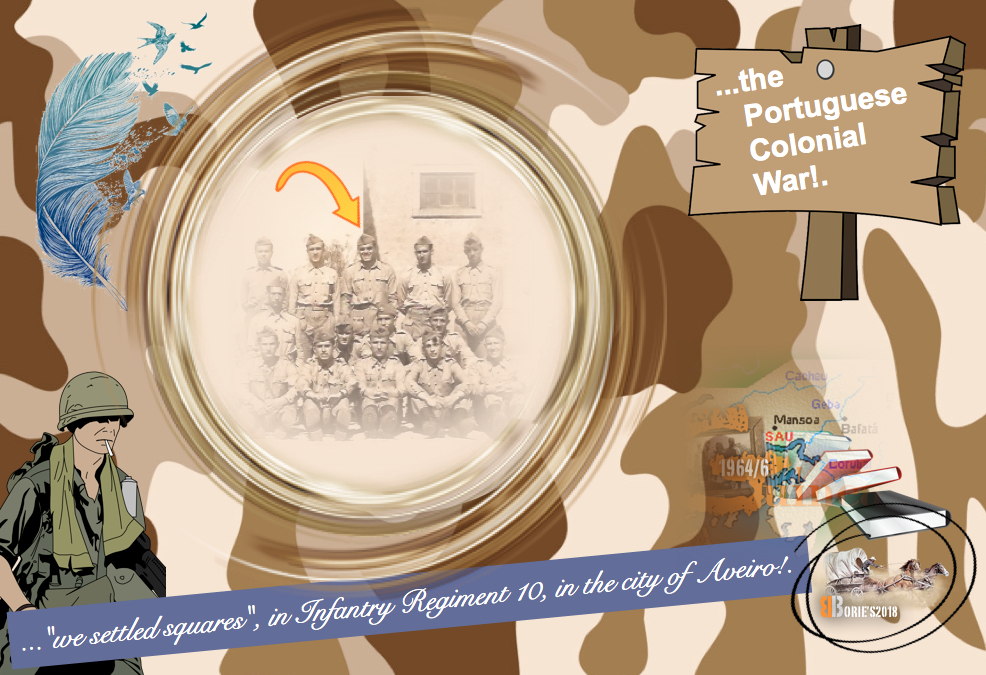
…aquelas instalações, eram as antigas cavalariças, não existia o mínimo de qualidade de vida, recebemos o primeiro treino, que como já mencionámos em outros textos, era ouvir as basófias de um instrutor que tinha regressado de uma comissão em África, de uma província onde já existia o início de guerrilha, portanto ele, justificando a sua experiência, exemplificava em nós, como se devia matar, rápido, com dor ou sem dor, que já não seríamos mais os filhos queridos do pai ou da mãe, agora éramos filhos da nação, prontos a dar a vida pela nação, combatendo, matando o inimigo, fuzilando-o, antes que o inimigo nos fuzile a nós!. (these facilities were old stables, there was no minimum quality of life, we received the first training, which as we have already mentioned in other texts, was to listen to the basophils of an instructor who had returned from a commission in Africa, from a province where there was already a guerrilla beginning, so he, justifying his experience, exemplified in us how to kill, fast, with pain or without pain, that we would no longer be the beloved sons of the father or the mother, now we were children of the nation, ready to give their lives for the nation, fighting, killing the enemy, shooting him, before the enemy fires at us)!.
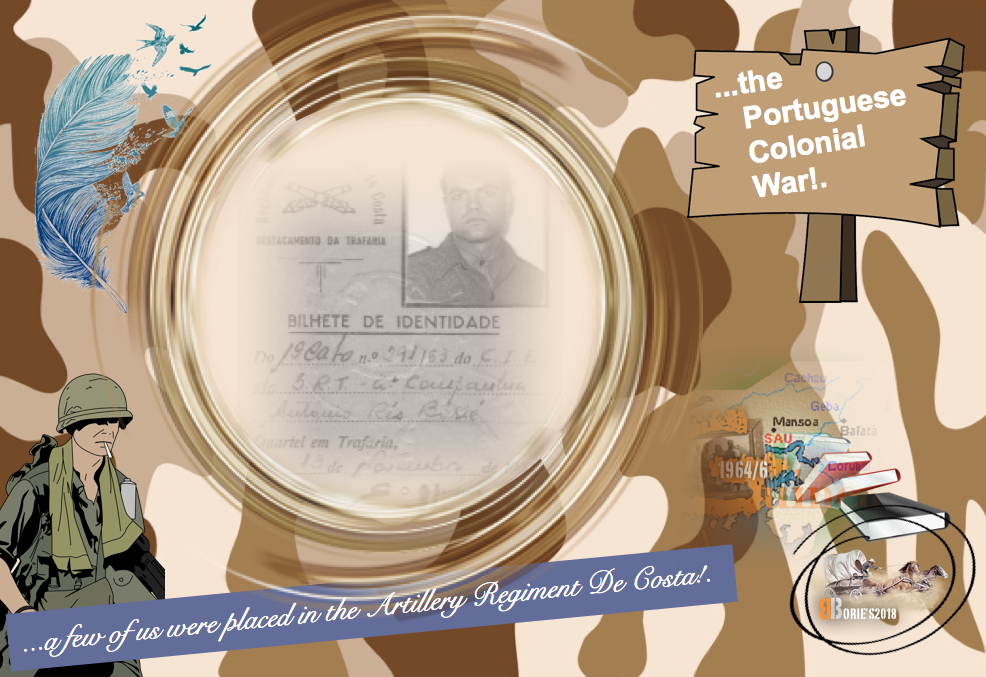
…uns meses depois, num “combóio especial”, só com militares, viajámos para a capital do Território Continental Português, que era a cidade de Lisboa!. Uns tantos de nós, fomos colocados no Regimento de Artilharia De Costa, do outro lado do Rio Tejo, na vila da Trafaria, de onde guardamos algumas boas e más recordações. As boas eram o conforto dos “Primos de Lisboa” e de um Sargento bonacheirão, que nos levava a receber instrução psicológica, na floresta, com vista para o Rio Tejo, dizendo-nos que a nossa bandeira era a nossa Pátria e a nossa mãe, que nos devíamos sentir bem pensando assim, pois o nosso País Colonial era o nosso orgulho!. Alguns de nós, aqueles oriundos das cidades, diziam-nos para desfrutar-mos da paisagem e não levar a sério as palavras do bom do sargento, que de vez em quando bebia algo de uma contenda que guardava dentro da sua camisa!. As outras recordações, as más, eram as caminhadas e os exercícios na margem do Rio Tejo, orientadas por outro militar que também tinha regressado de uma comissão na província da Angola, que tinha sido campeão de maratona!. (a few months later, in a “special convoy”, only with the military, we traveled to the capital of the Portuguese Continental Territory, which was the city of Lisbon!. A few of us were placed in the Artillery Regiment De Costa, on the other side of the Tagus River, in the village of Trafaria, where we keep some good and bad memories. The good ones were the comfort of the “Cousins of Lisbon” and a nice sergeant, who took us to receive psychological instruction, in the forest, overlooking the Tagus River, telling us that our flag was our Motherland and our mother, that we should feel good thinking like this, because our Colonial Country was our pride!. Some of us from the cities told us to enjoy the scenery and not take seriously the words of the sergeant’s good that he drank something from time to time from a quarrel he kept inside his shirt! The other memories, the bad ones, were the walks and exercises on the banks of the River Tagus, guided by another military man who had also returned from a commission in the province of Angola, which had been a marathon champion)!.

…aqui recebemos a instrução para exercermos a tarefa de Operador Cripto, com a máxima classificação final, com a promessa de que nunca iríamos para ao tal cenário de guerra em África, pois o nosso destino seria dar instrução ao novos instruendos!. Atravessámos de novo o Rio Tejo, em direcção à província do Alentejo, para exercer um treino final no Quartel General da cidade de Évora, onde era agradável o cenário, com planícies, uma cidade dentro de uma fortificação romana, onde havia ruas pequenas com escadarias em pedra, pequenas tavernas, com comida regional, onde era agradável ouvir as pessoas contando histórias de cavalos, touradas e cavaleiros importantes, que tinham brilhado em praças de touros em Espanha!. (here we received the instruction to carry out the task of Operator Cripto, with the highest final classification, with the promise that we would never go to such a scenario of war in Africa, because our destiny would be to instruct the new instructors! We crossed the Tagus River again towards the province of Alentejo to perform a final training session at the General Headquarters of Évora, where the scenery was pleasant, with plains, a city inside a Roman fortification where there were small streets with staircases in stone, small taverns, with regional food, where it was pleasant to hear people telling stories of horses, bullfights and important knights who had shone in bullrings in Spain)!.
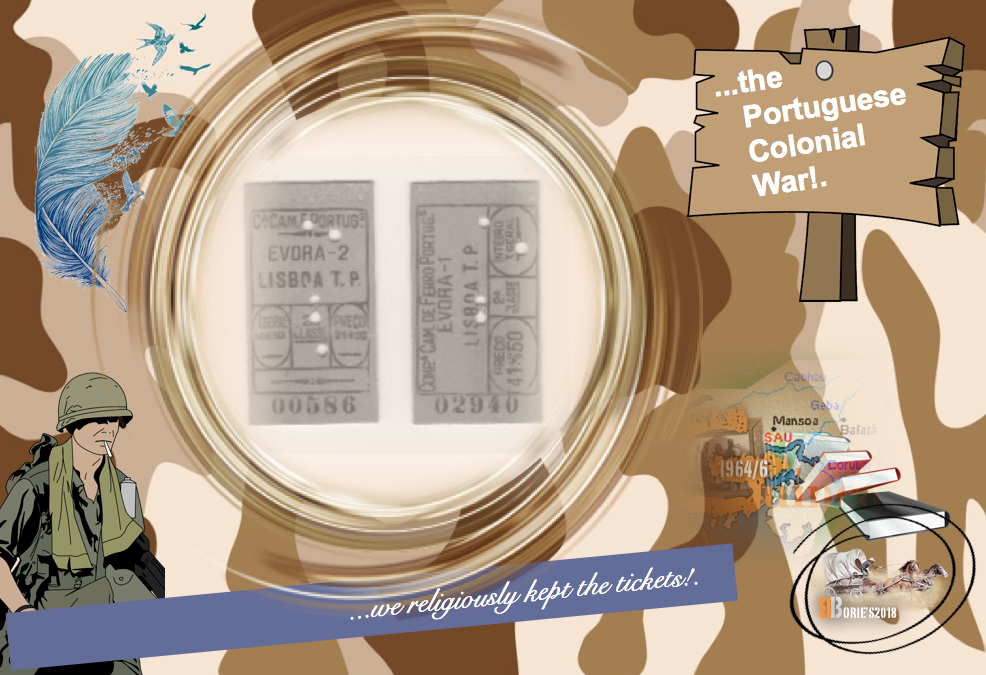
…acabando o treino final, de novo viajando de combóio, regressamos à capital, à cidade de Lisboa, (guardamos religiosamente os bilhetes), onde fomos colocados no Estado Maior do Exército, exercendo as nossas tarefas decifrando e cifrando mensagens que vinham das Províncias Ultramarinas!. Éramos uns previligiados, pois concederam-nos um salvo conduto, onde éramos livres de vaguear pela cidade sem qualquer interferência de qualquer polícia militar, assim eram muitas as vezes que visitávamos a casa dos “Primos de Lisboa”, sentindo-nos quase como na nossa aldeia do Vale do Ninho d’Águia!. (finishing the final training, again traveling by train, we returned to the capital, to the city of Lisbon, (we religiously kept the tickets), where we were placed in the Army General Staff, performing our tasks deciphering and encrypting messages that came from Overseas Provinces!. We were privileged because they granted us a safe passage, where we were free to roam the city without any interference from any military police, so we often visited the house of the “Cousins of Lisbon”, feeling almost like ours village of the Valley of the Eagle’s Nest)!.

…aqui na cidade de Lisboa, temos um segredo, passado no Mosteiro dos Jerónimos!. Nós estávamos alojados no Depósito Geral de Adidos, no bairro de Belém, quase junto ao Mosteiro e, num certo domingo, andando por ali, com roupa civil, na companhia do Torres, militar também oriundo do norte, tal como nós, jovens, com uns sapatos muito bem engraxados, uma camisa de manga curta, onde sobressaím alguns “músculos”, vendo uma cerimónia de casamento que entrava no Mosteiro, juntámo-nos aos convidados, assistimos a toda a cerimónia, o Torres ia falando com alguns convidados, familiarizando-se ao ponto de no final, seguirmos no carro de um qualquer casal, onde o Torres não parava de falar coisas do noivo, pronunciando o seu nome, pois tinha ouvido o referido nome no momento da cerimónia!. Lá fomos para uma quinta na região da cidade de Sintra, onde não faltava comida e, tal foi o descaramento do Torres que a certa altura, andou a dançar com a noiva!. Para completar o cenário, quando nos despedimos, ele, o Torres, pediu uma garrafa de champanhe para o caminho!. Sem nos aperceber-mos, estávamos à boleia para a cidade Lisboa, já um pouco tontos sobre influência da bebida e, com uma garrafa de champanhe nas mãos!. Nós, hoje sentimos duas versões desta aventura, orgulho e um pouco de vergonha!. (here in the city of Lisbon, we have a secret, spent in the Jeronimos Monastery!. We were housed in the General Adidas Warehouse, in the neighborhood of Belém, almost next to the Monastery, and on a certain Sunday, walking there, in civilian clothes, in the company of Torres, a military man also from the north, just like us, very well-polished shoes, a short-sleeved shirt, where a few “muscles” stood out, saw a wedding ceremony that entered the Monastery, joined the guests, attended the whole ceremony, Torres spoke with some guests, to the point that at the end, we would follow in the car of any couple, where Torres would not stop talking about the groom’s words, pronouncing his name, because he had heard the name at the time of the ceremony!. There we went to a farm in the region of the city of Sintra, where there was no shortage of food and, such was the brazenness of Torres who at one point, danced with the bride!. To complete the scenario, when we said goodbye, he, Torres, ordered a bottle of champagne for the way!. Without realizing it, we were on the road to Lisbon, already a little dizzy over the influence of the drink, and with a bottle of champagne in our hands! We, today feel two versions of this adventure, pride and a little shame)!.
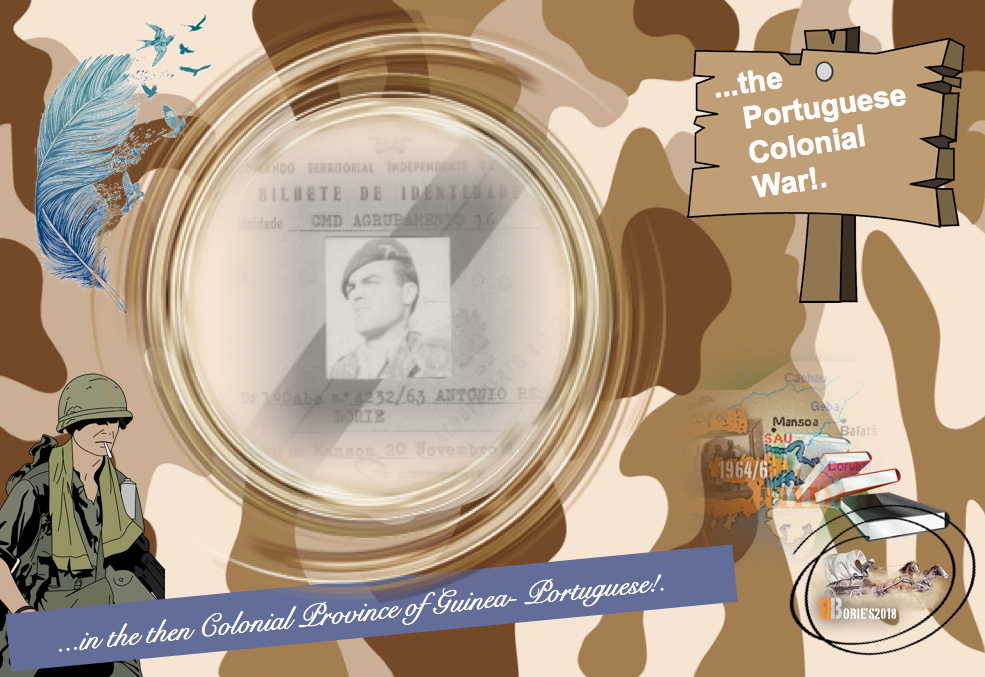
…a seguir, é o início do conflito na então Província Colonial da Guiné Portuguesa, onde existia um grupo organizado e armado, que lutava pela independência do seu território, iniciando uma guerra de guerrilha, traiçoeira, mortífera, tentando expulsar os Portugueses oriundos da Europa, que por ali governavam há algumas centenas de anos, que foi o motivo para a nossa imediata mobilização, embarque e, deslocação para um cenário de combate!. (is the beginning of the conflict in the then Colonial Province of Guinea- Portuguese, where there was an organized and armed group that fought for the independence of its territory, initiating a guerrilla war, treacherous, deadly, trying to expel the native Portuguese of Europe, who ruled there for some hundreds of years, which was the reason for our immediate mobilization, embarkation, and travel to a combat scenario)!.

Tony Borie, April 2018.
…London!

…London!

…Londres!. (London)!.

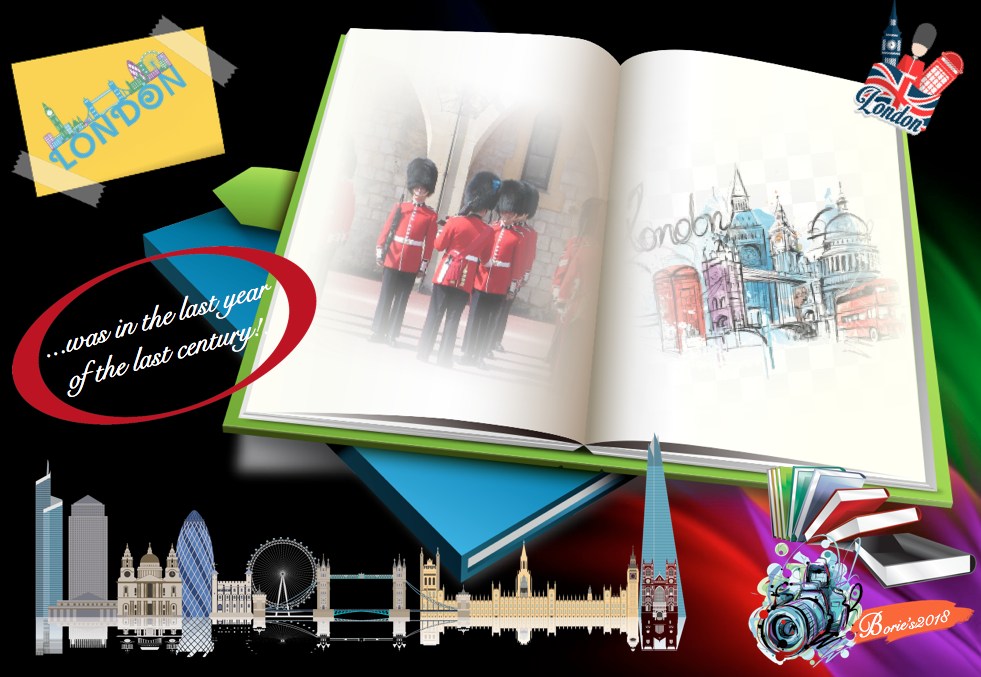
…já lá vão uns anos!. Foi no último ano do século passado que, visitámos a cidade de Londres, em Inglaterra!. A nossa expectativa era grande, pois um nosso companheiro de trabalho, oriundo de Inglaterra, não parava de nos dizer maravilhas da cidade de Londres!. (It’s been years!. Was in the last year of the last century, that we visited the city of London in England!. Our expectation was great, as one of our fellow-travelers from England, kept telling us the wonders of the city of London)!.

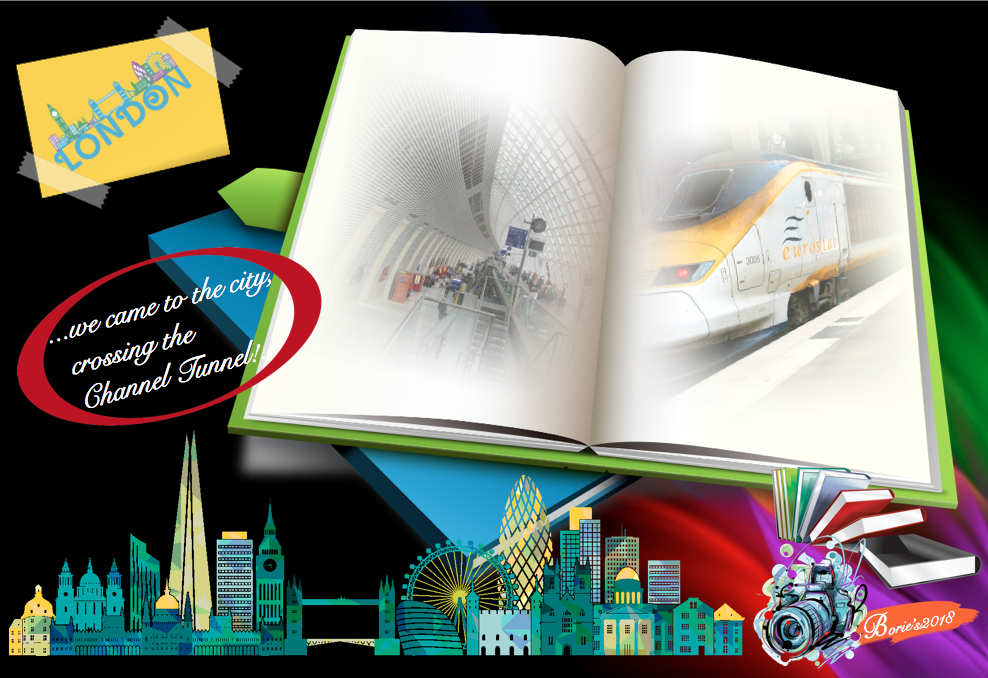
…chegámos à cidade, atravessando o túnel do Canal da Mancha, que é um braço de mar que faz parte do oceano Atlântico, que separa a ilha da Grã-Bretanha do norte de França, unindo o mar do Norte ao oceano Atlântico, viajando no combóio rápido, (Eurostar), que atravessa este canal na área mais estreita, que normalmente chamam, o Estreito de Dover, oriundos da cidade de Paris em França, para onde viajámos uns dias antes!. (We came to the city, crossing the Channel Tunnel, which is an arm of the sea that forms part of the Atlantic Ocean, which separates the island of Great Britain from the north of France, joining the North Sea to the Atlantic Ocean, traveling in the fast train (Eurostar), which crosses this channel in the narrower area, which they usually call the Straits of Dover, from the city of Paris in France, where we traveled a few days before!.

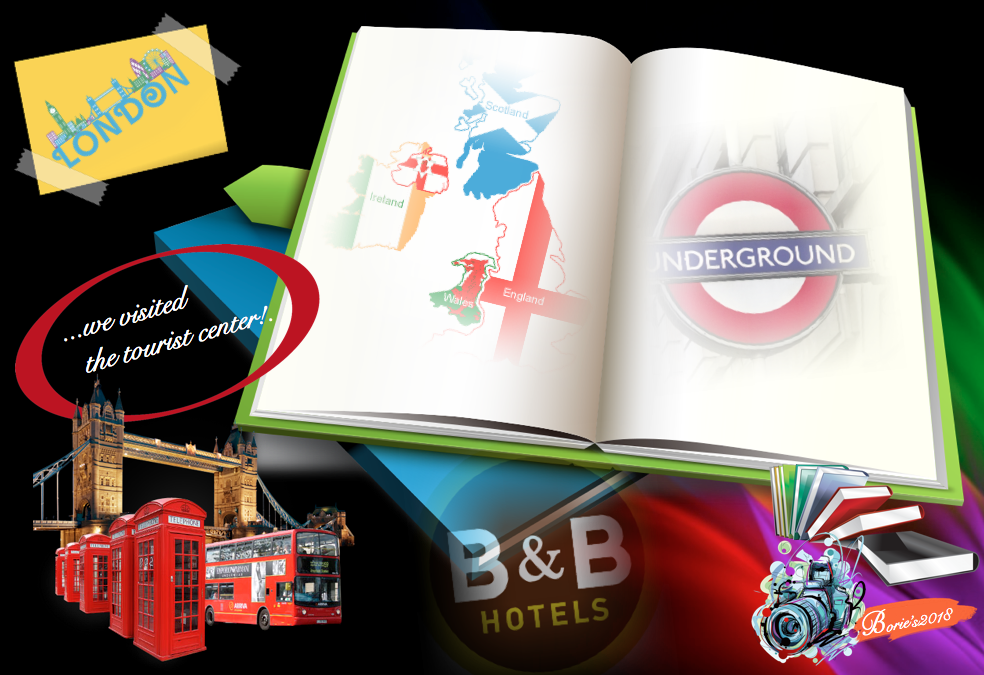
…ainda nos USA, visitámos o centro de turismo de Inglaterra na cidade de Nova Iorque, colhendo alguma informação, inclusive marcando reserva em determinado hotel na cidade, que nos recomendaram, pois a sua localização era próximo de quase todas as atracções na cidade, com algum interesse para um visitante na nossa situação, que nada ou quase nada sabíamos da cidade de Londres!. (Still in the USA, we visited the tourist center of England in New York City, picking up some information, including booking a certain hotel in the city, which we were recommended as its location was close to almost all the attractions in the city , with some interest for a visitor in our situation, who knew nothing or almost nothing of the city of London)!.

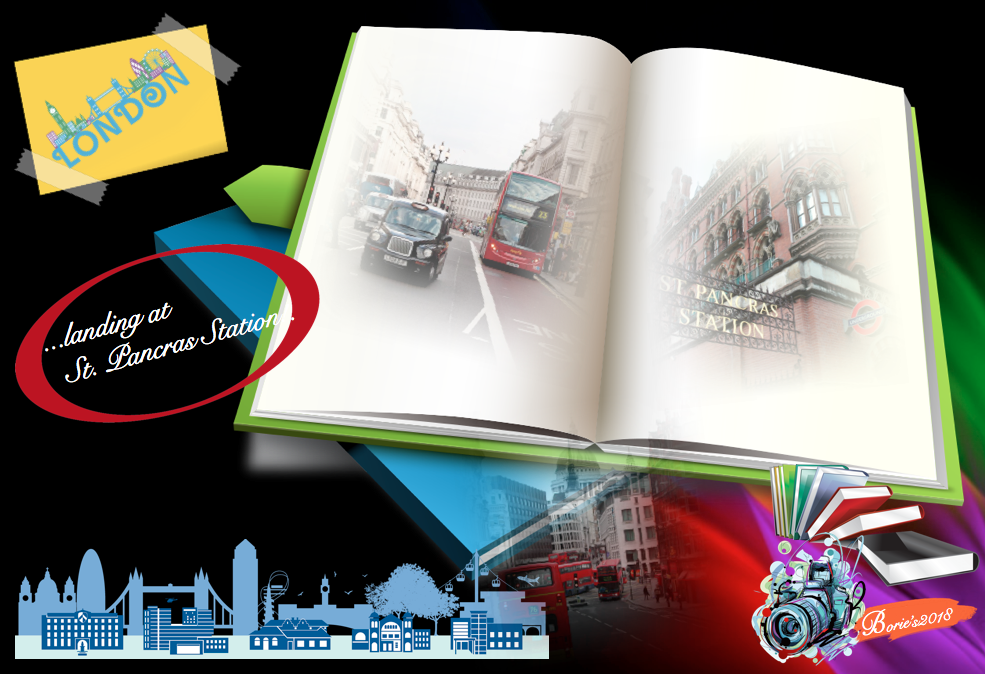
…desembarcando na estação de St. Pancras, localizada ao norte do centro comercial da cidade de Londres, relativamente próxima do nosso destino, depois das formalizações alfandegárias, tomámos um táxi, que logo nos despertou a nossa curiosidade, pois o condutor, com muita gentileza, usando luvas brancas, colocou a nossa bagagem na parte trazeira do veículo, abriu-nos a porta, que abrem para o lado esquerdo, conduzindo também pelo lado esquerdo da faixa de rodagem, o que nos causava alguma confusão!. (Landing at St. Pancras station, located north of the commercial center of the city of London, relatively close to our destination, after the customs formalizations, we took a taxi, which soon aroused our curiosity, since the driver, with very kindly, wearing white gloves, put our luggage in the back of the vehicle, opened the door, which open to the left side, also driving on left side of the road, which caused us some confusion)!.

…no hotel, que era de regime B&B (cama e pequeno almoço), a pessoa responsável, sabendo-nos oriundos do lado de cá do oceano Atlântico, possívelmente recordando a história da luta pela independência dos USA, que antes era uma Colónia da Inglaterra, instalou-nos no último andar do edifício, tendo que subir umas tantas escadas em caracól!. (At the hotel, which was a B & B (Bed and Breakfast) regime, the responsible person, knowing us coming from here on the Atlantic Ocean, possibly recalling the history of the struggle for independence of the USA, which was once a colony of England, installed us on the top floor of the building, having to climb a few stairs in snail)!.

…a pessoa simpática do táxi, cedeu-nos toda a informação, ou quase toda que necessitávamos, para permanecer algum tempo na cidade, incluindo o número e destino dos autocarros públicos, as estações do metropolitano, como chegar aos pontos mais importantes, portanto começámos a vaguear pela cidade, tendo por primeiro destino a Torre de Londres!. (The nice person in the taxi gave us all the information, or almost all we needed, to stay in the city for some time, including the number and destination of public buses, the metro stations, how to get to the most important points, so we began to roam the city, having first destination the Tower of London)!.

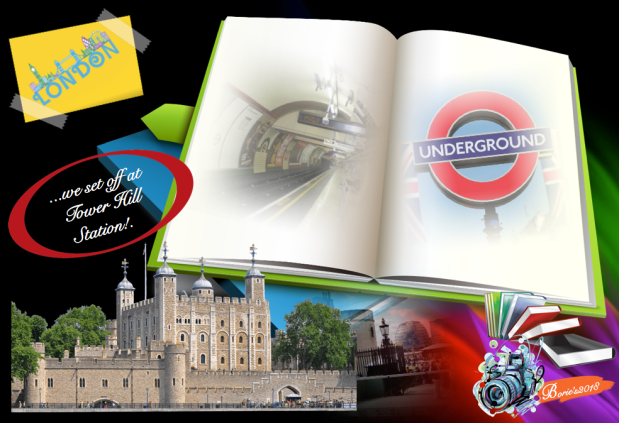
…viajando no Metro (Underground), saímos na estação de Tower Hill, subindo na escada rolante até á superfície!. (Traveling Underground, we set off at Tower Hill station, climbing the escalator to the surface)!.

…caminhando para a área da Torre de Londres, onde já por ali havia pessoas, distribuindo programas com oferta de itinerário para uma visita, com pormenores!. (walking to the Tower of London area, where people were already there, distributing programs offering itinerary for a visit with details)!.

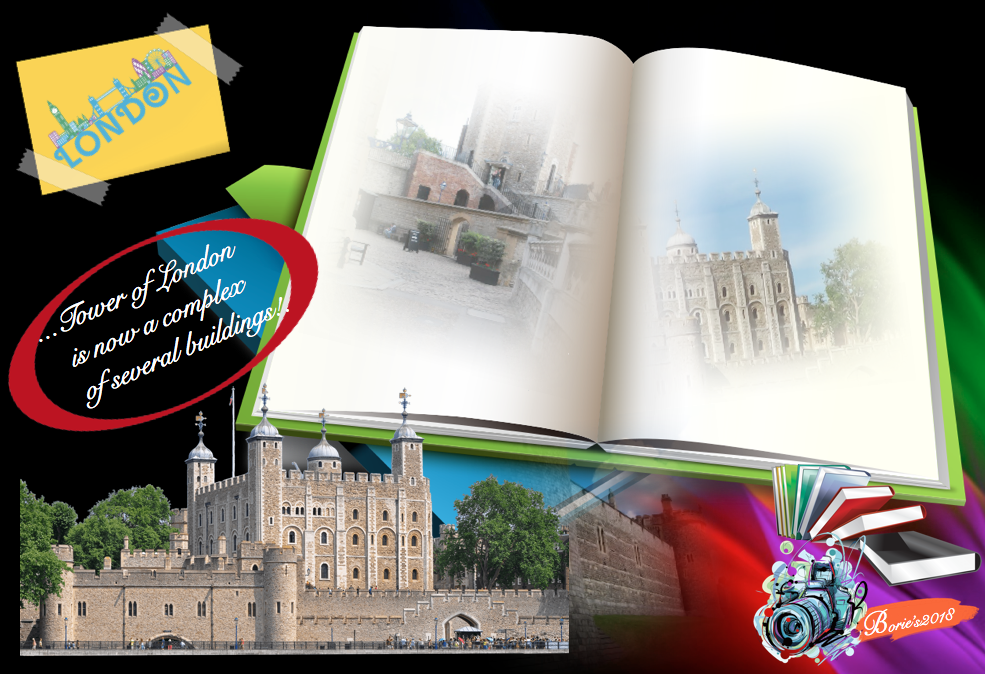
…dizendo-nos que a Torre de Londres é hoje um complexo de vários edifícios situados dentro de dois anéis concêntricos de paredes defensivas e um fosso!. (telling us that the Tower of London is now a complex of several buildings situated within two concentric rings of defensive walls and a moat)!.

…mais adiante, comprámos os bilhetes, seguindo uma extensa fila, onde alguém, trajando roupa de guarda real, nos foi explicando que, esta Fortaleza da Torre de Londres, é um castelo histórico, localizado na margem norte do Rio Tamisa, mas oficialmente é o Palácio Real de Sua Majestade!. Fomos andando, parando aqui e ali, o guarda real ia explicando que, esta Fortaleza foi fundada no final do ano de 1066, como parte da conquista normanda da Inglaterra!. (Later we bought the tickets, following an extensive line, where someone in royal guard clothing explained to us that this Tower of London Fortress is a historic castle, located on the north bank of the River Thames, but officially it is the Royal Palace of His Majesty!. We were walking, stopping here and there, the royal guard was explaining that, this Fortress was founded at the end of the year 1066, as part of the Norman conquest of England)!.

…que a Torre Branca, que dá nome a todo o castelo, foi construída por Guilherme, o Conquistador, no ano de 1078 e, era um símbolo ressentido da opressão infligida a Londres pela nova elite governante, no entanto houve várias fases de expansão, principalmente sob os reis Ricardo I, Henrique III e Eduardo XIII!. (that the White Tower, which gives name to the whole castle, was built by William the Conqueror, in the year 1078 and was a resentful symbol of the oppression inflicted on London by the new ruling elite, however there were several stages of expansion, especially under the kings Richard I, Henry III and Edward XIII)!.

…mais adiante, quase quando já deixávamos esta Fortaleza, esta simpática personagem, continuava falando, fazendo gestos estudados de representação, dizendo bem alto com sotaque na voz típico de Inglaterra que, este castelo foi usado como prisão por alguns séculos, embora este não fosse o seu objectivo principal, pois este grande palácio, no início da sua história serviu como residência real!. (Further on, almost as we left this Fortress, this nice character, he continued to speak, making gestures of representation, loudly accented by the voice typical of England, that this castle was used as a prison for a few centuries, although this was not the its main purpose, since this great palace at the beginning of its history served as royal residence)!.

…a Ponte da Torre de Londres, era já ali, fomos vê-la, construída sobre o Rio Tamisa por volta do ano de 1894, é um dos pontos que qualquer visitante desta cidade não perde a oportunidade de apreciar, é conhecida como uma das mais famosas pontes do mundo!. (The Tower Bridge of London, it was already there, we went to see it, built on the River Thames around the year 1894, is one of the points that any visitor of this city does not miss the opportunity to appreciate, is known as one of the most famous bridges in the world)!.

…subimos ao seu interior, onde se encontra parte de uma exposição permanente sobre a sua história, explicam-nos que as suas básculas não mais dependem das máquinas a vapor, pois um moderno sistema eletrónico é responsável por essa tarefa, contudo, o antigo mecanismo ainda pode ser apreciado, na antiga sala de máquinas da ponte!. Do seu interior, podemos disfrutar de um belíssimo cenário sobre o Rio Tamisa!. (We go up inside, where part of a permanent exhibition on its history, explain to us that its scales no longer depend on steam engines, because a modern electronic system is responsible for this task, however, the old mechanism still can be enjoyed in the old engine room of the bridge!. From the inside, we can enjoy a beautiful scenery on the River Thames)!.

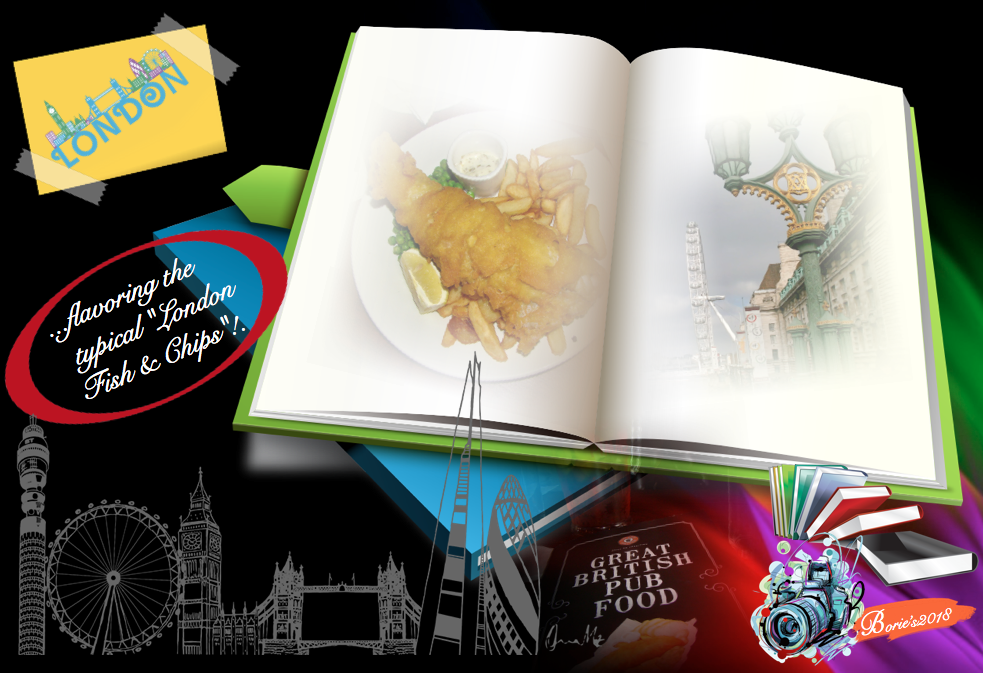
…atravessando a ponte no seu total, caminhámos na beira do Rio Tamisa, apreciando algumas outras pontes, o movimento de algumas docas, parando num café esplanada, saborendo o típico “London Fish & Chips”, que consiste num filete de peixe e batatas fritas, alguns vegetais com um molho, que varia da especialidade do local onde é servido!. (Crossing the bridge in its totality, we walked on the banks of the River Thames, enjoying some other bridges, the movement of some docks, stopping in a café terrace, flavoring the typical “London Fish & Chips”, consisting of a fillet of fish and potato chips, some vegetables with a sauce, which varies from the specialty of the place where it is served)!.

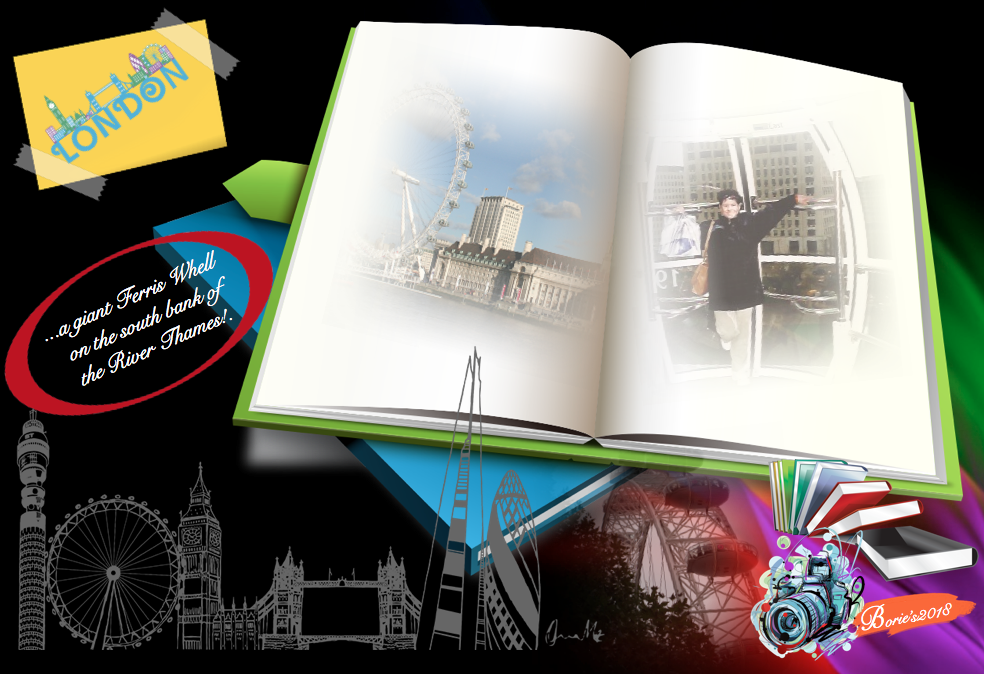
…mais à frente parámos na, naquela ocasião nova atracção, que era a ainda não inaugurada, mas que já funcionava, “London Eye”, (conhecida por motivos de patrocínio como a Coca-Cola London Eye)!. (Further on we stopped at the new attraction, which had not yet been inaugurated, but that already worked, “London Eye”, (known for sponsorship reasons as the Coca-Cola London Eye)!.

…uma Roda Gigante, na margem sul do Rio Tamisa, que também naquela ocasião era a mais alta Roda do mundo, com uma estructura de 443 pés (135 m) de altura, que nos ofereceu um ponto de observação lindíssimo de grande parte da cidade!. (a giant Ferris Whell on the south bank of the River Thames, which at that time was also the highest Ferris in the world, with a structure of 443 feet (135 m) high, which offered us a beautiful observation point of much of the city)!.

…no próximo dia, viajando no metro (Underground), saímos na estação de Piccadilly Circus, que se situa bebaixo da praça com o mesmo nome, que é um entroncamento rodoviário e espaço público do West End de Londres, na cidade de Westminster. Picadilly Circus, é um espaço aberto e redondo, numa junção de ruas, ligando directamente aos teatros da Avenida Shaftesbury, bem como ao Haymarket, Ruas Coventry e Glasshouse, ficando perto das principais áreas comerciais e de entretenimento do West End!. (The next day, traveling in the Underground, we leave at the station of Piccadilly Circus, which is located under the square with the same name, which is a road junction and public space of the West End of London in the city of Westminster. Picadilly Circus is an open, round space at a junction of streets linking directly to the Shaftesbury Avenue theaters as well as the Haymarket, Coventry Streets and Glasshouse, and is close to the of West End entertainment)!.

…é um local de encontro movimentado, sendo uma atracção turística por si só, particularmente conhecido por neste local existir uma enorme tela de vídeo e sinais de néon, montados num prédio de esquina no lado norte, bem como a fonte memorial Shaftesbury e sua estátua, que é muito popular, estando rodeado por vários edifícios notáveis, incluindo o London Pavilion ou o Criterion Theatre!. (It is a bustling gathering place, being a tourist attraction by itself, particularly known for there being a huge video screen and neon signs, set up in a corner building on the north side, as well as the Shaftesbury memorial fountain and its statue, which is very popular, surrounded by several notable buildings, including the London Pavilion or the Criterion Theater)!.

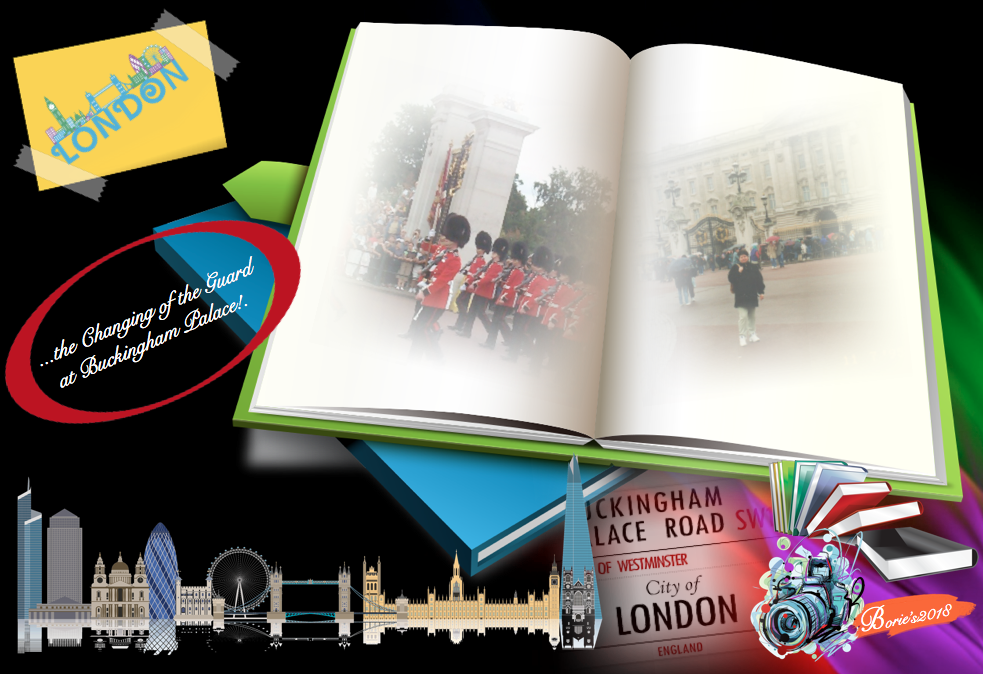
…por aqui passamos algum tempo, caminhando pela Avenida Piccadilly, em direcção ao Parque Verde, que atravessámos para ir ver a Troca da Guarda no Palácio de Buckingham, que é um programa que mais visitantes atrai em Londres!. (We spent some time here, walking down Piccadilly Avenue towards Green Park, which we went through to see the Changing of the Guard at Buckingham Palace, which is a program that attracts more visitors in London)!

…é uma cerimónia curta, gratuita, mas temos que chegar com uma certa antecedência, tentando ficar perto dos portões, pois durante a cerimónia, que acontece na entrada principal do Palácio de Buckingham, os guardas responsáveis da segurança do Palácio são substituídos de uma maneira muito especial, acompanhados por uma Banda Musical Militar!. Tem uma duração de aproximadamente 45 minutos, durante os quais os guardas coroados com enormes chapéus de pelo, realizam um desfile ao ritmo de diferentes músicas, tanto militares, como de outros estilos mais actuais!. (It is a short, free ceremony, but we have to arrive in advance, trying to stay close to the gates, because during the ceremony, which takes place at the main entrance of Buckingham Palace, the guards responsible for the security of the Palace are replaced in a very special, accompanied by a Military Music Band!. It has a duration of approximately 45 minutes, during which guards crowned with huge hats, perform a parade to the rhythm of different songs, military as well as other more current styles)!.

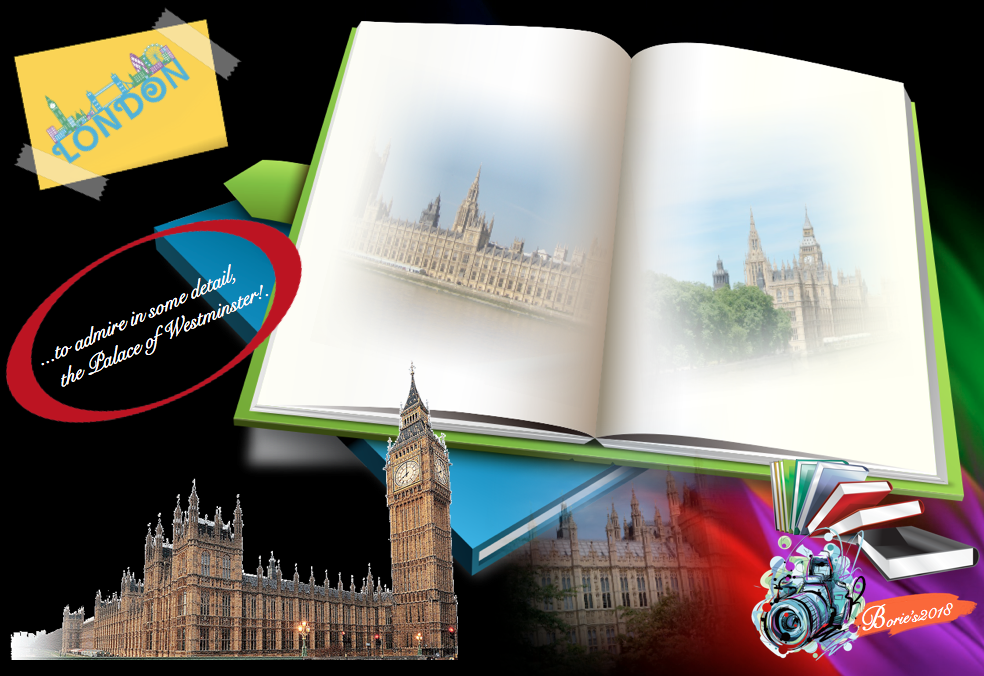
…começou a chover, aquela chuva miudinha, com algum nevoeiro, típica da cidade Londres, nós um pouco cansados, pois a cerimónia no Palácio de Buckingham embora não fosse longa, tornou-se um pouco monótona, principalmente depois de ficar algum tempo esperando para conseguir um bom lugar para vê-la, todavia cansados, fomos caminhando pela Avenida Birdcage Walk, em direcção ao Rio Tamisa, parando para admirar com algum pormenor, o Palácio de Westminster, que é o ponto de encontro da Câmara dos Comuns e da Câmara dos Lordes, as duas casas do Parlamento do Reino Unido, que se situa na margem norte do Rio Tamisa, na cidade de Westminster!. (It began to rain, that little rain, with some fog, typical of the city London, we a little tired, because the ceremony in Buckingham Palace although it was not long, it became a little monotonous, mainly after staying some time hoping to get a good spot to see her, yet tired, we walked down Birdcage Walk towards the River Thames, stopping to admire in some detail, the Palace of Westminster, which is the meeting point of the House of Commons and of the House of Lords, the two houses of the United Kingdom Parliament, which is situated on the north bank of the River Thames in the city of Westminster)!.

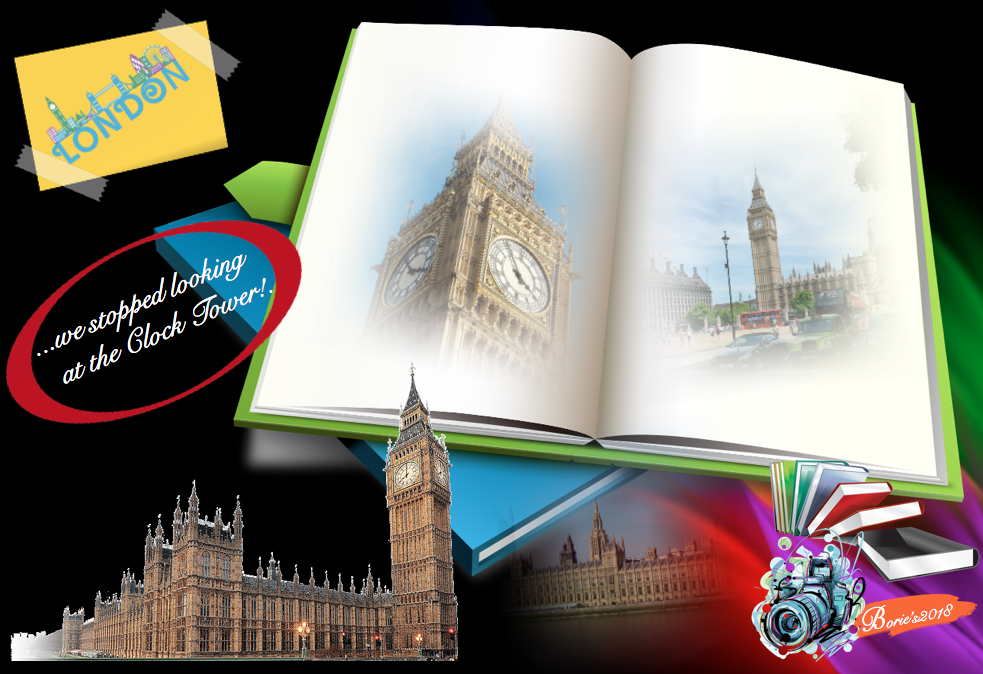
…ao meio da Ponte de Westminster, sobre o Rio Tamisa, parámos olhando a Torre do Relógio, é um cenário muito popular, cremos que conhecido em todo o mundo, ouvimos o Big Ben, que é o apelido para o Grande Sino do relógio, que pesando 13,5 toneladas, é o maior do conjunto de cinco sinos, no extremo norte do Palácio de Westminster, onde geralmente dizem Big Ben, quando se referem tanto ao relógio como à Torre do relógio!. (In the middle of the Westminster Bridge, over the River Thames, we stopped looking at the Clock Tower, it is a very popular scenario, we think that known around the world, we hear Big Ben, which is the nickname for the Great Bell of the the clock, which weighs 13.5 tons, is the largest of the five-bells set at the north end of the Palace of Westminster, where they generally say Big Ben, when they refer to both the clock and the clock tower)!.

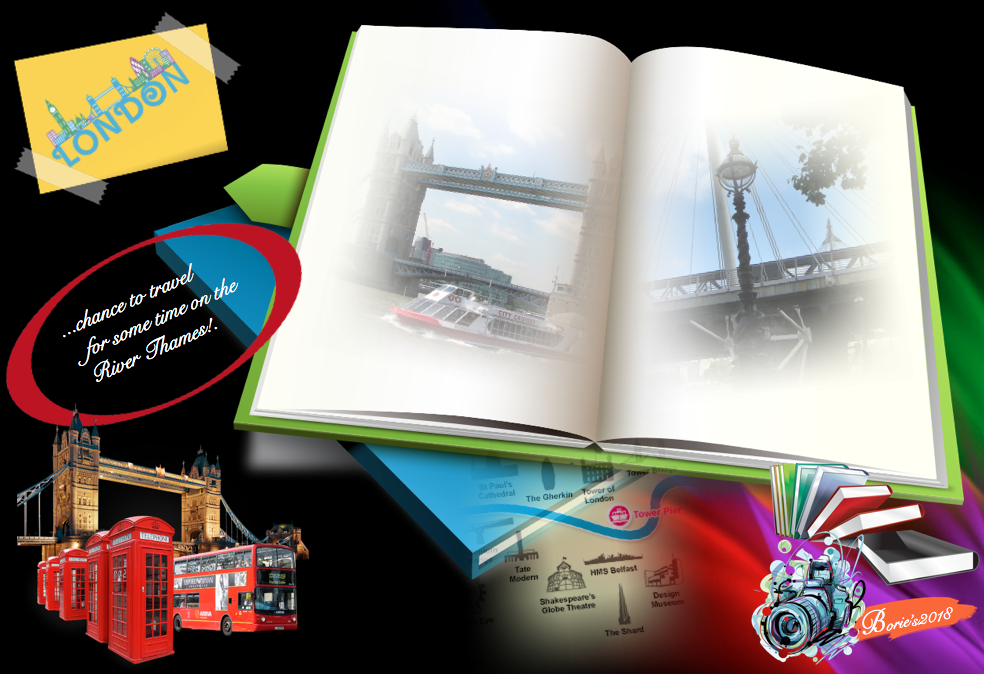
…ainda no meio da Ponte de Westminster, sobre o Rio Tamisa, vendo passar um barco no Rio, lembrámo-nos de um bilhete que estava em nosso poder, que era uma oferta suplementar do bilhete de entrada na Torre de Londres, que nos dava a possibildede de viajar por algum tempo no Rio Tamisa, imediatamente, usando a estação mais próxima do Metro, (Underground), deslocámo-nos para a doca de embarque, apreciando o cenário visto do rio!. Valeu bem esse tempo dispensado!. (Still in the middle of the Westminster Bridge over the River Thames, watching a boat pass by in River, we remembered a note which was in our possession, which was an additional offer of the entrance ticket to the Tower of London, which gave us the chance to travel for some time on the River Thames, immediately, using the station closest to the Underground, we moved to the embarkation dock, enjoying the scenery seen from the river !. It was well worth this time)!.

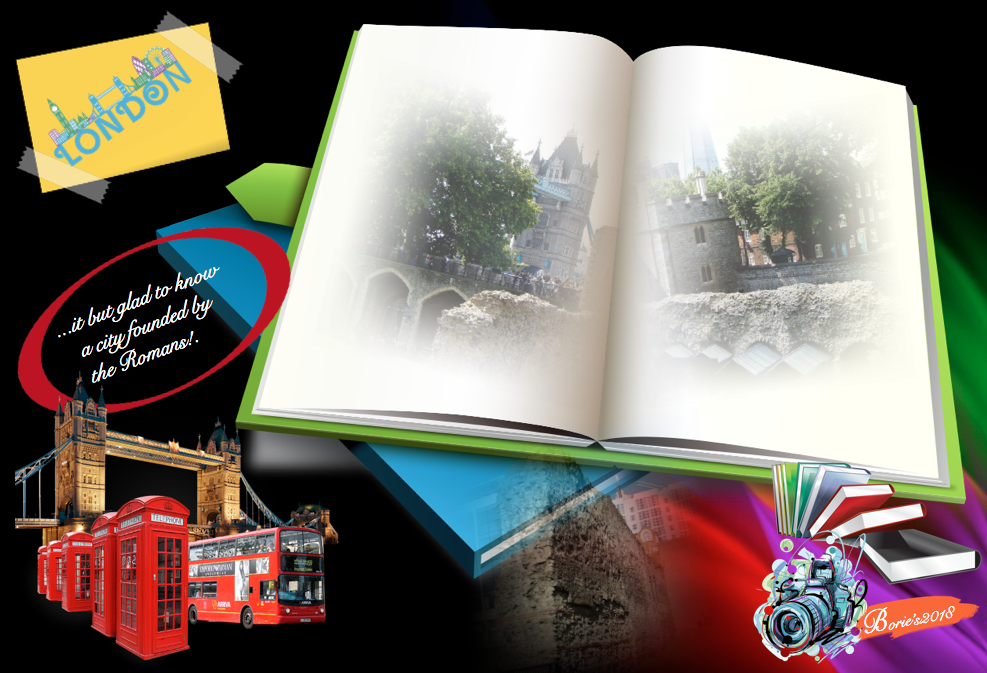
…regressámos ao hotel, um pouco cansados, molhados da chuva miudinha e do nevoeiro típico da cidade de Londres, mas contentes por conhecer uma cidade fundada pelos Romanos, que a chamaram de “Londinium”, que ainda retém os seus limites mediavais numa área de aproximadamente três quilómetros quadrados!. (We returned to the hotel, a little tired, wet from the small rain and the fog typical of the city of London, but glad to know a city founded by the Romans, who called it “Londinium”, that still retains its mediaval borders in a area of approximately three square kilometers)!.

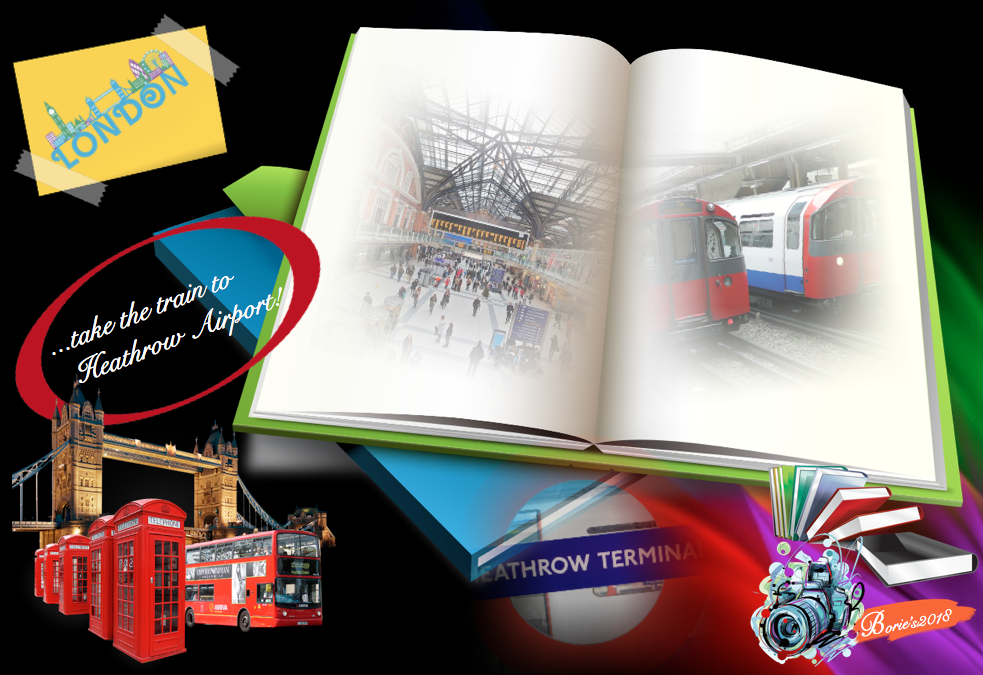
…ainda tivémos alguma força para subir as tais escadas em caracól, dormimos algumas horas antes de, pela manhã tomar o combóio para o Aeroporto de Heathrow, que fica aproximadamente a 23 quilómetros do centro da cidade, viajando de regresso aos USA!. (We still had some strength to climb those stairs in a snail, we slept a few hours before, in the morning, take the train to Heathrow Airport, which is approximately 23 kilometers from the city center, traveling back to the USA !.

Tony Borie, April 2018.

…aqueles olhos!. (those eyes)!.

…somos sobreviventes de uma maldita guerra de guerrilha, numa região de África, onde uma das partes mais trágicas, para alguns talvez esperançosa, era a cara da necessidade humana!. Era o doente abandonado, a família faminta, a criança que não sabia ler, eram homens e mulheres, alguns sem abrigo, com roupa em farrapos, lutando pela sobrevivência, numa terra muito rica e com um solo muito fértil!. (we are survivors of a bloody guerrilla war in a region of Africa, where one of the most tragic parts, to some perhaps hopeful, was the face of human need! It was the abandoned patient, the hungry family, the child who could not read, were men and women, some homeless, clothed in rags, struggling for survival, in a very rich land with a very fertile soil)!.

…nós jovens, oriundos da Europa, com uma educação de aldeia, onde os princípios honestos de família vinham de há séculos, vendo todo este cenário, muitas vezes a angústia, o desespero e o medo, colocáva-nos numa situação horrível, onde entre outras coisas o álcool, nos aliviava a mente, pelo menos por momentos, pois este cenário estava lá, estava sempre presente, era a cara da guerra, com feridos e mortos em combate para ambos os lados, incluindo a população civil desarmada!. (we young people from Europe, with a village education, where the honest principles of family came from centuries ago, seeing this whole scenario, often the anguish, despair and fear, put us in a horrible situation, where, among other things, alcohol alleviated our minds, at least for a moment, because this scenario was there, it was always present, it was the face of war, with wounded and dead in combat on both sides, including the unarmed civilian population)!.

…os famintos, os doentes, os analfabetos e a miséria eram constantes e, infelizmente continuaram, mesmo depois, quando parecia que já havia paz, fazendo-nos lembrar que defacto saímos de África físicamente, mas possívelmente não trouxémos as armas, as bombas e as balas, deixando lá apenas, como seria nossa inteira obrigação, todas as maravilhosas armas da paz do século XX!. (the hungry, the sick, the illiterate, and the misery were constant and, unfortunately, continued, even afterwards, when it seemed that there was already peace, reminding us that we came out of Africa physically, but we might not have brought arms, bombs and bullets, leaving there only, as would be our entire obligation, all the wonderful weapons of peace of the twentieth century)!.

…aqui, onde presentemente vivemos, já lá vai mais de meio século da nossa vivência da Guerra Colonial Portuguesa, mas a nossa mente por vezes continua lá, na população, naquela aldeia ao norte do aquartelamento, na família da Cumba, que com sua irmã, eram as nossas lavadeiras, que mais tarde se tornaram guerrilheiras, com olhos azuis esverdeados, que diziam que eram descendentes dos padres, que antes de nós militares, estavam estacionados na vila de Mansoa, num convento de uma ordem religiosa francesa, convento este em ruínas, que nós ajudámos a recuperar, servindo por algum tempo das primeiras instalações militares!. (here, where we presently live, there is more than half a century of our experience of the Portuguese Colonial War, but our mind sometimes remains there, in the population, in that village north of the quarter, in the Cumba family, which his sister, were our washerwomen, who later became guerrillas with blue-green eyes, who said that they were descendants of the priests, who before us were stationed in the village of Mansoa, in a convent of a French religious order, a convent this in ruins, which we helped to recover, serving for some time from the first military installations)!.

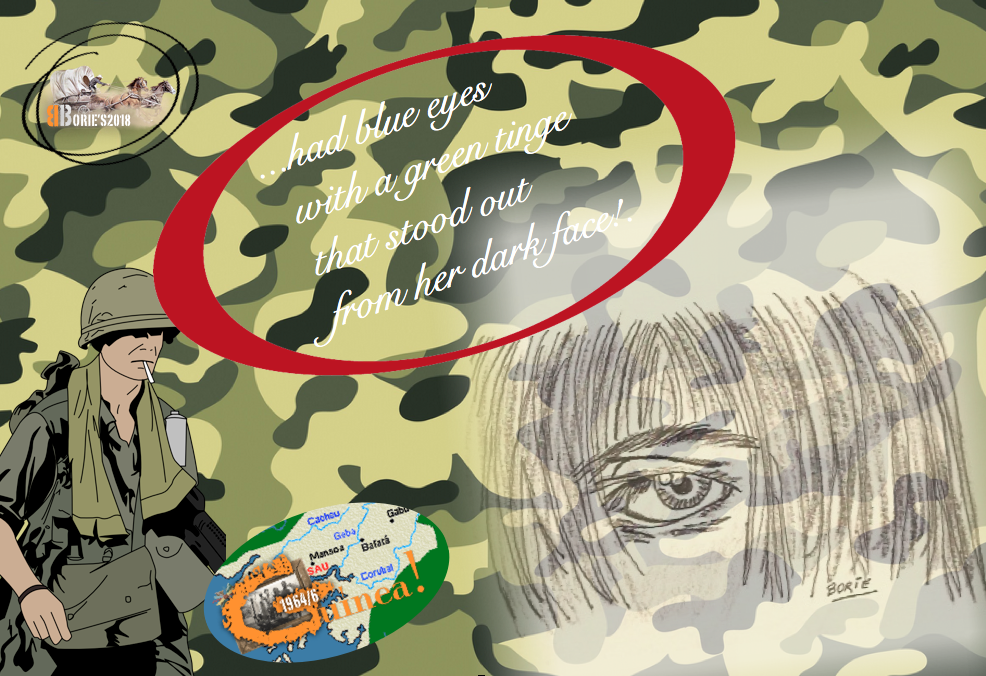
…andava por lá uma rapariga, que vivia entre a vila e essa tal aldeia ao norte do aquartelamento, filha de mãe guineense e pai oriundo das ilhas de Cabo Verde!. Este, cuja profissão era marceneiro e, de um qualquer tronco de uma árvore fazia tábuas com que fabricava algumas cadeiras, mesas ou outros móveis, utilizando um grande serrote, que as suas mãos manuseavam!. A rapariga, que devia de andar pela idade de quinze dezasseis anos, tinha uns olhos azuis com uma tonalidade verde, que sobressaim do seu rosto moreno, onde o cabelo era entre o preto e o loiro, portanto uma figura bonita, que alguns militares ficavam admirados daquela beleza, comentando no aquartelamento!. (there was a girl there who lived between the village and this village north of the barracks, the daughter of a Guinean mother and a father from the islands of Cape Verde! This one, whose profession was a carpenter, and of any tree trunk made boards with which he made some chairs, tables, or other furniture, using a large saw, which his hands were handling! The girl, who was about to walk at the age of fifteen, had blue eyes with a green tinge that stood out from her dark face, where her hair was between black and blond, so a beautiful figure, admired by that beauty, commenting on the barracks)!.

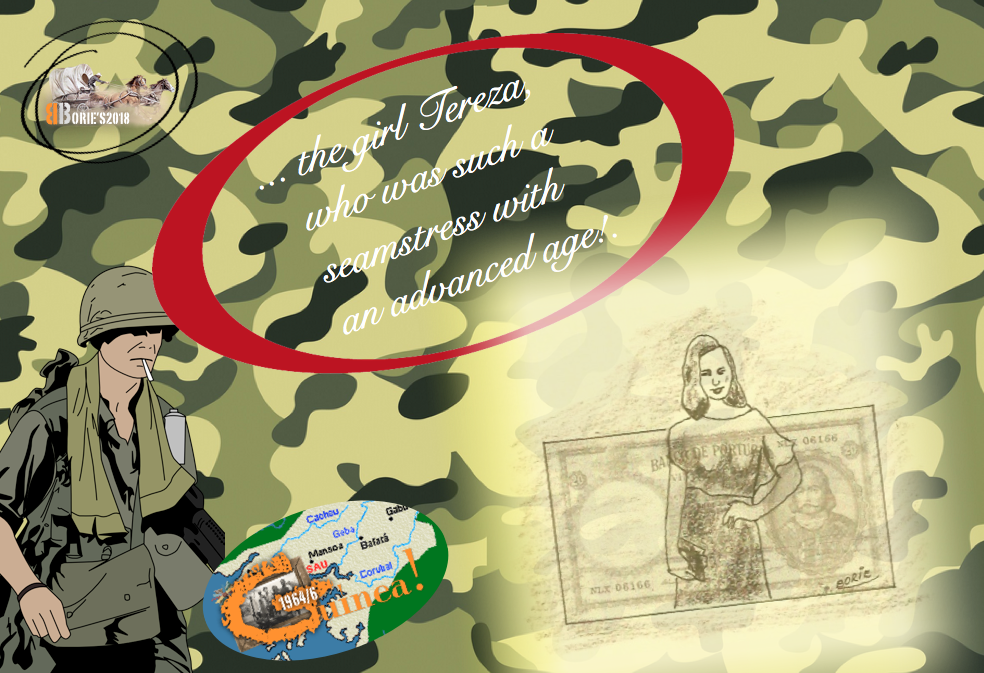
…a menina Tereza, que era a tal costureira já com uma idade avançada, que por saber ler e escrever, entre outras coisas era a conselheira da família, lá na aldeia do Vale do Ninho d’Águia, na encostra agreste da montanha do Caramulo, em Portugal, por sinal uma grande desenvergonhada, pois não sei se estão lembrados, um dia pediu num final de uma carta da mãe Ilda, para lhe levar-mos da Guiné um “falo”, ou seja um “phallus”, ou mais propriamente um “pénis” em madeira de ébano preta, que tinha visto numa revista francesa, na cabeleireira da vila, quando aí foi fazer a permanente e fazer desaparecer o bigode por uns tempos, com um produto francês, que cheirava muito mal, onde diziam que os faziam em África!. Nessa ocasião, até mandou uma nota de vinte escudos para despesas, dizendo que era para lhe dar sorte na vida, pois todavia era solteira e já passava dos cinquentas!. (the girl Tereza, who was such a seamstress with an advanced age, who knew how to read and write, among other things, she was the family counselor, in the village of the Ninho d’Águia Valley, in the rugged mountain range of Caramulo, in Portugal, by the way a great disgrace, because I do not know if they are remembered, one day asked at the end of a letter of the mother Ilda, to take from Guinea a “phallus”, that is to say a “phallus” or rather a “penis” in black ebony wood, which he had seen in a French magazine, in the village hairdresser, when he went there to make the permanent and to make the mustache disappear for a while with a French product that smelled very badly, where they said they made them in Africa!. On that occasion, she even sent a note of twenty escudos for expenses, saying that it was to give her luck in life, because she was still single and she was over fifty)!.

…um certo dia visitámos a oficina do marceneiro, com a intenção de lhe pedir o favor de nos executar a encomenda da desenvergonhada menina Tereza, que felizmente, depois de uma demorada conversação, perguntando-nos ele, entre outras coisas qual a nossa sexualidade, nos acabou por resolver esse problema!. (one day we visited the carpenter’s workshop, with the intention of asking him to please us to carry out the order of the disembodied girl Tereza, who fortunately, after a long conversation, asking us, among other things, what our sexuality, we ended up solving this problem)!.

…todavia, agora infelizmente, tomámos naquela ocasião conhecimento de outro problema!. A sua filha, a tal rapariga bonita, olhos azuis, com tonalidade verde, cabelos pretos e loiros, era um “esqueleto”, cara e corpo, seco e mirrado, sentada num banco, amparando-se com um pau, já sem parte dos pés, as pernas embrulhadas em farrapos e com feridas, alguns dedos das mãos estavam tesos, falando aos soluços, pois dava a entender que não podia mover a língua!. Contudo, os seus olhos ainda com algum brilho, estavam lá!. Qustionámos o marceneiro sobre o estado deplorável da sua filha, este contou-nos que ela tinha muitas doenças, entre as quais a “lepra”, que estava à espera de morrer, que no aquartelamento já sabiam do seu estado de saúde, tomava alguns medicamentos, embora sabendo que não era possível a sua cura!. (however, now unfortunately, we took knowledge of another problem on that occasion!. Her daughter, this pretty girl, blue eyes, green tones, black hair and blond hair, was a “skeleton”, face and body, dry and shriveled, sitting on a bench, holding onto a stick, feet, legs wrapped in tatters and with wounds, some fingers of hands were limp, speaking in sobs, for he implied that he could not move his tongue! However, his eyes still brightened, were there! We asked the carpenter about his daughter’s deplorable condition. She told us that she had many illnesses, among them the “leprosy”, which was waiting to die, which in the barracks already knew of her state of health, took some medicines, although knowing that it was not possible to cure it)!.

…nós, de regresso ao aquartelamento, questionámos o “Pastilhas”, (o enfermeiro) que, depois de saber de onde vínhamos e o que tínhamos encomendado, nos mostrou um sorriso maldoso e provocativo, mas ele já sabia deste lamentável caso e, mudando a sua atitude, com os olhos focados em qualquer coisa que estava no chão, tentando esconder algumas lágrimas, levantou de novo o rosto, então sim, focou-nos nos olhos, não com os tais olhos azuis, com tonalidade verde, da rapariga bonita, com cabelos pretos e loiros, que agora estava a morrer, com muitas doenças mais a doença da “lepra”, mas sim, com uns olhos bondosos, que continuavam a esconder algumas lágrimas e, simplesmente encolheu os ombros, num gesto de pessoa derrotada!. (we returned to the barracks and questioned the “Pastilhas” (the nurse), who, after knowing where we came from and what we had ordered, showed us a wicked and provocative smile, but he already knew this lamentable case and, changing his attitude, his eyes focused on anything that was on the floor, trying to hide some tears, raised his face again, then yes, he focused on our eyes, not with those greenish-blue eyes of the a beautiful girl, with black and blond hair, who was now dying, with many illnesses but the illness of “leprosy”, but with kind eyes, who continued to hide some tears, and simply shrugged, in a gesture of defeated person)!.

… o “Pastilhas” (enfermeiro), devia de saber deste e de muitos mais casos, mas nada podia fazer, pois a falta de recursos, naquela região do interior da África, em pleno cenário de guerra, eram evidentes, morria-se única e simplesmente!. (the “Pastilhas” (nurse), he should have known of this and many more cases, but he could do nothing, since the lack of resources in that region of the interior of Africa, in the midst of war, were evident, he died only and simply)!.

…todavia o “Pastilhas”, (enfermeiro), e como era seu costume, sempre que nos via invadindo o seu território, puxou-nos para fora da enfermaria, talvez julgando que o nosso propósito, pois naquele momento fumávamos um cigarro feito à mão, era roubar o frasco do álcool!. (but the “Pastilhas” (nurse), and as was his custom, whenever he saw us invading his territory, he pulled us out of the infirmary, perhaps judging that our purpose, for at that moment we smoked a cigarette by hand, was to steal the bottle of alcohol)!.

…lembrando estes momentos passados em cenário de combate, largámos o computador, levantámo-nos, saímos ao quintal, olhámos o horizonte, vimos as horas, pensando como o relógio às vezes é tão lento!. (remembering these past moments in combat scene, we left the computer, we got up, we went out to the yard, we looked at the horizon, we saw the hours, thinking how the clock sometimes is so slow)!.

Tony Borie, May 2018.

…the greatest fortune!

…the greatest fortune!

…a maior fortuna!. (the greatest fortune)!.

…na época em que o conhecemos, tinha idade para ser nosso pai!. Já por diversas vezes contámos a sua odisseia de imigrante, com ou sem alguns pormenores, todavia, sempre que o lembramos, nasce em nós um certo orgulho, pois o senhor Joaquim, foi nosso companheiro na multinacional, onde exercemos a nossa profissão por um período de trinta anos, no estado de Nova Jersey!. (by the time we met him, he was old enough to be our father! On several occasions we have told you about your immigrant odyssey, with or without some details, however, whenever we remind you, a certain pride is born in us, for Mr. Joaquim was our companion in the multinational, where we held our profession for a period thirty years old, in the state of New Jersey)!.

…não possuía veículo automóvel, usava calças compridas, camisa, casaco, umas botas de cabedal preto muito bem engraxadas e, um chapéu que tinha vindo de França, podia fazer frio ou calor, usava sempre o mesmo estilo de roupa, mas sempre muito limpo!. Como não tinha licenças para conduzir, que normalmente servem para identificação, trazia sempre consigo uma cópia do seu passaporte, em formato reduzido, dentro de uma folha de plástico e, quando nos mostrava esse documento dizia:

– vocês não possuem um documento destes, eu sou cidadão dos Estados Unidos da América, e lembrem-se que, desde o ano de 1892 até 1954, ano em encerrou a estação de imigração do governo federal no porto de Nova Yorque, mais de 12 milhões de imigrantes passaram pela Ellis Island, (Ilha de Ellis)!.

(He did not have a car, he wore long trousers, a shirt, a coat, very well-polished black leather boots, and a hat that had come from France could be cold or hot, always the same style of clothing, but always very clean!. Since he did not have driving licenses, which are usually used for identification purposes, he always had a copy of his passport, in a reduced form, inside a plastic sheet, and when he showed us this document said:

– you do not have a document like this, I am a citizen of the United States of America, and remember that from the year 1892 to 1954, the year in which the federal government immigration station closed at the port of New York, more than 12 million of immigrants passed through Ellis Island, (Ellis Island!).

…alguns de nós, ouvíamos o senhor Joaquim com atenção, outros riam-se baixinho, pois ele repetia estas palvras vezes sem conta!. Todavia nós sabíamos quase toda a sua história, pois ele, algumas vezes em que íamos ao seu departamento reparar qualquer máquina, contáva-nos que, quando jovem, tal como os rapazes da sua idade, querendo fugir ao serviço militar, com receio de ir parar ao então Ultramar Português, fugiu de “a salto” para França!. (some of us, we listened to Mr. Joaquim with attention, others laughed softly, for he repeated these words over and over again! Yet we knew most of his story, for he, at times when we went to his department to repair any machine, told us that as a young man, like the boys of his age, wanting to flee for military service, fearing to go stop to the then Portuguese Overseas, escaped from “the jump” to France)!.

…fugir the “a salto” para França, não era difícil, pois era oriundo de uma aldeia de fronteira, na região de Bragança, onde o seu pai, além de cultivar umas terras de onde tirava o sustento para a sua família, também era “passador”, ou seja, ajudava a passar a fronteira, tinha muitos contactos!. (to escape the “the jump” to France, it was not difficult, since it came from a border village in the region of Bragança, where his father, in addition to cultivating some land from which he took his family’s livelihood, He was also a “passador”, that is, he helped to cross the border, he had many contacts)!.

…num grupo de candidatos a imigrantes, o Joaquim atravessou a fronteira para Espanha, depois para França, sabendo que, para lá dos Pirinéus havia trabalho!. Tendo alguns conhecimentos de agricultura, ficou a trabalhar numa quinta, numa região do sul de França!. Como jovem, depressa aprendeu a falar o idioma francês, não com precisão, mas o suficiente para manter uma conversação, onde conhece uma jovem de nacionalidade francesa, a Michele, por quem se apaixona!. (in a group of immigrant candidates, Joaquim crossed the frontier to Spain, then to France, knowing that, beyond the Pyrenees there was work! Having some knowledge of agriculture, he went to work on a farm in a region of southern France! As a young man, he quickly learned to speak the French language, not precisely, but enough to hold a conversation, where he meets a young woman of French nationality, Michele, whom she falls in love with)!.

…a Michele corresponde a essa paixão, namoram e, juntos foram à presença de um representante da Igreja Católica, que lhes leu a epístola, tornando-os marido e mulher para o resto das suas vidas!. Todavia, no pensamento do Joaquim, sempre existiu um horizonte para lá do oceano e, um dia disse à Michele:

– do lado de lá do Atlântico, é que gostava de um dia ir contigo. Tenho um fascínio pela América, porquê, não sei!.

…a Michele, aprovando tudo o que saía da sua boca, fazendo um gesto de concordância com a cabeça, responde-lhe:

– se é esse o teu desejo, porque não o realizamos!.

(Michele corresponds to that passion, they love, and together they went to the presence of a representative of the Catholic Church, who read them the epistle, making them husband and wife for the rest of their lives!. However, in Joaquim’s mind, there was always a horizon beyond the ocean, and one day he told Michele:

– On the other side of the Atlantic, I would like to go with you one day. I have a fascination for America, why, I do not know!.

To Michele, approving everything that came out of his mouth, making a gesture of agreement with the head, responds:

– If that is your wish, because we do not do it)!.

…os pormenores, ele nunca nos contou mas, explicou-nos que naquele tempo era assim e, passado uns dias vieram à cidade de Paris, a troco de algum dinheiro, conhecimentos da família da Michele, que sendo de nacionalidade francesa, com uns parentes a viver na cidade de Filadélfia, nos USA, contactaram uma agência de imigração do estado, preenchendo alguns papéis!. Voltaram à sua terra de origem, ficando a aguardar notícias!. Uns meses depois, recebem uma notificação para fazerem alguns exames médicos afim de embarcarem para Nova Iorque!. (He told us that at that time it was like that, and after a few days they came to the city of Paris, for some money, knowledge of Michele’s family, that being of French nationality, with some relatives living in the city of Philadelphia, USA, contacted a state immigration agency, filling out some papers!. They returned to their homeland, awaiting news!. A few months later, they receive a notification to take some medical examinations in order to embark for New York)!.

…terá sido assim?. Nunca soubemos, contudo alguns companheiros, do tempo em que o senhor Joaquim começou a trabalhar naquela multinacional, contavam uma história diferente, mas nós, acreditamos nas suas palavras!. Continuando, desembarcando em Nova Iorque, em Ellis Island, (Ilha de Ellis), recebeu o tal passaporte, onde lhe trocaram o nome, pois quando por ele chamávamos, ele sempre respondia:

– o meu nome é Jack, a América deu-me este nome e, eu sou de nacionalidade Americana!. Não sei se foi uma barreira no idioma e não me compreenderam ao desembarcar, ou um erro de ortografia do oficial de imigração, mas o meu primeiro nome é Jack!.

…alguns, ao ouvirem estas palavras, riam-se baixinho, mas nós acreditávamos no senhor Joaquim!.

(Will it have been like this?. We never knew, however, some companions, from the time that Mr. Joaquim started working at that multinational, they told a different story, but we, we believe in his words!. Continuing landing in New York, on Ellis Island, received the passport, where they changed his name, because when we called him, he always answered:

– My name is Jack, America gave me this name and, I am of American nationality!. I do not know if it was a language barrier and they did not understand me when I landed, or a spelling mistake of the immigration officer, but my first name is Jack!.

Some of them, when they heard these words, laughed softly, but we believed in Mr. Joaquim!

…quando chegaram aos USA, dirigiram-se aos tais parentes que viviam na cidade de Filadélfia, indo trabalhar para casa de uns diplomatas, já com uma certa idade, ajudando na cozinha e outros trabalhos e, uns anos depois, quando esses diplomatas faleceram, com algum dinheiro amealhado, vieram para o estado de Nova Jersey!. Compraram uma casa, o senhor Joaquim foi trabalhar na multinacional, no departamento de fundição, a Michele, numa fábrica, onde se faziam utensílios domésticos, a que chamavam a “fábrica das cafeteiras”!. (when they arrived in the USA, they went to such relatives who lived in the city of Philadelphia, going to work for some diplomats, at a certain age, helping in the kitchen and other works, and a few years later, when these diplomats passed away, with some money, they came to the state of New Jersey!. They bought a house, Mr. Joaquim went to work in the multinational, in the foundry department, Michele, in a factory, where they made household utensils, which they called the “coffee factory”)!

…o senhor Joaquim e a Michele, sem outra qualquer formação, a não ser honestos e trabalhadores, foram pais de quatro filhos!. O Zeca, é médico, frequentou a universidade com ajuda de uma bolsa de estudo, porque era um atleta, jogava futebol americano, corria com alguma velocidade!. A Lizete, é advogada, também frequentou a universidade com a ajuda de uma bolsa de estudo, porque era fora da média em matemática!. A Michele, nome da mãe, também é advogada, o senhor Joaquim e a Michele mãe, pagaram alguns estudos, depois um financiamente do banco facilitou o resto do pagamento da universidade, com a condição de, assim que começar a exercer a sua profissão, começar também a pagar ao banco!. O mais novo, o Joaquim, é professor, na universidade onde estudou, com a ajuda de uma bolsa de estudo, porque tal como a irmã Lizete, era acima da média em matemática!. (Joaquim and Michele, without any other training, other than honest and hardworking, were parents of four children!. Zeca, a doctor, attended university with the help of a scholarship, because he was an athlete, he played football, he ran with some speed!. Lizete, a lawyer, also attended university with the help of a scholarship, because she was out of math in average!. Michele, the mother’s name, is also a lawyer, Mr. Joaquim and Michele, the mother, paid for some studies, then a bank loan facilitated the rest of the university’s payment, on condition that, once she started to practice, start also to pay the bank!. The youngest, Joaquim, is a teacher, at the university where he studied, with the help of a scholarship, because like Sister Lizete, he was above average in math)!.

…estes quatro filhos, foram a fortuna angariada ao longo de muitos anos de sacrifício como imigrantes, do senhor Joaquim e da Michele!. Anos depois, a Michele mãe, morreu de câncer, depois de algum tempo sofrendo!. O senhor Joaquim, já viúvo, reformou-se, todavia não quis ir para casa de nenhum filho, dizia-nos:

– só vou incomodar!. Vou vender a casita, vou comprar perto da comunidade portuguesa, lá naquela cidade ao sul do Rio Passaic!. Lá, nas ruas, vou ver e falar com portugueses, vou ouvir o sino da igreja de Nossa Senhora de Fátima, vou lembrar a minha aldeia em Bragança!. É lá que desejo morrer!.

…o senhor Joaquim, viveu mais alguns anos, convivendo com a comunidade portuguesa, até que a morte o levou!. Paz à sua alma!.

(These four children, were the fortune raised over many years of sacrifice as immigrants, Mr. Joaquim and Michele!. Years later, Michele’s mother, died of cancer, after some time suffering!. Mr. Joaquim, already a widower, retired, but he did not want to go to any son’s house, he told us:

– I’ll just bother! I’m going to sell the house, I’m going to buy it near the Portuguese community, there in that city south of the Passaic River!. There, in the streets, I will see and speak with Portuguese, I will listen to the church bell of Our Lady of Fatima, I will remember my village in Bragança!. That’s where I want to die!.

Mr. Joaquim lived a few more years, living with the Portuguese community, until death took him!. Peace to your soul!.

Tony Borie, May 2018.

…Paris, France!

…Paris, France!

…Paris, França!. (Paris, France)!.

…o nosso filho Tony, numa data importante das nossas vidas, ofereceu-nos uma viajem à Europa!. Era a França, à cidade de Paris, depois de lá chegar, seria o que normalmente todos os viajantes fazem, quando chegam a uma nova cidade e, querem conhecer o mais possível, dentro das possibilidades de cada um!. (our son Tony, at an important date in our lives, has offered us a trip to Europe!. It was France, the city of Paris, after arriving there, would be what normally all travelers do, when they arrive in a new city and, want to know as much as possible, within the possibilities of each)!

…ainda nos USA, no aeroporto, havia muito tráfico para a cidade de Paris, era um fim de semana, todavia, em certas ocasiões a palavra “sorte”, neste caso muita sorte, um familiar de um companheiro de trabalho, que nos atendeu no aeroporto, sabendo quem éramos, organizou tudo de um modo tão eficaz que, sem sabermos como, umas horas depois, voávamos com destino à Europa, no segundo andar de uma aeronave moderna, última geração, com um atendimento a que não estávamos habituados, onde nada nos faltava, até champamnhe francês!. (still in the USA, at the airport, there was a lot of traffic to the city of Paris, it was a weekend, however, on certain occasions the word “luck”, in this case very lucky, a relative of a workmate, who met us at the airport, knowing who we were, organized everything so effectively that, without knowing how, a few hours later, we flew to Europe on the second floor of a modern, last generation aircraft with a service we were not accustomed, where we lacked nothing, even champagne)!.

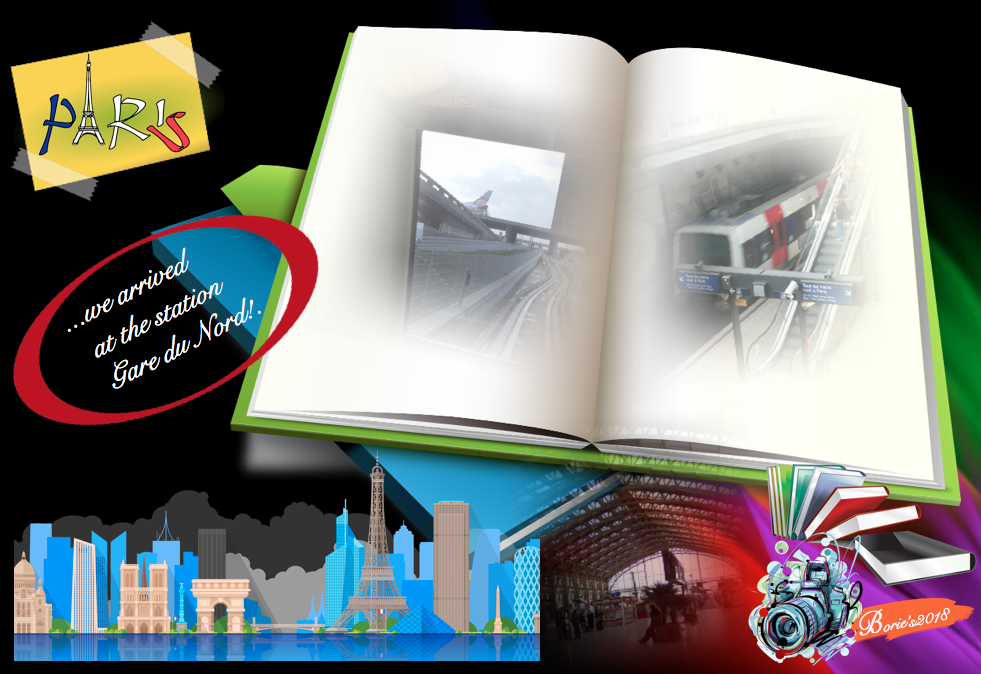
…madrugada ainda, aterrámos no segundo maior aeroporto da Europa, o Aeroporto Charles de Gaule, que também chamam Roissy Aeroporto, localizado a nordeste, mais ou menos a 16 milhas da cidade!. Viajando de combóio, que faz a ligação à cidade, passado algum tempo chegámos à estação Gare du Nord, que se situa mais ou menos no centro da cidade e, próximo de diversos hoteis, onde procurámos um, só para dormida!. (dawn yet, we landed at Europe’s second largest airport, Charles de Gaulle Airport, which we also call Roissy Airport, located northeast, about 16 miles from the city!. Traveling by train, which connects to the city, after some time we arrived at the station Gare du Nord, which is located in the center of the city and close to several hotels, where we look for one, just for sleep)!.

…acreditem ou não, a nota curiosa é que encontrámos portugueses, que por aqui vivem e trabalham, quase em todos os locais por onde andámos percorrendo esta cidade, cujos vestígios arqueológicos nos indicam que, o primeiro assentamento foi realizado na margem direita do Rio Sena, por uma tribo Celta chamada Parisios, que aqui se estabeleceu, formando uma aldeia de pescadores, precisamente no mesmo lugar que hoje se conhece como “Ile de la Cite”!. (believe it or not, the curious note is that we have met Portuguese, who live and work, almost everywhere we went, walking through this city, whose archaeological remains tell us that the first settlement was carried out on the right bank of the Seine River, by a Celtic tribe called Parisios, that settled here, forming a fishing village, in the same place that today is known as “Ile de la Cite”)!.

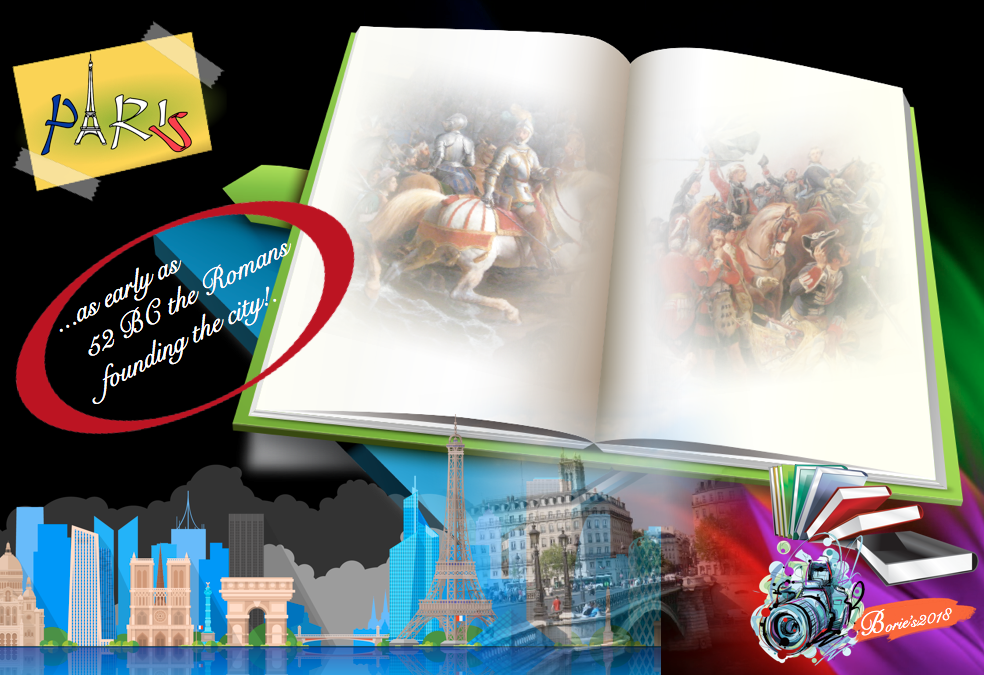
…sempre procurámos identificar-nos com os lugares que visitamos e, pela cidade de Paris existem muitos monumentos com história, tanto recente com de há séculos pois, já no ano 52 A.C. os Romanos fundando a cidade, lhe deram o nome de Lutecia, expandindo a área a ambas as margens do Rio Sena, no entanto na Idade Média, a cidade foi atacada pelos “Hunos”, (que foram um povo nômade de origem provávelmente altaico, que saíu da Asia Central e Europa, a partir do século IV, estimulando a grande migração de povos, que contribuíu para o colapso do Império Romano no Ocidente) e, os Romanos perderam o control da cidade às mãos dos povos Germanos, por volta do ano de 508!. Mas não terminou as lutas pelas cidade, pois no século IX, os Vikings tomaram a cidade, até que por volta do ano de 1190, Felipe II Augusto, manda levantar uma grande muralha defensiva em ambos os lados do Rio Sena!. (we have always sought to identify ourselves with the places we visited, and through the city of Paris there are many monuments with history, so recent with centuries ago, as early as 52 BC the Romans founding the city, gave it the name of Lutecia, expanding the area to both banks of the River Seine, however in the Middle Ages, the city was attacked by the “Hunos”, (who were a nomadic people of probably Altaic origin, who left Central Asia and Europe from the 4th century onwards, stimulating the great migration of peoples, which contributed to the collapse of the Roman Empire in the West) and, the Romans lost control of the city at the hands of the German peoples, around the year 508!. But it did not end the struggles for the city, because in the 9th century, the Vikings took the city, until around the year 1190, Philip II Augustus, ordered to raise a great defensive wall on both sides of the River Seine)!.

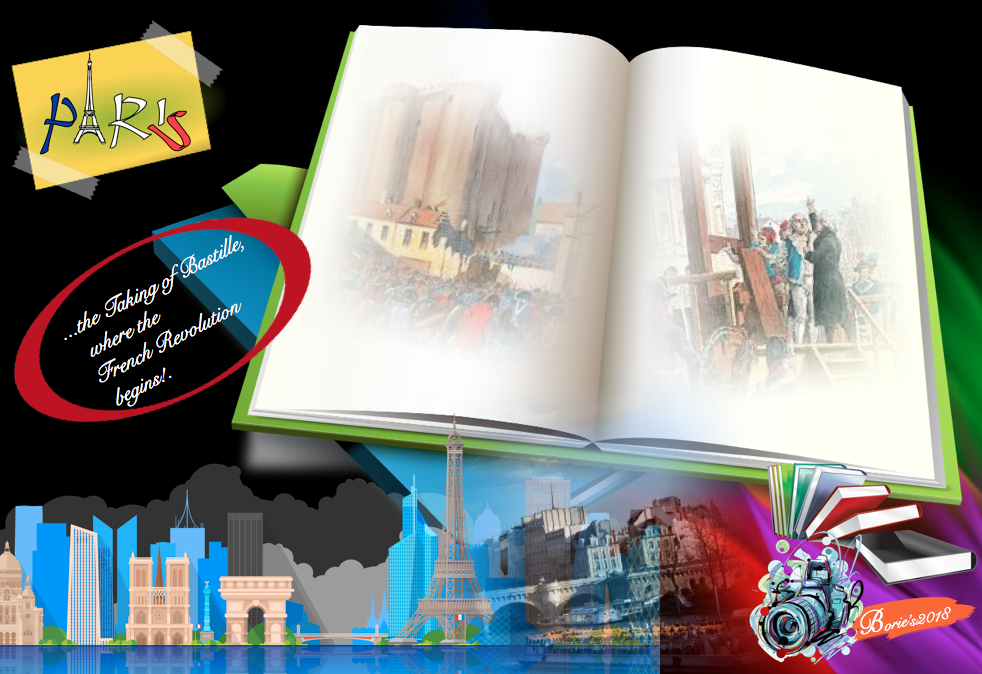
…depois veio a era moderna, onde muitas mudanças ocorreram na cidade de Paris, principalmente as guerras de religião, a Tomada de Bastilha, onde começa a Revolução Francesa, que tinha como objectivo derrubar a Monarquia, onde durante esta época de terror, milhares de pessoas morreram, os reis, rainhas e principes foram para a cadeia ou para a guilhotina!. Com a chegada de Napoleão, houve uma época de expansão, a proclamação da Terceira República marca uma prosteridade económica, que se estendeu até às Guerras Mundiais, onde a cidade, tal como outras em toda a Europa, sofreram a morte e destruição!. (then came the modern era where many changes took place in the city of Paris, especially the wars of religion, the Taking of Bastille, where the French Revolution begins, which aimed to overthrow the Monarchy, where during this time of terror, thousands of people died, kings, queens and princes went to jail or to the guillotine!. With the arrival of Napoleon, there was a time of expansion, the proclamation of the Third Republic marks an economic prosterity, which extended until the World Wars, where the city, like others throughout Europe, suffered death and destruction)!.

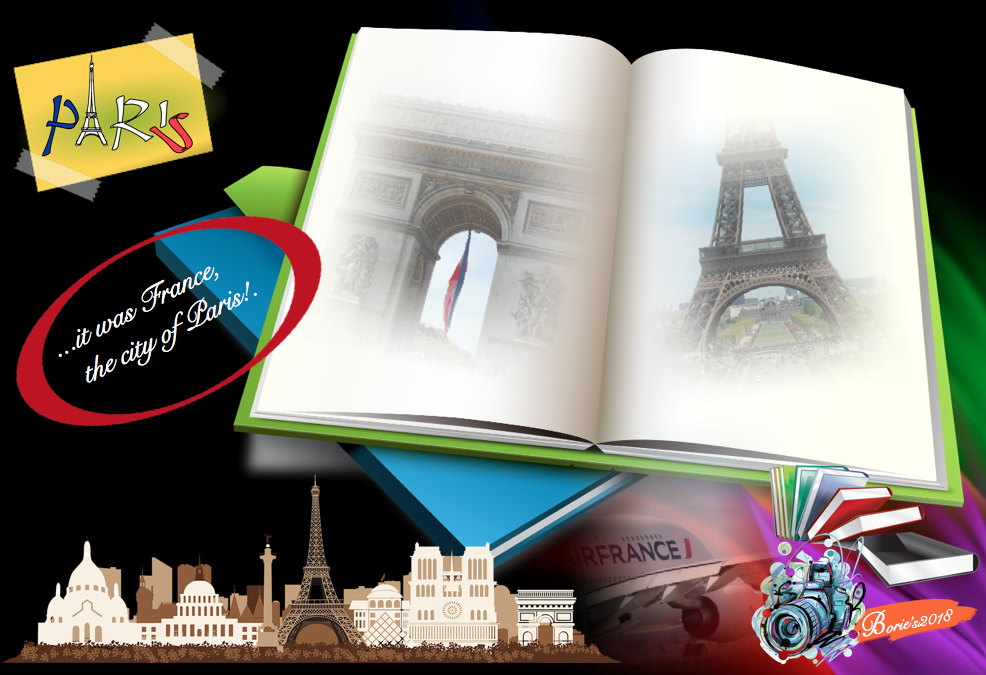
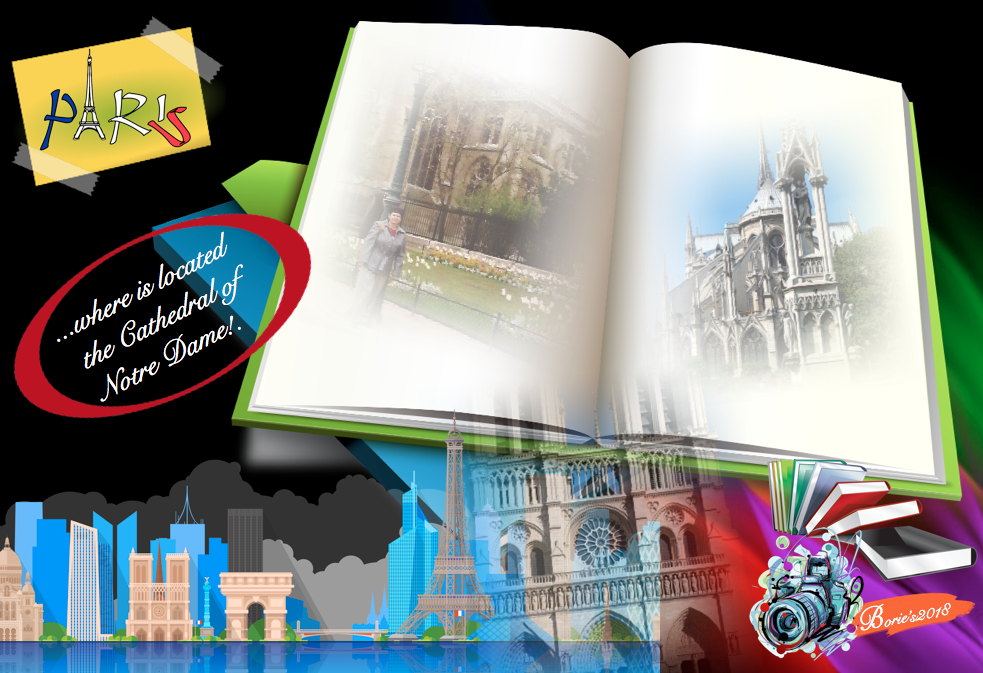
…pronto, já temos uma ideia da cidade que vamos visitar!. Neste dia, pela manhã, caminhado, atravessámos a ponte do Rio Sena na direcção da Ilha da La Cité, rodeada por águas do rio, onde se situa a Catedral de Notre Dame, de culto católico, dedicado a Maria, mãe de Jesus Cristo e, um dos edifícios mais nobres e antigos, de todos os que se construiram em estilo Gótico, cuja construção começou por volta do ano de 1163, terminando sómente no ano de 1345!. (soon, we already have an idea of the city we are going to visit!. On this morning, in the morning, we crossed the bridge of the River Seine in the direction of the Island of La Cité, surrounded by waters of the river, where is located the Cathedral of Notre Dame, of catholic cult dedicated to Mary, mother of Jesus Christ and, one of the noblest and oldest buildings, all of which were built in Gothic style, whose construction began around the year 1163, ending only in the year 1345)!.

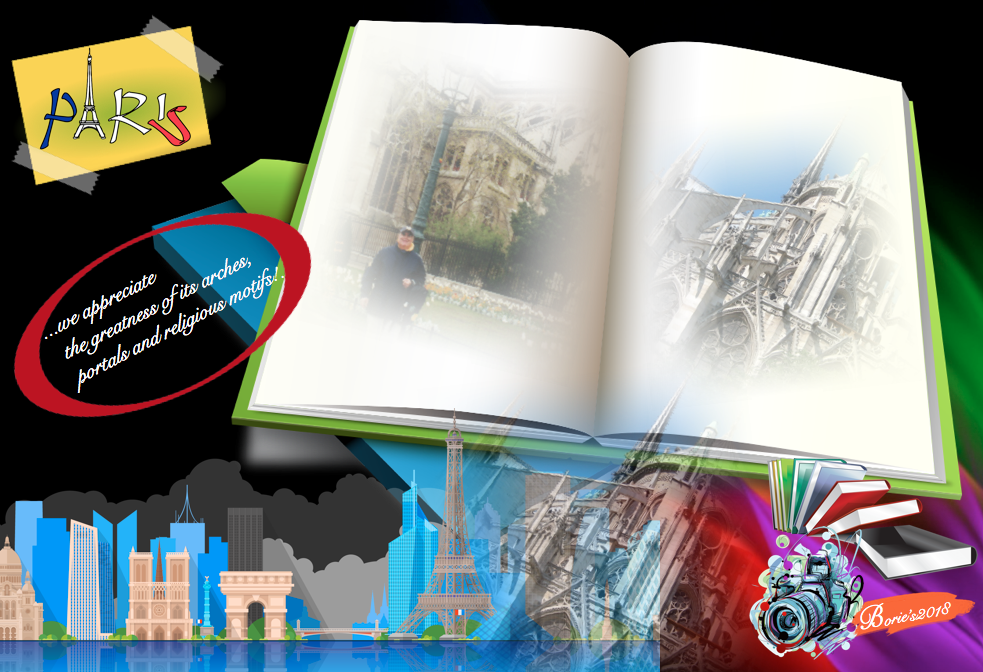
…apreciámos a grandeza dos seus arcos, portais e motivos religiosos, tudo obras dignas de museus, que devem ser conservadas para a iternidade!. As catedrais de estilo Gótico, surgem ligadas à ideia e esplendor da monumentalidade, num efeito claro das necessidades e aspirações da sociedade da época!. Esta maravilhosa catedral, sofreu alguns danos durante a Revolução Francesa, com alguma destruição, assim como o roubo de alguns dos seus tesouros, acabando como um espaço para armazém de alimentos, no entanto, anos depois, voltou a ter a sua dignidade, onde Napoleão Bonaparte se coroou a si mesmo, Imperador!. Outro episódio que ajudou a Catedral de Notre Dame a ter fama mundial, foi ter sido o cenário do romance do escritor Victor Hugo, “Nossa Senhora de Paris”, situando acontecimentos passados durante a Idade Média!. (we appreciate the greatness of its arches, portals and religious motifs, all works worthy of museums, which must be preserved for the years! The Gothic style cathedrals are linked to the idea and splendor of monumentality, in a clear effect of the needs and aspirations of the society of the time!. This magnificent cathedral suffered some damage during the French Revolution with some destruction, as well as the theft of some of its treasures, ending up as a space for food warehouse, however, years later it returned to its dignity, where Napoleon Bonaparte crowned himself, Emperor! Another episode that helped the Cathedral of Notre Dame to become world famous was to have been the scene of the novel by the writer Victor Hugo, “Our Lady of Paris”, situating past events during the Middle Ages)!.

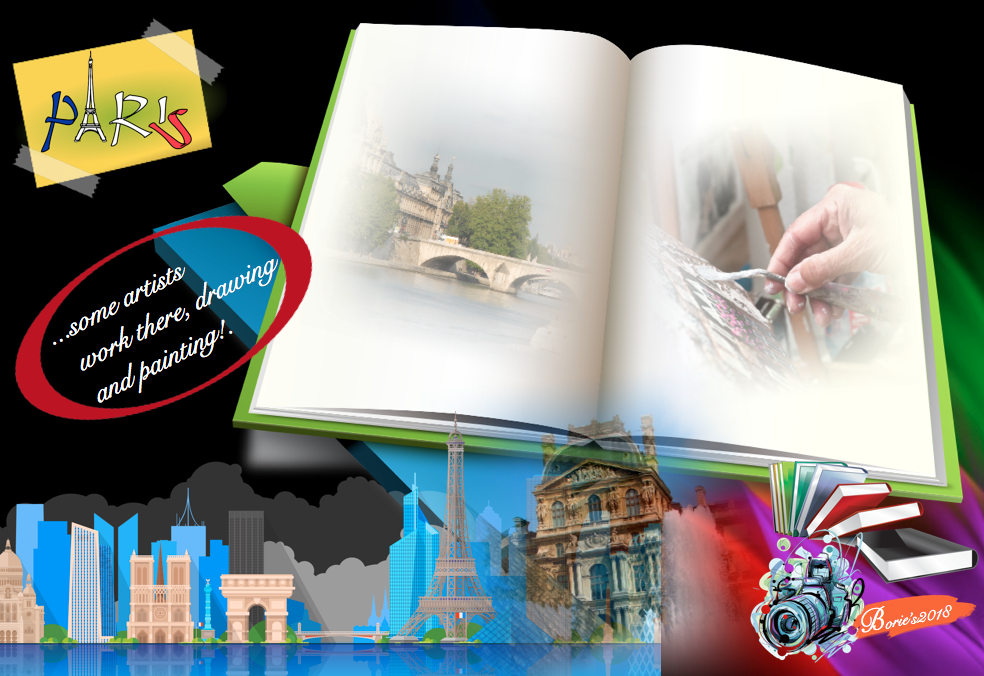
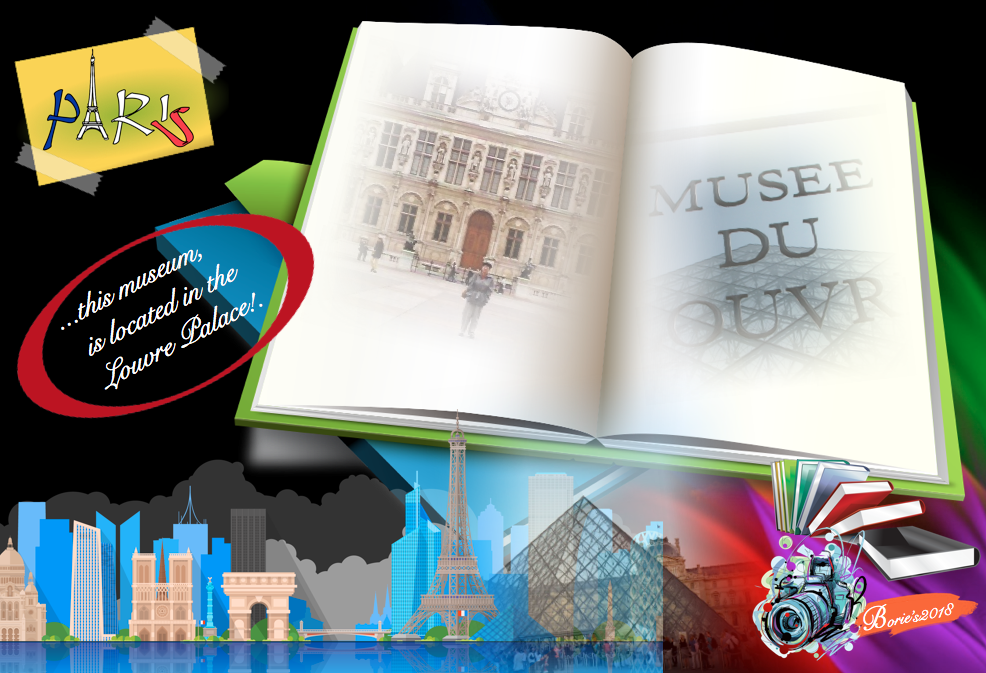
…já por diversas vezes explicámos que, sempre que possível para transporte dentro das cidades, usamos os transportes públicos, no entanto, o dia estava com tempo bom, o cenário era lindo, atravessámos de novo a ponte, saindo da Ilha de La Cité, caminhando, tendo por cenário o Rio Sena, onde existem quiosques vendendo livros, quadros com motivos alusivos ao rio e à cidade de Paris, alguns artistas trabalham ali, desenhando e pintando!. Seguindo até à Praça do Carrossel, onde em frente está o famoso Museu do Louvre, que é o maior museu de arte do mundo e, um monumento histórico na cidade de Paris!. (We have already explained on several occasions that, whenever possible for transport within the cities, we use public transport, however, the day was good, the scenery was beautiful, we crossed the bridge again, leaving the Island of La Cité, walking, taking in the scenery of the River Seine, where there are kiosks selling books, paintings with motifs alluding to the river and the city of Paris, some artists work there, drawing and painting!. Following to the Carousel Square, where opposite is the famous Louvre Museum, which is the largest art museum in the world and a historical monument in the city of Paris)!.

…este Museu, está localizado no Palácio do Louvre, originalmente construído como uma fortaleza no final do século XII ao XIII sob o reinado de Filipe II, pois os sinais são bem visíveis no porão do museu!. Estando nós, na extensa linha de espera debaixo de algum sol, que dava duas voltas à pirâmede, que é um monumento em vidro, mais ou menos no meio da praça, quando uma simpática senhora residente na cidade nos explicou, para nos deslocar-mos para o final daquela praça, onde existe um extenso centro comercial e, entrando lá, no primeiro andar, ficávamos com ascesso directo ao Museu, evitando toda a demora na extensa linha!. (this museum, is located in the Louvre Palace, originally built as a fortress in the late 12th to 13th centuries under the reign of Philip II, as the signs are well visible in the basement of the museum!. With us, in the long line of waiting under some sun, that went round two turns to the pyramid, which is a monument in glass, more or less in the middle of the square, when a friendly lady in the city explained to us, to move to the end of that square, where there is an extensive shopping center and, entering there, on the first floor, we were with direct access to the Museum, avoiding all the delay in the extensive line)!.

…entrámos, explicar o que vimos e apreciámos, às vezes correndo, outras parando com algum deslumbramento, é muito difícil de mencionar pois, milhares e milhares de peças estão lá, algumas desde a sua inauguração, no ano de 1793, com um acervo formado principalmente por pinturas confiscadas à família real e aos aristocratas que haviam fugido da Revolução Francesa!. A história é longa, no período imperial, o museu adoptou o nome de Museu Napoleão, que ordenou reformas e embelezamento no edifício e, as suas conquistas sobre outros países renderam uma grande quantidade de novas peças para o Museu, embora com a queda do Imperador, no ano de 1815, as nações espoliadas reclamassem os seus tesouros, despovoando as galerias do museu!. (we entered, explained what we saw and appreciated, sometimes running, others stopping with some dazzle, it is very difficult to mention because thousands and thousands of pieces are there, some since its inauguration in the year 1793, with a a collection consisting mainly of paintings confiscated from the royal family and the aristocrats who had fled the French Revolution)!. The history is long, in the imperial period, the museum adopted the name Napoleon Museum, which ordered reforms and beautification in the building and, its conquests on other countries yielded a great amount of new pieces for the Museum, although with the fall of the Emperor, in the year 1815, the plundered nations reclaimed their treasures, depopulating the galleries of the museum)!.

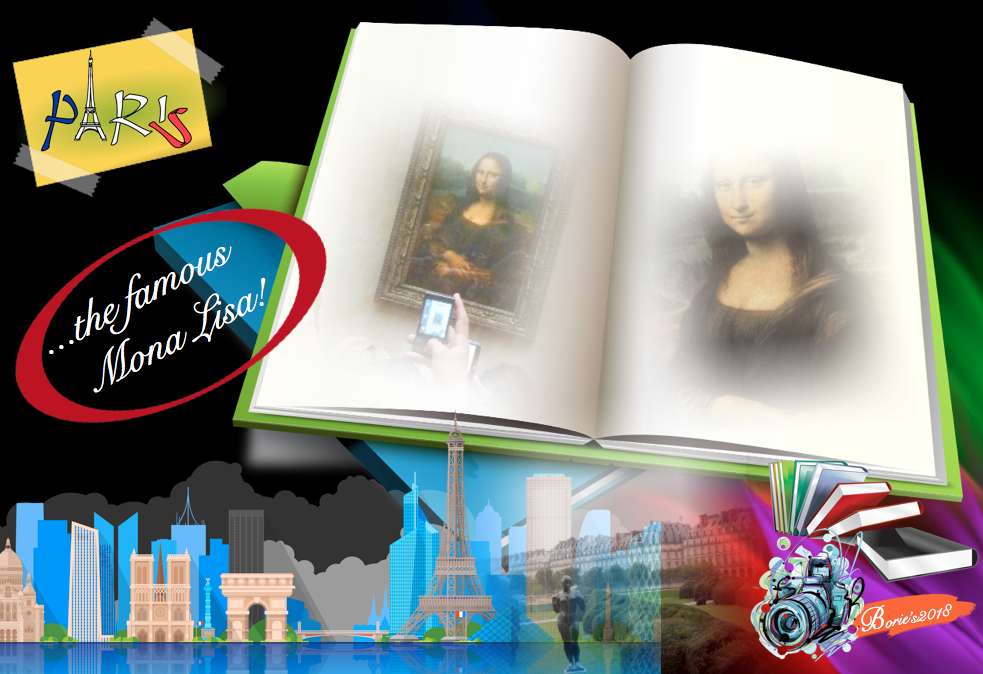
…todos os dias são feitas doações ao museu com novas peças, com o desenvolvimento da arqueologia, novas escavações e aquisisicões no Oriente, uma quantidade enorme de relíquias da antiguidade é transportada para o museu!. Enfim, depois de ver o Museu do Louvre, todos os outros museus, nos parecem mais pequenos!. Sim, depois de uma longa espera na linha, de novamente nos revistarem, aproximámo-nos da pintura de Leonardo da Vinci, um óleo sobre madeira de álamo, provávelmente concluída nos anos de 1503-19, a célebre “Mona Lisa”!. Que dizer?. Fantástico, ela até se riu para nós!. (every day, donations are made to the museum with new pieces, with the development of archeology, new excavations and aquisisicões in the East, a huge amount of relics of antiquity is transported to the museum!. Anyway, after seeing the Louvre Museum, all the other museums, seem to us to be smaller!. Yes, after a long wait on the line, and we were again searched, we approached the painting of Leonardo da Vinci, an oil on poplar wood, probably completed in the years 1503-19, the famous “Mona Lisa”! What to say?. Fantastic, she even laughed at us)!.

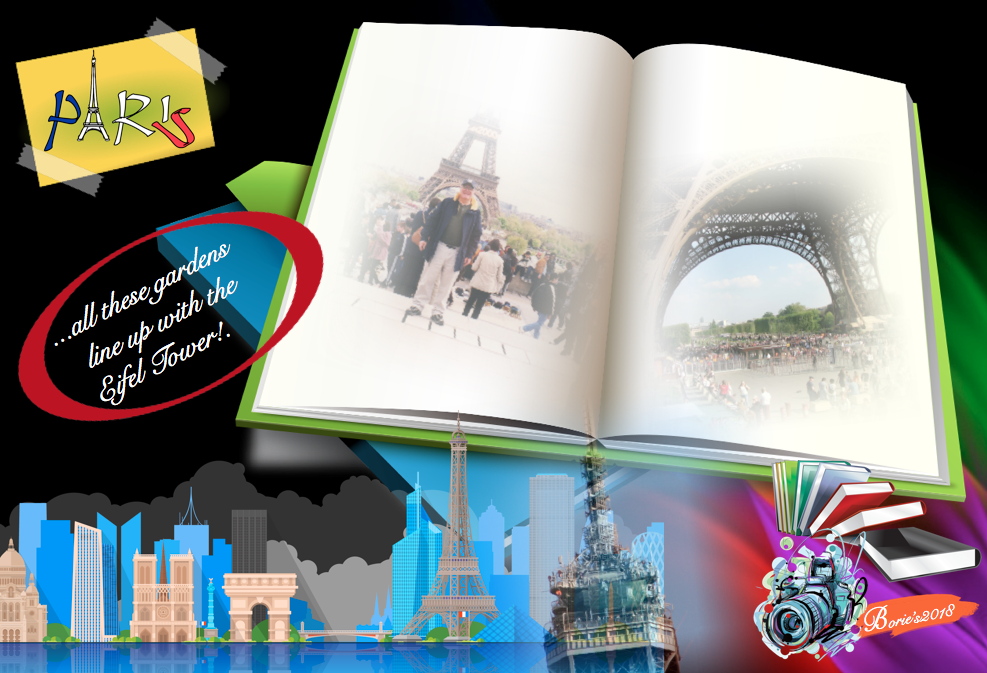
…viajando no Metro, saímos na área dos Jardins de Trocadero, que é um conjunto de jardins, tanques e fontes, onde a água faz excelentes desenhos, junto ao Palácio de Chailot, até à Ponte de Lena, sobre o Rio Sena, que foram criados como motivo da Exposição Universal de Paris de 1878!. Todos estes jardins se alinham com a Torre Eifel, onde chegámos atravessando a ponte sobre o rio!. (traveling in the Metro, we leave the area of the Gardens of Trocadero, which is a set of gardens, tanks and fountains, where the water makes excellent drawings, next to the Palace of Chailot, to the Bridge of Lena, on the River Seine, which were created as grounds for the Universal Exhibition of Paris of 1878! All these gardens line up with the Eifel Tower, where we came across the bridge over the river)!.

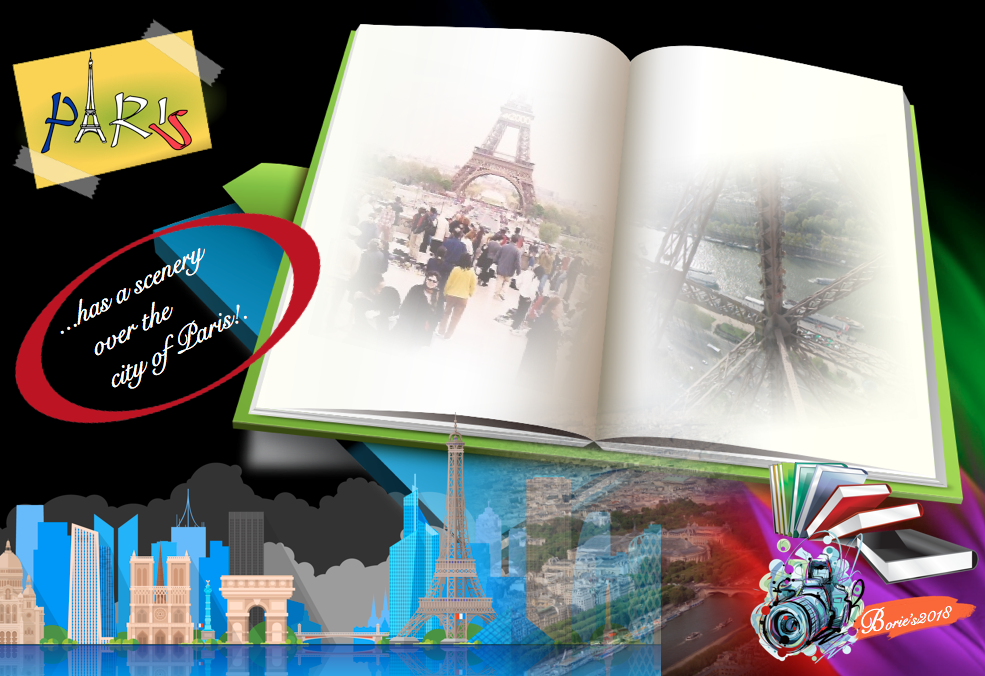
…depois de comprar o bilhete de entrada, subimos a Torre Eifel, até ao último andar, tem um cenário sobre a cidade de Paris, mostrando o Rio Sena em uma longa distância, foi construída sobre a orientação do engenheiro francês Alexandre Gustave Eifel e seus colaboradores, para a Exposição Universal de 1889 em Paris!. É sem dúvida o símbolo de França, pois quando se fala de Paris ou mesmo de França, logo vem ao pensamento a Torre Eifel!. Tem uma altitude de 300 metros, embora as antenas de rádio, TV e outras sistemas, a elevassem mais 24 metros!. Como curiosidade, no momento da sua construção, alguns artistas da época viam esta torre como um monstro de ferro e, após finalizarem a Exposição Universal, foi utilizada em provas do exército Francês com antenas de comunicação e, actualmente é um dos motivos com mais atracção turística, pelo menos na Europa!. (after buying the entrance ticket, we climbed the Eifel Tower, up to the top floor, has a scenery over the city of Paris, showing the River Seine in a long distance, was built on the guidance of the French engineer Alexandre Gustave Eifel and his collaborators, for the Universal Exhibition of 1889 in Paris!. It is undoubtedly the symbol of France, because when one speaks of Paris or even of France, soon comes to the thought the Eifel Tower!. It has an altitude of 300 meters, although the antennas of radio, TV and other systems, raised it another 24 meters!. As a curiosity, at the time of its construction, some artists of the time saw this tower as an iron monster and, after finalizing the Universal Exposition, was used in French army tests with communication antennas and, at the moment is one of the reasons with more attraction, at least in Europe)!.

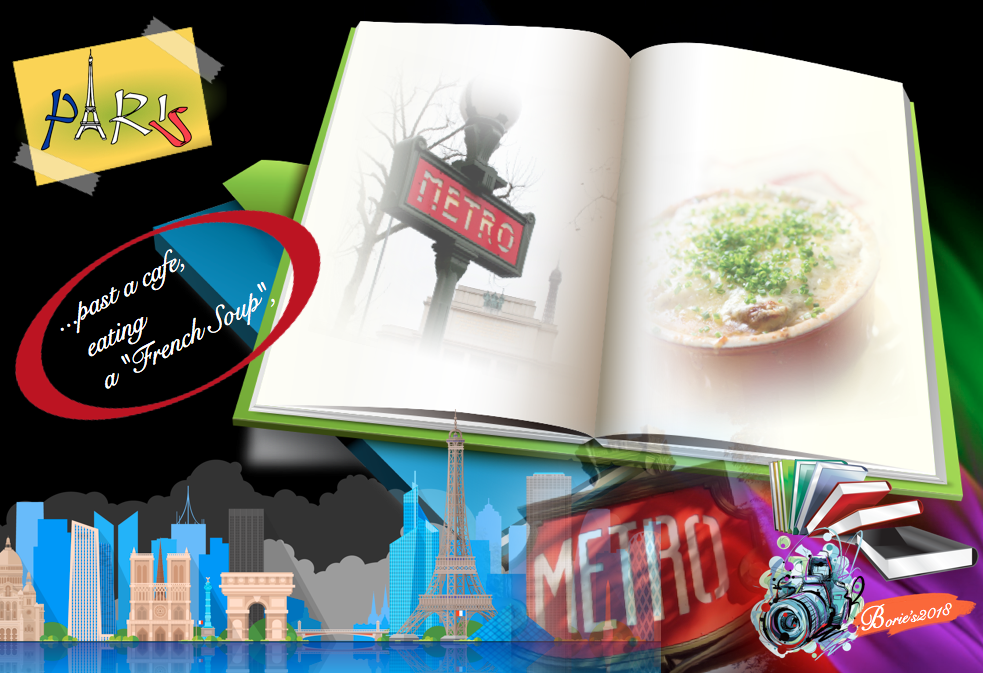
…viajámos de Metro no regresso ao hotel, passando por um qualquer café, comendo uma “French Soup”, um pitéu confeccionado, com cebola, alho, folhas de louro, sal, pimenta, caldo de carne, tomilho, queijo e pão de trigo, quente, bem quente, servida numa típica malga, regada com um copo de vinho da região de Bordeaux!. Maravilhoso!. (We traveled by Metro on the way back to the hotel, past a cafe, eating a “French Soup”, made with leek, garlic, bay leaves, salt, pepper, beef broth, thyme, cheese and bread of wheat, hot, very hot, served in a typical “malga”, (bowl), washed down with a glass of Bordeaux wine!. Wonderful)!.

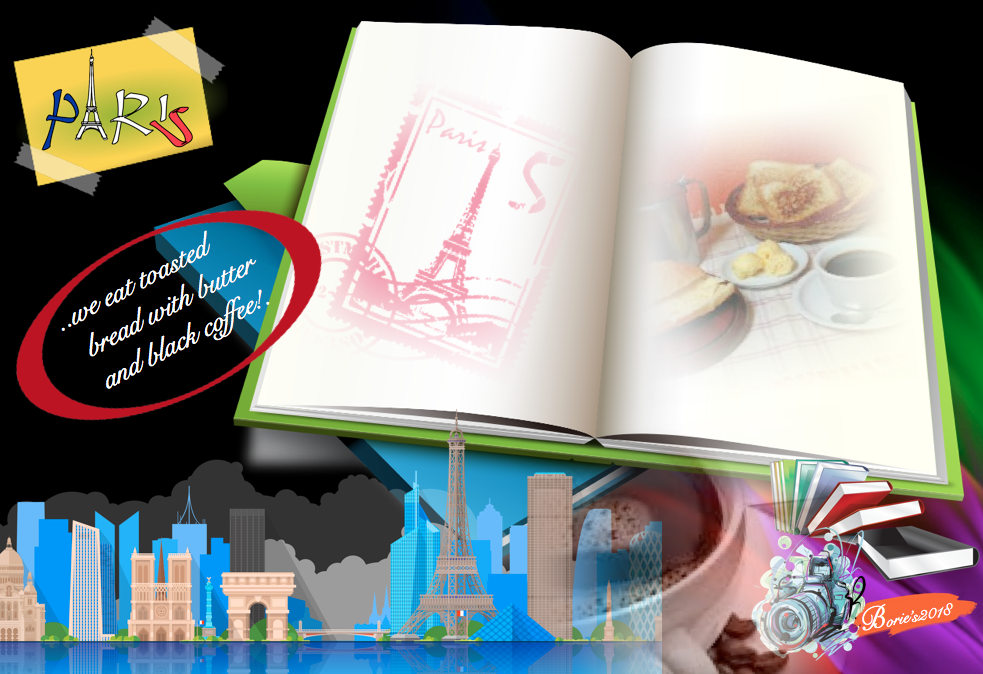
…no próximo dia pela manhã, numa qualquer esplanada de um café, comemos pão de trigo torrado, barrado com manteiga e cafá negro, (na França, pela manhã tem que haver pão na mesa, se não houver, não é considerado pequeno almoço)!. (The next day in the morning, on any esplanade of a café, we eat toasted bread with butter and black coffee, (in France, in the morning there must be bread on the table, if there is not, it is not considered breakfast)!.

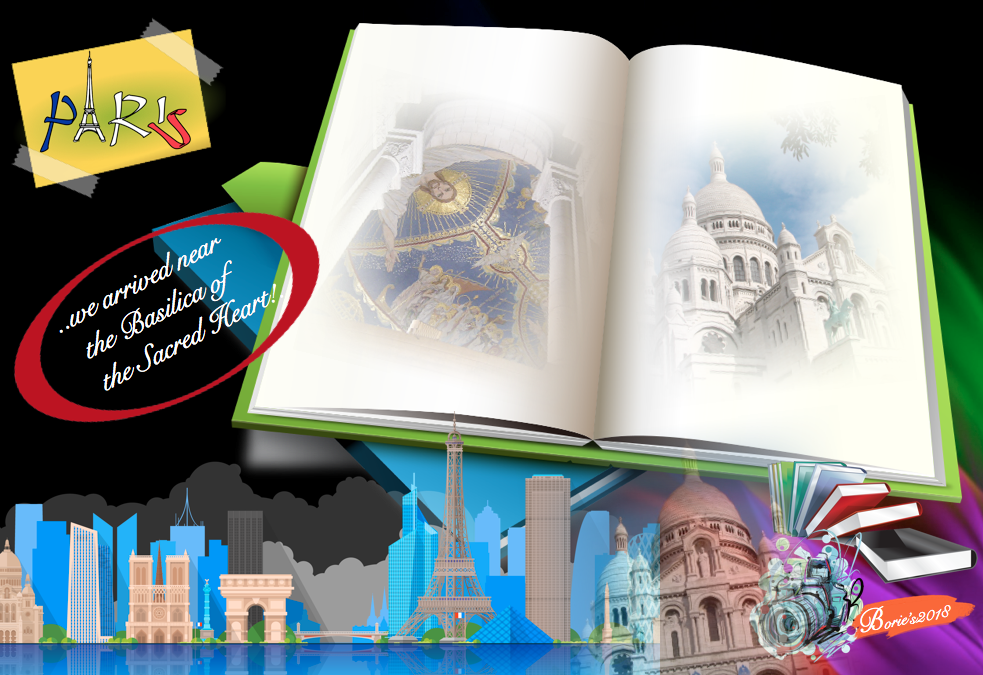
…em seguida viajando no Metro,saímos na estação de Anvers, em Montmartre, que é uma colina com mais ou menos 130 metros de altura, na margem direita do Rio Sena!. Já se podia ver, a cúpula branca da Basílica Católica do Sagrado Coração, embora por lá exista outra, a mais antiga desta colina, que é a Saint Pierre de Montmartre, no entanto nós, seguindo pela rua Steinkerque, chegámos próximo da Basílica do Sagrado Coração, que é uma impressionante Basílica Católica que, vista de longe, antes de subir os degraus da escadaria, tem uma qualidade mágica!. É uma atracção muito popular na cidade de Paris, apesar da sua existência ter pouco mais de 100 anos, portanto não é tão antiga como a Catedral de Notre Dame, mas toda a sua área, com as estátuas do Rei Saint Louis e Saint Joana Arc, ouvir o som maravilhoso do seu orgão de tubos, ver o mosaico de Jesus na cúpula sobre o altar, ou os seus belos vitrais, fazem-nos meditar e acreditar que, ainda existem coisas bonitas, que em nós, se traduzem em alguma paz! (After traveling on the Metro, we leave at the station of Anvers in Montmartre, which is a hill about 130 meters high, on the right bank of the River Seine !. We could already see the white dome of the Sacred Heart Catholic Basilica, although there is another one, the oldest one on this hill, which is Saint Pierre de Montmartre, however we, following the street Steinkerque, we arrived near the Basilica of the Sacred Heart, which is an impressive Catholic Basilica which, seen from afar, before climbing the steps of the staircase, has a magical quality!. It is a very popular attraction in the city of Paris, although its existence is just over 100 years old, so it is not as old as the Notre Dame Cathedral but its entire area with the statues of King Saint Louis and Saint Joan Arc, to hear the wonderful sound of its organ pipes, to see the mosaic of Jesus in the dome on the altar, or its beautiful stained glass, make us meditate and believe that, there are still beautiful things that in us translate into some peace)!.

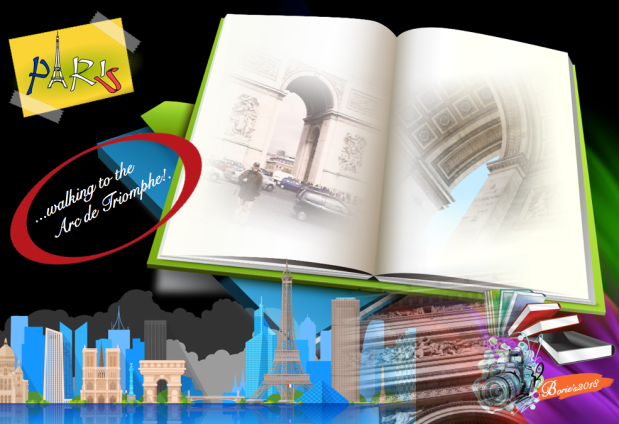
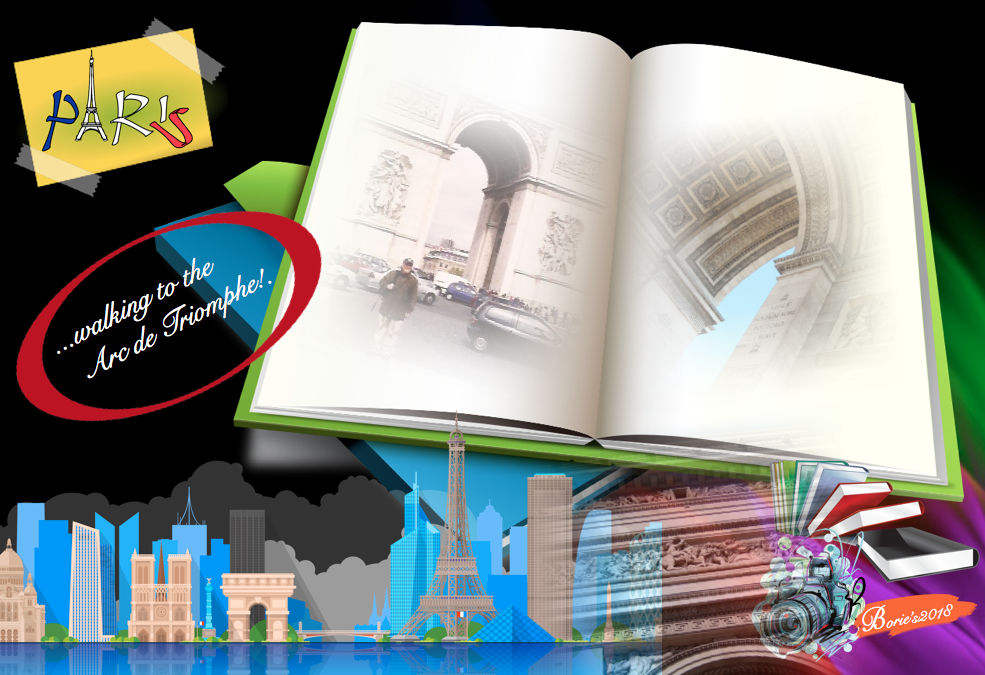
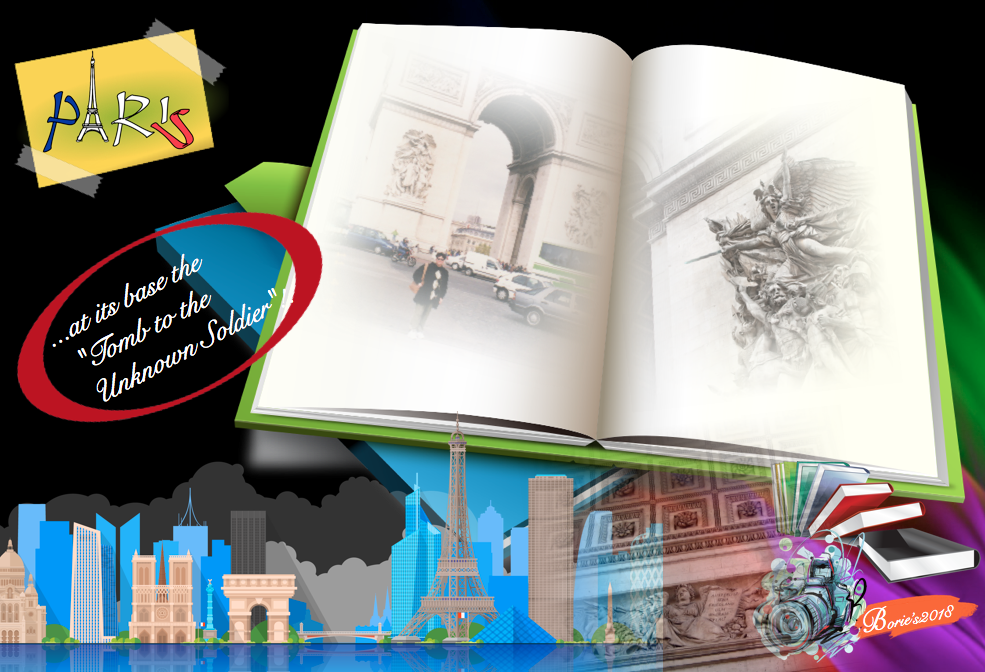
…de novo viajando no Metro, saímos na estação da área de Argentine, caminhando até ao Arco do Triunfo, que foi um monumento construído em comemoração às vitórias militares do Napoleão Bonaparte, no qual estão gravados os nomes de muitas batalhas e muitos generais!. (again traveling in the Metro, we left at the station of the Argentine area, walking to the Arc de Triomphe, which was a monument built in commemoration of the military victories of Napoleon Bonaparte, in which are engraved the names of many battles and many generals)!.

…o que mais apreciámos neste monumento foi, na sua base o “Túmulo ao Soldado Desconhecido”, no qual respeitosamente prestámos algum tempo de meditação!. Este local, tornou-se no ponto de partida dos desfiles militares do exército Francês após campanhas militares vitoriosas e para o Dia da Bastilha, a 14 de Julho!. (What we appreciated most in this monument was, at its base the “Tomb to the Unknown Soldier”, in which we respectfully provided some time of meditation!. This place became the starting point for the French army military parades after victorious military campaigns and for the Bastille Day on July 14)!.

…caminhando, percorremos parte da Avenida dos Campos Elísios e ruas adjacentes, entrando e saindo em diversos estabelecimentos que nos dispertavam a atenção, comprando lembranças para familiares, ou simplesmente apreciando!. (walking, we cross part of the Avenue of the Champs-Elysees and adjacent streets, entering and leaving in diverse establishments that we attention the attention, buying souvenirs for familiar, or simply enjoying)!.

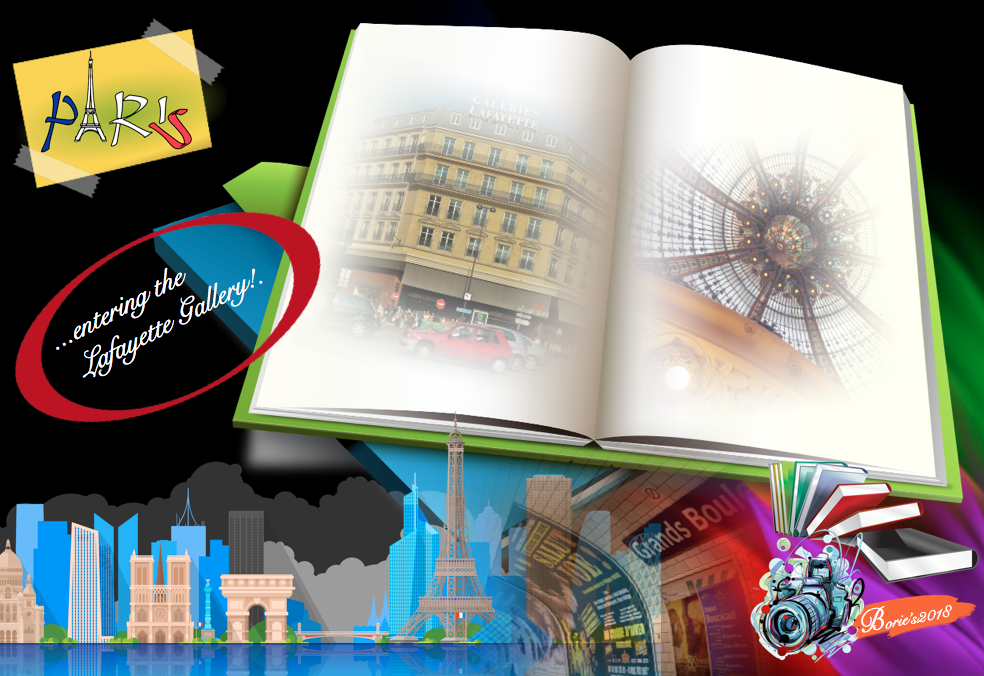
…viajando de novo no Metro, saímos na estação da Boulevard Haussmann, entrando na Galeria Lafayette, uma loja com arquitectura “Nouveau”, com artigos para todos os preços, muito, muito caros e muito baratos, onde se destaca uma notável cúpula de vidro e aço, com uma vista panorâmica, assim como as escadarias, que foram concluídas por volta do ano de 1912, que logo se tornaram uma atracção turística desta cidade!. (Traveling again on the Metro, we leave at Boulevard Haussmann station, entering the Lafayette Gallery, a shop with “Nouveau” architecture, with articles for all prices, very, very expensive and very cheap, with a notable glass dome and steel, with a panoramic view, as well as the staircases, which were completed around the year 1912, which soon became a tourist attraction of this city)!.

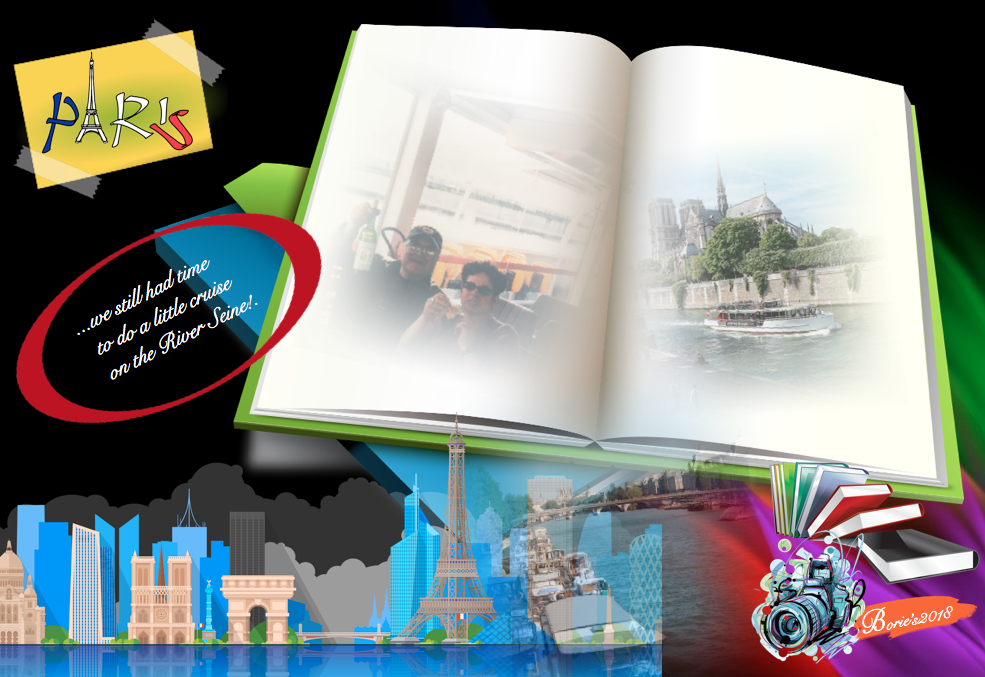
…ainda tivémos tempo de fazer um pequeno cruzeiro pelo Rio Sena!. Foi quase como uma despedida à cidade de Paris, um adeus à Notre Dame, à Torre Eiffel, ao Luvre e muito mais!. (we still had time to do a little cruise on the River Seine!. It was almost like a farewell to the city of Paris, a farewell to Notre Dame, the Eiffel Tower, the Luvre and more)!.

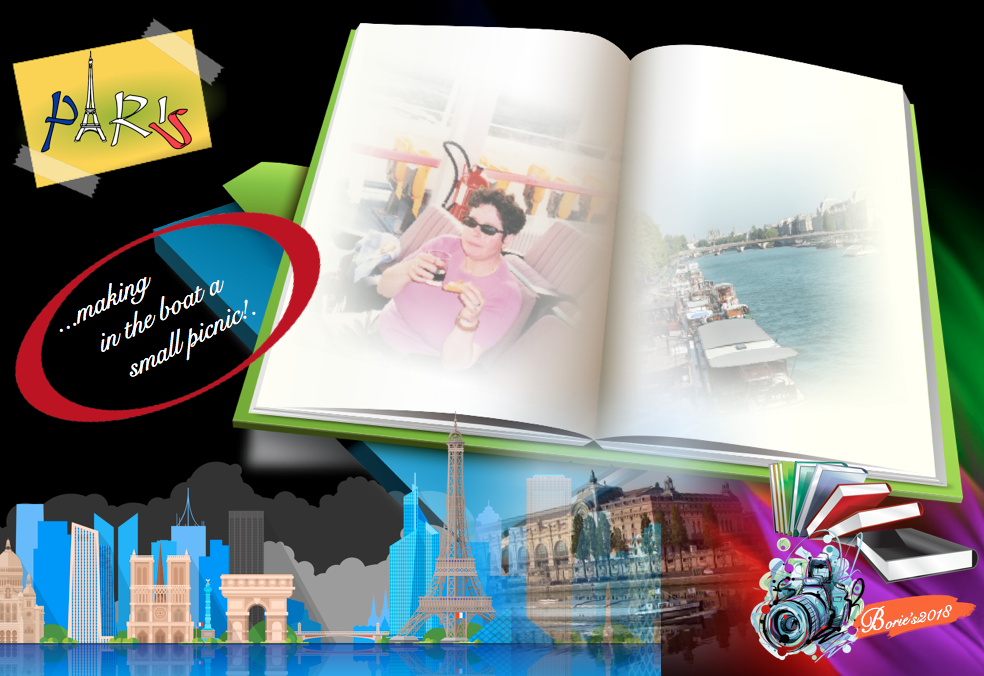
…apreciámos a cidade vista do rio, depois de um dia atarefado, descansando os pés cansados de explorar esta maravilhosa cidade!. Como bons cidadãos de origem Portuguesa, levámos connosco uma garrafa de vinho da região de Bordeaux, e um queijo da região da Normandy, fazendo no barco um pequeno piquenique, que nos retemperou as forças para continuar a explorar a Europa!. (We appreciated the city view of the river, after a busy day, resting the weary feet of exploring this wonderful city !. As good citizens of Portuguese origin, we took with us a bottle of wine from the Bordeaux region, and a cheese from the Normandy region, making in the boat a small picnic, which has renewed us the forces to continue exploring Europe)!.

…era a última noite em Paris, saímos do hotel para comer, algo com sabor de França, num restaurante que nos recomendaram, havia diferentes qualidade de comida, onde em quase todas o queijo entrava, decidimo-nos por um de nome “Fondue”, criado quando os camponeses pegavam nos queijos, incluindo as suas cascas e colocavam numa panela com vinho para derreter e comer com pão!. Diziam que era uma delícia!. Provámos, mas não apreciámos, talvez porque à tarde comemos queijo e bebemos vinho!. (it was the last night in Paris, we left the hotel to eat, something with the flavor of France, in a restaurant that we were recommended, there were different quality of food, where in almost all the cheese entered, we decided on one by name ” Fondue “, created when the peasants picked up the cheeses, including their shells and placed them in a pan with wine to melt and eat with bread! They said it was delicious!. We tasted it, but we did not appreciate it, maybe because in the afternoon we eat cheese and drink wine)!.

…ordenámos o típico “Bife e batatas fritas”, um prato muito comum e popular servido em toda a Europa, mas na ementa dizia que era o prato nacional da Bélgica e da França, que ambos afirmam ser o lugar da sua invenção!. (We ordered the typical “Steak and Chips”, a very popular and popular dish served throughout Europe, but in the menu said that it was the national dish of Belgium and France, which both claim to be the place of their invention)!.

Tony Borie, April 2018.
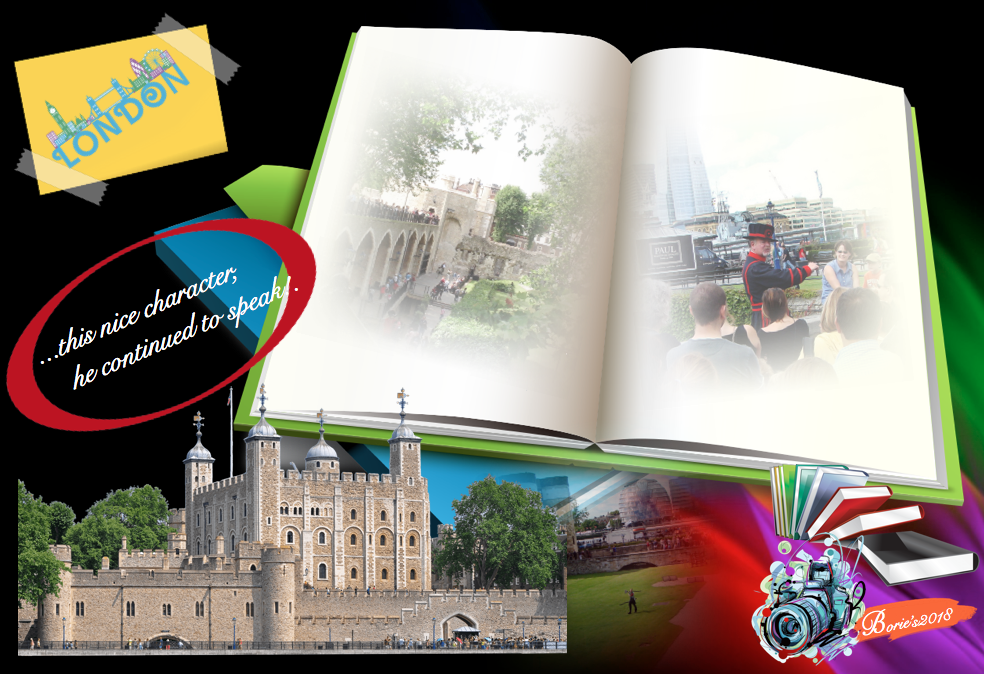
…happy birthday, Manny!.

…happy birthday, Manny!.

…feliz aniversário, Manny!. (happy birthday, Manny)!.

…mais um ano para uma nova jornada!. Podemos ter 18, 31, 47 ou 63 anos, não são os anos que contam na vida, é a vida que conta nos anos, porque a vida é muito curta para ser vivida contando apenas os anos, devemos usar os trezentos e sessenta e quatro dias que perfazem um ano, para viver com o máximo de felicidade e alegria, na companhia de família, amigos e das pessoas que nos fazem felizes, isso faz parte da nossa jornada, ao passar pelo planeta Terra!. (another year for a new journey! We can have 18, 31, 47 or 63 years, it’s not the years that count in life, it’s the life that counts in the years, because life is too short to be lived counting only the years, we must use the three hundred and sixty-four days that last a year, to live with the maximum of happiness and joy, in the company of family, friends and the people that make us happy, this is part of our journey, when passing through planet Earth)!.

…passamos parte do dia juntos, o Manny, a sua dedicada esposa Mariana, e também a nossa dedicada esposa Isaura e nós!. (we spent part of the day together, Manny, the dedicated wife Mariana, also our dedicated wife Isaura and us)!.

…foram algumas “Ilhas” e “Oceanos” de saudades, que fomos lembrando durante a tarde, começando pela Ilha da Madeira, no meio do oceano Atlântico, com a sua extensa flora exótica, que a Mariana continua cultivando aqui na Florida, onde uma grande variedade de orquídeas, recebem toda a assistência e dedicação para serem umas flores “saudáveis e felizes”!. (were some of the “Islands” and “Oceans” that we remembered during the afternoon, beginning with Madeira Island, in the middle of the Atlantic Ocean, with its extensive exotic flora, which Mariana continues to grow here in Florida, where a wide variety of orchids, receive all the assistance and dedication to be a “healthy and happy” flowers)!.

…visitámos um restaurante Japonês, da Terra do Sol Nascente, algumas pessoas até dizem que é a “terra da origem do sol”, (oxalá o sol ilumine sempre a vossa vida, Manny e Mariana), no mar do Japão, num arquipélago composto por 6852 ilhas, sendo a maior, a ilha de Honshu, onde está situada a cidade de Tóquio, capital da nação, onde além de outras iguarias bebemos a deliciosa “sake”, apreciando as diferentes habilidades do cozinheiro!. (we visited a Japanese restaurant, from the Land of the Rising Sun, some people even say that it is the “land of the sun” (may the sun always enlighten your life, Manny and Mariana), in the Japanese Sea, in an archipelago of 6852 islands, the largest being Honshu Island, where is located the city of Tokyo, capital of the nation, where besides other delicacies we drink delicious “sake”, enjoying the different skills of the cook!.

…o resto do dia o Manny e a Mariana, lembraram, entre outras recordações, o país Venezuela, constituído por uma parte continental e por um grande grupo de ilhas, no mar do Caribe!. Falaram do tempo de jovens, da cidade de Caracas, subindo e descendo montanhas até chegarem a Junquito e, ainda mais para o interior, numa aldeia remota, onde só podiam ir a cavalo, onde viviam, trabalhando a terra, de onde tiravam o sustento da família!. (the rest of the day, Manny and Mariana remembered, among other memorabilia, the country Venezuela, consisting of a continental part and a large group of islands, in the Caribbean Sea!. They talked about the time of young people in the city of Caracas, going up and down mountains until they reached Junquito, and even further inland, in a remote village, where they could only go on horseback, where they lived, working the land, family support)!.

…feliz aniversário Manny, falaram dos tempos da juventude e, ainda são uns jovens, oxalá por muitos anos, com felicidade, saúde e alegria, na companhia de todos os teus!. (happy birthday Manny, they talked about youth times, and they are still young people, hopefully for many years, with happiness, health and joy, in the company of all of you)!.

…foi um dia de “Ilhas” e “Oceanos”!. (it was a day of “Islands” and “Oceans”)!.

Tony Borie, May 2018.

…we want to scream!

…we want to scream!

…queremos gritar! (we want to scream)!.

…dizem que, em alguns momentos da nossa vida, gritar, exclamar, apregoar, bradar, vociferar, berrar, dizer em voz alta, protestar, assobiar, cantar alto, até mesmo chorar compulsivamente, nos faz bem!. Será verdade?. Quem sabe!. Diferentes pessoas, diferentes sentimentos!. Talvez seja verdade, mas hoje pela manhã, ao sentar-nos em frente ao computador, apeteceu-nos gritar!. (they say that at some point in our lives, screaming, exclaiming, shouting, loudly protesting, whistling, singing loudly, even crying compulsively, does us good! Is it true?. Who knows!. Different people, different feelings!. Maybe that’s true, but this morning, as we sat in front of the computer, we wanted to scream)!.

…GRITAR!. Tal como fazíamos nos momentos dos ataques rápidos e mortíferos que sofríamos, com armas ligeiras e granadas de morteiro calibre 90, ao aquartelamento, que era uma base, onde estávamos estacionados em cenário de combate, no interior da então Província Colonial da Guiné Portuguesa, em África!. Era isso que fazíamos, gritando, fugindo para os abrigos, onde encolhidos, estarrecidos de medo, com uma espingarda metralhadora entre as mãos, sem força para disparar qualquer tiro, sómente com a força vinda do interior de uns pulmões que, querendo explodir, talvez libertar-se, transmitindo uivos de dor, que encontravam alguma liberdade saindo das nossas secas gargantas, porque a mente, essa estava paralizada, ouvindo o estrondo dos rebentamentos cada vez mais próximos, ou vendo os companheiros caídos aqui e ali, gemendo, contorcendo-se, alguns feridos de morte, arrastando-se, maldizendo a sua sorte, porque a sua alma estava a fugir do seu ensanguentado corpo, refugiando-se num qualquer lugar abrigado, talvez ao nosso lado, naqueles abrigos, cheios de lama, feitos de troncos de palmeiras e cobertos de terra vermelha!. (SHOUTING!. As we did in moments of rapid and deadly attacks, that we suffered, with light weapons and 90-caliber mortar shells, to the barracks, which was a base where we were stationed in a combat setting inside the then Colonial Province of Guinea Portuguese, in Africa!. That was what we were doing, shouting, fleeing to the shelters, where shrunken, terrified with a machine gun in their hands, without the strength to fire any shot, only with the force coming from the lungs that, wanting to explode, maybe releasing themselves, conveying howls of pain, that they found some freedom coming out of our dry throats, because the mind was paralyzed, hearing the crash of the burying ever closer, or seeing the comrades fallen here and there, moaning, Some of them were wounded by death, dragging themselves, cursing their fate, for their soul was fleeing from their bloody body, taking shelter in any sheltered place, perhaps by our side, in mud-filled shelters made of trunks of palm trees and covered with red earth)!.

…porra, temos que gritar de novo!. Lembrando a promessa de que, naquela época, com pouca ou nenhuma instrução escolar, íamos para a guerra, mentalizados de que íamos libertar os povos de África, a mando de um primeiro ministro com um cérebro cheio de motivos políticos, para um continente distante, onde milhares de jovens lutaram e morreram, ao honrar a bandeira de uma nação que dá pelo nome de Portugal, que os abandonou, fazendo-lhes crescer uma revolta silenciosa de terror e repressão que, numa geração com idades que andam pela volta dos setenta, oitenta anos, aos poucos vão morrendo, alguns sem casa ou abrigo, autênticos “descamisados”, mas que ainda vão resistindo ao frio, ao calor, à chuva, ao silêncio e ao desprezo dos jovens dirigentes do governo da nação Portugal!. (fuck, we have to shout again!. Remembering the promise that at that time, with little or no schooling, we would go to war, mindful that we were going to liberate the peoples of Africa, under the command of a politically motivated prime minister, to a distant continent, where thousands of young people fought and died, honoring the flag of a nation that gives the name of Portugal, that abandoned them, causing them to grow a silent revolt of terror and repression that, in a generation that walks around the seventies, eighty years, little by little they die, some without a house or shelter, authentic “shirtless”, but still resisting the cold, the heat, the rain, the silence and the contempt of the young leaders of the government of the nation of Portugal)!.

…temos que nos levantar, ir fazer um chá, tomá-lo, ir lá fora tomar um pouco de ar, porque temos vontade gritar de novo!. Sim, vamos gritando, enquanto por cá andamos, porque talvez daqui a umas centenas de anos, se ainda houver o país Portugal, talvez algum nosso descendente, em determinado dia, ou em determinada aldeia, em que se comemore o dia de Combatente da Guerra Colonial Portuguesa, seja condecorado, porque é um descendente na quinta ou sexta geração, de um combatente que, noutros tempos defendeu a bandeira portuguesa no continente Africano, então nessa época, talvez alguém se lembre que: “País que não respeite e lembre o passado, nunca poderá ter um bom futuro”!. (We have to get up, go make a tea, take it, go outside take some air, because we feel like screaming again!. Yes, let’s shout, while we walk here, because maybe in a few hundred years, if there is still the country Portugal, maybe some of us our descendant, on a certain day, or in a certain village, on which the day of Combatant of War Colonial Portuguese, is decorated, because he is a descendant in the fifth or sixth generation, of a fighter who, in other times, defended the Portuguese flag on the African continent, then perhaps someone remembers that: “Country that does not respect and remember the past, you can never have a good future”)!.

…queríamos começar a contar-vos uma história pitoresca que por nós passou em cenário de combate mas, lá vem o grito de revolta de novo ao nosso pensamento!. Porque, alguns dirigentes do actual governo de Portugal e, agora vão pensar que o queremos são medalhas ou outras mordomias, mas não, o queremos é paz e que reconheçam, que se lembrem de nós combatentes, que em jovens fomos mobilizados, forçados a ir defender a bandeira de Portugal, num horrível cenário de combate, sem qualquer condição de sobrevivência, e agora, condecoram atletas, artistas e outras personagens que os médias tornaram famosas, que ganham fortunas, não cumprem seviço militar obrigatório, com muito tempo de antena, tudo com sorrisos de ocasião em frente às câmaras de TV, esquecendo o Zé combatente, ou os Antónios e Manéis, que derivado aos traumas e ferimentos sofridos em combate nas savanas, pântanos e florestas de África, ainda vivos, alguns estão sózinhos, sem família, que se arrastam numa cadeira de rodas, tendo por companhia talvez um animal, que pode ser um cão ou um gato, que os ouvem e com quem desabafam, não tendo um simples casaco, onde na lapela, devia estar presente, para que a nova geração possa admirar, uma dessas condecorações!. (We wanted to begin to tell you a picturesque story that has passed us in the scenario of combat but, there comes the cry of revolt again to our thought!. Because, some leaders of the present government of Portugal and, now they will think that the we want to be medals or other stewardships, but no, we want peace and that they recognize, that they remember us combatants, that in young people we were mobilized, forced to go defend the flag of Portugal, in a horrible scenario of combat, without any condition of survival, and now they honor athletes, artists and other characters that the averages have become famous, who make fortunes, do not perform compulsory military service, with long antenna time, all with occasional smiles in front of the TV cameras, forgetting Ze combatant, or the Antonios and Manéis, that derived from the trauma and injuries suffered in combat in the savannas, marshes and forests of Africa, still alive, some are alone, without family, who crawl in a wheelchair, perhaps accompanied by an animal, that can be a dog or a cat, that hear them and with whom they unburden, not having a simple coat, where in the lapel, had to be present, so that the new generation can admire, one of these decorations)!.

…já estamos a ver que a história pitoresca, que queríamos contar, vai ficar para outra ocasião, porque lá vem outra vez a vontade de gritar!. Lembrando-nos, das viagens que os governantes do país que defendemos num cenário de combate, fazem, usando aviões, helicópteros e outras mordomias do governo, viagens essas, que pelo menos nós, não compreendemos muito bem para que servem, quando na nossa simples opinião, alguns desses aviões deviam ser usados entre outras coisas, para transladar os restos mortais dos nossos companheiros, mortos em combate, em defesa da nação Portugal, cujos restos mortais ainda por lá estão, sepultados nas savanas, florestas, rios e pântanos, da África que então era governada por Portugal e, que felizmente hoje, já não é!. (We are already seeing that the picturesque history, which we wanted to tell, will stay for another time, because there comes again the desire to shout!. Reminding us, of the trips that the rulers of the country that we defend in a scenario of combat, they do, using airplanes, helicopters, and other government stewardships, such trips that at least we, do not understand very well what they are for, when in our simple opinion some of these planes were to be used to transport the remains of our comrades, killed in combat, in defense of the Portuguese nation, whose remains are buried there in the savannas, forests, rivers and swamps of Africa that was then ruled by Portugal and which fortunately today no longer exists. It is)!.

…já estamos mais calmos, agora não gritamos, vamos falar baixinho!. Sabemos que os actuais dirigentes do governo em Portugal não têem muito tempo para ler os nossos escritos, por sinal muito mal escritos, num português imigrante de escola portuguesa mínima, mas a nossa intenção é única e simplesmente dizer a verdade e o que nos vai na alma, e claro, sentimos algum direito de falar, pois demos o corpo às balas, defendendo a bandeira de Portugal, como combatentes na mortífera Guerra Colonial que Portugal manteve por anos em África, portanto, nada mais simples que lembrar aqueles postes em cimento que havia junto dos cruzamentos da linha do caminho de ferro, que diziam: “pare, escute e olhe”, pois nunca é tarde para reconhecer os nossos erros, portanto pedimos encarecidamente a alguns desses governantes, não a todos, por favor deixem por algum tempo de tirar vantagem do bondoso e simples povo das aldeias, vilas e cidades de Portugal, lembrem-se por alguns momentos, da justiça tardia, da corrupção que os meios de comunicação anunciam, dos doentes abandonados na lista de espera nos hospitais, das necessidades primárias do povo e, já agora, dos antigos combatentes, que talvez tenham salvo a vida a centenas, talvez milhares de famílias, que então viviam na tal África Portuguesa!. (We are quieter, now we do not scream, let’s talk softly!. We know that the current government leaders in Portugal do not have much time to read our writings, by the way very poorly written, in a Portuguese immigrant from a minimal Portuguese school, but our intention is unique and simply to tell the truth and what goes in the soul, and of course, we feel some right to speak, because we gave the body the bullets, defending the Portuguese flag, as combatants in the deadly Colonial War that Portugal maintained for years in Africa, therefore, nothing simpler than remembering those cement posts that stood next to the intersections of the railway line that said, “stop, listen and look,” because it is never too late to recognize our mistakes, therefore we urge some of these rulers, not all of them, please leave for some time to take advantage of the kind and simple people of the villages, towns and cities of Portugal, remember for a few moments, the delayed justice, the corruption that the media announce, the abandoned patients on the waiting list in hospitals, the primary needs of the people and, now, the former combatants, who may have saved hundreds, perhaps thousands of families, who then lived in such Portuguese Africa)!.

…agora, ainda vamos falar mais baixo, num quase silêncio!. Admiramos a vossa coragem em querer governar um país, embora recebendo um salário e subsídios de alimentação, transporte e outras mordomias, felizmente num cenário de paz e conforto, milhares de vezes superior ao que nós usufruímos, então enviados para um miserável cenário de guerra, contudo, como pessoas não vos questionamos absolutamente em nada, temos por vós todo o respeito mas, enquanto governantes, alguns de vocês, representam uma personagem de pessoas previligiadas, nascidas em “bons lençóis” que, não dizemos única e exclusivamente, mas na verdade, mostram estar bastante mais preocupados, antes de qualquer outra coisa, com a imagem vaidosa, duma personagem que tentam representar!. (Now, let’s talk still lower, in a near silence!. We admire your courage in wanting to govern a country, although receiving a salary and allowances for food, transportation and other stewardships, fortunately in a scenario of peace and comfort, thousands of times higher to what we enjoy, then sent to a miserable war scene, yet as we ask you absolutely nothing at all, we have all respect for you, while rulers, some of you, represent a personage of the privileged people born in “good sheets”, which we do not say only and exclusively, but in fact, show that they are rather more concerned, rather than anything else, with the vain image of a character they try to represent)!.

Tony Borie, May 2018.

…Crazy Horse!

…Crazy Horse!

…Cavalo Louco!. (Crazy Horse)!.

…ainda nas Colinas Negras, viajando algumas milhas para oeste estávamos com uma certa curiosidade em admirar o Crazy Horse Memorial (Memorial do Cavalo Louco), um complexo de monumentos de montanha, que está em construção em terras privadas nas Colinas Negras, no condado de Custer, que é a maior escultura do mundo em andamento!. (still in the Black Hills, traveling a few miles west we were curious to admire the Crazy Horse Memorial, a complex of mountain monuments, which is under construction on private grounds in the Black Hills, Custer County, which is the largest sculpture in the world in progress)!.

…algumas horas antes, em Monte Rushmore, assistindo a um vídeo explicando a construção da escultura na montanha, dos quatro Presidentes dos Estados Unidos, diziam-nos que passavam as manhãs colocando dinamite, detonando as explosões ao meio-dia e limpando o resultado dessas explosões pela tarde!. Aqui, quando chegámos, passava pouco tempo do meio-dia, como estavam as esculturas em andamento na montanha, não ouvimos nenhuma explosão, ficando nós com a sensação de que aparentemente as explosões por aqui não devem de ser muito bem coreografadas!. (a few hours earlier, in Mount Rushmore, watching a video explaining the construction of the sculpture on the mountain, of the four Presidents of the United States, told us that they spent the mornings putting dynamite, detonating the bursts at noon, result of these explosions in the afternoon!. Here, when we arrived, little time passed around noon, as the sculptures were in progress on the mountain, we heard no explosion, leaving us with the feeling that apparently the explosions here should not be very well choreographed)!.

…não havendo explosões na montanha, só nos tornou mais tranquilos, pois derivado ao nosso passado de combatentes na Guerra Colonial Portuguesa em África, não admiramos explosões, pelo contrário, adoramos paz!. (not having explosions on the mountain, only made us more tranquil, because derived from our past combatants in the Portuguese Colonial War in Africa, we do not admire explosions, on the contrary, we love peace)!.

…este memorial consiste numa escultura na montanha, que retrata Crazy Horse (Cavalo Louco), um guerreiro Oglala Lakota, montando um cavalo e apontando para a distância em sua frente, um Museu de artefactos de Índios da América do Norte e num Centro Cultural Nativo Americano!. O monumento está a ser esculpido na Montanha Thunderhead, terra considerada sagrada por alguns Oglala Lakota, situado entre Custer e Hill City, a umas milhas de distância de Monte Rushmore!. (this memorial consists of a mountain sculpture depicting Crazy Horse, an Oglala Lakota warrior, riding a horse and pointing the distance in front of him, a North American Indian Museum of Art and a Center Cultural Native American!. The monument is being carved into Thunderhead Mountain, a land considered sacred by some Lakota Oglala, situated between Custer and Hill City, a few miles away from Mount Rushmore)!.

…cremos que tudo começou por volta do ano de 1939, quando Henry Standing Bear, (Henry Urso em Pé), escreveu ao escultor Polaco-Americano, Korczak Ziolkowski, que trabalhou na escultura do Monte Rushmore, informando o escultor de: “Meus colegas chefes e eu, gostaríamos que o homem branco soubesse que, o homem vermelho tem grandes heróis também”!. Na mesma ocasião, também escreveu uma carta ao secretário Oscar Chapman, do Departamento do Interior, oferecendo todos os seus 900 acres, (365 ha) e terra fértil, em troca da montanha estéril, com a finalidade de prestar homenagem ao Crazy Horse!. (we believe it all began around 1939 when Henry Standing Bear wrote to the Polish-American sculptor, Korczak Ziolkowski, who worked on the Mount Rushmore sculpture, informing the sculptor of ” My fellow chiefs and I, we would like the white man to know that, the red man has great heroes too”!. At the same time, he also wrote a letter to Secretary Oscar Chapman of the Department of the Interior, offering all of his 900 acres (365 ha) and fertile land in exchange for the barren mountain, in order to pay tribute to Crazy Horse)!.

…um ano depois, Ziolkowski passou algum tempo com Henry Standing Bear, (Henry Urso em Pé), em Dakota do Sul, discutindo questões de propriedade da terra e aprendendo sobre quem foi Crazy Horse, (Cavalo Louco) e o seu modo de vida!. Nessa ocasião, de acordo com Ziolkowski, Standing Bear, (Urso em Pé), ficou muito bravo quando falou do Tratado de Forte Laramie, por volta do ano de 1868, dizendo: “Sobre o que o presidente me prometeu, que as Colinas Negras pertenciam aos Índios para sempre”!. Ziolkowski, prosseguindo diz que se lembra como os seus velhos olhos brilharam naquele rosto escuro de mogno, sacudindo a cabeça, ficando em silêncio por um longo tempo!. (a year later, Ziolkowski spent some time with Henry Standing Bear, in South Dakota, discussing land ownership issues and learning about who Crazy Horse was, and his way of life!. On that occasion, according to Ziolkowski, Standing Bear, he became very angry when he spoke of the Treaty of Fort Laramie, around the year 1868, saying: “What the President has promised me, that the Black Hills belonged to the Indians forever”!. Ziolkowski goes on to say that he remembers how his old eyes flashed on that dark mahogany face, shaking his head, being silent for a long time!

…o monumento a Crazy Horse (Cavalo Louco), está em andamento, desde o ano de 1948, longe de ser concluído, todavia ao ser concluído, vai tornar-se na maior escultura do mundo, cujas dimensões finais estão planejadas para terem 641 pés de largura e 563 pés de altura!. Este memorial foi encomendado por Henry Standing Bear, (Henry Urso em Pé), um ancião da tribo Lakota, a ser esculpido por Korczak Ziolkowski, sendo operado pela Crazy Horse Memorial Foundation, uma organização privada, sem fins lucrativos!. (the monument to Crazy Horse, has been under way since 1948, far from being completed, but when completed, it will become the largest sculpture in the world whose final dimensions are planned to have 641 feet wide and 563 feet high!. This memorial was commissioned by Henry Standing Bear, an elder of the Lakota tribe, to be carved by Korczak Ziolkowski, being operated by the Crazy Horse Memorial Foundation, a private, nonprofit organization)!.

…Crazy Horse, (Cavalo Louco), era um líder de guerra Nativo Americano, da tribo Oglala Lakota, que pegou em armas contra o governo federal dos USA, lutando contra invasões dos territórios e no modo de vida do povo Lakota, liderou um grupo de guerra para a victória na Batalha de Little Bighorn, em junho de 1876!. Todavia, depois de se render às tropas Americanas sob o comando do General Crook, em 1877, Crazy Horse foi fatalmente ferido por um guarda militar, enquanto supostamente resistia à prisão, no Campo de Robinson, no actual Nebraska!. (Crazy Horse, a Native American warlord, from the Oglala Lakota tribe, who took up arms against the US federal government, fighting against invasions of the territories and on the way of life of the Lakota people, led a war group for the victory at the Battle of Little Bighorn in June 1876!. However, after surrendering to American troops under General Crook in 1877, Crazy Horse was fatally wounded by a military guard while allegedly resisting arrest at Robinson Field in present-day Nebraska)!.

…visitámos o Museu, que inclui os estúdios do escultor, onde ao lado, existe o que pensamos ser a sua casa oficina, onde Korczak, talvez necessitasse de algo para fazer durante os invernos frios em Dakota do Sul, em que não podia trabalhar na montanha, onde se encontram várias peças, que talvez fossem modelos, em tamanho reduzido!. (we visited the Museum which includes the sculptor’s studios, where beside it there is what we think is his workshop home where Korczak might need something to do during the cold winters in South Dakota where he could not to work on the mountain, where are several pieces, that perhaps were models, in reduced size)!.

…no Museu, vimos várias pessoas trabalhando, fazendo diversas peças de artesanato, e nós, querendo ajudar comprámos uma Seta dos Sioux, peça muito bem feita, embora vendida por um preço excessivo, mas a nossa intenção era ajudar, no entanto existe alguma controvérsia, não só com a aplicação dos fundos realizados, como na construção deste monumento!. (in the Museum, we saw several people working, making various pieces of handicraft, and we, wanting to help, bought a Sioux Arrow, a very well made piece, although sold for an excessive price, but our intention was to help, some controversy, not only with the application of the funds made, but also in the construction of this monument)!.

…Crazy Horse, (Cavalo Louco), resistiu sempre a ser fotografado, foi deliberadamente enterrado onde o seu túmulo não poderia ser encontrado. O escultor imaginou o monumento como uma homenagem metafórica ao espírito do Crazy Horse (Cavalo Louco), e dos Nativos Americanos, pois ele teria dito: “As minhas terras são onde os meus mortos estão enterrados”!. A sua mão estendida no monumento simboliza essa afirmação!. (Crazy Horse, always resisted being photographed, was deliberately buried where his grave could not be found. The sculptor imagined the monument as a metaphorical tribute to the spirit of the Crazy Horse, and of the Native Americans, for he would have said, “My lands are where my dead are buried!” His outstretched hand on the monument symbolizes this statement)!.

…continuando com a controvérsia, uma senhora Lakota, descendente de uma das tias de Crazy Horse (Cavalo Louco), disse: “nunca se deveria construir este memorial, pois a nossa cultura Lakota, não dá permissão para alguém esculpir as sagradas Colinas Negras, onde estão os nossos cemitérios. Eles estão lá para orarmos, não foi feito para ser esculpido com imagens, isto é muito errado para nós, quando penso nisto, é uma profanação da nossa cultura de Índios Lakota, não apenas de Crazy Horse, (Cavalo Louco), mas para todos nós”!. (continuing the controversy, a Lakota lady, a descendant of one of Crazy Horse’s aunts, said: “We should never build this memorial, because our Lakota culture does not give anyone permission to carve the sacred Black Hills where our graveyards are. They are there to pray, it was not meant to be carved with images, that is very wrong for us, when I think of it, it is a desecration of our Lakota Indian culture, not just Crazy Horse, but for all of us!”)!.

…outra senhora Lakota, cuja bisavó era tia de Crazy Horse, (Cavalo Louco), disse: “pergunto-me sobre os milhões de dólares que a família do escultor está a colectar no centro de visitantes e nas lojas associadas ao memorial, a quantidade de dinheiro que está sendo gerada pela herança de um nosso ancestral”!. Outro descendente disse: “Têm liberdade para tentar assumir o nome e ganhar dinheiro com isso, enquanto estiverem vivos e, quando você começa a ganhar dinheiro ao invés de tentar completar o projecto, é quando, para mim, está indo na direcção errada”!. Ainda outro, um “homem da medicina” descendente da tribo Lakota, disse: “A ideia de transformar uma bela montanha selvagem em uma estátua do Crazy Horse (Cavalo Louco), é uma poluição da paisagem, é contra o espírito do Crazy Horse, (Cavalo Louco)”!. (another Lakota lady, whose great-grandmother was Crazy Horse’s aunt, said: “I wonder about the millions of dollars that the sculptor’s family is collecting at the visitor center and at the memorial stores, the amount of money being generated by the inheritance of our ancestor”!. Another descendant said: “You are free to try to take the name and make money from it while you are alive, and when you start making money instead of trying to complete the project, that is when, for me, you are going in the wrong direction”!. Still another, a “medicine man” descended from the Lakota tribe, said: “The idea of turning a beautiful wild mountain into a statue of Crazy Horse, is a pollution of the landscape, it is against the spirit of Crazy Horse, (Crazy Horse)”!.

…de todas as controvérsias, algumas baseiam-se em que todo este memorial, é um trabalho e sustento de família, (nós, acreditamos na boa vontade e dedicação das pessoas, portanto não compreendemos muitas destas controvérsias), no entanto depois de que Ziolkowski morreu, no ano de 1982, aos 74 anos, a sua viúva Ruth, assumiu a escultura, supervisionando o trabalho neste projecto como chefe, desde a década de 1980 a 2010. Decidiu focar-se na conclusão do rosto de Crazy Horse, (Cavalo Louco), primeiro, em vez do cavalo, como o seu marido planeara originalmente!. Ela acreditava que o rosto de Crazy Horse (Cavalo Louco), uma vez concluído, aumentaria a fama da escultura como atracção turística, que iria proporcionar um financiamento adicional!. Quando ela supervisionou toda a equipa, incluiam os seus sete filhos!. A Ruth, faleceu no ano de 2014, aos 87 anos, a sua filha Monique, tornou-se chefe, continuando trabalhando no projecto com três dos seus filhos, além de mais três sobrinhos seus!. (of all controversies, some are based on the fact that all this memorial is a work and family support, (we believe in the good will and dedication of the people, therefore we do not understand many of these controversies), however after which Ziolkowski died in 1982 at age 74, his widow Ruth, took over the sculpture, supervising the work on this project as head, from the decade of 1980 to 2010. Decided to focus on the completion of Crazy Horse’s face, (Crazy Horse) first, instead of the horse, as her husband originally planned!. She believed that the face of Crazy Horse, once completed, would increase the fame of the sculpture as tourist attraction, which would provide additional funding!. When she oversaw the entire team, they included her seven children! Ruth, died in 2014, at age 87, her daughter Monique became chief, continuing to work on the project with three of her children, plus three more of her nephews)!.

…nós fazemos parte de mais de um milhão de visitantes ao ano, onde pagámos um bilhete, algo excessivo para ver uma obra, que está muito, mesmo muito longe de estar acabada, onde, segundo nos disseram outros visitantes, que já por aqui passaram por diversas vezes, que apreciando o cenário, só as formação das nuvens é que estão diferentes, no entanto, apreciámos toda a área envolvente, com destaque para o programa de Dança Nativa, executado por alguns homens, mulheres, rapazes e raparigas, descendentes da tribo Lakota Sioux!. (we are part of more than a million visitors a year, where we paid a ticket, something excessive to see a work, which is very, very far from being finished, where, according to other visitors, here they have passed by several times, that appreciating the scenery, only the formation of the clouds is different, however, we enjoyed the whole area, especially the Native Dance program, performed by some men, women, boys and girls, descendants of the Lakota Sioux)!.

Tony Borie, April 2018.
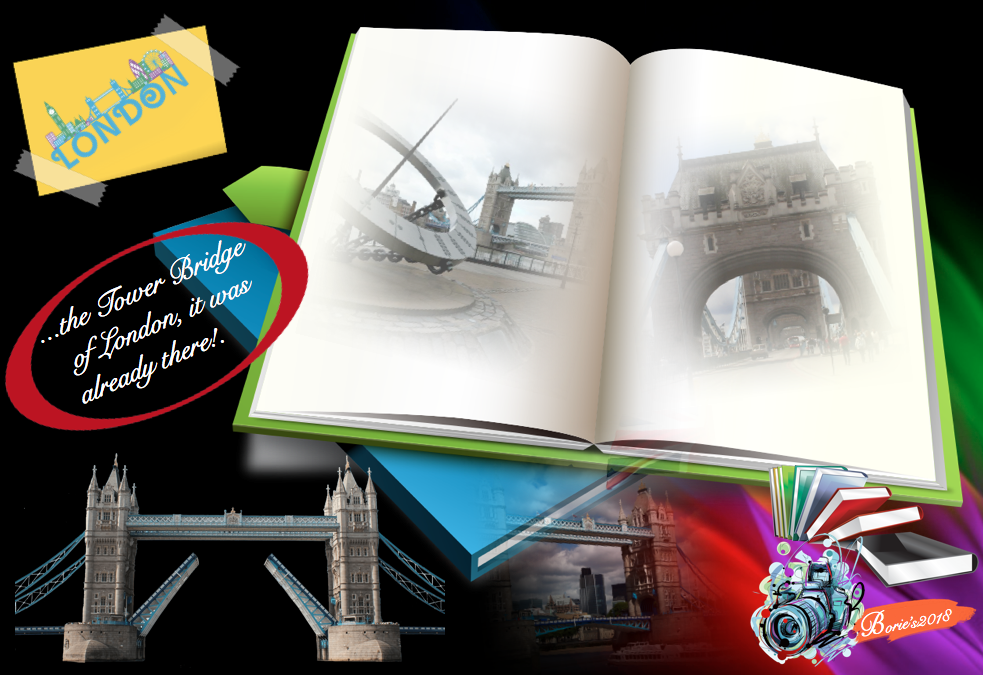
…the Mount Rushmore!

…the Mount Rushmore!

…o Monte Rushmore!. (the Mount Rushmore)!.

…na nossa modesta opinião de viajantes do mundo, não encontramos melhor maneira de conseguir uma ruptura saudável e limpa, com a selva de concreto e de poluição das grandes cidades, do que numa área, mais ou menos no centro geográfico desta grandiosa nação, que é o estado de Dakota do Sul!. Aqui, ainda podemos apreciar imensas pradarias, onde existe um mar de erva verde, cowboys dirigindo rebanhos de vacas e cavalos, com várias áreas despovoadas, que não mostram nenhum compromisso com a cidade, nem tão pouco a rejeitam!. Dakota do Sul é aberta, alguns búfalos ainda vagueiam por ali, as montanhas de Black Hills, (Colinas Negras), onde o granito se confunde com as árvores centenárias, emolduram um cenário difícil de se encontrar em outro lugar!. (in our humble opinion of world travelers, we have not found a better way to achieve a healthy and clean break with the concrete jungle and pollution of big cities than in an area, more or less at the geographical center of this great nation, which is the state of South Dakota!. Here, we can still appreciate vast prairies, where there is a sea of green grass, cowboys driving flocks of cows and horses, with several depopulated areas, which show no commitment to the city, nor do they reject it! South Dakota is open, some buffalo still roam around, the Black Hills mountains, where granite mingles with the centuries-old trees, frame a difficult setting to find elsewhere)!.

…é o que é!. Conhecer este estado pode levar anos, mas temos que começar por algum lugar e, para nós, talvez a cidade de Rapid City, situada na parte oeste do estado, por tal lhe chamam a “Gateway to the Black Hills”, (Porta para as Colinas Negras), ou “City of Presidents”, (Cidade dos Presidentes), onde muitos e muitos anos atrás, habitavam os Índios Americanos da tribo “Lakota Sioux”, antes da cultura do oeste ter chegado a esta área!. Esta cidade, estratégicamente situada quase no centro de todos os locais de maior interesse turístico do estado, recebe milhares de pessoas, desejosas de se dirigirem para a cidade de Deadwood, ao “Crazy Horse Memorial”, (Memorial do Cavalo Louco), “Mount Rushmore National Memorial”, (Memorial Nacional do Monte Rushmore), “Devills Tower”, (Torre dos Diabos), ou mesmo as “Badlands” (Terras Más)!.) (It is what it is!. Knowing this state can take years, but we have to start somewhere, and for us, maybe the city of Rapid City, located in the western part of the state, calls it “Gateway to the Black Hills”, or “City of Presidents,” where many, many years ago, Native Americans inhabited the “Lakota Sioux” tribe, before Western culture came to this area!. This city, strategically located almost in the center of all the tourist attractions of the state, receives thousands of people, wishing to go to the city of Deadwood, to the “Crazy Horse Memorial”, “Mount Rushmore National Memorial”, “Devills Tower,” or even the “Badlands”!).

…nós, ainda manhã, depois de viajar umas tantas milhas em direcção ao sul, visitámos o Memorial Nacional do Monte Rushmore, situado em plena montanha de Keystone, onde estão esculpidos os rostos de quatro Presidentes dos Estados Unidos, sendo eles, George Washington, Thomas Jefferson, Theodore Rosevelt e Abraham Lincoln!. (we, morning after traveling a few miles southward, visited the Mount Rushmore National Memorial, located in the middle of Keystone Mountain, where the faces of four Presidents of the United States are carved: George Washington, Thomas Jefferson, Theodore Rosevelt and Abraham Lincoln)!.

….a ideia de criar uma escultura nas Colinas Negras, foi idealizada no ano de 1923, pelo historiador do estado de Dakota do Sul, Doane Robinson, que queria encontrar uma maneira de atrair turistas para o estado e, funcionou, pois este Memorial é visitado por quase 3 milhões de pessoas anualmente!. Robinson, inicialmente queria esculpir alguns heróis, como o líder Oglala Lakota, Red Cloud, ou os exploradores Lewis e Clark, ou ainda Buffalo Bill Cody, nuns montes de pedra granito próximos deste local, conhecidos como Needles!. (the idea of creating a sculpture in the Black Hills was devised in 1923 by the South Dakota state historian Doane Robinson who wanted to find a way to attract tourists to the state and it worked because this Memorial is visited by almost 3 million people annually!. Robinson initially wanted to sculpt some heroes, such as the leader Oglala Lakota, Red Cloud, or the explorers Lewis and Clark, or even Buffalo Bill Cody, in a few granite rock piles near this place, known as Needles)!.

…logo à entrada, juntamente com o bilhete, vem quase toda a informação, e nós, como apreciamos curiosidades fomos lendo, onde nos dizem que o escultor Dinamarquês-Americano Gutzon Borglum foi convocado para ajudar neste projeto. Naquela época, estava a trabalhar na escultura também hoje famosa, na Montanha de Pedra, no estado da Geórgia, mas por sua própria conta!. Analizou o projecto, dizendo que era um modelo falhado, e que o monumento não resistiria ao teste do tempo!. Acredita-se que estava procurando uma saída, quando a Dakota do Sul insistiu!. Então, Borglum e o seu filho Lincoln, pensaram que o monumento deveria ter um foco nacional, decidindo que quatro presidentes deveriam ser esculpidos!. Assim, os presidentes foram escolhidos pela sua contribuição significativa, fundação, expansão e preservação inigualável desta grande nação!. (At the entrance, along with the ticket, comes almost all the information, and we, as we have enjoyed curiosities we have been reading, where we are told that the Danish-American sculptor, Gutzon Borglum was summoned to assist in this project. At that time, he was working on the now famous sculpture, at Stone Mountain, in the state of Georgia, but at your own risk!. He analyzed the project, saying it was a failed model, and that the monument would not stand the test of time!. It is believed he was looking for a way out, when South Dakota insisted! Then, Borglum and his son Lincoln, thought that the monument should have a national focus, deciding that four presidents should be carved!. So the presidents were carved for their significant contribution, foundation, expansion and unparalleled preservation of this great nation)!.

…o Presidente Thomas Jefferson, que foi escolhido para gravarem o seu rosto na pedra de granito, por ser o Presidente que assinou a compra de Luisiana e escreveu a Declaração de Independência, foi originalmente destinado a estar à direita do Presidente George Washington, que foi ecolhido porque foi o fundador desta grandiosa nação, no entanto, quase dois anos de trabalho no seu rosto, a rocha foi considerada inadequada e, o rosto parcialmente preenchido, foi “apagado” da montanha, usando dinamite!. (The President Thomas Jefferson, who was chosen to engrave his face on the granite stone, for being the President who signed the Louisiana Purchase and wrote the Declaration of Independence, was originally intended to be on the right of President George Washington, who was honored because he was the founder of this great nation, yet nearly two years of work on his face, the rock was considered inadequate and, the face partially filled, was “erased” from the mountain, using dynamite)!.

…continuando, o Presidente Theodore Roosevelt, foi escolhido por representar a conservação e o florescimento industrial desta grande nação!. O Presidente Abraham Lincoln, foi escolhido porque liderou o país através da sua Guerra Civil, a guerra mais sangrenta e talvez a sua maior crise moral, constitucional e política. Ao fazê-lo, ele preservou a União, aboliu a escravidão, fortaleceu o governo federal e modernizou a economia. (continuing, President Theodore Roosevelt, was chosen for representing the conservation and industrial flourishing of this great nation!. President Abraham Lincoln was chosen because he led the country through its Civil War the bloodiest war and perhaps its greatest moral, constitutional, and political crises. In doing so, he preserved the Union, abolished slavery, strengthened the federal governament, and modernized the economy!.

…outra curiosidade foi, que na altura da sua construção foi apresentada ao Congresso uma lei para acrescentar a imagem da líder dos direitos das mulheres, Susan B. Anthony, à montanha, no entanto o congresso aprovou uma lei exigindo que apenas os rostos que já haviam sido iniciados fossem concluídos!. Estas esculturas foram originalmente destinadas a incluir os corpos dos Presidentes até à cintura, o que não aconteceu!. (another curiosity was that, at the time of its construction, a bill was presented to Congress to add the image of women’s rights leader, Susan B. Anthony, to the mountain, however Congress passed a law requiring that only faces which had already been initiated were completed! These sculptures were originally intended to include the bodies of the Presidents up to the waist, which did not happen)!.

…inicialmente estimava-se que apenas em seis anos terminava a escultura real, no entanto foram precisos mais oito anos e meio, que foram consumidos com atrasos devido ao clima e falta de fundos!. A escultura real foi feita por uma equipa de mais de 400 homens, sem qualquer experiência de escultura, pois eram mineiros, que tinham ido até às Colinas Negras à procura de ouro, mas embora não fossem artistas, sabiam como usar dinamite e britadeiras, escavando mais de 90% da montanha, usando dinamite, removendo mais de 450.000 toneladas de rocha!. (initially it was estimated that in just six years the royal sculpture was finished, but it took another eight and a half years, which were consumed with delays due to the weather and lack of funds!. The royal sculpture was made by a team of more than 400 men, without any sculpture experience, for they were miners, who had gone to the Black Hills for gold, but although they were not artists, they knew how to use dynamite and jackhammers, digging more than 90% of the mountain, using dynamite, removing more than 450,000 tons of rock)!.

…garotos jovens, conhecidos como garotos de programa, foram contratados para se sentarem ao lado da montanha, gritando mensagens, ou fazendo curtas viajens de ida e volta aos operadores, para acelerar ou desacelerar as suas tarefas, principalmente quando trabalhavam com explosivos!. (young boys, known as program boys, were hired to sit on the side of the mountain, shouting messages, or making short round trips to operators to speed up or slow down their tasks, especially when working with explosives)!.

…o Monte Rushmore é de granito, que sofre uma erosão de 1 polegada a cada 10.000 anos, como cada nariz tem cerca de 240 centímetros de comprimento, podem durar até 2,4 milhões de anos, antes de se desgastarem completamente!. No entanto, muitas coisas estão sendo feitas para preservar o Monte Rushomore, como a instalação de mais de 8.000 pés de cabo de fibra ótica camuflado, para ajudar a monitorar 144 rachaduras, onde se prevê que após cerca de 500.000 anos, os rostos provávelmente perderão algumas definições, mas nesse ritmo, o formato básico dos Presidentes pode durar até 7 milhões de anos!. (Mount Rushmore is granite, which undergoes an erosion of 1 inch every 10,000 years, as each nose is about 240 inches long, can last up to 2.4 million years, before they wear out completely!. However, many things are being done to preserve Mt. Rushomore, such as installing more than 8,000 feet of camouflaged fiber optic cable, to help monitor 144 cracks, where it is predicted that after about 500,000 years, faces will likely lose some definitions, but at this rate, the basic format of Presidents can last up to 7 million years)!.

…esta montanha, que Gutzon Borglum escolheu para esculpir, era conhecida pela tribo “Lakota Sioux”, como os “Seis avós”, no entanto também era conhecida como “Montanha Puma”, “Montanha Pão de Açúcar”, “Montanha Matadouro” ou “Penhasco Keystone”, mas o nome oficial teve origem num advogado de Nova Iorque, de nome Charles E. Rushmore, que por ali andava pesquisando as reivindicações de ouro, por volta do ano de 1885, perguntando ao seu guia o nome daquela montanha, ao que ele lhe respondeu: “nunca teve…até agora…vamos chamar a esta área de Rushmore”!. Assim, por volta do ano de 1930, o Conselho dos Estados Unidos em Nomes Geográficos reconheceu oficialmente como sendo o Monte Rushmore!. (this mountain, which Gutzon Borglum chose to sculpt, was known by the tribe “Lakota Sioux” as the “Six grandfathers”, however it was also known as “Mountain Puma”, “Mountain Sugar Loaf”, “Mountain Slaughterhouse” or “Keystone Cliff”, but the official name came from a New York lawyer named Charles E. Rushmore, who had been researching the claims of gold around the year 1885, asking his guide the name of that mountain, to which he replied: “never had … until now … let’s call this area of Rushmore!”. Thus, by the year 1930, the United States Council on Geographical Names officially recognized as being Mount Rushmore)!.

…cremos que já chega de curiosidades, no entanto, no dia da nossa visita o dia estava de sol radiante, percorremos o Grande View Terrace (Grande Terraço com Vista), que é um dos melhores lugares para ver o Monte Rushmore, localizado logo acima do Museu e no final da Avenida das Bandeiras, que tem bandeiras e colunas com painéis explicativos de todos os 50 estados, um Distrito, três Territórios e duas Comunidades dos Estados Unidos da América!. (we believe that enough of curiosities, however, on the day of our visit the day was sunny, we walked the Grand View Terrace, which is one of the best places to see Mount Rushmore, located just above the Museum and at the end of Avenue of Flags, which has flags and columns with explanatory panels from all 50 states, one District, three Territories and two Communities of the United States of America)!.

…como adoramos caminhar, percorremos parte da Trilha Presidencial, que é uma pista de 800 metros, que oferece vistas próximas e diferentes de cada rosto, com 60 pés de altura, onde de vez em quando passam cabras montanhesas residentes, descendentes de um rebanho que foi doado ao Custer State Park (Parque do Estado Custer), pelo Canada, por volta do ano de 1924!. Nós não vimos, mas durante este percurso, muitas pessoas dizem que se pode ver um elefante, ou pelo menos a face de pedra de um elefante, se olharmos para a direita do rosto do Presidente Lincoln!. (as we love to walk, we cross part of the Presidential Trail, which is an 800 meter track, which offers close and different views of each face, 60 feet high, where from time to time pass resident mountain goats, descended from a herd that was donated to Custer State Park, per Canada, around the year 1924!. We have not seen, but during this journey, many people say that one can see an elephant, or at least the stone face of an elephant, if we look to the right of the face of President Lincoln)!.

…a nossa visita foi durante o dia, porque se fosse à noite, admirávamos a iluminação, aberta durante duas horas!. Também era agora, nesta data, porque se fosse no final dos anos 50, até ao início dos anos 70, conhecíamos Ben Black Elk, um famoso Homem Santo da tribo “Lakota Sioux”, que por aqui andava a saudar pessoalmente os visitantes!. (our visit was during the day, because if it was at night, we admired the lighting, open for two hours!. It was also now, on this date, because if it was in the late 50’s, until the early 70’s, we met Ben Black Elk, a famous Holy Man of the “Lakota Sioux” tribe, who came to greet visitors here personally)!.

…este monumento, é uma das atrações turísticas mais conhecidas no mundo, rendendo ao estado de Dakota do Sul, o cognome de “The Mount Rushmore State”, (Estado do Monte Rushmore), com estes gigantes rostos, que medem de 15 a 21 metros de altura, sendo construídos com instrumentos de engenharia, dinamite e martelos mecânicos, tudo isto a 150 metros de altura, na região das Colinas Negras!. (this monument, is one of the most well-known tourist attractions in the world, yielding to the state of South Dakota, the nickname of “The Mount Rushmore State”, with these giant faces, that measure of 15 to 21 meters of height, being built with instruments of engineering, dynamite and mechanical hammers, all this to 150 meters of height, in the region of the Black Hills)!.

…tal como no princípio dissémos, Dakota do Sul, é o que é!. Conhecer este estado pode levar anos, mas temos que começar por algum lugar!. Visitar o cenário do Monte Rushmore, foi um privilégio, vamos recordá-lo por anos!. (as we said at the beginning, South Dakota, that’s what it is! Knowing this state can take years, but we have to start somewhere!. Visiting the Mount Rushmore setting was a privilege, let’s remember it for years)!.

Tony Borie, April 2018.
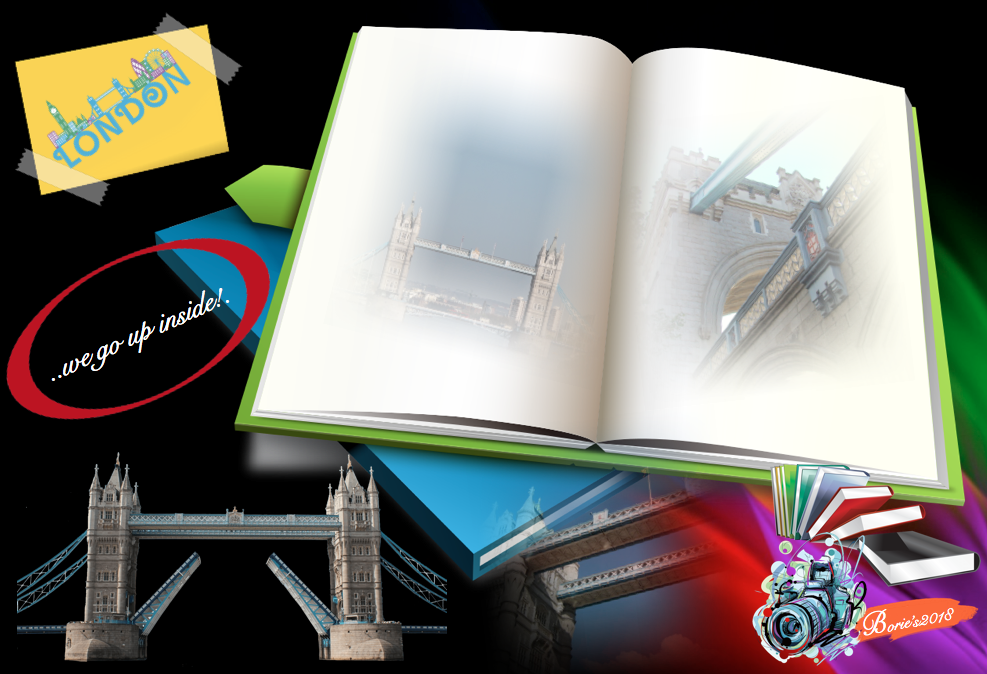
…the beret!

…the beret!

…a boina!. (the beret)!.
…a Guerra Colonial Portuguesa em África, que nós, em plena juventude vivemos, teve diversos rostos!. Talvez o primeiro fosse o verdadeiro conflito armado, das emboscadas mortíferas, do terror, dos tiroteios, dos ataques aos aquartelamentos com as armas morteiro, calibre 90, de algumas bombas lançadas pelos aviões, que destruiam aldeias e, dos soldados cansados, alguns desmotivados por verem os seus companheiros morrerem, ali mesmo, junto de si, o qual ajudavam a embrulhar o que restava dos seus corpos!. (the Portuguese Colonial War in Africa, which we, in our youth, live in, had several faces!. Perhaps the first was the real armed conflict, the deadly ambushes, the terror, the shootings, the attacks on the barracks with the 90-caliber mortar weapons, some bombs dropped by the planes that destroyed villages, and the tired soldiers, some unmotivated by to see his companions die, right there, next to him, which helped to wrap what was left of their bodies!.

…nós, estávamos envolvidos num conflito armado, cujos objectivos eram provar que a força encontrava a força e, para qualquer dos vencedores, era uma conquista fútil, era uma agressão errada, pois num conflito armado, não existem vencedores, os que perdem nunca esquecem, transmitindo a mensagem à próxima geração de família, portanto está provado que um conflito armado, simplesmente não funciona!. (we were involved in an armed conflict whose purpose was to prove that the force met the strength and for any of the winners was a futile achievement, it was a wrong aggression, because in an armed conflict, there are no winners, the losers never forget, conveying the message to the next generation of family, so it is proven that an armed conflict simply does not work)!.

…talvez o segundo rosto da guerra que vivemos em África fosse a busca de uma solução política, ou seja, a diplomacia política, mas naquele tempo, com um primeiro ministro, que se considerava um pai da nação, que tinha falado ao seu povo que devíamos “ir para a guerra e, em força”, sabendo que ia traumatizar uma geração de jovens que, práticamente foram abandonados, assim que se procedeu à independência das ditas Colónias Portuguesas em África, possívelmente envergonhando-se que essa geração, era uma geração de combatentes, que defenderam a bandeira do país Portugal, ignorando a legenda que diz: “País que não respeita o passado, não pode ter um bom futuro”!. (perhaps the second face of the war in Africa was the search for a political solution, that is, political diplomacy, but at that time, with a prime minister, who considered himself a father of the nation, who had spoken to his that we should “go to war and in strength”, knowing that it would traumatize a generation of young people who, practically, were abandoned, as soon as the Portuguese Colonies in Africa were independent, possibly embarrassing that this generation was a generation of fighters, who defended the flag of the country Portugal, ignoring the legend that says: “Country that does not respect the past, can not have a good future”)!.

…não nos querendo alongar, talvez um terceiro rosto da guerra que vivemos em África seja a mais trágica!. Era a necessidade humana!. Onde existia o doente abandonado, a família faminta, a criança analfabeta, centenas, talvez milhares de homens, mulheres e crianças abandonadas, sem abrigo, vestidas com farrapos, lutando pela sua sobrevivência, numa terra muito rica, onde as árvores, deixando-as em paz, cresciam com fruto, o peixe dos rios era abundante, os animais nas savanas, florestas e pântanos, também se houvesse paz, cresciam e, cujo solo era muito fértil!. (not wanting to stretch, maybe a third face of the war that we live in Africa is the most tragic! It was the human need!. Where there was the abandoned patient, the hungry family, the illiterate child, hundreds, perhaps thousands of abandoned men, women and children, homeless, clothed, struggling for their survival in a very rich land where trees, leaving them in peace, they grew with fruit, the fish of the rivers were abundant, the animals in the savannas, forests and marshes, also if there was peace, they grew and whose soil was very fertile)!.

…enfim, esta última vertente da guerra, trazia-nos angustiados, pois infelizmente alguns, mesmo nos dias de hoje, não querem o fruto das árvores para comer, procuram única e simplesmente, os frutos materiais das árvores!. (finally, this last aspect of the war, brought us anguish, because unfortunately some, even today, do not want the fruit of the trees to eat, simply look for the material fruits of the trees)!.

…mas vamos continuar, nós, andávamos por ali, faltava pouco tempo para regressar-mos à Europa, portanto a nossa mente andava um pouco ocupada, mas não tanto ocupada para que não se reparasse na falta de recursos dessas pessoas, visitávamos algumas aldeias próximo da aquartelamento quase todos os dias, pelo menos quando livres das nossas tarefas, levando comida e pão que por vezes roubávamos no aquartelamento, assim como rebuçados que comprávamos na loja do Libanês!. (but we are going to continue, we were walking around, there was not enough time to go back to Europe, so our mind was a little busy, but not so busy that we did not notice the lack of resources of these people, we visited some villages near the barracks almost every day, at least when we were free of our duties, carrying food and bread that we sometimes stole in the barracks, as well as sweets we bought at the Lebanese store)!.

…talvez para outros fosse normal, mas para nós, não compreendíamos a alegria nos rosto daquelas pessoas ao ver-nos chegar!. Viviam na mais profunda miséria, mas aparentavam sentir-se bem, aquelas casas térreas, cobertas com folhas de colmo, com toda aquela falta de utensílios domésticos, uma simples lata vazia de conserva, que levávamos do aquartelamento, era guardada como se fosse uma coisa preciosa, não havia água potável, era suja de lama, pó, lixo em tudo o que fosse lugar, improvisando quase tudo e, nunca ouvimos da boca daquelas pessoas uma pequena lamúria!. (perhaps for others it was normal, but for us, we did not understand the joy in the faces of those people when seeing us arrive!. They lived in the deepest misery, but they seemed to feel well, those earthen houses, covered with thatch leaves, with all that lack of household utensils, a simple empty can of tin, which we carried from the barracks, was guarded as if it were a thing precious, there was no drinking water, it was dirty with mud, dust, rubbish in every place, improvising almost everything, and we never heard from the mouth of those people a small whine)!.

…vivendo naquela profunda miséria, quando comiam, chamavam os cães magros e famintos, que por ali andavam, repartindo o pouco que lhe levávamos!. Estas cenas ainda nos davam mais angústia, fazendo-nos lembrar os valores morais da nossa civilização, que repousa na natureza de ser-mos úteis ao próximo e, não procurar a guerra em que estávamos envolvidos, que naquela época, era uma ameaça àquelas pessoas, que viviam uma vida de sobrevivência!. (living in that deep misery, when they ate, they called the thin and hungry dogs, who walked around, sharing the little we took! These scenes still gave us more anguish, reminding us of the moral values of our civilization, which rests on the nature of being useful to others and not looking for the war in which we were involved, which at that time was a threat to those people, who lived a life of survival)!.

…havia por lá uma criança, que não nos largava, sempre vinha em nosso redor agarrando-nos na mão, queria carinho e talvez rebuçados, pois imediatamente nos colocava a mão no bolso!. Nós, às vezes embaraçados, não sabíamos com agir para nos despedirmos dessa criança, os seus olhos falavam, eram humildes, dizendo tudo o que lhe ia na alma, não necessitava abrir a boca, aqueles olhos falavam todos os idiomas do mundo!. (there was a child there, who would not leave us, always came around us holding us in the hand, wanted affection and maybe candy, because immediately put our hand in our pockets! We, sometimes embarrassed, did not know how to act to say goodbye to this child, his eyes spoke, were humble, saying everything that was in his soul, he did not need to open his mouth, those eyes spoke all the languages of the world)!.

…ao regressar à Europa, deixámos as botas de cabedal e parte da roupa da farda, assim como algum dinheiro a essa família, mas a criança, não queria a roupa da farda, queria a boina e o emblema!. Nós, quase chorando, entregámo-la com um grande beijo, mas a criança sorriu, tirou o dedo da boca, limpou o ranho do nariz com as costas das mãos, deu uma gargalhada, mostrando um sorriso que dispensava palavras, pois a sua alegria falava todos os idiomas do mundo!. (when we returned to Europe, we left our leather boots and some of the uniforms, as well as some money for this family, but the child, did not want the uniform, wanted the beret and the emblem!. We almost cried, we delivered her with a big kiss, but the child smiled, took his finger from his mouth, wiped the snot of the nose with the back of his hands, gave a laugh, showing a smile that dismissed words, because his joy spoke all the languages of the world)!.

Tony Borie, April 2018.