Olá!. (Hello)!.
Olá!. (Hello)!.

Olá!. (Hello)!.

…é gratificante saber que ainda estão por aí, lendo os nossos textos, que afinal são retalhos de uma vida que já vai sendo longa!. Hoje, o planeta Terra, entre outras, todos os dias nos trás surpresas, infelizmente piores, e piores!. Agora temos uma “guerra mundial”, com o aparecimento do “Coronavírus’19”, talvez a centésima ou milésima, mas esta é mais mortífera, não foi declarada entre rivais, não descrimina ricos ou pobres, sexo, adultos ou crianças e, as armas que disparam em qualquer direcção, somos nós, os humanos, que nos tornámos numa “bala envenenada”, que podemos matar o nosso melhor amigo, basta falar ou estar junto a ele!. (It is gratifying to know that they are still out there, reading our texts, which after all are pieces of a life that has already been long!. Today, planet Earth, among others, brings us surprises every day, unfortunately worse, and worse !. Now we have a “world war”, with the appearance of “Coronavirus’19”, perhaps the hundredth or thousandth, but this one is more deadly, it was not declared among rivals, it does not discriminate between rich or poor, sex, adults or children and, the weapons that shoot in any direction, it’s us humans who have become a “poisoned bullet” who can kill our best friend, just talk or be with him)!.

…por tal, principalmente nós, os mais idosos, carregamos connosco um “metralhadora” moderna, biológica, desconhecida, que disparamos em qualquer direcção, sem conhecer o nosso inimigo, o que pode ser fatal e, até nem é preciso estar prevenido, pois o nosso melhor amigo ao bater na nossa porta, ao fazer o nac, nac, nac…, talvez sem o saber e, ao dizer simplesmente olá…, está a dizer-nos, “sim sou eu o portador, oxalá tenhas uma morte rápida, sem muito sofrimento”!. (For this reason, especially we, the elderly, carry with us a modern, biological, unknown “machine gun”, which we shoot in any direction, without knowing our enemy, which can be fatal and, even we need not be prevented, because our best friend when knocking on our door, making the nac, nac, nac …, maybe without knowing it and, by simply saying hello …, he is saying to us, “yes I am the bearer, hopefully have a quick death, without much suffering ”)!.

…por favor previnam-se, usem todas as precauções que as autoridades governamentais e médicas recomendam, pelo menos até esta fase menos boa passar e, como agora nos recomendam para ficar em casa, não nos resta outra opção do que rebuscar no nosso “baú de recordações”, e ir lembrando alguns momentos que quase para sempre, ficaram no nosso pensamento!. Cá vai e oxalá vos alegre, pelo menos nem que seja um pouco!. (Please take precautions, use all the precautions that government and medical authorities recommend, at least until this less good phase passes and, as they now recommend us to stay at home, we have no choice but to browse our “Chest of memories”, and remembering some moments that almost always stayed in our thoughts!. Here you go and I wish you happiness, at least if only a little)!.

Québec, Canada!.

…viajando para leste, na província do Québec, tão original no tempo, levou-nos tão profundamente em nosso inconsciente, a histórias de piratas, com barcos de corsários que chegavam para pilhagens, num lugar especial e privilegiado em ficção de aventura, onde a cidade do Québec, situada entre muralhas, é um exemplo puro e inigualável do género!. (Traveling east, in the province of Québec, so original in time, took us so deeply into our unconscious, to stories of pirates, with corsair boats arriving for plunder, in a special and privileged place in adventure fiction, where the city of Québec, located between walls, is a pure and unrivaled example of its kind)!.

…aqui parámos por o espaço de um dia, onde com chuva pela manhã e algum sol pela tarde, nos deu oportunidade de ver uma cidade museu, por onde passa o rio São Lourenço, maioritáriamente francesa, datada do ano de 1608, com um núcleo colonial fortificado, Vieux-Québec e Place Royale, com prédios de pedra e ruas estreitas!. (Here we stopped for the space of a day, where with rain in the morning and some sun in the afternoon, it gave us the opportunity to see a museum city, through which the São Lourenço river, mostly French, dated from 1608, a fortified colonial core, Vieux-Québec and Place Royale, with stone buildings and narrow streets)!.

…esta área é o local do imponente Château Frontenac Hotel e da imponente Citadelle de Québec, onde as ruas de paralelepípedos do bairro Petit Champlain estão repletas de boutiques e, alguns artistas desenham rostos de algumas pessoas e oferecem pinturas com paisagens desta cidade museu, onde alguns lugares estão conservados como há centenas de anos!. (This area is the site of the imposing Château Frontenac Hotel and the imposing Citadelle de Québec, where the cobbled streets of the Petit Champlain district are full of boutiques and, some artists draw the faces of some people and offer paintings with landscapes of this museum city , where some places are preserved as they were hundreds of years ago)!.

…andámos por esta cidade museu que, oficialmente é a capital da província canadense de Québec e a sétima maior área metropolitana do Canadá, onde o povo algonquiano havia originalmente nomeado a área Kébec, uma palavra também algonquina que significa mais ou menos, “onde o rio se estreita”, porque o rio São Lourenço se estreita próximo ao promontório de Québec!. (We walked through this museum city, which is officially the capital of the Canadian province of Québec and the seventh largest metropolitan area in Canada, where the Algonquian people had originally named the Kébec area, an Algonquin word that means more or less, ” where the river narrows “, because the São Lourenço river narrows close to the Québec promontory)!.

…num folheto recolhido no centro de turismo da cidade, onde comprámos um bilhete para viajar numa daquelas camionetas de dois andares, num roteiro pela cidade, informáva-nos de que, o explorador Samuel de Champlain fundou um assentamento francês aqui, no ano de, 1608 e adotou o nome Algonquin, no local onde hoje existe a cidade de Québec, uma das cidades europeias mais antigas da América do Norte, porque as muralhas que cercam o antigo Québec, são as únicas muralhas fortificadas da cidade que permanecem nas Américas, ao norte do México, declaradas Património da Humanidade pela UNESCO, em 1985 como o “Distrito Histórico do Velho Québec”!. (In a brochure collected at the tourist center of the city, where we bought a ticket to travel in one of those double-decker buses, on a route through the city, it informed us that explorer Samuel de Champlain founded a French settlement here, in the year from, 1608 and adopted the name Algonquin, in the place where the city of Québec exists today, one of the oldest European cities in North America, because the walls that surround the old Québec, are the only fortified city walls that remain in the Americas , in northern Mexico, declared a World Heritage Site by UNESCO in 1985 as the “Historic District of Old Québec”)!.

…waw, waw, waw!… deve de tudo isto ser verdade, porque esta cidade é um grande museu ao ar livre, onde as pessoas podem passear, trabalhar, brincar e viver e, as duas línguas oficiais são o francês e o inglês, talvez derivado ao seu passado de batalhas frequentes!. (Waw, waw, waw! … all of this must be true, because this city is a great open-air museum, where people can stroll, work, play and live, and the two official languages are French and English, perhaps derived from its past of frequent battles)!.

…porque Québec foi a sede de muitos ataques, onde a cidade foi atacada pelos ingleses, mas foi defendida com sucesso pelos franceses, no entanto, durante muitos anos, Québec, talvez derivado à sua posição geográfica, junto do rio São Lourenço, foi capturada pelos britânicos e muitas batalhas e cercos ocorreram, com vitórias francesas ou inglesas mas, poderia haver uma frota com mais corsários ou menos corsários, mais barcos ou menos barcos com bandeira “pirata” de ambos os lados, como quase tudo naqueles tempos, houve uma vitória final britânica!. (Because Québec was the seat of many attacks, where the city was attacked by the English, but was successfully defended by the French, however, for many years, Québec, perhaps derived from its geographical position, next to the São Lourenço river, it was captured by the British and many battles and sieges took place, with French or English victories but, there could be a fleet with more privateers or less privateers, more boats or less boats with a “pirate” flag on both sides, like almost everything in those times, there was a final British victory)!.

…depois do roteiro pela cidade, passámos um tempo fabuloso subindo e descendo pequenas ruelas, olhando o rio São Lourenço do nosso poleiro, apreciando todas aquelas ruas antigas com séculos de cheiros e odores, os passeios a cavalo e de carruagem, os turistas e a arte em todos os cantos, algumas flores verdadeiramente espetaculares nas varandas, sob as janelas, emoldurando as portas da frente!. Oh, que vista!. Tudo isto numa caminhada absolutamente maravilhosa!. (After the tour around the city, we spent a fabulous time going up and down small alleys, looking at the São Lourenço river from our perch, enjoying all those old streets with centuries of smells and odors, horse and carriage rides, tourists and art in every corner, some truly spectacular flowers on the balconies, under the windows, framing the front doors !. Oh, what a view !. All of this in an absolutely wonderful walk!.

…um pouco cansados, sentámo-nos na frente do que deve de ser o marco mais reconhecível da cidade de Québec, o Château Frontenac, que representa uma poderosa presença real sobre toda a cidade velha dominando o horizonte!. Poderemos pensar que está lá para sempre, mas a verdade é que remonta apenas ao século XIX, como parte de uma série de hotéis Château sendo construídos em todo o Canadá para a Pacific Canadian Railway!. (A little tired, we sat in front of what must be Québec’s most recognizable landmark, the Château Frontenac, which represents a powerful real presence over the entire old city dominating the horizon !. We may think it is there forever, but the truth is that it dates back only to the 19th century, as part of a series of Château hotels being built across Canada for the Pacific Canadian Railway!.

…este fabuloso edifício, que dá pelo nome de Fairmont Le Château Frontenac, anteriormente conhecido como Château Frontenac, é um hotel histórico na cidade de Québec, situado em Old Quebec, na parte alta da cidade histórica, projetado por Bruce Price e construído pela empresa Canadian Pacific Railway, sendo inaugurado em 1893, sendo designado Patrimônio Histórico Nacional do Canadá no ano de 1981!. (This fabulous building, which goes by the name of Fairmont Le Château Frontenac, formerly known as Château Frontenac, is a historic hotel in Québec, located in Old Quebec, in the upper part of the historic city, designed by Bruce Price and built Canadian Pacific Railway, opened in 1893, being designated a National Historic Landmark in Canada in 1981)!.

…era quase o fim do dia, já um pouco cansados, procurámos um daqueles restaurantes, tipo “Pub”, onde as pessoas querem mais beber do que comer, o que até nem era o nosso caso, mas queríamos apreciar a comida típica do Québec, e foi o que fizémos!. (It was almost the end of the day, already a little tired, we looked for one of those restaurants, like “Pub”, where people want to drink more than eat, which was not even our case, but we wanted to enjoy the typical food Québec, and that’s what we did)!.

..ah, Quebec City … a capital da província de Quebec, reduto francófono do Canadá!. Uma cidade deslumbrante, cheia de uma história rica, infiltrada em drama e em histórias que valem a pena ser contadas!. A cidade de Quebec é um lugar onde o novo e o velho se misturam e onde os norte-americanos podem sentir a Europa sem precisar atravessar o Oceano Atlântico!. As ruas da cidade velha são empedradas, as lojas e a arquitetura remanescentes da “La Vielle France”… Antiga França e não a Inglaterra, tornando esta cidade única de muitas maneiras, onde em alguns lugares, o tempo parece ter parado!. (Ah, Quebec City … the capital of the province of Quebec, Canada’s francophone stronghold !. A stunning city, full of rich history, steeped in drama and stories that are worth telling !. Quebec City is a place where the old and the new blend together and where Americans can feel Europe without having to cross the Atlantic Ocean !. The streets of the old city are cobbled, the shops and architecture remain of “La Vielle France”… Ancient France and not England, making this city unique in many ways, where in some places, time seems to have stopped!.

…foi uma caminhada absolutamente maravilhosa e, apesar de chover pela manhã, tivémos a sorte de estar lá nas raras ocasiões em que o sol quase estáva brilhando!. (It was an absolutely wonderful walk and, despite raining in the morning, we were lucky to be there on the rare occasions when the sun was almost shining!.

Tony Borie, Século XXI. (Tony Borie, 21st Century).

…és pessoal do Lisboa!. …(you’re Lisbon people)!.

…és pessoal do Lisboa!. …(you’re Lisbon people)!.

…és pessoal do Lisboa!.  …(you’re Lisbon people)!.

…ainda hoje, e já lá vão mais de cinquenta anos, quase sessenta, conservamos um pequeno livro, a que chamamos “Diário de Guerra”, que na época uma também “Madrinha de Guerra” nos ofereceu, com uma legenda que dizia mais ou menos, “liberta-te, vai escrevendo”!. (Even today, and for more than fifty years, almost sixty years, we keep a small book, which we call “War Diary”, which at the time also a “Godmother of War” offered us, with a caption that said more or less, “break free, keep writing”)!.

…ainda é o que vamos fazendo, o sono é pouco, altas horas da madrugada já estamos acordados, vigilantes, acabando sempre, entre dois goles de chá, bebidos da nossa chávena preferida, aquela que já não tem asa e está nicada nas bordas, a que temos que agarrar com as duas mãos e nos vai “libertando”, e entre outras, nos vai aquecendo por dentro!. (It is still what we are doing, there is little sleep, late in the morning we are already awake, vigilant, always ending between two sips of tea, drunk from our favorite cup, the one that no longer has a wing and is nicely edges, which we have to grasp with both hands and will “liberating” us, and among others, will keep us warm inside.

…dizendo “libertando”, para não dizer outras palavras que normalmente se juntam ao substantivo para o qualificar, que pode ser o adjectivo qualificativo de outras palavras, como por exemplo, “lembrar um passado de combatente, que defendeu a bandeira de um Portugal Europeu, então colonial, dando o corpo às balas num campo de batalha em África”, que também podem ser consideradas palavras de um verbo pronominal!. (Saying “liberating”, not to say other words that normally join the noun to qualify it, which can be the qualifying adjective of other words, such as “remember a combatant’s past, who defended the flag of a European Portugal, then colonial, giving body to bullets on a battlefield in Africa”, which can also be considered words of a pronominal verb)!.

…claro, já por diversas vezes o mencionámos que, “a maldição de um veterano é que nunca esquece”, mas vamos em frente!. Hoje vamos recordar coisas menos tristes, vamos falar das tais “lufadas de ar fresco”, que por vezes por lá também aconteciam!. (Of course, we have already mentioned it several times that, “the curse of a veteran is that he never forgets”, but let’s move on!. Today we are going to remember less sad things, we are going to talk about the “breaths of fresh air”, which sometimes happened there too)!.

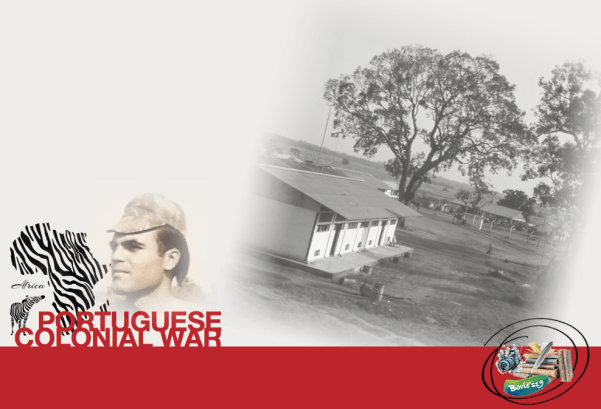
…abrindo o tal livro, numa qualquer página lê-se que nesse dia, que era 4 de Novembro e devia de ser do ano de 1964, fomos a casa de um companheiro militar, que tinha vindo da Europa, como fazendo parte de uma Companhia de Engenharia, responsável pela construção do novo aquartelamento, a que chamávamos “posto avançado”, e que vivia com a esposa nuns casebres improvisados, junto ao acampamento dos militares!. (Opening the book, on any page one reads that on that day, which was the 4th of November and must have been 1964, we went to the home of a military companion, who had come from Europe, as part of an Engineering Company, responsible for the construction of the new quarter, which we called “outpost”, and that lived with his wife in some improvised huts, next to the military camp)!.

…este militar, tinha formação superior, cremos que de militar não tinha mesmo nada, era o responsável por tudo o que dizia respeito a cimento que se usava nas obras do novo aquartelamento e, diziam as “más línguas”, que o camião de três rodados que transportava os sacos de cimento do porto da capital Bissau, não era lá muito seguro, pois deixava “cair” alguns, antes de chegar ao nosso acampamento, pois o já referido camião, quase sempre chegava pouco mais que meio!. (This military man, had a higher education, we believe that he had no military skills at all, he was responsible for everything related to cement that was used in the works of the new barracks and, said the “bad languages”, that the truck of three rounds that carried the bags of cement from the port of the capital Bissau, it wasn’t very safe, as it dropped some, before arriving at our camp, as the aforementioned truck, almost always arrived little more than half)!.

…nós até sabíamos, mas as nossas tarefas eram cifar e decifrar mensagens, portanto não éramos polícias!. Diz lá na página do nosso diário, em letras que parecem rabiscos, que foi um grande convívio, havia uma gazela assada no forno do acampamento, com batatas cozidas e muito vinho!. Deviam ter sido também batatas e vinho roubados no acampamento, não explicando porque nos convidaram, mas falando no forno do acampamento, devia ter metido o “Arroz com Pão”, que era o militar responsável pela comida e o “Tótó”, que era o padeiro e responsável pela distribuição do vinho, que eram nossos amigos, não fazendo nenhuma “patuscada” sem nos avisarem!. (We even knew, but our tasks were to encrypt and decipher messages, so we were not policemen!. It says on the page of our diary, in letters that look like scribbles, that it was a great conviviality, there was a gazelle roasted in the camp’s oven, with boiled potatoes and a lot of wine!. Potatoes and wine should also have been stolen in the camp, not explaining why they invited us, but speaking in the camp oven, I should have put the “Arroz com Pão”, which was the military man responsible for the food and the “Tótó”, which was the baker and responsible for the distribution of the wine, who were our friends, making no “patuscada” without telling us)!.

…noutra página, mais à frente, vem a dizer, numa linguagem um pouco primitiva, que por certo vão desculpar, que viémos à capital Bissau, no “carro dos doentes”, na companhia de outro militar amigo, que andava sempre a fumar um “cigarro feito à mão”, todavia, não tínhamos doença nenhuma, estávamos única e simplesmente de folga das nossas tarefas!. (On another page, later, it comes to say, in a somewhat primitive language, that they will certainly excuse, that we came to the capital Bissau, in the “sick car”, in the company of another military friend, who was always walking smoking a “hand-made cigarette”, however, we didn’t have any disease, we were just and simply off our tasks)!.

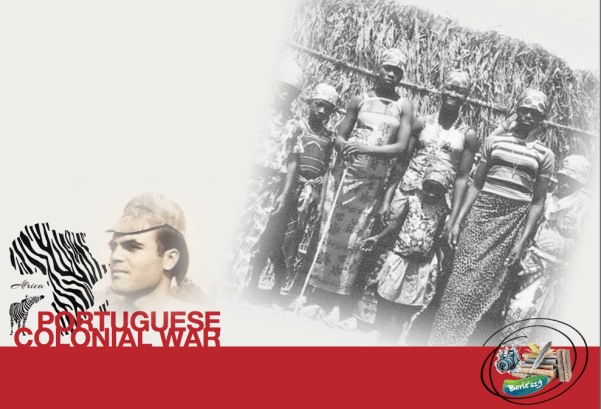
…viajámos sem qualquer licença, portanto “desenfiados”, andando a visitar os pontos de referência que normalmente os militares visitavam quando vinham do “mato” à capital, metendo-nos “copos” e não regressando no já mencionado “carro dos doentes”, dormindo nós num local, que diz no diário que era “piolhoso”, próximo do quartel general, onde havia uma grande aldeia com muitas “moranças” e raparigas africanas, que não falavam crioulo, nem usavam sómente um pano em volta da cinta, não tinham “mama firme” e argolas no pescoço ou nas pernas, a servir de enfeite!. (We traveled without any license, therefore “unkempt”, walking to visit the landmarks that the military usually visited when they came from the “bush” to the capital, putting us in “glasses” and not returning in the aforementioned “sick car”, While we were sleeping in a place that says in the diary that it was “lousy”, close to the headquarters, where there was a large village with many “morecas” and African girls, who did not speak Creole, nor did they only use a cloth around the belt, had no “firm breast” and rings on the neck or legs, to serve as an ornament)!.

..não andavam descalças e vestiam roupas com uma cor “berrante”, justas ao corpo, principalmente a segurarem a mama, que já não era “firme”, lábios com alguma pintura, um perfume barato a cheirar a álcool e com gestos sensuais e provocatórios!. Quando se aproximavam, já falavam aquelas palavras obscenas em português, que todos os antigos combatentes conheciam, e diziam mesmo, “És pessoal do Lisboa?. Queres água ou licor do Lisboa?. Olha aqui, “mama firme”, anda dá “patacão”!. (Not walking barefoot and wearing clothes with a “gaudy” color, close to the body, especially holding the breast, which was no longer “firm”, lips with some paint, a cheap perfume that smelled of alcohol and with sensual gestures and provocative!. When they approached, they already spoke those obscene words in Portuguese, which all the former combatants knew, and even said, “Are you guys from Lisboa?. Do you want water or liquor from Lisbon?. Look here, “firm mama”, come on “patacão”)!.

…e, na já referida página do diário continua lá escrito que, ao outro dia acordámos não sabendo onde, mas sem perdermos a calma e com uma certa compostura, retirámos algumas garrafas já vazias de bebida em nosso redor, sem nenhum “patacão” nos bolsos, que não sabemos se fomos roubados ou simplesmente gastámos todo o dinheiro!. (And, on the aforementioned page of the diary, it is still written that, the other day we woke up not knowing where, but without losing our cool and with a certain composure, we removed some already empty bottles of drink around us, without any “padding” ”In our pockets, that we don’t know if we were robbed or just spent all the money)!.

…todavia, sentindo algum orgulho no que tínhamos feito, com o braço no ombro um do outro, pois mal nos continhamos em pé, apresentámo-nos no aeroporto militar de Bissalanca, pregando uma grande mentira, que tínhamos sido “agredidos e roubados”, mas que agora estávamos bem, mas tínhamos que regressar já ao acampamento!. (However, feeling some pride in what we had done, with the arm on each other’s shoulders, as we barely contained ourselves, we presented ourselves at the military airport in Bissalanca, preaching a big lie, which we had been “beaten and stolen”, But that we were fine now, but we had to return to the camp now)!.

…o furriel Honório, o “Pardal”, pois era assim que era conhecido no acampamento em Mansoa, que tinha correio e medicamentos para ao acampamento de Mansabá, trouxe-nos na avioneta!. Quando a secção de combate foi prestar segurança e recolher os sacos do correio, onde não havia correio nenhum, deparando em nós, ambos com um aspecto de pessoas abandonadas, logo disseram, “Sópodiam ser vocês, o comandante vai dar-vos uma “porrada”, que estão fodidos!.(The furriel Honório, the “Pardal”, because that was how he was known at the camp in Mansoa, who had mail and medicines for the Mansabá camp, brought us on the plane!. When the combat section went to provide security and collect the mail bags, where there was no mail, finding us, both with the appearance of abandoned people, they immediately said, “It could only be you, the commander will give you a “beat”, who are fucked)!.

…nunca soubemos porquê, mas nada nos aconteceu!. Que “porrada” maior podíamos levar, se tínhamos sido “agredidos e roubados”, e mesmo assim, obedientes, voltámos ao local de tortura?. (We never knew why, but nothing happened to us!. What bigger “beating” could we take, if we had been “beaten and stolen”, and yet, obediently, we returned to the place of torture)?.

…naquela época, “éramos quase uns soldados sem país” e, talvez por tudo isto, agora, com mais frequência, vamos morrendo, vamos desaparecendo, vamos “libertando-nos” deste mundo onde muitas injustiças ainda existem!. (At that time, “we were almost soldiers without a country” and, perhaps for all this, now, more and more, we are dying, we are disappearing, we are “freeing ourselves” from this world where many injustices still exist)!.

…e nós combatentes da Guerra Colonial Portuguesa, já somos poucos, cada vez menos, talvez para “alívio” de alguns políticos governantes que, vivendo com conforto em cidades, recebendo mensalmente ordenados e mordomias relevantes, vêm em nós pessoas que, embora defendendo a bandeira do então Portugal Europeu e colonial, dando o corpo às balas e, como acima já referimos, agora os “atrapalham”, para não dizer outra palavra que normalmente se junta ao substantivo para o qualificar, que pode ser o adjectivo qualificativo “envergonham”, que também pode ser considerado um verbo pronominal!. (And we fighters of the Portuguese Colonial War, we are already few, less and less, perhaps to the “relief” of some governing politicians who, living in comfort in cities, receiving monthly wages and relevant perks, come to us people who, although defending the flag of the then European and colonial Portugal, giving the body to the bullets and, as already mentioned, now “hinder” them, not to say another word that normally joins the noun to qualify it, which can be the qualifying adjective “ashamed”, which can also be considered a pronominal verb)!.

Tony Borie, March 2020.

…o seu nome é (FMF), para nós, simplesmente Freitas!. (Your name is (FMF)l, for us simpy Freitas)!.

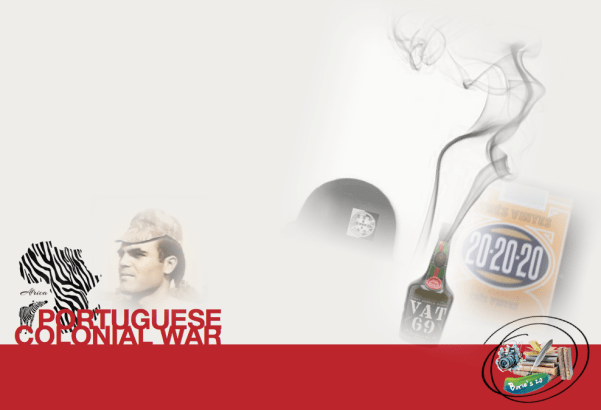
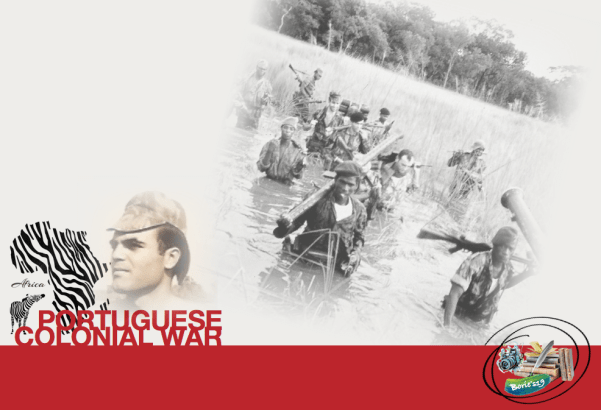
…a manhã não estava muito quente, regressávamos de tomar banho nos três furos de água que havia a sul do aquartelamento, de onde vinha uma água quente, mesmo muito quente, a cheirar a enxofre ou coisa parecida!. Tanto nós como o Freitas, já trazíamos o cigarro “três vintes” na boca e, um outro companheiro, militar de combate, dizia-nos: “vocês não sabem o que é guerra, calem-se!. Vocês são “tropa fandanga, tropa manhosa, tropa de secretária”!. Gostava de vos ver atravessar uma zona de lama, lodo e tarrafo, sempre com o coração nas mãos, à espera de uma emboscada”!. (The morning was not very hot, we returned from bathing in the three water holes that were to the south of the quarter, from which came a hot water, even very hot, smelling of sulfur or something!. Both we and Freitas already had the “three twenties” cigarette in their mouths, and another fellow, military combat, said to us: “you don’t know what war is, shut up!. You are “troop fandanga, sly troop, secretary troop”!. I would like to see you crossing an area of mud, mud and tarpon, always with your heart in your hands, waiting for an ambush)!.

…nós ouvíamos e nada dizíamos, pois sabíamos que era verdade!. No entretanto, outro militar de combate, que seguia no nosso grupo, acrescentava: “tenho mais medo de caminhar na lama e no lodo do que, às vezes, enfrentar uma emboscada!. Tens que caminhar direito e sempre com todos os sentidos de alerta e equilíbrio, pois se cais e, não vai mais do que um companheiro a teu lado, é um grande problema para saíres, quanto mais força fazes, mais te enterras e, o companheiro que vem até a ti para te ajudar, se também se enterra, então é um desastre, tem que ser alguém a estender-te algo a que te possas agarrar para que aos poucos te vás safando”!. (We listened and said nothing, because we knew it was true!. In the meantime, another combat officer in our group added: “I’m more afraid of walking in the mud and mud than sometimes ambushing!. You have to walk straight and always with all the senses of alertness and balance, because if you fall and, no more than a companion by your side, is a big problem to leave, the more strength you do, the more you bury yourself and, the companion who comes to you to help you, if you also bury yourself, then it is a disaster, it has to be someone extending something you can hold onto so that you will gradually get away with it!”)!.

…nós continuávamos a ouvir, e compreendíamos que aquilo era verdade mas, o primeiro militar de combate que falou, tirando o cigarro da boca, continuava: “e não vos quero dizer nada do que sucederia se ficassem enterrados na lama e a maré começasse a encher, depois logo a seguir à lama vem o maldito tarrafo, que é toda aquela vegetação, seca por baixo e verdejante por cima, que quando a maré está cheia, vista de longe é muito linda, mas quando não há água, até mete medo!. Vem logo a seguir à lama, e temos que ter força para o atravessarmos, sempre arredando para o lado aquela vegetação tinhosa, cheia de mosquitos e, dizem que é lá que se metem os crocodilos”!.(We were still listening, and we understood that this was true, but the first combat military man who spoke, taking his cigarette out of his mouth, continued: “and I want to tell you nothing of what would happen if you were buried in the mud and the tide it started to fill up, then right after the mud comes the damn tarpon, which is all that vegetation, dry below and verdant above, that when the tide is full, seen from afar is very beautiful, but when there is no water, even get scared!. It comes right after the mud, and we have to have the strength to cross it, always pushing aside that thick vegetation, full of mosquitoes, and they say that’s where crocodiles get in”)!.

…nós continuávamos a ouvir, e a dizer que era verdade mas, esse militar de combate, logo nos dizia: “calem-se!. Vocês e todo esse pessoal do comando, só sabem é “cagar ordens”!. Essas mãos e essas unhas nunca sentiram uma espingarda G-3 com o cano em brasa e vocês desesperados para darem mais fogo, pois os guerrilheiros continuam a atacar e nós, desesperadamente não temos mais balas!. Portanto vocês são “tropa rafeira, tropa fandanga, tropa manhosa”!. (We kept listening and saying it was true, but this combat military man would soon tell us: “shut up!. You and all these command people, all you know is shit orders!. Those hands and nails have never felt a G-3 shotgun with a red-hot barrel and you are desperate for more fire as the guerrillas continue to attack and we desperately have no more bullets!. So you are “raifa troop, fandanga troop, sly troop”)!.

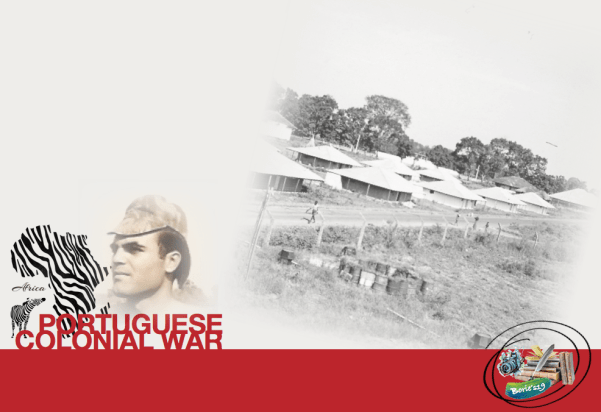
…entretanto chegámos à área das barracas dormitórias!. (In the meantime we have reached the sleeping tents area)!.

…isto são lembranças da guerra lá vivida em África, onde já passaram mais de cinco décadas, quase seis, mas, o corpo e a mente de um veterano de guerra, quanto mais a sua idade avança, infelizmente, mais frequentemente reage aos disparos da memória, dando lugar ao sentimento que pode ser representado nestas simples palavras: “a maldição de um veterano é que nunca esquece”!.(These are reminiscent of the war there in Africa, where it has been more than five decades, almost six, but the body and mind of a war veteran, the more his age progresses, unfortunately, the more often he reacts to memory shots, giving way to the feeling that can be represented in these simple words: “the curse of a veteran is that he never forgets”)!.

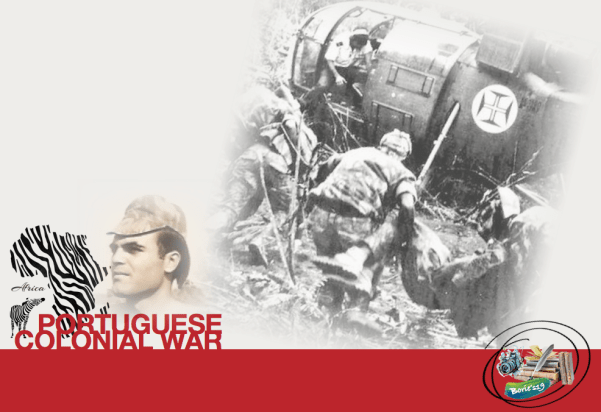
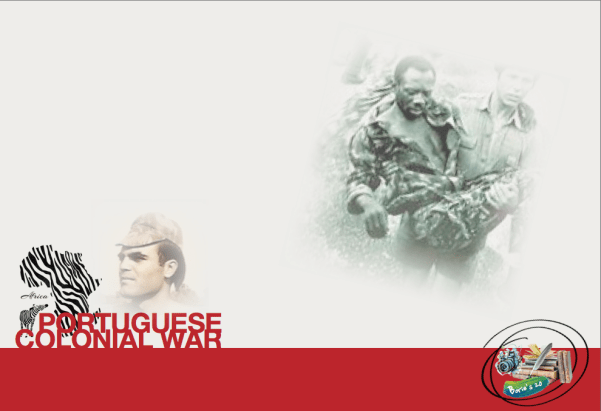
…quando a encontramos de novo, a tal lembrança, às vezes em momentos sombrios e silenciosos, tentamos repudiá-la, mandá-la para longe, como o som da explosão de uma granada quando de um ataque dos guerrilheiros ao nosso posto avançado, que era a localização estratégica do nosso aquartelamento, ou o som do bater das lâminas de um helicóptero que chegava para recolher o corpo de um companheiro morto em combate, ou talvez o que restava do seu corpo, que levavam embrulhado num camuflado sujo com o seu próprio sangue!. Não importa quantas vezes essas lembranças nos visitam, pois terminam sempre da mesma maneira, que é uma “catástrofe total”!. (When we meet her again at such a memory, sometimes in dark and silent moments, we try to repudiate her, to send her away, like the sound of a grenade exploding as the guerrillas attack our outpost, which was the strategic location of our barracks, or the sound of a helicopter’s blades coming in to pick up the body of a dead combatant, or perhaps what was left of its body, which they carried wrapped in a filthy camouflage, your own blood!. No matter how many times these memories visit us, because they always end in the same way, which is a “total catastrophe”)!.

…não mais esquecemos a jornada de ter sido combatentes na Guerra Colonial Portuguesa em África, na então província colonial da Guiné Portuguesa, cuja guerra, principalmente nesta região, foi denominada “o Vietname de Portugal”, que foi uma mortífera guerra de guerrilha, combatendo ao serviço de um país que nos USOU e quase nos ESQUECEU, desde a nossa mobilização forçada na época de uma pré-guerra, passando pela miserável experiência no campo de batalha, até a um difícil retorno de pós-guerra, sempre quase nos IGNORANDO!. (We no longer forget the journey of being combatants in the Portuguese Colonial War in Africa, in the then colonial province of Portuguese Guinea, whose war, especially in this region, was called “Vietnam of Portugal”, which was a deadly guerrilla war, fighting in the service of a country that has USED us and almost forgotten us, from our forced mobilization at the time of a pre-war, to miserable battlefield experience, to a difficult postwar return, almost always IGNORING)!.

…hoje vamos dedicar este texto ao nosso companheiro combatente, Freitas que, tal como nós, viveu num cenário de violência, como era aquele onde permanecemos por um período de dois longos anos, onde a segurança nunca existiu e, além de todas as monstruosidades que poderíamos ver e sentir, uma das partes mais trágicas, (para alguns talvez esperançosa), era a cara da necessidade humana!. Era o doente abandonado, a família faminta, a criança que não sabia ler, eram homens e mulheres, alguns sem abrigo, com a roupa em farrapos, lutando pela sobrevivência, numa terra com um mar muito rico e com um solo muito fértil!. (Today we will dedicate this text to our fellow combatant, Freitas, who, like us, lived in a scenario of violence, as it was where we stayed for a period of two long years, where security never existed and, beyond all the monstrosities we could see and feel, one of the most tragic parts, (for some perhaps hopeful), was the face of human need!. It was the abandoned patient, the starving family, the child who could not read, were men and women, some homeless, in rags, struggling for survival, in a land with a rich sea and very fertile soil)!.

…era a necessidade humana de um povo, que lutava e morria pela sua liberdade, não tinha acesso a alimentos suficientes, a água limpa, a remédios ou, como acima mencionámos, a um abrigo necessário para sobreviver, onde as crianças não podiam aspirar a uma educação decente ou à esperança de um homem ou de uma mulher terem um emprego ou outro qualquer suporte, que sustentasse uma família, pois a ausência dessa mesma esperança, agora transformada num cenário de guerra, estava a destruir aquela sociedade, a partir de dentro, o que era muito importante!. (It was the human need of a people who fought for and died for their freedom, did not have access to sufficient food, clean water, medicine or, as we mentioned above, a shelter needed to survive where children could not aspire to a decent education or the hope that a man or a woman would have a job or other support to support a family, for the absence of that hope, now transformed into a war scenario, was destroying that society from from the inside, which was very important)!.

…e nós Europeus, fomos forçados a lutar contra estas pessoas, que nunca antes tínhamos visto e nada tínhamos em contra, mas que um governo colonial de então, nos arrancou das nossas cidades, vilas e aldeias, treinou apressadamente e, enviou no porão de um qualquer navio de carga, tal como uma qualquer mercadoria, navegando em direcção ao sul pelo oceano Atlântico, desembarcando-nos num cenário horroroso de guerra, lá naquela África ainda um pouco selvagem, onde era muito fácil morrer, bastava andar por ali!. (And we Europeans were forced to fight against these people, whom we had never seen before and had nothing against, but whom a colonial government of that time took us out of our cities, towns and villages, hurriedly trained and sent in the hold of any cargo ship, like any commodity, sailing south across the Atlantic Ocean, landing us in a horrific war scenario, there in that still a little wild Africa, where it was very easy to die, just walk around)!.

…nós e o Freitas, viajámos no mesmo barco, tanto na ida como no regresso à Europa e, quando da chegada ao porto de Bissau, fomos juntos deslocados para uma área de lama, tarrafo e mosquitos, onde se via a tal vegetação verde e de outras cores, rente à água, com árvores gigantes, aqui e ali, onde começou um desastre de organização, dentro de uma grande desorganização, que se tornou constante, cada vez mais perigosa, durante a nossa estadia forçada de dois longos anos em cenário de guerra, onde este companheiro Freitas, tinha as mesmas tarefas que nós, pois também era “cifra” de um comando de forças militares mas, ao que diáriamente observávamos, o seu sofrimento e angústia foi muito superior ao nosso, porque nesta sua passagem forçada por este cenário de combate, já tinha família constituída, que deixou na Europa!. (We and Freitas traveled on the same boat both to and from Europe, and upon arrival at the port of Bissau we were moved together to an area of mud, tarpon and mosquitoes, where we could see to such green and other vegetation, waterfront, with giant trees, here and there, where a disaster of organization began, within a great disorganization, which became constant, increasingly dangerous, during our forced stay of two long years in a war scenario, where this fellow Freitas, had the same tasks as us, because he was also a “cipher” of a command of military forces but, as we observed daily, his suffering and anguish was much greater than ours, because in his forced passage through this combat scenario, he already had a constituted family, which he left in Europe)!.

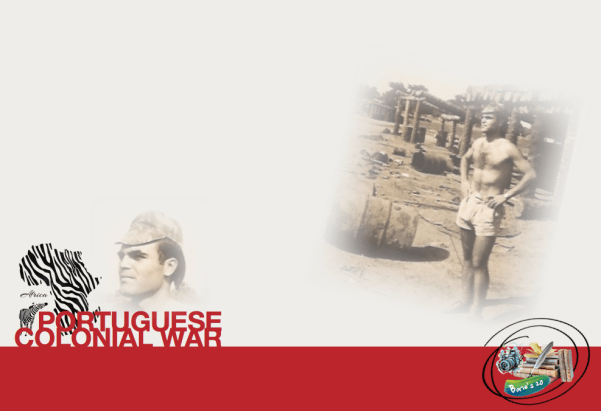
…nós, embora “tropa de secretária”, andávamos por ali, seguindo um rumo de quase abandono, não tendo o mínimo de facilidades para se ter uma higiene primária, mal alimentados e equipados, tanto em material de protecção e combate como em assistência médica, já falando mal português, as unhas grandes e sujas, a roupa às vezes rota, pelo menos no local dos bolsos, talvez derivado ao isqueiro e ao maço de cigarros e sem alguns botões, usávamos a camisa comunitária que existia no local das nossas tarefas, quando se ia entregar alguma mensagem ao comandante, o cabelo comprido, talvez com piolhos e um grande bigode, que nos encobria os dentes escuros e sujos e um pouco amarelados do fumo do tabaco, os dedos com uma marca amarela do cigarro, bebendo álcool em excesso, só a barba é que se cortava de três em três dias, às vezes de dois em dois dias, pois tínha-mos algum contacto com o comandante e, não queríamos, num dia de mau humor, ele, o comandante, nos mandasse rapar o cabelo e o bigode, então aí sim, iríamos sofrer muito mais!. (We, although a “secret troop”, were walking around, following a path of almost abandonment, not having the minimum facilities to have a primary hygiene, poorly fed and equipped, both in protective and combat material as in medical assistance, already speaking bad Portuguese, the big dirty nails, the clothes sometimes rotated, at least in the pockets, perhaps derived from the lighter and the pack of cigarettes and without some buttons, we wore the community shirt that existed in the place of the pockets our tasks, when we were going to deliver a message to the commander, the long hair, perhaps with lice and a big mustache, that covered our dark and dirty, slightly yellowed teeth from tobacco smoke, the fingers with a yellow mark of the cigarette, drinking too much alcohol, only the beard was cut every three days, sometimes every two days, because we had some contact with the commander and, we did not want, on a bad day, he, the commander, send us If you shave your hair and mustache, then yes, we would suffer much more)!.

…mas o Freitas não!. Neste miserável ambiente, “tinha atitude”, tentava andar sempre limpo, camisa e calções lavados, cabelo e barba cortados, lavava os dentes, bebia pouco e moderado, tentava falar correcto, o maço dos seus cigarros estava sempre em boas condições desde o primeiro ao último cigarro, pensava antes de tomar qualquer decisão e, entre outras atitudes positivas, trazia a fotografia da família consigo, que colocava na mesa do Centro Cripto, quando entrava ao serviço e, dizia com uma simplicidade e voz agradável, que era assim que a sua esposa queria que ele procedesse!. (But not Freitas!. In this miserable environment, “he had attitude”, he tried to walk always clean, his shirt and shorts washed, his hair and beard shaved, his teeth washed, he drank little and moderately, he tried to speak correctly, the pack of his cigarettes was always in good condition from the first to the first last cigarette, he thought before making any decisions and, among other positive attitudes, brought the family photograph with him, which he put on the table at the Centro Crypto, when he came into service, and said with simplicity and a pleasant voice, that this is how the his wife wanted him to proceed)!.

…nós, algumas vezes, com o cigarro “três vintes” na boca, sentados numa cadeira feita de um barril de vinho vazio, lendo pela centésima vez algumas folhas de uma antiga revista do “Século Ilustrado”, que trazia fotografias de umas “gajas em biquíni”, que tínhamos roubado na messe dos sargentos, observáva-mos o Freitas, um pouco distante, debaixo de uma qualquer árvore que por ali havia, em profunda meditação, com a foto da família em suas mãos, falando baixinho quase chorando e, logo nós entendíamos que lhe devíamos dar todo o espaço, respeito e silêncio, não deixando que ninguém se aproximasse!. (We sometimes with the “Three Twenty” cigarette in our mouths, sitting in a chair made of an empty wine barrel, reading for the hundredth time some pages of an old “Illustrated Century” magazine, which featured photographs of some “Ladies in bikinis”, which we had stolen from the sergeants’ mess, we watched Freitas, a little way away, under a tree that was there, in deep meditation, with the family photo in his hands, talking quietly almost crying and soon we understood that we should give him all the space, respect and silence, not letting anyone come near)!.

…era o companheiro ideal, tal como quando crianças, havia o tal rapaz nosso vizinho, da casa ao lado, na nossa rua, aquele com quem compartíamos as nossas brincadeiras!. Com ele convivemos por um período de dois longos anos, dormindo na mesma barraca, comendo juntos, falando, às vezes alterados mas sempre amigos!. Fugíamos para o mesmo abrigo quando dos ataques dos guerrilheiros ao aquartelamento que ajudámos a construir e, tentando colocar uma pequena “lufada de ar fresco” na nossa miserável vida, às vezes fazíamos juntos viagens clandestinas (sem autorização), à capital Bissau, porque ele, o Freitas, tinha amigos que eram tripulantes do navio “Ana Mafalda”, que atracava períodicamente no porto de Bissau, para descarregar militares e equipamento de guerra, onde normalmente visitávamos a cozinha deste barco!. (Was the ideal companion, as when we were children, there was this boy our neighbor, next door, in our street, the one with whom we shared our games!. With him we lived for a long period of two years, sleeping in the same tent, eating together, talking, sometimes altered but always friends!. We fled to the same shelter when the guerrilla attacks on the barracks we helped build and, trying to put a little “breath of fresh air” into our miserable life, sometimes made illegal (unauthorized) trips together to the capital Bissau because he, the Freitas, had friends who were crew members of the ship “Ana Mafalda”, which docked periodically in the port of Bissau, to unload military and war equipment, where we would normally visit the kitchen of this boat)!.

…e, nessas nossas fugidas à capital Bissau, normalmente dávamos uma volta pelo mercado, onde cheirava a tabaco seco, carne fresca e coca, mangos e papaia, fruta de caju, amendoim verde, a que chamavam mancarra, bananas, batata doce, peixe seco, mandioca, balaios de arroz, aguardente de palma vendida ao púcaro, macacos, periquitos e outras aves exóticas, pano de diferentes cores vendido à peça, colares e bujigangas, figuras em madeira representando animais, e claro, alguns gatos empoleirados no muro do mercado, assim com alguns cães que circulavam por ali, com o rabo entre as pernas, e outros deitados próximo das bancas onde se vendia carne fresca, cães estes, que de vez em quando davam ao rabo sacudindo as moscas e outros insectos, moscas e insectos esses, que saltavam dos cães para cima da carne fresca e, mais um amalganhado de coisas sem fim, de onde saíamos meio tontos!. (And on our escapades to the capital Bissau, we usually walked around the market, where we smelled like dried tobacco, fresh meat and coca, mangos and papaya, cashew nuts, green peanuts, which they called mancarra, bananas, sweet potatoes, dried fish, manioc, rice paddies, palm brandy sold to the pig, monkeys, parakeets and other exotic birds, cloth of different colors sold by the piece, necklaces and bujigangas, wooden figures representing animals, and of course, some cats perched on the the wall of the market, as well as some dogs that circulated there, with the tail between the legs, and others lying near the stalls selling fresh meat, these dogs, that occasionally gave the tail wagging the flies and other insects, flies and insects that jumped from the dogs onto the fresh meat and yet another mishmash of endless things from which we were half dizzy)!.

…em outra ocasião, a caminho do cais do porto, vendo nós na montra da “Casa Gouveia”, que era o centro de compras visitado pelos militares que iam do interior da província, uma máquina de fotografar que nos agradou, mas não tendo dinheiro suficiente para a comprar, o Freitas, vendo a nossa desilusão, logo nos disse: “se é essa a tua vontade, se queres a máquina, juntamos o nosso dinheiro e compra-a”!. (On another occasion, on the way to the harbor pier, seeing us in the window of the “Casa Gouveia”, which was the shopping center visited by the military from the interior of the province, a camera that pleased us, but not having enough money to buy it, Freitas, seeing our disillusionment, then told us: “If that’s your wish, if you want the machine, we’ll collect our money and buy it”)!.

…de outra vez, andando nós quase junto ao cais do porto, passaram duas raparigas africanas, com um vestido às flores, que lhe cobria quase o corpo todo, não parecia um vestido, parecia mais uma peça de pano inteira em que iam enroladas, mas muito justa ao corpo, com outra tira de pano cor de rosa, amarrado à cinta, na cabeça também levavam um pano amarrado, da mesma cor da cinta, duas argolas de um metal com algum brilho caiam das suas orelhas, os braços iam descobertos, tendo algumas pulseiras feitas de missangas com diversas cores, ao pescoço também levavam uns colares de missanga que lhe faziam sobressair o rosto, que tinha uma cor preta com a tonalidade do chocolate, mas muito brilhante, onde sobressaiam uns olhos que denunciavam qualquer coisa como um mistério e, nos pés levavam umas sandálias rasas, de plástico, brancas!. Caminhavam, bamboleando o corpo, talvez sabendo que eram observadas, que ao passarem junto a nós, olharam de lado, com um olhar algo comprometedor!. (Again, as we were walking almost to the harbor quay, two African girls passed by, wearing a flowered dress that covered almost their whole body, it did not look like a dress, it was more like a piece of cloth in which they were going. rolled up, but very tight to the body, with another strip of pink cloth, tied to the strap, on the head also carried a tied cloth, the same color as the strap, two metal rings with some shine fell from his ears, his arms they were discovered, having some bracelets made of beads of various colors, and also neck bead necklaces that made her face stand out, which was a black color with the color of chocolate, but very bright, where there were eyes that denounced any something like a mystery, and on their feet they wore shallow, plastic, white sandals !. They walked, wobbling their bodies, perhaps knowing they were being watched, as they passed beside us, looking sideways with a somewhat compromising look!.

…nós assobiamos, um assobio um pouco provocativo!. Elas voltaram-se e sorriram, provocativas também!. O Freitas, segurou-nos por um braço, quando tentávamos avançar para as raparigas, dizendo-nos, como se fosse uma ordem: “tem juízo homem, lembra-te que andas na guerra”!. (We whistle, a little provocative whistle!. They turned and smiled, provocative too!. Freitas, holding us by the arm, when we tried to advance to the girls, telling us, as if it were an order: “have man sense, remember that you are at war”)!.

…o tempo ia passando, no aquartelamento que ajudámos a construir numa aldeia do interior chamada Mansôa, que considerávamos um posto avançado de fronteira, pois a partir dali já se podia considerar zona de combate, quando se começou a colocação do arame farpado, a verdade estava a vir ao de cima, estávamos a começar a demarcar fronteiras, para lá do arame farpado era território proibido, talvez dos guerrilheiros e, o Freitas dizia-nos: “a realidade está a vir ao de cima, estamos a demarcar fronteiras, para lá do arame farpado é território proibido”!. (Time passed in the quarter we helped build in an inland village called Mansôa, which we considered to be a frontier outpost, because from that point on it could be considered a combat zone when the barbed wire began to be laid, the truth was coming up, we were starting to demarcate borders, beyond barbed wire it was forbidden territory, maybe from the guerrillas, and Freitas told us: “reality is coming up, we are demarcating borders , beyond barbed wire is forbidden territory”)!.

…com o Freitas, às vezes quando se passava por um qualquer período mais difícil, com alguns pensamentos arrepiantes, caminhávamos até à ponte velha do rio Mansoa, que passava a leste do aquartelamento, olhávamos a água, principalmente na maré cheia, parecendo ouvir uma voz a chamar-nos, a convidar-nos a mergulhar nessa mesma água, turva e cheia de lama, mas nesse momento, estava ao nosso lado o Freitas e a sua voz, e nós, tirando o cigarro da boca, atiravámo-lo para a água, vendo-o desaparecer, num turbilhão sujo, com espuma e alguns pedaços de ervas secas, que iam com destino ao mar do oceano Atlântico, talvez indicando-nos o caminho da Europa!. (With Freitas, sometimes when it was going through some more difficult period, with some chilling thoughts, we would walk to the old bridge of the river Mansoa, which passed east of the quarter, we would look at the water, especially at high tide, seeming to hear a voice calling us, inviting us to dive into that same muddy, muddy water, but at that moment, Freitas and his voice were beside us, and we, taking our cigarettes out of our mouths, threw ourselves it into the water, watching it disappear, in a dirty whirlwind, with foam and a few bits of dried herb, that were bound for the sea of the Atlantic Ocean, perhaps pointing the way to Europe)!.

…nós, juntos, caminhávamos algumas vezes pelas aldeias em redor do aquartelamento, respirando aquele cheiro, que já tinha magia, aquela terra vermelha, o pó, as casas cobertas de colmo, debaixo de enormes árvores de mango, aquela folhagem muito mal tratada em volta, o cão faminto, cheio de insectos, coçando-se nas nossas pernas quando parávamos, procurando algum carinho, aquele “puto”, com o ranho no nariz, vindo junto de nós, metendo logo a mão no nosso bolso, procurando os rebuçados que compráva-mos no loja do Libanês!. (Together we would sometimes walk through the villages around the barracks, breathing in that magic-scented smell, that red earth, the dust, the thatched houses, under the huge mango trees, the very bad foliage, treated around, the hungry, insect-laden dog scratching at our legs as we stopped, looking for some affection, that “little kid” with the snot in his nose coming up beside us, reaching into our pocket, searching the sweets we bought at the Lebanese shop)!.

…andando por ali na sua companhia, sempre respeitámos a dignidade e o forte carácter dos naturais, que nos respeitavam, alguns até pensavam que éramos irmãos e, sempre seguimos as leis, as ordens e os ensinamentos dos “homens grandes” que, com toda a sua sabedoria, e com muitas “chuvas” no corpo, que deviam de ser anos, apontando com uma espécie de bengalim, com que afugentavam algumas moscas, e batiam nos cães, que famintos se aproximavam das “moranças”, que eram as suas casas cobertas de colmo!. (Walking around in his company, we have always respected the dignity and strong character of the natural people, who respected us, some even thought we were brothers, and always followed the laws, orders and teachings of the “great men” who, with all their wisdom, and with many “showers” on the body, which must have been years old, pointing with a kind of bengalim, with which they chased away some flies, and beat on the dogs, which hungry approached the “moranças”, which were your thatched houses)!.

…e, que entre outras palavras, sempre que nos viam, pronunciavam num português acrioulado, que nós compreendíamos perfeitamente, e diziam-nos: olh’a qu’la alí… cabaçú ká t’m… and’a pr’a qui… baju’da ale’m… ma’m’a firmi’… depo’s d’… tém mangá di sábi sábi… précisa d’… está altúra d’… conversa gir’o… o irmãu é qui… ficá nu Guiné… cá bai nu Portugal… e quando nos despedíamos, agarravam-nos na mão e diziam, “ca bai”, e davam-nos “mantenhas”, e às vezes até ficavam, t’chora!. (isto são palavras difíceis de traduzir, mas qualquer combatente que por lá passou, sabe um pouco o seu significado)!. (And who, among other words, whenever they saw us, they pronounced in a sharp Portuguese, which we understood perfectly, and said to us: look at that … cabaçú ká t’m … and ‘ the pr’a qui … baju’da ale’m … ma’m’a firmi ‘… depo’s d’ … has manga di wise sage … need d … … is high up ‘… cute talk … the big brother is … get naked Guinea … here bai nu Portugal … and when we said goodbye, they grabbed our hands and said,’ ca bai ‘, and they gave us “mantenhas”, and sometimes they even stayed, t’chora!. (These are words that are difficult to translate, but any combatant who has been there knows their meaning a little)!.

…estas cenas, eram, como acima mencionámos, uma pequena “lufada de ar fresco”, que fazia parte do preço do sofrimento, da angústia, do mêdo e fúria viver num cenário de combate, do horror, do inferno que por lá vivemos, a marca que nos acompanha para o resto das nossas vidas, que na verdade nos sentimos loucos por dentro e, como veteranos de guerra, temos que ser francos e dizer, que pagamos um preço muito elevado para servir o nosso país e, as vítimas emocionais das guerras equivocadas são na verdade as mais difíceis de suportar, são as tais feridas profundas que sofremos, que podem ser infligidas sem deixar um simples arranhão!. (These scenes were, as we mentioned above, a small “breath of fresh air”, which was part of the price of suffering, anguish, fear and fury living in a scenario of combat, horror, hell that there we live, the brand that goes with us for the rest of our lives, that we actually feel crazy inside and, as war veterans, we have to be frank and say that we pay a very high price to serve our country and Emotional victims of misguided wars are actually the hardest to bear, they are the deep wounds we suffer, which can be inflicted without leaving a scratch)!.

…o Freitas era e, felizmente ainda é, oriundo do arquipélago dos Açores, mais propriamente da ilha das Flores e ainda hoje, pelo menos aqui onde presentemente vivemos, existe uma grande comunidade de pessoas oriundas daquele arquipélago e nós, frequentemente dizemos que o nosso maior e dedicado amigo é oriundo daquelas ilhas, referindo-nos ao Freitas!. (Freitas was and, fortunately still is, from the Azores archipelago, more specifically from Flores Island and even today, at least here where we currently live, there is a large community of people from that archipelago and we often say that our greatest and most devoted friend comes from those islands, referring to Freitas)!.

…o companheiro combatente Freitas sabe o que sofreu na alma e no corpo e, quando regressámos à Europa, uns anos depois, como veteranos de guerra, passando por algumas experiências de vida mais traumáticas que se possam imaginar, a família que nos recebeu, sabia, notava imediatamente, que alguma coisa estáva mal connosco, pela nossa linguagem, maneira de se comportar, que estávamos diferentes, talvez um pouco loucos e algo agressivos!. (Fellow combatant Freitas knows what he suffered in his soul and body, and when we returned to Europe a few years later as war veterans, going through some of the most traumatic life experiences imaginable, the family that welcomed us, knew, noticed immediately, that something was wrong with us, by our language, the way we behaved, that we were different, maybe a little crazy and something aggressive)!.

…infelizmente, os famintos, os doentes, os analfabetos e a miséria que naquele tempo eram constantes, continuaram, mesmo depois, quando parecia que já havia paz, fazendo-nos lembrar que defacto saímos de África físicamente, mas possívelmente não trouxémos as armas, as bombas e as balas, deixando lá apenas, como seria nossa inteira obrigação, todas as maravilhosas armas da paz do século XX!. (Unfortunately, the hungry, the sick, the illiterate and the misery that were constant at that time continued, even later, when it seemed that there was already peace, reminding us that indeed we left Africa physically, but possibly we did not bring the weapons, bombs and bullets, leaving only, as our entire obligation would be, all the wonderful weapons of peace of the twentieth century)!.

…depois do regresso à Europa, ainda juntámos as nossas famílias algumas vezes, pelo menos nos momentos em que o Freitas ia com a sua família ao norte ver jogar o seu clube de futebol, que é o Sporting de Portugal!. (After returning to Europe, we still got our families together a few times, at least when Freitas went with his family to the north to see his football club, Sporting de Portugal)!.

…Freitas, continua com alegria em viver companheiro e, não percas essa “postura de atitude”, pois ainda por cá andamos e ainda vamos sendo úteis, pelo menos para a nossa família e os nossos amigos, com algum destaque para aqueles que foram combatentes, que muito respeitamos!.
(Freitas, continue with joy in living companion and do not lose this “attitude of attitude”, because we still walk around and we are still being useful, at least for our family and our friends, with some emphasis to those who they were combatants, which we respect a lot)!.

Tony Borie, March 2020.

…o destróier USS Borie DD-215!. (The USS Borie DD-215 destroyer)!.

…o destróier USS Borie DD-215!. (The USS Borie DD-215 destroyer)!.

…o destróier USS Borie DD-215!. (The USS Borie DD-215 destroyer)!.

…este nosso blog já tem alguns anos e, muitos, mesmo muitos leitores nos perguntam de onde vem este nome, não muito usual “Borie”!. Não querendo dar aquelas explicações fastidiosas, que nos aborrecem e que às vezes simplesmente só interessam a alguns, vamos simplificar e explicar que, este não muito usual nome “Borie”, é um dos milhares de novos nomes que a conquista Normanda trouxe para a Inglaterra por volta do ano de 1066!. (Our blog is already a few years old and many, even many readers ask us where this name comes from, not very common “Borie”!. Not wanting to give those tedious, annoying explanations that sometimes just matter to some, let’s simplify and explain that this not-so-common name “Borie” is one of the thousands of new names that the Norman conquest brought to England around the year 1066)!.

…a maioria destes nomes evoluiu nos séculos 11 e 12, depois que os Normandos introduziram a sua própria língua Francesa Normanda, num país onde o inglês antigo e o médio não tinham regras de ortografia e, os idiomas da corte eram francês e latim!. E mais ainda, pois para piorar a situação, os escribas medievais escreviam as palavras de acordo com o som, de modo que os nomes frequentemente apareciam de maneira diferente do que realmente eram!. (Most of these names evolved in the 11th and 12th centuries, after the Normans introduced their own Norman French language, in a country where Old and Middle English had no spelling rules, and the court languages were French and Latin! What’s more, because to make matters worse, the medieval scribes wrote the words according to the sound, so the names often appeared differently than they really were)!.

…hoje, o não muito usual nome “Borie”, é frequente na província francesa de Nouvelle-Aquitaine, principalmente na região de Bordéus, onde entre outras, existe uma economia baseada na agricultura e viticultura, com os mundialmente conhecidos vinhedos de Bordeaux e Cognac, e claro, não podemos esquecer neste pequeno resumo a região da Baixa Navarra, com um clima um pouco mais quente e húmido, mas com o seu lado mais verde, onde por séculos, o oceano Atlântico faz “chover e soprar” contra a barreira dos Pirinéus!. (Today, the unusual name “Borie” is common in the French province of Nouvelle-Aquitaine, especially in the Bordeaux region, where among others there is an economy based on agriculture and viticulture, with the world-renowned Bordeaux vineyards. and Cognac, of course, we must not forget in this little summary the region of Lower Navarre, with a slightly warmer and wetter climate, but with its greener side, where for centuries the Atlantic Ocean has “rain and blow” against the barrier of the Pyrenees)!.

…os nossos antepassados foram para sul, para a Península Ibérica, ou seja, para Espanha e Portugal mas, entre outras razões, a agitação política ou religiosa que causaram algumas guerras na sociedade, principalmente a francesa e inglesa, muitas pessoas decidiram imigrar para as então suas colónias!. Assim, muitas famílias partiram para a Irlanda, América do Norte e Austrália em grande número, viajando a um custo alto em condições extremamente inóspitas!. (Our ancestors went south, to the Iberian Peninsula, that is, to Spain and Portugal but, among other reasons, the political or religious upheaval that caused some wars in society, mainly the French and English, many people decided to immigrate to then your colonies!. So many families left for Ireland, North America and Australia in large numbers, traveling at great cost in extremely inhospitable conditions)!.

…mas, o Novo Mundo em particular, era um destino desejável, mas a longa viagem fazia com que muitos chegassem doentes e famintos, no entanto, aqueles que conseguiram, foram acolhidos por oportunidades muito maiores do que tinham na Europa!. (But the New World in particular was a desirable destination, but the long journey made many arrive sick and hungry, yet those who succeeded were welcomed by far greater opportunities than they had in Europe)!.

…existem, nos registos de imigração, e claro, é este o assunto a que hoje mais destaque damos, famílias com o apelido “Borie”, que deram importantes contribuições às nações emergentes do Canadá e dos Estados Unidos, que a partir do século dezasseis se estabeleceram nos hoje estados de Virgínia, Maryland, Carolina do Sul, Nova Inglaterra, Pensylvânia, New Hampshire ou Nova York!. (There are, in the immigration records, and of course, this is the subject that we highlight most today, families with the nickname “Borie”, who made important contributions to the emerging nations of Canada and the United States, which from the Sixteenth century settles in the present states of Virginia, Maryland, South Carolina, New England, Pennsylvania, New Hampshire or New York)!.

…infelizmente a história universal não dá nenhum ou mesmo qualquer destaque às famílias pobres ou remediadas, ou àqueles que por isto ou por aquilo, viveram com problemas de sobrevivência na comunidade onde residiam, mesmo sendo pessoas a quem a sorte não sorriu mas que, mendigavam ou trabalhavam para outros, suportando famílias numerosas, com doenças derivadas, entre outras coisas, da fome e maus tratos que levavam!. (Unfortunately universal history gives no or even no prominence to poor or remedied families, or to those who, for this or that, lived with survival problems in the community where they lived, even though people were not fortunate but smiled, begged or worked for others, supporting large families, with diseases derived, among other things, from hunger and ill-treatment)!.

…alguns a sorte sorriu, sendo até notáveis contemporâneos, de quem a história dá referências, chegando a partir do longínquo ano de 1450 a serem xerifes, cirurgiãos, agricultores, comerciantes ou exploradores, dando alguns exemplos, como Hiram R. Borie, que foi político democrata americano, Delegado à Convenção Nacional Democrática de Delaware, no ano de 1892, ou Edwin K. Borie, também político democrata americano, Delegado da Convenção Nacional Democrática da Pensilvânia, nos anos de 1916 e 1924, ou uma personagem mais recente, um tal Edward T. L. Borie, político republicano americano, Delegado da Convenção Nacional Republicana da Louisiana, no ano de1964!. (Some luck smiled, even being notable contemporaries, from whom history gives references, coming from the distant year 1450 to be sheriffs, surgeons, farmers, traders or explorers, giving some examples, such as Hiram R. Borie, who was an American Democratic politician, Delegate to the Delaware National Democratic Convention in 1892, or Edwin K. Borie, also American Democratic politician, Delegate to the Pennsylvania National Democratic Convention in 1916 and 1924, or a more recent personage , one Edward TL Borie, American Republican politician, Delegate of the Republican National Convention of Louisiana, in the year 1964)!.

…todavia a personagem com o apelido “Borie”, com a qual em algumas pequenas coisas mais nos identificamos é, Adolph Edward Borie, que nasceu a 25 de Novembro de 1809, falecendo a 5 de Fevereiro de 1880 e, que foi um comerciante e um político do seu tempo nos Estados Unidos, servindo esta nação como Secretário da Marinha, no governo do general Ulysses S. Grant!. (However the character with the nickname “Borie”, with which in some small things we most identify ourselves is, Adolph Edward Borie, who was born on November 25, 1809, died on February 5, 1880 and who was a merchant and a politician of his time in the United States, serving this nation as Secretary of the Navy under General Ulysses S. Grant)!.

…era um nativo da cidade de Filadélfia, sendo o mais velho de 12 filhos de uma das famílias mais antigas e aristocráticas da Pensilvânia!. Os ancestrais do seu pai, vieram da região de Bordeaux, na França, (tal como os nossos avós), e a sua mãe era filha de um rico plantador haitiano, que havia fugido do Haiti durante a violenta revolução haitiana, (tal como os nossos avós, que fugiram para sul, tentando livrar-se do cenário angustiante e mortífero, da Primeira Guerra Mundial)!. (Was a native of Philadelphia, the oldest of 12 children in one of Pennsylvania’s oldest and most aristocratic families!. His father’s ancestors came from the Bordeaux region of France (like our grandparents), and his mother was the daughter of a wealthy Haitian planter who had fled Haiti during the violent Haitian revolution (like the our grandparents, who fled south trying to get rid of the harrowing and deadly scenario of World War I)!.

…o Adolph Edward Borie, com apenas 16 anos completou os seus estudos, formando-se na Universidade de Pensilvânia!. Gostava de viajar (tal como nós), pois aos 24 anos viajou pela Europa, acabando por concluir os seus estudos em Paris, para depois returnar da Europa, começando a trabalhar na empresa do seu pai, negociando negócios com o México, as Índias Ocidentais e o Extremo Oriente, quando o comércio exterior da Filadélfia estava no seu auge!. (The 16-year-old Adolph Edward Borie completed his studies, graduating from the University of Pennsylvania!. He liked to travel (just like us) because at 24 he traveled to Europe, eventually completing his studies in Paris, then returning from Europe, starting to work at his father’s company, negotiating business with Mexico, the West Indies and the Far East, when Philadelphia’s foreign trade was at its height)!.

…juntando-se ao Partido Republicano, apoiou Abraham Lincoln como Presidente!. Quando a Guerra Civil estourou, apoiou o esforço de guerra da União e tornou-se um associado próximo do general Ulysses S. Grant e, quando Grant foi eleito Presidente em 1868, nomeou-o para Secretário da Marinha, um dia após a sua inauguração!. (Joining the Republican Party, supported Abraham Lincoln as President!. When the Civil War broke out, he supported the Union’s war effort and became a close associate of General Ulysses S. Grant, and when Grant was elected President in 1868, he appointed him Secretary of the Navy, one day after its inauguration)!.

…durante o seu mandato como Secretário da Marinha, renomeou controversamente muitos navios da marinha, sendo conhecido por apoiar os trabalhadores, (tal como nós, que durante 30 anos fomos oficiais da USW, United Steelworkers, defendendo e ajudando, nomeadamente os afro-americanos companheiros de trabalho), aplicando o pagamento integral por um dia de trabalho de oito horas e por desagregar o Washington Navy Yard, permitindo que os afro-americanos trabalhassem livremente ao lado de brancos!. Como simples curiosidade, mencionamos que, permaneceu amigo íntimo do general Ulysses S. Grant, acompanhando-o na sua famosa “around the world tour”, (portanto tal como nós, adorava viajens longas), começando em 1877 e retornando aos Estados Unidos em 1879!. (During his tenure as Secretary of the Navy, has controversially renamed many navy ships and is known for supporting workers, (like us, who for 30 years have been USW, United Steelworkers officers, defending and assisting, notably Afro fellow Americans), applying full pay for an eight-hour workday and for breaking up the Washington Navy Yard, allowing African Americans to work freely alongside whites!. As a matter of curiosity, we mentioned that he remained a close friend of General Ulysses S. Grant, accompanying him on his famous “around the world tour” (so, like us, he loved long trips), beginning in 1877 and returning to the United States in 1879)!.

…hoje, queremos prestar-lhe uma homenagem!. Porquê?. Porque entre outras qualidades o governo do general Ulysses S. Grant, deu o seu nome ao destróier Norte-Americano USS Borie DD-215, que esteve envolvido durante o período da Segunda Guerra Mundial, em tarefas de escolta e patrulha no Atlântico, no ano de 1943, onde no 1º de Novembro daquele ano, abateu e afundou o submarino alemão U-405, ao norte dos Açores, mas ficou tão gravemente danificado pelo impacto, que teve que ser abandonado, sendo abatido e afundado por aeronaves da Marinha americana um dia depois!. (Today we want to pay you a tribute!. Because?. Because among other qualities the government of General Ulysses S. Grant, named after the US destroyer USS Borie DD-215, who was involved during the Second World War in escort and patrol tasks in the Atlantic during the year 1943, where on November 1 of that year it shot down and sank the German submarine U-405, north of the Azores, but was so badly damaged by the impact that it had to be abandoned, being shot down and sunk by US Navy aircraft day after)!.

…num breve resumo, foi o primeiro navio nomeado para o então Secretário da Marinha, Adolph E. Borie, ao serviço do então presidente dos USA, general Ulysses S. Grant, servindo no Mar Negro, na Frota Asiática e no Caribe, entre diversas guerras mas, onde mais se evidenciou foi na Batalha do Atlântico, numa longa campanha para proteger os navios aliados dos submarinos alemães durante a Segunda Guerra Mundial, navegando e combatendo nas águas do oceano Atlântico, tendo recebido uma Citação na Unidade Presidencial pelo seu “desempenho extraordinário” e, também ganhou distinção pela sua batalha final onde, tal como já explicámos, combateu e afundou o submarino alemão U-405!. (At a glance, it was the first ship named for then-Secretary of the Navy, Adolph E. Borie, serving then-US President General Ulysses S. Grant, serving in the Black Sea, the Asian Fleet and the Caribbean, between various wars but where it was most evident was at the Battle of the Atlantic, in a long campaign to protect Allied ships from German submarines during World War II, sailing and fighting in the waters of the Atlantic Ocean, having received a Citation in the Presidential Unit for his “extraordinary performance” and also won distinction for his final battle where, as we have already explained, fought and sank the German submarine U-405)!.

…tudo aconteceu quando, num cenário de ondas de quase seis metros, com ventos fortes e pouca visibilidade, onde o destróier USS Borie DD-215, lançou inicialmente cargas de profundidade, após as quais o submarino veio, (ou provavelmente foi forçado) à superfície, onde imediatamente tentou outro ataque, enfrentando tiros de armas alemãs, bastante potentes, a uma distância de aproximadamente 400 metros!. (It all happened when, in a 20-foot wave scenario with high winds and poor visibility, where the USS Borie DD-215 destroyer initially launched deep charges, after which the submarine came, (or was probably forced) on the surface, where he immediately attempted another attack, facing very powerful German gunfire at a range of approximately 400 meters)!.

as metralhadoras do submarino acertaram na sala das máquinas do destróier USS Borie DD-215, à frente e com vários golpes dispersos mas inofensivos perto da ponte, todavia, a sua tripulação defendendo-se, continuou com a sua tarefa de ataque, disparando as suas armas, num feroz combate!. (The submachine guns hit the engine room of the USS Borie DD-215 destroyer, ahead and with several scattered but harmless blows near the bridge, yet their crew defending themselves continued their attack task, firing their weapons in fierce combat)!.

…entretanto, navegando ao sabor da pequena tempestade embateu com o submarino, mas no último momento, o submarino ficou em posição difícil de se acertar com os progéteis, pois uma onda enorme levantou a proa do destróier na proa do submarino!. Após a batida, o destróier estava centrado no alto do submarino e, até que se separaram, ocorreram trocas de tiros de armas de pequeno porte, numa batalha única, ao contrário da maioria das outras batalhas navais modernas, sendo o final decidido por meio de ataques e armas leves a curta distância!. (Meanwhile, sailing in the wake of the small storm, it struck the submarine, but at the last moment the submarine was in a difficult position to hit the progeny, as a huge wave lifted the bow of the destroyer at the bow of the submarine!. After the strike, the destroyer was centered at the top of the submarine, and until they broke up, small arms exchanges took place in a single battle, unlike most other modern naval battles, the end being decided by attacks and light weapons at close range)!.

…a acção da fúria da tempestade começou a abrir costuras no casco do destróier USS Borie DD-215 e a inundar a sua casa de máquinas!. O casco do submarino, feito de aço mais grosso e vigas mais resistentes para suportar mergulhos profundos, era mais capaz de lidar com esta situação!. O combate continuou, com os agora dois navios inicialmente quase perpendiculares um ao outro e, à medida que a batalha avançava, a ação das ondas e os esforços de ambas as tripulações para se desalojarem um do outro, resultaram numa luta prolongada!. (The action of the storm’s fury began to sew up the hull of the USS Borie DD-215 destroyer and flood its engine room!. The submarine’s hull, made of thick steel and sturdy beams to withstand deep diving, was better able to handle this situation!. The fighting continued, with the now two ships initially almost perpendicular to each other, and as the battle progressed, the wave action and the efforts of both crews to dislodge each other resulted in a prolonged fight)!.

…finalmente, já separados, ambas as equipes tentaram envolver-se de novo com torpedos, sem nenhum efeito!. Nesse ponto, cerca de 35 combatentes da tripulação alemã de 49, haviam sido mortos ou perdidos no mar!. O destróier USS Borie DD-215, estava gravemente danificado movendo-se a uma velocidade reduzida, enquanto o submarino ainda era capaz de manobrar a uma velocidade semelhante!. (Finally, already separated, both teams tried to get involved again with torpedoes, with no effect!. At this point about 35 German crew fighters of 49 had been killed or lost at sea!. The USS Borie DD-215 destroyer was badly damaged by moving at a reduced speed, while the submarine was still able to maneuver at a similar speed)!.

…o submarino tentou acelerar, imediatamente o destróier USS Borie DD-215, com bastante dificuldade, lançou uma carga de profundidade!. O submarino foi atingido de novo, desta vez por um tropedo de 10 cm e parou!. A tripulação do destróier USS Borie DD-215, passado algum tempo, observou cerca de 14 marinheiros sinalizando a sua rendição e abandonando do submarino em jangadas de borracha amarela e, o capitão do destróier USS Borie DD-215, deu a ordem para cessar o fogo!. (The submarine tried to accelerate, immediately the USS Borie DD-215 destroyer, with great difficulty, launched a deep charge!. The submarine was hit again, this time by a 10 cm stump and stopped!. The crew of the USS Borie DD-215 destroyer, after some time, observed about 14 sailors signaling their surrender and leaving the submarine in yellow rubber rafts, and the USS Borie DD-215 destroyer captain gave the order to cease the fire)!.

…vários desses marinheiros estavam aparentemente feridos, sendo carregados nas jangadas em macas pelos companheiros, com a particularidade de, o último homem a deixar o submarino atingido estava usando um boné de oficial!. O submarino afundou lentamente pela popa, explodindo debaixo d’água, provavelmente devido a uma acção de destruição, para que não houvesse qualquer recolha de documentos ou qualquer outra informação, feita pelo último oficial a sair!. (Several of these sailors were apparently injured, being carried on the rafts on stretchers by their mates, with the particularity that the last man to leave the submarine struck was wearing an officer’s cap!. The submarine sank slowly through the stern, exploding underwater, probably due to a destructive action, so that there was no collection of documents or any other information from the last officer out)!.

os marinheiros sobreviventes foram observados disparando projéteis de luzes, com sinais em código!. A tripulação do destróier USS Borie DD-215, acreditava ser um sinal de socorro e manobrou na tentativa de recuperá-los das suas jangadas de borracha, todavia os alemães estavam sinalizando outro submarino à superfície, que respondeu com um torpedo, que um vigia do destróier USS Borie DD-215, relatou ter passado perto e, o capitão do destroier USS Borie DD-215, não teve outra escolha a não ser proteger-se, navegando para longe em zigue-zague!. (The surviving sailors were observed firing projectiles of lights, with code signals!. The crew of the USS Borie DD-215 destroyer believed it was a distress signal and maneuvered in an attempt to retrieve them from their rubber rafts, yet the Germans were signaling another submarine to the surface, which responded with a torpedo, that a porthole guard USS Borie DD-215 destroyer reported passing, and USS Borie DD-215 destroyer captain had no choice but to protect himself by sailing away in a zigzag)!.

…por causa da perda de energia eléctrica, a tripulação teve que esperar até a luz do dia para avaliar completamente os danos do destróier USS Borie DD-215!. A primeira luz trouxe uma névoa espessa, verificando-se que o destróier estava gravemente danificado com a colisão para chegar ao ponto de encontro a tempo, ou até ser rebocado para um qualquer porto amigo!. (Because of the loss of electricity, the crew had to wait until daylight to fully assess the damage of the USS Borie DD-215!. The first light brought a thick fog, and it turned out that the destroyer was badly damaged by the collision to reach the rendezvous in time, or even being towed to any friendly port)!.

…devido à pouca visibilidade predominante no Atlântico Norte, o capitão acreditava que as chances de um rebocador encontrar o destróier USS Borie DD-215 eram pequenas, porque o porto mais próximo, a cidade de Horta, nos Açores, ficava a cerca de 1100 quilômetros de distância, a Islândia, a Irlanda e a Terra Nova ficavam a cerca de 900 milhas de distância, portanto, quando já o anoitecer se aproximava, o capitão deu ordem para que a sua tripulação exausta abandonasse o navio!. (Due to the low visibility prevailing in the North Atlantic, the captain believed that the chances of a tugboat finding the USS Borie DD-215 destroyer were slim, because the nearest port, the town of Horta, in the Azores, was about 1100 kilometers away, Iceland, Ireland and Newfoundland were some 900 miles away, so as dusk approached, the captain ordered his exhausted crew to abandon ship)!.

…apesar do combate travado com o submarino alemão U-405, nenhum dos tripulantes do destróier USS Borie DD-215, haviam sido mortos durante a luta, embora vários tenham sido feridos, porém, devido à temperatura da água de 7 ° C (44 ° F), ondas de 6 metros, ventos fortes e exaustão severa, três oficiais e 24 homens alistados foram perdidos durante a operação de resgate!. (Despite the fight with the German submarine U-405, none of the crew of the USS Borie DD-215 destroyer had been killed during the fight, although several were injured, however, due to the water temperature of 7 ° C. (44 ° F), 6 meter waves, high winds and severe exhaustion, three officers and 24 enlisted men were lost during the rescue operation)!.

…ainda assim, o que restava do destróier USS Borie DD-215, permaneceu flutuando a noite toda e, quando as forças amigas tentaram afundar os destroços à primeira luz, os torpedos perderam-se na água daquele mar agitado, todavia um torpedo de 10 cm atingiu a ponte e começou um pequeno incêndio, mas mesmo assim ainda se recusou a afundar!. O golpe fatal, foi dado na manhã de 2 de Novembro por uma bomba de 227 kg lançada por um avião TBF Avenger, onde o destróier USS Borie DD-215, finalmente afundou às 09,55 do dia 2 de Novembro de 1943!. (Yet what was left of the USS Borie DD-215 destroyer remained afloat all night, and when friendly forces tried to sink the wreckage at first light, the torpedoes got lost in the water of that rough sea, yet a torpedo 10 cm hit the bridge and started a small fire, but still refused to sink!. The fatal blow was struck on the morning of 2 November by a 227 kg bomb dropped by a TBF Avenger plane, where the USS Borie DD-215 destroyer finally sank at 09.55 on 2 November 1943)!.

…qual é o sentido da nossa sobrevivência, se não podemos compartilhá-la com um amigo!. Nesta plataforma de aventura onde vivemos, da qual não podemos assumir qualquer controle, uma das poucas coisas que sobrevivem até ao ‘fim do mundo”, será talvez o nosso nome, portanto dignifique-o, mantenha-o o mais cristalino possível e, vocês amigos leitores, já ficaram com uma simples ideia de onde veio este não muito usual nome “Borie”!. (What is the meaning of our survival if we cannot share it with a friend!. In this adventure platform where we live, from which we cannot take any control, one of the few things that survive to the “end of the world” will be perhaps our name, so dignify it, keep it as crystal clear as possible and you Readers, you have a simple idea where this unusual name “Borie” came from)!.

Tony Borie, December 2019.

…também fomos prisioneiros!. (We were also prisoners)!.

…também fomos prisioneiros!. (We were also prisoners)!.

…também fomos prisioneiros!. (We were also prisoners)!.

…o então governo colonial de Portugal retirou à nossa existência, quase uma dezena dos nossos “verdes anos”!. (The then colonial government of Portugal removed almost ten of our “green years” from our existence)!.

…naquela época, antes da Guerra Colonial Portuguesa em África, éramos um povo que sobrevivia de uma história de guerreiros, aventureiros e navegadores, com quase mil anos!. De um povo que existia, transcendendo algumas fronteiras geográficas, culturais e religiosas, que tinha estado em diversos continentes, por vezes impondo os seus usos e costumes, com algum destaque para a América do Sul e África!. (At that time, before the Portuguese Colonial War in Africa, we were a people that survived from a history of warriors, adventurers and navigators, almost a thousand years old!. From a people that existed, transcending some geographical, cultural and religious boundaries, that had been on several continents, sometimes imposing their uses and customs, with some emphasis on South America and Africa)!.

…e, depois de aproximadamente 500 anos de domínio colonial, Portugal não só não conseguiu produzir nenhum governador negro, diretor, inspector de polícia ou professor, mas também não conseguiu produzir um único comandante de patente superior nas suas Forças Armadas, e claro, os administradores coloniais portugueses foram vítimas do legado das suas próprias políticas discriminatórias e limitadas na educação, o que, em grande parte, barrou os negros africanos indígenas de uma educação igual e adequada, tudo isto, até bem depois do início da sua revolta!. (And, after approximately 500 years of colonial rule, Portugal not only failed to produce any black governor, director, police inspector or teacher, but it also failed to produce a single top-ranking commander in its Armed Forces, and of course, Portuguese colonial administrators were victims of the legacy of their own discriminatory and limited policies in education, which, in large part, barred indigenous black Africans from an equal and adequate education, all of this, until well after the start of their revolt)!.

…fartos deste regime discriminatório, pegaram em armas!. Quando?. Existe quem acredite que tudo começou logo após a Segunda Guerra Mundial, quando as ideologias comunistas e anti-coloniais se espalharam pela África, onde muitos movimentos políticos clandestinos foram estabelecidos em apoio à independência usando várias interpretações da ideologia revolucionária marxista!. Esses novos movimentos aproveitaram o sentimento anti-português e anticolonial para ajudar a derrubar as estruturas governamentais existentes na então África Portuguesa!. (Fed up with this discriminatory regime, they took up arms!. When?. There are those who believe that it all started right after World War II, when communist and anti-colonial ideologies spread across Africa, where many clandestine political movements were established in support of independence using various interpretations of revolutionary Marxist ideology!. These new movements took advantage of the anti-Portuguese and anti-colonial sentiment to help bring down the existing government structures in what was then Portuguese Africa)!.

…claro, estes movimentos revolucionários, alegando que as políticas e os planos de desenvolvimento portugueses foram concebidos, quase e só, em benefício da população étnica portuguesa, em detrimento do controle tribal local, do desenvolvimento de comunidades nativas e da maioria da população indígena, que sofreu tanto a discriminação patrocinada pelo estado colonial Português, com uma enorme pressão social para cumprir as políticas governamentais, impostas como já referimos, pelo governo de Lisboa, que era na época, a capital do império!. (Of course, these revolutionary movements, claiming that Portuguese policies and development plans were conceived, almost and only, for the benefit of the Portuguese ethnic population, to the detriment of local tribal control, the development of native communities and the majority of the population indigenous, who suffered so much discrimination sponsored by the Portuguese colonial state, with enormous social pressure to comply with government policies, imposed as we have already mentioned, by the government of Lisbon, which was at the time, the capital of the empire)!.

…claro, sofrendo no corpo e na alma toda esta situação, iniciaram uma guerra de guerrilha, dolorosa e mortífera, pois queriam ver-se livres das amarras dos Europeus!. (Of course, suffering in body and soul all this situation, they started a guerrilla war, painful and deadly, because they wanted to get rid of the bonds of the Europeans)!.

…ficando no então colonial Portugal, um povo sofredor e amedrontado, nas suas cidades, vilas e aldeias, a ouvirem constantemente relatos dolorosos de uma guerra sangrenta em África, para onde os seus filhos eram enviados, por lá ficando, alguns para sempre!. (Remaining in the then colonial Portugal, a suffering and frightened people, in their cities, towns and villages, constantly hearing painful reports of a bloody war in Africa, where their children were sent, staying there, some forever)!.

…e nós, jovens, oriundos da Europa, com uma educação de aldeia, onde os princípios honestos de família vinham de há séculos, também fomos violados no corpo e na alma, durante os dez meses e 26 dias, tempo que durou o treino de combate, num qualquer Quartel Militar de província, recebendo uma instrução básica, que era concentrada em saber defender-se e, como saber matar!. (And we, young people, from Europe, with a village education, where honest family principles came from centuries ago, we were also violated in body and soul, during the ten months and 26 days, a time that lasted combat training, in any military barracks in the province, receiving basic instruction, which was focused on knowing how to defend yourself and how to kill)!.

…matar de diferentes maneiras, usando diferente partes do corpo, onde se pode produzir uma morte rápida, ou prolongada!. (O militar que proporcionava a instrução, tinha regressado, há pouco tempo de uma comissão de serviço, numa província do ultramar, contava histórias de combate, exemplificava, em cada um de nós, o local do corpo, em que devíamos acertar com uma bala, ou com uma faca, fazendo isto, com tal precisão, com os olhos vidrados de raiva, que até nos assustava)!. (Kill in different ways, using different parts of the body, where you can produce a quick or prolonged death!. (The military man who provided the instruction, had recently returned from a service commission in an overseas province, told stories of combat, exemplified, in each of us, the location of the body, where we should hit with a bullet, or with a knife, doing this, with such precision, with eyes glazed with anger, that it even scared us)!.

…algum tempo depois, navegando pelo Oceano Atlântico, rumámos ao sul, no porão de um navio de carga, em camas de madeira, construídas de emergência, colocadas em espaços improvisados onde não havia qualquer ventilação, com uma alimentação precária, sem qualquer horário fixo, desembarcando-nos em África, num cenário mortífero de combate, onde era muito fácil morrer, bastava andar por ali!. (Some time later, sailing through the Atlantic Ocean, we headed south, in the hold of a cargo ship, on wooden beds, built in emergency, placed in improvised spaces where there was no ventilation, with poor food, without any fixed time, disembarking in Africa, in a deadly combat scenario, where it was very easy to die, just walk around)!.

…estávamos num cenário de guerra, em África, onde a sorte nos podia contemplar com uma morte horrível, destruindo o nosso jovem corpo, crivado de balas ou destruído na explosão de uma granada de morteiro 90, numa qualquer emboscada, naqueles pântanos, rios, florestas ou savanas daquela África, num cenário onde não se explicavam, injustiças, alguns actos de profunda repugnância e violência, onde resultaram combates, mêdo, fúria e algumas mortes, lutando contra pessoas rurais, que nunca tínhamos visto antes, nunca tínhamos tido qualquer contacto e no nosso pensamento, não encontrávamos qualquer razão para os combatermos!. (We were in a war scenario, in Africa, where luck could contemplate us with a horrible death, destroying our young body, riddled with bullets or destroyed in the explosion of a 90 mortar shell, in any ambush, in those swamps, rivers, forests or savannas of that Africa, in a scenario where injustices, some acts of deep disgust and violence were not explained, resulting in combats, fear, fury and some deaths, fighting against rural people, whom we had never seen before, we had never had any contact and in our thinking, we found no reason to fight them)!.

…os helicópteros voavam para o nosso “Posto Avançado”, (que ajudámos a construir e onde sobrevivemos por dois longos anos), quase diáriamente, recolhendo doentes, feridos ou mortos!. O nosso equipamento militar era inferior ao dos guerrilheiros, começávamos a ver a guerra de guerrilha agressiva e violenta, que os guerrilheiros que lutavam pela independência do seu território nos impunham, como uma séria ameaça!. (The helicopters flew to our “Outpost”, (which we helped to build and where we survived for two long years), almost daily, picking up sick, injured or dead!. Our military equipment was inferior to that of the guerrillas, we started to see the aggressive and violent guerrilla war, which the guerrillas fighting for the independence of their territory imposed on us, as a serious threat)!.

…nós militares, encontravamo-nos na pior posição, para avançar e identificar com precisão a sua localização no terreno, onde existia selva cerrada, pântanos ou canais, com água, lama e tarrafo, onde frequentemente surgiam ataques, em certos pontos considerados estratégicos, ao atravessar os rios ou canais, onde havia os “macaréus”, (grande vaga impetuosa que, em certos rios, se forma quando as águas desse mesmo rio se encontram com as água do mar), onde em algumas situações o inimigo, tirando alguma vantagem, surgia de todos os lados, atacando, disparando, sem dar qualquer oportunidade para que se recuperasse os nossos mortos ou feridos, que infelizmente por lá ficavam para sempre!. (We military, we were in the worst position, to move forward and identify precisely its location on the ground, where there was thick jungle, swamps or canals, with water, mud and tarto, where attacks often appeared, in certain points considered strategic, when crossing the rivers or channels, where there were the “macaréus”, (great impetuous wave that, in certain rivers, is formed when the waters of that same river meet the sea water), where in some situations the enemy, taking some advantage, it appeared from all sides, attacking, firing, without giving any opportunity for our dead or wounded to recover, which unfortunately remained there forever)!.

…a nossa desmoralização aumentava, principalmente ao ver em redor do nosso posto avançado, aquele povo rural e humilde, sofredor e carinhoso, que embora vivendo numa profunda miséria, mostravam um pequeno sorriso ao receberem a pouca comida que por vezes lhes levávamos, repartindo-a com os cães ou outros animais, que por ali andavam magros e cobertos de moscas!. Era a cara da necessidade humana, era o doente abandonado, a família faminta, a criança que não sabia ler, eram homens e mulheres, alguns sem abrigo, com roupa em farrapos, lutando pela sobrevivência, numa terra com um mar muito rico e com um solo muito fértil!. (Our demoralization increased, especially when we saw around our outpost, those rural and humble people, suffering and affectionate, who although living in a deep misery, showed a small smile when receiving the little food that we sometimes brought them, sharing it with dogs or other animals, who were thin and covered in flies around there!. It was the face of human need, it was the abandoned patient, the hungry family, the child who could not read, they were men and women, some homeless, with clothes in rags, fighting for survival, in a land with a very rich sea and with very fertile soil)!.

…assim sobrevivemos, por um período de dois longos anos neste “Posto Avançado” do interior, ou seja, um lugar onde os militares de combate, tomavam conhecimento das primeiras savanas, rios, riachos, bolanhas, (terras lamacentas de cultivo de arroz), pântanos e florestas de trilhas frescas, usadas pelos guerrilheiros que, como já mencionámos, lutavam pela independência do seu território, querendo libertar-se da presença dos Europeus, que por ali andavam há quase quinhentos anos!. (So we survived, for a period of two long years in this “Outpost” of the interior, that is, a place where the combat military, took notice of the first savannas, rivers, streams, bolanhas, (muddy lands of cultivation of rice), swamps and fresh trail forests, used by guerrillas who, as we have already mentioned, were fighting for the independence of their territory, wanting to free themselves from the presence of Europeans, who had been walking there for almost five hundred years)!.

…finalmente regressámos à Europa, navegando no terceiro piso do porão de outro navio de carga, com camas improvisadas em madeira, parecidas com as que se usavam no “Posto avançado” do interior das selvas da então Guiné Portuguesa, onde sobrevivemos por dois longos anos, com chão de terra vermelha e cercado de arame farpado!. (We finally returned to Europe, sailing on the third floor of the hold of another cargo ship, with improvised wooden beds, similar to those used in the “outpost” of the interior of the then Portuguese Guinea jungles, where we survived for two long years, with a red earth floor and surrounded by barbed wire)!.

…depois!. Os famintos, os doentes, os analfabetos e a miséria que naquela época eram constantes, infelizmente continuaram, mesmo depois, quando parecia que já havia paz, fazendo-nos lembrar que defacto saímos de África físicamente, mas possívelmente não trouxémos as armas, as bombas e as balas, deixando lá apenas, como seria nossa inteira obrigação, todas as maravlhosas armas da paz do século XX!. (After!. The hungry, the sick, the illiterate and the misery that were constant at that time, unfortunately continued, even afterwards, when it seemed that there was already peace, reminding us that in fact we left Africa physically, but possibly did not bring the weapons, the bombs and the bullets, leaving there only, as our entire obligation would be, all the wonderful weapons of peace of the 20th century)!.

…e hoje, no ano de 2020, mais de cinquenta anos depois, o país que para lá nos mandou, para aquela maldita guerra de guerrilha, tirando-nos, ainda jovens da nossa aldeia, oferecendo-nos naquele tempo um bilhete de lotaria, onde podíamos ser contemplados com uma morte violenta, num cenário de combate, onde a qualquer momento o nosso jovem corpo podia ser destruído por balas ou estillaços de uma qualquer granada, mina ou fornilho, que com alguma sorte seria recolhido, embrulhado no seu camuflado sujo com o seu próprio sangue, para não ser abandonado naqueles pântanos cobertos de água suja de lama, como aconteceu a muitos companheiros, ou os traumas daquela maldita guerra, que nos têm acompanhado durante a nossa já longa existência e, como dizíamos, esse nosso país, continua a ignorar-nos, contemplando-nos com uma ‘fortuna’, equivalente a 41 centavos por dia!. (And today, in the year 2020, more than fifty years later, the country that sent us there, for that damned guerrilla war, taking us, still young from our village, offering us at that time a ticket of lottery, where we could be contemplated with a violent death, in a combat scenario, where at any moment our young body could be destroyed by bullets or shrapnel from any grenade, mine or bowl, which with any luck would be collected, wrapped in its camouflaged dirty with his own blood, so as not to be abandoned in those marshes covered in mud-dirty water, as happened to many companions, or the traumas of that damned war, which have accompanied us during our already long existence and, as we said, this our country, continues to ignore us, contemplating us with a ‘fortune’, equivalent to 41 cents a day)!.

…e, para terminar, o então governo colonial de Portugal, com receio que ao imigrar para qualquer outro país, poderíamos mencionar os “segredos da cifra”, (que era a nossa tarefa em cenário de guerra), teve em seu poder a nossa caderneta militar, até ao dia 31 de Dezembro do ano de 1971!. Como tal, ficámos prisioneiros em Portugal até àquela data, pois sem este documento não poderíamos tratar de qualquer documentação para emigrar para outro país!. (And, finally, the then colonial government of Portugal, fearing that when immigrating to any other country, we could mention the “secrets of the cipher”, (which was our task in a war scenario), had in its power our military passbook, until December 31st of 1971!. As such, we were prisoners in Portugal until that date, because without this document we could not handle any documentation to emigrate to another country)!.

…assim passaram “Oito anos, seis meses e quatro dias”!. (So “Eight years, six months and four days” passed!.

Tony Borie, March 2020.

…dia de baptismo!. (Baptism Day)!.

…dia de baptismo!. (Baptism Day)!.

…dia de baptismo!. (Baptism day)!.

…saindo do sul e viajando para norte, onde quase no fim da nossa jornada, atravessamos o rio Delaware, antes de entrar nas montanhas do estado de Pennsylvania, nesta época do ano quase cobertas de neve, ao contrário do cenário um pouco árido e sinuoso do rio Jordão, lá no Médio Oriente, que corre de norte para sul, a quem os gregos às vezes também chamam de Aulon ou os árabes de Al-Sharīʿah, que quer mais ou menos dizer “local de rega”!. (Leaving the south and traveling north, where almost at the end of our journey, we crossed the Delaware River, before entering the mountains of the state of Pennsylvania, at this time of year almost covered with snow, unlike the somewhat arid scenery and winding of the Jordan River, there in the Middle East, which runs from north to south, which the Greeks sometimes also call Aulon or the Arabs of Al-Sharīʿah, which more or less means “watering place”)!.

…mencionamos o rio Jordão porque continua um rio lendário, atravessando a Jordânia e as Colinas de Golã, através da Galiléia e do Mar Morto, onde tanto Cristãos, Judeus ou Muçulmanos o reverenciam, porque foi em suas águas que Jesus Cristo foi baptizado por São João Baptista!. Nos dias de hoje, ainda permanece um destino religioso e um local sagrado para baptismos, apesar das lutas pelo território que existem ao redor das sinuosas colinas, que fazem parte do seu percurso!. (We mention the Jordan River because it remains a legendary river, crossing Jordan and the Golan Heights, through Galilee and the Dead Sea, where both Christians, Jews or Muslims revere it, because it was in its waters that Jesus Christ was baptized by Saint John the Baptist!. Nowadays, it still remains a religious destination and a sacred place for baptisms, despite the struggles for the territory that exist around the winding hills, which are part of its route)!.

…todo este introdutório, é para justificar uma das razões da nossa viajem ao norte, que é assistir ao baptismo do nosso neto Cody, que já com a idade de saber o significado das letras, pediu aos seus pais que queria ser baptizado, o que para nós, “avós babados”, além de ser uma notícia muito emocionante, entendemos ser perfeitamente justo!. (All this introductory, is to justify one of the reasons for our trip to the north, which is to attend the baptism of our grandson Cody, who at the age of knowing the meaning of the letters, asked his parents that he wanted to be baptized, which for us, “drooling grandparents”, besides being very exciting news, we understand to be perfectly fair)!.

…assim, foi ele que decidiu a religião que queria seguir durante a sua vida, porque o baptismo não é uma coisa que se faz todos os dias, de um modo geral, o baptismo é algo único na vida e, muitos de nós somos batizados quando bébés, como tal, não nos lembramos dessa cerimónia!. (So, it was he who decided the religion he wanted to follow during his life, because baptism is not something that is done every day, in general, baptism is something unique in life and, many of us we are baptized when babies, as such, do not remember this ceremony)!.

…se perguntar-mos a algumas pessoas se se lembram da cerimónia do seu baptismo, alguns até vão responder que: “não, me lembro, mas penso que não doeu nada”!. No entanto, o baptismo tem um grande significado no futuro da vida das pessoas, pelo menos as de tradição cristã, que tem algo a ver com a sua salvação ou protecção e, isto significa que acreditam em Jesus Cristo, além do baptismo ter um grande poder em conectar as pessoas e as comunidades, por gerações e gerações!. (If we ask some people if they remember the ceremony of their baptism, some will even answer that: “no, I remember, but I think it didn’t hurt at all”!. However, baptism has great significance in the future of people’s lives, at least those of Christian tradition, which has something to do with their salvation or protection and this means that they believe in Jesus Christ, in addition to baptism having a great power to connect people and communities, for generations and generations)!.

…nós, quando crianças, na nossa aldeia, lá na encosta agreste da montanha do Caramulo, em Portugal, entre outras, ensinavam-nos que o baptismo era um sinal externo de uma graça interior!. Enfim, talvez palavras bonitas mas, no fundo, no fundo, era assim qualquer coisa como ajudar-nos a poder vislumbrar a preciosidade e o mistério das coisas, por vezes quase insuportáveis que nos aparecem ao longo da vida!. (We, as children, in our village, on the rugged slope of the Caramulo mountain, in Portugal, among others, taught us that baptism was an external sign of an inner grace!. Anyway, maybe beautiful words, but, deep down, deep down, it was like something like helping us to glimpse the preciousness and the mystery of things, sometimes almost unbearable that appear throughout our lives)!.

…no entanto, ainda hoje achamos que tudo isto é verdade, pois praticando uma religião, claro, no bem sentido, seja ela qual for, por vezes alivia-nos, até sem ser necessário ir a um qualquer templo orar, onde por vezes uma cerimónia religiosa, é uma autêntica passagem de modelos e motivo para outras práticas não muito recomendáveis!. (However, even today we think that all of this is true, because practicing a religion, of course, in the right sense, whatever it may be, sometimes relieves us, even without having to go to any temple to pray, where for sometimes a religious ceremony, it is an authentic model change and a reason for other practices not very recommended)!.

…continuamos a acreditar que ninguém vai ser melhor que o outro, só porque foi baptizado, no entanto achamos que em alguns momentos nos faz lembrar que algo existe e, esse algo, excede em muito a maneira como vemos as coisas e até como elas nos acontecem!. (We continue to believe that no one will be better than the other, just because he was baptized, however we think that at times it reminds us that something exists and that something far exceeds the way we see things and even how they happen to us)!.

…wow, wow, wow, já chega de coisas misteriosas e por vezes deslumbrantes, no entanto, já lá vão mais de dois mil anos e, muitos de nós continuamos a ficar deslumbrados quando nos contam a história de quando Jesus Cristo, vindo da Galiléia, junto do rio Jordão, pediu a São João Baptista para ser batizado por ele!. São João Baptista, admirado diz-lhe: “Eu preciso é de ser batizado por ti, e tu vens a mim”?. (Wow, wow, wow, enough of mysterious and sometimes dazzling things, however, it’s been over two thousand years and many of us continue to be dazzled when they tell us the story of when Jesus Christ, coming from Galilee, near the Jordan River, asked Saint John the Baptist to be baptized by him!. Saint John the Baptist, admired says to him: “I need to be baptized by you, and you come to me”)?.

…e quando Jesus Cristo foi baptizado, exatamente no momento em que saiu da água do rio Jordão, o Espírito de Deus, na figura de uma pomba, desceu e pousou sobre ele, quando uma voz do céu disse: “Este é meu Filho, aquele a quem eu amo”, e nós, não sendo o Espírito de Deus na figura de uma pomba, mas sim uns “avós babados”, no momento em que o nosso neto Cody estiver a ser baptizado, também iremos dizer: “Este é o nosso querido neto Cody, a quem amamos”!. (And when Jesus Christ was baptized, just as he left the water of the Jordan River, the Spirit of God, in the figure of a dove, came down and rested on him, when a voice from heaven said: “This is mine Son, the one I love”, and we, not being the Spirit of God in the figure of a dove, but rather “drooling grandparents”, the moment our grandson Cody is being baptized, we will also say: “This is our dear grandson Cody, whom we love”)!.

…feliz dia de baptismo, Cody!. (Happy baptism day, Cody)!.

Tony Borie, February 2020.

…o sonho Americano!. (the American dream)!.

…o sonho Americano!. (the American dream)!.

…o sonho Americano!. (the American dream)!.

…ainda crianças, quando aprendíamos o significado das primeiras letras, o professor explicava, por vezes sendo violento e também actor, pois na aula de história, exemplificava a personagem de que falava, com gestos e atitudes violentas, exemplificando que os nossos antepassados Portugueses, eram os melhores, os mais bravos, eram só vitórias e, talvez sem o saber, fazia toda a classe violenta!. (As children, when we learned the meaning of the first letters, the teacher explained, sometimes being violent and also an actor, because in the history class, he exemplified the character he spoke of, with violent gestures and attitudes, exemplifying that our ancestors Portuguese, they were the best, the bravest, they were just victories and, perhaps without knowing it, the whole class was violent)!.

…quando abria o livro da história de Portugal, até uma derrota numa batalha em Alcácer-Quibir, no norte de África, onde morreu um rei de Portugal, para ele, o já mencionado professor, essa derrota era uma vitória e, o inimigo que se cuidasse, pois o rei português e alguma nobreza que lá morreu, havia de ressuscitar um dia, para os vencer, e claro, vingar-se!. (When he opened the Portuguese history book, until a defeat in a battle in Alcácer-Quibir, in North Africa, where a king of Portugal died, for him, the aforementioned professor, that defeat was a victory and, an enemy to take care of, because the Portuguese king and some nobility who died there, would one day be resurrected, to overcome them, and of course, take revenge)!.

…naquela época era assim, era a mentalidade de quem pensava que se procedesse desta maneira, iria educar, fazer homens e mulheres para o futuro, embora qualquer um de nós, ouvindo tudo isto, desconfiasse de tantas vitórias, com toda a crteza de que devia de haver por lá, também algumas derrotas!. (At that time it was like that, it was the mentality of those who thought that if it proceeded in this way, it would educate, make men and women for the future, although any of us, hearing all this, suspected so many victories, with all certainty that there must be some defeats there too)!.

…mais tarde, já neste continente, frequentando outras escolas, tivémos um companheiro, oriundo da Índia, que nos dizia que na sua história, os portugueses e outros povos europeus, apareciam por lá como pescadores ou comerciantes, depois consideravam-se descobridores ou colonizadores e, anos mais tarde, chegavam à conclusão de que, única e simplesmente eram corsários, vulgo “piratas”!. (Later, already in this continent, attending other schools, we had a companion, from India, who told us that in their history, the Portuguese and other European peoples, appeared there as fishermen or traders, afterwards they considered themselves discoverers or colonizers and, years later, they came to the conclusion that they were just corsairs, also known as “pirates”)!.

…outro companheiro, oriundo do México, principalmente quando havia jogo de futebol entre os nossos dois países, dizia-nos, referindo-se ao Portugal de outros tempos, com esta pitoresca frase: “o que vocês querem é ouro”!. Claro, isto era a opinião deles e vale o que vale, mas diziam-nos tudo isto, principalmente, nos momentos em que não concordavam com a nossa opinião!. (Another companion, originally from Mexico, especially when there was a soccer game between our two countries, he told us, referring to Portugal of other times, with this picturesque phrase: “what you want is gold”!. Of course, this was their opinion and it is worth it, but they told us all of this, especially when they did not agree with our opinion)!.

…todo este introdutório também vale o que vale, no entanto hoje, vamos contar um pouco da história das primeiras pessoas, oriundas da Europa, que chegaram ao espaço continental, que hoje chamamos os USA, onde entre outros, entra o então Portugal, os seus antepassados, pescadores, navegadores, descobridores, comerciantes, colonizadores e, corsários, vulgo “piratas”!. Esta história, representa um trabalho com alguma dificuldade de pesquisa, mas acreditamos que não é contada na história de Portugal!. (his whole introductory is also worth it, however today, we are going to tell you a little about the history of the first people, coming from Europe, who arrived in the continental space, which today we call the USA, where among others, then Portugal enters, its ancestors, fishermen, navigators, discoverers, traders, colonizers and, corsairs, also known as “pirates”)!. This story represents work with some research difficulties, but we believe that it is not told in the history of Portugal)!.

…leiam com alguma atenção, pois vão gostar, tal como nas histórias de índios e cowboys, os índios, são sempre os “maus”, neste resumo, os Espanhóis e os Portugueses, algumas vezes, também são os “maus”, mas creio que é somente na história, pois esta história, também nos diz que ajudaram a construir esta grande nação!. Cá vai!. (Read with some attention, as you will like, as in the stories of Indians and cowboys, the Indians are always the “bad”, in this summary, the Spanish and the Portuguese, sometimes, are also the “bad”, but I believe which is only in history, because this history also tells us that they helped to build this great nation! Here you go)!.

…embora a Espanha, Portugal e a França se tenham movido rapidamente para estabelecer uma presença no Novo Mundo, outros países da Europa, também o fizeram, mas de forma mais lenta!. Tudo isto, algumas décadas depois das explorações que John Cabot fez, na tentativa de encontrar possíveis colónias, a que possívelmente, queria chamar inglesas, mas os primeiros esforços foram fracassados, pois havia na altura um pequeno lugar com pessoas, que era a “Colónia de Roanoke”, que desapareceu por volta do ano de 1590!. (Although Spain, Portugal and France moved quickly to establish a presence in the New World, other countries in Europe also did, but more slowly!. All this, a few decades after John Cabot’s explorations, in an attempt to find possible colonies, which he possibly wanted to call English, but the first efforts were unsuccessful, as there was a small place with people at the time, which was the “Colony the Roanoke ”, which disappeared around the year 1590)!.

…no entanto os ingleses não desestiam e, uns anos depois, mais propriamente no final do ano de 1606, alguns empresários ingleses, partiram com uma carta da “Companhia Virginia de Londres”, para estabelecer uma colónia no Novo Mundo!. (However the English did not give up and, a few years later, more properly at the end of 1606, some English businessmen left with a letter from the “Virginia Company of London” to establish a colony in the New World)!.

…a frota, composta de três navios, chamados, “Susan Constant”, “Discovery” e “Godspeed”, sob o comando do então jovem Capitão Christopher Newport que, depois de uma longa viagem com a duração de cinco meses, incluindo uma paragem nas ilhas de Puerto Rico, de onde partiram no dia 10 de Abril de 1607, para finalmente ancorarem no continente americano!. (The fleet, made up of three ships, called, “Susan Constant”, “Discovery” and “Godspeed”, under the command of the then young Captain Christopher Newport who, after a long trip lasting five months, including a stop on the islands of Puerto Rico, from where they left on April 10, 1607, to finally anchor on the American continent)!.

…esta expedição desembarcou em 26 de abril de 1607, em um lugar chamado Cape Henry, com ordens para selecionar uma localização com alguma segurança!. Puseram-se a explorar o que é agora Hampton Roads, em uma saída para a Baía de Chesapeake, a que deram o nome do rio James, em honra de seu Rei James I, da Inglaterra!. (This expedition landed on April 26, 1607, in a place called Cape Henry, with orders to select a location with some security!. They set out to explore what is now Hampton Roads, at an exit to the Chesapeake Bay, which they named the James River, in honor of their King James I of England)!.

…este Capitão Christopher Newport, quando jovem, navegou com Sir Francis Drake, no ataque sobre a frota espanhola em Cádiz e, participou na derrota da célebre “Armada Espanhola”, durante a guerra que a Inglaterra teve com a Espanha!. (This Captain Christopher Newport, as a young man, sailed with Sir Francis Drake, in the attack on the Spanish fleet in Cadiz and, participating in the defeat of the famous “Spanish Armada”, during the war that England had with Spain)!.

…onde, entre outros combates em alto mar, foram apreendidas fortunas, do tesouro Espanhol e Português em batalhas navais, ferozes, nas Índias Ocidentais, como sendo um corsário, a que nós vulgarmente chamamos “Pirata”, ao serviço da Rainha Elizabeth I, de Inglaterra!. (Where, among other battles on the high seas, fortunes from the Spanish and Portuguese treasures were seized in fierce naval battles in the West Indies, as being a privateer, which we commonly call “Pirate”, in the service of Queen Elizabeth I, from England)!.

…este homem do mar, era um corsário experiente, pois já tinha realizado mais ataques a navios Espanhóis e Portugueses, do que qualquer outro corsário Inglês!. No meio de todas estas batalhas, sofreu um acidente em combate, que lhe aconteceu depois de liderar os seus homens, ao abalroar um navio, (possívelmente português), ao largo da costa da ilha de Cuba, onde o seu braço direito foi cortado em parte e, como homem de luta, improvisou uma espécie de “gancho”, para substituir a sua mão, que tinha sido cortada durante a batalha!. (his man of the sea was an experienced privateer, as he had already carried out more attacks on Spanish and Portuguese ships, than any other English privateer!. In the midst of all these battles, he suffered an accident in combat, which happened to him after leading his men, when he hit a ship, (possibly Portuguese), off the coast of the island of Cuba, where his right arm was cut in leaves and, as a man of struggle, improvised a kind of “hook”, to replace his hand, which had been cut during the battle)!.

…a partir desse momento, começaram a chamar-lhe, um nome parecido com “Capitão Gancho”, e é por esse nome que vamos continuar a identificá-lo, isto, sem qualquer falta de respeito pela memória desta personagem, pois a história da sua vida, faz parte do “America Dream”!. (From that moment on, they started calling him, a name similar to “Captain Hook”, and it is by that name that we will continue to identify him, that is, without any lack of respect for the memory of this character, because the story of your life, is part of the “America Dream”)!.

…estamos a falar do Capitão Christopher Newport, (para nós, “Capitão Gancho”), a tal personagem, que comandou a primeira frota de três navios, vinda da Europa e, que foi o fundador da colónia de Jamestown, no agora estado de Virginia e, que talvez sem saber, iniciou o “sonho americano”, pois foi ele que liderou a frota de colonos que estabeleceu o primeiro assentamento permanente de pessoas vindas da Europa, principalmente ingleses, no Novo Mundo!. (We are talking about Captain Christopher Newport, (for us, “Captain Hook”), that character, who commanded the first fleet of three ships, coming from Europe and who was the founder of the colony of Jamestown, in the now state of Virginia and, perhaps without knowing it, started the “American dream”, as it was he who led the fleet of settlers who established the first permanent settlement of people from Europe, mainly English, in the New World)!.

…foi ele que escolheu o local de Jamestown, levou a exploração inicial de “King James”, que foi negociada pacificamente, tirando a fome aos colonos, com quatro viagens de reabastecimento!. (It was he who chose the Jamestown site, took the initial exploration of “King James”, which was negotiated peacefully, taking the colonists out of hunger, with four refueling trips)!.

…durante um furacão, naufragou nas ilhas de Bermuda!. O Capitão Christopher Newport, a quem, também chamavam o “Capitão Gancho”, como homem audaz, com mais 150 colonos, conseguem construir duas novas embarcações, libertando-se das ilhas, regressando de novo a Jamestown!. (During a hurricane, it sank on the islands of Bermuda!. Captain Christopher Newport, whom they also called “Captain Hook”, as a daring man, with 150 more colonists, managed to build two new boats, freeing himself from the islands, returning to Jamestown again)!.

…fez algumas longas viagens comerciais para o Extremo Oriente, para a Companhia das Índias Orientais, levando os primeiros embaixadores ingleses para a Pérsia e Índia, lançando assim as bases para a evolução do Império Britânico!. (Made some long commercial trips to the Far East, to the East India Company, taking the first English ambassadors to Persia and India, thus laying the foundations for the evolution of the British Empire)!.

…era um navegador excelente, severo, mas compreensivo, um grande capitão de mar e, lendário líder de homens!. (He was an excellent, strict but understanding navigator, a great sea captain and a legendary leader of men)!.

…em quase 40 anos viajens de mar, o então Capitão Christopher Newport, desempenhou um papel importante na evolução da Inglaterra, a partir de uma ilha isolada da sociedade, para uma grande potência marítima com a expansão de colónias ultramarinas, que em última análise se tornou o Império Britânico, que durante muitos anos, tomaram conta do mar do Caribe!. Ele, junto com outros corsários ingleses, foram enriquecendo a monarquia Inglesa, fornecendo assim apoio financeiro para a futura  colonização Inglesa da América do Norte!. (In almost 40 years sea voyages, then Captain Christopher Newport, played an important role in the evolution of England, from an island isolated from society, to a great maritime power with the expansion of overseas colonies, which ultimately made the British Empire, which for many years, took care of the Caribbean Sea!. He, along with other English privateers, enriched the English monarchy, thus providing financial support for the future English colonization of North America)!.

…durante os primeiros cinco anos que foram muito difíceis, ele manteve a colónia, lutando sempre pelo reabastecimento dos colonos, trazendo novos colonos para Jamestown, supervisionou a construção da solução inicial de paliçada, armazém, igreja e a doca!. (During the first five years that were very difficult, he maintained the colony, always fighting for the replenishment of the colonists, bringing new colonists to Jamestown, supervised the construction of the initial solution of the stockade, warehouse, church and the dock)!.

…com a sua capacidade de liderança, conhecimentos de navegação, marinharia, experiência e habilidade para negociar com os índios, ele, por muitas vezes, resgatou a colónia de Jamestown, da extinção!. As suas viagens posteriores para as Índias Orientais confirmou a viabilidade da negociação por mar, com o Leste e os grandes lucros comerciais que a Inglaterra poderia esperar destas expedições!. (With his leadership skills, knowledge of navigation, seamanship, experience and ability to negotiate with the Indians, he, many times, rescued the colony of Jamestown, from extinction!. His subsequent voyages to the East Indies confirmed the feasibility of trading by sea, with the East and the great commercial profits that England could expect from these expeditions)!.

…a sua viagem para a Índia, lançou as bases para o risco do mar, com a conclusão com êxito da viagem em alguns  navios menores, construídos a partir das ilhas de Bermuda, com madeira de cedro, levou directamente à fundação da colónia de Bermuda, que continua a ser um protectorado britânico até hoje e, um dos os últimos do Império Britânico!. (This voyage to India laid the foundations for sea risk, with the successful completion of the voyage on some smaller ships, built from the islands of Bermuda, with cedar wood, led directly to the foundation of the colony from Bermuda, which remains a British protectorate to this day and one of the last in the British Empire)!.

…uma característica marcante da carreira de sucesso do “Capitão Gancho”, é que ele era um plebeu, com pouca educação formal. Muitos dos primeiros líderes de viagens inglesas de exploração e colonização, eram filhos de famílias inglesas ricas, muitas vezes donos de grandes propriedades, vários destes líderes tiveram educações avançadas, alguns na Universidade de Cambridge, mas o Capitão Christopher Newport, a quem também chamavam “Capitão Gancho”, tinha alguma educação pois uma carta que escreveu ao conde de Salisbury, secretário da “Companhia Virginia de Londres”, indica que ele escrevia bem, usando ornamentos e frases estilistas da época!. (A hallmark of the successful career of “Captain Hook”, is that he was a commoner, with little formal education!. Many of the early English travel and exploration colonization leaders were children of wealthy English families, often owners of large estates, several of whom had advanced educations, some at Cambridge University, but Captain Christopher Newport, whom they also called “Captain Hook”, had some education because a letter he wrote to the Earl of Salisbury, secretary of the “Virginia Company of London”, indicates that he wrote well, using ornaments and stylistic phrases of the time)!.

…também temos que realçar o facto, de que o “Capitão Gancho”, foi escolhido para liderar uma grande expedição Inglesa, apesar de sua falta de educação formal ou vantagens de nascimento, é uma prova de sua capacidade de liderança e, ao alto nível de respeito que ele ganhou de todos os empresários de Londres, que desenvolveram a “Companhia da Virgínia”!. (We also have to highlight the fact that “Captain Hook” was chosen to lead a great English expedition, despite his lack of formal education or birth advantages, it is a testament to his leadership skills and, at the high level of respect that he earned from all the London businessmen who developed the “Company of Virginia”)!.

…além disso, a sua escolha para liderar as viagens para Virginia, com base em sua experiência e capacidade, em vez do seu estado social, exemplificou a erosão gradual da estrutura social medieval e, a evolução dos valores da Renascença na Inglaterra, onde os homens passaram a ser escolhidos para posições de liderança, com base nos seus atributos e experiências individuais, em vez de “canudos” e títulos!. (Furthermore, his choice to lead the voyages to Virginia, based on his experience and ability, rather than his social status, exemplified the gradual erosion of medieval social structure and the evolution of Renaissance values in England, where men started to be chosen for leadership positions, based on their individual attributes and experiences, instead of “straws” and titles)!.

…a habilidade do “Capitão Gancho”, para lidar com os seus  homens era lendária, na tenra idade de vinte e nove anos, foi nomeado para o posto de capitão, sobrevive quase vinte anos como um “corsário”, comandando homens em batalhas ferozes, principalmente no mar do Caribe e das Índias, contra Espanhóis e Portugueses!. (The “Captain Hook’s” ability to deal with his men was legendary, at the tender age of twenty-nine, he was appointed to the post of captain, survives almost twenty years as a “privateer”, commanding men in fierce battles, mainly in the Caribbean and Indian Sea, against Spaniards and Portuguese)!.

…em 1592, o navio do “Capitão Gancho”, no mar das Índias, abordou uma grande nau Portuguesa, ele, sabendo como os marinheiros portugueses eram bons guerreiros, talvez os maiores rivais, pelo menos no mar das Índias, fez um discurso, aos seus homens, que mais tarde ficou famoso, ele disse:  “Marinheiros, chegou o momento que tanto desejáva-mos, podemos aqui terminar os nossos dias, vai ser vida ou morte, vamos com coragem, tomar esta Carraca e, destruir estes nossos rivais portugueses”!. Toda a  tripulação que se encontrava a bordo, motivada com as palavras do seu comandante, lutaram com sucesso, e capturaram o navio Português, durante uma longa e sangrenta batalha naval!. (In 1592, the “Captain Hook’s” ship, in the Indian Sea, approached a great Portuguese ship, he, knowing how the Portuguese sailors were good warriors, perhaps the greatest rivals, at least in the Indian Sea, made a speech, to his men, who later became famous, he said: “Sailors, the moment has come that we so desired, we can end our days here, it will be life or death, let’s go with courage, take this Carraca and destroy these ours Portuguese rivals”!. All the crew on board, motivated by the words of their commander, successfully fought, and captured the Portuguese ship, during a long and bloody naval battle)!.

…as “Carracas”, eram umas famosas naus Portuguesas!. (The “Carracas”, were famous Portuguese ships)!.

…que por altura do século XV, faziam o “roteiro de Malaca”, eram consideradas umas naus muito avançadas para a época!. (That at the time of the 15th century, they made the “Malacca script”, they were considered very advanced ships for the time)!.

…pois os marinheiros portugueses, andavam encostados à praia, ao longo do oceano Atlântico, nas costas de África e, com estas naus de três mastros, aventuraram-se ao largo do oceano, assim inventaram as “Carracas”,  que era uma fusão com algumas modificações das naus que navegavam encostadas a terra no oceano AtlIântico e também no Mediterrânio. As mais famosas eram a “São Gabriel” e a “Flor do Mar”!. Mais tarde vieram umas naus maiores, eram os “Galeões”!. (Because the Portuguese sailors, were leaning against the beach, along the Atlantic Ocean, on the coast of Africa and, with these three-masted ships, ventured off the ocean, thus inventing the “Carracas”, which was a fusion with some modifications of the ships that sailed against the land in the Atlantic Ocean and also in the Mediterranean. The most famous were “São Gabriel” and “Flor do Mar”!. Later, bigger ships came, they were the “Galleons”)!.

…dizem que saiam do porto de Lisboa, todos os anos de 3 a 4 “carracas”, com destino a Goa, na então Índia Portuguesa, com alguma prata, para comprarem algodão e outras espécies de especiarias e, também iam até ao reino de Ming China, comprar seda e, mais tarde com a aquisição de Macau, a coroa Portuguesa começou a enviara “Carracas”, regularmente ao Reino de Ming China e, até ao Japão!. (They say that they leave the port of Lisbon, every year from 3 to 4 “carracas”, bound for Goa, in the then Portuguese India, with some silver, to buy cotton and other species of spices, and also went to the kingdom from Ming China, buy silk and, later with the acquisition of Macau, the Portuguese crown started sending “Carracas”, regularly to the Kingdom of Ming China and, even to Japan)!.

…assim sendo, usavam as “Carracas” (ou Naus) que era um tipo de navio utilizado no transporte de mercadorias, referenciado em documentos dos séculos XV e XVI, criado pelos Portugueses especificamente para as viagens oceânicas nas quais as embarcações até então usadas no Mediterrâneo se mostravam incapazes!. (Therefore, they used the “Carracas” (or Naus) which was a type of ship used in the transportation of goods, referenced in documents from the 15th and 16th centuries, created by the Portuguese specifically for ocean voyages in which the vessels until then used in the Mediterranean proved to be incapable)!.

…as “Carracas”, eram navios de velas redondas e borda alta, e possuíam três mastros!. Os primeiros exemplares tinham uma capacidade de 200 a 600 toneladas, mas na época em que os portugueses as utilizaram na carreira da Índia, atingiu valores de 2000 toneladas!. (The “Carracas”, were ships with round sails and high edges, and had three masts !. The first specimens had a capacity of 200 to 600 tonnes, but by the time the Portuguese used them in India’s career, they reached values of 2000 tonnes)!.

…mas continuando com a história do “Capitão Gancho”, uma das principais responsabilidades, já como almirante das viagens a Virginia, foi para disciplinar os homens no seu comando, pois ele parece ter feito isso por meio de eloquência e, claro, por exemplo, em vez de punição física, numa época em que as chicotadas e enforcamentos no mar eram coisa comum, usados por outros capitães de mar, para fazer cumprir suas ordens!. (But continuing with the story of “Captain Hook”, one of the main responsibilities, already as an admiral of trips to Virginia, was to discipline the men at his command, as he seems to have done so through eloquence and, of course, for example , instead of physical punishment, at a time when whips and hangings at sea were commonplace, used by other sea captains to enforce their orders)!.

…também tratava os índios com respeito e, tentou ganhar a sua cooperação através do comércio, ao invés de usar a força física para subjugá-los, por exemplo, ao contrário de John Smith, e outros líderes militares da colónia de Virgínia, ele não atacava os índios, para roubar o abastecimento de alimentos a partir deles, nem escravizava os índios, como os espanhóis haviam feito, rotineiramente na América do Sul e Central!. (Also treated the Indians with respect and tried to gain their cooperation through trade, instead of using physical force to subdue them, for example, unlike John Smith, and other military leaders in the Virginia colony, he did not attack the Indians, to steal the food supply from them, nor did he enslave the Indians, as the Spaniards had done, routinely in South and Central America)!.

…os colonos ingleses, na época, estavam constantemente preocupados com a possibilidade de que os espanhóis iriam atacar as suas vulneráveis colónias, pois esta preocupação, em grande parte era baseada no massacre atroz de colonos “huguenotes franceses”, por soldados espanhóis, ocorrida em 1565, em Fort Caroline, Florida!. O massacre foi ordenado por Dom Pedro Menéndez de Avilés, o governador espanhol da Flórida, que fundou a colónia de St. Augustine, hoje uma cidade, aqui mesmo ao norte de onde vivemos, que foi o primeiro assentamento europeu permanente, na América do Norte. (The English colonists, at the time, were constantly concerned about the possibility that the Spanish would attack their vulnerable colonies, as this concern was largely based on the atrocious massacre of “French Huguenot” settlers by Spanish soldiers in 1565, in Fort Caroline, Florida !. The massacre was ordered by Dom Pedro Menéndez de Avilés, the Spanish governor of Florida, who founded the colony of St. Augustine, today a city, right here in the north where we live, which was the first permanent European settlement in North America).

…onde soldados espanhóis surpreenderam os facilmente submetidos colonos “huguenotes” em grande parte desarmados!. Os colonos, homens, mulheres e crianças, foram levados em pequenos grupos por trás das dunas de areia, onde cada colono foi atravessado com a espada e deixado para ali, até morrer!. (Here Spanish soldiers surprised the easily submitted “Huguenot” settlers who were largely unarmed!. The settlers, men, women and children, were taken in small groups behind the sand dunes, where each settler was crossed with the sword and left there, until he died)!.

…cerca de 350 marinheiros e soldados “huguenotes”, espalhados por uma tempestade prolongada no mar, foram capturados por soldados de Menendez nas praias da Flórida e, também foram mortos atravessados pela espada!. Os espanhóis consideravam  os “huguenotes franceses” de ser infiéis, porque não eram católicos, mas políticamente, este massacre tinha a intenção de alertar os outros europeus que o Novo Mundo pertenciam à corôa Espanhola!. (About 350 sailors and “Huguenot” soldiers, scattered by a prolonged storm at sea, were captured by soldiers of Menendez on the beaches of Florida and were also killed by the sword!. The Spaniards considered the “French Huguenots” to be unfaithful, because they were not Catholics, but politically, this massacre was intended to alert other Europeans that the New World belonged to the Spanish crown)!.

…a história conta-nos, que um grupo de “huguenotes”, que praticavam a religião “protestante”, sob a liderança de Jean Ribault em 1562, estabeleceu uma pequena colónia em Fort Caroline, no ano de 1564, às margens do rio St. Johns, no que hoje é Jacksonville, na Florida!. (History tells us, that a group of “Huguenots”, who practiced the “Protestant” religion, under the leadership of Jean Ribault in 1562, established a small colony in Fort Caroline, in the year 1564, on the banks of the River St Johns, in what is now Jacksonville, Florida)!.

…a colónia foi a primeira tentativa, de qualquer assentamento europeu permanente, até aos dias de hoje, na parte continental dos Estados Unidos, mas o grupo sobreviveu apenas um curto período de tempo!. (The colony was the first attempt, of any permanent European settlement, until today, in the continental part of the United States, but the group survived only a short period of time)!.

…em Setembro de 1565, num ataque contra a nova colónia espanhola em St. Augustine, também na Florida, foi um “tiro que saiu pela culatra”, quando os navios franceses foram atingidas por um grande furacão, quando se preparavam para atacar o acampamento espanhol em Fort Matanzas, também situado, aqui um pouco ao norte de onde vivemos, e que visitamos muitas vezes, pois é um dos locais mais nossos preferidos, onde centenas de soldados franceses ficaram presos, rendendo-se às forças espanholas numericamente inferiores, lideradas por Pedro Menendez, que sem qualquer contemplação, procedeu ao massacre dos “huguenotes” indefesos e, os espanhóis dizimaram a guarnição de Fort Caroline!. (In September 1565, in an attack on the new Spanish colony in St. Augustine, also in Florida, it was a “backfire” when French ships were hit by a major hurricane as they prepared to attack the camp Spanish in Fort Matanzas, also located, here a little north of where we live, and which we visit many times, as it is one of our most favorite places, where hundreds of French soldiers were imprisoned, surrendering to the numerically inferior Spanish forces, led by Pedro Menendez, who without any contemplation, proceeded to massacre the defenseless “Huguenots” and the Spaniards decimated the Fort Caroline garrison)!.

…para evitar um massacre semelhante, os colonos ingleses de 1607, foram aconselhados por ordens seladas da “Companhia da Virgínia”, para construir a sua colónia, mais  para o interior, ao longo de um rio, em vez de ser um posto avançado, talvez na costa da Baía de Chesapeake!. As ordens, especificavam que um posto avançado, devia de ser estabelecido na foz do rio, ocupado por olheiros, “para que quando qualquer frota seja vista, eles poderem vir dar o aviso”!. (To avoid a similar massacre, the English colonists of 1607 were advised by sealed orders from the “Company of Virginia” to build their colony further inland, along a river, instead of being an outpost, maybe on the shore of Chesapeake Bay !. The orders specified that an outpost should be established at the mouth of the river, occupied by scouts, “so that when any fleet is seen, they can come and give the warning”)!.

…o “Capitão Gancho”, seguindo as ordens da “Companhia da Virgínia”, escolheu um local para a colónia, 40 milhas a montante da Chesapeake Bay, às margens do rio James. Além disso, ele manteve um posto de vigia localizado no que é actualmente, Old Point Confort, onde os vigias poderiam aconselhar a colónia de Jamestown da chegada de navios, viajando a pé para Jamestown, mais rápido do que um navio à vela pode navegar rio acima!. (“Captain Hook”, following the orders of the “Company of Virginia”, chose a location for the colony, 40 miles upstream from Chesapeake Bay, on the banks of the James River. In addition, he maintained a lookout post located in what is now, Old Point Confort, where watchmen could advise the Jamestown colony of the arrival of ships, traveling on foot to Jamestown, faster than a sailing ship can navigate the river above)!.

…ao contrário de alguns líderes da colónia de Virgínia ou das Companhias Mercantis de Londres que estavam principalmente interessados em adquirir a riqueza rapidamente, o “Capitão Gancho”, tornou-se comprometido com o desenvolvimento a longo prazo da colónia de Virgínia, e para atingir esse objectivo, deixou a sua esposa e quatro filhos, durante cinco viagens perigosas através do Atlântico, cada uma com duração de mais de seis meses!. (Unlike some leaders of the Virginia colony or the London Mercantile Companies who were primarily interested in acquiring wealth quickly, “Captain Hook”, became committed to the long-term development of the Virginia colony, and to achieve this goal, he left his wife and four children during five dangerous trips across the Atlantic, each lasting more than six months)!.

…este “corsário”, a que também chamavam o “Capitão Gancho”, cresceu sobre o mar, e continuou no mar a maior parte de sua vida, morrendo quase no final de uma viagem longa para o Extremo Oriente, na ilha de Java e, tal como tinha perdido parte do seu braço, numa luta de abalroamento a um navio Português ao largo de Cuba, aqui, dizem que foi ferido mortalmente, numa luta travada num ataque a uma “Carraca Portuguesa”, que tentava regressar à Europa, carregada com especiarias, sedas, pedras preciosas e outros tesouros, já com a idade de cinquenta e cinco anos!. (This “corsair”, which they also called “Captain Hook”, grew up over the sea, and remained at sea most of his life, dying almost at the end of a long trip to the Far East, on the island of Java and , just as he had lost part of his arm, in a collision fight against a Portuguese ship off Cuba, here, they say he was mortally wounded, in a fight in an attack on a “Portuguese Carraca”, who was trying to return to Europe, loaded with spices, silks, precious stones and other treasures, already at the age of fifty-five)!.

…numa época, onde um homem era identificado por a sua carreira, como carpinteiro, ferreiro ou sacerdote, o Capitão Christopher Newport, mais conhecido por “Capitão Gancho”, foi reconhecido como um marinheiro, um homem do mar e, que talvez sem o saber, iniciou o “American Dream”!. (At a time when a man was identified by his career, as a carpenter, blacksmith or priest, Captain Christopher Newport, better known as “Captain Hook”, was recognized as a sailor, a man of the sea and, perhaps without knowing it, he started “American Dream”)!.

Tony Borie, February 2020.

…Laredo!.

…Laredo!.

…Laredo!.

…quando crianças, frequentando o ensino primário, portanto já sabendo o significado das letras, lá na Europa, na escola primária da vila próxima da nossa aldeia do Vale do Ninho d’Águia, na encosta agreste da montanha do Caramulo, entre outras crianças companheiras, havia o Castanheira, filho do chefe da estação do Caminho de Ferro, que tinha vindo da cidade de Coimbra!. (As children, attending primary school, therefore already knowing the meaning of letters, there in Europe, in the primary school of the village near our village of Eagle’s Nest Valley, on the rugged slope of Caramulo mountain, among others fellow children, there was Castanheira, son of the head of the railway station, who had come from the city of Coimbra)!.

…no nosso tragecto para assistir às classes da escola, era obrigatório passar junto da já referida estação dos Caminhos de Ferro, e ele, o amigo Castanheira, entre outras “regalias”, como por exemplo pão com manteiga, oferecia-nos as figuras repetidas dos jogadores de futebol, que vinham junto com os rebuçados, que ele comprava na taverna do senhor Hugo, onde nós chegámos a ter quase uma caderneta completa, só nos faltando o “desassete” e o “carimbado” e, também passávamos algum tempo juntos, lendo aquelas histórias fascinantes dos livros aos quadradinhos, onde entravam alguns “heróis”, como o Buffalo Bill Cody, o Kit Carson, o Mandrake,o Príncepe Valente ou o Tarzan!. (In our course to attend the school classes, it was mandatory to pass by the aforementioned railway station, and he, the friend Castanheira, among other “perks”, such as bread and butter, offered us the repeated figures of the soccer players, who came along with the candies, which he bought at Mr. Hugo’s tavern, where we had almost a complete booklet, all we needed was the “disasset” and the “stamped”, and we also spent some time together, reading those fascinating comic book stories where some “heroes” came in, such as Buffalo Bill Cody, Kit Carson, Mandrake, Prince Brave or Tarzan)!.

…ficávamos ali deliciados com aquelas histórias e imagens e, a palavra “Laredo”, aparecia muitas vezes, onde os cowbóis faziam grandes lutas e até “duelos”, onde “Laredo” era uma cidade de fronteira sem lei, onde o Kit Carson, com duas grandes pistolas, matava todos os “bandidos” e “ladrões”, acabando sempre a afagar o seu cavalo, danda um beijo na rapariga bonita, que era salva no último minuto, pois ia presa dentro daquela “diligência”, que ia sem controle, quase a cair no precipício!. (We were delighted with those stories and images, and the word “Laredo” would often appear, where the cowboys fought big and even “duels”, where “Laredo” was a lawless border town, where the Kit Carson, with two large pistols, killed all the “bad guys” and “thieves”, always stroking his horse, giving a kiss to the pretty girl, who was saved at the last minute, because she was trapped inside that “diligence”, which I was out of control, almost falling over the cliff)!.

…com o passar dos anos, a palavra “Laredo”, pelo menos em pessoas da nossa geração, passou a ser sinónimo de um lugar de criminosos, mentirosos, ladrões, incendiários, assassinos, violadores, corruptos, de forças poderosas de malfeitores, ou seja, quando se quer dizer mal sobre qualquer coisa menos boa, que às vezes acontecem às populacões e as autoridades não interferem a tempo, diz-se, “hó, aquilo parece Laredo”, a tal cidade fronteiriça, violenta e sem lei!. (Over the years, the word “Laredo”, at least in people of our generation, has become synonymous with a place of criminals, liars, thieves, arsonists, murderers, rapists, corrupt, powerful forces of evildoers , that is, when you want to say bad about anything less good, that sometimes happen to the populations and the authorities do not interfere in time, it is said, “wow, that looks like Laredo”, this border city, violent and without law)!.

…mas a verdade é diferente, mesmo muito diferente!. Nós, aproveitando uma passagem pelo sul do estado do Texas, querendo clarificar a nossa curiosidade de enquanto crianças, viajando ainda um pouco mais para sul pela estrada número 35, fomos lá, caminhámos por lá, por esta cidade que, entre outras coisas é um dos pontos de travessia mais antigos da fronteira entre o México e os Estados Unidos, sendo mesmo o maior porto de entrada para os USA!. (But the truth is different, even very different!. We, taking advantage of a passage through the south of the state of Texas, wanting to clarify our curiosity as children, traveling a little further south on highway number 35, went there, walked there, through this city that, among other things is a of the oldest crossing points on the border between Mexico and the United States, being even the largest port of entry to the USA)!.

…antes de chegar à cidade de Laredo, ao longo da estrada, a partir do nordeste, vêem-se muitos “outdoors” (placas de anúncios) e, fixámos um que aparecia algumas vezes, que dizia, “Acredite em Laredo”!. (Before reaching the city of Laredo, along the road, from the northeast, there are many billboards (advertising signs) and we fixed one that appeared a few times, which said, “Believe in Laredo”)!.

…porquê?. Talvez porque, como costuma acontecer no sul do Texas, há mais do que aparenta ser, ou talvez mesmo porque, estatisticamente, é a mais pobre das 305 áreas metropolitanas do país, onde um terço das suas famílias se qualifica para cupons de alimentos, numa população onde mais de 95% é hispânica e, o espanhol é o idioma da rua e do lar!. (Why?. Perhaps because, as is often the case in South Texas, there is more than meets the eye, or perhaps because, statistically, it is the poorest of the nation’s 305 metropolitan areas, where a third of its families qualify for food stamps, in a population where more than 95% is Hispanic and Spanish is the language of the street and home)!.

…a cidade de Laredo, também é conhecida como “The Gateway City” e “The City Under Seven Flags” e, a sua economia é baseada no comércio internacional com o México, situando-se na margem norte do Rio Grande, no sul do Texas e, lembrando o seu passado como cidade de fronteira, tem a particularidade de exibir sete bandeiras, que são a Bandeira da República do Rio Grande, que agora é a bandeira da cidade, além das Seis Bandeiras do Texas e, como acima mencionámos, sendo cidade de fronteira, deu lugar a muitas e variadas lutas, nomeadamente pela sua estratégica localização!. (The city of Laredo is also known as “The Gateway City” and “The City Under Seven Flags” and its economy is based on international trade with Mexico, located on the north bank of Rio Grande, in the southern Texas and, remembering its past as a frontier city, it has the particularity of displaying seven flags, which are the Flag of the Republic of Rio Grande, which is now the flag of the city, in addition to the Six Flags of Texas and, as above we mentioned, being a border city, it gave rise to many and varied struggles, namely for its strategic location)!.

…foi fundada no ano de 1755, crescendo de uma vila para a capital da breve República do Rio Grande até o maior porto interior da fronteira México-USA, com uma população de origem predominantemente mexicana e, possui quatro pontes internacionais e uma ponte ferroviária sobre o Rio Grande, sendo hoje a décima cidade mais populosa do estado do Texas e a terceira mais populosa na fronteira México-USA, depois de San Diego, no estado da Califórnia, e El Paso, neste estado do Texas!. (Was founded in the year 1755, growing from a village to the capital of the brief Republic of Rio Grande to the largest inland port of the Mexico-USA border, with a population of predominantly Mexican origin and has four international bridges and one bridge Rio Grande, today the tenth most populous city in the state of Texas and the third most populous on the Mexico-USA border, after San Diego, California, and El Paso, Texas)!.

…lembrando o seu assentamento colonial europeu de Villa de San Agustin de Laredo, fundado no ano de 1755 por Don Tomás Sánchez Barrera, enquanto a área fazia parte da região de Nuevo Santander, na colônia espanhola da Nova Espanha, onde a então Villa de San Agustín de Laredo recebeu o nome de Laredo, que existe na Cantábria, em Espanha, e em homenagem a Santo Agostinho de Hipona!. Em 1840, Laredo era a capital da República independente do Rio Grande, criada em oposição a Antonio López de Santa Anna, que a conquistou de volta ao México, pela força militar!. (Recalling its European colonial settlement of Villa de San Agustin de Laredo, founded in 1755 by Don Tomás Sánchez Barrera, while the area was part of the Nuevo Santander region, in the Spanish colony of New Spain, where the then Villa de San Agustín de Laredo received the name Laredo, which exists in Cantabria, Spain, and in honor of Saint Augustine of Hippo!. In 1840, Laredo was the capital of the independent Republic of Rio Grande, created in opposition to Antonio López de Santa Anna, who conquered it back to Mexico, by military force)!.

…seis anos depois, em 1846, durante a Guerra Mexicano-Americana, a cidade foi ocupada pelos Texas Rangers, onde após a guerra, no Tratado de Guadalupe-Hidalgo, cedeu a terra aos Estados Unidos!. (Six years later, in 1846, during the Mexican-American War, the city was occupied by the Texas Rangers, where after the war, in the Treaty of Guadalupe-Hidalgo, it ceded the land to the United States)!.

…um referendo foi realizado na cidade, que votou a favor do governo militar americano, então responsável pela área, para devolver a cidade ao México!. No entanto, esta petição foi rejeitada e, muitos que estavam na região por gerações, atravessaram o rio e entraram em território mexicano, onde fundaram a cidade de Nuevo Laredo!. (A referendum was held in the city, which voted in favor of the US military government, then in charge of the area, to return the city to Mexico!. However, this petition was rejected and many, who had been in the region for generations, crossed the river and entered Mexican territory, where they founded the city of Nuevo Laredo)!.

…e claro, outros, especialmente donos de terras originais no lado norte do rio Grande permaneceram, tornando-se texanos no processo!. Três anos depois, em 1849, o Exército dos Estados Unidos estabeleceu o Fort McIntosh, originalmente Camp Crawford e mais três anos depois, por volta do ano de 1852, foi nomeada como a cidade de Laredo, tal como hoje é conhecida!. (And of course others, especially original landowners on the north side of the Rio Grande remained, becoming Texans in the process!. Three years later, in 1849, the United States Army established Fort McIntosh, originally Camp Crawford, and another three years later, around 1852, it was named as the city of Laredo, as it is now known)!.

…como acima explicámos, Laredo é a única cidade do Texas a voar sob sete bandeiras, enquanto a maioria dos texanos conhece as seis bandeiras que voam sobre o Texas, representando os seis países que no passado tiveram soberania sobre todo ou parte deste estado, todavia, Laredo é a única cidade a ter sete!. Porquê sete?, A sétima bandeira, unida às outras seis representando Espanha, França, México, República do Texas, Estados Confederados da América e Estados Unidos da América, e claro, a sétima representa a República do Rio Grande, de vida curta!. (As we explained above, Laredo is the only city in Texas to fly under seven flags, while most Texans know the six flags flying over Texas, representing the six countries that in the past had sovereignty over all or part of this state However, Laredo is the only city to have seven!. Why seven?. The seventh flag, joined to the other six representing Spain, France, Mexico, Republic of Texas, Confederate States of America and United States of America, and of course, the seventh represents the Republic of Rio Grande, of short life)!.

…e nós, também experimentámos a comida mexicana aqui em Laredo, mas com algum cuidado, pois a tradição e ingredientes locais, e claro, o que poderíamos esperar, como cidade vizinha do México, onde as tais tradições da região nos oferecem “kekas”, que são umas empanadas dentro de uma quesadilla, ou as toupeiras, o chile relleno, as enchiladas, o pozole e mais comida autêntica mexicana, servida onde realmente não podemos dar por o tempo mal empregue, não importando o que quer que pedimos para comer!. (And we also tried Mexican food here in Laredo, but with some care, because the local tradition and ingredients, and of course, what we could expect, as a neighboring city in Mexico, where such regional traditions offer us “kekas”, which are empanadas inside a quesadilla, or moles , chile relleno, enchiladas, pozole and more authentic mexican food, served where we really cannot give up for the time misused, no matter what we ask to eat)!.

…continua uma cidade de fronteira, onde sobressaiem alguns edifícios de estilo antigo, como por exemplo a Casa Ortiz, concluída no ano de 1830, apreciada como parte do Centro Histórico de Laredo, sendo registrada como um marco histórico do Texas!. Esta casa em si tem uma história muito interessante, tendo sido um local de descanso para amigos e familiares e um local para reuniões políticas, acreditando-se também que tenha sido o centro das brigas de armas com os nativos americanos e, ao mesmo tempo, era um refúgio para o clero católico, havendo rumores de que nesta casa também tenha sido enterrado ouro!. (Remains a frontier city, where some old style buildings stand out, such as Casa Ortiz, completed in 1830, appreciated as part of the Historic Center of Laredo, being registered as a Texas historic landmark!. This house itself has a very interesting history, having been a resting place for friends and family and a place for political meetings, also believed to have been the center of gun fights with Native Americans and, at the same time, it was a refuge for the Catholic clergy, and it is rumored that gold was also buried in this house)!.

…andando por aqui, os nomes de ruas do centro de Laredo, que correm de leste a oeste, têm o nome de generais americanos e mexicanos, e os nomes se alternam!. (Walking around here, the street names of downtown Laredo, which run from east to west, are named after American and Mexican generals, and the names alternate)!.

…sim, é verdade!. Quando os moradores dizem “Streets of Laredo”, eles não se estão referindo ao filme ocidental de 1949, estrelado por William Holden, ou ao romance ocidental de Larry McMurtry ou à música escrita por Frank H. Maynard, eles estão falando sobre os nomes reais destas ruas!. (Yes it’s true!. When residents say “Streets of Laredo”, they are not referring to the 1949 western movie starring William Holden, or Larry McMurtry’s western novel or music written by Frank H. Maynard, they are talking about real names of these streets)!.

…hoje, continua como cidade de fronteira mas, é bom por ela caminhar, longe das histórias fascinantes, que em crianças lia-mos nos livros aos quadradinhos, na companhia do amigo Castanheira, lá na encosta agreste da montanha do Caramulo, na Europa de então!. (Today, it continues as a frontier city, but it is good for it to walk, far from fascinating stories, which we read in children’s books in the square, in the company of our friend Castanheira, there on the rough slope of the Caramulo mountain, in Europe then)!.

Tony Borie, February 2020!.

…o seu nome é (RC), para nós, simplesmente “Roger”!. (Your name is (RC), for us, simply “Roger”)!.

…o seu nome é (RC), para nós, simplesmente “Roger”!. (Your name is (RC), for us, simply “Roger”)!.

…o seu nome é (RC), para nós, simplesmente “Roger”!. (Your name is (RC), for us, simply “Roger”)!.

..embora sendo um veterano de uma idade um pouco avançada, o pensamento caça-nos na vida!. Sim, ele, o pensamento anda sempre lá, por vezes ameaçando a nossa consciência, a memória ainda existe hoje, enterrada lá no fundo, é parte antiga do também já um pouco selvagem, mas que ainda vamos dominando, que é presentemente o nosso cérebro!. (Although being a veteran of a somewhat advanced age, thought hunts us in life!. Yes, he, the thought is always there, sometimes threatening our conscience, the memory still exists today, buried deep inside, is an old part of the already a little wild, but still dominating, which is our brain at present)!.

…vamos escrevendo, com a intenção de que a nossa dor, sirva de exemplo, sobretudo para os jovens, para que nunca se envolvam em nenhum conflito armado e, compreendam e nunca tentem começar ou viver uma qualquer guerra, por mais pequena que seja…, aliás, não existem guerras pequenas, todas são horriveis e mortíferas!. (We are writing, with the intention that our pain will serve as an example, especially for young people, so that they never get involved in any armed conflict and understand and never try to start or live any war, however small. be … incidentally, there are no small wars, all are horrible and deadly)!.

…temos alguma experiência de vida!. Já por nós passaram muitas primaveras floridas, muitas temperaturas tórridas de verão, chuvas torrenciais de outono e muitos frios glaciares de inverno, contudo, a força que nos faz mover os dedos, ao passar pelo computador, é o reflexo de momentos de horror, mêdo e angústia, de um veterano de guerra, que viveu uma guerra de guerrilha sangrenta em África!. (We have some life experience!. Already we have passed many flowering springs, many torrid summer temperatures, torrential fall rains and many cold winter glaciers, however, the force that makes us move our fingers as we pass the computer is the reflection of moments of horror, fear and anguish, from a war veteran who experienced a bloody guerrilla war in Africa)!.

…ao serviço de um governo Europeu colonialista, que nos arrancou da nossa pitoresca aldeia, lá na vertente agreste da montanha do Caramulo e, nos forçou a combater pessoas que lutavam e morriam pela liberdade e independência do seu território que, entre outras situações, nós, oriundos da Europa, nunca antes tínhamos visto e nada tínhamos em contra, largando-nos naquela horrorosa guerra de guerrilha que, fomos forçados a viver em África, na então Província Colonial da Guiné Portuguesa, onde às vezes parecia que nos estávamos movendo para trás!. (In the service of a European colonialist government, which plucked us from our picturesque village, on the rugged slope of Caramulo mountain, and forced us to fight people who were fighting and dying for the freedom and independence of their territory which, among other situations we, from Europe, had never seen before and had nothing against us, dropping into that horrible guerrilla war we were forced to live in Africa, in the then Colonial Province of Portuguese Guinea, where at times it seemed that we were moving back)!.

…e, ainda hoje, e já lá vão mais de cinquenta anos, quase sessenta, o nosso cérebro vincula fortes respostas emocionais a essa experiência de combate, desencadeando uma cascata de respostas que pensávamos nós, que foram úteis no campo de batalha, mas não agora, na vida real, que só nos trazem sofrimento!. (And even today, over fifty, almost sixty years ago, our brains link strong emotional responses to this combat experience, unleashing a cascade of responses that we thought were useful on the battlefield, but not now, in real life, that only bring us suffering)!.

…nós, infelizmente, debaixo de um ataque do inimigo, neste caso dos guerrilheiros, não tínhamos resposta para o medo, porque isso não era corajoso, portanto naquele ambiente de combate, este sentimento de resposta para o medo, era apenas anormal, mas era uma resposta de alto stresse e também muito prejudicial, com uma precisão de muito risco, economizando algum espaço no pensamento, mas que retornava rapidamente à linha de base, quando o perigo passava!. (We, unfortunately, under enemy attack, in this case of the guerrillas, had no response to fear, because that was not brave, so in that combat environment, this feeling of response to fear was just abnormal, but it was a very stressful and also very damaging response, with a very risky accuracy, saving some space in thought, but quickly returning to baseline as danger passed)!.

…portanto, em outras palavras “mexeu”, “tocou”, fez “algumas feridas”, no nosso cérebro, onde havia alguns companheiros combatentes que tinham “cérebro de guerreiros”, que é um dom que os ajudava a beneficiarem de um equilíbrio ideal para as respostas ao mêdo quando de uma situação de combate, esfriando mais rápidamente o seu cérebro, ao contrário de outros, de combatentes com cérebros mais vulneráveis, como no nosso caso!. (So, in other words “stirred”, “touched”, made “some wounds” in our brains, where there were some fellow combatants who had “brains of warriors”, which is a gift that helped them benefit from a ideal balance for fear responses when in a combat situation, cooling your brain faster, unlike others, fighters with more vulnerable brains, as in our case)!.

…por tal razão, nós, éramos “tropa de secretária”, as nossas tarefas era cifrar e decifrar mensagens, porque ninguém aceitaria alguém nas forças de combate, portanto no terreno, se esse alguém não tivesse pelo menos um pouco de “cérebro de guerreiro”, porque uma pessoa com uma resposta de medo incapacitante e fraqueza emocional, é um perigo para si mesma, para a sua equipe e para a sua missão!. (For that reason, we were “secretary troop”, our task was to encrypt and decipher messages, because nobody would accept anyone in the combat forces, so on the ground, if that person had not at least a little “brain” warrior ”, because a person with a disabling fear response and emotional weakness is a danger to himself, his team, and his mission)!.

…existem, no entanto, poucas pessoas imperturbáveis que não experimentam esse balanço selvagem de reações mentais e físicas, que demonstram um pensamento mais claro no meio de um combate e, quando ele acaba, o seu sistema de resposta ao medo, rapidamente retornam ao normal! (There are, however, few undisturbed people who do not experience this savage balance of mental and physical reactions, who demonstrate clearer thinking in the midst of combat, and when it is over, their fear response system quickly returns. to normal)!.

…e, tem que ser assim, porque o medo deve ser nosso melhor amigo, ser uma reação química, um sinal para prestar atenção a uma ameaça, alertando o nosso cérebro para o perigo, desencadeando a resposta clássica de luta ou fuga, com diversos sintomas, como por exemplo, as palmas das mãos suadas, boca seca, um aumento na respiração e nos batimentos cardíacos, representando um choque de adrenalina, para nos ajudar a sobreviver!. (And it has to be, because fear must be our best friend, be a chemical reaction, a signal to pay attention to a threat, alerting our brain to danger, triggering the classic fight or flight response, with various symptoms, such as sweaty palms, dry mouth, an increase in breathing and heartbeat, representing a shock of adrenaline, to help us survive)!.

…referindo-nos hoje, às tais pessoas imperturbáveis que não experimentam esse balanço selvagem de reações mentais e físicas, que demonstram um pensamento mais claro no meio de um combate e, quando ele acaba, o seu sistema de resposta ao medo, rapidamente retornam ao normal, vamos dedicar este texto ao companheiro (RC), para nós, simplesmente “Roger!. (Referring today to such unflappable people who do not experience this savage balance of mental and physical reactions, who demonstrate clearer thinking in the midst of combat and, when it is over, their fear response system, quickly return to normal, let’s dedicate this text to mate (RC), for us, simply “Roger”)!.

…nós militares, vindos da Europa, com a missão de combater os guerrilheiros que compunham os diversos grupos armados e organizados que lutavam e morriam pela independência e libertação do seu território, assumíamos uma postura defensiva, limitando-nos a defender as áreas onde existiam vilas ou aldeias já recuperados, onde mesmo essas operações defensivas eram particularmente devastadoras para os militares portugueses, que eram regularmente atacados fora dessas áreas povoadas!. (Us soldiers from Europe, with the mission to combat the guerrillas that made up the various armed and organized groups that fought and died for the independence and liberation of their territory, took a defensive posture, limiting ourselves to defend the areas where there were already recovered villages or villages, where even these defensive operations were particularly devastating to the Portuguese military, who were regularly attacked outside these populated areas)!.

…portanto, ao contrário dos outros territórios coloniais, as táticas de combate portuguesas, demoraram a evoluir numa província relativamente pequena e pantanosa como era a Guiné então Portuguesa, onde entre outras coisas, nós militares, andávamos bastante desmoralizados pelo crescimento constante dos simpatizantes que eram recrutados na população rural, que conheciam o terreno em que se movimentavam!. (Therefore, unlike the other colonial territories, Portuguese combat tactics took a long time to evolve into a relatively small and swampy province like then Portuguese Guinea, where among other things we military were quite demoralized by the steady growth of sympathizers. who were recruited from the rural population, who knew the terrain on which they moved)!.

…como tal, os guerrilheiros que nos combatiam, estavam a ser bem treinados, liderados e equipados, recebendo apoio substancial de portos seguros em países vizinhos, pois as selvas e os pântanos da então província da Guiné e a proximidade da fronteira foram excelentes para fornecer superioridade táctica aos ataques transfronteiriços e reabastecer as missões para os guerrilheiros!. (As such, the guerrillas fighting us were being well trained, led and equipped, receiving substantial support from safe ports in neighboring countries, as the jungles and marshes of the then province of Guinea and the proximity of the border were excellent to provide tactical superiority to cross-border attacks and replenish missions for guerrillas)!.

..e, o número de mortos e feridos nas forças militares Portuguesas, era constante, onde um cenário de operações navais anfíbias foi instituído, para superar alguns dos problemas de mobilidade inerentes às áreas subdesenvolvidas e pantanosas da província, utilizando frequentemente os comandos de fuzileiros como forças de ataque!. (And the number of deaths and injuries in the Portuguese military was constant, where a scenario of amphibious naval operations was instituted to overcome some of the mobility problems inherent in the province’s underdeveloped and marshy areas, often using the Marines commandos. as attacking forces)!.

…os nossos feridos, depois de um primeiro tratamento e evaluação, (se pelo menos ainda podessem caminhar), regressavam ao local e ao comando das forças miltares a que pertenciam e, o nosso posto avançado, que era o aquartelamento da aldeia de Mansôa, onde estivémos estacionados por um período de dois longos anos, existia por norma todas as sextas-feiras, uma viatura militar, conhecida como o “Carro dos Doentes”, ir ao Hospital militar de Bissau, levando aqueles que necessitavam de tratamento periódico!. (Our wounded, after an initial treatment and evaluation (if only they could still walk), returned to the place and command of the military forces to which they belonged, and our outpost, which was the barracks of the village of Mansôa, where we had been stationed for a long period of two years, usually existed every Friday, a military car, known as the “Car of the Sick”, to go to the Bissau Military Hospital, taking those who needed periodic treatment)!.

…esta viatura, para sua protecção, era acompanhada por uma secção de combate, cujos militares, devidamente equipados viajavam em dois jeeps, um atrás e outro na frente!. (This vehicle, for its protection, was accompanied by a combat section, whose properly equipped military men traveled in two jeeps, one behind and one in front)!.

…nós, viajando algumas vezes nesta viatura, foi neste cenário que tomámos o primeiro contacto com o companheiro furriel miliciano “Roger”, que comandava esta secção de combate, onde os militares doentes iam confiantes, pois o nome do furriel miliciano Roger, era conhecido como um bom guerreiro e líder, entre os militares de acção, pois estava estacionado num aquartelamento de fronteira, onde quase tudo era improvisado, numa povoação mais a oeste, em plena zona de combate!. (We, traveling a few times in this car, it was in this scenario that we had the first contact with fellow militia furriel “Roger”, who commanded this section of combat, where the sick military went confident, because the name of militia furriel Roger, He was known as a good warrior and leader among the action military, as he was stationed in a border barracks, where almost everything was improvised, in a more westerly settlement, in the middle of the combat zone)!.

…nós lembramo-nos deste bravo combatente, não só pelas mensagens, que na altura nos passaram pelas mãos, mas pelo que era voz corrente entre militares de acção, pois o furriel miliciano Roger, que pertencia a uma companhia de combate do Batalhão de Artilharia 645 “Águias Negras”, cujo comando, estava estacionado neste mesmo aquartelamento de Mansôa e ele, o furriel miliciano Roger, visitava periódicamente a base do seu Batalhão, e claro, sempre que por aqui aparecia, logo era colocado ao serviço de uma qualquer missão! (We remember this brave combatant, not only for the messages, which at the time went through our hands, but for what was a common voice among action soldiers, for the militia furriel Roger, who belonged to a Battalion combat company 645 “Black Eagles”, whose command was stationed in this same Mansôa quarter, and he, the militia furriel Roger, periodically visited the base of his Battalion, and of course, whenever he appeared here, he was soon placed at the service of a any mission)!.

…uns meses depois, este bravo combatente foi considerado um herói pelas Forças Armadas Portuguesas, sendo evacuado da zona de combate, felizmente ainda vivo, com as pernas bastante danificadas, atingido por uma granada de tiro horizontal, uma anti-carro e muito potente, fabricada na época em um qualquer país do leste Europeu, que tal como outros países, iam aderindo à causa dos guerilheiros que combatiam pela libertação do seu território que, felizmente não explodiu, e ele, ferido com o impacto do míssel, teve a tal coragem do “cérebro de guerreiro”, de arremessar a granada para longe, com receio que explodisse e ferisse os seus companheiros! (A few months later, this brave combatant was considered a hero by the Portuguese Armed Forces, being evacuated from the combat zone, fortunately still alive, with badly damaged legs, hit  by a horizontal shot grenade, an anti-car and very powerful, manufactured at the time in any country in Eastern Europe, which, like other countries, were joining the cause of the warriors who were fighting for the liberation of their territory that, fortunately it did not explode, and he, wounded by the impact of the missile, had the courage of the “warrior’s brain” to throw the grenade away for fear that it would explode and hurt his comrades)!.

…companheiros estes que, angustiados e desesperados debaixo de fogo intenso, enquanto tivessem munições, usavam a “puta da espingarda G-3”, alguns gritando, com os olhos vermelhos de fúria e alguma raiva, outros protegendo-se, tentando sobreviver, sem pensarem em mais nada, que não fosse manterem-se vivos!. (Companions who, distressed and desperate under intense fire while having ammunition, used the “G-3 shotgun bitch”, some shouting, their eyes red with fury and some anger, others protecting themselves, trying to survive, thinking of nothing else but to stay alive)!.

…o furriel miliciano Roger em combate, pertencia ao tal grupo de poucas pessoas imperturbáveis que não experimentam esse balanço selvagem de reações mentais e físicas, que demonstram um pensamento mais claro no meio de um combate e, quando ele acaba, o seu sistema de resposta ao medo, rapidamente retornam ao normal!. (The militia furriel Roger in combat belonged to such a group of few undisturbed people who do not experience this savage balance of mental and physical reactions, which demonstrate clearer thinking in the middle of a combat and, when it is over, its system of response to fear, quickly return to normal)!.

…foi um dos militares de combate, que ficaram no pensamento de muitos!. A sua fotografia foi colocada no quadro de honra, que existia no aquartelamento em frente às instalações do comando a que nós pertencíamos, para exemplo de todos, em especial de tropas novas que entretanto iam chegando com o desenrolar cada vez mais intenso desta maldita guerra!. Cremos que se a sua história de combate, hoje fosse contada, abriria noticiários e faria páginas e páginas de jornais!. (Was one of the combat military, which was in the minds of many!. His photograph was placed on the honor roll, which existed in the barracks in front of the command facilities to which we belonged, for example of all, especially new troops who were coming in with the increasingly intense unfolding war!. We believe that if your combat story were told today, you would open news and make pages and pages of newspapers)!.

…naquela época e naquele local, até foi motivo de uma certa rivalidade, em mensagens trocadas com o comando territorial na capital da província, pois ambos os comandantes, tanto o do comando a que nós pertenciamos, como o do seu batalhão, o queriam apresentar, como sendo seu militar!. (At that time and in that place, was even a source of rivalry, in messages exchanged with the territorial command in the provincial capital, because both commanders, both the command to which we belonged, and that of his battalion, the wanted to introduce, as being their military)!.

…para o furriel miliciano Roger, a guerra acabou!. Começou outra guerra, que era a sua possível reabilitação, pois depois de tratado, com os meios que na altura havia no hospital militar na capital da província, foi evacuado de novo, desta vez para a Metrópole como então se dizia, ou seja, para a Europa, de onde andou em reabilitação de hospital em hospital!. (For the militia furriel Roger, the war is over!. Another war began, which was its possible rehabilitation, after being treated, with the means at the time in the military hospital in the provincial capital, was evacuated again, this time to the Metropolis as it was then said, that is, to Europe, where you went from hospital to hospital rehab)!.

…mas continuando, depois de algumas rivalidades entre comandos, o comandante do comando a que nós pertenciamos, propôs-lhe a medalha “Cruz de Guerra”, que lhe foi conferida por altura do dia 10 de Junho, em Lisboa, Portugal!. (But continuing, after some rivalry between commandos, the commander of the command to which we belonged, proposed the medal “Cruz de Guerra”, which was given to him at the time of June 10th, in Lisbon, Portuga)l!.

…o furriel miliciano Roger, além de ser uma pessoa alegre e popular, pois tinha uma alegria e entusiasmo contagiantes, era decidido e corajoso, e fazia parte de um grupo que “ia a todas”. (The militia furriel Roger, besides being a happy and popular person, because he had a contagious joy and enthusiasm, was determined and courageous, and was part of a group that “went to all”)!.

…este texto, é uma homenagem em nome daqueles que ele tinha a esperança em salvar, ao atirar para longe a granada, embora já estivesse ferido, demonstrando algum desprezo pela sua própria vida, pois nesse momento, sentia o dever da sua responsabilidade como líder, embora já não podesse mover as suas pernas, destroçadas e cobertas de sangue!. (This text is a tribute in the name of those he hoped to save by throwing away the grenade, although he was already injured, showing some contempt for his own life, for at that moment he felt the duty of his responsibility. as a leader, though he could no longer move his bloody, shattered legs)!.

…felizmente, ainda está vivo e, neste momento da sua vida, tenta restabelecer-se de mais uma operação cirúrgica, que é um reflexo dos maus tratos que levou quando combatente nas selvas e pântanos da então Provincia Colonial da Guiné Portuguesa!. Oxalá se restabeleça rápido e returne à sua alegria em viver, porque faz parte dos nossos, que cada vez somos menos, os antigos combatentes da Guerra do Ultramar Português!. (Fortunately, he is still alive and, at this point in his life, he tries to recover from another surgical operation, which is a reflection of the mistreatment he took when fighting in the jungles and swamps of the then Provincial Colonial of Portuguese Guinea!. May you recover quickly and return to your joy in life, because it is part of ours, that we are less and less, the former combatants of the Portuguese Overseas War)!.

Tony Borie, February 2020.