…New Orleans!

…New Orleans!

Nova Orleães!. (New Orleans)!.

…muitas pessoas, quando ouvem falar no estado da Louisiana, pensam um pouco e, logo exclamam:

– Hó, sim, Nova Orleães!.

…e nós dizemos, Nova Orleães, mais o “Bairro Francês”, que é designado por “French Quarter”, a culinária “Créole”, o Rio Mississippi, umas outras tantas atracções turísticas e, o pirata Jean Lafitte, que é uma figura de um tempo romântico e brutal que simplesmente faz parte do maravilhoso folclore do sul da Louisiana!.

(Many people, when they hear of the state of Louisiana, think a little and then exclaim:

– “Yes, yes, New Orleans!”

And we say, New Orleans, plus the “French Quarter”, the Créole cuisine, the Mississippi River, a few other tourist attractions, and the pirate Jean Lafitte, who is a figure of a romantic and brutal time that is simply part of the wonderful folklore of southern Louisiana)!.

…esta personagem, do pirata Jean Lafitte, ainda hoje ninguém sabe se foi um pirata ou um herói nacional, onde nasceu ou onde morreu, tudo isso permanece um mistério, no entanto continua sendo um dos nomes mais reconhecidos, quando se fala sobre figuras na história de Nova Orleães, e claro, da Louisiana!. (this character, from the pirate Jean Lafitte, still today nobody knows if it was a pirate or a national hero, where he was born or where he died, all this remains a mystery, nevertheless remains one of the most recognized, when talking about figures in the history of New Orleans, and of course, of Louisiana)!.

…nascido, em algum momento, entre 1770 e 1776, na França ou talvez no que é agora Tahiti, a sua primeira aparição foi em torno de 1804, quando a Louisiana se tornou parte dos Estados Unidos!. Logo em seguida, por volta do ano de 1807, entrou em vigor uma “Lei de Embargo”, proclamando que, nenhum navio americano poderia visitar portos estrangeiros, e claro, imediatamente começaram a aparecer as “estradas contrabandistas”, com muitos bens ilegais entrando nos portos da Louisiana e, Jean Lafitte aproveitou a situação, trabalhando com seu irmão, num porto ilegítimo na Baía de Barataria, bem longe de uma base naval dos USA, traficando desenfreadamente contrabando despercebido!. Nova Orleães beneficiou do comércio livre e não tributado, as pessoas saudaram Jean Lafitte como um herói, mas para o governo dos USA, Jean Lafitte era um pirata criminoso! (born at some time between 1770 and 1776 in France or perhaps in what is now Tahiti, his first appearance was around 1804 when Louisiana became part of the United States!. Shortly thereafter, around 1807, a “Law of Embargo” came into effect, proclaiming that no American ship could visit foreign ports, and of course, immediately began to appear the “smuggling roads”, with many illegal goods entering in the ports of Louisiana, and Jean Lafitte took advantage of the situation, working with his brother, in an illegitimate port in Barataria Bay, far from a naval base of the USA, raffling unnoticed smuggling! New Orleans benefited from free and untaxed commerce, people hailed Jean Lafitte as a hero, but for the US government, Jean Lafitte was a criminal pirate)!.

…o seu negócio cresceu, com os seus corsários organizando embarques e venda de mercadorias contrabandeadas, mas Jean Lafitte queria mais, possuindo a sua frota de navios piratas, com capitão e tripulação treinadas, até que foi capturado um dos seu navios, em que a carga vendida em público, obteu um lucro fabuloso para a época, quase $20,000!. Todavia isso, foi um motivo para aprender melhor a maneira de enganar os oficiais navais!. (his business grew, with his corsairs arranging shipments and sales of contraband goods, but Jean Lafitte wanted more, owning his fleet of pirate ships, with captain and crew trained, until one of his ships was captured, in that the cargo sold in public, made a fabulous profit for the time, almost $ 20,000 !. However, this was a reason to learn better how to deceive naval officers)!.

…mas falemos daquilo que Jean Lafitte fez pela Louisiana, pois além de trazer coisas de luxo e não permitidas pela lei, foi fundamental para proteger os portos durante a Guerra de 1812, na Batalha de Nova Orleães, que fez do General Andrew Jackson um herói, mas foi Jean Lafitte quem, depois de não aceitar qualquer oferta dos Britânicos para capturar Nova Orleães, alinhou com o General Andrew Jackson, quando a sua frota de piratas foi capturada, oferecendo os seus serviços, usando os seus canhões, que tinha ao longo das margens, ajudando a derrotar os Britânicos, e claro, como bom pirata, negociou o perdão para as suas equipas de piratas!. (but let’s talk about what Jean Lafitte did for Louisiana, as well as bringing luxury and not allowed by law, was instrumental in protecting the ports during the War of 1812 at the Battle of New Orleans that made General Andrew Jackson a hero, but it was Jean Lafitte who, after not accepting any offer from the British to capture New Orleans, lined up with General Andrew Jackson, when his fleet of pirates was captured, offering his services, using his cannons, which he had along the banks, helping to defeat the British, and of course, as a good pirate, negotiated pardon for his teams of pirates)!.

…mas lá vem o ditado que diz, “Uma vez Pirata, sempre Pirata”!.

…depois de se tornar a si, ao seu irmão e aos seus homens livres, depressa se cansaram de uma vida normal, séria e correta, então decidiram mudar-se para a Ilha de Galveston, onde continuaram as suas típicas piratarias, nesta nova colónia de piratas chamada Campeche, sendo contratados pelos Espanhóis, para serem espiões durante a Guerra da Independência do México, continuando a ser ladrões e contrabandeando até à sua morte, que uns dizem que foi varrido por um furacão num dos seus navios, outros dizem que morreu de um ferimento numa batalha ao largo da costa das Honduras, havendo tambéns alguns que dizem que morreu de febre no México, em 1826, todavia uma coisa é muito clara, o legado do pirata Jean Lafitte vive, ainda nos dias de hoje!.

(but there comes the saying that says, “Once Pirate, always Pirate!”.

After becoming himself, his brother and his free men, they quickly grew weary of a normal, serious, and correct life, so they decided to move to Galveston Island, where they continued their typical pirates, in this new colony of pirates called Campeche, being hired by the Spaniards to be spies during the Mexican War of Independence, continuing to be thieves and smuggling until his death, some say he was swept by a hurricane on one of his ships, others say he died of a wound in a battle off the coast of Honduras, there are also some who say that he died of a fever in Mexico in 1826, but one thing is very clear, the legacy of the pirate Jean Lafitte lives, still today)!.

…o riso é um tranquilizante sem efeitos colaterais, portanto use-o regularmente, ou seja ria sempre que for possível e, aproveite esta, pois dizem que Nova Orleães, está assombrada!. Alguns até dizem que Nova Orleans é a cidade mais assombrada dos USA, pois entre outros, o fantasma do famoso pirata que talvez fosse francês, Jean Lafitte, passeia pelas ruas estreitas do “French Quarter”!. São os espíritos secretos da cidade, que passam despercebidos pelos turistas, que se deliciam passeando, às vezes com um copo de bebida numa mão, a máquina fotografica na outra, lembrando que esta cidade, fundada por volta do ano de 1718, por um tal Jean Baptiste le Moyne, que foi o governador da Colónia Francesa de Louisiana, que em homenagem a Filipe, Duque de Orleães, que na altura era o chefe de estado da França!. (laughter is a tranquilizer with no side effects, so use it regularly, or laugh whenever possible, and enjoy this, because say New Orleans, is haunted!. Some even say that New Orleans is the most haunted city in the USA, among others, the ghost of the famous, that maybe it was French pirate Jean Lafitte, stroll through the narrow streets of the French Quarter!. They are the secret spirits of the city, which go unnoticed by tourists, who delight in strolling, sometimes with a glass of drink in one hand, the photographic machine in the other, remembering that this city, founded around the year 1718, by one Jean Baptiste le Moyne, who was the governor of the French Colony of Louisiana, who in honor of Philip, Duke of Orleans, who at the time was the head of state of France)!.

…o Bairro Francês, “French Quarter” em inglês, onde existem também placas de sinalização dizendo “Vieux Carré” em francês é, a designação dada ao bairro central da cidade de Nova Orleães, uma zona caracterizada pela sua arquitectura histórica de inspiração francesa e espanhola!. (the French Quarter, in which there are also signs signaling “Vieux Carré” in French is the name given to the central district of the city of New Orleans, an area characterized by its historic architecture of inspiration French and Spanish)!.

…marcada pela exuberância das suas varandas em ferro forjado!. (marked by the exuberance of its wrought iron balconies)!.

…pela intensidade da sua vida nocturna, existência de numerosos estabelecimentos de diversão, restaurantes, com uma culinária assente na cultura “Créole”, que se refere aos imigrantes brancos e negros que vieram para a Louisiana, das colónias francesas nas Antilhas, a Martinica e o Haiti, que chegaram no século XVIII!. (by the intensity of its nightlife, the existence of numerous establishments of entertainment, restaurants, with a cuisine based on the “Créole” culture, which refers to the white and black immigrants who came to Louisiana, to the French colonies in the West Indies, to Martinique and Haiti, which arrived in the eighteenth century)!.

…e, aos índios e brancos nativos que sofreram a sua influência!. (and to native Indians and whites who suffered their influence)!.

…nesta culinária, estão pontos marcantes dessa influência, como o uso de condimentos fortes, frutos do mar e, a incorporação de elementos usados pelos colonizadores espanhóis ou franceses, como o presunto, que entre outras legou para o mundo a “jambalaya”, prato à base de camarão, linguiça e arroz, preparado ao estilo da “paella espanhola”!. (in this cuisine, are marked points of this influence, such as the use of strong condiments, seafood and the incorporation of elements used by Spanish or French colonizers, such as ham, which among others bequeathed the world to “jambalaya”, dish based on shrimp, sausage and rice, prepared in the style of the “Spanish paella”)!.

…a cultura “Cajun”, provém dos franceses brancos católicos, que colonizaram a Nova Escócia, no Canadá, então chamada Acádia, daí apropriado para “Cajun”, no século XVII, que migraram para Louisiana, vindo a estabelecer-se em Nova Orleães, no século XVIII, devido a perseguições religiosas e políticas, em decorrência da guerra entre Inglaterra e França!. (the “Cajun” culture, comes from the white Catholic French, who colonized Nova Scotia in Canada, then called Acadia, then appropriate to “Cajun” in the seventeenth century, who migrated to Louisiana and settled in New Orleans, in the eighteenth century, due to religious and political persecution, as a result of the war between England and France)!.

…esta área do “French Quarter”, tem alguns dias do ano que não dorme, com destaque para exibições musicais, desfiles, espectáculos ao ar livre, onde as pessoas tentam divertir-se, aproveitando o ambiente de festa de rua, que se estende por uma distância de aproximadamente doze quarteirões, ao longo do Rio Mississippi, sendo um destino turístico mundialmente famoso graças sobretudo aos vários festivais!. (this area of the French Quarter, has a few days of the year that does not sleep, with highlights for musical exhibitions, parades, outdoor shows, where people try to have fun, enjoying the street party atmosphere, which stretches over a distance of about twelve blocks along the Mississippi River, being a world-famous tourist destination thanks mainly to the various festivals)!.

…nós, também andámos por lá, divertindo-nos, tentando passar despercebidos, pelo menos para que o fantasma do Pirata Jean Lafitte, não desse por nós, fomos vendo os vários cognomes, com que descrevem as diversas características da cidade, tais como, “The Crescente City”, que descreve o seu formato ao longo do Rio Mississippi!. (we also went there, amusing ourselves, trying to go unnoticed, at least for the ghost of the Pirate Jean Lafitte, did not give us, we were seeing the various cognomes, which describe the various characteristics of the city, such such as “The Crescent City,” which describes its shape along the Mississippi River)!.

…”The Big Easy”, uma referência feita por músicos, graças à relativa facilidade de encontrar emprego na cidade!. (“The Big Easy,” a reference made by musicians, thanks to the relative ease of finding employment in the city)!.

…ou “The City that Care Forgot”, associada com a natureza amistosa dos habitantes na cidade e, o lema de Nova Orleães é, “Laissez les bons temps rouler”, ou seja, “Deixe os bons tempos rolarem!. (or “The City That Care Forgot” associated with the friendly nature of the inhabitants in the city, and the motto of New Orleans is, “Laissez les bons temps rouler”, that is, “Let the good times roll)!.

…esta cidade é também conhecida pelo seu legado multicultural, com influências culturais Francesas, Espanholas e Afro-Americanas, tal como pela sua música e pela sua culinária, onde nós, entrando em alguns restaurantes, saímos tal como entrámos, pois ainda hoje não sabemos se o fantasma do Pirata Jean Lafitte alterou o preço das ementas, pois não estava de acordo com a nossa situação financeira, mas sempre deu para encontrar um lugar onde podemos comer, Feijão Vermelho e Arroz!. (this city is also known for its multicultural legacy, with French, Spanish and African American cultural influences, as well as for its music and cuisine, where we, entering some restaurants, leave as we entered, because even today we do not know if the ghost of Pirate Jean Lafitte changed the price of the menus because it was not in accordance with our financial situation, but we always found a place where we can eat Red Beans and Rice)!.

…e Camarão Créole, que diziam era, tudo ao estilo “Créole”!. (and Shrimp Creole, what they said was, all in style “Créole”)!.

…milhares de anos antes da chegada dos primeiros Europeus, já por aqui viviam nativos americanos, como os Chicksaw, os Choctaw ou os Natchez, onde um aventureiro explorador, de nome René-Robert Cavelier, que havia partido de Quebeque em direcção aos Grandes Lagos e, de lá, partiu para a região próxima à nascente do Rio Mississippi e, após ter descido todo o rio, reivindicou muito da bacia hidrográfica do Mississippi à coroa Francesa!. O local foi escolhido onde hoje existe a cidade de Nova Orleães, por causa de duas características, que eram o seu inusitado relevo relativamente alto em uma região de muita baixa altitude, vulnerável a enchentes e inundações e, por estar próximo a um posto comercial francês, onde comerciantes faziam diversas trocas comerciais com indígenas, e também uma estrada indígena que por aqui existia!. (thousands of years before the arrival of the first Europeans, Native Americans such as the Chicksaw, the Choctaw, or the Natchez lived here, where an exploratory adventurer René-Robert Cavelier, who had left Quebec in the Great Lakes, and from there he set out for the region near the source of the Mississippi River, and after having descended the whole river, claimed much of the watershed of the Mississippi to the French crown!. The site was chosen where today the city of New Orleans exists, because of two characteristics, which were its unusual relatively high relief in a region of very low altitude, vulnerable to floods and floods and, being close to a French commercial post , where merchants made several commercial exchanges with Indians, and also an indigenous road that existed here)!.

…depois, muitos anos, algumas lutas, tratados e negociações, onde muita água passou pelo Rio Mississippi, em direcção ao Golfo do México, até por volta de 1805, quando a bandeira Francesa e a Espanhola, foram substituídas pela bandeira Americana, quando Nova Orleães foi elevada à categoria de cidade primária, onde a Louisiana se tornou num Estado dos Estados Unidos, por volta do ano de 1812!. (after many years, some fights, treaties and negotiations, where much water passed by the Mississippi River, towards the Gulf of Mexico, until around 1805, when the French and Spanish flag were replaced by the American flag, when New Orleans was elevated to the category of primary city, where Louisiana became a state of the United States, around the year 1812)!.

…caminhámos ao lado do Rio Mississippi, onde um pintor de rua, nos fez um retrato do nosso rosto!. (we walked alongside the Mississippi River, where a street painter, made us a portrait of our face)!.

…vimos os barcos na água, no entanto disseram-nos que a cidade está localizada abaixo do nível do mar e, por causa disso, a cidade é cercada por diques, ou seja represas ou açudes, que são uma obra de engenharia hidráulica com a finalidade de manter determinadas áreas secas através do represamento de águas correntes e, nós ainda não sabemos se o fantasma do Pirata Jean Lafitte nos protegeu, porque regressámos à estrada rápida número 10, em direcção ao estado da Flórida com os pés secos!. (we saw the boats in the water, however we were told that the city is located below sea level and, because of this, the city is surrounded by dikes, ie dams or dams, which are a work of hydraulic engineering with the purpose of keeping certain areas dry through the damming of running water, and we still do not know if the ghost of the Pirate Jean Lafitte protected us, because we returned to the fast road number 10, towards the state of Florida with dry feet)!.

Tony Borie, February 2018.
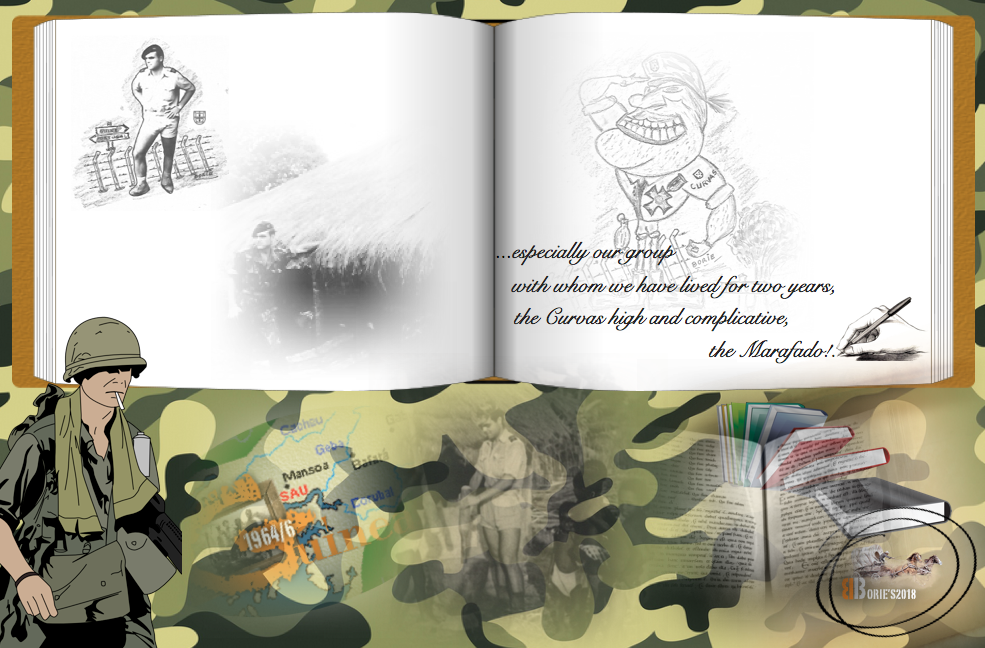
…died the “Zé Pesca”, on the Island of Como!.

…died the “Zé Pesca”, on the Island of Como!.

…morreu o “Zé Pesca”, na Ilha do Como!.
(Died the “Zé Pesca”, on the Island of Como)!

…hoje vamos falar de um episódio que nos anda “atravessado” há muitos anos!. Quando começamos a trazê-lo para o papel, escrevemos umas tantas linhas, depois, colocamos tudo de parte, a emoção toma conta de nós, é mais forte, o corpo, a alma, o espírito, a crença na própria vida, foram-nos roubados pela nossa passagem por aquela maldita Guerra Colonial Portuguesa, em África!. O maldito som do “catra-pum-pum-pum”, começa a zumbir nos ouvidos, parece que vamos fugir para o nosso abrigo preferido, a que chamáva-mos “Olossato”, por termos visto este tipo de abrigos pela primeira vez, no aquartelamento improvisado, que naquela altura existia naquela remota povoação do interior da então Guiné Portuguesa!. (Today let’s talk about an episode that has been “crossed” for many years! When we begin to bring it to the paper, we write a few lines, then we put everything aside, the emotion takes over us, it is stronger, the body, the soul, the spirit, the belief in our own life, robbed us of our passage through that bloody Portuguese Colonial War in Africa!. The damn sound of the “catra-pum-pum-pum”, begins to ring in the ears, it seems that we are going to escape to our preferred shelter, we called “Olossato”, for having seen this type of shelter for the first time, in the improvised barracks, which at that time existed in that remote village in the interior of then Portuguese Guinea)!.

…a maldição de um militar combatente, é que nunca esquece!. Uma vez que sentimos o perigo mortal, o horror puro, o medo, num campo de batalha, ficamos marcados para o resto da vida, tal como se fosse uma bala cravado no corpo, que a equipa médica retirou, mas só a parte física, pois essa bala continua lá dentro, no local mais sensível, onde nos continua a doer, ao mais leve toque!. (the curse of a military combatant, is that he never forgets!. Once we felt the mortal danger, the pure horror, the fear, on a battlefield, we were marked for the rest of our lives, as if it were a bullet in the body that the medical team removed, but only the physical part, because this bullet is still inside, in the most sensitive place, where it continues to hurt us, at the slightest touch)!.

…é impossível esquecer as nossas experiências na guerra e, aquilo que nos ajudou a sobreviver lá, agora, já lá vão mais de cinquenta anos, não funciona muito bem na nossa normal vida, no entanto ainda vai sendo possível lidar com tudo isto positivamente, vamos assumindo o control do pensamento, exalando alguma energia positiva, pelo menos contando estas experiências, para que pelo menos a juventude, compreendam e nunca tentem começar ou viver uma qualquer guerra, por mais pequena que seja, aliás, não existem guerras pequenas, todas são horriveis e mortíferas!. (it is impossible to forget our experiences in the war, and what helped us to survive there, now, more than fifty years ago, does not work very well in our normal life, nevertheless it is still possible to deal with all this positively, we take control of the thought, exhaling some positive energy, at least counting these experiences, so that at least the youth, understand and never try to start or live any war, no matter how small, there are no small wars, all are horrible and deadly)!.

…bem, vamos começar com a história, na tentativa de transformar a nossa dor em qualquer coisa de bom para outra pessoa, pois o nosso pensamento vai voltar à então Província Colonial da Guiné Portuguesa, onde nos aparece o “Zé Pesca”, que era um soldado pára-quedista, do mesmo grupo de combate do nosso companheiro de infância, “Zargo”, também combatente lá, no mesmo cenário de guerra, que um certo dia, nos apresentou o “Zé Pesca”, numa ida nossa no carro dos doentes a uma consulta ao hospital de Bissau, onde ficámos dois dias, convivendo, no aquartelamento da companhia de pára-quedistas, onde se fez uma tremenda “patuscada”, que meteu a culinária local, “Fula, Balanta ou Mandinga”, não sabemos ao certo, onde não faltavam ameijoas, ostras e até camarão, cozinhados numa fogueira no chão, onde entre todos, se bebeu um barril com vinho e, para não ficarem vestígios, queimou-se o barril!. (Well, let’s start with the story, in an attempt to turn our pain into something good for another person, because our thoughts will return to the then Colonial Province of Guinea- Portuguese, where we see the “Zé Pesca” who was a paratrooper soldier, from the same combat group of our childhood friend, “Zargo”, also a combatant there, in the same scenario of war that one day presented us with “Zé Pesca”, where we went in car of the patients to a consultation to the hospital of Bissau, where we stayed two days, living in the barracks of the parachute company, where there was a tremendous “party”, who introduced the local cuisine, “Fula, Balanta or Mandinga” we do not know for sure, where there were plenty of clams, oysters and even shrimp, cooked on a campfire on the floor, where everyone drank a barrel with wine and, to keep no trace, the barrel was burned!

…o “Zé Pesca”, era um lutador, um combatente que sempre arriscou a sua vida em combate defendendo os seus companheiros e, tinha um corpo de atleta, com a sua boina verde sempre de lado, onde por vezes, nem se lhe conseguia ver os olhos!. Os seus pais eram agricultores na região do Ribatejo, em Portugal, às vezes dizia para quem o quizesse ouvir:

– não gosto da Guiné, aqui não há cavalos!.

…tinha ingressado no corpo de pára-quedistas, impressionado pela farda e, onde lhe diziam que a alimentação era excelente!.

(The “Zé Pesca”, was a fighter, a fighter who always risked his life in combat defending his companions and, had an athlete’s body, with his green beret always on his side, where sometimes, nor even I could see his eyes! His parents were farmers in the Ribatejo region of Portugal, sometimes he would say to anyone who wanted to hear him:

– I do not like Guinea, there are no horses here!

Had entered the corps of parachutists, impressed by the uniform and where they told him that the food was excellent)!.

…o depoimento seguinte, foi-nos explicado pelo “Zargo”, uns tempos depois, quando nos encontrámos de novo, vendo a sua ausência, por ele perguntá-mos. Aqui, com alguma angústia, parando de falar algumas vezes, o “Zargo” ia explicando alguns pormenores:

– estávamos ali já há algumas horas, esperando a oportunidade para começar uma operação de destruição de um acampamento inimigo, era um “golpe de mão”, (que na linguagem militar, era um ataque com armas brancas), portanto fazendo o menor ruído possível, cobertos com a típica capa camuflada impermeável, já com muitos buracos, portanto molhados por uma chuva miudinha e, se não fosse a chuva, era a humidade que naquela altura se fazia sentir!.

(The following testimony was explained to us by the “Zargo,” some time later, when we met again, seeing his absence, we asked him. Here, with some anguish, stopping to speak a few times, “Zargo” was explaining some details:

– we were there a few hours ago, waiting for the opportunity to start an operation to destroy an enemy camp, it was a “hand-strike” (which in military language was a white-blasted attack), therefore making as little noise as possible, covered with the typical waterproof camouflage cover, already with many holes, therefore wet with a small rain and, if it were not the rain, it was the humidity that at that time was felt)!.

…e o “Zargo”, prosseguiu:

– ainda era noite quando saímos do aquartelamento onde estávamos acantonados, todos bebemos café, não sabíamos se estávamos sobre influência, mas estávamos nervosos, queríamos acção, passou um grupo inimigo de guerrilheiros perto, mas ainda não era o momento para intervir, pois em caso de disparar-mos qualquer arma, havia ruído e todos os movimentos seguintes seriam denunciados!.

(And “Zargo,” he went on:

– it was still night when we left the barracks where we were quarters, we all drank coffee, we did not know if we were on influence, but we were nervous, we wanted action, passed an enemy group of guerillas near, but it was not yet the moment to intervene, because in case to shoot any weapon, there was noise and all subsequent movements would be denounced)!.

…o “Zargo”, limpando o rosto e olhos de algumas lágrimas, prosseguiu:

– o “Zé Pesca”, já aí queria intervir, nós, a custo segurámo-lo, fomos avançando, já próximo do objectivo, não esperou por ninguém ou por qualquer ordem, avançou sózinho, na frente, gritando frazes obscenas, próprias de um guerreiro em fúria, talvez amaldiçoando a sua própria alma, onde nós, aterrorizados com aquele gesto suicida, talvez heróico, nunca soubemos, ouvimos a metralhadora inimiga, a tal a que nós chamávamos “costureirinha”, fazendo soar o seu maldito som, do “catra-pum-pum-pum-pum”, que atingiu o “Zé Pesca”, fazendo o seu corpo, rodopiar em zig-zague, caindo uns metros à frente, encolhido, crivado de balas!.

(The “Zargo”, wiping his face and eyes with a few tears, continued:

– The “Zé Pesca”, already wanted to intervene, we, at the cost insured it, we were advancing, already close to the objective, did not wait for anyone or any order, walked alone in the front, shouting obscene frazes, warrior in fury, perhaps cursing his own soul, where we, terrified by that suicidal gesture, perhaps heroic, we never knew, we heard the enemy machine-gun, the one we called “seamstress”, sounding its damn sound, “catra-pum-pum-pum-pum”, which hit the “Zé Pesca”, making his body swivel zig-zag, falling a few meters ahead, shrunk, riddled with bullets)!.

…o “Zé Pesca”, foi mais um, que morreu ao serviço do seu País, naquela maldita Guerra Colonial Portuguesa, onde muitos ficaram feridos, cujas feridas físicas são as mais fáceis de curar, mas as mentais, emocionais, do pensamento constante, enfim, da nossa alma, essas nunca mais vão sair do corpo de um ser humano, ainda jovem, que viveu num cenário de guerra!. (The “Zé Pesca”, was one more, who died in the service of his Country, in that damned Portuguese Colonial War, where many were injured, whose physical wounds are the easiest to cure, but the mental, emotional, constant, finally, of our soul, these will never leave the body of a human being, still young, who lived in a scenario of war)!.

…a operação da destruição da base inimiga, desenrolou-se, destruindo-se muito material de guerra, onde faziam parte algumas “costureirinhas”, que eram umas metralhadoras ligeiras, que também se podiam usar em cima de um tripé com duas rodas em ferro, sendo transportadas para a zona de combate e usadas em emboscadas, principalmente onde havia capim, faziam fogo muito rasteiro, com uma cadência de tiro, cujo som as identificavam e, quase sempre no final de qualquer emboscada, talvez desesperados, em fuga ou preocupando-se com os seus mortos ou feridos, os guerrilheiros, abandonavam o seu tripé!. (The operation of the destruction of the enemy’s base was unraveled, destroying a lot of war material, where some “seamstresses”, which were light machine guns, could also be used on a tripod with two wheels in iron, being transported to the combat zone and used in ambushes, mainly where there was grass, they made very low fire, with a cadence of shot, whose sound identified them and, almost always at the end of any ambush, perhaps desperate, in flight or worrying about their dead or wounded, the guerrillas, abandoned their tripod)!.

…já era manhã alta, quando no regresso até ao lugar onde deviam de ser recolhidos, transportaram o corpo do “Zé Pesca”, embrulhado num camuflado com marcas do seu sangue, onde também, para sua protecção vinham algumas guerrilheiras, feitas prisioneiras, pois deste modo, desencoraja os guerrilheiros de um possível ataque, cuja tarefa em combate, era o ser transportadoras de material de guerra, vinham amarradas pelas mãos, umas às outras, sendo libertadas, após os helicópteros evacuarem daquele cenário, o já referido grupo de combate.
(It was already high morning when, on their return to the place where they were to be taken, they transported the body of “Zé Pesca”, wrapped in a camouflage with marks of its blood, where also, for its protection came some guerrilla women, prisoners, thus discouraging the guerrillas from a possible attack, whose task in combat was to be carriers of war material, were tied by the hands, to each other, being released, after the helicopters evacuate from that scenario, the aforementioned group of combat)!.

…os irmãos de guerra respeitam-se e, alguns dias depois, os restantes membros daquele grupo de combate, olhavam uns para os outros e, diziam:

– morreu o “Zé Pesca”, na ilha do Como!.

(The war brothers respect each other, and a few days later the remaining members of that combat group looked at each other and said:

– Died the “Zé Pesca” on the island of Como)!.

…enquanto aquele grupo de combate, esteve naquele cenário de guerra, naquela então Província Colonial, a cama que pertenceu ao malogrado “Zé Pesca”, estava lá, feita com roupa limpa, ao lado dos seus companheiros, que antes de se deitarem, lhes davam as boas noites, dizendo:

– até um destes dias, “Zé Pesca”!.

(While that group of combat, was in that scene of war, in that then Colonial Province, the bed that belonged to the ill-fated “Zé Pesca”, was there, made with clean clothes, next to its companions, that before lying down, saying good night to them, saying:

– Until one of these days, “Zé Pesca”)!.

…oxalá Portugal, respeitasse os seus combatentes, como estes militares de acção, respeitavam um companheiro morto em combate, pois é dos livros, que:

“Nação que não respeita o seu passado, não pode ter um bom futuro”!.

(Portugal, respect their fighters, like these soldiers of action, respected a comrade killed in combat, because it is from the books that:

“Nation that does not respect its past, can not have a good future”!.

Tony Borie, February 2018.
…Arches National Park!

…Arches National Park!

…Parque Nacional dos Arcos! (Arches National Park)!

…nós, os que actualmente vivemos no planeta Terra, conhecemos a história contado por historiadores, do que decorreu entre o século XV e o início do século XVII, durante o qual, inicialmente os Portugueses, depois os Espanhóis e, posteriormente, alguns países europeus, exploraram intensivamente o globo terrestre em busca de novas rotas de comércio, onde os historiadores normalmente se referem à “era dos descobrimentos”!. (we who live on planet Earth know the story told by historians, from the fifteenth century to the early seventeenth century, during which the Portuguese, then the Spaniards and later some countries Europeans have intensively explored the globe in search of new trade routes, where historians usually refer to the “era of discoveries”)!.

…com as tais explorações marítimas pioneiras realizadas pelos Portugueses e Espanhóis, que estabeleceram relações com a África, América e Ásia, em busca de uma rota alternativa para as “Índias”, movidos pelo comércio de ouro, prata e especiarias!. (with such pioneering maritime explorations carried out by the Portuguese and Spanish, who established relations with Africa, America, and Asia, in search of an alternative route to the “Indies”, moved by the commerce of gold, silver and spices)!.

…essa “era dos descobrimentos”, onde se destacaram os exploradores, Cristóvão Colombo, pela descoberta da América, Vasco da Gama, pelo caminho marítimo para a Índia, Pedro Álvares Cabral, Bartolomeu Dias, Américo Vespúcio, John Cabot, Fernão de Magalhães, James Cook e muitos outros, marcou a passagem do feudalismo da “Idade Média” para a “Idade Moderna”, onde durante este processo, os Europeus encontraram e documentaram povos e terras nunca antes vistas!. Tudo isto foi um importante motor, para o início da modernidade, estimulando a pesquisa científica e intelectual, onde essa expansão europeia levou ao contacto entre o “Velho” e o “Novo Mundo”!. (This was the “era of discoveries”, where the explorers, Christopher Columbus, for the discovery of America, Vasco da Gama, along the maritime route to India, Pedro Álvares Cabral, Bartolomeu Dias, Amerigo Vespucci, John Cabot, Magellan, James Cook and many others, marked the transition from feudalism of the “Middle Ages” to the “Modern Age”, where during this process, Europeans found and documented peoples and lands never seen before! All this was an important engine for the beginning of modernity, stimulating scientific and intellectual research, where this European expansion led to the contact between the “Old” and “New World” !.

…esta a razão porquê, aqui onde vivemos, no continente Americano, podemos ver estados, cidades, aldeias, montanhas e rios, com nomes de origem Espanhola ou Portuguesa, como por exemplo a cordilheira de Montanhas de La Sal, que estão localizadas nos condados de Grande e San Juan, no estado do Utah, ao longo da fronteira Utah/Colorado, um pouco acima e a sudeste da cidade de Moab e ao norte da cidade de La Sal, que chegam a atingir 12,721 pés (3.777 m) acima do nível do mar, intervaladas por três grupos de picos, onde em outros tempos os Espanhóis por aqui passaram, dando-lhe o nome de “Sierra La Sal”, que significa “Montanhas Salgadas”, ficando a ser um marco muito significativo para passagem da “Trilha Espanhola”!. (This is the reason why we can see states, cities, villages, mountains and rivers with names of Spanish or Portuguese origin, such as the La Sal Mountains range, which are located in the American continent, in the counties of Grand and San Juan, in the state of Utah, along the border Utah / Colorado, a little above and to the southeast of the city of Moab and to the north of the city of La Sal, that arrive to reach 12,721 feet (3,777 m) above sea level, interspersed by three groups of peaks, where in other times the Spaniards passed by, giving it the name of “Sierra La Sal”, which means “Salt Mountains”, being a very significant landmark for passage of the “Spanish Trail”)!.

…que era uma rota comercial histórica, que conectava os assentamentos do norte, do hoje estado de Novo México, muito perto da cidade de Santa Fé, com os da cidade de Los Angeles, no também hoje, estado da Califórnia!. (that it was a historic commercial route that connected the settlements of the north, of the present state of New Mexico, very close to the city of Santa Fe, with those of the city of Los Angeles, in the now also, state of California !.

…o seu percurso tem aproximadamente 700 milhas (1.100 km), que atravessam áreas de altas montanhas, desertos áridos e ravinas profundas!. (Its route is approximately 700 miles (1,100 km), which cross areas of high mountains, arid deserts and deep canyons)!.

…a Old Spanish Trail, é considerada uma das mais árduas de todas as rotas comerciais já estabelecidas nos USA, explorada em parte, por exploradores Espanhóis já no final do século dezasseis, todavia esta rota viu o seu uso extensivo por caravanas de carros puxados por animais, pelos imigrantes que se deslocavam para oeste, por altura do ano de 1830 até meados da década de 1850!. (the Old Spanish Trail, is considered one of the most arduous of all commercial routes already established in the USA, explored in part by Spanish explorers as early as the late sixteenth century, but this route saw its extensive use by car caravans drawn by animals, by the immigrants who moved to the west, by the time of the year 1830 until the mid-1850s)!.

…podíamos ver estas montanhas, ainda com alguma neve nos seus picos, lá ao longe, embora fosse época de verão, fosse ainda manhã, com a termómetro na nossa viatura, a marcar 86ºF!. Levávamos água e roupas leves, pois o nosso destino era a região do deserto do “Moab”, mais própriamente o “Arches Nacional Park”, que fica situado a leste do estado do Utah, adjacente ao Rio Colorado, onde existem mais de 2.000 arcos de arenito natural!. (we could see these mountains, still with some snow in their peaks, in the distance, although it was summer season, it was still morning, with the thermometer in our vehicle, to mark 86ºF !. We took water and light clothing, as our destination was the Moab desert region, most notably the “Arches National Park,” which is situated to the east of the Utah state, adjacent to the Colorado River, where there are more than 2,000 arches natural sandstone)!.

…incluindo o mundialmente famoso “Delicated Arch”, além de uma variedade de recursos e formações geológicas únicas, que contém a maior densidade de arcos naturais do mundo!. (including the world famous “Delicated Arch”, plus a variety of features and unique geological formations, containing the highest density of natural arches in the world)!.

…o Centro de Informação, é na base das montanhas de arenito natural, podemos viajar de veículo, por todo o parque, parando aqui e ali, ou só nos pontos mais importantes, a estrada, embora estreita, tem alguma segurança, com subidas, precipícios, descidas algo assustadoras mas, o cenário compensa!. (the Information Center, it is at the base of the mountains of natural sandstone, we can travel by vehicle, all over the park, stopping here and there, or only in the most important points, the road, although narrow, has some security, with climbs, precipices, descents something frightening but, the scenery pays)!.

…em uma extensão de 76.679 acres (119.811 milhas quadradas, 31.031 ha, 310.31 km2) de alto deserto, localizado no Planalto do Colorado, sendo a sua elevação mais alta de 5.653 pés (1.723 m), que é na área da “Colina do Elefante”, e a sua menor elevação é de 4.085 pés (1.245 m), que é na área do Centro de Informação, sendo visitado por mais de um milhão de visitantes por ano!. (It has an extension of 76,679 acres (119,811 square miles, 31,031 ha, 310,31 km2) high desert, located on the Colorado Plateau, its highest elevation being 5,653 feet (1,723 m), which is in the “Elephant Bute”, and its lowest elevation is 4,085 feet (1,245 m), which is in the area of the Information Center, being visited by more than one million visitors per year)!.

…este parque é um paraíso, para quem como nós adora caminhar, pois são imensos os caminhos para percorrer e, dizem-nos que, provavelmente, esta região há cerca de 300 milhões de anos era mar, estava coberta de água salgada que, também provavelmente, foi evaporando, portanto hoje toda esta região está localizada, ou seja, “dorme sobre uma cama de sal evaporado subterrâneo”!. (this park is a paradise, for those of us who love to walk, because there are so many ways to go and, they say that probably this region there are about 300 million years ago was the sea, was covered with salt water that also probably was evaporating, so now this whole region is located, ie “sleeping over an underground evaporated salt bed”)!.

…que é a principal causa da formação dos seus arcos, torres, pedras equilibradas, barbatanas de arenito e monólitos erodidas nesta área. Esta “cama de sal” tem de milhares de metros de espessura em alguns lugares e foi depositado na “Bacia do Planalto do Colorado”, que é como chamam a esta área, há cerca de 300 milhões de anos, quando um qualquer mar, fluiu na região e, torno a dizer, provavelmente evaporou, como tentámos explicar no princípio!. (which is the main cause of the formation of the arches, towers, balanced rocks, sandstone fins and eroded monoliths in this area. This “salt bed” has thousands of meters thick in some places and was deposited in the “Colorado Plateau Basin”, which is how they call this area, there are about 300 million years, when any sea flowed in the region and around saying, probably evaporated, as we tried to explain in the beginning)!.

…de uma maneira ou de outra, em Abril de 1929 esta maravilhosa região foi proclamada pelo presidente Herbert Hoover, “Monumento Nacional” e, em Novembro de 1971, foi proclamado como “Parque Nacional”, tudo isto são pequenas curiosidades que ajudam a compreender a importância deste parque. (One way or another, in April 1929 this wonderful region was proclaimed by President Herbert Hoover, “National Monument” and in November 1971 was proclaimed as “National Park”, these are all small curiosities that help to understand the importance of this park)!.

…ainda ajudando mais a compreender a formação dos arcos que existem neste maravilhoso parque, as formações visíveis como o Arenito de Entrada de cor salmão, em que se formam a maioria dos arcos, e o Arenito Navajo, de cor clara, ao longo do tempo, a pouca água, pois o parque recebe em média 10 polegadas (250 mm) de chuva por ano, escorria para as fissuras, expandindo e pressionando a rocha circundante, quebrando-a aos pedaços, os ventos em seguida, limparam as partículas soltas, o vento e a chuva volta a atacar de novo, o material de cimentação foi cedendo e, aos pedaços foram caindo, onde em muitas áreas muito danificadas, colapsaram, mas em outras áreas, com um grau certo de dureza e equilíbrio, sobreviveram, apesar de algumas secções perdidas!. (further helping to understand the formation of the arches that exist in this wonderful park, the visible formations as the Salmon-colored Entry Sandstone, in which most of the arches form, and the light Navajo Sandstone along of the time, the little water, since the park receives on average 10 inches (250 mm) of rain a year, it flowed to the fissures, expanding and pressing the surrounding rock, breaking it to pieces, the winds then cleaned the particles loose, the wind and rain hit again, the cementing material subsided, and to pieces they fell, where in many badly damaged areas they collapsed, but in other areas, with a certain degree of hardness and balance, they survived , although some sections lost)!,

…tornaram-se em arcos, que hoje são famosos!.  (have become arches, which today are famous)!.

…voltando ao princípio deste texto, a história conta-nos, com a ajuda dos “Descobridores Europeus”, alguns pormenores do que decorreu do século XV para cá, o que decorreu antes, é fruto de uma pesquisa científica e intelectual, que talvez não ande longe da verdade, mas o que decorreu ao certo, cremos que ninguém saberá, mas este fenómeno, como é este Parque dos Arcos, possívelmente é uma “marca” do passado, que deixa-nos a pensar, como o planeta Terra é maravilhoso, fascinante e está cheio de segrêdos!. (returning to the beginning of this text, the story tells us, with the help of the “European Discoverers”, some details of what happened from the fifteenth century here, what happened before, is the result of scientific and intellectual research, which we may believe that no one will know, but this phenomenon, as it is this Park of the Arches, is possibly a “mark” of the past, which leaves us to think, as the planet Earth is wonderful, fascinating and full of secrets)!.

Tony Borie, February 2018.
…in war

…in war


…na guerra!. (in war)!.

…um dos maiores e mais terríveis flagelos que ainda hoje existe neste planeta que habitamos, é sem qualquer dúvida os conflitos armados, a que normalmente chamamos Guerra!. A história conta-nos que “ela” existiu e ainda existe, que “ela” é tão velha como a história, que “ela” destruiu gerações de seres humanos, que “ela” separou, por muitos ou poucos anos, famílias, amigos, mesmo povos que, antes “dela”, nada tinham uns contra os outros!. (one of the greatest and most terrible scourges that still exists today on this planet we inhabit, is without a doubt the armed conflicts, which we usually call War!. The story tells us that “it” existed and still exists, that “it” is as old as history, that “it” destroyed generations of human beings, that “it” separated, for many or a few years, families, friends, even people who, before “her”, had nothing against each other)!.


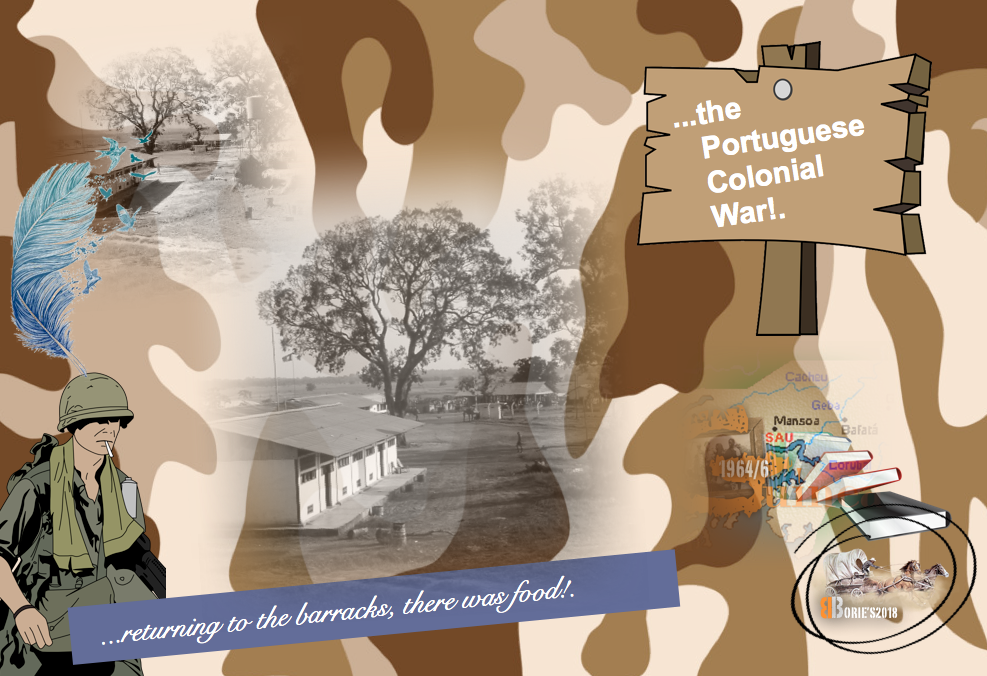
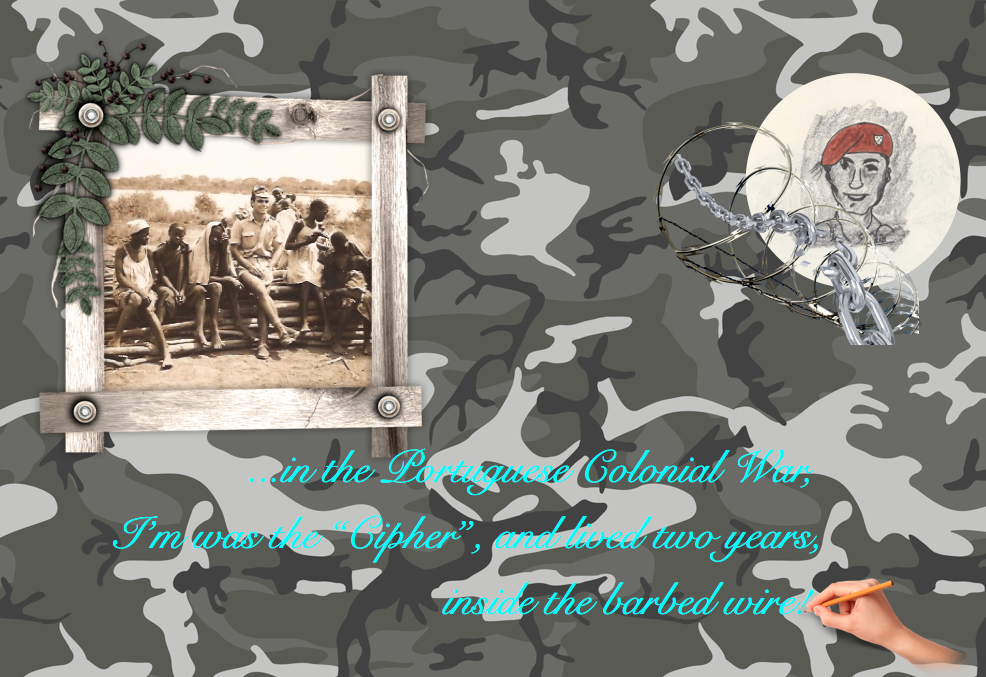
…a história que vamos contar hoje, é verdadeira, passou-se durante a nossa estadia forçada em combate, no tal aquartelamento, cercado de arame farpado, na então Província Colonial Portuguesa da Guiné, em África, cá vai!. (the story that we are going to tell today is true, it was during our forced stay in combat in the barracks, surrounded by barbed wire, in the then Portuguese Colonial Province of Guinea, in Africa, here)!.

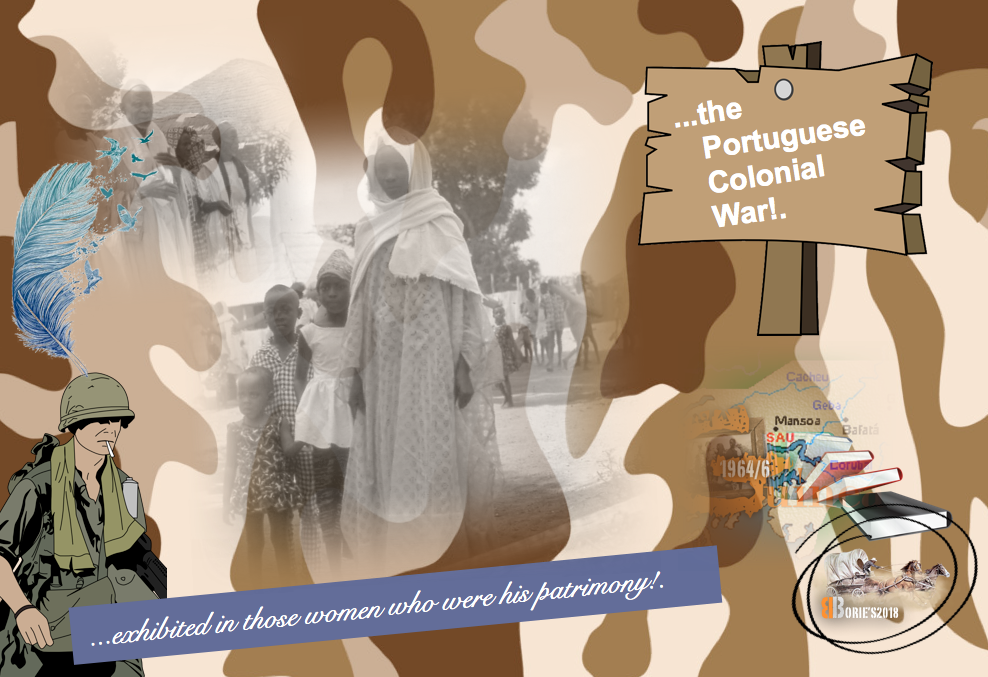
…quase todos nós, naquela área do interior africano, tínhamos uma “lavadeira”, que era uma pessoa da aldeia, portanto africana, do sexo feminino, que lavava a roupa a troco de algum dinheiro!.

…até era costume dizer-se entre nós:

– a minha lavadeira é melhor do que a tua!.

…ainda hoje não sabemos em que termos isso se dizia, se nos referíamos ao físico com que o criador a dotou, ou se mesmo lavava a roupa melhor!.

(Almost all of us, in that area of the African interior, had a “washerwoman”, who was a village person, therefore African, female, who was washing clothes for some money!

It was even customary to say between us:

– My laundress is better than yours!.

Even today we do not know in what terms this was said, if we were referring to the physicist with which the creator endowed it, or if he even washed his clothes better)!.

…o “Meia Folha de Papel Selado”, pois era esse o seu nome de guerra, onde mais à frente vão saber porquê este nome, na Europa era oriundo de uma aldeia do interior de Portugal, próximo da raia com a Espanha, os seus familiares eram “contrabandistas”, era um militar rude e acostumado a “desavenças”, cremos até que não tinha amigos, andava por ali, quase sempre contrariado e, uma das razões era, que tinha um irmão, também mobilizado para o então Ultramar Português, para outra Província, que não era em África!. (the “Half Sheet of Sealed Paper”, because this was his name of war, where later on they will know why this name, in Europe came from a village in the hinterland of Portugal, near the line with Spain, his family were “smugglers,” he was a rude military man accustomed to “disagreements”, we believed until he had no friends, he walked around, almost always annoyed and, one reason was, that he had a brother, also mobilized for the then Overseas Portuguese, to another Province, which was not in Africa)!.

…pelas notícias que o irmão lhe mandava nos aerogramas, na Província onde se encontrava era um paraíso, era paz, boa comida, paisagens de sonho, as pessoas amáveis e, tinha duas namoradas!. Estava até a pensar ficar por lá quando acabasse o serviço militar, pois em Portugal, pelo menos na sua aldeia, a sobrevivência era rude e de lavoura, as raparigas, quase todas tinham bigode e algumas eram feias, mas ali, eram todas lindas e exóticas!. (by the news that his brother sent him on the airgrams, in the province where he was a paradise, it was peace, good food, dream landscapes, kind people and, had two girlfriends!. I was even thinking of staying there when the military service was over, because in Portugal, at least in their village, survival was rough and farming, the girls, almost all had mustaches and some were ugly, but there they were all beautiful and exotic)!.

…tanto bem lhe disse do tal Ultramar, que o “Meia Folha de Papel Selado”, mete um requerimento em meia folha de papel selado, (daí lhe veio o nome de guerra), para ir também para essa Província Colonial do Ultramar Português!. (as well told him of the Overseas, that the “Half Sheet of Sealed Paper”, inserts a request in half sheet of paper sealed, (hence its name of war), to also go to that Province of the Colonial of the Overseas Portuguese!.

…entretanto na então Província Colonial da Guiné, onde nós, na altura nos encontrávamos, a guerra de libertação desenvolve-se, cada vez havia mais conflitos, mais emboscadas, os guerrilheiros que lutavam pela liberdade do seu território, estavam em quase todo o terreno, já havia conflitos armados no sul, eram necessárias mais tropas, era urgente, para sustentar aquele conflito armado!. (Meanwhile in the then Colonial Province of Guinea, where we were at the time, the liberation war was developing, there were more and more conflicts, more ambushes, the guerrillas who fought for the freedom of their territory, were in almost all the land, there were already armed conflicts in the south, more troops were needed, it was urgent to sustain that armed conflict)!.

…tinham que vir reforços da Europa, assim todos os meses chegavam, bem ou mal preparados chegavam militares Europeus onde, quiz o destino, chegou o “Meia Folha de Papel Selado”!.  (there had to be reinforcements from Europe, so every month arrived, well or poorly prepared, European military arrived, where, as destiny, the “Half Sheet of Sealed Paper” arrived)!.

….deu logo nas vistas!. Andava contrariado e, dizia:

– Não era para aqui que queria vir, qualquer dia mato alguém!.

…além de andar contrariado, não acatava ordens, andava sempre sujo e com a mesma roupa, só comia quando queria e, muito pouco. Na sua maneira de estar por ali, era um pouco parecida com a do “Curvas, alto e refilão”, só que não comia, andava sujo e não mostrava ser violento!.

(Gave the sight! He was annoyed and said:

– I did not want to come here, I’ll kill someone sometime!.

(Besides being upset, he did not obey orders, he was always dirty and in the same clothes, he only ate when he wanted and very little. In his way of being there, it was a bit like “Curvas, high and complicative”, but he did not eat, he was dirty and he did not show himself to be violent)!.

…um dia, nós, cruzando-nos com ele, tentámos falar-lhe, ele, fica parado na nossa frente, todavia os seus olhos focam-se em diferente direcção, para baixo e para o lado, repete duas ou três vezes diferentes frases, sem qualquer senso, como por exemplo:

– Quero uma namorada bonita, eu não sou daqui!. Quem és tu, filho da puta!.

…dos seus lábios, ao pronunciar estas palavras, saía alguma saliva, como se fosse baba, a sua maneira de proceder não era normal!.

(One day, we, crossing him with him, tried to speak to him, he stands before us, yet his eyes focus in a different direction, down and to the side, repeats two or three times different phrases, without any sense, as for example:

– I want a beautiful girlfriend, I’m not from here!. Who are you, you son of a bitch!

From his lips, when he uttered these words, some saliva came out, as if it were drool, his manner of proceeding was not normal)!.

…no aquartelamento, eram só homens, combatentes solitários, havia por lá livros de romances baratos, fotos de nudez, geralmente mulheres nuas ou quase nuas, Africanas ou Europeias, que despertavam alguma curiosidade em alguns militares, pelo menos os que iam chegando, pois os antigos já não ligavam quase nada a essas fotos!. (in the barracks, it was only men, solitary fighters, there were books of cheap novels, photos of nudity, usually nude or almost naked women, African or European, that aroused some curiosity in some military, at least those who were arriving, because the ancients no longer attached much to these photos)!.

…nós, não sabemos, talvez ninguém saiba, o que passou pelo pensamento do “Meia Folha de Papel Selado” pois, quando um certo sábado, algumas raparigas naturais, que lavavam a roupa para os militares, vinham trazer essa mesma roupa, fazendo uma fila na entrada do aquartelamento, o “Meia Folha de Papel Selado”, dirige-se a uma dessas raparigas, das mais vistosas e, com atitude agressiva, agarrando-a pelos braços, diz-lhe mais ou menos estas palavras:

-Tu és a minha namorada e, vou ter sexo contigo!.

(We do not know, perhaps nobody knows, what happened to the thought of the “Half Sheet of Sealed Paper” because, when a certain Saturday, some natural girls, who washed their clothes for the military, they were to bring the same clothes, lining up at the entrance to the barracks, the “Half Sheet of Sealed Paper,” he went to one of the most showy girls and, with an aggressive attitude, tells you more or less these words:

-You’re my girlfriend and I’m going to have sex with you)!.

…a rapariga, começa a gritar desesperada, tentando livrar-se dele mas, o “Meia Folha de Papel Selado”, puxa de uma pistola que trazia consigo, disparando dois tiros, onde uma dessas balas atingiu a perna da bonita rapariga!. (the girl starts screaming desperately, trying to get rid of him, but the “Half Sheet of Sealed Paper” pulls from a pistol she carried with her, firing two shots, where one of those bullets hit the beautiful girl’s leg)!.

…como se nada tivesse acontecido, afasta-se e murmura, mais ou menos estas parlavras:

– Esta já morreu, era feia, agora vou arranjar outra, mas bonita!.

…foi desarmado e preso imediatamente, pelos militares que por ali se encontravam, não oferecendo qualquer resistência!.

(As if nothing had happened, he departs and murmurs, more or less these words:

– This one is dead, it was ugly, now I’m going to get another, but beautiful!.

Was disarmed and immediately arrested, by the military that were there, offering no resistance)!.

..o helicóptero veio evacuar a rapariga para o hospital da capital Província. Ele, ficou preso nessa noite no aquartelamento, de onde se ouviam risos e gargalhadas, parecendo vir do local onde estava, no dia seguinte, um grupo de combate veio traze-lo à capital, para ser evacuado para Portugal, onde ia ser julgado pelo crime que cometeu!. (the helicopter came to evacuate the girl to the hospital of the capital Province. He was trapped that night in the barracks, where they heard laughter and laughter, seeming to come from where he was, the next day a combat group came to bring him to the capital, to be evacuated to Portugal, where he was to be tried by crime he committed)!.

… alguns no aquartelamento diziam:

– É muito pouco tempo para o “Meia Folha de Papel Selado”, já estar “apanhado pelo clima”!.

…”apanhado pelo clima”, era uma expressão entre combatentes, que queria mais ou menos dizer, já estar com “stress de guerra” e, não ver aquilo que é normal um ser humano ver, com um pensamento claro, vivendo numa sociedade onde normalmente os princípios de família, ou o respeito pelo próximo, são das coisas mais importantes!.

(Some in the barracks said:

– There is very little time for the “Half Sheet of Sealed Paper”, already being “trapped by the weather”!.

“Caught by the climate”, was an expression between combatants, who wanted to say more or less, to be “warlike” and not see what it is normal for a human being to see, with a clear thought, living in a society where family principles, or respect for one’s neighbor, are usually of the most important things)!.

…a partir desse momento, ao sábado, as raparigas lavadeiras eram protegidas à entrada do aquartelamento, por uma secção de combate!. (from that moment, on Saturday, the girl laundresses were protected at the entrance of the barracks, by a section of combat)!.

…no início deste conflito, onde existia uma imprevista e traiçoeira guerra de guerrilha, a falta de treino e preparação dos militares Europeus, tanto psicológica como no terreno em combate, era constante!. Havia alguns militares que se excediam, depois de terem uma arma nas suas mãos, sob o seu controle e, onde alguns oficiais, abusavam da situação, batendo mesmo, espancando alguns militares de inferior posto!. (at the beginning of this conflict, where there was an unforeseen and treacherous guerrilla war, the lack of training and preparation of the European military, both psychological and on the ground in combat, was constant!. There were some military officers who, after having a gun in their hands, under their control, and where some officers abused the situation, beating themselves, beating some inferior military men)!.

…a linguagem e a falta de escola em alguns militares, fazia com que por vezes o ambiente no aquartelamento não fosse o mais recomendável, como por exemplo, um grupo de combate um dia trouxe até próximo do aquartelamento, para sua inteira protecção, um pequeno grupo de mulheres guerrilheiras, depois da sua acção em combate onde destruiram um acampamento inimigo, logo foram apelidados de o “Grupo de combate dos paneleiros”, por não terem tentado sexo com as guerrilheiras, no entanto outros, apelidaram este mesmo grupo de combate, como o “Grupo de combate das putas”, por as terem soltado, julgando esse grupo de mulheres guerrilheiras, como se defacto fossem prostitutas, não mostrando a mínima compaixão pelo sacrifício que mostravam essas pessoas, combatendo pela liberdade do seu território!. (the language and the lack of school in some military, sometimes made the environment in the barracks was not the most recommended, as for example, a combat group one day brought near the barracks, for their entire protection, a small group of women guerrillas, after their action in combat where they destroyed an enemy camp, soon they were nicknamed of the “Fighter group of fagots”, for not having tried sex with the women guerrillas, nevertheless others, nicknamed this same group of combat , as the “Whore-fighting Group”, for releasing them, judging this group of women guerrillas, as if they were prostitutes, showing no compassion for the sacrifice these people showed, fighting for the freedom of their territory)!.

…tudo isto acontecia num local de conflito, onde alguns militares, mal treinados, foram colocados numa frente de combate, sobre forte pressão nervosa, mal alimentados, sem assistência médica no local e, com falta de medicamentos de primeira necessidade, angustiados, mostrando por vezes não ser responsáveis pelos seus actos!. (all this happened in a place of conflict where some poorly trained soldiers were placed on a combat front, under heavy nervous pressure, poorly fed, without medical assistance at the scene and, in the absence of needy medicines, distressed, showing sometimes not being responsible for their acts)!.

…isto era uma verdade que nos trazia também angustiados, pensando muitas vezes, falando alto:

– Tantos jovens em idade de poderem usufruir dos melhores anos da sua vida, na companhia dos seus familiares, nas suas aldeias, beijar as suas namoradas, alguns já com esposa e filhos e, em lugar de todas essas coisas, que a vida nos proporciona nesta idade, estamos a milhares de quilómetros de distância, enterrados num conflito armado, que nada nos diz, dentro de um aquartelamento de chão vermelho, circundado de arame farpado, sempre em sobressalto, pois não vão os guerrilheiros atacar daqui a segundos e, os abrigos, alguns ainda estão cheios de água, pois estamos na época das chuvas!.

(This was a truth that also brought us anguish, thinking often, speaking loudly:

– So many young people of the age to be able to enjoy the best years of their lives, in the company of their families, in their villages, kiss their girlfriends, some with their spouses and children, and instead of all these things, at this age, we are thousands of miles away, buried in an armed conflict, which tells us nothing, inside a barrack of red ground, surrounded by barbed wire, always startled, for the guerrillas will not attack in seconds, and the shelters, some are still full of water, as we are in the rainy season)!.

Tony Borie, February 2018.
…red earth ground!

…red earth ground!


…chão de terra vermelha! (red earth ground)!

…o cenário do sol, refletido no chão de terra vermelha, da Guiné Africana na zona do Equador, naquele enclave, onde no mapa da África fica mais estreito, só por si, ia matando aos poucos o militar Europeu, que para ali tinha sido desterrado!. As noites, apesar dos frequentes ataques mortíferos feitos ao aquartelamento, era bem vindas, por serem mais frescas, onde os militares se consideravam um pouco “abandonados filhos da noite”!. (the setting of the sun, reflected in the red earth ground, of the African Guinea in the zone of Ecuador, in that enclave, where on the map of Africa is narrower, by itself, was gradually killing the European military that there had had been exiled!. The nights, in spite of the frequent deadly attacks made on the quartering, were welcome, because they were cooler, where the military considered themselves a little “abandoned sons of the night”)!

…o “Setubal”, cujo verdadeiro nome era Jeremias, tal como o “Curvas, alto e refilão”, que não acatava ordens e, todos diziam que devia de ser General, por actos de coragem e bravura, em zonas de combate, foram louvados pelo comando, em cerimónia a preceito, no centro do aquartelamento, debaixo da enorme árvore, que por sinal tinha sido baptizada com o nome de “Mangueiro do Setubal”, árvore de grande porte, onde na sua base existiam algumas gaiolas de macacos e piriquitos! (the “Setubal,” whose real name was Jeremiah, such as the “Curvas, high and complicative”, who did not obey orders, and all said that he must be General, for acts of courage and bravery in combat zones, were praised by command, in a ceremony to precept, in the center of the barracks, under the enormous tree, which by the way had been baptized with the name of “Mangueiro do Setubal”, a large tree, where at its base existed some cages of monkeys and parakeets)!.

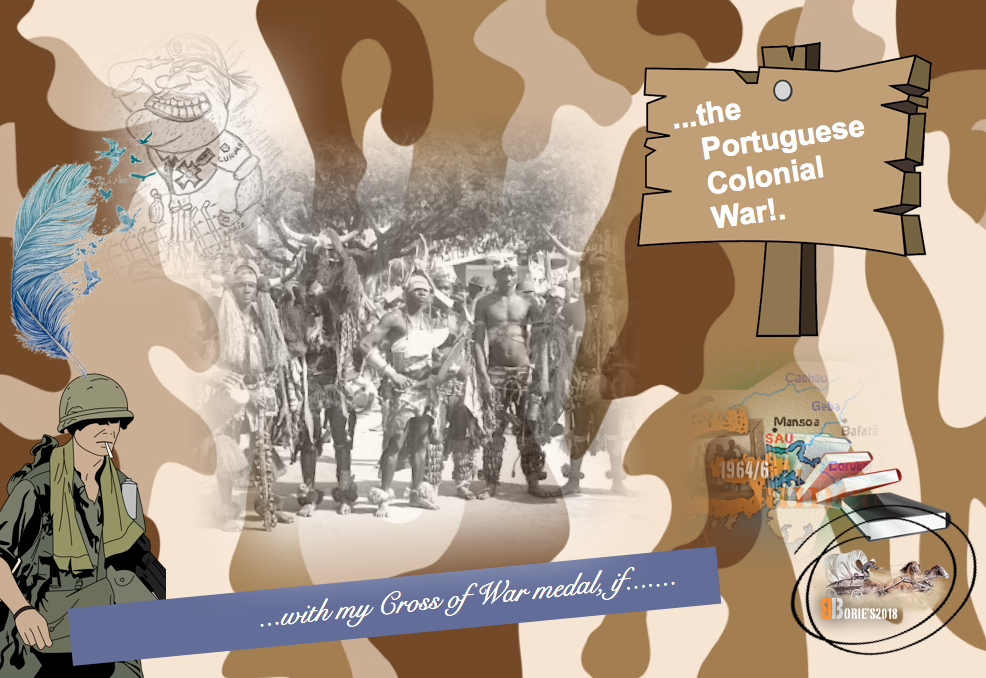
…isto tudo na presença de todos os militares, seus companheiros. O “Setúbal”, foi só louvado, mas o “Curvas, alto e refilão”, foi louvado e agraciado com uma Medalha Cruz de Guerra, que o comandante do comando a que nós, o “Cifra” pertenciamos, lhe propôs e que devia de ter vindo receber a Lisboa, em Portugal, por altura dos festejos do dia 10 de Junho, (Dia Nacional), mas o “Curvas, alto e refilão”, recusou-se a vir a Portugal, dizendo:

– Não vou a Portugal, pois não tenho lá família, nem amigos, nem ninguém, toda a minha família e os meus amigos estão aqui, comigo e, quando eles forem, eu também vou!.

…era assim, o homem!.

(all this in the presence of all military, his companions. The “Setubal”, was only praised, but the “Curvas, high and complicative”, was praised and awarded a Cross Medal War, the commander of the command to which we, the “Cipher” belonged, offered him and he should have been receiving Lisbon, in Portugal, by the time of the festivities of day June 10, (National Day), but the “Curvas, high and complicative”, refused to come to Portugal, saying:

– No, I’m not going to Portugal because I’m not there family or friends, or anyone, all my family and my friends are here with me, and when they are, I will too!.

So, was the man)!.

…nesta cerimónia, o comandante falou durante algum tempo, com elogios constantes ao “Curvas, alto e refilão”, que o escutava contrariado, sempre a falar baixinho e, mais tarde, questionado por nós, o “Cifra”, sobre a expressão do seu rosto e o que estava a pensar e a murmurar, o “Curvas, alto e refilão”, disse-nos que pensava e murmurava, qualquer coisa como isto:

– Deixa-te lá de merdas, dá-me lá a medalha ou lá o que é!. Para mim, não adianta nem atraza, se fosse de ouro, que a podesse empenhar ou vender, ou mesmo em lugar da medalha me arranjasses um bom emprego, quando deixar esta miserável guerra, que podesse criar uma família, então sim, estavas a ajudar-me, pois eu sei que quando sair daqui, se sair vivo, vou continuar a ser um desgraçado, a carregar a caixa de engraxar sapatos e, enquanto limpo os sapatos, com o estômago quase sempre vazio, alguns pensando que são pessoas importantes, com o estômago cheio de bifes e outras iguarias, arrotam, cospem para o chão, às vezes acertam-me, mas se isso voltar a acontecer, vou matar um, lá isso vou, sei que vou voltar à cadeia, continuar sem família e desprezado por todos, talvez a única família que vou ter, é a caixa de engraxar sapatos!.

(In this ceremony, the commander spoke for some time, with constant compliments to the “Curvas, high and complicative”, which listened to him annoyed, always speaking softly, and later questioned by us, the “Cipher”, about the expression of his face and what he was thinking and murmuring, the “Curvas, high and complicative” told us that he thought and murmured, something like this:

– Give me the shit, give me the medal there or whatever! For me, if it were not gold, if it were gold, that you could commit or sell it, or even in the place of the medal, you could get me a good job, when I’m leave this miserable war that could raise a family, then yes, you were helping me, I know that when I get out of here, if I leave alive, I will continue to be a bastard, carrying the box of shoe shine and, while I clean my shoes, with the stomach almost always empty, some thinking they are important people, with a stomach full of steaks and other delicacies, belch, spit to the ground, sometimes hit me, but if this happens again, I’ll kill one, there I go, I know I’m going back to jail, still without family and despised by all, maybe the only family I will have is the shoebox)!.

…e nós, o Cifra, vimo-lo fechar os olhos um pouco, abrindo-os de novo, pestanejando, pois o sol batia-lhe na face, o tal cenário do sol reflectido no chão de terra vermelha, e ele, o “Curvas, alto e refilão”, disse que o seu pensamento não parava, quase que falava alto e murmurava qualquer coisa como isto:

– Anda lá comandante, dá-me lá a medalha, que estou cheio de sede, pois estou aqui a apanhar sol, sem necessidade!.

(and we, the “Cipher,” saw him close his eyes a little, opening them again, blinking, for the sun beat on his face, the scene of the sun reflected in the ground of red earth, and he, the “Curvas, high and complicative” he said that his thoughts did not stop, he almost spoke loudly and muttered something like this:

– Come on the commander, give me the medal there, I’m full of thirst, because I’m here to catch the sun, no need)!.

…o comandante, quando acabou os elogios, coloca-lhe a medalha no peito, que o “Curvas, alto e refilão” recebeu, mas sempre a falar baixinho, com uma cara de quem queria matar alguém!. Só se riu um pouco quando viu o “Trinta e Seis” a chegar junto dele e abraçá-lo e, logo lhe disse:

– Estou cheio de sede, temos que ir beber qualquer coisa, deixa eles continuarem, enquanto estão aqui todos reunidos, vamos à enfermaria roubar o frasco do álcool ao “Pastilhas”, para mais tarde misturamos com água e gelo e uma azeitona salgada, que o “Cifra” vai trazer da messe dos sargentos!.

(The commander, when the praise is over, puts his medal on the chest, the “Curvas, high and complicative” received, but always talking quietly with a guy who wanted to kill someone!. Only she laughed a little when he saw the “Thirty-Six” to get close to him and hug him, and then said:

– I am very thirsty, have to go have a drink, let them continue while they are here all together, we go to ward steal the bottle of alcohol to “Pastilhas” to later mix with water and ice and a salted olive, the “Cipher” will bring the harvest of the sergeants)!.

…em seguida, o comandante voltou de novo aos elogios, mas desta vez, ao “Setúbal” e, entre outras coisas diz:

– Homem bravo e com coragem, arriscou a vida para salvar os seus companheiros, debaixo de fogo, lutou, sem virar a cara às balas, bendita a nação que tem filhos destes, blá, blá, blá!.

(Then the captain turned back to praise, but this time, “Setubal”, among other things says:

– Brave and courageously man risked his life to save his comrades under fire, fought without turning to face the bullets, blessed the nation with these children, blah, blah, blah)!.

…o “Setúbal”, envergonhado com tantos elogios, olhava o “Cifra”, tentando piscar o olho e abanar a cabeça, em sinal de desconforto, ao mesmo tempo que pensava, pelo menos foi o que disse depois ao “Cifra”, qualquer coisa como isto:

– Nação que tem filhos destes, alto lá, pára lá com isso, eu sou filho da minha mãe, pelo menos era ela que me dava de comer e me criou, quando era pequeno!.

(The Setúbal, embarrassed by such praise, looked at the “Cipher”, trying to blink the eye and shook his head in sign of discomfort at the same time I thought, at least he said so after the “Cipher”, something like this:

– Nation that have children of these, high there, stop there with that, I am the son of my mother, at least it was she who gave me food and made me, as a child)!.

…quando o comandante acabou de falar, todos bateram palmas e, já com a cerimónia acabada, o “Setúbal”, tal como tinha antes combinado com o “Cifra”, depois de fazer a respectiva continência, pondo-se em posição de sentido, dirigiu-se ao comandante, na frente de todos, mais ou menos com estas palavras:

– Meu comandante, se me dá licença, com todo o respeito, queria pedir-lhe se podia ter como prémio, além de todos estes elogios, uma pequena licença de umas semanas e uma possível viagem a Portugal, nos aviões da Força Aérea!.

(When the commander had finished speaking, everyone clapped and already the finished ceremony, “Setubal”, as had previously combined with “Cipher”, after making their continence, putting up at attention, he went to the commander , in front of everyone, more or less in these words:

– My commander, if you’ll excuse me, with all due respect, I would ask him if he could have as a prize, in addition to all this praise, a small license a few weeks and a possible trip to Portugal, the Air Force planes)!.

…esses aviões por sinal andavam sempre cheios com as famílias de militares importantes, principalmente esposas. Era isto que interessava ao “Setúbal”, pois queria pedir a namorada em casamento, estar com ela e com os pais!. O comandante, na frente de todos, acedeu e, disse que ia pedir à Força Aérea um lugar e que quando houvesse vaga, lhe comunicaria!. (These planes by the way were always filled with families of important military, especially wives. That ‘s what mattered to “Setubal”, because he wanted to ask his girlfriend to marry him, to be with her and her parents!. The commander, in front of everyone, agreed, he said he would ask the Air Force and a place when there were vague, you communicate)!.

…que alegria! Passado umas semanas, o “Setúbal” pede ao “Cifra” para lhe cuidar do seu macaco e do periquito, pede-lhe umas calças e uma camisa, de roupa civil, que lhe ficavam a matar e que ao “Cifra” eram largas, com umas botas nos pés, que já conheciam o som do rebentamento de granadas de morteiro e de uma metralhadora e, tinham visto por diversas vezes a cor do sangue e de alguns mortos em combate, vem para Portugal!. (What a joy! After a few weeks, the Setúbal asks the “Cipher” for you take care of your monkey and parakeet, asks you some pants and a shirt, in civilian clothes, that you were killing and the “Cipher” were long, with some boots on the feet, who already knew the sound of bursting mortar grenades and a machine gun, and had seen several times the color of blood, some killed in action, come to Portugal)!.

…quando regressou ao cenário de guerra, no aquartelamento rodeado de arame farpado, em conversa normal, pois por muito tempo a conversa entre os dois era só a sua viagem a Portugal, que por vezes chegava a pormenores, em que o “Cifra” lhe dizia:

– Isso são coisas que só tu e a tua noiva devem saber, portanto cala-te!.

…mas ele às vezes insistia e talvez querendo desabafar, dizia:

– Mas a minha mãe desconfia, eu conheço-a e sei ler o seu pensamento, pelo menos na despedida no aeroporto, ela percebeu tudo!.

(When he returned to the scene of war, in the barracks surrounded by barbed wire, in normal conversation, as long the conversation between the two was only their trip to Portugal, which sometimes came to details, where “Cipher” told her:

– These are things that only you and your bride should know, so shut up!.

But he sometimes insisted and perhaps wanting to vent, saying:

– But my mother is suspicious, I know it and I can read his thoughts, at least at the farewell at the airport, she noticed everything)!.

…mas continuando com a história, disse ao “Cifra” que foi o último a entrar no avião e que viajou com o saco do exército, com alguns trapos, sempre em cima dos joelhos, pois o avião ia cheio com as tais pessoas importantes, principalmente senhoras, ia quase urinando nas calças, pois só teve oportunidade de ir uma vez ao quarto de banho, pois ia nos últimos lugares, e as senhoras, parece que combinadas, iam fumar, algumas, fumavam cigarros de cheiro agradável, arranjar o cabelo e as pinturas, e entregavam o quarto de banho, umas às outras!. (But continuing with the story told “Cipher) who was the last to board the plane and traveled with the army bag, with some rags, always on his knees, as the plane was filled with such important people, especially ladies, was almost peeing my pants because it only had the opportunity to go once to the bathroom because it was near the bottom, and the ladies, it seems that combined, were smoking, some, smoked cigarette smell nice, get her hair and paints and they gave the bathroom, each other)!.

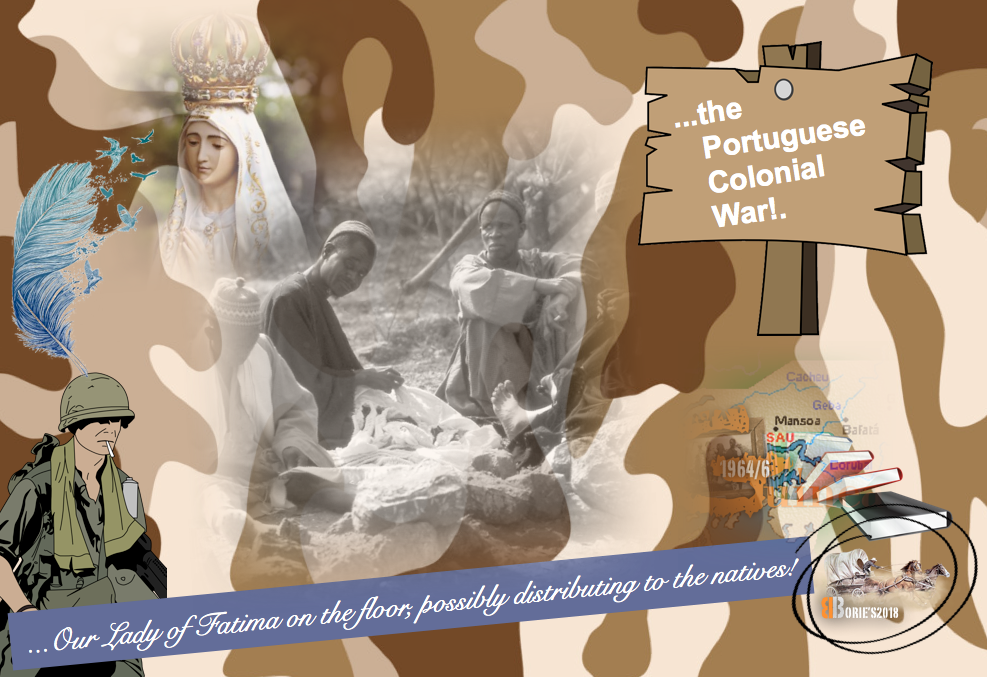
…em Portugal, entre outras coisas, pediu a mão da namorada em casamento aos pais e talvez mais qualquer coisa, que ele às vezes queria confessar, mas o “Cifra” não lhe dava oportunidade de falar nesse assunto, fizeram uma grande festa, mostrou algumas fotografias, convive com a família e amigos, anda durante esse tempo, numa vida de herói e depois de fazer tudo o que entendia que devia de ser feito, vem para o aeroporto, com a namorada, que nessa altura já era noiva, a abraçá-lo, não o largando, beijando-o em tudo o que era face e não só, chorando e sempre que o beijava nos lábios, fazia-o comer alguma baba e ranho, mas era baba e ranho, com sabor a sal e de amor, disso tinha ele a certeza, prometendo-lhe sempre que o esperava, que não só ela, nas suas orações, também a Nossa Senhora de Fátima o iam proteger, pois o senhor Prior todos os domingos iria mencionar o seu nome e de outros combatentes na missa, na altura do Espírito Santo!. (In Portugal, among other things, sought the hand of the girl in marriage to the parents and maybe something else, he sometimes wanted to confess, but the “Cipher” gave him no opportunity to talk about it, have a great party, showed a few pictures, lives with family and friends, walks during that time, a living hero and after doing all that considered that it should be done, come to the airport with his girlfriend, who at that time was already engaged, to embrace him, not dropping, kissing him on all that was against, not just crying and when she kissed him on the lips, made him eat some drool and snot, but it was drool and snot, flavored with salt and love, that had he assured, promising him whenever hoped that not only she, in your prayers, also the Our Lady of Fatima were going to protect, for you Prior every Sunday would mention his name and other fighters at Mass, at the time of the Holy Spirit)!.

…quando ele já ia a caminho do avião, ela olha-o e, num último suspiro, quase que grita:

– Até breve meu amor, já sou tua e continuarei a ser!.

…a mãe do “Setúbal”, ao ouvir isto, não conteve um desabafo e quase em surdina, diz:

– Eu já sabia, minha grande puta!. Hai, que nem quero mencionar o nome que ia para dizer, que o Santíssimo que está no céu me perdoe e salve a minha alma!.

…mas logo em seguida, pega num lenço, que também servia de porta moedas, pois era lá que enrolava os seus míseros trocados, limpando os olhos chorosos, o nariz e a boca, retoma o seu pensamento e diz baixinho:

– Meu Deus, o que eu ia para dizer, pois ela vai ser a minha nora, mas a verdade é que é uma grande descarada, a mãe nunca teve mão nela, era só bailes e festas e, o meu filho todo contente atrás dela nem teve tempo para mim, pois na companhia dela sentia-se livre e andava sempre contente, porque lá na África andou sempre a dar o corpo às balas!. Andavam sempre juntos, oxalá não esteja prenha, mas se estiver, logo que a criança venha perfeita, é meio caminho andado e, logo que o meu filho, regresse vivo!.

(When he was about the way the plane, she looks at him and in a last breath, almost screaming:

– See you soon my love, as I am yours and I will continue to be!.

The mother of “Setubal”, on hearing this, did not contain an outburst, almost under his breath, he says:

– I knew, my big whore!. Oh, that not even want to mention the name was going to say, that Holy One who is in heaven forgive me and save my soul!.

But then, you take a handkerchief, which also served as a purse, for it was there that rolled its exchanged miserable, cleaning the tearful eyes, nose and mouth, takes up his thoughts and says softly:

– My God, I was going to say because it will be my daughter, but the truth is that it is a great brazen, the mother never had hand in it, it was just dances and parties, and my every child happy after her did not have time for me because in her company he felt free and was always happy because in Africa there always walked to give the body the bullets. Always went together, hopefully is not pregnant, but if it is, as soon as the child will perfect, is half done, and as soon as my son, come back alive)!.

…bem, mas continuando, a mãe, deu-lhe uma saca com alguma coisa para comer, do que ele guardou parte, para dar ao “Cifra” e, regressa ao cenário de guerra, com uns quilos a mais, uma cor de pele diferente, cheio de boas maneiras!.

…o “Curvas, alto e refilão”, na sua reles linguagem, dizia:

– O “Setúbal”, regressou um pouco “amaricado”!.

(Well, but still, his mother gave him a bag with something to eat, what he kept part to give the “Cipher” and returns to the theater of war, with a few extra kilos, a different skin color, full of politeness!.

The “Curves, high and complicative”, in its paltry language, saying:

– “Setubal”, returned a little “pussies”!.

…a primeira pessoa que vai ver, foi sem qualquer dúvida, nós, que éramos o “Cifra”!. Dá-nos um forte abraço e, puxando dum qualquer jornal que trazia consigo, diz:

– Oh pá, o teu comboio descarrilou, lê este jornal!.

..no jornal “Primeiro de Janeiro” vinha tudo explicado, com fotografia e tudo. O “Cifra”, imediatamente reconheceu a locomotiva, ao fundo da encosta, era a 1135, estava de lado e, duas carruagens a acompanharem-na pela encosta acima. O seu pai e alguns vizinhos, seus conhecidos, também estavam na fotografia. Nós o “Cifra”, passámos a mão pela fotografia do jornal, com os olhos fechados e o pensamento bem longe, pois o acidente ocorreu a umas centenas de metros da casa onde nasceu o “Cifra”, que nessa altura se chamava “To d’Agar”, na aldeia do Vale do Ninho d’Aguia, quando o comboio das seis e meia descia, apitando aflito, em direcção ao mar. Naquela encosta, quando criança, o “Cifra”, que naquela altura se chamava “To d’Agar”, andava por ali na companhia dos seus irmãos e alguns amigos, que entre outras coisas procuravam ninhos de melro e rouxinol, nas silvas e arbustos em volta do ribeiro que passava ao fundo do vale, e de rola e perdiz, nas terras mais altas!.

(the first person who will see, was without any doubt, us, that we were the “Cipher”!. He gives us a strong hug and, drawing from any newspaper that he carried with him, says:

– Oh man, your train derailed, read this newspaper!.

In the newspaper “First January” came all explained, with photo and everything. The “Cipher” immediately recognized the locomotive, the slope background, it was 1135, was on hand, and two carriages to follow up on the hillside above. His father and some neighbors, acquaintances, were also in the photo. The “Cipher”, stroked his newspaper photograph, with eyes closed and thought far as the accident occurred a few hundred meters from the birthplace of the “Cipher”, which at that time was called “To d’Agar”, in the village of Valley Nest d’Aguia, when the “train six-thirty” down, whistling stricken, towards the sea. That hillside, as a child, the “Cipher”, which at that time was called “To d’Agar”, walked around in the company of his brothers and some friends, which among other things sought blackbird nests and nightingale, the brambles and bushes around the brook passing the valley floor, and rolls and partridge, on higher ground)!.

Tony Borie, February 2018.

…the first cruise!

…the first cruise!

…o primeiro cruzeiro!. (the first cruise)!.
…no século passado, na aldeia do Vale do Ninho D’Águia, naquela vertente agreste, a oeste da montanha do Caramulo, a avó Agar, vivia todo o ano trabalhando na sua artesã agricultura, nunca usando qualquer outro fertilizante a não ser a “cama”, que retirava dos currais, onde habitavam os seus animais domésticos!. No verão, um pouco antes das “colheitas”, ia uns dias para a zona do Oceano Atlântico, mais própriamente para a praia da Costa Nova, que era uma aldeia localizada na margem oeste da Ria de Aveiro, que ainda hoje é o estuário de entre outros rios, o Rio Vouga, que afinal é, o resultado do recuo do oceano, que se estende pelo interior do território Português, que gerou a formação de cordões litorais, formando inúmeras ilhas e ilhotas que, a partir do século XVI, formaram uma laguna que constitui um dos mais importantes e belos acidentes geográficos da costa Portuguesa! (in the last century, in the village of the Vale do Ninho D’Águia, on that rugged slope west of Caramulo mountain, grandmother Agar, lived all year working in her agriculture craftsman, never using any other fertilizer other than the “bed”, which he removed from the corrals, where his domestic animals lived! In the summer, just before the “harvests”, it was a few days for the Atlantic Ocean area, more precisely for the Costa Nova beach, which was a village located on the west bank of the Ria de Aveiro, which is still the estuary of among other rivers, the Vouga River, which is, after all, the result of the retreat of the ocean, which extends through the interior of the Portuguese territory, which generated the formation of coastal cords, forming numerous islands and islets, that, from the 16th century, formed a lagoon that constitutes one of the most important and beautiful geographical features of the Portuguese coast)!.

…havia um dia, em que nos dizia:

– as rugas fazem-nos parecer velhos, mas não doem!. Vamos de barco, ao outro lado da Ria, ver a agricultura na sua margem e, beber um “copo de abafado”!.

…claro, ela bebia, mas nós ainda crianças não, todavia recordamos hoje que navegando pela Ria quando a atravesávamos, era sem qualquer dúvida, o nosso “Primeiro Cruzeiro”!.

(There was a day when he told us:

– wrinkles make us look old, but do not hurt !. We go by boat, on the other side of the estuary, see the agriculture on its bank and, drink a “glass of muffled”!.

Of course, she drank, but we were not yet children, but we remember today that sailing through the estuary when we crossed it was without a doubt our “First Cruise”)!.

…muitos anos depois, também tivémos o nosso “Primeiro Cruzeiro”, mas agora pelo oceano!. Vivíamos no norte, viajámos de avião para uma zona tropical!. (many years later, we also had our “First Cruise”, but now by the ocean!. We lived in the north, we traveled by plane to a tropical area)!.

…embarcando num navio de cruzeiro, com um copo com uma bebida colorida numa mão, e na outra, a máquina fotográfica!. (boarding a cruise ship, with a glass with a colored drink in one hand, and the other, the camera)!.

…ao som daquela música alegre, onde os executantes usam roupas lembrando ilhas desertas, aventuras de “Piratas”, couqueiros e oceanos perdidos!. (to the sound of that joyful music where the performers wear clothes remembering deserted islands, adventures of “Pirates”, lost couriers and oceans)!.

…na altura, o nosso filho Tony, estava prestando o seu dever de cidadão, para com a sua pátria, servindo no Corpo de Marines dos USA, algures, numa das diversas bases, onde era na altura preciso a sua presença!. (at the time, our son Tony, was doing his duty as a citizen, to his homeland, serving in the United States Marine Corps, somewhere, at one of several bases, where it was at that moment necessary his presence)!.

…portanto navegámos nós, a nossa esposa Isaura e a nossa filha Sandy, num barco, onde diziam na altura “que era o melhor”, (dizem sempre que são os melhores)!.  (therefore we sailed, our wife Isaura and our daughter Sandy, in a boat, where they said at the time “that was the best” (they always say they are the best)!.

…se perguntarmos a alguém que desembarcou, depois de passar alguns dias navegando num barco de cruzeiro, quase delirando, logo nos dirá:

– Excelente, maravilhoso, pessoas amáveis, bebidas com alcool, refrigerantes, pequenos almoços, jantares, ceias, espectáculos, passeios ou excursões terrestres, actividades para adultos e crianças, jogos diversos, filmes, encontros românticos, oportunidade para as famílias comerem juntas, cumprimentamos o capitão, um autêntico hotel flutuante que, nos leva de cidade em cidade, (neste caso de ilha em ilha), sem a necessidade de usar o combóio, autocarro, ou conduzir o seu próprio veículo!. Todas as manhãs, vamos ter um novo cenário e, enquanto a nossa esposa, se diverte assistindo a uma palestra educacional, classe de dança, de pintura ou de yoga, enquanto nós, em qualquer bar, dos muitos que por lá existem, tomamos um “gin”, “whiskey” ou um simples tinto!. Sim, foi quase tudo isso que aconteceu connosco!.

(If we ask someone who has landed, after spending a few days sailing on a cruise ship, almost delirious, he will soon tell us:

– Excellent, wonderful, lovely people, alcoholic drinks, sodas, breakfasts, dinners, suppers, shows, tours or excursions on land, activities for adults and children, games, movies, romantic encounters, opportunity for families to eat together, we greet the captain, authentic floating hotel that, takes us from town to town, (in this case from island to island) without the need to use the train, bus, or drive your own vehicle!. Every morning, we are going to have a new scenario and, while our wife is having fun attending an educational lecture, a dance, painting or yoga class, while we, in any bar, of the many that exist there, we take a “gin”, “whiskey” or a simple glass of red wine!. Yes, it was almost all that happened to us)!.

…quando saímos num qualquer porto, as pessoas normalmente são amáveis, pois a maior parte das ilhas que se visitam, vivem única e simplesmente do turismo, portanto tentam sempre agradar ao visitante!. (when we go out in any port, people are usually kind, since most of the islands that are visited, live only and simply tourism, so always try to please the visitor)!.

…muitas pessoas vão navegar num cruzeiro, talvez com o pensamento na série de TV, que a alguns anos atrás fez algum sucesso, que era “The Love Boat”, que sempre nos mostrava um romance em cada viajem que fazia, com estrelas cintilando no céu ou o oceano no infinito, às vezes ao pôr do sol, sim tudo isto existe num cruzeiro, o que necessitamos é de ter a nossa mente livre de qualquer problema, ter alguma saúde, vivendo esse momento, apreciando a beleza e o silêncio do oceano, apreciando a paz, que esse mesmo oceano nos transmite!. (many people will sail on a cruise, perhaps with the thought in the TV series, that a few years ago made some success, that was “The Love Boat”, that always showed us a romance in each trip that did, with stars sparkling in the sky or the ocean in the infinite, sometimes at sunset, yes all this exists in a cruise, what we need is to have our mind free of any problem, to have some health, living that moment, enjoying the beauty and the silence of the ocean, enjoying the peace, that same ocean transmits us)!.

…os navios de cruzeiro, são como pequenas cidades flutuantes, com quase tudo o que nós podemos encontrar, para naqueles dias nos sentirmos contentes!. As lojas de bordo vendem qualquer artigo que nos esquecemos de levar, as diversas piscinas, são confortáveis, os casinos funcionam 24 horas por dia!. (the cruise ships, are like small floating cities, with almost everything we can find, in those days we feel contented!. The on-board stores sell any item that we forgot to bring, the various pools are comfortable, the casinos operate 24 hours a day)!.

…e, existem por lá botes salva vidas suficientes, para em caso de necessidade poder regressar a terra firme!. (and there are enough lifeboats there, so in case you need to be able to return to the mainland)!.

…navegámos num cruzeiro, dizendo que deveríamos voltar mas, até ao dia de hoje, ainda não voltámos, talvez qualquer dia!. (we sailed on a cruise, saying that we should go back but, to this day, we have not returned, maybe some day!.

Tony Borie, February 2018.
…traveling through Wyoming!

…traveling through Wyoming!

…viajando por Wyoming! (traveling through Wyoming)!

…ainda um pouco mais que crianças, vivendo em paz na nossa aldeia do Vale do Ninho D’Águia, por altura da Páscoa, talvez como prémio de qualquer coisa em que nos portámos bem e, aproveitando para o senhor Jaime Barbeiro nos cortar o cabelo, no típico e único modelo, que era “rapado com uma franjinha na frente”, o pai António, trouxe-nos à vila, onde juntos, assistimos a um filme de cowboys!. Era o “Shane”, mostrando uma história e cenário de uma família que vivia num vale, vivendo da agricultura e criando entre outros, vacas e cavalos, alguns animais selvagens também andavam por lá, que lhes danificavam a agricultura, montanhas ao longe com neve, água cristalina dos rios e lagos!. (still a little more than children, living in peace in our village of the Vale do Ninho D’Águia, by Easter time, perhaps as a reward for anything we did well and, taking advantage of Mr. Jaime Barbeiro to cut us the hair, in the typical and unique model, that was “shaved with a little strip in front,” the father Antonio, brought us to the village, where together, we watched a movie of cowboys!. It was the “Shane”, showing a story and scenario of a family that lived in a valley, living from agriculture and creating among others, cows and horses, some wild animals also went there, which damaged agriculture, mountains in the distance with snow, crystal clear water of rivers and lakes)!.

…tantas dezenas de anos passados ainda nos lembramos e, não esquecemos o privilégio de poder-mos ver ao vivo esse maravilhoso cenário!. Era a área do “Grand Teton National Park”, no estado de Wyoming, que ocupa um vale, alimentado pelo rio Snake, com as suas águas e de um dos seus afluentes, o rio Gros Ventre, que por ali passa antes de entrar no Parque Nacional de Yellowstone!. Esta área é tão rica em cenário selvagem, que Hollywood a frequenta por diversas vezes, tal como nas filmagens do filme “Rocky 4”, onde o personagem fitício Rock supostamente se treinava na Sibéria!. (so many tens of years ago we still remember and we do not forget the privilege of being able to see live this wonderful scenery!. It was the area of the “Grand Teton National Park” in the state of Wyoming, which occupies a valley, fed by the Snake River, with its waters and one of its tributaries, the Gros Ventre River that passes before entering Yellowstone National Park!. This area is so rich in wild scenery that Hollywood frequents it several times, as in the filming of the movie “Rocky 4”, where the character fiticio Rock supposedly trained in Siberia)!.

…a vida selvagem era constante mesmo na estrada, tomávamos o rumo do sul, as nossas paragens eram frequentes, apreciando entre outras, o pico mais alto das montanhas de Teton, o “Grand Teton”, que foi baptizado por um caçador francês, que devia de ser uma pessoa romântica, pois ao observá-lo, do lado do estado de Idaho, logo lhe chamou “tétons”, que dizem que é um calão francês que designa “mamilos”!. (wildlife was constant even on the road, we headed south, our stops were frequent, enjoying among others the highest peak of the Teton mountains, the “Grand Teton”, which was christened by a French hunter, who must have been a romantic person, for in observing him on the Idaho side of the state, he soon called him “teytons,” which they say is a French slang designating “nipples”)!

…por aqui, pelo menos para nós que adoramos caminhadas, este destino é privilegiado e muito popular para pessoas que gostam da natureza, andar a cavalo, caminhadas, caçar, pescar ou qualquer outra forma de passar o tempo ao ar livre, pois existem algumas centenas de milhas em trilhos, que nos levam ao lado das montanhas!. (for here, at least for us who love hiking, this destination is privileged and very popular for people who enjoy nature, horse riding, hiking, hunting, fishing or any other way to spend time outdoors, because there are a few hundred miles on rails that take us to the side of the mountains)!.

…a elevação média do vale é de mais de 6.500 pés acima do nível do mar, com grandes montanhas da cordilheira Teton, que podem atingir mais de outros 6.500 pés de altura, onde o visitante mais atento pode ter um cenário parecido como este! (the average elevation of the valley is over 6,500 feet above sea level, with large mountains of the Teton Range, which can reach over 6,500 feet in height, where the most attentive visitor can have a similar scenery as this)!

…o Snake River, ao passar por aqui, com muita frequência forma pequenos lagos, onde existem muitos animais, várias espécies de peixes, entre elas a maior quantidade são trutas, mais de 1.000 espécies de plantas e mais de 300 espécies de pássaros!. (the Snake River, when passing by, very often forms small lakes, where there are many animals, several species of fish, among them the most are trout, more than 1,000 species of plants and more than 300 species of birds)!.

…sempre na direcção do sul, o nosso pensamento vai para a história do povoamento dos USA, lembramos a apreciação que devemos ter por essas pessoas a quem chamavam “pioneiros” e, é de um tal John Colter, que era um distinto membro da Expedição Lewis & Clark, depois de regressar das Montanhas Rochosas, no estado do Colorado, chegou a esta região por volta do ano de 1807, passando nas imediações do “Togwotee Pass”, tornando-se assim no primeiro americano branco a ver este vale!. (always heading south, our thinking goes to the history of the settlement of the USA, we remember the appreciation we should have for these people whom they called “pioneers”, and it is from a certain John Colter, who was a distinguished member of the Lewis & Clark Expedition, after returning from the Rocky Mountains in the state of Colorado, arrived in this region around 1807, passing in the vicinity of the “Togwotee Pass”, thus becoming the first white American to see this valley)!.

…já tínhamos chegado, a uma das mais, no actual momento, populares cidades, onde ainda se cultiva a lenda dos “Índios & Cowboys”, onde existe a “Main Street”, o “Xerife”, os “Sallons”, talvez os “Duelos” de há muitos anos atrás, era a cidade de Jackson Hole, no estado de Wyoming!. (we had already arrived, at one of the most, at the moment, popular cities, where we still cultivate the legend of “Indians & Cowboys”, where there is “Main Street”, “Sheriff”, “Sallons” perhaps the “Duels” many years ago, was the city of Jackson Hole in the state of Wyoming)!.

…estávamos no final da década de 1820, quando um tal David Edward “Davey” Jackson, andando por esta região, aprisionou um Castor, pensando que era uma boa zona de caça, por aqui ficou, sendo um dos primeiros homens brancos a passar o inverno inteiro no Vale das Montanhas de Teton, talvez na companhia de Nativos Americanos que usavam o vale para fins de caça e cerimónias!. Anos depois, tornou-se sócio da Rock Mountain Fur Company que se estabeleceu na área, onde outros caçadores daqueles bonitos animais, vendiam a sua pele ao David Edward “Davey” Jackson, a quem tratavam por “Davey Jackson”, e claro, os homens da montanha, usavam uma linguagem parecida como:

– vamos ao “Jackson’s Hole”!.

…quando se dirigiam para esta povoação, pois fica localizada entre montanhas e, dava a sensação que entravam num “buraco”, que em inglês quer dizer “Hole”!.

(We were in the late 1820s, when a certain David Edward “Davey” Jackson, walking through this region, imprisoned a Beaver, thinking it was a good hunting area, here it stayed, being one of the first white men to spending the entire winter in the Valley of the Teton Mountains, perhaps in the company of Native Americans who used the valley for hunting and ceremonial purposes! Years later, he became a member of the Rock Mountain Fur Company who settled in the area, where other hunters of those beautiful animals sold their skin to David Edward “Davey” Jackson, whom they treated for “Davey Jackson”, and of course, the men of the mountain, used a similar language like:

– We go to “Jackson’s Hole”!.

When they went to this town, because it is located between mountains and, it gave the sensation that they entered a “hole”, that in English means “Hole”)!.

…por volta do ano de 1893, a senhora Margaret Simpson, que na época estava a receber o correio na sua casa, pois não havia agência postal, deu o nome à povoação, de Jackson Hole, em homenagem a Edward “Davey” Jackson, para que os orientais podessem enviar o correio para o oeste!. (around 1893, Mrs. Margaret Simpson, who at the time was receiving mail at her house, since there was no post office, gave the name to the village of Jackson Hole in honor of Edward “Davey” Jackson, so the Orientals could send the mail west)!.

…a cidade de Jackson Hole, está localizada no extremo sul do vale, próximo de onde se encontra o National Elk Refuge, que é o lar do maior rebanho de Alces no Planeta Terra, razão porque existe cenários como este, em alguns locais da cidade! (the city of Jackson Hole is located at the southern end of the valley near the National Elk Refuge which is home to the largest herd of Moose on Planet Earth, which is why there are scenarios like this in some places of the city)!.

…andámos por lá, hoje é uma cidade que se transformou numa estância de turismo, podemos ver clareiras nas montanhas que a circundam, que no inverno são pistas de gelo, existem modernos hoteis de luxo, mesmo fora do que é costume se ver, claro, tudo num estilo de há centenas de anos atrás, é visitada todos os dias por milhares de pessoas que vêm dos parques próximos, não é difícil cruzar-se na rua com qualquer vedeta de Hollywood, ou qualquer outra pessoa mediática!. (we went there, today is a city that has become a tourist resort, we can see clearings in the mountains that surround it, that in winter are ice rinks, there are modern luxury hotels, even outside of what is customary to see of course, all in a style hundreds of years ago, is visited every day by thousands of people coming from the nearby parks, it’s not difficult to cross the street with any Hollywood star or any other media person)!.

…o comércio é dirigido a motivos do oeste, mas de “Puro Oeste”, onde não se vê em qualquer outra cidade, mesmo do oeste!. (the trade is directed to motives of the west, but of “Pure West”, where one does not see in any other city, even the west)!

…visitámos entre outros locais, um bar, que dá pelo nome de “Million Dollars Cowboy Bar”, que não é um normal bar! (we visited among other places, a bar, which goes by the name of “Million Dollars Cowboy Bar”, which is not a normal bar)!.


…a sua construção remonta por volta do ano de 1890!. (its construction dates back to the year 1890)!.

…é quase uma “galeria”, talvez um “museu”, onde se vive uma atmosfera fascinante de motivos do verdadeiro “American Wild West”!. (is almost a “gallery”, perhaps a “museum”, where one lives a fascinating atmosphere of motifs of the true “American Wild West”)!.

…as cadeiras, são “selas” verdadeiras que os cowboys usavam para cavalgar!. (The chairs are true “saddles” that the cowboys used to ride)!.

…o balcão está coberto por moedas de dollares em prata do século passado, armas antigas e motivos do oeste, são a sua decoração!. Os empregados andam vestidos à cowboy e, a cerveja que vendem, é feita lá, em Jackson Hole!. Tem uma sala com um pequeno palco, onde já actuaram nomes de música “country”, como Waylon Jennings, Hank Williams, Jr., Asleep at the Whell, Hoy Axton, Glen Campbell, Tanya Tucker, Willie Nelson, Commander Cody ou James Cotton Blue Band!. (the counter is covered in silver coins of last century, old weapons and motifs of the west, are your decoration !. The employees are dressed in cowboy clothes, and the beer they sell is made there in Jackson Hole !. Aslan Jennings, Hank Williams, Jr., Asleep at the Whell, Hoy Axton, Glen Campbell, Tanya Tucker, Willie Nelson, Commander Cody or James Cotton. Blue Band)!.

…a polícia anda a pé e a cavalo, são os “Xerifes e os seus ajudantes!. (the police are on foot and on horseback, they are the “Sheriffs and their helpers)!.

Tony Borie, February 2018.

…love in war!

…love in war!

…amor na guerra! (love in war)!

…elas eram exóticas, tal como o seu perfume, que inundava a pequena igreja colonial, durante a missa que ali se celebrava, pelo menos ao domingo, que existia na aldeia de Mansoa, que era a área onde estava o aquartelamento cercado de arame farpado, na então Província Colonial Portuguesa da Guiné, em África, para onde nós, jovens que despertávamos para uma vida, vivendo em paz e em família, na nossa aldeia do Vale do Ninho DÁguia, na vertente oeste da montanha do Caramulo, em Portugal, na Europa, fomos arrancados, treinados para combate e enviados, pelo então governo de Portugal, para África, para defender estranhos interesses, combatendo homens e mulheres, que queriam a independência do seu território, livres das decisões dos Europeus, com a esperança de poderem viver em liberdade, decidir o seu futuro, continuar os seus usos e costumes, que só eles sabiam!. (they were exotic, like their perfume, which flooded the small colonial church during the Mass celebrated there, at least on Sunday, which existed in the village of Mansoa, which was the area where the barracks were surrounded by barbed wire, in the then Portuguese Colonial Province of Guinea, in Africa, to where we, young people who woke up to a life, living in peace and in our family, in our village of the DÁguia Nest Valley, in the western slope of Caramulo mountain, in Portugal, in Europe, we were uprooted, trained to fight and sent by the then Portuguese government to Africa, to defend strange interests, fighting men and women, who wanted the independence of their territory, free from the decisions of the Europeans, with the hope to be able to live in freedom, to decide their future, to continue their customs and customs, which only they knew!

…sim eram elas, as “filhas do Libanês”, como eram conhecidas entre os militares, que eram as filhas de um pequeno comerciante que existia na aldeia de Mansoa, inundavam a pequena igreja colonial, com o seu perfume exótico!. (yes they were, the daughters of the Lebanese, as they were known among the military, who were the daughters of a small merchant who existed in the village of Mansoa, flooded the small colonial church with its exotic scent)!.

…despertavam a curiosidade de alguns militares europeus, onde o “Life Boy”, que era um “soldado condutor auto”, de uma companhia de Artilharia que ali estava estacionada, também talvez tivesse um costela de “Libanês”, pois tinha no aquartelamento, um pequeno negócio, onde vendia braceletes para relógios, pasta e escovas dos dentes, que só os sargentos, furriéis e oficiais compravam, lenços tabaqueiros, que era o maior negócio, pois quase todos os militares de acção usavam, ou ao pescoço ou no bolso dos calções, com um bocado de fora, para se ver, ou pendurado no cinto das cartucheiras, quando saíam em patrulha, dizendo eles que era para lhes dar sorte em combate!. Também vendia sabonetes “lifebuoy”, (daí lhe nasceu o nome de guerra), carrinhos de linhas e agulhas, alguns botões, baterias para o rádio portátil e outros produtos que se usavam no dia a dia, relógios de pulso com cronómetro da marca “Cauny”, só por encomenda e, outros produtos que não interesa agora mencionar!. (aroused the curiosity of some european military personnel, where the “Life Boy”, who was a “self-guiding soldier”, of an Artillery company stationed there, might also have a “Lebanese” rib, a small business, where he sold bracelets for clocks, toothpaste and toothbrushes, which only sergeants and officers bought, handkerchiefs, which was the biggest business, since almost every action officer wore them, either on his neck or in the pocket of their breeches, with a bit out, to be seen, or hanging from the belt of the cartridge cases, when they were on patrol, telling them it was to give them luck in combat!. He also sold “lifebuoy” soaps, (hence the name of the war), strollers and needles, a few buttons, batteries for portable radio and other products that were used on a daily basis, wristwatches with “Cauny”, only to order and, other products not interested to mention now)!.

…o amor é como uma guerra, fácil de começar, mas muito difícil de acabar!. Não sabemos onde ouvimos ou já vimos esta frase escrita, mas estando num local, onde o cenário de guerra era constante, o “Life Boy”, andava ou parecia que andava perdido de amores por uma das filhas do “Libanês”!. (love is like a war, easy to start, but very difficult to end!. We do not know where we heard or have already seen this written phrase, but being in a place where the scene of war was constant, the “Life Boy” walked or seemed to be lost in love by one of the daughters of “Lebanese”)!.

…quando lhe compravam uma bateria para o rádio portátil, ele olháva para o infinito, fixando ninguém sabia o quê, abria as mãos e clamava algumas frases, que só na sua mente teriam algum senso, tais como:

– nós estamos na linha da frente, ela é bonita, a bomba vai cair, ficamos tão difíceis um para o outro que   perdemos o control, o fogo começa, nós explodimos, o fumo ou os estilhaços da granada passam, secamos as lágrimas, apenas fica o amor na guerra)!

(when they bought a battery for the portable radio, he looked at the infinite, fixing no one knew what, opened his hands and he cried a few sentences that only in his mind would have some sense, such as:

– We’re on the front line, she’s beautiful, the bomb is going to fall, we get so hard on each other that we lose control, the fire starts, we explode, the smoke or grenade splinters pass, we dry the tears, only the love is in the war)!.

…o mesmo cenário se passava quando lhe compravam um sabonete e, então declamava:

– ela é linda, se tiver que chorar, chorarei na frente de uma emboscada, esperarei que o fogo comece, explodirei junto daquele rebentamento, para mim, não existem “terroristas”, leva este sabonete como se fossem, granadas e rosas, apenas fica o amor na guerra!.

(the same scenario happened when they bought a soap and then said:

– she is beautiful, if she has to cry, I will cry in front of an ambush, I will wait for the fire to begin, I will explode next to that burst, for me, there are no “terrorists”, take this soap as it were, grenades and roses, love in war)!.

…claro, quando isso acontecia, o “Curvas, alto e refilão”, cheio de experiência, pois passou a sua juventude em algumas ruas escuras de Lisboa, respondia-lhe, na linguagem que todos lhe conheciam, mais ou menos nestas palavras:

– deves ser filho de algum chinês, essa cara “achinezada”, não me engana!. Vai-te fod.., não percebes mesmo nada de “garinas”, (moças), tu não vez que apesar do teu focinho ser achinezado, és branco e europeu, estás aqui de passagem, essa rapariga, que por sinal até é bastante bonita, não digo que não daria uma boa esposa, mas é do tipo que, primeiro a aliança no dedo, depois sim, vem o namoro e, se der para torto, manda-te dar uma volta ao “bilhar grande”, que tu, apesar dessa cara achinezada, és um “patêgo”, não tens sensibilidade para acariciar uma mulher daquelas, nem sabes o que isso é, pois ela, não está para aturar um palerma como tu, arranja outro, que goste mesmo dela, que saiba acariciá-la e que afaça feliz!. Nem tu nem ela sabem se gostam um do outro, na cama!. Sabes o que tu és em questões de amor?. És um atrasadinho mental!.

(Of course, when that happened, “Curvas, high and complicative”, full of experience, since he spent his youth in some dark streets of Lisbon, he answered, in the language that everyone knew him, more or less in these words :

– you must be the son of some Chinese, this face “flattened”, do not fool me!. Go fuck yourself, you do not even know anything about “garinas”, (girls), you do not turn that although your muzzle is achinesado, you are white and european, you are here in passing, this girl, who by the way is quite pretty, I do not say no would make a good wife, but he is the type that first the ring on the finger, then yes, comes the courtship and, if you get crooked, have you take a look at the “big billiard”, which you, you are a “patêgo”, you do not have the sensitivity to caress a woman of those, you do not know what that is, because she is not to put up with a fool like you, get another, who really likes her, who caresses her and who loses happy!. Neither you nor she know if they like each other in bed! Do you know what you are in matters of love? You’re a retard)!

…o “Curvas, alto e refilão”, até tinha uma certa razão, pois ao certo o “Life Boy”, podia dizer-se que namorava com uma das filhas do “Libanês”, semana sim, semana não, pois quando estava de bem com ela, era só sorrisos, abraços e talvez beijos, dizendo que ela era a rapariga mais bonita e jeitosa que havia no mundo e, quando estava zangado, (talvez o pai não lhe fornecesse os produtos de que precisava), dizia que ela era muito feia, que eram só perfumes e pinturas, que era um “paninho de armar”, que se fosse sorrir lá para os da terra dela, pois ele era europeu, apesar da sua cara ter feições “achinezadas”, pelos menos nos olhos, mas era europeu!. (the “Curvas, high and complicative”, even had a certain reason, because to be sure “Life Boy”, it could be said that he dated with one of the daughters of “Lebanese”, week yes, week no, because when she was just fine with her, it was just smiles, hugs and maybe kisses, telling her that she was the most beautiful and all-around girl in the world, and when she was angry (maybe her father did not give her the products she needed) that she was very ugly, that it was only perfumes and paintings, that it was a “dressing-gown”, that if she were to smile there for those of her land, since he was european, although his face had “wrinkled” features, at least in the eyes, but it was european)!.

…o “Life Boy”, tinha conhecimento com dois tripulantes do navio “Ana Mafalda”, que visitava a então Província da Guiné Portuguesa periodicamente, descarregando militares e equipamento de combate, navegando em seguida para o continente Americano, normalmente indo carregar tabaco ao porto de Philadélfia e, na altura em que atracava na capital da província, o “Life Boy”, ia ver o enfermeiro “Pastilhas”, arranjando licença de doente, indo no respectivo veículo, que saía do aquartelamento às sextas-feiras, para acapital, onde ia ao encontro dos tripulantes do navio, abastecer-se de todo o material para o seu pequeno negócio!. (the “Life Boy”, was acquainted with two crew members of the “Ana Mafalda” ship, who then visited the then Portuguese Guinean Province, discharging military and combat equipment, then sailing to the American continent, usually carrying tobacco to the port of Philadelphia and, at the time it docked in the capital of the province, the “Life Boy” was about to see the nurse “Pastilhas”, getting sick leave, going in the respective vehicle, that left the barracks on Fridays, to acapital, where it went to meet the ship’s crew, make sure you have all the material for your small business)!.

…esta personagem do companheiro de guerra “Life Boy”, negociava dentro do aquartelamento, tudo estava bem para ele, pedia desculpa, trocava os produtos, se podesse cobrava duas vezes, em caso de dúvida, ele era o culpado, emprestava um lance de linha com uma agulha na ponta para pregar um botão, depois, vendia o carrinho de linhas e a agulha, tal como se fossem novos, ia vendendo, no fim do mês cobrava mais uns “pesos” na conta, se dessem por ela, pedia desculpa, se não dessem, era lucro no negócio!. (this character of the war boy “Life Boy”, negotiated inside the quarter, everything was fine for him, he apologized, he exchanged the products, if he could charge twice, in case of doubt, he was to blame, bid a line with a needle at the end to nail a button, then sell the line cart and the needle, as if they were new, were selling, at the end of the month charged a few more “pesos” in the account, if they gave it, he was sorry, if they did not, it was profit in the business)!.

…uma certa manhã, nós, o “Cifra”, fomos ao estabelecimento do “Libanês” comprar alguns rebuçados, pois íamos visitar algumas “bajudas” (moças naturais da aldeia), e crianças a uma aldeia com casas cobertas de colmo, que existiam perto do aquartelamento e, ainda hoje, já lá vão mais de cinquenta anos, não sabemos a certeza se o “Life Boy”, estava tentando roubar um anel muito lindo, com uma pedra azul turquesa, que a filha do “Libanês” usava no dedo, ou se já tinha aprendido a acariciá-la, tal como o “Curvas, alto e refilão” lhe tinha dito anteriormente!. (one morning, we, the “Cipher”, went to the “Lebanese” establishment to buy some sweets, as we were going to visit some “bajudas” (natural girls in the village), and children in a village with thatched houses that existed near the barracks and, even today, more than fifty years ago, we do not know for sure if the “Life Boy” was trying to steal a very beautiful ring with a turquoise blue stone that the daughter of the “Lebanese” wore on her finger, or if already had learned to caress it just as the “Curves, high and complicative” had told him before)!.

…a verdade, isso vimos nós, com estes olhos que a terra há-de comer, sim eram eles, os dois juntos, o “Life Boy” com a filha do “Libanês”, estavam de frente um para o outro, ela dentro e ele fora do balcão, mas olhando-se de frente, nos olhos, não reparavam em mais ninguém, pois dissémos “bom dia” e ninguém respondeu, estavam concentrados um no outro, com as mãos juntas, passando os dedos um pelo outro, tal com se via nos filmes de Hollywood, falando baixinho, não sabemos nós, se estavam trocando promessas de amor para o resto das suas vidas, ou se o “Life Boy” lhe estava tentando roubar o anel!. Nesse dia cremos mesmo que não, devia de estar pedindo-lhe para convencer o seu pai, para lhe dispensar uma caixa de sabonetes, para vender no aquartelamento, pois pela manhã, pedimos-lhe uma barra de sabão, dizendo-nos ele, que não tinha mais produto e, o navio “Ana Mafalda”, só visitava a então Província Colonial da Guiné, no mês seguinte!. (the truth, this we saw, with these eyes that the earth will eat, yes they were, the two together, the “Life Boy” with the daughter of the “Lebanese”, were facing each other, she in and out of the balcony, but looking straight in the eyes, they did not notice anyone else, for we said “good morning” and no one answered, they were concentrating on each other, hands clasped together, running their fingers one at a time another, as seen in the Hollywood movies, talking softly, we do not know if they were exchanging promises of love for the rest of their lives, if Life Boy was trying to steal the ring!. On that day, we do not think we should be asking him to persuade his father to give him a box of soap to sell in the barracks, because in the morning we asked him for a bar of soap, telling us that had no more product, and the ship “Ana Mafalda” visited the then Colonial Province of Guinea the following month)!.

…de uma maneira ou de outra, nessa semana sim, namovam e, lá tínhamos que o ouvir declamando, sempre algum de nós lhe comprava qualquer produto e, dizia bem alto:

– às vezes és o meu General, outras o meu inimigo, isto custa 50 centavos, chega-te um pouco para lá que estou lançando granadas, ela é maravilhosa quando o fogo começa, ficamos tão difíceis que perdemos o control, explodimos, da luz dum rebentamento, fica simplesmente o amor na guerra!.

(in one way or another, this week, yes, they were dating, and we had to hear him declaiming, some of us would always buy him any product and said very loudly:

– sometimes you are my General, sometimes my enemy, it costs 50 cents, a little comes to me that I am throwing grenades, it is wonderful when fire begins, we are so difficult that we lose control, we explode, the light of a bursting, is simply love in the war)!.

…ouvindo isto, o “Curvas, alto e refilão”, aproximava-se, com uma granada na mão, juntando a sua cara à dele, dizendo-lhe:

– hó palerma, “labrego com cara achinezada”, ninguém percebe nada do que estás para aqui a “palrar”, cála-te, eu é que rebento esta granada no teu focinho!.

(hearing this, the “Curvas, high and complicative” approaches, with a grenade in his hand, joins his face to his and says:

– Oh fool, “labrego with a flattened face”, nobody notices anything of what you are here to “speak”, shut up, or I’ll smash this grenade in your nose)!.

…todos sabíamos que o “Curvas, alto e refilão”, não fazia nada de mal aos seus companheiros de combate, pois éramos uma família unida, que sofriamos juntos num cenário, onde existia o amor de “irmãos de guerra”!. (we all knew that the “Curvas, high and complicative” did not do any harm to his comrades fighting, because we were a united family, that we suffered together a scenario, where the love of “war brothers” existed)!.

…o amor é como uma guerra, fácil de começar, mas muito difícil de parar! (love is like a war, easy to start, but very difficult to stop)!.

Tony Borie, February 2018.

…traveling East!

…traveling East!

…viajando para leste! (traveling east)!

…já lá vão três quartos de século e, a curiosidade aumenta, pois não sabemos o que fazer mais quando cair-mos, e depois o que fazer, quando estivermos lá!. Continuamos na esperança de não cair, vamos caminhando, embora mais devagar, sem nunca esquecer que alguma sabedoria vem com a idade mas, ninguém sabe porquê, às vezes a idade vem sózinha, mas nós quanto mais velhos vamos ficando, menos coisas nos parecem valer a pena esperar, portanto a vontade de ver tudo aumenta, andamos por aí, apreciamos quase tudo, uma simples flor que nasce, o sol brilhante ou não, a água limpa e pura correndo em alguns rios, ou em algumas praias do oceano, o cair da chuva, consideramos um previlhégio poder ver a luz do dia, dizer “bom dia” a quem por nós passa, ou simplesmente, sentados no nosso quintal, poder apreciar o voo atribulado de uma borboleta!. (it’s been three-quarters of a century, and curiosity increases, because we do not know what to do more when we fall, and then what to do when we’re there! We continue hoping not to fall, we walk, although slower, never forgetting that some wisdom comes with age but no one knows why, sometimes age comes alone, but the older we get, the less things seem to us to be worth It is worth waiting for, so the will to see everything increases, we walk around, enjoy almost everything, a simple flower that is born, the bright sun or not, the clean and pure water running in some rivers, or in some beaches of the ocean, the rain fall, we consider a privilege to be able to see the light of day, say “good morning” to those who pass by us, or simply, sitting in our yard, to enjoy the troubled flight of a butterfly)!.

…querendo sempre ver mais e mais, sobretudo a natureza pura, viajávamos em direção ao leste, já havíamos passado as Montanhas Rochosas que existem na parte oeste do estado de Colorado, que há muitos anos atrás, os viajantes Espanhóis, derivado aos sedimentos de cor vermelha trazidos das montanhas, que um grande rio levava, decidiram dar o nome de Colorado e, é por este motivo que ainda hoje se chama Colorado!. (always wanting to see more and more, especially pure nature, we were traveling eastwards, we had already passed the Rocky Mountains that exist in the western part of the state of Colorado, that many years ago, Spanish travelers, derived from the red sediments brought from the mountains, that a great river led, decided to give the name of Colorado and, that is why it is still called Colorado)!.

…já viajávamos pelas planícies, lembrando que este estado, foi habitado por nativos americanos por mais de 13.000 anos!. Existem alguns artefactos que datam de aproximadamente 11.200 anos AC a 3000 AC, onde a parte oriental das Montanhas Rochosas, era uma rota de migração muito importante para os povos primitivos em toda a América, que sempre povoaram os vales, montanhas, planaltos e planícies do espaço que hoje chamam Colorado!. A “Nação Ute”, habitava os vales do sul da cordilheira das Montanhas Rochosas, por onde já tínhamos passado e, as “Nações Apache e Comanche”, habitavam as partes leste e sudeste, onde às vezes a “Nação Arapato e a Cheyenne”, se mudavam para oeste, para caçar nas planícies mais altas!. (we were already traveling through the plains, remembering that this state was inhabited by Native Americans for more than 13,000 years!. There are some artifacts dating from approximately 11,200 years BC to 3000 BC, where the eastern part of the Rocky Mountains was a very important migration route for primitive peoples throughout America, who have always populated the valleys, mountains, plateaus and plains of the space that today they call Colorado!. The “Ute Nation” inhabited the southern valleys of the Rocky Mountain Range, where we had passed, and the “Apache and Comanche Nations” inhabited the eastern and southeastern parts, where sometimes the “Cheetah Nation and Cheyenne”, they moved west to hunt on the higher plains)!.

…com o pensamento e muito respeito por estes povos primitivos, deixámos o estado de Colorado, atravessando a fronteira para o estado de Kansas! (with the thought and a lot of respect for these primitive peoples, we left the state of Colorado, crossing the border into the state of Kansas)!.

…como sempre fazemos, ao entrar em qualquer estado, sendo possível, pois por vezes atravessamos a fronteira em horas em que não estão abertos, visitamos o centro de boas vindas, colhendo informação, que sempre é muito útil, para quem como nós, adoramos a história e a natureza!. (as we always do, when entering any state, being possible, because sometimes we cross the border in hours when they are not open, we visit the welcome center, gathering information, which is always very useful, for those who like us we love history and nature)!.

…a planície continuou, a região que constitui o estado de Kansas era habitado por algumas tribos nativas, antes da chegada dos primeiros exploradores Europeus, entre as quais os “Kansa”, daí a origem do nome do estado, onde também existiam os “Osage”, os “Pawnee” e os “Whicita”, que viviam da caça do búfalo e do cultivo de milho, que ainda hoje podemos ver grandes plantações ao lado da estrada!. (the plain continued, the region constituting the state of Kansas was inhabited by some native tribes, before the arrival of the first European explorers, among them the “Kansa”, hence the origin of the name of the state, where there were also the “Osage”, the “Pawnee” and the “Whicita”, who lived from the hunting of buffalo and the cultivation of corn, that even today we can see large plantations beside the road)!.

…como em toda a história da humanidade, as povoações nasciam com a deslocação das pessoas para outras regiões, alguns procurando uma sobrevivência melhor, outras por outros motivos, como a célebre “Corrida ao Ouro”, parando onde houvesse um rio ou riacho com água e o terreno podesse ser cultivado, onde houvesse vegetação, podessem praticar a caça ou a pesca, onde o clima fosse agradável, para esses alguns, procuravam uma sobrevivência com mais facilidades e, no caso do que hoje se chama estado de Kansas, uma expedição Espanhola, liderada por um tal Francisco Vásquez de Coronado, no ano de 1541, buscava uma região chamado “Qirira”, onde, segundo o guia nativo da expedição, possuía grandes minas de ouro!. Era o ouro, sempre o ouro, a ganância de enriquecimento rápido, a “Corrida ao Ouro”, fazia estas pessoas deslocarem-se, mas desta vez, não foram felizes, pois não encontraram ouro e, desanimados abandonaram a região!. (as in the whole history of humanity, the settlements were born with the displacement of people to other regions, some seeking a better survival, others for other reasons, such as the famous “Gold Rush”, stopping where there was a river or stream with water and the land could be cultivated, where there was vegetation, hunting or fishing, and the climate was pleasant, for these some, sought a more comfortable survival and, in the case of what is now called the state of Kansas, a Spanish expedition led by a certain Francisco Vásquez de Coronado, in the year 1541, he was searching for a region called “Qirira”, where, according to the native guide of the expedition, he owned large gold mines!. It was gold, always gold, greed for quick enrichment, the “Gold Rush”, made these people move, but this time, they were not happy, because they found no gold and, discouraged left the region)!.

…só mais um pormenor, o actual estado de Kansas, até ao ano de 1830, fazia parte do Distrito de Luisiana, do Território de Luisiana e do Território do Missouri, pois por volta do ano de 1825, o governo havia confiscado grandes pedaços de terras de tribos nativas do leste, decidindo fazer da região que actualmente constitui o estado de Kansas, outrora uma região escassamente povoada por brancos, uma reserva indígena, para abrigar as tribos nativas que fossem obrigadas a ceder as suas terras no leste, deste modo, 30 tribos de nativos instalaram-se em Kansas!. (just one more detail, the present state of Kansas, until the year 1830, was part of the District of Louisiana, the Territory of Louisiana and the Territory of Missouri, for by the year 1825, the government had confiscated large pieces of land from native tribes of the east, deciding to make the region that presently constitutes the state of Kansas, once a region sparsely populated by whites, an Indian reservation, to house the native tribes that were forced to cede their lands in the east, that way, 30 tribes of natives settled in Kansas)!.

…entretanto, o espaço onde se encontra o actual estado de Kansas, localizado na região central dos USA, tornara-se um importante centro de transportes, graças à expansão em direcção ao oeste, onde por volta do ano de 1827, um tal coronel Henry Leavenworth, estabeleceu o primeiro forte na região, o “Forte Leavenworth”, região esta, onde a maioria dos brancos se instalavam e que eram “abolicionistas”, do norte, que queriam acabar, pelo menos tentavam parar, com a expansão do trabalho escravo no país!. (however, the present state of Kansas, located in the central region of the USA, had become an important center of transportation, thanks to the expansion towards the west, where around the year 1827, a Colonel Henry Leavenworth, established the first fort in the region, the “Leavenworth Fort,” a region where most whites settled and were “abolitionists” from the north who wanted to stop, at least tried to stop, with the expansion of slave labor in the country)!.

…anos depois a região passou a atrair maior número de pessoas interessadas na busca de melhores condições de vida, primáriamente imigrantes Europeus, entre eles, Alemães, Irlandeses, Ingleses, Suecos e Russos, onde o povoamento por parte dos colonos brancos fez com que a pressão no governo tornasse um território independente, e claro, forçasse a remoção dos nativos da região, onde o governo, passou a negociar com cada uma das tribos instaladas em Kansas e, gradualmente, todas as tribos nativas foram removidas da região, sendo a sua maioria enviadas para a região do que hoje constitui o actual estado de Oklahoma!. (years later the region began to attract more people interested in the search for better living conditions, primarily European immigrants, including Germans, Irish, English, Swedes and Russians, where settlement by white settlers made that the pressure on the government would become an independent territory, and of course, force the removal of the natives from the region, where the government began to negotiate with each of the tribes settled in Kansas and gradually all native tribes were removed from the region. mostly sent to the region of what now constitutes the present state of Oklahoma)!.

…pronto, agora ficámos a conhecer um pouco mais do estado do Kansas, que nas eleições territoriais de 1855 foram vencidas pelo partido político abolicionista, o “Free State Party” (Partido do Estado Livre) e, em 1861, após a saída de 11 estados do sul da União, que formaram os “Estados Confederados da América”, Kansas tornou-se o 34º estado Norte Americano!. (soon, we now know a little more about the state of Kansas, which in the territorial elections of 1855 were defeated by the abolitionist political party, the “Free State Party”, and in 1861, after leaving of 11 southern states of the Union, which formed the “Confederate States of America,” Kansas became the 34th state of North America)!.

…tínhamos atravessado quase o estado de Kansas, quando chegámos à simpática cidade de Salina, que no passado se estabeleceu com um posto comercial para imigrantes a oeste, prospectores ligados ao Pikes Peak (uma montanha no Front Range das montanhas rochosas do sul, perto de Colorado Springs, no estado do Colorado) e tribos nativas na área e, onde o crescimento da cidade se interrompeu com o surgimento da Guerra Civil Americana, quando grande parte da sua população masculina deixou a cidade, para se juntar ao Exército dos USA!. (we had crossed almost Kansas, when we reached the nice town of Salina, which in the past settled with a commercial post for immigrants to the west, prospectors attached to the Pikes Peak (a mountain in the Front Range of the southern Rocky Mountains, near Colorado Springs, in Colorado) and native tribes in the area and where the growth of the city was interrupted with the outbreak of the American Civil War, when much of its male population left the city to join the US Army)!.

…começámos este texto dizendo entre outras coisas que, “a vontade de ver tudo aumenta, andamos por aí, apreciamos quase tudo”, e quem poderia ficar indiferente a esta simpática personagem, que lá ao fundo, do lado esquerdo desta maravilhosa fotografia, (a quem pedimos se o podíamos fotografar, respondendo com um sorriso, que sim), onde naquele momento, arrumava todos os bens de primeira necessidade para sobreviver, preparando-se para ir conhecer novos horizontes, onde pode usufruir do privilégio e da liberdade, de ter um cenário diferente quase todos os dias, quando se levanta pela manhã e vê outro dia nascer, neste veículo que construiu “à sua maneira”, com carinho, onde cada detalhe tinha o seu significado, a sua história, a sua mensagem, colocado lá em diferentes momentos, talvez assinalado uma data histórica, ou simplesmente embelezando o seu lar, fazendo com que tornasse aquele veículo, que era mesmo o seu lar, onde naquele parque de campismo, que também usámos naquele dia, fez de nós o seu vizinho do lado!. (we started this text saying among other things that, “the will to see everything increases, we walk around, we enjoy almost everything”, and who could be indifferent to this nice character, that in the background, on the left side of this wonderful photograph, (to whom we asked if we could photograph him, answering with a smile, that yes), where at that moment, he arranged all the basic necessities to survive, preparing to go to know new horizons, where you can enjoy the privilege and the freedom, to have a different scenario almost every day, when you get up in the morning and watch another day be born, in this vehicle that constructed “in his way” with affection, where every detail had its meaning, its history, its message, put there at different times, perhaps marked a historical date, or simply beautifying your home, making it that vehicle, which was really your home, where at that campsite, which we also used that day, made us your next door neighbor !.

Tony Borie, February 2018.

…the “Pen”!

…the “Pen”!

…o “Caneta”!. (the “Pen”)!.

…com a idade, deixámos de fazer alguns disparates, finalmente temos a cabeça no lugar, agora o corpo, esse está caindo aos bocados e, quando escolhemos o cereal, é por causa da fibra, não por causa do brinquedo, que costuma vir lá dentro!. (with age, we stop doing some nonsense, finally we have the head in place, now the body, this is falling to bits, and when we choose the cereal, it is because of the fiber, not because of the toy, which usually come inside)!.

…são pequenas verdades e, talvez derivado ao não estarmos muito ocupados, vamos lembrando com mais frequência as pessoas que nos marcaram durante a vida de jovem, principalmente os companheiros da nossa vivência em África, no tal miserável cenário de guerra e, hoje vamos contar a história, lembrando a pessoa bondosa do companheiro “Caneta”, cá vai!. (are small truths and, perhaps derived from not being too busy, we are remembering more often the people who marked us during the life of a young person, especially the companions of our experience in Africa, in such miserable war scenario and today let’s tell the story, remembering the kind person of the companion “Pen”, here it goes)!.

…o carro da “Psico-Social”, foi um invento do comando a que pertencíamos, era uma viatura da marca Unimog, coberto com uma cobertura de pano oleado, tanto na cabine como na zona de carga, tinha instalado uma aparelhagem sonora, com quatro altifalantes colocados no topo da viatura, tipo funil, tal como se usava nos arraiais das festas e romarias, nas aldeias e vilas de Portugal!. (the “Social-Psycho” car was an invention of the command to which we belonged, it was a Unimog brand vehicle, covered with an oiled cloth covering both in the cabin and in the cargo area, had installed a sound system , with four loudspeakers placed on the top of the vehicle, funnel type, as used in the festivals and pilgrimages, in the villages and towns of Portugal)!.

…a sua missão era percorrer algumas aldeias nas redondezas do aquartelamento e não só, distribuindo panfletos, alguns com a fotografia de um militar com uma arma à tiracolo, com uma criança africana ao colo, dizendo num português acrioulado, que os militares estavam ali para proteger, ajudar, ensinar, curar feridas, dar medicamentos, enfim, fazer tudo o que o Criador ainda não tivesse oportunidade de ter feito!. Esses panfletos, também deviam de dizer, mas não diziam que, estávamos lá, para proteger a “Companhia Ultramarina”, que nós, não sabíamos com que capitais, mas também não queremos ir ao ponto de a associar à, “Royal African Company” muitos anos atrás, longe de nós semelhante comparação, mas na verdade era a “Companhia Ultramarina”, quem controlava toda a vida comercial da então província da Guiné Portuguesa, pois todos os armazéns, barcos de transporte e cais de embarque, nas principais vilas ou lugares importantes, negociava e transportava quase todos os produtos que saíam da então província da Guiné Portuguesa!. (his mission was to visit some villages in the vicinity of the barracks, not only distributing pamphlets, some with the photograph of a soldier with a gun in his arms, with an African child in his lap, saying in an acriled Portuguese that the military were there to protect, to help, to teach, to heal wounds, to give medicines, in short, to do everything that the Creator had not yet had opportunity to have done!. These pamphlets should also say, but they did not say that, we were there to protect the “Overseas Company”, that we did not know with what capital, but we do not want to go so far as to associate it with the “Royal African Company” many years ago, far from us a similar comparison, but in fact it was the “Overseas Company”, who controlled the entire commercial life of the then province of Portuguese Guinean, since all the warehouses, shipping boats and embarkation docks in the main towns or important places, negotiated and carried almost all the products that left the then province of Portuguese Guinean)!.

…continuando, algumas vezes o “Pastilhas”, o tal companheiro cabo enfermeiro, que fazia de doutor, ia nesta viatura da “Psico-Social”, com uma mala à tiracolo, com uma cruz vermelha desenhada na frente, onde levava, entre outras coisas, comprimidos, álcool medicinal, tintura e ligaduras, e desinfectava com álcool, depois pincelava com mercúrio cromo, deitando em seguida um pó branco, envolvendo com ligaduras, algumas feridas nas pernas e nos pés, que alguns africanos, já com idade avançada, tinham principalmente dos joelhos para baixo, dizendo mais ou menos isto:

– Mézinho do sinhô dotô, faz manga di bom!.

…era só o que o “Pastilhas” sabia dizer, em português acrioulado!.

(continuing, sometimes the “Pastilhas”, the companion corporal nurse, who was a doctor, went in this vehicle of “Social-Psycho”, with a suitcase in tow, with a red cross drawn in front, which led, among other things, tablets, medicinal alcohol, dye and bandages, and disinfected with alcohol after pinned with mercury chrome, laying then a white powder, wrapping with bandages, some wounds in the legs and feet, some African, late in life, especially had the knees down, saying more or like this:

– Mézinho of suh Doto makes manga di good!.

Was just what the “Pastilhas” could say, in Portuguese Creole!.

…quase todos sabiam, que após a viatura abandonar o local, as ligaduras eram removidas, para os mais novos enrolarem e fazerem uma pequena bola de futebol, sendo as feridas lavadas com água, às vezes suja, e as moscas e outros insectos iriam poisar de novo nelas!. (Almost everyone knew that after the vehicle leaving the scene, the bandages were removed, to the newest curl and make a small soccer ball, and the wounds washed with water, sometimes dirty, and the flies and other insects would poisar of new in them)!.

…a aparelhagem sonora era utilizada por um africano em quem os militares confiavam, que falava em crioulo, ou outro dialecto, dizendo o que só ele entendia, pois os militares não percebiam!. (The stereo system was used by an African whom trusted the military, speaking in Creole or another dialect, saying that only he understood, because the military did not understand)!.

…agora sim, vamos começar a história de sofrimento, do bom companheiro “Caneta”!. A viatura da “Psico-Social”, depois de fazer a sua viagem, quase diária, ficava estacionada, dentro do aquartelamento, perto do local onde nós, a quem nos chamavam “Cifra” dormíamos e, era aí que o “Caneta”, pegando no colchão, no travesseiro e no rádio portátil, ia dormir, quando os ataques de tosse contínua o apoquentavam, e ele não queria acordar ou molestar, com os ruídos da sua tosse, os seus companheiros!. (Now, let’s start the story of suffering, the good companion “Pen”!. The vehicle of the “Social-Psycho”, after traveling almost daily, was parked inside the barracks, near the place where we, who were called “Cipher”, slept, and that was where the “Pen” picking up the mattress, the pillow, and the portable radio, went to sleep, when the attacks of continuous coughing made him sick, and he did not want to disturb his companions with the noise of his cough)!

…o “Caneta” era um cabo escriturário, de estatura média, cara de criança, pois quase não tinha barba, com uma madeixa de cabelo preto, caída para a frente, que lhe cobria os olhos e parte do nariz, que ele arredava para os lados com a mão, segurando sempre um lápis ou uma caneta, de onde, talvez daí lhe viesse o nome. Era ele quem fazia as “ordens do dia”. Fazia cinco cópias, que distribuía por diversas repartições do aquartelamento e arquivava o original, às vezes fazia mais uma cópia, quando algum militar era louvado ou qualquer outra coisa digna de registo e, entregava por mão própria a esse militar. Também escrevia, e lia, os aerogramas e as cartas a alguns militares menos habilitados para o fazerem, portando sabia coisas privadas, desses militares, que confiavam nele e gostavam da maneira com ele escrevia, porque começava sempre os seus escritos com uma letra maiúscula cheia de floreados, pois tinha alguma habilidade para o desenho e, às vezes fazia o rosto de alguns, mais populares, como era o caso do “Curvas, alto e refilão”, com uma arma na mão!. (The “Pen” was a corporal clerk, of medium height, man child, because he had almost no beard, with a black hair strand, tumbling forward, covering his eyes and part of the nose, he left sideways with hand, always holding a pencil or pen, where perhaps there would his name. It was he who made the “agendas”. He made five copies, which distributed by various departments of the barracks and shelved the original, sometimes made another copy, when some military was praised or any other thing worthy of registration and delivered by hand to this soldier. Also wrote and read the letter cards and letters to some less qualified military to do so, bearing knew private things, those soldiers who trusted him and liked the way he wrote, because he always began his writing with a capital full letter flowery, for he had some skill for drawing, and sometimes did the face of some-more popular, as was the case of “Curvas, high and complicative” with a gun)!.

…o “Caneta” não comia quase nada, quando a comida vinha para a mesa, ele procurava uns bocaditos de qualquer coisa, que colocava na boca, mastigava e raras vezes engolia, só gostava de pão, bebia muita água, por vezes quando lhe apertava a sede, bebia dos bidons de água, que estavam a arrefecer dos três furos que havia ao fundo do aquartelamento, de onde saía água quente, mesmo muito quente, a cheirar a enxofre ou coisa parecida, por vezes com pó e insectos mortos ao de cima, onde ele soprava a superfície, mergulhando a sua cara de criança, incluindo a madeixa de cabelo preto, bebendo por alguns segundos, levantando a cara e com alguma satisfação dizia:

– é suja, mas é boa!.

(The “Pen” did not eat almost anything, when the food came to the table, he sought a snacks anything, which placed in the mouth, chewed and rarely swallowed, just like bread, drank a lot of water, sometimes when pressed his thirst and drank the water cans, which were cooled from the three holes that had the quartering the bottom, where left hot water, even very hot, the smell of sulfur or the like, sometimes with dust and dead insects at the top, where he blew the surface, plunging your child’s face, including black hair bundle, drinking for a few seconds, lifting the face and with some satisfaction saying:

– It’s dirty, but it’s good)!.

…mais ou menos aos treze meses de estadia na província, começou-lhe aquela tosse!. Primeiro era só um catarro, depois era mesmo tosse, ficava aflito quando alguém estava a fumar perto dele e a tosse quase o sufocava, os olhos ficavam vermelhos, colocando a mão na garganta em sinal de aflição!. Os colegas sabendo dessa situação, não fumavam junto dele. Foi ver o “Pastilhas”, o tal cabo enfermeiro, que o analisou, mandou-lhe abrir a boca, escutou-lhe o peito e logo lhe disse:

– Tens que ir amanhã, no carro dos doentes, a uma consulta ao hospital da província, estás a ficar muito “infezado”!.

(About thirteen months of stay in the province, began her that cough. First it was just a snot, then it was even cough, was distressed when someone was smoking next to him and coughing almost choked, his eyes were red, placing his hand on the throat distress signal!. Colleagues learned of this situation, not smoked with him. Went to see the “Pastilhas”, the one corporal nurse, which analyzed it, sent him open his mouth, listened to his chest, then I said to him:

– You have to go tomorrow, in the car of the patients, a query to the hospital province, you are getting too “infested”)!.

…lá foi à consulta, onde o doutor o analisou, lhe mandou tirar algumas radiografias e o mandou embora de regresso à unidade militar e, que fosse de novo à consulta na semana seguinte, para mais detalhes!. Vai à consulta na semana seguinte e muitas outras. Anda com uns comprimidos e com um frasquito de xarope no bolso, de onde toma uns goles, sempre que é atacado pela tosse contínua!. A tosse agora, prolonga-se por minutos, fica com cor vermelha no rosto, os olhos chorosos e, passado uns minutos de tosse, na sua boca, aparece alguma saliva com uma cor vermelha, que limpa a um farrapo, restos de uma camisa do “Cifra”, pois o “Caneta” já tinha gasto todos os farrapos da sua farda!. (There was consultation where the doctor examined him sent to take some X-rays and sent him away back to the military unit, and it was back to the consultation next week for more details!. Go to consultation next week and many others. Walks with some pills and a small bottle syrup in his pocket, from which takes a few sips, whenever it is attacked by continuous coughing!. Coughing now goes on for minutes, gets red in the face, the tearful eyes, and after a few minutes of coughing in your mouth, appears some saliva with a red, wiping a rag, remains of a shirt the “Cipher”, because the “Pen” had already spent all the tatters of his uniform)!.

…a próxima sexta-feira vai de novo ao hospital da capital da província, no carro dos doentes, vê um novo doutor, pois o antigo tinha ido para Portugal, faz novas radiografias e regressa à unidade militar, dizendo no dormitório, para quem o quisesse ouvir:

– Não comam nem bebam por objectos que eu tenha tocado, pois estou tuberculoso!.

…todos os presentes ficaram tristes e admirados com a informação, guardando silêncio, excepto o “Curvas, alto e refilão”, que num ataque de fúria diz:

– Filhos da puta, são todos uns filhos da puta!

…a guerra para o Caneta acabou!.

(Next Friday will again to the hospital in the provincial capital, in the car of the sick, see a new doctor, as the former had gone to Portugal, makes new X-rays and returned to the military unit, saying the dormitory, for whom wanted hear:

– Do not eat or drink for objects I have touched, for I am suffering from tuberculosis!.

All present were saddened and amazed with the information, keeping silent, except “Curvas, high and complicative”, that a jealous rage says:

– motherfuckers, they’re all motherfuckers!.

The war for the “Pen” over)!.

…começou outra guerra, agora não combatia guerrilheiros, combatia uma doença que naquela época era quase mortal. Recolhe todos os seus haveres, que coloca no saco do exército e numa malita, incluindo o seu rádio portátil, onde ouvia entre outras coisas, o relato de futebol do seu clube em Portugal. Na semana seguinte vem para a “metrópole”, como então se dizia, para um sanatório numa montanha, no centro de Portugal. (He started another war, not now fighting guerrillas fighting a disease which at that time was almost deadly. Collect all its assets, laying on the army bag and another little bag, including his portable radio, which heard among other things, the football account of his club in Portugal. The following week come to the “Metropolis”, as it was then called, to a sanatorium on a mountain in central Portugal)!.

…nós, o “Cifra”, não mais tivémos notícias do “Caneta”, mas nunca o esquecemos e, quando regressámos a Portugal, como a nossa aldeia ficava não muito distante dessa montanha, fomos um dia de bicicleta, a essa região de hospitais sanatórios, para tentar encontrar o “Caneta”!. Encontrámos um velho, com cara de criança!. Magro, muito magro, o cabelo raro e cinzento, uns olhos iguais, com algum brilho, as orelhas finas e saídas, trazia vestido uma bata branca que lhe cobria o corpo até aos pés, estava sentado na borda da cama, com um lápis na mão direita e um bloco de papel branco na mão esquerda, tentando desenhar a cara de um militar com uma arma na mão, cercado de arame farpado, talvez lembrando o seu antigo aquartelamento, na província de onde foi evacuado, já doente. (we, the “Cifra”, no longer had news of the “Pen”, but we never forgot it, and when we returned to Portugal, as our village was not too far from this mountain, we went for a day of cycling to this region of sanatorium hospitals, to try to find the “Pen”!. We found an old man, with a child’s face!. Thin, very thin, the rare and gray hair, a same eyes, with some luster, the fine and outputs ears, was wearing a white robe that covered his body to the feet, was sitting on the edge of the bed, with a pencil in right hand and a white pad of paper in his left hand, trying to draw the face of a military with a gun in hand, surrounded by barbed wire, perhaps remembering his old barracks in the province where it was evacuated, already sick)!.

…o rádio portátil, estava lá!.

..assim que nos viu, levanta a cara, larga o bloco de papel, que caiu no chão, fica com o lápis na mão direita, levanta-se com algum custo da cama, dá uns passos para nós, dizendo:

– só podias ser tu, mais ninguém!. Ainda nenhum militar do nosso comando me veio ver!.

…e abraça-nos, chorando, com alguns soluços, tentando conter-se. Dava a impressão que lhe custava chorar!.

…conversámos, fez algumas perguntas a custo, pois não dizia duas palavras seguidas, sem abrir a boca e tentar pôr algum ar dentro de si, tinha mesmo muita dificuldade em falar, nós respondemos a tudo o que nos lembrávamos, incluindo o regresso, mas o “Caneta” sempre nos perguntava:

– Mas… morreu mais alguém?

…e por fim diz, com bastante dificuldade:

– olha, se não tens receio de comer a comida tocada por um tuberculoso, aceita estes figos, que a minha mãe que ontem esteve aqui, me deixou!.

(The portable radio, was there!.

So he saw us, raises the face, large paper block, which fell to the ground, gets the pencil in his right hand, gets up at some cost of the bed, takes a few steps for us, saying:

– Only you could be you, nobody else. Still no military of our command came to see me!.

And hugs us, crying, with a few hiccups, trying to hold back. It seemed that cost him cry!.

We talked, asked a few questions at a cost, not to say two words in a row, without opening his mouth and trying to put some air inside him, he was very difficult to speak, we responded to everything we remembered, including the return, but the “Pen” always asked us:

– But … died anyone else?.

And finally say, with some difficulty:

– Look if you have not afraid to eat the food touched by a consumptive, accept these figs, that my mother was here yesterday, left me)!.

…o sabor dos figos da mãe do “Caneta”, são a última recordação que guardamos do companheiro daquela frente de guerra, que foi o “Caneta”, pois passado algum tempo, fomos de novo para o visitar, mas já lá não se encontrava, informaram-nos que mesmo débil, foi embora, queria regressar à sua aldeia, porque queria morrer na sua aldeia, junto da sua família!. Nunca mais soubemos nada do “Caneta”, que era oriundo de uma aldeia próximo da cidade da Guarda, junto à fronteira com a Espanha, para onde naquela altura mandámos duas cartas, uma pelo Natal e outra pela Páscoa, nunca obtendo resposta!. (the taste of the figs of the mother of the “Pen”, are the last remembrance that we had of the companion of that front of war, that was the “Pen”, since after some time, we went again to visit, but already there was not, informed us that even weak, he left, wanted to return to his village, because he wanted to die in his village, next to his family!. We never knew anything about the “Pen,” which came from a village near Guarda, near the border with Spain, where at that time we sent two letters, one for Christmas and one for Easter, never getting an answer)!.

Tony Borie, January 2018.