…only Happy Ghosts!

…only Happy Ghosts!

…apenas Fantasmas Felizes!. (only Happy Ghosts)!.

…na verdade não acreditamos em bruxas, “pero que las hay, hay”!. (in fact we do not believe in witches, “but there are, there are”)!.

…vindos do leste, entrámos no estado do Colorado!. (Coming from the east, we entered the state of Colorado)!.

…para nós, tudo era planície, mas na verdade, íamos subindo até à cidade de Denver!. (For us, everything was plain, but in fact, we were going up to the city of Denver)!.

…a localização da cidade de Denver, outrora era acessível para trilhas existentes em todo o Rio Pratos do Sul, a partir do local de acampamentos sazonais das tribos de Índios Americanos Cheyennes e Arapahos!. (The location of the city of Denver, was once accessible to existing trails throughout the South Platte River, from the local seasonal camps of the tribes of American Indians Cheyennes and Arapahos)!.

…o local dessas primeiras povoações é hoje o sitio do Parque Confluence, perto do centro da cidade de Denver, todavia por volta do ano de 1858, durante o “Pikes Peak Gold Rush”, (Pico do Pique da Corrida ao Ouro), um grupo de garimpeiros de ouro, vindos da cidade de Lawrence, no estado do Kansas, estabeleceu a cidade de Montana, como uma cidade mineira nas margens do Rio Pratos do Sul, no que naqueles anos, era território do Kansas. Este foi o primeiro assentamento histórico no que mais tarde se tornaria na cidade de Denver!. (near downtown Denver, however around 1858, during the “Pike’s Peak Gold Rush”, a group of The site of these first settlements is now the site of Confluence Park, gold prospectors from the city of Lawrence, Kansas, established the city of Montana as a mining town on the banks of the South Platte River, in those years, it was the territory of Kansas. This was the first historic settlement in what would later become the city of Denver)!.

…a cidade de Denver, entre outras coisas é cantada em baladas de cowboys, é a principal e mais populosa cidade do estado do Colorado, situada no Vale do Rio Pratos do Sul, no extremo oeste das Planícies Altas e a leste da cordilheira das Montanhas Rochosas, apenas a 12 milhas (19 km) do sopé das já referidas Montanhas Rochosas!. (The city of Denver, among other things is sung in cowboy ballads, is the main and most populous city in the state of Colorado, located in the South Platte River Valley, on the western edge of the High Plains just east of the Front Range of the Rocky Mountains, approximately 12 miles (19 km) east of the foothills of the Rocky Mountains)!.

…é apelidada de Cidade como “Altura de Uma Milha”, porque a sua elevação oficial é exactamente uma milha (5280 pés ou 1609.3 metros), acima do nível do mar, tornado-se assim, a maior mais alta cidade dos Estados Unidos!. (Is called “Mile High City”, because its official elevation is exactly one mile (5280 feet or 1609.3 meters), above sea level, thus becoming the highest major city in the United States)!.

…uma curiosidade, o 105º meridiano a oeste de Greenwich, a referência longitudinal para a zona horária de montanha, passa directamente pela Denver Union Station!. (A curiosity, the 105th meridian west of Greenwich, the longitudinal reference to the mountain time zone, passes directly through the Denver Union Station)!.

…na parte baixa da cidade, junto de grandes edifícios, existem ruas sem tráfico automóvel, só abertas para pessoas caminharem, com estabelecimentos de modas e restaurantes mas, em alguns locais, por baixo de onde passam as várias estradas rápidas que cruzam a cidade, algumas pessoas dormem em qualquer lugar mais abrigado, talvez até lá habitem, talvez seja o preço de ser uma grande cidade, uma grande metrópole, mas essas pessoas, a quem a vida talvez nunca tivesse sorrido, estão lá, junto aos cruzamentos, quase na entrada para essas estradas rápidas, junto dos semáfaros, empurrando um daqueles carrinhos de compras desviados de qualquer supermercado, onde transportam todos os seus bens, toda a sua fortuna, onde não falta um ou vários sacos de plásticos, com dezenas de latas vazias de refrigerantes ou outro líquido, usando roupas, sapatos, botas ou chinelas, grandes ou pequenas, rotas ou sujas, com a face coberta por cabelo de meses, normalmente levam com eles um animal, que pode ser um cão ou um gato, que os acompanha porque recebem algum carinho, pois também devem passar fome tal como o seu dono, fazem-nos sinal, estendem-nos a mão, dizendo que são “pessoas sem abrigo”, que qualquer coisa, por mais insignificante que seja, os vai ajudar, enfim, aquele aspecto que sempre se vê nos subúrbios das grandes metrópoles, mas na nossa opinião é uma cidade em movimento, uma espécie de posto avançado, onde as pessoas esperam para atravessar a cordilheira de montanhas e, ir para o oeste, rumo ao Oceano Pacífico!. (In the lower part of the city, next to big buildings, there are streets without traffic, only open for people to walk, with fashion shops and restaurants but in some places, underneath the various fast roads that cross the city, some people sleep anywhere more sheltered, maybe even there, maybe it’s the price of being a big city, a big metropolis, but these people, whom life might never have smiled to, are there, at the crossroads, almost at the entrance to those fast roads, near the semipoles, pushing one of those shopping carts diverted from any supermarket where they carry all their goods, all his fortune, where he lacks one or several plastic bags, with dozens of empty soda cans or other liquid, wearing clothes, shoes, boots or slippers, large or small, broken or dirty, his face covered with hair months, they usually take with them an animal, which can be a dog or a cat, that accompanies them because they receive some affection, because for they too must go hungry like their owner, make us sign, extend their hand, saying that are “homeless people”, that anything, however insignificant, will help them, in short, that aspect that is always seen in the suburbs of the great metropolis, but in our opinion it’s a moving city, a sort of outpost, where people wait to cross the mountain range and go west towards the Pacific Ocean)!.

…seguindo uma das várias estradas rápidas que cruzam a cidade de Denver, a número 25, em direcção ao norte, desviando-nos para oeste, pela estrada estadual número 34, que nos levou às montanhas, pois o nosso destino era o “Rock Mountain National Park”, que é parte do “Continental Divide”, em outras palavras, dá uma grande extensão de terreno ao leste e outra ao oeste, onde na parte leste, o parque é seco e tem cumes com neve quase todo o ano, na parte oeste, tem água, ribeiros, lagos, vegetação e floresta!. (Following one of the several fast roads that cross the city of Denver, number 25, heading north, turning us west by state highway number 34, which took us to the mountains, because our destination was the ” Rock Mountain National Park “, which is part of the “Continental Divide”, in other words, gives a great extent of land to the east and another to the west, where in the east the park is dry and has snowy peaks almost all year round, in the western part, has water, streams, lakes, vegetation and forest)!.

…seguindo a indicação do nosso filho Tony, visitámos uma parte que se designa por “Estes Park”, que é uma pequena vila na encosta da montanha, onde existe um grande lago, casas pequenas e acolhedoras, estabelecimentos de modas, restaurantes, casas de recordações e outras atracções para visitantes, área muito limpa, com guardas florestais fazendo vigilância!. (Following the appointment of our son Tony, we visited a part called “Estes Park”, which is a small village on the mountainside, where there is a large lake, small and cozy houses, fashion establishments, restaurants, souvenir houses and other visitor attractions, a very clean area with vigilant rangers)!.

…e, onde está situado o famoso Hotel Stanley, o tal dos filmes de Hollywood, onde actores famosos actuaram, como por exemplo, Jim Carrey e Jeff Daniels, na película “Dumb and Dumber”!. (And, where is the famous Stanley Hotel, the Hollywood films where famous actors such as Jim Carrey and Jeff Daniels, in the movie “Dumb and Dumber”)!.

…este Hotel, foi construído e começou a operar por volta do ano de 1909, onde passaram nomes famosos, como a sobrevivente do desastre do navio “Titanic”, Margaret Brown, o músico John Philip Sousa, o Presidente Theodore Rosevelt, o Imperador do Japão e muitas outras personalidades, algumas de Hollywood!. (This Hotel was built and started operating around the year 1909, where famous names such as the survivor of the ship Titanic disaster, Margaret Brown, musician John Philip Sousa, President Theodore Rosevelt, Emperor of Japan and many other personalities, some of Hollywood)!.

…mas, presentemente a maior atracção deste Hotel é, uma maldição, que principalmente de noite, aparecem pessoas que já não fazem parte dos vivos há muitos anos!. (But, presently the biggest attraction of this Hotel is, a curse, which mainly at night, appear people who have not been part of the living for many years)!.

…por tal, foi tema do filme “The Shining”, (Actualização de Fantasmas), com os actores Jack Nicholson e Shelley Duval, onde o autor da história se inspirou neste Hotel, fazendo crer que os Stanley, que era um casal que vindo do estado Massachusetts, que como já mencionámos, por volta do ano de 1909, aqui construiu um Resort de Montanha, grande e isolado!. (As such, was the subject of the film “The Shining”, with actors Jack Nicholson and Shelley Duval, where the author of the story was inspired by this Hotel, making it seem that the Stanley, who was a couple who came from the state of Massachusetts, which, as we have already mentioned around 1909, has built a large and isolated Mountain Resort here)!.

…muitos acreditam que os Stanley, nunca foram embora!. O Sr. Stanley continua pairando atrás dos funcionários na recepção, e a Sra. Stanley, ainda pode ser ouvida tocando piano na sala de música do Hotel!. (Many believe the Stanley never left!. Mr. Stanley continues to hover behind the staff at the front desk, and Mrs. Stanley can still be heard playing the piano in the hotel’s music room)!.

…depois, vem o “folclore”, muitos visitantes que por aqui passaram, talvez querendo ser notícia, dizem que viram uma imagem fantasmagórica, pois quando tentavam tirar uma foto panorâmica da escada e do lobby e, juram que quando tiraram a foto, não estava lá ninguém, mas na manhã seguinte, ao ver a foto, a imagem do fantasma estava lá!. (Then folklore comes, many visitors who have been here, perhaps wanting to be news, say they saw a ghostly image, because when they tried to take a panoramic photo of the stairs and the lobby and swear that when they took the photo, no one was there, but the next morning, upon seeing the photo, the ghost image was there)!.

…outros eventos assombrados foram registrados no Stanley Hotel, por exemplo no ano de 1911, quando Elizabeth Wilson, uma governanta, foi electrocutada durante uma tempestade, embora não tenha sido morta, o quarto onde isto aconteceu, o número 217, tornou-se um viveiro de actividades paranormais!. (Other haunted events were recorded at the Stanley Hotel, for example in 1911, when Elizabeth Wilson, a housekeeper, was electrocuted during a storm, although she was not killed, the room where this happened, number 217, became a nursery of paranormal activities)!.

…mais, dizem-nos que ao longo dos anos, cada quarto no Hotel Stanley, experimentou algo estranho, desde roupas sendo misteriosamente desempacotadas, até coisas que se movem por conta própria, as luzes ligam e apagam, ouvem-se risos e, crianças correndo pelos corredores!. (Plus, we’ve been told that over the years, every room in the Stanley Hotel has experienced something strange, from clothes being mysteriously unpacked, to things that move on their own, lights turn on and off, laughs are heard and kids running through the corridors)!.

…nós, dormimos no quarto número 213, quase junto ao quarto 217, onde foi baseada a história do filme “The Shining”, durante a noite nada nos apareceu ou aconteceu, estávamos algo excitados, mas talvez fosse o efeito de duas cervejas “Guinness” e dois cálices de “Bushmills”, a nossa bebida preferida, que bebemos no bar do Hotel!. (We slept in room number 213, almost next to room 217, where was based the history of the movie “The Shining”, during the night nothing appeared to us or happened, we were somewhat excited, but perhaps it was the effect of two beers “Guinness” and two chalices of “Bushmills”, our favorite drink, we drank in the bar of the Hotel)!.

…no entanto, pela manhã contámos a um funcionário, que nada vimos durante a noite, explicando-nos ele que, nunca existe nenhum relato de eventos sinistros ou malignos acontecendo aqui, porque existem apenas fantasmas felizes no Hotel Stanley!. Sim, como nós os compreendemos, verdade???!!!. No entanto, temos que reconhecer que nos trataram muito bem e com bastante simpatia!. (However, in the morning we told an employee, who saw nothing overnight, explaining to us that there are never any reports of sinister or evil events happening here, because there are only happy ghosts in the Hotel Stanley!. Yes, how do we understand them, right)??? !!!. However, we must acknowledge that we were treated very well and with enough sympathy)!.

…mas continuando com esta aventura que foi a nossa estadia aqui, o quarto número 217 é o mais solicitado do Hotel e como tal, o mais caro!. (But continuing with this adventure that was our stay here, room number 217 is the most requested of the Hotel and as such, the most expensive)!.

…vendem programas para participar na caça aos fantasmas, liderada por um investigador paranormal que ensina os truques e como usar equipamentos para perseguir os fantasmas, oferecendo um passeio aos locais onde dizem que eles existem!. (They sell programs to participate in ghost hunting, led by a paranormal invader who teaches the tricks and how to use equipment to chase the ghosts, offering a walk to the places where they say they exist)!.

…dizíamos no princípio que aqui foi a localização da película “The Shining”, mas na verdade foi apenas onde o autor Stephen King, numa sua estadia de uma noite com sua esposa, se inspirou na icónica novela de horror e, embora a película tivesse o seu palco de som em Londres, mas os cenários externos foram realizados no Timberline Lodge, em Mount Hood, no estado de Oregon, mas o Hotel Stanley é o verdadeiro Hotel onde esta personagem se inspirou!. (We said at the outset that here was the location of the film “The Shining”, but it was actually only where the author Stephen King, during an overnight stay with his wife, was inspired by the iconic horror novel and although film had its sound stage in London, but the external scenarios were held at Timberline Lodge in Mount Hood, Oregon, but the Stanley Hotel is the true Hotel where this character was inspired)!.

…curiosamente, já visitámos a montanha onde o Timberline Lodge está situado, em Mount Hood, quando atravessámos o estado de Oregon, desviando-nos para sul, quando viajávamos na estrada número 84, a que também chamam, Columbia River Highway e Old Oregon Trail Highway, uma estrada com um cenário deslumbrante, com planície, montanha e a água do Rio Columbia, fazendo parte da famosa e histórica “Oregon Trail”, pois está designada como “All American Road”!. (Interestingly, we already visited the mountain where the Timberline Lodge is situated, in Mount Hood as we crossed the state of Oregon, turning us south when we were traveling on Route 84, to which they also call Columbia River Highway and Old Oregon Trail Highway, a road with breathtaking scenery, with plain, mountain and water Columbia River, part of the famous and historic “Oregon Trail”, as it is designated as “All American Road”)!.

…o Timberline Lodge é um famoso marco histórico nacional e também um museu vivo, onde mais de dois milhões de pessoas o visitam ao ano e, para muitos evoca medo e intensidade, talvez depois que o director Stanley Kurbick o escolheu para filmar os exteriores deste clássico de terror do ano de 1980, “The Shining”!. (The Timberline Lodge is a famous national landmark and also a living museum where more than two million people visit it each year and for many it evokes fear and intensity, perhaps after director Stanley Kurbick chose him to film the outside of this 1980 horror classic, “The Shining”)!.

…no livro de Stephen King, o Hotel é chamado Overlook Hotel, mas quando os exploradores de realização de Kurbick encontraram o Timberline Lodge, sabiam que tinham tropeçado com algo de especial, no entanto não foram os primeiros exploradores da sua localização, pois na década de 1950, um filme de Jimmy Stewart foi filmado lá, “Bent of the River”, e depois em “All the Young Men”, de Alan Ladd em 1960, depois de uma década, “Lost Horizon”, todavia foi “The Shining”, que realmente fez do Timberline Lodge um destino nacional e internacionalmente conhecido!. (In Stephen King’s book, the Hotel is called Overlook Hotel, but when Kurbick’s explorers found Timberline Lodge, they knew they had stumbled upon something special, yet they were not the first explorers of their location, for in the 1950s, a Jimmy Stewart movie was filmed there, “Bent of the River,” and then in Alan Ladd’s “All the Young Men” in 1960, after a decade, “Lost Horizon”, however was “The Shining “, which really made Timberline Lodge a nationally and internationally known destination)!.

…queridos leitores, hoje falámos de lugares maravilhosos com um pouco de sabor a mêdo e fantasmas, mas na verdade não acreditamos em bruxas, “pero que las hay, hay”!. (Dear readers, today we spoke of wonderful places with a little taste of fear and ghosts, but in fact we do not believe in witches, “but there are, there are”)!.

Tony Borie, March 2018.

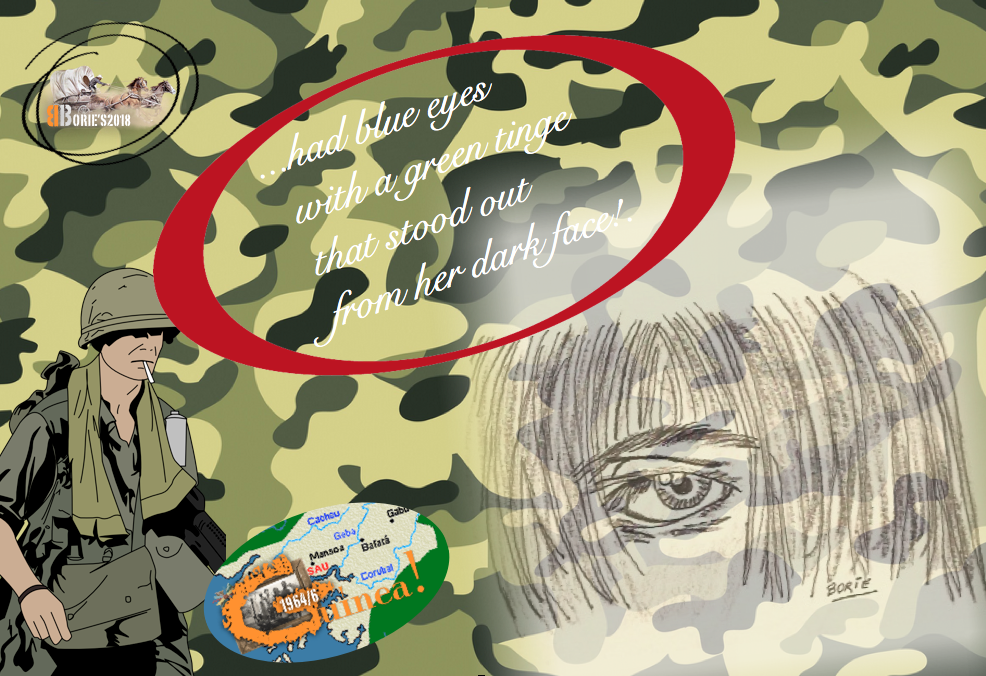
…we went to a possible war scenario!.

…we went to a possible war scenario!.


…fomos para um possível cenário de guerra! (we went to a possible war scenario!.

…já aqui o explicámos por diversas vezes mas, nunca é demais lembrar as nossas experiências em cenário de guerra, pois assim talvez os jovens, a nova geração, compreenda a nossa vivência e, nunca, mas mesmo nunca, fortifiquem qualquer ideia ou movimento que acabe em guerra, pois um veterano de guerra foi exposto a eventos traumáticos, que ameaçaram a sua vida, acontecimentos que o levaram a lugares que nenhum corpo, mente ou alma, jamais deviam visitar!. É uma jornada para lugares sombrios da vida, do terror, do sofrimento, do desespero, do medo, da dor, da morte, das feridas, da perdas e da desesperança!. (We have explained it several times here, but it is never too much to remember our experiences in a war scenario, so maybe the young generation, the new generation, will understand our experience and never, never, never fortify any idea or movement that ends in war, because a veteran of war was exposed to traumatic events that threatened his life, events that led him to places that no body, mind or soul, should ever visit! It is a journey into the dark places of life, terror, suffering, despair, fear, pain, death, wounds, loss and hopelessness)!.

…nós, os veteranos de guerra, ficámos traumatizados fisicamente, emocionalmente e espiritualmente, onde alguns de nós conseguem lidar com essa exposição ao inferno melhor do que outros, que talvez seja o nosso caso e, se por vezes falamos das coisas maravilhosas da vida, é para esquecer o sofrimento, o trauma do pensamento, tentando aliviar um pouco a dor e as feridas do que vimos e vivemos, nesse maldito cenário de guerra, que foi a Guerra Colonial Portuguesa em África!. (We war veterans have been traumatized physically, emotionally, and spiritually, where some of us can handle this exposure to hell better than others, which may be our case, and if we sometimes talk about the wonderful things about life, it is to forget the suffering, the trauma of the thought, trying to alleviate a little the pain and the wounds of what we saw and we lived, in that damned scenario of war, that was the Portuguese Colonial War in Africa)!.

…continuando o breve resumo da nossa chegada a África, as quatro semanas passaram, fomos para o interior da província, deixando o tal acampamento, onde estivémos acantonados com centenas de companheiros, havendo um suicídio e vários casos de febre constante, que nos diziam ser a doença do paludismo, na tal área coberta de lama, milhões de mosquitos, onde começou a tal organização dentro da desorganização, em que tudo era motivo para discussão entre militares, às vezes mesmo com confrontos físicos!. (Continuing the brief summary of our arrival in Africa, the four weeks passed, we went to the interior of the province, leaving the camp where we were quartered with hundreds of companions, there being a suicide and several cases of constant fever, which malaria disease was said to be malaria in that muddy area, millions of mosquitoes, where such an organization began in the disorganization, where everything was a motive for discussion among the military, sometimes even with physical confrontations)!.

…levávamos vestido um camuflado novo, na cabeça um boné, também de pano camuflado, a que chamavam “quico”, vá lá saber-se porquê, devíamos de levar um capacete de ferro, mas durante os dois anos em permanecemos em cenário de guerra, nunca nos deram, mas também não o pedimos, a espingarda metralhadora G-3, ia entre as pernas, segura com ambas as mãos, com os carregadores cheios e pronta a disparar, também um cinto com dois carregadores extra!. (We wore a new camouflage dress, a cap, also made of camouflage cloth, which they called “quico”, let’s know why, we should wear an iron helmet, but during the two years we stayed on stage of war, never gave us, but we also did not ask for it, the G-3 machine gun, was between the legs, held with both hands, with the boots full and ready to fire, also a belt with two extra boots)!.

…as recomendações eram de que, ao sairem da capital Bissau, não se podia viajar um metro, um qualquer guerrilheiro, “armado até aos dentes”, coberto de armas e munições, com uma grande catana, talvez atrás de uma qualquer árvore ou mesmo arbusto, estava lá esperando-nos!. Aí começou o nosso sentimento de medo e, sempre que qualquer companheiro falava mais alto, sempre que a viatura militar provocava algum barulho causado por rodar naquele acidentado terreno, ficávamos em pânico, agarrando-nos à espingarda metralhadora G-3, pensamdo que tínhamos alguma segurança, quando afinal nem disparar com alguma precisão sabíamos!. (The recommendations were that when they left the capital Bissau, they could not travel a meter, any guerrilla, “armed to the teeth”, covered with weapons and ammunition, with a large “catana”, perhaps behind any tree or even bush, was there waiting for us!. Then our sense of fear began, and whenever any companion spoke louder, whenever the military vehicle caused some noise caused by rolling on that rugged terrain, we would panic, grabbing the G-3 machine gun, thinking that we had some security, when we did not even shoot with some precision, we knew)!.

…chamavam “Unimog” à viatura militar, aberta, tanto na cabine como na parte destinada à carga, onde foram colocados uns bancos corridos em que íamos sentados, começa a chover, ficámos encharcados, diziam que era o começo da época das chuvas, nos não sabíamos o que era a época das chuvas, pois na nossa aldeia do Vale do Ninho d’Águia, havia quatro estações de tempo!. Continuando, completamente molhados, olhando em redor, colocámos os olhos no saco, onde ia a nossa roupa, parte dela suja de lama, usada no acampamento, onde não havia condições nem meios para a lavar!. (They called “Unimog” to the military vehicle, open, both in the cabin and in the part destined to the load, where they were placed a bench in which we were seated, it begins to rain, we were drenched, they said that it was the beginning of the rainy season, we did not know what the rainy season was, because in our village of the Valley of the Eagle’s Nest, there were four seasons of time!. Continuing, all wet, looking around, we stared at the sack, where our clothes, part of it muddy, used in the camp, where there was neither conditions nor means to wash it)!

…continuámos a viajem, no cenário em redor, além daquela chuva bastante violenta, não havia os tais guerrilheiros “armados até aos dentes”, não havia nada a não ser uma savana de terra vermelha, fustigada pela chuva, onde em algumas áreas se transformava em lama, no entanto, aqui e ali apareciam pântanos com vegetação em redor, que nos diziam que eram “bolanhas” e, finalmente atravessando uma ponte em cimento com um grande arco, chegámos ao nosso destino, que era a vila de Mansoa!. (We continued to travel, in the surrounding scenery, in addition to the rather violent rain, there were no such guerrillas “armed to the teeth”, there was nothing but a red earth savanna, whipped by rain, where in some areas it turned into mud, however, here and there marshes with surrounding vegetation appeared, telling us that they were “bolanhas”, and finally crossing a cement bridge with a large arch, we arrived at our destination, which was the village of Mansoa)!.

…o “Furriel Miliciano”, com a água da chuva a cair pela face, entrando na boca, sempre que falava atingia-nos com os salpicos que da sua boca saíam, diz-nos:

– levem as vossas coisas, acomodem-se o melhor que poderem naquele local, onde ainda existem paredes e algum resto de telhado!.

…quando se referia às paredes e ao resto de telhado, eram as ruínas do local que noutros tempos, diziam ter existido um convento de padres de uma ordem religiosa francesa!. Continuando, o “Furriel Miliciano”, salpicando-nos com a água que escorria na sua face, diz-nos:

– hó “Cifra”, quando poderes vem buscar esta mala e este saco que são meus, ajeita-me lá um espaço, junto a vocês, pois ainda tenho muito para fazer!.

(The “Furriel Miliciano”, with rainwater falling down his face, entering his mouth, whenever he spoke he struck us with the splashes that came out of his mouth, he tells us:

– Take your things, settle down as best you can in that place, where there are still walls and some roof rest!.

When referring to the walls and the rest of the roof, it was the ruins of the place that once said there had been a priory of priests of a French religious order! Continuing, the “Furriel Miliciano”, sprinkling us with the water that flowed in his face, tells us:

– Oh “Cipher”, when you come to get this bag and this bag that are mine, fix me there a space, next to you, because I still have a lot to do)!.

…cada um de nós procurou, o melhor que nos foi possível, acomodar-nos, logo improvisando camas no chão, o saco molhado servindo de travesseiro, barafustando, mas arrumando as nossas coisas!.

…lá para o final do dia, o “Setúbal”, a quem foi dado o nome de guerra, pois o seu verdadeiro nome era Jeremias e causava sorrisos, diz para quem quisesse ouvir:

– tenho fome!.

…dito isto, sobe a uma enorme árvore, que umas horas depois soubémos que era um Mangueiro, começando lá de cima a abanar os ramos, de onde caíram bastantes mangos, uma fruta deliciosa!.

… o “Furriel Miliciano”, grita-lhe:

– aí em cima, estás mesmo a jeito para levar um tiro dos guerrilheiros!. Vem já para o chão, com cuidado porque podes cair, aqui não existe assistência médica e, se não morres do tiro, morres da queda!.

…alguns riram-se, outros ficaram com receio, no quais nós estávamos incluídos. A partir desse momento aquela frondosa árvore passou a chamar-se, o “Mangueiro do Setúbal”!.

(Each one of us tried, as best we could, to accommodate ourselves, then improvising beds on the floor, the wet bag serving as a pillow, gossiping, but arranging our things!.

There at the end of the day, the “Setubal”, who was given the name of war, because his real name was Jeremiah and caused smiles, says to anyone who wants to hear:

– I’m hungry!.

Said this, he climbs up a huge tree, which a few hours later we knew it was a mango tree, starting from above to shake the branches, from which fell enough mangoes, a delicious fruit!

… the “Furriel Miliciano”, shouts to him:

– Up there, you’re really good at getting the guerrillas shot! Come to the ground, be careful because you can fall, there is no medical assistance here, and if you do not die of the shot, you die of the fall!.

Some laughed, others were afraid, in which we were included. From that moment that leafy tree was called, the “Mangueiro of Setúbal”)!.

…lembramo-nos que havia mais ou menos no centro das ruínas, uma fonte, donde brotava alguma água, talvez fosse da chuva, não sabemos, perguntámos a um militar, que já se encontrava a algum tempo naquela área:

– esta água é boa para beber?.

…respondeu, tirando o cigarro da boca, mostrando uns restos dos seus dentes quase pretos, pois parecia um homem novo, com cara de velho:

– não sei, não sou de cá, sou europeu!

…pensámos que não fazia muita diferença beber ou não beber, pois se não bebéssemos morreríamos na mesma, mas à sede!. Nesse momento passa por nós um capitão, que era o seu comandante, ambos fizémos a devida saudação, e ele, diz-nos quase em silêncio:

– tem cuidado com este “gajo”, parte tudo à chapada e ao murro, tanto furriéis como soldados, é um filho da puta!.

(We remember that there was more or less in the center of the ruins, a fountain, from which some water flowed, perhaps it was from the rain, we do not know, we asked a soldier who had been in the area for some time:

– Is this water good for drinking?

He replied, taking the cigarette out of his mouth, showing the remains of his almost black teeth, for he looked like a young man, with the face of an old man:

– I do not know, I’m not from here, I’m European!.

We tho.ught that it did not make much difference to drink or not to drink, because if we did not, we would die in the same, but to thirst!. At that moment a captain, who was his captain, passes by us, we both salute him, and he tells us almost in silence:

– Be careful with this “dude”, wreck it all everything to the slap in face and the punch, both sergeants and soldiers, is a son of a bitch!.

…com estas referências, ficámos colocados num possível cenário de guerra, no interior da província! (With these references, we were placed in a possible scenario of war, inside the province)!.

…onde vivemos dois anos, construindo um aquartelamento!. (where we live two years, building a barracks)!.

…nós, veteranos de combate, permanecemos dolorosamente conscientes das nossas experiências, é bom para nós, olhar o espelho retrovisor de vez em quando, para ver de onde viémos, mas também é muito importante olharmos para o pára-brisas, para ver, dominar e controlar para onde queremos ir, pois de contrário iremos viver o resto dos nossos dias de cabeça para baixo!. Temos que tentar a todo o instante reunir coragem e alguma fé para avançarmos cada dia e, no nosso caso, somos uns abençoados por continuar a ter alguma confiança, ter a graça do Criador, ajuda da família e amigos para nos ajudar no nosso caminho!. (We combat veterans, we remain painfully aware of our experiences, it is good for us, to look at the rearview mirror from time to time, to see where we are from, but it is also very important to look at the windscreen, to see , dominate and control where we want to go, otherwise we will live the rest of our days upside down!. We have to try at all times to gather courage and some faith to advance each day and in our case, we are blessed to continue to have some confidence, to have the Creator’s grace, the help of family and friends to help us on our way)!.

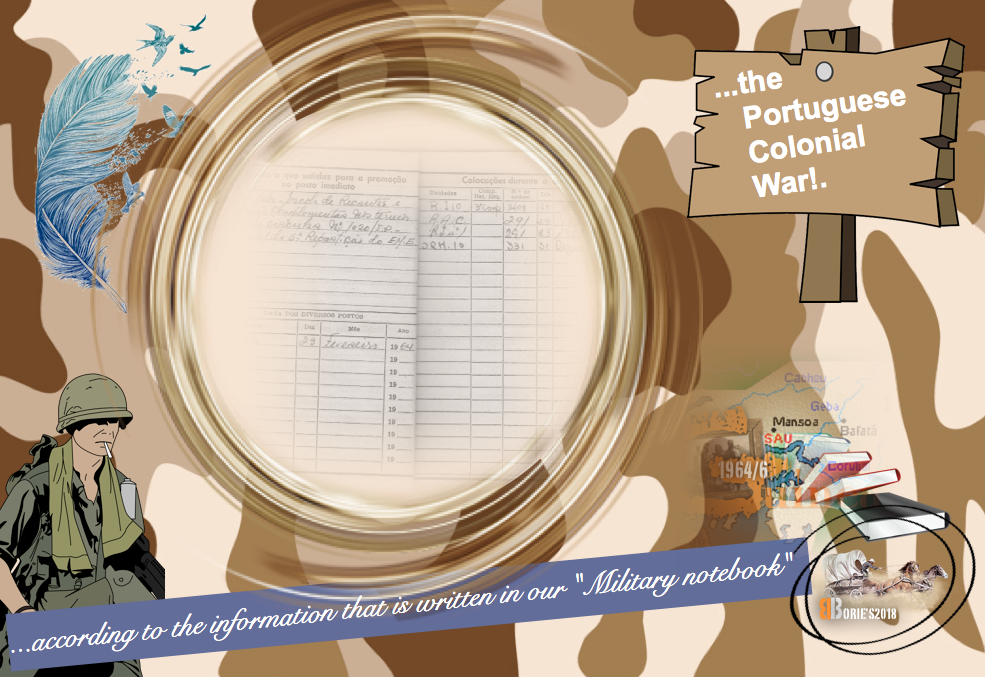
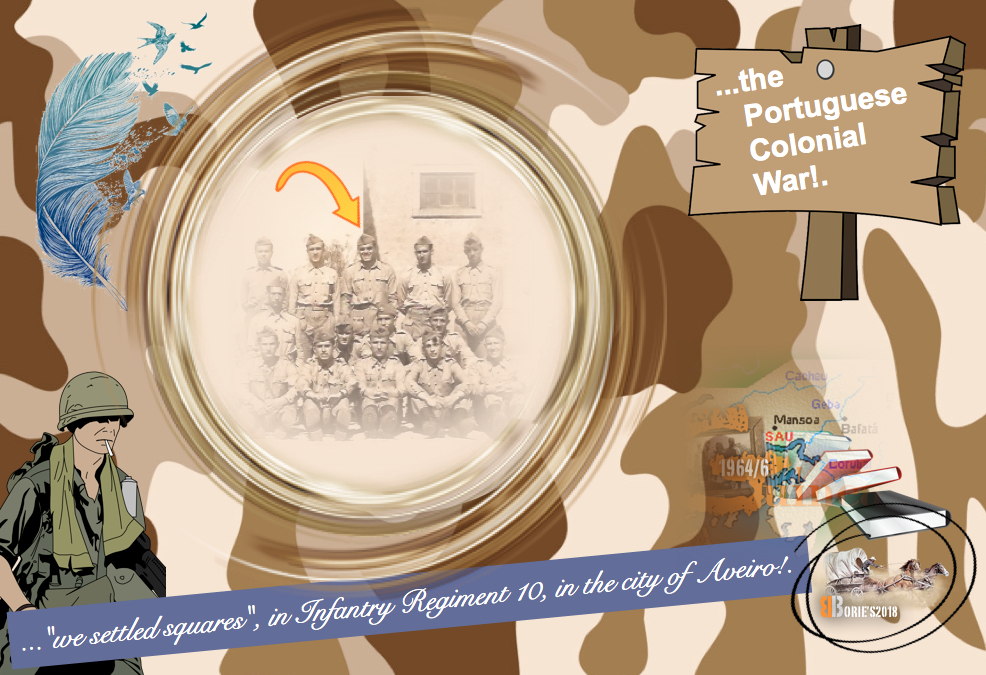
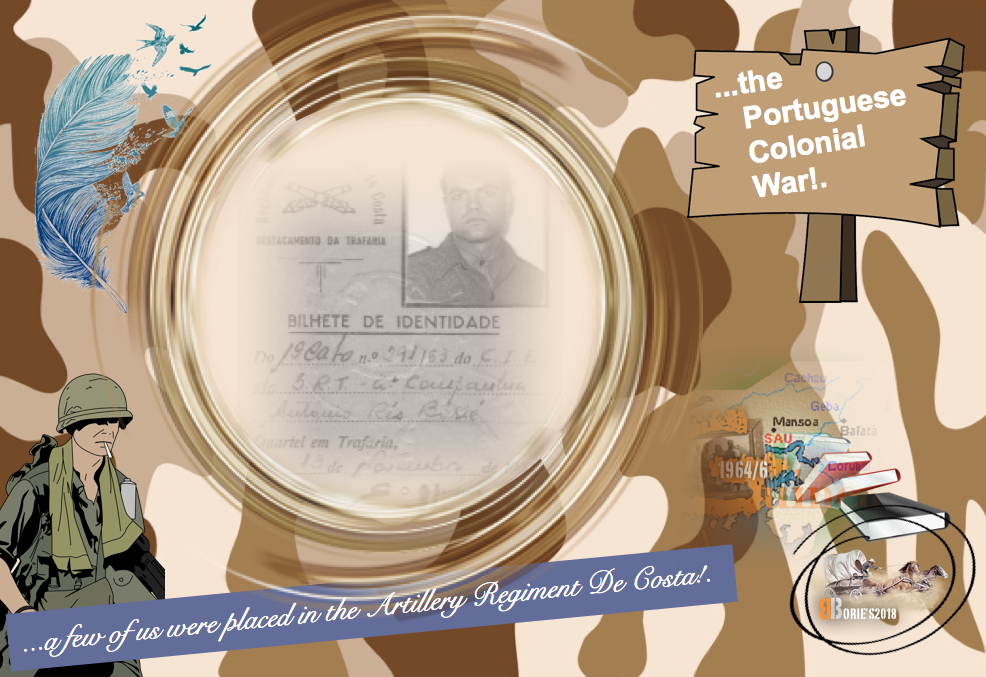
…agora continuando, já na vila de Mansoa, fazíamos parte do comando de uma unidade militar, que iria controlar todos os movimentos de tropas da região norte da Província Colonial da Guiné Portuguesa, pelo menos durante o dia, pois durante a noite não havia autorização para sair da área do aquartelamento que entretanto começámos a construir junto às ruínas!. (Now in the village of Mansoa, we were in command of a military unit, which would control all the troop movements of the northern region of the Colonial Province of Portuguese Guinea, at least during the day, because during the night there was no authorization to leave the area of the barracks that we started to build next to the ruins)!

…havia tudo a fazer, instalações militares, pista de aterragem para as pequenas avionetas e helicópteros, paiol, enfermaria, dormitórios, cozinhas, lugares cobertos para reuniões e refeições e, mais um sem número de outras instalações que fazem um comando funcionar, sem esquecer a protecção, ou seja abrigos subterrâneos e à face da terra!. (There was everything to do, military installations, airstrip for small planes and helicopters, loft, infirmary, dormitories, kitchens, covered places for meetings and meals and, plus a number of other facilities that make a command work, without forgetting the protection, that is to say underground shelters and to the face of the earth)!.

…gradeamentos com arame farpado, com alguns pontos estratégicos onde eram colocadas armas metralhadoras e munições, em todo o redor do aquartelamento!.  (Rails with barbed wire, with some strategic points where were placed machine guns and ammunition, all around the barracks)!.

…começaram a chegar forças militares, especializadas em construção e em combate!. O novo aquartelamento iniciou-se num local estratégico, com alguma protecção em caso de ataque, pois ficou situado onde havia a leste, uma aldeia com casas cobertas de colmo, cujos habitantes eram “Balantas”, uma etnia fiel aos militares, pelo menos pareciam, a oeste era a vila Colonial com algumas casas de adobe, cobertas com folhas de zinco, com grandes bananeiras, que se viam da rua!. (Began to arrive military forces, specialized in construction and in combat!. The barracks began in a strategic location, with some protection in the event of an attack, for it was situated to the east, a village with thatched houses, whose inhabitants were “Balantas,” an ethnic loyal to the military, at least west was Colonial village with some adobe houses, covered with zinc leaves, with great banana trees, that could be seen from the street)!.

…na vila, também sobressaiam, o posto dos correios!. (In the village, too, the post office)!.

…o mercado onde se vendia de tudo, não faltando os cães vadios, cobertos de insectos que se encostavam às nossas pernas, pedindo comida ou carinho, a sede do clube de futebol local!. (The market where everything was sold, not missing the stray dogs, covered with insects that leaned against our legs, asking for food or affection, the headquarters of the local football club)!.

…uma pequena igreja pintada de branco, um estabelecimento, propriedade da Companhia Ultramarina, que recolhia alguns produtos que os naturais vendiam a troco, muitas vezes de bugigangas sem qualquer valor, ou uns panos de chita!.  (A little church painted in white, an establishment owned by the Ultramarine Company, which collected some products that the natives sold for a change, often worthless trinkets, or some cheetah cloths)!.

…algumas casas com melhor aspecto, eram propriedade de alguns negociantes de madeira, que escravizavam os naturais que, talvez a troco de nada cortavam árvores centenárias, cuja madeira devia valer uma fortuna na Europa!. Havia também uma casa de uma senhora oriunda da Ilha de Cavo Verde, que vendia comida e bebida aos militares, cujos géneros, normalmente eram roubados pelos próprios militares no aquartelamento, no qual nós nos incluíamos!. (Some better-looking houses were owned by some wooden traders, who enslaved the natives who, perhaps for the sake of time, cut down old trees, whose wood was worth a fortune in Europe! There was also a house of a lady from the Island of Cape Verde, who sold food and drink to the military, whose genders were usually stolen by the soldiers themselves in the barracks, in which we were included)!.

…ao fundo da rua principal, havia um posto de enfermagem, que tratava os naturais uns certos dias à semana, quando vinha um enfermeiro da capital Bissau!. Havia o estabelecimento do “Libanês”, que competia com o estabelecimento a Companhia Ultramarina, mas embora vendesse mais em conta, nunca tinha produto, embora os militares o frequentassem, pois as suas duas filhas eram a sua principal atracção!. (At the end of the main street, there was a nursing station, which treated the natives some days a week, when a nurse came from the capital Bissau! There was the establishment of the “Lebanese”, which competed with the establishment of the Ultramarine Company, but although it paid more attention, it never had a product, although the military frequented it, since its two daughters were its main attraction)!.

…havia também um edifício público, que funcionava numa espécie de Câmara Municipal, que emitia documentos de identificação aos naturais que queriam deslocar-se de umas aldeias para outras, sem serem incomodados pelos militares, entre outras coisas!. As ruas eram quase todas direitas ao rio, com algumas árvores de Mango, pintadas de branco na sua base, pelo menos dois metros acima do solo, que nós nunca compreendemos porquê!. Ao sul, depois do rio, havia uma floresta com algumas “bolanhas” (pântanos), onde diziam ir construir-se o campo de aterragem para as avionetas, mas cremos que isso nunca sucedeu, pois usava-se uma área no norte, ao lado da tal aldeia com casas cobertas de colmo, que era plana!. (There was also a public building, which operated in a sort of town hall, which issued identification documents to the natives who wanted to move from one village to another without being disturbed by the military, among other things! The streets were almost all straight to the river, with some Mango trees, painted white at their base, at least two feet above the ground, which we never understood why! To the south, after the river, there was a forest with a few “bolanhas” (marshes), where they said to build the landing field for the light aircraft, but we believe that this never happened, since an area was used in the north, side of such a village with thatched houses, it was flat)!.

…como já referimos anteriormente, para quem viajava do sul, à entrada da vila, passava o Rio Mansoa, com uma ponte em cimento e em arco, onde nos diziam que era a ponte mais importante da província, onde embora a vila ficasse a muitos quilómetros do oceano, a maré subia e descia alguns metros e, quando subia, originava grandes áreas submersas!. (As we have already mentioned, for those who traveled from the south, at the entrance of the village, the Mansoa River passed, with a bridge in cement and arch, where they told us that it was the most important bridge in the province, where, although the village remained many miles from the ocean, the tide went up and down a few meters, and when it came up, it gave rise to large submerged areas)!.

…mas quando descia, essas mesmas áreas, ficavam descobertas, com lama e tarrafo, que era o paraíso de algumas aves e crocodilos que se enterravam na lama, só com a cabeça de fora, vendo-se os seus olhos luzindo ao longe!.  (But when it descended, these same areas were discovered with mud and tarrafo, which was the paradise of some birds and crocodiles. they buried in the mud, only with the head outside, seeing their eyes shining in the distance)!.

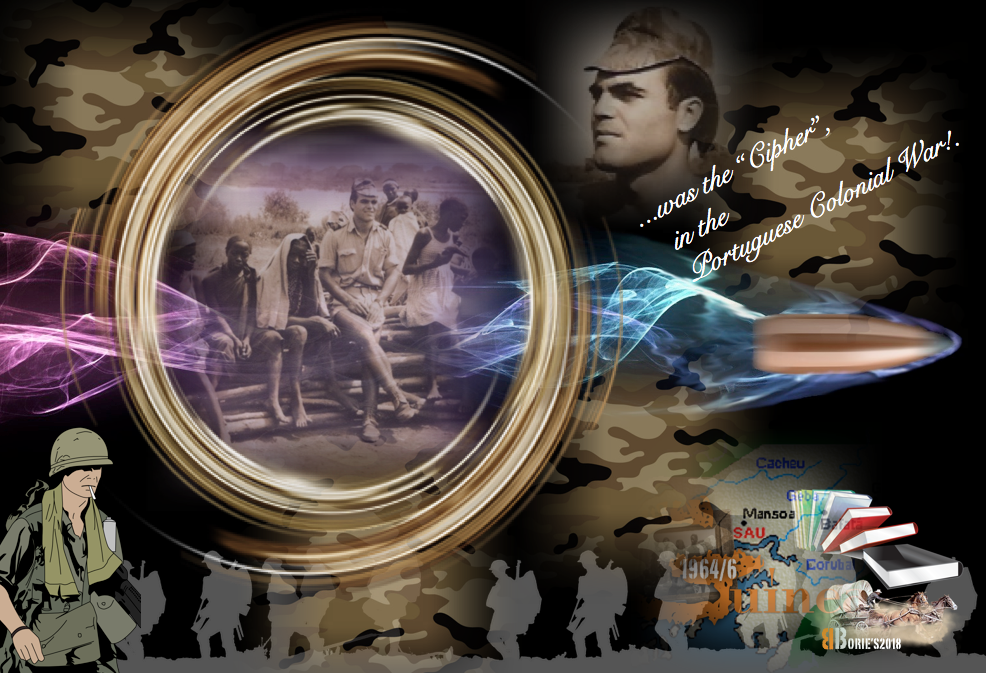
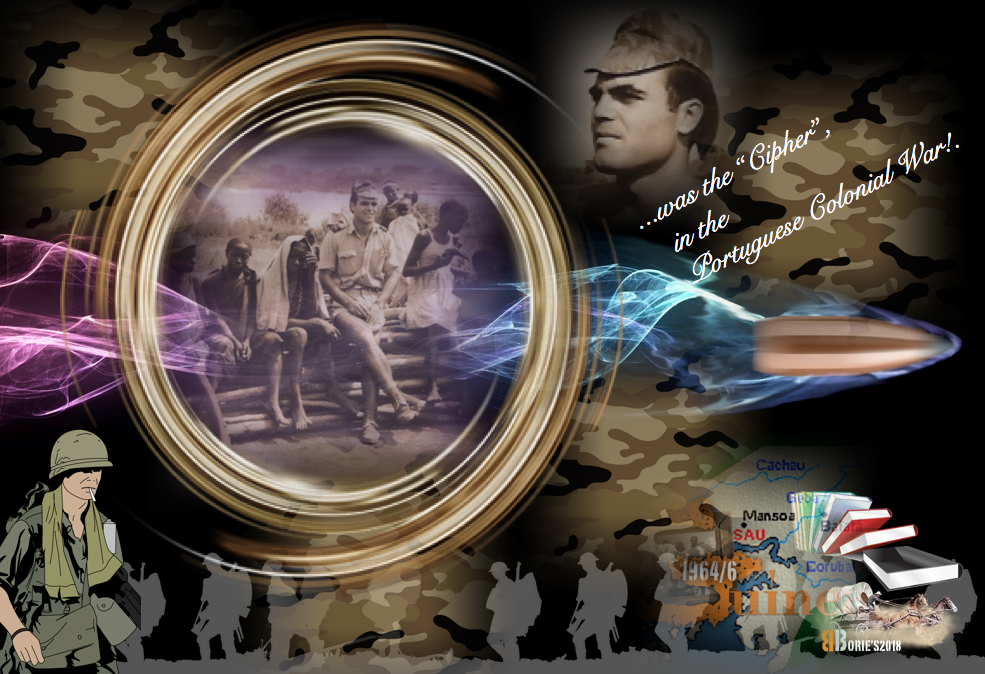
…nós como o nosso nome de guerra indica, “Cifra”, a nossa principal missão era ajudar a organizar e montar um centro de cripto, onde funcionaria um sistema de cifra, que ajudava a comunicação em código entre as forças militares estacionadas na região, em diferentes zonas de combate!. Era uma tarefa com responsabilidade, pois tudo era feito manualmente, com muito sigilo, não se admitia fugas de informação, por exemplo, o centro de transmissões recebia uma mensagem em código, entregava-a por mão no centro de cripto, este por sua vez decifrava o conteúdo da mensagem, entregando-a também por mão ao comando!. (As our name war indicates, “Cipher”, our main mission was to help organize and set up a crypto center, where a cipher system would work, which helped code communication between the military forces stationed in the region, in different combat zones!. It was a task with responsibility, because everything was done manually, with a lot of secrecy, no information was leaked, for example, the transmission center received a message in code, handed it by hand in the center of crypto, this in turn deciphered the content of the message, handing it over to the command)!.

…já vão compreendendo, como nós, aquele garoto que acordava na aldeia do Vale do Ninho d”Águia, na vertente agreste da Montanha do Caramulo, lá no Portugal da Europa, ao som do apito aflito do combóio das seis e meia, quando passava abanando o curral das ovelhas, a todo o vapor rumo ao norte, sim, esse garoto, podia ter a Guerra Colonial Portuguesa, na então Província da Guiné nas suas mãos!. Mais, como sabia o conteúdo da mensagem, entregando-a já decifrada por mão ao comandante e seus pares, podia ver a expressão no rosto dessas pessoas com poder de decisão, se iam agir, se movimentavam militares para futura acção ou se simplesmente não havia qualquer acção!. Como podem analizar, sem o pretender-mos estávamos ao corrente de todas as evoluções do conflito armado naquela província!. (They already understand, like us, that boy who woke up in the village of Vale do Ninho d ‘Águia, on the rugged slope of Caramulo Mountain, in Portugal of Europe, to the sound of the distressed whistle of the six-thirty train, when he waved his sheep’s corral at full speed towards the north, yes, this boy, could have the Portuguese Colonial War, in the then Province of Guinea in his hands!. More, as he knew the content of the message, delivering it already deciphered by hand to the commander and his peers, could see the expression on the face of those people with decision-making power, whether they were going to act, whether they moved military for future action or if there was simply no action! We were aware of all developments in the armed conflict in that province)!.

…pronto, os queridos leitores já ficaram como uma ideia do local onde estivémos estacionados por o tempo de dois anos, que era o aquartelamento de Mansoa, a porta, o posto avançado para o interior da então Província Colonial Portuguesa da Guiné, onde pertencíamos a um comando que não estava armado, mas infelizmente dava ordens que directa ou indirectamente podia matar!. (Soon, the dear readers have already become an idea of the place where we were stationed for two years, which was the quartering of Mansoa, the gate, the outpost into the then Portuguese Colonial Province of Guinea, where we belonged to a command that was not armed, but unfortunately gave orders that directly or indirectly could kill)!.

…aqui, onde os naturais, aqueles que aqui nasceram, alguns já com uma certa idade, nos diziam na sua linguagem crioula:

– se quizeres ir rápido, vai sózinho!. Se quizeres ir longe, então vamos juntos!.

(Here, where the natives, those who were born here, some already with a certain age, told us in their Creole language:

– If you want to go fast, go alone! If you want to go far, then let’s go together!

…todas as histórias que vamos contando são um relato fiel do que os nossos olhos viram e ficaram gravadas no nosso pensamento, que mostramos como exemplo para que sobretudo as novas gerações nunca, mesmo nunca, fortifiquem qualquer ideia ou movimento que possa acabar num conflito armado, onde somos expostos a eventos traumáticos, a lugares que nenhum corpo, mente ou alma, jamais deviam visitar e, a maldição de um veterano de guerra, é que nunca esquece! (All the stories that we are telling are a faithful account of what our eyes saw and were recorded in our thinking, which we show as an example so that the new generations will never, even never, fortify any idea or movement that could end in an armed conflict, where we are exposed to traumatic events, places that no body, mind or soul, should ever visit, and the curse of a war veteran, is that he never forgets)!.

Tony Borie, March 2018.

…Snake River!

…Snake River!


…Morley Nelson Snake River Birds of Prey Área Nacional de Conservação! (Morley Nelson Snake River Birds of Prey National Conservation Area)!.

…viajando do estado de Oregon, no sentido leste, já nos tínhamos desviado da estrada rápida número 84, para percorrer um pequeno percurso da “Oregon Trail”!. (Traveling from the eastern state of Oregon, we had already drifted off the 84th freeway to take a short detour from the Oregon Trail)!.

…quando, entrando no estado de Idaho, chegámos à cidade de Boise, parando aqui para comprar alguma comida, nos informaram que, gostando de apreciar cenário de natureza pura, poderíamos visitar o “Morley Nelson Snake River Birds of Prey Área Nacional de Conservação”!. (When we entered in the state of Idaho, we came to the city of Boise, stopping here for buy some food, we were informed that, liking to enjoy scenery of pure nature, we could visit the “Morley Nelson Snake River Birds of Prey National Conservation Area”)!.

…era já ali, a cerca de 3 milhas ao sul da cidade de Kuna, a estrada atravessa o limite da Área Nacional de Conservação, com muitas aves de rapina, junto ao Rio Snake, ou também podíamos viajar pela estrada do estado número 78, que envolve os lados sul e oeste ou ainda, havia uma terceira via, que era a também a estrada do estado número 67, que atravessa toda aquela área, entre a Casa da Montanha e o lugar de uma Vista Magnífica, que é o terminal oriental do Owyhee Uplands Back Country Byway!. (It was already there, about 3 miles south of the city of Kuna, the road crosses the boundary of the National Conservation Area with many birds of prey by the Snake River, or we could also travel by state road number 78, which surrounds the south and west sides, or there was a third road, which was also the 67th state highway that runs through that area between Mountain Home and Grand View, which is the eastern terminus of Owyhee Uplands Back Country Byway)!.

…muito boa e preciosa informação, que nos permite visitar um cenário difícil de ver nos dias de hoje, pois esta área, junto ao Rio Snake, desde o ano de 1993 que está protegida, num ambiente único que acolhe uma das mais densas concentrações de aves de rapina, onde Falcões, Águias ou Corujas, são encontrados aqui, em profusão e variedade única, nestes terrenos que fazem parte do Sistema Nacional de Conservação da Paisagem!. (Very good and precious information, which allows us to visit a scenario difficult to see nowadays, because this area, next to the Snake River, since the year 1993 that is protected, in a unique environment that welcomes one of the densest concentrations of birds of prey, where falcons, eagles or owls are found here, in profusion and unique variety, in these lands that are part of the National System of Landscape Conservation)!.

…esta área preserva e proteje o habitat natural de vida selvagem, ao mesmo tempo que trevê outros usos compatíveis da terra, de modo a que as aves de rapina floresçam aqui, como foram há milhares de anos!. Além da excelente visualização de pássaros e vida selvagem, também por aqui existem várias oportunidades recreativas como por exemplo, caminhadas, (que nós adoramos), caçar, andar de bicicleta de montanha, fazer piqueniques ou mesmo acampar!. (This area preserves and protects the natural habitat of wildlife, while trekking other compatible uses of the land, so that the birds of prey flourish here, as they were thousands of years ago! In addition to excellent viewing of birds and wildlife, there are also many recreational opportunities around here, such as hiking, (we love) hunting, mountain biking, picnics or even camping)!.

…oficialmente deram o nome a esta área de “Nelson Snake River Birds of Prey National Conservation Area”, que é uma mistura de propriedades públicas e privadas, sendo aproximadamente 485,000 hectares de terrenos do Bureau of Land Management, 65,000 hectares de propriedade privada, 39,000 hectares de terra estadual e 1,000 hectares de águas superficiais, totalizando cerca de 600,000 hectares, em homenagem a Morley Nelson, pelo seu trabalho e dedicação em favor das aves de rapina e os seus habitats!. (Officially named this area “Nelson Snake River Birds of Prey National Conservation Area”, which is a mixture of public and private properties, with approximately 485,000 hectares of Bureau of Land Management land, 65,000 hectares of private property, 39,000 hectares of state land and 1,000 hectares of surface water, totaling about 600,000 hectares, in honor of Morley Nelson, for his work and dedication in favor of the birds of prey and their habitats)!.

…cerca de 14.000 anos atrás, quando as geleiras recuaram da última era do gelo, o lago Bonneville, com cerca de 20,000 milhas quadradas, (52,000 km2), cresceu no Red Rock Pass, no que é hoje o estado de Idaho, criando o que é conhecido como a Inundação de Bonneville, deste modo, à medida que os solos suaves se corroim, o lago penetrou na planície vulcânica do Rio Snake e seus desfiladeiros!. Hoje, quando visitamos esta área do Rio Snake, podemos explorar as pedras, algumas do tamanho de uma casa, os desfiladeiros e outras evidências deixadas por aquela inorme inundação!. (About 14,000 years ago, when glaciers receded from the last ice age, Lake Bonneville, with about 20,000 square miles (52,000 km2), grew up on the Red Rock Pass in what is now Idaho, creating what is known as the Bonneville Flood, thus, as the soft soils corroded, the lake penetrated the volcanic plain of the Snake River and its canyons! Today, when we visit this area of the Snake River, we can explore the rocks, some the size of a house, the canyons, and other evidence left by that awful flood)!

…o ecossistema do Rio Snake, uma combinação única de geologia climática, onde os solos e a vegetação suportam um número extraordinário de predadores e presas, com mais de 700 pares de raptores, que representam 15 espécies diferentes, aninhados nas paredes dos altos desfiladeiros!. Nove espécies adicionais de raptores usam a área do Rio Snack como áreas de caça sazonais durante as migrações ou mesmo como áreas de invernagem!. Esta Área Nacional de Conservação, é particularmente importante para os Falcões da Pradaria, o único Falcão Indígena da América do Norte, sendo um lar de uma parcela significativa da população conhecida desta espécie!. (The Snake River ecosystem, a unique combination of climatic geology, where soils and vegetation support an extraordinary number of predators and prey, with over 700 pairs of raptors, representing 15 different species, nestled on the walls of the highlands canyons!. Nine additional species of raptors use the Snack River area as seasonal hunting grounds during migrations or even as wintering areas!. This National Conservation Area is particularly important for Prairie Hawks, the only Native American Hawk in North America, being home to a significant portion of the known population of this species)!.

…e claro, um dos motivos para que estas aves predadoras não abandonem este local é, que por aqui também existem números excepcionalmente elevados de pequenos mamíferos maduros, que tornam esta zona num planalto rico em cobertura vegetativa e um solo ideal, que apoiam esta alta densidade de aves de rapina!. Os esquilos terrestres de Paiute, a principal presa do Falcão da Pradaria, são as mais abundantes criaturas desta área, onde o sucesso do assentamento para Falcões da Pradaria está intimamente ligado à abundância do esquilo!. Mas não só, pois o sucesso das Águias Douradas e outros raptores está ligado à grande quantidade de “Rabos Negros”, (jackrabbits), além disso, presas abundantes e solo profundo, sustentam uma das populações mais densas de texugos no mundo, que são em média 11 por um quilómetro quadrado!. (And of course, one of the reasons why these predatory birds do not leave this place is that there are also exceptionally high numbers of small mature mammals that make this area in a plateau rich in vegetative cover and an ideal soil that support this high density of raptors!. The ground squirrels of Paiute, the main prey of the Prairie Falcon, are the most abundant creatures in this area, where the success of the settlement for Prairie Falcons is closely linked to the squirrel’s abundance!. But not only because the success of the Golden Eagles and other raptors is linked to the large number of black-tailed (jackrabbits), in addition, abundant prey and deep soil, sustain one of the densest populations of badgers in the world, which are on average 11 per square kilometer)!.

…lamentávelmente, apesar de ser considerada Área Nacional de Conservação, incêndios florestais recorrentes e exercícios de treinamento militar no Rio Snake, alteraram a base de presas para a população de raptores e, como resultado, a sua população actualmente está em risco, pois estudos dizem-nos que, os ninhos dos Falcões da Pradaria, diminuiram de 230 pares históricos, para cerca de 110 pares, que hoje existem!. (Regrettably, despite being considered a National Conservation Area, recurrent forest fires and military training exercises on the Snake River have altered the prey base for the population of raptors, and as a result, their population is currently at risk because studies tell us that the Prairie Falcon’s nests have declined from 230 historical pairs to about 110 pairs that exist today)!.

…recordando um pouco da história, além dos recursos naturais preciosos, a área das Aves de Rapina do Rio Snake têm um valor cultural significativo, pois a sua ocupação humana, data de 10,000 BC, um pouco depois da inundação de Bonneville depositar grandes pedregulhos arredondados nos desfiladeiros e, os primeiros habitantes estavam usando-os como telas, para esculpir petroglifos, onde alguns dos mais antigos e mais notáveis sítios de Arqueologia dos Nativos Americanos em Idaho, foram encontrados nesta área!. (Recalling a bit of history, in addition to the precious natural resources, the area of the Snake River Birds of Prey have a significant cultural value, as their human occupation dates back to 10,000 BC, a little after the Bonneville flood depositing large rounded boulders in the canyons, and the first inhabitants were using them as screens to carve petroglyphs, where some of the oldest and most remarkable Native American Archeology sites in Idaho were found in this area)!.

…tal como já mencionámos no princípio, que adoramos caminhadas, por aqui também existem algumas das porcões mais bem conservadas do Caminho Histórico Nacional do Oregon (Oregon Trail) e, três sítios de um estabelecimento de mineração de ouro dos anos de 1860, mencionados no Registro Nacional de Lugares Históricos!. (As we mentioned earlier, we love hiking, here are also some of the better preserved portions of the Oregon Trail and three sites of a gold mining establishment dating back to the 1860s, mentioned in the National Register of Historic Places)!.

Tony Borie, March 2018.

…the Ze Quina!

…the Ze Quina!

…o Zé Quina!. (the Ze Quina)!.

…o Zé Quina, cujo nome de guerra já aqui mencionámos, que era, o “Marafado”, nosso companheiro em cenário de guerra, lá na África, na então Província Colonial Portuguesa da Guiné, mas hoje não falamos só dele, falamos das irmãs e irmãos, todos aqueles que ainda hoje se acham presos nas memórias, como nós continuamos, já lá vão mais de cinquenta anos!. (The Zé Quina, whose name of war we have already mentioned, that was, the “Marafado”, our companion in a scenario of war, there in Africa, in the then Portuguese Colonial Province of Guinea, but today we speak not only of him, we speak of the sisters and brothers, all those who are still trapped in the memories, as we continue, have been going on for more than fifty years)!.

…muitos de nós não conseguimos lidar com o que nos aconteceu, com o que por lá fizemos, pois ficámos sem esperança, perdidos, confusos sobre nós mesmos e, nunca pensámos que era possível, no futuro ter uma maneira de vida!. Mas toda essa vivência de amargura, não nos tornou vítimas, tudo isso nos tornou veteranos e, como veteranos de guerra, somos vulneráveis às lembranças dessas horríveis experiências para o resto das nossas vidas!. (many of us could not deal with what happened to us, what we did there, because we were hopeless, lost, confused about ourselves and, we never thought that it was possible, in the future to have a way of life!. But all this experience of bitterness, did not make us victims, all this has made us veterans and, as veterans of war, we are vulnerable to the memories of these horrible experiences for the rest of our lives)!.

…hoje, aparecem-nos filmes, notícias na TV, que só são importantes para abrirem um noticiário, se falarem de catástrofes, mortes, pessoas em lágrimas com algo sucedido, que nos fazem lembrar o inferno em que vivemos e, que infelizmente ainda hoje, em algumas parte do planeta Terra, existem!. (today, we have movies, news on TV, which are only important to open a news, if they talk about catastrophes, deaths, people in tears with something happened, that remind us of the hell we live in and, unfortunately even today, in some part of planet Earth, there are)!.

…sem esperança, perdidos e confusos, vamos sobrevivendo, mas a lembrança das irmãs e irmãos veteranos, está lá viva e, hoje vamos contar a história do Zé Quina, que como já mencionámos, era o “Marafado” em cenário de guerra, história esta contada por ele, com a ajuda de sua esposa, principalmente sua sogra, que não parava de interromper, criticando-o a todo o momento e, mais tarde, nós mesmos fomos presenciando, cá vai!. (without hope, lost and confused, we are surviving, but the memory of the veteran sisters and brothers, is there alive and today we will tell the story of Zé Quina, who as we have already mentioned, was the “Marafado” in a scenario of war, a story told by him, with the help of his wife, especially his mother-in-law, who kept on interrupting, criticizing him all the time, and later we ourselves were witnessing here)!.

…a história do Zé Quina!

…o Zé d’Aurora gritava olhando o céu com o pensamento nos seus dois filhos, que agarrados aos remos da bateira, tentavam entrar a barra, com o mar mais violento e feroz do que um leão esfomeado:

 – ai, Virgem Santíssima! Salva-nos, por misericórdia das almas bondosas que estão no céu!.

…tinham saído a barra com bom tempo, lançaram uma pequena rede, não tinham pescado quase nada, só peixe miúdo, o peixe miúdo serviu de isca, depois com a corda dos anzóis, aí sim, tinham muito peixe e algum graúdo!.

The story of Ze Quina!.

(The Ze d’Aurora screamed at the sky with the thought in his two sons, who grabbed the oars of Bateira, they tried to enter the bar, with the most violent sea and fiercer than a hungry lion:

 – Oh, Holy Virgin! Save us, for mercy the kind souls who are in heaven!.

They had left the bar with good weather, they launched a small network, had not fished almost nothing, only small fish, the small fish, served as bait, then with the string of hooks, then yes, they had a lot of fish and some big shots)!.

…de repente, levanta-se uma aragem que se transformou em forte vento, as ondas levantaram-se. O Zé d’Aurora, continuava a gritar para os filhos:

– vamos embora, direitos à barra, pois isto vem do lado da Espanha, e da Espanha, nem bons ventos, nem bons casamentos!.

…remaram o mais que puderam, mas o mar apanhou-os quase a dobrarem a barra. O Zé Quina e o irmão, cada um agarrado ao seu remo, quase que batiam com a ponta do remo um no outro, tal era a força e o desespero com que remavam, ouvindo os gritos de angústia do seu pai!.

(Suddenly, raises it a breeze that turned in strong wind, the waves rose. (The Ze d’Aurora, still screaming for children:

– Come on, right to the bar, as it comes from the side of Spain, and Spain, neither good winds nor good marriages!

They rowed as they could, but the sea took them almost to double the bar. Ze Quina and brother, each clinging to his oar, almost knocked the tip of the paddle in each other, such was the force and despair that rowed, listening to his father’s cries of anguish)!.

…não sabem se foram salvos pelas almas bondosas que estavam no céu, ou pelo seu esforço em remar. A verdade, é que entraram a barra, ancoraram a bateira, descarregaram o peixe, e como sempre, e que aqui algumas vezes já foi dito, foram direitos à taverna do “Manhoso”, onde beberam dois copos de “abafado” cada um, em sinal de agradecimento, por estarem vivos!. (They do not know if they were saved by the kind souls who were in heaven, or his effort in paddling. The truth is that entered the bar, anchored Bateira, unloaded the fish, and as always, and here a few times already said, went straight to the tavern of the “Manhoso”, where they drank two glasses of “muffled” each in gratitude for being alive)!.

…o Zé Quina andava com o pai e o irmão mais novo ao mar, e como já foi dito em outras ocasiões, também ajudava num circo que visitava a vila no verão. Tinha dias em que valia a pena, outros não. Quando havia boa pescaria, gastava-se, quando não havia pescaria, gastava-se na mesma, só que era fiado, o “Manhoso”, apontava no livro!. (The Ze Quina walked with his father and younger brother to the sea, and as has been said on other occasions, also helped a circus visited the town in the summer. I had days when it was worth it, others do not. When there was good fishing, spending up when there was not fishing, was spent in the same, only it was spun, the “Manhoso”, pointed in the book)!.

…o Zé Quina, chega à idade de ir “às sortes”, como todos os outros rapazes na sua idade e, como Portugal estava em guerra, leva um carimbo a letras vermelhas no papel com os resultados da inspecção onde dizia, “apurado para todo o serviço militar”!. Na altura devida, apresenta-se num quartel da província, recebe um treino básico, depois aprende a disparar uma arma com alguma precisão e, vem para a então Província Colonial da Guiné, para um cenário de guerra defender a sua Pátria!. Era oriundo da província do Algarve e, vem no mesmo barco onde vinhamos nós, que em cenário de guerra éramos o “Cifra”, é baptizado com o nome de guerra de o “Marafado”, porque cantava uns fados muito desafinados!. Cumpriu dois anos em cenário de guerra, era militar de combate, como tal sofreu angústias e desesperos, chorou, riu, embora para o final, não falasse muito, era uma pessoa calada, a guerra marcou-o, enfim passou por todos os sentimentos que os seus companheiros, na mesma situação passaram e, que os leitores já conhecem de algumas histórias que já mencionámos, onde ele era o protagonista, teve alguma sorte, regressou a Portugal vivo!. (The Ze Quina, reaches the age to go “to the sorts”, like all other boys in his age, and as Portugal was at war, takes a stamp to red letters on paper with the results of the inspection where it said, “calculated for all military service”!. In due course, presents a provincial headquarters, receives a basic training, then learn to shoot a gun with some precision, and then come to the Colonial Province of Guinea for a theater of war to defend their country!. Came from the Province of Algarve, and comes in the same boat where we came from, and is named after the war the “Marafado” because he sang a tune very fates!. Served two years in the theater of war, was military combat as such suffered anguish and despair, cried, laughed, though at the end, did not speak much, it was a quiet person, the war marked it finally went through all the feelings that his comrades in the same situation now, and readers already know some stories that we already mentioned, where he was the protagonist, had any luck, he returned to Portugal alive)!.

…como militar de combate, era corajoso e com espírito de aventura e, dizia sempre, “que não era pássaro de gaiola”!. Sai de portugal, primeiro vai para o Canadá, depois já com alguns contactos atravessa a fronteira e entra nos Estados Unidos. Começa a trabalhar num barco de pesca, num Estado do norte e, como é bom pescador a companhia proprietária do barco, legaliza-o ao fim de algum tempo!. (As military combat, it was brave and adventurous spirit, and always said, “it was not bird cage”. Out of Portugal, first you go to Canada, after already some contacts crosses the border and enters the United States. He starts working on a fishing boat in a northern state, and how good fisherman boat’s owner company, legalize it after some time)!.

…já legal, e com autorização de trabalhar e viver nos Estados Unidos, o Zé Quina vem para o estado de Nova Jersey. Vem viver no meio de uma comunidade portuguesa, que vive numa cidade ao sul do rio Passaic, quase na sua foz. Aí conhece a Isabel, cujos pais também são oriundos da província do Algarve. Gosta dela, ela corresponde, namoram e casam-se!. O sogro, como trabalhava há muitos anos numa grande companhia, no sul de Nova Jersey, arranja-lhe emprego nessa mesma companhia. Ele, novo e ambicioso e, como essa companhia tinha sempre falta de pessoal, e os altos fornos de fundição, quando chegava a hora de descarregarem não podiam esperar, ofereciam-lhe muitas horas extraordinárias. Ele trabalhava sempre dois turnos seguidos, não trabalhava mais porque era proibido. Praticamente vinha a casa só para dormir!.
(Already cool, and with permission to work and live in the United States, the Ze Quina comes to state of New Jersey. Come live in the middle of a Portuguese community, living in a city south of the river Passaic, almost at its mouth. There he meets Isabel, whose parents are also coming from the province of Algarve. Like her, she matches, dating and getting married!. The father, as he worked for many years in a large company in southern New Jersey, get him a job in the same company. He new, ambitious, and how the company always had staff shortages, and high melting furnaces, when it came time to unload, they could not wait, offering you plenty of overtime. He worked always two consecutive shifts, no longer worked because it was forbidden. Almost came home only to sleep)!.

…a Isabel também trabalha numa fábrica de curtir peles, era a “fábrica das peles”. Compraram uma casa junto dos pais da Isabel. O Zé Quina trabalha por turnos de oito horas, em diferentes dias, incluindo fins de semana, portanto encontra-se com a Isabel no intervalo desses turnos, ou seja raras vezes estão juntos em casa, praticamente só alguns dias e à noite!. (Isabel also works in a factory of tanning leather, it was the “factory of the skins”. They bought a house with parents of Isabel. Ze Quina works by eight – hour shifts, on different days, including weekends, so is with Isabel in the range of these shifts, that is rarely are together at home, pretty much just a few days and at night)!.

…ela fica grávida, têm um filho e o trabalho continua. O Zé Quina, quando vinha para casa, normalmente parava num bar que ficava próximo de sua casa, bebia um copo e não perdia oportunidade para mostrar o seu cheque, dizendo:

– não acredito que ninguém ganhe mais dinheiro à semana do que eu. Vejam só este cheque!.

…o dinheiro tinha tomado conta do seu pensamento!. Por vezes, passavam necessidade em casa, mas tinham que pôr aquela quantia no banco, todas as semanas!.

(She becomes pregnant, have a child and the work continues. Ze Quina, when he came home, usually kept in a bar that was near his home, drank a glass and lost no opportunity to show the check, saying:

– I do not think anyone make more money a week than I do. Look at this check!.

The money had taken hold of his thought. Sometimes they were in need at home, but had to put that amount in the bank every week)!.

…a Isabel fica grávida de novo, têm mais um menino!. O ritmo de trabalho, não pára. A mãe da Isabel toma conta das crianças nas horas em que esta trabalha. O Zé Quina não pára de fazer horas extraordinárias. A Isabel, torna a ficar grávida, nasce outro rapaz, portanto, têm três filhos!.

…os sogros, dizem-lhe:

– entendemos que já chega, se querem mais filhos, tomem vocês conta deles!.

(Isabel is pregnant again, have another child. The pace of work does not stop. The mother of Isabel takes care of the children in the hours in which it works. Ze Quina continues to work overtime. Isabel makes getting pregnant, another boy is born, therefore, they have three children!.

In-laws, they tell you:

– Understand that enough, if they want more children, you take care of them)!.

…a Isabel tinha tido complicações no último parto e tinham-lhe tirado alguns órgãos interiores. Não podia ter mais filhos, pelo menos era o que os médicos diziam. Entretanto os filhos foram crescendo, a Isabel trabalhando na “fábrica das peles” e o Zé Quina, na companhia de altos fornos!. Os filhos, enquanto eram pequenos, a avó ia controlando, levava-os à escola, esperava por eles à saída, trazia-os para casa!. (Isabel had had complications in the last birth and had him taken away some internal organs. I could not have more children, at least that’s what the doctors said. Meanwhile the children were growing up, Isabel working on the “factory of the skins” and Joe Quina in blast furnace company. The children while they were small, the grandmother was controlling, she took them to school, waiting for them outside and brought them home)!.

…com o crescimento deles, e já sem controle nos mais velhos, a avó, certa noite em que o Zé Quina e a Isabel estavam em casa juntos, diz-lhes:

– vocês têm que parar com o trabalho e tomarem conta dos vossos filhos, o dinheiro não é tudo na vida. Eu já não tenho mão nos mais velhos, continuando assim, vão ser uns filhos da rua!

…e saiu, porta fora, irritada!.

…o Zé Quina diz para a Isabel:

– o que é que está mal com a tua mãe?

…ao que a Isabel, responde:

– eu não sei, deixa-a para lá, e a propósito, onde é que estão os garotos?

…os garotos andavam na rua, e já era noite!.

(With their growth, and has no control in older, grandmother, one night when Ze Quina and Isabel were at home together, he tells them:

– You have to stop work and take care of your children. Money is not everything in life. I no longer hand in the oldest, continuing, will be a child of the street!.

And gone, out the door, irritated.

Ze Quina says to Isabel:

– What is wrong with your mother?.

To which Isabel replied:

– I do not know, leave it there, and by the way, where the boys are?.

The boys walked in the street, and it was night)!.

…os anos passaram!.

…nós, um dia lendo o jornal português que se publicava na comunidade, vimos a fotografia e a notícia de um acidente, onde logo reconhecemos o “Marafado”. Fomos ao hospital onde o jornal dizia que estava internado, deparando com ele, o companheiro veterano de guerra, Zé Quina!.

…estava muito mal tratado, tinha tido um grande acidente, na óptica da sua sogra, talvez se devesse ao desgaste físico!. Vinha do trabalho, conduzindo o seu carro, saiu da faixa de rodagem, foi abalroado por um camião que vinha em sentido contrário. Sobreviveu, como tinha sobrevivido da guerra, na então província da Guiné. Passado um certo tempo saiu do hospital, mas não sente um braço e caminha com certa dificuldade. No inverno usa uma bengala especial!.

(Years passed!.

We, one day reading the Portuguese newspaper that was published in the community, we saw the photograph and the news of an accident, where we soon recognized the “Marafado”! We went to the hospital where the newspaper said he was hospitalized, encountering him, the veteran war veteran, Zé Quina!. Was very badly treated, he had had a major accident, in view of their mother, perhaps was due to physical wear. Came from work, driving your car out of the road, was hit by a truck coming in the opposite direction. He survived, as had survived the war, in the then province of Guinea. After a while out of the hospital, but he does not feel an arm and walks with some difficulty. In winter it uses a special stick)!.

…entretanto, o filho do meio apareceu morto nuns terrenos debaixo duma ponte, onde passa a auto estrada. No hospital, na altura da autópsia, o diagnóstico médico foi “overdose”!. O mais novo, por diversas vezes foi internado para reabilitação, pois é dependente, saía curado, mas passado um tempo, voltava a drogar- se!. Era bom rapaz, mas o vício era mais forte. Ficou internado permanentemente e ajuda na clínica de reabilitação!. O mais velho estava preso, cumprindo pena por assalto com arma de fogo. Estava quase a acabar de cumprir a pena, e portanto em breve iria sair em liberdade.

…os vizinhos diziam:

– Deus o mantenha preso por toda a vida, pois se regressar vai ser o martírio daqueles pais!.

(However, the middle child was found dead under a bridge in some land where the highway passes. At the hospital, at the time of autopsy, the medical diagnosis was “overdose”!. The youngest, several times was hospitalized for rehabilitation, it is dependent, left healed, but after a while, returned to drogar- it. It was a good boy, but the addiction was stronger. He was hospitalized permanently and help in rehab. The oldest was arrested, serving time for assault with a firearm. I was about to finish serving his sentence and therefore would soon go free!.

The neighbors said:

– God keep him imprisoned for life, for they will return to be the martyrdom of those parents)!.

…a Mãe Isabel anda vestida de preto, passa a vida a caminhar para a igreja de Nossa Senhora de Fátima, que existe na comunidade portuguesa, pedindo para que Deus a leve!. O Zé Quina anda pela rua, quando há bom tempo. Vai ao bar, onde mostrava o cheque e, quando pede uma bebida, fecha os olhos, levanta a cabeça em direcção ao céu, talvez pensando no seu pai e no irmão, quando iam juntos à taverna do “Manhoso”. Balbucia umas palavras que ninguém entende, limpa umas lágrimas com a mão do braço que está bom e pede a alguém que lhe tire umas moedas do bolso, que está no outro lado das calças, a que não pode chegar, para pagar a bebida!. (Mother Isabel walks dressed in black, spends his life walking to the church of Our Lady of Fatima, which exists in the Portuguese community, asking for God to light!. Ze Quina walks down the street, when there is good weather. It goes to the bar, which showed the check, and when orders a drink, closes his eyes, lifts his head towards the sky, perhaps thinking of his father and brother, and they went together to the tavern “Manhoso”. Mumbles some words that nobody understands, clean some tears with the hand of the arm that is good and ask someone to take you a few coins from his pocket, which is on the other side of the pants, that can not get to pay the drink)!. 

…da última vez que fomos ao norte visitar os nossos filhos, procurámos o Zé Quina e, fomos vê-lo ao cemitério, onde a Isabel nos levou, banhada em lágrimas, mostrando-nos a sua campa, onde deixámos algumas flores, fechámos os olhos e no nosso pensamento, vimos o “Marafado”, a ir junto com o “Curvas, alto e refilão”, o “Trinta e Seis”, o “Setúbal”, o “Pastilhas”, o “Mister Hóstia”, com o “Furriel Miliciano a fumar o seu cigarro feito à mão, com a espingarda metralhadora G3 nas mãos, irem combater para o interior das florestas, savanas e pântanos da então Província Colonial da Guiné Portuguesa!.

…paz à sua alma!.

(The last time we went north to visit our children, we went to Zé Quina, and we went to see him in the cemetery, where Isabel took us, bathed in tears, showing us her grave, where we left some flowers, closed our eyes and in our thinking, we saw the “Marafado”, to go along with “Curvas, high and complicative”, “Thirty Six”, “Setúbal”, “Pastilhas”, “Mister Hóstia” Furriel Miliciano” to smoke his handmade cigarette, with the machine gun G3 in his hands, to fight inside the forests, savannahs and marshes of the then Colonial Province of Guinean Portuguese!.

Peace to your soul)!.

Tony Borie, March 2018.

…Arrow Rock!

…Arrow Rock!

…Arrow Rock!

…a cidade de St. Louis, no estado do Missouri, tinha ficado para trás, seguíamos rumo ao oeste pela estrada rápida número 70, podendo ver-se ao longe algumas nuvens baixas, com uns chuviscos aqui e mais além, quando se forma uma tempestade um pouco acima do normal, com chuva, alguma saraiva e vento, persistindo de modo a que não houvesse quase visiblidade na estrada!. Era uma zona deserta, quase sem tráfico, portanto, afrouxámos, quase parando, mas seguindo com as luzes intermitentes acesas no veículo, sempre na linha da direita, encostados à berma quando, a tempestade estava a diminuir a sua intensidade, já se podia ver a estrada com alguma facilidade, nos surge um grande painel anunciando a aldeia de Arrow Rock!. (the city of St. Louis in the state of Missouri had lagged behind, we headed west on the fast road number 70, and we could see in the distance a few low clouds, with drizzles here and beyond, it forms a storm a little above normal, with rain, some hail and wind, persisting so that there was almost visibility on the road !. It was a deserted area, almost without traffic, so we loosened, almost stopping, but following with the flashing lights on the vehicle, always on the right line, leaning against the shoulder when the storm was decreasing its intensity, could already be seen the road with some ease, we come up a large panel announcing the village of Arrow Rock)!.

…a nossa expressão foi:

– a aldeia de Arrow Rock!. Temos que lá ir, é um lugar para ser admirado com algum tempo e, hoje não vamos perder esta oportunidade!.

…já por aqui tínhamos andado, por motivos profissionais, que faziam parte da profissão que exercíamos na multinacional, no estado de Nova Jersey, quando nos deslocámos à cidade de Kansas, no estado do Missouri, assistimos a um daqueles seminários onde eram explicados algumas inovações na indústria de altos fornos de fundição de metais, onde à chegada sempre existe um “beberete”, onde não falta quase toda a espécie de bebidas, charutos, raparigas amáveis servindo, alguém com cara de pessoa importante a dar as “boas vindas”, dizendo sempre que ali sim, é a cidade mais linda do mundo, que se vão sentir em casa, que o clube de basebol local é o melhor do mundo, enfim, as “boas vindas” do costume!.

(Our expression was:

– The village of Arrow Rock!. We have to go there, it is a place to be admired with some time and, today we will not miss this opportunity!.

We had been here for professional reasons as part of the profession we held at the multinational in the state of New Jersey, when we went to Kansas City, Missouri, we attended one of those seminars where they were explained some innovations in the blast-furnace industry, where on arrival there is always a “Drinker”, where there are all kinds of drinks, cigars, nice girls serving, someone with the face of an important person to give the “welcome”, always saying that there it is, the most beautiful city of the world, that you will feel at home, that the local baseball club is the best in the world, in short, the “welcome” of the custom)!.

…num dia em que não houve classes, visitámos a aldeia de Arrow Rock, fundada em 1829 e originalmente chamada “Filadélfia”. Alguns documentos referem-se a ela como “New Philadelphia”, no entanto, em 1833, a legislatura estadual mudou o seu nome, porque o local era mais conhecido como “Arrow Rock”!. (On a day when there were no classes, we visited the village of Arrow Rock, founded in 1829 and originally called “Philadelphia”. Some documents refer to it as “New Philadelphia”, however, in 1833 the state legislature changed the name because the locale was better known as “Arrow Rock”)!.

…cremos que uma das razões porque esta aldeia começou a ser conhecida, era porque nesta área existia uma jangada que atravessava o Rio Missouri, era o “Ferry Arrow Rock”, onde as caravanas comerciais, ou as carruagens cobertas puxadas por animais, com emigrantes com destino à California, que usavam o Caminho de Santa Fé, era quase obrigatório usarem esta jangada!. (we believe that one of the reasons why this village began to be known was because there was a raft that crossed the Missouri River in this area, it was the “Arrow Rock Ferry”, where commercial caravans, or covered carriages pulled by animals, with emigrants bound for California who used the Santa Fe Trail, it was almost mandatory to use this raft!

…deste modo e nesta aldeia, um tal Joseph Huston, na altura comissário da aldeia, por volta do ano de 1834, construiu um edifício em tijolo com dois andares onde, devido à sua localização, próximo do Rio Missouri e por onde passava o Caminho de Santa Fé, os viajantes sem dúvida perguntavam a Huston por acomodações para passar a noite!. Ele, vendo uma boa oportunidade de negócio, começou a construir adições ao edifício e, por volta do ano de 1840, já era amplamente conhecido como um Hotel-Abrigo!. O seu nome era “Taverna de J. Huston”, onde também abrigava uma loja e um salão de baile, usado para danças e reuniões!. Claro, com os anos foi passando para outros proprietários, sendo conhecido como a Casa do Neil, a Escritura, Hotel da Aldeia, e Taverna Antiga, mas hoje, o seu nome é o original, que era “J. Huston Tavern”, e é o mais antigo restaurante em operação contínua a oeste do Mississippi!. (That way and in this village, a certain Joseph Huston, then commissioner of the village, around 1834, built a two-story brick building where, because of its location, near the Missouri River and where the Santa Fe Trail, travelers no doubt asked Huston for accommodations to stay the night!. He, seeing a good business opportunity, began to build additions to the building and by the year 1840 was already widely known as a hotel-keeper!. His name was “J. Houston Tavern”, where he also housed a store and a ballroom, used for dances and meetings!. Of course, over the years it has been moving on to other owners, being known as Neil House, Scripture, City Hotel and Old Tavern, but today its name is the original, which was “J. Huston Tavern”, and is the oldest restaurant in continuous operation west of the Mississippi)!.

…na altura visitámos a “J. Huston Tavern”, onde nos foi servido um jantar, onde só havia uma ementa, tal como as pessoas comiam há centenas de anos atrás, que era presunto fumado de porco, cozido em vapor, duas espigas de milho cozidas, pão de mistura de frigo, milho e beterraba, chá de diversas plantas, incluindo a planta do tabaco, um cálice de “moonshine” e, um charuto, que terminava a refeição!. As senhoras que serviam, estavam vestidas como no passado, não se calavam, falando com sotaque local, dizendo sempre muito mal dos ingleses, que eram umas pessoas que vieram da Europa ocupar esta terra tão bonita, que era deles, os Americanos!. Tudo isto nos ficou no pensamento deste maravilhoso lugar, que está perdido no tempo e, naquele dia de novo a visitámos!. (At the time we visited the “J. Huston Tavern”, where we were served dinner, where there was only one menu, just as people ate hundreds of years ago, which was smoked ham pork, steamed, two cobs of cooked corn, bread mix of frigo, corn and beet, tea of various plants, including the tobacco plant, a chalice of “moonshine” and a cigar, which finished the meal!. The ladies who served, were dressed as they were in the past, did not shut up, spoke with a local accent, always saying very badly of the English, that they were people who came from Europe occupy this land so beautiful, that it was them, the Americans!. All this has kept us in the thought of this wonderful place, which is lost in time and, on that day again we have seen it)!.

…mas continuando, nós, querendo visitar de novo a aldeia de Arrow Rock, somos uns dos 100 mil visitantes, que o fazem todos os anos, apreciando as suas características históricas, os museus, as antiguidades, as lojas de presentes, ou simplesmente caminhar nas suas ruas, onde o nome desta aldeia apareceu pela primeira vez num mapa francês a partir do ano de 1732 como “Pierre a Fleche”, que significava “Rock of Arrows”, porque as duas tribos de Índios Americanos que por aqui viviam eram os Missouria e os Osage, que negociavam com os comerciantes franceses e, usavam a pedra que por aqui havia para fazerem a ponta das suas flechas!. (But continuing, we, wanting to visit again the village of Arrow Rock, we are one of the 100 thousand visitors, who do it every year, appreciating its historical characteristics, museums, antiques, gift shops, or to simply walk in its streets, where the name of this village appeared for the first time in a French map from the year of 1732 like “Pierre a Fleche”, that meant “Rock of Arrows”, because the two tribes of American Indians that lived here were the Missouria and the Osage, who traded with the French merchants and used the stone that was here to make the arrows of their arrows)!.

…quando por volta do ano de 1804, aqui passaram os exploradores “Lewis and Clark”, notaram vários canais pequenos que vindo do rio, paravam debaixo de um penhasco, todavia quatro anos depois, William Clark, passou novamente por aqui a caminho de construir o Forte Osage, observando uma “Grande Flecha de Pedra” e uma “Pequena Flecha de Pedra”, apenas a montante, declarando na altura, que era uma boa área para formar uma linda aldeia!. (When around the year 1804, the explorers “Lewis and Clark” passed by, noticed several small canals that came from the river, stopped under a cliff, yet four years later, William Clark, passed by again on the way to build the Osage Fort, noting a “Big Arrow Rock” and a “Little Arrow Rock”, just upstream, stating at the time, that it was a good area to form a beautiful village)!.

…seguindo as palavras do explorador William Clark, muitos colonos, predominantemente migrantes do Alto Sul da Virgínia, Kentucky e Tennessee, trazendo com eles escravos e cultura do Sul, desenvolveram nesta área um importante porto fluvial próspero, exportando das plantações na região, tabaco e cânhamo, que era usado em cordas e bolsas para algodão!. Também trigo, milho, carne bovina, porco e mulas, foram enviados da aldeia de Arrow Rock para abastecer os distritos de algodão do delta do Mississippi!. (Following the words of William Clark, many settlers, predominantly migrants from Upper South Virginia, Kentucky, and Tennessee, bringing with them slaves and southern culture, have developed in this area an important, prosperous river port, exporting from plantations in the region, tobacco and hemp, which was used in ropes and cotton bags!. Also wheat, corn, beef, pig and mules were sent from the village of Arrow Rock to supply the cotton districts of the Mississippi Delta!.

…naquela época, a produção agrícola dependia do trabalho escravo, assim como a produção do algodão tinha feito no Sul!. Esta simbiótica, levou a maioria dos residentes na aldeia de Arrow Rock a apoiar o Sul, durante a Guerra Civil, como também outros municípios do Missouri com uma alta população de afro-americanos escravizados, que mais tarde se identificaram como “Little Dixie”, que é uma região histórica de 13 a 17 municípios ao longo do Rio Missouri, estabelecida inicialmente por migrantes dos distritos de cânhamo e tabaco, que migraram de Kentucky, Virgínia e Tennessee e, como os Sulistas se estabeleceram primeiro, e claro, a sua cultura pré-civil foi semelhante à do Alto Sul!. (At that time, agricultural production depended on slave labor, just as cotton production had done in the South!. This symbiosis led most of the residents of Arrow Rock to support the South during the Civil War, as well as other counties in Missouri with a high population of enslaved African Americans who later identified themselves as “Little Dixie”, which is a historic region of 13 to 17 counties along the Missouri River, initially established by migrants from the hemp and tobacco districts who migrated from Kentucky, Virginia, and Tennessee, and, as the Southerners settled first, and of course, their culture pre-civil was similar to that of the South High)!.

…e continuando com a história da aldeia de Arrow Rock, quando os Sulistas migraram para o Missouri, trouxeram as suas práticas culturais, sociais, agrícolas arquitetónicas, políticas e económicas, incluindo, como já mencionámos, a escravidão, onde em média, a população escrava do Missouri era de apenas 10% mas, nas populações de escravos da “Little Dixie”, de município em município, variaram de 20 a 50% por volta do ano de 1860, com as percentagens mais altas para os municípios que tinham grandes plantações ao longo do Rio Missouri, todavia, também havia condados ao longo do Rio Mississippi, que tinham uma percentagem elevada de escravos, já que o algodão era cultivado em grandes plantações nesta área de planície!. (And continuing with the history of the village of Arrow Rock, when the Southerners migrated to Missouri, they brought their cultural, social, agricultural, political, and economic agricultural practices, as we have already mentioned, slavery, where on average the Missouri slave population was only 10 percent, but in the “Little Dixie” slaves, from county to county, ranged from 20 to 50 percent by the year 1860, with the highest percentages for municipalities that had large plantations along the Missouri River, however, there were also counties along the Mississippi River, which had a high percentage of slaves, since cotton was grown on large plantations in this area of flat land)!.

…durante a primeira metade do século XVIII, esta região do centro de Missouri foi chamada de “País de Boonslick”!. Assim foi chamado porque o sal de Boone podia ser lambido, a quatro milhas a leste de Arrow Rock, em Howar Country adjacente!. O termo “lick” é derivado da vida selvagem que lambia o sal molhado, em torno da área onde brotava água salgada!. Nathan e Daniel Morgan Boone, filhos do famoso homem de fronteira, Daniel Boone, fabricaram sal aqui, nos anos de 1805 a 1812, enviando-o para St. Louis, onde a água salgada continuou intermitentemente a brotar, até a década de 1850!. (During the first half of the 18th century, this region of central Missouri was called “Boonslick Country”!. So, named for the Boone’s salt lick four miles east of Arrow Rock in adjacent Howar Country!. The term “lick” derived from wildlife licking salt from the ground around the briny springs. Nathan and Daniel Morgan Boone, sons of famed frontiersman Daniel Boone manufactured salt here from 1805-1812, shipping it to St. Louis!. The salt boiling continued intermittently until 1850s)!.

…percorremos as ruas, em alguns lugares parávamos, admirando o cenário, tirando alguns momentos de meditação, com muito respeito pela população escrava, que antes da Guerra Civil, por aqui trabalhavam nas docas ou armazéns empresariais, que segundo a história eram pessoas qualificadas, eram mesmo mestres de construção, como podemos observar pelas infraestructuras da aldeia, com maciças calhas de pedra que revestem a Rua Principal, construídas por uma população Afro-Americana escravizada, crescendo à medida que os escravos das plantações, iam passando para a aldeia!. (We walked the streets, in some places we stopped, admiring the scenery, taking a few moments of meditation, with a lot of respect for the slave population, that before the Civil War, here worked in the docks or business warehouses, which according to history were people skilled workers, were really masters of construction, as we can see from the infrastructures of the village, with massive stone gutters lining Main Street, built by a slaved Afro-American population, growing as plantation slaves moved on to the village)!.

…alguns historiadores dizem-nos que a aldeia de Arrow Rock, representou uma mistura única do idealismo da fronteira ocidental e das tradições do Sul!. (Some historians tell us that the village of Arrow Rock represented a unique blend of the idealism of the Western frontier and the traditions of the South)!.

…deixámos de ver esta maravilhosa aldeia que parou no tempo onde, com algumas nuvens cobrindo o sol que teimava em aparecer, dando-lhe algum calor, que pelo menos a população escrava não teve quando da sua formação!. Começou a chover de novo, quando regressámos à estrada número 70, a caminho do oeste!. (We stopped to see this wonderful village that stopped in the time where, with some clouds covering the sun that continued to appear, giving it some warmth, that at least the slave population did not have when of its formation!. It started raining again, when we got back on road number 70, heading west)!.

Tony Borie, March 2018.

…from our village to Africa!

…from our village to Africa!

…da nossa aldeia até África! (from our village to Africa)!.

…antes de ingressar no serviço militar obrigatório, éramos um jovem, que estava a crescer para a vida, feliz, convivendo e sorrindo com sua família e vizinhos, na sua aldeia do Vale do Ninho D’Águia, na vertente oeste e agreste da montanha do Caramulo, no país Portugal, no continente Europeu!. Quando regressámosa a casa, uns anos depois, como veteranos de combate, passando por algumas experiências de vida mais traumáticas que se possam imaginar, a família que nos recebe, sabe, nota imediatamente, que alguma coisa está mal connosco, pela nossa linguagem, maneira de se comportar, que estamos diferentes, talvez um pouco loucos e algo agressivos!. (before entering compulsory military service, we were a young man, who was growing up for life, happy, living and smiling with his family and neighbors in his village of the Valley of the Eagle Nest, on the west and wild side the mountain of Caramulo, in the country Portugal, in the European continent!. When we returned home a few years later, as veterans of combat, through some more traumatic life experiences imaginable, the family that receives us, you know, notice immediately, that something is wrong with us, by our language, way to behave, that we are different, maybe a little crazy and something aggressive)!.

…é o preço do sofrimento, da angústia, do mêdo e fúria em combate, do horror, do inferno que vivemos, a marca que nos acompanha para o resto das nossas vidas, que na verdade nos sentimos loucos por dentro e, como veteranos de guerra, temos que ser francos e dizer, que pagamos um preço muito elevado para servir o nosso país e, as vítimas emocionais das guerras equivocadas são na verdade as mais difíceis de suportar, são as tais feridas profundas que sofremos, que podem ser infligidas sem deixar um simples arranhão!. ( is the price of suffering, of anguish, of fear and fury in combat, of the horror, of the hell we live in, the mark that accompanies us for the rest of our lives, that we actually feel insane inside and, like war veterans, we have to be frank and say that we pay a very high price to serve our country, and the emotional victims of the wrong wars are actually the most difficult to bear, it is the deep wounds we suffer that can be inflicted without leaving a simple scratch)!.

…vamos tentar recordar e explicar-vos como fomos parar a África, pois temos contado pormenores da nossa presença em cenário de guerra, sem nunca vos dizer, como lá fomos parar, portanto cá vai:

…o combóio das dez e meia da manhã, levou-nos da nossa vila até à cidade onde, no quartel militar, numa inspecção médica, aquele que parecia ser o chefe nos ordenou que tirássemos a roupa, portanto ficámos nús, inspecionando o nosso corpo de diversos ângulos, abrindo a boca, mostrando os dentes, dar alguns saltos, baixar-se, abrir e fechar as pernas, curvar-se, metendo-nos um dedo no ânus, que bastante nos doeu, verificaram as mãos e os pés, se tínhamos cinco dedos em cada mão, tudo isto entre outras coisas!. Falam entre si, numa linguagem técnica, mas imcompreensível, onde o tal que parecia ser o chefe, nos estende um papel com o nosso nome, com um carimbo a letras vermelhas dizendo, “Apurado para todo o serviço militar”!

(let us try to remember and explain to you how we went to Africa, for we have told you the details of our presence in a war scenario, without ever telling you how we got there, so here it is:

(The ten o’clock train took us from our village to the city where, in the military barracks, at a medical inspection, the one who appeared to be the chief ordered us to take off our clothes, so we stood naked, inspecting the our bodies from a variety of angles, opening our mouths, showing our teeth, jumping, lowering, opening and closing our the legs, bending over, putting a finger in the anus, which really hurt us, checked our hands and feet, if we had five fingers in each hand, all this among other things!. They speak among themselves, in a technical but incomprehensible language, where the one who seemed to be the boss, throws us a paper with our name, with a red lettering stating, “Determined for all military service”)!.

…algum tempo passou, alguma água correu no ribeiro que passava ao fundo do Vale do Ninho D’Águia, quando nós, com uns calções que já tinham sido calças, com um balde de madeira, que também servia para dar o comer aos animais, dentro do ribeiro tentávamos bombear água para uma superfície superior, que iria regar o milho que crescia nas terras baixas do lameiro, quando a mãe Ilda nos chama aflita, gritando:

– Anda cá meu “malandro”, com toda a certeza que fizes-te alguma!. Vem aqui ao carteiro, que trás uma carta com registro em teu nome!. É só desgraças, meus Deus!.

…a carta com registro, era do governo de Portugal, notificando-nos para nos apresentar num quartel militar da província, afim de ser-mos incorporados no Exército de Portugal!.

(Some time passed, some water ran in the brook, which passes to the bottom of the Vale do Ninho D’Águia, when we, with breeches that had already been trousers, with a wooden bucket, which also served to give the eating the animals inside the brook tried to pump water to an upper surface that would irrigate the corn that grew in the lowlands of the marsh, when the mother Ilda calls us afflicted, shouting:

– Come here you “trickster”, I’m sure I made you some!. Come here to the postman, who brings a letter with registration in your name!. It’s only misfortunes, my God!

The registered letter was from the government of Portugal, notifying us to present us at a military barracks of the province, so that we may be incorporated into the Portuguese Army)!.

…no dia marcado, despedimo-nos da família e vizinhos, levando numa saca, alguma roupa lavada, um farnel onde nos lembramos que ia uma garrafa com algum vinho, que era especial, porque tinha uma rolha em porcelana, com argola em borracha, fechando por intermédio de uma engrenagem de dois arames, que os primos de Lisboa, tinham trazido da capital, garrafa essa que nos acompanhou para África!. (on the appointed day, we said goodbye to the family and neighbors, carrying in a sack, some washed clothes, a farnel where we remembered a bottle of wine, which was special because it had a porcelain stopper with a ring on it rubber, closing by means of a two-wire gear that the Lisbon cousins had brought from the capital, a bottle that accompanied us to Africa!

…o combóio das dez e meia, trouxe-nos para a cidade, onde nos apresentámos no quartel militar, recebendo a instrução básica, concentrada em saber defender-se, como matar de diferentes maneiras, usando diferentes partes do corpo, onde podiam produzir morte rápida ou prolongada!. O principal motivo da instrução era saber matar, onde o instrutor, militar de acção, que tinha regressado de uma comissão noutra província portuguesa em África, que já estava em guerra, nos contava histórias de combate, exemplificava em cada instruendo o local do corpo em que devíamos acertar com uma bala ou ferir com uma faca!. Fazia isto com tal precisão, com os olhos vidrados de raiva, que nos assustava a nós, os instruendos!. (The 10:30 am train brought us to the city, where we performed at the military barracks, receiving basic instruction, concentrating on how to defend ourselves, how to kill in different ways, using different parts of the body, where they could produce rapid or prolonged death!. The main reason for the instruction was to know how to kill, where the instructor, military of action, who had returned from a commission in another Portuguese province in Africa, who was already at war, told us stories of combat, exemplified in each instructing the place of the body in that we should hit with a bullet or wound with a knife! He did this with such precision, his eyes glazed with rage, which frightened us, the instructors)!.

…terminada a instrução básica, somos transferidos para uma base nos arredores da Capital, recebendo um pequeno treino de especialização, onde mentalizando-nos, constantemente nos diziam que éramos filhos da Pátria, em qualquer momento devíamos dar a vida pela Pátria, com esta especialização ficaríamos um militar fora do normal, não devíamos dormir ou conviver com os normais militares, pois em caso de insónias, podíamos revelar segredos do estado, fazer perder uma guerra, éramos os “Cifras”!. Em cada dia de treino, mais responsabilidade nos colocávam, ao ponto de no final, pensar-mos que carregávamos nos ombros, o peso de dez milhões de Portugueses, que era a população do país Portugal naquele tempo!. (After finishing the basic education, we are transferred to a base in the outskirts of the capital, receiving a small training of specialization, where we mentally told ourselves that we were children of the Motherland, at any moment we should give our lives for the Motherland, this specialization would be a military out of the ordinary, we should not sleep or live with normal military, because in case of insomnia, we could reveal secrets of the state, make lose a war, we were the “Ciphers”! In each day of training, more responsibility put us, to the point of the end, to think that we carried on the shoulders, the weight of ten million Portuguese, who was the population of the country Portugal at that time)!.

…fomos colocados no Ministério da Guerra, na capital, onde cifrávamos e decifrávamos mensagens que vinham das então Províncias Coloniais do Ultramar Português, onde já se desncadeava uma guerra de guerrilha, em que os diversos grupos armados e organizados, reclamavam a sua independência, como países soberanos, livres do controlo de Portugal, país Europeu!. Começa mais uma rebelião, desta vez na então Província Colonial da Guiné, reclamando a sua independência, somos mobilizados de emergência!. (we were placed in the Ministry of War, in the capital, where we encrypted and deciphered messages that came from the then Colonial Provinces of the Portuguese Overseas, where a guerrilla war was already unfolding, in which the various armed and organized groups demanded their independence , as sovereign countries, free from control of Portugal, European country !. Another rebellion begins, this time in the then Colonial Province of Guinea, claiming their independence, we are mobilized emergency)!.

…o sistema em Portugal estava controlado por um governo, composto por pessoas que se sentiam previligiadas, julgavam-se superiores a qualquer outro ser humano, era do género, “eu sei o que o meu povo quer”, “o meu povo adora-me”, “o que eu quero, é a vontade do meu povo”, “Deus existe, eu converso com ele, dou-lhe ordens, pois esse Deus sou eu”, portanto adorem-me e sigam-me, ninguém no mundo sabe melhor do que eu, o que é bom para o meu povo, se os levar à morte, é para vossa salvação, não se importem de passar fome, não terem trabalho decente ou roupa para vestirem, tenham orgulho na vossa Pátria, que é a vossa mãe, vão para guerra e, em força!. (the system in Portugal was controlled by a government composed of people who felt privileged, considered superior to any other human being, was like, “I know what my people want”, “my people worship me”, “what I want is the will of my people”, “God exists, I speak to him, I give him orders, for this God is I”, so worship me and follow me, no one in the world know better than I, what is good for my people, if they lead them to death, is for your salvation, do not mind starving, do not have decent work or clothes to wear, have pride in your homeland, who is your mother, go to war and in force)!.

…nós, nascendo e vivendo na nossa aldeia, com uma educação de família, em que ouvíamos e respeitávamos os mais velhos, não tínhamos a menor ideia de que estes governantes, com pensamentos estúpidos, baixos e miseráveis, sem qualquer senso, onde o chefe do governo do então país Portugal, com a sua mente cheia de motivos políticos, vem um certo dia para a televisão, em hora de grande audiência, televisão e rádio controladas pelo governo, falar ao tal “seu povo”, para que visse e ouvisse:

– VAMOS PARA A GUERRA, AGORA E EM FORÇA!.

(We, being born and living in our village, with a family education, in which we listened and respected our elders, we had no idea that these rulers, with stupid thoughts, low and miserable, without any sense, where the head of the government of the then country Portugal, with his mind full of political motives, comes one day to the television, at a time of great audience, television and radio controlled by the government, to speak to such “his people”, so that he saw and hear:

– LET’S GO TO WAR, NOW AND FORCE)!.

…nem tempo tivémos para nos despedir da família, lá na nossa aldeia do Vale do Ninho D’Águia!. Sem dar-mos por nada, com umas botas novas calçadas, vestidos de amarelo, uma boina na cabeça, com um saco às costas e uma mala de cartão, onde ia a tal garrafa especial, estávamos no cais da alfândega de Lisboa, esperando a nossa vez para entrar para um navio fretado pelo governo, para nos levar para a então Província Colonial da Guiné, onde começava uma guerra traiçoeira e imprevista!. (not even time we had to say goodbye to the family, there in our village of Vale do Ninho D’Águia!. Without giving us anything, with new boots on, yellow dresses, a beret on his head, a bag on his back and a cardboard bag, where he was going to that special bottle, we were at the Lisbon customs dock waiting for the our turn to join a ship chartered by the government, to take us to the then Colonial Province of Guinea, where a treacherous and unforeseen war began)!.

…os primos de Lisboa estavam lá, abraçam-nos, entre outras coisas dizemos:

– não houve tempo para nos despedir da família, mas vocês estão aqui, quando houver oportunidade, digam lá na aldeia do Vale do Ninho D’Águia, que voltarei, tenho a firme certeza que sim!.

…choramos sem lágrimas, para dentro, pensando que já éramos um homem!.

(The cousins of Lisbon were there, embrace us, among other things we say:

– There was no time to say goodbye to the family, but you are here, when there is opportunity, say there in the village of Vale do Ninho D’Águia, that I will come back, I have the firm certainty that yes!.

We cried without tears, inside, thinking that we were already a man)!.

…o navio apita três vezes, chamando todos para bordo, o apito é rude e de aflição, não é um apito bom de se ouvir, como o do combóio das seis e meia, quando a todo o vapor, subia a montanha, a caminho do norte, passando pela aldeia do Vale do Ninho D’Águia, fazendo estremecer o curral das ovelhas, da velha casa onde nascemos!. (The ship whistles three times, calling everyone on board, the whistle is rude and distressed, it is not a good whistle to hear, like the six-thirty train, when at full steam, on the way to the north, passing through the village of Vale do Ninho D’Águia, making the corral of the sheep tremble, the old house where we were born)!.

…era um navio comercial e pequeno, viajávamos no porão, em camas de madeira, construídas de emergência, colocadas em espaços improvisados, não havia ventilação, o cheiro prestilento provocava náuseas, todos vagueavam pelo convés, procurando algum ar fresco!. O primeiro dia no mar alto é de surpresa e alguma admiração, tanta água de um lado e do outro, não existe terra à vista!. (it was a small commercial ship, we traveled in the basement, in wooden beds, built in emergency, placed in improvised spaces, there was no ventilation, the prestige smell made nauseous, everyone wandered the deck, looking for some fresh air!. The first day in the high sea is by surprise and some admiration, so much water on one side and the other, there is no land in sight)!.

…de vez em quando passa um barco, apita lá ao longe, ao terceiro ou quarto dia vêem-se peixes voadores, saiem da onda, voam uns segundos desaparecendo na próxima onda, alguns iam de encontro ao navio!.  (From time to time passes a boat, whistles there in the distance, on the third or fourth day you see fish flying, they leave the wave, fly a few seconds disappearing in the next wave, some went against the ship)!.

…o convívio com futuros companheiros começa!. De onde és?. Como te chamas?. Se o nome era difícil de pronunciar, passou a chamar-se pelo nome da aldeia, vila ou cidade de onde era oriundo!. Assim, aparece em cenário de guerra, o “Bolinhas”, o “Açoriano”, o “Lisboa”, o “Matateu”, o “Setúbal”, o “Corcunda”, o “Morteiro” e nós, o “Cifra”, talvez pela especialidade!. (The fellowship with future companions begins!. Where are you from?. What is your name?. If the name was difficult to pronounce, it was renamed by the name of the village, or city from which it was born!. Thus, the “Bolinhas”, the “Azores”, the “Lisbon”, the “Matateu”, the “Setúbal”, the “Hunchback”, the “Morteiro” and us, the “Cipher” perhaps by specialty)!.

…passado uns tantos dias, passando o arquipélago dos Bijagós, subimos o Rio Geba, chegando ao porto de destino, a capital, Bissau!. Era manhã cedo, um nevoeiro fraco, mas quente, mesmo muito quente, húmido, não havia aragem, era abafado, para nós, oriundos da Europa, sufucáva-nos, um intenso arvoredo, verde confundido com algumas cores mais escuras, aparecia lá ao longe, rente à água, com algumas árvores que nos pareciam gigantes a sobressair aqui e ali!. (After a few days, passing the Bijagós archipelago, we climbed the Geba River, arriving at the destination port, the capital, Bissau!. It was early morning, a faint but hot fog, even very hot, damp, there was no puffing, it was stuffy, for us, from Europe, we were suffering, an intense grove, green confused with some darker colors, far away, close to the water, with some trees that seemed giant to stand out here and there)!.

…o cais de embarque, que no nosso caso era de desembarque, podia ver-se a umas centenas de metros, a maré baixa do momento, não era possível atracar o navio, apesar de ser pequeno, os militares iam sendo desembarcados em lanchas, que os transportavam, assim como algum equipamento militar!. Esta operação de desmbarque, demorou um dia!. (The embarkation pier, which in our case was a landing, could be seen a few hundred meters, the low tide of the moment, it was not possible to moor the ship, although it was small, the military was being landed in boats, carrying them, as well as some military equipment!. This unpacking operation took a day)!.

…finalmente calcando terra vermelha, terra de África, fomos deslocados para uma área, onde do navio se via a tal vegetação verde e de outras cores, rente à água, com as tais árvores que nos pareciam gigantes aqui e ali e, aí começou a organização dentro da desorganização!. É distribuída uma ordem, num papel tipo “ordem do dia”, onde nos era comunicado que, o Agrupamento número tal, vai juntar-se à Companhia de Infantaria número tal, que está estacionada no espaço número tal, o Pelotão de Morteiros número tal, fica agregado à Companhia de Artilharia número tal, que se deve encontrar estacionada na zona número tal e, por aí adiante, tudo em campo aberto!. (Finally tracing red earth, land of Africa, we were moved to an area, where the ship saw such green vegetation and other colors, close to the water, with the trees that seemed to us giant here and there and then began the organization within the clutter!. An order is distributed on a paper type “order of the day”, where it was communicated to us that the Grouping number such, will join the Company of Infantry number such, that is stationed in the number space such, the Platoon of Morteiros number, is added to the Artillery Company number such, that must be parked in the number area such, and so on, all in the open field)!.

…para nossa proteção, entregaram-nos uma arma metralhadora G-3, que nós, não sabíamos usar, pois nunca recebemos qualquer treino nesse sentido, um cantil e uma marmita!. Com a azáfama, resultado da movimentação de militares e viaturas, uns procurando o seu destino, outros procurando lugar para estacionar o seu equipamento militar, passado uns tantos dias o local do acampamento, estava coberto de lama, milhões de mosquitos, as tendas onde dormiamos desiquilibradas e abertas aos mosquitos, não havia água potável para beber ou lavar simplesmente o rosto, eram bidons de gasóleo ou de óleo, que se lavavam, enchendo com água turva dos pântanos próximos, esperava-se umas horas para que algumas impurezas acentassem no fundo, para depois essa água ser utilizada!. (For our protection, we were given a G-3 machine gun, which we did not know how to use, because we never received any training in this sense, a canteen and a kettle!. With the hustle and bustle, a result of the movement of soldiers and vehicles, some looking for their destination, others looking for a place to park their military equipment, a few days later the camp site was covered with mud, millions of mosquitoes, the tents where we slept unbalanced and open to mosquitoes, there was no drinking water or simply washing the face, they were drums of oil or oil, they washed, filling with muddy water from the nearby marshes, it was expected a few hours for some impurities to accent the bottom, then this water will be used)!.

…a dieta era ração de combate, pela manhã em determinada área, queimando lenha, acendiam grandes fogueiras, onde ferviam água, fazendo café muito forte, que depois de uma longa fila de espera, tínhamos direito a um naco de pão ou um biscoito!. Um pouco retirado do acampamento, abriam-se valas no chão, que serviam de latrinas!. Aqui começou a lei da sobrevivência, onde tudo era motivo para breve discussão entre militares e, às vezes havia mesmo confrontos físicos!. (The diet was a battle ration, in the morning in a certain area, burning wood, lighting large fires, where they boiled water, making very strong coffee, which after a long waiting line, we were entitled to a loaf of bread or a biscuit!. A little removed from the camp, ditches were opened on the floor, which served as latrines!. Here began the law of survival, where everything was reason for brief discussion between the military and sometimes there were even physical confrontations)!.

…neste horrível cenário vivemos quatro semanas, com algumas centenas de militares acantonados, onde houve um suicídio e vários casos de febre constante, que nos diziam ser a doença do paludismo!. Aqui, logo se começou a notar, que o treino que recebemos em Portugal, não tinha sido verdadeiro e suficiente, tinha sido um treino de preparação ineficaz, rápido, de preparar “carne para canhão”, mandar uma força militar para África, sem o mínimo de estructura, sem qualquer base de assistência logística, física, médica ou de combate, onde alguns manifestavam, para quem quisesse ouvir:

– filhos da puta, mentiram-nos!.

(In this horrible scenario we lived for four weeks, with a few hundred soldiers stationed there, where there was a suicide and several cases of constant fever, which we were told was malaria! Here we soon began to notice that the training we received in Portugal had not been true and sufficient, it had been an ineffective, quick preparation training to prepare “cannon fodder”, to send a military force to Africa without the minimum of structure, without any logistical, physical, medical or combat assistance base, where some expressed, for those who wanted to hear:

– Motherfuckers, they lied to us!.

…as quatro semanas passaram, fomos para o interior da província, onde se começava a desenrolar o conflito armado!. O Comando a que pertencíamos, instalou-se na vila de Mansoa, nas instalações do que diziam ser um antigo convento de padres de uma ordem religiosa francesa, quase em ruínas, onde já se encontravam alguns militares que iniciaram a construção de um aquartelamento, que mais tarde viria a ser o mais importante posto avançado para o interior da província, era a porta de entrada para o infernal cenário de guerra, que se começou a desenrolar na zona do Oio, onde todos os dias havia combates e mortes de ambos os lados!. (The four weeks passed, we went to the interior of the province, where the armed conflict began to unfold! The Command to which we belonged, settled in the village of Mansoa, in the premises of what was said to be a former monastery of priests of a French religious order, almost in ruins, where some soldiers were already present, who began the construction of a barracks, later to be the most important outpost for the interior of the province, was the gateway to the infernal war scene, which began to unfold in the area of Oio, where every day there were combats and deaths on both sides)!

Tony Borie, March 2018.

…Dalton Highway!

…Dalton Highway!

…Estrada de Dalton! Dalton Highway!.


…o dia estava excelente, a manhã a raiar com algum sol, o céu estava quase azul, a temperatura era de uma primavera semi-tropical, nem parecia que estávamos no norte do Alaska!. (the day was excellent, the morning to dawn with some sun, the sky was almost blue, the temperature was of a semi-tropical spring, nor it seemed that we were in the north of Alaska)!.

…era um dia especial, queríamos completar uma aventura que já se prolongava por alguns anos, era viajar na famosa estrada “Dalton Highway”. Há alguns anos, já a tentámos, já estivémos no início desta famosa estrada, percorremos algumas milhas, mas a chuva, o nevoeiro, o vento, o frio, a neve e os acidentes que havia pelo percurso, além dos avisos feitos pelas pessoas de uniforme, alguns militares, que frequentemente nos apareciam, fizeram com que desanimados, voltásse-mos para trás, desistindo, percorrendo um caminho de regresso, de alguma revolta, jurando que um dia havia-mos de nela viajar, pelo menos até ao Circulo Ártico!. (was a special day, we wanted to complete an adventure that was already going on for some years, it was traveling on the famous “Dalton Highway”. A few years ago, we tried it, we were already at the beginning of this famous road, we traveled a few miles, but the rain, the fog, the wind, the cold, the snow and the accidents that were along the way, besides the warnings made by the people of Uniform, some soldiers, who frequently appeared to us, made us discouraged, we turned back, giving up, walking a way back, some revolt, swearing that one day we had to travel there, at least until the Arctic Circle)!


…um dos principais motivos para a sua construção foi, a descoberta de petróleo, o “ouro negro”, na Baía de Prudhoe, na encosta norte do estado do Alaska, por volta do ano de 1968!. Na altura, os USA estavam no auge de uma crise de energia, o que empurrou, na perspectiva de um grande sucesso para a economia e não só, a exploração do petróleo descoberto e, a construção de um “pipeline”, com a extenção de 800 milhas de extenção!. (one of the main reasons for its construction was the discovery of oil, the “black gold”, in Prudhoe Bay, on the northern slope of the state of Alaska, around the year 1968!. At the time, the USA was at the height of an energy crisis, which pushed the prospect of a great success for the economy, not only the exploration of the discovered oil and the construction of a pipeline with the extension of 800 miles of extension)!.

…resolvidas as reivindicações das terras nativas, as permissões concedidas, salvaguardas ambientais planejadas e, uma estrada foi construída para uso dos trabalhadores e abastecimento, lá no norte, do que seria um futuro campo petrolífero!. Quando finalmente tudo aprovado, a construção do encanamento “Trans-Alaska”, começou a ser executada como um “projecto de guerra”, havia dinheiro, mas o tempo era o essencial, naquele clima extremo, onde os engenheiros tiveram que lidar com problemas causados pelo “permafrost”, onde técnicas especiais de construção tiveram que ser desenvolvidas para lidar com o solo congelado, as cordilheiras de montanhas ou o fluxo implacável do Rio Yukon!. (settled the claims of native lands, permits granted, planned environmental safeguards, and a road was built for workers’ use and supply, up north, of what would be a future oilfield!. When everything finally passed, construction of the “Trans-Alaska” plumbing began to run as a “war project”, there was money, but time was the essential, in that extreme climate, where engineers had to deal with problems caused by “permafrost,” where special construction techniques had to be developed to deal with frozen soil, mountain ridges, or the relentless flow of the Yukon River)!.

…o lema desta estrada é:

“conduzir no Dalton Highway, é uma aventura, talvez uma vez na vida, mas os motoristas devem preparar-se para se saber defender sózinhos”!.

(The motto of this road is:

“Driving on the Dalton Highway is an adventure, perhaps once in a lifetime, but drivers should prepare themselves to know how to defend themselves”)!.

…já viajámos mais de 1 milha, parámos. Eis a placa, “Benvindo ao James W. Dalton Highway”!. Obrigado!. Estamos em crer que hoje iremos viajar nesta famosa estrada, ver o cenário e fazer algumas boas fotografias!. (we’ve traveled more than 1 mile, we’ve stopped. Here’s the sign, “Welcome to the James W. Dalton Highway!”. Thank you!. (We believe that today we will travel on this famous road, see the scenery and make some good photographs)!.

…apesar do seu afastamento, a Dalton Highway, leva uma boa quantidade de tráfego de camiões até a Prudhoe Bay, são cerca de 160 camiões diariamente nos meses de verão e, 250 camiões diariamente nos meses de inverno!. (Despite its remoteness the Dalton Highway carries a good amount of truck traffic through to Prudhoe Bay, about 160 trucks daily in the summer months and 250 trucks daily in the winter)!.

…painéis informativos do Erickson Creek Fire e do 1991 Hess Creek Fire, que queimaram 120.600 acres!. (Interpretive panels on the Erickson Creek Fire and the 1991 Hess Creek Fire, which burns 120,600 acres)!.

…Hess Creek, dizem que aqui podem pescar peixe branco, nestas águas coloridas com muita história de antigas minas, mas é melhor trazer um bom repelente de mosquitos!. (Hess Creek, say they can fish here white fish, in these colorful waters with lots of history of old mines, but bring your mosquito repellent)! 


…incrívelmente, o “Haul Road” ou simplesmente “Highway”, os seus primeiros nomes, porque quase tudo o que apoiava o desenvolvimento desta exploração de petróleo foi transportado em plafaformas de tractor-reboque para o seu destino final lá no norte, foi completada em apenas cinco meses e, o “pipeline” em três anos, 1974-77, onde a partir dessa altura o anteriormente Ártico remoto, foi alterado para sempre!. (the “Haul Road” or simply “Highway”, their first names, because almost everything that supported the development of this oil exploration was transported in tractor-trailer tollbooths to their final destination there in the north, was completed in only five months, and the “pipeline” in three years, 1974-77, where from that time the former remote Arctic, has changed forever)!.


…mais tarde talvez por volta do ano de 1981, o estado do Alaska deu-lhe o nome de “Dalton Highway”, em homenagem a James W. Dalton, um homem do Alaska e, um engenheiro que toda a sua vida supervisionou a construção de estradas distantes e remotas no Alaska, especialista em engenharia do Alaska, servindo ainda como consultor na primeira exploração de petróleo no norte do Alaska!. (later, perhaps around the year 1981, the state of Alaska named it “Dalton Highway,” named after James W. Dalton, an Alaska man, and an engineer who had oversaw the construction of distant and remote roads in Alaska, an Alaska engineering specialist, still serving as a consultant on the first oil exploration in northern Alaska)!.

…já começamos a ter contacto visual com o sistema de transporte por grandes tubos, do Trans-Alaska, que inclui o encanamento de petróleo bruto do Trans-Alaska, com 11 estações de bombeamento, várias centenas de quilómetros de tubulações de alimentação e o terminal marítimo, em Valdez. É um dos maiores sistemas de pipeline do mundo. Normalmente é chamado de Pipeline do Alaska, Pipeline Trans-Alaska, Pipeline  Alyeska ou simplesmente, “O Pipeline”, quando se referem ao do  Alaska, mas esses termos aplicam-se tecnicamente apenas às  800 milhas (1.287 km) da tubulação, com o diâmetro de 48 polegadas (122 cm), que transporta o petróleo de Prudhoe Bay, no Alaska!. (we have already begun to have eye contact with the Trans-Alaska Pipeline System includes the Trans-Alaska crude-oil pipeline, 11 pump stations, several hundred miles of feeder pipelines, and Valdez marine Terminal. Is one of the world’s largest pipeline systems. It is communly called the Alaska pipeline, Trans-Alaska pipeline, Alyeska pipeline, or The pipeline, as referred to Alaska, but those terms technically apply only to 800 miles (1,287 km) of the pipeline with the diameter of 48 inches (122 cm) that conveys oil from Prudhoe Bay, Alaska. 

…o rio Yukon, é o rio mais longo do Alaska, flui 1.979 milhas, do Canadá até ao mar de Bering!. (The yukon River, is the longest river in Alaska, it flows 1,979 miles, from Canada to the Bering Sea)!.


…a Ponte do Rio Yukon, oficialmente conhecida como a Ponte E. L. Patton, é uma ponte em vigas de cimento, que atravessa o rio Yukon na Área de Censo do Yukon-Koyukuk, no Alaska. A ponte transporta a estrada de Dalton e o Pipeline do Alaska,  conectando Fairbanks com Deadhorse, perto do Oceano Ártico e do campo de petróleo da Prudhoe Bay!. (The Yukon River Bridge, officially known as the E. L. Patton Bridge, is a girder bridge spanning the Yukon River in Yukon-Koyukuk Census Area, Alaska. The bridge carries both the Dalton Highway and the Alaska Pipeline in connecting Fairbanks with Deadhorse, near the Arctic Ocean and the Prudhoe Bay oil field)!. 


…o Yukon River Camp, é um pequeno “oasis”, tem gasolina, propane, restaurante e gift shop. Também podemos obter um certificado onde diz que atravessámos o Circulo Ártico!. (Yukon River Camp, is a small “oasis”, has gasoline, propane, restaurant and gift shop. We can also get an Arctic Circle Crossing Certificate)!.


… outro “oasis” nesta famosa estrada. Você sabia que os restos de um mamute foram descobertos perto do Hot Spot Cafe, durante a construção do Dalton Highway? (another “oasis” on this famous road. Did you know that mammoth remains near the Hot Spot Cafe during Dalton Highway construction)?.


…hoje, o “Dalton Highway”, é uma estrada áspera e industrial, que começa a 84 milhas (134 km), a norte da cidade de Fairbanks, terminando a 414 milhas (662 km), mais tarde, lá no norte em Deadhorse, no campo industrial na Baía de Prudhoe, fornecendo uma rara oportunidade de atravessar uma parte remota e despovoada do estado do Alaska, até ao topo do continente!. (today, the “Dalton Highway,” is a rugged, industrial highway that begins 84 miles (134 km) north of Fairbanks, ending at 414 miles (662 km) later there in the north in Deadhorse, in the industrial field at Prudhoe Bay, providing a rare opportunity to cross a remote and unpopulated part of the state of Alaska, to the top of the continent)!.


…na construção do Pipeline, os engenheiros enfrentaram uma grande variedade de dificuldades, decorrentes principalmente do frio extremo e do terreno difícil e isolado!. (in building the pipeline, engineers faced a wide range of difficulties, stemmed mainly from the extreme cold and the difficult, isolated terrain!.


…a construção do Pipeline foi um dos primeiros projectos de grande escala para lidar com problemas causados pelo “permafrost”, e técnicas especiais de construção tiveram que ser desenvolvidas para lidar com o solo congelado!. (The construction of the pipeline was one the first large-scale projects to deal with problems caused by permafrost, and special construction techniques had to be developed to cope with the frozen ground)!.


…viajar nesta estrada, envolve riscos e desafios verdadeiros, como por exemplo, não existe acesso público ao oceano Ártico, em Deadhorse, não existem instalacões médicas entre a cidade de Fairbanks e Deadhorse, por uma distância de 500 milhas (800 km), o serviço de alimentos ou gasolina são extremamente limitados, não existe serviço de telefone celular ou conexão à Internet pública entre a cidade de Fairbanks e Deadhorse, um possível acidente ou avaria no veículo, pode custar a vida de pessoas, onde com alguma sorte em caso de salvamento, pode custar milhares, até mesmo dezenas de milhar de dollares!. (travel on this road involves real risks and challenges, for example, there is no public access to the Arctic Ocean in Deadhorse, there are no medical facilities between the city of Fairbanks and Deadhorse, for a distance of 500 miles (800 km) , food or gasoline service are extremely limited, there is no cell phone service or public Internet connection between the city of Fairbanks and Deadhorse, a possible accident or breakdown in the vehicle, can cost the lives of people, where with any luck at rescue case, can cost thousands, even tens of thousands of dollar)!.

…os camionistas, respeitam os aventureiros, diminuindo a velocidade quando se cruzam com outro veículo, fazendo sinal de luzes em caso de aproximação de perigo, têm os seus próprios nomes para as várias áreas, desta famosa estrada, como por xemplo, “A Torneira”, “A Casca”, “Os Blefes”, “A Colina do Derramamento de Óleo”, “Os Castores Deslizam”, “Duas Milhas e Meia”, “Oh, Curva da Merda” ou “Montanha Russa”!. (The truckers respect adventurers, slowing down when they intersect with another vehicle, signal lights in case of approaching danger, have their own names for the various areas of this famous road, such as “The Taps” , “The Shelf”, “The Bluffs”, “Oil Spill Hill”, “Beaver Slide”, “Two and Half Mile”, “Oh Shit Corner” or “Roller Coaster”)!.

…não nos podemos esquecer o que passaram as pessoas que construiram esta obra, onde o primeiro barril de petróleo em bruto, percorreu o Pipeline em 1977 e, a produção em grande escala começou no final desse mesmo ano !. (We can not forget what happened the people who built this work, where the first barrel of crude oil, traveled through the Pipeline in 1977, and full-scale production began by the end of the year!.
…propriedade privada, é gratificante saber, que por aqui vive alguém, será verdade?. (Private Property, it is gratifying to know, that someone lives here, will it be true)?.


…sabe-se que os ursos Polares atravessam a região Ártica do Alaska e podem ser vistos vagueando pelos arredores do Dalton Highway, se isso acontecer, o Departamento de Transporte do Alaska manda parar o tráfico na estrada, se houver presença de ursos polares. Nós felizmente, não vimos nenhum!. (the Polar bears are known to traverse the Arctic region of Alaska and can be seen wandering the outskirts of the Dalton Highway. If that occurs, the Alaska DOT will shut down the road in the presence of Polar bears.We fortunately did not see any)!.


…os camionistas, estão familiarizados com esta estrada, sabem as áreas onde é costume os ursos Polares andarem, e são perigosos, pois quando é visto por aqui, é uma indicação de que um urso Polar está a caçar, e tem sido conhecido por atacar pessoas em sua defesa, ou mesmo considerando as pessoas, como sendo presas da sua caça!. Como já dissemos anteriormente, felizmente não vimos nenhum! (The truckers, are familiar with this road, know the areas where it is customary for polar bears to walk, and they are dangerous, because when it is seen here, is an indication that a Polar bear is on the hunt and has been know to attack people in defence or even prey. As we said earlier, fortunately we did not see any)!.


…durante o seu percurso, existem letreiros com recomendaões, tais como, desacelarar quando passa por outros veículos, para evitar danificá-los com “pedras voadoras”, que chegam a atingir uma milha de distância, quando projectadas por acelaração em zonas de montanha, que voam até à base das já referidas montanhas, partindo o vidro da frente de qualquer veículo que tenha a infelicidade de transitar por lá nesse momento, conduzir sempre com as luzes acesas, manter os faróis das luzes traseiras sempre limpos, para que nos vejam, não parar nas pontes, colinas ou curvas, verificar regularmente o espelho retrovisor ou, se é um condutor que gosta de viajar devagar, encoste e dê lugar para facilitar a passagem a outro veículo!. (during its course, there are signs with recommendations, such as decelerating when passing through other vehicles, to avoid damaging them with “flying stones”, which reach a mile away, when projected by acceleration in mountain areas that fly to the base of the aforementioned mountains, breaking the front glass of any vehicle that has the misfortune to transit there at that time, always drive with the lights on, keep the headlights of the rear lights always clean, see us, do not stop at the bridges, hills or curves, regularly check the rear view mirror or, if you are a driver who likes to travel slowly, lean and give way to facilitate the passage to another vehicle)!.

…a chuva pesada ou prolongada, pode causar enchentes instantâneas que posem cobrir a estrada, levar parte dela e algumas pontes, os incêndios florestais podem ficar fora de control com fumos intenso, onde se pode ficar preso, em condições de mudança rápida e, incapaz de alcançar um lugar com segurança!. (heavy or prolonged rainfall can cause flash floods to cover the road, carry part of it and some bridges, forest fires may be out of control with intense fumes, where you can be trapped, in conditions of rapid change and , unable to reach a place safely)!.

…os animais andam por lá , recomendam não se aproximar nem oferecer comida, pois muitos são perigosos, outros transmitem doenças, como por exemplo a doença da raiva!. (The animals walk there, recommend not to approach or offer food, because many are dangerous, others transmit diseases, such as the disease of rabies)!.

…quando o estado permitiu o acesso público, por volta do ano de 1994, as almas aventureiras, na qual nós nos incuímos, começaram a acorrer para explorar uma fronteira ainda selvagem e misteriosa, com total respeito por esta terra áspera, que nos deu a oportunidade de visitar uma parte especial do nosso Planeta, até então fechado ao comum e normal ser humano, onde o tempo na inclinação norte, existem frequentes chuvas torrenciais, ventos fortes, nevoeiros cerrados, frio intenso e a neve pode ocurrer em qualquer época do ano!. (when the state allowed public access, around the year 1994, the adventurous souls, in which we understood ourselves, began to search to explore a still wild and mysterious frontier, with total respect for this rough land, which gave us the opportunity to visit a special part of our Planet, until then closed to the common and normal human being, where time in the northern slope, there are frequent torrential rains, strong winds, closed fog, intense cold and snow can occur at any time of the year)!.

…finalmente chegámos ao Circulo Ártico, estava cumprida a nossa aventura, que era estar, caminhar, ver o cenário na parte mais sul e mais norte dos USA, mas só em parte, pois havia que ir ver o museu e, comprar gasolina para regressar à cidade de Fairbanks, e só era possível fazer isto numa povoação mais ao norte que se chama Coldfoot. Tudo bem com isto, ainda é luz do dia e será por muito tempo, pois nesta altura do ano, aqui, é quase sempre de dia, mas o que é o Circulo Ártico, cá vai uma pequena explicação!. (we finally reached the Arctic Circle, our adventure was fulfilled, which was to be, to walk, to see the scenery in the southern and northern part of the USA, but only in part, because we had to go to the museum and buy gasoline To return to the city of Fairbanks, and it was only possible to do this in a settlement further north called Coldfoot. All right with this, it’s still daylight and will be for a long time, because at this time of year, here, it’s almost always day, but what is the Arctic Circle, here’s a little explanation)!.


…o Círculo Ártico é o ponto mais ao norte, dos abstratos ou imaginários principais círculos de latitude, como é mostrado nos mapas da Terra. Ele marca o ponto mais setentrional no qual o sol do meio-dia é visível no solstício de inverno do norte, e o ponto mais ao sul no qual o sol da meia-noite é visível no solstício de verão do norte. A região ao norte deste círculo é conhecida como o Ártico, e a zona apenas para o sul é chamada de Zona Temperada Norte!. (the Arctic Circle is the most northerly of the abstract five major circles of latitude as shown on maps of the Earth. It marks the northernmost point at which the noon sun is just visible on the northern winter solstice and the southernmost point at which the midnight sun is just visible on the northern summer solstice. The region north of this circle is know as the Arctic, and the zone just to the south is called the Northern Temperate Zone)!

.…ao norte do Círculo Ártico, o sol está acima do horizonte por vinte e quatro horas contínuas pelo menos uma vez por ano (e, portanto, visível à meia-noite) e abaixo do horizonte por vinte e quatro horas contínuas pelo menos uma vez por ano (e, portanto, não visíveis ao meio dia), isso também é verdade dentro do Círculo Polar equivalente no Hemisfério Sul, o Círculo Antártico. A posição do Círculo Ártico não é fixa, mas o normal é 66º33’46.8 norte do Equador!. (north of the Arctic Circle, the sun is above the horizon for twent-four continuous hours at least once per year (and therefore visible at midnight) and below the horizon for twent-four continuos hours at least once per year (and therefore not visible at noon), this is also true within the equivalent Polar Circle in the Southern Hemisphere, the Antarctic Circle. He position of the Arctic Circle is not fixed, but normal is 66º33’46.8 north Equador)!.

…continuamos para norte, o cenário é deslumbrante, só talvez visto uma vez na vida, planícies, deserto, ainda existe neve em alguns locais, passa um camião de vez em quando, e o Pipeline vai quase sempre junto à estrada!. (we continue to the north, the scenery is breathtaking, only maybe seen once in a lifetime, plains, desert, there is still snow in some places, a truck passes from time to time, and Pipeline almost always goes by the road)!.


…os camionistas dizem que esta é a, “Estação para parar, escutar e andar”, porque a Estação de Bombagem No. 5, é única de outras estações de bombagem, porque é realmente uma estação de alívio de pressão. Enquanto outras estações de bombagem mantêm o óleo em movimento, esta estação diminui a pressão do óleo à medida que ele avança através do Pipeline, depois da  descida das pequenas montanhas de Brooks Range. O óleo é drenado para aliviar a pressão e depois reintroduzido. A Estação de Bombagem No. 5 não possui bombas de linha principal e não pode aumentar a velocidade que o óleo está viajando através do Pipeline!. (the truck drivers say that this is the, “Station to stop, listen and walk”, because the Pump Station No. 5, is unique from other pump stations because it is actually a pressure relief station. While other pump stations keep the oil moving, this station slows down the oil as it speeds through the pipeline after its decent from the Brooks Range. Oil is drained to relieve pressure and then re-injected. Pump Station No. 5 does not have mainline pumps and cannot boost the speed the oil is traveling through the Pipeline)!.


…este grande rio atravessa Allakaket, Hughes e Huslia, antes de desaguar no rio Yukon, perto de Koyukuk!. (this large river flows past Allakaket, Hughes and Huslia before draining into the Yukon River near Koyukuk)!. 


…estávamos parados, mais do que uma hora, esperando por autorização para avançar, pois a estrada estava em reparação, a linha de espera foi crescendo, claro, com os amigos condutores dos gigantes camiões saindo para inspecionar os veículos, mover-se em redor e, falando, questionando-nos, o que fazemos ali, naquele local, onde só estão camiões, é um local de trabalho, mais isto e mais aquilo, nós contámos parte da nossa história, dizendo que neste momento o que queremos é gasolina para regressar a Fairbanks, eles, rindo-se disseram que do outro lado daquelas montanhas, existe a povoação de Coldfoot e, é melhor comprar lá, pois para norte só em Pardhoe Bay, e lá custa uma fortuna o galão de gasolina!. (we were standing, more than an hour, waiting for authorization to move forward, because the road was in repair, the waiting line was growing, of course, with the driving friends of the giant trucks leaving to inspect the vehicles, move in Around, and talking, questioning us, what we do there, in that place, where only trucks are, it’s a place of work, plus this and more, we told part of our story, saying that at the moment what we want is gasoline To return to Fairbanks, they, laughing, said that on the other side of those mountains, there is the village of Coldfoot, and it is better to buy there, for north on Prudhoe Bay alone, and there cost a fortune the gallon of gas)!.

…e mais nos disseram, que esta demora na espera pela autorização em avançar na estrada é boa, pois estão a reparar a sua casa de trabalho, e com a estrada melhor podem fazer a via gem de Fairbanks a Pardhoe Bay em 22 ou 23 horas. (And more We are told that this delay in waiting for clearance on the highway is good as they are repairing their home from work, and with the better road they can make the trip from Fairbanks to Prudhoe Bay in 22 or 23 hours)!.


…finalmente chegámos à povoação de Coldfoot, era originalmente um campo de mineração chamado Sate Creek e, em 1900 obteve o nome atual quando os prospectores de ouro, subiram o rio Middle Fork Korkukuk, ficaram com “pés frios” e, logo veio a ideia do nome. Em 1902, Coldfoot tinha duas casas de comer e dormir, duas lojas, sete salões e uma casa de jogo!. (we finally reached the village of Coldfoot, the town was originally a mining camp named Sate Creek, and around 1900 got its present name when prospectors going up the nearby Middle Fork Koyukuk River woud get “cold feet” and turn around. In 1902 Coldfoot had two roadhouse, two store, seven saloons, and a gambling house)!.

…Coldfoof serve principalmente como uma paragem de camiões, no Dalton Highway, de Fairbanks a Prudhoe Bay, tem restaurante e um pequeno número de acomodações durante a noite!. (Coldfoof primarily serves as a truck stop on the Dalton Highway, from Fairbanks to Prudhoe Bay, its has restaurante and a small number of overnight accommodations)!. 


…fomos ao Centro de Visitas, parece um pequeno museu, apreciámos a muita informação com respeito ao Circulo Ártico, a simpática senhora que atende, perguntando-nos qual a nossa origem, dizendo nós, que nascemos em Portugal, ficou admirada, dizendo que eram as primeiras pessoas que os vistávam, que eram desse País na Europa, convidando-nos a colocar uma marca no mapa mundo que está neste Centro de visitas, no local onde está Portugal, o que nos fez sentir bastante sensabilizados com este simpático gesto!. (we went to the Visitor Center, it seems like a small museum, we enjoyed a lot of information regarding the Arctic Circle, the nice lady who answers, asking us what our origin, saying we were born in Portugal was amazed, saying Who were the first people to see them, who were from that country in Europe, inviting us to put a mark on the world map that is in this Visitor Center, where we are in Portugal, which made us feel quite sensitized with this nice gesture)!.

…comprámos gasolina para a “White Fox”, era cara, mas não tão cara, como já comprámos em outros locais e em outros tempos!. (we bought gas for “White Fox”, it was expensive, but not as expensive as we have bought it in other places and other times)!.

…esta famosa estrada é estreita, tem longas extensões onde não existem bermas, os taludes são elevados com colinas íngremes, a superfície de cascalho, muito primitivo em alguns lugares, com rochas afiadas, buracos, saliências no seu piso, tipo “tábua de lavar”, que fazem estremecer tudo dentro veículo e, dependendo do clima, podemos encontrar poeira, lama ou gelo, o que faz com que principalmente as curvas, se tornem muitos perigosas!. Temos que estar preparados para algumas longas paragens, porque a sua reparação, principalmento junto de rios ou riachos, ocorre nos meses de verão, onde os camiões têm sempre direito de passagem, pois esta estrada é industrial!. (this famous road is narrow, it has long stretches where there are no berms, the slopes are high with steep hills, the gravel surface, very primitive in some places, with sharp rocks, holes, protrusions on its floor, type “washboard”, that make tremble everything inside the vehicle and, depending on the weather, we can find dust, mud or ice, which makes especially the curves, become very dangerous!. We have to be prepared for some long stops because their repair, the main part of rivers or streams, takes place in the summer months, where trucks always have right of way, because this road is industrial)!.

…esse foi o local mais a norte, no planeta Terra, que já visitámos, em toda a nossa existência. Felizes, com esta aventura completa, que era ver, caminhar e apreciar um dos pontos mais a norte dos USA, (Prudhoe Bay, era mais um pouco, mas por motivos financeiros, pois na nossa idade “todo o centavo conta”), não era muito recomendável ir até lá, além do mais só havia lugar para este dia no Parque de RV, na cidade de Fairbanks, portanto, rumo ao sul, já com muitas horas conduzindo, mas com vontade para regressar à cidade de Fairbanks!. (this was the most northerly place on planet Earth that we have ever visited, in all our existence. Happy, with this complete adventure, which was to see, walk and enjoy one of the most northerly points in the USA (Prudhoe Bay, it was a little more, but for financial reasons, because at our age “every penny counts”), it was not very recommendable to go there, besides there was only place for this day in the RV Park in the city of Fairbanks, therefore, heading south, already with many hours driving, but eager to return to the city Fairbanks)!.

Tony Borie, March, 2018.

…the “Marafado”!

…the “Marafado”!

…o “Marafado”!. (the “Marafado”)!

…quando nos encontramos num cenário de guerra, podemos ser feridos de maneira a que as cicatrizes, não sejam visíveis na vida real!. Algumas dessas feridas, as mais profundas, podem ser infligidas, sem deixar um único arranhão e, nós como veteranos de combate, passámos por algumas das experiências de vida, mais traumáticas que qualquer outro ser humano possa imaginar!. (when we are in a war scenario, we can be hurt so that the scars are not visible in real life! Some of these deeper wounds can be inflicted without leaving a single scratch and, as veterans of combat, we go through some of the life-experiences, more tragic than any other human being can imagine)!.

…o seu nome de guerra era “o Marafado”, porque cantava uns fados, de tal maneira desafinados, que quase não se podiam ouvir, bebia vinho e fumava cigarros “Três Vintes”, era pequeno na estatura e moreno, talvez por andar sempre nú da cintura para cima!. Era oriundo da província do Algarve, em Portugal, onde em novo tinha andado com o seu pai e o seu irmão “ao mar”, a expressão “ao mar”, na boca do povo era, que andava à pesca no oceano!. (his war name was o “Marafado”, because he sang “fados” (luck, destiny), so out of tune that they could hardly hear each other, drank wine and smoked “Tres Vintes” cigarettes, was small in stature and dark, perhaps always walk naked from the waist up!. He was from the Algarve province of Portugal, where he had once again walked with his father and brother “to the sea”, the words “to the sea”, in the mouths of the people, who were fishing in the ocean)!

…uns dias pescavam muito peixe, outros dias não pescavam quase nada, mas isso não era lá muito importante, pois no fim do dia, continuavam a beber na taverna do “Manhoso”, onde se houvesse dinheiro pagavam, oferecendo uma bebida ao próprio “Manhoso”, se não houvesse dinheiro, mandavam apontar no “Livro”!. No verão, quando um Circo visitava a sua vila, ia ajudar a montar todo aquele material que envolvia o Circo, ficava por ali, gostavam dele, pois era uma espécie de comunicador entre a população da vila e o pessoal do Circo, onde lhe ensinavam algumas habilidades e truques mágicos, com que no aquartelamento, nos diliciava a nós, seus companheiros!. (Some days they caught a lot of fish, other days they caught almost nothing, but this was not very important, because at the end of the day they continued to drink in the “Manhoso” (Sly) tavern, where there was money they paid, offering a drink to the himself “Manhoso”, if there were no money, they had the “Book” pointed out! In the summer, when a circus visited his village, he was going to help assemble all the material that surrounded the Circus, he was there, they liked him, because he was a kind of communicator between the village people and the Circus people, where they taught him some magic skills and tricks, with which, in the barracks, he gave us his companions!

…a guerra está tão perto do inferno no planeta Terra onde vivemos, como qualquer ser humano que felizmente nunca a viveu, nunca poderia imaginar!. Nós os veteranos, pagamos um preço muito elevado para servir o nosso país, sofremos e continuamos a sofrer o resto dos nossos dias, o veterano de guerra, não escolheu a sua guerra, a guerra é que o escolheu a ele e, nem todas as guerras são justas, aliás nenhuma é justa, mas as vítimas emocionais das guerras equivocadas, são as mais difíceis de suportar!. (war is so close to hell on planet Earth, where we live, as any human being who has happily ever lived it, could never have imagined!. We veterans, we pay a very high price to serve our country, we suffer and we continue to suffer the rest of our days, the war veteran did not choose his war, the war is that he chose him and not all wars are just, and neither is fair, but the emotional victims of the wrong wars are the hardest to bear)!.

…o “Marafado”, era um comunicador e tinha alguma alegria, mas depois da cena que presenciou, com a morte de uns guerrilheiros feitos prisioneiros, que depois de mortos, ele e nós, que éramos o “Cifra” em cenário de guerra, sempre ficámos com a ideia de que esses martirizados prisioneiros, depois de mortos foram queimados e enterrados numa vala, ali mesmo, ao lado do aquartelamento!. (the “Marafado”, was a communicator and had some joy, but after the scene that he witnessed, with the death of guerrillas taken prisoners, that after dead, he and us, who were the “Cipher” in scenario of war, we always had the idea that these martyred prisoners, after being killed, were burned and buried in a ditch, right there, next to the barracks)!.

…a partir desse momento, o combatente “Marafado”, nunca foi a mesma pessoa, cumpria as suas tarefas em combate, nos tempos livres nunca largava o seu rádio portátil, falava quando necessário, evitava os contactos e conversas, vivia no seu mundo de silêncio e, alguns companheiros, diziam:

– o “Marafado”, já está apanhado pelo clima!.

(From that moment, the combatant “Marafado”, was never the same person, he fulfilled his tasks in combat, in the free time he never gave up his portable radio, he spoke when necessary, he avoided the contacts and conversations, he lived in his world of silence, and some companions said:

– The “Marafado”, is already caught by the weather)!.

…apanhado pelo clima, na linguagem local queria dizer mais ou menos, que já estava apanhado pelo stress de guerra, já tinha sido exposto a eventos traumáticos que ameaçavam a vida humana, acontecimentos que nos levam a lugares onde nenhum corpo, nenhuma mente ou nenhuma alma, jamais deviam visitar!. Tinha vivido uma jornada para lugares escuros da vida, do terror, do mêdo, da dor, da morte, das feridas, da perda, do sofrimento, do desespero e da desesperança, estando traumatizado fisicamente, emocionalmente e espiritualmente!. (caught up in the climate, in the local language it meant more or less, already caught up in the stress of war, had already been exposed to traumatic events that threatened human life, events that lead us to places where no body, no mind or no soul, should ever visit!. He had lived a journey into dark places of life, terror, fear, pain, death, wounds, loss, suffering, despair and hopelessness, being physically, emotionally, and spiritually traumatized)!.

…alguns de nós, lidam com a exposição ao inferno melhor que outros, mas com toda a certeza que não estou a falar dos combatentes que estiveram no maldito cenário de guerra, combatendo os guerrilheiros que queriam a independência do seu território, lutando pela sua liberdade, onde o país Portugal se envolveu, na sua Guerra Colonial e, manteve em África, onde o combatente “Cifra”, sabia e compreendia o silêncio do combatente “Marafado”, mas sempre respeitou a sua atitude!. (some of us deal with the exposure to hell better than others, but I’m certainly not talking about the fighters who were in the damn war scene, fighting the guerrillas who wanted the independence of their territory, fighting for his freedom, where the country Portugal became involved in its Colonial War, and maintained in Africa, where the combatant “Cipher”, knew and understood the silence of the combatant “Marafado”, but always respected his attitude)!.

…algumas vezes, o companheiro “Marafado”, em conversa com nós, dizia:

– não sou pessoa de estar aqui preso, não sou pássaro de gaiola, preciso de ver o mar, fui pescador, isto está a matar-me aos poucos, o silêncio faz-me algum bem, pois fecho os meus olhos e, penso na praia e no mar azul que deixei!. Quando vou para o mato em patrulha, para mim às vezes é bom, vejo a água dos rios e bolanhas (pântanos), o verde das matas, estou aos poucos a odiar isto e também Portugal!. Assim que regressar, se regressar, vou fugir, vou emigrar!.

(Sometimes, the companion “Marafado”, in conversation with us, said:

– I am not a person to be in prison, I am not a cage bird, I need to see the sea, I was a fisherman, this is killing me slowly, the silence does me some good, because I close my eyes and, beach and the blue sea that I left!. When I go to the forest on patrol, sometimes it is good for me, I see the water of the rivers and bolanhas (marshes), the green of the woods, I am slowly hating this and also Portugal!. As soon as I return, if I return, I will flee, I will emigrate)!.

…todas estas palavras eram pronunciadas com convicção de quem sabe o que quer, eram directas, não admitiam argumentos, terminando quase sempre dizendo:

– não falo, quem me proibiu de falar foi o nosso país Portugal, ao matar aqueles desgraçados, ali, a sangue frio, durante aqueles terríveis e sangrentos interrogatórios!. Só tu e eu é que sabemos a verdade!.

(All these words were pronounced with conviction of who knows what they want, were direct, did not admit arguments, ending almost always saying:

– I do not speak, who forbade me to speak it was our country, Portugal, when I killed those bastards, there, in cold blood, during those terrible and bloody interrogations!” Only you and I know the truth)!.

…muitas vezes questionou-nos, a nós, o “Cifra”, se conhecíamos algum contacto para fugir, “ir no Mato”, que na linguagem combatente era, passar para fora da província, desertar, conseguir chegar ao norte do continente africano e depois, passar para a Europa, o que nós sempre lhe dissémos para tentar sobreviver, que com quase toda a certeza iria regressar a Portugal!. (often asked us, the “Cipher”, if we knew any contact to escape, “to go in the Mato”, that in the combatant language was, to pass out of the province, to desert, to get to the north of the continent African and then move to Europe, which we always told him to try to survive, that almost certainly would return to Portugal)!.

…mais tarde, já na diáspora, encontrámo-lo, com ele e sua família convivemos, pelo tempo em que vivemos na mesma cidade, guardámos a sua história, que iremos contar um dia, a história de mais um emigrante que abandonou o sol de Portugal, à beira mar plantado, para vir para o frio, à aventura, sózinho, na procura de um futuro que lhe desse algum bem-estar e, o fizesse esquecer a Guerra Colonial, a África, com chão de terra vermelha, que nunca esquecemos e, continuamos a trazer dentro de nós!. (Later, in the diaspora, we met him, with him and his family, we lived together in the same city, we saved his story, which we will tell one day, the story of another emigrant who left the sun of Portugal, on the seafront planted, to come to the cold, to adventure, alone, in search of a future that would give him some well-being and make him forget the Colonial War, Africa, with red earth soil, which we never forget and we continue to bring within us)!.

Tony Borie, February 2018.

…Devils Tower!

…Devils Tower!


…Torre dos Demónios!. (Devils Tower)!

…estávamos o estado de Wyoming, seguíamos na direção norte!. (we were in the state of Wyoming, we were heading north)!.

…qusando diferentes estradas do estado, em algumas viajávamos sózinhos por milhas e milhas, passando, de quando em quando um “motard”, que levantava a mão em sinal de saudação e, quando viajam “motards”, o cenário sempre é bonito e de natureza!.  (using different state roads, some of us traveling alone for miles and miles, occasionally passing a “biker”, who raised his hand in greeting, when traveling “bikers”, the scenery is always beautiful and nature)!.

…a cidade de Sundance, no nordeste do estado, tinha ficado para trás, já viajávamos nas montanhas de “Bear Lodge”, que é parte do “Black Hills, um pouco acima do Rio Belle Fourche, quando numa pequena área quase plana!. (the city of Sundance, in the northeastern state, had lagged behind, we were already traveling in the mountains of “Bear Lodge,” which is part of the Black Hills, just above the Belle Fourche River, when in a small, almost flat area)!.

…ao longe, já se podia ver a “Devils Tower National Monument”, que vamos chamar a partir de agora a “Torre dos Demónios”, que é uma rocha saliente no terreno, grande, mesmo grande, que dizem tem 1,267 pés (386 m) acima do Rio Belle Fourche e, 867 pés (265 m) do seu cume até à base!. Foi o primeiro Monumento Nacional declarado nos Estados Unidos, no ano de 1906, pelo então Presidente Theodore Roosevelt, assim como toda a área circundante, que abrange 1.347 acres (545 ha)!. (in the distance, one could already see the “Devils Tower National Monument”, which is a large, even large, protruding rock that says it has 1,267 feet m) above the Belle Fourche River and 867 feet (265 m) from its summit to the base! It was the first National Monument declared in the United States in 1906 by then-President Theodore Roosevelt, as well as the entire surrounding area , covering 1,347 acres (545 ha)!.

…a “Torre dos Demónios”, foi em tempos estrela de cinema, pois foi cenário do filme de ficção científica, no ano de 1977, “Encontros Imediatos de Terceiro Grau”, de Steven Spielberg, que usou esta formação como um elemento de enredo, trama, conspiração ou sinal de perigo, e também como localização nas suas cenas climáticas!. Daí, nós tomarmos conhecimento deste maravilhoso Monumento e, não só nós, pois dizem que este filme foi a causa de um grande aumento de visitantes!. (the “Devils Tower” was once a movie star, as it was the setting for Steven Spielberg’s “Close Encounters of the Third Kind” in 1977, which used this lineup as a element of plot and location in your climactic scenes!. Hence, we take note of this wonderful Monument and not only do we say that this film was the cause of a great increase of visitors)!.

…assim como alpinistas, que são 1% dos 4.000.000 de visitantes anuais do Momumento, que escalam a “Torre dos Demónios”, usando técnicas tradicionais, havendo a curiosidade que por volta do ano de 1941, um tal George Hopkins lançou-se de páraquedas na torre, sem qualquer permissão, como golpe de publicidade resultante de uma simples aposta!. (as well as climbers, who are 1% of the 4,000,000 annual visitors of the Momumento, who climb the “Devils Tower”, using traditional techniques, with the curiosity that around the year 1941, a certain George Hopkins threw himself on parachute in the tower, without any permission, as publicity stroke resulting from a simple bet)!.

…ainda falando dos alpinistas que escalam a “Torre dos Demónios” que, é sagrada para as várias tribos de Nativos Americanos, destas Planícies, incluindo os Lakotas, os Cheyennes os Klowa ou os Crows, onde muitos líderes se opuseram, tendo os alpinistas argumentado que tinham direito de escalar a torre, já que está em terras federais, no entanto houve um acordo, alcançando uma proibição da escalada voluntária durante o mês de Junho, quando as diferentes tribos, estão realizando as suas cerimónias em redor deste maravilhoso Monumento!. (still talking about the climbers climbing the “Devils Tower” which is sacred to the various tribes of Native Americans from these Plains, including the Lakotas, the Cheyennes the Klowa or the Crows, where many leaders opposed, climbers argued that they had the right to climb the tower, since it is in federal lands, however there was an agreement, reaching a ban on voluntary climbing during the month of June, when different tribes are performing their ceremonies around this wonderful Monument)!.

…andámos por lá, subimos até uma certa altura, onde era possível colocar os pés com alguma segurança, como curiosidade junto de nós estava uma família oriunda de Montreal, no Canadá, que nos pediu para tirar-mos uma foto com toda a família junta, o que fizemos, pedindo igual favor, andavam na estrada ia para um mês e, quando souberam que éramos oriundos da Europa, queriam falar no idioma Francês, pois os seus antepassados eram Franceses, pensando que na Europa todos se entendiam no idioma Francês!. (we walked there, we went up to a certain height, where it was possible to put our feet safely, as a curiosity was a family from Montreal, Canada, who asked us to take a photo with all the family together, what we did, asking for the same favor, they were on the road for a month, and when they learned that we were from Europe, they wanted to speak in the French language, because their ancestors were French, thinking that in Europe everyone understood the language French)!.

…o nome de “Torre dos Demónios”, teve origem por volta do ano de 1875, quando uma expedição liderada pelo Coronel Richard Irving Dodge, andou por lá e, um seu interprete teria interpretado mal um nome nativo que significava “Torre de Deus Ruim”!. Claro, ficou “Torre dos Demónios”, mas os Nativos Americanos, ainda lhe chamam, “Casa do Urso”, “Hospedagem do Urso”, “Tipi do Urso”, “Lar do Urso” e, os Cheyennes, os Lakotas, os Crows e os Kiowas, além destes nomes, também lhe chamam “No Alto de uma Pedra”, “Árvore de Pedra”, “Grande Chifre Cinzento” e “Chifre de Búfalo Castanho”!. (the name “Devils Tower” originated around the year 1875, when an expedition led by Colonel Richard Irving Dodge, walked there, and his interpreter would have misinterpreted a native name that meant “Bad God’s Tower”!. Of course, it was “Devils Tower”, but the Native Americans still call it “Bear’s House”, “Bear’s Lodge”, “Bear’s Tipi”, “Home of the Bear”, “Bear’s Lair”, and the Cheyennes, Lakotas, Crows and the Kiowas, besides these names, also call it “Aloft on a Rock”, “Tree Rock”, “Great Gray Horn” and “Brown Buffalo Horn”)!.

…o cenário em volta da “Torre dos Demónios”, é composta por rochas sedimentares, onde as mais antigas, que são visíveis, talvez tivessem origem num qualquer mar pouco profundo, durante o período “Triássico Médio”, por volta de 225 a 195 milhões de anos atrás!. Ainda hoje, o arenito vermelho escuro e o siltstone marrom, intercalados com xisto, podem ser vistos ao longo do Rio Belle Fourche que, como já dissemos anteriormente, passa perto da sua base, cuja oxidação de minerais de ferro, causa a vermelhidão das rochas, cuja camada, é conhecida como “Formação Spearfish”!. Acima desta formação, existe uma banda fina de gesso branco, chamada “Formação de Nascentes de Gypsum”, que possívelmente foi depositada durante o período “Jurássico”, talvez 195 a 136 milhões de anos atrás!. (the scenery surrounding the “Devils Tower” is composed of sedimentary rocks, where the oldest, which are visible, may have originated in any shallow sea, during the “Triassic Middle” period, around 225 195 million years ago! Even today, dark red sandstone and brown siltstone, interspersed with shale, can be seen along the Belle Fourche River which, as we have said previously, passes near its base, whose oxidation of iron minerals causes the redness of the rocks , whose layer, is known as “Spearfish Formation”!. Above this formation, there is a thin band of white plaster, called “Gypsum Springs Formation”, which was possibly deposited during the “Jurassic” period, perhaps 195 to 136 million years ago)!.

…sendo vista à distância, a “Torre dos Demónios”, é um fenómeno que não é vulgar, onde existem teorias que, poderá ser um plugue vulcânico, ou o pescoço de um vulcão extinto!. Presumivelmente, se tivesse sido um resíduo vulcânico, com cinzas vulcânicas, fluxos de lava, detritos vulcânicos, teriam sido destruídos há muito tempo, no entanto materiais piroclásticos com a mesma idade que a “Torre dos Demónios”, foram identificados em outros lugares no estado de Wyoming!. (being seen from a distance, the “Devil Tower” is a phenomenon that is not vulgar, where there are theories that could be a volcanic plug, or the neck of an extinct volcano!. Presumably if it had been a residue volcanic ash, lava flows, volcanic debris, would have been destroyed long ago, however pyroclastic materials the same age as the “Devils Tower” have been identified elsewhere in the state of Wyoming)!.

…existe uma explicação, com algum sentido que é: a “Torre dos Demónios”, talvez há milhões de anos não era visível, não sobressaía da paisagem, todavia com o decorrer dos anos, à medida que os elementos desgastavam os arenitos e os shales mais macios à sua volta, a rocha mais resistente foi ficando, sobrevivendo às forças erosivas, como resultado, as colunas cinzentas da “Torre dos Demónios”, começaram a aparecer, como uma massa isolada acima da paisagem!. À medida que a chuva e a neve continuaram a corroer as rochas sedimentares que cercam a sua base, mais a “Torre dos Demónios” ficará exposta!. No entanto, as porções expostas, ainda experimentam certas quantidades de erosão, as fissuras ao longo das colunas estão sujeitas à erosão da água e do gelo, a erosão devido à expansão do gelo ao longo das rachaduras e fracturas nas formações rochosas é comum em climas mais frios, assim, algumas porções, ou mesmo colunas inteiras, estão continuamente quebrando e caindo, formando pilhas de colunas quebradas, pedregulhos e pedras pequenas ou grandes, que nós vimos, e vão ficando na sua base, indicando-nos que a torre já foi mais larga, do que hoje é! Esta também é a nossa explicação para este fenómeno que é a maravilhosa “Torre dos Demónios”!. (there is an explanation, with some meaning that is: the “Devil Tower”, perhaps millions of years ago it was not visible, it did not stand out from the landscape, however, as the years wore on, as the nights weighed the sandstones and the softer shales around it, the more resilient rock was staying, surviving the erosive forces, as a result, the gray columns of the “Devils Tower” began to appear, like a mass isolated above the landscape!. As rain and snow continue to erode the sedimentary rocks surrounding its base, the more “Devils Tower” will be exposed! However, exposed portions still experience certain amounts of erosion, cracks along columns are subject to erosion of water and ice, erosion due to ice expansion along cracks and fractures in rock formations is common in colder climes, so that some portions, or even whole columns, are continually breaking and falling, forming piles of broken columns, boulders, and small or large stones, which we have seen, and are staying at its base, indicating to us that the tower has already It was wider, than it is today! This is also our explanation for this phenomenon which is the wonderful “DevilsTower”)!

…este maravilhoso monumento da “Torre dos Demónios”, onde na sua área circundante ainda hoje existem e, são protegidas espécies de animais selvagens como búfalos, ursos, veados de cauda branca, cães da pradaria ou águias carecas!. (his wonderful monument of the “Devils Tower”, where in its surrounding area still exist today, protected species of wild animals such as buffalo, bear, white-tailed deer, prairie dogs or bald eagles)!.

…em tempos também por aqui andaram caçadores de peles, no entanto não existe evidência escrita desse facto, mas sabe-se que os primeiros caucasianos documentados foram vários membros da expedição de 1859 do Capitão William F. Raynold para Yellowstone, no entanto, e como já referimos anteriormente, dezasseis anos depois, o Coronel Richard I. Dodge escolheu uma parte do estudo do Instituto de Assuntos para os Índios, para a área desta formação rochosa maciça e, deu-lhe o nome de “Torre dos Demónios”!. (in times also have been hunters here, however but there is no written evidence of this, but it is known that the first Caucasians documented were several members of the 1859 expedition from Captain William F. Raynold to Yellowstone, however, and as we mentioned earlier, sixteen years later, Colonel Richard I. Dodge chose a part of the Indian Affairs Institute’s study for the area of this massive rock formation and gave it the name of “Devils Tower”)!.

…existem inúmeras histórias sobre este maravilhoso Monumento Nacional, com mitos, lendas ou narrativas sagradas, que ajudaram a conectar as diversas tribos de Índios Americanos com esta área, que são uma reverência às crenças e pessoas do passado, onde cada tribo tem a sua própria história, por vezes existem várias histórias da mesma tribo, contendo até elementos semelhantes, todavia são preservados hoje pelas tradições da cultura dos Índios Americanos!. (there are countless stories about this wonderful National Monument with myths, legends or sacred narratives that have helped connect the various tribes of Native Americans with this area, which are a reverence to the beliefs and people of the past, where each tribe has the its own history, sometimes there are several stories from the same tribe, containing even similar elements, yet are preserved today by the Native American culture traditions)!.

…embora essas histórias sejam produto do passado, as tribos estão associadas a membros activos do presente, onde cada uma tem a sua nação soberana, conhecidas como reservas, na qual as pessoas e membros dessas tribos fazem parte da nossa comunidade nacional moderna e, as suas conexões com lugares como a “Torre dos Demónios, são tão importantes hoje, como eram há gerações antes deste lugar sagrado se tornar num Monumento Nacional!. (Although these stories are products of the past, tribes are associated with active members of the present, where each has its sovereign nation, known as reserves, in which the people and members of these tribes are part of our modern national community and their connections with places like the “Devils Tower”, are as important today as they were for generations before this sacred place became a National Monument)!.

…a lenda da tribo Arapahoe, diz:

…uma típica aldeia dos Índios Arapahoe estava acampada no “Bear’s Tipi”. O pai de uma das muitas famílias, que vivia numa dessas típicas casas, tinha sete filhos, cinco garotos e duas garotas, as duas garotas fizeram um acordo entre si: aquela que encontrasse a extremidade de uma costela de um bisonte, devia receber os favores dos irmãos, os quais faziam viagens a outras tribos, no entanto depois de uma longa pesquisa, uma das garotas encontrou a extremidade dum osso de um bisonte mas, ao tocá-lo, transformou-se numa ursa, fazendo grandes riscos nas costas da irmã. A “garota-ursa” contou à sua irmã: “Se contares isto a alguém, os cães vão uivar e isso será um sinal, então eu vou saber que contaste”. A irmã, contou aos seus irmãos, e quando eles ouviram os cães a uivar, a dar o sinal, eles ficaram assustados e, de seguida começaram a correr! A “garota-ursa”, também ouviu o sinal e correu atrás deles, no entanto, a garota que contou aos irmãos, levava uma bola na mão, que caiu e chutou acidentalmente, a bola ficou amarrada nas rochas grandes e altas da torre!. A “garota-ursa”, tentou alcançar o ombro da irmã para agarrar a bola, no entanto escorregou, fazendo grandes riscos nas rochas grandes e altas da torre e, caindo em cima da sua irmã, quebrou-lhe o peito!. A “garota-ursa”, subiu até ao cimo da grande e alta rocha e, disse à sua familia que haveria sete estrelas na forma de um diamante aparecendo no leste, disse ainda que a primeira estrela de fora, seria de um lado e seria mais brilhante do que as outras estrelas. A primeira estrela seria chamada “Estrela de Peito Quebrado”!. A partir desse momento, os Arapahoes chamaram esta grande e alta rocha de “Bear’s Tipi”!.

(The legend of the tribe Arapahoe, says:

An Arapahoe lodge was camped at Bear’s Tipi. The father of this lodge was a head lodge and had seven children, five boys and two girls. The two girls had made an arrangement between themselves that the one who found the end rib-bone of a bison should receive the most favors from the brothers. The boys often made trips to other tribes. After a long search one of the girls found an end bone of a bison, but on picking it up she turned into a bear and made some big scratches on her sister’s back. The ‘bear-girl’ told her sister, “If you tell, the dogs will howl and this will be a signal so I will know that you have told.” The sister did tell her brothers and when they heard the dogs howl and give the signal they were scared and started to run. The bear-girl heard the signal and ran after them. The girl who had told was carrying a ball in her hand which she dropped and accidentally kicked. The ball bounded up on the big, high rock. The bear-girl reached over her sister’s shoulder to grab the ball, slipped and made very big scratches on the big rock and fell on her sister and broke the sister’s chest. The bear-girl climbed to the top of the big, high rock and told her family that there would be seven stars in the shape of a diamond appear in the east; she said the first star out would be off to one side and would be brighter than the other stars. The first star would be called “Broken Chest Star”!. From this time on, the Arapahoes called this big, high rock “Bear’s Tipi”)!.

…a lenda da tribo Crow, diz:

…alguns elementos desta tribo, acamparam na “Casa do Urso”, duas garotas estavam brincando em redor de algumas grandes rochas, onde haviam muitos ursos a viver por lá e, um urso, muito grande, vendo as garotas sózinhas, foi na sua direcção para comê-las!. O grande urso estava quase a agarrá-las, todavia as garotas quando o viram, ficaram com mêdo e, o único lugar para sua protecção era no topo das grandes rochas, para onde fugiram!. Com algum custo, as garotas escalaram as rochas, com o grande urso sempre no seu encalce e, nesse momento o “Grande Espírito”, vendo o grande urso prestes a agarrar as garotas, fez com que a grande rocha crescesse do chão!. O grande urso continuava tentando agarrá-las, saltando, arranhando as rochas, caindo por fim no chão!. As marcas das suas garras ainda estão nas rochas, que continua crescendo, as garotas ainda estão no topo das rochas!.

(The legend of the Crow tribe, says:

Once when some Crows were camped at “Bear’s House,” two little girls were playing around some big rocks there. There were lots of bears living around the big rock, and one big bear, seeing the girls alone, was going to eat them. The big bear was just about to catch the girls when they saw him. The girls were scared and the only place they could get was on top of the rocks around which they had been playing. The girls climbed the rock but still the bear could catch them. The Great Spirit, seeing the bear was about to catch the girls, caused the rock to grow up out of the ground. The bear kept trying to jump to the top of the rock but he just scratched the rock and fell down on the ground. The claw marks are on the rock now. The rock kept growing until it was so high that the bear could not get the girls. The two girls are still on top of the rock)!.

…a lenda da tribo Sioux, diz:

…dois garotos Sioux andavam longe da sua aldeia quando “Mato”, o urso, uma criatura enorme, tinha as garras maiores que as casas típicas da sua aldeia, ao ver os garotos, queria comê-los, fazendo assim o seu pequeno almoço!. O grande urso, estava quase sobre os garotos, quando estes, aflitos pediram ajuda a “Wakan Tanka”, o Criador, para ajudá-los!. Nesse instante levantou-se uma grande rocha, levando os garotos para o seu topo, enquanto o “Mato”, o tal grande urso, tentava agarrá-los, arranhando a rocha, deixando marcas que ainda hoje lá se encontram!. Finalmente o urso decepcionado e desencorajado, foi descansar para leste das montanhas de Black Hills, no que é agora Bear Butte, enquanto “Wanblee”, a águia amiga, ajudou os garotos, que se encontravam no topo da grande rocha, levando-os para a sua aldeia!. Quando visitamos o Centro de Visitas da “Torre dos Demónios”, existe uma pintura em cima da lareira, retratando esta lenda!.

(Tthe legend of the Sioux tribe, says:

That two Sioux boys wandered far from their village when Mato the bear, a huge creature that had claws the size of tipi poles, spotted them, and wanted to eat them for breakfast. He was almost upon them when the boys prayed to Wakan Tanka the Creator to help them. They rose up on a huge rock, while Mato tried to get up from every side, leaving huge scratch marks as he did. Finally, he sauntered off, disappointed and discouraged. The bear came to rest east of the Black Hills at what is now Bear Butte. Wanblee, the eagle, helped the boys off the rock and back to their village. A painting depicting this legend hangs over the fireplace in the visitor’s center at Devils Tower)!.

…a lenda da tribo Cheyenne, diz:

…um urso gigante persegue um grupo de garotas, matando algumas delas. Duas irmãs escapam, correndo de volta para a sua aldeia, perseguidas pelo urso gigante. Contam o sucedido a dois garotos, que o urso gigante só pode ser morto com uma flecha, que disparada, atravesse a parte inferior do pé!. Os garotos, explicam às irmãs para correrem de novo, levando o urso gigante para a “Torre dos Demónios”, enganando-o, para pensar que elas, vão escalar a grande e alta rocha!. Os garotos, em baixo, tentam atirar ao urso gigante, através do pé, enquanto o urso gigante tenta repetidamente escalar a rocha, deslizando para trás, deixando marcas das suas garras, de cada vez que o faz, marcas essas que ainda hoje lá se encontram!. O urso gigante, fica finalmente assustado, quando uma flecha chegou perto do pé esquerdo!. Esta última flecha, que chegou muito perto do pé esquerdo do urso gigante, continuou a subir e nunca mais desceu!.

(The legend of the Cheyenne tribe, says:

In a Cheyenne version of the story, the giant bear pursues the girls and kills most of them. Two sisters escape back to their home with the bear still tracking them. They tell two boys that the bear can only be killed with an arrow shot through the underside of its foot. The boys have the sisters lead the bear to Devils Tower and trick it into thinking they have climbed the rock. The boys attempt to shoot the bear through the foot while it repeatedly attempts to climb up and slides back down leaving more claw marks each time. The bear was finally scared off when an arrow came very close to its left foot. This last arrow continued to go up and never came down)!.

…o “Pata de Madeira”, um Cheyenne no Norte, relata ainda outra lenda, contada a ele, por um homem idoso, enquanto viajavam juntos pela “Torre dos Demónios”, por volta dos anos de 1866-1868, que nos diz:

…um homem Índio, decidiu dormir na base do “Bear Lodge” ao lado da cabeça de um búfalo. De manhã, descobriu que ele e a cabeça do búfalo tinham sido transportados para o topo da rocha pela “Grandet Medicina”, sem nenhum problema!. Passou outro dia e noite na rocha sem comida ou água, depois de ter orado o dia todo e depois ter ido dormir, acordou achando que a “Grande Medicina” o trouxe de volta ao chão, mas deixou a cabeça do búfalo, claramente visível, lá em cima!. Na época, a torre nunca tinha sido subida e, uma cabeça de búfalo no topo era, de qualquer forma, inexplicável. A cabeça do búfalo dá a esta história um significado especial para os Cheyenne do Norte!. Todos os Cheyennes mantiveram em seus acampamentos um teepee sagrado para a “Grande Medicina” contendo os objetos sagrados tribais. No caso do Norther Cheyenne, o objeto sagrado era uma cabeça de búfalo!.

(The “Wood Leg,” a Cheyenne in the North, reports yet another legend told to him by an elderly man as they journeyed together through the “Devils Tower” around 1866-1868, which says:

An Indian man decided to sleep at the base of Bear Lodge next to a buffalo head. In the morning he found that both he and the buffalo head had been transported to the top of the rock by the Great Medicine with no way down. He spent another day and night on the rock with no food or water. After he had prayed all day and then gone to sleep, he awoke to find that the Great Medicine had brought him back down to the ground, but left the buffalo head at the top near the edge. Wooden Leg maintains that the buffalo head was clearly visible through the old man’s spyglass. At the time, the tower had never been climbed and a buffalo head at the top was otherwise inexplicable!. The buffalo head gives this story special significance for the Northern Cheyenne. All the Cheyenne maintained in their camps a sacred teepee to the Great Medicine containing the tribal sacred objects. In the case of the Northern Cheyenne, the sacred object was a buffalo head)!.

…estas histórias, que para os Nativos Americanos e não só, são narrativas sagradas, ajudam-nos a compreender cultura do passado, os mitos, as lendas, que fazem da maravilhosa “Torre dos Demónios”, um lugar que se deve visitar e, prestar o nosso respeito, pelas maravilhas e segrêdos, que o Planeta Terra, continua a guardar!. (these stories, which for Native Americans and not only are sacred narratives, help us to understand the culture of the past, the myths, the legends, that make the wonderful “Devils Tower” a place to visit and to pay our respect for the wonders and secrets that Planet Earth continues to keep)!.

Tony Borie, February 2018.

…everything seemed round!

…everything seemed round!

…tudo parecia redondo! (everything seemed round)!

…o mês era Abril, e alguns diziam:

– estamos quase na Páscoa!.

…mas para nós, cujo nome em cenário de guerra, era o “Cifra”, tanto fazia ser Páscoa como Natal, os dias eram iguais, eram dias para se ir passando, esperando sobreviver a qualquer ataque, onde num mau momento, podíamos ser atravessados pela rajada de uma metralhadora inimiga, ou explodidos pelo rebentamento de qualquer granada de morteiro de calibre 90, que os guerrilheiros usavam, e com que nos flagelavam!. (But for us, whose name in war scenario, was the “Cipher”, whether it was Easter or Christmas, the days were the same, were days to go by, hoping to survive any attack, where at a bad moment we could be traversed by the blast of an enemy machine-gun, or blown up by the bursting of any 90-caliber mortar shells the guerrillas wore, and flagellated, us)!.

…nós, andando por ali, fumando cigarros, que podiam ser normais ou “especiais”, sempre trazendo, nas mãos ou no bolso, uma pequena garrafa de “coca-cola”, cheia com álcool, alguma água, um pouco de vinho ou café, para lhe dar um pouco cor, parecendo na verdade “coca-cola”!. (Walking around, smoking cigarettes, which could be normal or “special,” always carrying in their hands or pocket a small bottle of “coke” filled with alcohol, some water, a little wine or coffee, to give it a little color, actually looking like “coke”)!.

…quase sempre não aparecíamos à hora das refeições mas, depois roubávamos pão e vinho, e se houvesse oportunidade, álcool ao enfermeiro “Pastilhas”!. Falando com este ou com aquele, mas no final da conversa era sempre a mesma frase:

– merda, tirem-nos daqui!.

(The month was April, and some said:

– We are almost at Easter!.

Almost always we would not come at mealtime, but then stealing bread and wine, and if there was opportunity, alcohol to the nurse “Pastilhas”!. Talking to this or that, but at the end of the conversation was always the same sentence:

– Shit, get us out of here)!

…o companheiro “Curvas, alto e refilão”, já era quase impossível aturar, na reles linguagem, dizia:

– eu tenho sempre razão, eu estou certo, vocês são burros, estão errados!.

…mas, naquele momento, quase sem dar-mos por nada, reparámos num cenário um pouco diferente!.

(the companion “Curvas, high and complicative”, it was almost impossible to put up with, in the language, he said:

– I am always right, I am right, you are dumb, you are wrong!.

But at that moment, almost without giving for anything, we noticed a slightly different scenario)!.

…o “Curvas, alto e refilão”, andava em cima de uma bicicleta, muito velha, mesmo velha, sem pneus, com os aros tortos a fazer barulho no chão, de vez em quando desiquilibrava-se, quase que caía, colocava os pés no chão e gritava palavras obscenas, bicicleta esta, que possivelmente roubou a algum miúdo natural da aldeia com as tais casas cobertas de colmo, que ficava próximo do aquartelamento, trazia vestido uns calções rotos, em que o forro dos bolsos já tinha desaparecido há muito tempo, nos pés trazia os restos de umas botas de pano e borracha que tinham sido novas há vinte e dois meses atrás, amarradas com um fio, a servir de atacadores, somente nos dois últimos buracos do resto das referidas botas. (The “Curvas, high and complicative”, rode on a bike, very old, same old, without tires, with bent rims to make noise on the ground from time to time if unbalance, almost falling, put your feet on the ground and screamed obscenities, bicycle this, possibly stole some natural kid’s village with such covered thatched houses, which was near the barracks, was wearing shorts torn, in which the lining of the pockets had disappeared long ago, feet carried the remains of a cloth and rubber boots were new twenty-two months ago, tied with string, to serve as laces, only in the last two holes of the rest of those boots)!.

…a medalha Cruz de Guerra andava pendurada na frente do resto da camisa suja, que tinha sido amarela quando as botas que trazia nos pés eram novas, medalha esta que balançava com o movimento do seu corpo. Guiava só com uma mão, pois a outra trazia o maço de cigarros “três vintes” e o isqueiro que o Movimento Nacional Feminino lhe tinha oferecido, por indicação nossa, não que ele o tivesse pedido, isqueiro esse que funcionava a gasolina ou a álcool, que ele roubava da enfermaria quando apanhava o enfermeiro “Pastilhas” desprevenido, pois o “Pastilhas” quando o via próximo, escondia o frasco do álcool!.

…quando isso acontecia, usava gasolina e deitava um cheiro que alguns diziam:

– cheira a gasolina, anda por aí o “Curvas, alto e refilão”!.

(War Cross medal, hanging walked in front of the rest of the dirty shirt, which had been yellow when the boots were on his feet were new, medal this swaying with the movement of your body. Was driving with one hand because the other bore the cigarette pack “three twenties” and lighter than the National Movement Women had offered, by our indication, not that he had asked, lighter one that worked petrol or alcohol, which he stole from the infirmary nurse, when caught the “Pastilhas” off guard, because the “Pastilhas” when she saw him next, hid the bottle of alcohol!.

When this happened, he used gasoline and lay a smell that some said:

– It smells like gasoline, going around the “Curvas, high and complicative”!.

…andava na bicicleta, não conseguia rolar pois mais que uns escassos metros, voltava a desiquilibrar-se, quase que caía de novo, e então dizia com a voz um pouco alta e algo excitado:

– fujam, fujam, merda! Que esta merda, ainda vai cair!

(Rode on the bike, could not roll for more than a few meters, he returned to unbalance up, almost falling again, and then said, his voice a little high and something excited:

– Flee, flee shit! This shit, will still fall)!

…nós o “Cifra”, olhámos para ele, sentámo-nos no resto de um barril de vinho vazio que por ali andava, já não sabíamos há quanto tempo, tapámos a cara com a mão, em sinal de desespero, pois nesse momento pensávamos na nossa aldeia do Vale do Ninho D’Águia, lá na vertente oeste e agreste da montanha do Caramulo, no Portugal da Europa, onde o então Primeiro Ministro do governo de Portugal, veio falar na TV a preto e branco do estado, numa hora nobre, em que havia maior audiência, dizendo:

– vamos para a guerra e em força, impedir o avanço do comunismo, para proteger as pessoas pobres que por lá vivem, salvar aquelas crianças da fome e da miséria, naquela África, que sempre foi nossa!.

…hoje, já lá vão mais de cinquenta anos, verificamos como esse Primeiro Ministro era mentiroso, estando a sua mente cheia de motivos políticos!.

(We “Cipher”, we looked at him, we sat in the rest of a barrel of empty wine that walked there, we did not know how long ago, we covered our faces with a hand, in despair, because in that at the moment we were thinking of our village in the Vale do Ninho D’Águia, on the western and rugged slopes of Caramulo Mountain, in Portugal of Europe, where the then Prime Minister of the Portuguese government came to speak on the state’s black and white TV,  in a noble hour, that there was a greater audience, saying:

– We go to war and in force, to prevent the advance of communism, to protect the poor people who live there, to save those children from hunger and misery, in Africa, which has always been ours)!

Today, more than fifty years ago, we have seen how this Prime Minister was a liar, his mind full of political motives)!.

…depois de imigrar, frequentámos escolas, aprendemos alguma coisa da história mundial e, entre outros motivos, já Winston Churchill advertia que, uma nação maior não se deve envolver nos assuntos de uma nação menor!. Wellington, o grande General Britânico que derrotou Napoleão na batalha de Waterloo, conheceu o perigo de uma nação maior, ficar enredada numa guerra com uma nação menor, dizendo:

– um grande país não pode ter uma guerra tão pequena!.

…observando, que uma nação maior, quando vai à guerra, deve ser bem sucedida, ou a sua grandeza fica comprometida!.

(After immigrating, attending schools, learning something from world history and, among other things, since Winston Churchill warned that a larger nation should not be involved in the affairs of a smaller nation!. Wellington, the great British General who defeated Napoleon in battle of Waterloo, knew the danger of a larger nation, getting entangled in a war with a smaller nation, saying:

– a great country can not have such a small war!

Observing, that a larger nation, when it goes to war, must be successful, or its greatness is compromised)!.

…pois o país Portugal, foi, e em força, para a Guerra Colonial, considerando-se uma nação maior, envolveu-se, saindo derrotado, a sua grandeza ficou comprometida, essa foi a grande verdade e, os nossos companheiros, alguns morreram, outros ficaram cegos ou sem algum dos seus membros, com cicatrizes de ferimentos em combate, o pensamento marcado pelos momentos de mêdo e angústia para o resto dos seus dias, e hoje, os antigos combatentes da Guerra Colonial do Ultramar Português, que ainda estão vivos, pouco mais são do que quase desprezados pela nova geração, incluindo alguns dirigentes do governo de Portugal, que quase se envergonham de que nós existimos, que eleitos pelo povo, pagos pelo povo, passam o seu mandato, sem nunca falar ou reinvindicar algo que torne a vida dos antigos combatentes da Guerra Colonial, um pouco mais agradável, pois foi o país Portugal, que os usou em defesa da sua bandeira, mantendo-os numa sangrenta guerra em África, destroçando e traumatizando uma geração de jovens onde, alguns nos dias de hoje, sbrevivem com muita dificuldade, com restrições de toda a ordem!. (because the country of Portugal was, and in force, for the Colonial War, considering itself a greater nation, became involved, leaving defeated, its greatness was compromised, that was the great truth and, our companions, some of them died, others were blind, or without some of their limbs, with scars of wounds in combat, the thought marked by moments of fear and anguish for the rest of their days, and today the former Portuguese Colonial War fighters, who are still alive, are little more than almost despised by the new generation, including some leaders of the Portuguese government who are almost ashamed that we exist, who elected by the people, paid by the people, passed their mandate, without ever speaking or claiming something that would make the life of the former combatants of the Colonial War a little more pleasant, since it was the country of Portugal that used them in defense of its flag , keeping them in a bloody war in Africa, destroying and traumatizing a generation of young people, where some today, they live with great difficulty, with restrictions of all order)!.

…sabíamos que as granadas possuem um pino, que é removível, puxando esse pino para fora, a granada rebenta numa questão de aproximadamente quatro segundos!. Nós fomos treinados para isso, mas nunca o praticámos, pois não éramos um militar de acção, a nossa tarefa era decifrar e cifrar mensagens, éramos o “Cifra”, no entanto, cremos que se nos fossem distribuídas granadas, nós, iríamos curvar os pinos de modo a que fosse impossível puxar o pino para fora!. Nunca tivémos intenção de ferir ou matar alguém, estávamos naquele cenário de guerra, com mêdo e muito respeito pelos guerrilheiros que lutavam pela independência do território e, também não vamos acusar o tal então Primeiro Ministro de Portugal, que nos enviou para esta maldita guerra em África, nós estávamos lá, porque a nossa educação era de família, era de acreditar, era de obedecer, era o respeito pelas palavras dos mais idosos!. (we knew that the grenades have a pin, which is removable, pulling that pin out, the grenade bursts in a matter of approximately four seconds!. We were trained for this, but we never practiced it, since we were not a military man of action, our task was to decipher and encrypt messages, we were the “Cipher”, however, we believed that if grenades were distributed to us, we would bend the pins so that it was impossible to pull the pin out!. We never intended to hurt or kill anyone, we were in that scenario of war, with fear and a lot of respect for the guerrillas who fought for the independence of the territory, and neither will we accuse the then Prime Minister of Portugal, who sent us to this damned war in Africa, we were there, because our education was family, was to believe, was to obey, was respect for the words of the elderly)!.

…mas vamos continuar com a história, nós, o “Cifra”, sentados nos tais restos de um barril de vinho vazio, olhámos o nosso relógio de pulso, que era um “Cauny” de contrabando, que era redondo, rondando na altura por volta das seis horas da tarde, o “Curvas, alto e refilão”, rodava a sua bicicleta velha, com as rodas tortas, a pequena “Bolanha”, (pântano), que existia ao fundo aquartelamento, também era redonda na sua superfície, pássaros de diversas cores, voavam em redor uns dos outros, poisando numa pequena árvore florida que existia junto da “Bolanha”!. (but let’s continue with the story, we, the “Cipher,” sitting on the remains of a barrel of empty wine, looked at our wristwatch, which was a contraband “Cauny”, which was round, around six o’clock in the afternoon, the “Curvas, high and complicative”, turned his old bike with the crooked wheels, the small “Bolanha” (swamp), which existed in the surface, birds of various colors, flew around each other, standing on a small flowering tree that existed near the “Bolanha”)!.

…verificando melhor, lá ao fundo, vem um bando de patos rodeando a “Bolanha”, o “Furriel Miliciano”, vai passando por ali, fumando um cigarro feito à mão, cujo cigarro nos parece redondo, a sua arma G-3, vai ao ombro, pois acabou de a limpar no “cabanal”!. Era assim que se chamava ao local onde os militares de acção limpavam e oleavam as armas, que era um lugar que alguém se lembrou de construir, com quatro estacas de troncos de palmeiras, coberto com três folhas de zinco, já com alguma ferrugem, que andavam por ali e, alguém para lá levou uns barris de vinho vazios, também redondos, que serviam de mesas, e lá começaram a limpar as armas, passando a chamar-se, o “Cabanal da limpeza de armas”!. (checking in the background, a bunch of ducks are coming around the “Bolanha”, the “Furriel Miliciano”, passing by, smoking a handmade cigarette, whose cigar looks round to us, his G-3 weapon, goes to the shoulder, because it just cleaned it in the “Cabanal”!. That’s how the place where the action military cleaned and oiled the weapons was called, which was a place that someone remembered to build, with four stakes of logs palm trees, covered with three sheets of zinc, already with some rust, that were walking around, and someone there took some empty wine barrels, also round, that served as tables, and there began to clean the arms, the “Cabanal of the cleaning of weapons”)!.

…o “Furriel Miliciano”, com uma habilidade espantosa, talvez sobre influência do cigarro feito à mão, dá um tiro certeiro num dos patos, talvez para experimentar a sua arma, que rodou sobre si, morto por uma redonda bala, saída de um redondo cano, o resto dos patos continuaram a rodear a bolanha, mas fugindo, na procura de novos rumos!.

…nós pensámos nesse momento, falando alto:

– estou a ficar maluco, isto é tudo redondo, por favor tirem-me daqui!.

(The “Furriel Miliciano”, with an amazing ability, perhaps on influence of the handmade cigarette, gives a precise shot in one of the ducks, perhaps to experience his weapon, that rolled on him, killed by a round bullet, exit of a round barrel, the rest of the ducks continued to circle the bolanha, but fled, in search of new directions!.

… we thought at that moment, speaking loudly:

– I’m going crazy, this is all round, please get me out of here)!.

…olhámos melhor o barril de vinho vazio em que estávamos sentados, os aros também eram redondos, o burado no meio, também era redondo, assim como a rolha, ficámos a pensar que o pato que o “Furriel Miliciano” matou, sem tirar o cigarro feito à mão da boca, cigarro esse que apesar de encurrilhado, na nossa mente, também nos parecia redondo, pensando que o pato morto com o tiro certeiro, não rodará mais, mas fará rodar os membros de quem o comer, e de repente, colocando de novo a mão na cara, ficámos por segundos a pensar e, volta-nos à ideia a nossa aldeia do Vale do Ninho D’Águia, quando éramos criança, nessa altura, também rodávamos numa roda em redor uns dos outros, esperando que o futuro nos rodeasse com os seus caprichos, quem sabe se foi graças à roda que se inventou a bola de futebol, e por falar em bola, lá ao fundo vem o “Trinta e Seis”, que é baixo e forte na estatura e, que no nosso pensamento, não vem a caminhar, vem a rebolar, pois também parece redondo como uma bola!. (we looked better at the barrel of empty wine in which we were sitting, the hoops were round too, the bunch in the middle was also round, like the cork, we thought that the duck that the “Furriel Miliciano” killed, without to take out the hand-made cigarette from the mouth, which, although curled in our mind, also seemed round to us, thinking that the dead duck with the right shot will not rotate anymore, but will cause the limbs to turn from eating it, and suddenly putting his hand back in his face, we stayed for seconds thinking, and our idea of the Vale do Ninho D’Águia back to the idea, when we were a child, at that time we also rode in a wheel around each other, hoping that the future would surround us with his whims, maybe it was thanks to the wheel that invented the soccer ball, and by speaking ball, deep in there comes the “Thirty Six”, which is low and strong in the stature and, in our thinking, does not come to walk, comes to shake, because it also seems round like a ball)!.

…já era demais, tínhamos que ir ver o “Pastilhas”, o tal cabo enfermeiro, pois já estávamos a ficar tontos e, ainda não tínhamos fumado nenhum cigarro feito à mão, e a pensar em tudo isto, levantámos a cabeça, reparando lá ao longe que o sol, também redondo, se estava a querer esconder, para dar lugar à lua, que nesta altura, também é redonda!. (it was too much, we had to go to see the “Pastilhas”, the nurse, because we were already getting dizzy and we had not smoked any handmade cigarette, and thinking about all this, we raised our heads, noticing in the distance that the sun, also round, was trying to hide, to give way to the moon, which at this point is round too)!.

…levantámo-nos, sacudimos a cabeça, começando a correr ao lado do “Curvas, alto e refilão”, tentando também empurrar a bicicleta, ao que ele resistiu, com os seus insultos habituias, dizendo:

– fora daqui, merda!. Isto é a minha bicicleta!.

(We got up, we shook our heads, starting to run alongside the “Curvas, high and complicative”, trying also to push the bicycle, to which he resisted, with his habitual insults, saying:

– Get out of here, shit! This is my bike)!.

Tony Borie, February 2018.