…Alabama!.

…durante o período em que vivemos no norte e estávamos activos no mercado de trabalho, convivemos com alguns companheiros oriundos do estado do Alabama, que nos contavam histórias fascinantes de vida, em que as suas famílias, descendentes de trabalhadores escravizados por colonos, alguns vindos da Europa, que formaram os primeiros assentamentos permanentes, no que hoje é o estado do Alabama!.

…during the period in which we lived in the north and were active in the job market, we met some companions from the state of Alabama, who told us fascinating life stories, in which their families, descendants of workers enslaved by settlers, some coming from Europe, who formed some of the first permanent settlements in what is now the state of Alabama!.

…no entanto, a história do Alabama remonta a milhares de anos atrás, quando ainda era habitado por povos considerados indígenas e que compunham a maioria das tribos, onde os Cherokees, de língua iroquesa e de uma família e um grupo cultural diferente e que após a sua remoção do sudeste para o oeste do rio Mississippi, ao que era então chamado de Território Indígena (hoje Oklahoma), e claro, depois…, os europeus-americanos foram chegando em grande número, com alguns deles trazendo ou comprando afro-americanos no comércio interno de escravos!.

…however, the history of Alabama dates back thousands of years ago, when it was still inhabited by people considered indigenous and who made up the majority of the tribes, where the Cherokees, who speak the Iroquois language and are from a different family and cultural group, and who after their removal from the southeast to the west of the Mississippi River, to what was then called Indian Territory (now Oklahoma), and of course, after…, European-Americans were arriving in large numbers, with some of them bringing or purchasing African-Americans in internal trade of slaves!

…enfim, era o corrente sistema de vida desde o início a meados do século XIX, onde a rica classe de proprietários, donos daquelas terras, considerava a escravidão essencial para a sua economia!. Depois, o Alabama foi mesmo um dos maiores estados escravistas, sendo um dos primeiros seis estados a se separar da União, juntando-se aos Estados Confederados da América e…, durante a Guerra Civil Americana que se seguiu, o Alabama viu níveis moderados de guerras e batalhas!. 

…in short, it was the current system of life from the beginning to the middle of the 19th century, where the rich class of landowners, owners of that land, considered slavery essential for their economy!. Afterwards, Alabama was even one of the largest slave states, being one of the first six states to secede from the Union, joining the Confederate States of America and…, during the American Civil War that followed, Alabama saw moderate levels of wars and battles!. 

…felizmente, com o final da guerra e a Proclamação de Emancipação de Lincoln no ano de 1863, libertaram-se todas as pessoas que foram escravizadas e com a capitulação do Sul no ano de 1865, encerrou o governo estadual confederado, no qual posteriormente o Alabama faria a sua transição para a era da Reconstrução, estabelecendo-se assim as primeiras escolas públicas e instituições de assistência social, construção de algumas estradas e de outras medidas!.

…fortunately, with the end of the war and Lincoln’s Emancipation Proclamation in 1863, all people who were enslaved were freed and with the capitulation of the South in 1865, the Confederate state government ended, in which later the Alabama would transition into the Reconstruction era, establishing the first public schools and social assistance institutions, building some roads and other measures!.

…no entanto, durante meio século após a Guerra Civil, o Alabama era na sua maioria economicamente pobre e fortemente rural, com poucas indústrias onde a produção agrícola, baseada principalmente nas exportações de algodão, era o principal motor económico do estado, onde a maioria dos agricultores eram arrendatários, meeiros ou trabalhadores que não possuíam terras!. 

…however, for half a century after the Civil War, Alabama was mostly economically poor and heavily rural, with few industries where agricultural production, based primarily on cotton exports, was the state’s main economic driver, where most of farmers were tenants, sharecroppers or workers who did not own land!. 

…por esta época, apareceu um grupo que dava pelo nome de Ku Klux Klan (KKK), principalmente no Sul e o Centro-Oeste, que era mais do que um mero grupo de ódio e pensando que gozavam de protecção governamental lançaram uma onda de terror físico em todo o Alabama, tendo como alvo principalmente pobres, tanto negros como brancos, no entanto, foi considerado violento e anti-americano e o governo com a ajuda de alguns xerifes reprimiram toda a sua violência!.

…around this time, a group called the Ku Klux Klan (KKK) appeared, mainly in the South and Central-West, which was more than a mere hate group and, thinking that they enjoyed government protection, they launched a wave of Physical terror throughout Alabama, targeting mainly poor people, both black and white, however, it was considered violent and anti-American and the government with the help of some sheriffs suppressed all of its violence!.

…tudo isto, talvez fizesse com que dezenas de milhares de afro-americanos do Alabama, se juntassem à Grande Migração do Sul, que começou por volta do ano de 1915, viajando quase clandestinamente nos vagões de carga dos comboios que vinham do sul, mudando-se em busca de melhores oportunidades em cidades industriais, principalmente no Norte e Centro-Oeste, onde o êxodo negro aumentou continuamente!.

…all of this perhaps caused tens of thousands of African-Americans from Alabama to join the Great Southern Migration, which began around 1915, traveling almost clandestinely in the freight cars of trains coming from the south, changing In search of better opportunities in industrial cities, mainly in the North and Central-West, where the black exodus has increased continuously!.

…e claro, chegaram os avós dos nossos companheiros de trabalho ao estado de Nova Jersey, os quais acima já mencionámos e que viviam junto ao rio Mississippi, onde cresceram, aprenderam a nadar, pescavam e caçavam cobras e alligatores e…, que eram parte da sua alimentação!.

…and of course, our workmates’ grandparents arrived in the state of New Jersey, whom we mentioned above and who lived next to the Mississippi River, where they grew up, learned to swim, fished and hunted snakes and alligators and…, which were part of of your food!

…e também, em parte por causa do convívio com esses companheiros e das suas histórias, sempre sentimos uma certa simpatia pelo estado do Alabama, que por diversas vezes já atravessámos de norte para sul ou de leste para oeste, apreciando sobretudo grandes zonas verdes, plantações de algodão, milho ou feijão, com um grande aumento de densidade populacional, que deu origem a frequentes centros urbanos, principalmente perto da confluência do rio Mississippi com os seus afluentes!.

…and also, partly because of our interaction with these companions and their stories, we have always felt a certain sympathy for the state of Alabama, which we have crossed several times from north to south or from east to west, especially enjoying large green areas, cotton, corn or bean plantations, with a large increase in population density, which gave rise to frequent urban centers, mainly near the confluence of the Mississippi River with its tributaries!.

Tony Borie.

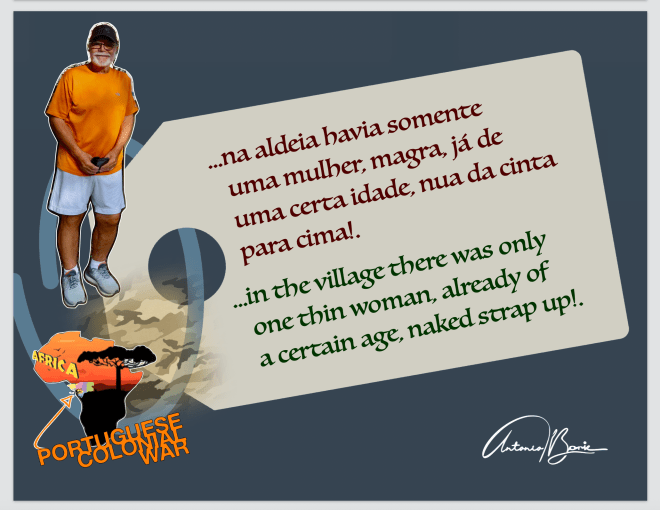
…o sexo na Guerra Colonial Portuguesa!. (…sex in the Portuguese Colonial War)!.

…nesta nossa simples contribuição, existe muito de verdade e esperamos compreensão da parte dos nossos companheiros combatentes, tanto africanos como europeus, porque é um relato de coisas que não se dirigem a ninguém, nem tão pouco querem ferir nenhuma sensibilidade em particular, pois este é um tema muito sério!.

…in this simple contribution of ours, there is a lot of truth and we hope for understanding on the part of our fellow combatants, both Africans and Europeans, because it is a report of things that is not directed at anyone, nor does it want to hurt any particular sensitivity, as this It’s a very serious topic!.

…já lá vão mais de cinquenta anos!. Naquele tempo, quase todos nós, única e simplesmente, não sabíamos, não tínhamos qualquer informação a respeito deste tema, da “sexualidade em zona de guerra”, porque hoje, as novas gerações têm uma mentalidade muito mais aberta, falam, discutem, vêm para os jornais, televisão e outros meios de comunicação, exporem as suas vivências, explicarem que a avó, a mãe, a irmã, a prima ou a tia, foram entre outras coisas, abusadas, maltratadas, talvez violadas!.

…it’s been over fifty years!. At that time, almost all of us, simply and simply, did not know, we did not have any information regarding this topic, “sexuality in a war zone”, because today, the new generations have a much more open mentality, they talk, discuss, come for newspapers, television and other media, to expose their experiences, to explain that their grandmother, mother, sister, cousin or aunt, were, among other things, abused, mistreated, perhaps raped!.

…todavia, depois de tantos anos, infelizmente ninguém sabe, porque não existe qualquer estudo que o possa afirmar com verdade, no entanto, existem muitas pessoas africanas com feições europeias, muitas pessoas asiáticas com feições europeias, muitas pessoas europeias e asiáticas com feições africanas…, que não sabem quem foi o seu pai ou mãe!.

…however, after so many years, unfortunately no one knows, because there is no study that can truly say this, however, there are many African people with European features, many Asian people with European features, many European and Asian people with African features …, who don’t know who their father or mother was!.

…o que sabemos, porque vivemos essa maldita guerra colonial, é que algumas tropas recrutadas lá na então província Colonial da Guiné, assim como alguma população civil, tinham particulares preconceitos sobre os militares vindos da Europa, por quem algumas mulheres naturais tinham algum fascínio, talvez pela farda militar!.

…what we know, because we lived through that damned colonial war, is that some troops recruited there in the then Colonial province of Guinea, as well as some civilian population, had particular prejudices about the soldiers coming from Europe, with whom some natural women had some fascination, Maybe because of the military uniform!.

…mas voltando ao tema da sexualidade, temos o exemplo do  nosso amigo Iafane, africano, conhecido como o “barqueiro”, que fazia o transporte fluvial de pessoas e bens durante a maré cheia, navegando sobre a água lamacenta do rio  completamente nú, só colocava um farrapo a cobrir-lhe o sexo quando chegava a terra depois de ancorar a sua canoa, vindo das aldeias ribeirinhas para a aldeia onde construímos o nosso “posto avançado” e estávamos estacionados e, por ali passava grande parte do dia, junto da sua casota coberta de colmo, às vezes construindo uma nova canoa!.

…but returning to the topic of sexuality, we have the example of our friend Iafane, an African, known as the “boatman”, who transported people and goods by river during high tide, sailing on the muddy water of the river completely naked, He only put a rag over his sex when he arrived on land after anchoring his canoe, coming from the riverside villages to the village where we built our “outpost” and were stationed, and spent most of the day there, next to his thatched hut, sometimes building a new canoe!.

…e nós, quando estávamos de folga das nossas tarefas, também andávamos por ali quase sempre fumando um cigarro feito à mão, e ele, o Iafane ia falando, falando, naquele português acrioulado, que todos nós conhecíamos, contando-nos, entre outras coisas, as “encomendas” que tinha de pedidos de novas raparigas, para alguns “homens grandes”, ficando muito admirado, quando lhe explicava-mos, que lá na Europa, o homem casava com uma só mulher!.

…and we, when we were taking a break from our tasks, also walked around, almost always smoking a handmade cigarette, and he, Iafane, was talking, talking, in that Acreole Portuguese, which we all knew, telling us, among other things things, the “orders” he had for new girls, for some “big men”, being very surprised, when we explained to him, that back in Europe, the man married only one woman!.

…isto para nós, era o exemplo de que a sua Guiné, era um refúgio seguro, onde podia ter relações legalmente, quase como se fosse um casamento, com três, quatro ou cinco mulheres, longe da velha Europa, do resto do mundo, na altura, em algumas zonas, profundamente racistas!. 

…this for us was an example that his Guinea was a safe haven, where he could have relationships legally, almost as if it were a marriage, with three, four or five women, far from old Europe, from the rest of the world, at the time, in some areas, deeply racist!.

…no entanto, o mesmo nosso amigo Iafane, era subestimado, a sua acção era  ignorada, fazia parte da história colonial, daquele braço português de opressão racial e subjugação dos civis guinéus, especialmente nas áreas rurais, para projectar, entre outras coisas, o poder do homem e, claro, o medo e, voltamos a dizer, a subjugação entre a população feminina, onde as mulheres por norma, tinham por obrigação trabalhar de sol a sol e, repartir o seu marido por três, quatro ou cinco companheiras, tudo isto enquanto estivessem na idade de lhes dar alguns filhos, porque depois, eram única e simplesmente colocadas de lado, para trabalhos menores, como cozinhar, tomar conta dos animais ou dos filhos das novas esposas, do senhor seu marido!.

…however, our friend Iafane himself was underestimated, his action was ignored, it was part of colonial history, that Portuguese arm of racial oppression and subjugation of Guinean civilians, especially in rural areas, to project, among other things, the power of men and, of course, fear and, we say again, subjugation among the female population, where women, as a rule, had the obligation to work from sunrise to sunset and, sharing their husband among three, four or five companions, all this while they were at the age to give them some children, because afterwards, they were simply and simply put aside, for lesser jobs, such as cooking, taking care of the animals or the children of the new wives, their husband!. 

. …companheiros, todos nós, pelos menos os que andaram pelo interior, pelas aldeias rurais, vimos, “os nossos olhos viram”, era uma verdade daquele tempo, que felizmente deve de estar ultrapassada, oxalá que sim!. Todavia, depois destes anos todos, quase tudo foi pretexto para culpar o “militar europeu”, que era para lá mandado pelo então governo colonial de Portugal, alimentar uma guerra, que hoje sabemos que era injusta!.

…comrades, all of us, at least those who walked through the interior, through rural villages, saw it, “our eyes saw it”, it was a truth of that time, which fortunately must be outdated, I hope so!. However, after all these years, almost everything was a pretext to blame the “European military”, which was sent there by the then colonial government of Portugal, for fueling a war, which today we know was unfair!.

…mas onde alguns combatentes, soldados africanos faziam parte, que ajudavam a criar caminhos para atitudes raciais, compartilhando preconceitos profundamente desonestos, pois muitas vezes ofereciam as tais irmãs ou primas, ao tal “militar europeu”, a preço de pequenos previlégios, como por exemplo serem candidatos a calçar umas botas de cabedal, vestir uma farda camuflada e colocar uma boina militar na cabeça, pois num país em guerra e sem qualquer futuro, onde eles ainda jovens, viam nessa atitude uma oportunidade de terem algum modo de sobrevivência!.

…but where some combatants, African soldiers were part of, who helped create paths for racial attitudes, sharing deeply dishonest prejudices, as they often offered their sisters or cousins, to the so-called “European military”, at the price of small privileges, such as for example, they are candidates to put on leather boots, wear a camouflage uniform and put a military beret on their head, because in a country at war and without any future, where they are still young, they saw this attitude as an opportunity to have some way of survival!.

…mas, também havia a consciência de que, naquele tempo, se o “homem africano”, neste caso o nosso amigo Iafane,  tentasse alguma vez convidar a “mulher europeia” para uma aventura na cama, se essa mulher não gostasse do convite, seria imediatamente considerado um “estrupador”, sujeito a levar dois tiros na cabeça, mas…, se o “Lifebuoy”, cujo nome de guerra lhe foi colocado porque vendia entre outras coisas, sabonetes lá no nosso “posto avançado” e, que era um militar europeu, convidasse a filha do “homem grande” lá da aldeia, que tinha sòmente treze anos, para a mesma aventura sexual, e ela não acedesse, fazendo queixa ao pai, o crime do militar europeu “Lifebuoy”, era culpado única e simplesmente de uma aventura sexual, considerada uma pequena diversão!.

…but, there was also the awareness that, at that time, if the “African man”, in this case our friend Iafane, ever tried to invite the “European woman” for an adventure in bed, if that woman did not like the invitation, he would immediately be considered a “rapist”, subject to being shot twice in the head, but…, if the “Lifebuoy”, whose nom de guerre was given to him because he sold, among other things, soaps there in our “outpost” and, who was a European soldier, invited the daughter of the “big man” from the village, who was only thirteen years old, to the same sexual adventure, and she did not agree, complaining to her father, the crime of the European soldier “Lifebuoy”, he was solely guilty and simply a sexual adventure, considered a little fun!.

…infelizmente, era o sistema implantado naquele tempo, que ajudou a fazer a história colonial, que motivou as populações africanas a pegarem em armas, revoltando-se, tal como aconteceu em outras partes do mundo!.

…unfortunately, it was the system implemented at that time, which helped to make colonial history, which motivated African populations to take up arms, revolting, just as happened in other parts of the world!.

Tony Borie

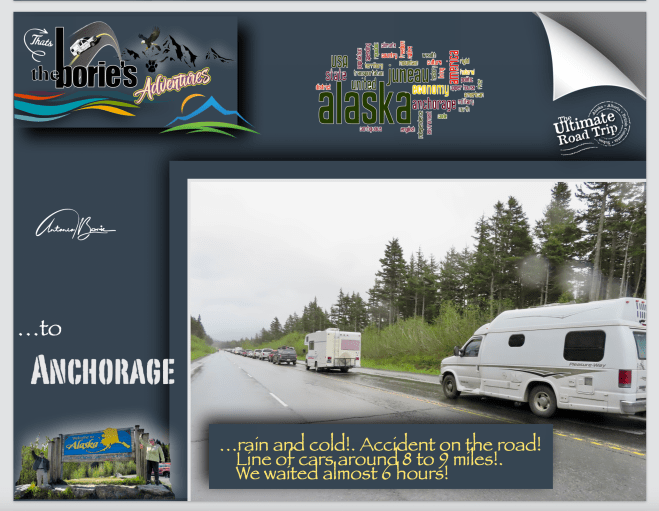
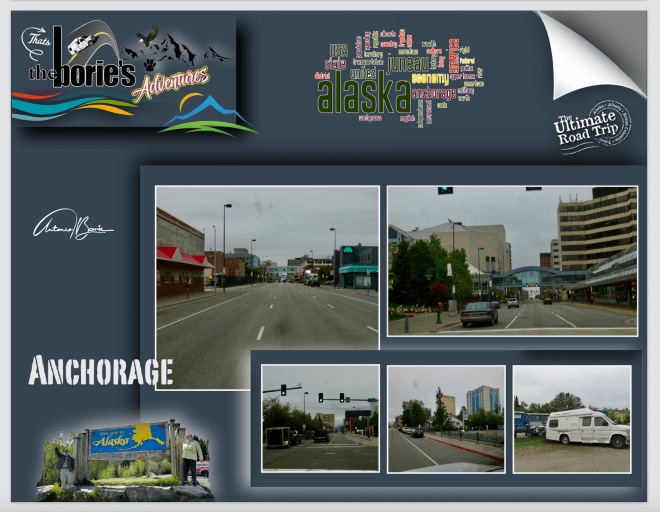
…Alaska!.

…a aventura continua dentro de nós!. Somos assim, nascemos assim e…, se a saúde nos ajuda e as finanças não são assim tão catastróficas como se pode imaginar para um casal de idosos que ainda consegue pagar os custos de uma vida quase normal, que consome muito exercício, muita água e pouca comida, e claro, sempre acompanhada de alguma medicina de manutenção, que nos vai ajudando a viver o melhor que podemos “os tais anos de ouro que nos vão restando”!. 

…the adventure continues within us!. We are like this, we were born like this and…, if our health helps us and our finances are not as catastrophic as one might imagine for an elderly couple who can still pay the costs of an almost normal life, which consumes a lot of exercise, a lot of water and little food, and of course, always accompanied by some maintenance medicine, which helps us to live the best we can “the golden years that we have left”!.

…e, neste rumo de aventura, às vezes andamos por aí, onde a nossa “White Fox” (caravana) é a nossa segunda casa e…, viajando e vivendo nela por algum tempo, vai-nos ajudando a contemplar o mundo, levando-nos aos lugares mais remotos, como por exemplo o estado do Alaska onde a natureza ainda nos contempla!. 

…and, on this adventure path, sometimes we go around, where our “White Fox” (caravan) is our second home and…, traveling and living in it for some time, it helps us to contemplate the world, taking us to the most remote places, such as the state of Alaska, where nature still contemplates us!. 

…porquê?. Porque lá existem icebergs, montanhas cobertas de neve por milhar de anos, vulcões, rios selvagens onde os peixes abundam, lagos perdidos em florestas onde os animais vivem livres da presença humana ou ainda aldeias primitivas mas, sem qualquer dúvida…, “ver um urso marrom majestoso arrebatando salmão de um riacho do Alaska, é a memória de uma vida”!. 

…why?. Because there are icebergs, mountains covered in snow for thousands of years, volcanoes, wild rivers where fish abound, lakes lost in forests where animals live free from human presence or even primitive villages but, without any doubt…, “see a bear majestic brown salmon snatching from an Alaskan stream, it’s the memory of a lifetime”!. 

…e, por mais icônicos que sejam esses predadores quase gigantes, são apenas o começo do que por lá existe e…, mantendo os olhos abertos podemos admirar outros tipos de vida selvagem, como águias de colar branco, baleias cinzentas e  acrobáticas migrando para as suas áreas de alimentação, alces, linces, lobos ou caribus viajando em rebanhos tão grandes, que desaparecem no horizonte, tal como já tivemos o previlégio de ver quando viajámos na nossa “White Fox” (caravana), para o “Circulo Ártico”, pela famosa “Estrada de Dalton”!.

…and, as iconic as these almost giant predators are, they are just the beginning of what exists there and…, by keeping our eyes open we can admire other types of wildlife, such as white-collared eagles, gray and acrobatic whales migrating to their feeding areas, elk, lynx, wolves or caribou traveling in herds so large that they disappear over the horizon, just as we had the privilege of seeing when we traveled in our “White Fox” (caravan), to the “Arctic Circle”, along the famous “Dalton Highway”!.

…aqui, na região do “Circulo Ártico”, podemos aproveitar o sol da meia-noite, entre Março e Setembro, pois existe mais luz do dia do que em qualquer outro lugar dos outros 49 estados, porque ganha cinco minutos por dia, até meia hora por semana, tudo isto é incrível, ou quanto se encaixa em num dia em que o sol quase nunca se põe, então sim é outra, “memória de uma vida”!.

…here, in the “Arctic Circle” region, we can enjoy the midnight sun, between March and September, as there is more daylight than anywhere else in the other 49 states, because you get five minutes a day , up to half an hour a week, all of this is incredible, or how much it fits into on a day when the sun almost never sets, so yes it is another, “memory of a lifetime”!.

…a culinária também é diferente do usual e inclui caranguejos gigantes, alabote ou salmão e também podemos experimentar salsichas ou bifes de rena, tal como legumes frescos do Vale Matanuska e…, também a cerveja, onde quase todas as localidades têm a sua própria cerveja, dizendo sempre que é a melhor!.

…the cuisine is also different from the usual and includes giant crabs, halibut or salmon and we can also try sausages or reindeer steaks, as well as fresh vegetables from the Matanuska Valley and…, also beer, where almost every location has its own beer , always saying that it is the best!

…e para finalizar, escusado será dizer que não nos podemos esquecer que o estado do Alaska é a “última fronteira”,  auxiliando muito no campo das recordações, levar uns binóculos e uma máquina de fotografar, porque não vamos querer perder a oportunidade de fazer uma única fotografia ou memória, em qualquer passeio de observação da vida selvagem lá no estado do Alaska, bem lá no norte!.

…and finally, it goes without saying that we cannot forget that the state of Alaska is the “last frontier”, helping a lot in terms of memories, take some binoculars and a camera, because we don’t want to miss the opportunity to do a single photograph or memory, on any wildlife observation tour in the state of Alaska, far in the north!.

Tony Borie.

…ficou confirmado pela primeira vez que a Terra era redonda!. (…it was confirmed for the first time that the Earth was round)!. 

…uma réplica da “Nau Trinidade” voltou a St. Augustine!.(…a replica of the “Nao Trinidad” returned to St. Augustine)!.

…fizemos um completo “tour” a esta réplica do histórico veleiro “Nau Trinidade” que está presentemente ancorado no cais, próximo à Ponte dos Leões, no porto da Marina Municipal, podendo ser visto diariamente das 10h00 às 19h00, até domingo 17 de Novembro de 2024!.

…we took a complete “tour” of this replica of the historic sailboat “Nao Trinidad” which is currently anchored at the pier, close to Ponte dos Leões, in the Municipal Marina port, and can be seen daily from 10:00 am to 7:00 pm, until Sunday, November 17th 2024!.

…este atual veleiro é uma réplica da “Nau Trinidade” e foi construído em fibra de vidro e madeira em Espanha, no ano de 2018!. Pesa 200 toneladas brutas, tem três mastros e um gurupés, atingindo mais de 25 metros desde a linha d’água até o topo do mastro principal!. 

…this current sailboat is a replica of the “Nao Trinidad” and was built in fiberglass and wood in Spain, in 2018!. It weighs 200 gross tons, has three masts and a bowsprit, reaching more than 25 meters from the waterline to the top of the main mast!. 

…andámos por lá, subimos a bordo, e vimos, o que consideramos um museu flutuante, incluindo os quatro conveses do navio, completos com painéis informativos que relatam a história do navio e a experiência dos marinheiros espanhóis há mais de 500 anos!.

…we walked around, got on board, and saw what we considered to be a floating museum, including the ship’s four decks, complete with information panels that recount the history of the ship and the experience of Spanish sailors over 500 years ago!.

…esta Nau original foi o navio-chefe da ”Expedição Magalhães-Elcano” que deixou a Espanha em 1519 com outros quatro navios, que cruzaram o Atlântico e descobriram o “Estreito de Magalhães”  passando até o Oceano Pacífico, numa viagem que levou à descoberta de novas rotas para os europeus, e claro, de novas terras, à medida que tocavam o Brasil, a Argentina, as Ilhas Marianas, as Filipinas, a Indonésia e as Molucas, tudo “Ilhas das Especiarias”!.

…this original ship was the flagship of the “Magellan-Elcano Expedition” that left Spain in 1519 with four other ships, which crossed the Atlantic and discovered the “Strait of Magellan” passing to the Pacific Ocean, on a journey that led to the discovery of new routes for Europeans, and of course, new lands, as they touched Brazil, Argentina, the Mariana Islands, the Philippines, Indonesia and the Moluccas, all “Spice Islands”!

…no entanto, apenas dois navios sobreviveram para chegar às Molucas, que foram, a “Nau Trinidade e a Nau Victoria”!. Depois…, só a “Nau Victoria” finalmente completou a primeira circunavegação mundial e…, com estaprimeira viagem ao redor do mundo entre 1519 e 1522, o que foi o maior feito marítimo da história, ficou confirmado pela primeira vez que a Terra era redonda!. 

…however, only two ships survived to reach the Moluccas, which were the “Nao Trinidad and the Nao Victoria”!. After…, only the “Nao Victoria” finally completed the first world circumnavigation and…, with this first trip around the world between 1519 and 1522, which was the greatest maritime feat in history, it was confirmed for the first time that the Earth was round!

…no entanto, a “Nau Trinidade”, tentou, mas não conseguiu navegar para leste através do Pacífico porque teve um vazamento, que foi consertado, mas nunca mais voltou para a Espanha!. 

…however, the “Nao Trinidad” tried, but was unable to sail east across the Pacific because it had a leak, which was repaired, but never returned to Spain!.

…e o que aconteceu à “Nau Trinidade”?.

…com a sua tripulação original, ambos os navios tentaram partir carregados com 50 toneladas de “cravo”, mas a “Nau Trinidade” quase imediatamente começou a vazar muito e, devido a este problema, entretanto foi acordado que a “Nau Victoria” partiria para a Espanha e a “Nau Trinidade” permaneceria para reparos!.

…and what happened to the “Nao Trinidad”?

…with their original crew, both ships tried to leave loaded with 50 tons of “cravo”, but the “Nao Trinidad” almost immediately began to leak a lot and, due to this problem, it was agreed that the “Nao Victoria” would leave to Spain and the “Nao Trinidad” would remain for repairs!.

…reparada, fez-se de novo ao mar e um tempo depois, atracou numa das Marianas, onde três homens desertaram!.  Depois rumou para nordeste na tentativa de chegar aos ventos de oeste, mas não os encontrou, provavelmente por causa das monções de verão e…, entretanto o “escorbuto” (doença mortal) instalou-se a bordo matando 30 homens e deixando apenas 17 para navegar no navio e…, finalmente chegou às Molucas!.

…repaired, it set sail again and a while later, it docked in one of the Marianas, where three men deserted!.  Then he headed northeast in an attempt to reach the westerly winds, but he did not find them, probably because of the summer monsoons and…, in the meantime “scurvy” (deadly disease) took hold on board, killing 30 men and leaving only 17 for sail the ship and…, finally arrived at the Moluccas!.

…onde os esperava uma frota de sete navios portugueses que ao se confrontar com a “Nau Trinidade”, encontraram apenas um navio à beira de se afundar e uma tripulação à beira da morte!. Ali, a carga, as suas velas e cordame foram removidos e o navio foi pegado por uma tempestade que o despedaçou!..

…where a fleet of seven Portuguese ships awaited them. When confronted with the “Nao Trinidad”, they found only one ship on the verge of sinking and a crew on the verge of death!. There, the cargo, its sails and rigging were removed and the ship was caught in a storm that tore it apart!

…resumindo, após seis meses de sofrimento e luta contra o mar, com apenas 17 sobreviventes, desistindo…, o navio regressou às Molucas!. Lá, os portugueses esperavam por eles e, capturaram a tripulação e abandonaram o navio agredido naquelas águas, onde, exausto e danificado, encontrou o seu fim!. 

…in short, after six months of suffering and fighting against the sea, with only 17 survivors, giving up…, the ship returned to the Moluccas!. There, the Portuguese were waiting for them and captured the crew and abandoned the battered ship in those waters, where, exhausted and damaged, it met its end!. 

Tony Borie.

…dois longos anos!. (two long years)!.

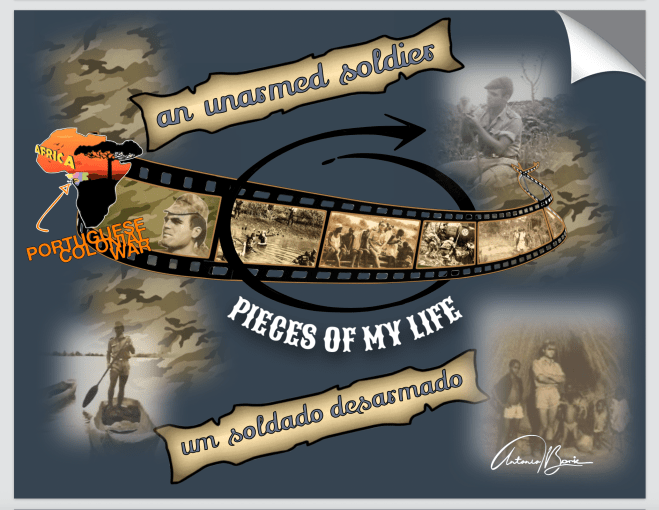
…desde que forçados pelo governo Português de então, participámos na maldita Guerra Colonial Portuguesa na também então colónia da Guiné, quase todos os dias sentimos um certo tipo de “arrepio” a picar-nos a pele!. 

…since being forced by the Portuguese government at the time, we participated in the cursed Portuguese Colonial War in the then colony of Guinea, almost every day we felt a certain type of “goosebumps” pricking our skin!. 

…porque é impossível esquecer situações num cenário de combate, onde a lama dos rios e pântanos lá na Guiné eram constantes, onde as condições para se tentar recuperar um qualquer morto ou ferido eram quase impossíveis, pois as vítimas, deviam ser puxados para algum tipo de posição onde houvesse alguma segurança e…, levar um homem ferido ou morto, requer até quatro homens como portadores, o que logo enfraquecia uma unidade militar num momento crítico, portanto, esses infelizes militares quando eram atingidos, alguns deles, por lá ficaram para sempre!.

…because it is impossible to forget situations in a combat scenario, where the mud of the rivers and swamps there in Guinea were constant, where the conditions for trying to recover any dead or injured person were almost impossible, as the victims had to be pulled into some kind of position where there was some security and…, carrying a wounded or dead man, requires up to four men as carriers, which soon weakened a military unit at a critical moment, therefore, these unfortunate soldiers, when they were hit, some of them, stayed there to always!.

…e também porque muitas vezes, as tropas Portuguesas encontravam-se na pior posição para avançar e identificar com precisão a sua localização no terreno, onde ou existia selva cerrada, pântanos ou canais, com água, lama e tarrafo, algumas vezes até animais perigosos, como por exemplo giboias ou crocodilos, onde em algumas situações o inimigo, tirando alguma vantagem, surgia de todos os lados, atacando, disparando, sem dar qualquer oportunidade para que se recuperasse os nossos mortos ou feridos!. 

…and also because Portuguese troops often found themselves in the worst position to advance and accurately identify their location on the ground, where there was either dense jungle, swamps or canals, with water, mud and tarrafo, sometimes even dangerous animals, such as gibbons or crocodiles, where in some situations the enemy, taking some advantage, appeared from all sides, attacking, shooting, without giving any opportunity to recover our dead or wounded!. 

…exemplo disto foi que homens como o “Bóia”, (como carinhosamente o chamava-mos) e que foi morto por uma maldita carga explosiva numa ponte improvisada, que existia para os lados da aldeia de Porto Gole e…, que despedaçou o seu corpo quase totalmente e…, infelizmente parte dele por lá ficou!.

…an example of this was that men like “Bóia”, (as we affectionately called him) and who was killed by a cursed explosive charge on an improvised bridge, which existed on the sides of the village of Porto Gole and…, which shattered his body almost completely and…, unfortunately part of it remained there!.

…lembramos aquele tempo escuro que mesmo depois da guerra continuou a invadir-nos o nosso pensamento, parecendo mesmo que a nossa alma foi baleada em pedaços, pelas coisas que vimos, pelas coisas que cheirámos, pelo isolamento forçado e angustioso, pelas coisas que fizemos e…, pelas coisas que nunca tivemos oportunidade de fazer, mas que deviam ser feitas, naquela idade tão jovem!. Lembramo-nos de como a vida se tornava de alguma forma menor, à medida que nos isolávamos  sistematicamente, daqueles que nós amávamos e deixávamos em Portugal!. 

…we remember that dark time that, even after the war, continued to invade our thoughts, even feeling as if our soul had been shot into pieces, by the things we saw, by the things we smelled, by the forced and anguished isolation, by the things we did and…, for the things that we never had the opportunity to do, but that should be done, at that young age!. We remember how life became somehow smaller, as we systematically isolated ourselves from those we loved and left in Portugal!. 

…nesta já avançada idade, tornou-se claro que o custo de uma guerra é ainda maior do que nós possamos imaginar, porque a guerra tem um apetite insaciável pela morte, e infelizmente, ainda hoje continua a matar pessoas, continua a fazer vítimas, não só em quem participou activamente na mesma, pois as pessoas começam com sentimentos de confusão, depois move-as um longo pensamento de raiva e, finalmente vem a indiferença, mas aquele esgotamento escuro e emocional ainda se encontra de pé, mesmo à beira de um abismo, convidando-nos a saltar, pensando que com essa estúpida atitude, todos os sentimentos vão acabar, mas infelizmente não, cada vez estão mais presentes!.

…at this advanced age, it has become clear that the cost of war is even greater than we can imagine, because war has an insatiable appetite for death, and unfortunately, even today it continues to kill people, continues to claim victims, not only in those who actively participated in it, as people start with feelings of confusion, then a long thought of anger moves them and, finally, indifference comes, but that dark and emotional exhaustion is still there, even on the verge of an abyss, inviting us to jump, thinking that with this stupid attitude, all feelings will end, but unfortunately no, they are increasingly present!.

Tony Borie.

…morreu o “Zé Pesca”, na ilha do Como!…. (“Zé Pesca” died on the island of Como)!.

…ainda hoje não sabemos e talvez nunca saberemos porque a idade já vai longa, quem foram os verdadeiros heróis, se foram os que por lá ficaram enterrados em valas comuns junto do nosso “posto avançado” naquela selva pantanosa, ou aqueles que eram apelidados de activistas e vistos como simpatizantes antipatrióticos e…, ainda em Portugal diziam: “claro que não, não iremos para a Guerra Colonial em África, vamos fugir para França”, o que era muito vulgar naquela época!.

…still today we don’t know, and perhaps we never will because the age is already long, who the real heroes were, whether they were those who were buried there in mass graves next to our “outpost” in that swampy jungle, or those who were nicknamed activists and seen as unpatriotic sympathizers and…, even in Portugal they said: “of course not, we will not go to the Colonial War in Africa, we will flee to France”, which was very common at that time!.

…o que hoje vamos contar, é um episódio que nos anda “atravessado” há dezenas de anos, e quando nos sentamos ao computador, escrevemos umas tantas linhas e…, paramos!. Porquê?. Porque a emoção toma conta de nós, é mais forte, o som do “catra-pum-pum-pum”, começa a zumbir nos nossos ouvidos, parece que vamos a fugir para o nosso abrigo preferido!.

…what we are going to tell you today is an episode that has been “crossing our minds” for dozens of years, and when we sat down at the computer, we wrote a few lines and…, we stopped!. Why?. Because the emotion takes over us, it is stronger, the sound of “catra-pum-pum-pum”, starts to buzz in our ears, it seems like we are going to flee to our favorite shelter!.

…no nosso pensamento aparece o “Zé Pesca”, que era um soldado páraquedista, do mesmo grupo de combate do nosso companheiro de infância de que já aqui falamos por diversas vezes, cujo nome de guerra era “Zargo”!. 

…in our thoughts appears “Zé Pesca”, who was a parachutist soldier, from the same combat group as our childhood companion that we have already talked about here several times, whose nom de guerre was “Zargo”!. 

…continuando, o “Zé Pesca”, era um jovem amigo da farra, lutador, combatente, com a boina verde sempre de lado, corpo de atleta, cujos pais eram agricultores no Ribatejo e às vezes…, dizia que não gostava da Guiné, “porque não havia cavalos”!.

…continuing, “Zé Pesca”, was a young party friend, fighter, combatant, with the green beret always on his side, the body of an athlete, whose parents were farmers in Ribatejo and sometimes…, he said he didn’t like Guinea, “because there were no horses”!.

…infelizmente o “Zé Pesca” morreu!. Morreu crivado de balas daquela perigosa arma a que nós chamávamos “costureirinha”, que era uma arma metralhadora, que o inimigo usava em cima de um tripé com duas rodas em ferro, que a ajudava a transportar para a zona de combate e normalmente era usada em emboscadas onde havia capim, fazendo fogo muito rasteiro, com cadência de tiro e som que a identificava e…, quase sempre no fim da emboscada os guerrilheiros, talvez desesperados, às vezes abandonavam-na, ou pelo menos abandonavam o tripé, preocupando-se com os seus feridos!.

…unfortunately “Zé Pesca” died! He died riddled with bullets from that dangerous weapon that we called “seamstress”, which was a machine gun, which the enemy used on top of a tripod with two iron wheels, which helped to transport it to the combat zone and was normally used in ambushes where there was grass, making fire very low, with a rate of fire and sound that identified it and…, almost always at the end of the ambush the guerrillas, perhaps desperate, sometimes abandoned it, or at least abandoned the tripod, worrying about it. with their wounded!

…dias depois de tudo isto acontecer, o “Zargo”, explicou-nos alguns pormenores da morte do “Zé Pesca”, onde estavam já a algumas horas, esperando, numa “operação de destruição de um acampamento inimigo”, cobertos com a típica capa camuflada impermeável, (já com muitos buracos), portanto molhados “até aos ossos”, por uma chuva miudinha e…, já era noite quando sairam do “posto avançado” onde também nós estávamos acantonados!. 

…days after all this happened, “Zargo”, explained to us some details of the death of “Zé Pesca”, where they had been waiting for a few hours, in an “operation to destroy an enemy camp”, covered with the typical Waterproof camouflage cover, (already with many holes), therefore wet “to the bone”, by a light rain and…, it was already night when they left the “outpost” where we were also camped!. 

…todos tinham bebido muito café, não sabiam se estavam sobre influência, mas estavam nervosos e queriam acção!. Passou um grupo de guerrilheiros perto, onde não deviam intervir, pois em caso de fogo toda a operação que estava a ser desenvolvida, seria denunciada!. O “Zé Pesca” já aí queria intervir, todavia, os companheiros seguraram-no!. Foram avançando e já  próximo do objectivo, ele, o “Zé Pesca”, não esperou por nada, avançou quase sozinho na frente, gritando, disparando, talvez amaldiçoando a sua própria alma, onde os companheiros surpresos, ouviram a tal “costureirinha”, fazendo suar o seu maldito som, do “catra-pum-pum-pum-pum”, que crivou o “Zé Pesca”, fazendo o seu corpo, rodopiar em zig-zague, caindo uns metros à frente, encolhido, crivado de balas!.

…everyone had drunk a lot of coffee, they didn’t know if they were under the influence, but they were nervous and wanted action!. A group of guerrillas passed nearby, where they were not supposed to intervene, because in case of fire the entire operation that was being carried out would be reported!. “Zé Pesca” already wanted to intervene, however, his companions held him back! They advanced and, already close to the objective, he, “Zé Pesca”, did not wait for anything, he advanced almost alone in front, shouting, shooting, perhaps cursing his own soul, where his surprised companions heard the so-called “seamstress”, making his damned sound sweat, of the “catra-pum-pum-pum-pum”, which riddled “Zé Pesca”, making his body spin in a zig-zag, falling a few meters ahead, curled up, riddled with bullets!.

…a operação continuou!. Capturaram algum material de guerra e o  pequeno acampamento inimigo foi destruído!. No regresso, transportando o corpo do “Zé Pesca”, trazendo também algumas mulheres guerrilheiras transportadoras de material de guerra, que depois de feitas prisioneiras acompanharam os militares, por uma certa distância, para serviam de escudo e compreendia-se, pois enquanto acompanhassem os militares, os guerrilheiros não atacavam e, já a manhã ia alta, perto do local onde deviam ser recolhidos, as libertaram!.  

…the operation continued! They captured some war material and the small enemy camp was destroyed! On the way back, transporting the body of “Zé Pesca”, also bringing some guerrilla women carrying war material, who, after being taken prisoner, accompanied the soldiers, for a certain distance, to serve as shields and it was understood, because while they accompanied the military, the guerrillas did not attack and, as the morning approached, close to the place where they were supposed to be collected, they released them!.    

…alguns dias depois, os militares do seu grupo de combate, olhavam uns para os outros e diziam: “morreu o “Zé Pesca”, na ilha do Como”!.

…a few days later, the soldiers in his combat group looked at each other and said: “Zé Pesca died on the island of Como”!

…todavia, enquanto o grupo de combate a que pertencia o malogrado “Zé Pesca”, esteve estacionado nesta então província ultramarina, a sua cama nunca foi utilizada, estava lá, feita com roupa limpa, ao lado dos seus companheiros, que antes de se deitarem, lhes davam as boas noites!.

…however, while the combat group to which the ill-fated “Zé Pesca” belonged was stationed in this then overseas province, his bed was never used, it was there, made with clean clothes, next to his companions, who before leaving When they went to bed, they said goodnight!

…oxalá o País Portugal respeitasse os seus combatentes, como estes militares de acção respeitavam o seu companheiro morto em combate, pois é dos livros, que, “Nação que não respeita o passado, não pode ter bom futuro”!.

…I wish the country of Portugal respected its fighters, as these active soldiers respected their comrade killed in combat, as it is from the books, that, “A nation that does not respect the past, cannot have a good future”!.

…nós antigos combatentes, defendemos a bandeira, fomos passado, de um País que se chama Portugal!. 

…we former combatants, defend the flag, we were the past, of a country called Portugal!. 

Tony Borie.

…coisas que no fundo, no fundo…, nos doem!. (…things that deep down, deep down…, hurt us)!.

…continuamos a viver!. Somos obrigados a isso, não temos outra alternativa, porque ao nascer entrámos neste calhau, perdido no Universo, a que todos chamam Planeta Terra!. No entanto, quando por aí caminhamos esbarramos frequentemente com muitos cenários com coisas do quotidiano e…, às vezes registamo-las!.

…we continue to live!. We are forced to do this, we have no other alternative, because at birth we entered this rock, lost in the Universe, which everyone calls Planet Earth!. However, when we walk around we often come across many scenes with everyday things and…, sometimes we register them!. 

…por exemplo, esta semana ao caminhar na trilha que vai ao longo do canal de água salgada, o “Jenny”, pessoa amável e solitária que quase todos os dias por lá caminha, ia a falar sozinho, numa lamúria triste, quase de choro!. Ao dizer-lhe “bom dia”, ele aproveitou para falar, e em poucos minutos explicou-nos a razão daquela lamúria, que era o efeito da dor que sentia e queria libertar-se, porque a única saída que tinha era…, falar, contar, comentar e ter alguém para o ouvir!. 

…for example, this week while walking on the trail that goes along the salt water canal, “Jenny”, a kind and lonely person who walks there almost every day, started talking to himself, in a sad whine, almost like crying!. When we said “good morning”, he took the opportunity to speak, and in a few minutes he explained to us the reason for his whining, which was the effect of the pain he felt and wanted to free himself, because the only way out was…, to speak. , tell, comment and have someone to listen to you!.

…e começou a contar-nos: “foi tudo muito rápido!. Começou com vómitos, falta de apetite e muito cansaço!. Começou por ir aos médicos, ao hospital, até que um exame revelou ter um cancro no fígado e…, se fosse só no fígado!. Também já tinha nos pulmões e sabe-se lá mais aonde!. Ficou internada uns dias, começando por me dizer muito baixinho “quero morrer, quero morrer”!. Passados quatro dias morreu agarrada à minha mão!. Agora sou viúvo!. A minha mulher faz-me muita falta, não para cuidar de mim, tomar conta da casa ou fazer a comida!. Nada disso!. Faz-me muito falta…, porque era a minha companhia”!. 

…and began to tell us: “it all happened very quickly!. It started with vomiting, lack of appetite and a lot of tiredness! He started by going to the doctors, to the hospital, until an exam revealed that he had liver cancer and…, if it was only in the liver!. I also had it in my lungs and who knows where else!. She was hospitalized for a few days, starting by saying to me very quietly “I want to die, I want to die”!. After four days, she died clinging to my hand!. Now I’m a widower!. I miss my wife a lot, not to take care of me, take care of the house or cook the food!. None of that!. I miss it very much…, because it was my company”!. 

…nós ouvimos em silêncio, porque durante a nossa estadia forçada na Guerra Colonial Portuguesa em África, aprendemos que o silêncio por vezes é uma porta aberta para eliminar a dor!. O amável “Jenny”, no final, agradeceu-nos vivamente por o ter-mos escutado e pediu-nos desculpa por nos ter incomodado!.

…we listen in silence, because during our forced stay in the Portuguese Colonial War in Africa, we learned that silence is sometimes an open door to eliminate pain!. The kind “Jenny”, at the end, thanked us warmly for listening to him and apologized for having disturbed us!.

Tony Borie, Século XXI. (Tony Borie, 21st Century).

…Expedição ao Alaska24 (Dia 27) …Alaskan Expedition24 (Day 27)

…pernoitámos no estado do Texas, onde quase tudo é grande!. São entre outras…,, as distâncias entre as localidades ou as tempestades de chuva e vento, principalmente quando nos aproximamos do sul, ou seja, do Golfo do México!. É uma viagem panorâmica semelhante a uma viagem no tempo, que serpenteia por pitorescas aldeias ou vilas repletas de prédios e casas históricas, onde na “Main Street”, (rua principal), está lá tudo, desde a farmácia, banco, quartel dos bombeiros ou da policia, estação de gasolina ou a loja de supermercado!.

…we spent the night in the state of Texas, where almost everything is big!. These are, among others…,, the distances between locations or rain and wind storms, especially when we approach the south, that is, the Gulf of Mexico!. It is a panoramic journey similar to a journey through time, which winds through picturesque villages or towns full of historic buildings and houses, where on the “Main Street”, everything is there, from the pharmacy, bank, fire station or from the police, gas station or the supermarket store!.

…até às grandes metrópoles, como por exemplo as cidades de Dallas ou Houston, onde se gastam horas e muita paciência para as atravessar, pois o tráfico é intenso, existem os camiões de longo curso, algumas luzes de control que se têm que respeitar e…, todos querem ser os primeiros a de lá sair, gerando aquela “barafunda”, quando os condutores começam por dizer: “que tráfico mais caótico”!. Enfim, tudo isto nos aconteceu mas…, sobrevivemos!.

…even to large metropolises, such as the cities of Dallas or Houston, where you spend hours and a lot of patience to cross them, as traffic is intense, there are long-distance trucks, some control lights that you have to respect and …, everyone wants to be the first to leave, creating that “hustle”, when the drivers start saying: “what a chaotic traffic”!. Anyway, all this happened to us but…, we survived!.

….e de uma maneira ou de outra chegámos à auto-estrada #10, que vem lá da Califórnia, segue quase junto à fronteira sul dos USA, e nos havia de levar à Flórida, estado onde presentemente vivemos!. Como tal, viajando nela no sentido leste…, chegámos ao estado de Louisiana!. 

….and one way or another we arrived at highway #10, which comes from California, runs almost close to the southern border of the USA, and would take us to Florida, the state where we currently live!. As such, traveling in an easterly direction…, we arrived in the state of Louisiana!. 

…que nos oferece um vislumbre do charme rústico do sul, caracterizado pelas terras alagadiças, onde as pontes são longas e constantes, pelas pessoas que sofrem frequentes inundações que lhe vão atrapalhando a vida e…, que sempre querem ser amáveis e prestáveis, tal como nos aconteceu quando chegámos a um parque de RV, onde pernoitámos, já perto da área de Baton Rouge!.

…which offers us a glimpse of the rustic charm of the south, characterized by marshy lands, where the bridges are long and constant, by people who suffer frequent floods that disrupt their lives and…, who always want to be kind and helpful, just like It happened to us when we arrived at an RV park, where we spent the night, close to the Baton Rouge area!.

…e por hoje…, é quase tudo, companheiros de jornada!.

…and for today…, that’s almost it, fellow travelers!

Tony Borie.

…Expedição ao Alaska24 (Dia 16) …Alaskan Expedition24 (Day 16)

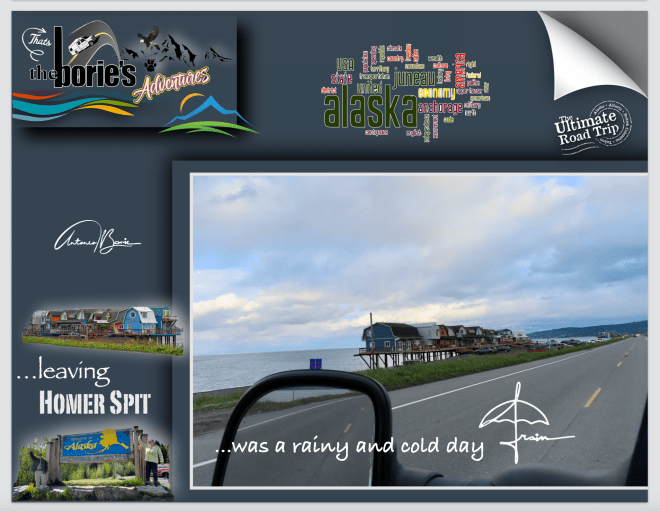
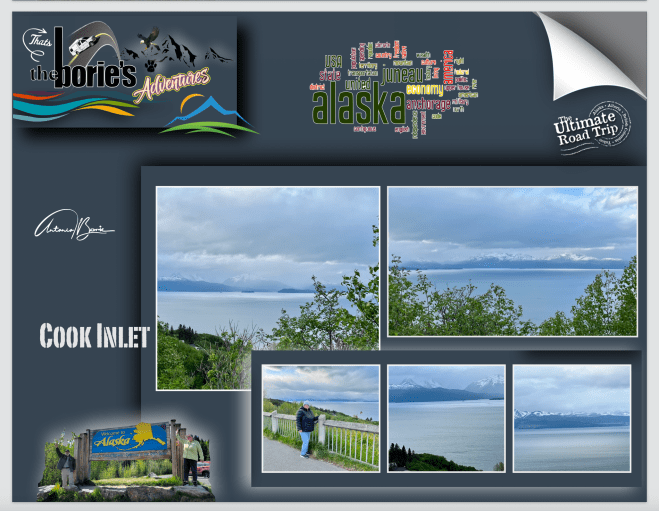
…depois de deixar o norte do Alaska para trás, chegámos ao lugar mais pitoresco do sul, deste ainda um pouco selvagem estado e…, que dá pelo nome de ”Homer Spit”!.

…after leaving the north of Alaska behind, we arrived at the most picturesque place in the south, of this still somewhat wild state and…, which goes by the name of ”Homer Spit”!.

…as forças da natureza que construíram o “Homer Spit”, que entra pela Baía de Kachemak, poderiam tê-lo feito desaparecer anos e anos atrás, se os humanos não tivessem intervindo, pois as tempestades de inverno, que rugem para o noroeste tentam separar esta faixa de 4,5 milhas de areia e cascalho do continente quase todos os anos, mas as paredes de pedra e a perseverança humana, mantêm-na intacta!.

…the forces of nature that built the “Homer Spit,” which enters Kachemak Bay, could have made it disappear years and years ago if humans had not intervened, as winter storms, which roar into the northwest try to separate this 4.5 mile strip of sand and gravel from the mainland almost every year, but the stone walls and human perseverance keep it intact!.

…a teoria predominante para a origem do “Spit” (cuspo), é que são os restos de uma antiga, talvez aldeia ou povoado glacial, constantemente remodelada pelas correntes oceânicas!. Alguns achados arqueológicos, revelam que o “Spit” foi usado por humanos muito antes da história escrita, onde rochas e conchas rachadas pelo fogo indicam que, esses humanos, passando ou vivendo aqui, reuniram amêijoas e mexilhões, cozinhando-as em fogueiras!. 

…the predominant theory for the origin of the “Spit” is that it is the remains of an ancient, perhaps glacial village or settlement, constantly remodeled by ocean currents!. Some archaeological finds reveal that the “Spit” was used by humans long before written history, where rocks and shells cracked by fire indicate that these humans, passing through or living here, gathered clams and mussels, cooking them over open fires!. 

…os Esquimós do Pacífico são conhecidos por terem vivido nestas margens há milhares de anos e os índios Dena’ina Athabascan mudaram-se para esta área há cerca de 1.000 anos atrás!. Muitos anos depois, talvez no final da década de 1700, os exploradores, caçadores e comerciantes russos chegaram, também acrescentando um pouco da sua cultura!.

…the Pacific Eskimos are known to have lived on these shores thousands of years ago and the Dena’ina Athabascan Indians moved into this area about 1,000 years ago!. Many years later, perhaps in the late 1700s, Russian explorers, hunters and traders arrived, also adding some of their culture!.

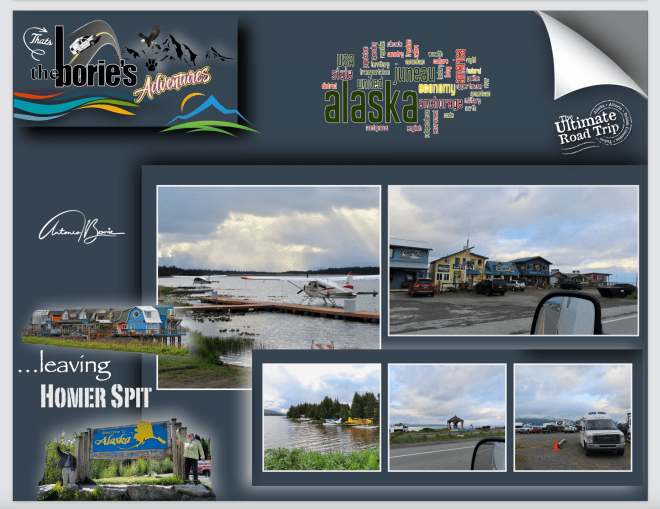
…de uma maneira ou de outra…, é um dos nossos lugares preferidos, pois é a quarta vez que visitamos “Homer Spit” e por aqui ficamos alguns dias, dizendo sempre, que na próxima oportunidade cá estaremos de novo!. Porquê?. Porque, aqui encontramos um maravilhoso cenário de docas com águas profundas e rasas, as cores das mais 1.500 embarcações comerciais e de lazer, atracções adicionais, como por exemplo, o “The Nick Dudiak Fishing Lagoon”, que é um “buraco de pesca” artificial, acampamentos, hotéis e restaurantes e o Salty Dawg Saloon, construído a partir de vários edifícios históricos!.

…one way or another…, it is one of our favorite places, as it is the fourth time we have visited “Homer Spit” and we stayed here for a few days, always saying that next time we will be here again!. Why?. Because here we find a wonderful scenery of docks with deep and shallow waters, the colors of over 1,500 commercial and leisure vessels, additional attractions, such as “The Nick Dudiak Fishing Lagoon”, which is a “fishing hole” artificial, campgrounds, hotels and restaurants and the Salty Dawg Saloon, built from several historic buildings!.

…e nós, ao chegar perto do final desta ponta de terra, entrámos no parque de RV,  quase em frente ao Memorial do Marinheiro, onde dezenas de pessoas que perderam a vida no mar e que são homenageadas!. Estacionámos no lugar que nos foi previamente reservado e…, começámos a caminhar neste local que tem longas distâncias de praia rochosa, onde observamos navios de cruzeiro ou navios de pesca, grandes ou pequenos, indo e vindo do mar!.

…and we, upon arriving near the end of this point of land, entered the RV park, almost in front of the Sailor’s Memorial, where dozens of people who lost their lives at sea are honored!. We parked in the place that was previously reserved for us and…, we started walking in this place that has long distances of rocky beach, where we observed cruise ships or fishing vessels, large or small, coming and going from the sea!.

…quase no início da caminhada passamos por um dos aglomerados de lojas e restaurantes que margeiam a região e onde não existem problemas para encontrar uma lembrança ou até bons frutos do mar e…, já um pouco convencidos de que o “Homer Spit” não era apenas um lugar para turistas, continuámos caminhando e explorando, pois esta costa é ladeada por centenas de barcos…, todos prontos para o seu trabalho!.

…almost at the beginning of the walk we passed by one of the clusters of shops and restaurants that border the region and where there are no problems finding a souvenir or even good seafood and…, already a little convinced that the “Homer Spit” was not just a place for tourists, we continued walking and exploring, as this coast is lined with hundreds of boats…, all ready for their work!.

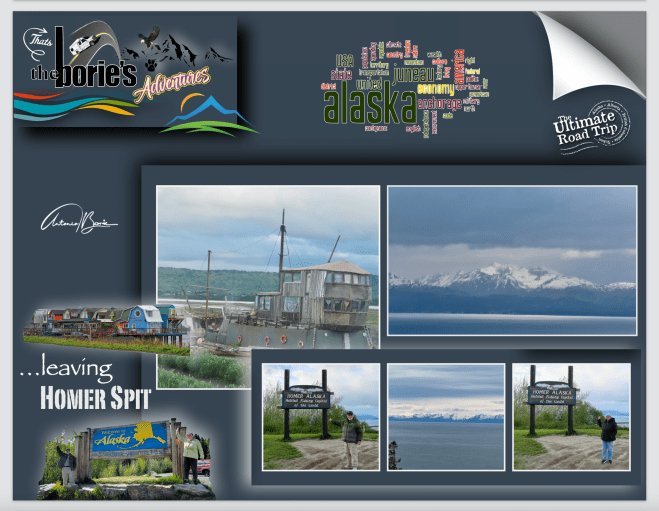
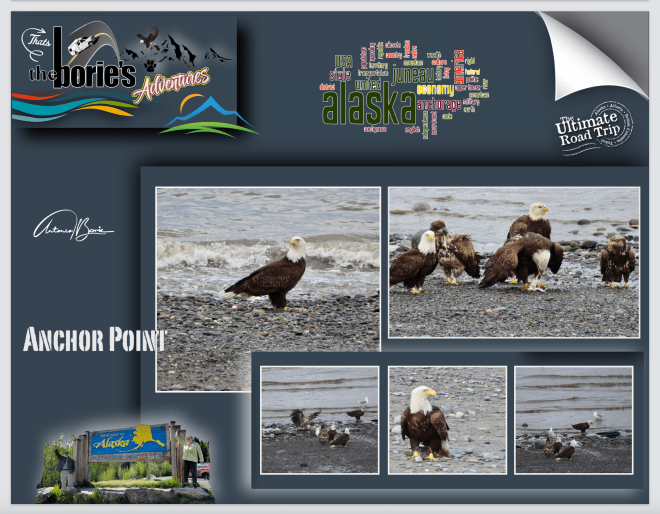
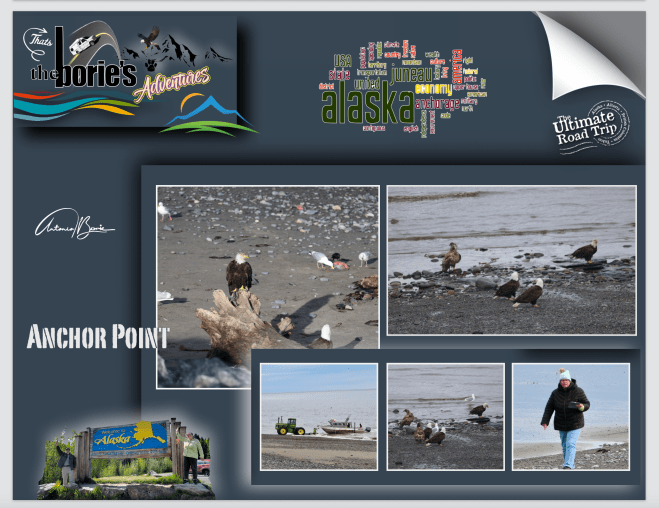
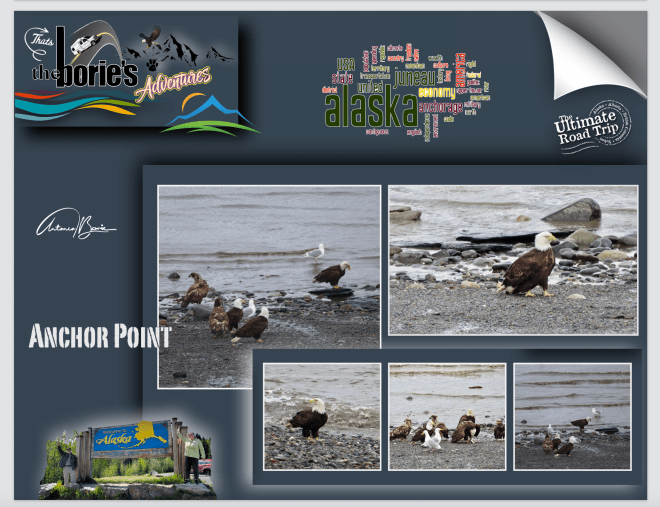
…por aqui também existem empresas que estão ocupadas embalando frutos do mar para o resto do mundo desfrutar!. É um ótimo lugar para avistar águias e…, elas voam por aqui às dúzia, todas num só lugar ao longo da costa, e também as vimos!. Continuando a caminhar, mais à frente encontrámos um “cemitério” de barcos antigos, cordas, redes de pesca, bóias de sinalização no mar e outros utensílios de pesca no mar, que se prestaram a inúmeras oportunidades fotográficas!.

…there are also companies here that are busy packaging seafood for the rest of the world to enjoy! It’s a great place to spot eagles and…, they fly here by the dozen, all in one place along the coast, and we saw them too!. Continuing walking, further ahead we found a “cemetery” of old boats, ropes, fishing nets, sea signal buoys and other fishing utensils at sea, which lent themselves to countless photographic opportunities!).

…a tarde já ia longa quando parámos no já acima mencionado Salty Dawg Sallon, que hoje funciona como um bar típico do Alaska, como era no princípio do século passado, com o chão térreo e serradura no chão, onde se pode falar de tudo, mesmo dizendo asneiras, cuspir no chão, para onde também vão as cascas dos amendoins, e claro, fazendo tudo o que nos der na real gana, como é normal dizer-se, claro sem insultar ou provocar alguém, e beber cerveja local à temperatura da casa, por canecas muito grandes, algumas de barro ou porcelana!.

…the afternoon was already long when we stopped at the aforementioned Salty Dawg Sallon, which today operates as a typical Alaskan bar, as it was at the beginning of the last century, with a ground floor and sawdust on the floor, where you can talk about everything, even saying stupid things, spitting on the ground, where the peanut shells also end up, and of course, doing everything we really want, as is normal to say, of course without insulting or provoking anyone, and drinking local beer at room temperature. of the house, for very large mugs, some made of clay or porcelain!.

…outra curiosidade é que a maré neste local é das mais diferentes do mundo, podendo ter uma diferença entre a maré baixa e alta de aproximadamente 0 a 15 metros, como tal, na maré baixa alguns barcos estão em terreno seco reparando-se e esperando a maré alta para navegar de novo!.

…another curiosity is that the tide in this place is one of the most different in the world, with a difference between low and high tide of approximately 0 to 15 meters, as such, at low tide some boats are on dry ground repairing themselves and waiting the high tide to sail again!.

…e no final de cada dia, sempre proporciona um espectáculo apetecível e único, quando os barcos regressam ao cais, alguns com muito peixe, começando a exibição dos peixes mais grandes para as fotografias, logo seguido da limpeza do peixe, por pessoas habilitadas, que manejam uma faca com muita habilidade!.

…and at the end of each day, it always provides an attractive and unique spectacle, when the boats return to the pier, some with lots of fish, starting to display the largest fish for photographs, followed by the cleaning of the fish, by qualified people, who wield a knife with great skill!

Tony Borie
…Expedição ao Alaska24 (Dia 12) …Alaskan Expedition24 (Day 12)

…era o nosso primeiro dia nesta Terceira Expedição ao Alaska, e de repente, percebemos que estávamos aqui, realmente aqui, e poderíamos ir fazer o que quiséssemos!. Isto deixou-nos um tanto atordoados, porque havia tanto para ver e fazer…, e o que seria primeiro?. Decidimos então estabelecer uma meta facilmente alcançável, talvez uma semana mais uns dias, o máximo duas semanas, e para começar viajámos para sul!.

…it was our first day on this Third Alaska Expedition, and suddenly, we realized that we were here, really here, and we could go do whatever we wanted!. This left us somewhat stunned, because there was so much to see and do…, and what would be first?. So we decided to set an easily achievable goal, maybe a week plus a few days, maximum two weeks, and to start we traveled south!.

…seguimos pela estrada #2, antes de entrar na #1!. Foi um bom plano para começar a nossa aventura no Alaska!. Íamos também viajar pela estrada  #4 que tem longas retas e curvas suaves através de algumas paisagens montanhosas impressionantes!. Sabíamos que a nossa visita ao Alaska no início de Junho seria um pouco complicada!. Porquê?. Porque tão perto da chegada do Verão, os dias são incrivelmente longos e na verdade, perdemos a ideia de quando são horas para ir dormir…, e às vezes a tão desejada “hora de ouro” tarda sempre em aparecer, porque a luz do dia é constante por quase 22 horas!. 

…we followed road #2, before entering #1!. It was a good plan to start our Alaskan adventure!. We were also going to travel along road #4 which has long straights and gentle curves through some stunning mountain scenery!. We knew our visit to Alaska in early June would be a bit complicated!. Why?. Because so close to the arrival of Summer, the days are incredibly long and in fact, we lose the idea of ​​when it is time to go to sleep…, and sometimes the much-desired “golden hour” always takes a while to appear, because daylight It is constant for almost 22 hours!.

…a manhã estava fresca quando saímos da cidade de Tok, que é a comunidade com mais facilidades, pelo menos para viajantes, que se situa mais perto da fronteira, e que se encontra numa planície aluvial muito grande e plana, do Vale Tanana, entre o Rio Tanana e o Alaska Range, que é uma cordilheira de montanhas que se avista ao norte!.
…the morning was cool when we left the town of Tok, which is the community with the most facilities, at least for travelers, which is located closest to the border, and which is on a very large and flat alluvial plain, of the Tanana Valley, between the Tanana River and the Alaska Range, which is a mountain range that can be seen to the north!.

…e, depois de abastecer com gasolina a nossa “White Fox” (caravana) e comprar café e biscoitos, iniciámos viajem!. Passado umas dezenas de milhas já na Estrada Richardson, (estrada #4), e com alguma curiosidade própria de viajantes, parámos para ver os pequenos aviões no aeroporto de Gulkana, que é uma aldeia que começou com a “Gulkana Roadhouse”, que foi construída no início de 1900 por um negociante de peles que administrou esta estalagem até 1916!.   

…and, after filling up our “White Fox” (caravan) with gasoline and buying coffee and cookies, we started our journey!. After a few dozen miles on Richardson Road, (road #4), and with some curiosity typical of travelers, we stopped to see the small planes at Gulkana airport, which is a village that began with the “Gulkana Roadhouse”, which It was built in the early 1900s by a fur trader who ran this inn until 1916!.

…sempre rumo ao sul, parámos em Glennallen, que é um pequeno “oasis”, num cruzamento de estradas!. Aqui, quem segue para sul, vai para Valdez que era o nosso destino!. A povoação, tem um Centro de Visitas e encontra-se ao longo da Estrada Glenn na sua junção com a Estrada de Richardson, e apenas um pouco fora do limite ocidental do Parque de Wrangell-St. Elias!.

…always heading south, we stopped at Glennallen, which is a small “oasis”, at a crossroads!. Here, whoever heads south goes to Valdez, which was our destination! The village, has a Visitor Center, and lies along Glenn Road at its junction with Richardson Road, and just outside the western boundary of Wrangell-St. Elijah!

…no já referido Centro de Visitas, a uma pergunta nossa, o amável funcionário explicou que não era lá muito recomendável viajar pelo desvio de estrada, com um piso onde frequentemente aparece terra e cascalho e, também era um pouco difícil caminhar nas magníficas trilhas do Wrangell-St. O Elias National Park & Preserve que é, sem qualquer dúvida, o maior e mais magnífico dos vastos parques nacionais do Alaska, com nove dos 16 picos mais altos dos USA!. 

… at the aforementioned Visitor Center, when asked by us, the kind employee explained that it was not very advisable to travel along the road detour, with a surface where dirt and gravel often appear, and that it was also a little difficult to walk on the magnificent trails of the Wrangell-St. Elias National Park & ​​Preserve is, without a doubt, the largest and most magnificent of Alaska’s vast national parks, with nine of the 16 highest peaks in the USA!.

…no entanto, a caminho da cidade de Valdez, saímos aproximadamente   na milha 106, em Copper Center e lá fomos caminhando por algum tempo nesta grandiosa região montanhosa na fronteira com o Canadá que contém inúmeros glaciers, lagos e córregos da montanha e…, é o lar de uma rica variedade de vida selvagem!. Fomos apreciando ao longe até onde nos foi possível mas, vêem-se picos sobre picos e glaciers após glaciers, acreditando que, se flutuar-mos por qualquer rio ou ribeiro seguindo até a sua fonte, com toda a certeza que iríamos encontrar um qualquer glacier derretendo-se lentamente!.

…however, on the way to the city of Valdez, we exited at approximately mile 106, in Copper Center and there we walked for some time in this great mountainous region on the border with Canada that contains countless glaciers, lakes and mountain streams and…, yeah home to a rich variety of wildlife!. We appreciated as far as we could, but we saw peaks upon peaks and glaciers after glaciers, believing that if we floated down any river or stream following its source, we would certainly find some glacier. slowly melting!.

…voltando à Estrada de Richardson, e já próximo da milha 16, derivado à área da cidade de Valdez, que se situa na “milha 0” da já referida estrada, ser aquela que recebe níveis épicos de neve no inverno, eser considerada o “lugar onde cai mais neve nos USA”, podemos apreciar grandes cascatas de água e…, quando toda a neve se derrete, ela escapa-se, derramando pelas encostas das montanhas em algumas das mais belas cascatas do mundo!. 

…returning to Richardson Road, and already close to mile 16, derived from the area of ​​the city of Valdez, which is located at “mile 0” of the aforementioned road, being the one that receives epic levels of snow in winter, and being considered the “the place where the most snow falls in the USA”, we can enjoy large waterfalls of water and…, when all the snow melts, it escapes, spilling down the mountainsides in some of the most beautiful waterfalls in the world!.

…entretanto chegámos ao nosso destino que era a cidade de Valdez na “milha 0” da Estrada Richardson!. Esta hoje pequena cidade, tal como muitas outras no Alaska, tem uma história da “Corrida ao Ouro”, fundada no ano de 1790, pelo explorador espanhol Salvador Fidalgo, em homenagem ao ministro da Marinha espanhol Antonio Valdés e, está localizada na cabeça de um fiorde, no lado leste do Prince William Sound!.

…in the meantime we arrived at our destination, which was the city of Valdez at “mile 0” on the Richardson Road!. This small town, like many others in Alaska, has a history of the “Gold Rush”, founded in 1790, by Spanish explorer Salvador Fidalgo, named after Spanish Minister of the Navy Antonio Valdés, is located at the head of a fjord on the east side of Prince William Sound!.

…caminhámos e pernoitámos lá num parque de RV, e tem uma pitoresca história onde, como sempre…, entra a “corrida ao ouro” e, tudo começou com uma “mentira”, para atrair garimpeiros da trilha Klondike Gold Rush, que levou esta hoje cidade a ser desenvolvida lá pelo ano de 1898!. Algumas empresas de navios a vapor promoveram a “Valdez Glacier Trail” como sendo uma rota melhor para os mineiros alcançarem os campos de ouro de Klondike, e assim, descobrir novos campos na região do rio Copper do interior do Alaska!.

…we walked and spent the night there in an RV park, and it has a picturesque story where, as always…, the “gold rush” enters and, it all started with a “lie”, to attract prospectors from the Klondike Gold Rush trail, which led This is now a city being developed around 1898! Some steamship companies promoted the “Valdez Glacier Trail” as a better route for miners to reach the Klondike gold fields and thus discover new fields in the Copper River region of interior Alaska!

…os garimpeiros que acreditavam na promoção, descobriram que haviam sido enganados!. A trilha, caminhando pelos icebergs, era duas vezes mais longa e íngreme do que a relatada, e muitos homens morreram tentando a travessia, ou em parte contraindo escorbuto durante o longo inverno frio sem suprimentos adequados!. 

…the miners who believed in the promotion discovered that they had been deceived!. The trail, walking through the icebergs, was twice as long and steep as reported, and many men died attempting the crossing, or in part from contracting scurvy during the long cold winter without adequate supplies!.

..assim, esta pequena cidade não floresceu até depois da construção de uma estrada rudimentar, por volta do ano de 1899, só aberta apenas no verão até ao ano de 1950, quando finalmente se construiu a actual Estrada Richardson operada como uma rota durante todo o ano, que liga Valdez a Fairbanks!. 

…thus this small town did not flourish until after the construction of a rudimentary road, around the year 1899, open only in the summer until the year 1950, when finally the present Richardson Road operated as a year-round route, which connects Valdez to Fairbanks!.

…só e para terminar, aqui em Valdez, usam helicópteros, tal como lá em baixo no sul, depois do paralelo 48, usam aquelas camionetas descobertas e com dois pisos, com desenhos floridos de turismo, para dar a volta e apreciar as cidades, em qualquer lugar de qualquer estado dos USA!.

…just to finish, here in Valdez, they use helicopters, just like down in the south, after the 48th parallel, they use those open, double-decker vans, with flowery tourism designs, to go around and enjoy the cities, anywhere in any state in the USA!.

Tony Borie