…a Mulher na guerra!. (…Woman in war)!.

…a Guerra Colonial Portuguesa foi travada entre os militares de Portugal e os emergentes movimentos nacionalistas, nas então colónias africanas de Portugal em África, entre os anos de1961 e 1974!. Na então Província da Guiné, colocou frente a frente entre outros, os guerrilheiros do movimento nacionalista armado PAIGC, e os militares mobilizados pelo então governo colonial de Portugal, que para lá foram deslocados!. 

(…the Portuguese Colonial War was fought between the Portuguese military and the emerging nationalist movements, in the then African colonies of Portugal in Africa, between 1961 and 1974!. In the then Province of Guinea, he put face to face, among others, the guerrillas of the PAIGC armed nationalist movement, and the military mobilized by the then colonial government of Portugal, who were moved there)!.

…na sua maioria eram contingentes de militares forçados, treinados à pressa e mal equipados, usando armas absoletas, mal alimentados, sem assistência médica, arrancados das suas vilas e aldeias e enviados em barcos, alguns de carga, tornando-os assim responsáveis pelas operações militares locais, naquele maldito cenário de guerra, onde o inmigo entre outros factores, conhecia o terreno que pisava e, tinha a tal “força interior”, que o ajudava a lutar pela independência do seu território, querendo expulsar os Europeus que por lá andavan à mais de cinco séculos!.

(…the majority were forced military contingents, hastily trained and poorly equipped, using absolut weapons, poorly fed, without medical assistance, pulled from their towns and villages and sent in boats, some of them cargo, thus making them responsible for the operations local military, in that damned war scenario, where the enemy, among other factors, knew the terrain he was treading on and had such “inner strength” that helped him fight for the independence of his territory, wanting to expel the Europeans who walked there for more than five centuries)!.

…em pouco tempo, a guerra espalhou-se para a parte oriental da então província, e claro, os guerrilheiros do PAIGC realizavam ataques no norte onde na altura apenas o movimento menor de guerrilha, a Frente para a Libertação e Independência da Guiné (FLING) estava lutando!. Nessa altura, já o PAIGC recebia apoio militar do Bloco Socialista, entre outros, principalmente de Cuba, um apoio que duraria até o fim daquela maldita  guerra!.

(…in a short time, the war spread to the eastern part of the then province, and of course, PAIGC guerrillas carried out attacks in the north where at the time only the smallest guerrilla movement, the Front for the Liberation and Independence of Guinea (FLING ) was struggling!. At that time, the PAIGC was already receiving military support from the Socialist Bloc, among others, mainly from Cuba, a support that would last until the end of that damned war)!.

…as tropas portuguesas, inicialmente assumiram uma postura defensiva, limitando-se a defender territórios já detidos!. Essas operações defensivas foram particularmente devastadoras para as forças Portuguesas, que eram regularmente atacadas fora das áreas povoadas pelas forças dos guerrilheiros!.

(…the Portuguese troops initially assumed a defensive posture, limiting themselves to defending territories already held!. These defensive operations were particularly devastating for Portuguese forces, which were regularly attacked outside populated areas by guerrilla forces)!.

…toda esta situação, aliada à dificuldade de ambientação ao terreno e ao clima, assim como ao aparecimento constante de mortos e feridos em combate, ajudavam à desmoralização das forças de combate Portuguesas, e claro, por outro lado, assistiam ao crescimento constante dos simpatizantes que eram recrutados pelo movimento de libertação do PAIGC entre a população rural!. 

(…this whole situation, together with the difficulty in adapting to the terrain and climate, as well as the constant appearance of dead and wounded in combat, helped to demoralize the Portuguese combat forces, and of course, on the other hand, witnessed the constant growth of supporters who were recruited by the PAIGC liberation movement from the rural population)!.

…claro, num período de tempo relativamente curto, o PAIGC conseguiu reduzir o controlo administrativo e militar português da então província para uma área relativamente pequena na Guiné, ao contrário do que ia acontecendo em outros territórios coloniais, onde as mesmas táticas de combate ou de contra-insurgência portuguesas de pequeno porte, algumas bem-sucedidas, demoraram mais a evoluir na então província da Guiné, onde foi preciso iniciarem operações navais anfíbias, que foram instituídas para superar alguns dos problemas de mobilidade inerentes às áreas subdesenvolvidas e pantanosas, utilizando os comandos de Fuzileiros como forças de ataque!. E claro, esta maldita guerra lá foi continuando!.

…of course, in a relatively short period of time, the PAIGC managed to reduce the Portuguese administrative and military control of the then province to a relatively small area in Guinea, unlike what was happening in other colonial territories, where the same combat or military tactics were used. Small Portuguese counterinsurgency, some successful, took longer to evolve in the then province of Guinea, where naval amphibious operations had to be initiated, which were instituted to overcome some of the mobility problems inherent in underdeveloped and swampy areas, using the Commandos of Marines as strike forces!. And of course, this damn war there was continuing)!.

…hoje, lembrando todo este maldito cenário, surge-nos uma foto, que não sabemos como nos veio parar às mãos!. Sabemos que foi na região do Oio, lá na então província da Guiné, nos anos de 1964/66, não sabendo se são mesmo guerrilheiras, ou se é somente uma foto para impressionar, mas ambas mostram uma cara com alguma angústia, também não sabemos quem a tirou, possívelmente fomos nós, nas nossas andanças de fim de mês, na entrega de material classificado de cifra, pela região de combate, onde estavam as forças militares que pertenciam ao nosso comando, que estava estacionado em Mansoa!.

(…today, remembering all this damned scenario, a photo appears, which we don’t know how it came into our hands!. We know it was in the Oio region, in the then province of Guinea, in the years 1964/66, not knowing if they are really guerrillas, or if it’s just a photo to impress, but both show a face with some anguish, we don’t know either who took it, it was possibly us, on our end-of-the-month wanderings, delivering material classified as cipher, through the combat region, where the military forces that belonged to our command, which were stationed in Mansoa!, were located)!.

…possívelmente fomos nós que a tirámos, mas não recordamos a situação ou em que lugar, foi na região do Oio, talvez em Mansoa, Mansabá, Bissorã, Olossato, Cutia, Nhacra, Encheia, ou qualquer outro lugar!. As armas que elas seguram são parecidas com as que as milícias usavam e que acompanhavam os militares, servindo de guias tradutores!. Oxalá que ainda estejam vivas, e esta fotografia é uma homenagem de respeito e apreciação, pelo seu sofrimento e pela sua coragem, não só delas, como todas as mulheres africanas que de uma maneira ou de outra estiveram envolvidas no conflito e, é assim que deve ser vista!.

…possibly we took it out, but we don’t remember the situation or where, it was in the Oio region, maybe in Mansoa, Mansaba, Bissora, Olossato, Cutia, Nhacra, Encheia, or any other place!. The weapons they hold are similar to the ones the militias used and that accompanied the military, serving as translator guides! I hope they are still alive, and this photograph is a tribute of respect and appreciation, for their suffering and for their courage, not only theirs, but all African women who in one way or another were involved in the conflict, and that is how must be seen)!.

…enfim foi uma maldita guerra para ambos os lados!. No entanto nós, que por lá andámos forçados pelo período de dois longos anos, tendo por tarefa cifrar e decifrar mensagens para um comando, portanto éramos um soldado em cenário de guerra mas desarmado, presenciámos e ouvimos relatos em que lembramos nas nossas memórias, porque os antigos combatentes, sempre falam de si, contam isto e aquilo, às vezes até criam um certo protagonismo, mas das mulheres, quase nada falam!. 

(…at last it was a goddamn war for both sides!. However, we, who were forced there for a period of two long years, with the task of encrypting and decrypting messages for a command, so we were a soldier in a scenario of war but unarmed, witnessed and heard stories that we remember in our memories, because the old combatants always talk about themselves, tell this and that, sometimes they even create a certain protagonism, but about women, they hardly say anything)!.

…e então essas mulheres, não estiveram por trás dos homens, não sofreram, não sentiram a ausência, não ficaram viúvas, não ficaram sem noivos, namorados, filhos, irmãos, netos, não choraram a ausência do marido, não ficaram sozinhas, às vezes com filhos bebés?. E não foram só as mulheres dos militares europeus, foram também as mulheres africanas, das famílias dos guerrilheiros, isto é uma verdade, que alguns de nós, mas infelizmente poucos, ainda lembramos!. 

(…and then these women, they were not behind the men, they did not suffer, they did not feel the absence, they were not widowed, they were not without boyfriends, boyfriends, children, brothers, grandchildren, they did not cry for the absence of their husband, they were not alone, at sometimes with baby children?. And it wasn’t just the women of the European military, it was also the African women, of the guerrilla families, this is a truth that some of us, but unfortunately few, still remember)!.

…somos sobreviventes de uma guerra horrorosa, que anos depois se verificou que era injusta, que não desejamos, em nenhuma circunstância, se volte a repetir, mas não resistimos em mencionar algumas passagens de relatos de textos anteriores, onde falamos da mulher, portanto cá vai:

“Na aldeia havia somente uma mulher, magra, já de uma certa idade, nua da cinta para cima, com algumas argolas em volta do pescoço, servindo de enfeite, talvez. Estava sentada, ao lado de um balaio de arroz com casca, com as mãos ao lado da cara, falando aflita, numa linguagem incompreensível, e de vez em quando, tirava as mãos da cara, fazia gestos para a frente, ao mesmo tempo que balançava o corpo para a frente e para trás. Na sua frente, estavam duas crianças, também magras e nuas. Estas três pessoas, eram no momento, os habitantes da aldeia. 

Os soldados africanos, chamados pelo alferes, para traduzirem as palavras da mulher, diziam:

– Ela se lastima, por os militares lhe terem morto os seus dois filhos, e diz para se irem embora, que aqui não há mais ninguém. Também diz que tem quatro filhas, que desapareceram um certo dia pela madrugada, e que as visitam de vez em quando, pois neste momento eram guerrilheiras, transportadoras de material de guerra”. 

…e agora, outro relato tirado de outro texto:

“Em Portugal, visitámos a família deste militar, por diversas vezes. Era de uma aldeia da serra da Estrela, tinha uma irmã e um irmão, ambos casados. A mãe andava sempre vestida de preto e dizia: 

– Ainda não fui, mas não tarda muito tempo. Sou viúva duas vezes, do meu Joaquim, que Deus lhe guarde a alma em descanso, e do meu António, que era a cara do pai, quando nasceu, e que foi dar o corpo às balas, e que morreu na guerra, lá na África. E mostrava sempre o farrapo do camuflado ensanguentado, que o Cifra lhe mandou, e a fotografia do António, que beijava e encostava ao coração”. 

(…we are survivors of a horrific war, which years later proved to be unfair, which we do not wish, under any circumstances, to repeat itself again, but we cannot resist mentioning some passages from reports from previous texts, where we talk about women, so here go:

“In the village there was only one woman, thin, of a certain age, naked from the waist up, with some rings around her neck, serving as an ornament, perhaps. She was sitting next to a basket of unpeeled rice, with her hands beside her face, talking anxiously, in an incomprehensible language, and from time to time she took her hands away from her face, gestured forward, while at the same time he rocked his body back and forth. In front of her were two children, also skinny and naked. These three people were, at the time, the inhabitants of the village.

The African soldiers, called by the lieutenant, to translate the woman’s words, said:

– She is sorry that the military killed her two children, and she says to go away, that there is no one else here. She also says that she has four daughters, who disappeared one day at dawn, and that they visit them from time to time, as at that time they were guerrillas, transporters of war material”.

…and now, another account taken from another text:

“In Portugal, we visited this soldier’s family several times. He was from a village in the Serra da Estrela, he had a sister and a brother, both married. The mother was always dressed in black and said:

– I haven’t gone yet, but it won’t be long. I’m a widow twice, of my Joaquim, may God keep his soul at rest, and of my António, who was the face of his father when he was born, and who went to give his body to bullets, and who died in the war, there in Africa. And she always showed the rag of the bloodied camouflage, which Cifra had sent her, and the photograph of António, who she kissed and touched to her heart”)!.

…estes relatos exprimem dor, angústia e sofrimento, da mulher, tanto africana com europeia e acreditamos, que não existe nenhum ser humano, por mais estudos e experiência que tenha, que esteja qualificado para analisar o que ia na mente destes seres humanos, que perderam os seus entes queridos!.

(…these reports express pain, anguish and suffering of women, both African and European, and we believe that there is no human being, no matter how many studies and experience, who is qualified to analyze what was going on in these human beings’ minds. lost their loved ones!).

Tony Borie Século XXI. (Tony Borie 21st Century).

Glacier National Park, Montana!.

…se aquela montanha nos assusta, pode ser uma boa coisa para tentar!. Assim…, vindos do leste, viajando no U. S. Route 2, no estado de Montana, chegamos ao Glacier National Park!.

(…if that mountain scares us, it might be a good thing to try!. So… coming from the east, traveling on US Route 2, Montana, we arrived at Glacier National Park)!.

…que é um parque nacional que está localizado no estado de Montana, na fronteira entre Canadá-Estados Unidos, nas províncias canadienses de Alberta e British Columbia, abrangindo mais de 1 milhão de acres quadrados (4.000 km) e inclui partes de duas cadeias de montanhas (sub-áreas das Montanhas das Rochas), mais de 130 lagos com nome, mais de 1.000 espécies diferentes de plantas e centenas de espécies de animais!.

(…which is a national park that is located in the state of Montana, on the Canada-US border, in the Canadian provinces of Alberta and British Columbia, covering more than 1 million square acres (4,000 km) and includes parts of two mountain ranges. mountains (sub-areas of the Mountains of the Rocks), more than 130 named lakes, more than 1,000 different species of plants and hundreds of species of animals)!.

…este vasto ecossistema prístino é a peça central do que foi referido como a “Coroa do ecossistema do continente”, uma região de terras protegidas que abrange 16 mil milhas quadradas (41 mil km), que se tornou no Parque Nacional Glacier e foi habitada pela primeira vez por nativos americanos!. Claro, após a chegada dos exploradores europeus devia de ter havidO lutas, mas a história diz que esta área foi dominada pelos Blackfeet no leste e Flathead nas regiões ocidentais!.

(…this vast pristine ecosystem is the centerpiece of what has been referred to as the “Crown of the Mainland Ecosystem”, a region of protected land spanning 16,000 square miles (41,000 km) that has become Glacier National Park and was first inhabited by Native Americans!. Of course, after the arrival of the European explorers there must have been fighting, but history says that this area was dominated by Blackfeet in the east and Flathead in the western regions)!.

 …mais tarde, após o estabelecimento do parque no ano de 1910, vários hotéis e chalés foram construídos pela Great Northern Railway!. Esses hotéis e chalés históricos estão listados como Marcos históricos nacionais e um total de 350 locais está no Registro Nacional de Lugares Históricos!. Em 1932, o trabalho ficou concluído na Estrada Going-to-the-Sun, mais tarde também designada como Marco Histórico Nacional de Engenharia Civil, que proporcionava maior acessibilidade para automóveis no coração deste maravilhoso parque!.

(…later, after the establishment of the park in the year 1910, several hotels and cottages were built by the Great Northern Railway!. These historic hotels and cottages are listed as National Historic Landmarks and a total of 350 locations are on the National Register of Historic Places!. In 1932, work was completed on the Going-to-the-Sun Road, later also designated as the National Historic Landmark for Civil Engineering, which provided greater accessibility for cars in the heart of this wonderful park)!.

…voltando ao início da sua  história, as montanhas do Parque Nacional Glacier começaram a formar-se há 170 milhões de anos, quando rochas antigas foram forçadas a leste por cima e por estratos muito mais jovens!. Conhecida como a derrubada de Lewis, essas rochas sedimentares são consideradas alguns dos melhores exemplos fossilizados de vida extremamente precoce encontrados em qualquer lugar da Terra!. As formas actuais das cadeias de montanhas Lewis e Livingston, o posicionamento e o tamanho dos lagos mostram evidências evidentes de acção glacial maciça, que esculpiu vales em forma de U e deixou para trás lagoas que represavam a água, criando muitos lagos!.

(…going back to the beginning of its history, the mountains of Glacier National Park began to form 170 million years ago, when ancient rocks were forced eastward from above and by much younger strata!. Known as the Lewis Downs, these sedimentary rocks are considered some of the best fossilized examples of extremely early life found anywhere on Earth! The current shapes of the Lewis and Livingston mountain ranges, the positioning and size of the lakes show clear evidence of massive glacial action, which carved out U-shaped valleys and left behind ponds that dammed the water, creating many lakes)!.

…claro, como em outros locais do planeta Terra, hoje, das 150 geleiras estimadas que existiam no parque em meados do século XIX, apenas 25 geleiras activas permaneceram até 2010 e, os cientistas que estudaram as geleiras do parque estimaram que todas as geleiras restantes, poderão desaparecer em breve se os padrões climáticos atuais persistirem, (felizmente, poderemos considerar-nos uns previlegiados, porque caminhando por lá… ainda as vimos)!.

(…of course, as elsewhere on planet Earth today, of the 150 estimated glaciers that existed in the park in the mid-19th century, only 25 active glaciers remained until 2010 and scientists who studied the park’s glaciers estimated that all glaciers The remaining ones, could disappear soon if the current weather patterns persist, (luckily, we can consider ourselves privileged, because walking there… we still saw them)!.

…este Parque Nacional, felizmente ainda tem quase todas as suas plantas e espécies animais endêmicas originais!. Sabe-se que mamíferos como  ursos e cabras de montanha, bem como os menos comuns, como o wolverine e o lince, habitam o parque!. Centenas de espécies de aves, mais de uma dúzia de espécies de peixes e até algumas espécies de répteis e anfíbios foram documentadas!. O parque possui numerosos ecossistemas que vão da pradaria à tundra e às florestas de cedro vermelho e cicuta mais ao leste, normalmente encontradas em grande número perto do Oceano Pacífico!.

(…this National Park, fortunately still has almost all of its original endemic plant and animal species!. Mammals such as bears and mountain goats, as well as less common ones such as the wolverine and lynx, are known to inhabit the park! Hundreds of bird species, more than a dozen species of fish and even a few species of reptiles and amphibians have been documented! The park has numerous ecosystems ranging from prairie to tundra and to the red cedar and hemlock forests further east, normally found in large numbers near the Pacific Ocean)!.

…como acima já mencionámos, este Parque faz fronteira com o Parque Nacional Waterton Lakes, no Canadá e, os dois parques são conhecidos como Parque Internacional da Paz Waterton-Glacier e foram designados como o primeiro Parque Internacional da Paz do mundo em 1932!. Ambos os parques foram designados pelas Nações Unidas como Reservas da Biosfera em 1976 e em 1995 como Patrimônio Mundial!.

(…as mentioned above, this Park borders the Waterton Lakes National Park in Canada and both parks are known as Waterton-Glacier International Peace Park and were designated as the first International Peace Park in the world in 1932!. Both parks were designated by the United Nations as Biosphere Reserves in 1976 and in 1995 as a World Heritage Site)!.

…nós, algum tempo depois continuámos a nossa jornada para norte, no entanto na nossa mente, não podia deixar de voltar à memória este maravilhoso Glacier National Park, localizado em Montana!. Porquê?. Porque nas poucas horas que por lá passámos, viajando até próximo do ponto mais alto, o incrível Logan Pass, parecia que viajávamos pela estrada do sol, apesar de ser na época do verão, o tempo às vezes não parecer lá muito claro, havendo mesmo neve em alguns lugares derivado à sua altitude, no entanto ainda tirámos algumas fotos, e… de um urso que atravessava a estrada!. 

(…we, some time later continued our journey north, however in our mind, we couldn’t help but come back to this wonderful Glacier National Park, located in Montana!. Why?. Because in the few hours we spent there, traveling close to the highest point, the incredible Logan Pass, it felt like we were traveling along the road of the sun, despite being in the summer, the weather sometimes didn’t seem very clear, there really was snow in some places due to its altitude, however we still took some pictures, and… of a bear crossing the road)!.

Tony Borie, século XXI.    Tony Borie, century XXI

…o nosso combóio, é hora de magia!. (…our train, it’s time for magic)!.

…nascemos lá, o nosso pensamento por vezes continua lá!. 

(…we were born there, our thinking sometimes remains there)!.

…quase oito décadas depois e em outro continente, continuamos a viver um pouco a vida que levámos na nossa aldeia quase mediaval do século passado, no Vale do Ninho D’Águia, lá na Europa, naquela encosta agreste da montanha do Caramulo, onde a terra começava a ser plana e ia deslizamdo até ao mar, onde a natureza era tão simples, onde se nascia sem trazer nada, morrendo sem levar nada e no meio ninguém brigava por algo, porque sabiam que também não levavam nada!.

(…almost eight decades later and on another continent, we continue to live a little of the life we ​​led in our almost medieval village of the last century, in the Valley of the Eagle’s Nest, in Europe, on that rugged slope of the Caramulo mountain, where the land began to be flat and would slide down to the sea, where nature was so simple, where you were born without bringing anything, dying without taking anything and in the middle no one fought for anything, because they knew they didn’t take anything either)!.

…na história de hoje concentramo-nos recordando mais uma vez, talvez quase sonhando, uma daquelas viajens mágicas e maravilhosas no “nosso combóio” que todos os anos na época de verão fazíamos entre a então vila de Águeda e a cidade de Aveiro, que era o trajecto que a nossa saudosa avó materna Agar às vezes usava, quando em criança nos levava para a praia do oceano Atlântico, na aldeia da Costa Nova!. Cá vai!.

(…in today’s story we focus on remembering once again, perhaps almost dreaming, one of those magical and wonderful journeys on “our train” that every year in the summer we used to take between the then town of Águeda and the city of Aveiro, which it was the path that our dear maternal grandmother Agar sometimes used, when she was a child, took us to the beach of the Atlantic Ocean, in the village of Costa Nova!. Here it goes)!.

…era uma manhã de princípio de verão do ano de 1947!. Olhamos o relógio da estação, a nossa avó Agar diz-nos que são 9h15 e estava quase na hora do combóio chegar!. O ambiente é encantador, repleto de movimento!. Pelo cais da estação avistam-se caixotes e outras mercadorias, assim como algumas pessoas que andam atarefadas, trazendo sacas pela mão!.

(…it was an early summer morning in the year 1947!. We look at the station clock, our grandmother Agar tells us that it is 9:15 am and it was almost time for the train to arrive!. The atmosphere is charming, full of movement!. Along the station’s quay, crates and other goods can be seen, as well as some people who are busy, carrying sacks by hand)!.

…dois homens conversam, um traz o guarda chuva pendurado no pescoço, entre a samarra e o seu corpo, uma senhora traz um garoto pela mão que procura largar a mão e fugir, quer ir brincar para a área um pouco ao norte, onde há carvão espalhado pelo chão, diversas rimas de traves de madeira, alguns carris, tanto novos como usados e, um pouco ao lado, no desvio da linha, sobre os carris estão umas tantas carruagens, típicas do Vale do Vouga, ainda com varandins, mistas de primeira e terceira classe!. 

(…two men are talking, one has an umbrella hanging around his neck, between the samarra and his body, a lady brings a boy by the hand who tries to let go of his hand and run away, wants to go play to the area a little to the north, where there is charcoal scattered on the floor, several rhymes of wooden beams, some rails, both new and used and, a little to the side, on the line’s diversion, on the rails there are several carriages, typical of Vale do Vouga, still with balconies, mixed first and third class)!.

…por aqui, vê-se muita gente, algumas mulheres, talvez vindas da montanha, trajam chinelas nos pés, saias pretas de pano cardado de burel, compridas, usando uma cinta de cor vermelha bem apertada, blusa branca com bordados, por baixo de um colete verde escuro, bem justo ao corpo, apertado com botões reluzentes de prata e na cabeça um chapéu largo, de cor preta, com algumas penas de pavão servindo de enfeite!. Os homens trajam normalmente, mas alguns, usam umas calças de pano cardado, também de burel castanho e nos pés usam tamancos ou botas de cabedal com a cor natural e, na cabeça um chapéu com duas bolas caídas atrás, seguras por uma fita de pano!.

(… around here, you see a lot of people, some women, perhaps from the mountains, wear slippers on their feet, long black skirts of carded burel cloth, wearing a tight red color belt, white blouse with embroidery, for under a dark green waistcoat, tight to the body, fastened with glittering silver buttons and on his head a wide black hat, with some peacock feathers as an ornament! Men dress normally, but some wear carded cloth pants, also in brown burel, and on their feet they wear leather clogs or boots in the natural color and, on their heads, a hat with two balls falling at the back, held by a cloth ribbon)!.

…chega o combóio!. Aqui em Águeda, é uma estação intermédia com uma certa relevância, pois tem três linhas, duas delas com agulhas talonáveis e o combóio entra na mais à direita fazendo algum barulho ao travar junto ao depósito do reservatório de água, ajustando-se debaixo do enorme cano, que vem do depósito!. 

(…the train arrives!. Here in Águeda, it is an intermediate station with a certain relevance, as it has three lines, two of them with drawbars and the train enters the one on the far right, making some noise as it brakes next to the water reservoir tank, adjusting under the huge pipe, which comes from the warehouse)!.

…o maquinista, sujo de carvão na cara, puxa de um grande lenço tabaqueiro, que trazia no bolso de trás, limpa a cara e assoa o nariz, sai do seu posto, desce para o chão, com um grande martelo na mão, rodeia a locomotiva, inspeciona as rodas, sobe de novo para o seu interior, verifica o sistema, nomeadamento o nível de água, está um pouco baixo, encolhendo os ombros, resolve meter água, como tal, sai de novo e faz funcionar o sistema de abastecimento enchendo o reservatório!.

(…the machinist, smeared with coal on his face, pulls out a large tobacco handkerchief, which he had in his back pocket, wipes his face and blows his nose, leaves his station, goes down to the ground, with a large hammer in his hand, goes around the locomotive inspects the wheels, climbs back inside, checks the system, namely the water level, it’s a little low, shrugging, decides to put in water, as such, gets out again and makes the system work. supply filling the reservoir)!.

…apreciando todo este cenário, vereficamos que este maravilhoso combóio é composto por um vagão tipo Vale do Vouga, dos abertos de dois eixos, dois vagões também do mesmo tipo, mas cobertos, mais dois semelhantes ao primeiro, três carruagens de varandins de terceira classe e furgão e, na rectaguarda outra Vale do Vouga, mas mais bonita, com uma cor diferente, cremos que é verde azeitona com umas letras desenhadas a ouro, parece que é daquelas transformadas, que podem ser de primeira ou terceira classe, todavia, com o fumo que por ali havia em seu redor, não conseguimos ver bem qual o tipo ou número da locomotiva, mas estamos em crer que era uma CP E96 ou 97!.

(…appreciating all this scenario, we see that this wonderful train is composed of a wagon type Vale do Vouga, two-axle open wagons, two wagons also of the same type, but covered, plus two similar to the first, three carriages with third-class verandas and a van and, in the rear, another Vale do Vouga, but more beautiful, in a different color, we believe it is olive green with some letters drawn in gold, it seems that it is one of those transformed, which can be first or third class, however, with the smoke that was around there, we couldn’t quite see what type or number the locomotive was, but we believe it was a CP E96 or 97)!.

…com a chegada do combóio, em toda a área existe cheiro a carvão queimado, e nós, juntamente com outras pessoas, entrámos pela mão da nossa avó Agar, enquanto os homens de serviço na estação carregam alguma mercadoria!. 

(…with the arrival of the train, there is a smell of burning coal in the whole area, and we, along with other people, entered by the hand of our grandmother Agar, while the men on duty at the station were carrying some goods)!.

…entretanto, o chefe da estação, fardado rigorosamente com um boné branco ao lado de dois “carregadores”, também fardados, cigarro ao canto da boca, junto de um carro de duas rodas, com um casaco de cutim azul, também com um boné já um pouco coçado na cabeça, dá autorização de partida ao combóio, que tinha saído da estação de Sernada do Vouga, pela manhã!.

(…however, the stationmaster, in strict uniform with a white cap beside two “porters”, also in uniform, cigarette in the corner of his mouth, next to a two-wheeled car, wearing a blue cutin coat, also with a cap already a little scratched in the head, he gave the train departure authorization, which had left the Sernada do Vouga station in the morning)!

…o combóio põe-se em movimento, talvez transportando as suas mais de 100 toneladas, o maquinista acelera um pouco, sai muito vapor de ambos os lados da locomotiva, o que faz com que o chefe da estação, com a bandeira numa mão e a outra coçando a testa, gritar algumas palavras obscenas, e nós, apreciámos tudo isto porque o combóio fez uma paragem de mais ou menos 15 minutos, talvez por causa de encher o tanque com água!.

(…the train sets in motion, perhaps carrying its more than 100 tons, the driver accelerates a little, a lot of steam comes out on both sides of the locomotive, which makes the stationmaster, with the flag in his hand, and the other one scratching her forehead, screaming some obscene words, and we enjoyed all this because the train stopped for about 15 minutes, maybe because of filling the tank with water)!.

…segue a uma velocidade normal, mas cremos que às vezes aumenta a velocidade e vai resistindo a algumas curvas mais apertadas!. No interior, com bancos de madeira quase todos ocupados e algumas sacas pelo chão, vamos contentes ao sabor do vento que entra pelas janelas!. Vamos numa carruagem de terceira, mas a avó Agar diz-nos que é de segunda!. 

(…follows at a normal speed, but we believe that sometimes it increases speed and resists some tighter turns!. Inside, with wooden benches almost all occupied and some sacks on the floor, we go happy with the taste of the wind coming through the windows!. We are going in a third-party carriage, but Grandma Agar tells us it’s second-rate)!.

…olhando pela janela, após uma dessas curvas, surge uma ponte metálica, que transpõe o rio Águeda, afluente do Vouga, que passa a poucos metros dali!. Olhando para a esquerda, vemos a planície de campos, alguns alagadiços e para a direita uma montanha de pedra vermelha, tudo antes de entrar num túnel, que é talhado num impressionante esporão de uma falésia vermelha!. 

(…looking out of the window, after one of these curves, a metal bridge appears, which crosses the river Águeda, a tributary of the Vouga, which passes a few meters away!. Looking to the left, we see the plain of fields, some marshes and to the right a mountain of red stone, all before entering a tunnel, which is carved into an impressive spur of a red cliff)!.

…chegámos à estação de Eirol que tem duas vias para cruzamento, também com agulhas talonáveis, entrámos na da direita, enquanto esperámos pelo combóio que vinha da cidade de Aveiro, que se havia de cruzar com “o nosso combóio” nesta estação!. O maquinista aproveita para verificar o estado da locomotiva, nomeadamente a lubrificação do sistema que faz andar as rodas!.

(…we arrived at the Eirol station, which has two lanes for crossing, also with drawbars, we entered the one on the right, while we waited for the train coming from the city of Aveiro, which would cross with “our train” at this station!. The driver takes the opportunity to check the condition of the locomotive, namely the lubrication of the system that makes the wheels run)!.

…seguimos!. A estrada nacional de Águeda para Aveiro, acompanha-nos do lado direito, um pouco à frente, surge-nos o apeadeiro de São João de Loure e, a linha continua a ladear a estrada nacional pela esquerda!. O estuário do rio Vouga, pode-se admirar se olhar-mos para o lado direito e  existe muita água em alguns lugares cobre o campo!. Surge outra passagem de nível, onde uma guarda faz sinal que o combóio podia seguir, onde pouco depois entrámos na estação da povoação rural de Eixo, com duas linhas de agulhas talonáveis!.

(…follow on!. The national road from Águeda to Aveiro, follows us on the right side, a little ahead, the stop of São João de Loure appears and the line continues to flank the national road on the left!. The Vouga river estuary can be admired if you look to the right side and there is a lot of water in some places covers the countryside!. Another level crossing appears, where a guard signals that the train could follow, where shortly after we enter the station in the rural village of Eixo, with two lines of liftable needles)!.

…num espaço de pouco tempo, surge o apeadeiro de Azurva, com a plataforma à esquerda e, contendo apenas uma placa com o seu nome, mais à frente, após curvas e contra-curvas, aparece o apeadeiro de Esgueira, mais uma passagem de nível na estrada nacional Águeda – Aveiro, e finalmente, depois duma recta extensa, a locomotiva CP E96 ou 97, trazendo atrás de si o “nosso combóio” termina todo o seu percurso!.

(…in a short space of time, the Azurva halter appears, with the platform on the left and, containing only a plaque with his name, further on, after curves and counter-curves, the Esgueira halter appears, yet another level crossing on the Águeda – Aveiro national road, and finally, after a long straight, the CP E96 or 97 locomotive, bringing “our train” behind it, completes its entire route)!.

…depois!. Depois saímos pela mão da nossa avó Agar, ajudando a carregar os sacos com lenha, carqueija, alguns utensílios de cozinha, roupa, carne salgada de porco, farinha, entre outras coisas, atravessando a área leste da estação de Aveiro, incluindo, a passagem da linha larga do norte, entrando no edifício principal da estação, para sair  para a cidade, também pela porta principal, enquanto a locomotiva a vapor, possívelmente foi desengatada e dirigida para o depósito das locomotivas, onde iam limpar a fornalha e atestar o depósito de carvão!. 

(…later!. Then we left by the hand of our grandmother Agar, helping to carry the bags with firewood, carqueija, some kitchen utensils, clothing, salted pork meat, flour, among other things, crossing the area east of the Aveiro station, including the passageway. from the northern broad line, entering the main station building, to leave for the city, also through the main door, while the steam locomotive was possibly disengaged and directed to the locomotive depot, where they would clean the furnace and fill the depot of coal)!.
…de seguida entrámos na camionete, de cores amarela e verde, com assentos de cabedal que, depois do homem dos bilhetes, subindo por umas acrobáticas escadas, ter arrumado todos os sacos da nossa bagagem na parte superior do bonito veículo, seguindo em direcção às praias do oceno Atlântico, passando ao lado das salinas, cuja extracção manual do sal era executada pelos “marnotos” (trabalhadores das salinas), transportando à cabeça largas canastras cheias de sal, que estratégicamente iam construindo pequenas montanhas brancas ao lado da rudimentar estrada!. 

(…then we got into the van, in yellow and green, with leather seats that, after the ticket man, climbing some acrobatic stairs, had stowed all our luggage bags on top of the beautiful vehicle, heading towards the beaches on the Atlantic Ocean, passing alongside the salt pans, whose manual salt extraction was carried out by the “marnotos” (salt pan workers), carrying on their heads large canastras full of salt, which strategically built small white mountains next to the rudimentary road)!.

…continuando, travessámos algumas pontes de madeira sobre a maravilhosa Ria de Aveiro, vislumbrando lá ao fundo o Farol da Barra, que depois de percorrer uma parte ao lado da Ria que era recta e plana, chegámos ao fim do nosso destino, que era uma zona com algumas palmeiras, junto à Ria, onde se viam muitos barcos moliceiros, a que chamavam “a paragem das camionetas” na Costa Nova!.

(…continuing, we crossed some wooden bridges over the wonderful Ria de Aveiro, catching a glimpse at the far end of Farol da Barra, which after crossing a part of the Ria that was straight and flat, reached the end of our destination, which it was an area with some palm trees, next to the Ria, where you could see many moliceiro boats, which they called “the bus stop” in Costa Nova)!.

…ficando “a banhos” vivendo por aqui umas tantas semanas nos “palheiros” na aldeia dos pescadores!. Entretanto, infelizmente acordámos deste maravilhoso sonho, para voltar à realidade da presente vida!. 

(…staying “bathing” around here for a few weeks in the “palheiros” in the fishermen’s village!. However, unfortunately we woke up from this wonderful dream, to return to the reality of the present life)!.

Tony Borie, Século XXI. (Tony Borie, 21st Century).

…manhã no Parque da Princesa!. (…morning at Princess Park)!.

…moramos aqui há quase duas dezenas de anos, já nos dirigimos “mil vezes” para esta selva escondida, umas vezes de bicicleta, sózinhos ou acompanhados pela nossa dedicada esposa Isaura, outras de automóvel, como foi o caso de hoje e, não fazíamos uma verdadeira ideia do que existe por trás de toda esta vegetação, que afinal é um tesouro escondido!.

(…we’ve lived here for almost two dozen years, we’ve traveled “a thousand times” to this hidden jungle, sometimes by bicycle, alone or accompanied by our dedicated wife Isaura, others by car, as was the case today and, we didn’t have a real idea of ​​what’s behind all this vegetation, which after all is a hidden treasure)!.

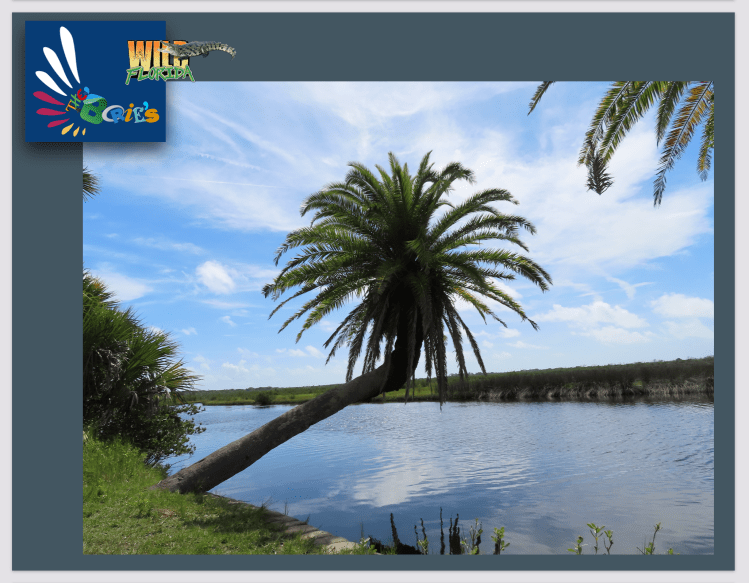
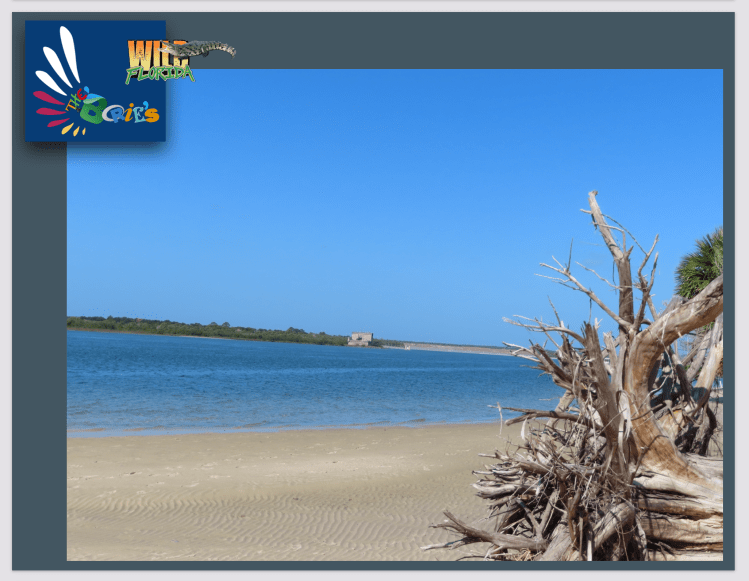
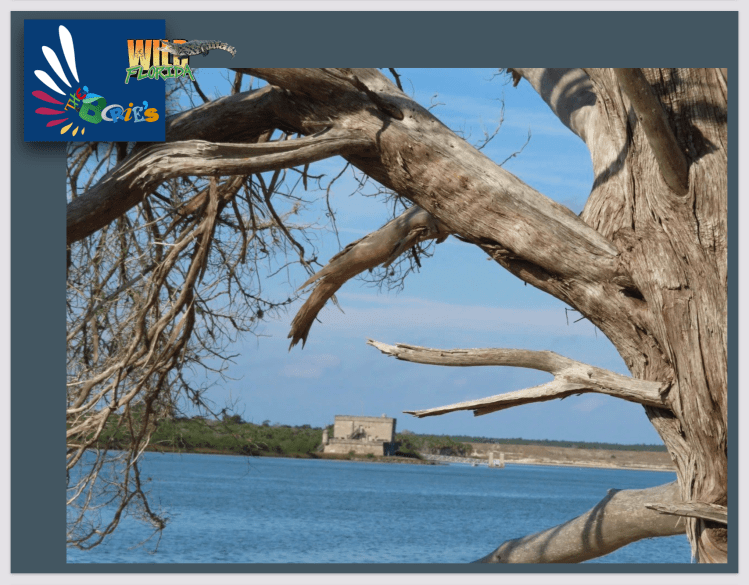
…estamos a falar do “Princess Place Preserve”, que quer dizer mais ou menos, “Lugar Preservado da Princesa” que, tem uma história muito rica, num cenário exótico de beleza natural, onde outrora também foi cenário de índios americanos, assentamentos coloniais, guerras, servos, magnatas, casamentos, divórcios, amor, ódios, príncipes e princesas, tudo passado neste maravilhoso local, situado na parte norte do concelho de Flagler, mais propriamente na confluência do hoje Riacho Pellicer e do Rio Matanzas!.

(…we are talking about the “Princess Place Preserve”, which more or less means, “Princess Place Preserve”, which has a very rich history, in an exotic setting of natural beauty, where it was also the scene of American Indians, colonial settlements, wars, serfs, magnates, marriages, divorces, love, hates, princes and princesses, all spent in this wonderful place, located in the northern part of Flagler county, more precisely at the confluence of today’s Riacho Pellicer and the Matanzas River)!.

…dizem-nos que tudo começou por volta do final do século dezassete, quando uma parcela de mais de mil acres era concedida como uma concessão de terras espanholas a Francisco Pellicer, homem nascido em Minorca, que é uma das ilhas Baleares de Espanha, no mar Mediterrâneo, que por aqui chegou, contratado como servo mas, tal como outros  chegados da Europa, este, exercendo a profissão de agricultor e carpinteiro, prosperou assim no Novo Mundo!.

(…we are told that it all started around the end of the seventeenth century, when a parcel of more than a thousand acres was granted as a Spanish land grant to Francisco Pellicer, a man born in Menorca, which is one of the Balearic Islands of Spain , in the Mediterranean Sea, who arrived here, hired as a servant but, like other arrivals from Europe, this one, exercising the profession of farmer and carpenter, thus prospered in the New World)!.

…nós, “fotografos amadores à quinta-feira e contadores de histórias ao domingo”, com a pequena máquina fotográfica, (a tal que cabe cabe no bolso de trás), tal como uma criança, a quem dão um brinquedo novo, caminhámos por ali, descobrindo uma paisagem deslumbrante e diferente a cada curva do nosso caminho, pois aqui é um óptimo lugar para embarcar em caminhadas ao longo desta selva de árvores centenárias!.

(…we, “amateur photographers on Thursdays and storytellers on Sundays”, with the small camera, (the one that fits in the back pocket), just like a child, who is given a new toy, we walked there, discovering a stunning and different landscape at every turn in our path, as this is a great place to embark on hikes through this jungle of centuries-old trees)!.

…dentro dos limites deste parque, encontramos ao longo de trilhas fáceis de caminhar, uma casa rural histórica, com instalações para os cavaleiros trazerem os seus próprios cavalos e cavalgarem, pântanos, canais e lagos naturais para explorar, áreas selvagens de piquenique, vistas deslumbrantes da paisagem aquática, que nos proporciona aquele desafio físico que muitas vezes não sabíamos que queríamos!.

(…within the limits of this park we find along easy walking paths, a historic country house with facilities for riders to bring their own horses and ride, swamps, canals and natural lakes to explore, wild picnic areas, stunning views of the aquatic landscape, which gives us that physical challenge that we often didn’t know we wanted)!.

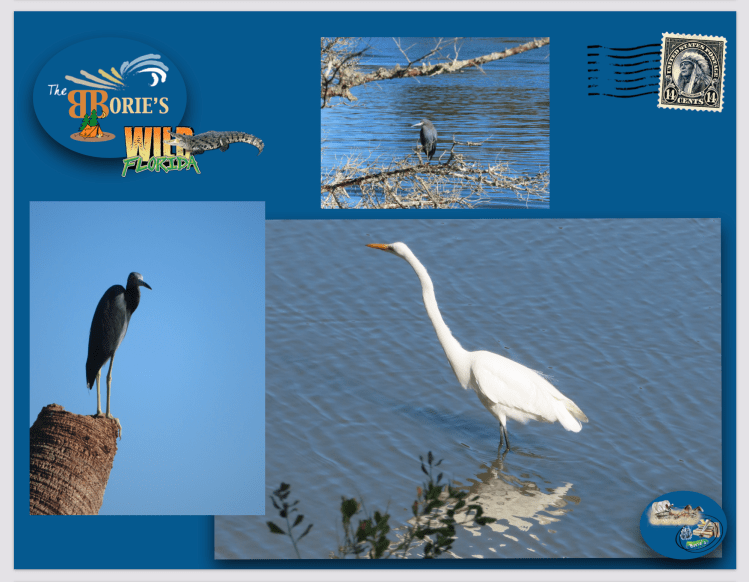
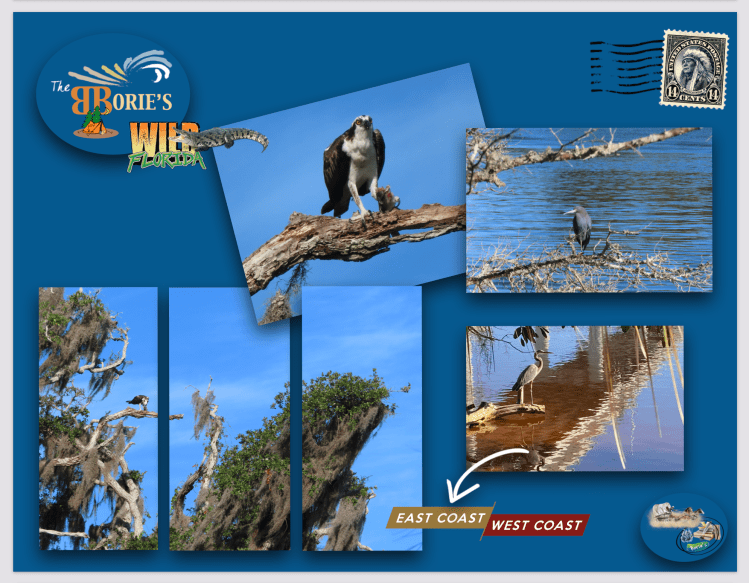
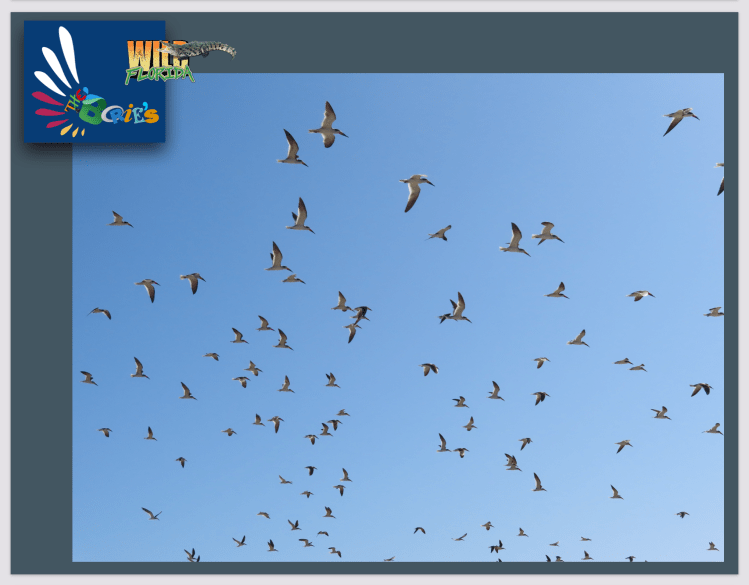
…não esquecemos tão cedo a majestade, o silêncio e a beleza deste parque, abundante em vida selvagem e que há muito tempo já é um dos nossos lugares favoritos para fotografar não só a paisagem como alguns animais e aves selvagens, como águias de colarinho branco, garças-reais, garças-azuis, garças-brancas, cegonhas-da-floresta ou aligatores (crocodilos)!.

(…we don’t soon forget the majesty, silence and beauty of this park, abundant in wildlife and for a long time now one of our favorite places to photograph not only the landscape but also some wild animals and birds, such as white-collar eagles , herons, blue herons, white herons, forest storks or alligators (crocodiles)!.

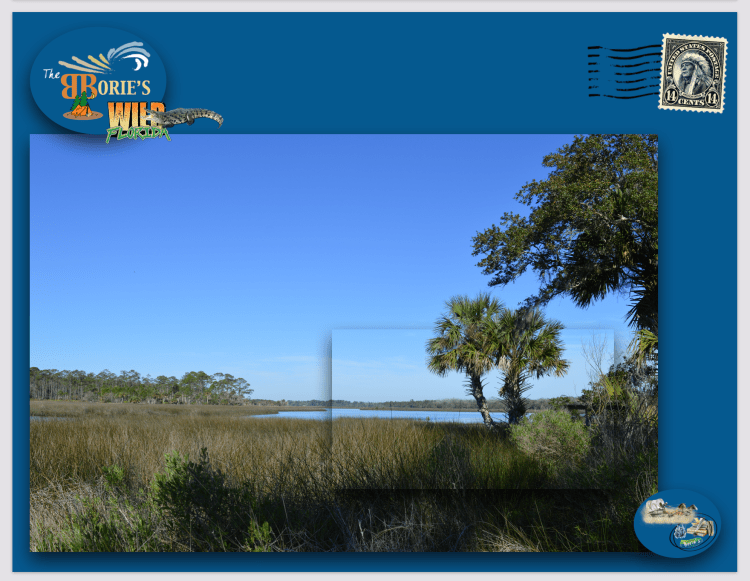
…a paisagem aquática faz parte do canal principal (intercoast), que segue junto ao oceano AtlIantico, como tal em alguns pontos, durante a mudança das marés, podem haver centenas de pássaros de quase uma dúzia de espécies espalhadas pelos pântanos, lagos e canais de água salgada, imediatamente adjacentes aos diversos caminhos que atravessam este maravilhoso parque!.

(…the waterscape is part of the main channel (intercoast), which runs along the Atlantic Ocean, as such at some points, during the changing tides, there may be hundreds of birds of almost a dozen species scattered throughout the swamps, lakes and channels of salt water, immediately adjacent to the many paths that cross this wonderful park)!.

…mas uma das maiores atrações para nós, pois às vezes também somos observadores de pássaros e fotógrafos da vida selvagem, este parque da “Princesa” é uma escala para muitas aves migratórias!. Por aqui passam a caminho do sul no outono e a caminho do norte na primavera, alguns cisnes com o seu bico exclusivo e penas brancas ou rosa vibrantes, fazendo uma paragem de algum tempo a cada ano para um show espetacular!.

(…but one of the biggest attractions for us, as we are sometimes also bird watchers and wildlife photographers, this “Princess” park is a stopover for many migratory birds!. Some swans with their unique beak and vibrant white or pink feathers pass through here on their way south in autumn and on their way north in spring, making a stop for some time each year for a spectacular show)!.

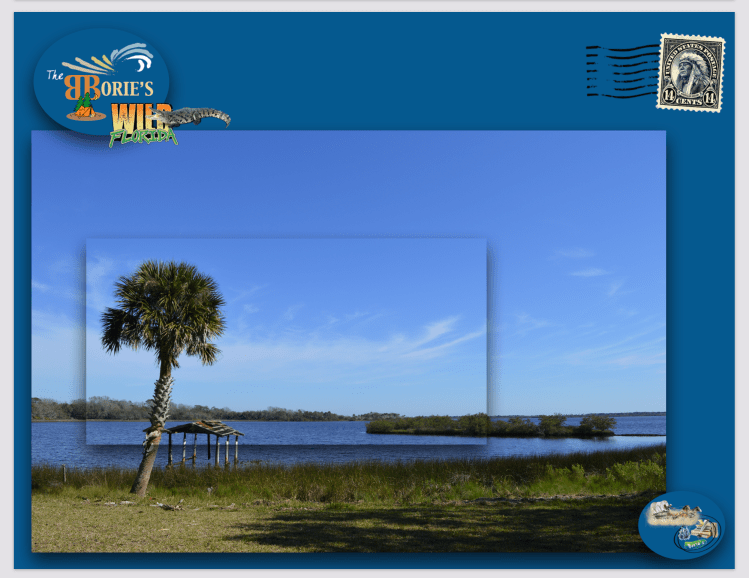
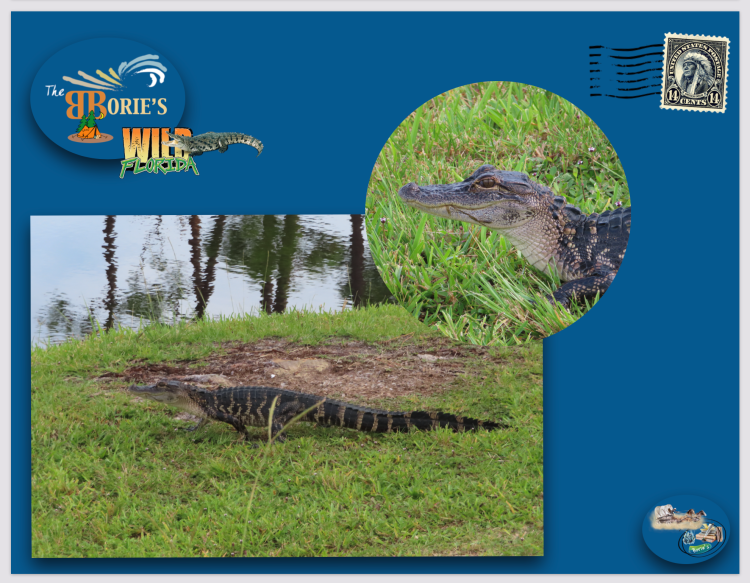
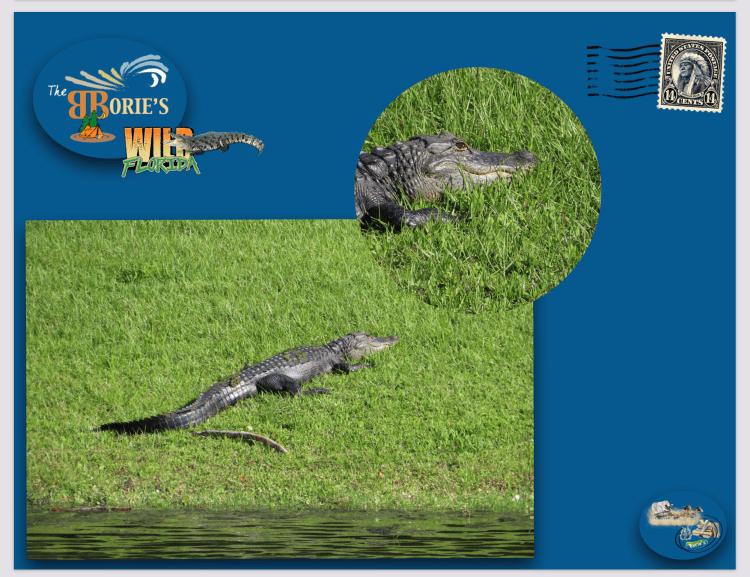
…estava uma manhã bonita com o céu azul, podendo ver-se algumas pequenas nuvens brancas que se atravessavam entre nós e o sol e, ao atravessar uma magnífica ponte coberta e em madeira sobre um dos canais, olhando para o lado esquerdo estava lá um “aligator” (crocodilo)  ainda bébé, que ao ver-nos não fugiu, porque já somos uma das suas vsitas frequentes e, um pouco para o seu interior, nas lagoas salobras, algumas dúzias de aligatores (crocodilos) vivem por lá, nadam e ocasionalmente agarram um caranguejo azul!.

(…it was a beautiful morning with a blue sky, you could see some small white clouds crossing between us and the sun and, when crossing a magnificent covered wooden bridge over one of the canals, looking to the left side, there was a “aligator” (crocodile) still a baby, who didn’t run away when he saw us, because we are already one of his frequent visits and, a little further inland, in the brackish lakes, a few dozen alligators (crocodiles) live there, swimming and occasionally catch a blue crab)!.

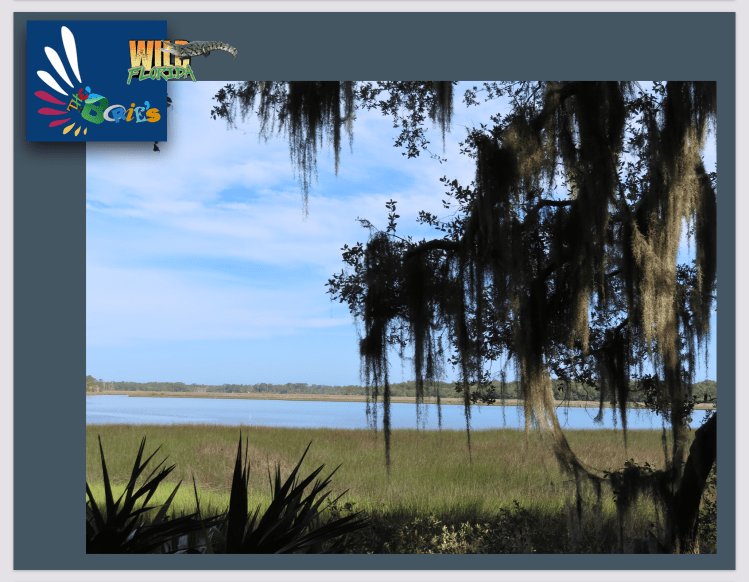
…esta caminhada é extremamente experiente, carismática, pelo menos para nós, contadores de histórias, onde podemos admirar uma área de pura selva, alguns pântanos, savanas, canais de água salgada, aves exóticas, árvores cobertas de musgo e uma fauna natural, sendo um óptimo lugar para ver e aprender!.

(…this hike is extremely experienced, charismatic, at least for us storytellers, where we can admire an area of ​​pure jungle, some swamps, savannas, saltwater channels, exotic birds, moss-covered trees and a natural fauna , being a great place to see and learn)!.

…por algum tempo percorremos os quatro cantos desta “reserva” explorando-a um pouco, onde não vimos praias de tartarugas com água azul mas, vimos o sossego de aves exóticas, tentando passar despercebidas dos olhares dos humanos, sendo muito provável que a qualquer momento encontrássemos os verdadeiros moradores deste maravilhoso parque, que são os rebanhos de veados de cauda branca, raposas vermelhas, linces, corujas, tatus, panteras da Flórida e, ocasionalmente algum urso preto, entre outros!.

(…for some time we went through the four corners of this “reserve” exploring it a little, where we didn’t see turtle beaches with blue water, but we saw the tranquility of exotic birds, trying to go unnoticed by the eyes of humans, it is very likely that at any time we could find the real residents of this wonderful park, which are the herds of white-tailed deer, red foxes, bobcats, owls, armadillos, Florida panthers and, occasionally, some black bear, among others)!.

…foi uma manhã maravilhosa, caminhando por algumas trilhas em terra, onde por vezes se juntam a um caminho de concreto ou algumas pontes em madeira, que serpenteiam por centenas de arbustos que florescem em cores brilhantes, mudando a paisagem a cada ano!.

(…it was a wonderful morning, walking along some dirt trails, where they sometimes join a concrete path or some wooden bridges, which meander through hundreds of bushes that bloom in bright colors, changing the landscape every year)!.

…é uma parte importante da nossa experiência em viagens e caminhadas, que pode ser uma história engraçada ou especial, sobre uma qualquer  experiência vivida numa montanha, numa selva, num rio, praia ou deserto, ou simplesmente uma aventura interessante na estrada!.

(…is an important part of our travel and hiking experience, which can be a funny or special story, about any experience lived in a mountain, in a jungle, in a river, beach or desert, or simply an interesting adventure on the road)!.

Tony Borie, Século XXI. (Tony Borie, 21st Century).

…na então Guiné Portuguesa!. (…in the then Portuguese Guinea)!.

…os últimos meses de presença em cenário de guerra, foram passados quase como todos os combatentes que cumpriram vinte e quatro longos meses de estadia na então província Portuguesa da Guiné em África!. Infelizmente e com alguma amargura, hoje ainda revivemos alguns acontecimentos!. É a vida dizem alguns!. Mas… para nós combatentes, os momentos de medo, angústia e desespero, ficaram gravados no pensamento e espetados no corpo, tal como um ferro em brasa com farpas bastante afiadas!. 

(…the last months of presence in a scenario of war, were spent almost like all the combatants who completed twenty-four long months of stay in the then Portuguese province of Guinea in Africa!. Unfortunately and with some bitterness, we still relive some events today!. It’s life some say!. But… for us combatants, the moments of fear, anguish and despair, were engraved in our thoughts and stuck in our bodies, like a red-hot iron with very sharp barbs)!.

…aquele conflito armado estava de dia para dia a aumentar as suas proporções, era já uma guerra de guerrilha feroz e traiçoeira, tornando-se muito difícil viajar de uma povoação para outra sem haver contacto com os guerrilheiros ou com qualquer das suas emboscadas e armadilhas, pois colocavam minas e fornilhos nas principais estradas, carreiros, pontões ou saídas e entradas obrigatórias nas travessias dos rios e pântanos, utilizavam os seus corredores de abastecimento durante a noite, tinham as suas “casas mato”, e claro, os guerrilheiros já tinham treino e alguma experiência em combate, sabendo bem o terreno que pisavam!.

(…that armed conflict was increasing day by day in its proportions, it was already a fierce and treacherous guerrilla war, making it very difficult to travel from one village to another without having contact with the guerrillas or any of their ambushes and traps , as they placed mines and bowls on the main roads, paths, pontoons or mandatory exits and entrances in the crossings of rivers and swamps, they used their supply corridors at night, they had their “bush houses”, and of course, the guerrillas already had training and some experience in combat, knowing well the terrain they were on)!.

…e, em algumas situações naquele cenário, as condições para se tentar recuperar um qualquer morto ou ferido, pois as vítimas, deviam ser puxados para algum tipo de posição onde houvesse alguma segurança, para serem tratados e, levar um homem ferido ou morto, requer até quatro homens como portadores, o que também enfraquecia uma unidade militar num momento crítico, portanto esses infelizes militares de combate, quando eram atingidos, alguns deles, por lá ficavam para sempre!.

(…and, in some situations in that scenario, the conditions for trying to recover a dead or injured person, as the victims should be pulled into some kind of position where there is some security, to be treated and, to take a wounded or dead man, it requires up to four men as carriers, which also weakened a military unit at a critical moment, so these unfortunate combat soldiers, when they were hit, some of them, stayed there forever)!.

…nós íamos sobrevivendo!. Naquele pequeno calendário em papel quadriculado que fizémos, onde todos os dias lá colocávamos uma cruzinha, estava a caminho de se completar!. Com alguma sorte, já não eram tantos assim os dias que nos faltavam para um possível abandono daquele miserável cenário e, o desejado regresso à Europa!. Todos os dias pela manhã, ao colocar uma cruzinha no referido quadrado, considerávamos uma conquista, que não era bem uma conquista, era uma reconquista, sentindo uma satisfação interior, que não cabia dentro de nós!.

(…we were surviving!. In that little squared-paper calendar we made, where every day we put a cross, it was on its way to completion!. With any luck, there were not so many days left for a possible abandonment of that miserable scenario and, the desired return to Europe!. Every morning, when placing a cross in the square, we considered it an achievement, which was not really an achievement, it was a reconquest, feeling an inner satisfaction, which did not fit within us)!.

…já não saíamos do aquartelamento rodeado de arame farpado, que considerávamos um “posto avançado de fronteira”, a não ser por motivos de ordem maior!. O movimento de militares, tinha aumentado na área, quase que triplicado, em alguns dias, eram centenas de militares em constante movimento, com as viaturas e equipamento de combate ocupando todos os espaços!. Era uma barafunda!. 

(…we no longer left the barracks surrounded by barbed wire, which we considered a “frontier outpost”, except for reasons of a higher order!. The movement of soldiers, had increased in the area, almost tripled, in a few days, there were hundreds of soldiers in constant movement, with vehicles and combat equipment occupying all spaces! It was a mess)!.

…com a chegada de novos militares, já ninguém se conhecia!. No dormitório, colocaram mais do dobro das camas!. Naquele momento existiam dois andares de camas, muito chegadas umas às outras, com roupa camuflada, alguma suja e molhada, colocada em cima dos mosquiteiros e em outros locais a secar, daqueles esforçados militares de combate que tinham a sorte de regressar vivos das frequentes operações de patrulha a que eram forçados a fazer!.

(…with the arrival of new soldiers, no one knew each other anymore!. In the dorm, they put more than double the beds! At that time there were two floors of beds, very close together, with camouflage clothing, some dirty and wet, placed on top of mosquito nets and in other places to dry, of those hard-working combat soldiers who were lucky enough to return alive from frequent operations of patrol they were forced to do)!.

…nós, com alguma perícia caminhávamos por um labirinto de camas, quase como vivêssemos dentro de um submarino!. Logo à entrada do dormitório estava sempre uma caixa com uns restos de munições, claro, não auxiliava nada a quem queria passar, mas também ninguém se importava com isso e, sempre que passava por lá um militar dáva-lhe um empurrão com a perna, mas alguém voltava a colocá-la no lugar inicial, porque o militar que dormia na cama ao lado queria o seu espaço!.

(…we, with some skill, walked through a maze of beds, almost like living inside a submarine!. Right at the entrance to the dorm there was always a box with some leftover ammunition, of course, it didn’t help anyone who wanted to pass, but no one cared about that either, and whenever a military man passed by, he gave him a push with his leg, but someone put it back in its original place, because the soldier who slept in the bed beside him wanted his space)!.

…em alguns dias de calor infernal, o cheiro a suor e outras coisas, era insuportável, e alguns vinham dormir ao ar livre, encostados às paredes do dormitório, onde alguns dias por mês, alguém, muitas vezes éramos nós, com um balde feito com aduelas de um barril do vinho, onde se colocava um pouco de criolina e água, e pincelávamos, com uma vassoura feita de ramos de alguns arbustos, em volta do dormitório!. 

(…on some days of infernal heat, the smell of sweat and other things was unbearable, and some came to sleep outdoors, leaning against the dorm walls, where a few days a month, someone, many times it was us, with a bucket made with staves of a barrel of wine, where a little cryoline and water were placed, and we brushed, with a broom made of branches from some bushes, around the bedroom)!.

…naquela área ao fundo do aquartelamento, onde existiam os tais furos de água quente, muito quente, a cheirar a enxofre ou coisa parecida, era um pandemónio!.  As couves e alfaces, que por lá tínhamos plantado, desapareceram, agora no seu lugar, estava cheia de bidons, uns com água, outros vazios e amolgados ao sol, quente, abafado e húmido!. 

(…in that area at the back of the barracks, where there were such hot water holes, very hot, smelling of sulfur or something similar, it was pandemonium!. The cabbage and lettuce, which we had planted there, disappeared, now in their place, it was full of drums, some with water, others empty and crushed in the sun, hot, stuffy and humid)!.

…todo o cenário estava a ficar tão difícil de suportar, que já tínhamos receio de visitar a aldeia junto ao local onde nos encontrávamos, onde sempre fomos bem recebidos, e sempre respeitámos a dignidade e o forte carácter dos naturais, que muito admirávamos!. Alguns até nos tratavam por “irmão”, e sempre seguimos as leis, as ordens e os ensinamentos dos “homens grandes”!.

(…the whole scenario was getting so hard to bear, that we were already afraid to visit the village near the place where we were, where we were always welcomed, and we always respected the dignity and strong character of the natives, who we admired so much!. Some even called us “brother”, and we always followed the laws, orders and teachings of the “big men”)!.

…que, tal como por diversas vezes já mencionámos, com toda a sua sabedoria, e com muitas “chuvas” no corpo, que deviam de ser anos, vivendo numa profunda miséria, apontando com uma espécie de bengalim, com que afugentavam algumas moscas e batiam nos cães, que famintos se aproximavam das “moranças”, que eram as suas casas cobertas de colmo, onde entre outras coisas, pronunciavam num português acrioulado, que nós compreendíamos perfeitamente, e diziam-nos: olh’a qu’la alí… cabaçú ká t’m… and’a pr’a qui… baju’da ale’m… ma’m’a firmi’… depo’s d’… tém mangá di sábi sábi… précisa d’… está altúra d’… conversa gir’o… o irmãu é qui… ficá nu Guiné… cá bai nu Portugal… e quando nos despedíamos, agarravam-nos na mão e diziam, “ca bai”, e davam-nos “mantenhas”, e às vezes até ficavam, t’chora!. Isto são palavras difíceis de traduzir, mas qualquer combatente que por lá passou, sabe um pouco o seu significado!.

(…which, as we have already mentioned several times, with all their wisdom, and with lots of “rain” on the body, which must have been years, living in deep poverty, pointing with a kind of bengalim, with which they chased away some flies and they beat the dogs, who hungrily approached the “moranças”, which were their thatched houses, where, among other things, they pronounced in Creole Portuguese, which we understood perfectly, and said to us: oh’a qu’la alí… cabaçú ká t’m… and’a pr’a qui… baju’da ale’m… ma’m’a firmi’… after d’… there’s manga di sábi sábi… need d’… it’s height d’… talk gir ‘o… his sister is here… he’s naked Guinea… here bai nu Portugal… and when we’d say goodbye, they’d grab us by the hand and say, “ca bai”, and they’d give us “keep it”, and sometimes they even stayed, t ‘cry!. These are difficult words to translate, but any combatant who has been there knows a little bit what they mean)!.

…e nós íamos escrevendo o nosso diário!. As palavras que completavam as frases eram sempre as mesmas, eram o resumo de ataques àquele “posto avançado de fronteira” pois era a partir dali que eram frequentes as emboscadas, os feridos e as mortes, só mudávamos as datas!. Às vezes ficávamos desesperados, quase em pânico e gritávamos: “merda, tirem-nos daqui, estamos a ficar doidos”!.

(…and we were writing our diary!. The words that completed the sentences were always the same, they were the summary of attacks on that “frontier outpost” because it was from there that ambushes, injuries and deaths were frequent, we only changed the dates!. Sometimes we would get desperate, almost panicky and scream: “shit, get us out of here, we’re going crazy”)!.

…hoje, toda e qualquer plataforma que permita navegar pelas histórias daquela maldita guerra, todas são relatos, embora alguns pessoais, que apresentam evidiências verdadeiras da angústia e do mêdo dos veteranos sobreviventes em combate de ambos os lados, porque os guerrilheiros que lutavam pela libertação do seu território, também sofriam a mesma situação que nós, que ali estávamos ao serviço da então nação colonial, que era Portugal do século passado!.

(…today, any platform that allows you to navigate through the stories of that damned war, all are reports, although some are personal, that present true evidence of the anguish and fear of the veterans surviving in combat on both sides, because the guerrillas who were fighting for liberation of its territory, they also suffered the same situation as us, who were there at the service of the then colonial nation, which was Portugal in the last century)!.

…enfim, hoje, embora um veterano de uma idade um pouco avançada, a todo o momento o pensamento caça-nos na vida, e nós, que naquele cenário de uma guerra terrestre de guerrilha, éramos o “Cifra”, um soldado desarmado, onde a disciplina de um campo de batalha não era lá muito eficaz para a nossa sobrevivência e, onde só talvez, os cigarros e algum excesso de álcool, nos dava algum miserável conforto!.

(…in short, today, although a veteran of a little advanced age, at every moment thought hunts us in life, and we, who in that scenario of a land guerrilla war, were the “Cifra”, an unarmed soldier, where the discipline of a battlefield was not very effective for our survival and, where just maybe, cigarettes and some excess of alcohol, gave us some miserable comfort)!.

…e já lá vão mais de 50 anos que vivemos aquele horrível cenário da guerra colonial Portuguesa em África e, nesta já avançada idade, não só históricamente como com a experiência de todos estes anos vividos, o reviver, ou seja, lembrar a angústia e o mêdo de um horrivel cenário de guerra de guerrilha nas selvas, savanas, pântanos, rios ou riachos, como era a situação geográfica da então província da Guiné, a contagem dos mortos e dos feridos de ambos os lados, onde os sobreviventes, que ficaram com doenças e traumas, não só fisica como também moralmente, hoje, toda e qualquer homenagem ou reconhecimento do esforço dispendido obrigatório em servir a bandeira da sua Pátria, não vai servir de nenhuma plataforma que permita melhorar a vida ou a saúde de um qualquer combatente, mas com toda a certeza que até um simples sorriso, vai auxiliar, pois muitos de nós ainda navegam naquelas horríveis experiências por lá vividas!.

(…and it’s been more than 50 years since we lived that horrible scenario of the Portuguese colonial war in Africa and, in this already advanced age, not only historically but with the experience of all these years lived, reliving, that is, remembering the anguish and the fear of a horrible scenario of guerrilla warfare in the jungles, savannas, swamps, rivers or streams, as was the geographical situation of the then province of Guinea, the counting of the dead and wounded on both sides, where the survivors, who remained with diseases and traumas, not only physically but also morally, today, any homage or recognition of the mandatory effort spent in serving the flag of their homeland, will not serve as any platform to improve the life or health of any combatant , but with all certainty that even a simple smile will help, as many of us are still navigating those horrible experiences lived there)!.

Tony Borie, Século XXI. (Tony Borie, 21st Century).

…esta é a vida!. Seja feliz!. (…this is life!. Be happy)!.

…depois de uma certa idade, nós os humanos, somos considerados adultos e, ser adulto tem o seu próprio conjunto de responsabilidades, como por exemplo, encontrar um emprego, constituir uma família, adquirir uma habitação, ajudar no crescimento dessa mesma família, ser responsável em pagar as suas contas, e porque não, talvez coisas simples, como cozinhar, vestir e dar banho aos filhos crianças, enfim, ajudar o companheiro ou companheira nas normais lidas de casa, ou seja, nas diversas responsabilidades para o crescimento de uma família!. 

(…after a certain age, we humans are considered adults, and being an adult has its own set of responsibilities, such as finding a job, starting a family, acquiring a home, helping the growth of that same family, being responsible for paying your bills, and why not, maybe simple things, like cooking, dressing and bathing your children, in short, helping your partner in the normal housework, that is, in the various responsibilities for the growth of a family)!.

…no entanto, nenhum de nós recebeu um manual de instruções para se ser adulto!. Esse conjunto de instruções e directrizes a seguir para dominar toda essa coisa de “adulto”, na maioria das vezes, a alguns previlegiados chegou o exemplo que tiveram ao nascer e crescer no seio de uma família com princípios honestos, que foram aprendendo e seguindo ao longo dos anos!, Outros infelizmente, foram descobrindo todo esse fenómeno de ser “adulto”, ao longo do caminho da vida, tropeçando aqui, levantando-se acolá!.

(…however, none of us received an instruction manual for becoming an adult!. This set of instructions and guidelines to follow to master the whole “adult” thing, most of the time, some privileged ones came with the example they had when they were born and raised in a family with honest principles, which they learned and followed as they progressed. Over the years!, Others, unfortunately, have been discovering this whole phenomenon of being “adult”, along the path of life, stumbling here, getting up there)!.

…a nossa idade já um pouco avançada, ensinou-nos algumas coisas que nos mostraram ser muito importantes no que é a verdadeira razão de ser “adulto” e como lidar com esse fenómeno!. Por exemplo, acreditamos que tudo começa na escola primária, ou seja, primeiros contactos com outras pessoas, como o professor ou o companheiro ou companheira de classe, que se forem amigos e com bons sentimentos, também seremos amigos e com bons sentimentos, e por outro lado, se forem agressivos e nos ofenderem por uma qualquer simples razão, também nós (talvez querendo defender-nos), seremos agressivos e conflituosos, talvez pelo resto da vida!.

(…our age, already a little advanced, taught us some things that showed us to be very important in what is the real reason for being “adult” and how to deal with this phenomenon!. For example, we believe that everything starts in primary school, that is, first contacts with other people, such as the teacher or the partner or classmate, that if they are friends and with good feelings, we will also be friends and with good feelings, and for on the other hand, if they are aggressive and offend us for any simple reason, we too (perhaps wanting to defend ourselves) will be aggressive and conflicted, perhaps for the rest of our lives)!

…a seguir, o contacto com amigos na casa dos 20 aos 30 anos, quando já estamos focados numa carreira de família, quando começamos a perder e a abandonar algumas amizades, selecionando as mais valiosas que serão possívelmente as companheiras ou companheiros para o resto da vida, que com o tempo, se não soubermos conservá-las, podem-se tornar uma fonte significativa de arrependimento no nosso futuro!. Portanto, nesta época da nossa vida, é muito importante fazer um esforço para contornar alguns obstáculos e manter as verdadeiras amizades, enquanto já se é “adulto”!.

(…then, contact with friends in their 20s to 30s, when we are already focused on a family career, when we start to lose and abandon some friendships, selecting the most valuable ones that will possibly be companions for the rest of the life, that in time, if we do not know how to preserve them, they can become a significant source of regret in our future! Therefore, at this time of our life, it is very important to make an effort to get around some obstacles and maintain true friendships while you are already an “adult”)!.

…e, lembrando que nesta época da nossa vida, normalmente somos  bastante despreocupados, todavia, ao entrar no mercado de trabalho ou ao contrair matrimónio, claro, tudo isto já como “adulto”, a ansiedade orginada por alguma responsabilidade começa a manifestar-se e, demora alguns anos, teremos que aprender maneiras de controlar toda essa ansiedade, vivendo e fazendo crescer os filhos, se os houver, num cenário pacífico, ensinando-lhes as boas maneiras de sobreviver, a selecionar os verdadeiros amigos, a criar amizades, assim como comportamentos com base na honestidade!. 

(…and, remembering that at this time in our life, we are usually quite carefree, however, when entering the labor market or contracting marriage, of course, all this already as an “adult”, the anxiety caused by some responsibility starts to manifest itself and, it takes a few years, we will have to learn ways to control all this anxiety, living and raising children, if any, in a peaceful setting, teaching them good ways to survive, selecting true friends, creating friendships, as well as behaviors based on honesty)!.

…quando se constitue uma família, portanto quando já se é “adulto”, é muito importante saber gerenciar o nosso próprio dinheiro, controlar as despesas, pagar contas e impostos, pois isto são as tais “coisas” da vida “adulta”!. No entanto, às vezes as finanças são bastante assustadoras, pelo menos para um normal casal com filhos, mas isso é algo com que muitas vezes vamos ter dificuldades, no entanto, existem algumas regras, como por exemplo a principal que é, “não gastar mais do que aquilo que se ganha”!.

(…when you start a family, so when you are already an “adult”, it is very important to know how to manage our own money, control expenses, pay bills and taxes, as these are such “things” of “adult” life!. However, sometimes finances are quite scary, at least for a normal couple with children, but this is something that we will often struggle with, however, there are some rules, for example the main one which is, “don’t spend more than what is earned”)!.

…no mundo moderno, entre outras, a facilidade com que se obtêm os cartões de crédito costumam ter uma má reputação e origem a muitos desentendimentos em casais que antes se relacionavam bem, no entanto, quando usados ​​com sabedoria, podem ser um grande trunfo, porque no sistema de vida que hoje existe, usar um cartão de crédito cria um histórico de crédito no nosso nome, o que é muito útil e, pagando as contas do cartão de crédito em dia, ajuda a aumentar a nossa pontuação de crédito, mostrando que somos uma pessoa responsável e confiável, no entanto “devemos gastar apenas o dinheiro que possuimos”!.

(…in the modern world, among others, the ease with which credit cards are obtained tends to have a bad reputation and give rise to many disagreements in couples who used to get along well, however, when used wisely, they can be a big deal. trump card, because in the system of life that exists today, using a credit card creates a credit history in our name, which is very useful and, paying credit card bills on time, helps to increase our credit score. , showing that we are a responsible and trustworthy person, however “we should only spend the money we have”)!.

…nem todos os relacionamentos começam com uma paixão incrível!. Como tal, num relacionamento forte, é muito mais importante que possam rir juntos e confiar um no outro, porque cada pessoa tem os seus próprios interesses e hobbies!. Não podemos pensar que porque gostamos de futebol a nossa namorada em potencial também gosta!. Teremos que conversar, para que reunindo conclusões, ficar-mos felizes juntos!.

(…not all relationships start with incredible passion! As such, in a strong relationship, it is much more important that they can laugh together and trust each other, because each person has their own interests and hobbies! We can’t think that because we like football, our potential girlfriend does too! We will have to talk, so that, gathering conclusions, we are happy together)!.

…e mais, pessoas que nunca brigam geralmente simplesmente não se importam, e claro, casais sem problemas geralmente estão a caminho de uma separação, contudo, não estamos dizendo que a fraca linguagem ou o abuso estão bem, mas pequenas brigas não nos devem preocupar, porque são normais e ultrapassáveis, acontecendo com todos e são um foco para aprender a se entender melhor!.

(…and what’s more, people who never fight usually just don’t care, and of course couples with no problems are usually on their way to a breakup, however, we’re not saying weak language or abuse is okay, but little fights shouldn’t worry us , because they are normal and surpassable, happening to everyone and they are a focus for learning to understand oneself better)!.

…por exemplo!. Mais cedo ou mais tarde, toda a pessoa quer passar algum tempo sózinha e, os parceiros devem entender isso e calmamente dar espaço pessoal um ao outro, sendo necessário algum descanso dos deveres familiares!. Isso não significa que o relacionamento tende a acabar, pelo contrário, ajuda a preservar sentimentos ou até mesmo a dar uma nova vida ao relacionamento!. Muitas vezes vimos, e queremos aprender as características de um relacionamento “perfeito” em filmes ou anúncios, todavia, têm pouco a ver com a realidade!. Lembre-se sempre disso ao perceber as pequenas falhas do seu parceiro!.

(…for example!. Sooner or later, everyone wants to spend some time alone and the partners must understand this and calmly give each other personal space, some respite from family duties being necessary! This does not mean that the relationship tends to end, on the contrary, it helps to preserve feelings or even give new life to the relationship! We often see, and want to learn the characteristics of a “perfect” relationship in movies or advertisements, however, they have little to do with reality! Always remember this when noticing your partner’s small flaws)!.

…resumindo, às vezes, toda esta coisa de “adulto” pode ser bastante desafiadora, no entanto, muitas vezes ao sentir-nos sobrecarregados com as pressões de ser um “adulto responsável”, estamos todos aprendendo e melhorando o longo do caminho da vida!. Portanto, não vamos colocar tanta pressão sobre nós mesmos para ser um “adulto perfeito”!. Todos nós cometemos erros e aprendemos com eles!. 

(…in short, sometimes this whole “adult” thing can be quite challenging, however often when we feel overwhelmed by the pressures of being a “responsible adult”, we are all learning and improving along the way of life!. So let’s not put so much pressure on ourselves to be a “perfect adult”! We all make mistakes and we learn from them)!.

…depois, à medida que vamos envelhecendo, vamos deixando ir os nossos descendentes viverem a sua vida, começando nós a reaprender o valor de boas amizades, tentando enriquecer a nossa vida na maneira do possível, arranjando tempo para algumas actividades divertidas, passando o tempo a escrever, a fotografar, a fazer caminhadas, a viajar quando é possível, e claro, cuidando da saúde, porque na verdade, somos o que comemos e, por isso é importante ter uma dieta saudável e equilibrada, fazendo escolhas alimentares saudáveis, ​​nunca esquecendo a medicina de manutenção!.

(…then, as we get older, we let our descendants live their lives, starting to relearn the value of good friendships, trying to enrich our lives in whatever way possible, making time for some fun activities, passing the time writing, photographing, hiking, traveling when possible, and of course, taking care of our health, because in fact, we are what we eat and, therefore, it is important to have a healthy and balanced diet, making healthy food choices, ​Never forgetting maintenance medicine)!.

…e por cá vamos continuando a viver, esperando que algumas destas “coisas” estratégicas que aprendemos ao longo dos anos ajudem alguém na sua própria jornada de “vida adulta”, envelhecendo com alguma alegria!. Todavia, nós, sempre querendo ser um exemplo de velhice, na esperança de poder usar a nossa casa que é o nosso refúgio, que possui todas as relíquias, algumas extravagantes, que trouxémos de todo o mundo por onde andámos!. E, quem não gostaria de ficar e findar os seus dias na casa que criou e considerou aconchegante e única para sempre?.

(…and over here we go on living, hoping that some of these strategic “things” we’ve learned over the years will help someone in their own journey of “adult life”, aging with some joy!. However, we, always wanting to be an example of old age, hoping to be able to use our house which is our refuge, which has all the relics, some extravagant, that we have brought from all over the world where we have been! And who wouldn’t want to stay and end their days in the house they created and considered cozy and unique forever)?.

Tony Borie, Século XXI. (Tony Borie, 21st Century).

…a média das coisas!. (…the mean of things)!.

…são o peso dos anos que por cá vamos vivendo, que por vezes não nos dão o descanso que é devido e, nos fazem estar acordados a certas horas quando na verdade devíamos estar dormindo, tal como um comum e normal mortal, e claro, nos faz pensar nesta era a que chamam moderna, onde existem umas sondagens da opinião pública, que na nossa opinião não servem para nada a não ser confundir ainda mais as normais pessoas!. 

(…are the weight of the years we’ve been living around here, which sometimes don’t give us the rest we deserve and make us be awake at certain times when we should actually be sleeping, just like a common and normal mortal, and of course, it makes us think of this era they call modern, where there are some polls of public opinion, which in our opinion are of no use but to confuse even more normal people)!.

…porquê?. Porque, por exemplo, se uma família de 4 pessoas com posses acima do normal, ou seja rica financeiramente, comer um jantar onde entra lagosta e bife de búfalo, regado com champanhe francês, no valor de 550 dolares e, uma família de 4 pessoas pobre, vivendo do ordenado mínimo, comer um jantar onde entre simplesmente sopa e uns carapaus fritos em molho de escabeche, regados com vinho tinto da casa, no valor de 50 dolares, somando os dois jantares, o preço médio destas duas famílias foi de 300 dolares, que são 550 + 50 = 600, dividindo por dois nos dá a quantia de 300!.

(…because?. Because, for example, if a family of 4 people with more than normal means, or is financially wealthy, eats a lobster and buffalo steak dinner, washed down with French champagne, valued at 550 dollars, and a family of 4 people poor, living on the minimum wage, eating a dinner where between simply soup and some fried mackerel in marinated sauce, washed down with red house wine, in the amount of 50 dollars, adding the two dinners, the average price of these two families was 300 dollars, which are 550 + 50 = 600, dividing by two gives us the amount of 300)!.

…resultado!. A família rica financeiramente banqueteou-se com ingredientes raros e dispendiosos, e a família pobre com ingredientes normais e modestos, no entanto a média destas duas famílias foi de 300 dolares, valor que a família pobre nunca chega a auferir num mês de trabalho, se por acaso tiver esse mesmo trabalho!. 

(…result!. The rich family financially feasted on rare and expensive ingredients, and the poor family on normal and modest ingredients, however the average of these two families was 300 dollars, a value that the poor family never earns in a month of work, if happen to have this same job)!.

…ora aqui está a prova dessas sondagens e desses gráficos que muitos meios de comunicação nos apresentam, tentando iludir a quem?. Sabe-se lá, talvez as pessoas com menos informação, mantendo assim as auciências e ludribiando a verdade da vida, ou seja do dia a dia dos menos afortunados!.

(…now here is the proof of these polls and these graphs that many media present us, trying to deceive who?. Who knows, maybe people with less information, thus maintaining auficiencies and cheating the truth of life, that is, the daily lives of the less fortunate)!.

…mas ainda existe mais!. Como por exemplo, de acordo com essas sondagens, que normalmente surgem na véspera de uma qualquer eleição ou depois de uma manifestação de qualquer coisa, onde explicam, de acordo com as ideias das pessoas e da região que para o caso selecionaram, que quem vai vencer é este ou aquele grupo, que claro, é o grupo que lhes dá mais garantias de eles mesmo continuarem a sobreviver, mesmo sabendo que não dizem a verdade dos factos!.

(…but there’s still more!. For example, according to these surveys, which usually appear on the eve of any election or after a demonstration of anything, where they explain, according to the ideas of the people and the region they selected for the case, that who will winning is this or that group, which, of course, is the group that gives them more guarantees that they will continue to survive, even though they don’t tell the truth of the facts)!.

…enfim, é o mundo moderno a que difícilmente nos vamos habituando e, nós nunca o conseguimos fazer mas, como já por diversas vezes mencionámos em anteriores escritos, há um tempo em que é preciso abandonar as roupas usadas, que já tem a forma do nosso corpo, e esquecer os nossos caminhos, que nos levam sempre aos mesmos lugares, é o tempo da travessia e, se não ousarmos fazê-lo, teremos ficado para sempre à margem de nós mesmos, porque infelizmente hoje, entre outros motivos, não importam os modos, o que importa são os fins!. 

(…after all, it is the modern world that we are hard to get used to and, we never manage to do it, but, as we have mentioned several times in previous writings, there is a time when it is necessary to abandon the used clothes, which already have the shape of our body, and forgetting our paths, which always lead us to the same places, is the time for the crossing and, if we do not dare to do it, we will have remained, forever, on the sidelines of ourselves, because unfortunately today, among other reasons , the modes do not matter, what matters are the endings)!.

…porque infelizmente o ser humano, querendo atingir os seus obectivos, complica, complica, complica, alterando os factos se isso for da sua conveniência e sobretudo com os seus excessos, vai aproximando a destruição de quase tudo, tornando o planeta onde vivemos em dois mundos paralelos, um, que infelizmente será o da estupidez, da barbaridade, da ganância, do consumismo e da decadência!.

(…because, unfortunately, human beings, wanting to achieve their goals, complicates, complicates, complicates, changing the facts if it suits their convenience and especially with their excesses, approaching the destruction of almost everything, making the planet we live in two parallel worlds, one, which unfortunately will be that of stupidity, barbarity, greed, consumerism and decadence)!.

…e, aquele outro, que tenta despontar com pessoas anónimas e de bons sentimentos que ajudam, respeitando sobretudo a natureza, sendo gentis no tratamento, praticando o bem estar dos outros, no entanto, infelizmente esses são ignorados, em contrário de alguns meios de comunicaçõo social, que inaltecem constantemente o clamor e o brilhantismo de alguns cérebros que comandam os nossos destinos, nos quais nós infelizmente quase não acreditamos!.

(…and that other one, who tries to emerge with anonymous people and with good feelings that help, respecting especially nature, being kind in the treatment, practicing the well-being of others, however, unfortunately these are ignored, contrary to some means of social communication, which constantly unalters the clamor and brilliance of some brains that command our destinies, in which we unfortunately almost do not believe!.

…e claro, tudo isto nada tem a ver com algumas coincidências, são simplesmente alguns factos reais, que infelizmente vamos vendo por aí)!.

(…and of course, all this has nothing to do with some coincidences, they are simply some real facts, that unfortunately we are seeing around)!.

Tony Borie, Século XXI. (Tony Borie, 21st Century).

…mais um ano!. (…one more year)!.

…tanto a nossa esposa Isaura, companheira de vida por mais de cinco décadas, tal como nós, fazemos anos em Setembro e, algumas celebridades também fazem anos neste mês, com a diferença de que esssas celebridades, tanto no mundo das artes, nos desportos ou até no cinema podem também fazer os seus anos, até no mesmo dia, mas quem faz anos em Setembro somos nós!. Uf…, tanta modéstia!!!.

…both our wife Isaura, a life partner for more than five decades, just like us, celebrate their birthdays in September and some celebrities also have their birthdays this month, with the difference that these celebrities, both in the world of arts, in sports or even in the cinema they can also celebrate their birthday, even on the same day, but we are the ones who have their birthdays in September!. Uf… so much modesty!!!.

…estamos em Setembro e quando crianças, os nossos progrenitores seguindo uma tradição de há séculos, festejavam os nossos anos e nós ainda crianças, tínhamos a felicidade de não perceber coisa nenhuma e de não ter as esperanças que os outros tinham por nós, porque na idade de ter esperanças, infelizmente já não sabíamos ter esperanças, tudo talvez por causa de ainda quase crianças, ser-mos forçados a ir combater na Guerra Colonial em África!.

(…it’s September and as children, our progrenitors following a tradition of centuries, celebrated our birthdays and we, as children, were fortunate not to understand anything and not have the hopes that others had for us, because in age to have hope, unfortunately we no longer knew how to hope, all perhaps because we were still almost children, being forced to go and fight in the Colonial War in Africa)!.

…olhando para trás, fomos um jovem sem idade e, ainda hoje nos lembramos de quando a nossa querida e saudosa avó Agar, que sempre trazia nos pés umas chinelas que tinham sido sapatos no Brazil, sentada no tronco de uma árvore que por lá existia na nossa aldeia quase mediaval do Vale do Ninho D’Águia, (diziam que ela e esse tronco da árvore juntos, deviam de ter há volta de duas centenas de anos), agarrada a um pau, a cabeça um pouco caída para a frente, parecendo que estava dormindo, mas despertava com as nossas palavras de saudação, dizendo-nos com algum carinho “fui eu que assisti a tua mãe quando nasceste, era uma manhã de Setembro, já quase no final das colheitas, andáva-mos na vindima das uvas”!.

(…looking back, we were an ageless young man and, even today, we remember when our dear and dear grandmother Agar, who always wore slippers that had been shoes in Brazil, sat on the trunk of a tree that existed there. in our almost mediaval village in Vale do Ninho D’Águia, (they said that she and that tree trunk together must have been around two hundred years ago), clutching a stick, her head hanging a little forward, looking like he was sleeping, but he woke up with our words of greeting, telling us with some affection “I was the one who watched your mother when you were born, it was a September morning, almost at the end of the harvests, we were in the harvest grape”)!.

…sim, a nossa mãe Ilda que era uma mãe que fazia um dia nublado num dia de sol!. Quando estávamos doentes, beijava o lugar onde nos doia, o seu sorriso dizia-me que íamos ficar bem e, sempre lá estava para nós de dia ou de noite, a sua voz suave tiráva-nos o medo, a sua mão apagava as nossas lágrimas, o seu carinho tão puro e honesto manteve-nos durante toda a nossa vida num homem seguro, ela era o anjo da guarda que nos guiou e amparou nos nossos primeiros passos, os seus olhos diziam-nos quanto se importava connosco e davam-nos alívio quanto nos sentíamos sózinhos ou assustados!.

(…yes, our mother Ilda who was a mother who made a cloudy day on a sunny day!. When we were sick, he kissed the place where it hurts, his smile told me we would be fine and, he was always there for us day or night, his soft voice took our fear away, his hand erased ours. tears, her love so pure and honest kept us all our lives in a safe man, she was the guardian angel who guided and supported us in our first steps, her eyes told us how much she cared for us and relief when we felt alone or scared)!.

…já muitos anos depois, ambas em diferentes tempos e já bastante frágeis, quando também precisavam que lhes dessem o comer na boca, e um simples lamento era um sinal de que precisavam de alguma coisa, tal qual como nós fazíamos quando chorávamos, (e elas conheciam o nosso choro), e para andar também precisavam de ir agarradas a alguma coisa, tal como nós fazíamos que andávamos quase sempre agarrados às suas saias, eram uma cópia do que nós fomos quando crianças e, compreendíamos com amor tudo isto, só não compreendemos e sofremos, foi quando elas, mudaram de lugar, indo para junto de Deus, se é que ele existe e… ABANDONARAM-NOS!.

(…many years later, both at different times and already quite fragile, when they also needed to be fed in their mouths, and a simple lament was a sign that they needed something, just like we did when we cried, (and they knew our crying), and to walk they also needed to go clinging to something, just as we used to do that we walked almost always clinging to their skirts, they were a copy of what we were as children and, we understood with love all this, just we don’t understand and we suffer, that’s when they changed places, going to God, if he even exists and… ABANDONED US)!.

…eram outros tempos!. Hoje, já nesta idade um pouco avançada, entendemos que devemos acarinhar os idosos, não os devemos provocar ou dar maus tratos, normalmente, eles, não querendo nenhum drama, não querem lutar contra ninguém, mas  provocados, serão forçados a lutar de forma não justa!. Não vão desistir, e pelo pouco tempo que lhes resta, não haverá armas que não irão usar, como tal, é melhor deixá-los sózinhos com o seu café, a sua bebida ou os seus pensamentos de quando eram jovens!.

(…that were other times!. Today, at this somewhat advanced age, we understand that we must nurture the elderly, we must not provoke or abuse them, normally they, not wanting any drama, do not want to fight anyone, but provoked, will be forced to fight in a non fair!. They won’t give up, and for the little time they have left, there won’t be any weapons they won’t use, so it’s best to leave them alone with their coffee, their drink or their thoughts from when they were young)!.

…pelo menos nas madrugadas, em que já estamos vigilantes, as nossas recordações de juventude surgem na nossa mente, lembrando-nos os princípios de família, as palavras sábias dos nossos pais e avós, onde nos explicavam que o mal, tal como o bem que podíamos proporcionar a alguém, mais tarde ou mais cedo cairia em nós, quase sempre em dobro!. 

(…at least in the early mornings, when we are already vigilant, our memories of youth arise in our minds, reminding us of the principles of family, the wise words of our parents and grandparents, where they explained to us that evil, such as the good we could do to someone, sooner or later would fall on us, almost always double)!.

…e, além de outras, hoje as multidões vivem no silêncio da solidão, embora falando constantemente com esses telefones portáteis, com imagens e tudo, em contacto com este mundo moderno, talvez desalentadas pela nova realidade que até aqui era desconhecida, da maldita pandemia Covid-19, com as ruas despidas de gente e dos cães de caudas a abanar!. Este é um pesadelo que a todos envolve pela revolta zangada de quem nos sustenta, que é a NATUREZA, onde devia de ser um planeta magnífico ou uma terra com uma beleza eterna!.

(…and, among others, today the crowds live in the silence of solitude, while talking constantly with these portable phones, with images and everything, in contact with this modern world, perhaps discouraged by the new reality that was hitherto unknown, of the damned pandemic Covid-19, with the streets stripped of people and dogs with wagging tails!. This is a nightmare that surrounds us all by the angry revolt of those who support us, which is NATURE, where it should be a magnificent planet or a land with eternal beauty)!.

…e, com os campos verdes sem nunca arderem, cultivavando o milho, o centeio, as couves, as nabiças, as batatas, criavando galinhas, um porco, uma cabra ou uma ovelha, que lhes davam o sustento para criar e educar oito, nove, às vezes dez filhos!. Dizia-se que, “O Pão era amassado com o suor do trabalho”!.

(…and, with the green fields never burning, growing maize, rye, cabbage, turnip greens, potatoes, raising chickens, a pig, a goat or a sheep, which gave them the sustenance to raise and educate eight, nine, sometimes ten children!. It was said that, “The bread was crushed with the sweat of work”)!.

…não havia televisão!. As notícias eram conhecidas por alguma família mais abastada que tinha um rádio de pilhas e as transmitia aos vizinhos, falando, conversando, comendo um naco de pão de milho e bebendo um copo de vinho!. No entanto havia o sentido de família, o respeito, a segurança, o trabalho, o sorriso expontâneo e verdadeiro, a simplicidade e a solidariedade!. Também havia algumas florestas de carvalhos, que tal como nós, resistiam à neve, ao frio e ao calor, florescendo sempre e, a areia nas praias estava limpa!. 

(…there was no television!. The news was known to some wealthy family who had a battery-powered radio and broadcast it to neighbors, talking, chatting, eating a loaf of cornbread and drinking a glass of wine! However, there was a sense of family, respect, security, work, a spontaneous and true smile, simplicity and solidarity!. There were also some oak forests, which like us, withstood snow, cold and heat, always blooming and the sand on the beaches was clean)!.

…sim, fazemos anos, muitos felizmente, no entanto, nem que seja por momentos, temos que pensar quando vemos essa outra gravíssima ameaça global que temos neste momento entre mãos, que é a alteração climática e, que é muito menos percetível a olho nu, tanto nos efeitos imediatos como no seu nexo de causalidade, basta ver os horrorosos rostos de pessoas desesperadas, espalhadas por quase todos os cantos do mundo, não só junto de rios ou terras planas, chorando de amargura ao ver o que foram as suas habitações ou os seus haveres agora destruídos por tempestades, às vezes verem os entes queridos serem levados por enchurradas, e que a comunicação social nos mostra quase todos os dias!.

(…yes, it’s been years, very fortunately, however, even if only for a moment, we have to think when we see this other very serious global threat that we have on our hands right now, which is climate change, and which is much less noticeable to the naked eye , both in the immediate effects and in its causal link, just look at the horrific faces of desperate people, spread over almost every corner of the world, not just along rivers or flat lands, crying with bitterness when seeing what their houses were. or their possessions now destroyed by storms, sometimes seeing their loved ones taken away by storms, and that the media shows us almost every day)!.

…sejam felizes em toda a vossa vida, não só porque neste mês de Setembro fazemos anos!.

(…be happy throughout your life, not just because this September is our birthday)!.

 Tony Borie, Século XXI. (Tony Borie, 21st Century).

…para o norte pelo nordeste!. (…to north by north east)!.

…os tornados ainda andam por aí, pela manhã o cheiro a terra molhada de infância continua, o céu movimenta-se e nós cá em baixo levamos por tabela!. Já estamos em Setembro, o verão de todos os excessos está a chegar ao fim e, às vezes alguns verões para nós são malditos, que mais não seja, pela simples razão que vêm logo a seguir à primavera, portanto vêm substituir a nossa época preferida!. 

(…the tornadoes are still around, in the morning the smell of wet earth from childhood continues, the sky moves and we take it down here!. It’s already September, the summer of all excesses is coming to an end and sometimes some summers for us are damned, if nothing else, for the simple reason that they come right after spring, so they come to replace our favorite season)!.

…e nós, andando por aqui à volta do lugar onde vivemos, às vezes sofrendo a angústia que este tempo de pandemia origina, com frequentes contágios e mortes, onde a sustentabilidade da mente humana, em nome da economia e da exploração mental das massas, querem fazer esquecer!. 

(…and us, walking around here around the place where we live, sometimes suffering the anguish that this time of pandemic causes, with frequent contagions and deaths, where the sustainability of the human mind, in the name of economy and mental exploitation of the masses, want to make you forget)!.

…no entanto, sabemos que é a VIDA e hoje…, qualquer pessoa é feliz em qualquer lugar, infelizmente…, desde que não vá a esse lugar e, contrariando um pouco este ditado, todo este razoado de palavras serve para dizer que, depois de mais de um ano em que não “saímos para norte pelo nordeste”, o fizémos, porque já parecia que tínhamos raízes em vez de pernas!. 

(…however, we know it’s LIFE and today…, anyone is happy anywhere, unfortunately…, as long as they don’t go to that place and, contrary to this saying a little, all this reasoning of words serves to say that after more than a year in which we didn’t “go north through the northeast”, we did it, because it already seemed that we had roots instead of legs)!.

…e claro, sempre tivémos o desejo de ver lugares onde nunca estivémos e estar com pessoas que nunca conhecemos, porque o mundo é um livro e  aqueles que não tiveram a oportunidade de viajar, infelizmente apenas  leram a primeira página, e claro, nós nesta idade já um pouco avançada, não viajamos para escapar da vida, mas para que o que resta dessa vida, não nos escape!.

(…and of course, we’ve always had the desire to see places we’ve never been and be with people we’ve never met, because the world is a book and those who didn’t have the opportunity to travel unfortunately only read the first page, and of course we in this a little advanced in age, we do not travel to escape life, but so that what remains of this life does not escape us)!.

…seguindo o princípio de que uma jornada de algumas milhas sempre começa com um único passo, uns viajantes como nós, nunca temos planos fixos e não temos nunca a intenção de chegar, no entanto, quando o local for agradável e as pessoas simpáticas, chegámos!. Tal como nos aconteceu nesta rota para norte, parando por alguns dias na cidade de Savannah, no estado da Geórgia!.

(…following the principle that a journey of a few miles always starts with a single step, travelers like us never have fixed plans and never intend to arrive, however, when the location is pleasant and the people friendly, we have arrived !. As happened to us on this route north, stopping for a few days in the city of Savannah, in the state of Georgia)!.

…Savannah, é um lugar histórico e a cidade mais antiga do estado da Geórgia, fundada no ano de 1733 ao lado do rio Savannah, tornando-se na sua capital colonial, quando a Geórgia ainda era uma província britânica, sendo anos depois uma cidade portuária estratégica na Revolução Americana e durante a Guerra Civil Americana, sendo hoje um centro industrial e um importante porto marítimo no Atlântico!. 

(…Savannah, is a historic place and the oldest city in the state of Georgia, founded in the year 1733 beside the Savannah River, becoming its colonial capital, when Georgia was still a British province, being a city years later. strategic port in the American Revolution and during the American Civil War, being today an industrial center and an important seaport on the Atlantic)!.

…andamos por lá!. Hoje, Savannah atrai milhões de visitantes, na qual nos incluímos, caminhando nas suas ruas de paralelepípedos ou percorrendo o seu distrito histórico vitoriano com mais de duas dezenas de praças semelhantes a parques, onde se explica um pouco do que foi a sua história, onde de algum modo sobressai um tal general James Edward Oglethorpe, um filantropo e representante do rei George II nas colônias americanas, que foi enviado para criar uma barreira ao sul do rio Savannah, com a intenção de proteger as Carolinas, da então Flórida espanhola e da Louisiana francesa!.

(…we walked there!. Today, Savannah attracts millions of visitors, including ourselves, walking its cobblestone streets or walking through its Victorian historic district with more than two dozen park-like squares, where it explains a little of its history, where Somehow one General James Edward Oglethorpe stands out, a philanthropist and representative of King George II in the American colonies, who was sent to create a barrier south of the Savannah River, with the intention of protecting the Carolinas, then Spanish Florida and the French Louisiana)!.

…nós, um pouco viajantes do mundo, acreditamos que a cidade de Savannah, ainda é um refúgio encantador do sul, onde admiramos uma arquitetura de uma época, histórias de fantasmas que estão sob um véu de musgo espanhol que se desprende dos carvalhos seculares, onde se pode apreciar uma comida crioula, que vem do rio e do litoral, com frango frito estilo do sul, camarão e grãos de Savannah, verduras de nabo, caçarola de abóbora, macarrão com queijo, batata doce, frutas ou pãezinhos quentes!.

(…we, a bit of world travelers, believe that the city of Savannah is still an enchanting southern retreat, where we admire architecture from a time, ghost stories that are under a veil of Spanish moss that rises from centuries-old oak trees, where you can enjoy Creole food, which comes from the river and the coast, with southern style fried chicken, shrimp and savannah beans, turnip greens, pumpkin casserole, macaroni and cheese, sweet potatoes, fruits or hot rolls)!.

…numa primeira viajem pelo distrito histórico num daqueles “Troley’s”, com um guia e motorista cheio de humor e história, num percurso que inclui algumas paragens, explicou-nos a história da cidade com alguns actores fantasiados que entravam em cena e saiam, como por exemplo o Forrest Gump ou a Florence Martus, também conhecida como “a garota que acena”, que acenava a todos os navios que entravam e saíam no porto de Savannah, entre os anos de 1887 e 1931, passando ao longo da rota por locais históricos como a City Market, Reynolds Square, River Street ou a Franklin Square!. Ao outro dia, fizemos caminhando o nosso próprio roteiro, explorando as áreas que entendemos mais interessantes, jantando na River Street, claro, apreciando comida crioula da cidade de Savannah!.

(…on a first trip through the historic district in one of those “Troley’s”, with a guide and driver full of humor and history, on a route that includes some stops, he explained the city’s history with some costumed actors who entered the scene and left, as for example the Forrest Gump or Florence Martus, also known as “the girl who waves”, which waved to all the ships that entered and left the port of Savannah, between the years 1887 and 1931, passing along the route through locales Historic sites such as City Market, Reynolds Square, River Street or Franklin Square!. The other day, we walked our own itinerary, exploring the areas that we found most interesting, having dinner on River Street, of course, enjoying Creole food from the city of Savannah)!.

…fizémos um pequeno cruzeiro pelo rio num barco fluvial tradicional, onde sobressaiam as cores vermelho, branco e azul, representando aqueles palácios flutuantes que transportavam os visitantes numa época em que a elegância e o relaxamento eram esperados naquelas maravilhosas viagens pelo rio, fazendo-nos descobrir a alma encantadora de Savannah, com vistas panorâmicas, pátios ao ar livre com vários bancos corridos que se alinhavam no convés superior para vistas incríveis da cidade, do porto marítimo e de alguns barcos que entravam ou saíam…, tudo debaixo de muito sol.

(…we took a small river cruise on a traditional river boat, where the colors red, white and blue stand out, representing those floating palaces that transported visitors to a time when elegance and relaxation were expected on those wonderful river trips, making us discover the enchanting soul of Savannah with panoramic views, outdoor patios with multiple bench benches that lined the upper deck for incredible views of the city, seaport and a few boats coming in and out…, all in the sun)!.

…passámos muito do nosso tempo na River Street!. Porquê?. Sobretudo pelas suas atracções, como por exemplo o Monumento Afro-Americano, o Monumento da Segunda Guerra Mundial ou seguindo a rota da Waving Girl Statue e o Olympic Cauldron, que ficam ambos localizados na extremidade leste da River Street, porque passeando pelo Riverwalk, não é apenas agradável, é verdadeiramente sereno e, caminhando ao longo do rio Savannah, podemos parar para comer um lanche ou beber uma  cerveja original da Geórgia!.

(…we spent a lot of our time on River Street!. Why?. Mainly for its attractions, such as the African American Monument, the World War II Monument or following the route of the Waving Girl Statue and the Olympic Cauldron, which are both located at the east end of River Street, because strolling along the Riverwalk doesn’t it’s just nice, it’s truly serene and, walking along the Savannah River, we can stop for a snack or drink an original Georgia beer)!.

…toda a histórica da River Street está situada ao longo do rio Savannah, onde a então colónia da Geórgia, por volta dos anos 1700, era o principal local para mercadorias que chegavam à cidade e, em meados dos anos 1800, Savannah era o principal exportador de algodão para o mundo!. As coisas mais extraordinárias aconteceram quando a terra encontra a água e “Savannah’s Waterfront” não foi exceção e, esta famosa rua de paralelepípedos tinha e continua a ter algo para todos!.

(…all of historic River Street is situated along the Savannah River, where the then colony of Georgia in the 1700s was the main location for goods arriving in the city and, by the mid-1800s, Savannah was the main cotton exporter to the world!. The most extraordinary things happened when land meets water and “Savannah’s Waterfront” was no exception and this famous cobblestone street had and still has something for everyone)!.

…caminhando por aqui, a qualquer momento, podemos ser surpreendidos com música ao vivo, assistir a um belo pôr do sol sobre o rio Savannah ou pelos cheiros adocicados de doces recém-feitos!. A atmosfera em River Street é incomparável em qualquer outro lugar e a variedade de coisas para fazer são infinitas, como por exemplo visitar o River Street Market Place, que oferece uma experiência de compras única num mercado ao ar livre!.

(…walking around here, at any time, we can be surprised by live music, watch a beautiful sunset over the Savannah River or the sweet smells of freshly baked sweets!. The atmosphere on River Street is unmatched anywhere else and the variety of things to do is endless, such as visiting River Street Market Place, which offers a unique shopping experience at an open-air market)!.

…no último dia, antes do regresso à Florida, visitámos a Ilha de Tybee, onde está localizado o Forte Pulaski, que durante a guerra civil Americana o Exército da União testou com sucesso canhões de combate, tornando assim absoletas as antigas fortificações de tijolos!. Também nesta ilha, visitámos a praia do sul, o Forte Screven, que possui baterias de armas em concreto do século XIX e a estação e Museu de Tybee Island Light, que é um farol do século XVIII, ainda em funcionamento, reconstruído muitas vezes, onde subimos os seus 178 degraus para chegar ao seu topo!.

(…on the last day, before returning to Florida, we visited Tybee Island, where Fort Pulaski is located, which during the American Civil War the Union Army successfully tested combat cannons, thus making the old brick fortifications absolete! . Also on this island, we visited the southern beach, Fort Screven, which has 19th century concrete gun batteries and the Tybee Island Light Station and Museum, which is an 18th century lighthouse, still in operation, rebuilt many times, where we climb its 178 steps to reach its top)!.

…nós, gostando e respeitando o contacto com a natureza ficámos localizados num parque de campismo a pouco mais de cinco minutos do centro da cidade, usando a nossa “White Fox (caravana), onde havia cavalos, ovelhas e cabras, até um pequeno rio que terminava num lago, onde se podia pescar, mas não era aconselhável, pois com alguma sorte ou azar, podíamos pescar um alligator (crocodilo), pois o nome de Savannah, dizem-nos que deriva de extensos pântanos ao redor do rio por quilómetros para o interior e é derivado do termo inglês “savana”, uma espécie de pastagem tropical, que foi emprestada pelos ingleses do espanhol “sabana” e usada no sul das então Colónias!.

(…we, enjoying and respecting the contact with nature, were located in a campsite just over five minutes from the city centre, using our “White Fox (caravan), where there were horses, sheep and goats, up to a small river which ended in a lake, where you could fish, but it was not advisable, as with any luck or misfortune, you could catch an alligator (crocodile), as the name Savannah, we are told, derives from the extensive swamps around the river for miles to the interior and is derived from the English term “savanna”, a kind of tropical pasture, which was borrowed by the English from the Spanish “sabana” and used in the south of the then Colonies)!.

Tony Borie, Século XXI. (Tony Borie, 21st Century).

…café!. (…coffe)!.

…a nossa família tem uma longa história de beber café!. Tanto a mãe Ilda como o pai Tónio bebiam café com prazer!. Eram outros tempos e o café era caro, porque normalmente vinha das antigas colónias de Portugal na África e, por motivos financeiros adicionavam uma mistura com ervas exóticas que plantavam à volta da casa, a que chamavam chicória!. Nós, tal como os nossos irmãos, também bebíamos esta mistura, mas misturando sempre que era possível, leite das cabras e ovelhas do rebanho que ajudávamos a pastorear!.

(…our family has a long history of drinking coffee!. Both the mother Ilda and the father Tonio drank coffee with pleasure!. Those were other times and coffee was expensive, as it usually came from the former colonies of Portugal in Africa and, for financial reasons, they added a mixture with exotic herbs that they planted around the house, which they called chicory!. We, like our brothers, also drank this mixture, but mixing whenever possible, milk from the goats and sheep of the flock that we helped to herd)!.

…estas memórias relembram hoje uma clássica história onde nos dá um quase perfeito exemplo do que é a vida que vivemos!. Cá vai!.

…um grupo de ex-alunos, muito bem sucedidos nas suas carreiras, decidiu reunir-se para visitar um seu antigo professor universitário!. Depois, depois a conversa logo se transformou em reclamações sobre trabalho, relacionamento e até a própria vida, contudo estavam alegres, porque o professor era muito popular e havia sido o mentor de muitos deles, essa era a principal razão daquela visita quase surpresa!.

(…these memories recall today a classic story where they give us an almost perfect example of what the life we ​​live is like!. Here it goes!.

…a group of alumni, very successful in their careers, decided to get together to visit their former university professor!. Afterwards, the conversation soon turned into complaints about work, relationships and even life itself, however they were happy, because the teacher was very popular and had been the mentor of many of them, this was the main reason for that almost surprise visit)!.

…claro, foi um momento bastante feliz não só para o professor!. Todos falavam ao mesmo tempo, tentando saber o paradeiro e a evolução da vida uns dos outros após a saída da faculdade!. Compartilharam conversas, como avançaram na vida, todos se tinham casado constituindo a sua maravilhosa família, tendo cada um o seu próprio ritmo de vida para atingir os seus fins!. Enfim, havia uma conversa de qualidade, mas de alguma forma e como acima já mencionámos, logo se desviou para reclamações sobre trabalho, relacionamentos, “stresse” e alguma “tensão’ nas suas vidas!. 

(…of course, it was a very happy moment not only for the teacher!. Everyone was talking at the same time, trying to know the whereabouts and evolution of each other’s lives after leaving college!. They shared conversations, how they progressed in life, all of them had married, forming their wonderful family, each having their own pace of life to achieve their ends!. Anyway, there was a quality conversation, but somehow and as we mentioned above, it soon turned to complaints about work, relationships, “stress” and some “tension” in their lives)!.

…o professor, evidenciando mais uma vez a sua natural inteligência, ofereceu-lhes café e foi à cozinha pedir à esposa que preparasse café para todos os seus antigos alunos!. Após uns minutos, a sua gentil esposa veio com um sorriso agradável, trazendo numa bandeja café em diferentes tipos de xícaras!. Xícaras de cristal, xícaras de vidro, xícaras de cerâmica, xícaras brilhantes, algumas simples, outras comuns, algumas requintadas e outras caras!. 

(…the teacher, showing once again his natural intelligence, offered them coffee and went to the kitchen to ask his wife to prepare coffee for all his former students!. After a few minutes, his kind wife came with a pleasant smile, bringing a tray of coffee in different types of cups!. Crystal cups, glass cups, ceramic cups, shiny cups, some simple, some ordinary, some exquisite and some expensive)!.

…os alunos surpresos com aquela variedade de xícaras, pensaram que o professor podia não ter o mesmo tipo de xícaras para servir todos e, devido ao grande número de convidados a sua esposa servia o café nas diferentes xícaras que na casa havia!. No entanto, quando todos eles tinham uma xícara na mão, o professor disse: 

”se notaram, todos vocês pegaram nas xícaras bonitas e caras, deixando para trás as comuns, simples e baratas”!.

(…students surprised by that variety of cups, thought that the teacher might not have the same type of cups to serve everyone and, due to the large number of guests, his wife served coffee in the different cups that there were in the house!. However, when they all had a cup in hand, the teacher said:

”if you noticed, all of you took the beautiful and expensive cups, leaving behind the common, simple and cheap ones”)!.

…olhando uns para os outros, ficaram surpresos!. Era verdade!. Ninguém tinha percebido que havia algumas xícaras de café a mais e, quando pegaram nas xícaras, ninguém pegou nas xícaras comuns, e claro, essas ficaram na bandeja de servir!.

(…looking at each other, they were surprised!. It was true!. Nobody had noticed that there were a few more cups of coffee and when they picked up the cups, no one picked up the regular cups, and of course those were on the serving tray)!

…o professor continuou:

 “cada um de vocês queria a melhor xícara!. Embora seja normal que vocês queiram apenas o melhor, isso também pode ser a fonte de muitas das vossas insatisfações, problemas de “stresse” e “alguma tensão” na vossa vida”. 

…the teacher continued:

“each one of you wanted the best cup!. While it is normal that you only want the best, this can also be the source of many of your dissatisfactions, “stress” issues and “some tension” in your life”).

…todos ficaram confusos e olhando para o professor, porque não podiam entender qual era a ligação de tomar um café na xícara escolhida com todos aqueles problemas da vida!.

(…everyone was confused and looking at the teacher, because they couldn’t understand the connection between having a coffee in the chosen cup and all those problems in life)!.

…então o professor continuou e explicou:

“é certo de que a xícara em si não adiciona nenhuma qualidade ao café!. Na maioria dos casos, apenas o torna mais caro, e em alguns casos até esconde o que bebemos!. O que vocês realmente queriam era CAFÉ, não as xícaras!. Mas vocês conscientemente escolheram as melhores xícaras”!. 

(…then the teacher continued and explained:

“ it is certain that the cup itself does not add any quality to the coffee!. In most cases, it just makes it more expensive, and in some cases it even hides what we drink! What you really wanted was COFFEE, not the cups! But you consciously chose the best cups”)!

…então começaram a olhar as xícaras uns dos outros…, considerando que realmentede nesta situação a vida era o café, tal como os empregos, o dinheiro ou a posição na sociedade, são as taças, neste caso as xícaras, que representam apenas as ferramentas para segurar e conter a vida real, e claro, o tipo de copo ou xícara que possuímos não define, nem altera a qualidade de vida que vivemos!.

(…then they started looking at each other’s cups…, considering that in this situation life was really coffee, just like jobs, money or position in society, it’s the cups, in this case the cups, which represent only the tools to hold and contain real life, and of course, the type of cup or cup we have does not define or alter the quality of life we ​​live)!

…e claro, é comum, nós às vezes, ao nos concentrarmos apenas na tal xícara, deixamos de apreciar o café!. Saboreie o café, não as xícaras!. Nenhuma xícara no mundo, por mais deliciosa que seja, pode compensar o gosto horrível de um café ruim, e na verdade, o café ruim seria intragável!. Portanto, o café dentro da xícara é mais importante do que a própria xícara!. As pessoas mais felizes não têm o melhor de tudo, apenas fazem o melhor de tudo!. Viva com simplicidade e ame tudo na vida generosamente, sem muitas preocupações, sobretudo falando sempre e tratando as outras pessoas gentilmente!. 

(…and of course, it’s common, sometimes, when we focus only on that cup, we don’t appreciate the coffee!. Enjoy the coffee, not the cups! No cup in the world, no matter how delicious, can make up for the horrible taste of bad coffee, and in fact, bad coffee would be inedible! Therefore, the coffee in the cup is more important than the cup itself! The happiest people don’t get the best of everything, they just make the best of everything! Live simply and love everything in life generously, without too many worries, above all by always talking and treating other people kindly)!

…e mais, não lute desesperadamente pela aparência das coisas, por dinheiro, sucesso, carreira ou bens valiosos, tente viver a vida pelo seu conteúdo e com plena consciência, porque o verdadeiro significado da vida não são conquistas materialistas, mas sim ir por aquela milha extra com alguma saúde na jornada da vida, que nos ilumina no verdadeiro propósito dela, que é ir estando por cá, respeitando e tratando gentilmente os outros, sobretudo a natureza!.

(…and more, don’t fight desperately for the appearance of things, for money, success, career or valuable assets, try to live life for its content and with full awareness, because the true meaning of life is not materialistic achievements, but going for that an extra mile with some health in life’s journey, which enlightens us in its true purpose, which is to be around, respecting and kindly treating others, especially nature)!.

…e ainda hoje adoramos o cheiro do café acabado de fazer, embalando nas mãos a xícara de barro com a asa quase partida, tomando goles que nos despertam e dão algum prazer, lembrando os sorrisos do pai Tónio e a mãe Ilda quando o faziam, ou seja, não conseguimos romper com a tradição familiar, continuamos a gostar de café e, achando que isso se encaixa perfeitamente bem em nossa vida!.

(…and even today we love the smell of freshly brewed coffee, cradling the clay cup with the almost broken handle in our hands, taking sips that wake us up and give us some pleasure, remembering the smiles of father Tonio and mother Ilda when they did it, in other words, we cannot break with family tradition, we continue to like coffee and, thinking that it fits perfectly into our lives)!

Tony Borie, Século XXI. (Tony Borie, 21st Century).