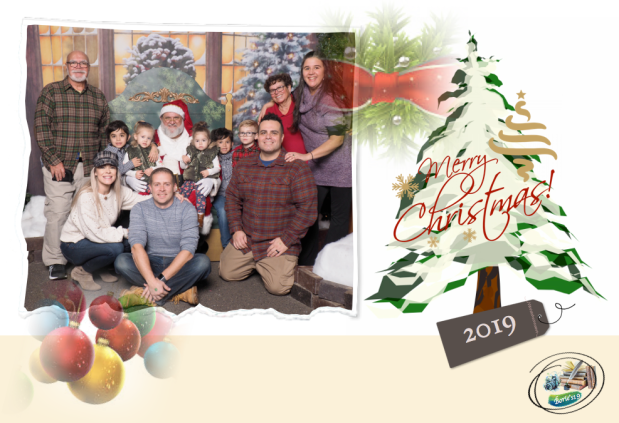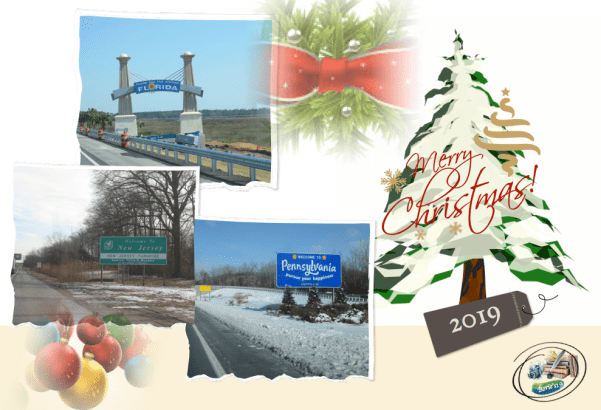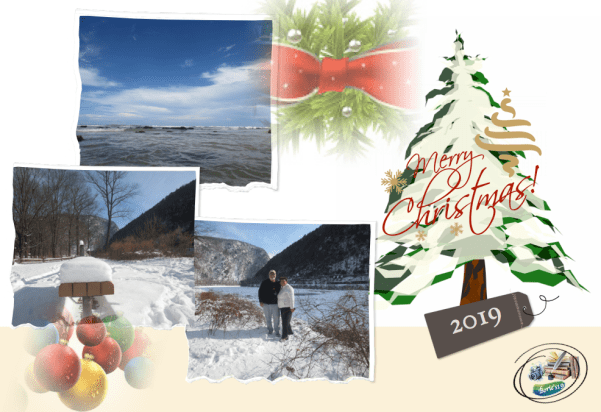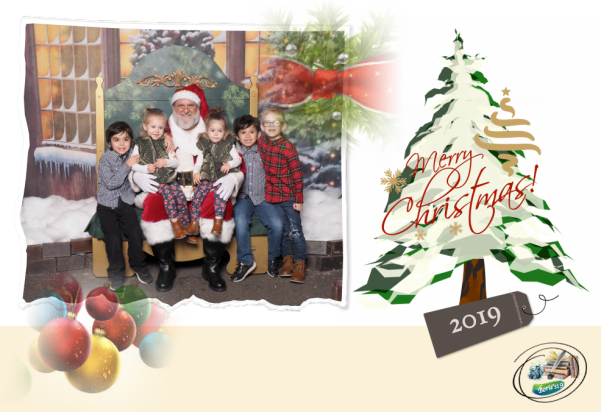
…sonhando o nosso Natal!. (Dreaming of our Christmas)!.

…sonhando o nosso Natal!. (Dreaming of our Christmas)!.

…sonhando o nosso natal!. (Dreaming of our Christmas)!.

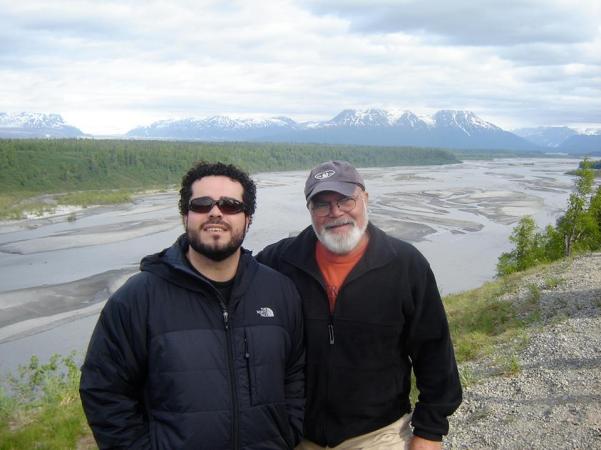
…nós, viajantes do mundo, na esperança de rever a família, levámo-nos numa aventura de algumas centenas de milhas em direcção ao norte, antes de começar uma curva para oeste, rumo à montanha, cercados de um cenário de neve com algumas das mais belas paisagens do mundo, onde num agradável passeio familiar, por alguns momentos “sonhámos o nosso natal”!. (We travelers from the world, hoping to see our family again, set out on a few hundred mile northward adventure before beginning a westward curve towards the mountain, surrounded by snow-capped scenery, some of the most beautiful landscapes in the world, where in a pleasant family outing, for a few moments we “dreamed of our Christmas”)!.

…e, para aqueles que passaram na classe de matemática da antiga quarta classe da escola primária, nós, já estamos a usar as cerca de 6.275 que nos restam, das 30.000, pois as outras 23.725 foram passadas crescendo e trabalhando, vezes que, como já mencionámos nos restam, para apreciar-mos o nascer e pôr do sol, com que somos contemplados durante a nossa já um pouco longa vida mas, neste momento e por ali, havia mais de 345.759.407… pés de neve, branca e fresca, onde, se as houvesse, as renas podiam puxar os trenós, guiados por aqueles “Pais Natais”, de faces rosadas e grandes barbas, também brancas!. (And for those who passed the math class of the former fourth grade elementary school, we are already using the remaining 6,275 of us, out of the 30,000, because the other 23,725 were spent growing up and working, sometimes, as we have mentioned, we have left to enjoy the sunrise and sunset with which we are contemplated during our already long life, but at this moment and there, there were more than 345,759,407… feet of snow, white and fresh, where, if there were any, the reindeer could pull the sleighs, guided by those “Christmas Fathers” with pink faces and big white beards)!.

…os nossos netos gritavam: “Uma história! Uma história!”. Nós, continuando a sonhar, claro, não os querendo desiludir, transformámo-nos numa “Árvore de Natal”, junto de muitas outras, todavia, algumas vozes apontadas em nossa direcção eram ouvidas, dizendo: “Esta é esplêndida, não queremos as outras”!. (Our grandchildren shouted: “A story! A story!”. We, continuing to dream, of course, not wanting to disappoint them, became a “Christmas Tree”, along with many others, yet some voices pointed toward us were heard saying, “This is splendid, we do not want the others”)!.

…ouvindo estas palavras, ficámos orgulhosos, vendo à nossa volta os nossos netos que, viam e admiravam junto a nós, o Menino Jesus, deitado num berço feito de palha, junto dos seus pais Maria e José, dos Reis Magos e das ovelhinhas, que tinham vindo de Belém, um país muito distante!. (Hearing these words, we were proud, seeing around us our grandchildren, who saw and admired beside us, the baby Jesus, lying in a cradle made of straw, next to his parents Mary and Joseph, of the wise men and the little sheep, who had come from Bethlehem, a country far away)!.

…estavam todos sentados à nossa volta, ou seja, junto da sua “Árvore de Natal”!. Os seus olhares dividiam-se em nós e nas bonitas embalagens dos presentes que nos rodeavam, dando mesmo a entender que escondiam coisas fascinantes, sonhos e desejos que se iriam realizar com a tarefa ofegante da sua abertura!. Tudo isto se passava numa casinha confortável ao lado de uma lareira com um fogo crepitante e quente, onde o vento soprava a neve do lado de fora, que se ouvia, uivando pela chaminé!. (Were all sitting around us, that is, by their “Christmas Tree”!. Their eyes were divided on us and the beautiful wrappings of the gifts that surrounded us, even implying that they hid fascinating things, dreams and desires that would be fulfilled with the panting task of their opening!. All this was set in a comfortable little house beside a fireplace with a crackling hot fire, where the wind blew the snow outside, howling through the chimney)!.

…então lembrámos e explicámos o Natal do nosso coração, muito diferente do que é celebrado hoje, onde os nossos pais, não tendo recursos financeiros, dando lugar a qualquer possibilidade de nos contemplar com qualquer presente, (a nossa querida avó Agar, às vezes nos oferecia aqueles bom-bons de chocolate de 1 tostão, embrulhados naquelas pratas azuis, amarelas e vermelhas), que saboreávamos ao cheiro e calor da fogueira na lareira, junto da chaminé negra do lume de inverno, no escuro da nossa aldeia de meninos, alumiados pela candeia de azeite, pois não existia luz eléctrica, onde o tal cheiro do Natal antecedia uns dias antes, com algumas brincadeiras de rua e, a visita pela mão da nossa avó Agar, para ver-mos o “presépio” na igreja da vila!. Era um Natal raro, que já não existe, assim como a bondade no coração de todos nós, também é rara ou está quase extinta!. (Then we remembered and explained the Christmas of our heart, very different from what is celebrated today, where our parents, having no financial resources, giving rise to any possibility of contemplating us with any gift, (our dear grandmother Agar, sometimes we were offered those penny-chocolate goodies, wrapped in those blue, yellow, and red silver) that we savored by the smell and warmth of the fire in the hearth by the black chimney of the winter fire in the dark of our village, lit by the oil lamp, because there was no electric light, where the smell of Christmas preceded a few days earlier, with some street games and the visit by the hand of our grandmother Agar, to see the “crib” in the village church!. It was a rare Christmas that no longer exists, just as goodness in our hearts is either rare or almost extinct)!.

…hoje, neste mundo de consumismo, trocam-se presentes, dão-se coisas uns aos outros das quais a maior parte não precisamos!. Um verdadeiro presente é oferecer algum carinho e compreenção, sobretudo saber ouvir, socorrer e escutar as outras pessoas em dificuldade, oferecer um par de óculos graduados a quem necessita, uma bengala a quem já não consegue caminhar sem ajuda, uma cadeira de rodas a um paralítico ou bens de primeira necessidade, principalmente a famílias com alguns filhos pequenos e em dificuldades, que não têm a possiblidade de os comprar!.
(Today, in this world of consumerism, they exchange gifts, give each other things that most of us don’t need!. A real gift is to offer some affection and understanding, especially knowing how to listen, help and listen to other people in difficulty, offering a pair of prescription glasses to those in need, a cane to those who can no longer walk without help, a wheelchair to a paralytic or basic necessities, especially to families with some young children in difficulty who cannot afford to buy them)!.

…acordámos!. Já passámos há muito as sete dezenas de anos de vida, temos viajado por anos e anos, atravessámos oceanos e diversos continentes, com tempestades de neve, chuva, pedras e poeira, lama, mas também a luz brilhante do sol e, até já visitámos o que dizem ser a sua casa, lá na aldeia de Polo Norte, no estado do Alaska e, acreditem que temos procurado, mas infelizmente, nunca encontrámos o Pai Natal!. (We woke up!. We have been long past seven dozen years of life, we have been traveling for years and years, we have crossed oceans and various continents, with snowstorms, rain, rocks and dust, mud, but also bright sunlight and we have even visited what they say is your home there in the village of North Pole, in the state of Alaska and believe me we have been looking for it but unfortunately we have never found Santa)!.

…tenham umas Boas Festas, companheiros da vida!. (Have a Happy Holidays, life mates)!.

Tony Borie, December 2019.

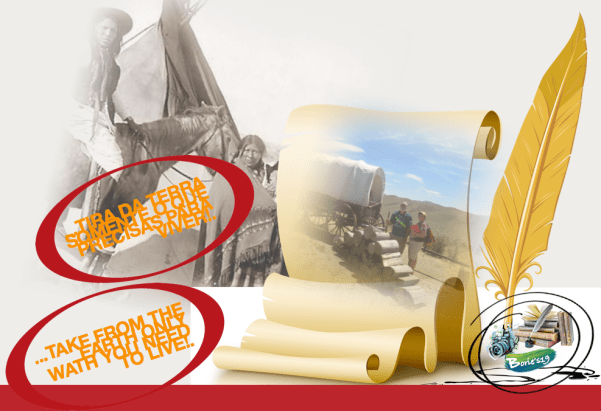
…tira da terra o que precisas para viver!.(Take from the earth only what you need to live)!.

…tira da terra o que precisas para viver!.(Take from the earth only what you need to live)!.

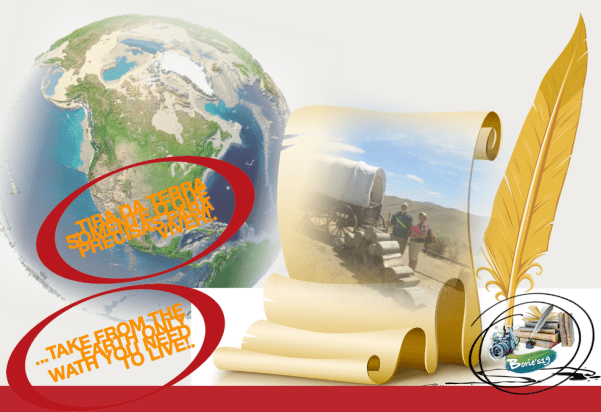
…tira da terra somente o que precisas para viver!. (Take from the earth only what you need to live)!.

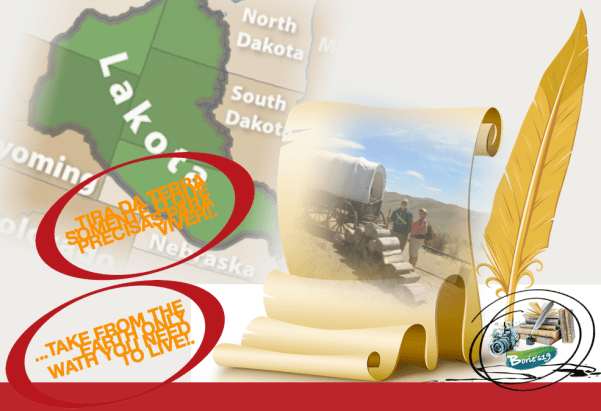
…nós caminhantes do mundo, viajávamos pelas Grandes Planícies do Norte, algumas delas ainda hoje reivindicadas pelo povo “Lakota”, oriundo da tribo “Sioux”, que habitavam partes dos estados americanos da Dakota do Sul, Dakota do Norte, Montana, Nebraska e Wyoming, mais precisamente as fronteiras que seriam o rio Yellowstone ao norte, o rio Platte ao sul, o rio Missouri ao leste e talvez uma linha irregular marcando o oeste!. (We hikers of the world traveled the Great Northern Plains, some of which are still claimed today by the Lakota people from the Sioux tribe, who lived in parts of the states of South Dakota, North Dakota, Montana, Nebraska and Wyoming, more precisely the borders that would be the Yellowstone River to the north, the Platte River to the south, the Missouri River to the east, and perhaps a jagged line marking the west)!.

…este povo indígena vivia livremente por aqui, em conjunto com os vastos rebenhos de búfalos, tendo a sua agricultura, principalmente de milho, que era a base do seu sustento, além da pesca e da caça sazonal aos búfalos, respeitavam a natureza, “retirando dela somente o necessário para sobreviver”!. (This indigenous people lived freely here, together with the vast buffalo herds, and their agriculture, mainly corn, which was the basis of their livelihood, in addition to fishing and seasonal hunting of buffalo, respected nature, “Taking from it only what is necessary to survive”)!.

…tudo isto antes de quase serem exterminados pela invasão e colonização deste imenso continente, pelos euro-americanos, que eram os tais colonos e exploradores, principalmente quando da descoberta de ouro na Califórnia e posteriormente em Montana que deu origem à Corrida ao Ouro, atravessando e invadindo o seu território!. (All of this before they were almost wiped out by the invasion and colonization of this immense continent by the Euro-Americans, who were such settlers and explorers, especially when gold was discovered in California and later in Montana which gave rise to the Gold Rush, crossing and invading your territory)!.

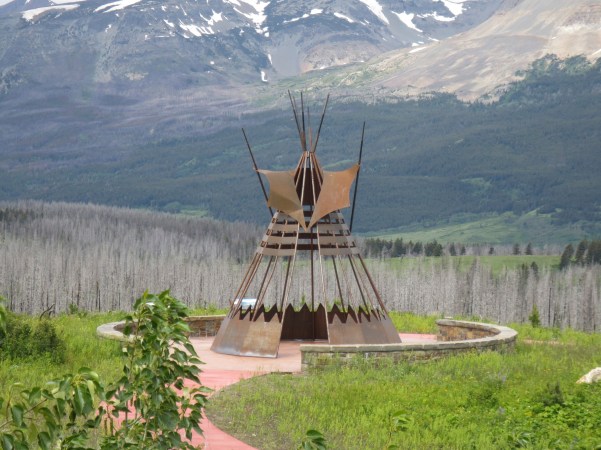
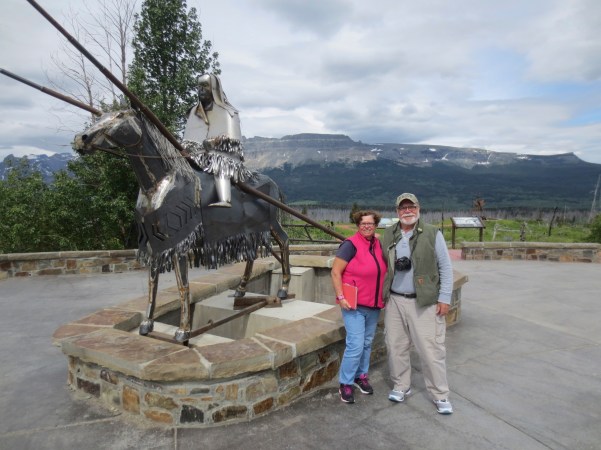
…hoje, quando viajamos por aqui, o cenário durante milhas e milhas é de algumas áreas de cultivo de trigo, cevada ou milho, alguns poços de petróleo trabalhando e, aqui e ali, talvez para nos lembrarem que aquela área em outros tempos foi território do povo “Lakota”, aparecem algumas tendas armadas desse povo, até pequenos monumentos!. (Today, when we travel here, the scenery for miles and miles is of some areas of wheat, barley or corn growing, some working oil wells, and here and there, perhaps to remind us that that area in other times it was territory of the “Lakota” people, some armed tents of that people appear, even small monuments)!.

…e, nós parámos num desses lugares, onde existia um letreiro com a seguinte legenda, que nos faz pensar e meditar na sabedoria deste povo!. Cá vai:  (and, we stopped in one of those places, where there was a sign with the following legend, that makes us think and meditate on the wisdom of this people!. Here goes:)

“Os velhos Lakotas amavam o solo e sentavam-se ou reclinavam-se no chão com o sentimento de estarem próximos de um poder maternal!. Era bom para a pele tocar a terra e os velhos gostavam de se descalçar e andar com os pés nus sobre a terra sagrada!. As tendas eram erguidas sobre a terra e os altares feitos de terra!. O solo era tranquilizante, revigorador, purificador e medicinal!. Por isso é que os velhos índios ainda hoje se sentam directamente na terra, fonte de suas forças vitais!. Para eles, sentar-se ou deitar-se no chão permite pensar com mais profundidade e sentir com mais clareza, podendo penetrar nos mistérios da vida e descobrir o seu parentesco com outras formas de vida ao seu redor!. Os velhos Lakotas eram sábios, sabiam que o coração do homem distante da natureza se torna duro, sabiam que a falta de respeito pelas coisas vivas leva imediatamente à falta de respeito pelos humanos”!. (“Old Lakotas loved the ground and sat or reclined on the floor with the feeling of being close to a motherly power. It was good for the skin to touch the earth, and the old men liked to take off their bare feet and walk with bare feet over the holy land!. The tents were erected upon the earth and the altars made of earth!. The soil was soothing, invigorating, purifying and medicinal!. That is why the old Indians still sit directly on the earth, source of their vital forces!. For them, sitting or lying on the floor allows them to think deeper and feel more clearly, and to penetrate the mysteries of life and discover their kinship with other life forms around them!. The old Lakotas were wise, they knew that the heart of man far from nature becomes hard, they knew that the lack of respect for living things leads immediately to the lack of respect for humans)!.

…que lição mais rica este povo nos dá, a nós seres humanos que pensamos que dominamos tudo o que existe sobre o planeta “Terra”, modificando, enviando para longe o tempo das trevas e da escuridão!. Pois pelo menos no mundo considerado desenvolvido, temos luz sempre que queremos, água quente ou fria sob demanda, comemos legumes frescos o ano todo, em casa existe o frigorífico, o fogão a gás ou eléctrico, a TV, lá fora ou na garagem está o carro com sistema aquecido e climatizado, temos ascesso à internet e, alguns até vivem com esses telefones de última geração todo o tempo que estão acordados, tomando conhecimento do que vai passando pelo resto do mundo!. (What a richer lesson these people give us, to us human beings who we think have mastered everything that exists on planet Earth, changing, sending away the time of darkness and darkness!. For at least in the developed world, we have light whenever we want it, hot or cold water on demand, we eat fresh vegetables all year round, at home there is the fridge, the gas or electric stove, the TV, outside or the garage is the car with heated and air-conditioned system, we have ascended to the internet and some even live with these state of the art phones all the time they are awake, knowing what is going on in the rest of the world)!.

…nós também gostamos de todas essas coisas modernas, portanto não somos contra nada disso mas, não podemos esquecer que todos nós somos governados por ciclos que não criamos e que, em algumas partes do mundo são designados por estação quente, estação das chuvas ou estação fria e, em outras partes são designamos por primavera, verão, outono e inverno, e claro, foi a natureza que os criou!. (We like all these modern things too, so we are not against any of this but we must not forget that we are all governed by cycles that we do not create and that in some parts of the world they are called hot season, rainy season or cold season and elsewhere we call it spring, summer, fall and winter, and of course, it was nature that created them !.

…nós os seres humanos, entre outros, criámos os ciclos do ano fiscal, do horário do trabalho ou até da temporada do futebol e, pensamos que estamos no comando, que estamos no control, pensamos até que dirigimos o ambiente em que vivemos, ficando libertos dos tais limites do mundo natural, que esses sim, só a natureza controla!. (We humans, among others, have created the cycles of the fiscal year, the working hours or even the football season and, we think we are in charge, we are in control, we even think we drive the environment in which we live , being freed from such limits of the natural world, that these, only nature controls)!.

…por exemplo, já pensaram que é a terra que nos alimenta!. Ela sim, a terra dá-nos tudo para viver, dá-nos a água, os cereais, os vegetais, as frutas, alimenta os animais e as aves que alguns consomem, as árvores que nos dão sombra, purificam o ambiente e nos fornecem a madeira para entre outras, construir habitações, o ciclo natural da luz, do sol para nos aquecer, do frio para limpar o solo de certas áreas e que a natureza entende que assim ficam melhor para receber as sementes que, no próximo ciclo nos dão uma boa colheita, ou até a escuridão necessária para descansar o cérebro e dormir!. (For example they already thought it is the land that feeds us!. Yes, the earth gives us everything to live, gives us water, cereals, vegetables, fruits, feeds the animals and birds that some consume, the trees that give us shade, purify the environment and provide us among others, to build houses, the natural cycle of light, the sun to warm us, the cold to clean the soil of certain areas, and that nature understands that it is better to receive the seeds that in the next cycle give us a good harvest, or even the darkness needed to rest the brain and sleep)!.

…somos caminhantes do mundo!. Em cada caminhada com a natureza, recebemos muito mais do que procuramos e, lembramos e meditamos sobre este povo “Lakota” que viviam em contacto com a terra ou seja, com a natureza, tanto nas estações torridas do verão como nos frios da neve Ártica do inverno e, do qual também somos admiradores e que, entre outras, nos dizem para “retirar da terra somente o necessário para viver”!. (We are hikers of the world!. In each walk with nature, we receive much more than we seek and remember and meditate on these “Lakota” people who lived in contact with the earth, ie nature, both in the torrential seasons of the summer and in the cold Arctic snow, from which we are also admirers and who, among others, tell us to “take from the earth only what is necessary to live”)!.

…todavia, felizmente e segundo as estatísticas, hoje ainda existem mais ou menos 170.000, mas infelizmente, somente cerca de 2.000 ainda falam a língua Lakota, ou seja Lakȟótiyapi!. (However, fortunately and according to statistics, today there are still around 170,000, but unfortunately, only about 2,000 still speak the Lakota language, ie Lakȟótiyapi)!.

Tony Borie, November 2019.


…há minas na estrada!. (There are mines on the road)!.

…há minas na estrada!. (There are mines on the road)!.

…há minas na estrada!. (There are mines on the road)!.

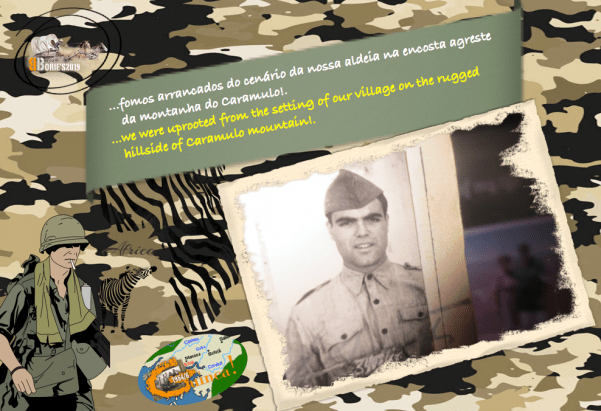
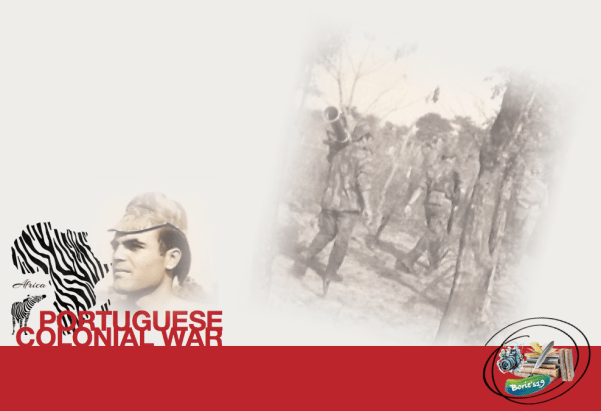
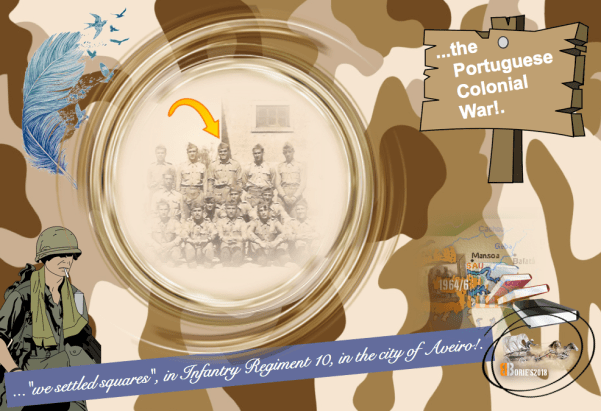
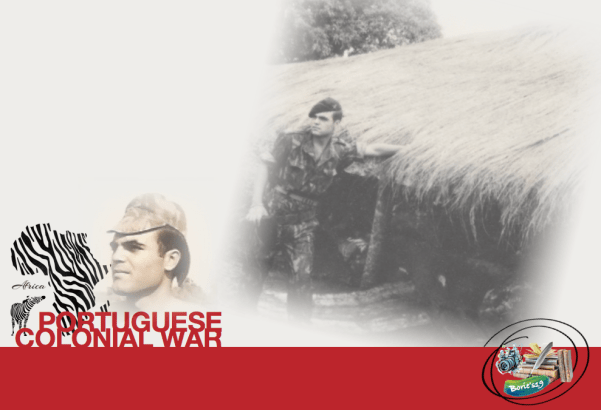
…já por diversas vezes explicámos alguns episódios da nossa dolorosa vivência como combatentes, por um período de dois anos, quando da passagem e envolvimento pela mobilização forçada, quando ainda éramos jovens, pouco mais que crianças, na mortífera guerra de guerrilha, que pouco a pouco se foi espalhando por toda a então Província Colonial Portuguesa da Guiné, em África, que envolviam alguns grupos armados que, fartos de um regime Europeu e colonial, pegaram em armas e, lutavam e morriam pela independência do seu território, querendo sobretudo ver-se livres das amarras que os prendiam às decisões com origens coloniais, do então governo colonial de Portugal, país situado na Europa!. (We have several times explained a few episodes of our painful experience as combatants, for a period of two years, when the passage and involvement by forced mobilization, when we were young, little more than children, in the deadly guerrilla war which little by little it was spreading throughout the Portuguese Colonial Province of Guinea, in Africa, involving some armed groups who, fed up with a European and colonial regime, took up arms and fought and died for the independence of their territory, especially wanting get rid of the bonds that bound them to decisions with colonial origins, from the then colonial government of Portugal, a country located in Europe)!.
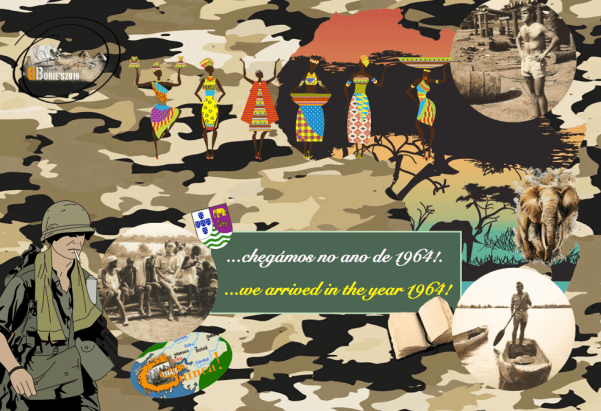
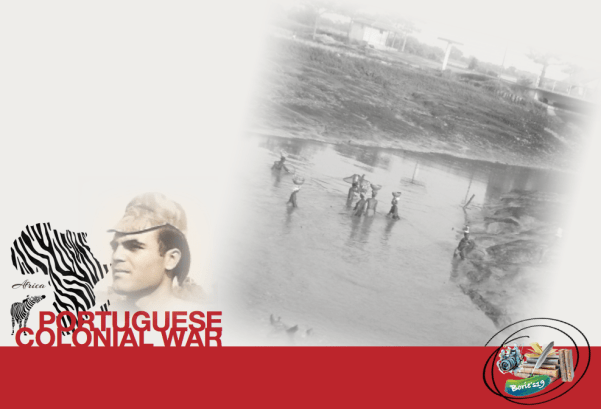
…numa então província, que nos livros da escola primária se designava por, Província Colonial da Guiné Portuguesa, em África, onde Portugal governou colonialmente por mais de cinco séculos, com uma enorme área pantanosa, onde combatendo esses grupos armados que lutavam pela independência do seu território, as forças armadas de Portugal ali estacionadas tentavam utilizar as suas forças navais anfíbias, para poder superar os problemas de mobilidade de ascesso às áreas subdesenvolvidas e pantanosas, porque nas áreas secas, onde existiam as savanas e florestas, as estradas eram “carreiros” quase sempre armadilhados!. (In a province, which in the books of the primary school was called, Colonial Province of Portuguese Guinea, in Africa, where Portugal ruled colonially for over five centuries, with a huge swampy area, where fighting these armed groups fighting for the independence of its territory, the Portuguese armed forces stationed there tried to use their amphibious naval forces to overcome the mobility problems of access to underdeveloped and swampy areas, because in the dry areas, where savannahs and forests existed, the roads were “Paths” almost always trapped)!.
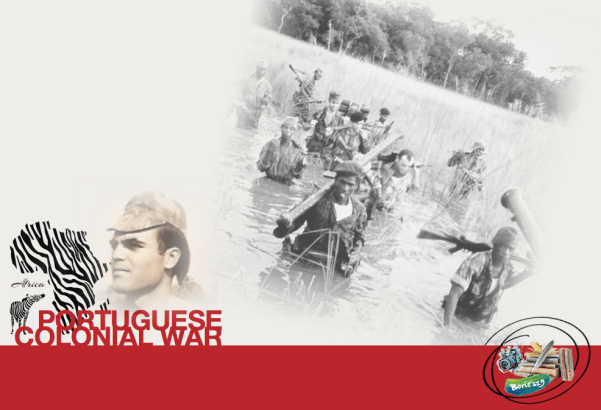
…nesta situação e, com o crescimento constante dos simpatizantes que lutavam e morriam pela independência do seu teritório, que eram recrutados entre a população rural pelos grupos de guerrilheiros, pouco a pouco as forças armadas de Portugal assumiram uma postura defensiva, limitando-se a defender o território de aldeias e vilas onde estavam estacionados aquartelamentos improvisados, com fortes dispositivos militares, porque fora dessas áreas, eram regularmente atacadas e, em algumas situações, eram fortemente fustigadas pelo fogo dos guerrilheiros, que conheciam o terreno em que se movimentavam!. (In this situation and, with the steady growth of supporters fighting and dying for the independence of their territory, who were recruited from the rural population by the guerrilla groups, little by little the Portuguese armed forces took a defensive stance, limiting themselves. defending the territory of villages and towns where makeshift quarters were stationed, with strong military devices, because outside these areas were regularly attacked and, in some situations, were strongly buffeted by the fire of the guerrillas, who knew the terrain on which they moved)!.
…como por diversas vezes explicámos “a maldição de um veterano é que nunca esquece” e hoje, iremos explicar um desses ataques às forças armadas Portuguesas!. O texto é um pouco longo, mas cremos que vale a pena ler, porque envolve episódios com motivos da vida de então, onde retratamos algumas injustiças que causavam sofrimento ao normal cidadão e que, os responsáveis pela governação do então Portugal, com regime colonial, entendiam que eram episódios de uma vida normal da época, principalmente que se devia morrer em combate ao serviço da mãe Pátria, numa qualquer província de África e, ficar por lá, enterrado em qualquer lugar, porque tudo eram províncias da nação Portugal, ou seja território Português, tal como fosse o Minho, o Alentejo ou o Algarve!. (As we have repeatedly explained “the curse of a veteran is that he never forgets” and today we will explain one of these attacks on the Portuguese armed forces!. The text is a little long, but we believe it is worth reading, because it involves episodes with motives of life then, where we portray some injustices that caused suffering to the normal citizen and that those responsible for the governance of then Portugal, with colonial rule, they understood that they were episodes of a normal life of the time, especially that one should die in combat at the service of the mother country, in any province of Africa, and stay there, buried anywhere, because they were all provinces of the nation Portugal, ie Portuguese territory, such as Minho, Alentejo or the Algarve)!.
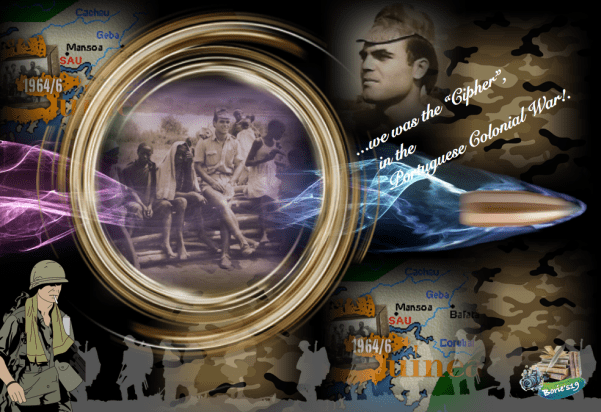
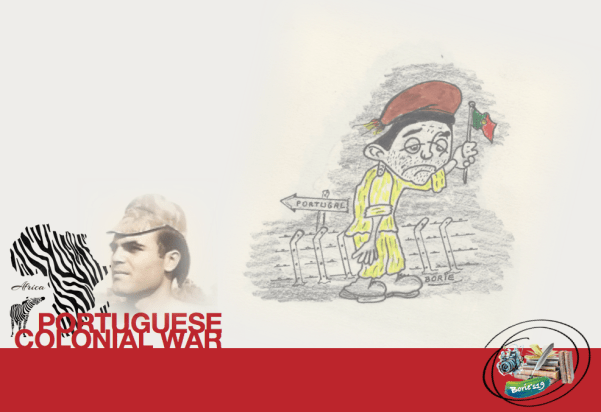
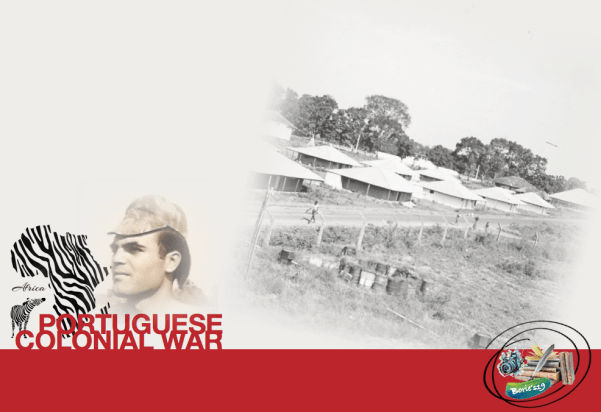
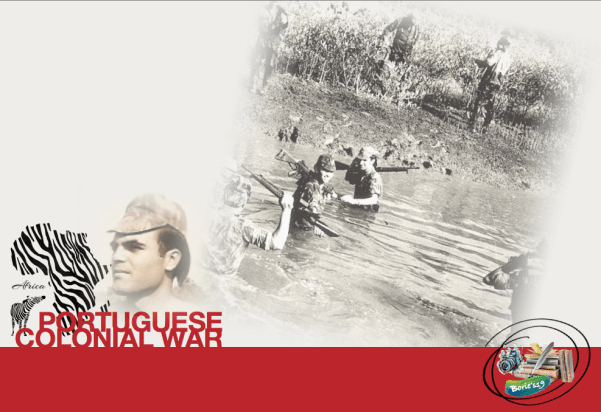
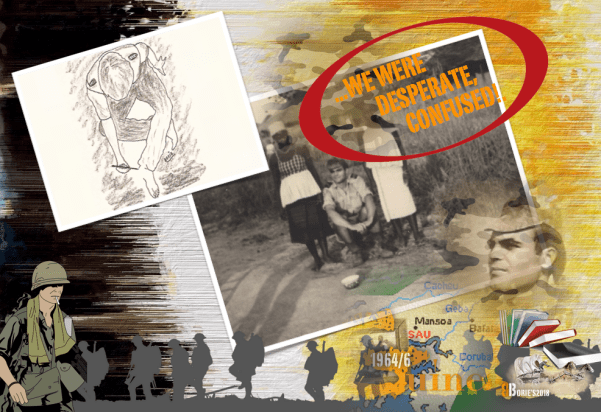
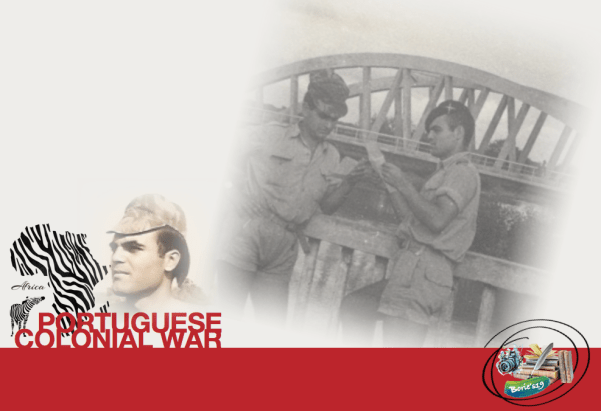
…este texto de acção, ou seja de combate, que vamos tentar relatar, passou-se na região do Oio, a saída desta coluna militar foi da vila de Mansôa, onde estávamos estacionados, iam a caminho da região de Mansabá, sendo descrita, logo à chegada ao aquartelamento, pelos companheiros “Mister Hóstia”, pelo “Setubal” e pelo “Curvas, alto e refilão”, dos quais infelizmente não temos fotografias, mas tentámos desenhar uns rabiscos, talvez exagerados, mas dão a entender o que para nós eram esses heróis companheiros que, quase todos dias andavam enterrados nas “bolanhas” (pântanos), rios, savanas e florestas da então província da Guiné, que a contaram, destroçados no corpo e na alma, interrompendo-se uns aos outros em profunda aflição, juntamente com os seus companheiros e, que todos os presentes no dormitório ouviram, onde mais tarde pouca diferença fazia do relatório que passou pelas nossas mãos, que exercendo as nossas tarefas de cifrar e decifrar mensagens, o traduzimos em código para ir para o comando territorial na capital da província!. (This action text, that is combat, which we will try to report, took place in the Oio region, the exit of this military column was from the village of Mansôa, where we were stationed, were going to the Mansabá region, being described, upon arrival at the barracks, by the comrades “Mister Host”, “Setubal” and “Curves, tall and fussy”, of which unfortunately we do not have photographs, but we tried to draw some scribbles, perhaps exaggerated, but they imply what for us were those fellow heroes who, almost every day, were buried in the “bolanhas” (marshes), rivers, savannas and forests of the province from Guinea, who told it, torn in body and soul, interrupting each other in deep distress, along with his comrades, and which everyone in the dormitory heard, where later it made little difference from the report that came to us, which in our task of encrypting and deciphering messages, translated it into code to go to territorial command in the provincial capital)!.
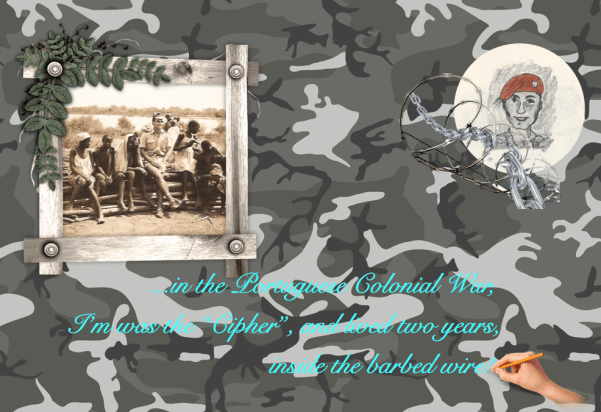
…nós, tirámos alguns apontamentos no nosso diário de guerra, mas são apenas rabiscos, mas que andam muito perto da verdade e, os nomes de “Mister Hóstia”, “Setubal” e “Curvas, alto e refilão”, são nomes de guerra, com que nos baptizávamos uns aos outros, como por exemplo nós, que éramos o “Cifra”!. A linguagem é um pouco rude em algumas palavras, mas era o natural da época, principalmente entre companheiros que viviam juntos num cenário de guerra bastante agressivo!. Portanto cá vai: (We have taken some notes in our war diary, but they are just scribbles, but they are very close to the truth, and the names of “Mister Host”, “Setubal” and “Curves, tall and fussy” are names war, with which we baptized each other, as we, for example, who were the “Cipher”!. The language is a little rough in some words, but it was the natural of the time, especially among mates who lived together in a very aggressive war scenario!. So here goes:)
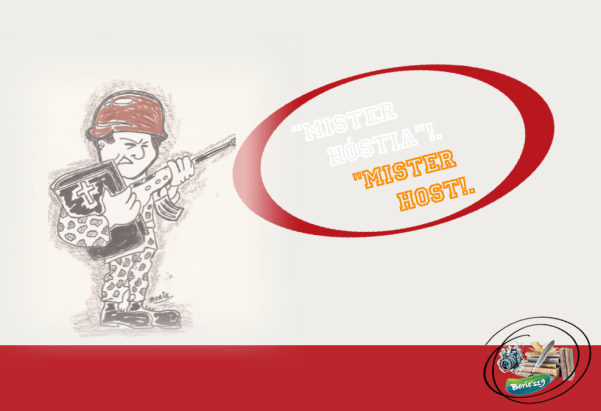
…o “Mister Hóstia”, soldado do Pelotão de Morteiros, que foi baptizado com este nome de guerra, porque andava sempre com uma bíblia pequenina, daquelas de bolso na mão e, não perdia qualquer oportunidade de recitar ou mesmo cantar partes dessa mesma bíblia!. Tudo isto se passava na barraca dormitória e, às vezes por horas, até o mandarem calar ou algum companheiro mais afoito, lhe arremeçar com um travesseiro!. (“Mister Host”, soldier of the Mortar Squad, who was baptized with this name of war, because he always carried a small bible, one of those pocket-sized in hand, and lost no opportunity to recite or even sing parts of it same bible!. All of this was going on in the dormitory tent, and sometimes for hours, until they shut him up or some daring companion tossed him a pillow)!.
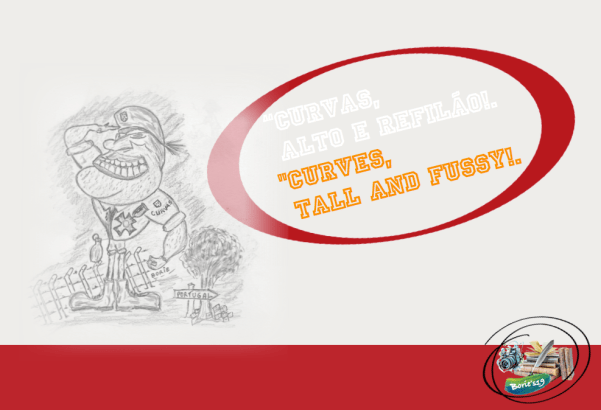
…uma certa vez, o “Curvas, alto e refilão”, também soldado do Pelotão de Morteiros, (um militar de combate, considerado “herói” pelos companheiros, sendo condecorado pelo então governo Português, pela sua bravura e defesa dos seus companheiros em combate, com a medalha Cruz de Guerra), até lhe queria mandar com um banco, feito da madeira de uma caixa de munições, dizendo-lhe, na sua linguagem rude e malcriada: (Once, the “Curves, tall and fussy”, also soldier of the Mortar Squad, (a combat military man, considered “hero” by his comrades, being decorated by the then Portuguese government, for his bravery and defense of his comrades in combat, with the Cross of War medal), even wanted to send him with a bench, made of the wood of an ammunition box, telling him, in his rude and rude language:)

     – Ou te calas com essa merda, ou parto-te já este banco nos cornos!.
     – (Or shut up with that shit, or break this seat in the horns already)!.
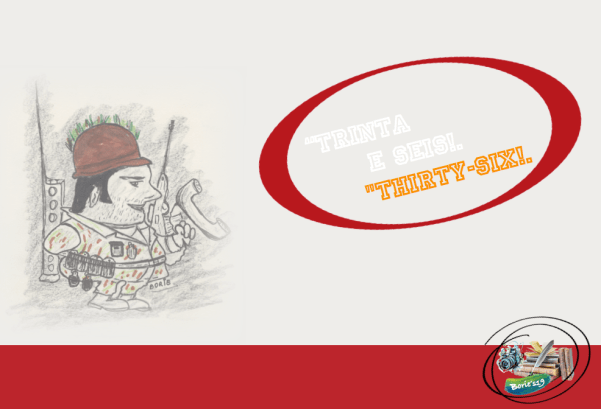
…quem o salvou, foi o “Trinta e Seis” (soldado rádio-telegrafista, era o seu nome de guerra), baixo e forte na estatura, que quando caminhava, alguns diziam que “rolava” e, ele rindo-se mostrava o terceiro dedo da mão direita, também direito, que se intrometeu e disse ao “Curvas, alto e refilão”, com ar grave e decidido: (Who saved him was the “Thirty-Six” (radio-telegraph soldier, was his name of war), short and strong in stature, who when he walked, some said he “rolled” and, laughing showed the third finger of the right hand, also right, that intruded and said to the “Curves, tall and fussy”, with serious and determined air:)

    – Quanto mais velho estás, mais bruto te tornas!. Cala-te e vê se ouvindo isto, purificas a tua alma!.
  – (The older you are, the grosser you become!. Shut up and see if you hear this, you purify your soul)!.

…ao que o “Curvas, alto e refilão”, logo responde: (To which the “Curves, tall and fussy”, soon answers:)

– Alma, uma merda!. A minha alma, se é que isso existe, já está no inferno, desde que a desgraçada da minha mãe, me abandonou quando era criança!.
– (Soul, shit!. My soul, if any, is already in hell since my mother’s bastard left me as a child)!.

…agora, fazemos um pequeno intervalo, saindo do cenário de guerra onde estávamos, explicamos um pouco a história de vida do companheiro “Curvas, alto e refilão” antes do seu alistamento nas forças armadas!. (Now, we take a short break, leaving the war scene where we were, explain a little the life story of fellow “Curves, tall and fussy” before his enlistment in the military)!.
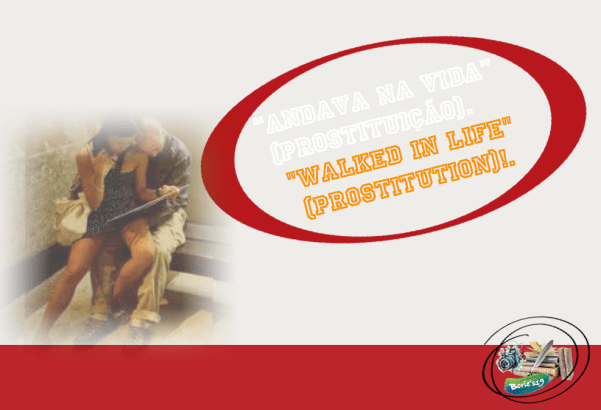
…não tinha família, tinha sido abandonado pela sua mãe, que diziam que “andava na vida” (prostituição). Era oriundo de uma aldeia da província da Beira Alta, perto de Espanha, andou primeiro, encostado a uns vizinhos, que lhe davam de comer, dormindo num palheiro desses mesmos vizinhos, depois já mais crescido, meteu-se à estrada, caminhando e estendendo a mão, pedindo comida aqui e ali, roubando fruta e outras coisas, vindo parar à capital Lisboa, talvez na procura da mãe, que era o que os vizinhos lhe diziam onde ela devia estar a viver!. (Had no family, had been abandoned by his mother, who said he “walked in life” (prostitution)!. He was originally from a village in the province of Beira Alta, near Spain!. He walked first, leaning against some of his neighbors, who were feeding him, sleeping in a haystack of those same neighbors, his hand, asking for food here and there, stealing fruit and other things, coming to the capital Lisbon, perhaps looking for his mother, which was what the neighbors told her where she should be living)!.

…na capital Lisboa, conviveu com rapazes da rua, alguns nas mesmas condições, sem qualquer família, começando por usar uma caixa de engraxar sapatos por um período diário de mais ou menos oito horas, pois a referida caixa, pertencia a uma espécie de “sindicato”, onde entregavam uma certa quantia em dinheiro pelo seu aluguer, tanto fazia que trabalhassem ou não e, entre eles diziam: (In the capital Lisbon, he lived with street boys, some in the same conditions, without any family, starting by using a shoe shine box for a daily period of about eight hours, because the box belonged to one species “syndicate”, where they gave a certain amount of money for their rent, whether they worked or not, and among them said:)

     – Esta caixa, não tem boas escovas, da próxima, quando for levantá-la ao “sindicato”, quero a “número cinco”, é mais alta e tem escovas das novas e boas!.
     – (This box, has no good brushes, next time when I raise it to the “syndicate”, I want “number five”, is taller and has new and good brushes)!.

…portanto a referida caixa, era uma peça de ferramenta que trabalhava vinte e quatro horas por dia, mas em diferentes mãos, tal como se fosse um táxi, de uma importante empreza!. (So that box was a piece of tool that worked twenty-four hours a day, but in different hands, as if it were a taxi, of an important enterprise)!.

…o seu corpo alto e curvado, foi o motivo para o seu baptizmo com o nome de guerra “Curvas, alto e refilão”, talvez fosse derivado a ter cescido durante anos, curvado, trabalhando na caixa de engraxar sapatos!. Usava a referida caixa, mais ou menos das dez da noite até às seis da manhã, em zonas pouco recomendáveis a uma criança da sua idade, como por exemplo, em frente e dentro de bares, que estavam abertos toda a noite, em frente a casas de prostituição, em ruas mal iluminadas, mas que tinham movimento àquela hora e, em outros locais pouco recomendáveis, pelo menos como já explicámos, a uma criança!. Cremos que daí, nasceu a sua reles linguagem!. (His tall, curved body was the reason for his baptism under the war name “Curves, tall and fussy”, perhaps derived from having grown for years, bent over, working on the shoe shine box!. He used the box, from about 10 pm to 6 am, in areas not recommended for a child of his age, such as in front of bars, which were open all night in front of houses of prostitution, in dimly lit streets, but which were moving at this hour, and in other places not recommended, at least as we have already explained, to a child!. We believe that from there his poor language was born)!.

…crescendo neste ambiente, passado uns anos, sabia como roubar uma carteira do bolso de um casaco ou de umas calças sem que o dono se apercebesse, como pedir esmola a um turista em francês ou inglês, sabia os locais na capital onde a vida lhe era mais fácil, sabia os sintomas e como podia vigarizar uma pessoa chegada recente à capital, vendendo-lhe mesmo a “Estação do Rossio”, enfim, tinha a escola da rua!. (Growing up in this environment, after a few years, knew how to steal a wallet from the pocket of a coat or trousers without the owner noticing, how to beg a tourist in French or English, knew the places in the capital where the life was easier for him, he knew the symptoms, and how he could swindle a newcomer to the capital, even selling him the “Rossio Station”, so he had the street school)!.

…claro, pouco a pouco, conforme aumentavam os seus conhecimentos naquele ambiente de rua, também aumentavam a sua ficha na esquadra da polícia, pois, por dezenas e dezenas de vezes, foi apanhado na hora certa, mas no local errado e, quando chegou o momento de que pensava que tinha a idade, essas mesmas autoridades ao libertarem-no mais uma vez, lhe recomendaram o serviço militar obrigatório, apresentando-se de seguida num quartel da capital dizendo que queria ser militar!. (Of course, little by little, as your knowledge in that street environment increased, so did your record at the police station, because dozens and dozens of times you were caught at the right time, but in the wrong place and, when the time came when he thought he was of age, these same authorities, releasing him once again, recommended compulsory military service, then reported to a barracks in the capital saying he wanted to be a military man)!.

…recebeu o tal treino, de como defender-se e saber matar, de que ele não precisava, pois a sua curta vida já lhe tinha proporcionado todas essas “virtudes” e, foi defender a sua mãe Pátria, pois a mãe verdadeira, essa abandonou-o, “andava na vida” (prostituição), dormindo todos os dias em camas diferentes, levando beijos, que em lugar de carícias eram mordidelas de escorpião, carícias no seu corpo, que em lugar de atitudes de amor, eram apertões que lhe deixavam marcas negras em todo o corpo, de pessoas desesperadas, que se queriam servir dela por uns minutos e, quando passavam a boca pelo seu corpo, pensavam que estavam a comêr um bife de uma vaca com carne de boa qualidade!. (Received such training, how to defend himself and know how to kill, which he did not need, because his short life had already provided him with all these “virtues” and went to defend his mother country, because the true mother, she abandoned him, “walked in life” (prostitution), sleeping every day in different beds, taking kisses, which instead of caresses were bites of scorpion, caresses in his body, which instead of attitudes of love, were squeezes that left black marks all over her body, desperate people who wanted to serve her for a few minutes, and when they mouthed her body, they thought they were eating a beef steak of good quality)!.

…e o agora nosso companheiro, soldado de combate “Curvas, alto e refilão”, não mais soube dela, se nesse momento a visse, não a reconhecia, pois talvez já estivesse a morrer com a doença de sífilis, que naquele tempo não perdoava, ou tivesse sido atirada ao rio Tejo, por não ter cumprido, com as regras do seu “chavalo” (pessoa que a explorava e vigiava), que lhe dizia, com a boca a cheirar a tabaco e álcool de fraca qualidade, com as unhas tratadas, mas cheirando mal por todos os poros do seu corpo, pois o seu banho, era o perfume de qualidade baixa, que comprava aos ciganos, às vezes nem comprava, era a troco dos favores das “garinas” (jovens prostitutas), que tinha por sua conta!. (And now our companion, combat soldier “Curves, tall and fussy” no longer knew of her, if at that moment saw her, did not recognize her, because perhaps was already dying with the disease of syphilis, which at that time did not forgive, or had been thrown into the Tagus River, for not having complied with the rules of her “chavalo” (the person who exploited and watched over her), who said to her, with her mouth smelling of poor quality tobacco and alcohol, with her nails treated, but smelling bad for every pore of her body, because her bath, was the scent of low quality, which bought the gypsies, sometimes did not even buy, was in exchange for the favors of the “girls” (young prostitutes), which was on your own)!.

…e, com os olhos, sem qualquer brilho, postos nos seus, pensando que via na sua frente, uma vaca leiteira, que lhe devia de dar uns tantos litros de leite ao dia, lhe dizia, passando na sua cara umas mãos secas e amarelas pelo cigarro que sempre segurava entre os dedos, que a protegia e que ninguém lhe faria qualquer mal, pois ele, era o seu dono e senhor e, que nessa noite, depois de se prostituir até alta madrugada, na rua, nos bares, ou num simples táxi, teria o previlégio, como prémio, ir dormir com ele, num reles quarto de umas águas furtadas, que ocupava algumas horas durante o dia ou da noite, pois esse mesmo quarto, era um local de trabalho, servindo de ponto de encontro, para o serviço das suas “garinas” (jovens prostitutas), que mantinha no mercado de prostituição!. (And with his eyes, without any glare, on his, thinking that he saw in front of him, a dairy cow, that should give him a few liters of milk a day, he said, rubbing his hands over his face dry and yellow from the cigarette he always held between his fingers, which protected her and that no one would do her any harm, for he was its owner and lord, and that night, after prostituting herself until dawn, on the street, in the streets bars, or a simple taxi, would have the privilege, as a prize, go to sleep with him, in a poor room of attic, which occupied a few hours during the day or night, because that same room, was a place of work, serving meeting place, for the service of their “girls” (young prostitutes), who kept in the prostitution market)!.

…enfim, a mãe abandonou-o, talvez quando ele mais precisava dela, e juntamente connosco, pois navegámos pelo oceano Atlântico, no porão do mesmo navio de carga, desembarcando nesta província do então Ultramar Português e, neste cenário de guerra, cumprimos um período de tempo forçado de dois anos, juntos, amigos, combatentes e sobreviventes, de uma horrível guerra de guerrilha!. (Finally, the mother abandoned him, perhaps when he needed her most, and together with us, as we sailed through the Atlantic Ocean, in the hold of the same cargo ship, landing in this province of the then Portuguese Overseas and, in this war scenario, we have met a forced time of two years together, friends, combatants and survivors, of a horrible guerrilla war)!.

…perdoem se nos alongámos, mas todo este relato era o que o companheiro “Curvas, alto e refilão” nos contava, em alguns momentos em que lhe vinham algumas lágrimas aos olhos, principalmente quando aterrava por lá a avioneta do correio, onde quase todos recebiamos notícias da família e, ele não, nunca recebeu uma simples carta durante todos estes dois anos e, nesse momento se recolhia, umas vezes sentado no chão, outras deitado e encolhido no capim rasteiro, que existia em determinada área do aquartelamento, não muito distante do local onde exercíamos as nossas tarefas de cifrar e decifrar mensagens e nós, vendo-o lá, iamos ao seu encontro, ouvindo-o, às vezes por horas!. (Forgive us if we lengthened, but all this report was what the fellow “Curves, tall and fussy” told us, in some moments when there were some tears coming to his eyes, especially when the plane of the post landed there, where we almost all heard from the family, and no, he never received a simple letter during all these two years and at that moment he would retreat, sometimes sitting on the floor, sometimes lying and huddled in the undergrowth that existed in a certain area of the quarter, not far from where we were to encrypt and decipher messages, and we, seeing him there, would meet him, listening to him, sometimes for hours)!.

…depois de lerem este relato, compreenderão melhor a linguagem e algumas atitudes do companheiro “Curvas, alto e refilão”, em relatos seguintes, onde ele é o protagonista!. (After reading this account, you will better understand the language and some attitudes of the companion “Curves, loud and fussy”, in subsequent reports, where he is the protagonist)!.

…mais uma vez perdoem este intervalo no texto, mas vamos voltar ao cenário de guerra, falando do “Mister Hóstia”, (espero que ainda se lembram do nome deste companheiro), que neste momento, faz parte de uma coluna militar, que tem que viajar entre duas áreas no interior norte, entre aldeias onde existem aquartelamentos das forças armadas Portuguesas!. (Once again forgive this break in the text, but let’s go back to the war scene, talking about the “Mister Host”, (I hope you still remember the name of this fellow), who is now part of a military column who have to travel between two areas in the northern interior, between villages where there are quarters of the Portuguese armed forces)!.

…ele, o “Mister Hóstia” vai contar-nos, ou seja, nós vamos tentar escrever o mais aproximadamente o que foram as suas palavras!. Algumas cenas são horríveis, mais uma vez perdoem, não queremos de alguma maneira ferir os vossos sentimentos, vai descrever-nos o mêdo e a angústia por que passou, tal como nos contou a nós no momento da chegada ao aquartelamento, explicando um cenário que nós, ao ouvir este relato, nos arrepiámos, comovendo-nos, indo pouco a pouco perdendo a cor da cara, tendo-nos sentado para não cair no chão! O “Mister Hóstia”, com as lágrimas nos olhos e a tremer de emoção, ia nos contando: (He, the “Mister Host” will tell us, that is, we will try to write as roughly as his words were, some scenes are horrible, once again forgive, we do not want to hurt your feelings will describe to us the fear and anguish you have experienced, as you told us upon arrival at the barracks, explaining a scenario that we, on hearing this account, shuddered, moved, bit by bit, losing face color, having us sit so we don’t fall to the floor!, The “Mister Host”, with tears in his eyes and shaking with emotion, was telling us:).

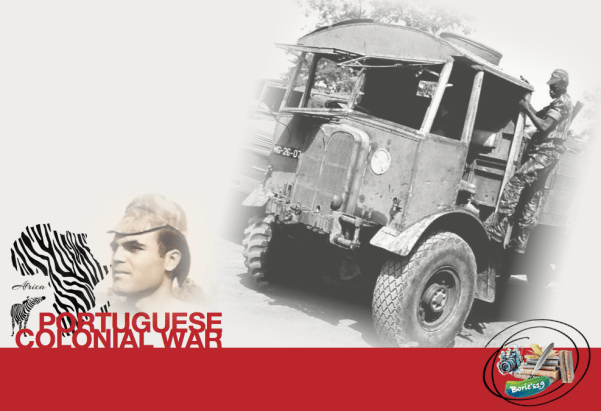
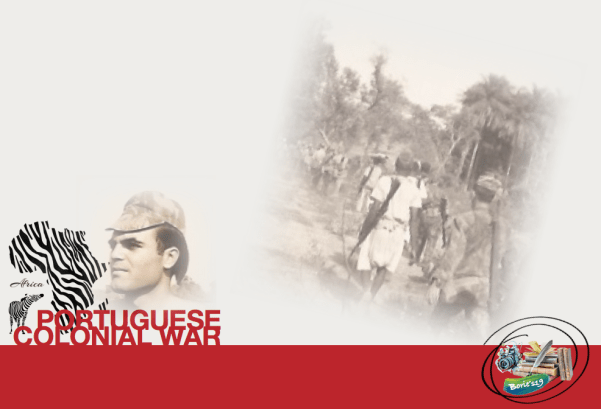
…atravessam zonas de combate!. A estrada de terra batida por onde vão passar é estreita, em alguns locais, além de alguma água existe capim e árvores rasteiras de ambos os lados, quase encobre a estrada!. É um potencial local para uma possível emboscada, colocação de minas ou fornilhos, pelo menos no momento em que transitam viaturas auto!. (Cross combat zones!. The dirt road they are going to pass is narrow, in some places, besides some water there is grass and undergrowth on both sides, almost covering the road!. It is a potential place for a possible ambush, mines or fornillos, at least when driving cars)!.

…o “Mister Hóstia”, tal como o “Setubal”, e o “Curvas, alto e refilão” que eram militares de combate, pois pertenciam a uma unidade de pelotão de morteiros, já tinham alguma experiência em combate!. (“Mister Host”, like “Setubal”, and “Curves, tall and fussy” who were combat soldiers, since they belonged to a mortar platoon unit, already had some combat experience)!.
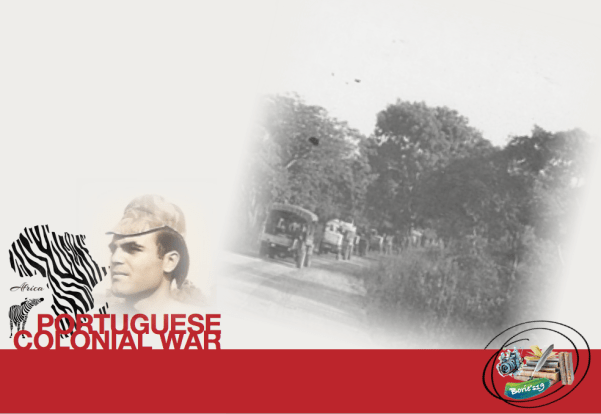
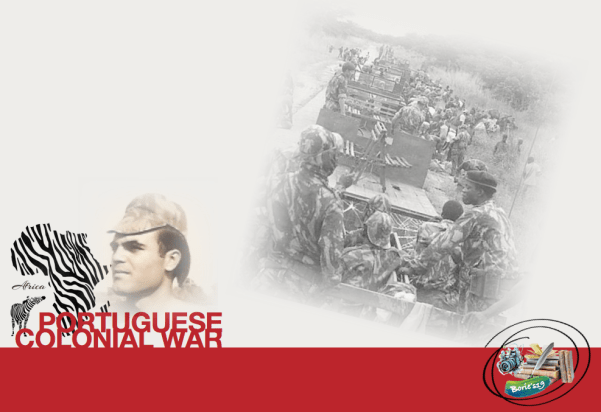
…nessa manhã, o “Mister Hóstia”, cheio de fé, pois meia hora antes de partirem já estava de joelhos, encostado ao mosquiteiro em oração profunda!. Viajam agora com parte de uma companhia de intervenção, reforçada com alguns soldados guinéus alistados nas forças armadas, que normalmente serviam de guias e tradutores!. Eram transportados em viaturas abertas, tipo quatro bancos compridos no topo da viatura, dois ao meio, de costas um para o outro, e por vezes dois mais, um de cada lado!. (This morning the “Mister Host”, full of faith, for half an hour before leaving was already on his knees, leaning against the mosquito net in deep prayer!. They are now traveling with part of an intervention company, reinforced with some Guinean soldiers enlisted in the military, who usually served as guides and translators!. They were carried in open cars, like four long seats on top of the car, two in half, with their backs to each other, and sometimes two more, one on each side)!.

…aquela viatura estava coberta com sacos de areia na frente, para sofrer menos com o impacto de possível rebentamento de uma mina, ou qualquer outro engenho explosivo!. O “Mister Hóstia”, nunca viajou na frente ao lado do condutor, o seu lugar preferido nestas situações era o
segundo a contar de trás, num dos bancos do meio, portanto nem o primeiro nem o terceiro, no segundo é que se sentia mais confortável!. (That vehicle was covered with sandbags at the front, to suffer less from the impact of a possible mine blast, or any other explosive device!. The “Mister Host” never traveled in front of the driver’s side, his favorite seat in these situations was the second from behind, in one of the middle seats, so neither the first nor the third, in the second it felt more comfortable)!.

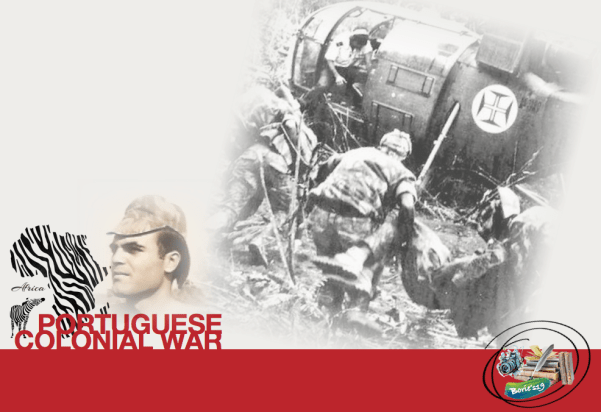
…as viaturas que faziam parte desta coluna militar, rolavam a uma velocidade muito baixa, talvez dez ou quinze quilómetros por hora!. Iam devagar, mesmo muito devagar, vigilantes, no entanto fazia um calor infernal e um silêncio demasiado calmo!. No espaço de segundos, a coluna é flagelada por rajadas de metralhadora, seguida de uma forte rebentação!. Uma rebentação, estrondosa!. (The vehicles that were part of this military column, rolled at a very low speed, maybe ten or fifteen kilometers per hour!. They were slow, very slow, watchful, yet it was hellish heat and too quiet! Within seconds, the column is plagued by bursts of machine gun, followed by a loud burst!. A crashing, thunderous)!.

…o “Mister Hóstia”, só se lembra de, já no chão, na berma da estrada, sem capacete de protecção, sem a G-3, mas com os carregadores à cinta, apalpar a cabeça por diversas vezes, assim como algumas partes do corpo na procura de sangue, o que felizmente não viu!. Abaixou-se o mais que pode, procurando esconder o corpo!. (“Mister Host” only remembers, already on the ground, on the side of the road, without protective helmet, without the G-3, but with the loaders in the belt, to feel the head several times, as well as some parts of the body in search of blood, which fortunately did not see)!. He bent down as far as he could, trying to hide his body)!.
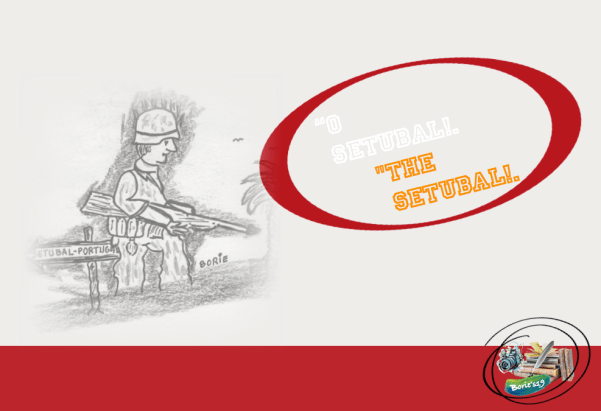
…com o impacto da rebentação da mina ou qualquer outro engenho explosivo, na frente da viatura, quase todos os militares foram projectados, e voaram para o chão!. O barulho dos tiros que se seguiu à rebentação, era cada vez mais forte, vinham das árvores, lá ao longe!. A seu lado, um militar, também já com uma certa experiência em combate, o “Setubal” (seu nome de guerra, derivado a ser oriundo da cidade de Setubal), não parava de dar tiros na direcção das árvores, consumiu todas as suas munições, as que trazia e as que o “Mister Hóstia” lhe deu!. (With the impact of the mine breaking or any other explosive device in front of the vehicle, almost all the military were projected, and flew to the ground!. The noise of the gunshots that followed the surf was getting louder, coming from the trees far away!. Beside him, a military man, also already with some combat experience, the “Setubal” (his war name, derived from the city of Setubal), kept shooting at the trees, consumed all his ammunition, the ones he brought, and the ones the “Mister Host” gave him)!.

…passado uns longos dez, quinze ou vinte minutos, ninguém sabia ao certo, o som dos tiros fica menos frequente de parte a parte, até que terminaram!. Ouviam-se, gemidos, alguns gritos de aflição e o som de qualquer coisa a arder, com algum fumo expesso que saía do que restava da frente da viatura!. (After a long ten, fifteen or twenty minutes, no one knew for sure, the sound of the gunshots is less frequent from side to side until they are finished!. There were moans, some shouts of distress, and the sound of something burning, with some thick smoke coming out of what was left of the front of the car)!.

…quase simultâneamente começou a ouvir-se as palavras obscenas e a fúria do “Curvas, alto e refilão”, que apesar de ferido na parte inferior de uma perna, com a ajuda da sua G-3 servindo de muleta, caminhava de um lado para o outro, gesticulando, chamando por alguns nomes de companheiros, querendo certificar-se se havia mais alguém ferido precisando de ajuda!. (Almost simultaneously began to hear the obscene words and fury of the “Curves, tall and fussy”, who despite being injured at the bottom of one leg, with the help of his G-3 serving as a crutch, walked from side by side, gesturing, calling for some names of mates, wanting to make sure someone else was injured in need of help)!.

…o “Setubal”, levanta-se devagar, olha em volta, e deita-se de novo ao lado do “Mister Hóstia” e, com as mãos na cabeça, exclama: (The “Setubal”, slowly gets up, looks around, and lies down again next to the “Mister Host” and, with his hands on his head, exclaims:)

    – Meu Deus, que desastre!.
    – (My God, what a disaster)!.

…e tinha sido um desastre!. Houve três mortos e sete feridos, alguns com balas no corpo!. A frente da viatura, destroçada pela rebentação do engenho explosivo, estava trucidada!. Do “Vouzela” (seu nome de guerra, por ser oriundo da então vila de Vouzela), que era o condutor, e do furriel Madeira, que era o militar que ia a seu lado, foram recolhidas algumas partes do corpo!. Recolheram, os pés, com parte das pernas e parte da cintura, assim como alguma parte superior do corpo e da cabeça, que estavam protegidos pelas botas, cinto das cartucheiras e pelo capacete, que guardaram em dois casacos camuflados que o “Setubal” e o “Mister Hóstia”, despiram!. Havia sangue e pedaços de carne humana colados ao que restava da frente da viatura!. (And it had been a disaster!. There were three dead and seven wounded, some with bullets in the body)!. The front of the car, shattered by the explosion of the explosive device, was smashed!. From the “Vouzela” (his name of war, coming from the then village of Vouzela), which was the driver, and from the furriel Madeira, which was the military man who was by his side, some body parts were collected!. They gathered their feet, part of the legs and waist, as well as some upper body and head, which were protected by the boots, cartridge belt and helmet, which they kept in two camouflage coats that the “Setubal” and the “Mister Host” undressed!. There was blood and pieces of human flesh glued to what was left of the front of the car)!.

…um militar, acabou de morrer nos braços do “Mister Hóstia”, as suas últimas palavras, foram mais ou menos estas: (A military man, just died in the arms of the “Mister Host”, his last words were something like this:)

“Mister Hóstia”, vou morrer, diz ao amigo “Cifra” (era o nosso nome de guerra devido às nossas tarefas), que mande todas as minhas coisas, mais aquilo que ele sabe, para a minha família em Portugal, que era de onde eu nunca devia ter saído!.
– (“Mister Host”, I’m going to die, tell my friend “Cifra” (it was our name of war due to our tasks), to send all my things, plus what he knows, to my family in Portugal, which was where I should never have left)!.

…estas palavras, foram ditas devagar, aos soluços e com uma bondade nos olhos, que o “Mister Hóstia”, não mais pode esquecer!. (These words were spoken slowly, with sobs and with a kindness in their eyes, which the “Mister Host” can no longer forget)!.

…o “Mister Hóstia”, ainda lhe disse: (The “Mister Host”, said to him:)

– Não morres nada, pois não tens qualquer ferimento!.
– (You die nothing, for you have no injury)!.

…mas a sua cara tombou para o lado e morreu!. Este militar não mostrava qualquer ferimento à vista no corpo, mas ao virarem-no de costas, viram sangue, descobrindo uma bala alojada nas costas, um pouco abaixo da clavícula, todos diziam que essa bala alojada no seu corpo, não era motivo para morrer, mas possivelmente algum orgão lhe rebentou por dentro, com o impacto da rebentação da mina, ou minas, ninguém sabia!. (But his face fell to the side and died!. This military man showed no visible injury to his body, but turning his back saw blood, discovering a bullet lodged in the back, just below the collarbone, all said that this bullet lodged in his body was no reason to die, but possibly some organ burst inside, with the impact of the mine breaking, or mines, nobody knew)!.

…pedidos socorros, vieram dois helicópteros, que recolheram o morto, o que restava dos outros dois mortos e alguns feridos com mais gravidade!. Os feridos sem gravidade, incluindo o “Curvas, alto e refilão”, assim como o resto dos militares, regressaram ao ponto de partida!. (Calls for help, came two helicopters, which collected the dead, what was left of the other two dead and some more seriously injured!. The non-serious wounded, including the “Curves, all and fussy”, as well as the rest of the military, returned to the starting point)!.
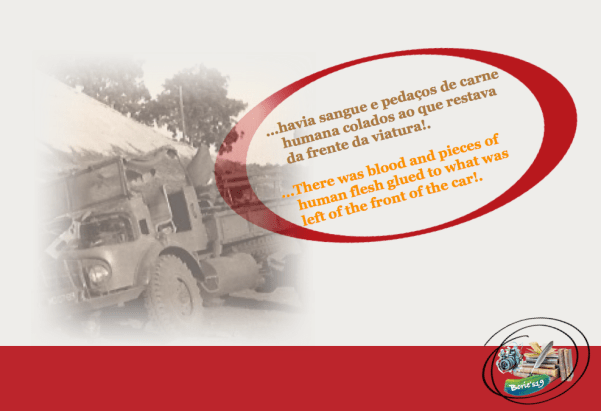
…uns dias depois, foram buscar o que restava da viatura, onde já faltavam, algumas partes e onde estavam escritas legendas provocatórias e de intimidação aos militares, escritas a tinta amarela e verde, pelos guerrilheiros, sinal de que o local tinha sido visitado antes!. Esta estrada, que não era mais que um carreiro, que os militares usavam para encurtar caminho, não mais foi usada!. (A few days later, they went to search for what was left of the vehicle, where some parts were missing, and where they were written provocative and intimidating captions to the military, written in yellow and green ink by the guerrillas, a sign that the place had been visited before)!. This road, which was no more than a path, which the military used to shorten the path, was no longer used)!.
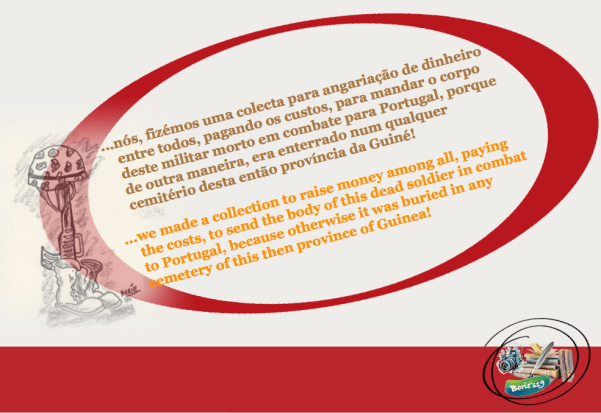
…nós, fizémos uma colecta para angariação de dinheiro entre todos, pagando os custos, colaborando com os militares encarregues de mandar as coisas e o corpo deste militar morto em combate para Portugal, (porque de outra maneira era enterrado no cemitério da capital da província ou mesmo na vila de Mansôa, onde estávamos estacionados), incluindo um bocado do camuflado ainda ensanguentado que o militar usava no momento em que foi morto, que o “Mister Hóstia”, teve a coragem de cortar, quando descobriu o buraco da bala no seu corpo!. (We made a collection to raise money from everyone, paying the costs, collaborating with the military in charge of sending things and the body of this dead soldier in combat to Portugal, (because otherwise he was buried in the cemetery of the capital even in the village of Mansôa, where we were stationed), including a bit of the still bloodied camouflage that the military man wore at the time he was killed, which the “Mister Host” had the courage to cut when he discovered bullet in your body)!.
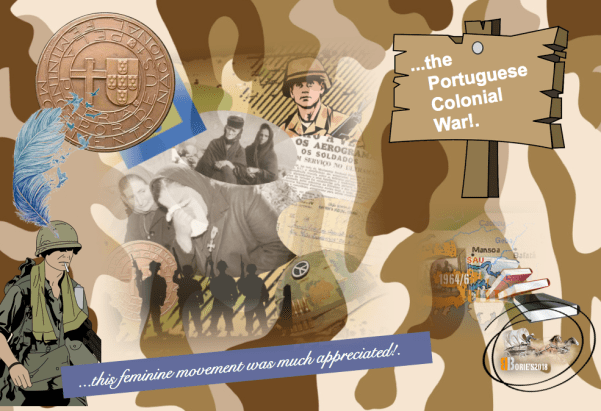
…colocámos tudo, dentro da pequena mala amarrando-a com uma corda junto do saco de campanha, que se encontrava debaixo da sua cama, sendo enviado para Portugal com a ajuda do Movimento Nacional Feminino, mais aquilo a que se referia, que era um envelope com algum dinheiro, que era dele e, nos tinha pedido para guardar num compartimento quase secreto do Centro Cripto, dinheiro este que ele recebia de ajudar algumas vezes na messe dos sargentos e que, quando nos entregava, para lho guardar, dizia: (We put everything inside the small suitcase by tying it with a rope next to the campaign bag, which was under her bed, being sent to Portugal with the help of the National Women’s Movement, plus what she was referring to, that it was an envelope with some money, which was his own, and he had asked us to keep it in an almost secret compartment of the Crypto Center, which he sometimes received from helping with the sergeants’ mess and when he handed it to us to keep it, he said:)

– Isto, é para um começo de vida, quando regressar a Portugal!.
– (This is for a beginning of life when you return to Portugal)!.

…no momento em que recolhiamos todas as coisas na mala e no saco de campanha, incluindo o bocado de camuflado ensanguentado, o “Curvas, alto e refilão”, num ataque de fúria, agarra-se à cama deste militar, rasga o mosquiteiro, abraça-se ao colchão e grita em plenos pulmões: (As we gather everything in the suitcase and the campaign bag, including the bloody camouflage piece, the “Curves, tall and fussy”, in a fit of fury, clings to the military’s bed, tears the mosquito net, cuddles to the mattress and shouts in the top of his lungs:

– Eu máto-os, eu máto-os a todos!. Só vou descansar, quando os matar!.
 – (I kill them, I kill them all!. I will only rest when I kill them)!.

…todos fugiram dele!. Mais tarde o “Trinta e Seis” (soldado rádio-telegrafista, era o seu nome de guerra), aproximou-se e levou-o para fora da barraca dormitória!. (Everyone ran away from him!. Later the “Thirty-Six” (radio-telegraph soldier was his war name) approached and led him out of the dormitory tent)!.

…nunca soubemos nada do que passou com os restos mortais do condutor “Vouzela” e da furriel Madeira, ou onde foram spultados! (We never knew anything about what happened to the remains of the driver Vouzela and the furriel Madeira, or where they were spilled)!.

…já em Portugal, visitámos a família deste militar morto em combate, por algumas vezes!. Era de uma aldeia na região da serra da Estrela! Havia lá uma irmã e um irmão, já ambos casados, assim como a sua mãe que andava sempre vestida de preto e, dizia: (Already in Portugal, we visited the family of this military man killed in combat, a few times!. It was from a village in the Serra da Estrela region!. There was a sister and brother there, both already married, as well as their mother who was always dressed in black and said:)

– Ainda não fui, mas não tarda muito tempo!. Sou viúva duas vezes, do meu Joaquim, que Deus lhe guarde a alma em descanso, e do meu António, que era a cara do pai quando nasceu, e que deu o corpo às balas, lá na guerra de África!.
    – (I haven’t been yet, but it won’t be long! I am a widow twice, my Joaquim, may God keep his soul at rest, and my Antonio, who was the face of his father when he was born, and who gave the body to the bullets, there in the war of Africa)!.
…e mostrava sempre a fotografia do António e beijava-a, encostando-a ao coração!. (And always showed the photograph of Antonio and kissed it, touching it to the heart)!.

Tony Borie, November 2019.

…mais um grito de revolta!. (One more shout of revolt)!.

…mais um grito de revolta!. (One more shout of revolt)!.

…mais um grito de revolta!. (One more shout of revolt)!.

…é ainda madrugada, sentei-me na frente do computador, fazendo a normal “busca diária” por diferentes latitudes e, encontrei vários temas e assuntos que sobressaiam!. (It is still dawn, I sat in front of the computer, doing the normal “daily search” for different latitudes and found several themes and subjects that stand out)!.

…um, era o problema da falta de água potável em diferentes, algumas até remotas, zonas do planeta que habitamos chamado “Terra”!. (One, was the problem of lack of drinking water in different, some even remote, areas of the planet we inhabit called “Earth”)!.

…e, verificámos que a humanidade não tem recursos para extrair água em zonas áridas, como em algumas regiões de África, da América do Sul ou mesmo na Austrália, mas em contrapartida tem dinheiro para procurar água, vida inteligente ou outras valias, no longínquo planeta “Marte”!. (And we have found that mankind cannot afford to draw water in arid areas such as some regions of Africa, South America or even Australia, but in return has money to look for water, smart life or other assets, on the distant planet “Mars”)!.

…depois havia notícias como o aumento de temperatura, onde nos explicam que no final do século poderá exceder os 12 graus!. Se for verdade, iria haver a extinção de algumas espécies em cascata, como o Tigre-Urso Polar, os simpáticos Pinguins, algumas espécies de Tartarugas, o Atum Rabilho do Atlântico, o célebre Gorila da Montanha, o Rinoceronte, o Elefante, os Pandas gigantes, ou a Águia Imperial!. (Then there was news like the rise in temperature, which explains that by the end of the century it could exceed 12 degrees!. If true, there would be the extinction of some cascading species, such as the Polar Bear Tiger, the friendly Penguins, some Turtle species, the Atlantic Bluefin Tuna, the famous Mountain Gorilla, the Rhino, the Elephant, the Pandas giants, or the Imperial Eagle)!.

…iria haver secas incrivelmente graves em grandes partes do planeta, chuvas muito severas em outras regiões, tempestades mais intensas, ondas devastadoras de calor numa escala que ninguém na história humana alguma vez experimentou, massas de refugiados, aumento nos preços dos alimentos no mundo e, entre outras catástrofes na agenda humana, um aumento do nível da água do mar que iria afogar as regiões costeiras do planeta!. (There would be incredibly severe droughts in large parts of the planet, very severe rainfall in other regions, more intense storms, devastating waves of heat on a scale no one in human history has ever experienced, masses of refugees, rising food prices in the world world and, among other disasters on the human agenda, a rise in sea level that would drown the coastal regions of the planet)!.

…então nós perguntamos: “Existem recursos para se procurar água e vida inteligente no planeta “Marte” mas, haverá também vida inteligente no planeta “Terra”, que possa prevenir todas estas catástrofes anunciadas”?. (Then we ask: “Are there resources to look for water and intelligent life on planet “Mars”, but is there also intelligent life on planet “Earth” that can prevent all these announced disasters”)?.

…”adiante que se faz noite”, como nos dizia a nossa querida avó materna Agar de quem, cada vez temos mais saudades!. (“Ahead of Night”, as our dear maternal grandmother Agar told us, whom we miss the most)!.

…saudades de quando éramos crianças, que com ela assistíamos às tarefas dos grupos de homens e mulheres que trabalhavam os campos, que eram verdes e nunca ardiam e que hoje estão secos e cobertos de cinzas, talvez pelo excesso de uma “liberdade queimada”!. (We missed when we were children, with whom we watched the tasks of the groups of men and women who worked the fields, who were green and never burning and who are now dry and covered with ashes, perhaps by the excess of a “burnt freedom”)!.

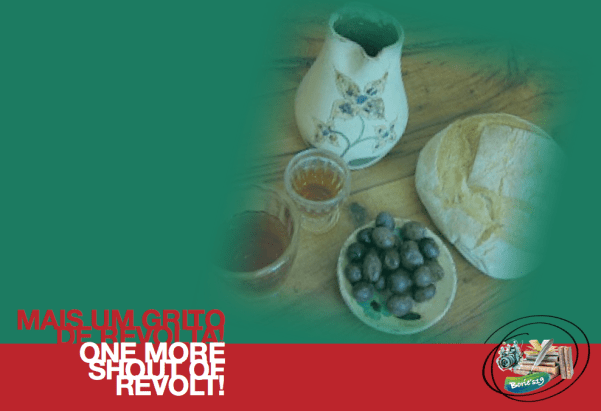
…saudades dos ajuntamentos à volta de um simples petisco, (porque já não existem petiscos tal como pão, azeitonas e um malga de vinho) nem grupos de trabalhadores da terra, que utilizavam esses momentos para recompensa do trabalho árduo, principalmente ao final das tardes, ou até da vida simples de outrora, como por exemplo o cheirar os odores dos campos com erva ceifada de fresco, ou até daquelas tascas, onde se bebia um “copo de três” que, infelizmente já passaram à história!. (Miss the gatherings around a simple snack, (because there are no more snacks such as bread, olives and a wine malga) or groups of land workers, who used these moments to reward hard work, especially at the end in the afternoons, or even the simple life of yore, such as smelling the odors of the fields with freshly mown grass, or even those taverns, where one drank a “glass of three” which, unfortunately, are now history)!.

…hoje, e infelizmente é uma realidade, claro, também existem excepções e, nós nada tendo em contra, apenas simplesmente mencionamos, em lugar de ajuntamentos à volta de um petisco, fazem-se banquetes e jantaradas, com intelectuais, revolucionários, prostitutas, chulos, violadores, políticos, (alguns que no futuro até são identificados como ladrões ou assassinos), atletas milionários de clubes na bancarrota, cantores pimba, presidentes, sindicalistas, apresentadores de televisão, ou seja os profissionais da faladura, sendo quase todos Doutores, Professores, Engenheiros ou Gestores que, em lugar de exercerem as profissões para que estudaram (se é que estudaram), infelizmente se dedicam exclusivamente à política, onde todos, num lamaçal de controlo mediático, chegam em luxuosos carros, alguns com chauffer privado!. (Today, and unfortunately it is a reality, of course, there are also exceptions and, having nothing against it, we just mention, instead of gatherings around a snack, banquets and dinners are held with intellectuals, revolutionaries, prostitutes, pimps, rapists, politicians (some who in the future are even identified as thieves or murderers), bankruptcy club millionaires, pimba singers, presidents, trade unionists, television presenters, almost all of the flawed professionals. Doctors, Professors, Engineers or Managers who, instead of exercising the professions for which they studied (if they studied at all), unfortunately are devoted exclusively to politics, where everyone, in a media-controlled mire, arrives in luxurious cars, some with private chauffer)!.

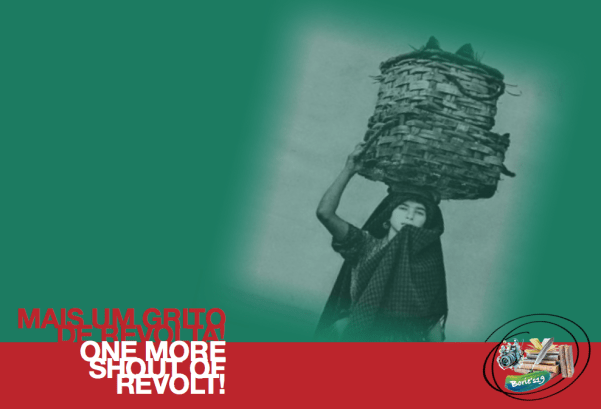
…naquele tempo, um homem ou uma mulher nascia e crescia num ambiente de trabalho, atravessava um breve período de florescimento da sua beleza e do desejo sexual, onde mostravam os seus dotes em bailaricos de aldeia, casavam aos vinte ou perto dessa idade, atingiam a maturidade aos trinta e, o resto das suas vidas era um trabalho físico pesado, as lides domésticas, a educação dos seus filhos, (onde alguns trabalhavam muitas horas por dia para ajudar os pais), a vinda dos netos, tornando-se idosos, onde principalmente nas vilas e aldeias, usufruindo de alguma paz, envelheciam junto da sua família, convivendo com outros idosos, alguns seus amigos de infância, num qualquer lugar ao sol, esperando pela hora de deixarem este mundo!. (At that time, a man or woman was born and raised in a work environment, was going through a brief period of flowering of their beauty and sexual desire, where they showed their skills in village dancers, married at or near that age, reached maturity at the age of thirty and the rest of their lives were heavy physical labor, housework, the education of their children (where some worked many hours a day to help their parents), the coming of grandchildren, making if elderly, where mainly in the towns and villages, enjoying some peace, aged with their family, living with other elderly, some of their childhood friends, somewhere in the sun, waiting for the time to leave this world)!.

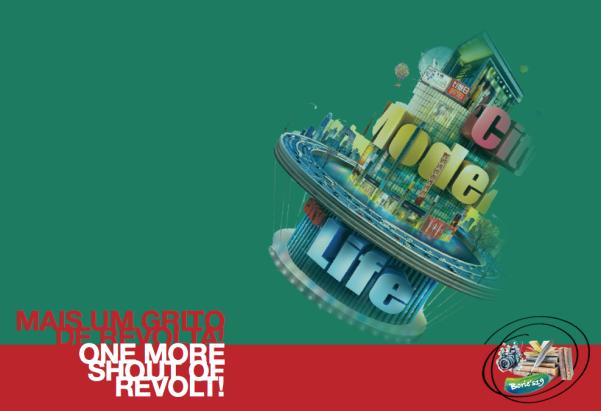
…hoje, em alguns países desenvolvidos, (infelizmente, quase todos estão a ser vendidos a retalho) é oferecido um mundo maravilhoso, servido numa “bandeja de ouro”, onde talvez o maior contraditório, que na nossa simples opinião é a causa central da violência e degeneração da vida emocional nas grandes cidades que, voltando à palavra infelizmente, são dominadas por meios electrónicos de comunicação, cuja influência parece crescer lado a lado com a falta de comunicação real entre os seres humanos, onde existe o acesso ao crédito facil, incluindo diversos cartões de crédito para uma só pessoa, facilitando a compra de uma casa ou de um carro, e claro, podem comer carne ou peixe todos os dias, o importante é consumir, pois as grandes superfícies estão mesmo ali!. (Today, in some developed countries, (unfortunately, almost all of them are being retailed) a wonderful world is offered, served on a “gold tray” where perhaps the greatest contradiction, which in our simple opinion is the cause of violence and the degeneration of emotional life in large cities which, unfortunately, are dominated by electronic means of communication, whose influence seems to grow side by side with the lack of real communication between human beings, where there is access to credit easy, including multiple credit cards for one person, making it easy to buy a house or a car, and of course, can eat meat or fish every day, the important thing is to consume, because the large surfaces are right there)!.

…resultado!. As grandes cidades onde vivem, tornam-se importantes centros que infelizmente degeneram pelo seu distanciamento da verdadeira natureza, das tais florestas ou áreas de agricultura verdes e dos seus ritmos vitais básicos, onde a chuva, o frio ou o sol determiam as leis e, as pessoas tal como um animal em cativeiro, perdem a alegria de viver, porque o ser humano distante da natureza é preso pelas suas preocupações pessoais e dificilmente encontra paz dentro ou fora de si, e claro, o resultado é a violência, primeiro no pensamento e sentimento, depois, o que já é uma catástrofe, é na realidade exterior, onde alguns quase são convidados a começar na rota do crime!. (Result!. The large cities in which they live become important centers that unfortunately degenerate from their remoteness from true nature, from such green forests or agricultural areas, and from their basic vital rhythms, where rain, cold, or sun determined the laws and, people like a captive animal lose the joy of living, because the human being away from nature is trapped by their personal concerns and hardly finds peace inside or outside themselves, and of course, the result is violence, first thought and feeling, then, what is already a catastrophe, is in reality outside, where some are almost invited to start on the crime route)!.

…não vamos pensar em catástrofes mas na realidade, nos tempos de hoje e, colaborando com os previlégios da vida moderna e confortável do tal consumismo, se o filho do meu vizinho tem, o meu também tem que ter!. (Let’s not think of catastrophes but in reality, in today’s times and, collaborating with the privileges of the modern and comfortable life of such consumerism, if my neighbor’s son has, mine also has to have)!.

…existem Universidades por tudo quanto é cidade, oferecendo cursos às centenas, onde podem obter o precioso certificado de habilitações para poderem concorrer ao tão desejado emprego!. É o facilitismo para toda a gente inteligente, são os tempos de fartura mas, tal como anteriormente explicámos, existe o contraditório, ou seja, o pequeno problema onde, voltando ao princípio deste texto dizíamos que, “continuam gastando dinheiro procurando água e vida inteligente no planeta “Marte” e, aqui no planeta “Terra”, existe a falta de recursos para a sua exploração, morrendo todos os dias milhares de pessoas por falta de água potável”!. (Universities exist for every city, offering courses in the hundreds, where they can obtain the precious certificate of qualification to be able to apply for the desired job!. It is facilitism for all intelligent people, it is the times of plenty but, as we explained earlier, there is the contradictory, that is, the little problem where, going back to the beginning of this text we said, “They keep spending money looking for water and smart life. on the planet “Mars” and here on the planet “Earth” there is a lack of resources for its exploitation, dying every day thousands of people for lack of drinking water”)!.

…depois, falando da continuação das gerações vindouras, os filhos vivem com os pais até aos trinta, namoram uns anos e alguns casam aos quarenta, criando dívidas nos tais investimentos modernos que lhe proporcionam a tal vida decente nas grandes cidades, acabando o resto das suas vidas escravos desses mesmos investimentos, trabalhando e vivendo algumas décadas de prazer da boa vida a que se acostumaram e, futuros filhos, que serão os seus descendentes e continuação do povoamento deste planeta onde vivemos, isso é um projecto a que só alguns previligiados terão acesso, ou seja, aqueles que renunciaram aos previlégios da vida moderna e confortável do consumismo! (Then, speaking of the continuation of the generations to come, the children live with their parents until their thirties, date a few, and some marry at forty, creating debts in such modern investments that give them such decent living in the big cities, ending the the rest of their lives slaves to those same investments, working and living a few decades of pleasure from the good life they have become accustomed to, and future children who will be their descendants and continuing the settlement of this planet where we live, this is a project that only a few privileges will have access, that is, those who have renounced the privileges of the modern and comfortable life of consumerism)!.

…não nos envergonhamos, pelo contrário, consideramo-nos uns previlegiados de ter nascido há mais de três quartos de um século, onde felizmente ninguém pensava sequer na palavra “consumismo”, até se dizia que comíamos “o pão amassado com o suor do rosto”, numa vida dura, com muitas carências, com invernos tristes, numa aldeia sem luz eléctrica, onde à noite se mergulhava na escuridão, mas onde as pessoas sobreviviam e sonhavam!. (We are not ashamed, on the contrary, we consider ourselves to be privileged to have been born more than three quarters of a century ago, where fortunately no one even thought of the word “consumerism”, even it was said that we ate “bread crushed with sweat of the face”, in a hard life, with many needs, with sad winters, in a village without electricity, where at night it plunged into darkness, but where people survived and dreamed)!.

…a única vivência menos boa, foi os anos de juventude passados na Guerra Colonial, no entanto, com algum esforço ainda nos consideramos “Um jovem rapaz que nasceu há mais de três quartos de um século”, que entre outras, teve a infeliz sorte de ir combater na estúpida Guerra Colonial Portuguesa em África!. (The only less good experience was the years of youth spent in the Colonial War, however, with some effort we still consider ourselves “A young boy who was born more than three quarters of a century ago”, which among others, had the unfortunate luck in fighting the stupid Portuguese Colonial War in Africa)!.

…resumindo!. O ser humano é o único animal que destrói, polui, e faz inúmeras maldades com sua própria espécie!. Mesmo assim, o único animal que é considerado racional, somos nós os humanos e, então perguntamos: “Procura-se água e vida inteligente no planeta “Marte” mas, haverá vida inteligente no planeta “Terra”, que possa prevenir todas estas catástrofes, ou entre outras coisas, toda esta vida moderna e confortável do consumismo”?. (In short, the human being is the only animal that destroys, pollutes, and does innumerable evil deeds with his own species!. Even so, the only animal that is considered rational is us humans and then We ask: “Is water and intelligent life sought on the planet “Mars”, but is there intelligent life on planet “Earth” that can prevent all these disasters, or among other things, all this modern, comfortable life of consumerism”?.

Tony Borie, November 2019.

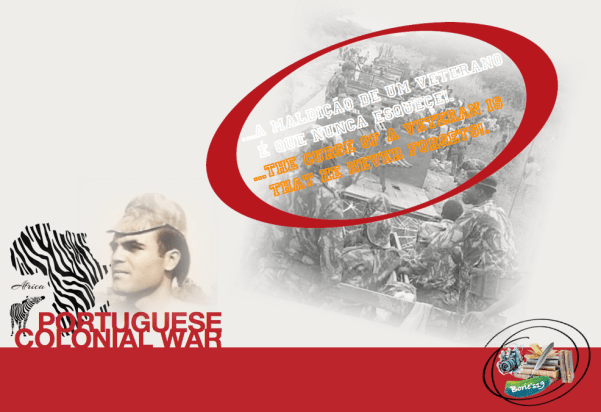
…a maldição de um veterano é que nunca esquece!. (The curse of a veteran is that he never forgets)!.!

…a maldição de um veterano é que nunca esquece!. (The curse of a veteran is that he never forgets)!.!

…a maldição de um veterano é que nunca esquece!. (The curse of a veteran is that he never forgets)!.

…já passaram mais de cinco décadas, quase seis, mas, o corpo e a mente de um veterano de guerra, quanto mais a sua idade avança, infelizmente, mais frequentemente reage aos disparos da memória, dando lugar ao sentimento que pode ser representado nestas simples palavras!. (It’s been more than five decades, almost six, but the body and mind of a war veteran, the older he gets, unfortunately, the more often he reacts to the firing of memory, giving way to the feeling that can be. represented in these simple words)!.

…“a maldição de um veterano é que nunca esquece”!. (“The curse of a veteran is that he never forgets”)!.

…sentindo de novo em alguns momentos, os efeitos e as causas de ter servido a nação numa zona de guerra, que foi sem qualquer dúvida, um preço muito elevado!. (Feeling again and again the effects and causes of having served the nation in a war zone, which was undoubtedly a very high price)!.

…na lotaria da vida, estando presente numa zona de combate, pode sair-nos um bilhete premiado com a morte!. Com alguma sorte podemos sobreviver mas, o “síndrome de guerra”, leva-nos por todo o tempo do resto das nossas vidas, a uma pesada viajem no Coração das Trevas!. (In the lottery of life, being present in a combat zone, we can get a ticket awarded with death!. With any luck we can survive but the “war syndrome” takes us all the time of the rest of our lives for a heavy journey into the Heart of Darkness)!.

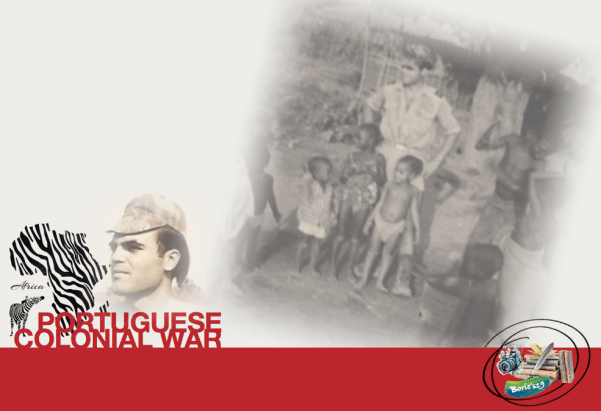
…não mais esquecemos a jornada de ter sido combatentes na Guerra Colonial Portuguesa em África, na então província colonial da Guiné Portuguesa, cuja guerra, principalmente nesta região, foi denominada “o Vietname de Portugal”, que foi uma mortífera guerra de guerrilha, combatendo ao serviço de um país que nos USOU e nos ESQUECEU, desde a nossa mobilização forçada na época de uma pré-guerra, passando pela miserável experiência no campo de batalha, até a um difícil retorno de pós-guerra, sempre nos IGNORANDO, sendo obrigados à imigração, recomeçando uma nova vida de sobrevivência deste lado do oceano Atlântico, trabalhando, criando e educando uma família, com a preciosa ajuda da nossa dedicada esposa, neste novo país que sempre nos acarinhou, ao contrário daquele lá na antiga Europa, onde nascemos!. (We no longer forget the journey of being combatants in the Portuguese Colonial War in Africa, in the then colonial province of Portuguese Guinea, whose war, especially in this region, was called “Vietnam of Portugal”, which was a deadly guerrilla war, fighting in the service of a country that USED and FORGOT us, from our forced mobilization at the time of a pre-war, to miserable battlefield experience, to a difficult postwar return, always IGNORING us, being forced into immigration, starting a new life of survival on this side of the Atlantic Ocean, working, raising and raising a family, with the precious help of our devoted wife, in this new country that has always cherished us, unlike the one in ancient Europe, where we were born)!.

…quando o encontramos de novo, o tal pensamento, às vezes em momentos sombrios e silenciosos, tentamos repudiá-lo, mandar para longe, a explosão de uma granada ou o som do bater das lâminas de um helicóptero em cenário de guerra, mesmo a recordação de recolher o que restava do corpo de um companheiro combatente, embrulhado num camuflado sujo com o seu próprio sangue!. Não importa quantas vezes esses pensamentos nos visitam, pois terminam sempre da mesma maneira, que é uma “catástrofe total”!. (When we meet him again, such a thought, sometimes in dark and silent moments, we try to repudiate it, to send away the explosion of a grenade or the sound of a helicopter blasting in war, even the memory of collecting what was left of the body of a fellow combatant, wrapped in a dirty camouflage with his own blood!. No matter how many times these thoughts visit us, because they always end in the same way, which is a “total catastrophe”)!.

…a violência nunca traz uma paz permanente!. Não resolve nenhum problema social, pelo contrário, cria novos e mais complicados problemas!. Num cenário de violência, como era aquele onde permanecemos por um período de dois anos, a segurança nunca existiu, era angustioso ver, sobretudo o povo local, não terem acesso a alimentos suficientes, a água limpa, a remédios ou a um abrigo necessário para sobreviver, onde as crianças não podiam aspirar a uma educação decente ou à esperança de um homem ou de uma mulher terem um emprego ou outro qualquer suporte, que sustentasse uma família, pois a ausência dessa mesma esperança, agora transformada num cenário de guerra, estava a destruir aquela sociedade, a partir de dentro, o que era muito importante!. (Violence never brings permanent peace!. It does not solve any social problems, on the contrary, it creates new and more complicated problems!. In a scenario of violence, such as the one where we stayed for a period of two years, security never existed, it was distressing to see, especially the local people, not having access to sufficient food, clean water, medicine or a shelter needed for where children could not aspire to a decent education or the hope of a man or woman having a job or any other support to support a family, for the absence of that hope, now transformed into a war scenario, was to destroy that society from within, which was very important)!.

…nós jovens, oriundos da Europa, com uma educação de aldeia, onde os princípios honestos de família vinham de há séculos, vendo todo este cenário, muitas vezes a angústia, o desespero e o mêdo, colocáva-nos numa situação horrível, onde entre outras coisas o álcool, nos aliviava a mente, pelo menos por momentos, pois este cenário estava lá, estava sempre presente, era a cara da guerra, com feridos e mortos em combate para ambos os lados, incluindo aquela população civil desarmada!. (We young people from Europe with a village upbringing where honest family principles came from centuries ago, seeing this whole scenario, often the anguish, the despair and the fear, put us in a horrible situation, where, among other things, alcohol soothed our minds, at least for a moment, for this scenario was there, was always present, was the face of war, wounded and killed in combat on both sides, including that unarmed civilian population)!.

…aqui nesta região de África, existiam algumas etnias, tal como os “Papeis”, os “Balantas”, os “Fulas”, os “Bijagós”, os “Mandingas”, os “Felupes”, os “Manjacos”, os “Biafadas” ou os “Nalus”, diziam até que existiam quase duas dezenas de diferente etnias!. Todavia, numa zona de savana e selva, rodeada de pântanos e vegetação, onde estivémos estacionados num aquartelamento cercado de arame farpado, por um período de dois anos, existiam os “Balantas”, que outrora foram guerreiros, caçadores, pescadores, pastores ou agricultores!. (Here in this region of Africa, there were some ethnicities, such as the “Papers”, “Balantas”, “Fulas”, “Bijagós”, “Mandingas”, “Felupes”, “Manjacos”, “Biafadas” or “Nalus” said until there were almost two dozens of different ethnicities!. However, in an area of savannah and jungle, surrounded by swamps and vegetation, where we had been stationed in a barbed wire barracks for a period of two years, there were the “Balantas”, who were once warriors, hunters, fishermen, shepherds or farmers)!.

…mas naquele momento, os mais novos e de idade média, incluindo alguma população feminina, eram guerrilheiros, estavam do outro lado, combatendo ao lado dos grupos que lutavam contra nós, (que tínhamos vindo do norte, lá da Europa), lutavam e morriam pela independência e libertação do seu território e, os mais velhos, andavam por lá, alguns eram “homens grandes”, que simpatizavam, ou talvez fingiam que simpatizavam com os Europeus, usufruindo de protecção e algumas regalias, às vezes usando as instalações e os bens do nosso aquartelamento, sendo proprietários de algumas manadas de gado ou pequenas parcelas de plantação de arroz!. (But at that time, the young and middle-aged, including some female population, were guerrillas, were on the other side, fighting alongside the groups fighting against us, (we had come from the north, from Europe), they fought and died for independence and liberation from their territory, and the older ones walked around, some were “great men” who sympathized, or perhaps pretended to sympathize with Europeans, enjoying protection and some perks, sometimes wearing their own facilities and assets of our barracks, owning a few herds of cattle or small plots of rice)!.

…toda esta situação, além do mêdo da guerra, nos fazia sobreviver num mundo de contradições e angústia, onde por um lado existia o doente abandonado, a família faminta ou a criança que não sabia ler e, tirando esses tais “homens grandes”, havia por ali muitos homens e mulheres, alguns sem abrigo, com roupa em farrapos, lutando pela sobrevivência, numa terra muito rica e com um solo muito fértil!. (This whole situation, beyond the fear of war, made us survive in a world of contradictions and anguish, where on the one hand there was the abandoned patient, the starving family or the child who could not read, and apart from these “great men”, there were many men and women out there, some homeless, in ragged clothing, fighting for survival, in a very rich land and very fertile soil)!.

…onde em contrapartida, em zonas mais seguras, por exemplo junto do aquartelamento onde estávamos estacionados, seguindo alguns usos e costumes, talvez desde séculos, o tal “homem grande” podia ter, três, quatro ou cinco mulheres, que viviam todas em comunidade, debaixo do mesmo tecto, tratavam dos filhos umas das outras, ajudando-se, onde o homem talvez exercesse uma espécie de “escravatura”, nestas suas mulheres, pois eram elas que trabalhavam em pequenas parcelas de terra na cultura de arroz, onde como já explicámos havia alguma segurança, muitas com os filhos recem nascidos, pendurados nas costas, baixadas na bolanha (pântanos), por vezes enterradas na lama e água até ao joelho!. (Where on the other hand, in safer areas, for example near the barracks where we were stationed, following some customs and practices, perhaps since centuries, such a “great man” could have three, four or five women, all of whom lived in community, under the same roof, they cared for each other’s children, helping each other, where men might exercise a kind of “slavery,” in their wives, for they were the ones who worked on small plots of land in rice cultivation, where as we have already explained, there was some security, many with their newborn children, hanging from their backs, lowered in the bolanha (marshes), sometimes buried in mud and knee-deep water)!.

…cremos que todas essas bolanhas (pântanos), eram propriedade do tal “homem grande”, que nunca soubemos ao certo, se esse homem era o seu marido, ou simplesmente “dono”, que consoante a sua riqueza, mais mulheres podia adquirir, onde elas, as mulheres, iam apanhar lenha na floresta, cozinhavam, algumas até subiam às palmeiras, para irem apanhar o fruto e fazer aguardente, que os homens bebiam!. Enfim eram uma espécie de “escravas”, desses mesmos homens, que deitados na rede, mascando “cola”, e com uma espécie de bengalim nas mãos, com que afugentavam algumas moscas do seu corpo, por vezes batiam nas nádegas, dessas mesmas mulheres, para que se movimentassem um pouco com mais rapidez!. (We believe that all these bolanhas (marshes) were the property of such a “great man”, that we never knew for sure, if this man was her husband, or simply “owner”, that depending on her wealth, more women could to buy, where they, the women, would gather firewood in the forest, cook, some even climb the palm trees, to go get the fruit and make brandy, which men drank!. At last they were a kind of “slaves”, of those same men, who lay in the hammock, chewing “cola”, and with a kind of bengalim in their hands, who chased away some flies from their body, sometimes beat the buttocks of these same women to to move a little faster)!.

…pelo que observávamos, a mulher, só depois de uma certa idade, quando já o marido não a usava mais, é que teria uma vida mais pacata, pois normalmente, iria viver com outras da sua idade, sempre próximo da “morança” (casa coberta de colmo) do seu marido, ou “dono”, pois nunca soubémos qual era o estatuto dessa mulher, e aí tomava conta dos filhos das suas companheiras mais novas, fumava o seu tabaco, bebia o seu trago de aguardente de palma, que fazia e, que normalmente estava a curtir num balaio, coberto com umas folhas de bananeira, mas à sombra, sem apanhar sol, descansando, berrando e dando conselhos às suas companheiras mais novas, que nessa altura eram as eleitas, e estavam na companhia do seu antigo marido!. (From what we observed, the wife, only after a certain age, when the husband no longer used it, would have a quieter life, because normally, would live with others of his age, always close to the “morança” ( thatched house) of her husband, or “owner,” because we never knew what that woman’s status was, and then took care of her younger companions’ children, smoked her tobacco, drank her palm brandy, he was doing, and he was usually hanging out with a banana tree, covered with some banana leaves, but in the shade, without sunbathing, resting, shouting, and giving advice to his younger companions, who were then elected, and were in the company from your old husband)!.

…os filhos e as filhas, deviam ser propriedade do marido, que normalmente, “vendia”, passe o termo, ou única e simplesmente cedia, as filhas, ao amigo “homem grande”, ou talvez a quem melhor garantias lhe desse!. Quando uma rapariga atingia a idade de catorze, quinze, dezasseis, pois dezassete anos já era um pouco tarde, tinha que arranjar marido, ou talvez “dono”, pois se não o fizesse, já não era bem vista na comunidade e, perguntavam o que é que estava de mal com ela, pois ainda não tinha parido!. Todo este cenário dos usos e costumes, a nós Europeus, nos fazia pensar de que parecia que nos estávamos movendo para trás no tempo!. (The sons and daughters, should be the property of the husband, who normally “sold”, pass the term, or simply and simply surrendered, the daughters, to the “great man” friend, or perhaps to whom best guarantees!. When a girl reached the age of fourteen, fifteen, sixteen, for seventeen was a little late, she had to find a husband, or perhaps “owner,” because if she did not, she was no longer well regarded in the community and, they asked. what was wrong with her, because she had not yet given birth!. This whole scenario of usages and customs, to us Europeans, made us think that it seemed we were moving backwards in time)!.

…tirando de fora o cenário horrível de uma mortífera guerra de guerrilha, este simples relato, é para exemplificar e perguntar o que fazíamos lá?. Estávamos a conviver e a combater um povo, que em alguns momentos nos parecia pacífico, sofredor e amável, que nunca antes tínhamos visto e nada tínhamos em contra, que lutavam e morriam pela independência do seu território, defendendo a sua terra, os seus usos e costumes, longe da Europa, de onde nós éramos oriundos!. (Apart from the horrible scenario of a deadly guerrilla war, this simple account is to exemplify and ask what we were doing there?. We were living together and fighting a people who at times seemed peaceful, suffering and lovely, whom we had never seen before and had nothing against, who fought and died for the independence of their territory, defending their land, its uses. and customs, far from Europe, where we came from)!.

…e de onde fomos levados, ou seja “arrancados” da paz da nossa aldeia, treinados e mentalizados para combate, num campo de treinos duma cidade de província, que era uma mistura de ruídos, obstáculos, armas, tiros e atrapalhação, onde poucos meses depois, metidos no porão de um navio de carga, navegámos pelo oceano Atlântico, desembarcando numa zona perdida de África, rumo a um teatro de operações, onde havia um horrível cenário de guerra de guerrilha e, onde os usos e costumes desta região e deste povo, eram diferentes!. (And where we were taken from the peace of our village, trained and trained for combat, in a training camp of a provincial town, which was a mixture of noise, obstacles, weapons, gunfire and disruption, where a few months later, in the hold of a cargo ship, we sailed across the Atlantic Ocean, landing in a lost area of Africa, heading for a theater of operations, where there was a horrible guerrilla war scenario, and where the customs and customs of this region and this people were different)!.

…usos e costumes diferentes, sobretudo dos da nossa aldeia do Vale do Ninho d’Águia, lá na encosta agreste da montanha do Caramulo, de onde éramos oriundos, onde estas cenas de usos e costumes não eram possíveis, mas por outro lado, eram normais na então província da Guiné, e afinal não era, como tínhamos aprendido na escola primária da vila a que a nossa aldeia pertencia, onde nos diziam que a então província da Guiné, tinha as mesmas leis, tal como a província do Minho, do Alentejo ou do Algarve, pois tudo eram províncias de uma só nação, que era Portugal!.
(Different uses and customs, especially those of our village of Vale do Ninho d’Águia, there on the rugged slope of the Caramulo mountain, where we came from, where these scenes of use and customs were not possible, but on the other hand, were normal in the then province of Guinea, and after all it was not, as we had learned in the village primary school to which our village belonged, where we were told that the then province of Guinea had the same laws as the province of Minho, from Alentejo or from the Algarve, because they were all provinces of one nation, which was Portugal)!.

…embora hoje sejamos um veterano de uma idade um pouco avançada, o pensamento, esse maldito pensamento, caça-nos na vida!. Sim, ele, o pensamento anda sempre lá, por vezes ameaçando a nossa consciência, a memória ainda existe hoje, enterrada lá no fundo, é parte antiga do também já um pouco selvagem, mas que ainda vamos dominando, que é presentemente o nosso cérebro!. (Although today we are a veteran of a somewhat advanced age, the thought, that damn thought, hunts us in life!. Yes, he, the thought is always there, sometimes threatening our conscience, the memory still exists today, buried deep inside, is an old part of the already a little wild, but still dominating, which is our brain at present)!.

…é o preço do sofrimento, da angústia, do mêdo e fúria em combate, do horror, do inferno que vivemos, de um povo com diferentes usos e costumes, a marca que nos acompanha para o resto das nossas vidas, que na verdade nos sentimos loucos por dentro e, como veteranos de guerra, temos que ser francos e dizer, que pagamos um preço muito elevado para servir o nosso país e, as vítimas emocionais das guerras equivocadas, como foi esta, que podia ter sido ultrapassada com o diálogo entre as partes envolventes, são na verdade as mais difíceis de suportar, são as tais feridas profundas que sofremos, que podem ser infligidas sem deixar um simples arranhão!. (Is the price of suffering, anguish, fear and fury in combat, the horror, the hell we live, a people with different usages and customs, the mark that accompanies us for the rest of our lives, which in we really feel insane inside and as war veterans we have to be frank and say that we pay a very high price to serve our country and the emotional victims of misguided wars such as this could have been overcome the dialogue between the surrounding parties is actually the most difficult to bear, it is such deep wounds we suffer that can be inflicted without leaving a simple scratch)!.

…quando, uns anos depois regressámosa a casa, lá na Europa, infelizmente já como veteranos de combate, passando por algumas experiências de vida mais traumáticas que se possam imaginar, sobretudo convivendo com um povo que nos parecia pacífico, sofredor e amável, mas com diferentes usos e costumes, a nossa família que nos recebeu, sabia, notava imediatamente, que alguma coisa estava mal connosco, pela nossa linguagem, maneira de se comportar, que estávamos diferentes, talvez um pouco loucos e algo agressivos!. (When, some years later, we had returned home from Europe, unfortunately already as combat veterans, going through some of the most traumatic life experiences imaginable, especially living with a people who seemed peaceful, suffering and lovely, but with different usages and customs, our host family knew, immediately noticed, that something was wrong with us, by our language, the way we behaved, that we were different, maybe a little crazy and something aggressive)!.

…todavia, para mal deste mundo cruel, os famintos, os doentes, os analfabetos e a miséria que naquele tempo por lá eram constantes, infelizmente continuaram, mesmo depois, quando parecia que já havia paz, fazendo-nos lembrar que defacto o então Portugal saiu de África físicamente, onde o então seu governo colonial permaneceu, com um também regime colonial por mais de cinco séculos, onde talvez sem o notar, ia explorando e querendo introduzir novos usos e costumes, a um povo que nos parecia pacífico, sofredor e amável, que talvez não suportanto mais os regulamentos do colonialismo Europeu, se revoltou e pegou em armas!. (However, to the detriment of this cruel world, the hungry, the sick, the illiterate and the misery that were constant there at the time, unfortunately continued, even afterwards, when it seemed that there was already peace, reminding us that I defy the then Portugal physically left Africa, where the then colonial government remained, with a colonial regime for more than five centuries, where perhaps without noticing it, it was exploring and wanting to introduce new customs and customs to a people who seemed peaceful to us, suffering and lovable, who may no longer stand the regulations of European colonialism, revolted and took up arms)!.

…mas, talvez também sem o notar, o então Portugal ao retirar-se da África, possívelmente não trouxe as armas, as bombas e as balas, deixando lá apenas, como seria sua inteira obrigação, todas as maravilhosas armas da paz e do progresso do século XX e, tal como já explicámos no princípio deste texto, também a nós, que sofremos no corpo e na alma uma mortífera guerra de guerrilha, combatendo ao serviço do país onde nascemos, que nos USOU e nos ESQUECEU, desde a nossa mobilização forçada na época de uma pré-guerra, passando pela miserável experiência no campo de batalha, até a um difícil retorno de pós-guerra, sempre nos IGNORANDO, sendo obrigados à imigração, recomeçando uma nova vida de sobrevivência deste lado do oceano Atlântico, trabalhando, criando e educando uma família, com a preciosa ajuda da nossa dedicada esposa, neste novo país que sempre nos acarinhou, ao contrário daquele lá na antiga Europa, onde nascemos!. (But, perhaps also without noticing it, then Portugal, when withdrawing from Africa, possibly did not bring the weapons, the bombs and the bullets, leaving only, as would be their obligation, all the wonderful weapons of peace and of the progress of the twentieth century and, as we explained at the beginning of this text, we, too, who have suffered a deadly guerrilla war in body and soul, a deadly guerrilla warfare, fighting in the service of the country where we were born, which USED and FORGOT us, from our forced pre-war mobilization to miserable battlefield experience to a difficult post-war return, always IGNORING us, being forced into immigration, starting a new life of survival on this side of the Atlantic Ocean, working, raising and raising a family, with the precious help of our devoted wife, in this new country that has always cherished us, unlike the one in ancient Europe, where we were born)!.

Tony Borie, November 2019.
…parque da beira d’água!. (Waterfront Park)!.

…parque da beira d’água!. (Waterfront Park)!.

…Parque da beira d’água!. (Waterfront Park)!.

…caminhar reduz o stresse, anima-nos, aumenta a nossa auto-estima, beneficia o nosso humor, liberta-nos dos naturais e normais efeitos dos medicamentos que, na nossa já um pouco avançada idade somos obrigados a consumir!. (Walking reduces stress, cheers us up, boosts our self-esteem, boosts our moods, frees us from the natural and normal effects of medicines that we are obliged to take at our advanced age)!.

…também andamos de bicicleta, sem a permissão de consultar mapas, simplesmente seguindo o capricho da nossa vontade de pedalar, virando de um lado para o outro, por vezes perdendo-nos completamente, até que o relógio interno nos diz que, é a hora de voltar para casa!. (We also ride our bicycles, without permission to consult maps, simply following the whim of our desire to pedal, turning this way and that, sometimes losing ourselves completely, until the internal clock tells us that it is time to go home)!.

…nós, com alguma experiência, procuramos caminhos rurais e tranquilos, sobretudo com vegetação, se possível com impressionante paisagem de água e com raios de sol, no entanto, se surgir uma chuva miudinha não ficamos desapontados, pelo contrário, até agradecemos a dádiva!. (We, with some experience, look for rural and quiet paths, especially with vegetation, if possible with an impressive landscape of water and sunshine, but if a light rain comes we are not disappointed, on the contrary, we even thank gift)!.

…vivendo por aqui, numa cidade localizada na área nordeste do estado da Florida, numa área total de aproximadamente 90 milhas quadradas, das quais aproximadamente 2% desta área, são águas, num extenso sistema de gerenciamento desta mesma água, que foi projectado para reabastecer um lençol situado no interior do solo e que, em algumas zonas se alimenta de nascentes, que incluiem aproximadamente 46 milhas de canais de água doce e 23 milhas de canais de água salgada e, muitas dezenas de milhas de trilhas quase selvagens!. (Living here, in a city located in the northeast area of Florida, in a total area of approximately 90 square miles, of which approximately 2% of this area, is water, in an extensive water management system that was designed to replenish an in-ground sheet that in some spring-fed areas includes approximately 46 miles of freshwater canals and 23 miles of saltwater canals and many tens of miles of near-wild trails)!.

…claro, vivendo numa área com esta configuração fica exposta ao crescimento de muita vegetação e, ao impacto directo de alguns ciclones tropicais, como por exemplo quando do furacão Charley, que passou diretamente sobre esta área, no ano de 2004, quando já nos encontrávamos a viver aqui, no entanto, desde o longínquo ano de 1851, quando os dados de rastreamento de furacões começaram, sòmente 33 furacões e tempestades tropicais afectaram directamente esta área, o que para uma zona semi-tropical, não é um mau sinal!. (Of course, living in an area with this configuration is exposed to the growth of much vegetation and the direct impact of some tropical cyclones, such as Hurricane Charley, which passed directly over this area in 2004, when we were living here, however, since the distant year 1851, when hurricane tracking data began, only 33 hurricanes and tropical storms directly affected this area, which for a semi-tropical zone is not a bad sign)!.

…portanto para nós, amantes da natureza pura, que adoramos fotografar e ouvir conversas de pássaros que chilreiam em torno de folhas caídas e apodrecidas ao lado de um qualquer bebedouro e, quando caminhamos, também adoramos atravessar pequenos ribeiros ou mesmo alguns pântanos, e claro, tropeçando em água, areia ou cascalho, em vez de uma trilha em asfalto!. (So for us pure nature lovers, who love to photograph and hear conversations of birds chirping around fallen and rotting leaves beside any drinking fountain, and when we walk we also love to cross small streams or even some marshes, and of course tripping over water, sand or gravel instead of an asphalt trail)!.

…tal como já por diversas vezes explicámos, nesta já um pouco avançada idade, tanto o nosso corpo como a nossa mente, reagem automáticamente aos disparos da memória, sentindo de novo, em certos momentos, principalmente depois de ver um cenário de paz e sossego, água e floresta, uma grande saudade, (uma das mais bonitas palavras da língua Portuguesa), impossível de traduzir noutros idiomas, lembrando-nos o também cenário de floresta selvagem, paz e sossego da nossa juventude, onde nascemos e crescemos, naquela aldeia remota do Vale do Ninho d’Águia, na encosta agreste da montanha do Caramulo, lá na Europa, quase uma divisão entre a montanha e o mar, onde pela noite, não havendo luz eléctrica, se a terra tremesse, nascendo dos céus uma pequena luz, que seria uma qualquer estrela, talvez uma estrela nova, daquelas que fazem oscilar um continente, ninguém dava por isso!. (As we have explained several times in this rather advanced age, both our body and our mind automatically react to the firing of memory, feeling again at certain times, especially after seeing a peaceful scene and quiet, water and forest, a great longing, (one of the most beautiful words in the Portuguese language), impossible to translate into other languages, reminding us of the scenery of wild forest, peace and quiet of our youth, where we were born and raised, in that remote village of the Eagle’s Nest Valley, on the rugged slope of Caramulo mountain, there in Europe, almost a division between the mountain and the sea, where at night, without electricity, if the earth shook, rising from the skies a little light, which would be any star, maybe a new star, those that make a continent oscillate, no one noticed)!.

…esta palavra saudade, para nós, exprime um conjunto enorme de sentimentos, muito típicos dos portugueses e dos povos que falam português, que não é mais do que um sentimento melancólico causado pela ausência de pessoas ou coisas a que se estava afectivamente muito ligado, pelo afastamento de um lugar ou de uma época, ou pela privação de experiências agradáveis vividas anteriormente, como é o nosso caso, daquela região, onde a sua ocupação antiga remonta à Idade do Bronze, marcada por diversos monumentos megalíticos, como por exemplo, a alguma distância ao norte da nossa aldeia, está o sítio arqueológico do “Cabeço do Vouga”, uma importante fortificação militar romana que foi povoada por sucessivos habitantes, onde por certo se incluíam os celtas, os turdulianos ou os lusitanos, a que nós nos orgulhamos muito de descender!. (This word misses us, expressing a huge set of feelings, very typical of Portuguese and Portuguese speaking peoples, which is nothing more than a melancholy feeling caused by the absence of people or things that were affectionately very linked by the remoteness of a place or an era, or the deprivation of pleasant experiences previously lived, as is the case in that region, where its ancient occupation dates back to the Bronze Age, marked by various megalithic monuments, such as , some distance north of our village, is the archaeological site of the “Cabeço do Vouga”, an important Roman military fortification that was populated by successive inhabitants, which included the Celts, Turdulians or Lusitans, to which we We are very proud to descend)!.

…e claro, pessoas como nós, não gostamos do barulho do trânsito, que infelizmente é a herança do modernismo e a especificidade das cidades modernas, que são protegidas por um pequeno parque com algumas áreas verdes mas, com o passar do tempo, são superados pelo aumento da sua população, pela construção de grandes edifícios, pelos sons e imagens do progresso, dando lugar à poluição e abandono dessas áreas verdes, desviando as pessoas para outras actividades, como por exemplo, eventos, espectáculos desportivos ou musicais, ou mesmo visitas às agora chamadas “plazas”, ou “shopping centers”, onde as pessoas passeiam, visitando lojas de produtos de marca, onde entre outras actividades, gastam o que têm e o que não têm!. (And of course, people like us do not like the noise of traffic, which unfortunately is the heritage of modernism and the specificity of modern cities, which are protected by a small park with some green areas but, over time, they are overcome by the increase in their population, the construction of large buildings, the sounds and images of progress, giving way to pollution and abandonment of these green areas, diverting people to other activities such as events, sports or musical shows, or even visits to what are now called “plazas”, or “shopping malls” where people stroll around, visiting brand name stores, where among other activities they spend what they have and what they don’t have)!.

…e, nestes dias estamos quase no final do ano, o tempo vai ficando um pouco mais frio mas, continuamos a sentir o rangido debaixo dos nossos pés!. É uma coisa que não podemos controlar, pois este som fica impresso na nossa memória, é um som acústico específico que nos alivia de algumas dores e, chutando areia ou pedras vamos caminhando, agora numa das quase diárias visitas ao “Waterfronf Park”!. (And these days it is almost the end of the year, the weather is getting a little colder but we still feel the squeaking under our feet!. This is something we cannot control, because this sound is imprinted in our memory, it is a specific acoustic sound that relieves us of some pains and, kicking sand or stones, we are now walking on one of the almost daily visits to “Waterfronf Park”)!.

…este maravilhoso espaço, é o tal que segue ao longo do canal de água salgada, a que chamam “Intracoastal Waterway” e, em algumas zonas confunde-se com o Rio Matanzas ou o Rio Halifax, mas é navegável pelo menos até zona de Ponce de Leon Inlet, ao sul da cidade de Daytona, onde existe uma abertura natural, nas Ilhas da Barreira, no centro da Florida, que liga a extremidade norte da Lagoa Mosquito e a extremidade sul do Rio Halifax, que naquela zona, entra no Oceano Atlântico!. (This wonderful space is the one that follows along the saltwater channel, which they call the “Intracoastal Waterway” and in some areas is confused with the Matanzas River or the Halifax River, but is navigable at least until Ponce de Leon Inlet area, south of the city of Daytona, where there is a natural opening, in the Barrier Islands in central Florida, which connects the northern end of the Mosquito Lagoon and the southern end of the Halifax River, which in that area, enters the Atlantic Ocean)!.

…procuramos este tempo para apreciar a paisagem, tirar fotos, e claro, conversar com outros caminhantes que por nós vão passando, considerando-nos um “artista da terra”, de contacto com a natureza, reivindicando para nós este acto de caminhar como “uma arte”!. (We seek this time to enjoy the landscape, take photos and, of course, talk to other hikers who pass by us, considering ourselves an “artist of the earth”, in contact with nature, claiming for us this act of walking as “an art”)!.

…os próprios passos dos nossos pés, são um trabalho que fazem parte da paisagem que percorremos, do tempo, do espaço, onde uma simples significância, como uma folha caída, uma ave passando, um réptil escondendo-se, uma árvore centenária, são uma “prenda da natureza pura”, compensando-nos da aventura de não sabermos o que nos pode acontecer depois daquela curva, depois daquele riacho! No entanto, uma coisa é certa, o espaço significa distância e, “uma obra de arte, pode muito bem ser uma jornada”!. (The very steps of our feet, are a work that are part of the landscape we travel, of time, of space, where a simple significance, like a fallen leaf, a bird passing, a reptile hiding, a centenary tree, are a “gift of pure nature”, compensating us for the adventure of not knowing what can happen to us after that bend, after that stream! However, one thing is for sure, space means distance and, “a work of art, may very well be a journey”)!.

…hoje, ao contrário de outros momentos, não havia tráfico no canal, talvez as pessoas que viajam em embarcações, tivessem preferido viajar em mar aberto, não entrando no canal na área da cidade histórica de Santo Agostinho, mais própriamente, no St. Augustine Inlete, onde nós já entrámos e saímos várias vezes, quando vamos pescar no Oceano Atlântico, cuja zona é potencialmente perigosa, onde os velejadores visitantes devem estar conscientes pelo menos durante condições de tempestade, quando o vento se encontra com a corrente, onde a parte mais profunda, pode ficar rasa em poucas horas!. (Today, unlike at other times, there was no traffic in the canal, perhaps people traveling by boat would have preferred to travel in the open sea, not entering the canal in the historic city area of St. Augustine, more specifically in St. Augustine Inlete, where we have been in and out several times, when we go fishing in the potentially dangerous Atlantic Ocean, where visiting sailors should be aware at least during stormy conditions, when the wind meets the current, where the deepest part can be shallow in a few hours)!.

…a maré estava cheia, no entanto, as aves exóticas, as garças, tanto azuis como brancas, os osprey, as águias, os golfinhos, os manates, os alligatores ou os répteis, não andavam por lá, o sossego era quase total mas, estávamos nós, tentando transformar este maravilhoso cenário em nossa casa, sentindo-nos mesmo em casa!. (The tide was full, however, the exotic birds, the herons, both blue and white, the osprey, the eagles, the dolphins, the manates, the alligators or the reptiles, were not walking there, the quiet was almost total but, we were trying to turn this wonderful scenery into our home, feeling really at home)!.

…longe da cidade, podendo respirar, reflectir e apreciar um maravilhoso cenário, sem necessitar da experiência da situação constante de questões e visões ligadas, principalmente ao espaço auditivo, neste caso a televisão, ouvindo discursos urbanos, actuais ou passados sobre objectivos e estratégias políticas ou económicas, bem como diferentes abordagens à experiência sensorial dos humanos, referindo quase sempre na alteração, desses para nós, quase malditos espaços urbanos, onde constantemente se ouvem frazes estudadas, ditas também quase sempre por políticos, para captar a maior audiência possível!. (Far from the city, being able to breathe, reflect and enjoy a wonderful scenery, without needing to experience the constant situation of questions and visions related, mainly to the auditory space, in this case the television, listening to current or past urban speeches about goals and political or economic strategies, as well as different approaches to the sensory experience of humans, almost always referring to the alteration, from these to us, almost cursed urban spaces, where we often hear frail students, also often spoken by politicians, to capture the widest possible audience)!.

…somos pessoas de outra época mas, felizes por proteger e, pelo menos tentar deixar o planeta terra mais limpo e agradável para as gerações futuras, pelo menos quando por aqui caminhamos, em pleno contacto com a natureza!. (We are people from another time, but happy to protect and at least try to make planet Earth cleaner and more enjoyable for future generations, at least when we walk here, in full contact with nature)!.

Tony Borie, November 2019.

…fomos experimentá-la!. (We tried it out)!.

…fomos experimentá-la!. (We tried it out)!.

…fomos experimentá-la!. (We tried it out)!.

…nós, “fotografos amadores à quinta-feira e contadores de histórias ao domingo”!. (We, “amateur photographers on Thursday and storytellers on Sunday”)!.

…na esperança de experimentar a nova máquina fotográfica, a tal que cabe no bolso de trás que, tal como uma criança, a quem dão um brinquedo novo, assim aconteceu connosco!. (Hoping to try the new camera, so it fits in the back pocket that, like a child, to whom they give a new toy, so happened to us)!.

…moramos aqui há quase duas dezenas de anos, já nos dirigimos “mil vezes” para esta selva escondida, umas vezes de bicicleta, sózinhos ou acompanhados pela nossa dedicada esposa Isaura ou até pelo amigo Fernando Pedro, (agora dividindo a sua residência por Nova York e Portugal), outras de veículo automóvel, como foi o caso de hoje e, não fazíamos uma verdadeira ideia do que existe por trás de toda esta vegetação, que afinal é um tesouro escondido!. (We have lived here for almost two dozen years, we have already driven a “thousand times” to this hidden jungle, sometimes by bike, alone or accompanied by our devoted wife Isaura or even friend Fernando Pedro, (now sharing his residence by New York and Portugal), others by car, as was the case today, and we had no real idea of what lies behind all this vegetation, which is a hidden gem after all)!.

…estamos a falar do “Princess Place Preserve”, que quer dizer mais ou menos, “Lugar Preservado da Princesa” que, tem uma história muito rica, num cenário exótico de beleza natural, onde outrora também foi cenário de índios americanos, assentamentos coloniais, guerras, servos, magnatas, casamentos, divórcios, amor, ódios, príncipes e princesas, tudo passado neste maravilhoso local, situado na parte norte do concelho de Flagler, mais propriamente na confluência do hoje Riacho Pellicer e do Rio Matanzas!. (We are talking about the “Princess Place Preserve”, which means more or less the “Preserved Place of the Princess” which has a very rich history, in an exotic setting of natural beauty, where it was once a American Indians, colonial settlement, wars, servants, tycoons, weddings, divorces, love, hatred, princes and princesses, all set in this wonderful location, situated in the northern part of Flagler County, more precisely at the confluence of today’s Pellicer Creek and the Matanzas River)!.

…dizem-nos que tudo começou por volta do final do século dezassete, quando uma parcela de mais de mil acres era concedida como uma concessão de terras espanholas a Francisco Pellicer, homem nascido em Minorca, que é uma das ilhas Baleares de Espanha, no mar Mediterrâneo, que por aqui chegou, contratado como servo mas, tal como outros chegados da Europa, este, exercendo a profissão de agricultor e carpinteiro, prosperou no Novo Mundo!. (We are told that it all began around the end of the seventeenth century, when a parcel of over a thousand acres was granted as a Spanish land concession to Francisco Pellicer, a man born in Minorca, which is one of the Balearic Islands of Spain, in the Mediterranean Sea, which arrived here, hired as a servant but, like other arrivals from Europe, he, working as a farmer and carpenter, prospered in the New World)!.

…Francisco Pellicer, por um período de quase quarenta anos, por aqui viveu com sua família, cultivando milho, cana e algodão, cujas culturas, uns anos mais tarde foram destruídas e queimadas durante as Guerras Indianas, que foram uma trama ou mesmo uma conspiração, depende do que lhe queiram chamar, que também ficaram conhecidas como “Cherokee Grove”!. (Francisco Pellicer, for a period of almost forty years, lived here with his family, growing corn, sugarcane and cotton, whose crops, a few years later were destroyed and burned during the Indian Wars, which were a plot or even a conspiracy, depends on what you want to call it, which are also known as “Cherokee Grove”)!.

…continuando, um tal Henry Cutting, com apenas 24 anos, que era um rico descendente dos holandeses que compraram Manhattan, lá no norte, em Nova York, que por aqui se estabeleceu com um dos primeiros laranjais na Flórida e, já por volta do final do século dezoito, comprou “Cherokee Grove” e várias parcelas adjacentes para aumentar a sua propriedade para os aproximadamente 1.500 acres, que hoje são a dimensão deste maravilhoso cenário de beleza natural!. (Going on, a 24-year-old Henry Cutting, who was a wealthy descendant of the Dutch who bought Manhattan, up north in New York, who settled here with one of the first orange groves in Florida and, by now, around the end of the eighteenth century, he bought “Cherokee Grove” and several adjoining plots to increase his property to the approximately 1,500 acres, which today are the size of this wonderful scenery of natural beauty)!.

… ele, Henry Cutting, dizia que neste maravilhoso cenário iria construir um pavilhão de caça!. (He, Henry Cutting, said that in this wonderful setting he would build a hunting lodge)!.

…para tal, contratou artesãos, já levados anteriormente para a hoje cidade histórica de Santo Agostinho, por um seu amigo e grande magnata dos caminhos de ferro, chamado Henry Flagler, para que aqui construissem uma hospedaria no estilo “Adirondacks”, (que para quem não tem conhecimento são umas montanhas na região norte de New York, que frequentemente são usadas para caçar e repousar), usando materiais indígenas pelos artesãos, como palmito de repolho e troncos de cedro para apoiar a varanda envolvente e uma mistura de conchas de pedra coquina e cimento, cujas pedras coquinas rosa, foram extraída da praia vizinha, produzindo um excelente feito de adaptação!. (To this end, he hired artisans, previously taken to the historic city of St. Augustine, by his friend and great railway tycoon, Henry Flagler, to build an Adirondacks-style lodge here, (unknown to those are mountains in northern New York, which are often used for hunting and resting), using indigenous materials by artisans such as cabbage hearts and cedar logs to support the wrap-around porch and a mix of shells of coquina stone and cement, whose pink coquina stones, were extracted from the neighboring beach, producing an excellent adaptation feat)!.

…querendo dar um ar tropical, para receber os seus hóspedes, plantou uma linha de palmeiras emparelhadas, que hoje combina perfeitamente com os carvalhos gigantescos e centenários, cobertos de musgo e envoltos em videiras selvagens, construindo também a primeira piscina subterrânea da Flórida, onde os ricos e a realeza brincavam com água morna, alimentada pelo clima semi-tropical!. (Wishing to give it a tropical feel to welcome its guests, it has planted a line of paired palm trees, which today blends perfectly with the giant, mossy oak trees covered with wild vines, also building Florida’s first underground pool, where the rich and royalty played with warm water fed by the semi-tropical climate)!.

…agora sim, começa a história que nos explica como esta área, outrora habitada pelos índios americanos Cherokee, entram os príncipes e as princesas!. (Now the story begins that explains how this area, once inhabited by the American Cherokee Indians, enters princes and princesses)!.

…Henry Cutting, trouxe a sua noiva de nome Angela para cá, casando-se por volta do ano de 1888, ano em que o seu pavilhão de caça, que era uma autêntica pousada terminou!. Ela, a Angela, adorou conviver e hospedar os seus amigos de Nova York mas, quatro anos depois, após a morte repentina de Henry Cutting, a Angela realizou um seu novo casamento com um magnata de Nova York!. (Henry Cutting, brought his bride named Angela here, getting married around the year 1888, the year his hunting lodge, which was a real lodge ended!. She, Angela, loved to hang out and host her friends from New York, but four years later, after Henry Cutting’s sudden death, Angela remarried with a New York tycoon)!.

…cujo casamento durou pouco mais de um ano que, após um divórcio rancoroso, ela a Angela, passados três anos casou de novo, agora com um príncipe russo exilado, de nome Boris Sherbatow, ganhando o título de princesa!. (Whose marriage lasted a little over a year that after a grudging divorce, she and Angela after three years remarried, now an exiled Russian prince named Boris Sherbatow, winning the title of princess)!.

…o agora “casal real”, viveu no ainda “Cherokee Grove”, que foi sua casa por duas décadas e meia e, quando ela, a Angela, se tornou mais princesa real do que o príncipe Boris, logo este maravilhoso cenário de palmeiras, carvalhos gigantescos e centenários, cobertos de musgo e envoltos em videiras selvagens, ficou conhecido como “Lugar da Princesa”, enquanto isso, juntos, ele e a Angela, entretinham outros membros da realeza e a sociedade internacional, aqui no agora “Lugar da Princesa”!. (The now “royal couple” lived in the still “Cherokee Grove” which was her home for two and a half decades and when she, Angela, became more royal princess than Prince Boris, soon this wonderful setting of palm trees, gigantic, ancient oaks, covered with moss and shrouded in wild vines, became known as “Princess’s Place”, while together he and Angela entertained other royals and international society, here in the now, “Princess’s Place”)!.

…resumindo, assim que a Angela assumiu o título de princesa, foi quando o outrora chamado “Cherokee Grove” passou a ser conhecido como “Lugar da Princesa” e, o mais fascinante é que, o alojamento original, construído por Henry Cutting, nos dias de hoje, ainda é a estrutura intacta mais antiga do Condado de Flagler!. (In short, as soon as Angela assumed the title of princess, it was when the once-called “Cherokee Grove” came to be known as “Princess’s Place” and, most fascinating is that, the original housing built by Henry Cutting is still the oldest intact structure in Flagler County today)!.

…anos depois, ele, o príncipe Boris, sentindo-se ameaçado por suas reivindicações ao trono Russo, transformou seu nome em Sherbatov, morrendo no ano de 1949 por causas naturais, mas a princesa não vendeu o seu amado “Lugar da Princesa” até ao ano de 1954, acabando por morrer também, na hoje cidade histórica de Santo Agostinho, dois anos depois, aos 87 anos!. (Years later, he, Prince Boris, feeling threatened by his claims to the Russian throne, transformed his name into Sherbatov, dying in 1949 from natural causes, but the princess did not sell her beloved “Princess’s Place”, until the year 1954, eventually dying too, in today’s historic city of St. Augustine, two years later, at the age of 87)!.

…e, poderíamos explicar muito mais, mas não queremos estragar as surpresas que todos irão ter, se por aqui quiserem caminhar, principalmente se gostam de natureza pura e de fotografar!. (And we could explain much more, but we don’t want to ruin the surprises everyone will have if they want to walk around here, especially if they like pure nature and photography)!.

…hoje, esta maravilosa área pertence ao estado, e nós, caminhando pelas suas trilhas, é muito provável que encontremos os verdadeiros moradores do “Lugar da Princesa”, que são os rebanhos de veados de cauda branca, raposas vermelhas, linces, gambás, guaxinins, corujas, tatus, panteras da Flórida e, ocasionalmente algum urso preto, entre outros!. (Today, this beautiful area belongs to the state, and we, walking its trails, are very likely to find the true residents of the “Princess Place”, which are the herds of white-tailed deer, red foxes, bobcats, skunks, raccoons, owls, armadillos, Florida panthers, and occasionally some black bear, among others)!.

…as trilhas, por onde a princesa montou os seus cavalos, agora são as favoritas para cavaleiros, ambulantes, campistas primitivos e ciclistas de todo o terreno, com o qual nós ainda nos identificamos!. (The trails, where the princess rode her horses, are now a favorite for knights, street hawkers, early campers and all-terrain cyclists with whom we still identify)!.

…por algum tempo percorremos os quatro cantos desta “reserva” explorando-a um pouco, onde não vimos praias de tartarugas com água azul mas, vimos o sossego de aves exóticas, tentando passar despercebidas dos olhares dos humanos, concentradas na água dos pântanos e lagoas, onde alguns peixes saltam!. (For a while we traveled the four corners of this “reserve” exploring it a little, where we didn’t see turtle beaches with blue water, but we saw the quiet of exotic birds, trying to go unnoticed from the eyes of humans, concentrated in the water of the swamps and ponds where some fish jump)!.

…esta caminhada é extremamente experiente, carismática, pelo menos para nós, contadores de histórias, onde podemos admirar uma área de pura selva, alguns pântanos, savanas, canais de água salgada, aves exóticas, árvores cobertas de musgo e uma fauna natural, sendo um óptimo lugar para ver e aprender!. (his walk is extremely experienced, charismatic, at least for us storytellers, where we can admire an area of pure jungle, some marshes, savannas, saltwater canals, exotic birds, mossy trees and natural wildlife, being a great place to see and learn)!.

…o complexo, além de ser o lar da primeira piscina inground da Flórida, o que é fascinante, também existe um estábulo com uma carruagem antiga, um pavilhão de caça, as marcas do que foram quadras de ténis, balneários, quartos de empregadas, casa de caseiro, e claro, trilhas para caminhadas e diversos lugares para acampar com fogareiros a lenha e mesas de piquenique!. (The complex, in addition to being home to Florida’s first inground pool, which is fascinating, there is also a stable with an old carriage, a hunting lodge, the hallmarks of what were once tennis courts, changing rooms, maids, caretaker’s house, and of course, hiking trails and various places to camp with wood burning stoves and picnic tables)!.

…podemos caminhar ao longo das margens do Riacho Pellicier ou através de alguns pântanos de água salgada, com maravilhosas vistas da baía e dos estuários ou até de lagoas alimentadas por nascentes e viveiros de pássaros!. (We can walk along the banks of the Pellicier Creek or through some saltwater marsh with wonderful views of the bay and estuaries or even spring-fed ponds and bird ponds)!.

…é uma parte importante da nossa experiência em viagens e caminhadas, que pode ser uma história engraçada ou especial, sobre uma qualquer experiência vivida numa montanha, numa selva, num rio, praia ou deserto, ou simplesmente uma aventura interessante na estrada!. (Is an important part of our travel and hiking experience, which can be a funny or special story about any mountain, jungle, river, beach or desert experience, or simply an interesting road adventure)!.

…é um pouco da história da Flórida, onde não existem sòmente as praias desertas do oceano Atlântico ou do Golfo do México, descobrindo o seu nordeste, para experimentar um grande pedaço da antiga Flórida, neste caso, adequado para uma princesa!. (Is a bit of Florida history, where there are not only the deserted beaches of the Atlantic Ocean or the Gulf of Mexico, discovering its northeast, to experience a great piece of old Florida, in this case, suitable for a princess)!.

…é uma terra intocada, onde nunca sabemos o que vamos ver e, na primavera, existem aqui dois novos moradores, que são um par de águias, que vêm construir o seu ninho!. (Is a pristine land where we never know what we will see, and in spring there are two new residents here, who are a pair of eagles, who come to build their nest)!.

…é uma caminhada muito fácil pela “selva” em caminhos de terra com algumas pontes em madeira e passadeiras em cimento!. (It’s a very easy walk through the jungle on dirt paths with some wooden bridges and cement walkways)!.

…é um local com muita vida selvagem e muitos tipos diferentes de aves, árvores e plantas, onde valeu bem a pena o tempo aqui dispendido e, claro, a nossa nova máquina de tirar fotografias, a tal que cabe no bolso de trás, deu-nos óptimas fotos!. (Is a place with a lot of wildlife and many different types of birds, trees and plants, where it was well worth the time here and, of course, our new photo taking machine, which fits in your back pocket. , gave us great pictures)!.

Tony Borie, November 2019.

…um bilhete de volta, para um momento que se foi!. (A ticket back, for a moment gone)!.

…um bilhete de volta, para um momento que se foi!. (A ticket back, for a moment gone)!.

…um bilhete de volta, para um momento que se foi!. (A ticket back, for a moment gone)!.

…tal como o nome do nosso Blog indica, “Pieces of my life”, que quer mais ou menos dizer, “Pedaços da nossa vida”, neste texto iremos falar um pouco de nós, não só da nossa experiência como “veteranos de guerra”, mas também como “fotógrafos amadores”, sem qualquer pretenção, a não ser a de registar para todo o sempre alguns momentos que já se foram!. (As the name of our blog indicates, “Pieces of my life”, in this text we will talk a little about ourselves, not just about our experience as “war veterans” but also as “amateur photographers”, without any pretense, except to record forever some moments that are gone)!.

…hoje, vivemos quase de recordações, aqui no estado da Flórida, no entanto as nossas raízes continuam vivas, não só no pensamento, como no corpo, onde sofremos a angústia e os momentos de medo e sofrimento, debaixo do fogo inimigo!. (Today we live almost in memory here in the state of Florida, yet our roots are still alive, not only in thought, but in the body, where we suffer anguish and moments of fear and sufferin, under enemy fire)!.

…combatendo homens e mulheres, que nada tínhamos em contra, nem nunca antes tínhamos visto, que queriam a independência do seu território, livres das decisões dos Europeus!. (Fighting men and women whom we had nothing against, and never seen before, who wanted the independence of their territory, free from the decisions of Europeans)!.

…com a esperança de poderem viver em liberdade, decidir o seu futuro, educar os seus filhos, continuando os seus usos e costumes, herdados dos seus antepassados!. (With the hope of being able to live in freedom, decide their future, educate their children, continuing their customs and customs, inherited from their ancestors)!.

…isto são lembranças da nossa passagem pela Guerra Colonial Portuguesa, onde fomos combatentes por um período de dois anos, sobrevivendo no interior de um aquartelamento cercado de arame farpado, nas selvas, savanas, rios e pântanos da então Província Colonial Portuguesa da Guiné, em África, para onde nós, jovens que despertávamos para uma vida, vivendo em paz e em família, no silêncio da nossa aldeia do Vale do Ninho D’Águia, na vertente agreste da montanha do Caramulo, em Portugal, lá na Europa!. (This is a reminder of our time in the Portuguese Colonial War, where we were combatants for a period of two years, surviving inside a barbed wire barracks, in the jungles, savannas, rivers and marshes of the then Portuguese Colonial Province of Guinea, in Africa, where we young people who were awakening to a life, living in peace and family, in the silence of our village of Vale do Ninho D’Águia, in the wild slope of Caramulo mountain, in Portugal, in Europe)!.

…sendo levados, ou seja “arrancados”, treinados e mentalizados para combate, num campo de treinos duma cidade de província, que era uma mistura de ruídos, obstáculos, armas, tiros e atrapalhação, onde poucos meses depois, metidos no porão de um navio de carga, navegámos pelo oceano Atlântico, rumo a África, rumo a um teatro de operações, colocando-nos num terrível cenário de guerra!. (Being taken, that is, “uprooted”, trained and mentalized for combat, in a training camp of a provincial town, which was a mixture of noise, obstacles, weapons, gunfire and disruption, where a few months later, put in the basement from a cargo ship, we sailed across the Atlantic Ocean, towards Africa, towards an theater of operations, placing us in a terrible war scenario)!.

…vamos escrevendo, com a intenção de que a nossa dor, sirva de exemplo, sobretudo para os jovens, para que nunca se envolvam em nenhum conflito armado!. Longe do nosso pensamento, recordar aquele ditado que diz, “É frustante quando você conhece quase todas as respostas, mas ninguém se preocupa em fazer as perguntas”!. (We are writing with the intention that our pain will serve as an example, especially for young people, so that they never get involved in any armed conflict!. Far from our thinking, remember that saying, “It’s frustrating when you know almost all the answers, but no one bothers to ask the questions”)!.

…não, não é essa a nossa intenção, temos alguma experiência de vida, já por nós passaram muitas primaveras floridas, muitas temperaturas tórridas de verão, chuvas torrenciais de outono e muitos frios glaciares de inverno, contudo, a força que nos faz mover os dedos, ao passar pelo computador, é o reflexo de momentos de horror, mêdo e angústia, de um veterano de guerra onde, tanto o seu corpo como a sua mente, reagem automáticamente aos disparos da memória, sentindo de novo, em certos momentos, as feridas, o medo e o horror que por si passaram, enquanto presente num cenário de combate!. (No, that’s not our intention, we have some life experience, many flowering springs, many torrid summer temperatures, torrential autumn rains and many cold winter glaciers have passed us, but the strength that makes us Moving his fingers as he passes the computer is a reflection of moments of horror, fear, and anguish, of a war veteran where both his body and his mind automatically react to the firing of his memory, feeling again, in certain ways. moments, the wounds, the fear and the horror that passed by itself while present in a combat scenario)!.

…a maldição de um veterano de guerra, é que nunca esquece!. Contudo, já o dissémos em algumas vezes, o mêdo ou talvez a coragem, que nos ajudou a sobreviver num campo de batalha, não funciona muito bem agora, nesta avançada idade, mas ainda vai sendo possível assumir o control dessa horrível vivência e, vamos continuando a expulsar alguma energia positiva que nos resta, daquela que nos foi roubada, pelo desastre daquela maldita Guerra Colonial Portuguesa, em África!. (The curse of a war veteran is that he never forgets!. However, we have said it sometimes, fear or perhaps courage, which helped us survive on a battlefield, does not work very well now, at this advanced age, but it is still possible to take control of this horrible experience and, let’s continuing to expel some of the positive energy we have left of the one we were robbed of by the disaster of that damn Portuguese Colonial War in Africa)!.

…por exemplo, lembramo-nos que, num daqueles dias em que nos sentíamos angustiados, com bastante desespero, dirigimo-nos ao nosso comandante, expressando-lhe o nosso momento menos bom, ao que ele, pedindo-nos para nos sentar-mos na metade de um barril de vinho vazio, que por ali andava, colocando-nos a mão no ombro, com uma cara, que até nem parecia a de um comandante, nos disse mais ou menos isto:

 – parabéns, estás a começar a ser uma pessoa normal!. Continua a fazer as tuas tarefas de cifrar e decifrar as mensagens, pois o teu mêdo é igual ao meu e, não significa que és um covarde, a tua coragem é fazeres as tuas tarefas, num cenário de guerra onde o mêdo, é um fenómeno constante!.

(For example, we remember that on one of those days when we were feeling anguished, with great despair, we went to our commander, expressing to him our least good moment, to him, asking us to sit down halfway through an empty wine barrel that was walking around, placing a hand on our shoulder, with a face that didn’t even look like a commander’s, told us something like this:

– Congratulations, you are starting to be a normal person!. Keep doing your tasks of encrypting and deciphering the messages, because your fear is the same as mine, and that doesn’t mean you’re a coward, your courage is to do your tasks in a war setting where fear is a phenomenon. constant)!.

…já chega de lembranças da Guerra Colonial Portuguesa mas, todo este resumo vem a propósito da nossa nova máquina fotográfica, que nos faz lembrar a primeira que tivémos, cujas fotos eram um “bilhete de volta para um momento que se foi”!. (Enough memories of the Portuguese Colonial War, but all this summary comes about the purpose of our new camera, which reminds us of the first one we had, whose photos were a “ticket back to a moment gone”)!.

…era uma caixa de fotografar, marca Kodak, oferta do Movimento Nacional Feminino, que foi uma organização de suporte, voltada para a organização das mulheres em torno do apoio à Guerra Colonial Portuguesa, em particular quando o conflito nas então províncias colonias de Angola, Mozambique e Guiné se intensificou, caixa de fotografar esta, que nos desapareceu por altura de um desastre de avioneta que tivémos lá no norte, perto da fronteira com o país Senegal!. (Was a Kodak-branded photo box, offered by the National Women’s Movement, which was a supportive organization focused on the organization of women around the support of the Portuguese Colonial War, particularly when the conflict in the then colonial provinces of Angola, Mozambique and Guinea have intensified, this box of photographs, which disappeared at the time of a plane crash we had in the north, near the border with the country Senegal)!.

…depois, numa das nossas “fugidas” que frequentemente fazíamos na “camioneta dos doentes” à capital da província, comprámos outra, era uma Konica, já com mais botões e complicada, que tirava fotografias quase como as das revistas!. (Then, in one of our “escapades” that we often did in the “sick truck” to the provincial capital, we bought another, it was a more complicated and buttonsed Konica, which took pictures almost like those of magazines)!.

…a melhor maneira de descrever esta máquina de fotos, era que era o nosso “tanque de batalha”, era o abrigo que nos protegia dos ataques do inimigo, porque olhando através da sua lente em alguns momentos de reflexão, víamos imagens e cenários de rios, pântanos e floresta virgem, que também nos trazia alguns momentos de paz!. (The best way to describe this camera was that it was our “battle tank”, it was the shelter that protected us from enemy attacks, because looking through your lens in some moments of reflection, we saw images and scenery of rivers, marshes and virgin forest, which also brought us some moments of peace)!.

…e claro, nas nossas viagens pelas diferentes zonas de guerra, na entrega de material classificado do qual éramos o responsável, fazíamos dezenas de fotografias, umas do ar, outras em terra, algumas chocantes, outras de paisagens deslumbrantes da selva, de animais, de pássaros exóticos, de cenários de guerra, de colegas, enfim, de tudo o que se entendesse que era útil fotografar!. Os rolos para a máquina, a preto e branco, vinham da capital da província, dos serviços cartográficos do exército, onde também eram processadas as fotografias, pois o amigo e companheiro Braga, ali em serviço, encarregava-se de todo esse processo!. (And of course, in our travels through the different war zones, in delivering classified material for which we were responsible, we made dozens of photographs, some from the air, some on the ground, some shocking, some stunning jungle landscapes, animals, exotic birds, war scenes, colleagues, in short, everything that was considered useful to photograph!. The black-and-white rollers for the camera came from the provincial capital, from the army’s cartographic services, where the photographs were also processed, since his friend and companion Braga, in service, was in charge of the whole process)!.

…algum tempo depois, o nosso comandante, verificando o jeito que tínhamos para tirar fotos, requereu uma máquina, também Konica, aos serviços do exército, que por ocasião destes acontecimentos era uma das melhores máquinas fotográficas que havia no mercado, que nos ofereceu com a condição de as melhores fotos lhe serem entregues!. (Some time later, our commander, checking the way we had to take pictures, requested a camera, also Konica, from the army services, which at the time of these events was one of the best cameras on the market, that we offered on the condition that the best photos are delivered to you)!.

…quando imigrámos, tanto essa máquina como todo o espólio fotográfico, ficou em casa dos nossos pais, lá na aldeia do Vale do Ninho d’Águia onde, alguns anos depois, quando fomos por elas, tinham desaparecido, estando algumas em casa de familiares, já em muito fraco estado, no
entanto ainda recuperámos as possíveis, que consideramos hoje, bons documentos da nossa passagem por aquela maldita guerra!. (When we immigrated, both this camera and the whole photographic estate, stayed at our parents’ house, there in the village of Vale do Ninho d’Águia where, some years later, when we went for them, they had disappeared, some at home family, already in very poor condition, in the however, we still recovered the possible, which we consider today, good documents of our passage through that damn war)!.

…neste texto mostramos algumas delas, numa simples composição, dado o seu estado de conservação, assim como outras cedidas por companheiros felizmente ainda vivos, que connosco viveram esta miserável guerra e, ainda as conservam e que nos vão cedendo algumas, pelo menos dos locais por onde passámos, o que nós agradecemos, considerando-as não só umas verdadeiras relíquias como verdadeiros documentos, esperando que as vejam e apreciem, simplesmente como documentos, oriundos de um veterano de guerra!. (In this text we show some of them, in a simple composition, given their state of conservation, as well as others given by happily still living companions, who lived with us this miserable war and still preserve them and that are giving us some, at least from the places we went through, which we appreciate, considering them not only true relics but real documents, hoping that they will see and appreciate them simply as documents from a war veteran)!.

…depois, desde que nos lembramos, sempre trouxémos uma máquina fotográfica ao pescoço, ou seja apreciamos ver o mundo através de uma lente, acompanhando o crescimento da nossa família, registando e documentando os principais marcos da nossa vida!. (Then, as long as we remember, we have always brought a camera around our neck, that is, we enjoy seeing the world through a lens, following the growth of our family, recording and documenting the main milestones of our lives)!.

…gostaríamos de lembrar com alguns pormenores exactamente como conseguimos comprar algumas das máquinas que nos foram acompanhando durante a nossa existência mas, realmente não nos lembramos!. Todavia, com alguns pormenores, apenas nos lembramos de uma daquelas engraçadas, que pareciam ruins para a época, muito pequenas mas eficazes, que finalmente moldaram a nossa maneira de fotografar!. (We would like to remind you in some detail exactly how we were able to buy some of the machines that have been with us during our lifetime but we really don’t remember!. However, with a few details, we just remember one of those funny ones, which seemed bad for the time, very small but effective, that finally shaped our way of shooting)!.

…hoje, tal como a princípio já mencionámos, vivemos quase de recordações aqui na Florida e, graças a essas máquinas pequenas que cabem no nosso bolso de trás, registamos uma criatividade ilimitada com um simples clique de um botão, podendo compartilhar as nossas verdades que vamos observando aqui e ali, por este mundo além, onde mostramos algumas que não precisam de legenda, pois são tal como postais ilustrados que frequentemente se vêm em algumas revistas de turismo e, nós tivemos a felicidade de por lá passar, registando com a nossa máquina de fotografar, a tal que cabe no nosso bolso de trás, todos esses momentos!. (Today, as we mentioned earlier, we live almost on memories here in Florida, and thanks to those small machines that fit in our back pockets, we register unlimited creativity, at the click of a button, sharing our truths that we are observing here and there, around this world, where we show some that do not need subtitles, as they are like picture postcards that often come in some tourist magazines and, we were fortunate to pass by, registering with our camera, such as that fits in our back pocket, all these moments)!.

…é a nossa preferida, essa tal que cabe no bolso de trás, já com alguma idade, mais de noventa mil milhas de viajem na nossa “White Fox”,(caravana), mais de trinta mil cliques, depois de atravessar alguns continentes, com áreas de frio, neve, calor tórrido, chuva ou mesmo tempestades, desertos e ondas das águas do oceano, acabou agora por ter alguma dificuldade em clicar!. (Is our favorite, the one that fits in our back pocket, at an older age, over ninety thousand miles of travel in our “White Fox” (caravan), over thirty thousand clicks, after crossing a few continents, with areas of cold, snow, torrid heat, rain or even storms, deserts and waves of ocean waters, now have some difficulty clicking)!.

…resultado!. Procurámos outra para a substituir, mas teve que ser igual, precisamente igual, onde no momento da compra, nos tentaram vender outra moderna, dizendo-nos que esta estava desactualizada, o que compreendemos mas, é ela a que ao clicar nos oferece uma sinfonia familiar!. (Result!. We looked for another one to replace it, but it had to be the same, exactly the same, where at the time of purchase, we were tried to sell another modern one, telling us that it was out of date, which we understand, but it is that clicking offers us a symphony familiar)!.

…tiramos fotos para recordar algumas experiências que nos moldaram e nos fizeram, tiramos fotos para diminuir a distância e diminuir o tempo, emprestando um legado às pequenas coisas e alguma vida aos esquecidos!. (We took pictures to remember some of the experiences that shaped and made us, we took pictures to narrow the distance and shorten the time, lending a legacy to the little things and some life to the forgotten)!.

…quando por aqui caminhamos, se houver apenas alguns minutos para apreciar o céu azul, ou um pôr do sol cor-de-rosa, a nossa intenção é levar tudo isto para dentro da nossa máquina de tirar fotos!. (When we walk here, if there are only a few minutes to enjoy the blue sky, or a pink sunset, our intention is to take all of this into our camera)!.

…clicando, deixemos a nossa máquina de fotos ser a nossa arte, a nossa imagem, talvez a nossa história!. (By clicking, let our camera be our art, our image, perhaps our story)!.

…tiramos fotos como um bilhete de volta para um momento que se foi!. (We took pictures as a ticket back to a moment gone)!.

…todas as fotos, por mais simples que sejam, são significativas, são histórias, são lembranças, são a conexão visual ao nosso passado, tanto quanto ao presente e até às gerações futuras!. (All photos, no matter how simple, are meaningful, they are stories, they are memories, they are the visual connection to our past, as well as the present and even future generations)!.

…nós, tiramos fotos para nos sentirmos como artistas na quinta-feira e contadores de histórias no domingo, esperando que esta nova, mas de modelo antigo, nos continue a oferecer imagens, que nos vão trazer de volta alguns momentos que se foram!. (We took pictures to feel like artists on Thursday and storytellers on Sunday, hoping that this new but old model will continue to offer us images that will bring us back a few moments that are gone)!

Tony Borie, October 2019.
…fomos a Portugal!. (We went to Portugal)!.
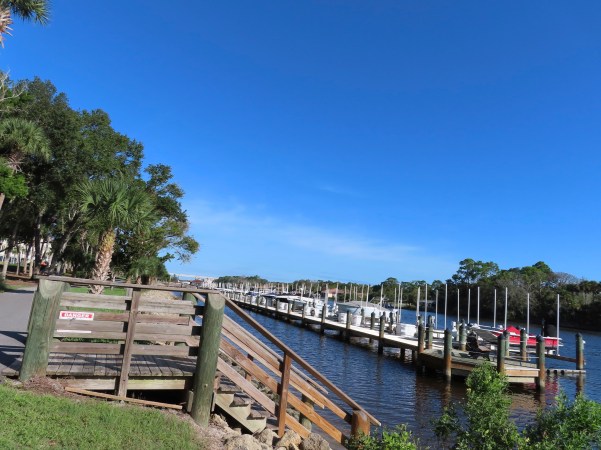
…fomos a Portugal!. (We went to Portugal)!.

…fomos a Portugal!. Éramos “Os Sete Magníficos”!. (We went to Portugal!. We were “The Seven Magnificent”)!.

…sexta parte e última!. (sixth and last part)!.

…as vezes são grandes, às vezes são pequenas, às vezes são planeadas, mas as viajens em família, são um dos maiores contribuidores para as histórias que fazem parte da narrativa oscilante da nossa vida e, quando se escolhe entre o conforto na compra de um sofá e uma televisão nova ou o dinheiro dispendido numa viajem em família, sempre se escolhe as viajens em família!. A pesquisa valida esse ponto de vista, dizendo que as viajens em família agem como “âncoras da felicidade”, pelo menos para as crianças!. (Sometimes they are big, sometimes they are small, sometimes they are planned, but family trips are one of the biggest contributors to the stories that are part of the oscillating narrative of our lives and, when choosing between comfort in life, buying a sofa and a new television or the money spent on a family trip, one always chooses family trips!. The research validates this view by saying that family travel acts as “anchors of happiness”, at least for children)!.

…por exemplo, viajando com crianças, quando as coisas não saíam conforme o planejado, se perdemos, o resultado é rir, e se sai tudo certo, o resultado é rir também e, as histórias são muito melhores depois de rir, mesmo de coisas que não são normais para os adultos, ao invés de ficarmos deprimidos ou com pensamentos escuros!. (For example, traveling with children, when things did not go according to plan, if we lose, the result is laughing, and if everything goes well, the result is laughing too, and the stories are much better after laughing, even of things that are not normal for adults, rather than getting depressed or dark thoughts)!.

…mas vamos em frente com a narrativa!. Estávamos na cidade de Lisboa e, ao outro dia, ainda madrugada, realizámos a tarefa de empacotar as malas e, como é costume, no regresso nunca existe lugar para acomodar tudo o que fomos acomolando durante a viajem, especialmente nós, que éramos uma família que viajava com crianças!. (But let’s get on with the narrative!. We were in the city of Lisbon and the other day, early in the morning, we performed the task of packing our bags and, as usual, on our return there is never a place to accommodate everything we were packing during the trip, especially us, who were a family. traveling with kids!.

…dirigimo-nos para o aeroporto de Lisboa, onde depois de todas a normais formalizações, entrámos na aeronave que, sobrevoando as Trilhas do Atlântico Norte, pelas estradas invisíveis no céu, atravessou o oceano Atlântico com tal precisão que, o comissário de bordo ao anunciar a rota, explicou que o tempo estava limpo e íamos aterrar no aeroporto de Newark, no estado de Nova Jersey, com nove minutos de antecedência ao horário previsto!. (We headed for Lisbon airport, where after all the normal formalizations, we boarded the aircraft which, flying over the North Atlantic Trails, through the invisible roads in the sky, crossed the Atlantic Ocean with such precision that the Commissioner of on board announcing the route, he explained that the weather was clear and we were landing at Newark Airport, New Jersey nine minutes ahead of schedule)!.

…isto são as técnicas modernas, cada vez com mais precisão, que não têm qualquer comparação com o que aconteceu por volta do ano de 1919, quando o hidroavião Curtiss NC-4, fez uma travessia do Atlântico, voando dos EUA para a Terra Nova, depois para os Açores, depois para Portugal continental e finalmente para o Reino Unido, numa jornada que levou 23 dias, com seis paragens no caminho, numa trilha de 53 “navios de estação” no oceano Atlântico, que deu os pontos e auxílio à aeronave para poder navegar!. (These are the increasingly precise modern techniques that have no comparison to what happened around the year 1919, when the Curtiss NC-4 seaplane, made an Atlantic crossing from the US to Newfoundland, then to the Azores, then to mainland Portugal and finally to the United Kingdom, in a journey that took 23 days, with six stops on the way, on a 53-station “Atlantic Ocean” trail that gave the points and aid to the aircraft to be able to navigate)!.

…finalmente estávamos de novo nos USA!. “Os Sete Magníficos”, despediam-se uns dos outros, houve de novo algumas lágrimas que acabaram em sorrisos de despedida, porque nestes dez dias juntos, quase parecia que o tempo parou!. (Finally we were back in the USA!. “The Seven Magnificent”, they said goodbye to each other, there were some tears that ended in farewell smiles, because in these ten days together, it almost seemed that time stopped)!.

…estas lembranças da viajem em família são mantidas no fundo do nosso coração, por isso é que tirámos um tempo para escrever os melhores momentos e, nunca esqueceremos os últimos 30 minutos juntos, no momento da temporária separação!. Esses momentos mágicos no tempo, estavam chegando ao fim!. (These memories of the family trip are kept deep in our hearts, that’s why we took the time to write the best moments and we will never forget the last 30 minutes together at the time of the temporary separation!. These magical moments in time were coming to an end)!.

…no dia seguinte pela manhã, seguimos no sentido norte/oeste, em direcção ao estado de Pennsylvania, visitar o nosso filho Tony, a sua dedicada esposa Kathy e os nossos netos Cody e Dawson!. (The next morning, we head north / west, heading for the state of Pennsylvania, visiting our son Tony, his devoted wife Kathy and our grandchildren Cody and Dawson)!.

…passamos um dia agradável, com os nossos netos contando-nos as suas opções divertidas durante e depois das horas passadas na escola!. (We spend a pleasant day with our grandchildren telling us about their fun choices during and after school hours)!.

…as histórias dos seus desportos favoritos, exemplificando-nos com movimentos precisos, mostrando o seu talento e as suas habilidades, iguais à que eles vêm aos professionais na televisão!. (The stories of their favorite sports, exemplifying us with precise movements, showing their talent and skills, just like they come to the professionals on television)!.

…estivémos juntos por algum tempo, celebrando e mantendo viva a história da nossa família!. (We have been together for some time, celebrating and keeping our family history alive)!.

…revivendo memórias antigas!. (Reliving old memories)!.

…e, fazendo planos para a realização de novas aventuras, aqui na casa dos avós, no estado da Florida!. (And making plans for new adventures here at Grandparents House in the state of Florida)!.

…ouvimos as suas ideias, observámos a atenção e o carinho dado pela sua dedicada mãe Kathy e pelo seu dedicado pai Tony que, sempre que podem os acompanham nos seus eventos favoritos!. (We listened to your ideas, watched the attention and affection given by your dedicated mother Kathy and your dedicated father Tony who, whenever you can accompany them at your favorite events)!.

…saltaram para o nosso colo, mostraram os livros e os brinquedos preferidos!. (Jumped onto our lap, showed the favorite books and toys)!.

…contaram-nos histórias engraçadas, que nos fizeram rir!. (Told us funny stories that made us laugh)!.

…comemos juntos as mirabulantes receitas da sua mãe Kathy, que são as suas preferidas, roubando comida uns aos outros e, claro, nós os avós perdiamos sempre, perante os seus sorrisos!. (We eat together your mother Kathy’s miraculous recipes, which are your favorites, stealing food from each other and of course we grandparents always lost them before your smiles)!.

…todavia, a importância de registrar e lembrar estes momentos é uma enorme criação de um legado duradouro, sobretudo para as pessoas que amamos!. (Yet the importance of recording and remembering these moments is a huge creation of a lasting legacy, especially for the people we love)!.

…mostraram-nos e também brincámos com os seus brinquedos!. (Showed us and we also played with their toys)!.

…e, juntos vimos os seus programas preferidos de televisão!. (And together we watched your favorite television shows)!.

…enfim, por alguns momentos também fomos crianças de novo!. (Finally, for a few moments we were also children again)!.

…todas estas recordações, contando memórias de família, levam-nos a uma narrativa, onde ficam registrados os pensamentos dos movimentos à medida que a idade dos nossos netos avança, que serão o desenho de pequenos tesouros, que ficarão gravados, para serem lembrados durante toda a sua vida!. (All these memories, telling family memories, lead us to a narrative, where the thoughts of the movements are recorded as the age of our grandchildren progresses, which will be the drawing of small treasures, which will be engraved, to be remembered all your life)!.

…depois de uma saudosa despedida, acordando-os, pois ainda dormiam, saimos ainda noite, começando uma viajem de regresso à nossa casa, com alguns intervalos para comer e fazer alguns exercícios físicos, rumando ao estado da Flórida, passando por todos aqueles estados que já por diversas vezes mencionamos, chegando já a noite ia avançada!. (After a late farewell, waking them up, as they were still sleeping, we went out at night, starting a trip back to our house, with some breaks to eat and do some physical exercises, heading for the state of Florida, passing by all. those states that we have already mentioned several times, and the night was already late)!.

…onde nos encontramos de novo, começando as nossas caminhadas por entre a natureza, com sol brilhante ou chuva e vento dos “tornados” que periódicamente nos visitam, desejosos de encontrar aqui e ali alguns alligatores ou aves exóticas, para as poder fotografar!. (Where we meet again, beginning our walks through nature, with bright sun or rain and wind from the tornadoes that periodically visit us, eager to find some alligators or exotic birds here and there to photograph them)!

…claro, não esquecendo o nascer e o pôr do sol na praia, até que surja uma nova viajem!. (Of course, not forgetting the sunrise and sunset on the beach, until a new trip arises)!.

Tony Borie, October 2019!.

…fomos a Portugal!. (We went to Portugal)!.

…fomos a Portugal!. (We went to Portugal)!.

…fomos a Portugal!. Éramos “Os Sete Magníficos”!. (We went to Portugal!. We were “The Seven Magnificent”)!.

…quinta parte!. (fifth part)!.

…anteriormente já explicámos mas, para quem não nos seguiu na leitura destes textos, que não são mais do que uns pequenos resumos da nossa viajem a Portugal neste ano de 2019, voltamos a explicar que, por alguns dias ficámos estacionados na Praia da Barra de Aveiro e, nestes dez dias lá passados, o nome mais apropriado para o nosso grupo seria “The Magnificent Seven” (“Os Sete Magníficos”)!. (We have already explained before, but for those who did not follow us in reading these texts, which are nothing more than brief summaries of our trip to Portugal this year 2019, we again explain that for a few days we were stationed in Praia da Barra de Aveiro and, in the last ten days there, the most appropriate name for our group would be “The Magnificent Seven”)!.

…a nossa irmã Angela e o seu dedicado marido José André, trouxeram a sua família a passar o dia connosco, aqui na praia, depois de terem feito o mesmo quando chegámos a Portugal, onde numa reunião familiar, nos receberem em sua casa lá na montanha, com todas as mordomias, que muito nos sensibilizaram, não só pela quantidade de iguarias regionais, como pelos momentos de convívio, demonstrando a dignidade de pessoas simples, amáveis e queridas, que nunca mais esqueceremos!. Bem hajam!. (Our sister Angela and her devoted husband José André, brought their family to spend the day with us here at the beach, after having done the same when we arrived in Portugal, where at a family reunion, they welcome us to their home there on the mountain, with all the stewardships, which made us very aware, not only by the amount of regional delicacies, but also by the moments of conviviality, demonstrating the dignity of simple, lovely and dear people, that we will never forget!. Well be)!.

…nós, assim como a nossa querida e dedicada esposa Isaura, num momento de silêncio e meditação, despedimo-nos desta região, onde a terra deixa de ser plana, começando a ser montanha agreste, lembrando e mostrando, principalmente aos nossos netos, os nossos antepassados que por aqui ficaram para todo o sempre, cujo lugar de repouso tínhamos visitado uns dias antes!. (We, like our dear and dedicated wife Isaura, in a moment of silence and meditation, said goodbye to this region, where the earth is no longer flat, starting to be rough mountain, remembering and showing mainly to our grandchildren, our ancestors who have been here forever and ever, whose resting place we had visited a few days earlier)!.

…e, não devemos ter medo de fazer algo que possa parecer um pouco chato no começo, porque daqui a muitos anos, não vai ser chato, vai ser inesquecível!. Temos quase a certeza, que pelo menos as crianças, devem ter revirado os olhos algumas vezes, quando visitamos o antigo cemitério da família!. Mas quando eles um dia encontrarem muitos dos seus nomes nas lápides, os seus sentimentos de amor serão muito grandes e irão sentir muito orgulho em contarem aos seus descendentes que ali repousam os seus antepassados de outras gerações!. (And we should not be afraid to do something that may seem a little boring at first, because in many years it will not be boring, it will be unforgettable!. We are almost sure that at least the children, they must have rolled their eyes a few times when we visited the old family cemetery!. But when they once found many of their names on the headstones, their feelings of love will be very great and they will be very proud to tell their descendants that their ancestors of other generations rest there)!.

…chegou o momento do regresso!. Depois destas horas passadas em família onde, além do sol da praia, das brincadeiras das crianças na areia, dos abraços, beijos, promessas e algumas lágrimas de despedida que, pouco a pouco se iam transformando em sorrisos!. (The time has come for the return!. After these hours spent in the family where, besides the sun of the beach, the children’s games in the sand, the hugs, kisses, promises and some goodbye tears that gradually turned into smiles)!.

…viajámos para sul guiados pelos meios de comunicação modernos, ou seja o GPS, que nos conduziu por uma auto-estrada próximo do mar até à cidade de Lisboa!. (We traveled south guided by the modern media, ie GPS, which led us along a motorway near the sea to the city of Lisbon)!.

…havia reservas de Hotel na zona da baixa de Lisboa mas, Portugal, hoje um país que pertence à União Europeia, seguindo alguns dos seus regulamentos, neste caso os de “Amigos do Ambiente”, determinou que, no último fim de semana de cada mês, não deve haver circulação de veículos automóveis em determinada zona da baixa da cidade de Lisboa, que por sinal coincidia com a localização do nosso Hotel!. (There were hotel reservations in Lisbon’s downtown area, but Portugal, today a country that belongs to the European Union, following some of its regulations, in this case the “Environmentally Friendly”, determined that last weekend of each month, there should be no circulation of motor vehicles in a certain area of downtown Lisbon, which coincided with the location of our Hotel)!.

…assim nós, o grupo dos tais “Sete Magníficos”, com três crianças a bordo, estávamos privados de nem sequer nos aproximar do Hotel para onde tínhamos reservas!. (So we, the group of such “Seven Magnificent”, with three children on board, were deprived of not even approaching the Hotel where we had reservations)!.

…resultado!. Dos contactos com o Hotel, com muita amabilidade, informaram-nos para explicar a situação aos agentes da polícia que guardavam e controlavam a área!. Iniciámos os contactos onde, depois da apresentação dos documentos da reserva, a sua localização, que havia três crianças a bordo, onde as respostas eram, “isto não é comigo”, “saia daqui”, “quem o autorizou a transitar por aqui”, “siga por esta rua que o meu colega indica-lhe a melhor maneira de sair daqui”, “cale-se, você está descontrolado”, “hoje aqui não passa qualquer veículo automóvel”, “volte depois da meia-noite, que é quando acaba a paralização” ou, talvez pensando que nós trabalhávamos para qualquer agência de viajens, ouviamos também, “estes gajos das agências, vêm lá do aeroporto e pensam que mandam nisto tudo”!. (Result!. From contacts with the Hotel, very kindly, they informed us to explain the situation to the police officers who guarded and controlled the area!. We started contacts where, after the presentation of the reservation documents, their location, that there were three children on board, where the answers were, “this is not me”, “get out of here”, “who allowed you to transit here”, “Follow this street that my colleague tells you the best way to get out of here”, “shut up, you are out of control”, “today there is no motor vehicle”, “come back after midnight, which that’s when the shutdown ends” or, perhaps thinking that we worked for any travel agency, we also heard, “these agency guys, come from the airport and think they run it all”)!.

…perante a nossa insistência, que demonstrava alguma angústia, um polícia ainda jovem, que ouviu as nossas súplicas e era o chefe daquela zona, sai do carro, ajeita o capacete militar e, vem em nossa direcção!. Nós ficámos quase em pânico, pensando que nos ia dar voz de prisão!. Todavia não, com uma certa postura na sua maneira de falar, fazendo-nos uma saudação também militar, disse-nos que comprendia e ia contactar a central da polícia para tentar resolver a nossa situação!. Depois de alguns minutos de conversação, ouvimos dizer da central a palavra “afirmativo”!. Ele próprio, deu-nos a indicação certa, levando-nos à garagem do Hotel, e nós, agradecidos, cumprimentámos este verdadeiro agente da polícia!. (At our insistence, which showed some anguish, a young policeman who heard our pleas and was the head of that area, gets out of the car, straightens his military helmet and comes towards us!. We were almost panicked, thinking that we were going to give us a voice of arrest!. But no, with a certain attitude in his speech, giving us a military salute, he told us he understood and was going to contact the police center to try to resolve our situation!. After a few minutes of conversation, we hear the word “affirmative” from the central!. He himself gave us the right indication, leading us to the Hotel garage, and we gratefully greeted this real police officer)!.

…toda esta aventura da entrada no Hotel, roubou-nos um tempo e energia que considerámos importante para dispender na cidade, todavia, depois de nos acomodar nas instalações do Hotel, andámos pela baixa da cidade!. (All this adventure of entering the hotel robbed us of a time and energy that we considered important to spend in the city, however, after settling in the hotel facilities, we walked down town)!.

…ao sair do Hotel, as crianças viram um Eléctrico parado, com um aspecto exótico, mais alto na frente do que na parte de trás, correram para ele que, afinal o seu verdadeiro nome era o “Elevador do Lavra”, que foi inaugurado no ano de 1884, tornando-o no mais antigo elevador da cidade!. Tentámos subir nele e, viajar pelo menos até à parte alta do lado leste da cidade mas, dado o preço excessivo para toda a nossa família, resolvemos fazer algum exercício físico, caminhando e subindo, o que foi um bom teste!. (As they left the Hotel, the children saw a stationary tram with an exotic look, higher in front than in the rear, rushed to it that after all its real name was the “Lavra Elevator”, which opened in the year 1884, making it the oldest elevator in the city!. We tried to climb on it and travel at least to the upper east side of the city but, given the excessive price for our whole family, we decided to do some physical walking and climbing, which was a good test)!.

…tentando aproveitar o pouco tempo disponível, concentrámo-nos na área da Baixa Pombalina que consiste no conjunto de ruas ao norte da Praça do Comércio, aproximadamente entre o Cais do Sodré e o distrito de Alfama, tendo quase sempre a vista ao longe do Castelo de São Jorge!. (Trying to take advantage of the limited time available, we concentrated on the Baixa Pombalina area, which consists of the set of streets north of Praça do Comércio, approximately between Cais do Sodré and Alfama district, with the view almost always in the distance from São Jorge Castle)!.

…esta área da Baixa Pombalina é um bairro elegante, com as ruas e pequenas avenidas direitas, num cenário plano, construído principalmente após o terremoto do ano de 1755 em Lisboa, que se estende para o norte em direção às praças do Rossio e da Figueira, até à Avenida da Liberdade, onde estava localizado o nosso Hotel!. (This area of Baixa Pombalina is an elegant neighborhood, with its straight streets and small avenues, in a flat setting, built mainly after the Lisbon earthquake of 1755, which extends northwards towards the squares of Rossio and da Figueira, to Avenida da Liberdade, where our Hotel was located)!.

…estas ruas e pequenas avenidas, são bastantes conhecidas pelos postais ilustrados da cidade, onde se pode admirar, entre outros motivos, o cenário de artistas de teatro de rua, esplanadas de cafés, pastelarias e restaurantes, lojas de modas, alfaiatarias ou ourivesarias, que continuam a vender os seus produtos tal como há dezenas e dezenas de anos atrás, que os turistas frequentam ou simplesmente por aqui passeiem, como era o nosso caso!. (These streets and small boulevards are well known for the picture postcards of the city, where you can admire, among other things, the scenery of street theater artists, cafe terraces, pastry shops and restaurants, fashion shops, tailor shops or goldsmiths, who continue to sell their products as they did dozens and dozens of years ago, which tourists frequent or simply walk around here, as was our case)!.

…caminhando, parámos por algum tempo admirando o maravilhoso cenário de um antigo Cais, que se estende até ao rio Tejo e fica situado junto à Praça do Comércio e que, em outros tempos já foi considerado “As Portas de Lisboa”!. (Walking, we stopped for a while admiring the wonderful scenery of an old Quay, which extends to the Tagus River and is located next to Praça do Comércio and was once considered “The Portas de Lisboa”)!.

…era o “Cais das Colunas”, que costumava ser a entrada Real para desembarcar na Praça do Comércio e no Palácio Real que existia lá e, onde dignitários estrangeiros chegavam aqui de barco e subiam os degraus de mármore entre os também pilares de mármore, até a Praça do Comércio!. (Was the “Cais das Colunas”, which used to be the Royal entrance to disembark at Praça do Comércio and the Royal Palace that existed there, and where foreign dignitaries arrived here by boat and climbed the marble steps between the pillars marble, to the Praça do Comércio)!.

…aqui, na área do “Cais das Colunas”, é um bom lugar para se sentar e relaxar, ou desfrutar de um pôr do sol, onde a partir daqui, podemos ver a famosa Ponte de 25 de Abril e a Estátua de Cristo Rei, olhando para o lado da foz do Rio Tejo!. (Here, in the “Cais das Colunas” area, is a good place to sit and relax, or enjoy a sunset, where from here we can see the famous 25 de Abril Bridge and the Statue of Cristo Rei, looking to the mouth of the Tagus River)!.

…continuando a nossa caminhada, parávamos aqui e ali, algumas vezes apreciando a deliciosa e típica pastelaria portuguesa, como por exemplo “os pasteis de bacalhau recheados de queijo da serra com vinho do porto”!. Claro, depois de apreciarmos esta iguaria, pareceu-nos uma coisa de turistas mas, se não moramos em Lisboa, com toda a certeza que somos turistas, por tal, se não vive aqui, entre na fila e experimente!. (Continuing our walk, we would stop here and there, sometimes enjoying the delicious and typical Portuguese pastries, such as “codfish pastries filled with Serra cheese with port wine”!. Of course, after enjoying this delicacy, it seemed like a tourist thing to us, but if we don’t live in Lisbon, we are definitely tourists, so if you don’t live here, get in line and try it)!.

…ou o Elevador de Santa Justa, também chamado de Elevador do Carmo, situado no final da Rua de Santa Justa, que liga as ruas mais baixas da cidade ao Largo do Carmo, numa área mais alta que, desde a sua construção, que ocorreu no ano de 1902, se tornou numa atração turística e que, foi considerada uma obra arrojada para a época, atendendo à diferença de nível entre o piso da estação inferior à estação superior, que é de 30 metros!. (Or the Santa Justa Lift, also called the Carmo Lift, located at the end of Santa Justa Street, which connects the lower streets of the city to Largo do Carmo, in a higher area that, since its construction, which occurred in 1902, became a tourist attraction and was considered a bold work for the time, given the difference in level between the floor of the lower station to the upper station, which is 30 meters)!.

…ainda tivemos tempo de parar na “Ginginha”, que é uma pequena loja quase ao ar livre, localizada ao norte da Praça do Rossio, sendo fácil de a localizar geralmente pelas longas filas que se geram à sua porta!. Nós, os adultos, experimentámos o famoso licor de cereja doce de Lisboa, que é uma tradição portuguesa!. Eles só vendem Ginja, que é servida com ou sem cerejas!. Nós tivemos as cerejas que têm um sabor único! (We still had time to stop at “Ginginha”, which is a small, almost open-air shop, located north of Rossio Square, being easy to find usually by the long lines that run outside your door!. We adults tried the famous Lisbon sweet cherry liqueur, which is a Portuguese tradition!. They only sell Ginja, which is served with or without cherries!. We had cherries that have a unique flavor)!.

…continua!. (To be continued)!.

Tony Borie, October 2019!.