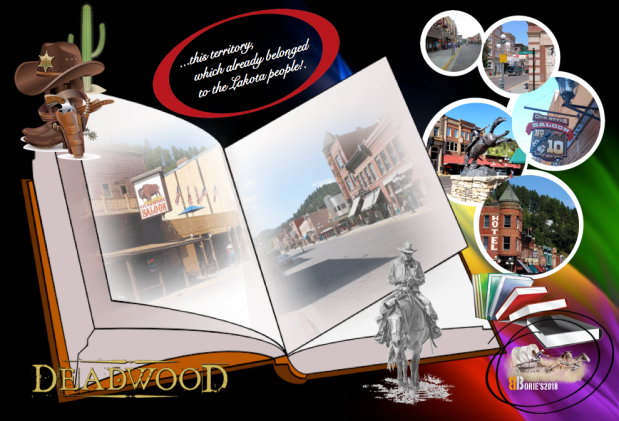
…Deadwood!

…Deadwood!

Deadwood!.

…nós, aventureiros, cidadãos do mundo, vamos percorrendo um percurso sem qualquer destino, até onde a idade e alguma saúde, nos autorize a desfrutar do previlégio que é, poder usufuir da luz do sol, da água da chuva, do frio da neve, do calor da praia, da amizade das pessoas, ou de continuarmos a poder acompanhar o crescimento da família, sentindo o seu amor, traduzido em algum carinho!. (we, adventurers, citizens of the world, let us go on a course without any destination, as far as age and some health, allow us to enjoy the privilege that is, to be able to enjoy the light of the sun, rainwater, cold snow, the warmth of the beach, the friendship of people, or to continue to be able to keep up with the growth of the family, feeling their love, translated into some affection)!.

…porquê, não sabemos!. Mas sempre tivémos uma certa atracção pelo estado de Dakota do Sul, talvez as suas planícies onde ainda pastam alguns rebanhos de búfalos, as montanhas Black Hills, na parte oeste, onde sobressaiem rochas gigantes de granito, algumas cobertas de árvores centenárias, que nos mostram um cenário de beleza, onde a floresta continua intacta e em paz, depois de lutas por anos e anos entre os índios americanos e os colonizadores, que iam avançando para oeste, desejando aquele território, ou talvez a sua história de cidades pioneiras, como por exemplo Deadwood!. (why, we do not know !. But we’ve always had a certain attraction for the state of South Dakota, perhaps its plains where some herds of buffalo still graze, the Black Hills in the west, where giant granite rocks stand out, some covered with centuries-old trees, which show us a landscape of beauty, where the forest remains intact and in peace, after struggles for years and years between the American Indians and the settlers, who were advancing towards the west, wishing that territory, or perhaps its history of pioneer cities, example Deadwood)!.

…já era ao anoitecer, a estrada desenhava algumas curvas, descidas e subidas, quando nos surge a cidade de Deadwood, no estado de Dakota do Sul, situada nas colinas das montanhas de Black Hills, com uma história de centenas de anos que, por volta do ano de 1870 se formou com um assentamento ilegal, assim como ilegal foi parte da sua vivência, onde cresceram os salões de jogo, vieram as prostitutas, o álcool corria nas gargantas, sendo tudo pago com pepitas de ouro, não havia lei, ou se havia não se respeitava, matáva-se por uma pá, uma bacia de limpar a terra do ouro, ou por um burro da carga, enfim, era a lei do mais rápido!. (it was already dusk, the road drew some curves, descents and ascents, when the city of Deadwood, in the state of South Dakota, situated in the hills of the Black Hills mountains, with a history of hundreds of years , around the year 1870 formed with an illegal settlement, just as illegal was part of their experience, where gambling halls grew, prostitutes came, alcohol ran in the throats, all being paid with gold nuggets, there was law, or if it had not respected itself, it was killed by a shovel, a basin to clean the land of gold, or by a donkey of the load, finally, was the law of the fastest)!

…num território concedido aos índios americanos, no Tratado de Laramie, no ano de 1868, território este, que já pertencia ao povo Lakota, verdadeiros habitantes desta área por séculos, garantia-lhes a posse das montanhas e colinas de Black Hills, todavia as disputas sobre aquelas colinas continuaram e, tinham que continuar, pois havia lá ouro, tendo as disputas atingido a Suprema Corte dos USA, por diversas ocasiões!. (in a land granted to the American Indians in the Treaty of Laramie in 1868, this territory, which already belonged to the Lakota people, true inhabitants of this area for centuries, guaranteed them the possession of the mountains and hills of the Black Hills, yet the disputes over those hills continued, and they had to continue, for there was gold there, and the disputes reached the Supreme Court of the USA, on several occasions)!.

…verdadeiramente, o que é hoje a cidade de Deadwood começou, quando o coronel George Armstrong Custer, liderou uma expedição a essas montanhas, anunciando a descoberta de ouro, no “French Creek”, que era um ribeiro que por lá passava, perto do que é hoje a cidade de Custer, no mesmo estado!. O anúncio do coronel Custer, desencadeou a corrida ao ouro na área de Black Hills, dando origem ao que hoje chamam a cidade de Deadwood, onde a sua população, rápidamente, de apenas de umas dezenas, passou para 5.000 pessoas!. (truly, what is today the city of Deadwood began, when Colonel George Armstrong Custer led an expedition to these mountains, announcing the discovery of gold, in the French Creek, which was a brook that passed through there, near what is now the city of Custer, in the same state!. Colonel Custer’s announcement unleashed the gold rush in the Black Hills area, giving rise to what they now call the city of Deadwood, where its population, quickly, from only a few dozen, passed to 5,000 people)!.

…depois, foi a azáfama normal em povoações que se formaram com a corrida ao ouro, longe da pouca civilização que naquele tempo havia, onde tudo era permitido, o ouro abundava, não se respeitava nada a não ser a ganância e a oportunidade de ser mais poderoso que o vizinho, lutavam e matavam, por um pequeno espaço num qualquer ribeiro, o álcool, a pólvora, as armas, o jogo, os salões com senhoras cresciam e, tudo era pago com ouro!. (later, it was the usual bustle in settlements that formed with the gold rush, away from the little civilization that was in those days where everything was allowed, gold abounded, nothing was respected except greed and opportunity to be more powerful than the neighbor, they fought and killed, for a little space in any brook, alcohol, gunpowder, guns, gambling, salons with ladies growing, and everything was paid for with gold)!.

…Deadwood, é uma das cidades lendárias da corrida ao ouro, tendo por aqui passado personagens que fazem parte da história pioneira Americana, como por exemplo, Seth Bullock, um homem da lei, Wyatt Earp, lendário pistoleiro, mais tarde Sherife Marshal dos U.S., jogador professional e guarda de bordel ou George Hearst, magnata do ouro em São Francisco e Senador dos U.S.A., pela Califórnia!. (Deadwood, is one of the legendary cities of the gold rush, having here passed characters that are part of the pioneering American history, for example, Seth Bullock, a man of law, Wyatt Earp, legendary gunslinger, later Sherif Marshal of the US, professional player and brothel guard or George Hearst, gold tycoon in San Francisco and US Senator, California)!.
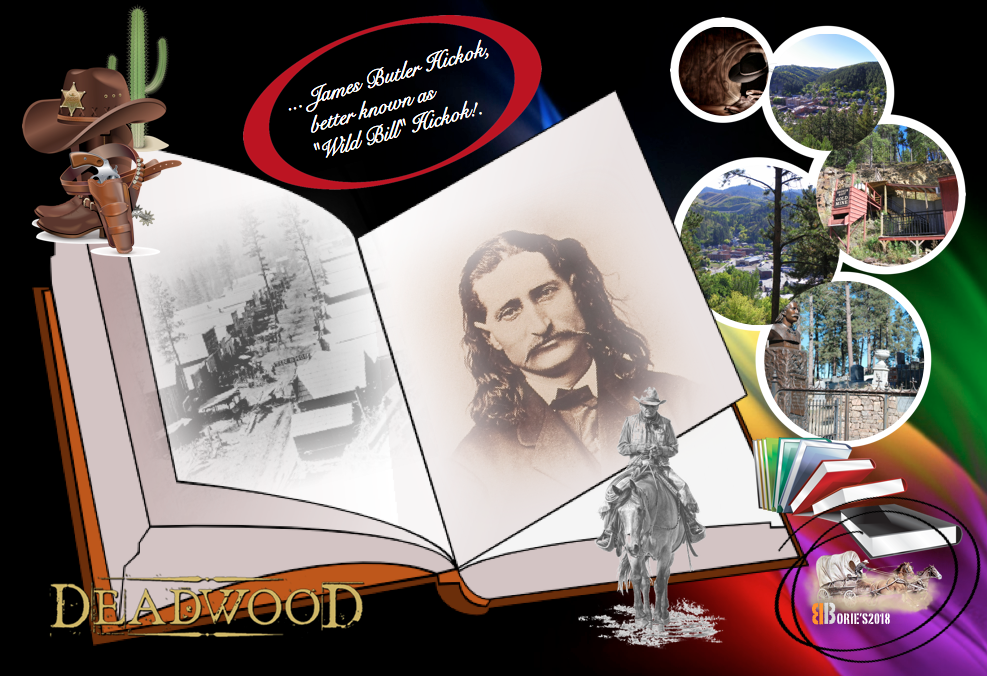
…no entanto, as personagens que ao longo dos tempos se tornaram ainda mais lendárias e que por aqui passaram, fazendo parte da história da cidade de Deadwood, foram James Butler Hickok, (“Wild Bill” Hickok), e Martha Jane Cannary, (Calamity Jane), que por aqui ficaram para sempre, sepultadas no cemitério das colinas da cidade, tendo direito a estátuas e, os seus habitantes se orgulham ao contar a sua história!. (but the characters that have become even more legendary over the years have been James Butler Hickok (“Wild Bill” Hickok), and Martha Jane Cannary (Calamity Jane), who have stayed here forever, buried in the cemetery of the city’s hills, having rights to statues, and its inhabitants are proud to tell their story)!.

…o James Butler Hickok, mais conhecido como “Wild Bill” Hickok, era um herói folclórico do velho oeste americano, conhecido pelo seu trabalho através do território de fronteira, como guia e tradutor, mestre de caravanas, soldado, espião, batedor, sherife, pistoleiro, jogador, showman e actor!. A sua notoriedade, ganha no seu próprio tempo, é reforçada por muitas histórias estranhas, muitas vezes fabricadas pelo que ele contava sobre a sua própria vida!. Alguns relatos contemporâneos das suas façanhas, são conhecidos como sendo fictícios, todavia eles constituem a base de grande parte da sua reputação de fama!. (James Butler Hickok, better known as “Wild Bill” Hickok, was a folk hero of the Old American West, known for his work across the border territory, as a guide and translator, a master of caravans, a soldier, a spy, a batter , sheriff, gunslinger, player, showman and actor!. His notoriety, gained in his own time, is reinforced by many strange stories, often fabricated by what he told about his own life!. Some contemporary accounts of his exploits are known to be fictitious, yet they form the basis of much of his reputation for fame)!

…apesar de usar uma grande faca, duas grandes pistolas, de dizer que tinha lutado sózinho contra ursos, morto muitos “peles-vermelhas”, ganho dezenas de “duelos”, de ser forte e audaz, conhecer todo o território, um certo dia, no célebre “Salon N.º 10”, desta cidade de Deadwood, um garoto, que se lembrava da sua cara, por ter morto o seu pai, que o tinha desafiado para um duelo, disferiu-lhe dois tiros pelas costas, assim de repente, à queima-roupa, por trás, acabando com toda a sua audácia e rapidez!. (despite using a large knife, two large pistols, to say that I had fought alone against bears, killed many “redskins”, won dozens of “duels”, being strong and daring, knowing the whole territory, one day in the celebrated “Salon No. 10” of this city of Deadwood, a boy who remembered his face for having killed his father, who had challenged him to a duel, gave him two shots, so suddenly, at close range, behind, ending with all his audacity and speed)!.

…por sua vez, a Martha Jane Cannary, mais conhecida como “Calamity Jane”, também conhecida pelo seu trabalho através do território de fronteira, como guia, tradutora e batedora professional, acompanhando caravanas, tornando-se mais conhecida, quando se apaixonou pelo “Wild Bill” Hickok, junto ao qual lutou contra os índios!. Usava roupas masculinas, demonstrava compaixão pelos outros, especialmente pelos doentes e necessitados, contrastando um pouco com os seus jeitos temerários, que ajudaram a torná-la numa figura notável de fronteira, sabendo-se que não tinha educação formal e era uma alcoólica itinerante!.
Como já dissémos, ficaram os dois para sempre na cidade de Deadwood, sepultados no cemitério das colinas que circundam esta cidade, fazendo parte do seu folclore!. (in turn, Martha Jane Cannary, better known as “Calamity Jane”, also known for her work across the border territory, as a guide, translator and professional scout, accompanying caravans, becoming better known when fell in love with the “Wild Bill” Hickok, next to which fought against the Indians!. He wore men’s clothes, showed compassion for others, especially the sick and the needy, contrasting somewhat with his reckless ways, which helped make her a remarkable frontier figure, knowing that she had no formal education and was a traveling alcoholic!. As we have already said, they were forever in the city of Deadwood, buried in the cemetery of the hills that surround this city, being part of their folklore !.
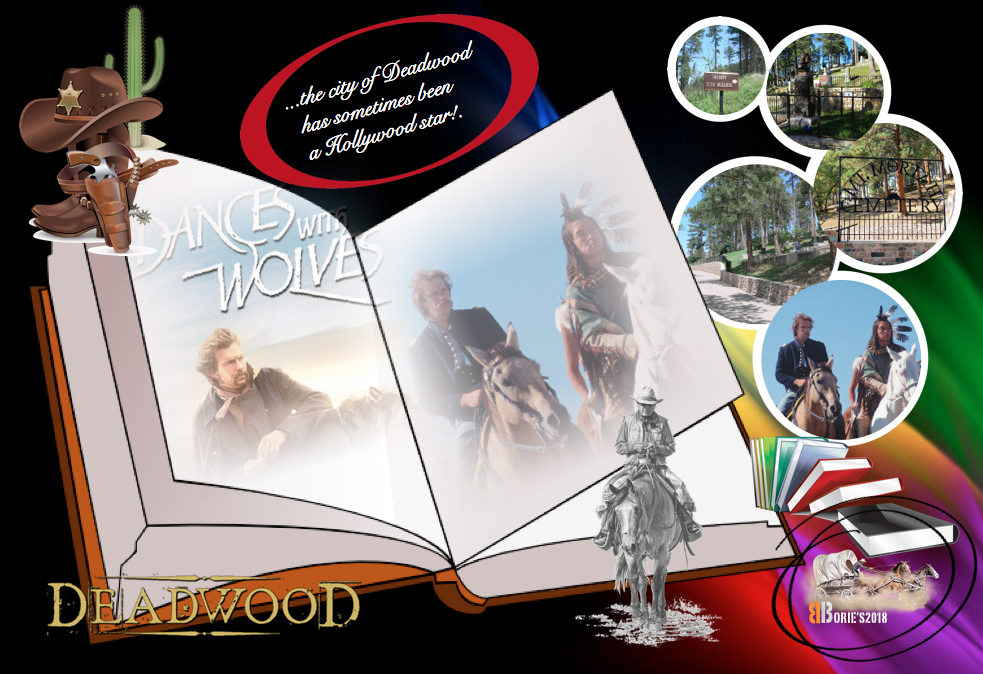
…a cidade de Deadwood, por algumas vezes foi estrela de Hollywood, várias séries de TV, se filmaram nesta cidade ou sua área, filmes como “Calamity Jane”, com a célebere atriz Doris Day, “Dances With Wolves”, com o actor Kevin Costner, entre muitos outros, foram rodados por aqui!. As ruas e estrutura da cidade mantêm-se, hoje é considerada “Nacional Historic Landmark District”, (Património Histórico Nacional), nos bares e restaurantes, existem áreas de casino com máquinas de jogo, a bebida continua a correr, algumas senhoras continuam pela portas dos bares, há música e festas em tudo o que é esquina, sendo visitada por centenas, talvez milhares de pessoas!. (the city of Deadwood has sometimes been a Hollywood star, several TV series, filmed in this city or its area, films like “Calamity Jane”, with the celebrated actress Doris Day, “Dances With Wolves”, with the actor Kevin Costner, among many others, were filmed here!. The streets and structure of the city remain, today it is considered “National Historic Landmark District” (National Historic Heritage), in bars and restaurants, there are casino areas with game machines, drink continues to run, some ladies continue by doors of the bars, there is music and parties in everything that is corner, being visited by hundreds, perhaps thousands of people)!.

Tony Borie, April 2018.

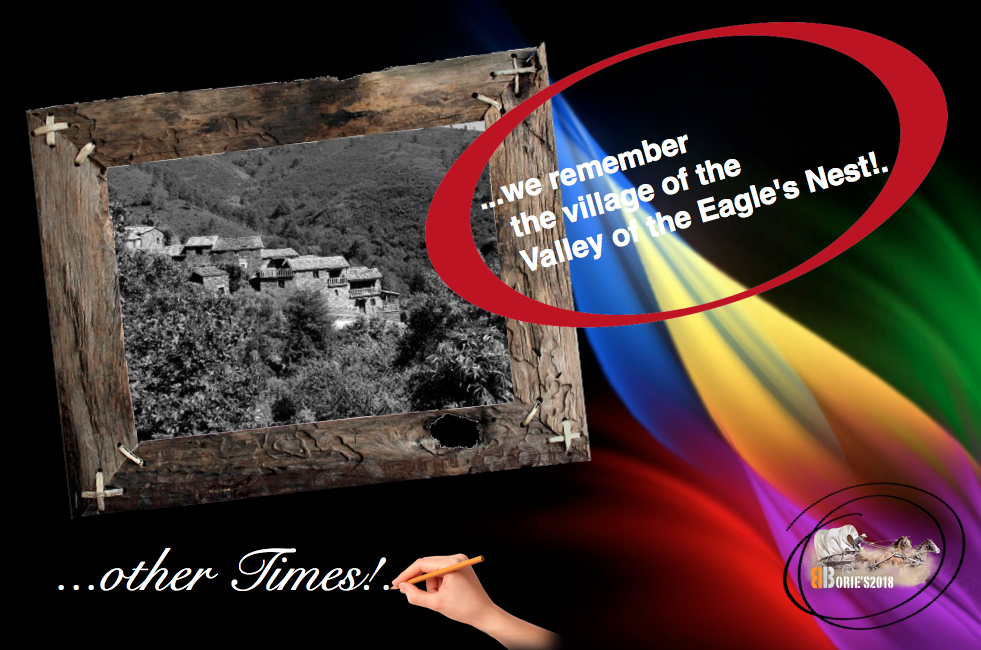
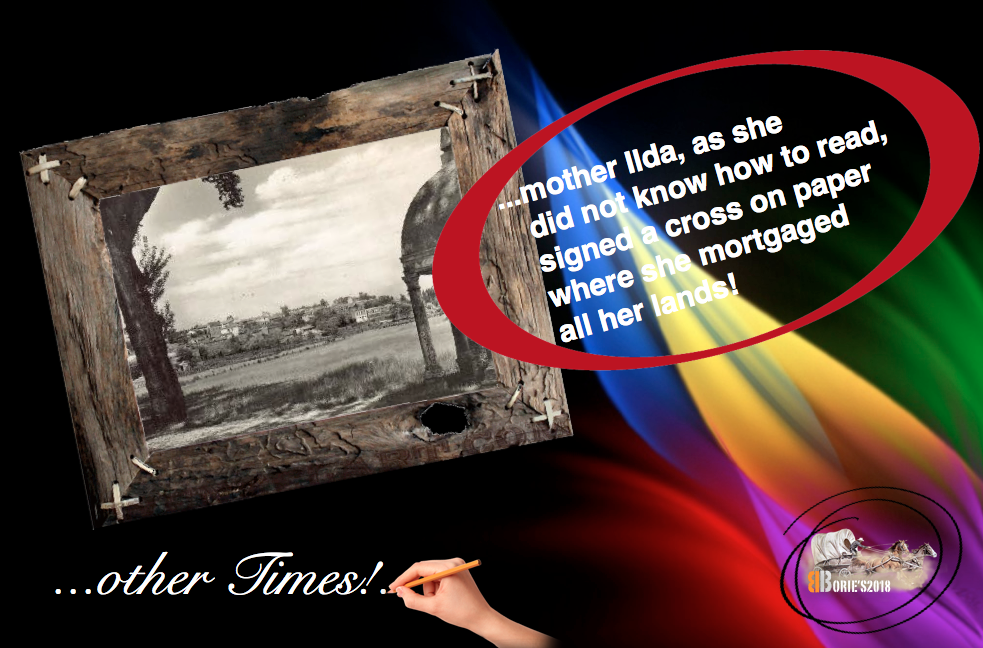
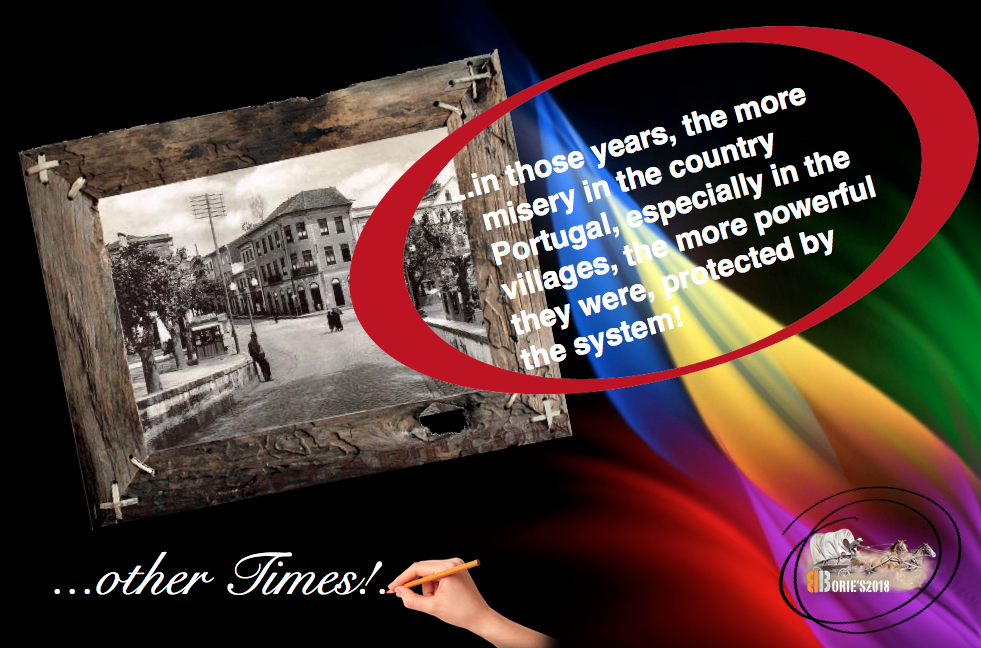
…our village!

…our village!

…a nossa aldeia! (our village)!

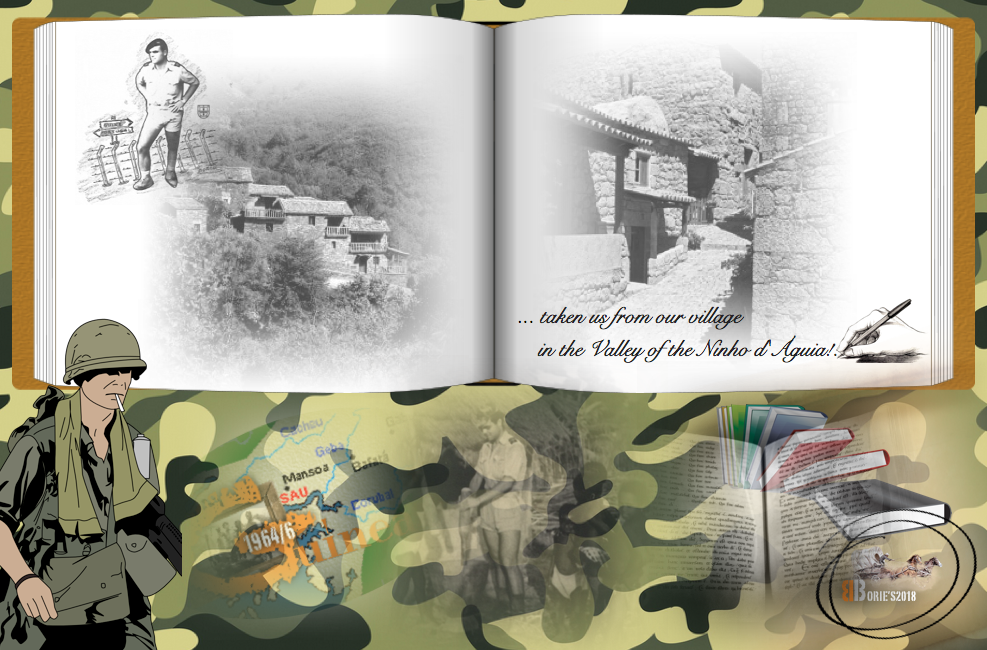
…ela, trazia nos pés umas chinelas que tinham sido sapatos no Brazil!. Todavia ela, a avó Agar, assim como o que restava de uma árvore caída no chão, onde por norma se sentava, onde alguns vizinhos diziam que, talvez juntas, deviam de andar próximas das duas centenas de anos, são neste momento as lembranças de amor, ternura e carinho, da nossa aldeia do Vale do Ninho d’Águia!. (she had on her feet slippers that had been shoes in Brazil!. Yet her grandmother Agar, like what was left of a fallen tree on the ground, where she usually sat, where some neighbors said that perhaps together they should be about two hundred years old, are at the moment the memories of love, tenderness and affection, of our village of the Valley of the Eagle’s Nest, (Vale do Ninho d’Águia)!.

…a aldeia, lá na vertente agreste da Montanha do Caramulo, onde a crosta terrestre, lentamente começava a ser plana, flutuando por perto as zonas ribeirinhas do Rio Águeda, onde pela noite, não havendo luz eléctrica, se a terra tremesse, nascendo dos céus uma pequena luz, que seria uma qualquer estrela, talvez uma estrela nova, daquelas que fazem oscilar um continente, ninguém dava por isso!. (the village, there on the rugged slope of Mount Caramulo, where the earth’s crust slowly began to be flat, floating along the riverine areas of the Águeda River, where at night there was no electric light, if the earth trembled, rising from the skies a little light, that would be any star, perhaps a new star, those that make a continent oscillate, no one gave it)!.

…talvez na reunião da capela, na missa do próximo domingo, o senhor padre, com ar muito responsável, vestindo um traje preto, nos dissesse que aquela estrela nova, era um sinal do “Nosso Deus”, lá nas alturas, avisando-nos que não gostava do nosso procedimento, estava zangado e teríamos que rezar, fazer mais sacrifícios, contribuir com mais donativos, baixar a cabeça, render homenagem aos senhores da Vila, que eram os “bons”, os “melhores”, que só tinham intenção de nos fazer bem, pois nós, os “aldeões”, feliz ou infelizmente, não sabíamos que o resto do mundo existia!. (perhaps at the chapel meeting, next Sunday Mass, the priest, with a very responsible air, wearing a black suit, told us that this new star was a sign of “Our God”, up there, warning we would have to pray, make more sacrifices, contribute more donations, lower our heads, pay homage to the lords of the village, who were the “good”, the “best”, who only had intended to do us good, because we, the “villagers”, happily or unfortunately, did not know that the rest of the world existed)!.

…voltando à árvore caída no chão, todos nós a olhávamos com carinho, todavia ninguém se lembrava de quando caíu, ninguém por lá estava naquele momento para ver ou ouvir o ruído da sua queda, mas o carinho dispensado por todos, no nosso olhar, era porque era nossa, nasceu, cresceu e morreu na nossa aldeia, onde todos nos conhecíamos, onde também nascemos, crescemos, alguns casaram, constituindo família e, outros por lá ficaram para sempre!. (returning to the fallen tree on the ground, we all looked at her with affection, yet no one remembered when she fell, no one there was at that moment to see or hear the noise of her fall, but the affection dispensed by all, in our look, it was because it was ours, it was born, it grew and it died in our village, where we all knew each other, where we were also born, grew up, some married, constituting family, and others stayed there forever)!.

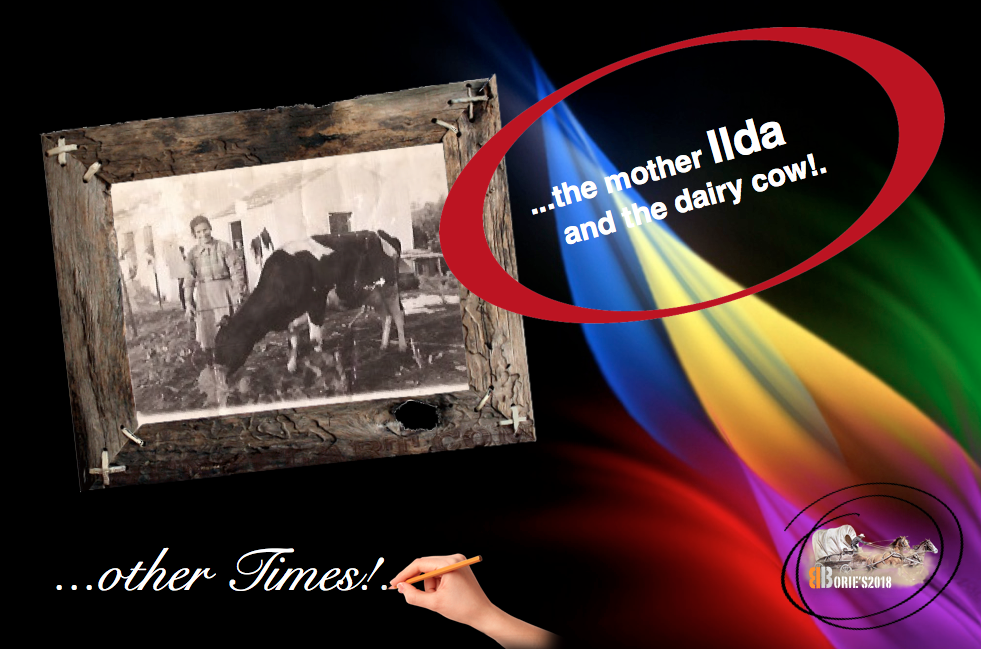
…mas, voltando também à avó Agar, lá sentada, embrulhada num xaile preto, com um lenço da mesma cor amarrado na cabeça, que lhe cobria o seu cabelo já branco, usando uma saia de burel preto, onde pendia uma pequena bolsa, bordada com um desenho imitando um coração, parecia dormindo, mas despertava com as nossas palavras ao passar por lá, que correndo lhe dizia-mos: “Bom dia, hó Avó”!. Ela, ficava pensando: “Fui eu que assisti a minha filha Ilda, quando este garoto nasceu, era uma manhã de Setembro, no final das colheitas, andávamos nas vindimas!. (but also returning to her grandmother Agar, sitting there, wrapped in a black shawl, with a scarf of the same color tied to her head, which covered her already white hair, wearing a black burel skirt, where a small bag hung , embroidered with a drawing imitating a heart, seemed asleep, but woke up with our words as we passed by, we ran to him and said: “Good morning, Grandma”!. She kept thinking: “It was I who watched my daughter Ilda, when this boy was born, it was a September morning, at the end of the harvests, we were going to the grape harvest)!.

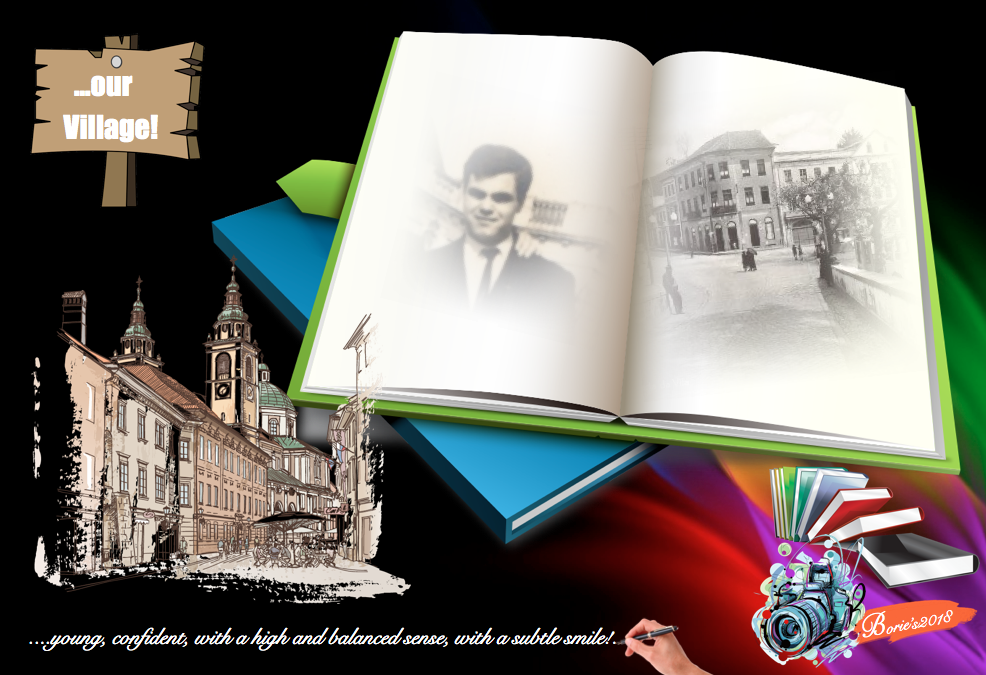
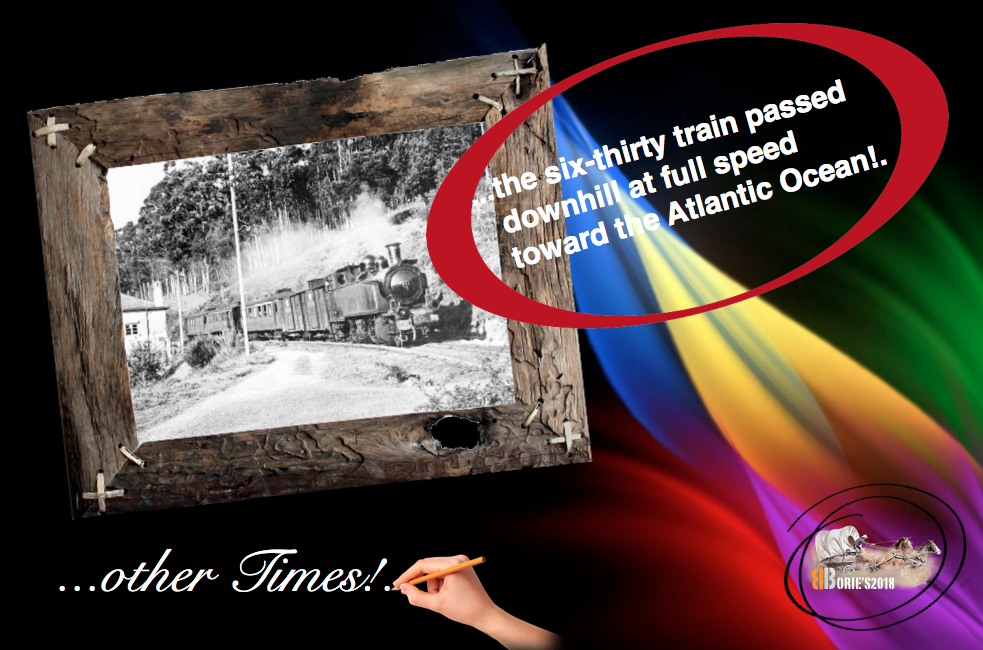
…éramos um jovem, confiante, com um sentido alto e equilibrado, com um sorriso subtil, pronto para conquistar o mundo, embora ainda não tivéssemos conhecimento que esse mundo existia!. Não sabíamos chorar, o combóio das seis e meia, que por lá passava apitando, vale abaixo em direcção ao oceano, acordáva-nos para a vida de lavoura, as nossas tarefas iam sendo feitas, a aldeia era uma grande família, os vizinhos conheciam-se!. (we were young, confident, with a high and balanced sense, with a subtle smile, ready to conquer the world, although we had not yet known that this world existed!. We did not know how to cry, the six-and-a-half-hour convoy whizzing past, down to the ocean, awakening us to farm life, our tasks being done, the village a great family, neighbors knew).

…todos sabiam que a Marília andava de “barriga à boca” (prenha)!. A menina Tereza, que por saber ler e escrever, era a conselheira e a rádio e TV da família, que por nossa casa passava todas as manhãs, com um avental novo ou lavado, contando as novidades!. O Zé da Adélia, chegou tarde a casa e, já “tombado” (sobre influência de vinho)!. Houve ciclone no pinhal, tombando diversos eucaliptos, tem que haver uma reunião, para se juntarem e irem cortar o que resta das árvores, desimpedindo o caminho!. A senhora Zulmira tem uma “coisinha ruim”, (doença desconhecida)!. Amanhã é dia do Ti Manel Manco, ir à vila, receber a pensão, pois foi combatente na guerra de Flanders, em França!. Enfim, tudo se sabia, ajudando-se mutuamente!. (everyone knew that Marília was walking “belly to the mouth” (prenha)!. The girl Tereza, who by knowing how to read and write, was the counselor and the radio and TV of the family, who passed our house every morning, with a new or washed apron, telling the news,!. Ze Adélia, came home late and, already “overturned” (on wine influence)!. There was a cyclone in the pine forest, overturning several eucalyptus, there has to be a meeting, to be gather and go to cut what remains of the trees, clearing the way!. Mrs. Zulmira has a “bad thing”, (illness unknown)!. Tomorrow is the day of Manel Manco, go to the village, receive the pension, because he was a combatant in the war of Flanders, in France!. At last, everything was known, helping each other)!.

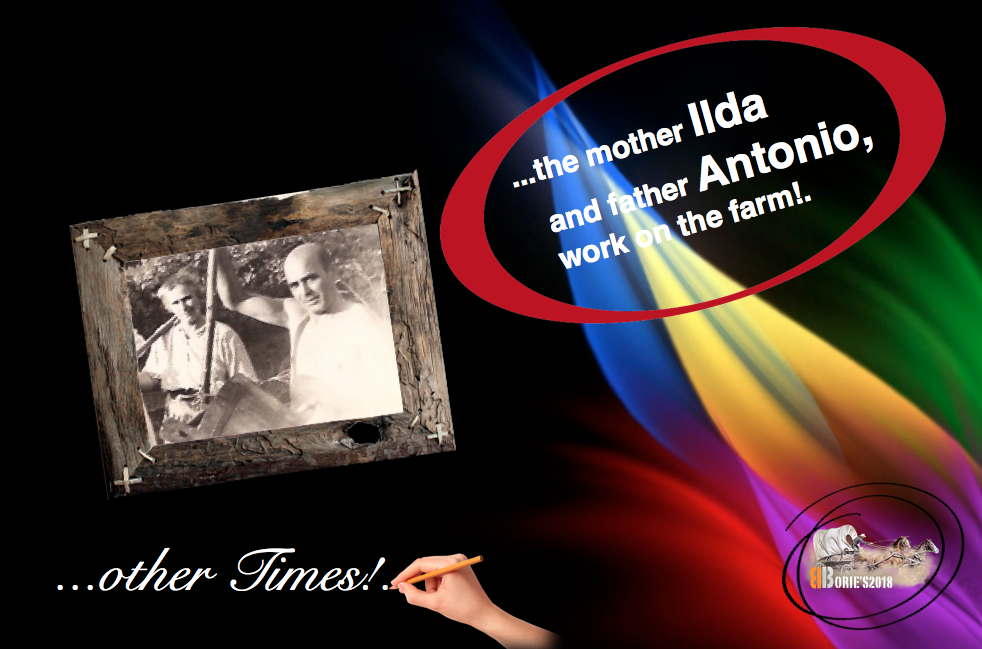
…o filho da Ilda, o mais velho, anda a namorar uma rapariga mais velha do que ele, naquela aldeia lá ao norte!. A Rosa e o Manel, compraram um porco na “feira dos 24”, é uma raça nova, perna curta, está quase sempre parado, é bom para engordar!. Já vieram as batatas para “semente”, está um letreiro na vila, junto à estação do combóio!. A vaca da Albertina parou de dar leite, é inverno, só lhe dão palha!. O Jaquim, filho da Rosa, anda com ideia de ir para o Brazil, fugindo à tropa!. O Toninho, filho da Ilda, já está um homem!. O meu Manel anda esquisito, não quer comer comida cozinhada na mesma panela que usamos para os porcos, vejam a minha “sina”, temos que comprar uma panela nova!. Isto são exemplos de que a nossa aldeia, era uma família muito grande!. (The son of Ilda, the eldest, is dating a girl older than him, in that village to the north! Rosa and Manel, bought a pig in the “fair of the 24”, is a new breed, short leg, is almost always stopped, it is good to get fat!. Already came the potatoes for “seed”, there is a sign in the village, next to the train station!. The Albertina cow stopped giving milk, it’s winter, they only give him straw!. Jaquim, son of Rosa, walks with idea to go to Brazil, fleeing to the troop!. Toninho, son of Ilda, there is already a man! My Manel walks weird, does not want to eat food cooked in the same pan we use for pigs, see my “sina”, we have to buy a new pan!. These are examples of that our village was a very large family)!.

…a nossa aldeia era o nosso mundo, na idade escolar frequentámos a escola na vila de Águeda, mas da vila, dos seus habitantes, não guardamos boas recordações, sómente de alguns jovens da nossa idade, companheiros amigos, mas dos adultos não, desprezávam-nos, dizendo que éramos aldeões, (saloios), talvez porque andássemos vestidos com roupas velhas e remendadas, no entanto numa visita à nossa aldeia do Vale do Ninho d’Águia, uma senhora com algum relevo na sociedade da vila de Águeda, vendo-nos, logo nos convidou a fazer parte do Grupo de Folclore da vila de Águeda!. (our village was our world, in school age we went to school in the village of Águeda, but the village, its inhabitants, we do not keep good memories, only of some young people our age, fellow friends, but not adults, despised us, saying that we were villagers, (saloios), perhaps because we were dressed in old clothes and mended, nevertheless on a visit to our village of the Valley of the Nest of Eagle, a lady with some relief in the society of the village of Águeda, seeing us, soon invited us to be part of the Folklore Group of the village of Águeda)!.

…foi uma lufada de ar fresco na nossa vida, convivendo com jovens da nossa idade, não sendo da nossa aldeia, onde com a ajuda de uma jovem que ficava mais bonita com as mangas arregaçadas, aprendemos a dançar o Malhão, o Vira e outras danças de terreiro!. Lembramo-nos que na ocasião não tínhamos roupa adequada, mas os companheiros jovens, alguns de escola, imediatamente nos proporcionaram toda a roupa necessária!. (was a breath of fresh air in our lives, living with young people of our age, not being from our village, where with the help of a young woman who looked more beautiful with her sleeves rolled up, we learned to dance Malhão, Vira and other terreiro dances!. We remember that we did not have proper clothes at the time, but the young companions, some from school, immediately provided us with all the necessary clothes)!.

…depois, depois veio a mobilização para a Guerra Colonial em África, horrível, onde abrindo o coração, entrava um cenário de ódio, medo e amargura, fazendo de nós um jovem frio como pedra, sem confiança, desconfiado, com um equilíbrio baixo, vendo só portas fechadas, luzes apagadas, escuridão, constantemente ouvindo um uivar de dor silenciosa, quebrando a nossa moral, sem qualquer oportunidade de pedir ajuda!. (then came the mobilization for the Colonial War in Africa, horrible, where opening the heart, entered a scene of hatred, fear and bitterness, making us a young stone cold, unreliable, suspicious, with a low balance, seeing only closed doors, dim lights, darkness, constantly hearing a howl of silent pain, breaking our morals without any opportunity to ask for help)!.

…isto foi o que restou de nós, quando regressámos à nossa querida aldeia do Vale do Ninho d’Águia, onde ainda se encontrava a tal árvore caída no chão, onde por norma a avó Agar se sentava e, que alguns vizinhos diziam que, talvez juntas, deviam de andar próximas das duas centenas de anos!. (this is what remained of us when we returned to our beloved village of the Valley of the Eagle’s Nest, where there was still such a fallen tree on the ground, where grandmother Agar usually sat, and that some neighbors said which, perhaps together, must have been close to two hundred years)!.

Tony Borie, April 2018.

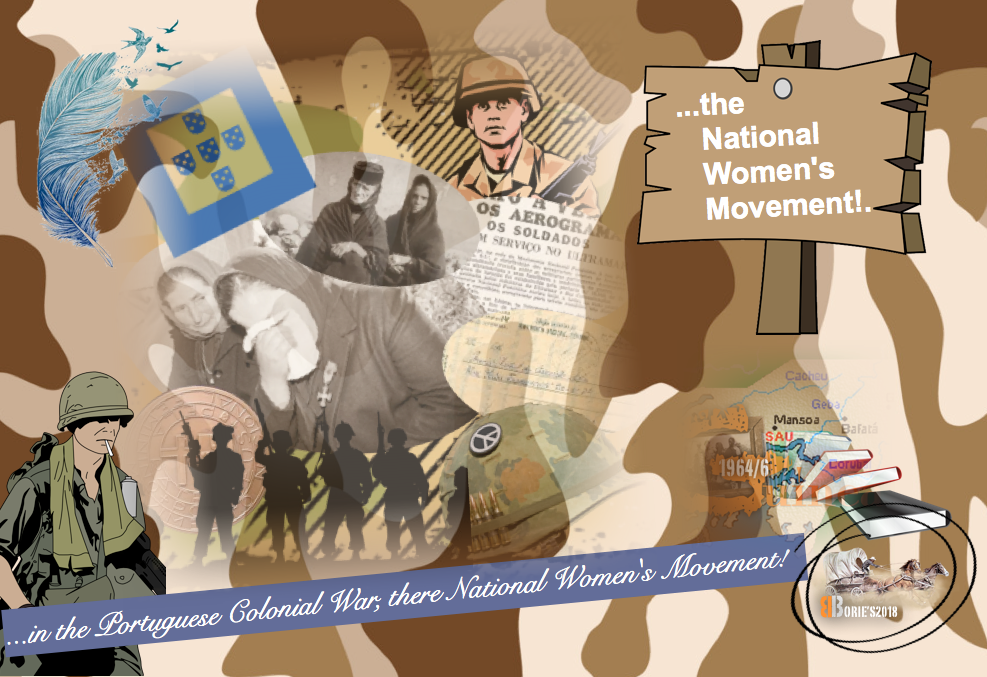
…the National Women’s Movement!

…the National Women’s Movement!

…o Movimento Nacional Feminino!. (the National Women’s Movement)

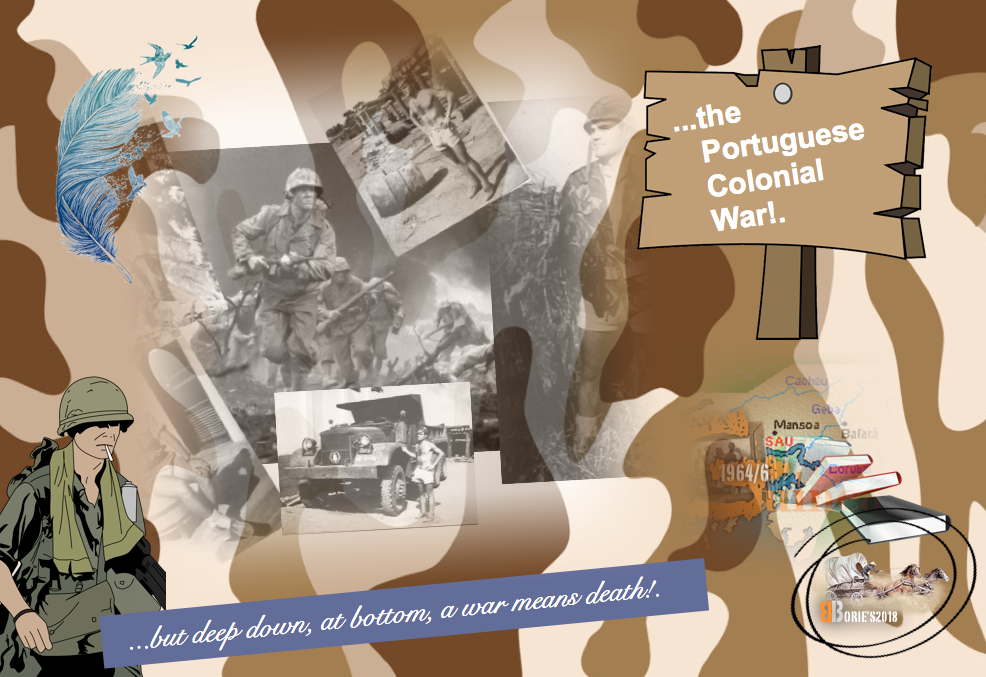
…a guerra é um fenómeno caracterizado, pelo uso da violência letal entre dois lados opostos, envolvendo uma disputa sobre soberania, território, recursos, religião ou outras questões!. Normalmente é um estado de conflito armado e organizado entre dois actores, que podem ser estatais ou não estatais, envolvendo combatentes ou não combatentes, mas no fundo, ambas as partes querem atingir as suas metas, às vezes miltares, através da força!. Conflitos menores, muitas vezes expontâneos, como brigas, tumultos, revoltas e confrontos, não podem ser considerados uma guerra, no entanto uma revolução organizada e armada, já denota um estado de guerra!. Mas no fundo, no fundo, uma guerra significa morte, e nenhum de nós, em perfeito uso das suas faculdades mentais, pode ignorar que durante o século 20, estima-se que entre 167 e 188 milhões de pessoas perderam a sua vida, como resultado da guerra!. (War is a phenomenon characterized by the use of lethal violence between two opposing sides, involving a dispute over sovereignty, territory, resources, religion or other issues! It is usually a state of armed conflict and organized between two actors, which may be state or non-state, involving combatants or non-combatants, but deep down, both parties want to achieve their goals, sometimes milestones, by force! Small, often spontaneous conflicts such as fighting, riots, riots and clashes can not be considered a war, yet an organized and armed revolution already denotes a state of war! But deep down, at bottom, a war means death, and none of us, in perfect use of their mental faculties, can ignore that during the 20th century, it is estimated that between 167 and 188 million people lost their lives, as result of the war)!.

…muitas vezes, a determinação de uma vitória ou uma derrota, define-se com o desempenho da inteligência militar, da propaganda, que muitas vezes inclui informações, opinião distorcida e desinformação, que desempenha um papel fundamental tanto na manutenção da unidade dentro do grupo dominante, como semeando a discórdia entre os seus oponentes!. Explorando esta vertente, também no miserável e sangrento cenário, que foi a Guerra Colonial Portuguesa que o então país Portugal manteve por alguns anos em África, existiu o “Movimento Nacional Feminino”, que foi uma organização de suporte ao governo, em particular quando o conflito em África se intensificou, criada por iniciativa de uma personalidade feminina com algum relevo na sociedade, apoiada por um tal primeiro ministro mentiroso, com ideias políticas, sem ter o mínimo respeito pelos jovens que mandava para uma guerra em África, a milhares de quilómetros das aldeias, vilas ou cidades onde nasceram, organização esta, voltada principalmente para ajudar as mulheres vítimas, que eram as namoradas, esposas e viúvas dos combatentes, que davam o corpo às balas, onde em caso de morte, por lá deixavam os seus corpos!. (often the determination of a victory or a defeat, is defined by the performance of military intelligence, propaganda, which often includes information, distorted opinion and disinformation, which plays a key role both in maintaining unity within of the ruling group, as sowing discord among their opponents!. Exploring this strand, also in the miserable and bloody scenario, which was the Portuguese Colonial War that the then Portugal country maintained for some years in Africa, there was a “National Women’s Movement,” which was a supportive organization for the government, particularly when the conflict in Africa intensified, created by the initiative of a female personality with some prominence in society,
supported by a liar-like prime minister, with political ideas, without having the least respect for the young people who sent to a war in Africa, thousands of kilometers from the villages, towns or cities where they were born, organization mainly aimed at helping women victims, who were the girlfriends, wives and widows of the combatants, who gave their bodies the bullets, where in case of death, they left their bodies there)!.

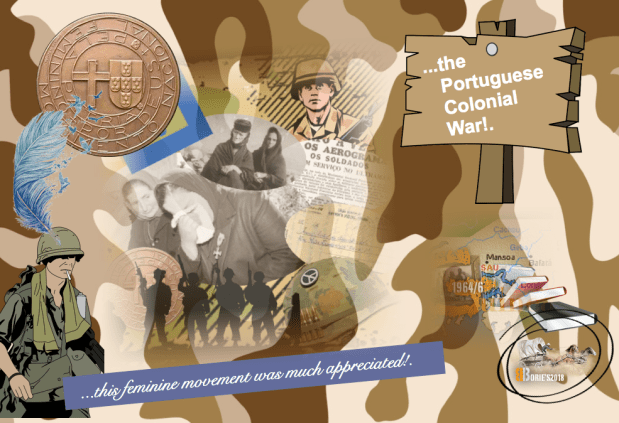
…este movimento feminino, era muito apreciado, até adorado pelos militares, principalmente aqueles que se encontravam em cenário de combate, pois substituia o governo de então, ajudando as vítimas desta miserável guerra, interferindo, resolvendo situações às vezes impossíveis de resolver nos gabinetes do estado, como por exemplo, identificação e transladação para Portugal Continental, de militares que morriam em combate, claro, quando as famílias pagando, o requeriam, e além do apoio moral, ofereciam os aerogramas e outros objectos de uso diário, que de outro modo eram vendidos, principalmente em território de Portugal Continental e, também com as suas visitas femininas, que sempre despertavam o interesse em jovens militares, perdidos no interior dos pântanos, savanas e florestas daquela África de chão de terra vermelha!.
(This feminine movement was much appreciated, even worshiped by the military, especially those who were in a combat scenario, replacing the government of that time, helping the victims of this miserable war, interfering, solving situations sometimes impossible to solve in state offices, such as identification and transfer to mainland Portugal, of soldiers who died in combat, of course, when families paid for it, required it, and besides moral support, they offered aerograms and other objects of daily use, which another way they were sold, mainly in the territory of mainland Portugal and also with their female visits, which always aroused the interest in young soldiers lost in the interior of the marshes, savannas and forests of that Africa of red earth soil)!.

…hoje vamos contar um episódio com algum interesse, envolvendo elementos deste movimento feminino que, além de anunciar ajuda às vítimas, familiares e não só, dos combatentes daquela miserável guerra, também faziam visitas a alguns cenários de combate, devidamente anunciadas, com cenários preparados com segurança, envolvendo forças terrestres, da força aérea e naval!. (today we are going to tell an episode with some interest, involving elements of this feminine movement that, besides announcing help to the victims, relatives and not only, of the combatants of that miserable war, also made visits to some battle scenarios, duly announced, with safely prepared scenarios involving ground forces, air force and naval)!.

…todos sabíamos que era domingo na vila de Mansoa, iria haver um intervalo na guerra, iria haver “manga de ronco”, (festa e alegria), o rancho (refeição), iria ser um pouco melhorado, pois o “Arroz com Pão”, (responsável pela refeição), era magrugada, já andava aflito procurando voluntários para o descasque de batatas!. (we all knew that it was Sunday in the village of Mansoa, there would be a break in the war, there would be “manga de ronco” (party and joy), the ranch (meal), it would be somewhat improved, since “Rice with Bread”, (responsible for the meal), was wrinkled, was already distressed looking for volunteers for the peeling of potatoes)!.

…na pequena igreja que existia na vila, o senhor padre, que tinha vindo numa coluna militar da capital Bissau, tinha falado, para uma assistência devota e silenciosa, dizendo mais ou menos estas palavras:

– é com muito orgulho que vos digo, que está entre nós, Sua Excelência o Senhor Segundo Comandante do Território Colonial da Guiné, assim como a Digníssima Senhora Presidente do Movimento Nacional Feminino, que nos dá a honra de nos visitar aqui, no interior, numa zona de combate, para que o mundo veja, que esta Província Colonial é livre e, se orgulha de pertencer ao governo de Portugal!.

(In the small church that existed in the village, the priest, who had come in a military column in the capital Bissau, had spoken, for a devout and silent assistance, saying more or less these words:

– It is with great pride that I say to you, that among us, Your Excellency the Second Commander of the Colonial Territory of Guinea, as well as the Dignified Lady President of the National Women’s Movement, who gives us the honor to visit here, in a zone of combat, for the world to see, that this Colonial Province is free and, proud of belonging to the government of Portugal)!.

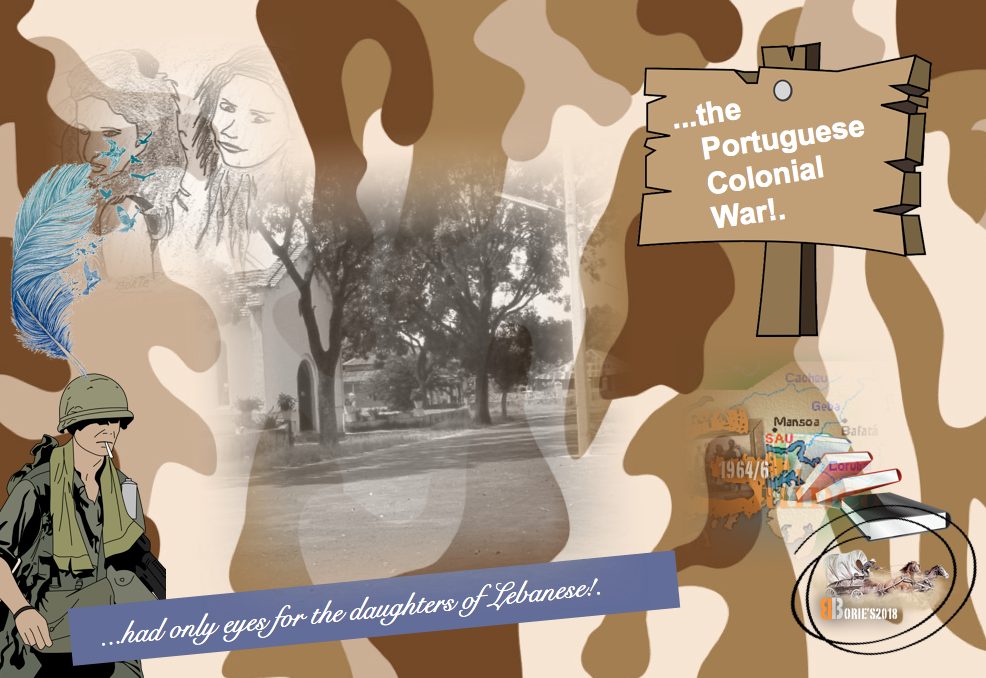
…nós, assim como a maioria dos militares, só tínhamos olhos para as filhas do Libanês que, inundavam toda a igreja com o seu perfume exótico, no entanto, sim, tínhamos reparado nessas personagens, que estavam na primeira fila, quase ao lado do senhor padre!. (we, like most of the military, had only eyes for the daughters of Lebanese who flooded the whole church with their exotic scent, yet, yes, we had noticed these characters, who were in the front row, almost at the side of the Lord Father)!.

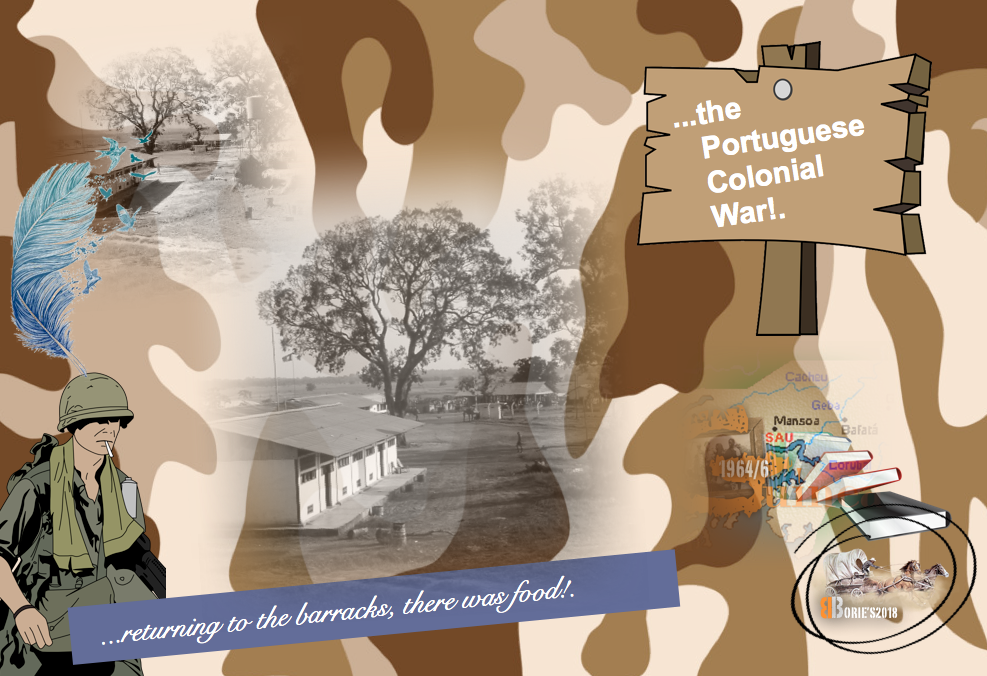
…regressando ao aquartelamento, houve comida, discursos de ocasião, as personagens provaram o menú, principalmente as senhoras, quando levaram a comida aos lábios, talvez para não danificarem a “pintura”, fizeram caretas, no entanto apreciaram a comida, dizendo que era erótica e tropical!. Posto isto, reuniram-se na sala dos oficiais, onde os esperava um dilicioso banquete, no dizer do nosso companheiro “Sargento da Messe!. (returning to the barracks, there was food, speeches on occasion, the characters tasted the menu, especially the ladies, when they carried the food to their lips, perhaps not to damage the “painting”, they made faces, however they appreciated the food, saying which was erotic and tropical!. After this, they met in the officers’ room, where a banquet awaited them, in the words of our companion “Sergeant of the Messe”)!.

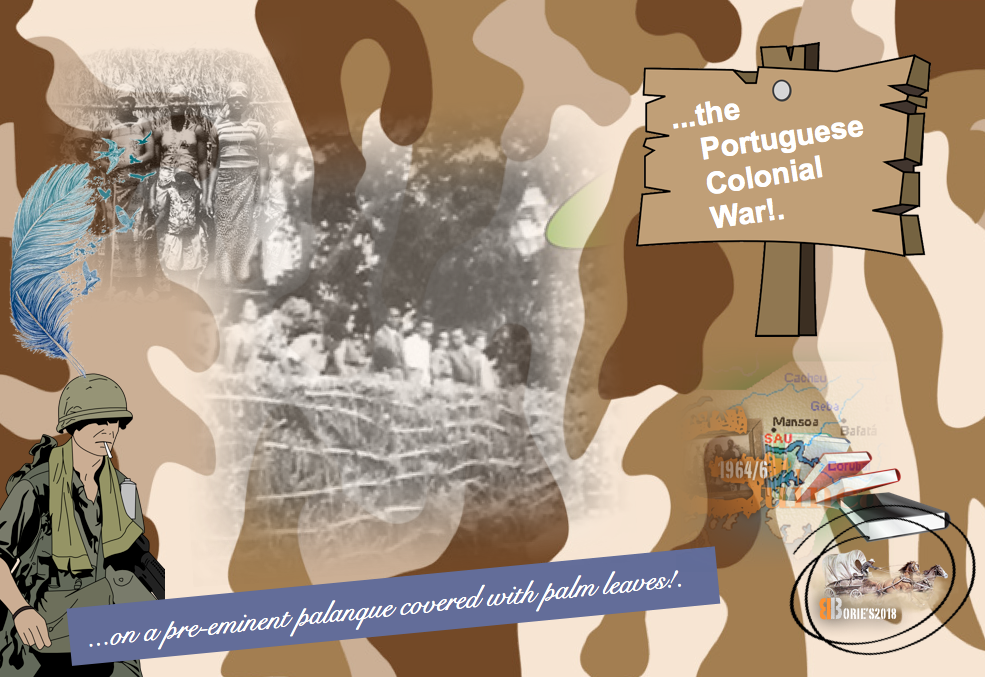
…à tarde, próximo da igreja, num palanque feito a preceito, revestido com folhas de palmeira e de outras árvores tropicais, onde se encontravam estas personagens e seus acompanhantes, como por exemplo o comandante do comando operacional naquela zona de combate, a que nós pertencíamos, outros comandantes de diferentes forças de intervenção estacionadas nesta zona, ou o Régulo (chefe), da vila de Mansoa, entre outros!. (in the afternoon, near the church, on a pre-eminent palanque covered with palm leaves and other tropical trees, where these characters and their companions were, such as the commander of the operational command in that zone of combat, that we belonged, other commanders of different intervention forces stationed in this zone, or the Regulus (chief), of the village of Mansoa, among others)!.

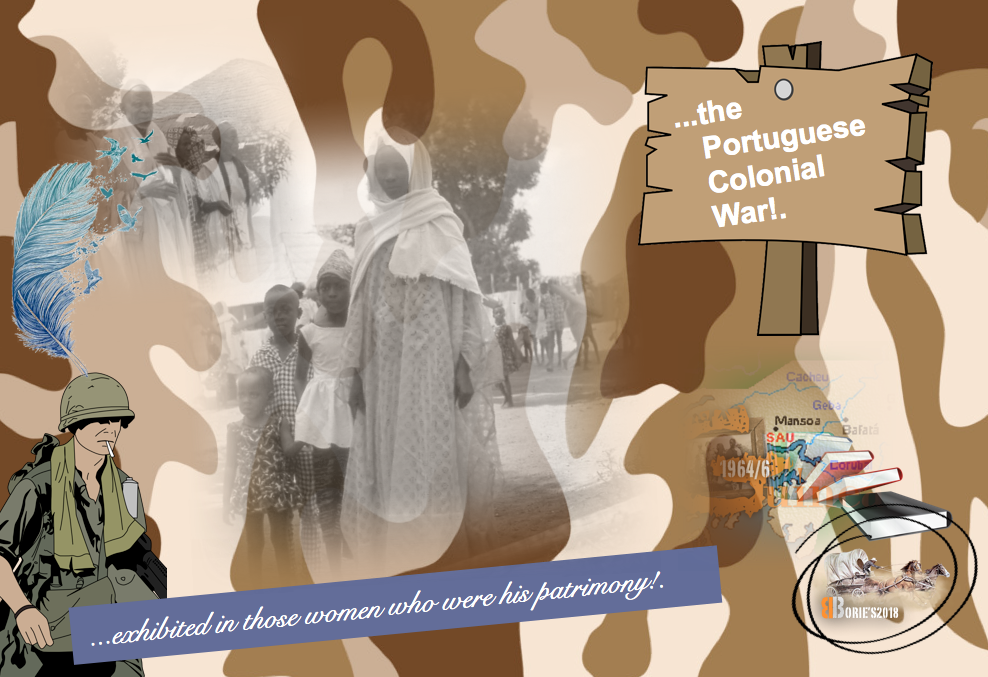
…houve desfile!. Primeiro, alguns militares, que foram voluntários, pois nesse momento tinham roupa lavada, onde também ia o companheiro “Furriel Miliciano”, fumando o seu cigarro feito à mão, que ao passar pelo palanque, onde se encontravam todas aquelas personagens, virou a cara em sentido oposto, para o local onde se encontravam as filhas do Libanês!. De seguida desfilaram alguns “Homens Grandes”, (chefes), das aldeias próximas da vila de Mansoa, alguns acompanhados das suas cinco ou seis mulheres e, ao passarem pelo palanque, desviaram o seu olhar para as referidas mulheres, para que continuassem juntas, demonstrando todo o seu orgulho, para que aquelas personagens, soubessem e entendessem o seu poder, assim como a riqueza e dignidade de ser um “Homem Grande”, exibido naquelas mulheres que eram seu património!. (there was a parade !. First, some soldiers, who were volunteers, because at that moment they had washed clothes, where also the companion “Furriel Militiano” went, smoking his handmade cigarette, that when passing by the platform, where they were all those personages, turned the face in the opposite direction, to the place where the daughters of the Lebanese were!. Next came some “Big Men” (chiefs), from the villages near the village of Mansoa, some accompanied by their five or six women, and as they passed the platform, they turned their gaze to the said women, demonstrating all their pride, so that those characters, knew and understood its power, as well as the wealth and dignity of being a “Big Man”, exhibited in those women who were his patrimony)!.

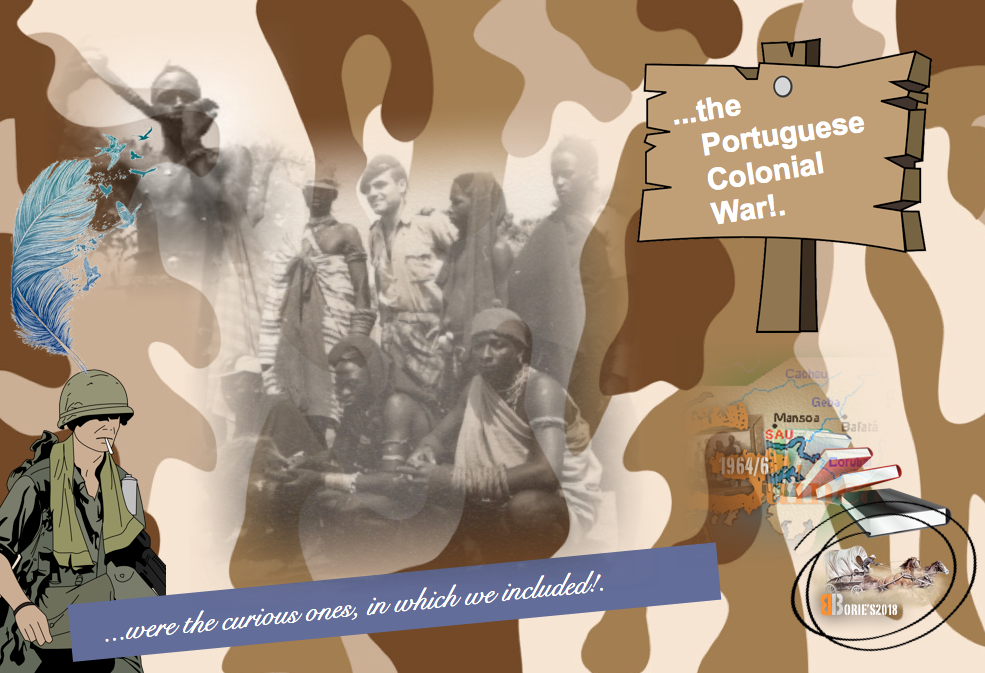
…em seguida desfilou um rapaz africano, com o corpo de um “campeão de pesos pesados”, primitivo, quase nú, soprando num corno, emitindo um ruído que alguns de nós tínhamos que tapar os ouvidos, seguindo-se a multidão, que eram os curiosos, no quais se incluiam, nós, o “Setubal”, o “Curvas, alto e refilão”, alguns naturais, de ambos os sexos, descalços ou só com um farrapo a cobrir-lhe os orgãos genitais, usando algumas pulseiras de missanga, tanto no pescoço, como nos braços ou pernas, outros, os “Gilas”, usando uma vestimenta branca cobrindo-lhe todo o corpo, com um gorro de lã tapando-lhe a cabeça, algumas crianças descalças, nuas ou quase nuas, algumas com o dedo na boca e ranho no nariz, mulheres dançando, com bebés amarrados com uma fita de pano nas costas!. Por fim iam alguns naturais, que eram guias e tradutores, que colaboravam com os militares nas patrulhas!. (then an African boy, with the body of a “heavyweight champion,” primitive, almost naked, flashed on a horn, making a noise that some of us had to cover our ears, followed by the crowd, which were the curious ones, in which we included the “Setubal”, the “Curvas, high and complicative”, some natural, of both sexes, barefoot or only with a rag to cover the genital organs, using some missanga bracelets, both in the neck, and in the arms or legs, others, the “Gilas”, wearing a white dress covering her whole body, wearing a wool cap over her head, some barefoot, naked or almost naked, some with a finger in the mouth and snot in the nose, women dancing, with babies tied with a cloth ribbon on the back!. Finally came some natives, who were guides and translators, who collaborated with the military on patrols)!.

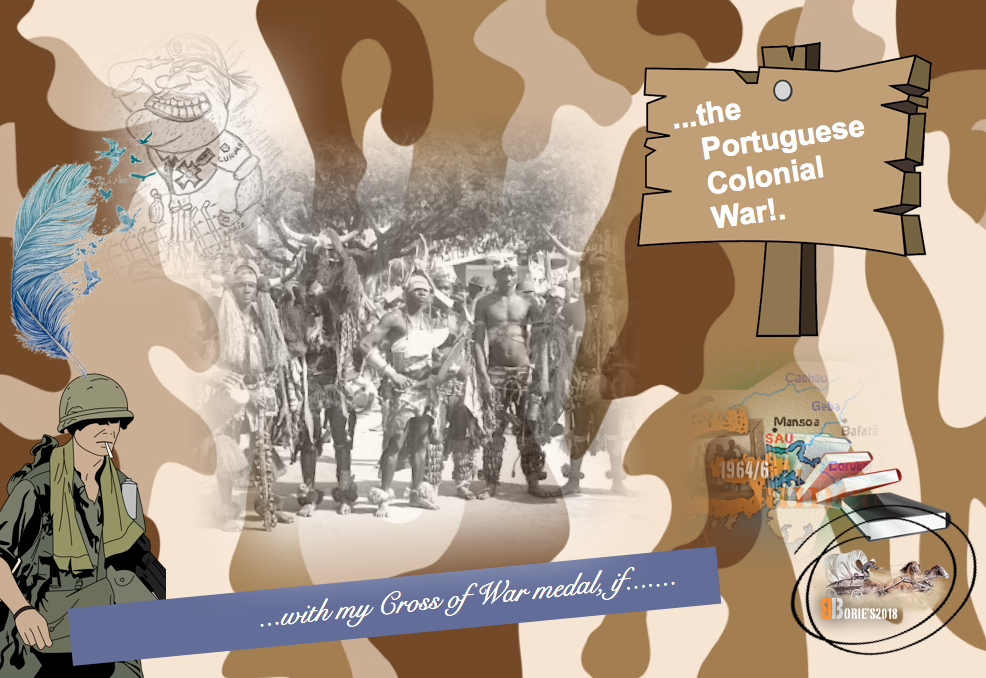
…também tinham notificado o companheiro “Curvas, alto e refilão”, para desfilar ostentando a sua medalha Cruz de Guerra, que lhe foi conferida pelo comando, pela sua bravura em combate defendendo os seus companheiros, ao que ele perguntou se era uma ordem, responderam-lhe não, então ele disse mais ou menos:

– só participo no desfile, com a minha medalha Cruz de Guerra, se for com as estrelas de General nos ombros, que é para vos mandar a todos para Portugal, lá na Europa, acabando com esta merda, que nos vai matando aos poucos, qualquer dia, nenhum de nós vai sair daqui vivo!.

…era assim o homem, rude na linguagem, mas directo e, quando o desfile acabou não parava de nos dizer:

– isto é tudo uma grande mentira, estamos em combate quase todos os dias!. Estão aqui muitos guerrilheiros disfarçados no meio de toda esta gente!. Estou a ficar quase com a vontade de ir ao aquartelamento buscar a metralhadora G-3!.

(Had also notified his companion “Curvas, high and complicative”, to parade his Cross of War medal, which was conferred on him by the commando, for his bravery in combat defending his companions, to which he asked if it was a order, they answered him no, so he said more or less:

– I only participate in the parade, with my Cross of War medal, if it is with the stars of General on the shoulders, which is to send you all to Portugal, in Europe, finishing with this shit, any day, none of us will leave here alive!.

Was thus the man, rude in language, but direct, and when the parade was over, he kept telling us:

– This is all a big lie, we are in combat almost every day! Here are many guerrillas disguised in the midst of all these people! I’m getting almost willing to go to the barracks to get the G-3 machine gun)!.

…o “Curvas, alto e refilão” era assim, falava tudo o que o seu pensamento lhe ditava, mas nós sabíamos que no fundo, era um excelente companheiro, sofredor, lutador, amigo, que só queria desabafar a sua revolta, com aqueles que considerava a sua família, mas vamos continuar!. (The “Curvas, alto and refilão” was like this, he spoke everything that his thought told him, but we knew that deep down he was an excellent companion, suffering, fighter, friend, who only wanted to vent his revolt, with those he considered his family, but we will continue)!.

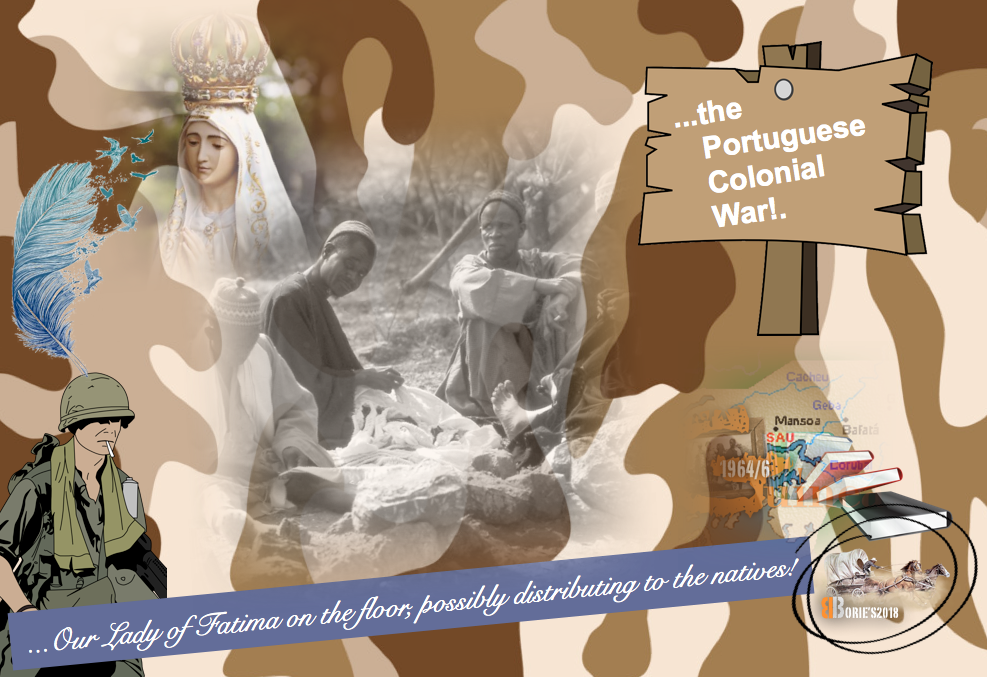
…em seguida, foram buscar o carro da “Psico-Social”, que com a ajuda da sua aparelhagem sonora, discursaram a preceito, com palavras patrióticas, algumas incentíveis à luta, outras afirmando que aquela Província Colonial era Portuguesa e continuaria a ser por séculos, que era um orgulho morrer pela nossa bandeira, tudo isto dito numa zona de combate, onde houve muitas fotografias, estava lá uma equipa da Televisão do Estado, distribuiram lembranças como por exemplo, lâminas para a barba, cigarros, aerogramas, isqueiros, uns quadrados de papel ou cartão, com a imagem de Nossa Senhora de Fátima em cima de uma árvore, com uma cara muito triste, olhando para umas crianças, que eram os pastorinhos que estavam de joelhos, rezando com um rosário nas mãos, também com uma cara muito triste, olhando para a Nossa Senhora de Fátima!. (then they went to the “Psycho-Social” car, which with the help of their sound system, addressed the precept, with patriotic words, some that were invincible to fight, others claiming that Colonial Province was Portuguese and would continue to for centuries, that it was a pride to die for our flag, all said in a combat zone, where there were many photographs, there was a State Television team there, distributed souvenirs such as, blades for the beard, cigarettes, aerograms, lighters, a square of paper or cardboard, with the image of Our Lady of Fatima on a tree, with a very sad face, looking at some children, who were the little shepherds who were on their knees praying with a rosary in their hands, also with a very sad face, looking at Our Lady of Fatima)!.

…uns dias depois, alguns militares passaram a usar essas imagens de Nossa Senhora de Fátima, ou no capacete, quando saiam em patrulha ou em operações de combate, ou mesmo no bolso da camisa, quando fora das suas tarefas, pois o “Mister Hóstia”, o tal militar muito religioso, que ajudava na celebração da missa, encarregou-se de distribuir essas imagens!. Durante esta cerimónia, também foram oferecidas umas carteiras em plástico, com um buraquinho, onde se colocava um qualquer fio, para os naturais pendurarem ao pescoço, com os seus documentos de identificação, com o escudo de Portugal, dizendo em letras a ouro, “Território Português, Província Colonial da Guiné”!. (a few days later, some military men began to use these images of Our Lady of Fatima, or the helmet, when they went on patrol or combat operations, or even in the pocket of their shirt, when out of their tasks, “Mister Hóstia”, the very religious soldier, who helped in the celebration of Mass, was in charge of distributing these images!. During this ceremony, there were also offered some plastic wallets with a little hole, where a thread was placed, for the natives to hang around their necks, with their identification documents, with the shield of Portugal, saying in gold letters, “Portuguese Territory, Colonial Province of Guinea”)!.

…quase a terminar a cerimónia, uma das senhoras presentes, talvez porque nós estivéssemos por ali, talvez informada, ou única e simplesmente se recordasse da nossa cara, porque antes lhe pedimos um outro isqueiro para o “Curvas, alto e refilão”, que andava sempre a pedir lume, mas orgulhoso não queria pedir o isqueiro, chama-nos, entregando-nos um pacote com centenas de aerogramas e alguns isqueiros, dizendo-nos:

– por favor leva isto, distribui lá no aquartelamento aos militares!.

(Almost finishing the ceremony, one of the ladies present, perhaps because we were there, maybe informed, or only and simply remembered our face, because before we asked another lighter for the “Curvas, high and complicative”, who was always asking for fire, but proud of him, he did not want to ask for the lighter, he called us, handing us a package with hundreds of airbrushes and some lighters, telling us:

– Please take this, distribute there in the barracks to the military!.

…com a ajuda do “Setubal”, trouxemos o pacote para o aquartelamento, começando a sua distribuição junto ao Centro Cripto, que era o local onde executávamos as nossas tarefas!. Correu imediatamente o boato que em nosso poder havia aerogramas para distribuir e, quando acabaram ninguém acreditava, e daí, começou outro boato, de que nós éramos o representante do Movimento Nacional Feminino, em nosso poder havia muitos aerogramas e isqueiros para distribuir, mas que não era essa a nossa intenção!. Com a preciosa ajuda do comandante, que fez colocar uma folha oficial no local onde eram servidas as refeições, onde era explicada toda a verdade, acabou a confusão!. (with the help of the “Setubal”, we brought the package to the barracks, beginning their distribution near the Cripto Center, which was the place where we performed our tasks!. Immediately there was a rumor that in our possession there were aerograms to distribute, and when they did not believe anybody, and from there, another rumor began, that we were the representative of the National Feminine Movement, in our power there were many aerograms and lighters to distribute, that was not our intention!. With the precious help of the commander, who had put an official leaf where the meals were served, where the whole truth was explained, the confusion ended)!.

…desses aerogramas, que eram de cor amarela, não usámos nenhum, tal como os isqueiros, pois o nosso, oferecido por uma madrinha de guerra de nacionalidade espanhola, com o emblema da ONU, foi usado durante o resto da nossa estadia em cenário de guerra, regressando com nós à Europa e, quando alguém nos interpelava a respeito dos aerogramas e, o “Curvas, alto e refilão” estava presente, logo respondia, na sua linguagem rude e agressiva:

– filho da puta!. És pobre e mal agradecido, ainda vais levar com este isqueiro no focinho se voltas a insultar o “Cifra”!.

(Of these aerograms, which were yellow in color, we did not use any, just like the lighters, because ours, offered by a Spanish godmother of war with the UN emblem, was used during the rest of our stay in scenario of war, returning with us to Europe and, when someone asked us about the aerograms, and “Curvas, high and complicative” was present, he would answer, in his rude and aggressive language:

– Son of a bitch!. You are poor and ungrateful, you will still carry with this lighter in the muzzle if you insult the “Cifra”)!.

…no dia seguinte à cerimónia, nós, andando por ali, no momento em que desmanchavam o palanque, vimos dezenas de imagens de Nossa Senhora de Fátima pelo chão, pois possívelmente distribuiram aos naturais, que não tinham a mínima ideia do que aquela imagem representava!. Apanhámo-las, levámo-las para entregar ao “Mister Hóstia”, que emocionado nos diz:

– já vejo que te estás a aproximar de Jesus Cristo, pois tanto tu como o “Setubal” e o “Curvas, alto e refilão”, já não têm alma, andam em pecado mortal há muito tempo!.

(The day after the ceremony, we, walking there, at the moment of breaking the platform, saw dozens of images of Our Lady of Fatima on the floor, possibly distributing to the natives, who had no idea what that image represented!. We took them, we took them to deliver to the “Mister Host”, who moved us to say:

– I see that you are approaching Jesus Christ, since you and the “Setubal” and the “Curvas, high and complicative”, no longer have soul, have been in mortal sin for a long time)!.

Tony Borie, April 2018.
…the beach was deserted!

…the beach was deserted!


…a praia estava deserta! (the beach was deserted)!

…a praia estava deserta!. Caminhamos por algum tempo sózinhos, não se via “vivalma”, como se dizia no nosso tempo de jovem, na aldeia do Vale do Ninho d’Águia, lá na encosta agreste da montanha do Caramulo, onde com um “cruzado”, que eram quatro tostões, se comprava um “papo sêco”, que era um pão de farinha de trigo, (uma gulozeima), naquele Portugal de outrora, numa Europa, onde agora se usa o “Euro” e, se diz unida!. (the beach was deserted!. We walked for some time alone, we did not see “Vivalma”, (soul) as we said in our time as a young man, in the village of Valley of the Ninho d’Aguia, (Eagle’s Nest), on the rugged hillside of Caramulo mountain, where with a “cruzado” four pennies, one bought a “papo sêco” (dry meal), which was a bread of wheat flour, (dainty), in that Portugal of yesteryear, in a Europe, where now the “Euro” is used and, it is said united)!.

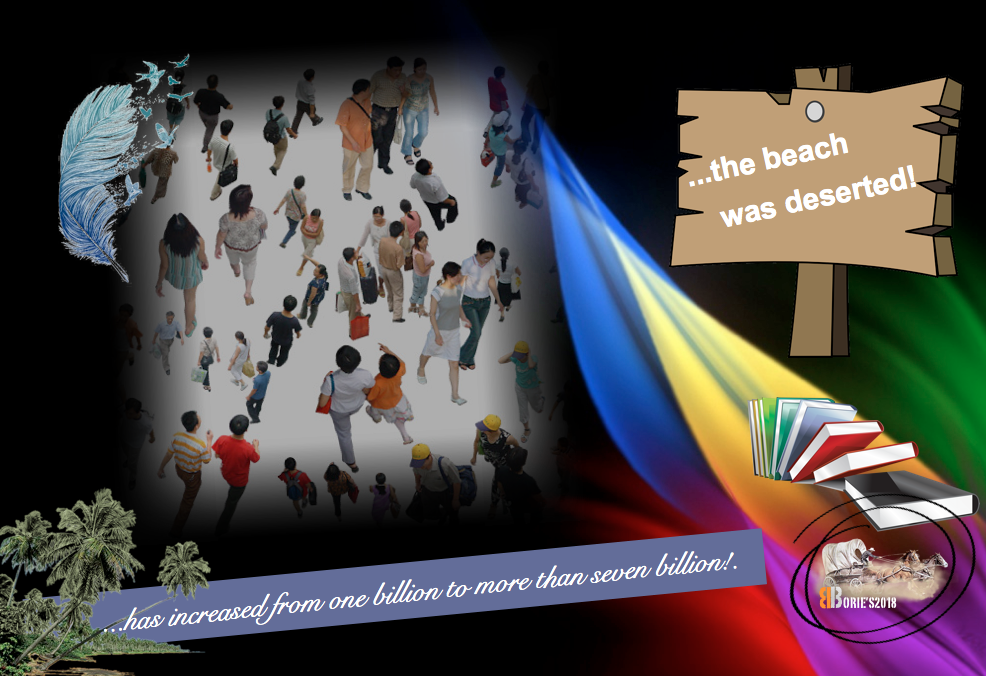
…voltando à nossa praia deserta, não havia por lá ninguém, no entanto, a população humana do planeta Terra, na sua última contagem, era de aproximadamente sete biliões de pessoas!. Três quartos da superfície deste planeta é coberto por oceanos, deixando um quarto como terra, metade dessa área mais ou menos 14%, é deserta, altas montanhas ocupam 27%, outros terrenos são impróprios, ficando aproximadamente um oitavo da superfície da terra adequada para nós os seres humanos e, lá para o ano de 2020, espera-se que 60% da população mundial esteja a viver em áreas urbanas, fugindo das áreas rurais, ou seja do campo, onde se cultivam os géneros alimentícios mais saudáveis!. (returning to our deserted beach, there was no one there, yet the human population of planet Earth, at its last count, was about seven billion people! Three quarters of the surface of this planet is covered by oceans, leaving a quarter as land, half of that area about 14%, is deserted, high mountains occupy 27%, other lands are improper, being about one-eighth of the earth’s surface suitable for we humans, and by the year 2020, 60% of the world’s population is expected to be living in urban areas, fleeing from rural areas, or the field, where the healthiest food is grown)!.

…dizem-nos que o Planeta Terra se formou há 4,5 biliões de anos, que é o terceiro planeta do Sol, cuja luz nos ilumina, quando girando à sua volta, para ele ficamos virados e, é o único no Universo conhecido por abrigar vida!. Será?. Ninguém sabe ao certo!. Voltando à praia, a maré estava alta, também nos dizem que a interação gravitacional entre a Terra e a Lua causa a maré oceânica, estabiliza a orientação da Terra no seu eixo e, diminui gradualmente a sua rotação, por tal motivo, as ondas traziam a água do mar até às dunas!. (tell us that Planet Earth was formed 4.5 billion years ago, which is the third planet of the Sun, whose light illuminates us, when spinning around it, for it we are turned and is the only one in the Universe known for harboring life!. It will be?. No one knows for sure!. Returning to the beach, the tide was high, they also tell us that the gravitational interaction between Earth and Moon causes the ocean tide, stabilizes the orientation of the Earth on its axis and gradually decreases its rotation, so the waves brought the water from the sea to the dunes)!.

…mas não havia por lá ninguém, naquela praia e, nós os humanos, somos os únicos membros de determinada tribo, pertencente à família dos grandes símios!. Somos caracterizados por termos uma postura direita, movendo-nos através da acção dos membros inferiores, ou seja, das pernas, com uma alta destreza manual, com um cérebro maior, raciocínio e inteligência, usamos uma linguagem aberta e algo complexa, tudo isto, em comparação com outros animais, por tal motivo, nós seres humanos, fugíamos da água das ondas, correndo para as áreas mais secas!. (but there was no one there on that beach, and we humans are the only members of a certain tribe belonging to the family of the great apes! We are characterized by having a right posture, moving through the action of the lower limbs, that is, of the legs, with a high manual dexterity, with a bigger brain, reasoning and intelligence, we use an open language and something complex, in comparison with other animals, for that reason, we humans, fled the water of the waves, running to the driest areas)!

…fugindo das ondas, tal como os humanos ancestrais, que já usavam o fogo, há cerca de 315 mil anos atrás, ocuparam grande parte da Eurásia, fugindo, em ondas de emigração, aventurando-se para fora da África, começando a exibir evidências de modernidade comportamental por volta de 50.000 anos atrás!. Essa propagação de seres humanos e a sua grande crescente população teve um impacto profundo em grandes áreas do meio ambiente, por vezes causando a morte de milhões de espécies nativas em todo o mundo, por tal motivo, aqui nesta linda praia, junto das dunas havia garrafas de plástico, madeira com pregos, peças de roupa, lixo, e outros objectos a poluirem o ambiente!. (fleeing from the waves, just as the ancestor humans, who were already using the fire, some 315 thousand years ago, occupied much of Eurasia, fleeing, in waves of emigration, venturing out of Africa, beginning to display evidence of behavioral modernity about 50,000 years ago!. This spread of human beings and its large, growing population has had a profound impact on large areas of the environment, sometimes causing the death of millions of native species all over the world, so here on this beautiful beach, by the dunes plastic bottles, wood with nails, garments, garbage, and other objects to pollute the environment)!.

…nós os seres humanos, usamos ferramentas com um grau muito alto de precisão, temos um alto nível de raciocínio abstrato, linguagem, resolução de problemas, socialidade e cultura através de aprendizagem social, somos as únicas espécies existentes conhecidas por andarmos com o corpo coberto com roupas, criar e usar inúmeras outras tecnologias e artes, por fazer fogueiras e cozinhar os nossos alimentos, por tal motivo, existem grandes fogos urbanos ou em florestas, danificando pessoas e bens, ou outras espécies, tanto animal como vegetal!. (we human beings, we use tools with a very high degree of precision, we have a high level of abstract reasoning, language, problem solving, sociality and culture through social learning, we are the only existing species known to walk with the body covered with clothes, create and use countless other technologies and arts, to make bonfires and to cook our food, for that reason, there are big urban fires or in forests, damaging people and goods, or other species, both animal and vegetable)!.

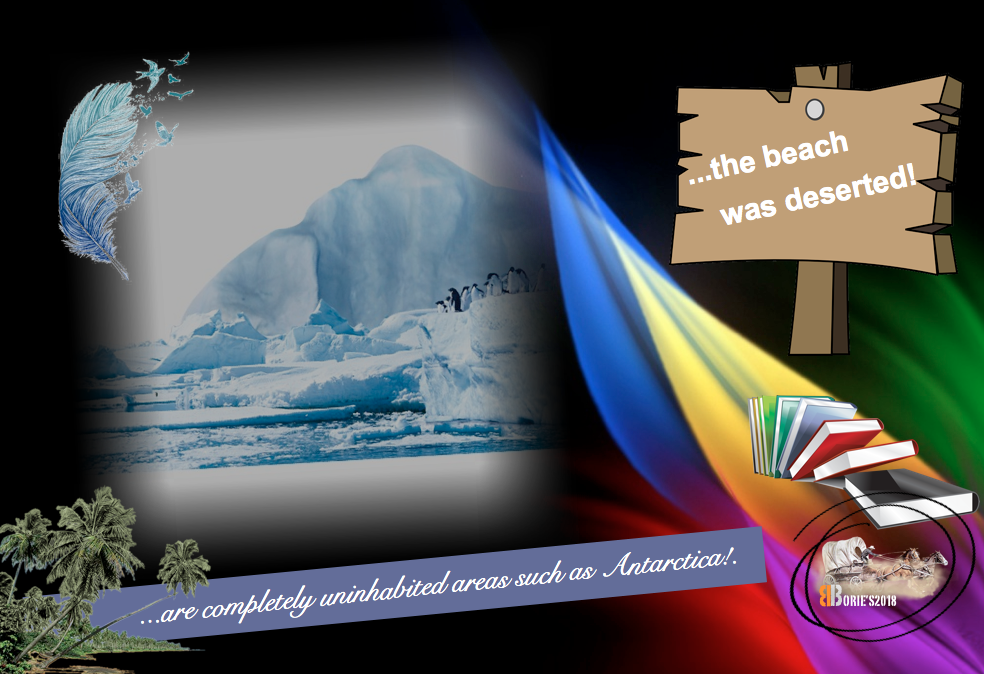
…a história diz-nos que o ser humano, parecido ao que somos hoje, evoluiu em torno de 2,8 milhões de anos atrás, considerando a primeira espécie para a qual há evidiencias claras do uso de ferramentas de pedra!. Milhares e milhares de anos passaram, alguma tecnologia permitiu que os seres humanos colonizassem seis dos sete continentes do Planeta Terra, no entanto, a densidade populacional humana varia de uma região para outra, existindo grandes áreas desabitadas, tal como a nossa praia, mas também ainda hoje existem áreas completamente desabitadas como por exemplo a Antártica, onde no último século os humanos já tentaram explorar, mas o ambiente subaquático ainda não é viável!. (history tells us that the human being, similar to what we are today, evolved around 2.8 million years ago, considering the first species for which there is clear evidence of the use of stone tools!. Thousands and thousands of years have passed, some technology has allowed humans to colonize six of the seven continents of Planet Earth, yet the human population density varies from one region to another, existing large uninhabited areas, such as our beach, but also even today there are completely uninhabited areas such as Antarctica, where in the last century humans have tried to explore, but the underwater environment is not yet viable)!.

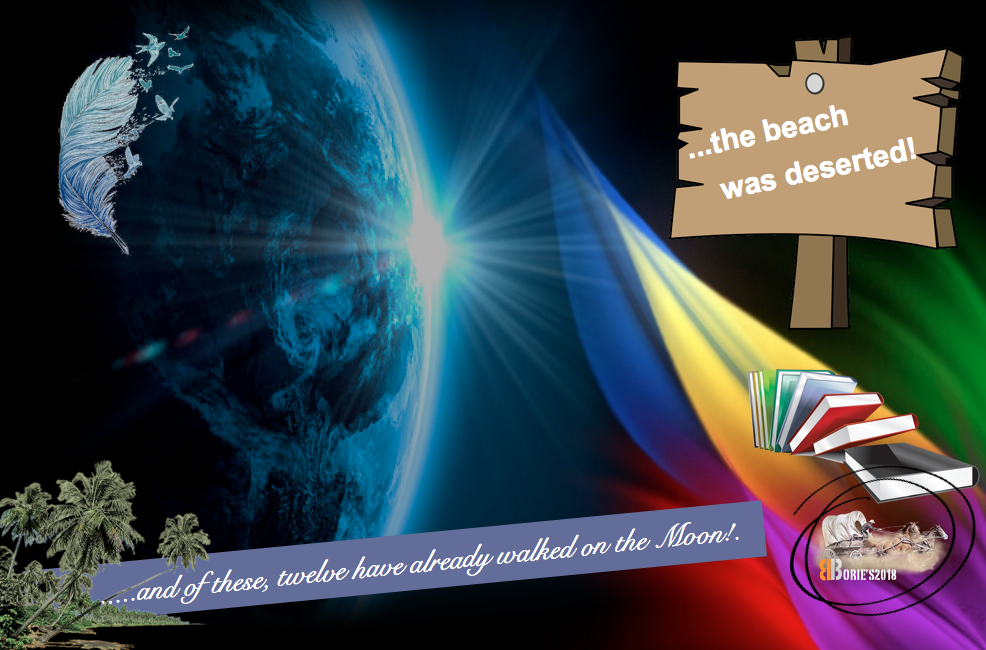
…desde o ano de 1800, a população humana aumentou de um bilião para mais de sete biliões, talvez por esse motivo o ser humano procura novo território fora do Planeta Terra, pois já cerca de 487 pessoas visitaram o espaço sideral e chegaram à órbita e, destas, doze já caminharam na Lua, existindo mesmo uma Estação Espacial Internacional cuja população de seis pessoas, é substituída a cada seis meses!. (since the year 1800, the human population has increased from one billion to more than seven billion, perhaps for this reason the human being searches for new territory outside of Planet Earth, since already about 487 people visited the outer space and arrived at the orbit, and of these, twelve have already walked on the Moon, there being even an International Space Station whose population of six people is replaced every six months)!.

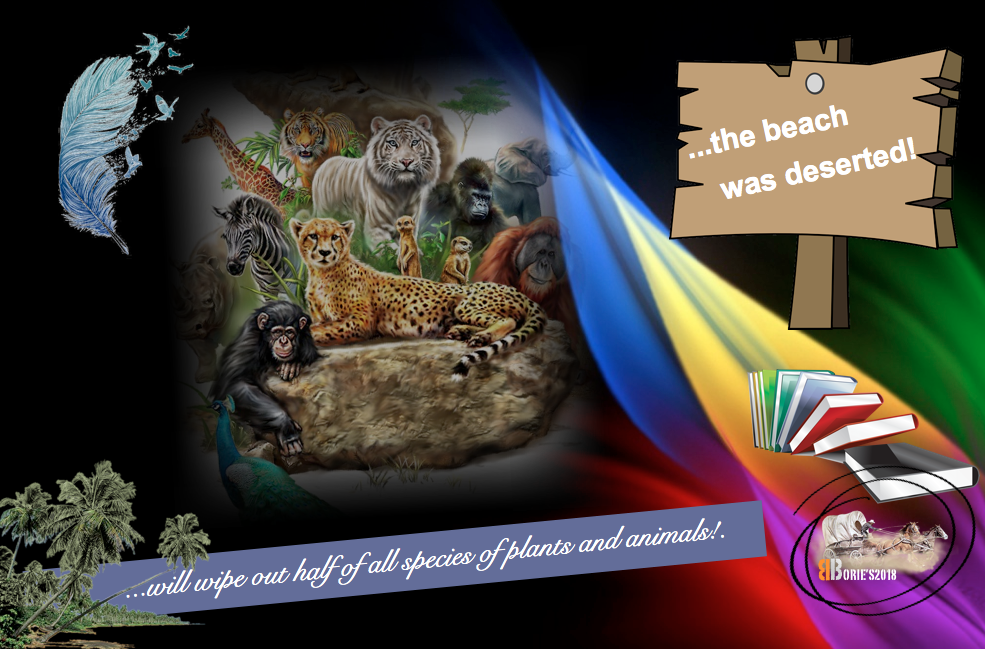
…continuamos contentes, mesmo muito contentes por ainda por cá andarmos, mas reconhecemos que nós os humanos, tivémos e temos um efeito dramático no ambiente, somos predadores de ponta, sendo raramente atacados por outras espécies!. Actualmente, através do desenvolvimento da terra, combustão de combustíveis fósseis e poluição, acredita-se que os seres humanos sejam os principais contribuintes para a mudança climática global!. Se isso continuar no seu ritmo actual, está previsto que a mudança climática vai acabar com metade de todas as espécies de plantas e animais ao longo do próximo século!. (we are still happy, even though we are glad to be here, but we recognize that we humans have and have a dramatic effect on the environment, we are leading predators, rarely being attacked by other species! Currently, through the development of land, fossil fuel combustion and pollution, it is believed that humans are the main contributors to global climate change!. If this continues at its current pace, it is predicted that climate change will wipe out half of all species of plants and animals over the next century)!.

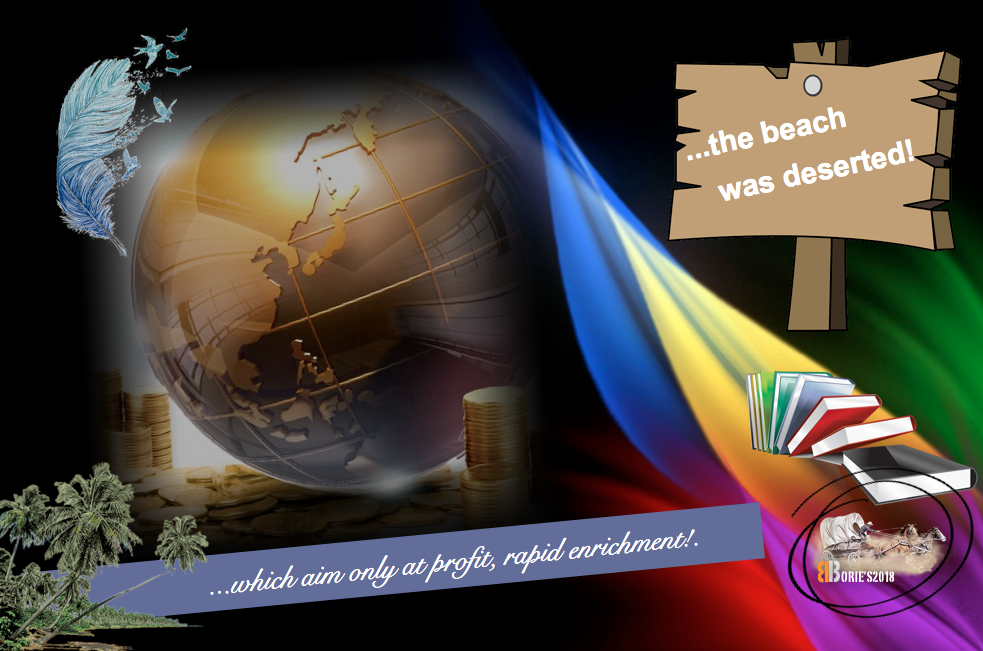
…se o ser humano, não parar com o sistema de tornar as coisas mais fáceis, tendo em vista o enriquecimento das sociedades complexas, que visam sòmente o lucro, o enriquecimento rápido!. (if the human being does not stop with the system of making things easier, in view of the enrichment of complex societies, which aim only at profit, rapid enrichment)!.

…um dia, nunca ninguém saberá quando, se ainda existir uma coisa rara a que hoje chamamos água, se ainda houver árvores e florestas, se os peixes ainda nadarem nos rios, lagos e oceanos, ao que restar da existência humana, irá de novo ser sustentada pela caça, pesca e por uma agricultura sedentária, como fizeram há cerca de milhares de anos atrás, domesticando plantas e animais, permitindo assim o crescimento de uma nova civilização!. (one day, no one will ever know when, if there still a rare thing that we now call water, if there are still trees and forests, if fish still swim in rivers, lakes and oceans, what remains of human existence, will again be sustained by hunting, fishing and sedentary agriculture, as they did about thousands of years ago, taming plants and animals, thus allowing the growth of a new civilization)!.

Tony Borie, April 2018.
…from west to east!

…from west to east!

…de oeste para leste! (from west to east)!.

…”nós crescemos confiando na água”!. Toda a nossa existência, foi vivida perto ou junto de cenário com água, por tal, quando regressávamos do oeste, lá no norte, rumo ao Atlântico, procurámos uma rota que nos levasse ou junto ou próximo de água!. (“we grow up relying on water”!. All of our existence was lived near or near a scene with water, so when we returned from the west, north towards the Atlantic, we searched for a route that took us or near or near water)!.

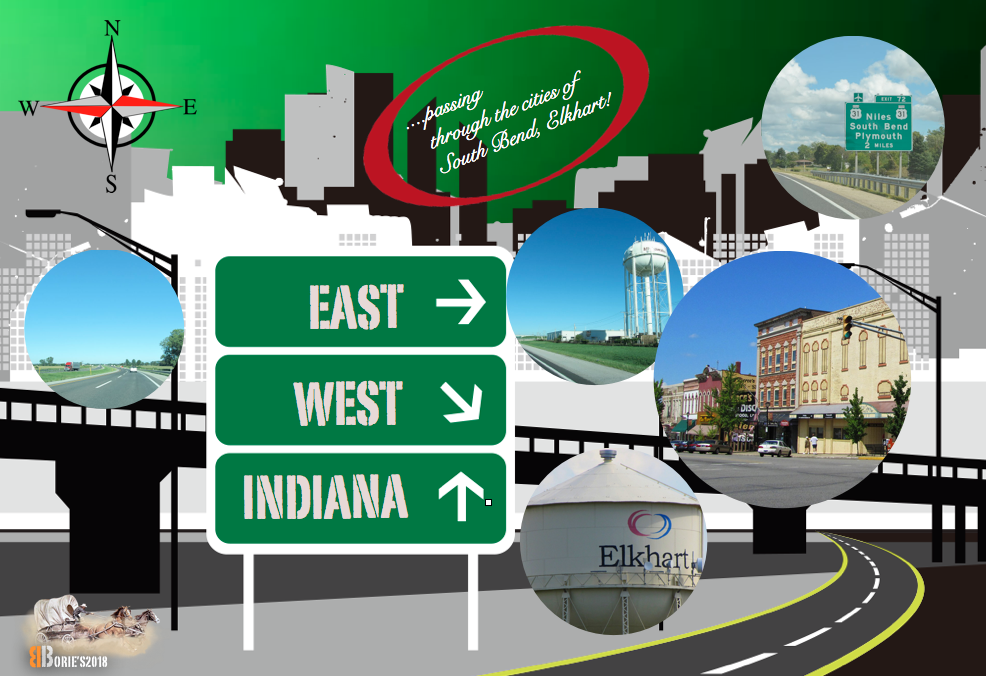
…viajávamos na estrada rápida número 90, no estado de Indiana!. (we traveled on the 90th freeway in the state of Indiana)!.

…passando pelas cidades de South Bend, Elkhart!. (passing through the cities of South Bend, Elkhart)!.

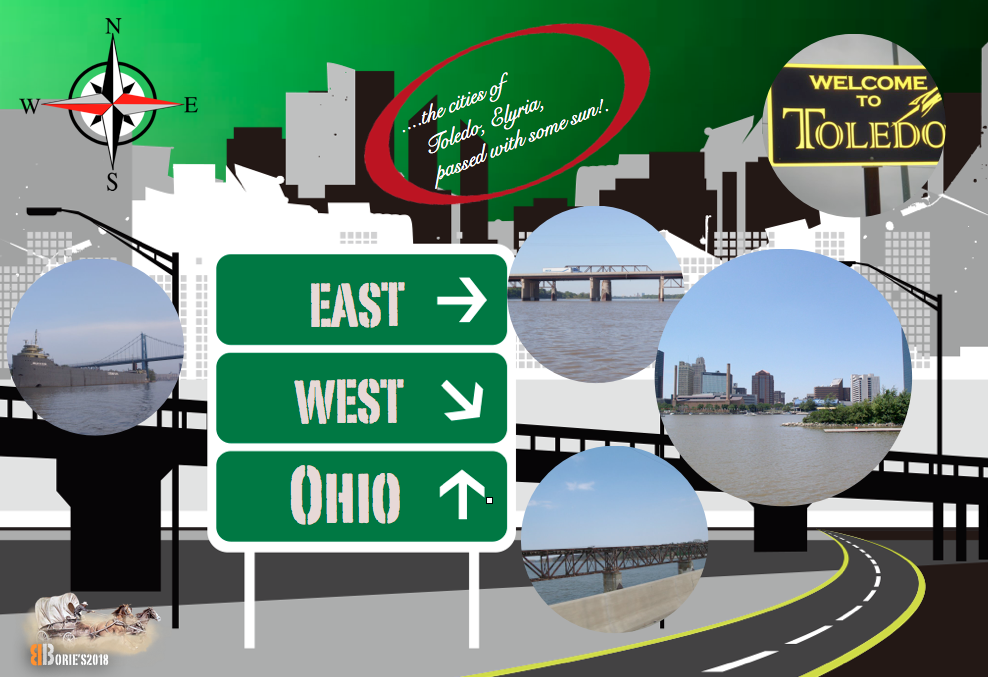
…algum tempo depois entrando no estado de Ohio!. (some time later entering the state of Ohio)!.

…as cidades de Toledo, Elyria, passaram-se com algum sol!. (The cities of Toledo, Elyria, passed with some sun)!.

…mas a cidade de Cleveland, já se podia ver com um pôr de sol algo deslumbrante, no entanto não parámos, o tempo com luz do dia já era pouco para admirar a cidade, seguimos, tirando algumas fotos do veículo em andamento, na esperança de encontrar-mos um lugar para pernoitar algo distante das grandes cidades, pois na nossa idade todos os centavos contam e, que fosse de acordo com a nossa situação financeira!.  (but the city of Cleveland, could already be seen with a dazzling sunset, nevertheless we did not stop, the time with daylight was little to admire the city, we followed, taking some photos of the vehicle in progress, hoping to find a place to stay somewhere away from the big cities, because at our age all the cents count and, according to our financial situation)!.

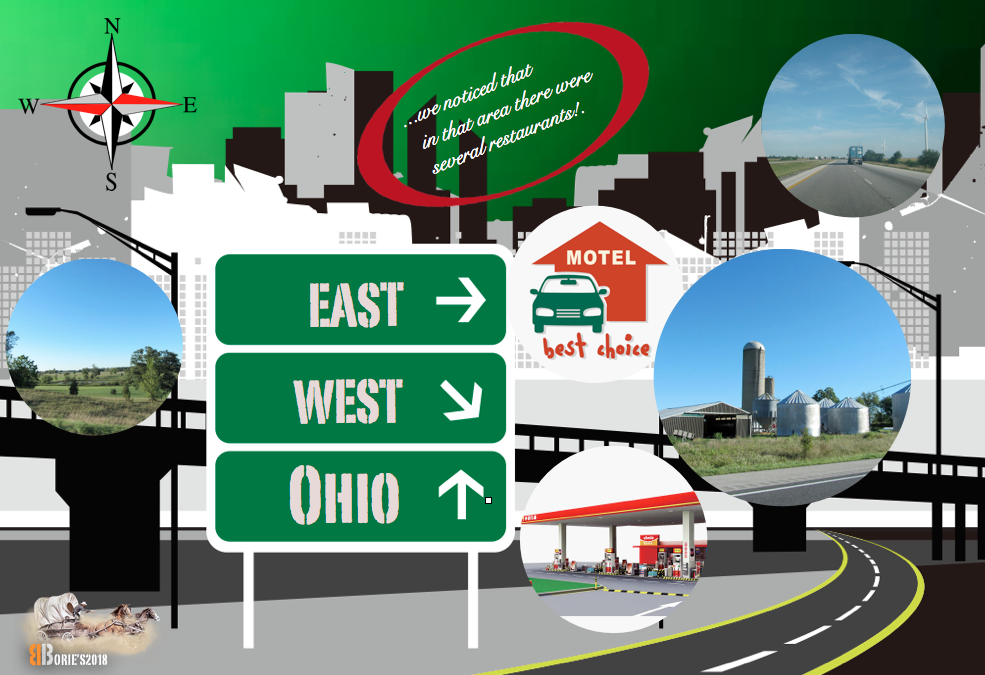
…próximo da cidade de Austinburg, ainda no estado de Ohio, parando para encher o tanque do veículo com gasolina, reparámos que naquela área havia diversos restaurantes, hoteis e moteis, alguns com aquele característico nome de “american inn”, depois vem o nome a seguir, em letras néon, que acendem e apagam, existe sempre um letreiro, que diz que os viajantes com animais são “welcome” (bem vindos), só com um andar, junto da estrada rápida, que normalmente cheira a tabaco entre outros odores, quando se abre a janela do pequeno quarto, podemos admirar um cenário, que normalmente é uma estação de serviço, com o barulho característico dos grandes camiões a acelarar!. (near the city of Austinburg, still in the state of Ohio, stopping to fill the tank of the vehicle with gasoline, we noticed that in that area there were several restaurants, hotels and moteis, some with that characteristic name of “american inn”, then comes the following name, in neon letters, that light up and erase, there is always a sign that says that travelers with animals are “welcome,” with only one walk along the fast road that normally smells like tobacco among other smells, when you open the window of the small room, we can admire a scene, which is usually a service station, with the characteristic noise of the big trucks to accelerate)!.

…sim, foi num desses motéis, que pernoitámos, onde ainda madrugada, um desses tais camiões, desacelerando e businando, talvez para acordar o condutor que ai na sua frente devagar, e claro, também nos acordou!. Bebemos um café, também daqueles que se servem nas máquinas que normalmente existem nesses motéis, onde em troco de algumas moedas, nos oferecem uma variedade de opções, como por exemplo, com ou sem açúcar, com ou sem leite, com chocolate ou com baunilha e, lá vem num copo de papel banhado a plástico, com grandes letras desenhadas, dizendo que é a melhor e mais pura mistura de café, que cresce em alguns países tropicais!. (yes, it was in one of those motels that we stayed overnight, where still dawn, one of these trucks, slowing and honking, perhaps to awaken the driver in front of us slowly, and of course, also woke us up! We drink coffee, also from those used in the machines that usually exist in these motels, where, for a few coins, they offer us a variety of options, for example with or without sugar, with or without milk, chocolate or vanilla and there it comes in a paper-bathed plastic cup with big letters drawn, saying that it is the best and purest blend of coffee, which grows in some tropical countries)!.

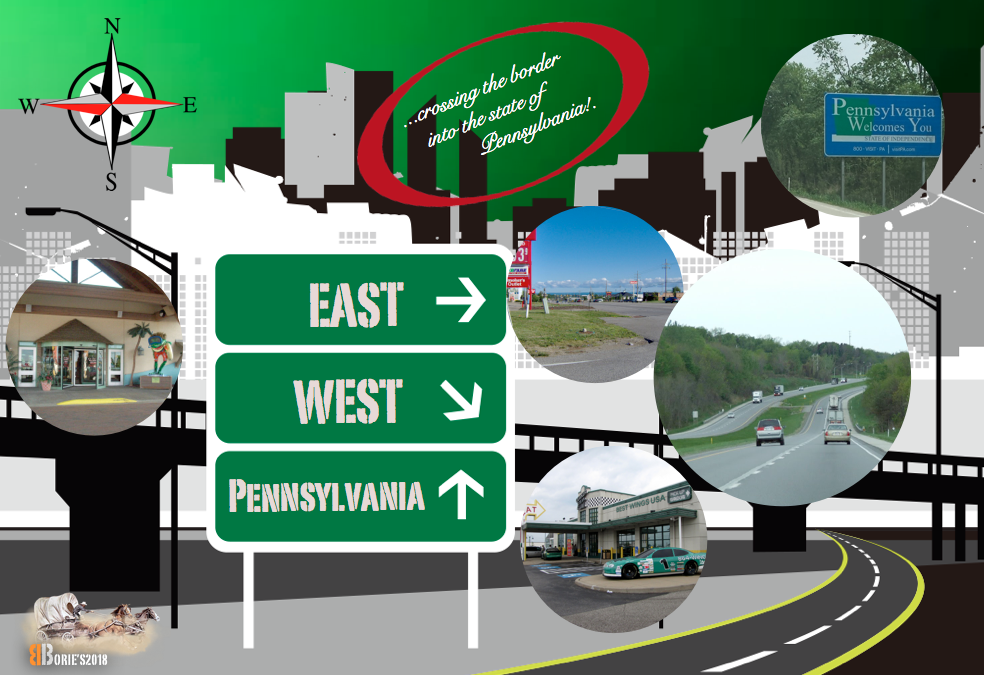
…de novo na estrada, ouvindo alguma música, depois de atravessar a fronteira para o estado de Pennsylvania!. (again on the road, listening to some music, after crossing the border into the state of Pennsylvania)!.

…a cidade de Erie era já ali, cujo nome lhe foi dado, porque existe um grande lago, onde há muitos e muitos anos, uma tribo de Índios Americanos por aqui viveu, não sabendo nós de onde veio o nome, se foi da tribo ou do lago!. Aqui, parámos para comprar fruta, água e descansar, admirando este grande lago, onde milhares de pessoas que visitam esta cidade, se divertem no “Presque Isle State Park”, com inúmeras atracções, onde se destacam os casinos e as corridas de cavalos!. (the city of Erie was already there, whose name was given to it, because there is a great lake, where for many, many years, a tribe of Native Americans lived here, not knowing where the name came from, whether it was the tribe or the lake! Here, we stop to buy fruit, water and rest, admiring this large lake, where thousands of people visiting this city, have fun at Presque Isle State Park, with countless attractions, where casinos and horse races stand out)!.

…continuando a nossa rota rumo ao Atlântico, atravessamos a fronteira para o estado de Nova Iorque!. Estado, que não deve ser confundido com a cidade com o mesmo nome, localizada ao sul do estado, pois a cidade de Nova Iorque, além de ser a maior cidade do estado, com os seus 8,5 milhões de habitantes, também é a cidade mais populosa dos USA!. “Empire State”, é o cognome que dão ao estado, muita gente acredita que este nome tem origem num comentário feito por George Washington, que uma vez dise: “Nova Iorque, é o centro do Império”!. (continuing our route to the Atlantic, we crossed the border into the state of New York!. State, which is not to be confused with the city of the same name, located to the south of the state, since New York City, besides being the largest city in the state with its 8.5 million inhabitants, is also the most populous city in the USA!. “Empire State” is the cognomen they give to the state, many people believe that this name originates in a commentary made by George Washington, who once designed: “New York, is the center of the Empire”)!.

…sómente um pouco de história, para dizer que, Nova Iorque, foi originalmente colonizada por holandeses, que logo chamaram a toda esta região, Novos Países Baixos, fundando um assentamento na Ilha de Manhattan, chamando-lhe Nova Amesterdã, mas quando a Inglaterra capturou o estado aos neerlandeses, deram o nome, tanto ao estado como à cidade, localizada na Ilha de Manhattan, de Nova Iorque!. (just a bit of history, to say that New York was originally colonized by Dutch, who soon called the whole region, New Netherlands, founding a settlement on Manhattan Island, calling it New Amsterdam, but when England captured the state from the Dutch, gave the name to both the state and the city, located on Manhattan Island, New York)!.

…ao longo da estrada rápida número 90, onde se paga portagem, existe uma imensa cultura de videiras, originando um cenário agradável, pelo menos para nós oriundos da Europa!. Surgindo a cidade de Buffalo, que fica localizada a poucas milhas da grande atracção, conhecida no mundo, que são as Cataratas de Niagara, todavia era ainda manhã, um pouco cedo e, tínhamos visitado esta atracção algum tempo atrás, decidimos seguir em frente, rumo ao Atlântico, surgindo um cenário de montanha, com a estrada umas vezes subindo outras descendo, onde o sol começava a despertar, fazendo desenhos no horizonte, por cima de algumas cordilheiras de montanhas, proporcionando um espectáculo único, que só se admira, talvez uma vez na nossa inteira existência, fazendo-nos pensar que somos uns privilegiados, onde às vezes o Criador contempla as pessoas!. (along the fast road number 90, where tolls are paid, there is an immense crop of vines, creating a pleasant scenario, at least for us from Europe!. The city of Buffalo, located just a few miles from the world famous attraction of Niagara Falls, was still a little early in the morning and we had visited this attraction some time ago and decided to move on, towards the Atlantic, a mountain landscape appeared, with the road sometimes ascending others descending, where the sun began to awaken, making drawings on the horizon, on top of some mountain ranges, providing a unique spectacle, which can only be admired, perhaps once in our entire existence, making us think that we are privileged, where sometimes the Creator contemplates people)!.

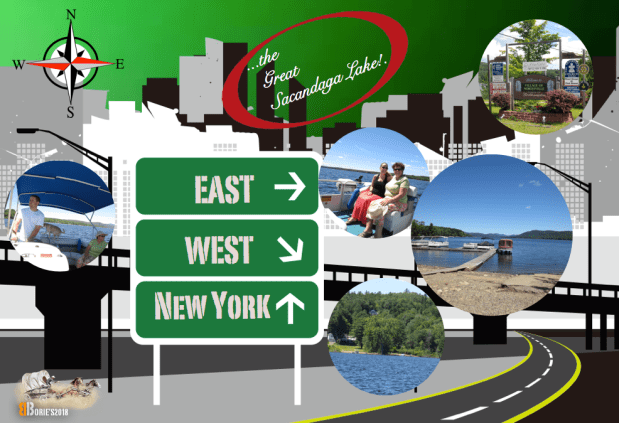
…o nosso destino eram essas montanhas, no norte do estado de Nova Iorque, na histórica aldeia de Northville, fundada por volta do ano de 1786, com um aglomerado de casas situado em terreno alto, na vertente da montanha, porque ao fundo, num extenso vale passava o Rio Sacandaga, tornando-se mais tarde num braço do Grande Lago Sacandaga, porque a construção da Barragem Conklingville, inundou toda a área, trazendo a expansão do Grande Lago Sacandaga para a borda da aldeia, onde hoje é o paraíso de centenas de pessoas que fazem da aldeia de Northville, a sua estância de férias na montanha!. (our destination was these mountains in upstate New York, in the historic village of Northville, founded around 1786, with a cluster of houses on high ground on the mountain slope because in the background, in an extensive valley passed the Sacandaga River, later becoming an arm of the Great Sacandaga Lake, because the construction of the Conklingville Dam, flooded the entire area, bringing the expansion of the Great Sacandaga Lake to the edge of the village, where today is the paradise of hundreds of people who make the village of Northville, your mountain vacation resort)!.

…aqui esperava-nos familiares, onde juntos, percorremos a área de montanha, onde se podia beber água pura dos riachos, onde os ursos e outros animais selvagens, não fugiam ao ver-nos aproximar, mas nunca calcando o seu território e, como curiosidade, esta região de montanha, localiza-se a poucas horas, viajando de automóvel, de Manhattan, que é o mais antigo e mais densamente povoado dos cinco bairros, freguesias ou distritos, depende do que lhe queiram chamar, que formam da cidade de Nova Iorque, que fica na foz do Rio Hudson!. (here we were expecting relatives, where together, we went to the mountain area, where we could drink pure water from the streams, where bears and other wild animals did not flee when we saw them approaching, but never tracing their territory and, as a curiosity, this mountain region, located a few hours away, traveling by car, Manhattan, which is the oldest and most densely populated of the five neighborhoods, parishes or districts, depends on what you want to call it, which form the New York City, which is at the mouth of the Hudson River)!.

…sim, o Rio Hudson, que desagua no Oceano Atlântico, onde a terra finda e o mar começa, com água, muita água, que como no princípio deste texto dissémos, “nós crescemos confiando na água”!. (yes, the Hudson River, which empties into the Atlantic Ocean, where the land ends and the sea begins, with water, a lot of water, which as we said in the beginning of this text, “we grow up relying on water”!

Tony Borie, April 2018.

…three legged bench!

…three legged bench!


…a Tripeça! (three legged bench)!

…os anos vão passando, a viagem que fomos fazendo, por lugares, alguns remotos, em diversos continentes, que nos foram trazendo pensamentos, por vezes agradáveis, outros não muito agradáveis, mesmo angustiosos, mas fazem parte desta odisseia, que é e foi, a nossa estadia neste planeta, a que ainda vão chamando de “Planeta Terra”!. (the years are passing, the journey we have been doing, places, some remote, in different continents, that have brought us thoughts, sometimes pleasant, others not very pleasant, even distressing, but are part of this odyssey, which is and it was our stay on this planet, which we still call “Planet Earth”)!.

… a nossa já longa vida, levou a nos identificar quase totalmente, com uma música do cantor de baladas Willie Nelson, onde diz “My Heros Have Always Been Cowboys”, (Os meus Heróis sempre foram os Cowboys), porque na verdade, a não ser os da nossa infância, dos livros das “histórias aos quadradinhos”, nunca tivémos um qualquer herói, pelo menos os “fabricados” pela história mundial, que nos apresentam em diferentes épocas!. (our long life, led us to identify almost entirely with a song by singer Willie Nelson, where it says “My Heroes Have Always Been Cowboys”, because in fact, except those of our childhood, from the books of “stories to squares”, we have never had any hero, at least those “fabricated” by world history, which present us at different times)!.

…hoje voltamos à Guerra Colonial Portuguesa, a África, ao chão de terra vermelha, onde passámos um período da nossa vida, amargurada, coberta de medo e angústia, mandados para lá por um primeiro-ministro mentiroso, com um pensamento cheio de ideias políticas, que na altura diziam, ou ele se auto-identificava, como um “herói do povo”, dizendo-nos para irmos para a guerra, entre outras coisas interromper o comunismo, que ameaçava as suas Províncias Coloniais, para proteger as pessoas pobres, que viviam por lá!. (today we went back to the Portuguese Colonial War, the Africa, to the ground of red earth, where we spent a bitter, fearful and anguished period of our lives, sent there by a lying prime minister, with a thought full of political ideas, which at the time said, or he identified himself as a “hero of the people,” telling us to go to war, among other things, to stop communism, which threatened its Colonial Provinces, to protect people, poor people who lived there)!.

…hoje, ao lembrarmos aqueles anos, pensando naquele maldito primeiro-ministro, que nos arrancou da nossa aldeia do Vale do Ninho d’Águia, na encosta agreste da montanha do Caramulo, lá naquele Portugal da Europa, desterrando-nos para uma área de combate, a milhares de quilómeros de distância, combatendo pessoas que nenhum mal nos tinham feito antes, que nem sequer conhecíamos, provocando uma guerra que se prolongou por anos, matando milhares de jovens, ferindo e traumatizando outros tantos, onde só existia um cenário de medo, angústia e sofrimento!. (today, as we remember those years, thinking of that accursed Prime Minister, who has taken us from our village in the Valley of the Ninho d’Águia, on the rugged hillside of Caramulo Mountain, back in that Portugal of Europe, banishing us to a thousands of miles away, fighting people that no evil had done to us before, which we did not even know, provoking a war that lasted for years, killing thousands of young people, wounding and traumatizing others, where there was only one scenery of fear, anguish and suffering)!.

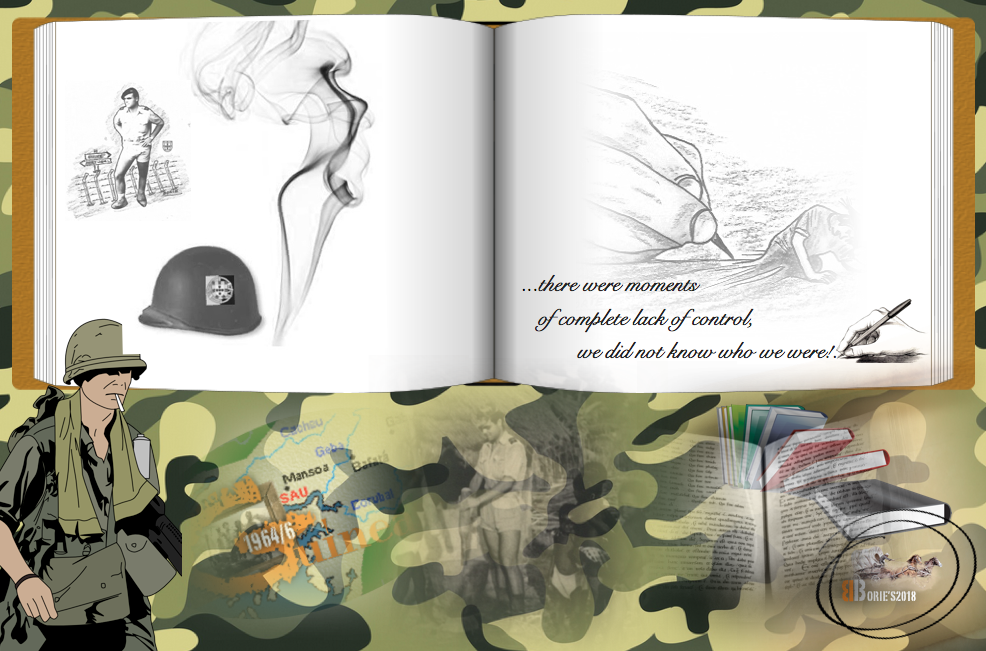
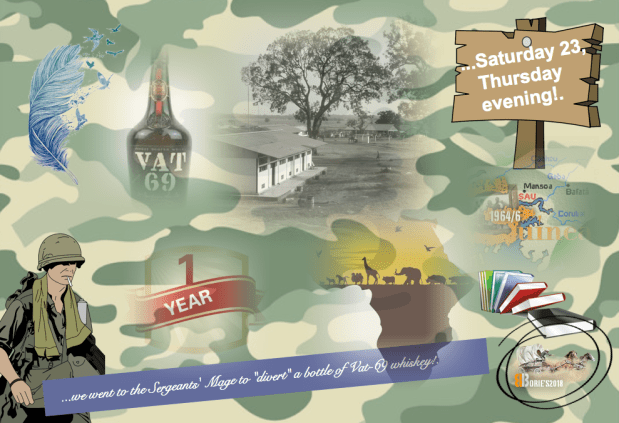
…já lá ia mais de um ano, quase dois, no interior da então Província da Guiné Portuguesa, estava a tornar-se difícil, mesmo muito difícil, quase penoso, havia momentos de completo descontrolo, não sabíamos quem éramos, onde estávamos, nada nos importava, o cigarro não saía dos lábios, acendiam-se uns aos outros, a nossa companheira de quase todos os momentos, a tal garrafa que era especial, porque tinha uma rolha em porcelana, com argola em borracha, fechando por intermédio de uma engrenagem de dois arames, que os primos de Lisboa, tinham trazido da capital e, que nós trouxemos da nossa aldeia do Vale do Ninho d’Águia, que sempre nos acompanhou, andava cheia de tudo, até medo, pois já conhecia o som de uma metralhadora disparando ou a explosão de uma granada de morteiro 90, mas naquele momento, trazia um líquido parecido com coca-cola, mas de coca-cola não tinha nada, era uma mistura de vinho, café e álcool roubado ao “Pastilhas”, na enfermaria!. (more than a year, almost two years ago, within the then Province of Portuguese-Guinea, it was becoming difficult, even very difficult, almost painful, there were moments of complete lack of control, we did not know who we were, where we were, nothing mattered to us, the cigarette did not leave our lips, they lit each other, our companion of almost every moment, the bottle that was special, because it had a porcelain stopper, with rubber ring, closing by means of of a two-wire gear that the Lisbon cousins had brought from the capital, and which we brought from our village in the Valley of the Ninho d ‘Águia, which always accompanied us, was full of everything, even fear, since I already knew the sound of a machine-gun firing or the explosion of a mortar grenade 90, but at that moment, it had a Coke-like liquid, but of Coke it had nothing, it was a mixture of wine, coffee and alcohol stolen from “Pastilhas”, in the nursery room!.

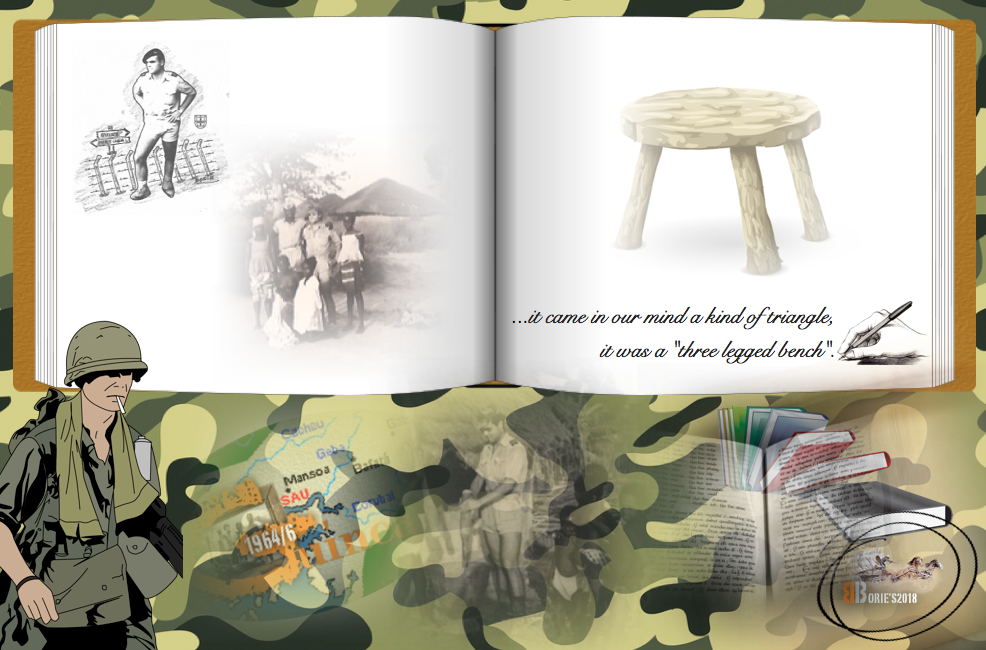
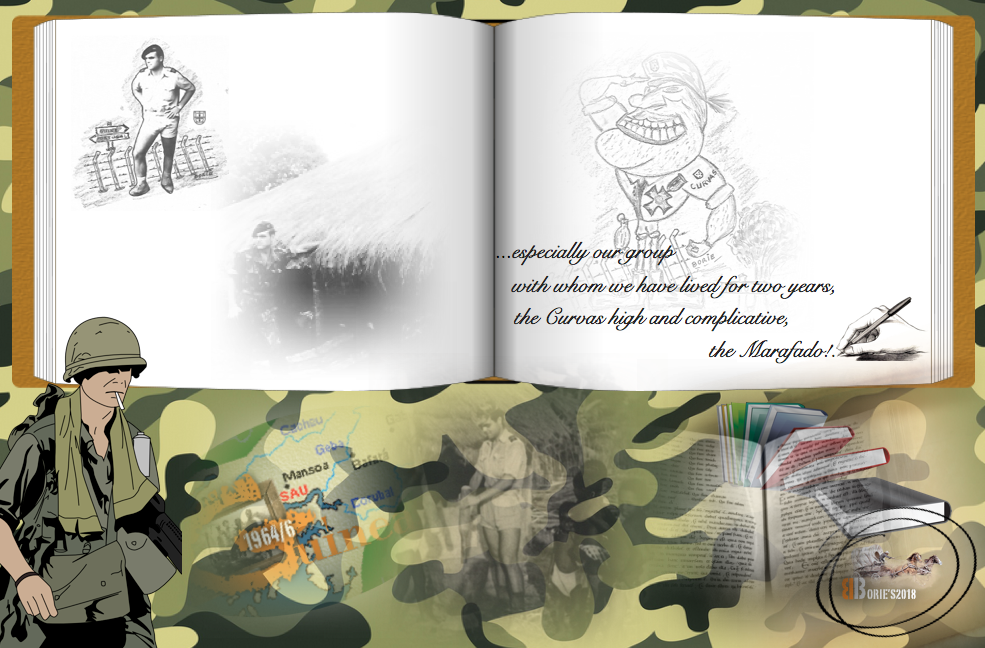
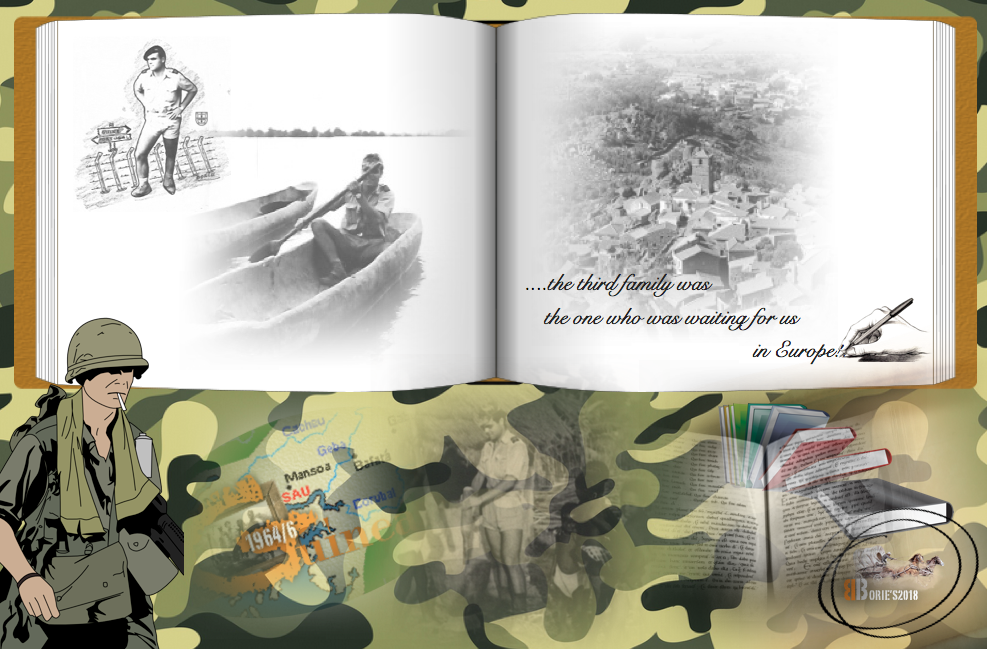
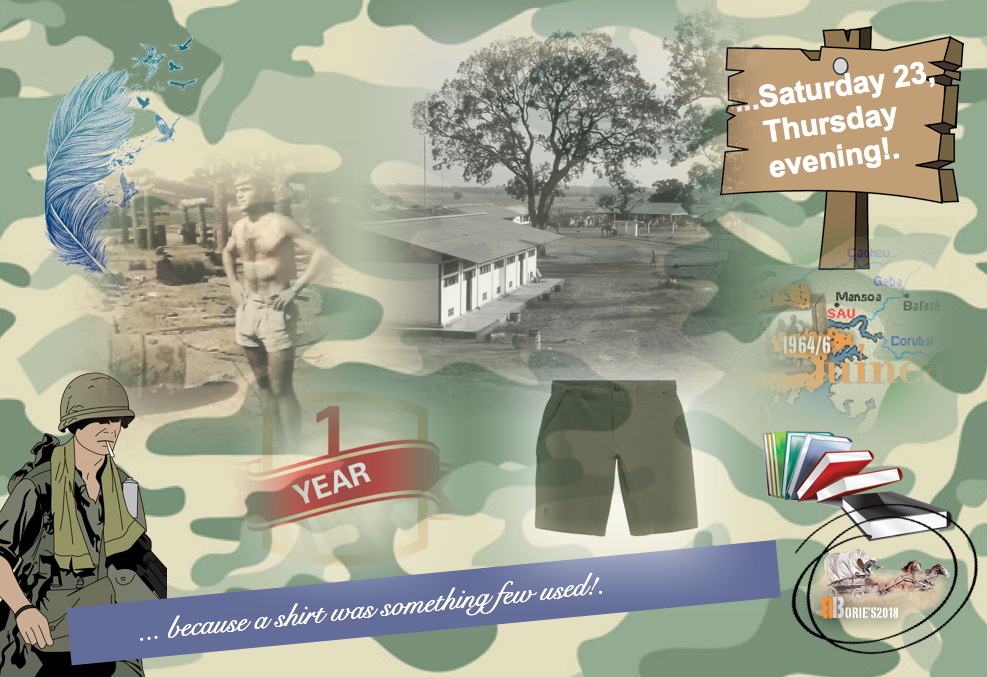
…apesar desse aspecto desleixado, quando chegava o momento de entrar de serviço e executar as nossas tarefas, apresentávamo-nos limpos, usando a camisa comunitária, que era a que sempre estava pendurada no Centro Cripto e, que todos os companheiros usavam para entregar as mensagens já decifradas no comando, especialmente quando havia contacto com o comandante!. As tarefas eram executadas com toda a precisão, fazia-nos bem, andávamos ocupados, no entanto, fora das nossas tarefas, surgia na nossa mente uma espécie de triângulo, era uma “tripeça”, igual à que havia na casa da avó materna, já velha, com uma perna quase a partir!. Esta, na nossa mente, também tinha uma, talvez duas pernas quase a partir, pois orgulhosamente, considerávamo-nos parte de três famílias, eram três queridas famílias!. (in spite of this sloppy appearance, when it was time to get on duty and perform our tasks, we would present ourselves clean, wearing the community shirt, which was the one that was always hung in the Crypto Center and which all the companions used to deliver the messages already deciphered in the command, especially when there was contact with the commander!. The tasks were executed with all the precision, it did us well, we were busy, however, outside our tasks, it came in our mind a kind of triangle, it was a “three legged bench”, just like the one in the maternal grandmother’s house, already old, with an almost broken leg!. This, in our mind, also had one, perhaps two legs almost split, because proudly, we considered ourselves part of three families, were three dear families)!.

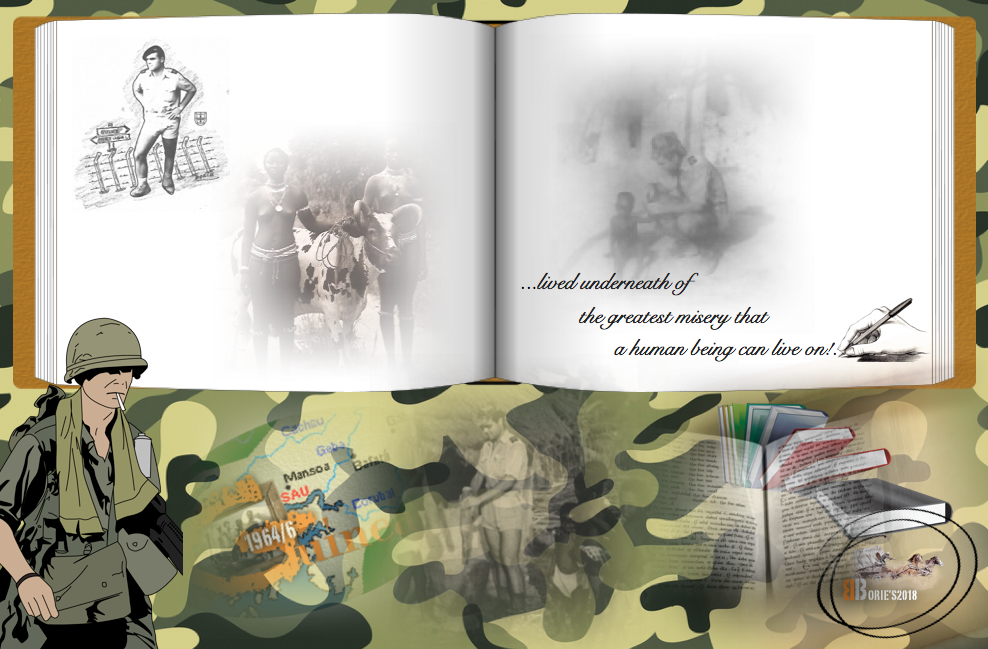
…os naturais, aquelas pessoas amigas que viviam na tal “tabanca”, (aldeia), com casas cobertas de colmo, um pouco a norte do aquartelamento, eram a nossa primeira família, passávamos por lá quase todos os dias, viviam debaixo da maior miséria que um ser humano pode viver, palhotas com chão térreo, com uma simples panela, que às vezes nem era panela, era uma lata de conserva de qualquer coisa, que levávamos com comida do aquartelamento, dormiam em cima de um lastro feito de ervas secas, coberto com um simples pano, onde o pouco com que se alimentavam, repartiam com os animais, que também famintos, cobertos de insectos, com o rabo entre as pernas, procuravam aproximar-se delas, dessas simples pessoas que, vivendo miserávelmente davam-nos tudo o que lhes era possível dar, sem nunca pedirem nada em troca, sempre com um sorriso, olhando-nos nos olhos, sinceras e humildes, com uma maneira própria, que nós, oriundos da velha Europa, nunca tínhamos visto em toda a nossa ainda jovem vida!. Agora, quase a abandoná-las, talvez para sempre, ficávamos tristes, mesmo muito tristes, com algumas lágrimas de saudade, dizíamos baixinho, só para nós:

– desejava ansiosamente o dia de regressar à Europa, agora quero ficar aqui para sempre!.

(The natives, those friendly people who lived in such “tabanca” (village), with thatched houses, a little north of the barracks, were our first family, we went there almost every day, lived underneath of the greatest misery that a human being can live on, with ground-level huts, with a simple pan, which sometimes was not even a pan, was a can of anything that we carried with food from the barracks, slept on a ballast made of dried herbs, covered with a simple cloth, where the little they fed, distributed with the animals, who also hungry, covered with insects, with the tail between their legs, sought to approach them, those simple people who, living miserably gave us everything they could give them, never asking for anything in return, always with a smile, looking us in the eyes, sincere and humble, with a way of our own, which we, from old Europe, had never seen in all our still young life! Now, almost abandoning them, perhaps forever, we were sad, even very sad, with a few tears of longing, we said quietly, just for us:

– Anxiously wanted the day to return to Europe, now I want to stay here forever)!.

…os nossos companheiros, em especial o nosso grupo com quem convivemos dois anos, o Curvas alto e refilão, o Marafado, o Trinta e Seis, o Setúbal, o Mister Hóstia, o Arroz com Pão, o Gascidla, o Lifouboy, o Pastilhas, o Furriel Miliciano ou o Sargento da Messe, conheciamo-nos como tivéssemos vivido juntos toda a vida, eram eles a nossa segunda família, sabíamos os costumes uns dos outros, muitas vezes zangados mas amigos, bebíamos, fumávamos, roubávamos pão, vinho ou álcool, quando um tinha fartura de alguma coisa, todos tinham fartura e, quando não havia para um, não havia para ninguém!. Todos os nossos problemas ficavam quase resolvidos ao deitar, sobre influência alguns, outros de sentinela, não vão os guerrilheiros atacar o aquartelamento nessa noite!. (our companions, especially our group with whom we have lived for two years, the Curvas high and complicative, the Marafado, the Thirty-Six, Setúbal, Mister Hóstia, Rice with Bread, Gascidla, Lifouboy, the Furriel Miliciano or the Sergeant of the Messe, we knew how we had lived together all our lives, they were our second family, we knew the customs of each other, often angry but friends, we drank, we smoked, we stole bread, wine or alcohol, when one had plenty of something, all had plenty, and when there was not for one, there was no one! All our problems were almost solved at bedtime, on some influence, some sentinel, the guerrillas will not attack the barracks that night)!.

…a terceira família, era aquela que nos esperava na Europa, que nos mandava cartas e aerogramas, algumas com fotos, que nos proporcionava alguns momentos de menos sofrimento, desejando-nos sorte, perguntando se nos encontrávamos bem, ao qual muitas vezes rspondíamos que, qualquer dia iríamos regressar e, nesse momento iriam ver o que restava de nós!. Em alguns momentos imaginávamos como seriam as suas faces quando os visse de novo, uns talvez parececem mais velhos, outros talvez não, alguns tinham nascido depois de abandonar-mos a aldeia, outros já não pertenciam ao número dos vivos, enfim, iria acontecer alguma surpresa, mas uma surpresa agradável, no entanto estas três famílias traziam a nossa mente ocupada, algo confusa e um pouco angustiada também!. (the third family was the one who was waiting for us in Europe, who sent us letters and aerograms, some with photos, which gave us some moments of less suffering, wishing ourselves luck, asking if we were well, which often We would say that someday we would come back, and then they would see what was left of us! At times we imagined what their faces would look like when they saw them again, some may look older, some might not, some had been born after we left the village, some were no longer living, some would happen surprise but a pleasant surprise, however these three families brought our mind occupied, somewhat confused and a bit distressed too)!.

…e na verdade, num dia quente, princípio de verão, regressámos à Europa, um pouco diferentes, mais frios, vendo e cheirando a área, não vendo mais o chão de terra vermelha, desconfiados, com medo de tudo o que se movimentasse em nosso redor, não acreditando em heróis, pois se os houvesse, foram os irmãos de guerra que morreram em combate, os quais alguns, ajudámos a recolher o que restava dos seus ensanguentados corpos, embrulhando-os no seu próprio camuflado, roto pelo tempo e pelos buracos de balas mortíferas que o atravessaram, enquanto a sua alma, se é que existia, os abandonava, fugindo, também amedrontada para um infinito qualquer!. (and in fact, on a warm day, early summer, we returned to Europe, a little different, cooler, seeing and smelling the area, no longer seeing the ground of red earth, distrustful, afraid of everything that moved around us, not believing in heroes, for if the there were war brothers who died in combat, some of whom we helped to collect what was left of their bloody bodies, wrapping them in their own camouflage, broken by the time and by the holes of deadly bullets that passed through it, while the his soul, if it existed, abandoned them, fled, also frightened to any infinite)!

…era o que restava de nós!. (was what was left of us)!

Tony Borie, April 2018.

…Saturday 23, Thursday evening!

…Saturday 23, Thursday evening!

…sábado 23, quinta-feira à noite!. (Saturday 23, Thursday evening)!.

…é um curioso título?. Sim, muito curioso, como também existem outras curiosidades, como por exemplo: “entre os animais, a guerra total contra outros membros da mesma espécie, ocorre apenas entre grandes sociedades de humanos e formigas”!.

(Is it a curious title? Yes, very curious, as there are other curiosities, for example: “among animals, total war against other members of the same species occurs only between large societies of humans and ants”)!.

…são apenas curiosidades, mas hoje vamos lembrar um momento que está escrito, por sinal muito mal escrito, no nosso diário de guerra, que é pitoresco e de acção de combate não tem nada, mesmo nada, cá vai:
(are just curiosities, but today we will remember a moment that is written, by the way very poorly written, in our war diary, which is picturesque and combat action has nothing, even nothing, here goes):

…o dia, como era costume, estava quente e abafado, no entanto de acordo com o calendário, marcava precisamente um ano, que desembarcámos em África, no tal acampamento, junto ao cais de desembarque, coberto de lama e mosquitos!. (the day, as was customary, was hot and muffled, yet according to the calendar, it marked precisely a year, which we landed in Africa, in this camp, near the landing dock, covered with mud and mosquitoes)!.

…já não éramos “piriquitos”, (novatos), éramos um veterano, já podíamos dar qualquer conselho sobre estadia em cenário de combate, aos militares mais novos e, era verdade, um ano de estadia era um “posto”, em zona de guerra, os mais novos ouviam-nos com algum respeito!. (we were no longer “parakeets” (rookies), we were a veteran, we could already give any advice about stay in combat scene, to the younger military and, it was true, a year of stay was a “post”, in war zone, the younger ones listened to us with some respect)!.

…chamámos o “Setubal” e o “Curvas, alto e refilão”, que eram os companheiros com quem mais convivíamos, dizendo-lhes:

– hoje, fazemos um ano de estadia em África, não se lembram!.

(We called the “Setubal” and the “Curvas, high and complicative”, which were the companions with whom we lived together, saying:

– Today, we make a year of stay in Africa, do not remember)!.

…era verdade, embora colocados em diferentes unidades militares!. De seguida, fomos à Messe dos Sargentos “desviar” uma garrafa de uisque Vat-69, que era importado da Escócia, com um rótulo especial, com a legenda ” for the Portuguese Armed Forces with love”, (para as Forças Armadas Portuguesas com amor)!. Os três, debaixo na enorme árvore Mangueiro, que tinha sido baptizada com o nome do “Setubal”, na qual, junto da sua base estavam algumas gaiolas de macacos e piriquitos, abrimos a garrafa atirando a rolha para longe, sinal de que não precisavámos mais dela!. (was true even though placed in different military units!. Then we went to the Sergeants’ Mage to “divert” a bottle of Vat-69 whiskey, which was imported from Scotland with a special label, with the caption “for the Portuguese Armed Forces with love!”. The three of them, under the huge Mangrove tree, which had been baptized with the name of “Setubal”, with a few cages of monkeys and piriquitos at its base, we opened the bottle by throwing the cork away, a sign that we did not need it)!.

…acordámos umas horas depois, ao som do chilrear dos piriquitos!. Os macacos olhavam-nos, às vezes com a cara de lado, outras vezes emitindo grunhidos de angústia, dando voltas na gaiola, tentando abri-la, talvez tentando acordar os seus donos, que os tratavam e lhe davam algum carinho!. (we awoke a few hours later, to the sound of the piriquitos chirping!. The monkeys looked at us, sometimes with their faces to one side, sometimes with growls of anguish, circling the cage, trying to open it, perhaps trying to wake their owners, who treated them and gave them some affection)!.

…no próximo dia pela manhã, talvez ainda sobre influência, ao vestir o que restava dos calções, desiquilibrámo-nos, rasgando-os um pouco mais!. Era normal, a roupa já tinha um ano de uso, estava coçada, as botas gastas e também rotas de lado, o comando dizia que só havia direito a roupa nova, quem a perdesse em combate, quem fosse militar de acção, em outras palavras, quem debaixo de fogo, fosse alvo de uma rajada de metralhadora ou a explosão de uma mina ou fornilho, e claro, destruísse a sua roupa e ao mesmo tempo, também destruísse o seu corpo!. (on the next day in the morning, perhaps still on influence, in dressing what was left of the shorts, we got off balance, ripping them a little more! It was normal, the clothes had already been worn for a year, it was scratched, the boots worn and also worn out, the command said that only new clothes were available, who lost it in combat, who was military in action, in other words , who under fire, was the target of a machine-gun blast or the explosion of a mine or fornilho, and of course, destroyed his clothes and at the same time, also destroyed his body)!.

…aqui funcionava o que hoje se diz “tráfico de influências”!. Os mais velhos, trocavam duas camisas, ou uma camisa e dez maços de cigarros “três vintes”, por uns calções, com os militares mais novos, pois camisa era coisa que poucos usavam!. Naquela altura, a mais importante pessoa, passou a ser o Sargento da Arrecadação, onde não havia arrecadação nenhuma!. (here used to be what is now called “trafic of influences”!. The older ones exchanged two shirts, or a shirt and ten packs of “three vintes” cigarettes, with some shorts, with the younger military, because a shirt was something few used!. At that time, the most important person, became the Sergeant of the Collection, where there was no collection)!.

…nós, falámos com o Sargento da Arrecadação, dizendo que precisávamos urgentemente de novos calções, pois os que usávamos estavam rotos!. Estas palavras foram proferidas com alguma fúria:

– estou farto de calções rotos, desde que era criança!.

…o Sargento, com bastante calma, respondeu:

– só se estiverem mesmo rotos ao ponto de já não se poderem usar!.

…nós, nesse preciso momento, despimos os calções, rasgámos em pedaços o que deles restava, dizendo:

– aqui está a prova!.

…regressando nú ao Centro Cripto, pois há muito que não usávamos roupa interior!.

(We talked to the Sergeant of the Collection, saying that we urgently needed new shorts, because the ones we wore were broken!. These words were uttered with some fury:

– I’m sick of broken shorts since I was a kid!.

The Sergeant calmly replied:

– Only if they are even broken to the point that they can no longer be used!.

We, at that very moment, stripped off our shorts, ripped apart what remained of them, saying:

– Here’s the proof!.

Returning nude to the Crypto Center, since we had not worn underwear for a long time)!.

…este caso ficou famoso, andou de boca em boca em todo o aquartelamento!. Uns dias depois, já usávamos novos calções, sendo colocada uma folha oficial no local onde eram servidas as refeições, para ali colocarem o nome, que cada caso seria analizado!. (this case became famous, walked from mouth to mouth throughout the barracks!. A few days later, we were wearing new shorts, and an official leaf was placed on the place where meals were served, to place the name there, which would be analyzed every case)!.

…os novos calções eram de cor verde azeitona, as camisas que algumas vezes usávamos eram antigas de cor amarela, portanto, quando nos vestíamos de roupa lavada, principalmente ao domingo, com calções verdes e camisa amarela, o aspecto era diferente, o que levava o “Curvas, alto e refilão”, a dizer-nos:

– tú, não és, nem nunca foste um militar!. Tú, és tropa fandanga!. Nunca cheguei a saber o que é que tú aqui fazes?. Dizes que és Cifra, tú és mas é uma grande merda!. Nos momentos em que andamos em patrulha, sofremos emboscadas, quando vamos em operações de destruição de acampamentos ou bases inimigas, onde por lá andam as tuas amigas guerrilheiras, (falava sempre nelas), olho para todos os lados e, nunca te lá vi!.

(The new shorts were olive green in color, the shirts we sometimes wore were yellow in color, so when we dressed in washed clothes, especially on Sunday, in green shorts and a yellow shirt, the look was different. who led the “Curves, high and complicative”, to tell us:

– You are not, and you were never a soldier!. You are “fucking troop”!. I never got to know what you do here?. You say you’re a Cipher, you’re but it’s a big shit. At times when we are on patrol, we are ambushed, when we go in operations to destroy enemy camps or bases, where your guerrilla friends go there (I always spoke in them), I look everywhere and I have never seen you)!.

…era assim e, o melhor era não lhe responder, pois o “Trinta e Seis”, não andava por perto e era o único que tinha mão nele, no entanto se lhe respondíamos então o seu reles bocabulário não ia ficar por ali, mas como já dissémos por outras vezes, era um bom companheiro, tinha tido uma juventude de sofrimento, criado na rua, pois a sua mãe, andava na vida de prostituição, abandonando-o em criança, foi criado sem carinho, nunca ninguém lhe limpou o ranho do nariz, nunca ninguém lhe perguntou se tinha fome ou frio, se precisava de roupa, se tinha dores em qualquer parte do seu corpo ou lhe estendeu a mão com qualquer ajuda!. Naquele aquartelamento, era o militar mais bem preparado para combate, era um autêntico “Survivor”, necessitava sómente de compreensão!. (it was so, and the best thing was not to answer him, for the “Thirty-Six” was not around and was the only one who had a hand in it, but if we answered then his reckless binary would not stay there, but as we have said at other times, he was a good companion, had a youth of suffering, raised in the street, because his mother, walked in the life of prostitution, abandoning him as a child, was created without affection, wiped the snot of his nose, no one ever asked him if he was hungry or cold, if he needed clothes, if he had pains anywhere on his body or extended his hand with any help! In that barracks, he was the most well-prepared military man for combat, he was an authentic “Survivor”, he needed only understanding!.

Tony Borie, April 2018.

…the family is everything!

…the family is everything!

…a família é tudo!. (the family is everything)!.

…orgulhosamente, estes são os descendentes do casal “os Borie’s”, Isaura e António! (proudly, these are the descendants of the couple “the Borie’s”, Isaura and Antonio)!.

…a família é uma ligação ao passado, onde talvez, por volta de 50.000 mil anos atrás, nós, os humanos começámos a exibir evidências de modernidade comportamental, onde em várias ondas de emigração, nos aventurámos, primeiro para fora de África, depois a partir de outros pontos, começámos a povoar parte do planeta Terra, sendo uma ponte para o que hoje designamos futuro!. (the family is a connection to the past, where perhaps, around 50,000 thousand years ago, we, humans, began to exhibit evidence of behavioral modernity, where in several waves of emigration, we ventured first out of Africa, then from other points, we began to populate part of planet Earth, being a bridge to the which today we designate future)!.

…não é por acaso que dizemos que os melhores momentos da nossa vida são encontrados quando os familiares ou amigos se reunem, pois os seres humanos são especialmente hábeis em usar sistemas de comunicação simbólica para a auto expressão e a troca de idéias para se organizarem, e claro, em família ou grupo de amigos, ou até com pessoas com alguma rede de parentesco, é muito mais fácil se comunicarem, se ajudarem, pois já se conhecem, daí o tal ambiente feliz na troca de palavras e compreenção!. (It is not by chance that we say that the best moments of our lives are encountered when family or friends come together, for human beings are especially adept at using symbolic communication systems for self expression and the exchange of ideas for organizing, and of course, family or group of friends, or even with people with a kinship network, it is much easier to communicate, if they help, because they already know each other, hence the happy environment in the exchange of words and understanding)!.

…as famílias são como os ramos de uma árvore, crescemos em diferentes direcções, mas as nossas raízes permanecem numa só direcção, isso nunca esquecemos, que é o amor e afecto familiar!. Todavia nós, os humanos, em geral todos temos a curiosidade e o desejo de compreender e influenciar o meio ambiente, explicar e manipular fenómenos e eventos às vezes incomprensíveis, como o desenvolvimento da ciência, a mitologia da filosofia da religião ou outros campos do conhecimento, e nós, os mais antigos, às vezes esquecemos, querendo ensinar, explicar aos descendentes, os princípios de vida que tivémos, mas nem sempre são aconselháveis, pois as pessoas hoje, enfrentam um sistema onde a sobrevivência é um dos pormenores mais importantes, sobretudo para os jovens!. (families are like the branches of a tree, we grow in different directions, but our roots remain in one direction, this we never forget, which is love and family affection!. However, we humans generally have the curiosity and desire to understand and influence the environment, explain and manipulate phenomena and sometimes incomprehensible events, such as the development of science, the mythology of the philosophy of religion, or other fields of knowledge, and we the older ones sometimes forget, wanting to teach, explain to the descendants, the principles of life we have, but they are not always advisable, because people today face a system where survival is one of the most important details, especially for young people)!.

…a família não é uma coisa “importante”?. Pois não, pois a palavra importante não existe nela!. A FAMÍLIA É TUDO, onde a vida e o amor começam e, nunca acabam!. Nós os humanos modernos, defenidos com uma espécie superior, comparados com os outros seres vivos que existem no planeta Terra, comunicamo-nos, cultivando sentimentos, aperfeiçoando modos de vida cada vez mais fáceis, comparados com aqueles que os nossos antepassados usavam quando, reunidos em grupos, concerteza com algum parentesco ou em família, colonizaram todos os continentes e ilhas maiores, chegando à então Eurásia, talvez 125.000 e 60.000 anos atrás, à Austrália há cerca de 40.000 anos, às Américas há cerca de 15.000 anos atrás, às Ilhas remotas, como o Hawaii, Ilha da Páscoa, Madagascar ou Nova Zelândia entre os anos 300 e 1280, adaptando-se a práticamente, todos os diferentes climas, onde por ali ficavam, mas nunca esquecendo o tal grupo, a tal família!. (the family is not an “important thing”?. No, because the important word does not exist in it! THE FAMILY IS EVERYTHING, where life and love begin and never end!. We modern humans, defined with a higher species, compared to the other living beings that exist on the planet Earth, we communicate, cultivating feelings, perfecting ever easier ways of life, compared with those that our ancestors used when, reunited in groups, with some kinship or in family, colonized all the continents and larger islands, arriving at the then Eurasia, perhaps 125,000 and 60,000 years ago, to Australia about 40,000 years ago, to the Americas some 15,000 years ago, to the Islands remote, such as Hawaii, Easter Island, Madagascar or New Zealand between the years 300 and 1280, adapting to practically, all different climates, where they stayed, but never forgetting such a group, such a family)!.

…a família é como a música, tem algumas notas altas, algumas notas baixas, mas é sempre uma música linda!. Nós os humanos, que expressamos os nossos sentimentos, sabemos que nenhuma família é perfeita, nós argumentamos, nós lutamos, nós até às vezes paramos de nos comunicar, mas no final, família é família, o verdadeiro amor sempre está lá, não importa o crescimento da civilização, as sociedades humanas expandirem-se, as formas de governo, cultura ou religião!. (the family is like music, it has some high notes, some low notes, but it’s always a beautiful song!. We humans, we express our feelings, we know that no family is perfect, we argue, we fight, we sometimes stop communicating, but in the end, family is family, true love is always there, no matter what growth of civilization, human societies expand, forms of government, culture or religion)!.

…a família, nem sempre é sobre as pessoas na nossa vida, onde existe a relação de sangue!. É sobre as pessoas na nossa vida que querem que nós estejamos nelas!. É sobre as pessoas na nossa vida que nos aceitam tal como somos, que nos apoiam nas nossas decisões, nas coisas que escolhemos, não importa o quê, estão lá por nós!. Essas são as pessoas que nos amam, são a nossa família, que nos respeitam e em quem podemos confiar!. Essa é a nossa verdadeira família!. (the family, it is not always about the people in our life, where there is the relation of blood!. It’s about the people in our lives who want us to be in them! It is about the people in our lives who accept us as we are, who support us in our decisions, in the things we choose, no matter what, are there for us!. These are the people who love us, are our family, respect us and whom we can trust!. This is our real family)!.

Tony Borie, April 2018.

…other times!

…other times!


…outros tempos!. (other times)!.

…hoje, nesta idade um pouco avançada, quando comemos uma refeição leve, com bastante salada, olhando os vegetais, logo nos vem à ideia o difícil trabalho da agricultura!. (Today, at this slightly advanced age, when we eat a light meal, with plenty of salad, looking at the vegetables, we soon come to the idea of the difficult work of agriculture)!.

…lembramo-nos da aldeia do Vale do Ninho d’Águia, lá naquela encosta agreste da montanha do Caramulo, naquele Portugal da Europa, onde nascemos e crescemos, vivendo numa área onde algumas famílias, talvez num círculo de alguns quiilómetros quadrados, cultivaram e casaram, constituindo família, onde todos se conheciam, sendo uma comunidade estável por séculos, ao longo daquele vale!. (We remember the village of the Valley of the Eagle’s Nest, on that rugged mountain slope of the Caramulo mountain, that Portugal of Europe, where we were born and grew up, living in an area where some families, perhaps in a circle of a few square kilometers, cultivated and married, constituting family, where everyone knew each other, being a stable community for centuries, along that valley)!.

…o dia começava, quando o combóio das seis e meia, passava vale abaixo a toda a velocidade em direcção ao oceano Atlântico e, terminava no seu regresso, por volta das dez e meia da noite, fazendo um ruído ensurdedor, vale acima, em direcção à montanha, com a locomotiva a todo o vapor, abanando o curral das ovelhas, que berravam assustadas!. (The day began, when the six-thirty train passed downhill at full speed toward the Atlantic Ocean, and ended on his return at around ten-thirty at night, making a deafening sound, up to the mountain, with the locomotive at full steam, shaking the corral of the sheep, who screamed scared)!.

…crescemos numa fazenda pequena, que os nossos pais chamavam quinta, onde havia uma vaca leiteira, ovelhas, cabras, um porco, algumas galinhas, coelhos e um cão, que era o nossa companhia preferida!. Cultivávamos milho, centeio, algum trigo, feno, batatas e vegetais, como nabos, couves, alfaces ou beterrava, que eram o sustento da família, onde também havia algumas árvores de fruto, nascidas por acaso, como larangeiras, macieiras ou nespreiras, além de algumas videiras, que estavam lá ao sabor do tempo, se chovia eram regadas, se havia muito sol, secavam alguns ramos!. (We grew up on a small farm, which our parents called a farm, where there were a milk cow, sheep, goats, a pig, a few chickens, rabbits and a dog, which was our favorite company! We grew maize, rye, some wheat, hay, potatoes and vegetables, such as turnips, cabbages, lettuces or beets, which were the family’s livelihood, where there were also some fruit trees, born randomly, such as orange trees, apple trees or loquat trees, of some vines, which were there in the flavor of time, if it rained were watered, if there was too much sun, dried some branches)!.

…na nossa casa, não havia electricidade nem encanamento de água interior, o quarto banho era uma barraca cá fora, mas havia toda a liberdade para vaguear por toda a quinta, incluindo a parte mais alta que era o pinhal, onde existiam algumas árvores de pinheiro e eucalipetos, mas poucos, no entanto era o nosso paraíso, onde caçávamos coelhos, perdizes e pombas selvagens!. (In our house, there was no electricity or internal water pipes, the fourth bathroom was a tent outside, but there was all the freedom to roam all over the farm, including the highest part of the pine forest, where there were some pine trees and eucalyptus, but few, yet it was our paradise, where we hunted wild rabbits, partridges and pigeons)!.

…aprendemos a fazer as nossas próprias ferramentas e armas de caça, a reparar e improvisar, recolhíamos a resina dos pinheiros, com que alimentávamos a luz da candeia à noite, a fazer a nossa própria faca, a pequena quinta obrigáva-nos a trabalhar quase o tempo todo, tudo era feito com a força dos braços, o cheiro a estrume era o nosso perfume e, naquele tempo não nos lembramos de ninguém que não gostasse de trabalhar!. (We learned to make our own tools and hunting guns, to repair and improvise, to collect the resin from the pines, with which we fed the light from the lamp at night, to make our own knife, the small farm obliged us to work almost all the time, everything was done with the strength of the arms, the smell of manure was our perfume and, at that time we did not remember anyone who did not like to work)!.

…a palha do centeio e trigo era usada nos colchões!. O único fertilizante era o estrume dos animais!. A repreza no ribeiro que passava ao fundo do vale, era a nossa praia fluvial!. Quando se fazia algo que não estava de acordo com as leis dos adultos, o pai António usava uma “chivata” e quando batia nos irmãos mais velhos, nós, esperando a nossa vez, já chorávamos!. No Vale do Ninho d’Águia, havia sempre ventos, com chuvas de tempestade, com raios, alguns caíam nas árvores, rachando-as, no entanto passado algum tempo floriam de novo!. O nosso jardim, era a vegetação selvagem que crescia em volta do ribeiro que passava ao fundo vale, lindíssimo, com papoilas, cardos selvagens com flor, rosas, girassóis, nenúfares em flor, tudo selvagem, pois ninguém plantava lá nada!. Ali, também era a nossa zona de pesca, com maneiras de pescar artesanais, onde pescávamos robacos e enguias!. (The rye and wheat straw were used in the mattresses! The only fertilizer was the animal manure!. The reprehension in the brook that passed to the bottom of the valley, was our fluvial beach!. When something was done that did not conform to the laws of adults, Father Antonio used a “chivata” and when he beat the older brothers, we, waiting for our turn, were already crying!. In the Valley of the Eagle’s Nest, there were always winds, with storm rains, lightning, some falling on the trees, cracking them, however after a while they bloomed again! Our garden was the wild vegetation that grew around the stream that passed in the valley, beautiful, with poppies, wild thistles with flower, roses, sunflowers, water lilies in bloom, all wild, because nobody planted anything there! There, it was also our fishing zone, with ways of fishing artisanal, where we fished robacos and eels)!.

…talvez uma das razões porque chegámos à idade que hoje temos, fosse porque naquele tempo fazia parte da nossa dieta, galinhas, coelhos, perdizes, pombos e outras aves selvagens, assim como castanhas, alhos, cebolas, cereja selvagem, morangos silvestres, figos, hortelã e cenouras selvagens, amoras, que era o fruto das silvas, ervas e outras especiarias também selvagens, que era só apanhar da terra e comer, nem sequer se lavavam!. (Perhaps one of the reasons we have reached the age we have today, whether it was because of our diet, chickens, rabbits, partridges, pigeons and other wild birds, such as nuts, garlic, onions, wild cherries, wild strawberries, mint, figs and wild carrots, blackberries, which was the fruit of the silvas, herbs and other spices also wild, which was just to pick up from the earth and eat, not even washed)!.

…quando nascemos, a nossa mãe, que trabalhava na quinta, ao lado do nosso pai, para que não chorássemos, dáva-nos pão ensopado em vinho, para dormirmos numa canastra, que nos transportava para todo o lado!. Aos cinco anos, já ajudávamos nas lides de lavoura mais leves, aos sete, depois da escola primária, trabalhávamos ao lado deles, aos dez, já tínhamos o nosso trabalho destinado como se fôssemos um adulto, aos quinze, éramos uma personagem equiparada a um utensílio da quinta, tal como um animal doméstico ou uma parcela de terreno, pois tínhamos quase o mesmo tratamento se por algum caso ficássemos doentes, como tinha o porco ou as ovelhas, talvez até menos!. (When we were born, our mother, who worked on the farm next to our father, so that we would not cry, gave us bread soaked in wine, to sleep in a basket, which carried us everywhere! By the age of five, we were already helping with the lighter tillage, at seven, after elementary school, we worked alongside them, at ten, we already had our work as if we were an adult, at fifteen, we were a character assimilated to a like a domestic animal or a parcel of land, for we had almost the same treatment, if by any chance we were sick, like the pig or the sheep, perhaps even less)!.

…o pai António e a mãe Ilda, eram pessoas que nunca frequentaram uma escola, não sabiam ler, eram analfabetos, assinavam de cruz, receberam a educação dos seus pais, que a tinham recebido dos seus avós, que por sua vez a receberam dos seus visavós e, transmitiram-nos os princípios de família, que era sobrevivermos com o fruto do nosso honrado trabalho, não devíamos cobiçar as coisas que não nos pertenciam, não roubar ou tirar a vida a ninguém, ouvir os conselhos e respeitar os mais idosos, não maltratar os outros para que não nos maltratem a nós e, criar uma família, transmitindo-lhe a continuação destes princípios!. (The father Antonio and his mother Ilda, were people who never attended a school, could not read, were illiterate, signed a cross, received the education of their parents, who had received it from their grandparents, who in turn received from their masters, and transmitted to us the principles of family, which was to survive the fruit of our honorable work, we should not covet things that did not belong to us, steal or take the life of anyone, listen to the advice and respect the older people, do not mistreat others so that they do not mistreat us and create a family, conveying to you the continuation of these principles)!.

…a aldeia do Vale do Ninho d’Águia, era uma aldeia perdida no tempo, não havia dinheiro, os vizinhos ajudavam-se uns aos outros, mas dinheiro corrente não existia, estava longe, mesmo muito longe, do então país Portugal, onde existia um regime de protecção, onde só alguns, que eram os beneficiados pelo regime, os tais ricos invejosos, viviam com todos as regalias possíveis, escravizando, com receio de alguma pessoa pobre, fosse verificar o seu caixote do lixo e, alimentar-se com os restos, ou seja comer aquilo que essas pessoas invejosas, protegidas pelo governo de então, já fartos de todos os prazeres que a falsa vida lhes dava, deitavam fora, mas mesmo assim, com receio, não vá algum pobre sobrevier e ficar ao seu nível, isso nunca!. (The village of Valley of the Eagle’s Nest, it was a village lost in time, there was no money, the neighbors helped each other, but cash did not exist, was far, even far away, from the then country Portugal, where there was a regime of protection, where only a few, who were the beneficiaries of the regime, the envious riches, lived with all possible perks, enslaving, for fear of some poor person, to check their bin and food with the remains, that is to eat what those envious people, protected by the government of then, already fed up with all the pleasures that the false life gave them, they threw away, but even so, with fear, do not go some poor man over there and stay at your level, that never)!.

…damos o exemplo em que num ano em que o tempo não foi favorável para a agricultura, morreram alguns animais, a nós e aos vizinhos, as terras do pinhal não deram trigo ou centeio, a mãe Ilda, com alguma angústia, pois queria dar de comer aos filhos e não tinha, foi pedir dinheiro emprestado, para comprar um porco bebé, na “feira dos vinte e quatro”, que haveria de engordar e matar por altura do Natal, que seria o nosso governo para todo o ano!. A pessoa importante da vila que lhe emprestou alguns trocados, depois da mãe Ilda lhe bater à porta por duas vezes, pois da primeira estava sentado debaixo de uma frondosa árvore, em frente da sua casa de luxo, descansando, no fim talvez de um lauto almoço, mandou dizer pela empregada que lá trabalhava, que já era filha de uma antiga empregada, ninguém sabia desde quando, trabalhando pelo comer e vestir, mas continuava a ser uma fiel servidora, dizendo à mãe Ilda:

– o Senhor não pode ser incomodado agora, venha para a semana, Ilda!. Quer um bocado de broa?. Se quiser, eu vou buscar sem o senhor saber!. Ande, leve para os garotos, que devem de andar com fome!. Principalmente o mais novo, que gosta tanto da broa que eu às vezes lhe dou!. Quem me dera ter um filho assim!.

(We give the example that in a year when the weather was not favorable for agriculture, some animals died, to us and to the neighbors, the lands of the pine forest did not give wheat or rye, the mother Ilda, with some anguish, because wanted to feed his children and he did not, he went to borrow money, to buy a baby pig, in the “twenty-four fair”, which would fatten and kill by Christmas time, which would be our government for the whole year!. The important person in the village who lent him some change, after his mother Ilda knocked on the door twice, for the first one the Lord was sitting under a leafy tree in front of his luxurious house, resting, perhaps at the end of a long lunch, he told the maid who worked there, who was the daughter of a former maid, no one had known since, working for eating and dressing, but she remained a faithful servant, telling her mother Ilda:

– The Lord can not be troubled now, come in for the week, Ilda!. Want a piece of bread?. If you want, I’ll get it without the boss knowing! Go on, take to the boys, they must be hungry! Especially the youngest, who likes the bread so much that I sometimes give him!. I wish I had a son like that)!.

…a mãe Ilda, apareceu lá na semana seguinte, lastimando a sua sorte, o dito Senhor, além de uns grandes suspensórios, também usava um grande cinto segurando-lhe o estômago!. Depois de ouvir a mãe Ilda, quase suplicando, põe a sua mão no bolso da samarra com pele de raposa na gola, tira uma carteira recheada de notas, (para a mãe Ilda saber onde se encontrava o poder), dizendo-lhe:

– quanto precisas, rapariga?. Vocês não têm maneira de controlar a boca dos vossos filhos!.

…a mãe Ilda, a medo, disse-lhe quanto precisava, ao que ele respondeu:

– é só isso?. Espera que vou lá dentro, pois aqui não tenho trocado!.

…regressa com o dinheiro e um papel escrito que lhe estendeu, dizendo:

– assina de cruz aqui!. Ninguém sabe o dia de amanhã, com estas doenças novas, há morrer e viver!. Vocês, os pobres, andam sempre mal alimentados e, no caso de morte alguém há-de pagar!.

…a mãe Ilda, como não sabia ler, assinou de cruz um papel onde hipotecava todas as suas terras!. Pagou assim que foi possível, tendo que ir a casa do já referido Senhor três vezes, para por fim, reaver o papel que tinha assinado, pois a desculpe era que estava no banco da vila!. Era assim o sistema!. Pagava-se a dívida, mas ficáva-se devedor para o resto da vida, obrigando o pobre a andar de chapéu na mão, curvando-se, dando lugar na rua ao Senhor, que ambicionava que o tratassem por Vossa Excelência!.

(The mother Ilda, appeared there the following week, hurting her luck, the Lord, in addition to great braces, also wore a large belt holding her stomach!. After hearing her mother Ilda, almost pleading, put her hand in the pocket of the fur coat with fox fur on her collar, take out a wallet full of notes, (for her mother Ilda know where the power was), saying:

– How much do you need, girl?. You have no way to control the mouths of your children!.

Mother Ilda, in fear, told her how much she needed, to which he replied:

– That’s it?. Wait, I’m going inside, because I have not changed here!.

Returns with the money and a written paper that extended to him, saying:

– Sign the cross here! No one knows tomorrow, with these new diseases, there is dying and living! You, the poor, are always poorly fed and in the event of death someone will pay!.

Mother Ilda, as she did not know how to read, signed a cross on paper where she mortgaged all her lands! He paid as soon as possible, having to go to the house of the aforementioned Lord three times, in order to finally retrieve the paper that he had signed, for the excuse was that he was on the bank of the village!. That was the system!. The debt was paid, but he remained the debtor for the rest of his life, forcing the poor man to walk with his hat in his hand, bowing, giving place in the street to the Lord, who desired to be treated by Your Excellency)!.

…naqueles anos, quanto mais miséria no país Portugal, principalmente nas aldeias, mais força tinham esses Senhores, protegidos pelo sistema, governando e passando por cima de quem entendiam!. Em outras palavras, quanto mais miserávelmente vivessem as populações, melhor na vida se encontravam esses Senhores, controlando os bons empregos, a quem só a família e amigos tinham ascesso, beneficiando de toda a protecção e regalias que o governo de então lhes proporcionava!.

…outros tempos!.

(In those years, the more misery in the country Portugal, especially in the villages, the more powerful they were, protected by the system, ruling and passing over who they understood! In other words, the more miserably people lived, the better off in life were these Lords, controlling the good jobs, to which only family and friends had ascertained, benefiting from all the protection and perks that the then government gave them!

Other times)!.

Tony Borie, April 2018.
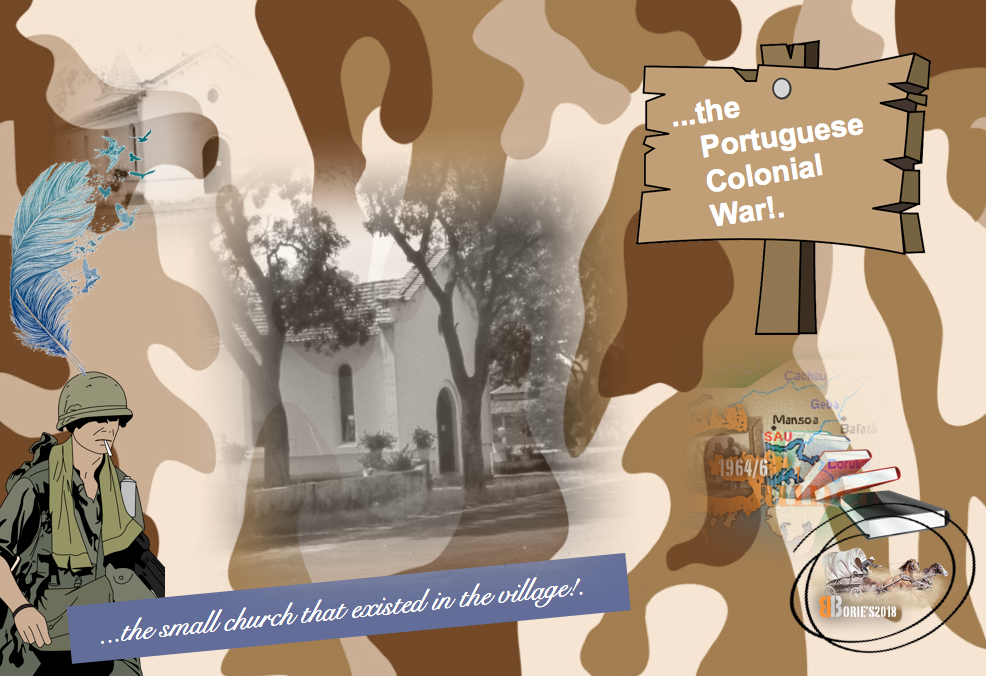
…manhãs, que podiam ser tardes!. (mornings, which could be afternoons)!
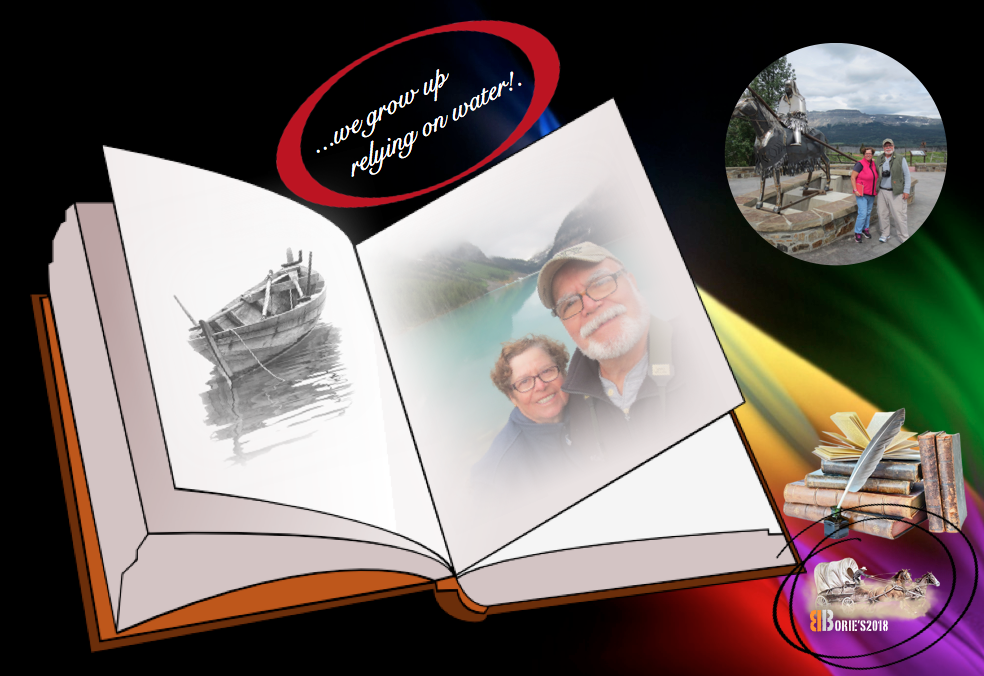
…quando estamos insatisfeitos, gostando em voltar à juventude, devemos pensar em álgebra, pensar em números, quanto maior for o número, mais difícil é conseguir trabalhá-lo!. Vemos como é difícil conseguir-se obter um qualquer resultado de um conjunto de números volumoso e…
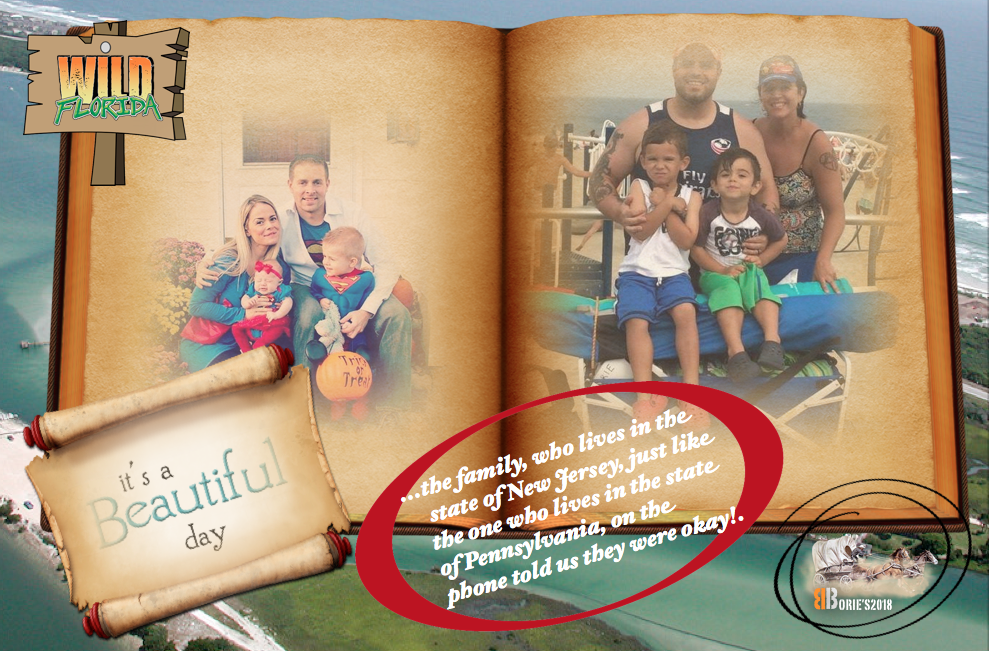
…nós conseguimos!

…temos um grande número em anos, no entanto a vida não é medida pelo número de respirações que tiramos, mas pelos momentos que nos tiram a respiração!.

…compreenderam?. Creio que não, creio que sim, creio que talvez sim, talvez não, no entanto isto são desabafos mas, lembrem-se que quando está frio lá fora, as nossas memórias aquecem-nos!.

(When we are dissatisfied, enjoying returning to youth, we must think of algebra, think of numbers, the greater the number, the harder it is to be able to work it, we see how difficult it is to get any result from a set of massive numbers and…

…we have!

…we have a large number in years, however life is not measured by the number of breaths we take, but by the moments that take our breath away!

Understood? I think not, I think so, I believe that maybe yes, maybe not, but this is not a surprise, but remember that when it’s cold outside, our memories warm us)!.

…ontem, o nosso dia valeu mais a pena, foi um lindo dia, começamos com uma boa mentalidade, acordámos pensando no previlégio de simplesmente estarmos vivos e com alguma saúde, criando alguma energia positiva, pois o tempo de vida é tempo que se deve apreciar em todo o seu explendor, em cada segundo, em cada minuto e, felizmente foi o que nos aconteceu ontem!. (yesterday, our day was worth more, it was a beautiful day, we started with a good mentality, we remembered thinking about the privilege of simply being alive and with some health, creating some positive energy, because the time of life is time that must be appreciated in all your explendor, every second, every minute, and fortunately it was what happened to us yesterday)!.

…pela manhã, fomos caminhar no canal, estava com bastante tráfico, além de navegarem barcos, as pessoas divertiam-se!. (in the morning, we were walking on the canal, it was with a lot of traffic, besides sailing boats, people had fun)!.

…os aligatores estavam cá fora, apanhando sol!. (the alligators were out here, catching the sun)!.

…as cobras atravessaram o caminho, parando, transmitindo-nos a mensagem que nesta idade, se queremos ir longe, devemos ir devagar, no entanto, aquela área continua a ser sua, é o seu território!. (the snakes crossed the path, stopping, transmitting us the message that at this age, if we want to go far, we must go slowly, however that area is still yours, it’s your territory)!.

…as garças azul cinzentas, pescavam na beira do canal!. (the gray blue herons, they fished at the edge of the canal)!

…as águias de colarinho branco, estavam lá na sua árvore preferida, alta, para poderem controlar toda a zona!. (the white-collared eagles were there in their favorite tree, tall, to be able to control the whole area)!.

…regressados a casa, esperamos a visita dos amigos de muitos e muitos anos, a Natércia e o Jorge, que vivendo sazonalmente na área do Golfo, sempre que regressam ao norte, por aqui passam, orgulhando-nos com a sua amável companhia, onde passamos o resto do dia, fazendo um roteiro por alguns pontos da nossa cidade, onde se incluía um restaurante local, que nos fez passar algumas horas maravilhosas!. (returned home, we look forward to the visit of friends of many, many years, Natércia and Jorge, who live in the Gulf area seasonally, whenever they return to the north, they come here, taking pride in their kind company , where we spent the rest of the day, doing a script for some points of our city, which included a local restaurant, which made us spend some wonderful hours)!.

…a família, que vive no estado de Nova Jersey, tal como a que vive no estado de Pennsylvania, pelo telefone diziam-nos que se encontravam bem!. (the family, who lives in the state of New Jersey, just like the one who lives in the state of Pennsylvania, on the phone told us they were okay)!.

…os amigos de longos anos, nossos vizinhos aqui, a Mariana e o Manny, que foram passar as festas de Páscoa com a sua família ao estado de New Jersey, telefonaram, dizendo que chegaram bem!. (our long-time friends, our neighbors here, Mariana and Manny, who went to spend the Easter holidays with their family in the state of New Jersey, phoned, saying they arrived well)!.

…já para o final do dia, também nos visitou o amigo e companheiro de trabalho de longos anos, nosso vizinho, o “Silvita”, que é assim que carinhosamento o tratamos, porque o seu verdadeiro nome é Américo Silva, que também por aqui vive com a sua adorada esposa Celina, que nos diliciou com as suas histórias do Brazil, onde também foi emigrante, contando pura “Aguarela Brazileira”, onde metia, Birosca, Boteco, Açougue, shôpo, farofa, rabada, mocotó, farinha de mandioca, couve mineira e linguíça!. (already towards the end of the day, our friend and long-time companion, our neighbor, the “Silvita”, who is how we treat him so, came to visit us because his real name is Américo Silva, who also he lives here with his beloved wife Celina, who gave us his stories of Brazil, where he was also an immigrant, counting the pure “Brazilian Watercolor”, where he put, Birosca, Boteco, Butcher, shôpo, farofa, oxtail, cassava, cabbage and linguine)!.

…um destes dias vamos contar a odisseia do Américo, que em jovem, quase criança, acompanhando os seus pais, emigrou de Portugal, lá na Europa, para o Brazil desconhecido, onde alguns anos depois, os seus pais querendo regressar à Europa, ele, o Américo, ainda um jovem, assumiu a responsabilidade pelas suas irmãs, algumas ainda crianças, que ficaram a viver no Brazil, fazendo a partir daí, de irmão mais velho, pai e mãe, onde as suas irmãs viam nele, o conforto, o carinho ou a protecção que os verdadeiros pais devem dar!. No Brazil conheceu a sua adorável esposa Celina, que lhe deu dois lindos filhos e, como lutador, procurando um melhor futuro para si e sua família, emigrou de novo, desta vez para os USA, já lá vão quase cinquenta anos mas, continua com sotaque de voz do país Brazil, tal foram as recordações, com que este país o marcou!.
(one of these days we will tell the odyssey of Americo, who as a young man, almost a child, accompanying his parents, emigrated from Portugal, in Europe, to unknown Brazil, where a few years later, his parents wanted to return to Europe, he, Americo, still a young man, took responsibility for his sisters, some still children, who lived in Brazil, making from there, from elder brother, father and mother, where his sisters saw in him, the comfort, affection, or protection that true parents must give! In Brazil he met the his lovely wife Celina, who gave him two beautiful children and, as a fighter, looking for a better future for himself and his family, he emigrated again, this time to the USA, already gone almost fifty years, but it continues with a voice accent from the country Brazil, such were the memories, with that this country has marked it)!.

…foi um dia maravilhoso!. (it was a wonderful day)!.

Tony Borie, March 2018.