


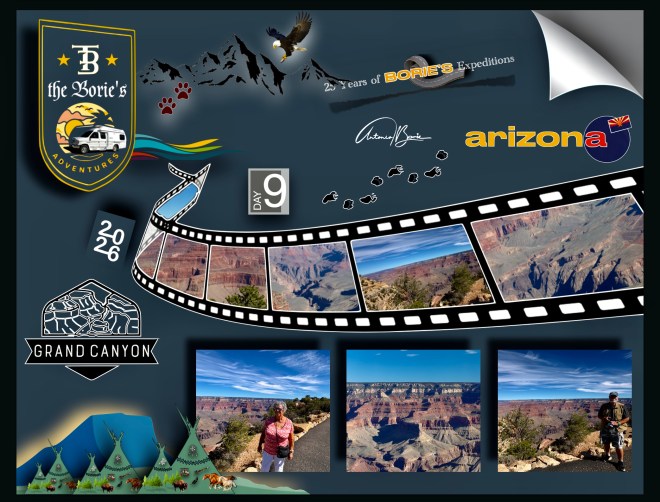
…estávamos no Parque Nacional de Grand Canyon, que é considerado uma das sete maravilhas naturais do mundo, não se limitando unicamente à sua geologia, pois o parque contém vários ecossistemas importantes, continuando a ser um marco que atrai milhões de visitantes todos os anos, onde as rochas lá encontradas remontam a aproximadamente dois bilhões de anos e, a sua área de terra abriga cerca de 70 espécies diferentes de animais!.
…we were in Grand Canyon National Park, which is considered one of the seven natural wonders of the world, not limited to its geology alone, as the park contains several important ecosystems, continuing to be a landmark that attracts millions of visitors every year, where the rocks there found date back approximately two billion years and its land area is home to about 70 different species of animals!.
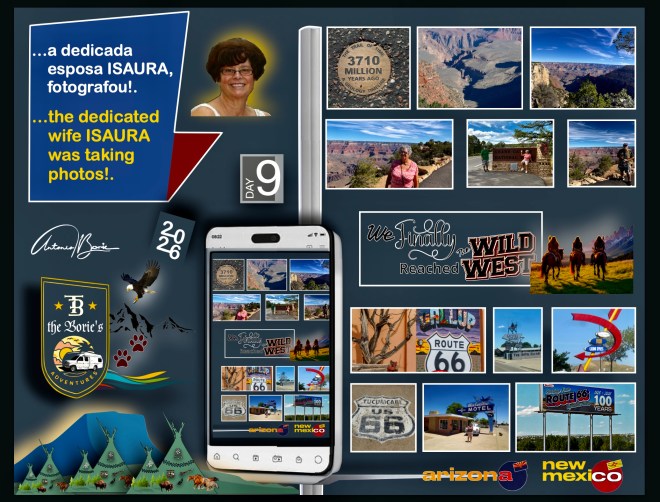
…o primeiro estrangeiro a visitar o Grand Canyon foi o espanhol Garcia Lopez de Cardenas no ano de 1540, porém a primeira expedição científica ao desfiladeiro foi dirigida pelo Major John Wesley Powell, no final da década de 1870 e referiu-se às rochas sedimentares expostas no desfiladeiro como “páginas de um belo livro de histórias”!.
…the first foreigner to visit the Grand Canyon was the Spanish Garcia Lopez de Cardenas in 1540, but the first scientific expedition to the gorge was directed by Major John Wesley Powell, in the late 1870s and referred to the rocks sediments exposed in the gorge as “pages of a beautiful storybook”!.
…no entanto, a área era já ocupada por Nativos Americanos que estabeleciam povoados ao longo do desfiladeiro, como os “Hualapai” ou os “Hopi”, por milhares de anos, havendo indícios de que a área devia ter sido continuamente habitada por esses nativos americanos, que construíram assentamentos dentro do Canyon e suas muitas cavernas, considerando o Grand Canyon um local sagrado e faziam peregrinações a ele!.
…however, the area was already occupied by Native Americans who established settlements along the gorge, such as the “Hualapai” or “Hopi”, for thousands of years, with indications that the area must have been continuously inhabited by these Native Americans, who built settlements inside the Canyon and its many caves, considering the Grand Canyon to be a sacred site and making pilgrimages to it!.
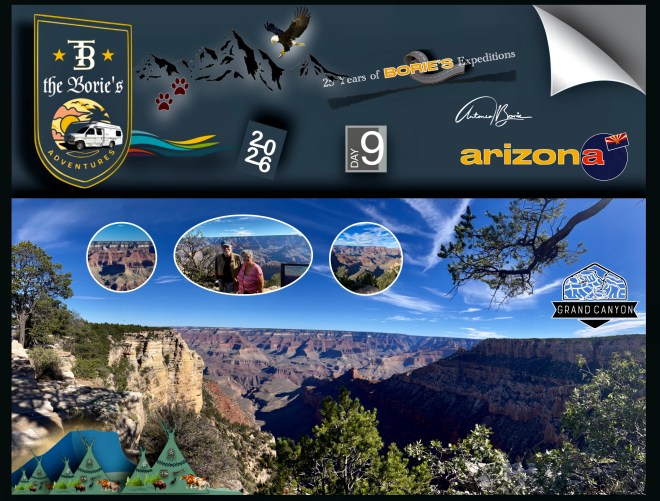
…nós, sentados na beira do Grand Canyon, podemos admirar um imenso vale do rio Colorado e seus afluentes, que embora não seja o desfiladeiro mais profundo do mundo, é conhecido pelo seu tamanho visualmente impressionante de uma paisagem complexa e colorida!. Geologicamente, é significativo por causa da espessa sequência de rochas antigas que são bem preservadas e expostas nas paredes deste Canyon, onde as camadas rochosas registram grande parte da história geológica inicial do continente norte-americano!.
...we, sitting on the edge of the Grand Canyon, can admire an immense river valley, Colorado and its tributaries, which, although not the deepest gorge in the world, is known for its visually impressive size of a complex and colorful landscape! . Geologically, it is significant because of the thick sequence of ancient rocks that are well preserved and exposed on the walls of this Canyon, where the rock layers record much of the early geological history of the North American continent!.
…a sua elevação associada à formação de montanhas, posteriormente moveu esses sedimentos milhares de pés para cima, e criou o planalto do Colorado!. A elevação mais alta também resultou em maior precipitação na área de drenagem do rio Colorado, mas não o suficiente para mudar a área do Grand Canyon de continuar a ser semi-árida!.
…its elevation associated with the formation of mountains, later moved these sediments thousands of feet upwards, and created the Colorado plateau!. The higher elevation also resulted in more precipitation in the Colorado River drainage area, but not enough to change the Grand Canyon area from continuing to be semi-arid!.
…se percorrermos o trajecto da trilha que segue na sua borda, estamos mais ou menos, em alguns lugares, a uma milha acima do rio Colorado, num local maravilhoso, onde entre outros cenários de tirar a respiração, se podem tirar lindas fotos, admirando um cenário que foi resistindo aos ciclos de tempo, onde à cerca de 200 milhões de anos atrás, a areia que fazia parte do maior sistema de areia e dunas do continente norte-americano, que talvez fossem “mares de areia” que eventualmente se foram endurecendo pela água e minerais no Navajo Sandstone, numa uniforme e incrível camada lisa de arenito, que se estendia do Arizona para Wyoming, e ainda hoje pode ter mais de dois mil pés de expessura em alguns lugares!.
…if we follow the path of the trail that follows on its edge, we are more or less, in some places, a mile above the Colorado River, in a wonderful place, where among other breathtaking sceneries, beautiful photos can be taken , admiring a scenario that was resisting the cycles of time, where about 200 million years ago, the sand that was part of the largest system of sand and dunes in the North American continent, that maybe were “seas of sand” that eventually they were hardened by the water and minerals in the Navajo Sandstone, in a uniform and incredible smooth layer of sandstone, which extended from Arizona to Wyoming, and even today it can be more than two thousand feet thick in some places!.
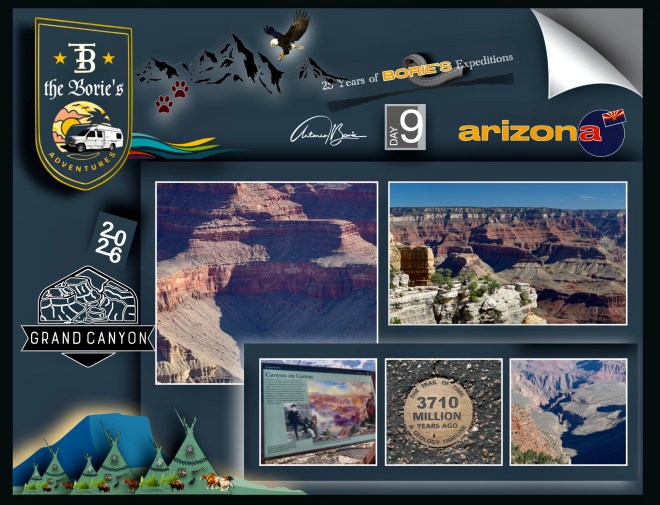
…se nos retirarmos um pouco da trilha e olharmos para o fundo deste imenso desfiladeiro, estamos a olhar para uma profundidade que como acima referimos, em alguns lugares ultrapassa uma milha, pois depois de Arenito Navajo endurecido, outras camadas diferentes de sedimentares se foram empilhadando, e claro, ao longo de alguns milhões de anos, a paciente água sob a forma de chuva, gelo, inundações e córregos, foi trabalhando, corroendo essas diferentes camadas de Arenito Navajo, onde a areia foi lentamente desaparecendo, surgindo um cenário a que hoje chamam Grand Canyon!.
...if we withdraw a little from the trail and look at the bottom of this immense gorge, we are looking at a depth that as mentioned above, in some places exceeds a mile, because after hardened Navajo sandstone, other different layers of sedimentary they were piled up, and of course, over a few million years, the patient water in the form of rain, ice, floods and streams, was working, eroding these different layers of Navajo Sandstone, where the sand was slowly disappearing, creating a scenario what today they call the Grand Canyon!.
…este maravilhoso desfiladeiro e a borda adjacente estão contidos no Parque Nacional do Grand Canyon, na Floresta Nacional Kaibab, no Monumento Nacional Parashant do Grand Canyon, na Reserva Indígena Hualapai, na Reserva Indígena Havasupai e na Navajo, sendo considerado um dos melhores exemplos de erosão das terras áridas, esculpido pelo rio Colorado!. Enfim, caminhando por aqui, admiramos um cenário que foi resistindo aos ciclos de tempo, desde à cerca de 200 milhões de anos atrás.
...this wonderful gorge and the adjacent rim are contained in the Grand Canyon National Park, in the Kaibab National Forest, in the Grand Canyon Parashant National Monument, in the Hualapai Indigenous Reserve, in the Havasupai Indigenous Reserve and in Navajo, being considered one of the best examples of erosion of arid lands, sculpted by the Colorado River!. In short, walking around here, we admire a landscape that has withstood the cycles of time, since about 200 million years ago!.
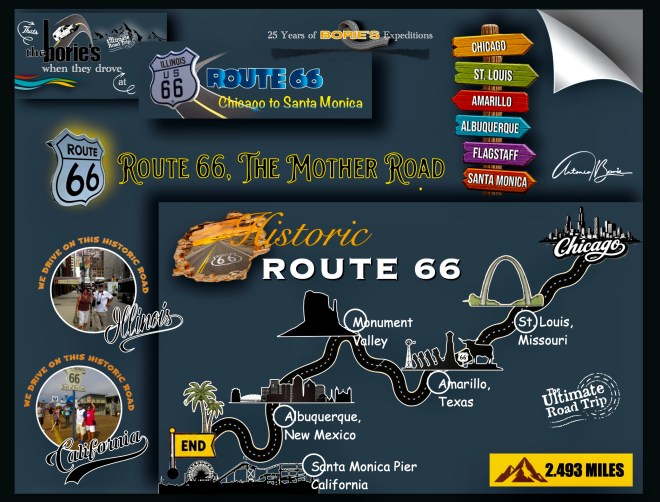
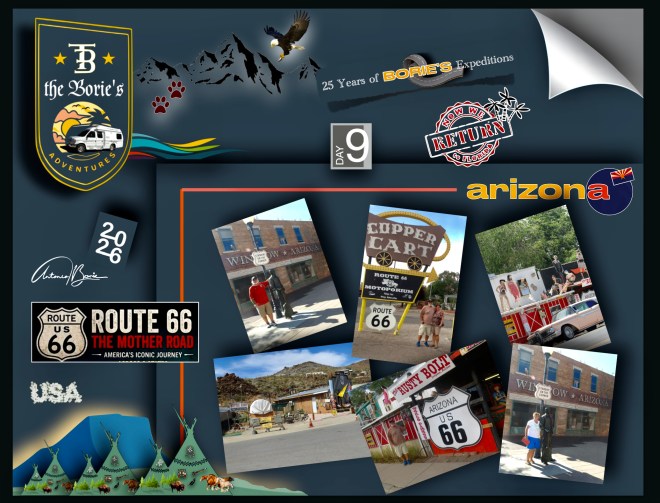
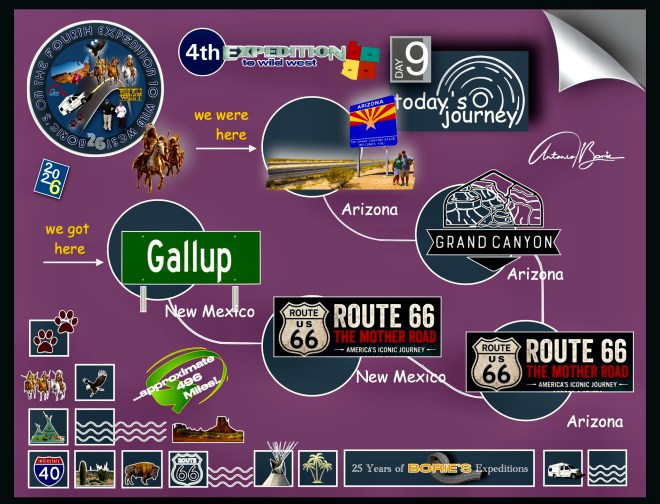
…deixando este maravilhoso parque, seguimos em direção ao sul e…, entre nós e a dedicada esposa Isaura surgiu um dilema!. Qual a melhor solução?. Ir para sul, junto à fronteira com o Mexico ou seguir para leste rumo à Florida e seguir a rota da hoje lendária “Route 66”, trajecto este que já por diversas vezes concluímos?. Solução: seguir para leste rumo à Florida!.
…leaving this wonderful park, we headed south and… a dilemma arose between us and my devoted wife Isaura! What was the best solution? To go south, along the border with Mexico, or to head east towards Florida and follow the route of the now legendary “Route 66,” a route we have completed several times before? Solution: head east towards Florida!
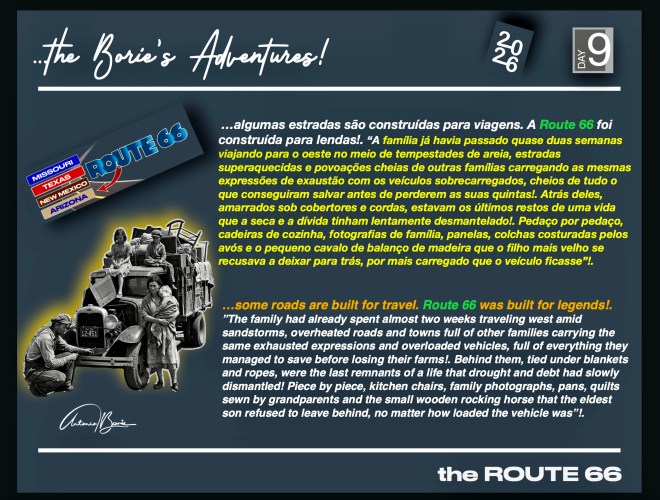
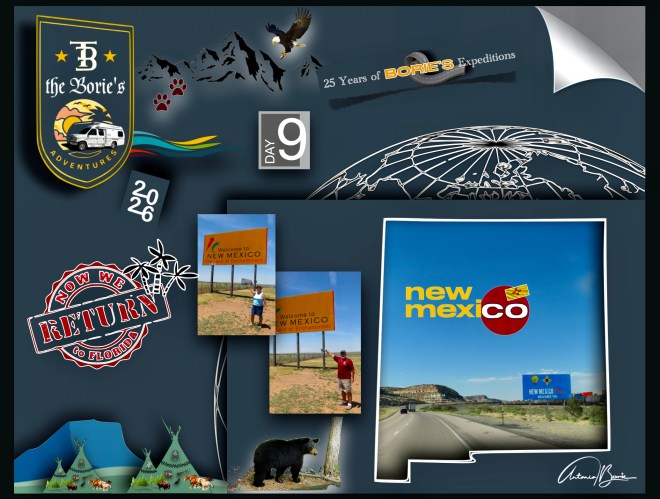
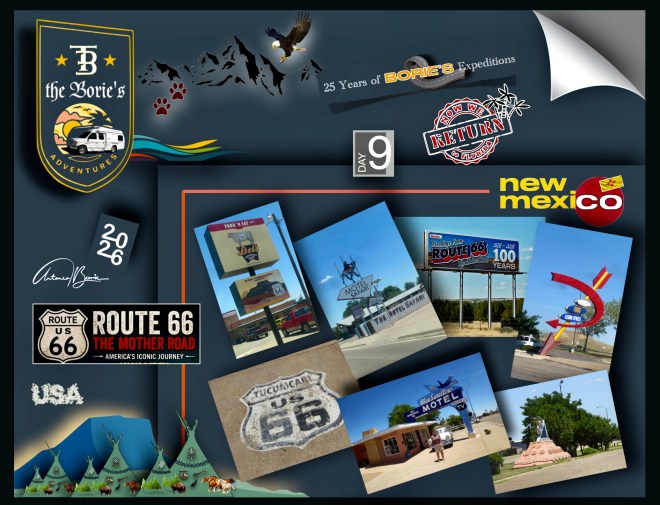
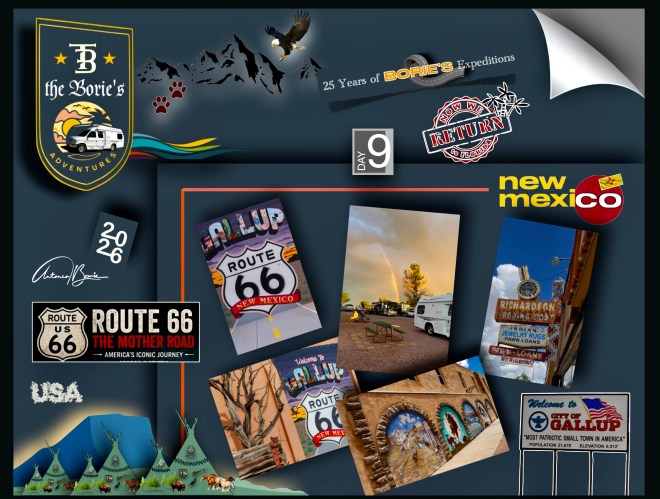
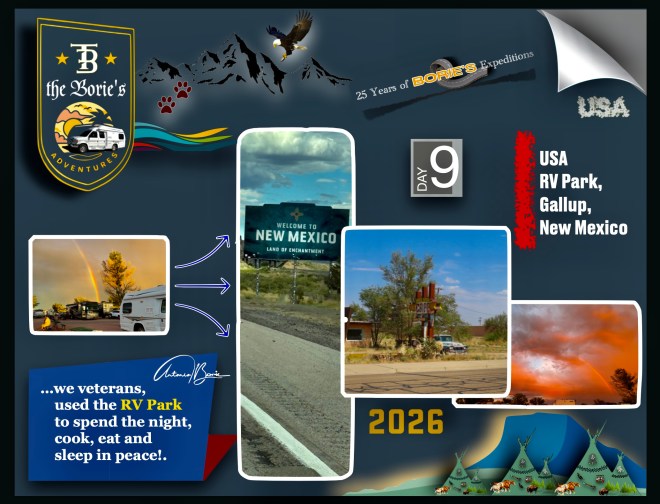
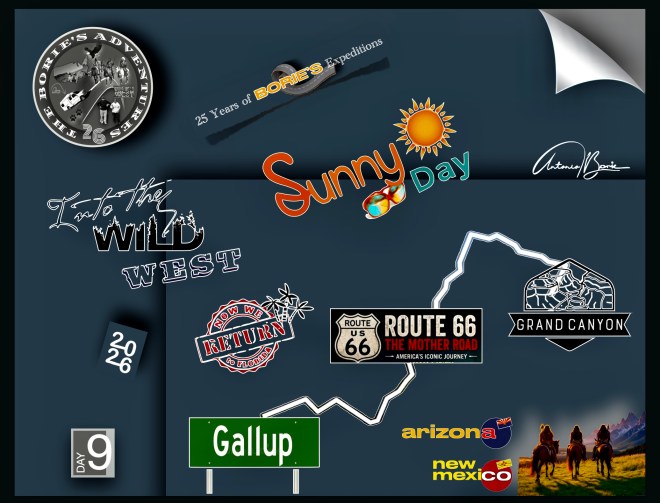
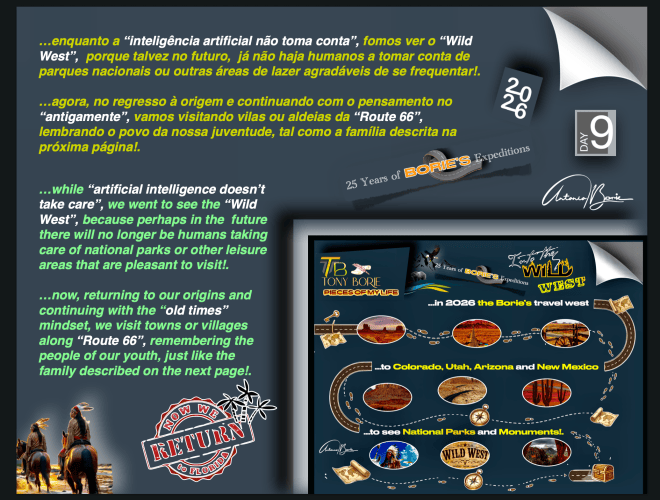
…como tal, enquanto a “inteligência artificial não toma conta”, porque talvez no futuro já não haja humanos a tomar conta de parques nacionais ou outras áreas de lazer agradáveis de se frequentar…, ei-nos viajando para leste, desviando-nos aqui e ali da estrada rápida #40 e visitando pequenos troços da já referida lendária “Route 66”, pernoitando na cidade de Gallup, New Mexico, num park de RV, designado com o nome de “Route 66”!.
…so, while “artificial intelligence doesn’t take over,” because perhaps in the future there will no longer be humans taking care of national parks or other pleasant recreational areas… here we are traveling east, deviating here and there from highway #40 and visiting small stretches of the aforementioned legendary “Route 66,” spending the night in the city of Gallup, New Mexico, in an RV park named “Route 66”!.
Tony Borie.

