…”Quarta Expedição ao Wild West”!. (Dia 10) …”Fourth Expedition to the Wild West”!. (Day 10)

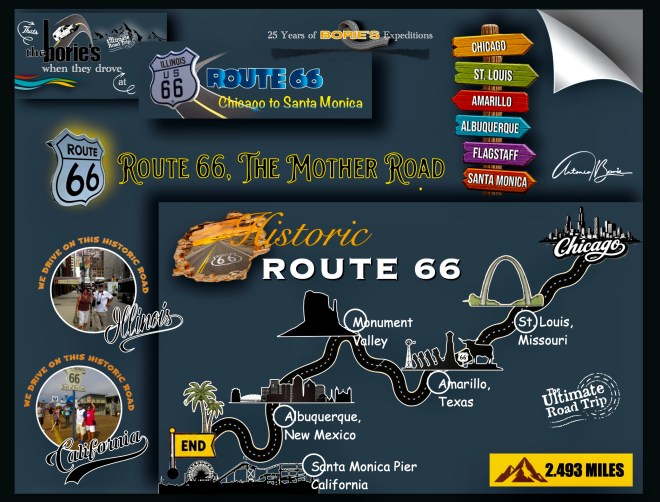
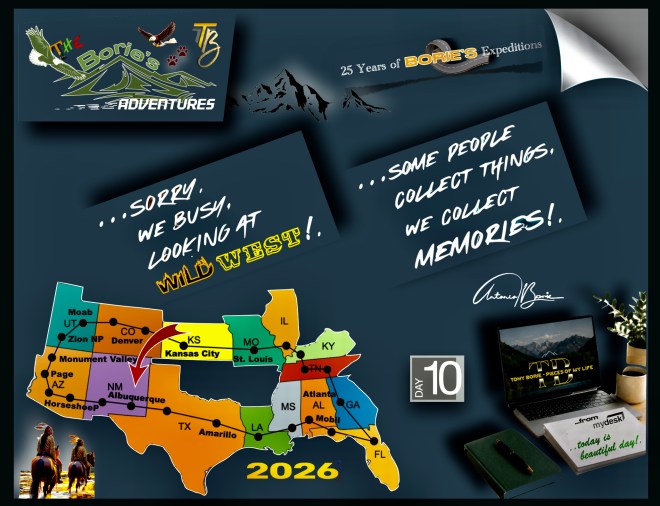
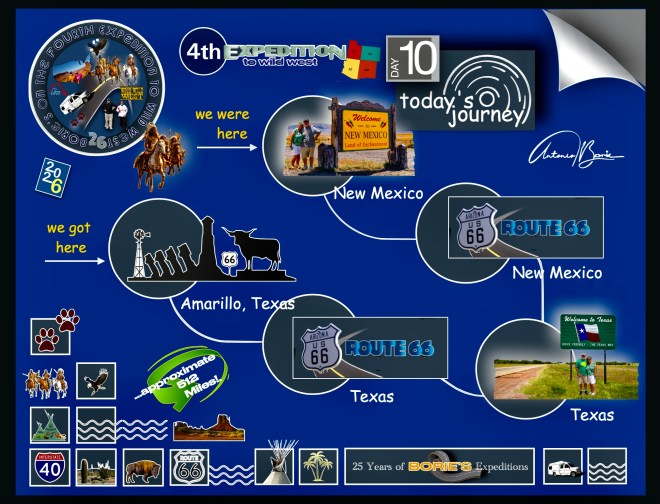
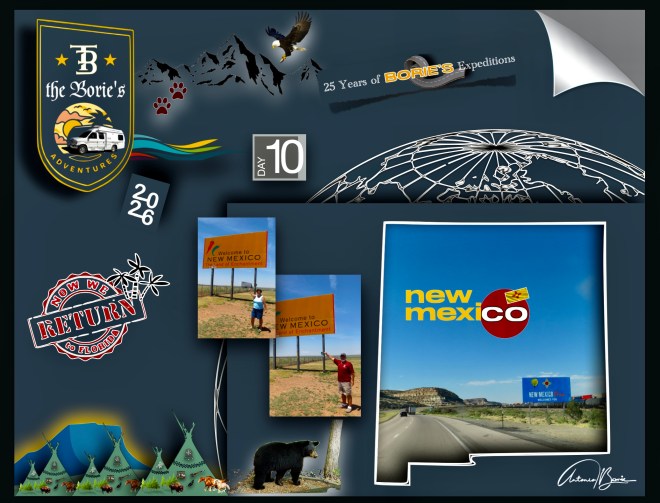
…viajávamos pela estrada rápida Interstate 40 que, tal como em anteriores viagens, seguindo na direcção leste, numa rota através da qual, também podemos acompanhar a hoje histórica e lendária “Route 66”, onde grandes porções desta estrada, seguem paralelas à já acima mencionada estrada Interstate 40, com alguns letreiros de saídas para as “Vias dos Trilhos Antigos”, ou seja, para uma qualquer das vias cénicas da histórica e lendária “Route 66”, que ao passar pelas pequenas vilas ou aldeias, não são mais do que estradas de fachada!.

…we were traveling along the fast highway Interstate 40 which, as in previous trips, heading east, on a route through which we can also follow the now historic and legendary “Route 66”, where large portions of this road run parallel to the aforementioned Interstate 40 road, with some exit signs for the “Ancient Trails”, that is, for any of the scenic routes of the historic and legendary “Route 66”, which, when passing through the small Towns or villages are nothing more than frontage roads!
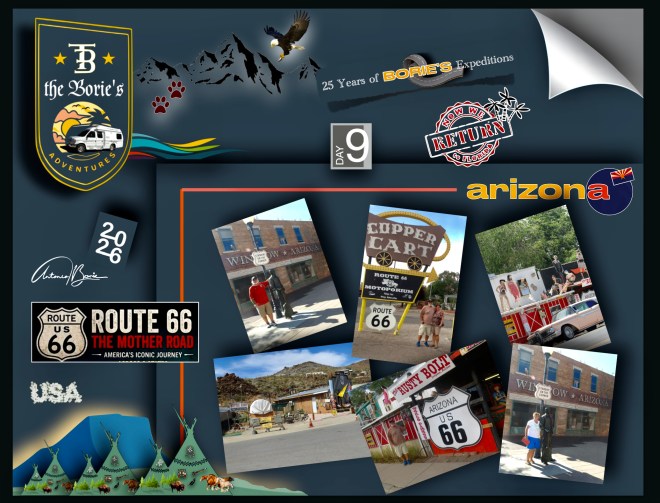
…e seguíamos, parando aqui e ali, apreciando pequenos trechos da cultura popular onde adoptaram as tais secções ignoradas e significativas da antiga “Route 66” nas suas redes de estradas estaduais, com o pomposo nome de “State Route 66” que para nós, incorporam a cultura da aventura, mostrando-nos o cenário dos espaços abertos oferecidos pelo oeste americano, numa rota que serpenteia através das partes mais românticas e célebres desse mesmo oeste, conectando as pequenas vilas e aldeias do centro/oeste com as da Costa do Oceano Pacífico!.

…here and there we would stop, enjoying small snippets of popular culture where they adopted such ignored and significant sections of the old “Route 66” in their state road networks, with the pompous name of “State Route 66” that for us, embody the culture from the adventure, showing us the scenery of the open spaces offered by the American West, on a route that meanders through the most romantic and famous parts of that same West, connecting the small towns and villages of the Midwest with those of the Pacific Ocean Coast!.
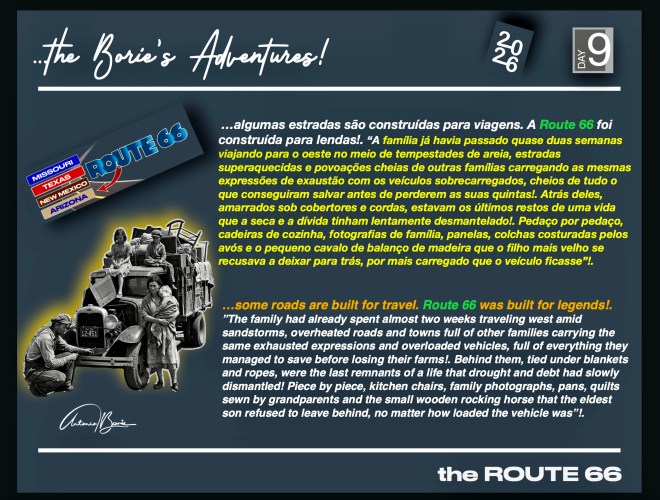
…e que em outra época deu esperança aos migrantes que iam a caminho do oeste, para encontrar uma nova vida, definindo uma geração em busca de aventura e liberdade, e nós por ali seguíamos, ouvindo música na rádio da nossa “White Fox” (caravana), bebendo café, comendo biscoitos ou fruta, lembrando aquela família que nos anos trinta do século passado, para se prepararem para a sua viagem até à Califórnia, meteram tudo da sua quinta num calhambeque de 50 dólares, matando os seus dois últimos porcos para fazer um barril de carne de porco salgada, para alimentar as 14 pessoas a bordo do seu calhambeque!.

…and that at one time gave hope to migrants heading west, to find a new life, defining a generation in search of adventure and freedom, and we followed there, listening to music on the radio of our “White Fox” (caravan), drinking coffee, eating cookies or fruit, remembering that family that in the thirties of the last century, to prepare for their trip to California, put everything from their farm in a 50 dollar jalopy, killing their last two pigs to make a barrel of salted pork, to feed the 14 people aboard your jalopy!.
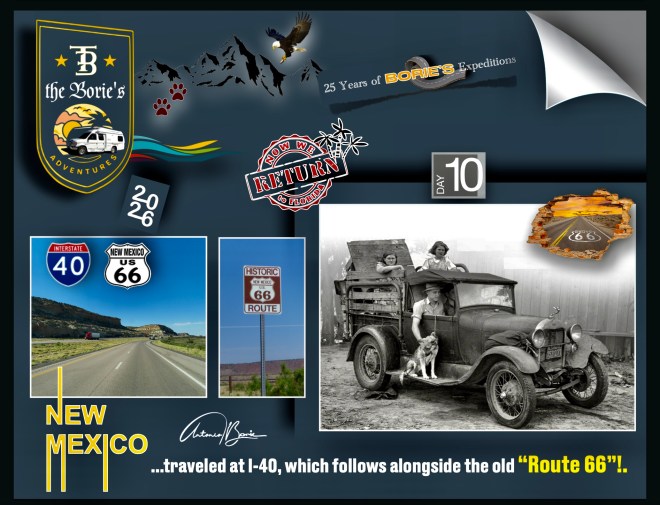
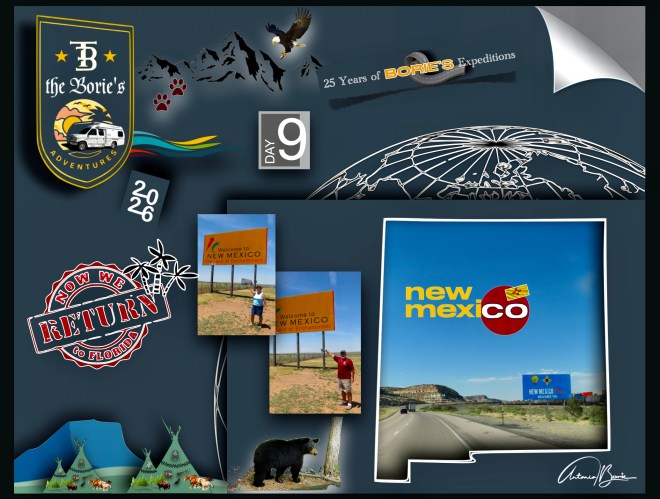
…a estrada Interstate 40, que segue numa extensão de estrada aberta de aproximadamente de 280 milhas de solidão e bastante desolada, entre Albuquerque, Novo México, e Amarillo, Texas, onde além de paragens para camiões onde ocasionalmente existe algumas lojas de conveniência para viajantes, não há muito para ver ou fazer, claro, tirando o maravilhoso cenário de algumas povoações onde tínhamos acesso à já referida histórica “Route 66”, hoje um ícone da América, uma multiplicidade de ideias tais como, a liberdade, o velho oeste ou a solidão do interior americano!.

…the Interstate 40, which follows an open road stretch of approximately 280 miles of solitude and quite desolate, between Albuquerque, New Mexico, and Amarillo, Texas, where in addition to truck stops where occasionally there are some shops convenience for travelers, there is not much to see or do, of course, apart from the wonderful scenery of some villages where we had access to the aforementioned historic “Route 66”, today an icon of America, a multiplicity of ideas such as freedom, the old west or the loneliness of the American countryside!.
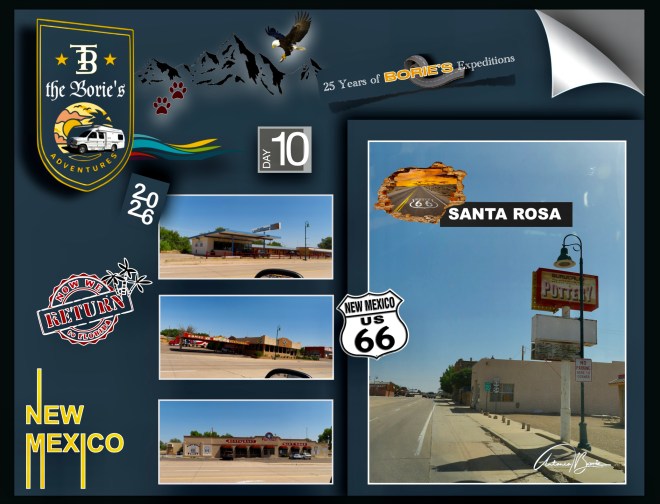
…e continuando passámos na cidade de Santa Rosa, que ainda hoje continua um ícone mundialmente famoso da “Route 66” daquela época, como por exemplo o rosto sorridente e satisfeito do Fat Man (homem gordo), que era quem atraía os visitantes do Club Café, conhecido pela sua comida caseira, biscoitos azedos e tortilhas mexicanas de milho azul, e claro, pelo seu Museu com uma grande colecção de carros antigos, camiões, brinquedos, bombas de gasolina e recordações, todos reunidos para celebrar e recordar os dias de glória daquela histórica estrada!.

…and continuing on, we passed the city of Santa Rosa, which still today remains a world famous icon of “Route 66” of that time, such as the smiling and satisfied face of the Fat Man, who was the one who attracted visitors to the Club Café, known for its homemade food, sour cookies and Mexican blue corn tortillas, and of course, for its Museum with a great collection of vintage cars, trucks, toys, gas pumps and souvenirs, all gathered to celebrate and remember the days of glory of that historic road!.
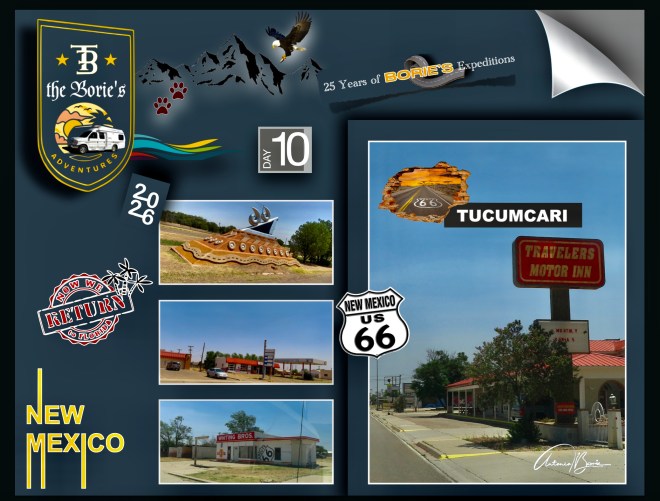
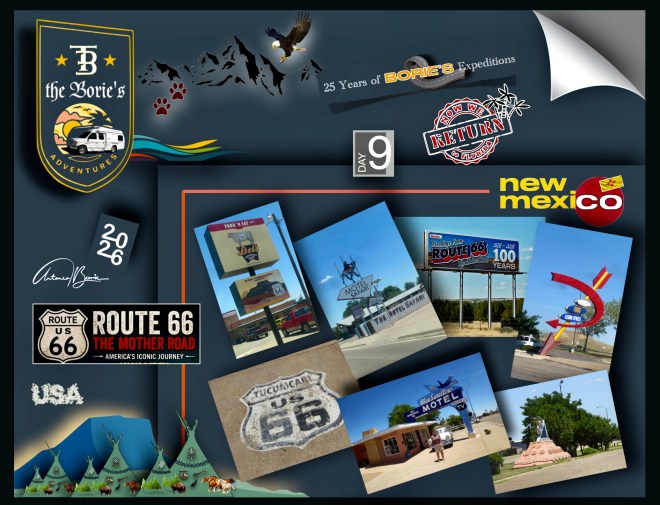
…também parámos na cidade de Tucumcari, onde o tempo quase parece que se esqueceu, crendo nós mesmo que é este um dos motivos que se destaca porque é o quão lindamente desolada é!. A maior parte da sua área circundante ainda hoje funciona como um centro dos fazendeiros rurais do Novo México, oferecendo um hospital, algumas lojas de conveniência, pequenos restaurantes e outras necessidades para a civilização!.

…we also stopped in the city of Tucumcari, where time almost seems to have forgotten, we believe that this is one of the reasons that stands out because it is how beautifully desolate it is!. Most of its surrounding area still functions today as a center for rural New Mexico farmers, offering a hospital, a few convenience stores, small restaurants, and other necessities for civilization!.

…muitos anos atrás, Tucumcari tem uma história única e fascinante, repleta de contos de índios Comanches e, mais tarde quando ali construiram um campo de construção para o Chicago, Rock Island e Pacifico Railroad, que logo foi apelidado de “Six Shooter Siding” (tapada dos seis atiradores), devido a inúmeros tiroteios, pois contam a existência de famosos ladrões de comboios e trabalhadores da construção do caminho de ferro que eram muito propensos em puxar por pistolas uns contra os outros!.

…many years ago, Tucumcari has a unique and fascinating history, filled with tales of the Comanche Indians and, later, when they built a construction field there for the Chicago, Rock Island and Pacifico Railroad, which was soon dubbed the “Six Shooter”, due to numerous shootings, as they tell of the existence of famous train robbers and railway construction workers who were very prone to pulling pistols against each other!.

…nós, atravessámos um trecho de estrada meio próspero e meio abandonado, que nos conta parte da história da cidade, os seus dias de negócios, os seus dias de declínio ou os seus dias de avivamento!.

…we crossed a half-prosperous and half-abandoned stretch of road, which tells us part of the city’s history, its business days, its days of decline or its days of revival!.
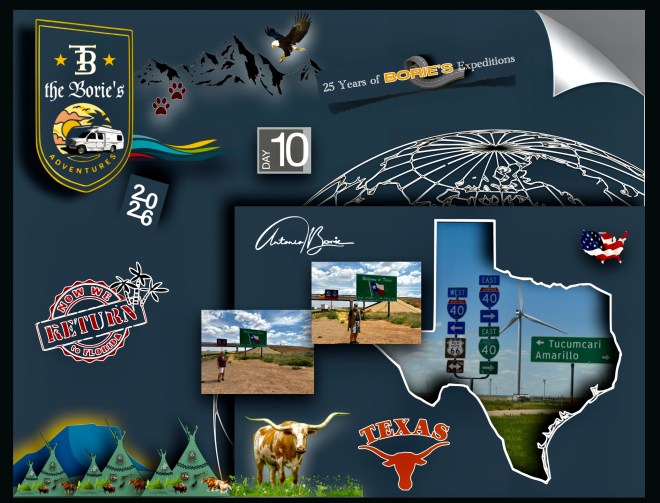
…até que chegámos ao estado do Texas, que ironicamente é o maior dos 48 estados mais baixos e acolheu o segundo alinhamento mais curto da Histórica Estrada 66!. A figura geralmente aceite é que havia 178 milhas desta famosa e histórica estrada velha, através do estreito do “Texas Panhandle”, e disto, cerca de 150 milhas permanecem, se quisermos contar a estrada de terra onde ainda se pode conduzir, porque muito da velha e histórica Route 66 é agora estrada de fachada, mas ainda recompensa conduzir por ela!.

…until we arrived in the state of Texas, which ironically is the largest of the lower 48 states and hosted the second shortest alignment of Historic Highway 66!. The generally accepted figure is that there were 178 miles of this famous and historic old road, through the strait of the “Texas Panhandle”, and of this, about 150 miles remain, if you want to count the dirt road where you can still drive, because much of the Old and historic Route 66 is now a front road, but it is still rewarding to drive!.

…e tal como em outros estados do sul, quando a estrada Interstate 40 foi construída, a maior parte desta histórica estrada foi aprimorada, reduzindo os custos de construção e mantendo as cidades existentes próximas à nova estrada rápida, para minimizar as perdas, principalmente do turismo!. Assim, algumas cidades foram ignoradas, onde se incluem Glenrio, Adrian, Vega, Conway, Noivo, Jericó, Alanreed, McLean e Shamrock, contudo, continuamos a ter acesso as estas cidades, onde existem letreiros assinalando a sua localização!.

…and as in other southern states, when the Interstate 40 was built, most of this historic highway was upgraded, reducing construction costs and keeping existing towns close to the new expressway, to minimize losses, mainly from tourism!. Thus, some cities were ignored, including Glenrio, Adrian, Vega, Conway, Noivo, Jericho, Alanreed, McLean and Shamrock, however, we continue to have access to these cities, where there are signs indicating their location!.
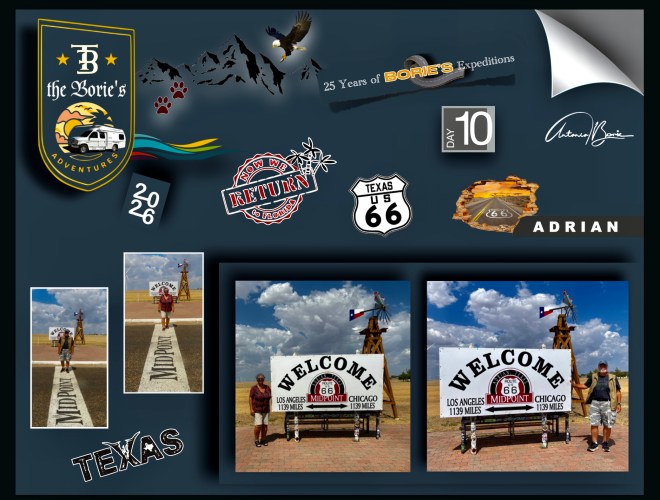
…continuando, chegámos à localidade de Adrian, já no estado do Texas, que entre outras curiosidades assinala geograficamente o ponto médio entre Chicago e Los Angeles, da Histórica Estrada 66!.

…continuing, we arrived at the town of Adrian, in the state of Texas, which, among other curiosities, geographically marks the midpoint between Chicago and Los Angeles, of Historic Route 66!.

…a sinalização na localidade de Adrian, orgulhosamente declara uma distância de 1139 milhas para cada lado, ostentando um slogan de que  “quando você está aqui, você está no meio do caminho”!. Aqui existe um Café, construído por volta do ano de 1928, que operava 24 horas por dia durante o auge da Histórica Estrada 66, sendo considerado hoje, o mais antigo café, operando continuamente entre Amarillo, no estado do Texas e Tucumcari, já no estado de Novo México!.

…the signage in the town of Adrian, proudly declares a distance 1139 miles each way, sporting a slogan that “when you’re here, you’re halfway there!”. There is a Café here, built around 1928, which operated 24 hours a day during the heyday of Historic Highway 66, being considered today, the oldest café, operating continuously between Amarillo, in the state of Texas and Tucumcari, already in the state of New Mexico!.
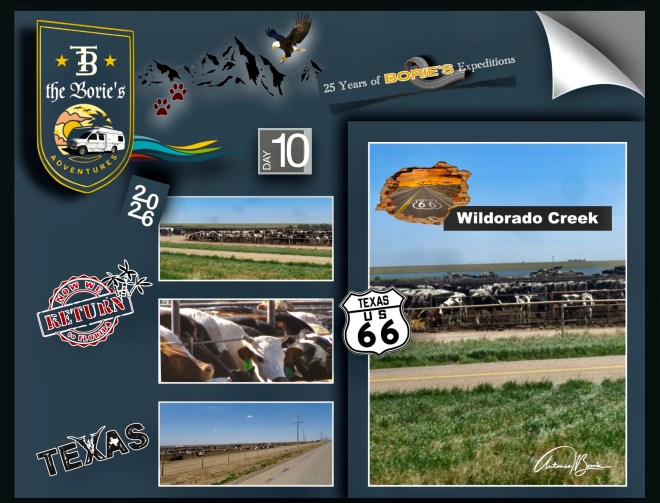
…continuámos a nossa viajem e, próximo de Wildorado Creek, talvez a umas tantas milhas de distância já se notava o cheiro no ar que já nos era conhecido de outras ocasiões que por aqui passámos!. Tivemos que fechar as janelas da nossa “White Fox” (Caravana)!. Era um cheiro mau, muito mau que vinha da maior manada de vacas da nossa vida, que deviam de ser milhares, nunca tínhamos visto tantas vacas juntas!.

…we continued our journey and, near Wildorado Creek, perhaps a few miles away, the smell was already noticeable in the air that was already known to us from other occasions that we passed through!. We had to close the windows of our “White Fox” (Caravan)!. It was a bad, very bad smell that came from the largest herd of cows in our lives, which must have been thousands, we had never seen so many cows together!.

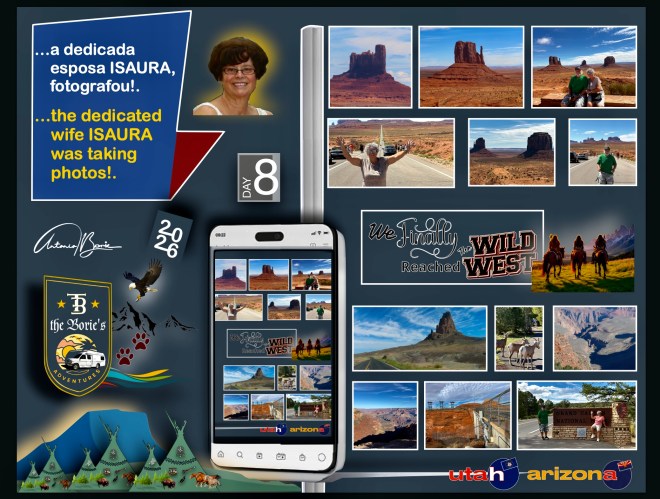
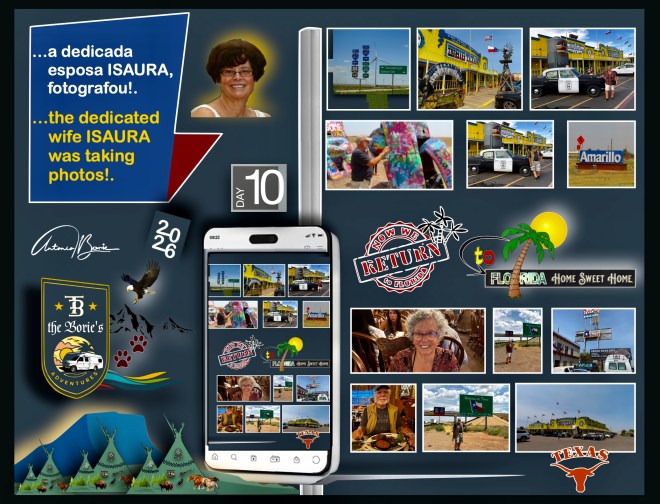
…afrouxámos a velocidade, encostando ao lado da estrada, a nossa dedicada esposa Isaura foi fotografando talvez milhares e milhares de manadas de gado bobino, em currais, talvez esperando o transporte no caminho de ferro ou esperando um possível abate, não sabemos, mas o cenário era incomum para quem vive longe do campo e de extensas áreas de pastagem!.

…we slowed down, pulling over to the side of the road, our devoted wife Isaura was photographing perhaps thousands and thousands of herds of cattle, in corrals, perhaps waiting for transport on the railroad or waiting for a possible slaughter, we don’t know, but the scenario was unusual for those who live far from the countryside and extensive pasture areas!.

…Wildorado Creek, é uma comunidade que foi fundada por volta do ano de 1900 como uma localidade ferroviária ao longo da Chicago, Rock Island e Gulf Railroad e, no final dos anos vinte e trinta, Wildorado Creek foi torturado por tempestades de areia e secas mas, o elemento turbulento de algumas localidades em expansão no “Texas Panhandle”, viu o Wildorado Creek como um alvo fácil e, bancos e lojas eram roubados frequentemente!.

…Wildorado Creek, is a community that was founded around the year 1900 as a railroad town along the Chicago, Rock Island and Gulf Railroad, and in the late twenties and thirties, Wildorado Creek was tortured by sandstorms and droughts, but the turbulent element of some expanding localities in the “Texas Panhandle”, saw Wildorado Creek as an easy target, and banks and stores were often robbed!.
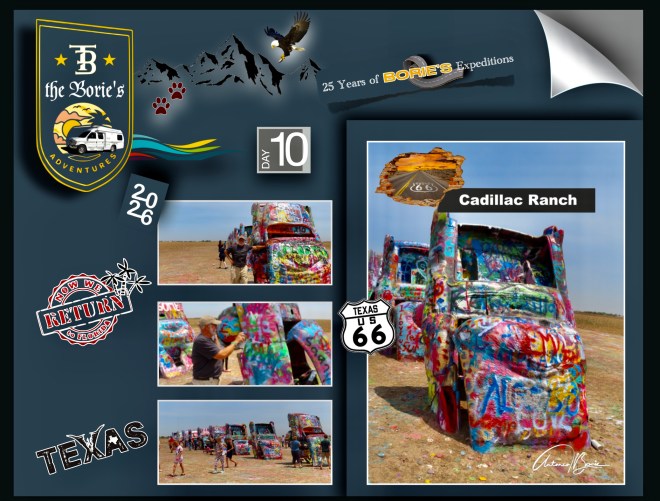
…continuando, já próximo da cidade de Amarillo, parámos de novo na  atracção da “Route 66”, que consiste em dez Cadillacs já usados ​​ou velhos (1949-1963) enterrados de nariz no chão, e que hoje dá pelo nome de “Cadillac Ranch”, considerado de arte pública e escultura, situado ao longo da “Route 66” a oeste de Amarillo, Texas, que foi inventado e construído por um grupo de hippies artísticos importados de São Francisco!.

…continuing, already close to the city of Amarillo, we stopped again at the attraction of “Route 66”, which consists of ten used or old Cadillacs (1949-1963) buried with their noses in the ground, and which today goes by the name of “Cadillac Ranch”, considered public art and sculpture, located along “Route 66” west of Amarillo, Texas, which was invented and built by a group of artistic hippies imported from San Francisco!.

…os Cadillacs estão no chão como arte há mais tempo do que na estrada como carros, que continuam a ser despojados das suas molduras, algumas danificadas e com muitas manchas de tinta de visitantes como nós que continuam a pintá-los com tinta spray, ficando cada vez mais irreconhecíveis como automóveis!. No entanto, o Cadillac Ranch está mais popular do que nunca, tornando-se num local de ritual para aqueles que viajam pela Estrada Mãe!.

…Cadillacs have been on the ground as art longer than they have been on the road as cars, which continue to be stripped of their frames, some damaged and heavily smeared with paint from visitors like us who continue to spray paint them, leaving increasingly unrecognizable as automobiles!. However, Cadillac Ranch is more popular than ever, becoming a ritual site for those traveling the Mother Road!.
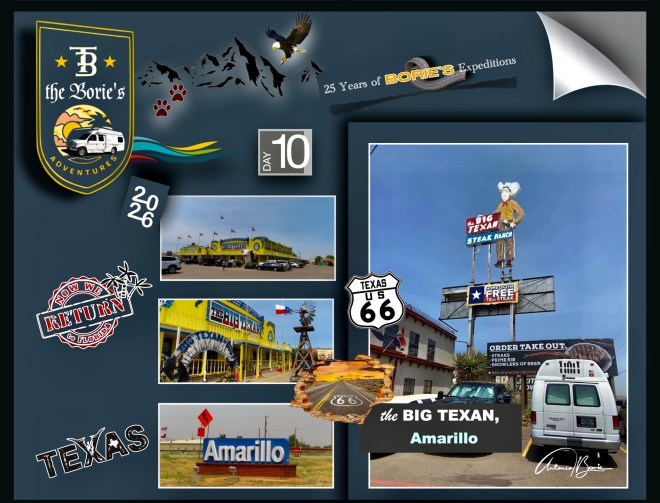
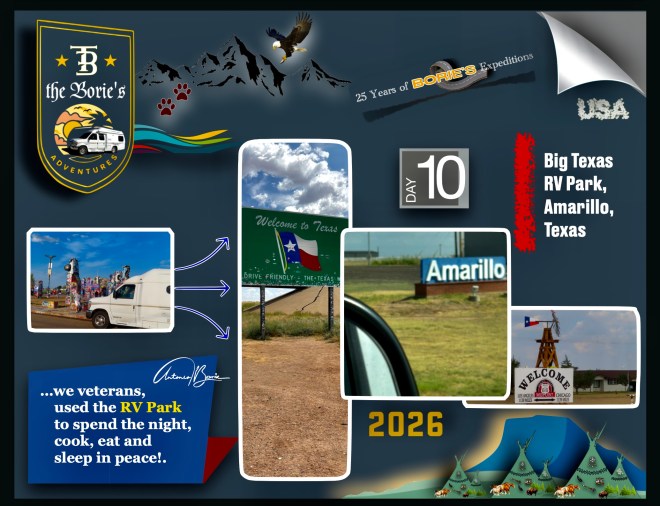
…pernoitámos na cidade de Amarillo, Texas, num excelente Park de RV, que também é propriedade de um dos restaurantes mais populares desta cidade, que proporciona transporte de ida e volta para o restaurante!. Aproveitámos a oportunidade, indo lá comer e, cujo lema é “home of the free 72 onças steak”, que quer mais ou menos dizer que, se alguém conseguir comer um bife de 72 onças, não paga, é de graça!.

…we stayed overnight in the city of Amarillo, Texas, in an excellent RV park, which is also the property of one of the most popular restaurants in this city, which provides round trip to the restaurant!. We took the opportunity, going there to eat and, whose motto is “Home of the Free 72 Steak ounces”, which wants to say that if someone can eat a 72 ounce steak, not paid, it’s free!.
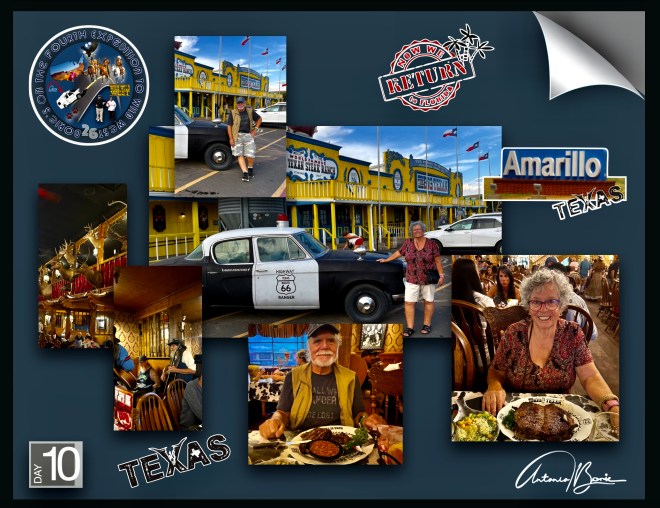
…já é costume parar-mos por aqui, e durante a nossa presença no restaurante, houve quatro candidatos a comer o enorme bife e, tudo foi acompanhado de um personagem parecido com um mestre de cerimónias, que faz um relato quase minucioso de todo este acontecimento, ou seja, do progresso do candidato e como vai comendo o enorme bife, e falando numa voz muito rápida, parecida com a voz de um relator típico do Texas, de um qualquer leilão de vacas ou cavalos, que nós, pessoas visitantes quase não compreendemos nada, mas que foi divertido, lá isso foi!.

…it is usually to stop here, and during our presence at the restaurant, there were four candidates to eat the huge steak, and everything was accompanied by a character like a master of ceremonies, who makes an almost thorough report of all this event, that is, the candidate’s progress and how he eating the huge steak, and speaking in a very fast voice, similar to the voice of a typical Texas rapporteur, any auction of cows or horses. We, visitors we hardly understand anything, but it was fun, there that was!

Tony Borie
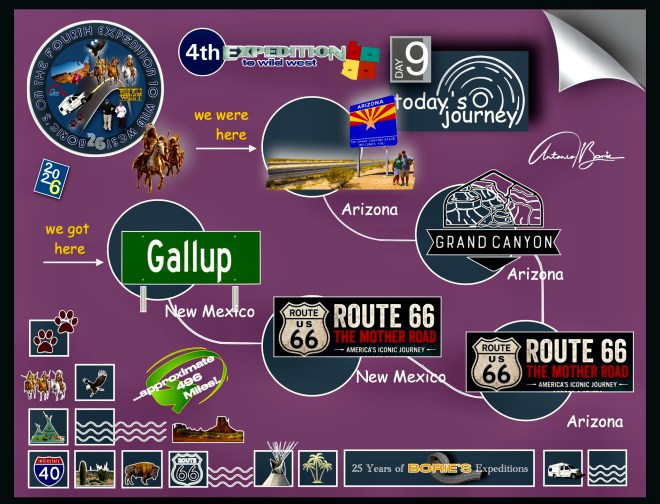
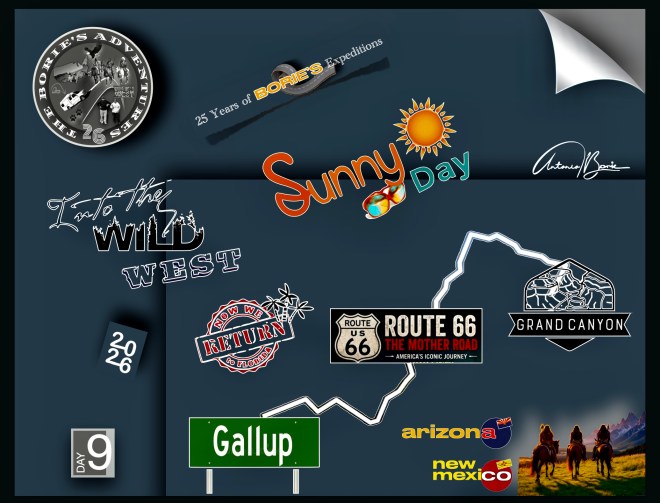
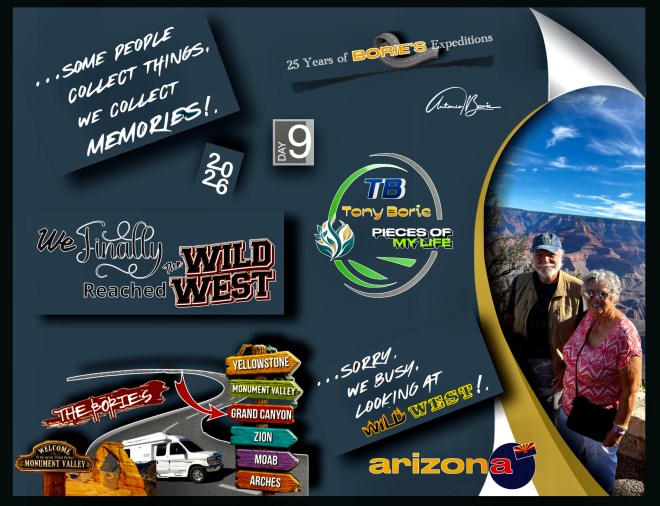
…”Quarta Expedição ao Wild West”!. (Dia 9) …”Fourth Expedition to the Wild West”!. (Day 9)

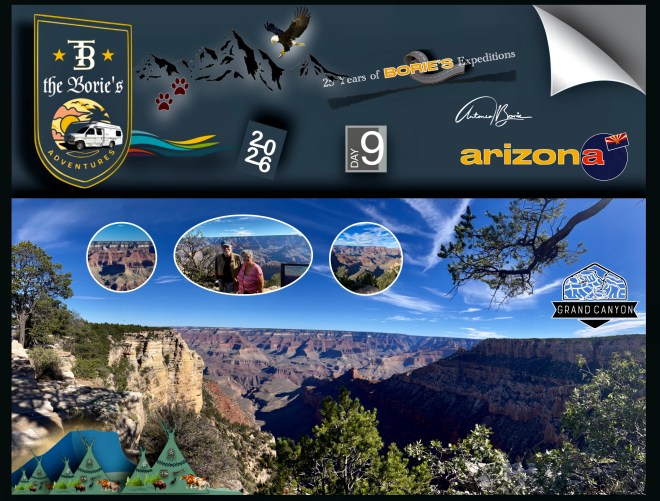
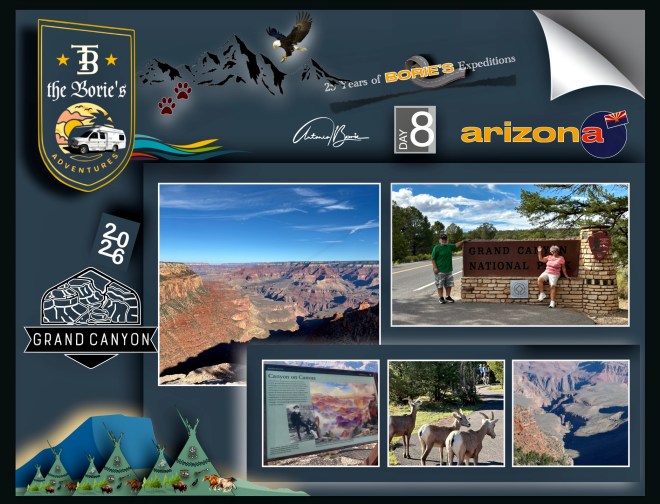
…estávamos no Parque Nacional de Grand Canyon, que é considerado uma das sete maravilhas naturais do mundo, não se limitando unicamente à sua geologia, pois o parque contém vários ecossistemas importantes, continuando a ser um marco que atrai milhões de visitantes todos os anos, onde as rochas lá encontradas remontam a aproximadamente dois bilhões de anos e, a sua área de terra abriga cerca de 70 espécies diferentes de animais!.

…we were in Grand Canyon National Park, which is considered one of the seven natural wonders of the world, not limited to its geology alone, as the park contains several important ecosystems, continuing to be a landmark that attracts millions of visitors every year, where the rocks there found date back approximately two billion years and its land area is home to about 70 different species of animals!.

…o primeiro estrangeiro a visitar o Grand Canyon foi o espanhol Garcia Lopez de Cardenas no ano de 1540, porém a primeira expedição científica ao desfiladeiro foi dirigida pelo Major John Wesley Powell, no final da década de 1870 e referiu-se às rochas sedimentares  expostas no desfiladeiro como “páginas de um belo livro de histórias”!.

…the first foreigner to visit the Grand Canyon was the Spanish Garcia Lopez de Cardenas in 1540, but the first scientific expedition to the gorge was directed by Major John Wesley Powell, in the late 1870s and referred to the rocks sediments exposed in the gorge as “pages of a beautiful storybook”!.

…no entanto, a área era já ocupada por Nativos Americanos que estabeleciam povoados ao longo do desfiladeiro, como os “Hualapai” ou os “Hopi”, por milhares de anos, havendo indícios de que a área devia ter sido continuamente habitada por esses nativos americanos, que construíram assentamentos dentro do Canyon e suas muitas cavernas, considerando o Grand Canyon um local sagrado e faziam peregrinações a ele!.

…however, the area was already occupied by Native Americans who established settlements along the gorge, such as the “Hualapai” or “Hopi”, for thousands of years, with indications that the area must have been continuously inhabited by these Native Americans, who built settlements inside the Canyon and its many caves, considering the Grand Canyon to be a sacred site and making pilgrimages to it!.

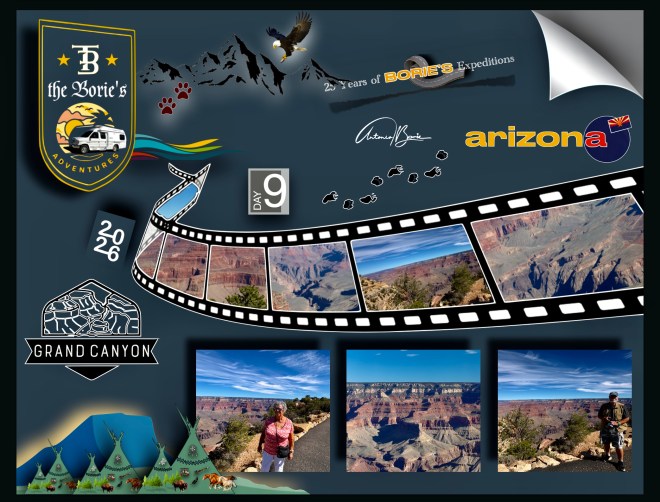
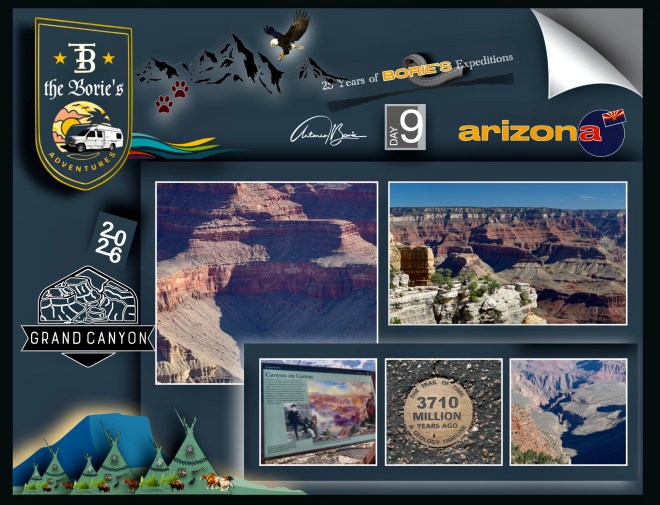
…nós, sentados na beira do Grand Canyon, podemos admirar um imenso vale do rio Colorado e seus afluentes, que embora não seja o desfiladeiro mais profundo do mundo, é conhecido pelo seu tamanho visualmente impressionante de uma paisagem complexa e colorida!. Geologicamente, é significativo por causa da espessa sequência de rochas antigas que são bem preservadas e expostas nas paredes deste Canyon, onde as  camadas rochosas registram grande parte da história geológica inicial do continente norte-americano!.

...we, sitting on the edge of the Grand Canyon, can admire an immense river valley, Colorado and its tributaries, which, although not the deepest gorge in the world, is known for its visually impressive size of a complex and colorful landscape! . Geologically, it is significant because of the thick sequence of ancient rocks that are well preserved and exposed on the walls of this Canyon, where the rock layers record much of the early geological history of the North American continent!.

…a sua elevação associada à formação de montanhas, posteriormente moveu esses sedimentos milhares de pés para cima, e criou o planalto do Colorado!. A elevação mais alta também resultou em maior precipitação na área de drenagem do rio Colorado, mas não o suficiente para mudar a área do Grand Canyon de continuar a ser semi-árida!.

…its elevation associated with the formation of mountains, later moved these sediments thousands of feet upwards, and created the Colorado plateau!. The higher elevation also resulted in more precipitation in the Colorado River drainage area, but not enough to change the Grand Canyon area from continuing to be semi-arid!.

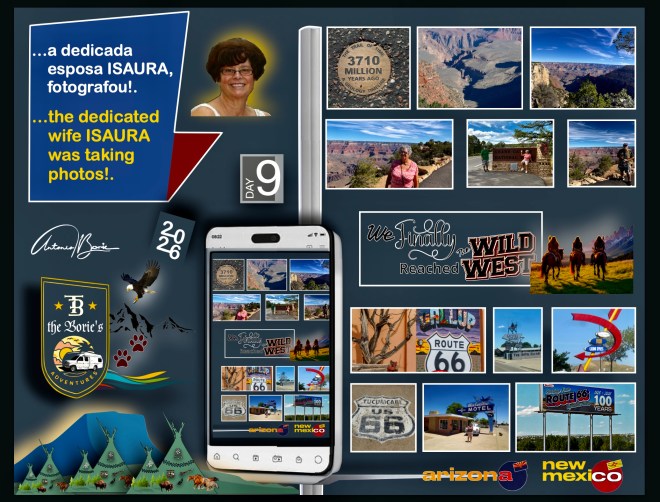
…se percorrermos o trajecto da trilha que segue na sua borda, estamos mais ou menos, em alguns lugares, a uma milha acima do rio Colorado, num local maravilhoso, onde entre outros cenários de tirar a respiração, se podem tirar lindas fotos, admirando um cenário que foi resistindo aos ciclos de tempo, onde à cerca de 200 milhões de anos atrás, a areia que fazia parte do maior sistema de areia e dunas do continente norte-americano, que talvez fossem “mares de areia” que eventualmente se foram endurecendo pela água e minerais no Navajo Sandstone, numa uniforme e incrível camada lisa de arenito, que se estendia do Arizona para Wyoming, e ainda hoje pode ter mais de dois mil pés de expessura em alguns lugares!.

…if we follow the path of the trail that follows on its edge, we are more or less, in some places, a mile above the Colorado River, in a wonderful place, where among other breathtaking sceneries, beautiful photos can be taken , admiring a scenario that was resisting the cycles of time, where about 200 million years ago, the sand that was part of the largest system of sand and dunes in the North American continent, that maybe were “seas of sand” that eventually they were hardened by the water and minerals in the Navajo Sandstone, in a uniform and incredible smooth layer of sandstone, which extended from Arizona to Wyoming, and even today it can be more than two thousand feet thick in some places!.

Screenshot

…se nos retirarmos um pouco da trilha e olharmos para o fundo deste imenso desfiladeiro, estamos a olhar para uma profundidade que como acima referimos, em alguns lugares ultrapassa uma milha, pois depois de Arenito Navajo endurecido, outras camadas diferentes de sedimentares se foram empilhadando, e claro, ao longo de alguns milhões de anos, a paciente água sob a forma de chuva, gelo, inundações e córregos, foi trabalhando, corroendo essas diferentes camadas de Arenito Navajo, onde a areia foi lentamente desaparecendo, surgindo um cenário a que hoje chamam Grand Canyon!.

...if we withdraw a little from the trail and look at the bottom of this immense gorge, we are looking at a depth that as mentioned above, in some places exceeds a mile, because after hardened Navajo sandstone, other different layers of sedimentary they were piled up, and of course, over a few million years, the patient water in the form of rain, ice, floods and streams, was working, eroding these different layers of Navajo Sandstone, where the sand was slowly disappearing, creating a scenario what today they call the Grand Canyon!.

…este maravilhoso desfiladeiro e a borda adjacente estão contidos no Parque Nacional do Grand Canyon, na Floresta Nacional Kaibab, no Monumento Nacional Parashant do Grand Canyon, na Reserva Indígena Hualapai, na Reserva Indígena Havasupai e na Navajo, sendo considerado um dos melhores exemplos de erosão das terras áridas, esculpido pelo rio Colorado!. Enfim, caminhando por aqui, admiramos um cenário que foi resistindo aos ciclos de tempo, desde à cerca de 200 milhões de anos atrás.

...this wonderful gorge and the adjacent rim are contained in the Grand Canyon National Park, in the Kaibab National Forest, in the Grand Canyon Parashant National Monument, in the Hualapai Indigenous Reserve, in the Havasupai Indigenous Reserve and in Navajo, being considered one of the best examples of erosion of arid lands, sculpted by the Colorado River!. In short, walking around here, we admire a landscape that has withstood the cycles of time, since about 200 million years ago!.

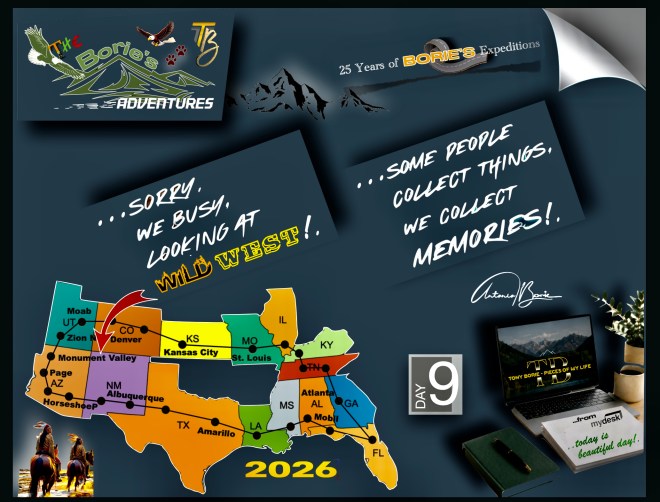
…deixando este maravilhoso parque, seguimos em direção ao sul e…, entre nós e a dedicada esposa Isaura surgiu um dilema!. Qual a melhor solução?. Ir para sul, junto à fronteira com o Mexico ou seguir para leste rumo à Florida e seguir a rota da hoje  lendária “Route 66”, trajecto este que já por diversas vezes concluímos?. Solução: seguir para leste rumo à Florida!.

…leaving this wonderful park, we headed south and… a dilemma arose between us and my devoted wife Isaura! What was the best solution? To go south, along the border with Mexico, or to head east towards Florida and follow the route of the now legendary “Route 66,” a route we have completed several times before? Solution: head east towards Florida!

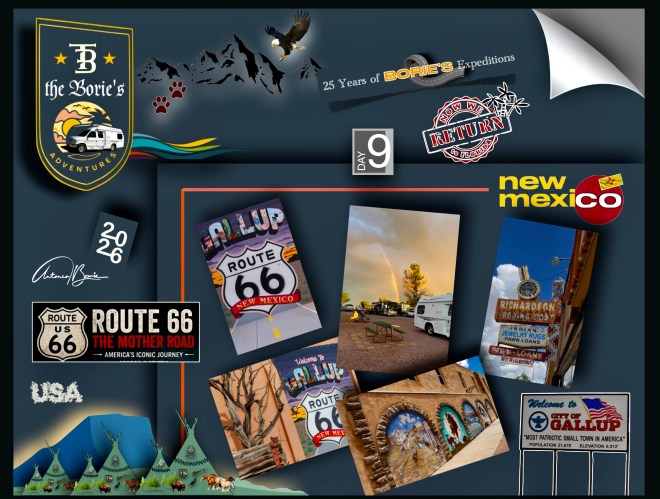
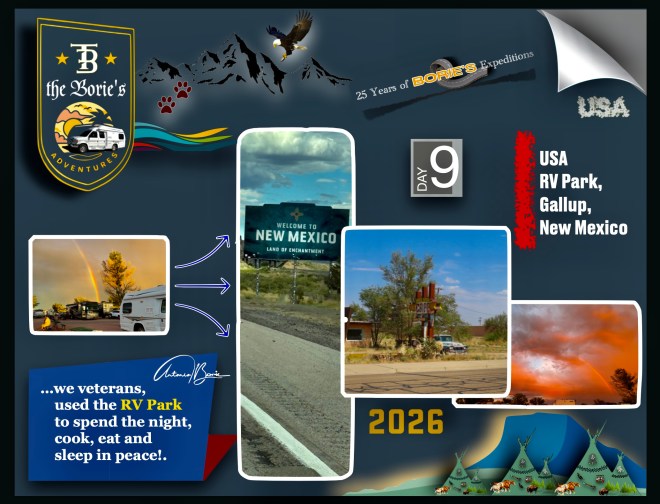
…como tal, enquanto a “inteligência artificial não toma conta”, porque talvez no futuro já não haja humanos a tomar conta de parques nacionais ou outras áreas de lazer agradáveis de se frequentar…, ei-nos viajando para leste, desviando-nos aqui e ali da estrada rápida #40 e visitando pequenos troços da já referida lendária “Route 66”, pernoitando na cidade de Gallup, New Mexico, num park de RV, designado com o nome de “Route 66”!.

…so, while “artificial intelligence doesn’t take over,” because perhaps in the future there will no longer be humans taking care of national parks or other pleasant recreational areas… here we are traveling east, deviating here and there from highway #40 and visiting small stretches of the aforementioned legendary “Route 66,” spending the night in the city of Gallup, New Mexico, in an RV park named “Route 66”!.

Tony Borie.

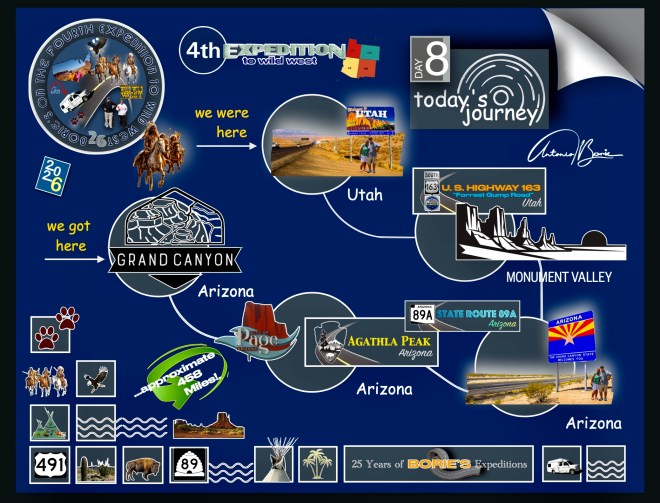
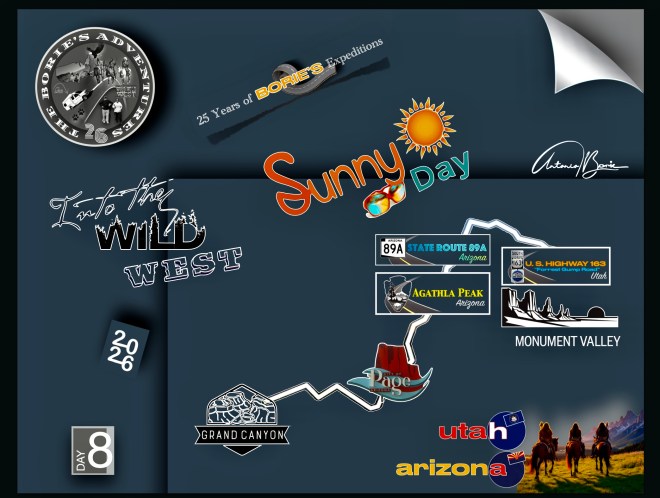
…”Quarta Expedição ao Wild West”!. (Dia 8) …”Fourth Expedition to the Wild West”!. (Day 8)

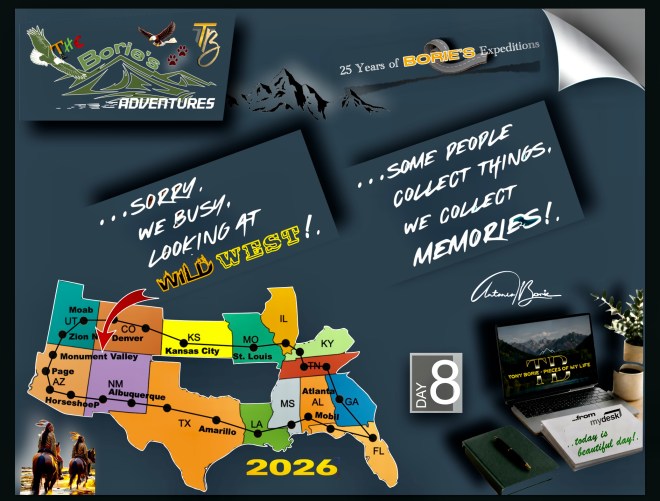
…estávamos no estado do Utah!. Viajávamos por longas rectas, com placas de sinalização avisando que podia haver fortes ventos e onde há muitos anos viviam duas tribos nativas, que eram os “Utes” e os “Navajos” e onde por volta do ano de 1850, o Congresso dos USA, criou o Território de Utah, tendo nomeado este território numa homenagem à tribo nativa “Ute” que vivia na região!.

…we were in the state of Utah!. We traveled through straight lines, with signs of signaling warning that there could be strong winds and where many years ago there were two native tribes, which were the “Utes” and the “Navajos” and where around 1850, the USA Congress, created the territory of Utah, having named this territory in a tribute to the native “ute” that lived in the region!.

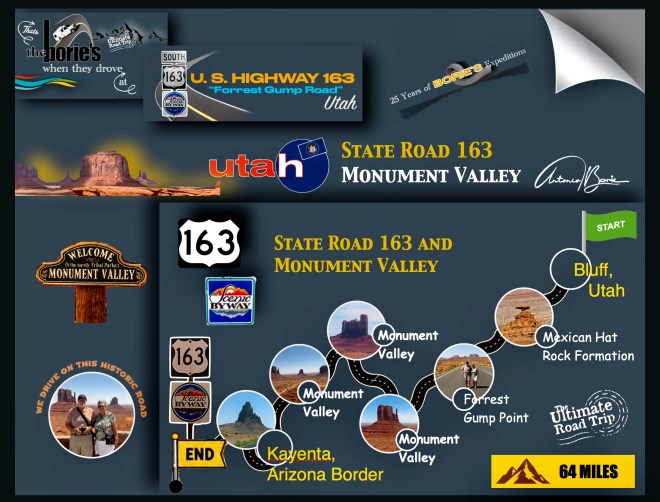
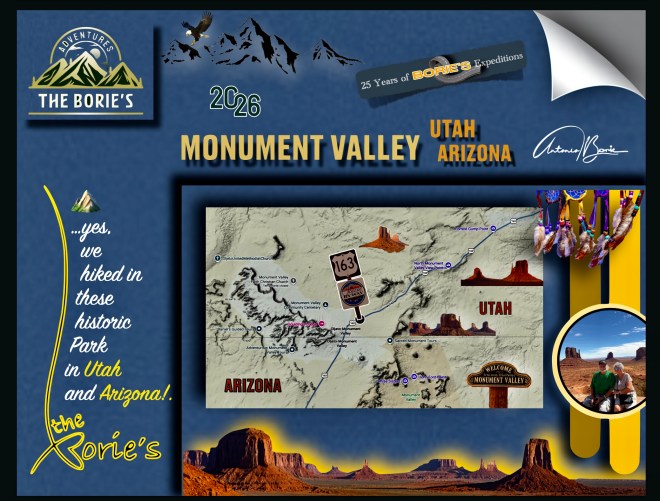
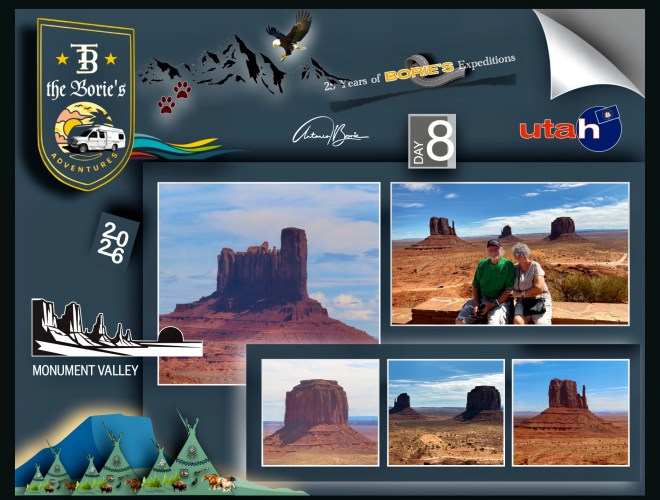
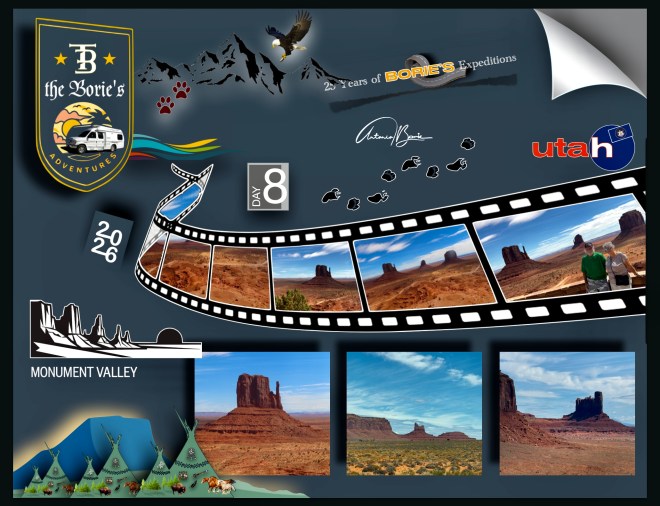
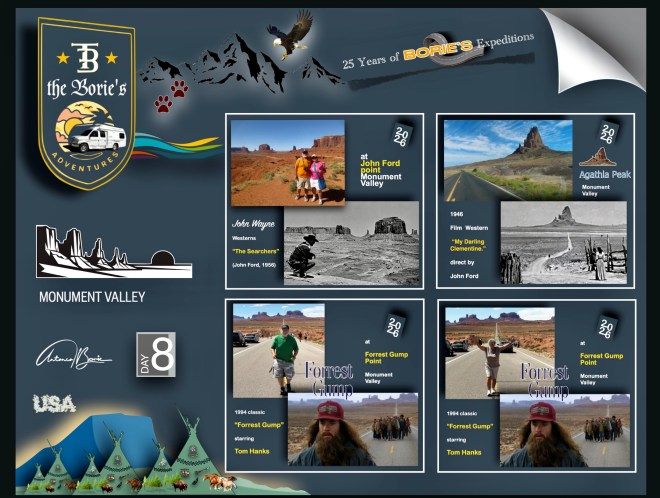
…viajávamos pela estrada #163!. A milhas de distância já se avistavam as torres avisando-nos que estávamos perto da fronteira com o estado do Arizona, e claro, dentro da nação Navajo, possuindo um profundo significado cultural e espiritual para este povo, onde parámos para visitar o já mencionado “Monument Valley Navajo Tribal Park”, comprando o bilhete antes de entrar no Centro de Boas-Vindas e outras instalações, fazendo algum sol, onde tirámos algumas fotos!.

…we were traveling along Highway 163! Miles away, we could already see the towers warning us that we were near the border with the state of Arizona, and of course, within the Navajo Nation, which holds profound cultural and spiritual significance for this people. We stopped there to visit the already classified “Monument Valley Navajo Tribal Park,” buying our tickets before entering the Welcome Center and other facilities, where we would take some photos while the sun was shining!

…como acima já mencionámos, o “Monument Valley Navajo Tribal Park” encontra-se dentro da reserva da Nação do Navajo, mostrando-nos uma paisagem de tirar o fôlego, com imponentes torres de arenito vermelho, cujas formações maciças aumentam dramaticamente do piso do deserto, algumas com alturas de mais de 1.000 pés, moldadas por milhões de anos de erosão, com vibrantes tons vermelhos do vale que vêm de óxido de ferro na rocha!. É para nós, sem qualquer dúvida representa o oeste definitivo, onde os espíritos ancestrais infundem paisagens rudes e diferentes, que nos parecem estranhas!.

…as we mentioned above, the “Monument Valley Navajo Tribal Park” is within the Navajo nation reserve, showing us a breathtaking landscape, with imposing red sandstone towers, whose massive formations increase dramatically from the desert floor, some with heights of more than 1,000 feet, shaped by millions of erosion, with vibrant red tones that come from oxide iron in the rock!. It is for us, without any doubt it represents the definitive West, where ancestral spirits infuse rude and different landscapes that seem strange to us!.

…toda esta área já nos foi apresentada em inúmeros filmes, fotografias e obras de arte, simbolizando o ”Oeste Selvagem”, onde os visitantes podem explorar através de visitas guiadas ou mesmo fazendo caminhadas por trilhas assinaladas, onde entre outras, podem ver. o nascer do sol ou o pôr do sol a lançaram luz mágica e longas sombras no vasto deserto!. O “Monument Valley Navajo Tribal Park” continua sendo uma das maravilhas naturais mais icónicas e inspiradoras do sudoeste, situado no planalto do Colorado!.

…this whole area has already been presented to us in numerous movies, photographs and works of art, symbolizing the “Wild West”, where visitors can explore through guided tours or even walking through marked trails, where among others, they can see the sunrise of the sun or sunset they cast it magical light and long shadows in the vast desert!. The “Monument Valley Navajo Tribal Park” remains one of the most iconic and inspiring natural wonders of the southwest, located in the Plateau do Colorado!.

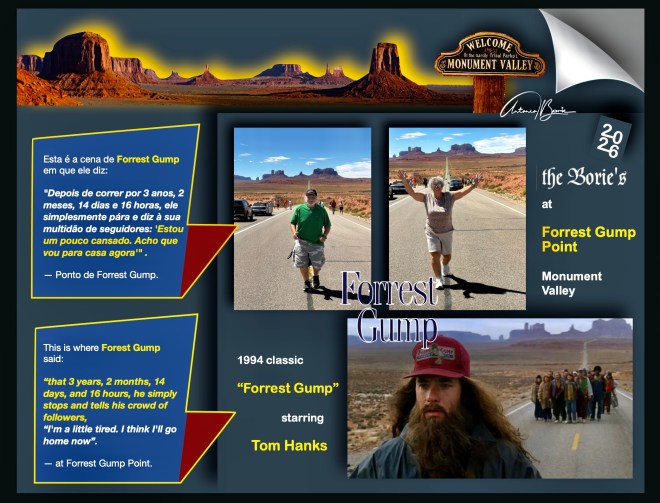
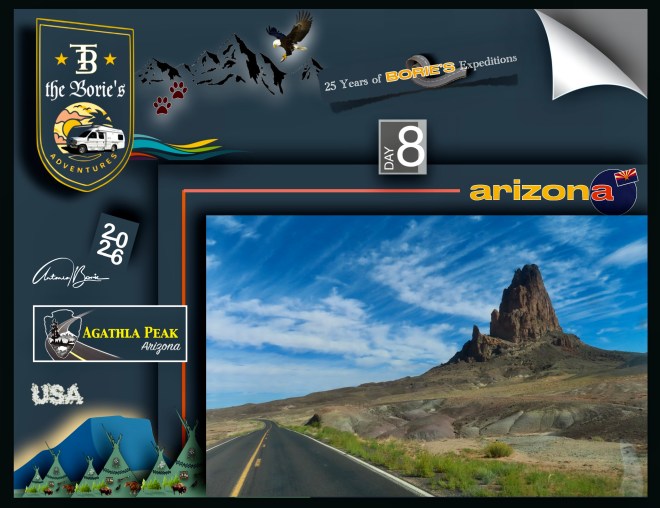
…nós, amantes da natureza, caminhámos pequenas áreas de algumas trilhas, parando em alguns locais que já foram cenas de alguns filmes de John Ford, como “Stagecoach” (1939), “The Searchers” (1956) estrelado por John Wayne, ou “My Darling Clementine” (1946) que ainda hoje é amplamente considerado um filme excelente e fundamental no género western e foi estrelado por Henry Fonda, filmado na área de El Capitan, também conhecido como Pico Agathla, que é há muito tempo um dos marcos mais inesquecíveis da região!. Ou mais recentemente uma das cenas mais icónicas  do clássico “Forrest Gump” de 1994, estrelada por Tom Hanks, também filmada em Monument Valley!.

…we, nature lovers, hiked short stretches of trails, stopping at locations that have been scenes from John Ford films, such as “Stagecoach” (1939), “The Searchers” (1956) starring John Wayne, or “My Darling Clementine” (1946), which is still widely considered an excellent and fundamental film in the Western genre and starred Henry Fonda, filmed in the El Capitan area, also known as Agathla Peak, which has long been one of the most unforgettable landmarks in the region! Or more recently, one of the most iconic scenes from the 1994 classic “Forrest Gump,” starring Tom Hanks, also filmed in Monument Valley!

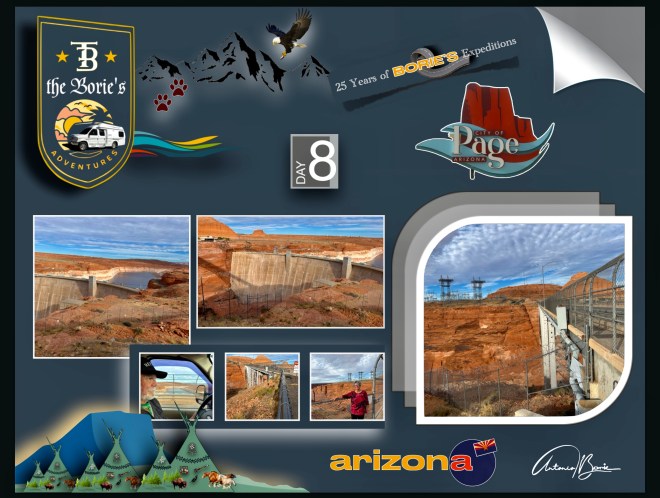
…até que, em direção ao sul, entrámos no estado de Arizona e…, depois de viajar umas tantas milhas pelo deserto chegámos à cidade de Page, que foi fundada nos anos cinquenta do século passado, como uma comunidade residencial para trabalhadores e suas famílias durante a construção da represa de Glen Canyon, no rio Colorado, numa área situada no topo da Mesa Manson, a uma altitude de 4.300 pés acima do nível do mar e a 600 pés acima do Lago Powell, área esta obtida numa troca de terras com a Nação Navajo, tornando-se a porta de entrada para a Área de Recreação Nacional de Glen Canyon e o Lago Powell, atraindo mais de 3 milhões de visitantes por ano!.

…until, heading south, we entered the state of Arizona and… after traveling quite a few miles through the desert, we arrived in the city of Page, which was founded in the 1950s as a residential community for workers and their families during the construction of the Glen Canyon Dam on the Colorado River, in an area situated atop Mesa Manson, at an altitude of 4,300 feet above sea level and 600 feet above Lake Powell. This area was obtained in a land exchange with the Navajo Nation, becoming the gateway to the Glen Canyon National Recreation Area and Lake Powell, attracting more than 3 million visitors a year!.

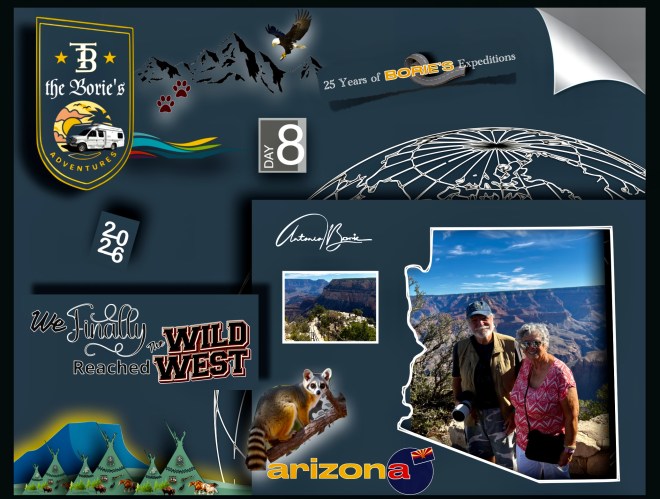
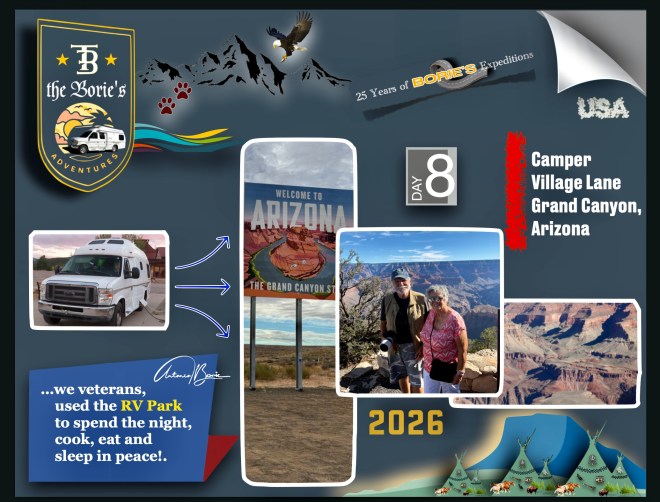
…e a aventura continuava em direção ao sul oeste, chegando à área do Grand Canyon, quando o dia já ia longo, no entanto, ainda nos deu tempo para verificarmos que estávamos numa área que fazia parte do Parque Nacional do Grand Canyon, que é como se fosse uma “zona montanhosa”, mas ao contrário, cá em cima é plano, mesmo plano, depois são os “moldes” das montanhas, metidos nas aberturas da terra, desfiladeiros, que vão até às profundezas do rio Colorado!. Enfim, cerca de 2 bilhões de anos da história geológica da terra foram expostos pelo rio, à medida que este e os seus afluentes vão expondo camada após camada de sedimentos!.

…and the adventure continued southwest, reaching the Grand Canyon area, when the day was already well advanced. However, we still had time to verify that we were in an area that was part of the Grand Canyon National Park, which is like a “mountainous zone,” but in contrast, up here it’s flat, completely flat, then there are the “molds” of the mountains, set into the openings of the earth, gorges, that go down to the depths of the Colorado River! In short, about 2 billion years of the Earth’s geological history have been exposed by the river, as it and its tributaries reveal layer after layer of sediment!

…era nossa intenção pernoitar por aqui encontrando um parque de RV, mesmo ao lado do Parque Nacional, que amavelmente nos recebeu e onde passámos a noite, no entanto nós, habituados ao ambiente do resto do mundo, não nos tínhamos apercebido do fenómeno que é o som de aves e insectos que habitam por aqui, e de que já nos haviam falado e era verdade, à noite era uma sinfonia maciça de som, um levante incrível da vida que não sabíamos que existia!.

…our intention was to spend the night here, finding an RV park right next to the National Park, which kindly welcomed us and where we spent the night. However, being accustomed to the environment of the rest of the world, we hadn’t noticed the phenomenon of the sounds of birds and insects that inhabit this area, which we had already been told about and it was true: at night it was a massive symphony of sound, an incredible surge of life that we didn’t know existed!

Tony Borie.