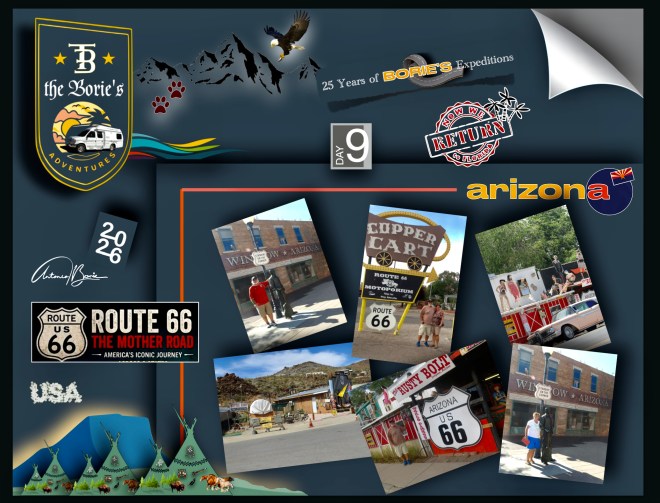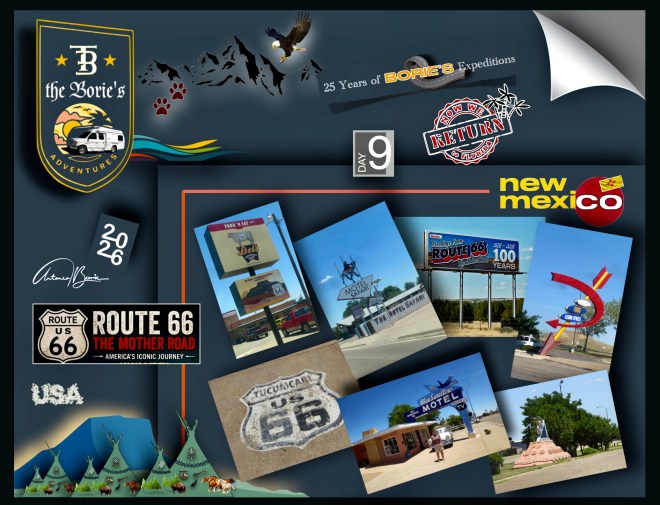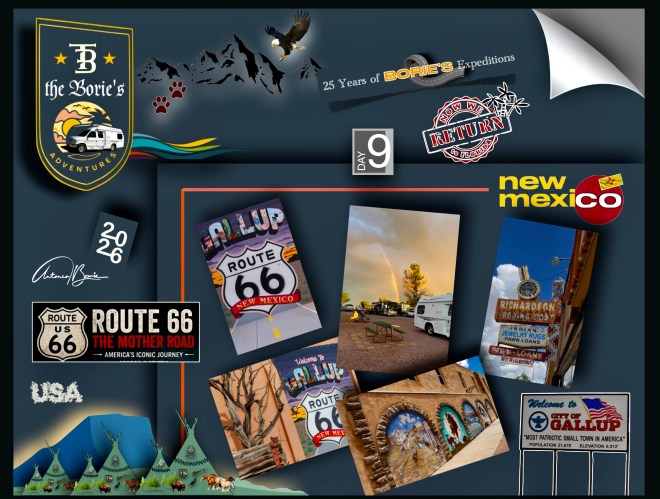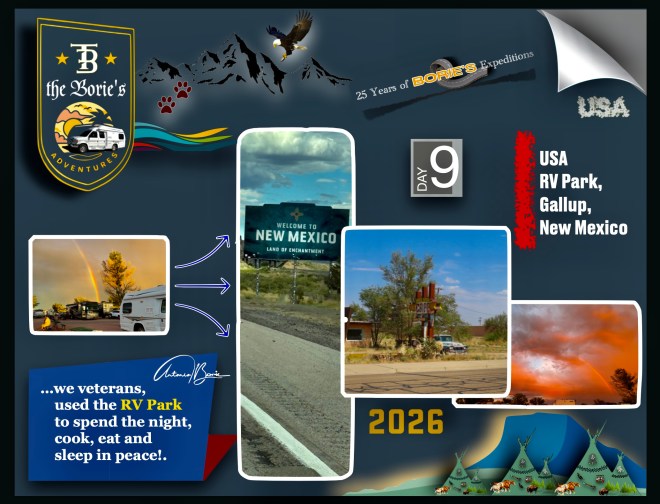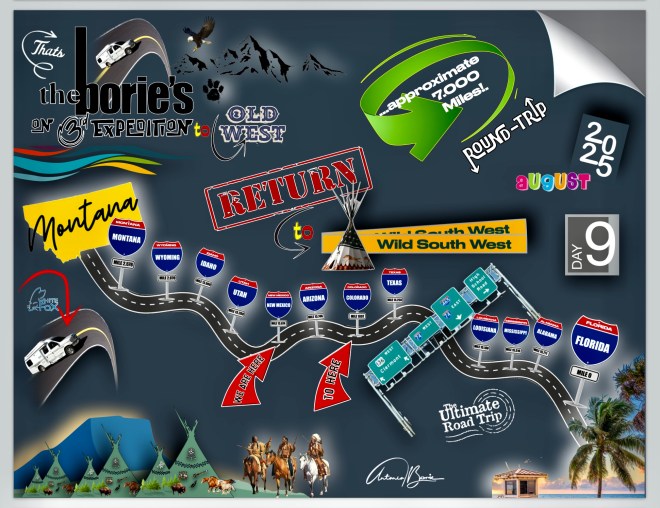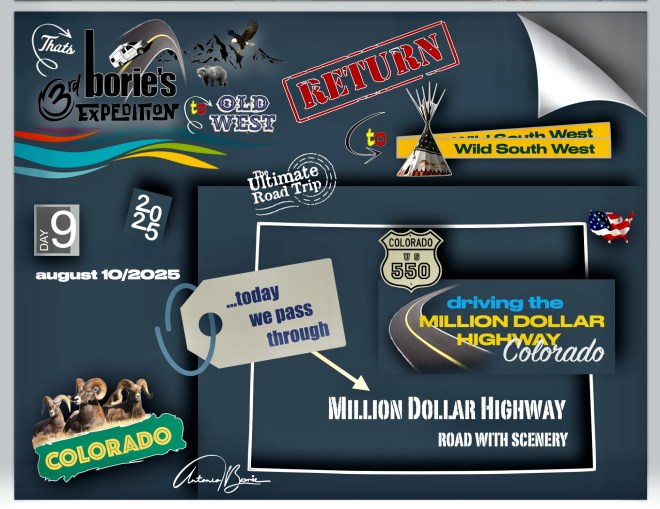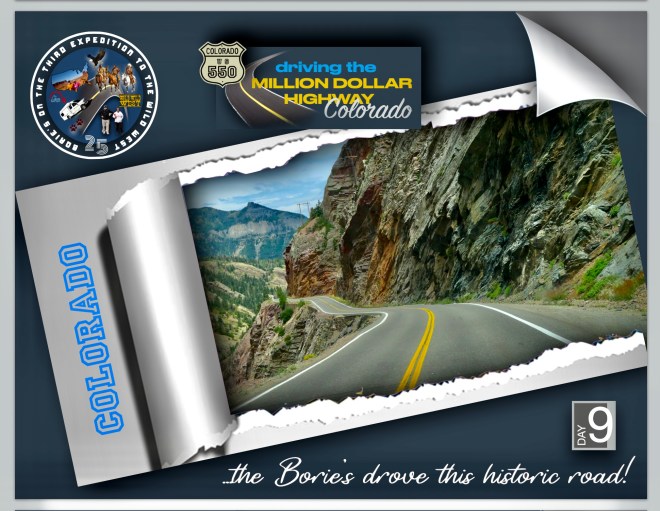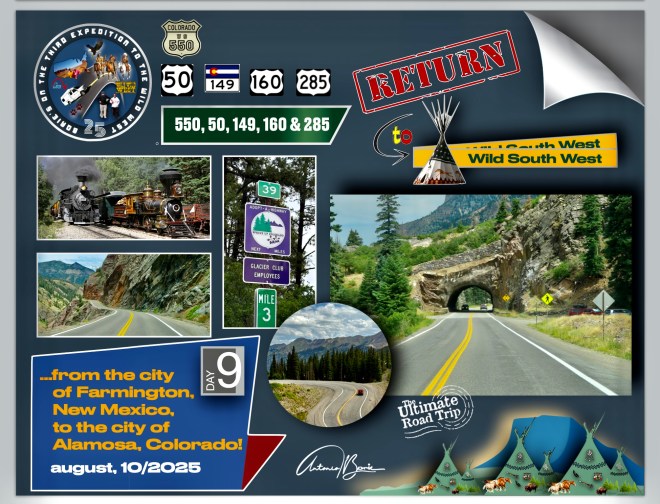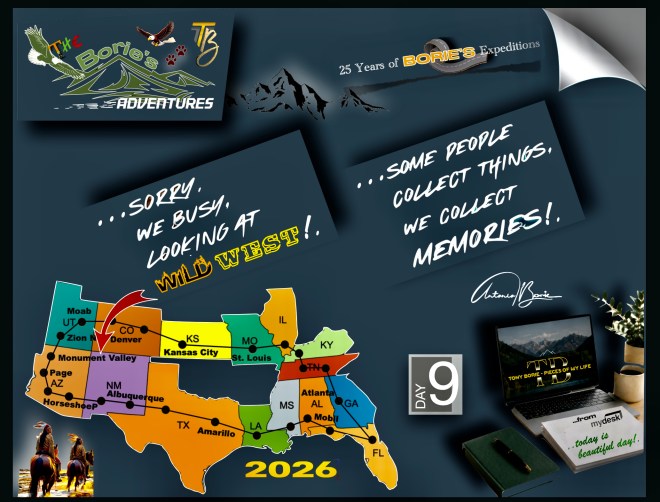
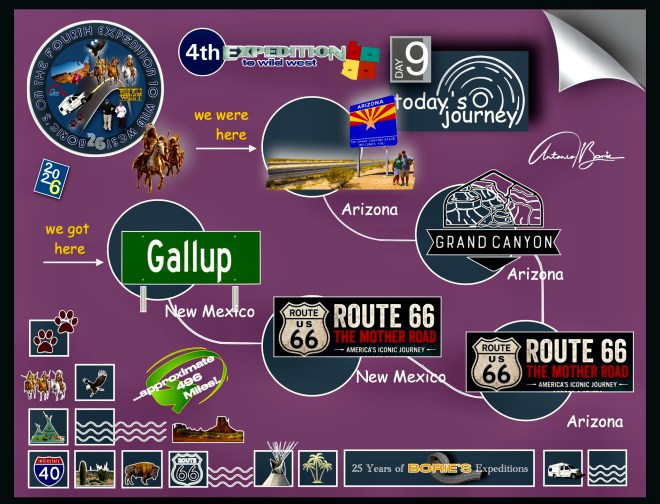
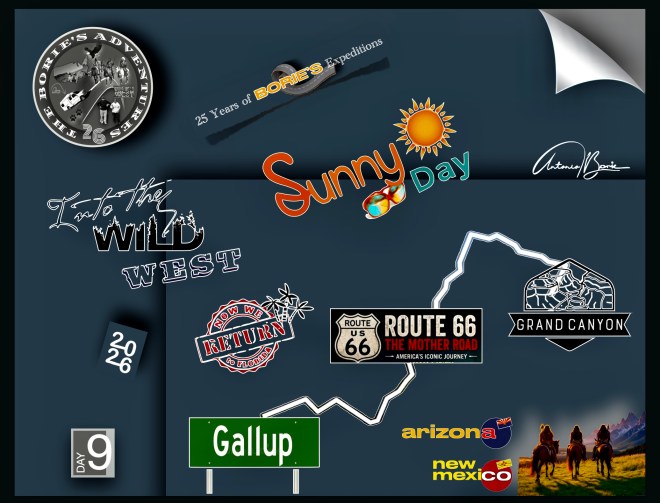
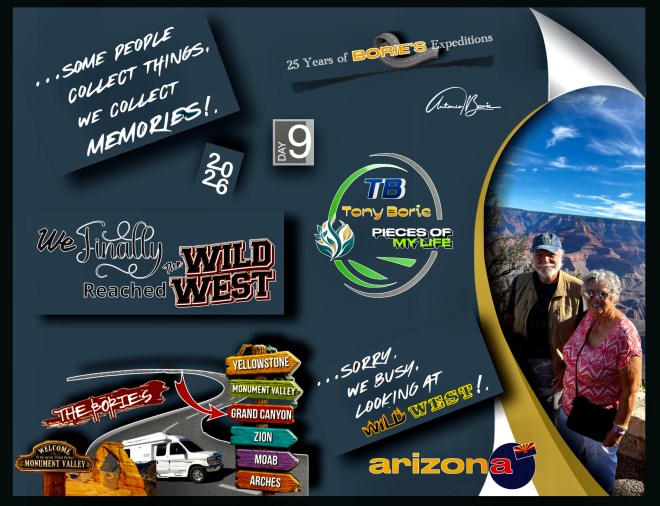
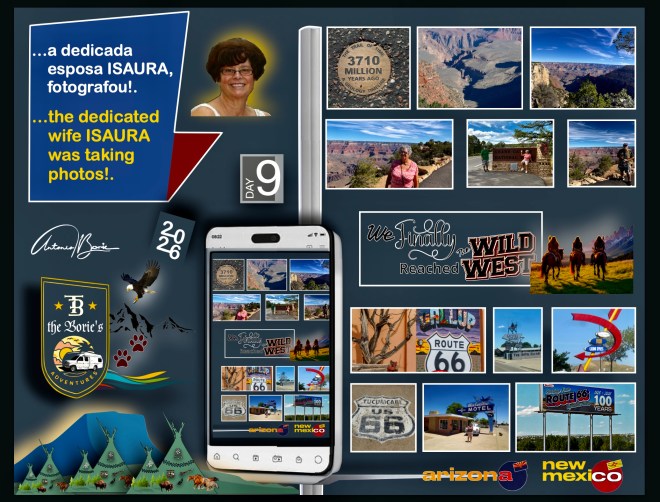
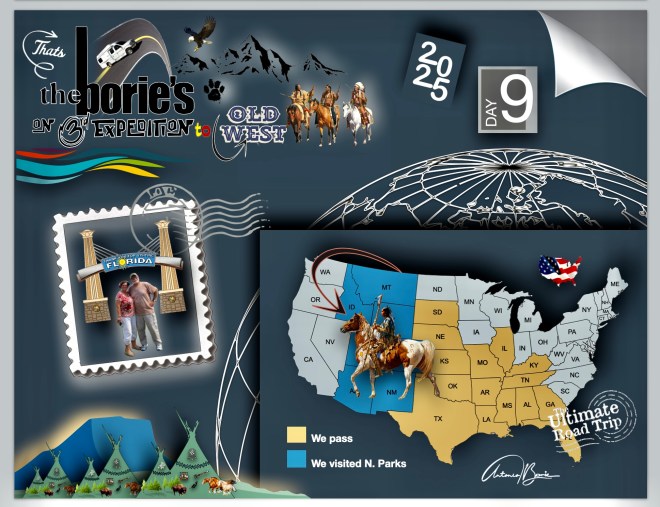
…”Quarta Expedição ao Wild West”!. (Dia 9) …”Fourth Expedition to the Wild West”!. (Day 9)

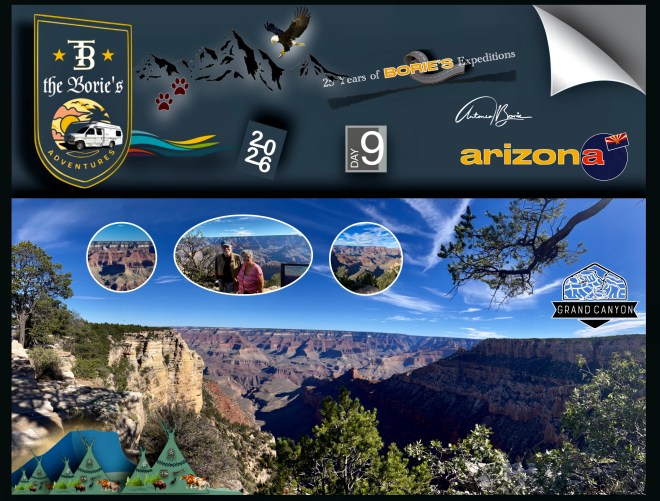
…estávamos no Parque Nacional de Grand Canyon, que é considerado uma das sete maravilhas naturais do mundo, não se limitando unicamente à sua geologia, pois o parque contém vários ecossistemas importantes, continuando a ser um marco que atrai milhões de visitantes todos os anos, onde as rochas lá encontradas remontam a aproximadamente dois bilhões de anos e, a sua área de terra abriga cerca de 70 espécies diferentes de animais!.

…we were in Grand Canyon National Park, which is considered one of the seven natural wonders of the world, not limited to its geology alone, as the park contains several important ecosystems, continuing to be a landmark that attracts millions of visitors every year, where the rocks there found date back approximately two billion years and its land area is home to about 70 different species of animals!.
…o primeiro estrangeiro a visitar o Grand Canyon foi o espanhol Garcia Lopez de Cardenas no ano de 1540, porém a primeira expedição científica ao desfiladeiro foi dirigida pelo Major John Wesley Powell, no final da década de 1870 e referiu-se às rochas sedimentares  expostas no desfiladeiro como “páginas de um belo livro de histórias”!.

…the first foreigner to visit the Grand Canyon was the Spanish Garcia Lopez de Cardenas in 1540, but the first scientific expedition to the gorge was directed by Major John Wesley Powell, in the late 1870s and referred to the rocks sediments exposed in the gorge as “pages of a beautiful storybook”!.
…no entanto, a área era já ocupada por Nativos Americanos que estabeleciam povoados ao longo do desfiladeiro, como os “Hualapai” ou os “Hopi”, por milhares de anos, havendo indícios de que a área devia ter sido continuamente habitada por esses nativos americanos, que construíram assentamentos dentro do Canyon e suas muitas cavernas, considerando o Grand Canyon um local sagrado e faziam peregrinações a ele!.

…however, the area was already occupied by Native Americans who established settlements along the gorge, such as the “Hualapai” or “Hopi”, for thousands of years, with indications that the area must have been continuously inhabited by these Native Americans, who built settlements inside the Canyon and its many caves, considering the Grand Canyon to be a sacred site and making pilgrimages to it!.

…nós, sentados na beira do Grand Canyon, podemos admirar um imenso vale do rio Colorado e seus afluentes, que embora não seja o desfiladeiro mais profundo do mundo, é conhecido pelo seu tamanho visualmente impressionante de uma paisagem complexa e colorida!. Geologicamente, é significativo por causa da espessa sequência de rochas antigas que são bem preservadas e expostas nas paredes deste Canyon, onde as  camadas rochosas registram grande parte da história geológica inicial do continente norte-americano!.

...we, sitting on the edge of the Grand Canyon, can admire an immense river valley, Colorado and its tributaries, which, although not the deepest gorge in the world, is known for its visually impressive size of a complex and colorful landscape! . Geologically, it is significant because of the thick sequence of ancient rocks that are well preserved and exposed on the walls of this Canyon, where the rock layers record much of the early geological history of the North American continent!.
…a sua elevação associada à formação de montanhas, posteriormente moveu esses sedimentos milhares de pés para cima, e criou o planalto do Colorado!. A elevação mais alta também resultou em maior precipitação na área de drenagem do rio Colorado, mas não o suficiente para mudar a área do Grand Canyon de continuar a ser semi-árida!.

…its elevation associated with the formation of mountains, later moved these sediments thousands of feet upwards, and created the Colorado plateau!. The higher elevation also resulted in more precipitation in the Colorado River drainage area, but not enough to change the Grand Canyon area from continuing to be semi-arid!.

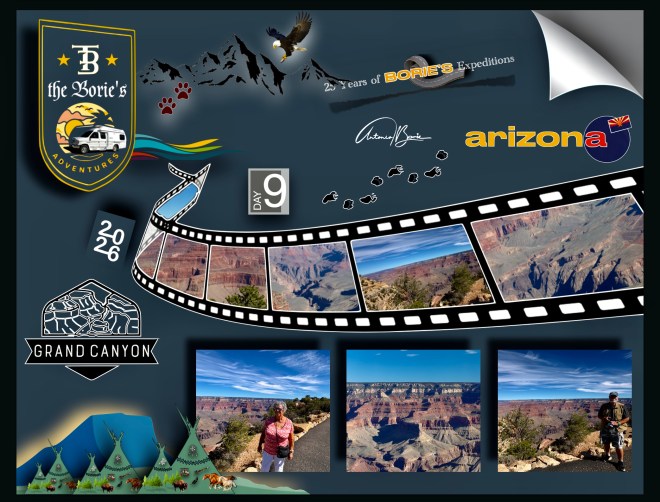
…se percorrermos o trajecto da trilha que segue na sua borda, estamos mais ou menos, em alguns lugares, a uma milha acima do rio Colorado, num local maravilhoso, onde entre outros cenários de tirar a respiração, se podem tirar lindas fotos, admirando um cenário que foi resistindo aos ciclos de tempo, onde à cerca de 200 milhões de anos atrás, a areia que fazia parte do maior sistema de areia e dunas do continente norte-americano, que talvez fossem “mares de areia” que eventualmente se foram endurecendo pela água e minerais no Navajo Sandstone, numa uniforme e incrível camada lisa de arenito, que se estendia do Arizona para Wyoming, e ainda hoje pode ter mais de dois mil pés de expessura em alguns lugares!.

…if we follow the path of the trail that follows on its edge, we are more or less, in some places, a mile above the Colorado River, in a wonderful place, where among other breathtaking sceneries, beautiful photos can be taken , admiring a scenario that was resisting the cycles of time, where about 200 million years ago, the sand that was part of the largest system of sand and dunes in the North American continent, that maybe were “seas of sand” that eventually they were hardened by the water and minerals in the Navajo Sandstone, in a uniform and incredible smooth layer of sandstone, which extended from Arizona to Wyoming, and even today it can be more than two thousand feet thick in some places!.
Screenshot

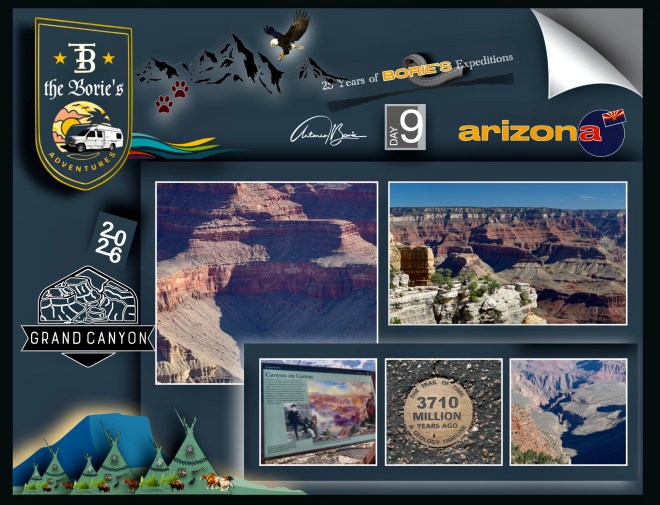
…se nos retirarmos um pouco da trilha e olharmos para o fundo deste imenso desfiladeiro, estamos a olhar para uma profundidade que como acima referimos, em alguns lugares ultrapassa uma milha, pois depois de Arenito Navajo endurecido, outras camadas diferentes de sedimentares se foram empilhadando, e claro, ao longo de alguns milhões de anos, a paciente água sob a forma de chuva, gelo, inundações e córregos, foi trabalhando, corroendo essas diferentes camadas de Arenito Navajo, onde a areia foi lentamente desaparecendo, surgindo um cenário a que hoje chamam Grand Canyon!.

...if we withdraw a little from the trail and look at the bottom of this immense gorge, we are looking at a depth that as mentioned above, in some places exceeds a mile, because after hardened Navajo sandstone, other different layers of sedimentary they were piled up, and of course, over a few million years, the patient water in the form of rain, ice, floods and streams, was working, eroding these different layers of Navajo Sandstone, where the sand was slowly disappearing, creating a scenario what today they call the Grand Canyon!.

…este maravilhoso desfiladeiro e a borda adjacente estão contidos no Parque Nacional do Grand Canyon, na Floresta Nacional Kaibab, no Monumento Nacional Parashant do Grand Canyon, na Reserva Indígena Hualapai, na Reserva Indígena Havasupai e na Navajo, sendo considerado um dos melhores exemplos de erosão das terras áridas, esculpido pelo rio Colorado!. Enfim, caminhando por aqui, admiramos um cenário que foi resistindo aos ciclos de tempo, desde à cerca de 200 milhões de anos atrás.

...this wonderful gorge and the adjacent rim are contained in the Grand Canyon National Park, in the Kaibab National Forest, in the Grand Canyon Parashant National Monument, in the Hualapai Indigenous Reserve, in the Havasupai Indigenous Reserve and in Navajo, being considered one of the best examples of erosion of arid lands, sculpted by the Colorado River!. In short, walking around here, we admire a landscape that has withstood the cycles of time, since about 200 million years ago!.
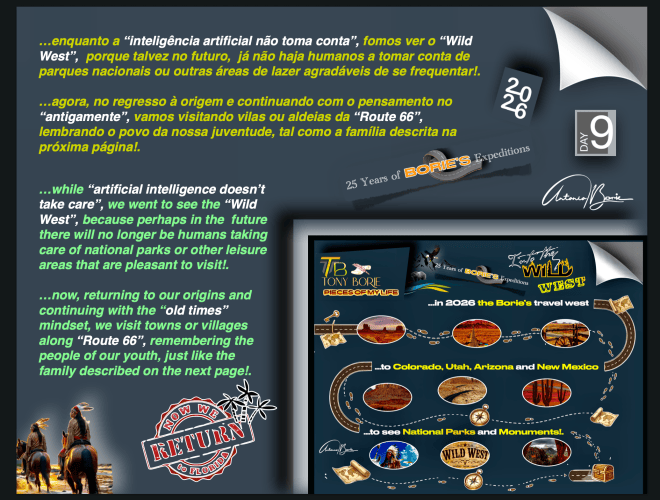
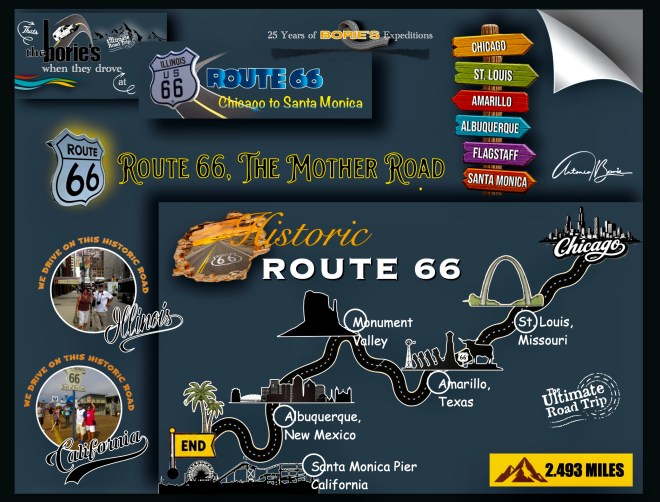
…deixando este maravilhoso parque, seguimos em direção ao sul e…, entre nós e a dedicada esposa Isaura surgiu um dilema!. Qual a melhor solução?. Ir para sul, junto à fronteira com o Mexico ou seguir para leste rumo à Florida e seguir a rota da hoje  lendária “Route 66”, trajecto este que já por diversas vezes concluímos?. Solução: seguir para leste rumo à Florida!.

…leaving this wonderful park, we headed south and… a dilemma arose between us and my devoted wife Isaura! What was the best solution? To go south, along the border with Mexico, or to head east towards Florida and follow the route of the now legendary “Route 66,” a route we have completed several times before? Solution: head east towards Florida!
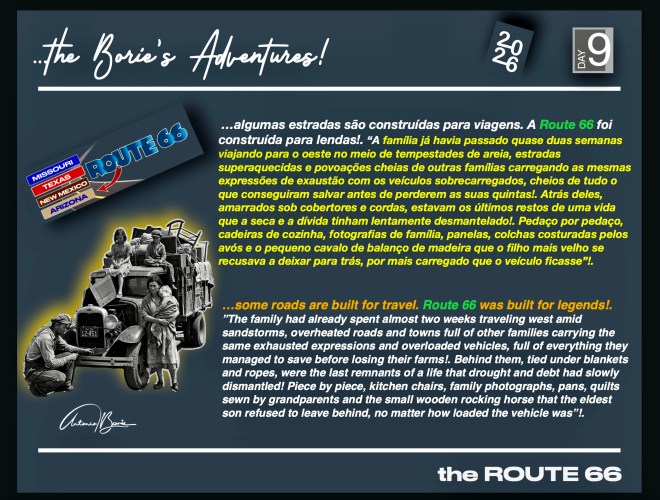
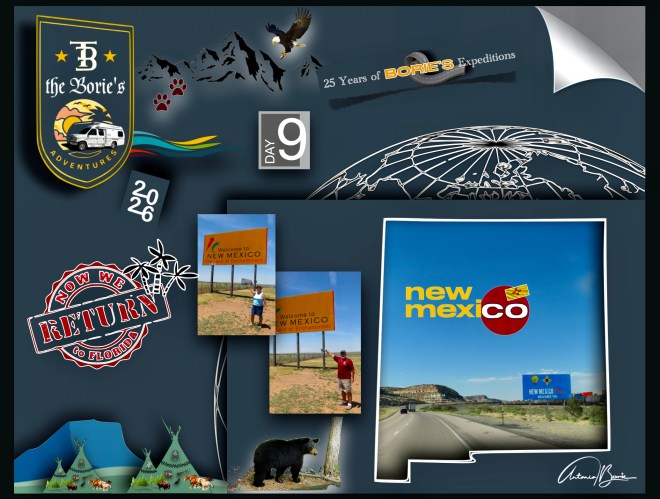
…como tal, enquanto a “inteligência artificial não toma conta”, porque talvez no futuro já não haja humanos a tomar conta de parques nacionais ou outras áreas de lazer agradáveis de se frequentar…, ei-nos viajando para leste, desviando-nos aqui e ali da estrada rápida #40 e visitando pequenos troços da já referida lendária “Route 66”, pernoitando na cidade de Gallup, New Mexico, num park de RV, designado com o nome de “Route 66”!.

…so, while “artificial intelligence doesn’t take over,” because perhaps in the future there will no longer be humans taking care of national parks or other pleasant recreational areas… here we are traveling east, deviating here and there from highway #40 and visiting small stretches of the aforementioned legendary “Route 66,” spending the night in the city of Gallup, New Mexico, in an RV park named “Route 66”!.

Tony Borie.
”Terceira Expedição ao Antigo Oeste”!. (9) ”Third Expedition to the Old West”!. (9)

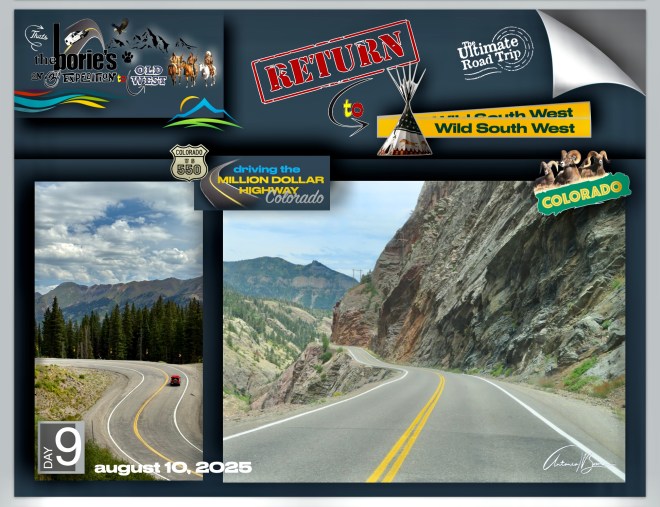
…semelhante a muitos outros estados do sudoeste, Colorado  pode ficar extremamente quente no verão, mas quando viajamos pelas suas montanhas, especialmente na região da histórica “estrada de um milhão de dolares”, as temperaturas geralmente descem!.

…similar to many other southwest states, Colorado can get extremely hot in summer, but when we travel through its mountains, especially in the historic “one million dollar road” region, temperatures usually fall!.

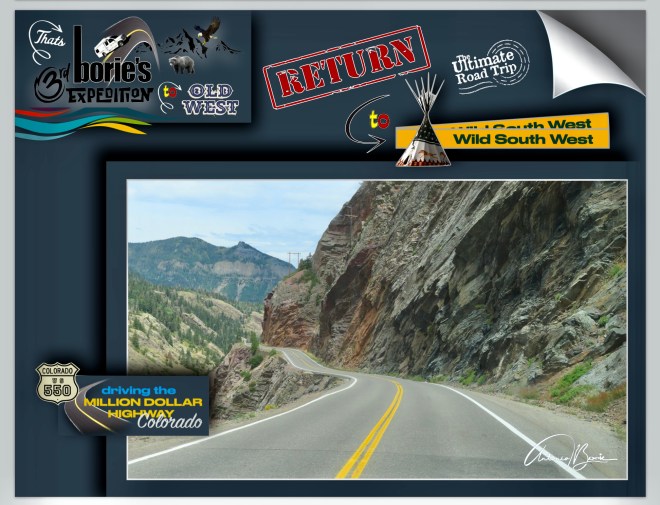
…o que felizmente nos proporciona uma excelente situação, porque nesta histórica estrada, existem curvas cegas, faixas estreitas, subidas ou descidas com algum grau de sensibilidade, nuvens baixas que cobrem a estrada e as montanhas ao redor, túneis com alguma água no piso oriunda das quedas de água e…, quase não existem guardas na sua beira para nos oferecer alguma protecção, pelo menos nas já mencionadas curvas cegas!.

…what fortunately gives us an excellent situation, because in this historic road there are blind curves, narrow strips, climbs or descents with some degree of sensitivity, low clouds that cover the road and the mountains around, tunnels with some water on the waterfalls and…, there are almost no guards on their edge to offer us some protection, at least in the aforementioned blind curves!.

…e, todos nós motoristas, devemos permanecer sempre focados na segurança do veículo, pois não há espaço para erro!. Os habitantes locais navegam na estrada com facilidade, mas para iniciantes ou turistas tal como nós, pode parecer uma experiência fácil, mas não é, porque não existe margem para qualquer distração, onde quase toda a reviravolta ou mesmo um simples virar, exige toda a nossa atenção!. No entanto, apesar de todas estas precauções, a “estrada de um milhão de dólares” continua a ser uma tentação, atraindo o corajoso e o não corajoso, porque a mistura de perigo e cenário alpino…, compensam!.

…and all of us drivers should always remain focused on vehicle safety, as there is no room for error!. Local inhabitants easily sail the road, but for beginners or tourists like us, it may seem like an easy experience, but it is not, because there is no margin for any distraction, where almost all the turnaround or even a simple turn, requires all our attention!. However, despite all these precautions, the “one million dollar road” remains a temptation, attracting the brave and non -brave, because the mixture of danger and alpine scenario…, they make up!.

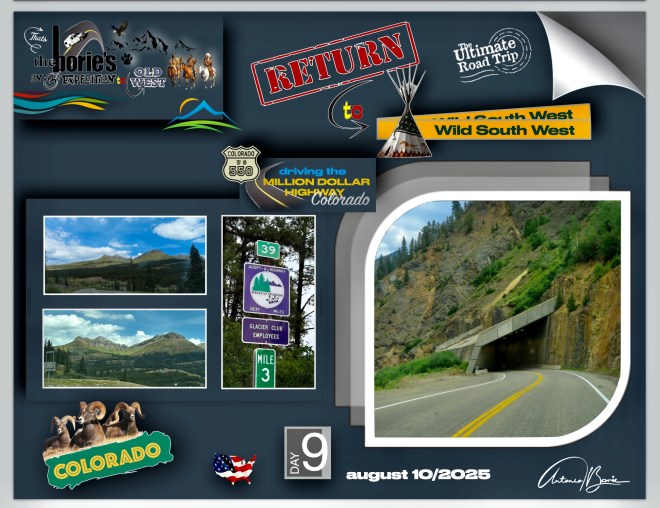
…esta “estrada de um milhão de dólares” é um trecho lendário, que atravessa as montanhas de San Juan, no sudoeste do Colorado, e geralmente é chamada de uma das estradas mais cénicas dos USA e um dos seus troços mais cénicos é entre as cidades de Silverton e Ouray, onde passa entre montanhas íngremes com quedas de água ​​e sem guardas na sua beira!. 

…this “one million dollar road” is a legendary stretch that crosses the mountains of San Juan in southwestern Colorado, and is usually called one of the most category roads of the USA and one of its most scenic strokes is between the cities of Silverton and Ouray, where it passes between steep mountains with water and landless water on its edge!.

…foi construída no final da década de 1880 para conectar cidades mineiras, dizendo-se que custou “um milhão de dólares por milha” para a construir ou para ser pavimentado com cascalho que continha um milhão de dólares em minério de ouro…,  dependendo da lenda local e no que queremos acreditar!.

…it was built in the late 1880s to connect mining cities, saying it cost “one million dollars per mile” to build it or be paved with gravel that contained a million dollars in gold ore…, depending on local legend and what we want to believe!.

…tudo aconteceu porque parámos na cidade de Durango,Colorado, que é a maior cidade perto da estrada de “Milhão de  Dólares”!. O centro da cidade tem muitos museus, boutiques, restaurantes, vida noturna, o histórico Strater Hotel ou mesmo uma estação antiga dos caminhos de ferro, onde os comboios ainda rolam pelos carris de ferro!. 

…it all happened because we stopped in the city of Durango, Colorado, which is the largest city near the road of “million dollars”!. The city center has many museums, boutiques, restaurants, nightlife, the historic Strater Hotel or even an old railway station, where trains still roll through iron rails!.

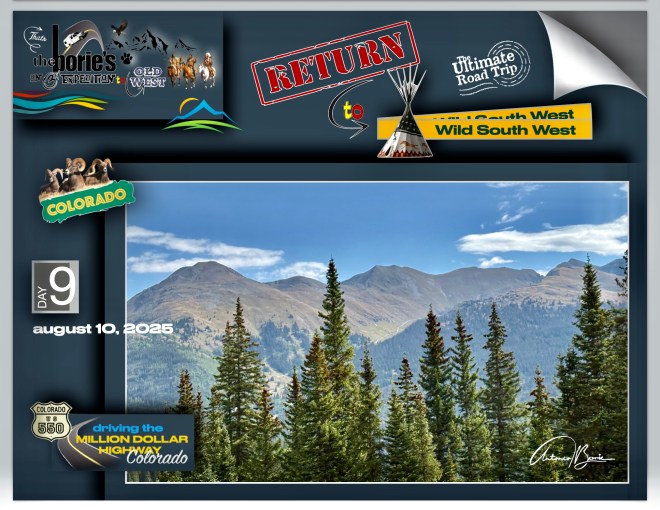
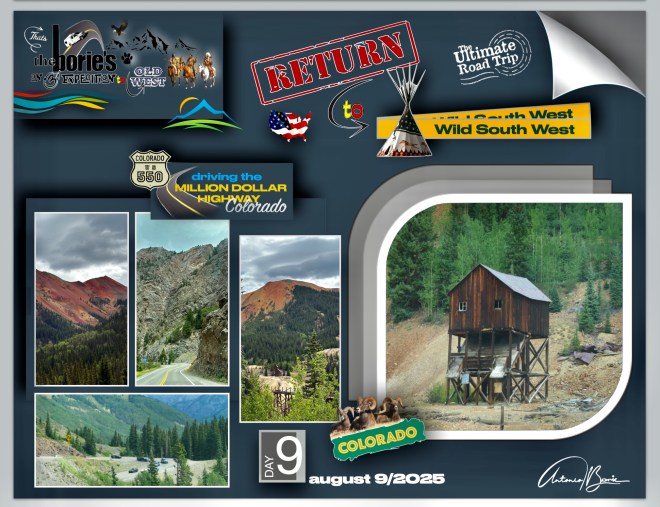
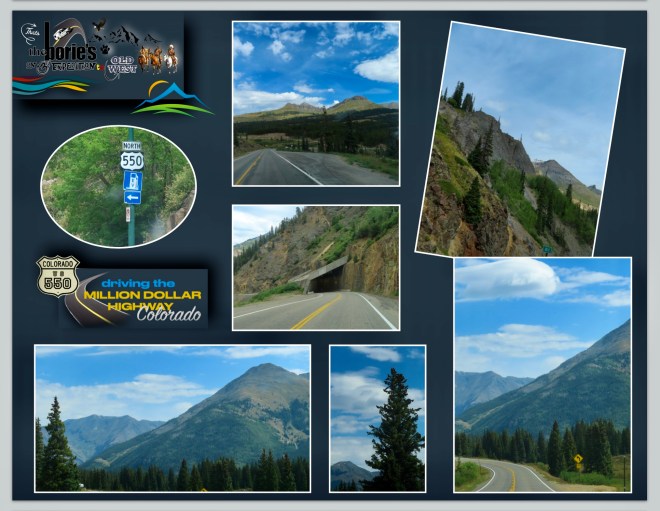
…nós, saindo da cidade de Durango pela manhã, viajámos ao longo de aproximadamente 110 milhas para norte pela estrada 550 no sudoeste do Colorado, que engloba a “estrada de um milhão de dólares”, atravessando o Red Mountain Pass a mais de 11.000 pés de altitude, parando onde era possível ver vistas deslumbrantes da montanha e nas cidades de Silverton e Ouray, (esta secção específica e traiçoeira é conhecida pelas suas quedas íngremes e faixas estreitas), e claro, sempre com atenção às suas curvas cegas!. 

…we, leaving the city of Durango in the morning, traveled over approximately 110 miles to the 550 road in southwestern Colorado, which encompasses the “one million dollar road”, crossing the Red Mountain Pass at more than 11,000 feet in altitude, stopping where it was possible to see stunning views of the mountain and in the cities of Silverton and Ouray, (this specific section, and treacherous section, It is known for your steep falls and narrow banners), and of course, always carefully to your blind curves!. 

 …como já acima mencionámos, as vistas são dramáticas, picos imponentes, desfiladeiros profundos e vales que parecem se estender para sempre, mas a beleza da estrada vem com o desafios das suas curvas, mudanças repentinas do tempo e a sempre presente consciência de que muitas vezes há apenas algum espaço entre os pneus do veículo e um desfiladeiro profundo!.

…as we mentioned above, the views are dramatic, imposing peaks, deep canyons and valleys that seem to extend forever, but the beauty of the road comes with the challenges of their curves, sudden changes of time and the ever -present conscience that there is often just some space between the vehicle tires and a deep canyon!.

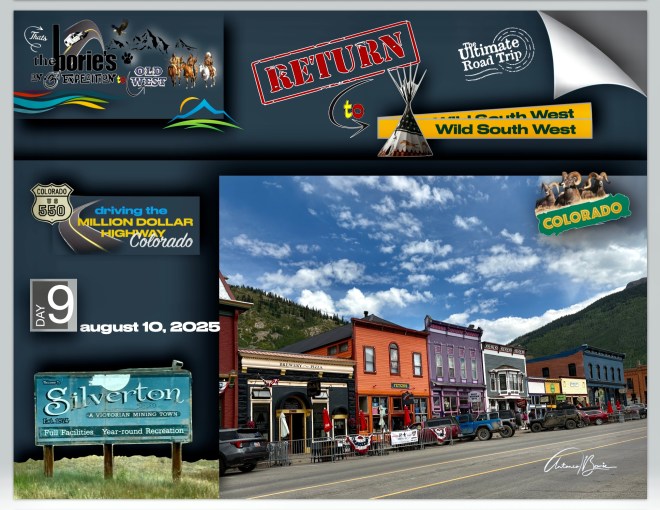
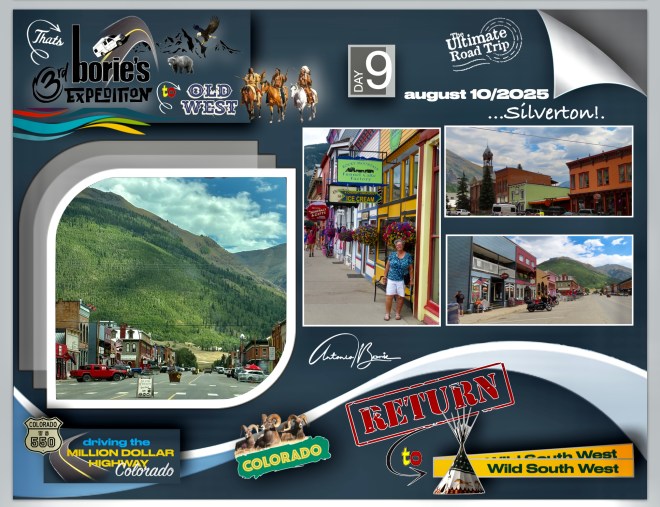
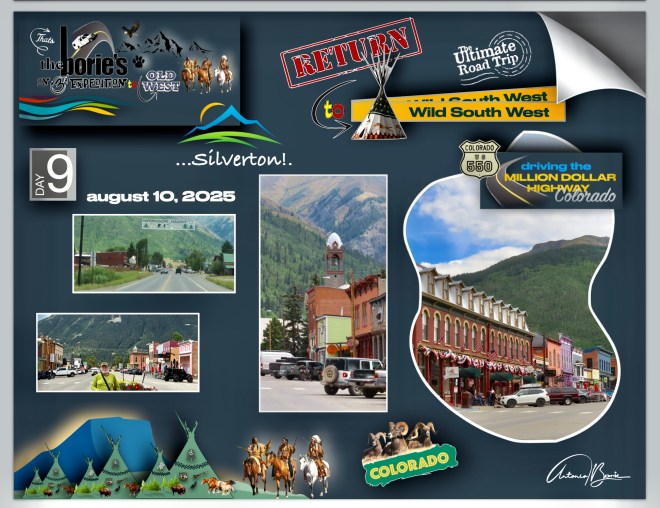
…parámos na cidade de Silverton, que é bem conhecida por causa da Railroad Durango e Silverton Larrege Gauge, um combóio de minas que agora é um marco histórico nacional!.A nós pareceu ter todas as características de uma antiga cidade mineira ocidental, aninhada no coração das montanhas de San Juan!. Caminhamos por lá, tem restaurantes, lojas de prendas, bares, alguns edifícios considerados monumentos, museus e outras atracções para visitantes como nós!.

…we stopped in the city of Silverton, which is well known because of Railroad Durango and Silverton Larrege Gauge, a Minas Travel that is now a national historical framework!. We seemed to have all the characteristics of an ancient Western Minas Gerais city, nestled in the heart of the mountains of San Juan!. We walked there, there are restaurants, gift shops, bars, some buildings considered monuments, museums and other attractions for visitors like us!.

…e dizem-nos que as primeiras reivindicações de mineração foram feitas em montanhas acima do Silverton no ano de 1860, perto do final da corrida do ouro do Colorado e quando a terra ainda era controlada pelos Utes!. Depois…, os Utes cederam a região e a cidade cresceu da mineração de prata até o pânico do ano de 1893 levar a um colapso do mercado da prata e, cresceu novamente da mineração de ouro até a recessão causada pelo pânico do ano de 1907!. Hoje, a cidade inteira é incluída como um distrito histórico nacional designado pelo governo federal, o Distrito Histórico de Silverton!.

…and they tell us that the first mining claims were made in mountains above Silverton in 1860, near the end of the Colorado Gold Race and when the earth was still controlled by the Utes!. Then…, the Utes gave the region and the city grew from silver mining to the 1893 panic lead to a silver market collapse and grew again from gold mining to recession caused by the 1907!. Today, the whole city is included as a national historical district designated by the federal government, the historical district of Silverton!.

…voltámos à “estrada de um milhão de dólares” e…, sem qualquer dúvida que voltámos a sentir uma mistura de adrenalina e admiração, numa aventura de alta altitude, onde cada milha parece um cartão postal trazido à vida!. Porquê?. 

…we went back to the “one million dollar road”, and…, no doubt that we once again felt a mixture of adrenaline and admiration, in an adventure of high altitude, where each mile looks like a postcard brought to life!. Why?. 

…porque este trecho de estrada abraça penhascos com pouca ou nenhuma oportunidade de saída em caso de deslize!. Os desfiladeiros são íngremes e, em muitos lugares, a estrada mal parece larga o suficiente para que dois veículos passem um pelo outro, e claro, para aqueles com medo de alturas, até um olhar pela janela pode induzir ansiedade!.

…because this stretch of road embraces cliffs with little or no exit opportunity in case of slip!. The canyons are steep and in many places the road badly seems wide enough for two vehicles to pass each other, and of course, for those afraid of heights, even a look through the window can induce anxiety!.

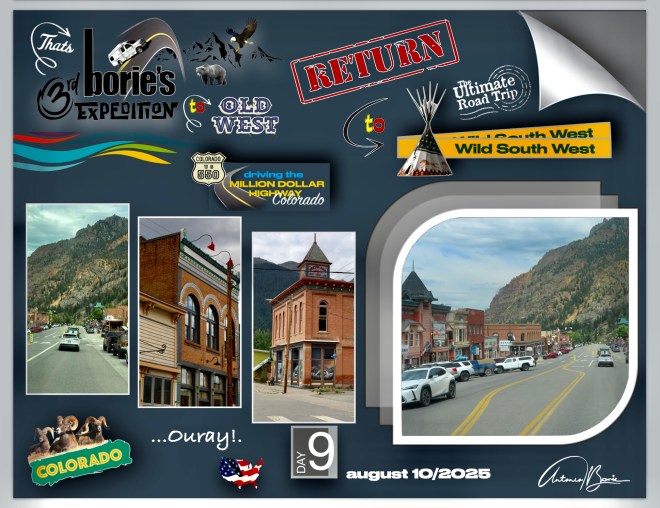
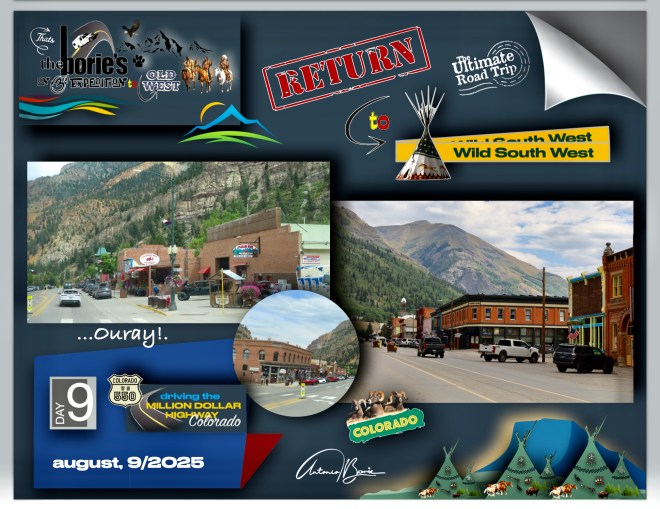
…chegámos à cidade de Ouray, que está cercado por altas montanhas alpinas, ganhando o título “Suíça da América”!.  É o lar do Ouray Ice Park, um desfiladeiro de renome mundial, onde as quedas de água artificiais são cultivadas em gelo durante o inverno para escalar com ferramentas de gelo especializadas!. Como distrito histórico nacional, os edifícios ao longo da Main Street e na cidade são preservados e protegidos!.

…we arrived at the city of Ouray, which is surrounded by high alpine mountains, winning the title “Swiss of America”!.  It is home to Ouray Ice Park, a worldwide renowned gorge, where artificial waterfalls are cultivated in ice during winter to climb with specialized ice tools!. As a national historical district, buildings along the Main Street and in the city are preserved and protected!.

…não era possível parar, porque a azáfama nas ruas, especialmente pela presença de motociclistas que ocupavam tudo o que era espaço para estacionar!. Passámos a cidade pela Main Street, que é registrada como um distrito histórico nacional, onde a maioria dos seus edifícios datam do final do século XIX!. Dizem-nos que os mineiros, chegaram por aqui por volta do ano de 1875, estabelecendo-se em busca de prata e ouro nas montanhas circundantes e a cidade…, certa vez, ostentava mais cavalos e mulas do que as pessoas, porque no auge da sua mineração, Ouray tinha mais de 30 minas activas!. 

…it was not possible to stop, because the streets in the streets, especially the presence of motorcyclists who occupied everything that was room to park!. We passed the city through Main Street, which is recorded as a national historical district, where most of its buildings date from the late nineteenth century!. They tell us that the miners arrived around around 1875, settling in search of silver and gold in the surrounding mountains and the city…, once, it was more horses and mules than people, because at the height of their mining, Ouray had more than 30 active mines!.

…em conclusão!. A ”estrada de um milhão de dólares” e as áreas circundantes estão cheias de oportunidades de aventuras, conhecimento histórico e vistas montanhosas!. E nós, amantes da natureza e de caminhadas, e claro, às vezes procurando aventuras, encontrámos nesta estrada, uma parte imperativa de experimentar tudo o que o sudoeste do Colorado tinha para nos oferecer!.

…in conclusion!. The “one million dollar road”, and the surrounding areas are full of opportunities for adventure, historical knowledge and mountainous views!. And we lovers of nature and hiking, and of course, sometimes looking for adventures, we found on this road, an imperative part of experimenting with all that southwest of Colorado had to offer us!.

….assim continuámos a nossa rota em direcção ao norte, ou seja, até à cidade de Montrose, que é a segunda maior cidade do oeste do Colorado, e onde a linha do caminho de ferro “Denver & Rio Grande” foi construída para oeste em direção a Grand Junction e chegou a Montrose no final do ano de 1882, e a cidade se tornou um importante centro de transporte regional!. Aqui, numa superfície comercial comprámos alguns géneros alimentícios para sobrevivência na estrada!.

…so we continued our route towards the north, that is, to the city of Montrose, which is the second largest city in Western Colorado, and where the “Denver & Rio Grande” railway line was built west toward Grand Junction and came to Montrose at the end of 1882, and the city became an important regional transport center!. Here, on a commercial surface we bought some foodstuff for survival on the road!.

…seguindo depois uma rota para leste, numa direcção de retorno à nossa casa na Florida!, Como tal, deixámos o tal, “Oeste Selvagem de Antigamente” e, todas as cidades, parques nacionais ou lugares históricos que podemos vir a visitar rumo ao leste, serão de retorno à “Florida, lar, doce lar”!. Por favor, fiquem atentos aos próximos episódios!.

…then following an east route, in a direction of return to our home in Florida!, As such, we left the “Wild West” and, all cities, national parks or historical places that we can visit east, will be returned to “Florida, Home, Sweet Home”!. Please be aware of the next episodes!.

…e assim continuámos para leste até à cidade de Alamosa, Colorado, onde pernoitámos num parque de RV!.

…and so we continued to the east to the city of Alamosa,Colorado, where we stayed overnight in a RV! Park!.

Tony Borie.
”Terceira Expedição ao Antigo Oeste”!. (7) ”Third Expedition to the Old West”!. (7)

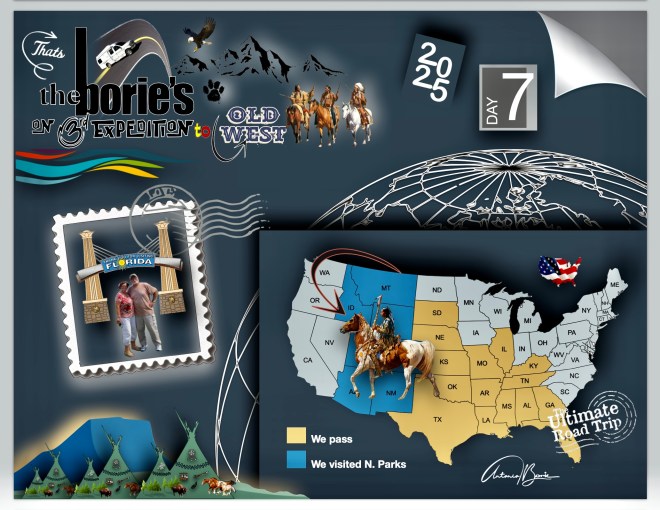
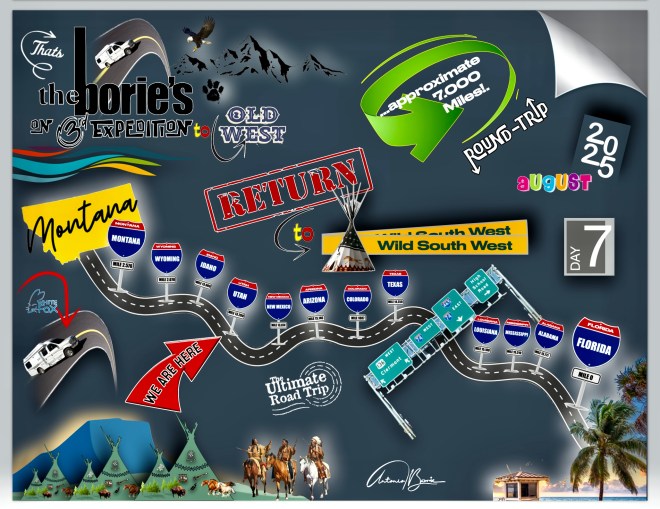
…vamos no sétimo dia de viagem e…,hoje, ontem, há cinco ou seis dias, temos nos sentido uns abençoados pelas belezas que a natureza nos mostrou!. Passámos por diversos estados, ficando algum tempo por estes três últimos, onde mais se vê um pouco da história do “antigo e mais selvagem Norte/Oeste”!. Agora vamos em direcção ao sul, para ver também um pouco do “antigo e mais selvagem Sul/Oeste”, onde sempre tentámos descobrir um lugar e desvendar a sua história, ou seja, conhecer o seu povo e os seus costumes!.

…let’s go to the seventh day of travel and…, today, yesterday, five or six days ago, we have been blessed by the beauties that nature showed us!. We passed through several states, spending some time for these last three, where you can see a little of the history of the “old and wilder north/west”!. Now we go south to see a little of the “old and wilder South/West”, where we have always tried to discover a place and unravel its history, that is, to know its people and its customs!.

…e, quando escrevemos, às vezes tentamos descrever detalhadamente uma cena daquilo que vimos, provámos, ouvimos ou sentimos, mostrando partes do mundo através dos nossos olhos!. Contar é simplesmente levar a história por adiante e, atravessando uma qualquer zona, tentamos sempre passar ao lado das cidades e embrenharmo-nos no campo e em cenários de natureza!.

…and when we write, sometimes we try to describe a scene in detail what we saw, proved, hear or feel, showing parts of the world through our eyes!. To tell is simply to take the story forward and, crossing any zone, we always try to pass alongside the cities and get in the field and in nature scenarios!.

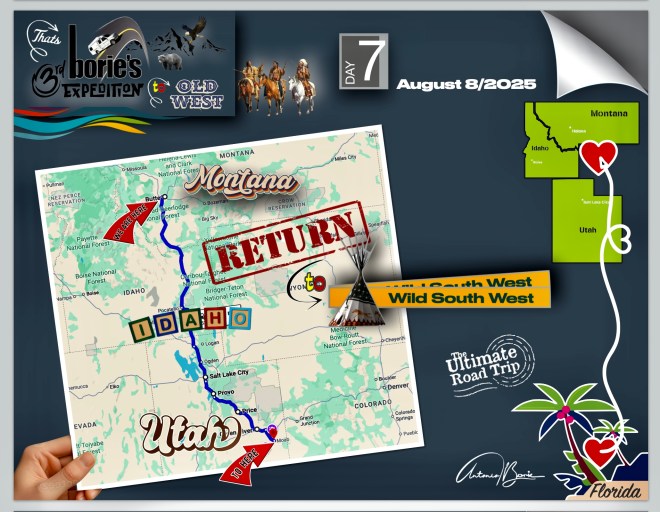
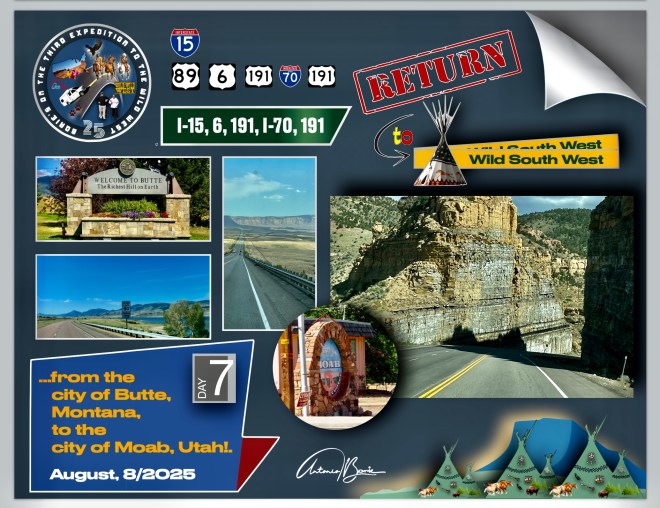
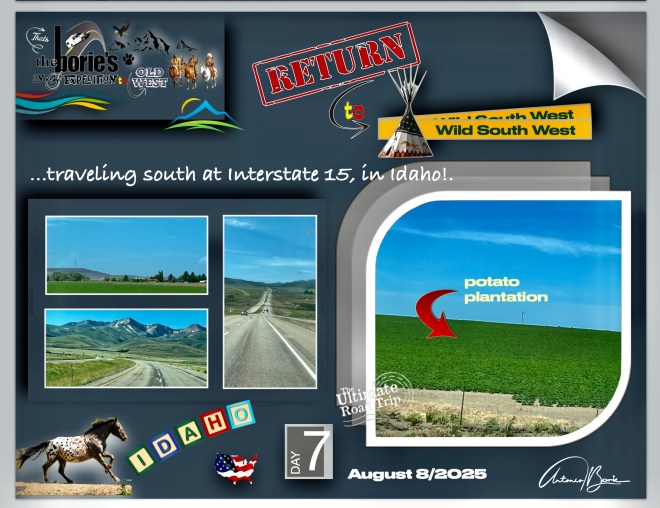
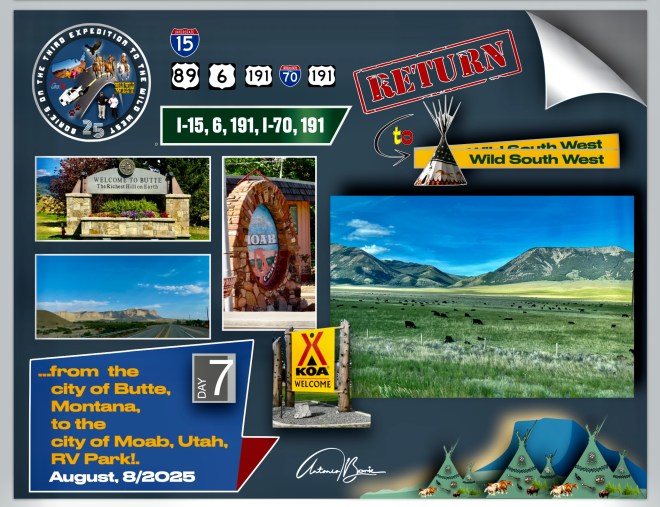
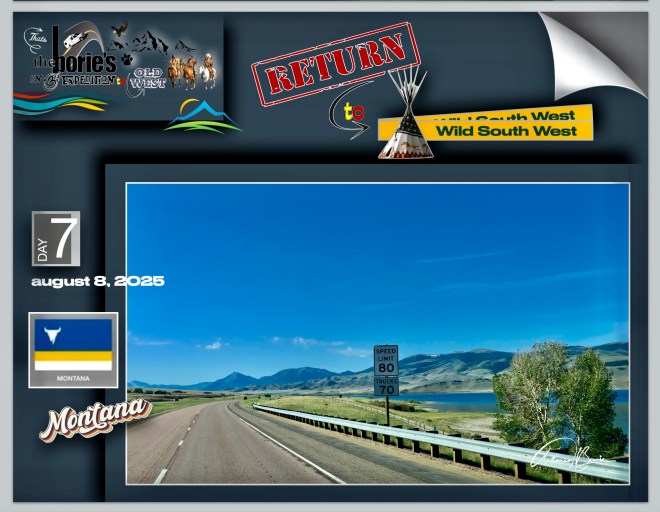
…wow, que desabafo!. Agora, vamos continuar a descrever a nossa viagem ao Oeste!. Cedo abandonámos o nosso parque de RV na cidade de Butte, Montana, viajando pela auto-estrada I-15 quase deserta, sempre em direcção ao sul, onde o cenário era…, aqui e ali, campos ondulados com  grandes manadas de gado bovino pastando, pequenas montanhas e planícies, onde a cor verde era constante, e olhando o céu…, podíamos ver um quase azul maravilhoso!.

…wow, what a vent!. Now, let’s continue to describe our trip to the west!. Early on we abandoned our RV park in the city of Butte, Montana, traveling along the almost deserted Interstate 15 motorway, always towards the south, where the scenario was…, here and there, wavy fields with large beef spring cattle, small mountains and plains, where the green color was constant, and looking at the sky…, we could see an almost wonderful blue!.

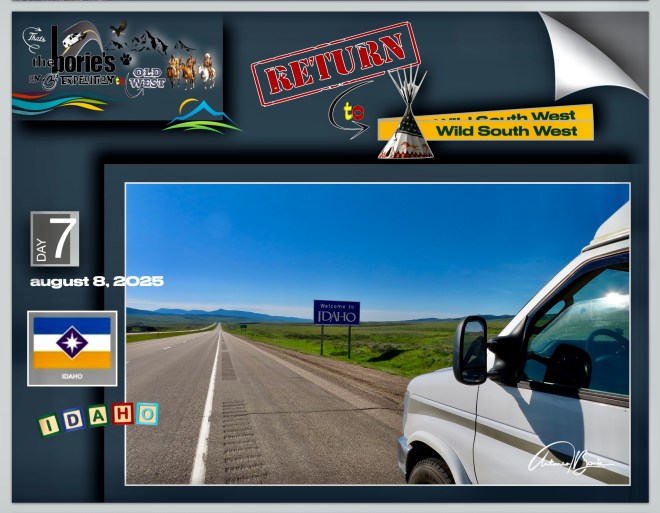
…entretanto, abrindo a janela para se poder tirar uma foto da placa que anunciava o estado, antes de passar a fronteira para o  Idaho, onde já havia poucas montanhas, dando lugar a planícies de plantações de batatas e cereais e…, uma mosca, que não tinha sido convidada, entrou na caravana e zumbia à nossa volta!. Nós, sem mostrar agressividade, abrimos de novo a janela e…, ela escondeu-se!. Não perdendo mais tempo, seguimos viagem, onde a dita mosca, aparecia tão depressa como de novo se escondia!.

…however, opening the window to take a picture of the sign that announced the state, before passing the border to Idaho, where there were few mountains, giving way to potato and cereal plantations plains and…, a fly, which had not been invited, entered the caravan and zombia around us!. We, without showing aggression, opened the window again and…, she hid!. Not wasting more time, we went on, where the so called fly appeared as quickly as it was hiding again!.

…continuando a nossa jornada rumo ao sul, parámos numa estação de serviço para comprar gasolina, café e alguns géneros alimentícios, abrindo as janelas e portas da caravana, convidando a já referida mosca a sair…, mas não, ela não saiu!. Voltando à estrada, podíamos ver que as plantações de batata eram constantes serpenteando por pitorescas terras agrícolas, oferecendo um vislumbre do charme rústico, ou seja, uma verdadeira essência do charme rural, em contraste com as paisagens quase desérticas que tínhamos vindo a apreciar antes!.   

…continuing our journey to the south, we stopped at a service station to buy gasoline, coffee and a few foodstuffs, opening the caravan windows and doors, inviting the fly to leave…, but no, she didn’t leave!. Returning to the road, we could see that the potato plantations were constantly serpenting by pictures of agricultural lands, offering a glimpse of the rustic charm, that is, a true essence of rural charm, in contrast to the almost desert landscapes we had come to appreciate before!.  

…entretanto passámos a fronteira para o estado do Utah e…, a mosca continuava na nossa companhia, aparecendo e desaparecendo!. Um tempo depois, o tráfico ficou quase congestionado, porque havia um grande encontro de estradas!. Era a área da grande cidade de Salt Lake City que continua a expandir-se para sul por milhas e milhas, com construção de novas moradias na encosta das montanhas que a circundam do lado leste, que já se pode ver quase coberta na sua totalidade!.

…however we passed the border to the state of Utah and…, the fly was still in our company, appearing and disappearing!. A while later, the traffic was almost congested, because there was a great meeting of roads!. It was the area of ​​the great city of Salt Lake City that continues to expand south by miles and miles, with the construction of new houses on the slope of the mountains that surround it on the east side, which can already be seen almost covered in its entirety!.  

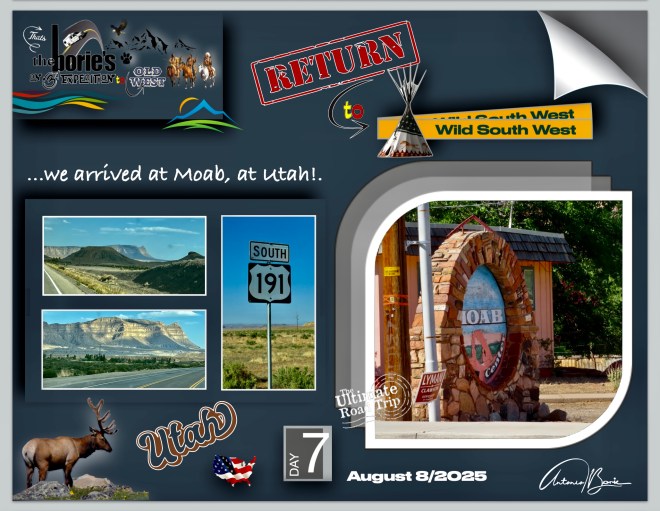
…mais a sul, e poupando algumas milhas no nosso percurso, saímos da auto-estrada I-15, entrando nas estradas cénicas e para o interior leste, #6 e #191, onde já se começaram a ver pequenas montanhas e outros monumentos naturais do sul do Utah…, sem qualquer vegetação!. Eram milhas e milhas de terra árida e deserta, localizadas fora dos roteiros mais conhecidos, onde cada milha passada, era uma oportunidade de se poder mergulhar num cenário do típico sul…, deste para nós, maravilhoso estado do Utah, e…, onde tencionávamos nos dias seguintes, visitar alguns dos seus parques naturais!.

…further south, and saving a few miles in our route, we left the Interstate 15, entering the South Roads and the East Interior, #6 and #191, where small mountains and other natural monuments of southern Utah have begun to see without any vegetation!. These were miles and miles of arid and deserted land, located outside the best known scripts, where every past mile, was an opportunity to dive into a scenario of the typical South…, from us, wonderful state of Utah, and…, where we intended in the following days, visit some of their natural parks!.

…já na auto-estrada I-70, rumo ao leste, parámos da pequena cidade de Green River, que já foi em tempos uma rota comercial da “Old Spanish Trail” que atravessava o rio Verde, na área da moderna e actual pequena cidade de Green River, que constantemente se está a modernizar, com hotéis, restaurantes e estações de gasolina gigantes, com supermercados que vendem tudo o que um viajante necessita, dando apoio às centenas de veículos comercias e não só, que transitam pela auto-estrada Interstate 70 nos dois sentidos!.

…already on the Interstate 70 towards the east, we stopped from the small town of Green River, which has once been a commercial route of the “Old Spanish Trail” that crossed Rio Verde, in the area of ​​the modern and current small town of Green River, which is constantly modernizing, with hotels, restaurants and giant gas stations, with supermarkets that sell everything a traveler needs, giving support to hundreds of commercial vehicles and beyond, which move through the Interstate 70 motorway in both directions!.

…entretanto dentro da nossa “White Fox” (caravana) apesar da temperatura ser fresca, a dita mosca continuava por lá, porque zumbia aos ouvidos e poisava em tudo o que era caravana!. No entanto, depois de umas tantas milhas para leste, e antes de tomar a direcção do sul podíamos avistar a “Antiga Trilha Espanhola” ao longe na cordilheira das “Montanhas Salgadas”, onde ainda havia alguns picos com neve!.

…however, inside our “White Fox” (caravan) although the temperature was fresh, the so called fly was still there, because it would zombos to the ears and put it in everything that was caravan!. However, after so many east miles, and before taking the southern direction we could see the “old Spanish trail” in the distance in the “salty mountains” mountain range, where there were still some snow spikes!.

…daqui até à região do Moab, foi um “pulo”, ou seja, foi rápido, onde pernoitámos num parque de RV e…, a célebre mosca que tinha entrado ainda em território de Montana, ao abrir-mos a porta da caravana, voou para a mesa onde entretanto a nossa dedicada esposa Isaura, tinha colocado numa mesa daquelas de existem nos parques RV, uma toalha e alguma comida!. 

…from here to the Moab region, it was a “jump”, that is, it was fast, where we stayed overnight in a RV and…, the famous fly that had entered the territory of Montana, opening the caravan door, flew to the table where our dedicated wife Isaura, had placed on a table of them in the RV parks, a towel and some food!. 

…no  nosso pensamento ficou a incógnita: “a mosca queria mudar de estado e aproveitou a “boleia”…, ou adorava o estado do Utah, tal como nós!.

… In our thinking was the unknown: “The fly wanted to change state and took advantage of the “ride”…, or loved the state of Utah, just like us!.

Tony Borie.
…Horseshoe Bend, Arizona!.

…vindos do norte pela estrada US 89, o lugar de Horseshoe Bend ,(Dobrar da Ferradura), está localizado a aproximadamente oito milhas a jusante da represa de Glen Canyon e do lago Powel, podendo nós ter acesso à trilha que lá nos levará diretamente da estrada, fazendo uma caminhada de ida e volta de aproximadamente 2,4 milhas, que nos leva a subir uma colina moderada e depois uma curva e voltar!. 

…from the north by the Road US 89, the place of Horseshoe Bend, is located approximately eight miles downstream of the Glen Canyon dam and Lake Powel, and we can have access to the trail that will take us directly from the road, making a round trip of approximately 2.4 miles, which leads us to climb a moderate hill!

…percorrendo este trajecto, estamos mais ou menos a 1.000 pés acima do rio Colorado, num local maravilhoso, onde entre outros cenários de tirar a respiração, se podem tirar lindas fotos, pois Horseshoe Bend é um meandro em forma de ferradura do rio Colorado, que foi resistindo aos ciclos de tempo, onde à cerca de 200 milhões de anos atrás, a areia que fazia parte do maior sistema de areia e dunas do continente norte-americano, que talvez fossem “mares de areia” que eventualmente se foram endurecendo pela água e minerais no Navajo Sandstone, numa uniforme e incrível camada lisa de arenito, que se estendia do Arizona para Wyoming, e ainda hoje pode ter mais de dois mil pés de espessura em alguns lugares!..

…running through this route, we are about 1,000 feet above the Colorado River, in a wonderful place, where among other breathing scenarios, you can take beautiful photos, because Horseshoe Bend is a meandro in the horseshoe of the Colorado River, which was resisting the time cycles, where about 200 million years ago, the sand that was part of the largest system of sand and dunes, perhaps “seas might Sand” that eventually hardened by water and minerals at Navajo Sandstone, in a uniform and amazing smooth sandstock layer, which extended from Arizona to Wyoming, and is now being more than two thousand feet of specsura in some places!.

…e quando alcançamos a borda do Horseshoe Bend, estamos a olhar para aproximadamente a 1.000 pés (305 metros), do arenito para o rio, pois depois de Arenito Navajo endurecido, outras camadas diferentes de sedimentares se foram empilhando, e claro, ao longo de alguns milhões de anos, a paciente água sob a forma de chuva, gelo, inundações e córregos, foi trabalhando,  corroendo essas diferentes camadas de Arenito Navajo, onde a areia foi lentamente desaparecendo, surgindo um cenário a que hoje chamam Horseshoe Band!.

…and when we reach the edge of the Horseshoe Bend, we are looking at approximately 1,000 feet (305 meters), from sand to the river, because after hardened navajo sandstone, other different layers of sedimenters were stacked, and of course, over a few million years, the patient water in the form of rain, ice, floods and streams, was working, corroding these different layers of Arenito Navajo, where the sand slowly disappearing, appearing a scenario that today call Horseshoe Band!.

…nós caminhámos até lá, até ao topo da colina e olhando à nossa volta, não vimos apenas o Horseshoe Band, porque nesta trilha também lá estavam o Planalto de Paria e o Vermillion Cliffs e, à nossa direita, o rio leva-nos ao lago Powell, na área de recreação nacional de Glen Canyon, que também visitámos, e à nossa  esquerda, estendia-se a vasta nação Navajo, e nós, parados, maravilhados na encruzilhada destes locais, que são um encontro de coisas naturais e culturais, únicas!..

…we walked there, to the top of the hill and looking around us, we didn’t just see Horseshoe Band, because on this trail there were also the Paria Plateau and the Vermillion Cliffs and, on our right, the river takes us to Lago Powell, in the national recreation area of ​​Glen Canyon, which we also visited, and on our left, extended the vast nation Navajo, and we, standing, amazed at the crossroads of these places, which are a meeting of natural and cultural things, unique!.

…onde estávamos?. Estávamos num daqueles lugares raros que é absolutamente de tirar o fôlego, uma daquelas maravilhas que foram esculpidas ao longo de milénios pelas águas do rio Colorado, enquanto descia pelo Grand Canyon!. Estávamos a voltar à cerca de 20 milhões de anos atrás, onde eventualmente todas as dunas de areia foram petrificados pela calcita, mantendo as suas belas formas de dunas inclinadas, que hoje são simples grãos de areia!. 

….where were we?. We were in one of those rare places that is absolutely breathtaking, one of those wonders that were carved along millennia through the waters of the Colorado River, as it descended by the Grand Canyon!. We were returning about 20 million years ago, where eventually all the sand dunes were petrified by Calcita, keeping their beautiful shapes of sloping dunes, which today are simple grains of sand!. 

…estávamos também a viver as evidências dos nossos antepassados, que foram deixadas aqui por Puebloans ancestrais (chamados por alguns “Anasazi”) há mais de 800 anos, que fizeram esculturas nas rochas de arenito, dizendo-nos que cultivavam, milho, feijão ou abóbora, mas não parecem ter vivido ao nível do rio, porque embora a água do rio estivesse ótima para a agricultura, era muito sedosa para se beber!.

…we were also living the evidence of our ancestors, which were left here by Ancestral Puebloans (called by some “Anasazi”) more than 800 years ago, they made sculptures in sandstone rocks, telling us that they cultivated, corn, beans or pumpkin, but they do not seem to have lived at the level of the river, because although the river water was great for agriculture, it was very silky to drink!.

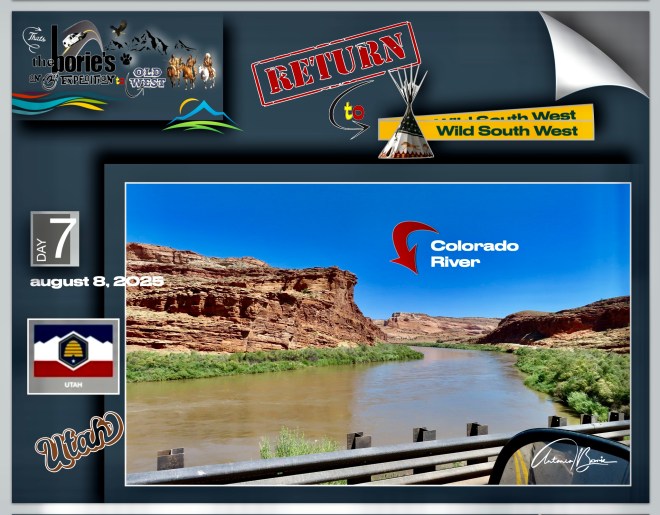
…enfim, ao percorrer esta trilha, além de um cenário único e maravilhoso, aprendemos mais uma parte da história deste rio Colorado, que sempre que passamos junto a ele, não perdemos a oportunidade de o apreciar!.

…anyway, as you go through this trail, besides a unique and wonderful scenario, we learned another part of the history of this Colorado River, which whenever we pass it to it, we do not miss the opportunity to appreciate it!.

Tony Borie.