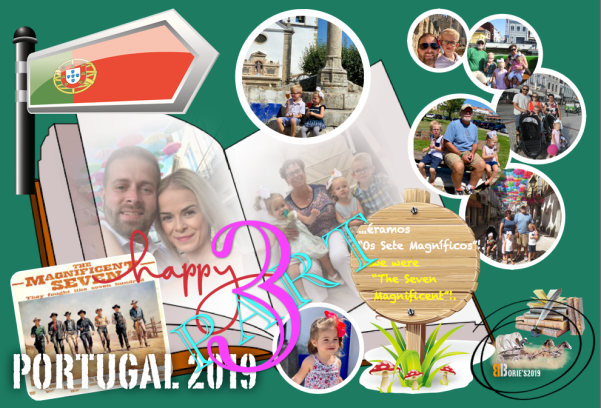
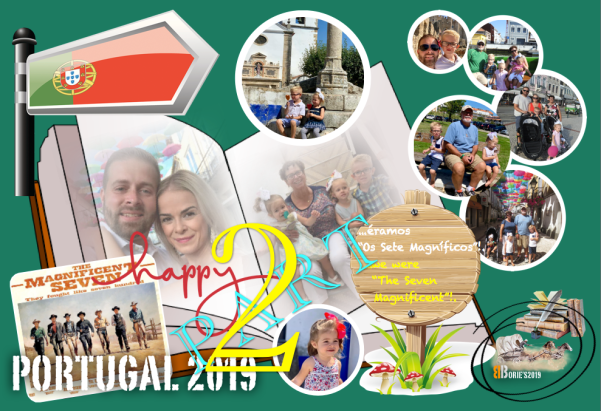
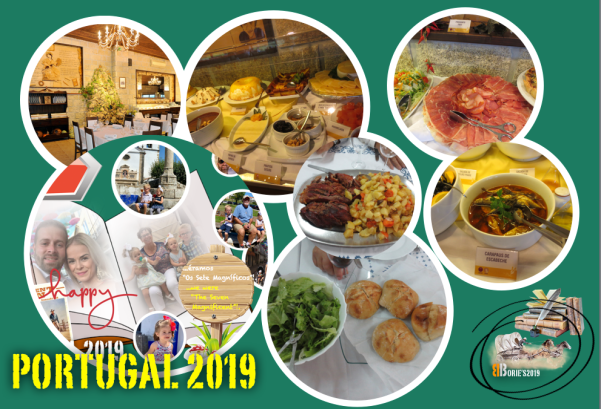
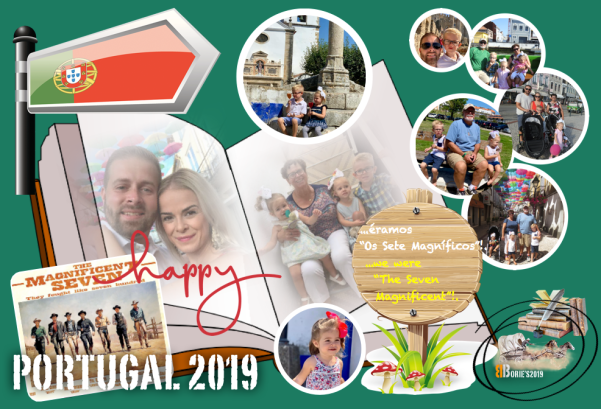
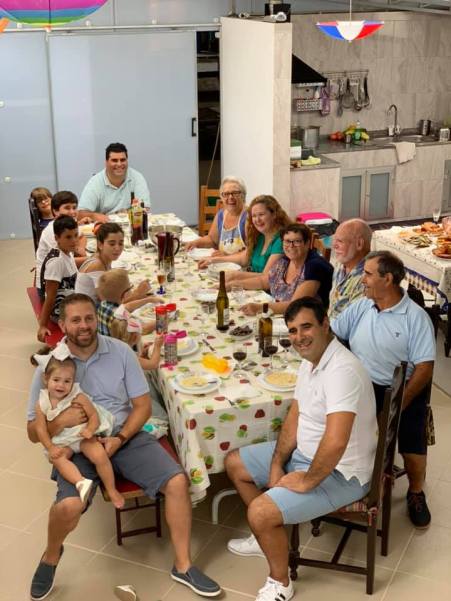
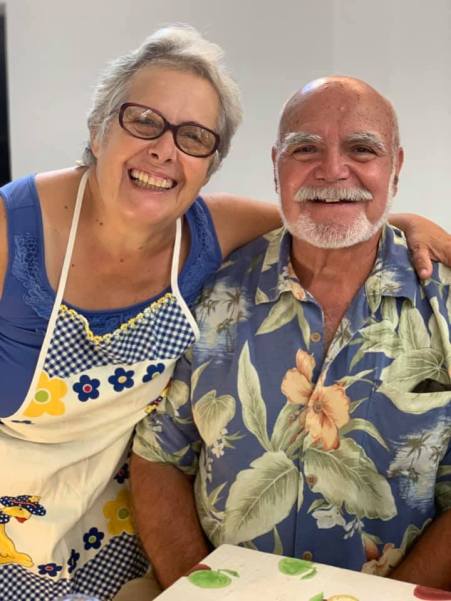
…fomos a Portugal!. Éramos “Os Sete Magníficos”!. (We went to Portugal!. We were “The Seven Magnificent)!.

…fomos a Portugal!. Éramos “Os Sete Magníficos”!. (We went to Portugal!. We were “The Seven Magnificent)!.

…fomos a Portugal!. Éramos “Os Sete Magníficos”!. (We went to Portugal!. We were “The Seven Magnificent”)!.
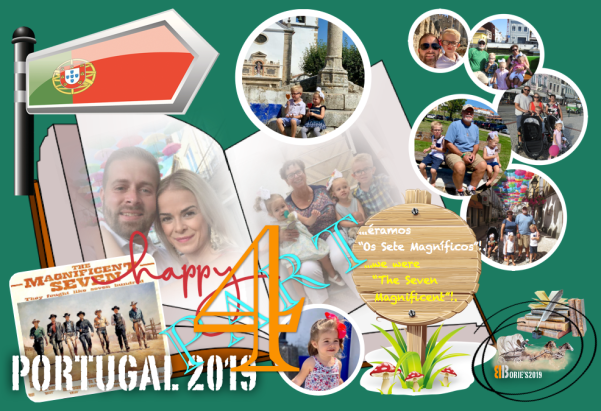
…quarta parte!. (fourth part)!.
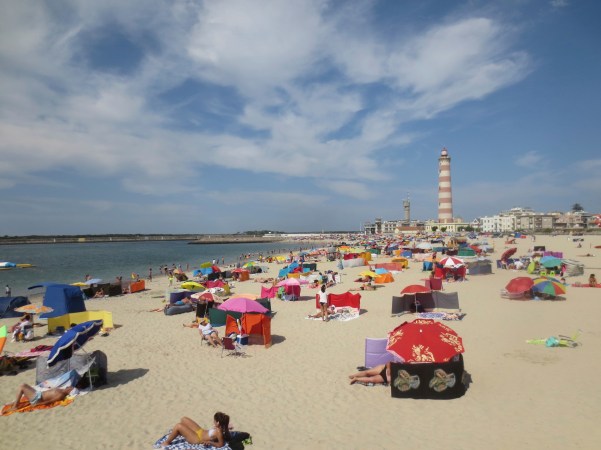
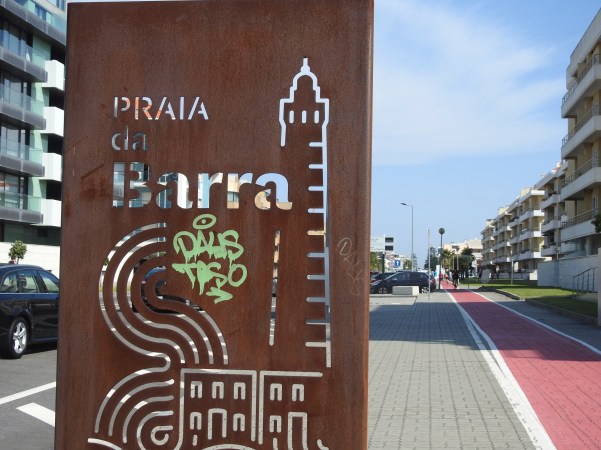
…anteriormente já explicámos mas, para quem não nos seguiu na leitura destes textos, que não são mais do que uns pequenos resumos da nossa viajem a Portugal neste ano de 2019, voltamos a explicar que, por alguns dias ficámos estacionados na Praia da Barra de Aveiro e, nestes dez dias lá passados, o nome mais apropriado para o nosso grupo seria “The Magnificent Seven” (“Os Sete Magníficos”)!. (We have already explained before, but for those who did not follow us in reading these texts, which are nothing more than brief summaries of our trip to Portugal this year 2019, we again explain that for a few days we were stationed in Praia da Barra de Aveiro and, in the last ten days there, the most appropriate name for our group would be “The Magnificent Seven”)!.
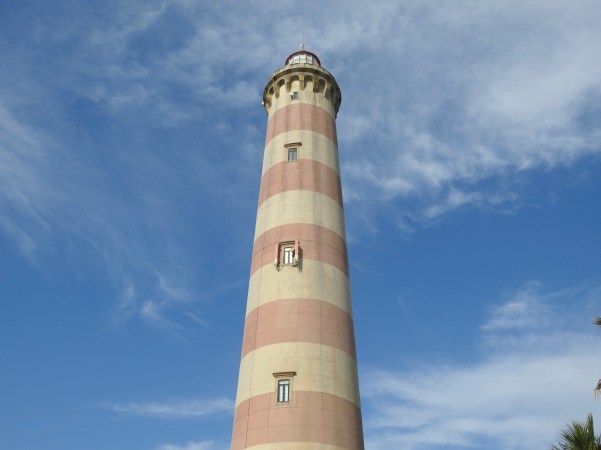
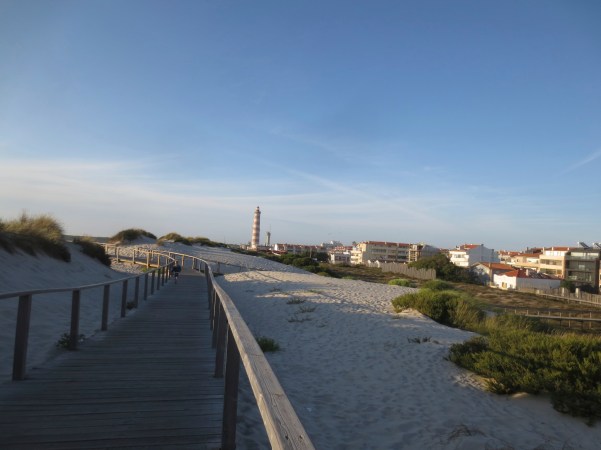
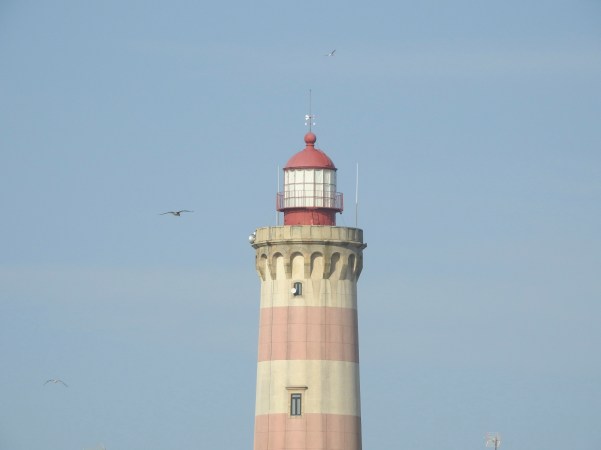
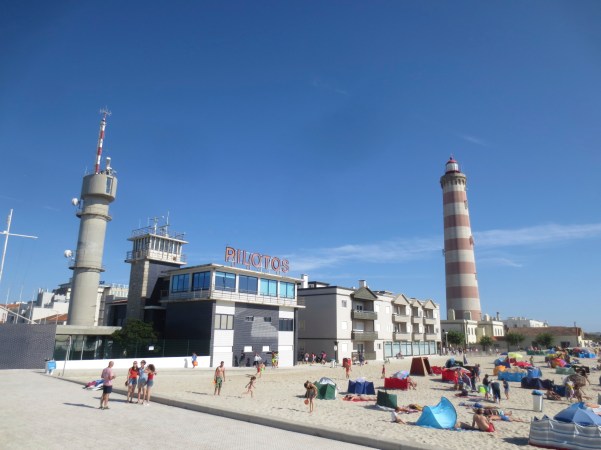
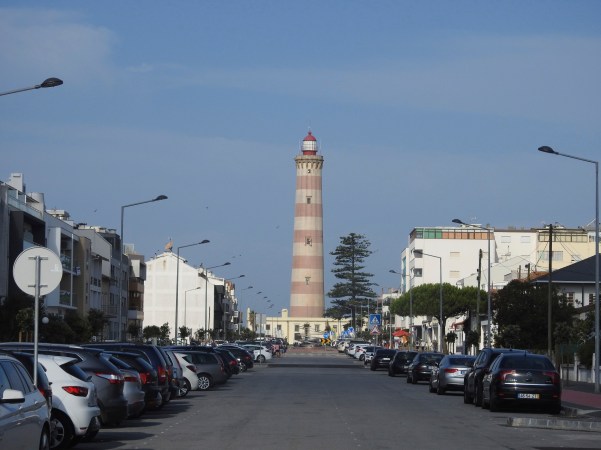
…também já explicámos que, esta Praia era a nossa “Fortaleza” dos tempos modernos, não havendo, nem eram necessárias as muralhas necessárias para se sobreviver num mundo em constante mudança de invasão e conquista, considerando nós, o Farol da Barra de Aveiro a nossa Torre de Vigia, o nosso ponto de orientação, que nos protegia de qualquer anomalia que porventura podesse ameaçar o “Nosso Reino”, navegássemos nós, em qualquer direção dos quatro pontos cardeais!. (We have also explained that this beach was our “fortress” of modern times, and there are no necessary walls to survive in a constantly changing world of invasion and conquest, considering us, the Barra de Aveiro Lighthouse our Watchtower, our orientation point, which protected us from any anomaly that might threaten “Our Kingdom”, if we sailed in any direction from the four cardinal points)!.
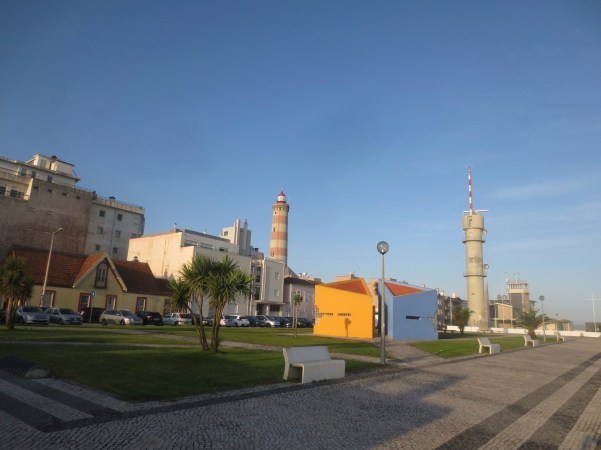
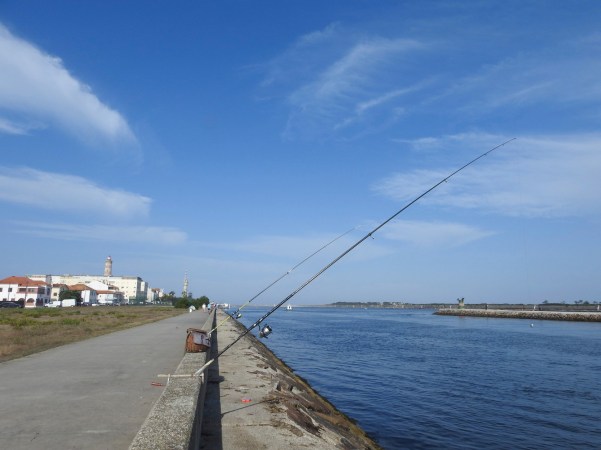
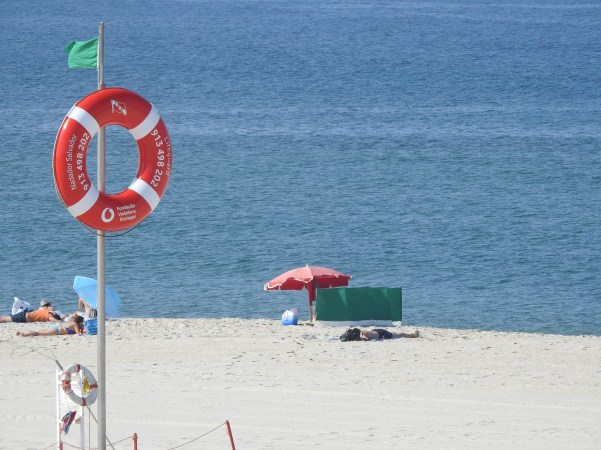
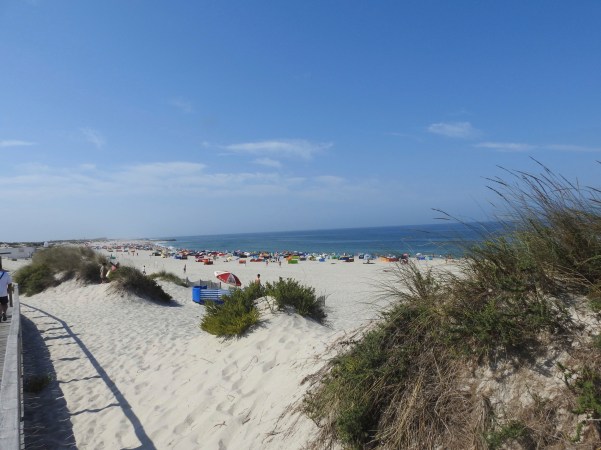
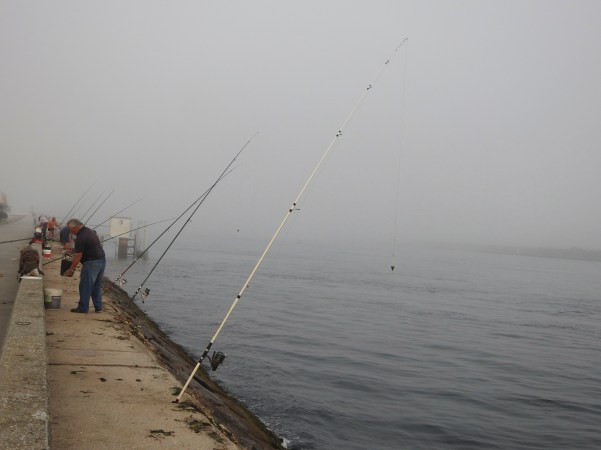
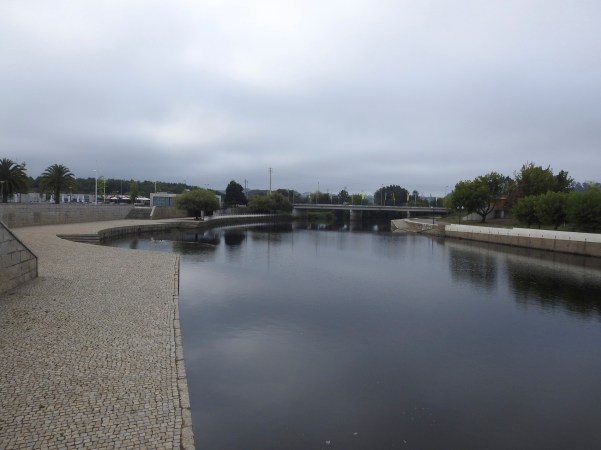
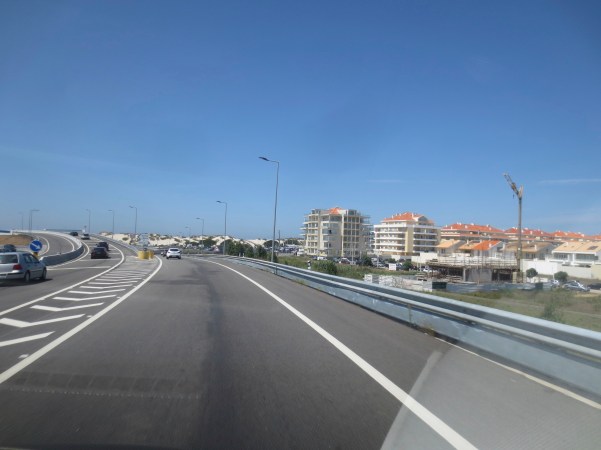
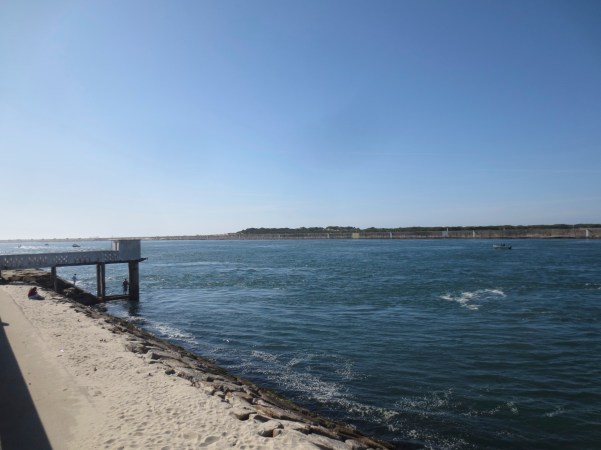
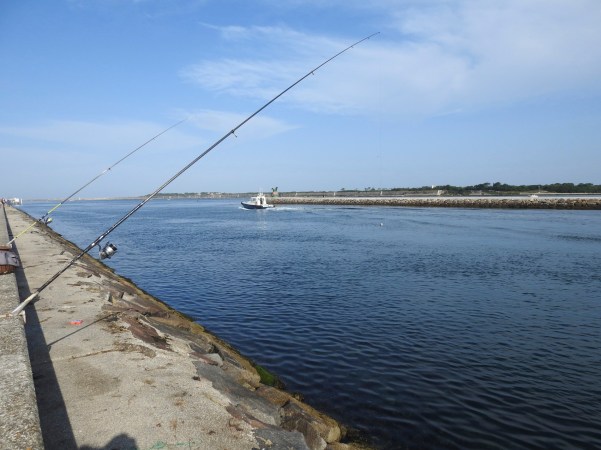
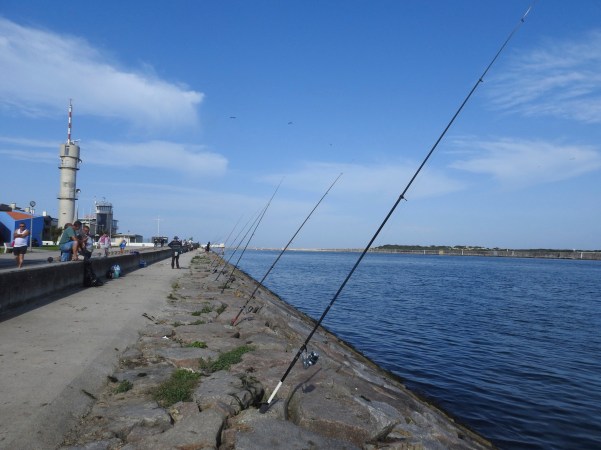
hoje, as nossas saídas eram curtas, eram visitas a “terras de areias”, ou seja, andávamos pelas redondezas desta Praia da Barra de Aveiro!. Assim, logo pela manhã, enquanto a família se preparava, pois queriam ir fazer compras à cidade de Aveiro, nós, ainda madrugada, dispensámos algum tempo caminhando pela avenida junto ao canal onde as águas da Ria de Aveiro se juntam ao Oceano Atlântico!. (Today, our exits were short, were visits to “lands of sand”, that is, we walked around this beach of Barra de Aveiro!. So, early in the morning, while the family was getting ready, as they wanted to go shopping in the city of Aveiro, we, early in the morning, spent some time walking along the canal promenade where the waters of the Ria de Aveiro join the Atlantic Ocean)!.
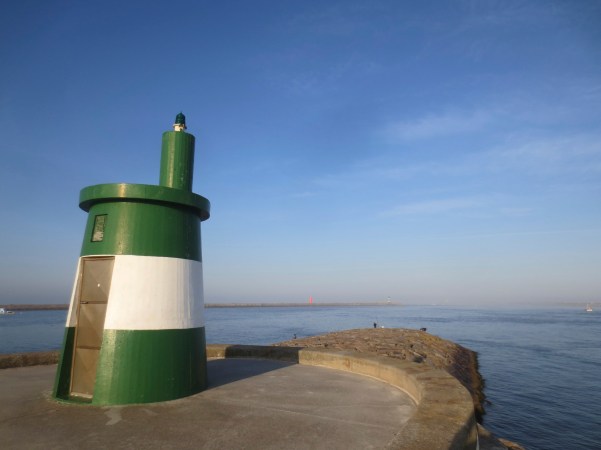
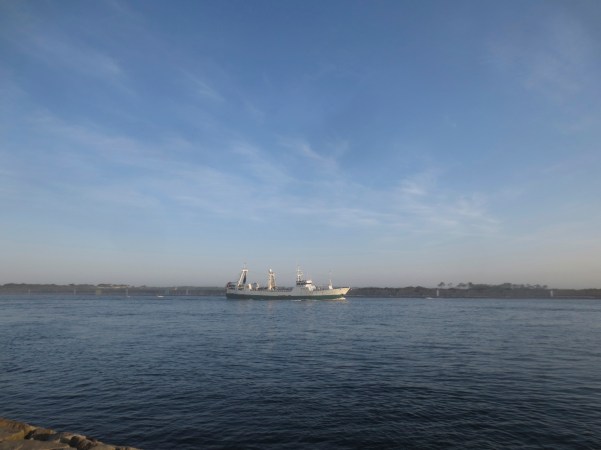
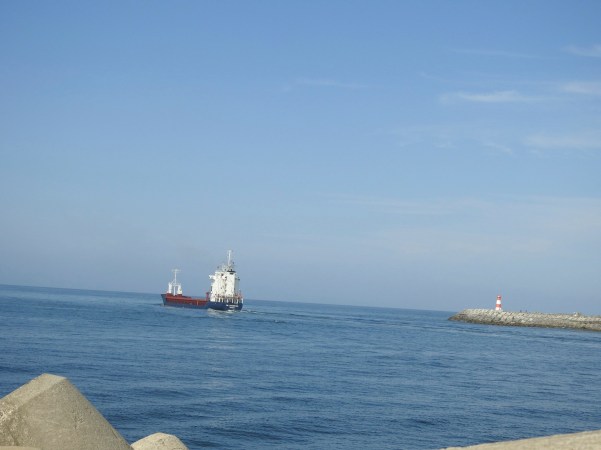
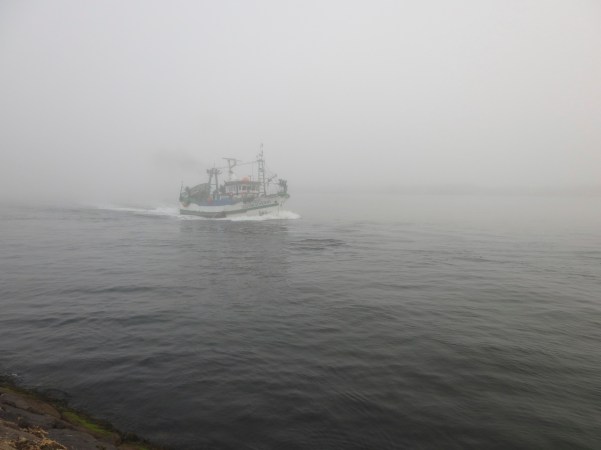
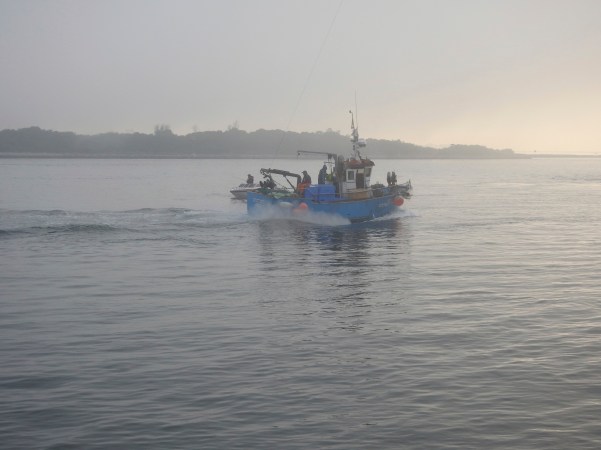
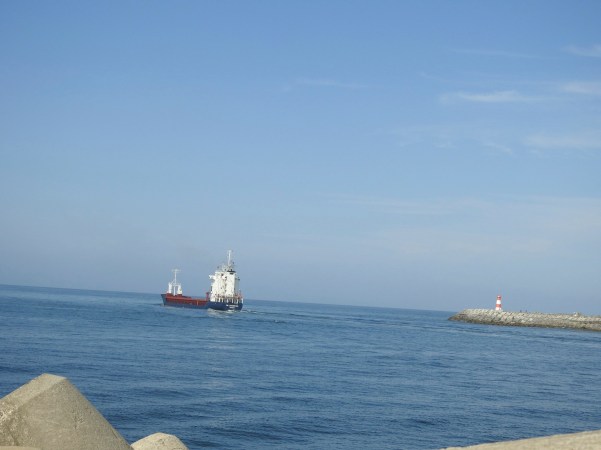
…um barco vinha entrando a Barra, apitava constantemente, os seus tripulantes faziam sinais e, algumas pessoas também acenavam de terra, erguendo os braços ao céu em sinal de agradecimento ao Salvador!. Era um grupo que entendemos nós, deviam de ser familiares, pois caminhavam, alguns quase corriam, pela pequena avenida, acompanhando o barco que navegava em direcção ao Cais do Porto e, quando já não era possível esse acompanhamento, iam correndo para os seus veículos, talvez desejosos de se irem encontrar, lá no Porto das Gafanhas!. (A boat was coming into Barra, beeping constantly, its crew members were signaling and some people also waved from the ground, raising their arms to the sky in thanksgiving to the Savior!. It was a group that we understand, they should be familiar, because they walked, some almost ran, along the small avenue, accompanying the boat that sailed towards Porto Quay and, when this monitoring was no longer possible, they ran to their vehicles, maybe looking forward to meeting you there at Porto das Gafanhas)!.
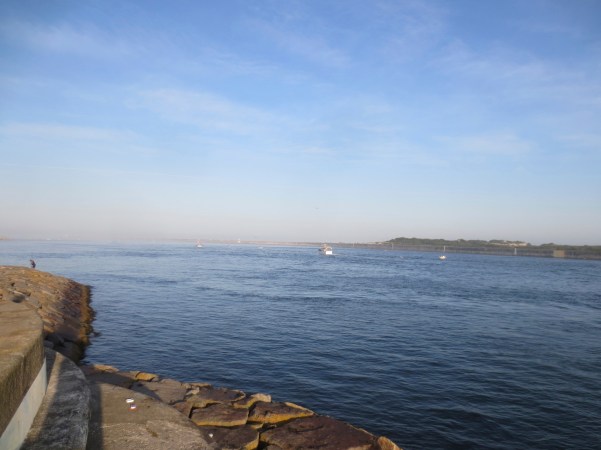
…ainda perguntámos quem eram e de onde vinha o barco mas, não nos deram atenção e, alguns correndo, até mostraram uma certa indiferença, talvez pensando porque é que nós não sabíamos, se estávamos ali àquela hora!. (We still asked who they were and where the boat was coming from, but they paid no attention to us, and some running even showed a certain indifference, perhaps wondering why we didn’t know if we were there at that time)!
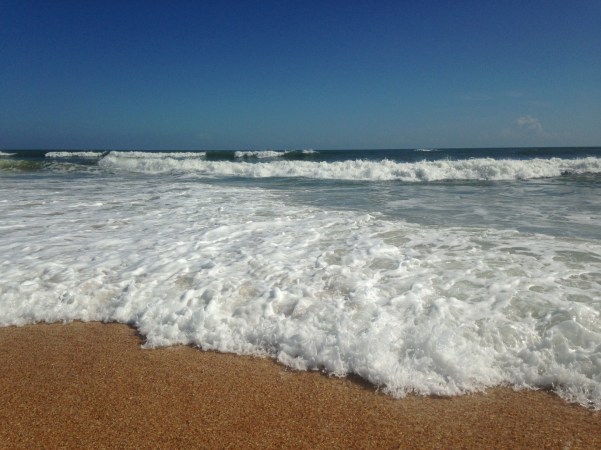
…pensamos nós, eram gestos e atitudes próprias de “pessoas das areias”, tal como a nossa querida e saudosa Avó Agar nos dizia quando ainda éramos crianças!. Talvez, algumas destas personagens seriam descendentes de famílias piscatórias que naquela época viviam nos “Palheiros” da Costa Nova onde, especialmente na época de inverno, sofriam no corpo e na alma, entre outras, a angústia e as tempestades da maré alta, dizendo-nos muitas vezes que a praia era um lugar de trabalho, não um lugar de lazer, e mais, que nós éramos “serranos”, ou seja pessoas da montanha que nunca tinham visto a fúria da natureza, representada nas ondas gigantes de água salgada, quando de uma tempestade no mar!. (We thought, were gestures and attitudes of “people of the sands”, as our dear and longing Grandmother Agar told us when we were children!. Perhaps some of these characters would be descendants of fishing families who at that time lived in the “Palheiros” of Costa Nova where, especially in the winter season, they suffered in body and soul, among others, the anguish and storms of the high tide, saying it was often the beach that was a place of work, not a place of leisure, and moreover, that we were “highlanders”, ie mountain people who had never seen the fury of nature, represented in the giant waves of saltwater, when a storm at sea)!.

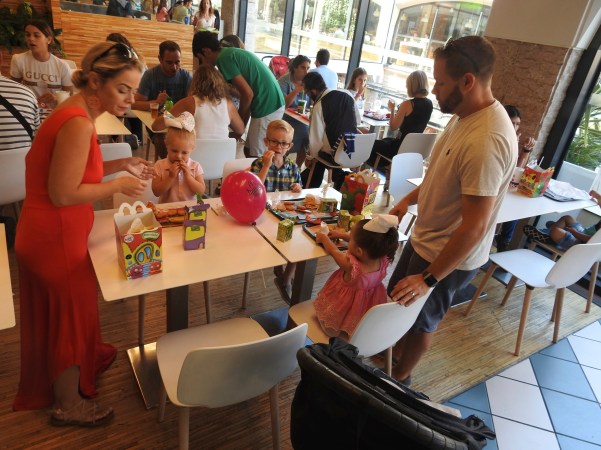
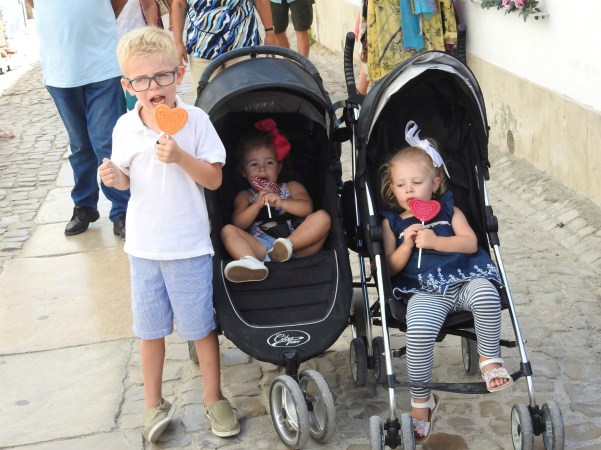
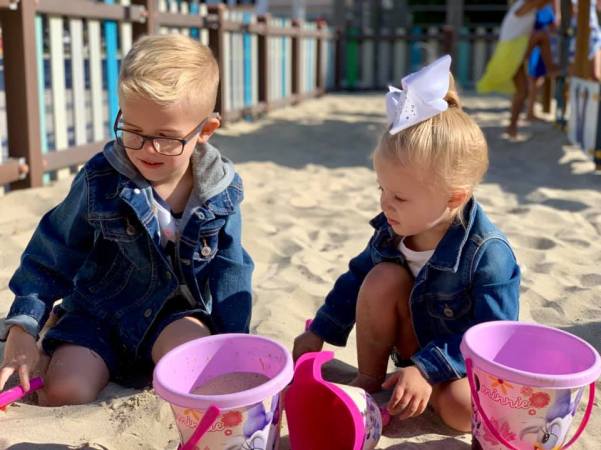
…adiante!. Hoje fomos à cidade de Aveiro, as crianças andavam felizes, visitaram o restaurante “McDonald’s”, todas tiveram um “Happy Meal”, ou seja, bocados de galinha frita e batatas também fritas, com aqueles molhos todos que sempre nos servem nuns pacotinhos e, desta vez ofereceram-lhes um balão a cada um, que os acompanhou até o rebentarem ou o perderem!. (Forward!. Today we went to the city of Aveiro, the children were happy, visited the restaurant “McDonald’s”, all had a “Happy Meal”, ie fried chicken and potato chips, with those sauces that always serve us in little packages and, this time they offered each one a balloon, which accompanied them until they burst or lost)!.
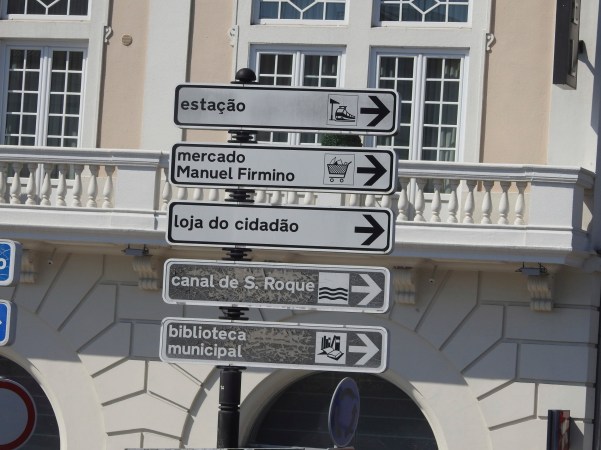
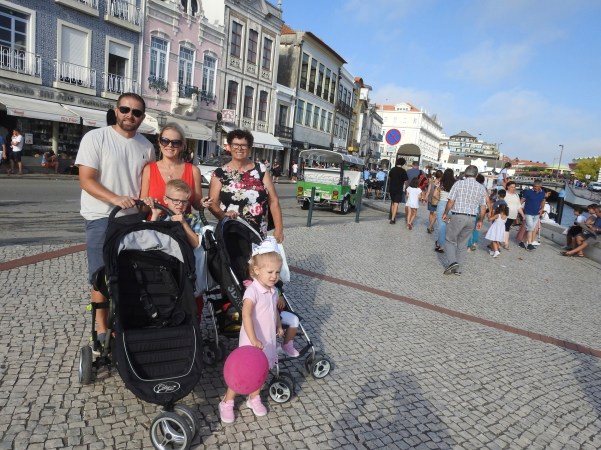
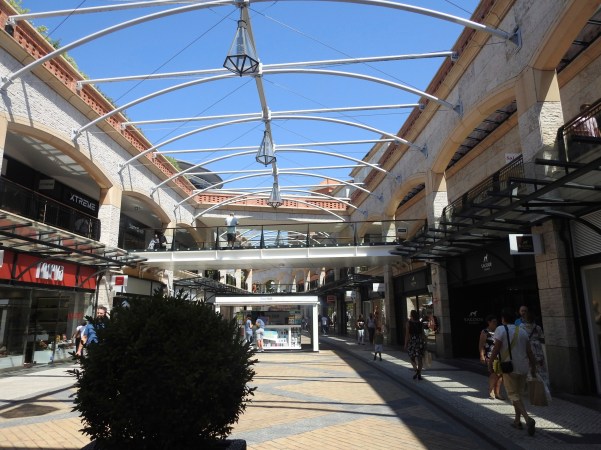
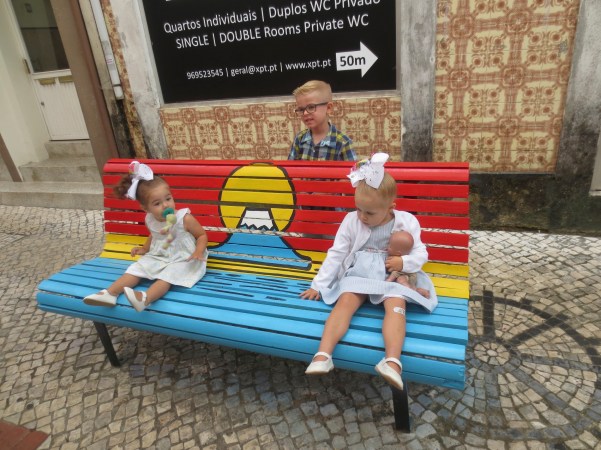
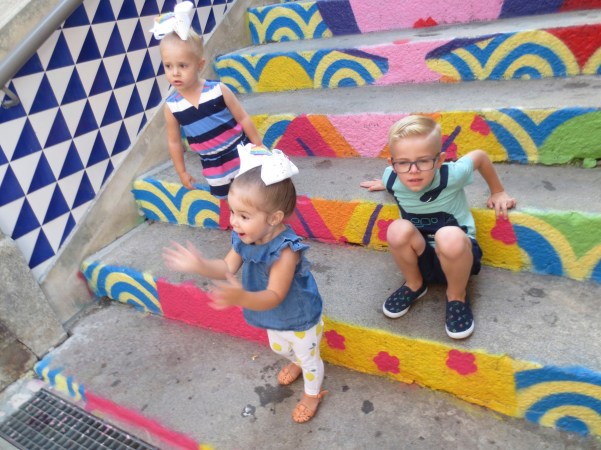
…depois de visitar o local de compras, andámos pela baixa da cidade, pelas “loginhas”, parando aqui e ali, apreciando os locais e a azáfama dos turistas desejosos de verem o que antes não imaginavam!. (After visiting the shopping place, we walked downtown, through the “loginhas”, stopping here and there, enjoying the locals and the bustle of tourists wishing to see what they had not imagined before)!.
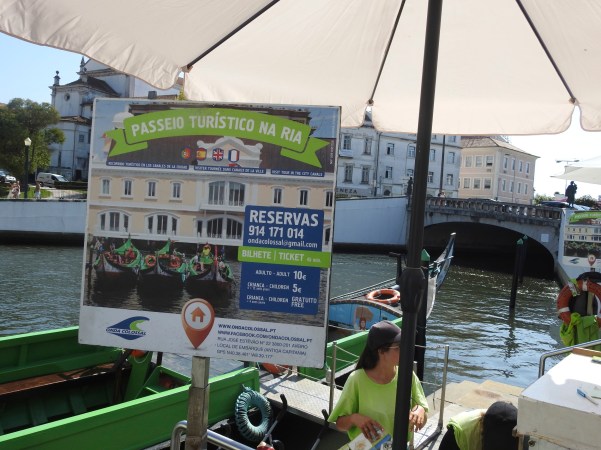
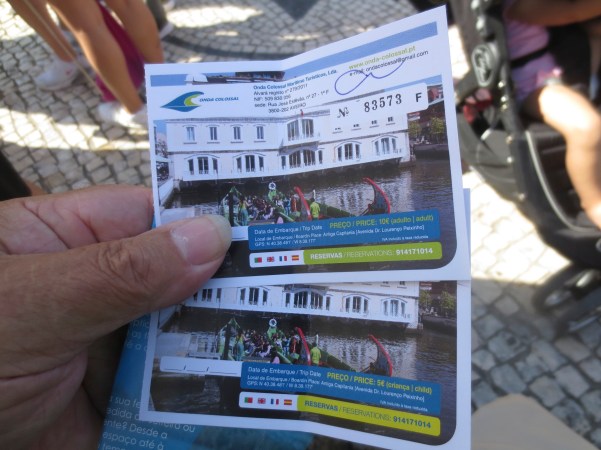
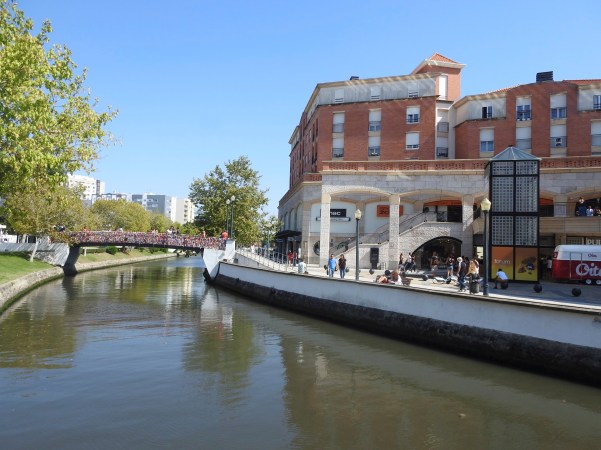
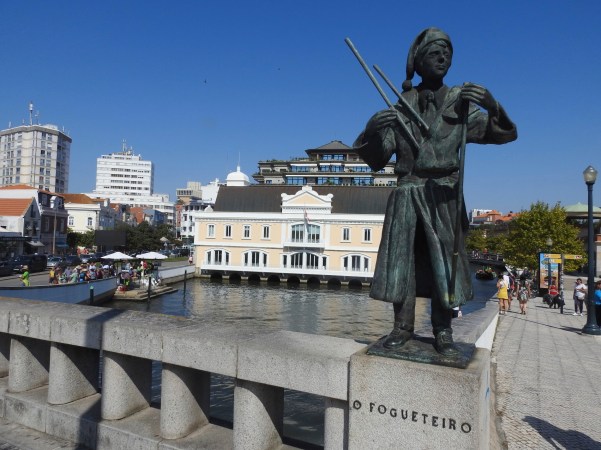
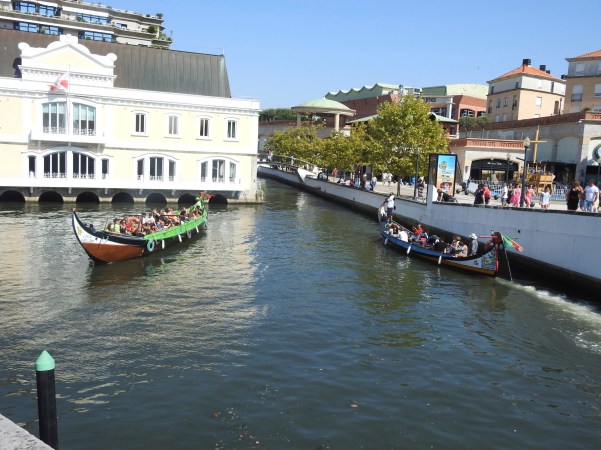
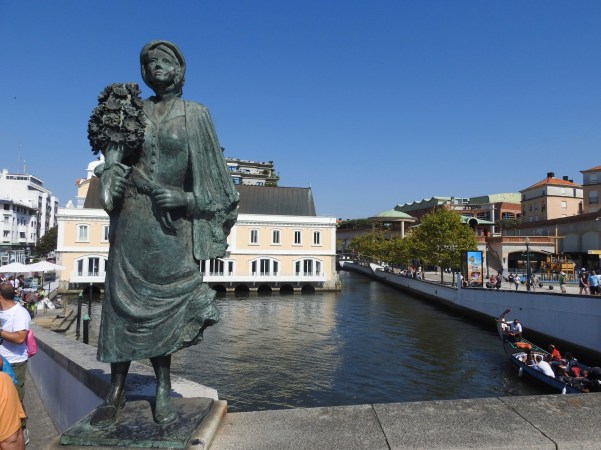
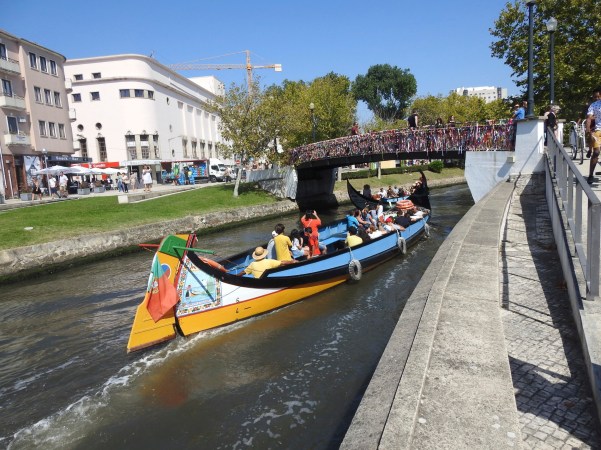
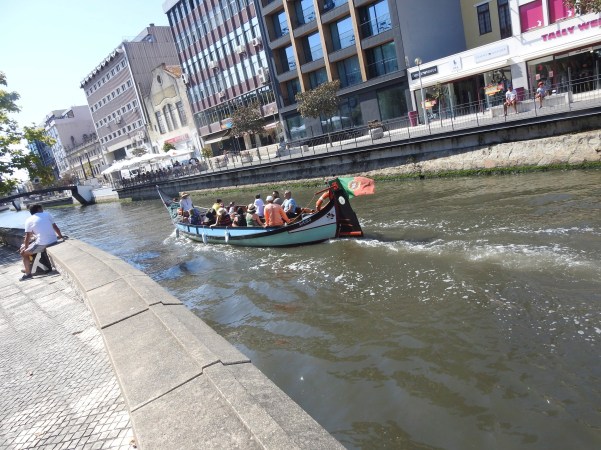
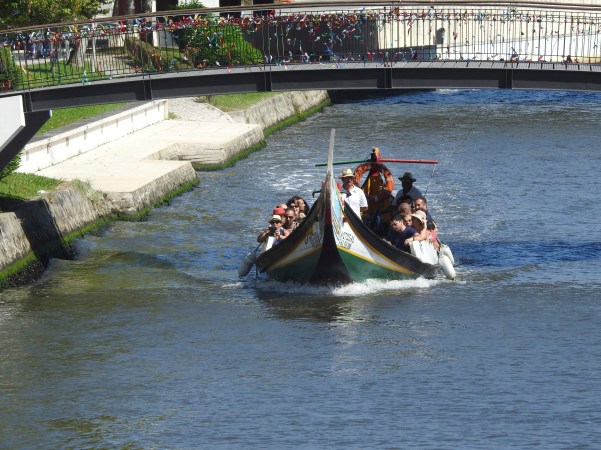
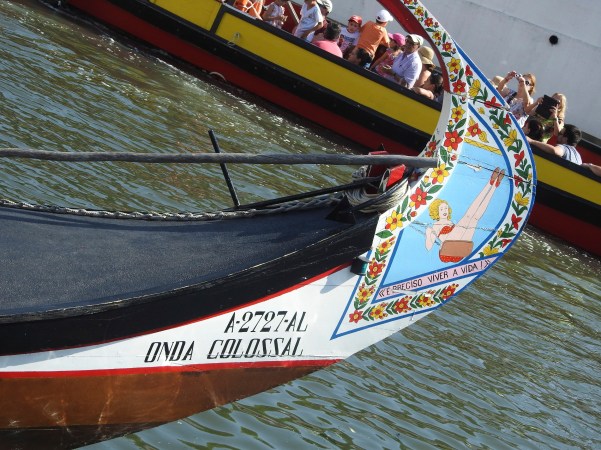
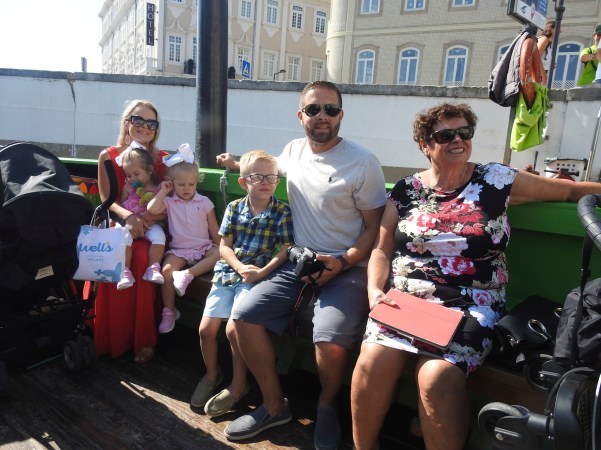
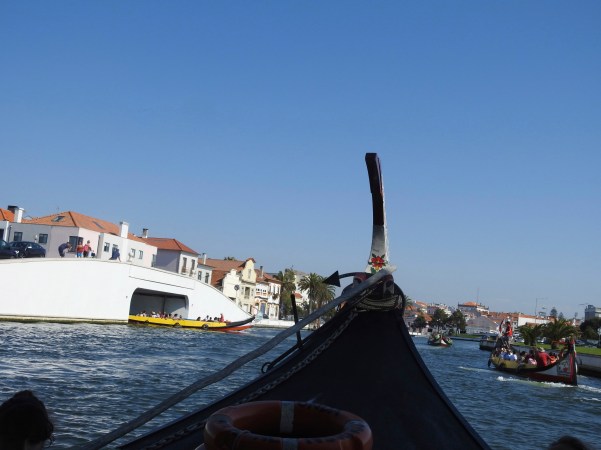
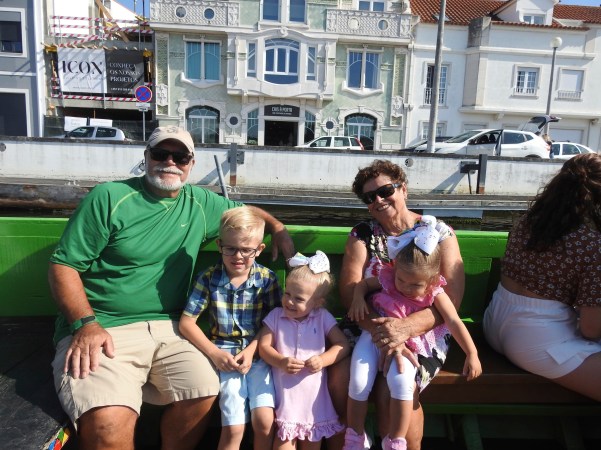
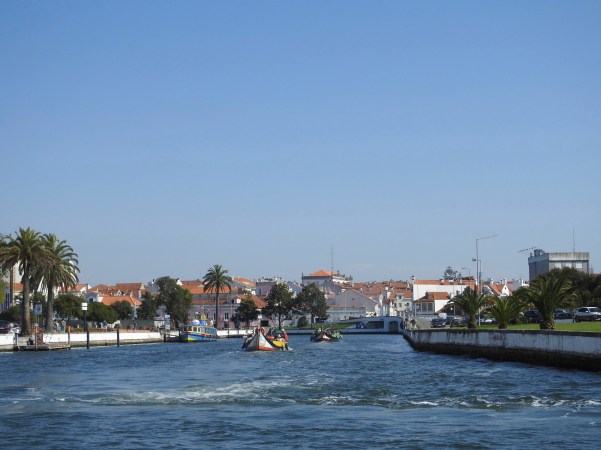
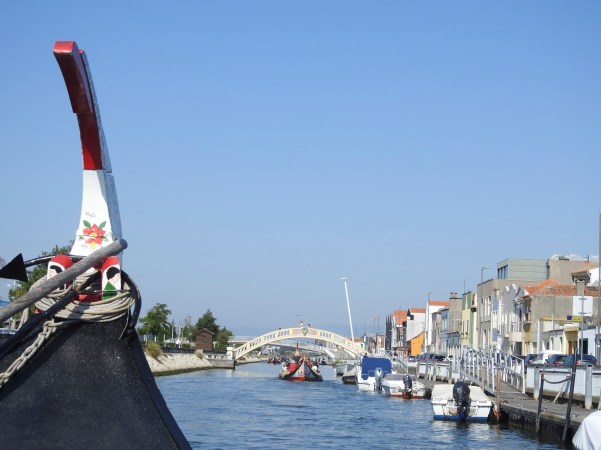
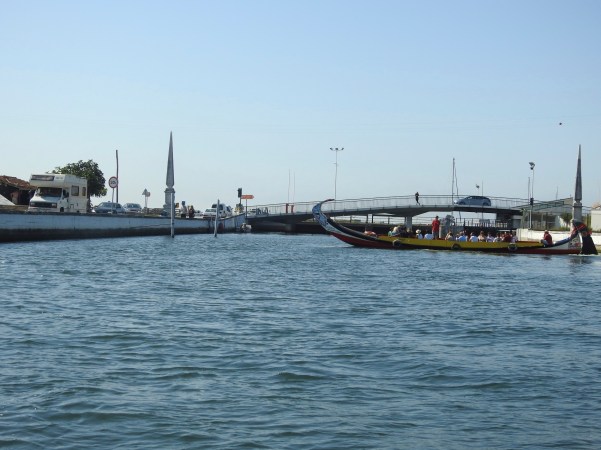
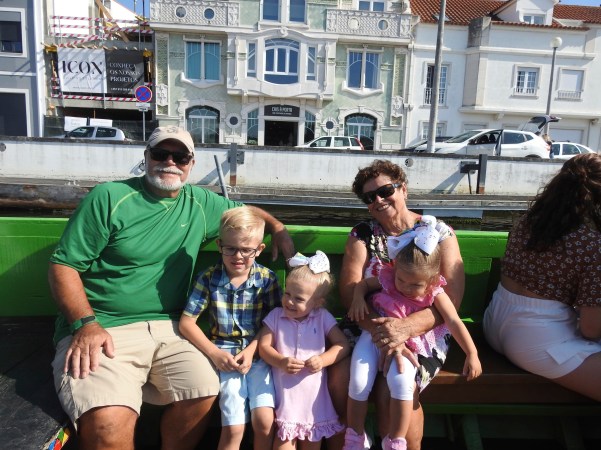
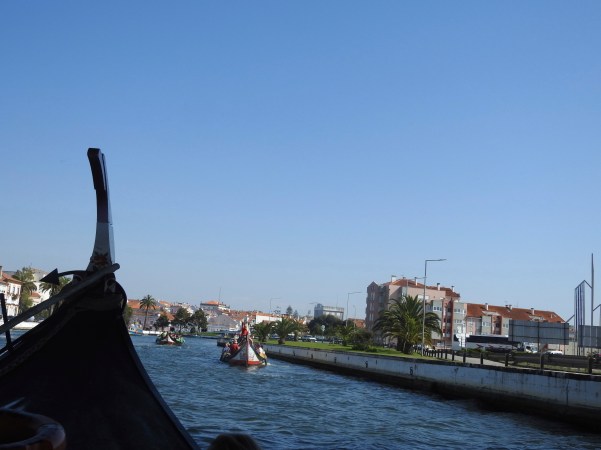
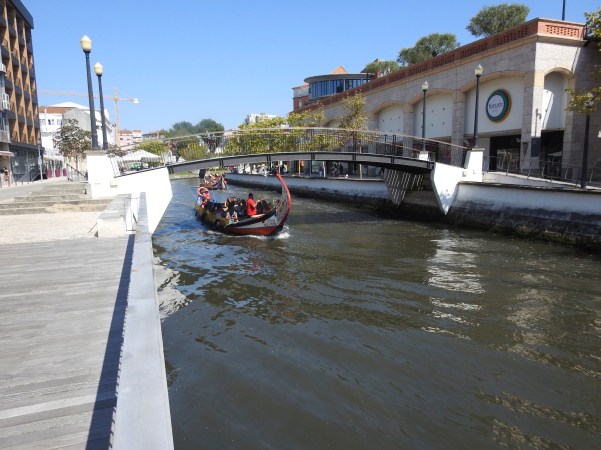
…numa viajem de barco moliceiro, percorremos os canais de água salgada, onde nos contaram um pouco da história da cidade, que está localizada na costa do Oceano Atlântico, com um importante Porto Marítimo, sendo mesmo a maior cidade da sub-região da comunidade intermunicipal do Baixo Vouga!. (While traveling by boat moliceiro, we traveled through the salt water channels, where they told us a little of the history of the city, which is located on the Atlantic Ocean coast, with an important seaport, being even the largest city in the sub-region from the community of Baixo Vouga)!.
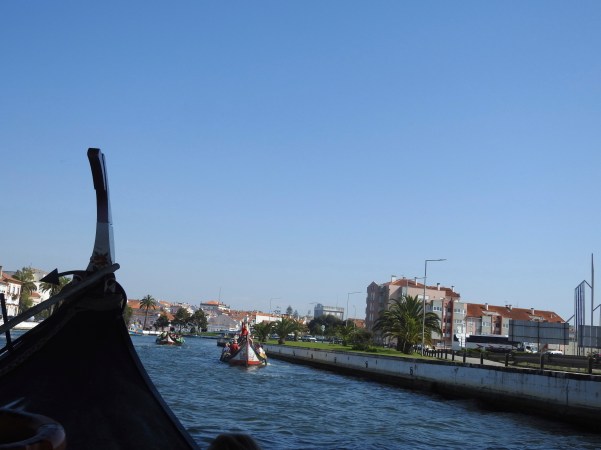
…esta cidade é conhecida como “a Veneza Portuguesa”, devido ao seu sistema de canais e barcos semelhantes à cidade italiana de Veneza!. (This city is known as “the Portuguese Venice” due to its canal and boat system similar to the Italian city of Venice)!.

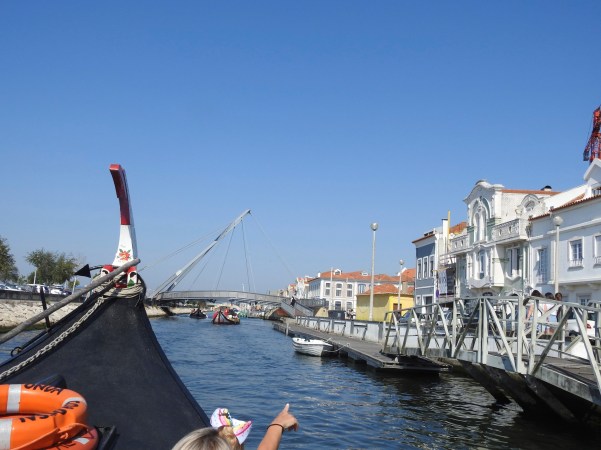
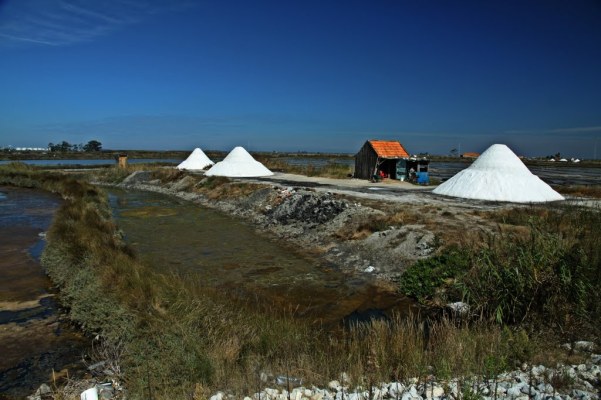
…durante o percurso de navegação pelos diversos canais, entre outras atracções, podemos admirar os montes de sal, acabado de retirar das diversas salinas que ainda por aqui existem desde a presença de assentamentos humanos neste território, que se estendem ao período associado aos grandes dolmens da pré-história, que também ainda podem ser vistos na maior parte de toda esta região do Baixo Vouga!. (While navigating the various channels, among other attractions, we can admire the salt mounds, just removed from the various salt pans that still exist here since the presence of human settlements in this territory, extending to the period associated with the large prehistoric dolmens, which can also still be seen in most of this whole region of Baixo Vouga)!.
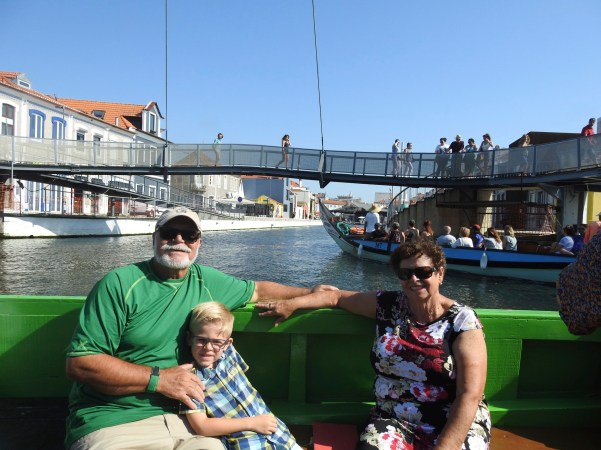
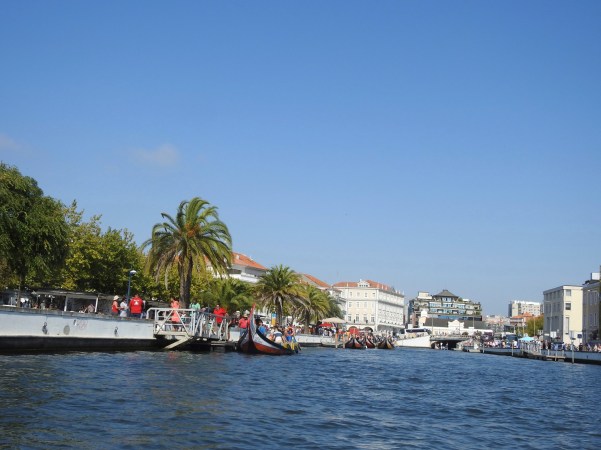
…hoje já nem tanto mas, por um longo período, esta cidade foi um elo económico importante na produção de sal, sendo mesmo um centro de exploração de sal pelos povos romanos desde o longínquo ano de 959, que se referiam a estas terras como “um local de encontro ou reserva de pássaros e de grande sal”!. (Not so much today, but for a long time this city has been an important economic link in salt production, and has even been a center of salt exploitation by the Roman people since 959, which referred to these lands as “a great salt and bird gathering place or reserve”)!.
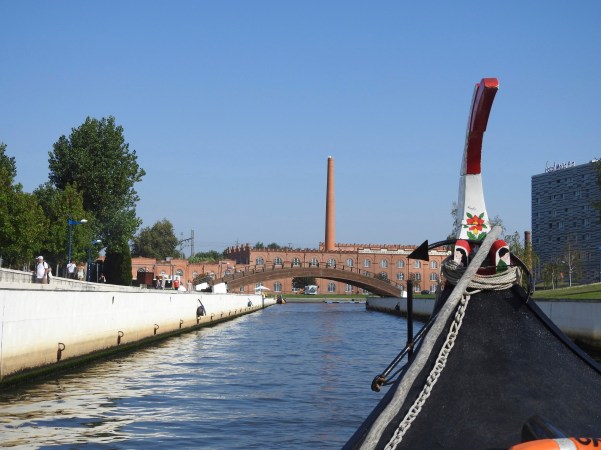
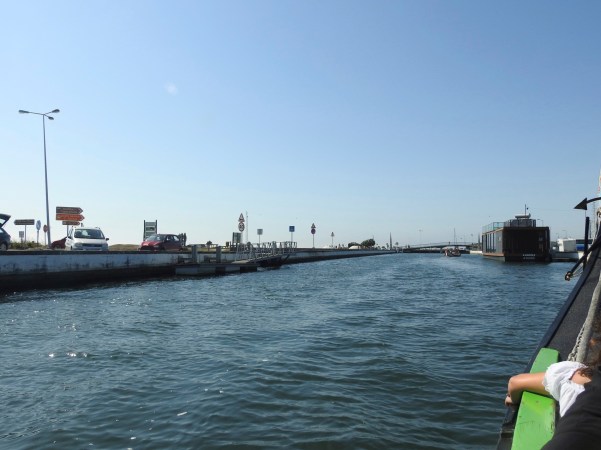
…nós, quando ainda crianças, na companhia da nossa querida Avó Agar, passávamos por esta cidade a caminho da Praia da Costa Nova e, lembramo-nos de ver muitas pessoas nas ruas e, hoje dizem-nos que é a segunda cidade mais populosa da região Centro de Portugal depois da cidade de Coimbra!. (When we were children, in the company of our dear Grandmother Agar, we were passing through this city on our way to Costa Nova Beach, and we remember seeing many people on the streets and today we are told that this is the second city most populous in the central region of Portugal after the city of Coimbra)!.
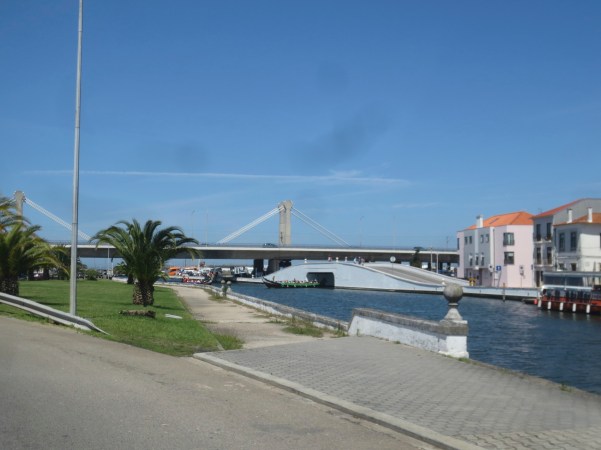
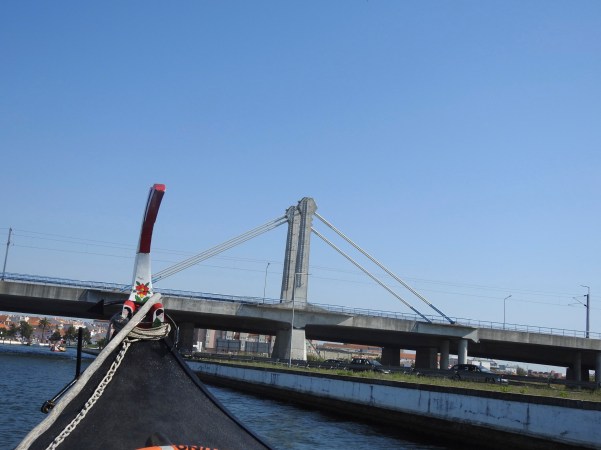
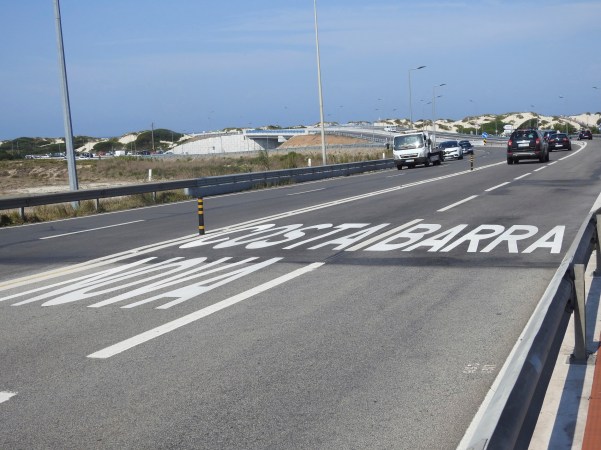
…o sol já se tentava esconder quando deixando esta cidade, viajámos para a praia da Costa Nova, tentando seguir o mesmo trajecto que seguíamos quando jovens, no entanto era impossível, hoje existem pontes em cimento sobre a Ria de Aveiro e uma auto-estrada sem curvas, o que nos fez chegar ao nosso destino ainda com algum sol!. (The sun was already trying to hide when we left this city, we traveled to the beach of Costa Nova, trying to follow the same path we followed when young, however it was impossible, today there are concrete bridges over the Ria de Aveiro and a car road without curves, which made us reach our destination still with some sun)!.
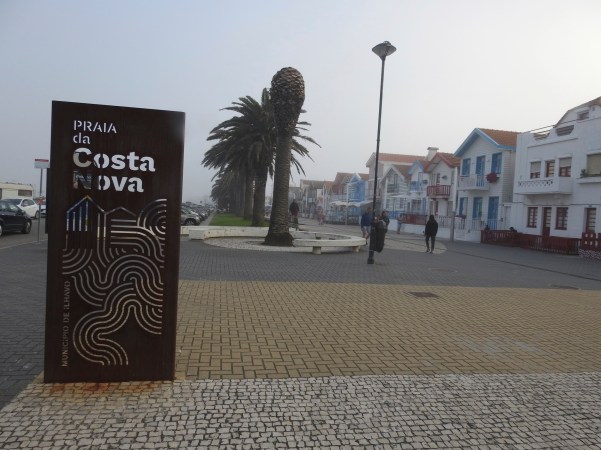
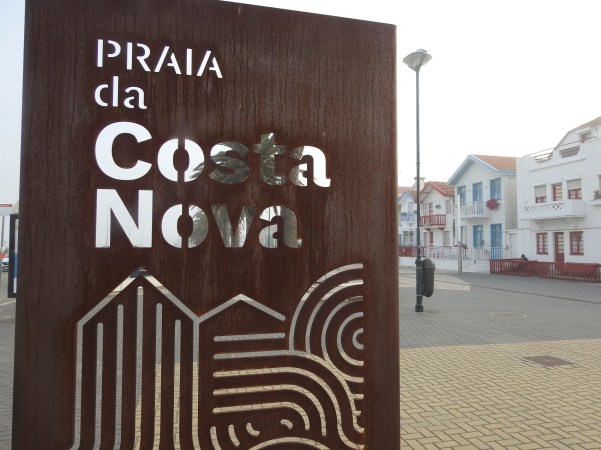
…hoje a Praia da Costa Nova é um local diferente do que conhecíamos quando éramos jovens, que era uma praia bonita e pacata, onde as famílias da montanha vinham a banhos!. Podíamos ver os barcos moliceiros de vela desfraldada navegando pela ria, carregados de moliço rumo ao sul, usando umas tábuas de ambos os lados, quase a meterem água, mas a suavidade das águas da Ria permitia toda esta manobra!. (Today Costa Nova Beach is a different place from what we knew when we were young, which was a beautiful and quiet beach where mountain families came to bathe!. We could see the moliceiro boats of unfurled sail sailing across the ria, laden with molasses to the south, using planks on either side, almost pouring water, but the softness of the Ria’s waters allowed all this maneuvering)!.

…as águas da Ria alimentavam numerosas salinas e marinhas, cujo amanho era feito pelos “marmotos”, que eram homens que trabalhavam descalços, com as calças arregassadas numa só perna, que era para dar sorte!. (The waters of the Ria fed numerous salt flats and seascapes, the size of which was made by the “marmots”, who were men working barefoot, with their pants rolled up on one leg, which was for good luck)!.

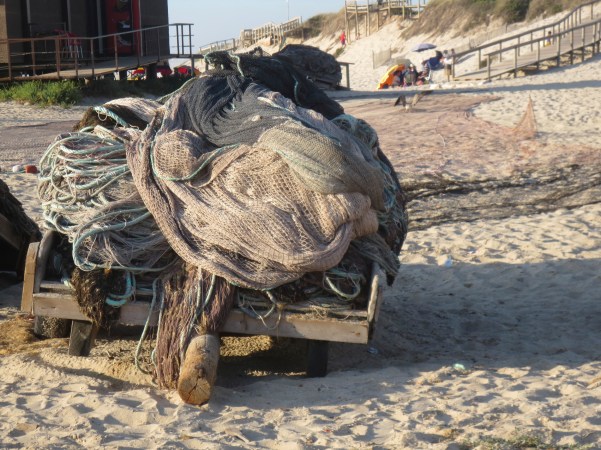
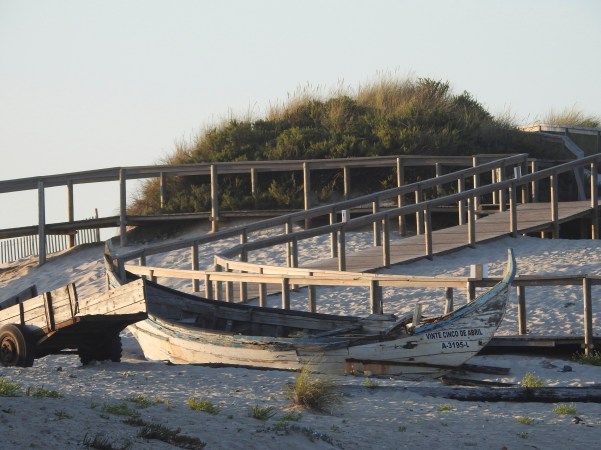
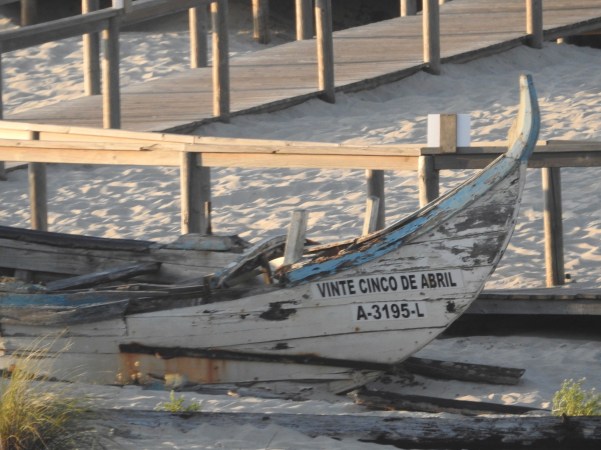
…havia a faina da pesca à “Xávega” no extenso areal Atlântico, da qual mostramos algumas fotos que tirámos muitos anos atrás, numa nossa visita a Portugal, onde na parte sul, os barcos de pesca artesanal efectuavam uma pescaria com rede de cerco composto por longas cordas com flutuadores que terminava num saco de rede cónica!. (There was the task of fishing for “Xávega” in the long Atlantic beach, from which we show some photos that we took many years ago, during our visit to Portugal, where in the southern part, artisanal fishing boats were fishing with a net of siege made up of long ropes with floats that ended in a conical net bag)!.

…o trabalho era feito com a ajuda de juntas de bois e força braçal que colocavam o barco no mar que navegava a remos para longe da costa, indo desenrolando a metade da corda, ficando uma das pontas da mesma corda amarrada no areal!. Os pescadores efectuam o cerco aos cardumes de peixe em alto mar e retornam à praia, indo desenrolando a outra metade da corda!. Já no areal, nesse momento começava um trabalho árduo e controlado, puxando ambas as partes da corda com a ajuda das juntas de bois e da força braçal!. (The work was done with the help of oxen joints and arm strength that put the boat in the sea that rowed away from the shore, unwinding half of the rope, getting one end of the same rope tied in the sand!. The fishermen encircle the schools of fish on the high seas and return to the beach, unwinding the other half of the rope!. Already in the sand, at that moment began a hard and controlled work, pulling both parts of the rope with the help of oxen joints and arm strength)!.

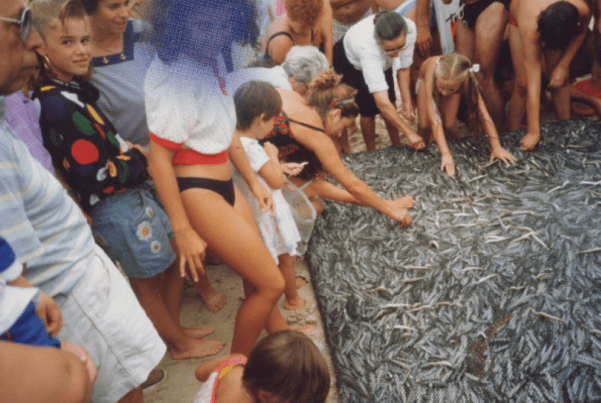
…a faina terminava horas depois, com a chegada ao areal e abertura do saco de rede cónica, que normalmente vinha cheio de peixe, para alegria dos pescadores!. (The work ended hours later, with the arrival on the beach and the opening of the conical net bag, which normally came full of fish, to the delight of the fishermen)!.
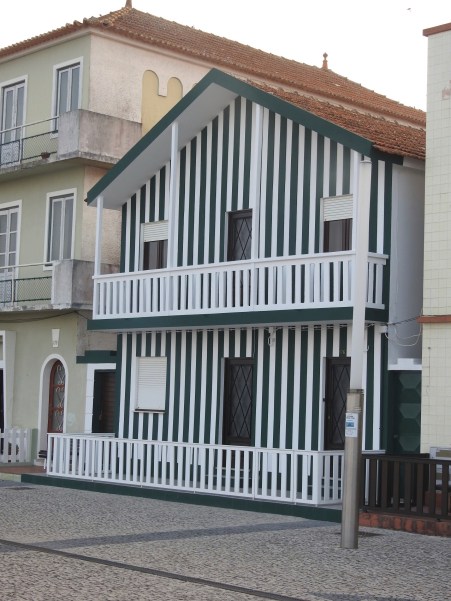
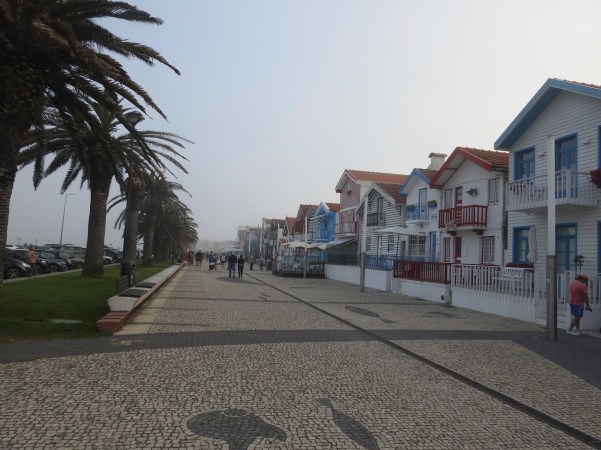
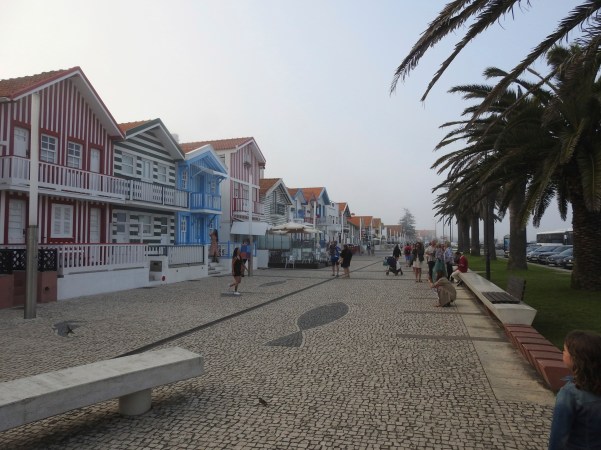
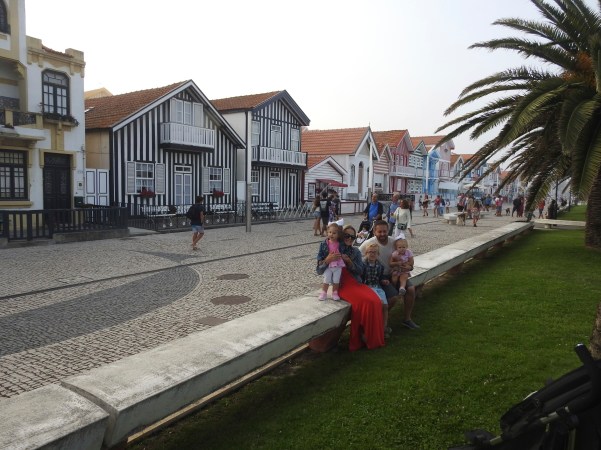
…os velhos “Palheiros” quase que desapareceram, que eram casas com listas verticais ou horizontais intercaladas, antigos armazéns de materiais de pesca, ou armazéns de salga da sardinha, alguns foram recuperados, dando lugar residências balneares, restaurantes, quiosques com frentes muito bonitas, continuando pintadas com cores diferentes, que quando jovens, nos lembramos do senhor “Miguel das Bateiras”, nos dizer que eram pintadas com restos de tinta que se usavam para pintar os barcos!. (The old “Palheiros” have almost disappeared, which were houses with interspersed vertical or horizontal lists, old stores of fishing supplies, or sardine salting stores, some were recovered, giving rise to bathing houses, restaurants, kiosks with fronts very beautiful, still painted in different colors, that when we were young, we remember Mr. “Miguel das Bateiras”, telling us that they were painted with remnants of paint used to paint the boats)!.
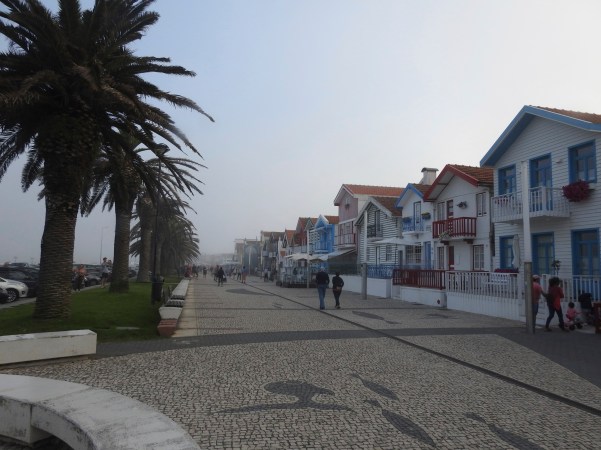
…o seu nome original é Costa Nova do Prado, tendo a sua origem na abertura da barra da Ria de Aveiro a partir do ano de 1808 e, julga-se que esta designação se deve a dois factos, sendo o primeiro, “Costa Nova”, em oposição à “Costa Velha” que existia ao norte, hoje a praia de São Jacinto, e em segundo lugar deve-se ao facto de neste local, ter existido um enorme e verdejante prado!. (Its original name is Costa Nova do Prado, having its origin in the opening of the Ria de Aveiro bar from the year 1808, and it is believed that this designation is due to two facts, the first being, “Costa Nova”, as opposed to the “Old Coast” that existed to the north, today the beach of São Jacinto, and secondly because there was a huge green meadow there)!.
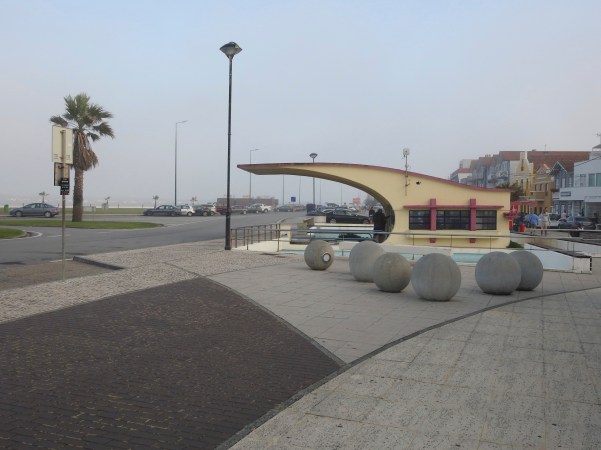
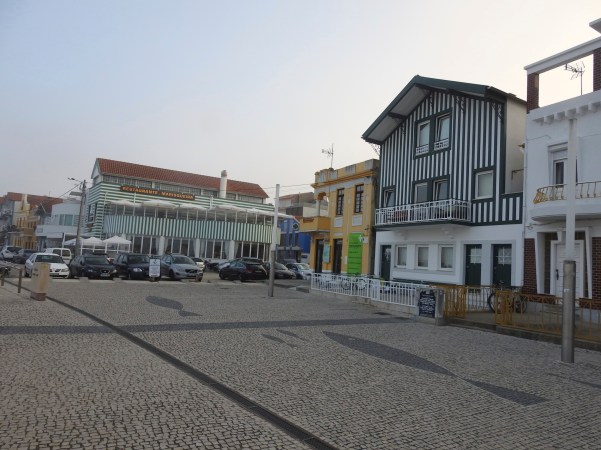
…naquele tempo havia uma grande frente Atlântica, com um imenso areal entre o mar e as casas, que se situavam no cimo da “Lomba”, que proporcionava uma linda vista sobre a Ria, que nesses anos da nossa juventude, com um sistema vindo da Holanda, que consistia no transporte de água e areia do mar, por meio de tubagem e de grandes moto-bombas de água, deslocou grande quantidade de areia da zona do mar para a sua parte baixa, em frente à Ria, alagando e encortando a sua superfície e, prolongando a área seca!. (At that time there was a large Atlantic front, with a huge sandy beach between the sea and the houses, which were located at the top of the “Lomba”, which provided a beautiful view over the Ria, which in these years of our youth, with a system from the Netherlands, which consisted of transporting seawater and sand through pipelines and large water pumps, displaced large amounts of sand from the seafront to its lower and shrinking its surface and prolonging the dry area)!.
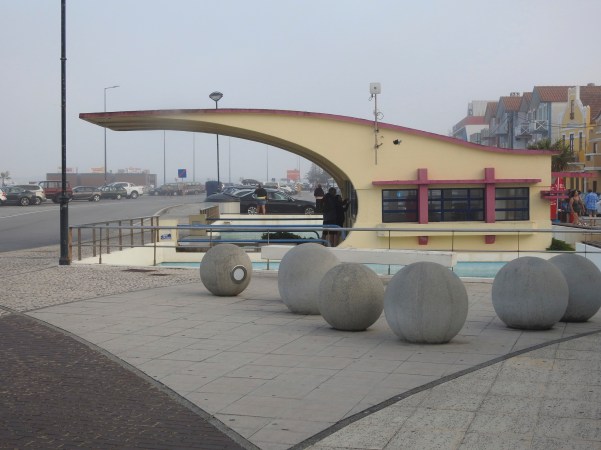
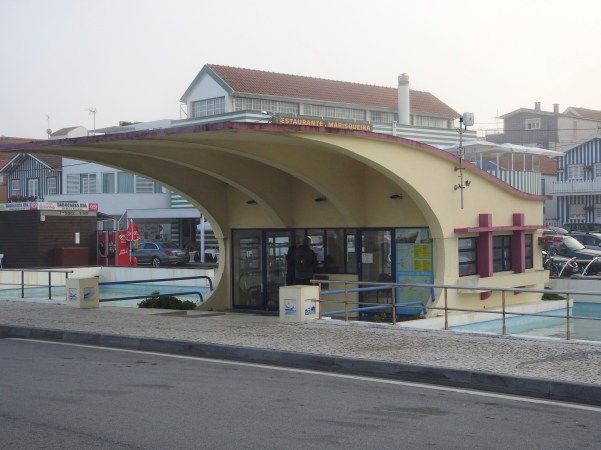
…por este motivo, lá estão as instalações do Cais da Ria, que felizmente salvaram, hoje situada num local rodeado de cenário seco, quando naquele tempo este Cais estava situado na beira e dentro da Ria!. (For this reason, there are the facilities of Cais da Ria, which fortunately saved, today situated in a place surrounded by dry scenery, when at that time this Pier was situated on the edge and inside the Ria)!.
…caminhando por aqui, além da nossa querida Avó Agar, lembramos o nosso irmão Manuel, que connosco passava algum tempo na companhia da já mencionada nossa querida Avó Agar que, no fim das colheitas, lá aldeia do Vale do Ninho D’Águia, na encosta agreste da montanha do Caramulo, nos trazia a passar algum tempo nesta praia da Costa Nova!. (Walking here, beyond our dear Grandmother Agar, we remember our brother Manuel, who spent time with us in the company of the aforementioned our dear Grandmother Agar who, at the end of the harvest, there village of Vale do Ninho D’Águia, on the rugged slope of Caramulo mountain, brought us to spend some time on this Costa Nova beach)!.
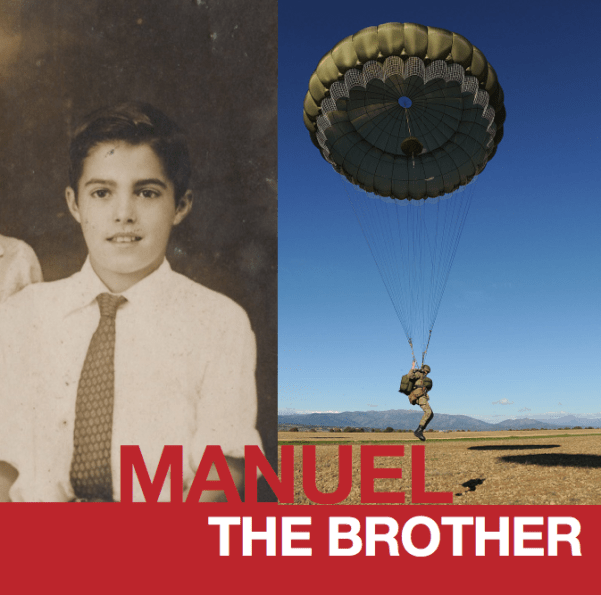
…o irmão Manuel, felizmente ainda vivo, era o nosso herói, era o nosso “Robin dos Bosques”!. Era selvagem nas atitudes, rebelde, não acatava ordens dos adultos, era aventureiro, participava em tudo, particularmente se envolvesse uma boa luta, fazia “papagaios” de papel presos por um cordão de sisal, que subiam às alturas, caminhávamos por horas e horas junto das ondas da praia procurando conchas e búzios exóticos!. (Brother Manuel, fortunately still alive, was our hero, was our “Robin of the Woods”!. He was wild in attitude, rebellious, heedless of adult orders, adventurous, participated in everything, particularly if it involved a good fight, made paper “parrots” bound by a sisal cord, which climbed high, walked for hours and hours by the waves of the beach looking for exotic shells and shells)!.
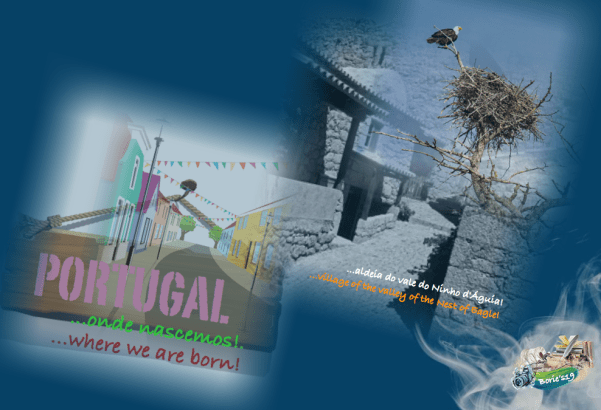
…lá na aldeia da montanha, era pescador, construindo os seus artefactos de pesca, era caçador, construindo as suas armas de caça, subíamos juntos às árvores vizinhas procurando fruta, tinha uma habilidade espantosa no manejo de um arco feito por ele onde, com uma flecha feita de um pau, acertava nas galinhas, no cão, nas ovelhas, nas cabras ou nos porcos e, se necessário fosse, mentia para nos proteger!. Era aquele irmão que dizia, “Cuidado, este é o meu irmão mais novo”!. (Back in the mountain village, he was a fisherman, building his fishing gear, he was a hunter, building his hunting weapons, handling a bow made by him where, with an arrow made of a stick, he hit the chickens, the dog, the sheep, the goats or the pigs and, if necessary, lied to protect us!. It was that brother who said, “Watch out, this is my little brother”!.

…nas semanas que aqui passávamos fazendo companhia à nossa querida Avó Agar, entre outras, devido a situações financeiras, só podia estar um de cada vez!. Nós éramos o primeiro a fazer companhia à nossa querida Avó Agar mas, o irmão Manuel ao fim das nossas duas semanas de estadia, quando chegava na camionete verde e amarela da companhia de camionagem Aveirense e, era o momento de nós regressar-mos na mesma camionete, todavia, logo dizia que a nossa mãe Ilda lhe recomendou que nós, o seu irmão mais novo e que ele protegia, podia ficar mais um tempo e não regressar à nossa aldeia na montanha, simplesmente porque queria a nossa companhia!. (In the weeks we spent here keeping company with our dear Grandmother Agar, among others, due to financial situations, could only be one at a time!. We were the first to keep company with our dear Grandmother Agar but Brother Manuel at the end of our two week stay when we arrived at the green and yellow pickup truck of the Aveirense trucking company and it was time for us to return in the same way!. The van, however, soon said that our mother Ilda advised her that we, her younger brother and whom he protected, could stay a while longer and not return to our mountain village simply because she wanted our company)!.

…neste momento, a sua idade já passa as oito dezenas de anos, continuando rebelde, aventureiro, quase selvagem e, ao ver-nos, abraçou-nos dizendo, “irmão amigo, devo ser de má raça, não morro, continuo por aqui ainda vivo”!. É também um veterano, porque quando chegou à idade de adulto, alistou-se nas Forças Armadas, sendo dos primeiros militares Para-quedistas ao serviço da Força Aérea Portuguesa!. (At this time, his age is already eight dozen years old, still rebellious, adventurous, almost wild and, seeing us, hugged us saying, “Brother friend, I must be of bad race, I do not die, I continue here still alive”!. He is also a veteran, because when he reached adulthood, he joined the Armed Forces, being one of the first Paratroopers in the service of the Portuguese Air Force)!.
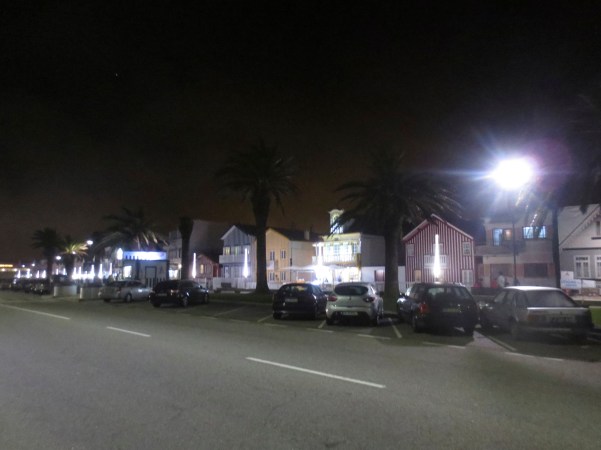
…na nossa juventude, por aqui ficaram alguns amigos, tal como o Zé Pesca, filho de pescador, que vivia nos “Palheiros” da Costa Nova e que ajudávamos a apanhar isca junto à Ria na maré baixa, ou o senhor “Miguel das Bateiras”, que alugava barcos junto ao cais de embarque para os barcos moliceiros que também transportavam pessoas, que partiam periódicamente para as Gafanhas e, depois de ajudarmos a retirar a água das bateiras, navegava pela ria connosco, onde em algumas áreas passávamos sobre o moliço, com os peixes fugindo na frente, tudo isto para verificar se as bateiras não metiam água de novo!. (In our youth, some friends stayed here, such as Zé Pesca, son of a fisherman, who lived in the “Palheiros” of Costa Nova and who helped to catch bait by the Ria at low tide, or Mr. “Miguel das Bateiras”, which rented boats from the quay to moliceiro boats that also carried people, who departed periodically to Gafanhas and, after helping to remove the water from the drums, sailed along the ria with us, where in some areas we passed over the reed, with the fishes running in front, all to make sure the drums didn’t get water again)!.

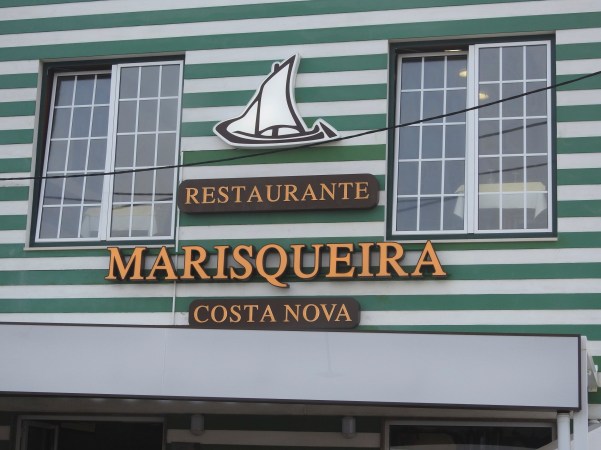
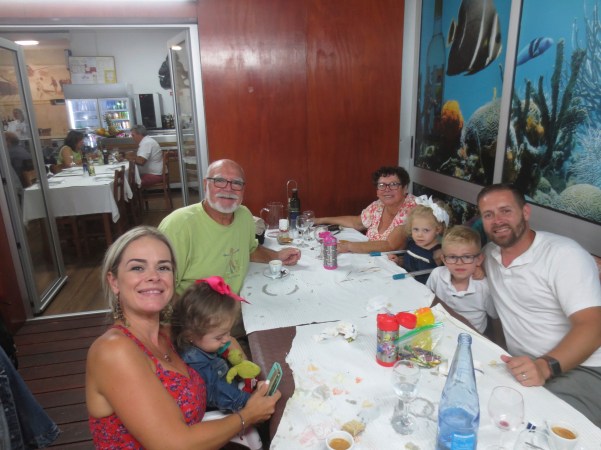
…depois de lembrar todas estas recordações e caminhar pela baixa, em frente à Ria, parando aqui e ali, vistámos um restaurante e, quando na recepção nos perguntavam quantos éramos, logo respondemos, quase em coro, “somos sete, tal qual Os Sete Magnificos”!. (After remembering all these memories and walking downtown, in front of the Ria, stopping here and there, we visited a restaurant and when asked at the reception how many we were, we answered almost in chorus, “we are seven, just like The Seven Magnificent”)!.

…continua!. (To be continued)!.

Tony Borie, September 2019!.
…fomos a Portugal!. Éramos “Os Sete Magníficos!. (We went to Portugal!. We were “The Seven Magnificent”)!.
…fomos a Portugal!. Éramos “Os Sete Magníficos!. (We went to Portugal!. We were “The Seven Magnificent”)!.

…fomos a Portugal!. Éramos “Os Sete Magníficos”!. (We went to Portugal!. We were “The Seven Magnificent”)!.

…terceira parte!. (third part)!.

…anteriormente já explicámos que, por alguns dias ficámos estacionados na Praia da Barra de Aveiro e, nestes dez dias passados em Portugal, o nome mais apropriado para o nosso grupo seria “The Magnificent Seven” (“Os Sete Magníficos”)!. (We have already explained that for a few days we were stationed at Barra de Aveiro Beach and in the last ten days in Portugal, the most appropriate name for our group would be “The Magnificent Seven”)!.

…também já explicámos que, esta Praia era a nossa “Fortaleza” dos tempos modernos, não havendo, nem eram necessárias as muralhas necessárias para se sobreviver num mundo em constante mudança de invasão e conquista, considerando nós, o Farol da Barra de Aveiro a nossa Torre de Vigia, o nosso ponto de orientação, que nos protegia de qualquer anomalia que porventura podesse ameaçar o “Nosso Reino”, navegássemos nós, em qualquer direção dos quatro pontos cardeais!. (We have also explained that this beach was our “fortress” of modern times, and there are no necessary walls to survive in a constantly changing world of invasion and conquest, considering us, the Barra de Aveiro Lighthouse our Watchtower, our orientation point, which protected us from any anomaly that might threaten “Our Kingdom”, if we sailed in any direction from the four cardinal points)!.

…este dia, o céu da praia estava azul, o sol tentava despertar, rumámos para norte, que nos ficava à esquerda quando posicionados de frente para o sol nascente, tal como as outras direcções cardeais, que também estão relacionadas à posição do sol!. (This day, the beach sky was blue, the sun was trying to wake up, we headed north, which was on our left when facing the rising sun, like the other cardinal directions, which are also related to the position of the Sun)!.

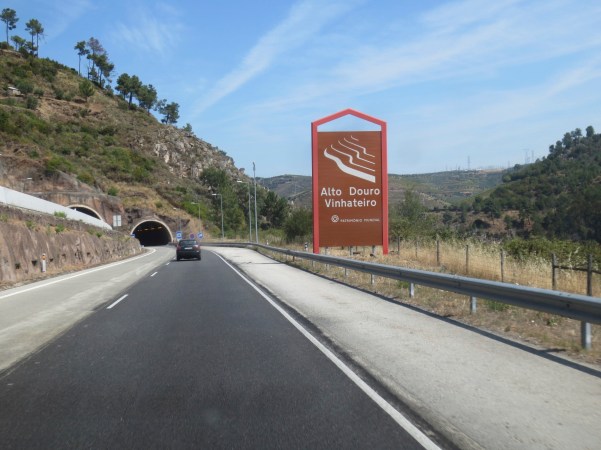
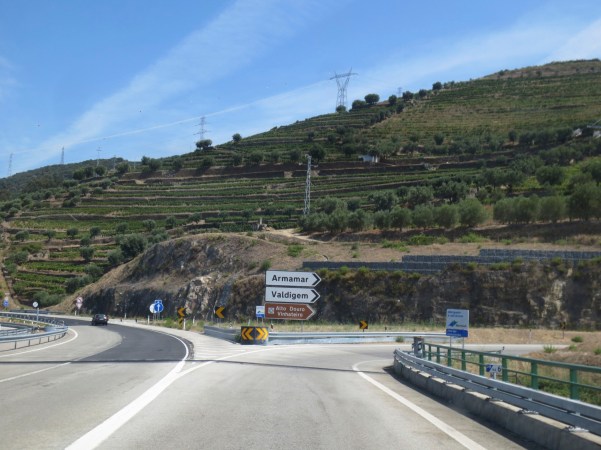
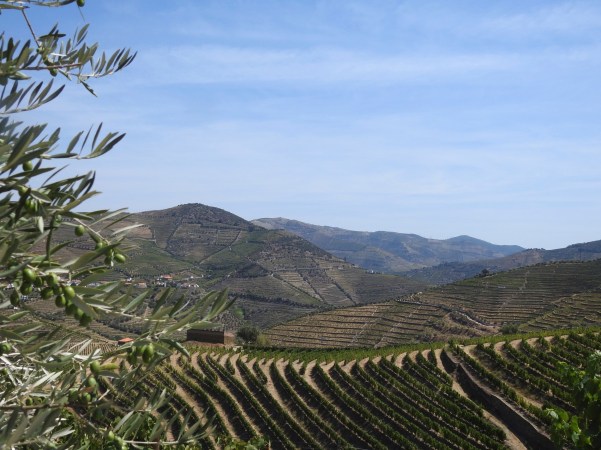
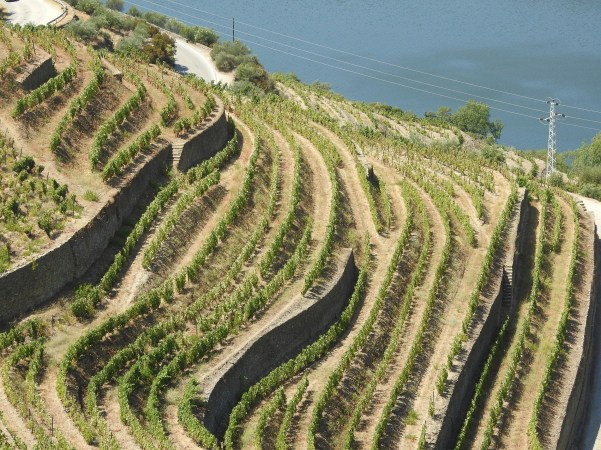
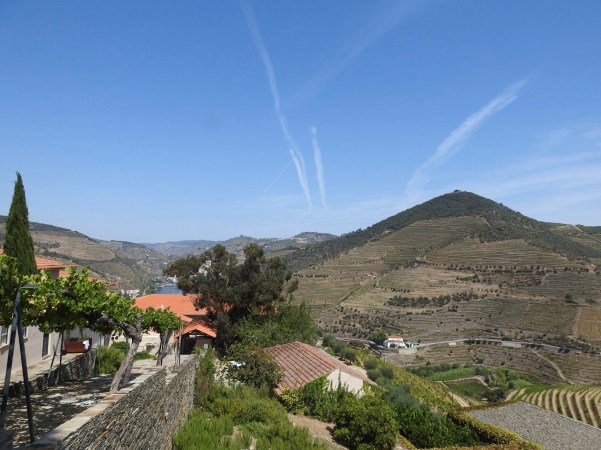
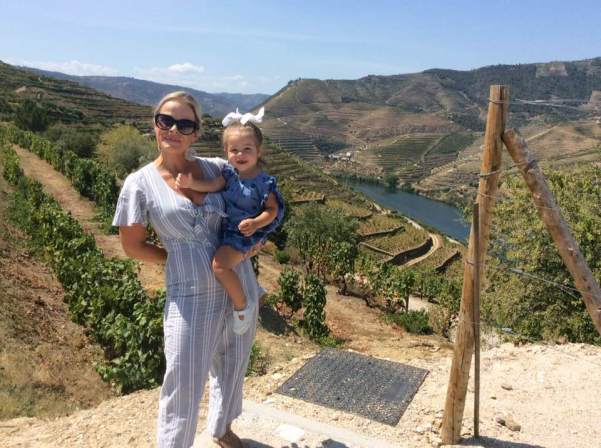
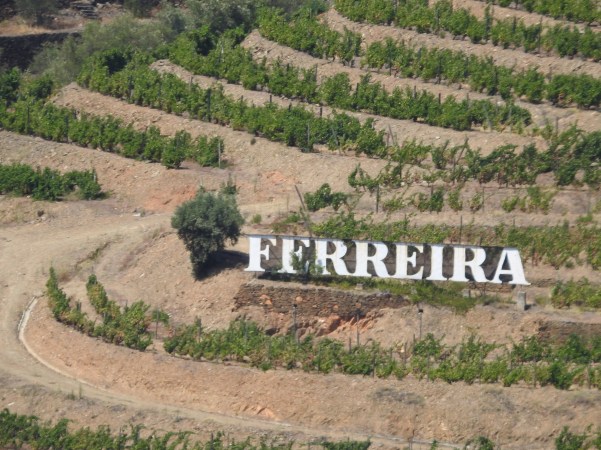
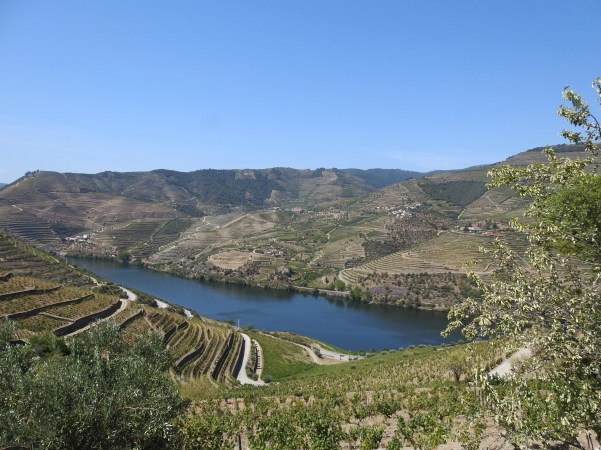
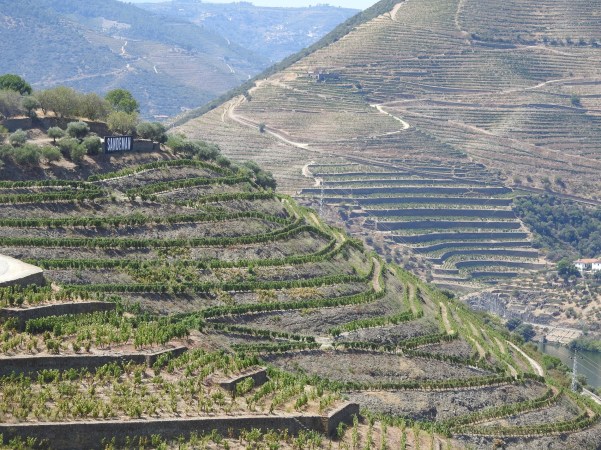
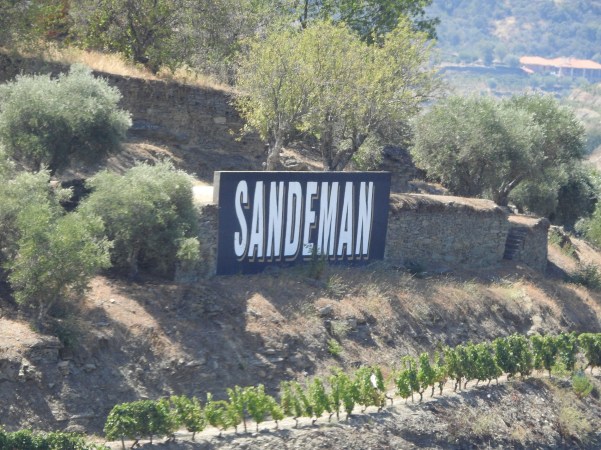
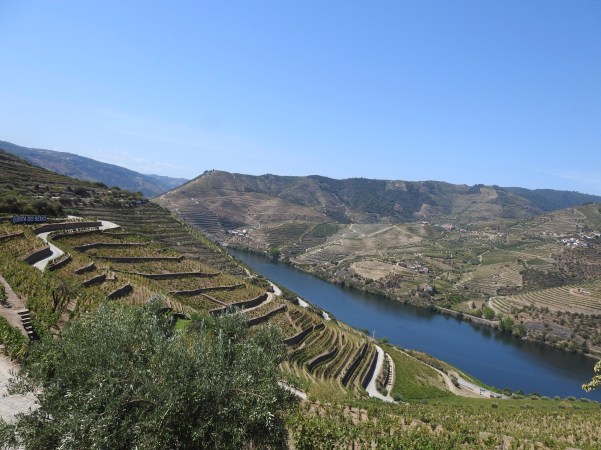
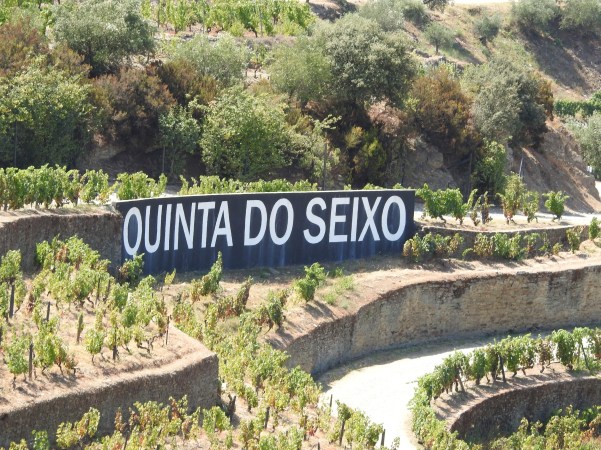
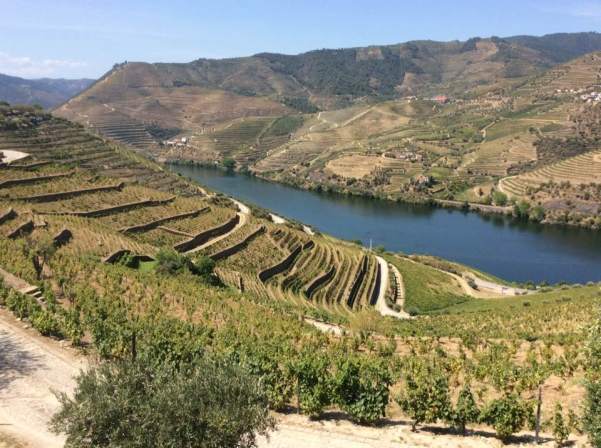
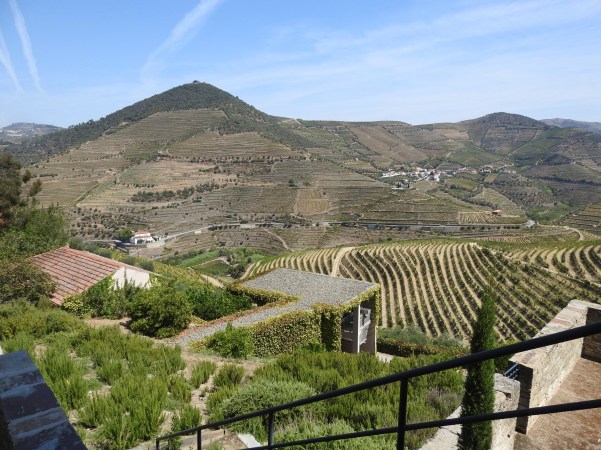
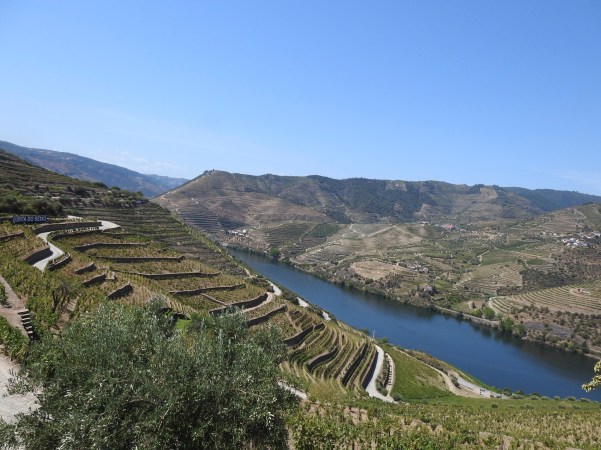
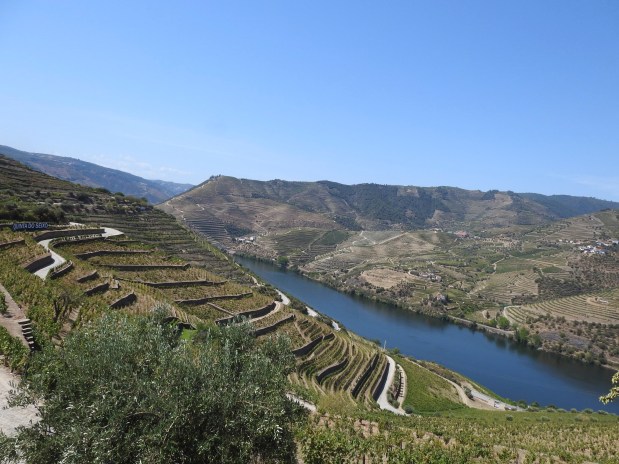
…nossa filha Sandy, pela manhã tinha mencionado que adorava mostrar à sua família as “Vinhas do Rio Douro”, onde se produz o famoso “Vinho do Porto”, como tal para lá nos dirigimos, claro, guiados pelos meios de orientação modernos, ou seja o GPS!. (Our daughter Sandy, in the morning, had mentioned that she loved to show her family the “Douro River Vineyards”, where the famous “Port Wine” is produced, as such we are, of course, guided by the means of guidance modern, ie the GPS)!.

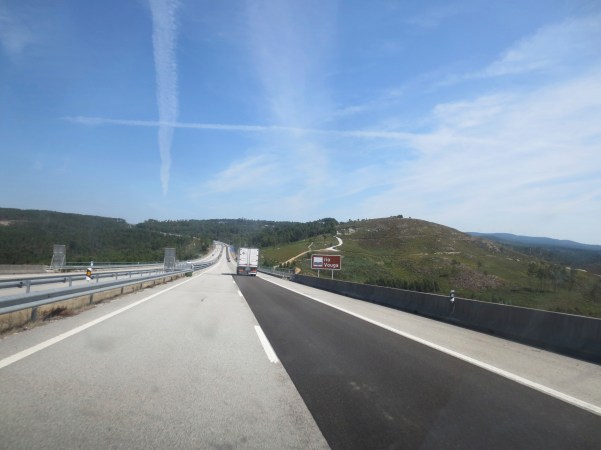
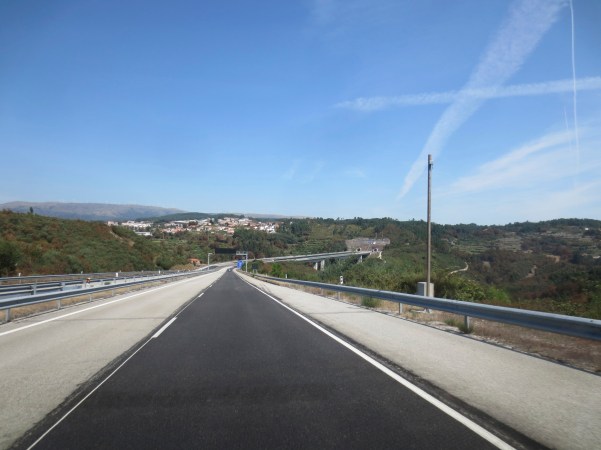
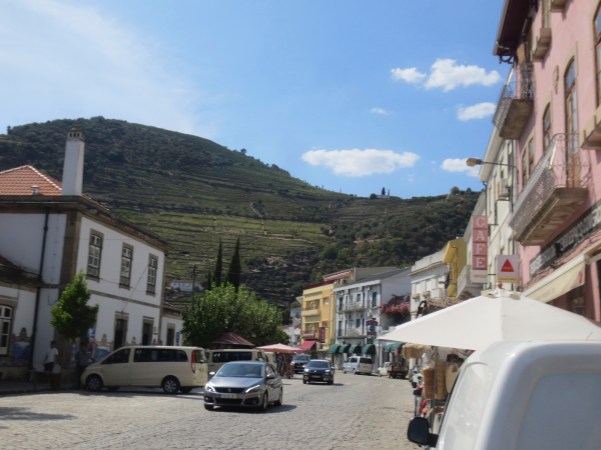
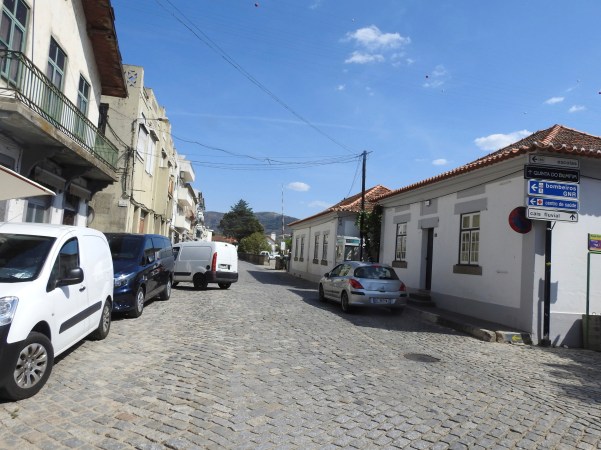
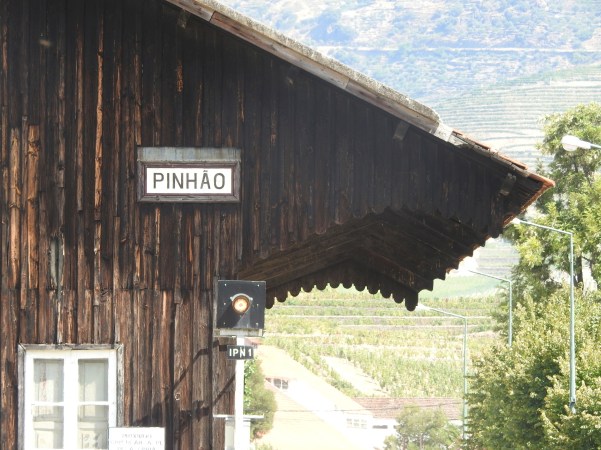
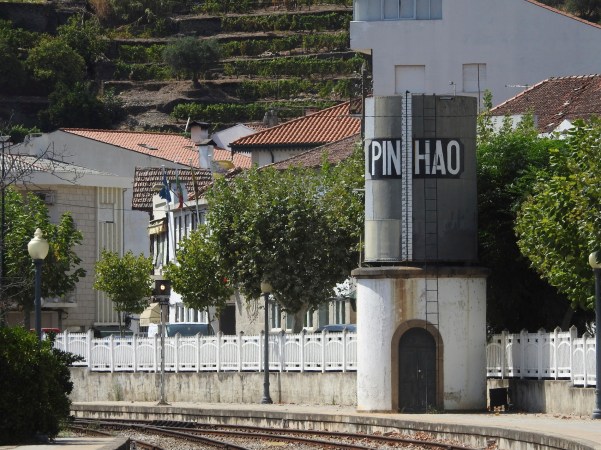
…hoje, diversas auto-estradas atravessam o país Portugal em diversas direcções, portanto este trajecto para norte, mais propriamente até à pitoresca cidade do Pinhão, que é uma cidade pequena e sonolenta, que fica aninhada no coração da região vinícola ao longo do Rio Douro, foi feito em pouco mais de duas horas!. (Today, several highways cross Portugal in different directions, so this route north, more specifically to the picturesque city of Pinhao, which is a sleepy little town, nestled in the heart of the wine region along of the Douro River, was done in just over two hours)!.

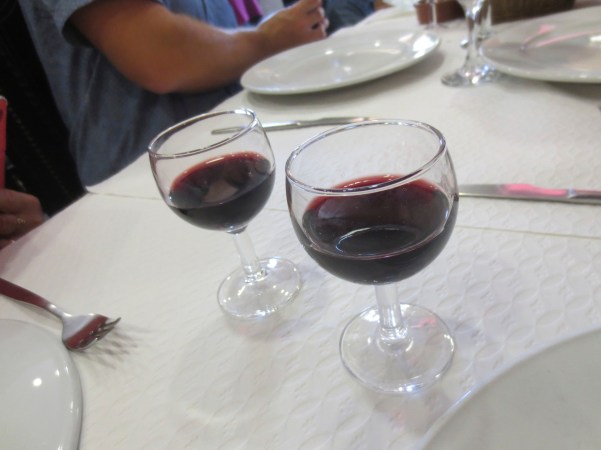
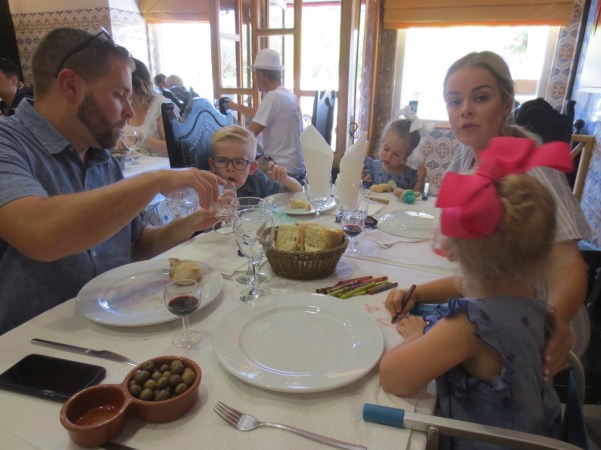
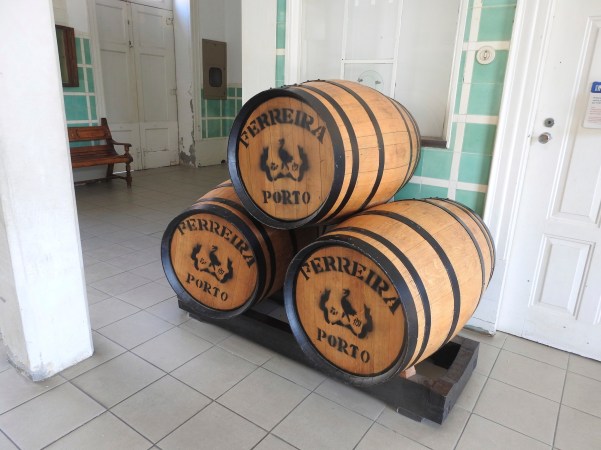
…aqui chegados, visitámos um restaurante local, onde nos serviram a comida local e, antes da refeição ofereceram aos adultos um cálice de Vinho do Porto!. Claro, as crianças não gostaram, perguntando onde estava o restaurante “McDonald’s”, perante o nosso sorriso e, o desespero da nossa filha Sandy e do seu dedicado marido Brian!. (When we arrived, we visited a local restaurant, where we were served the local food and, before the meal, offered the adults a glass of Port Wine!. Of course, the kids didn’t like asking where McDonald’s was, given our smile and the despair of our daughter Sandy and her devoted husband Brian)!.

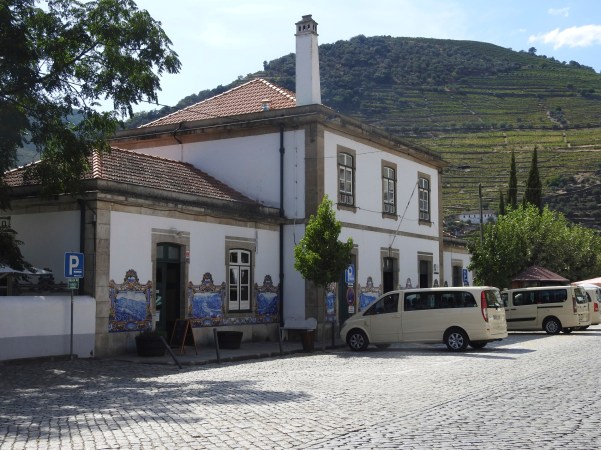
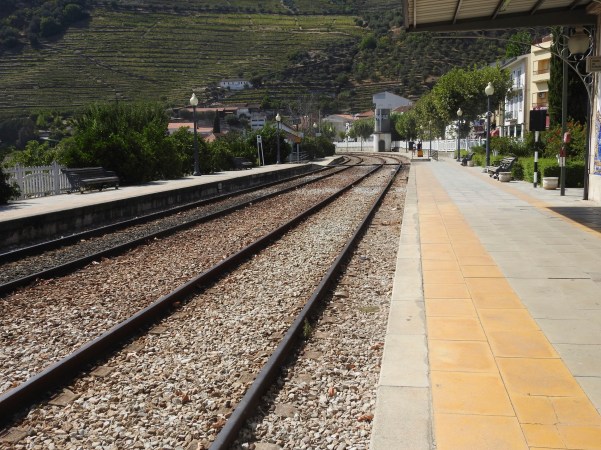
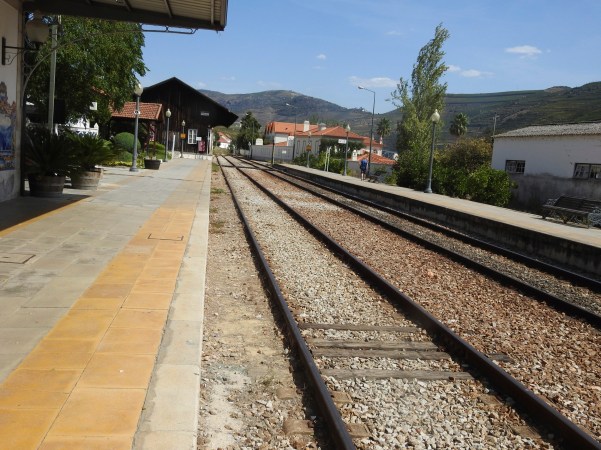
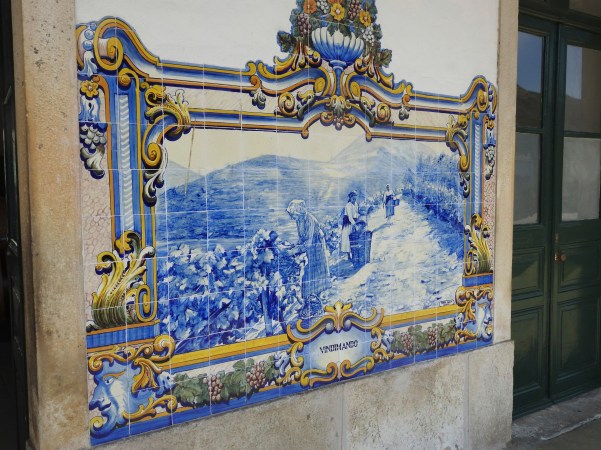
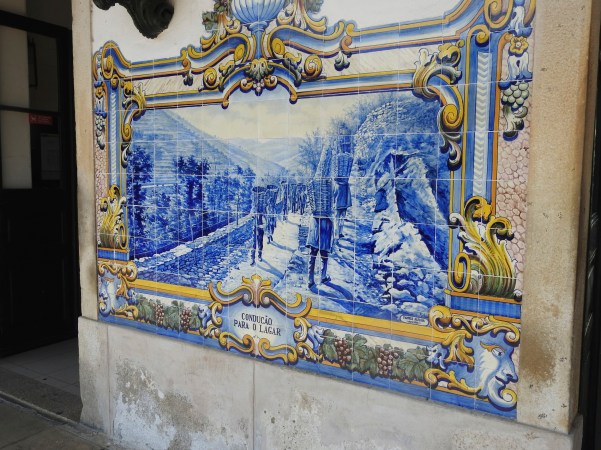
…visitámos a histórica Estação Ferroviária do Pinhão, criada no ano de 1937, para naquele tempo ajudar o desenvolvimento da região e da comunidade local, hoje famosa como atracção turística e pelos seus lindos azulejos azuis e brancos que retratam uma variedade de cenas da vida cotidiana junto do Rio Douro, principalmente as vindimas e em especial motivos relacionados com a tarefa rural do Vinho do Porto! (We visited the historic Pinhão Railway Station, created in 1937, to at that time help the development of the region and the local community, today famous as a tourist attraction and for its beautiful blue and white tiles depicting a variety of scenes from the daily life along the Douro River, especially the vintage and in particular reasons related to the rural task of port wine)!.

…atravessando de novo a famosa ponte do Pinhão, projectada pelo renomado arquitecto Gustave Eiffel, iniciámos a intensa jornada de descer a montanha até ao oceano Atlântico, viajando quando nos era possível, junto ao Rio Douro até à sua foz, um pouco além da cidade de Vila Nova de Gaia!. (Crossing over again the famous Pinhão bridge, designed by renowned architect Gustave Eiffel, we began the intense journey down the mountain to the Atlantic Ocean, traveling when we could, along the Douro River to its mouth just beyond from the city of Vila Nova de Gaia)!.

…olhando o céu, o sol ia alto, era já a parte da tarde deste dia, portanto viajávamos no sentido oeste, ou seja, o norte agora ficava à nossa direita, esperando ver o pôr do sol, lá para o fim do dia, quando chegássemos ao nosso destino, que era foz do Rio Douro!. (Looking at the sky, the sun was high, it was already late this day, so we were traveling west, that is, the north was now on our right, waiting to see the sunset, towards the end of the day, when we arrived at our destination, which was the mouth of the Douro River)!.

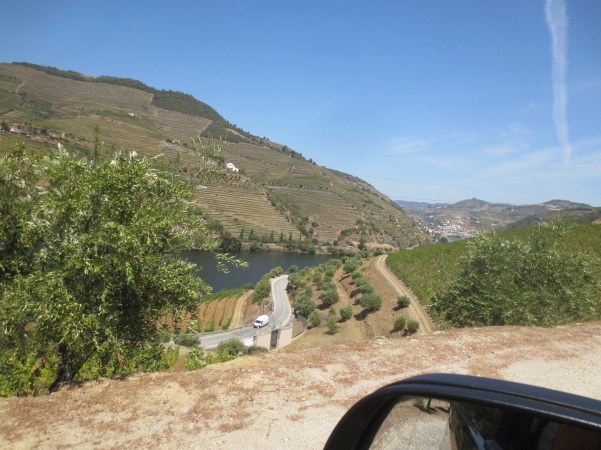
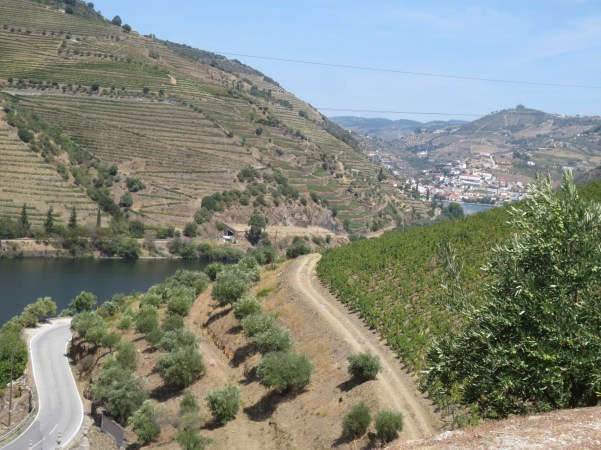
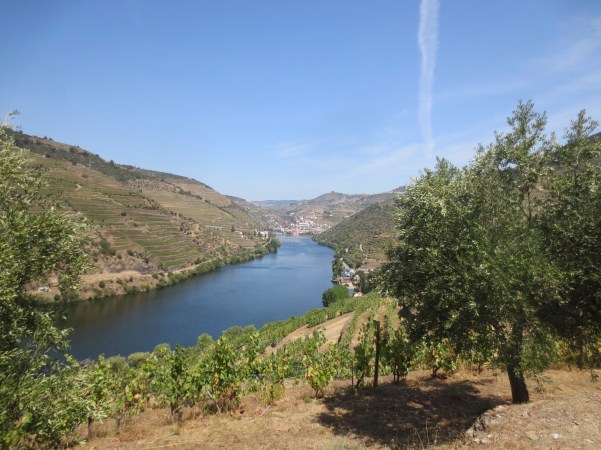
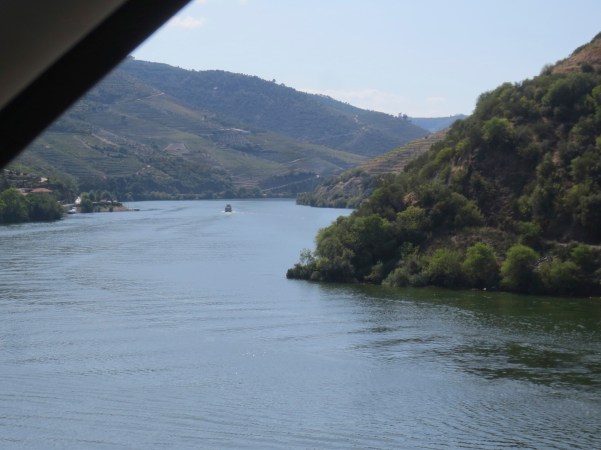
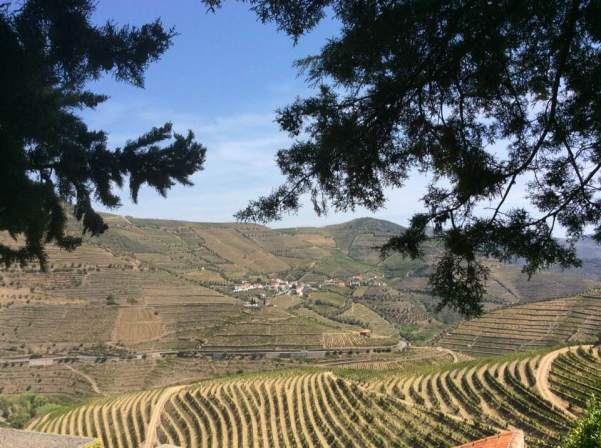
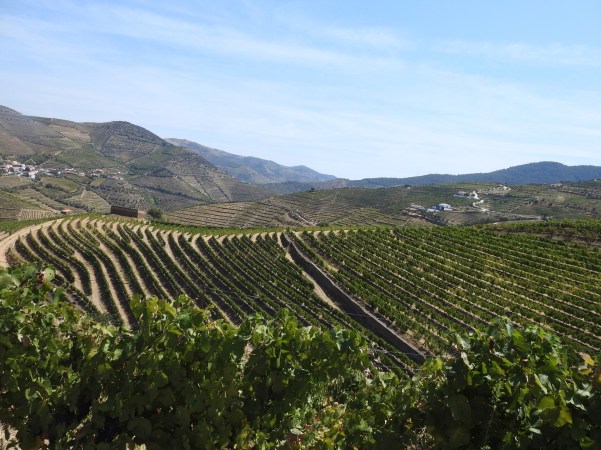
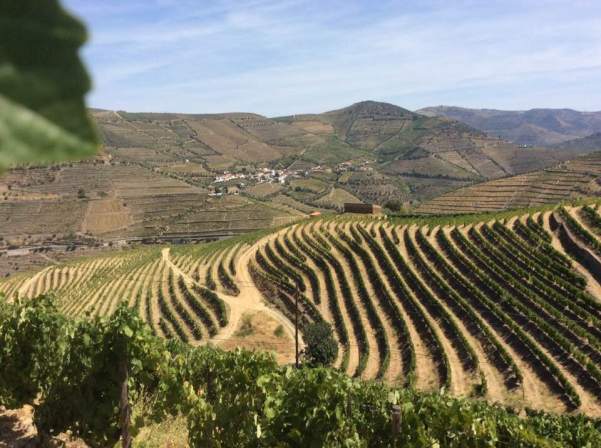
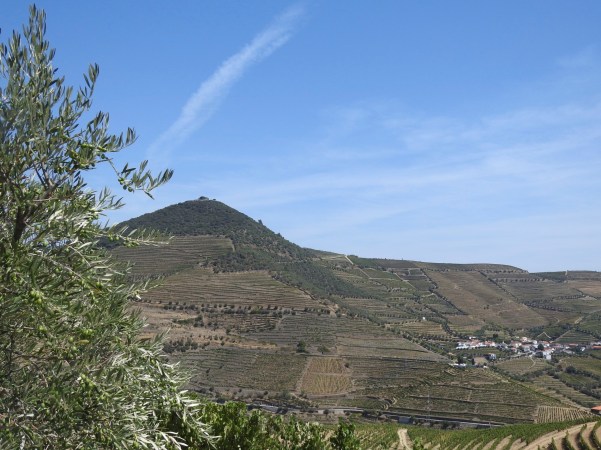
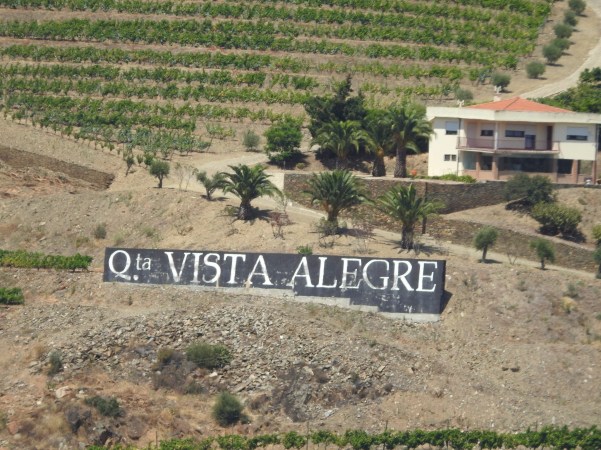
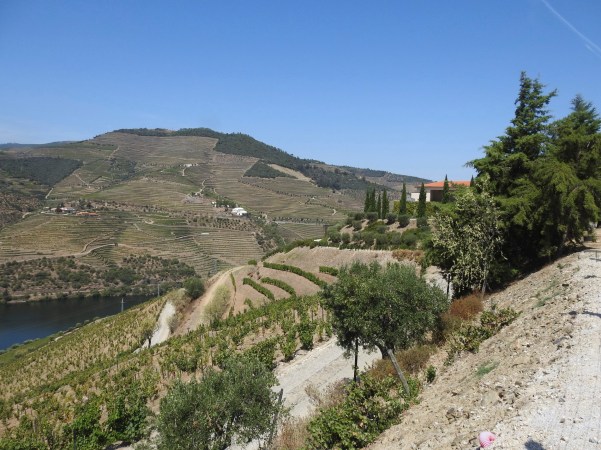
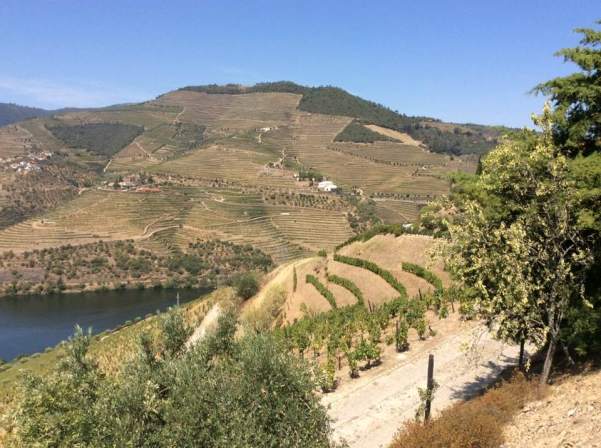
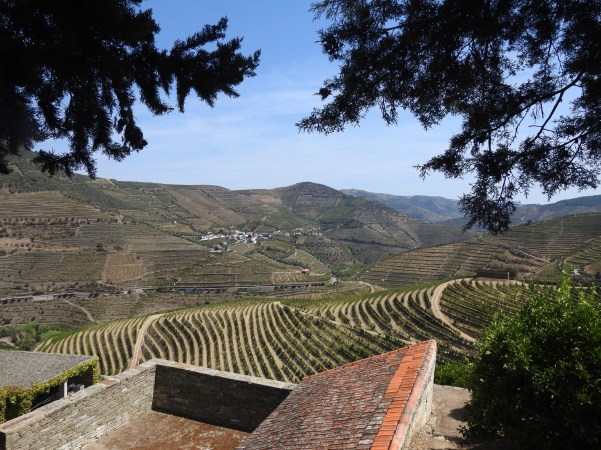
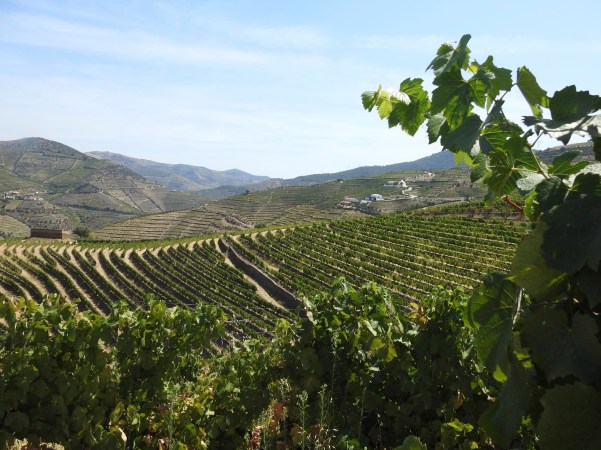
…durante este trajecto, tudo o que podíamos ver por quilómetros e quilómetros, eram vistas maravilhosas de montanha e rio, que nos cercavam por todos os lados, com lindas colinas de vinhas verdes, cobertas de trepadeiras e, aqui e ali algumas casas de campo rústicas, que deviam de ser adegas!. (During this journey, all we could see for miles and miles, were wonderful views of mountain and river that surrounded us on all sides, with beautiful hills of green vines, covered with vines, and here and there some houses rustic country houses, which should be cellars)!.

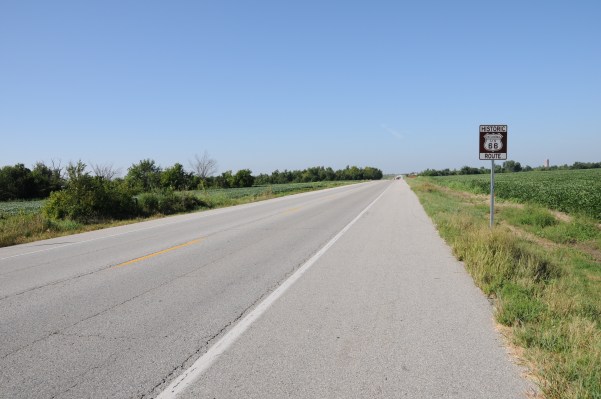
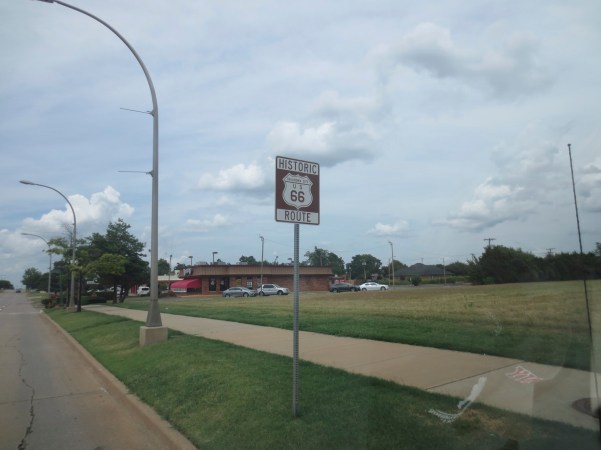
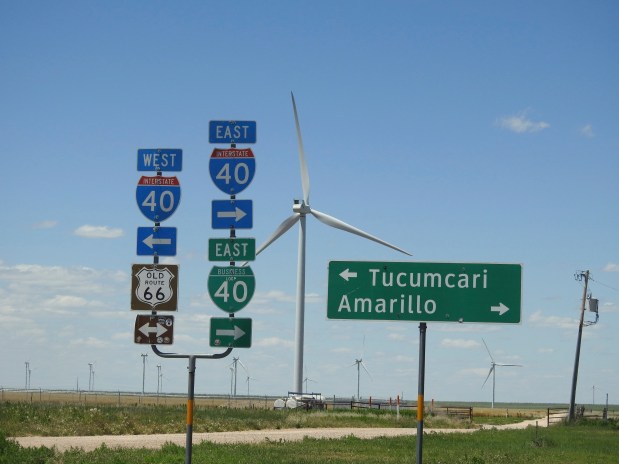
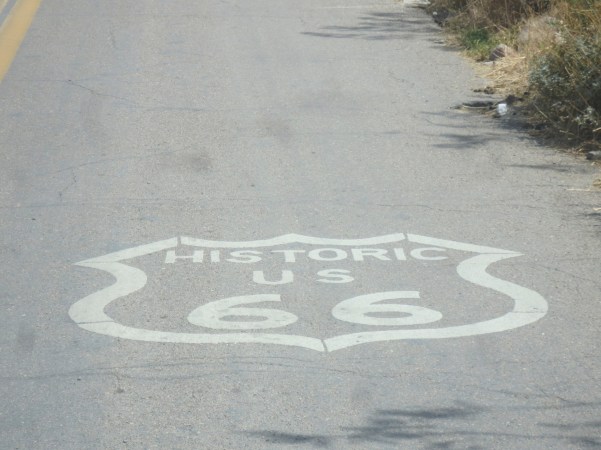
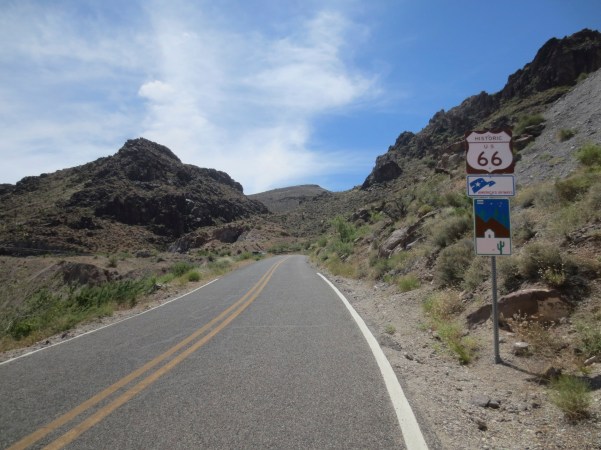
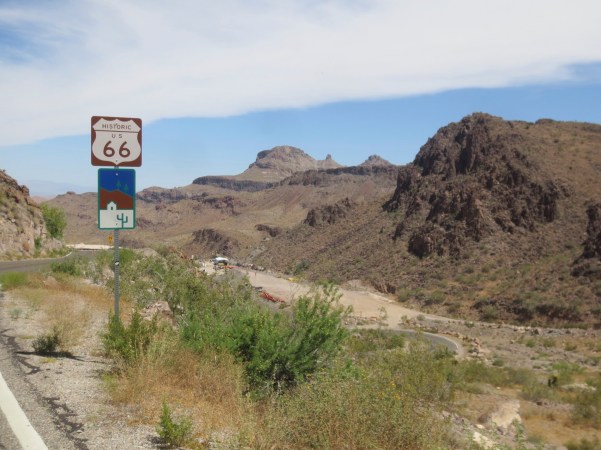
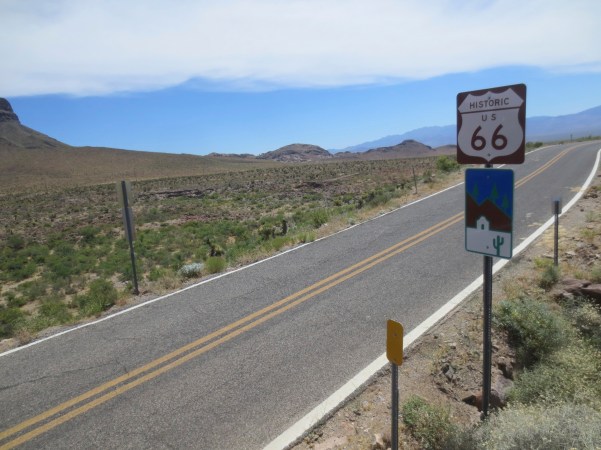
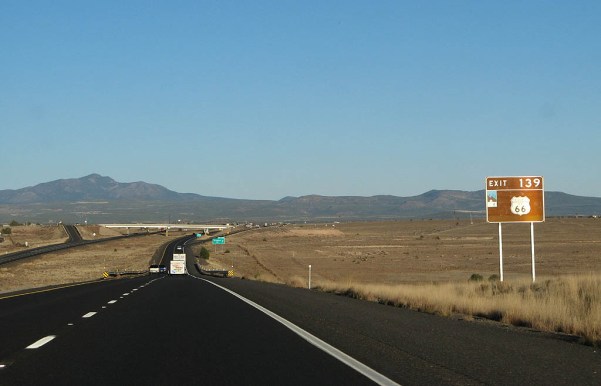
…em algumas ocasiões, usávamos a estrada antiga, comparada com a Histórica Estrada 66 nos USA, onde geralmente passava um veículo pelo outro, dando voltas e mais voltas, visitando pequenas vilas e aldeias “vinhateiras”, e claro, as crianças barafustavam, querendo complicar mais ainda, perguntavam constantemente quando era que chegávamos a casa, na América!. (Sometimes we used the old road, compared to the Historic Route 66 in the USA, where one car usually passed the other, going round and round, visiting small “vineyard” villages, and of course the kids were fussing wanting to complicate matters further, they were constantly asking when we would get home in America)!.

…estávamos cercados de algumas das mais belas vistas de Portugal, aninhados no coração da região vinícola ao longo do Rio Douro!. (We were surrounded by some of the most beautiful views in Portugal, nestled in the heart of the wine region along the Douro River)!.

…era o país do Vinho do Porto, bastava olhar ao nosso redor para ver que estávamos literalmente cercados por videiras, num clima ideal para as uvas que produzem o Vinho do Porto!. (Was the country of Port Wine, just look around to see that we were literally surrounded by vines, in an ideal climate for the grapes that produce Port Wine)!.

…quase chegados à foz do Rio Douro, considerávamos um previlégio ter apreciado um cenário maravilhoso, mas já sentíamos alguma mágoa por termos que deixar um lugar que gostaríamos de ter ficado por muito mais tempo!. (Almost at the mouth of the Douro River, we considered it a privilege to have enjoyed a wonderful scenery, but we already felt some hurt that we had to leave a place that we would have liked to stay for much longer)!.

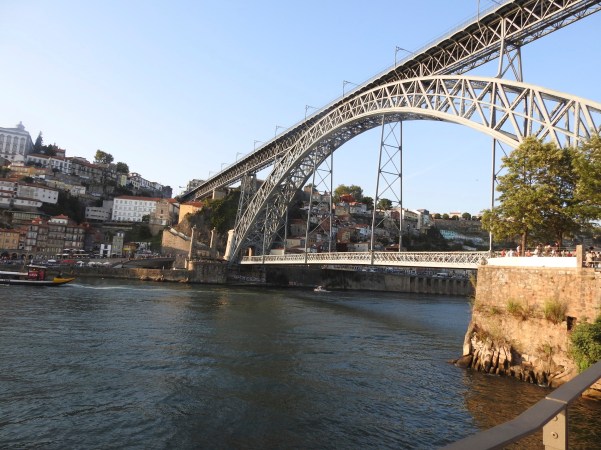
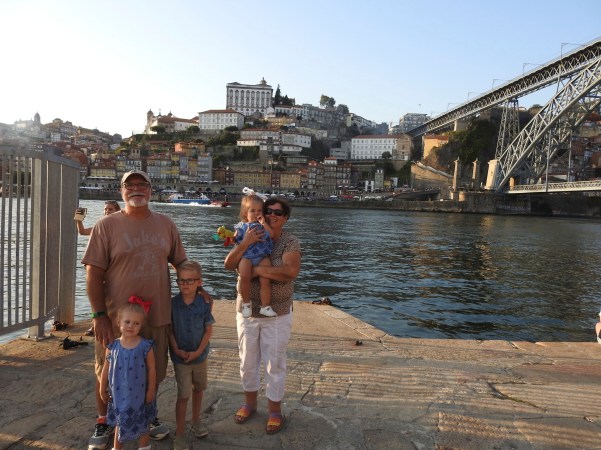
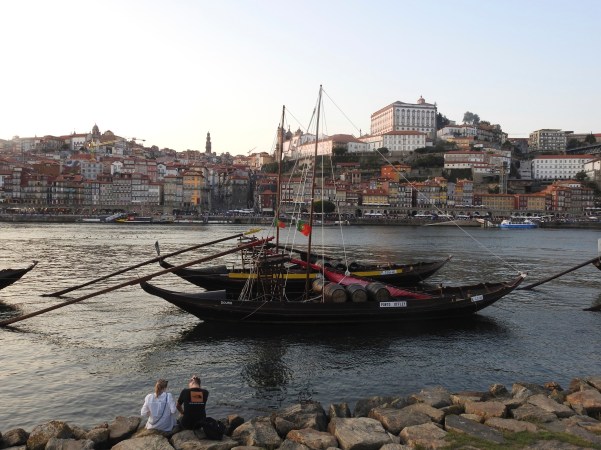
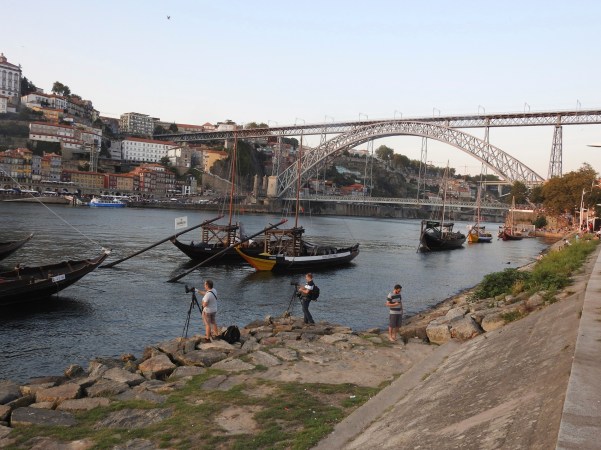
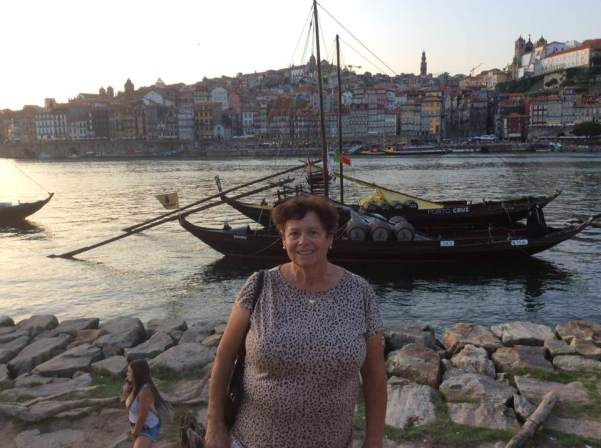
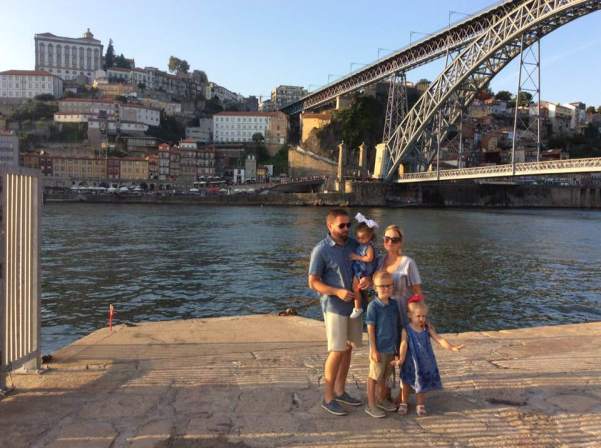
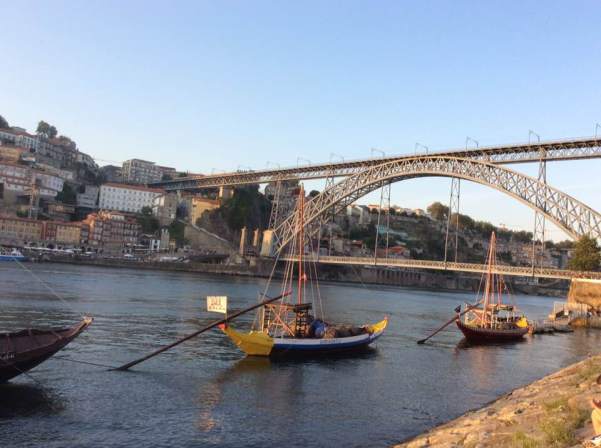
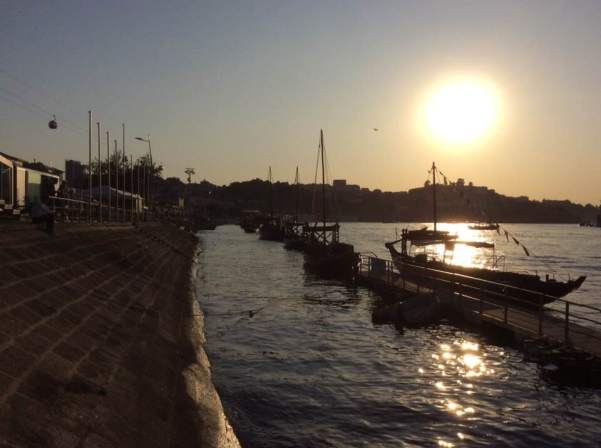
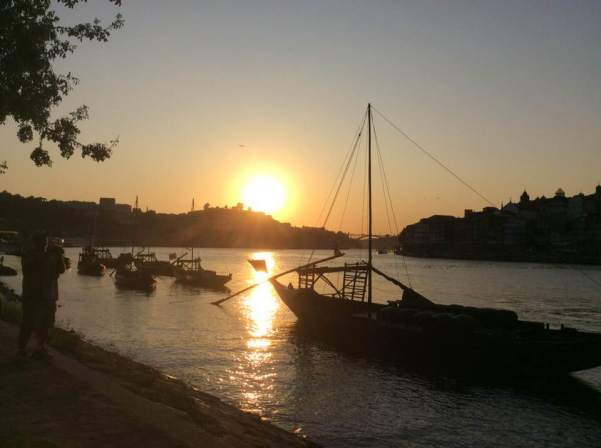
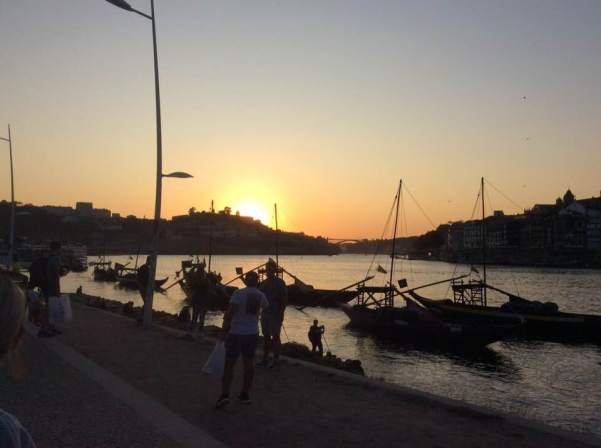
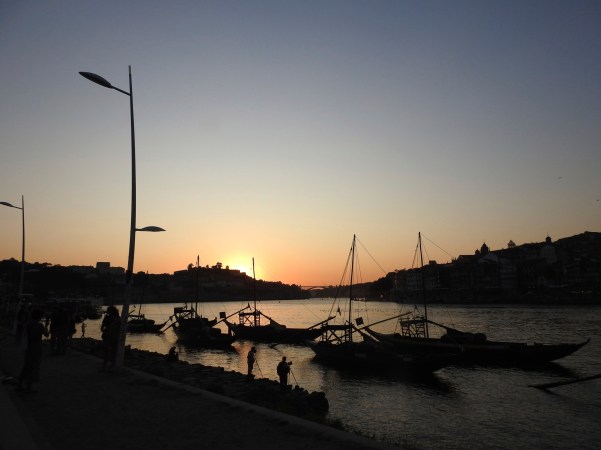
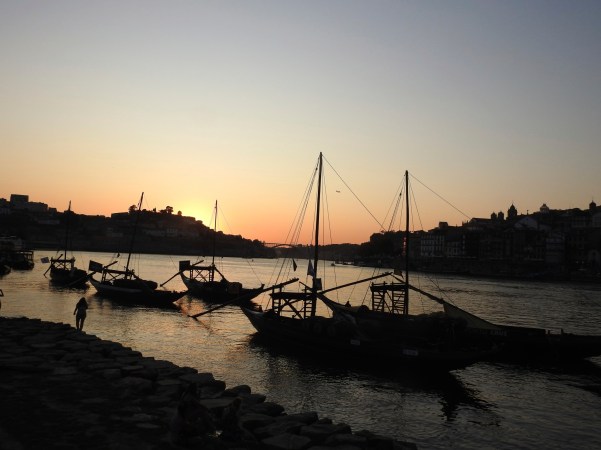
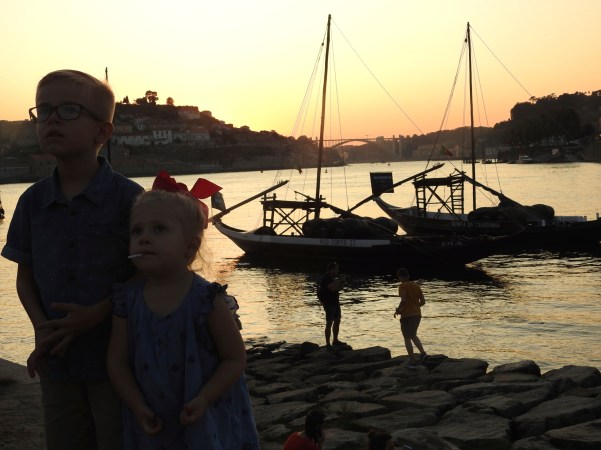
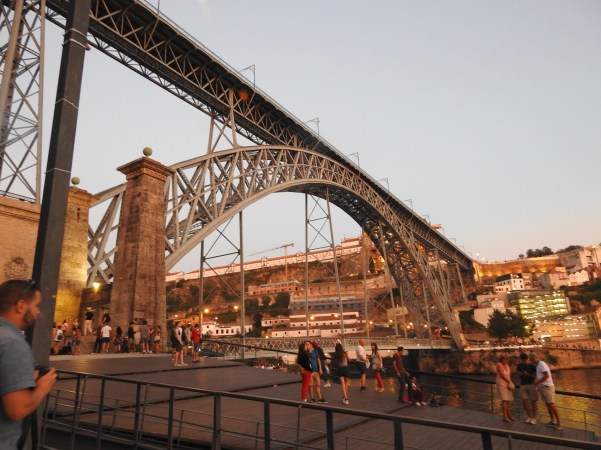
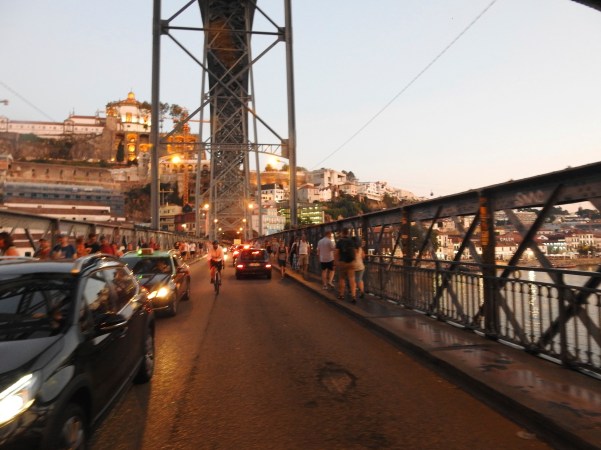
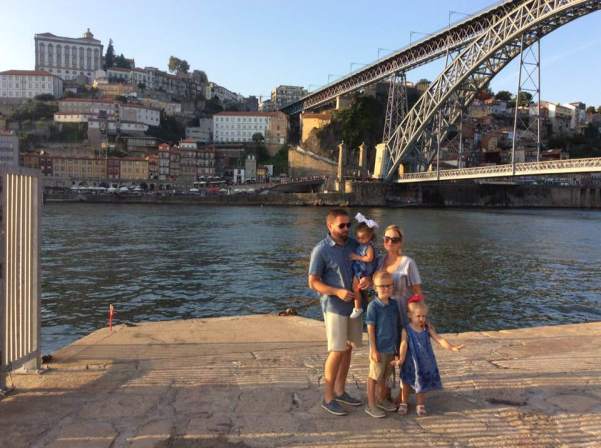
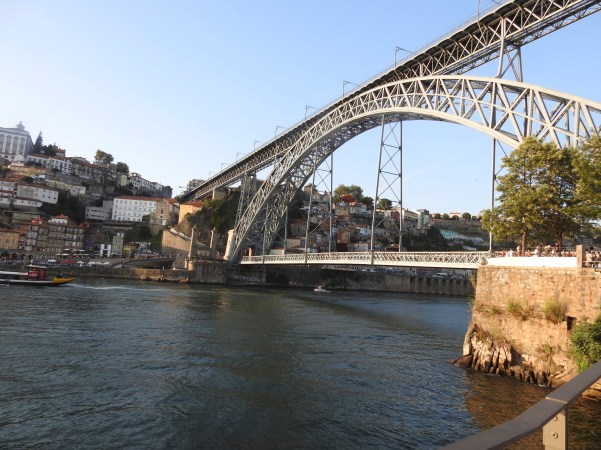
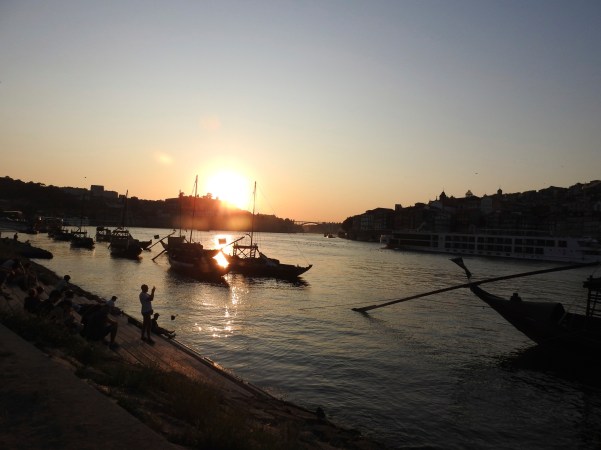
…no entanto estávamos próximo da foz do Rio Douro, outro lugar que nos mostrava um cenário para tirar algumas fotografias bonitas, junto da ponte D. Luiz, também projectada pelo renomado arquitecto Gustave Eiffel, com a cidade do Porto do outro lado do rio, e claro, o sol o pôr-se, reflectindo-se na água do rio!. (However we were near the mouth of the Douro River, another place that showed us a setting to take some beautiful photographs, near the D. Luiz bridge, also designed by the renowned architect Gustave Eiffel, with the city of Porto on the other side of the river, and of course, the sun sets, reflecting in the water of the river)!.

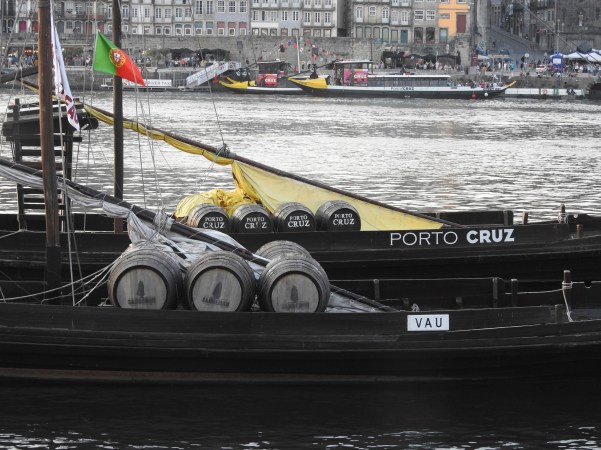
…era na cidade de Vila Nova de Gaia, junto do Rio Douro, um local que é um dos principais centros da indústria do Vinho do Porto, mais propriamente na zona ribeirinha Cais de Gaia, salpicado de adegas que oferecem passeios e degustações, com terraços de café e vistas amplas sobre o Rio Douro!. (Was in the city of Vila Nova de Gaia, near the Douro River, a place that is one of the main centers of the Port Wine industry, specifically in the Cais de Gaia riverside area, dotted with wineries that offer tours and tastings, with coffee terraces and wide views of the Douro River)!.

…ao começar este texto, explicámos que o céu da praia estava azul e que o sol tentava despertar!. Todavia neste momento, a posição do sol diz-nos que o dia está quase no fim, fazendo-nos lembrar a importância do tempo e como devemos fazer bom uso dele!. Olhando para oeste, o norte continua à nossa direita, o céu assume tons de laranja mostrando-nos um maravilhoso pôr do sol, a cor que lhe dá a esperança de que se está a pôr apenas, pois amanhã irá nascer novamente honrando o seu criador!. É também um momento de reflexão, pois o pôr do sol traz uma sensação de paz e a esperança de que tudo vai ficar bem, servindo como promessa de amanhã um novo dia virá claro e cheio de luz!. (When we started this text, we explained that the beach sky was blue and the sun was trying to wake up!. However, at this moment, the position of the sun tells us that the day is almost over, reminding us of the importance of time and how we should make good use of it!. Looking west, the north is still on our right, the sky is orange, showing us a wonderful sunset, the color that gives you the hope that you are just setting, because tomorrow will be born again honoring its creator!. It is also a moment of reflection, as the sunset brings a sense of peace and the hope that all will be well, serving as promise of tomorrow a new day will come clear and full of light)!.

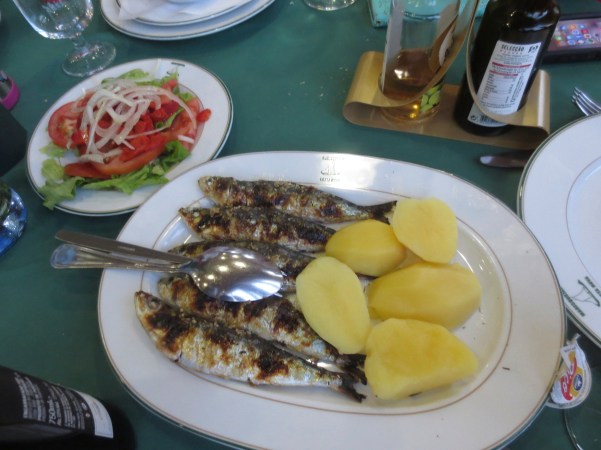
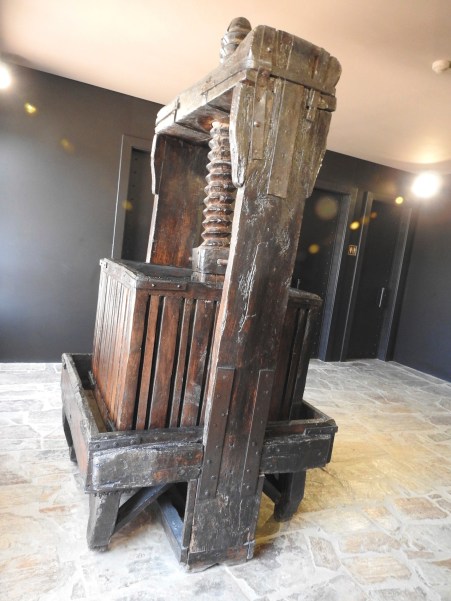
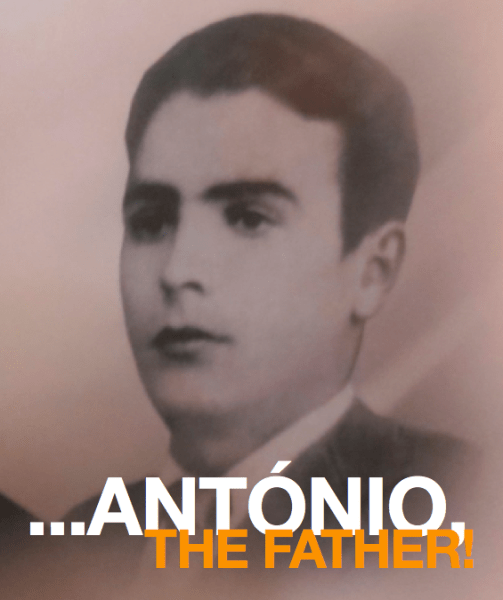
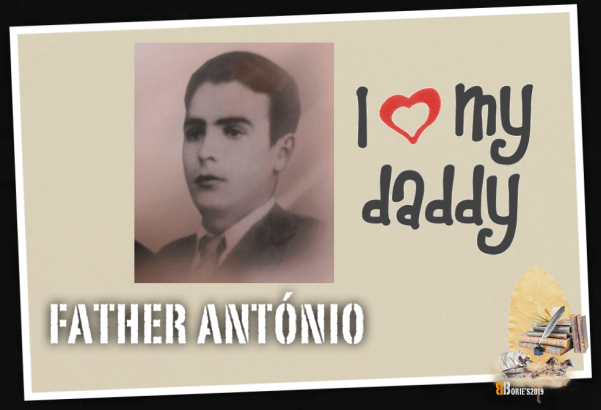
…o dia estava no fim e, toda esta aventura, a nós, fez-nos lembrar quando ainda crianças, as tarefas do nosso pai António, quando com ele participávamos nas actividades das colheitas, vendimando, trazendo os cestos cheios de uvas, pisando-as no lagar, comendo as de melhor qualidade, ajudando na “trafega” do vinho para as pipas, e depois, já próximo do Natal, a degustação do vinho, acompanhado de uma côdea dura de pão de milho e metade de uma sardinha assada!. (The day was coming to an end, and this whole adventure reminded us as children of our father Antonio’s tasks when we took part in the harvesting activities, selling and bringing baskets full of grapes, treading them in the winepress, eating the best quality, helping in the “traffic” of wine to the kites, and then, near Christmas, the wine tasting, accompanied by a hard crust of corn bread and half a sardine roast)!.

…quando o Pai António já doente, pois morreu com a doença de câncer, viemos vê-lo aqui a Portugal, mais uma vez nos pediu para dele nos aproximar-mos, tocou-nos na cabeça e falou baixinho, pois não tinha forças para falar alto e, disse: “lembras-te, quando eu saía da mesa um pouco antes de vocês acabarem de comer?. Não era porque não tivesse fome, era que via que o comer não ia chegar para todos”!. (When Father Antonio was already ill because he died of cancer, we came to see him here in Portugal, once again asked us to approach him, touched us on the head and spoke softly, because he had not she was strong enough to speak loudly and said, “Remember when I left the table just before you finished eating? It was not because I was not hungry, I saw that eating was not going to come for everyone)!.

…sim, lembro-me ainda hoje Pai António e, também me lembro daquele “carrinho” que me fizeste, que não era mais do que um pau, com uma roda de madeira na ponta, que eu levava quando ia atrás de ti, quando ias descalço, trabalhar nas terras alagadiças do lameiro, tu também não me sais do pensamento, descansa em paz e, até qualquer dia Pai António!. (Yes, I still remember Father Antonio, I also remember that “cart” you made me, which was no more than a stick, with a wooden wheel on the end, which I carried when I went behind you, when you went barefoot, working in the marshy lands of the mire, and you also do not leave me of the thought, rest in peace and, until one day, Father Antonio)!.

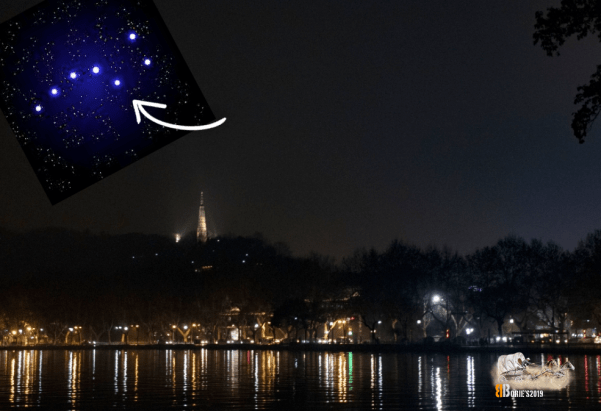
…já era noite, imaginávamos mas não víamos, “os sete bois de arado”, um nome que dão à Ursa Maior, que é uma constelação, que até dizem que está origem da palavra em inglês Ártico!. No entanto, deixando estes termos técnicos e, voltando aos pontos cardeais, na rotação visível do céu nocturno que avistávamos, neste momento o sul, era o ponto para onde nos queríamos dirigir, ou seja, para a Praia da Barra de Aveiro e que, só o GPS e a nossa filha Sandy, nos poderia indicar, pois já tínhamos aberto uma garrafa de Vinho do Porto!. (It was night, we imagined but did not see, “the seven plow oxen”, a name they give to the Big Dipper, which is a constellation, which they even say originates from the English word Arctic!. However, leaving these technical terms and, returning to the cardinal points, in the visible rotation of the night sky that we could see, at this time the south, was the point where we wanted to go, that is, to Barra de Aveiro Beach and that, only GPS and our daughter Sandy could tell us that we had already opened a bottle of Port Wine)!

…já adivinhamos o que estão a pensar!. Não, não éramos nós que conduzíamos o veículo, pois havia a responsabilidade de uma maravilhosa família, assim, quem conduzia era o nosso dedicado genro Brian!. (We already guessed what they are thinking!. No, we were not driving the vehicle, as it was the responsibility of a wonderful family, so it was our dedicated son-in-law Brian)!.

(continua) (to be continued)

Tony Borie, September 2019.

…fomos a Portugal!. (We went to Portugal)!.

…fomos a Portugal!. (We went to Portugal)!.

…fomos a Portugal!. Éramos “Os Sete Magníficos”!. (We went to Portugal!. We were “The Seven Magnificent”)!.

…segunda parte!. (second part)!.

…por alguns dias ficámos estacionados na Praia da Barra de Aveiro e, como anteriormente já explicámos, nestes dez dias passados em Portugal, o nome mais apropriado para o nosso grupo será “The Magnificent Seven” (“Os Sete Magníficos”)!. (For a few days we were stationed at Barra de Aveiro Beach and, as we have already explained, in the last ten days in Portugal, the most appropriate name for our group will be “The Magnificent Seven”)!.

…aqui, era a nossa “Fortaleza” dos tempos modernos, não havendo, nem eram necessárias as muralhas necessárias para se sobreviver num mundo em constante mudança de invasão e conquista!. (Here, it was our “Fortress” of modern times, and there were no necessary walls to survive in a constantly changing world of invasion and conquest)!.

…contudo, considerávamos o Farol da Barra de Aveiro a nossa Torre de Vigia, que nos protegia de qualquer anomalia que porventura podesse ameaçar o “Nosso Reino”!. (But we considered Barra de Aveiro Lighthouse our Tower of Watchman, who protected us from any anomaly that might threaten “Our Kingdom”)!.

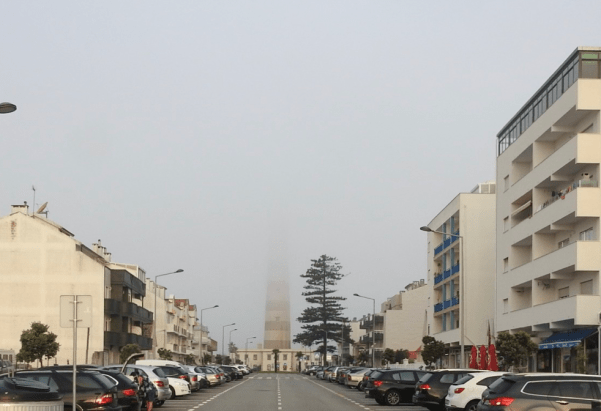
…como por exemplo o nevoeiro, que quando aparecia, a sua “Ronca” (Sirene), ouvia-se de dois em dois minutos!. (Such as the fog, which when it appeared, its “Ronca” (Siren) would be heard every two minutes)!.

…daqui saíamos pela manhã, em que alguns dias eram longas, pois poucos sabem apreciar o trabalho que dá a uma mãe, mesmo com a ajuda de um pai, acordar, lavar, vestir, pentear e dar de comer a três adoráveis crianças que, por isto ou por aquilo, não concordam, ou para ser mais simpático discordam, das leis e procedimentos dos adultos!. (We left in the morning, when some days were long, because few know how to appreciate the work that gives a mother, even with the help of a father, waking, washing, dressing, combing and feeding three lovely children who, for this or that, do not agree, or to be more sympathetic, disagree with the laws and procedures of adults)!’

…por exemplo, uma criança que está sentada e presa numa cadeira à mesa, vê um seu irmão correndo pela casa!. Querendo fazer o mesmo, chora, barafusta, quer sair e ir correr!. A mãe, atenciosa, pega-lhe ao colo e, ela cala-se!. A outra, que estava calada, vendo a irmã a receber carinhos extras, com alguns ciúmes, começa ela um “choro reclamatório”, pois sente-se discriminada!. Em resumo, com três crianças juntas, existe sempre alguma confusão e, quando não havia nevoeiro para se ouvir a “Ronca” (Sirene), do Farol da Barra de Aveiro a trabalhar, havia o ambiente normal de um lar com três adoráveis crianças!. (For example, a child who is sitting and sitting in a chair at a table sees his brother running around the house!. Wanting to do the same, cry, fuss, want to go out and go running!. The caring mother picks her up and she shuts up!. The other, who was silent, seeing her sister receiving extra affection, with some jealousy, she begins a “complaining cry”, because she feels discriminated!. In short, with three children together, there is always some confusion, and when there was no fog to hear the “Ronca” (Siren) from Barra de Aveiro Lighthouse working, there was the normal atmosphere of a home with three lovely children)!.

…saindo desta “Fortaleza”, visitávamos alguns lugares, regressando ao fim do dia!. (Leaving this “Fortaleza”, we visited some places, returning to the end of the day)!.

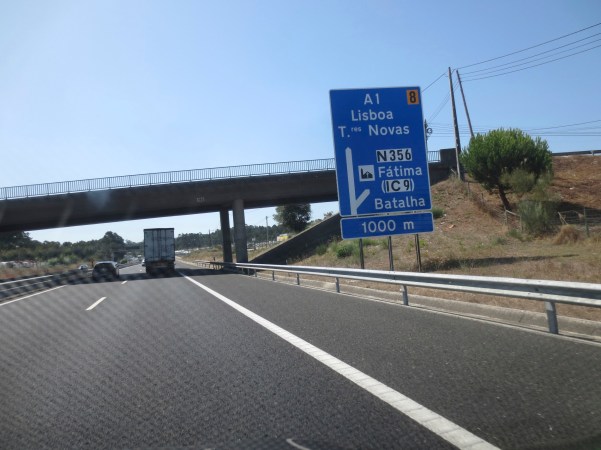
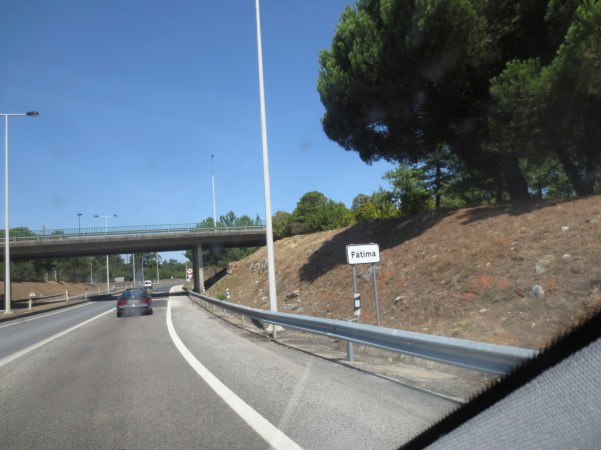
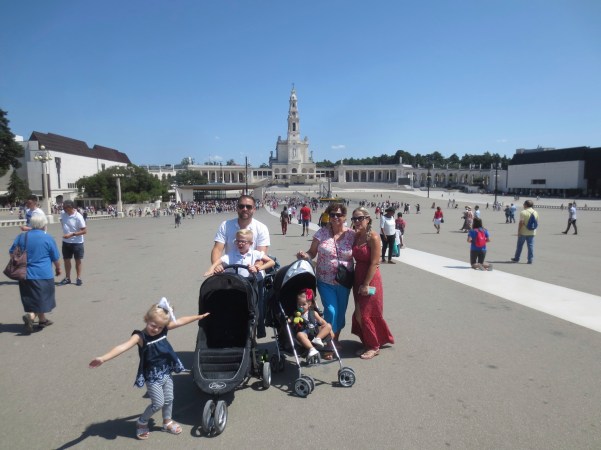
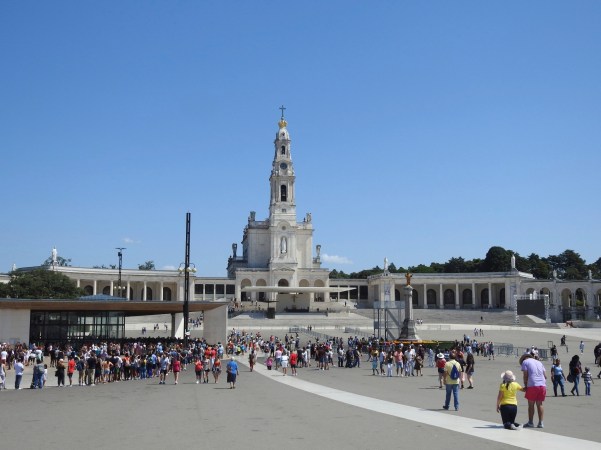
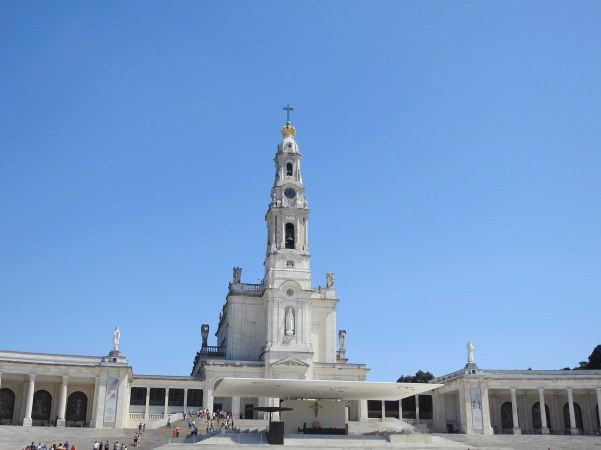
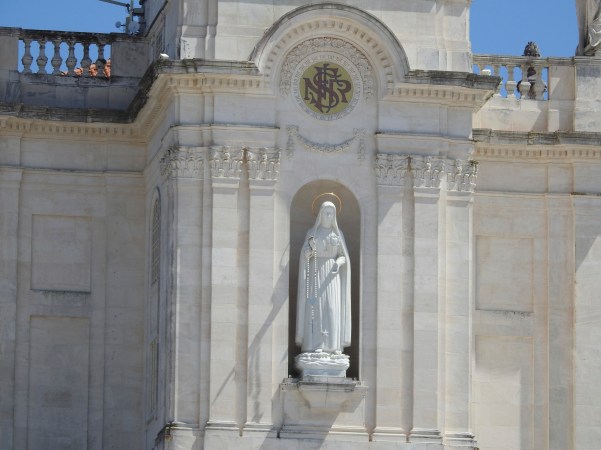
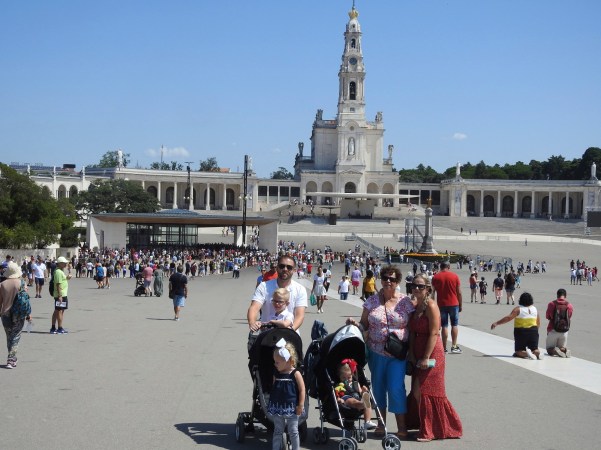
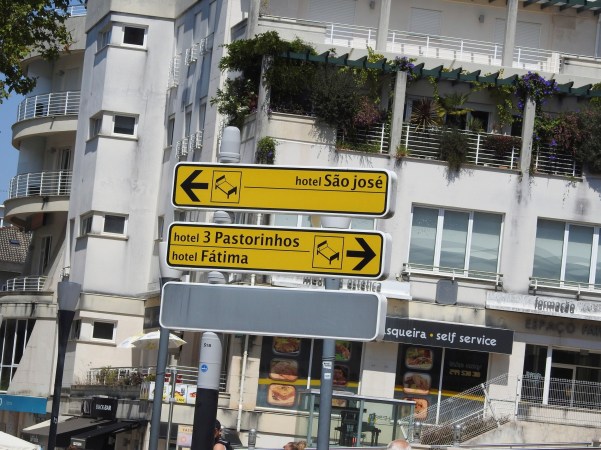
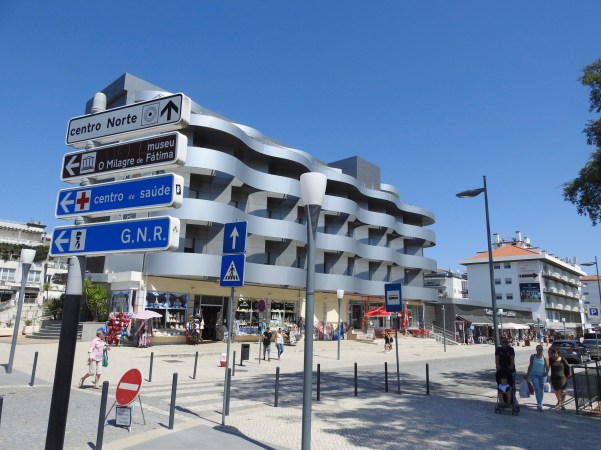
…neste dia, tomando a direcção sul, viajando pela auto-estrada e, como bons e dedicados imigrantes que somos, visitámos o Santuário de Fátima!.  (On this day, heading south, traveling the highway and, as good and dedicated immigrants we are, we visited the Sanctuary of Fatima)!.

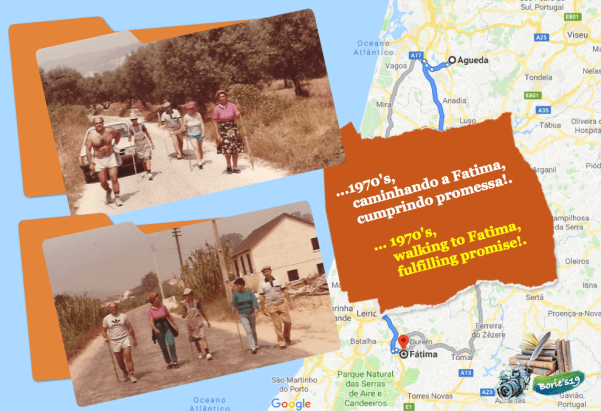
…para entre outros pormenores, a nossa dedicada esposa Isaura “cumprir mais uma promessa”, agradecendo ao divino por ter sido generoso para consigo e a sua adorável família!. (Among other details, our dedicated wife Isaura “fulfill another promise”, thanking to the divine for being generous to you and your lovely family)!.

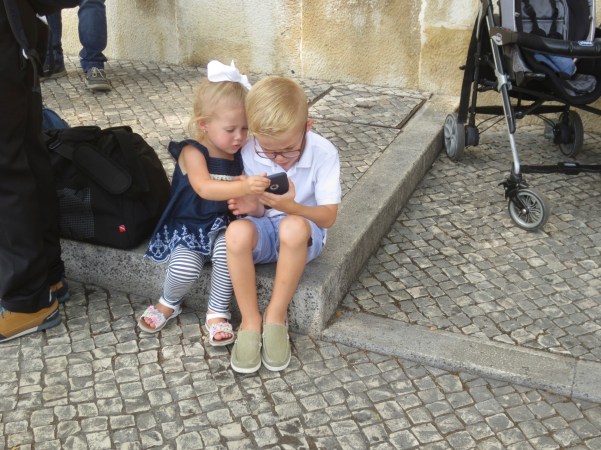
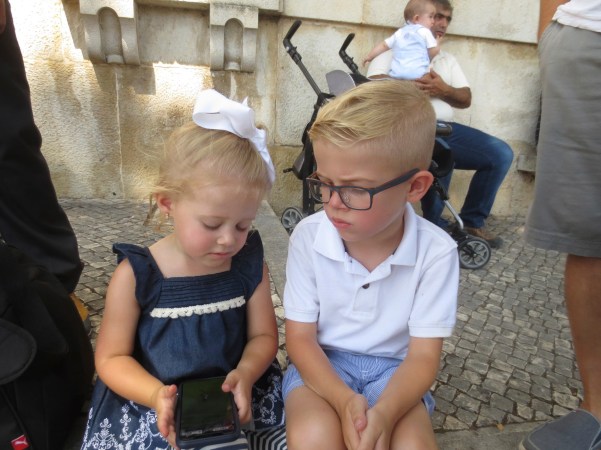
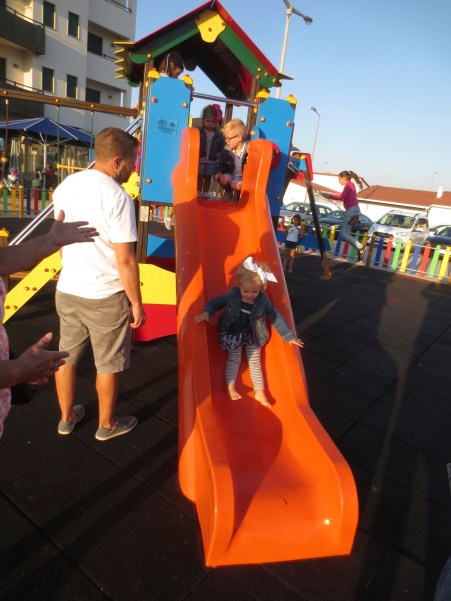
…enquanto isso acontecia, as crianças andavam entretidas!. (While this was happening, the children were entertained)!.

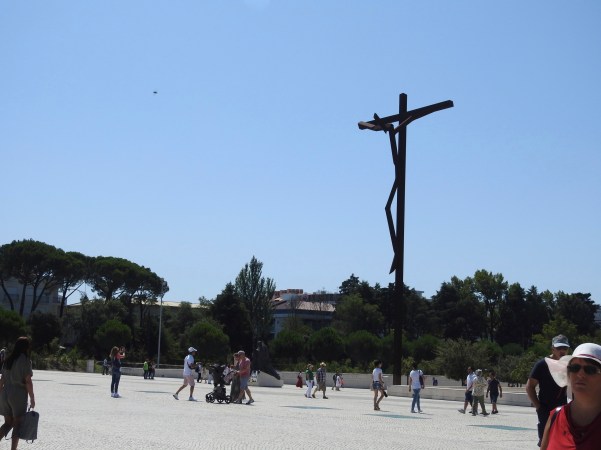
…o Santuário de Fátima está localizado no lugar da Cova da Iria, na hoje cidade de Fátima!. É um lugar de peregrinação cristã e devoção católica, preservando a memória dos acontecimentos que levaram à sua fundação, nomeadamente as aparições de Nossa Senhora aos Três Pastorinhos, que eram a Lúcia, o Francisco e a Jacinta, no distante ano de 1917!. (The Sanctuary of Fatima is located in the place of Cova da Iria, in today’s city of Fatima!. It is a place of Christian pilgrimage and Catholic devotion, preserving the memory of the events that led to its founding, namely the apparitions of Our Lady to the Three Shepherds, who were Lucia, Francisco and Jacinta, in the distant year of 1917)!.

hoje é um dos mais importantes santuários marianos do mundo, conhecido nacional e internacionalmente, recebendo todos os anos cerca de seis milhões de visitantes que por aqui passam, portadores das mais variadas motivações, mas a principal, parece ser a devoção, a promessa e a busca de um ambiente espiritual e calmo!. (Today is one of the most important Marian shrines in the world, known nationally and internationally, receiving every year about six million visitors who come here, bearers of various motivations, but the main one seems to be devotion, promise and the search for a spiritual and calm environment)!.

…nós, ainda jovens, quando do regresso à Europa, vindos da nossa participação forçada e imposta pelo governo colonialista que então existia em Portugal, naquela trágica e miserável Guerra Colonial Portuguesa, que nos obrigou a sobreviver em África, onde estivémos por um período de dois anos!. (We, still young, when we returned to Europe, coming from our forced participation and imposed by the colonialist government that then existed in Portugal, in that tragic and miserable Portuguese Colonial War, which forced us to survive in Africa, where we were for a while period of two years)!.

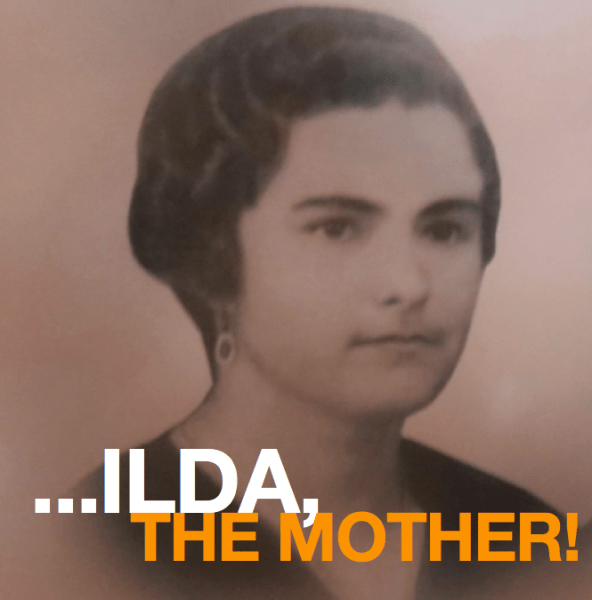
…entre outros, este foi um dos motivos que, cumprindo uma promessa da nossa querida mãe Ilda, talvez feliz por nos ver regressar com vida!. (Among others, this was one of the reasons that, fulfilling a promise of our dear mother Ilda, perhaps happy to see us come back alive)!.

…assim, fizémos todo o trajecto de aproximadamente 150 quilómetros, caminhando na companhia da nossa dedicada esposa Isaura, juntos com alguns familiares, desde a nossa aldeia do Vale do Ninho D’Águia, lá na encosta agreste da montanha do Caramulo, até este Santuário!. (So, we made the entire journey of approximately 150 kilometers, walking in the company of our dedicated wife Isaura, together with some family members, from our village of Vale do Ninho D’Águia, there on the rugged slope of Caramulo mountain, until this shrine)!.

…que, nesses anos tinha uma aparência mais modesta, não se comparando com o cenário que hoje por aqui existe, talvez gerado pelo poderoso impulso do Santuário de Fátima, que também é responsável pelo crescimento exponencial de uma zona do país que até aí, era muito pouco desenvolvida!. (That in those years had a more modest appearance, not compared to the scenario that exists today, perhaps generated by the powerful impetus of the Shrine of Fatima, which is also responsible for the exponential growth of an area of the country that until then , was very undeveloped)!.

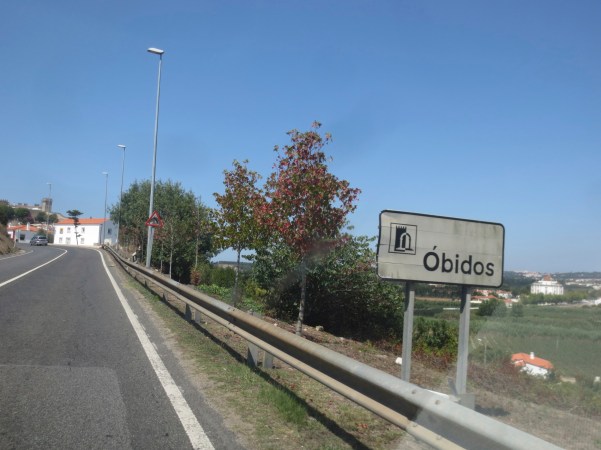
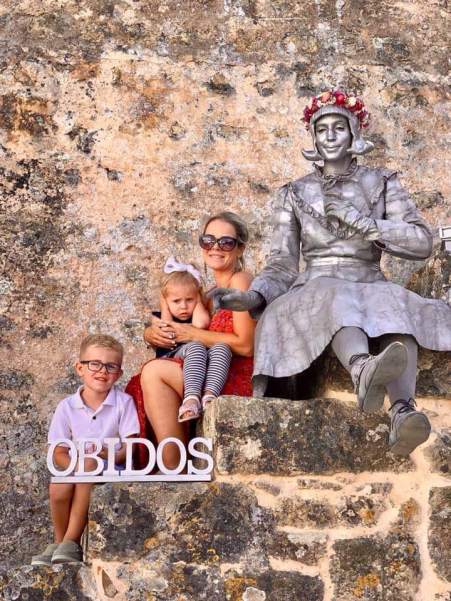
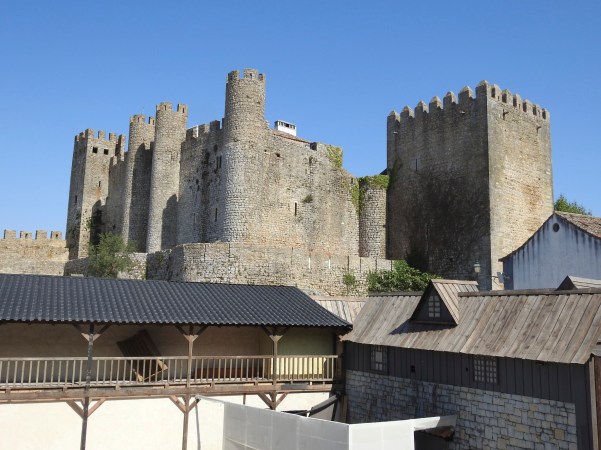
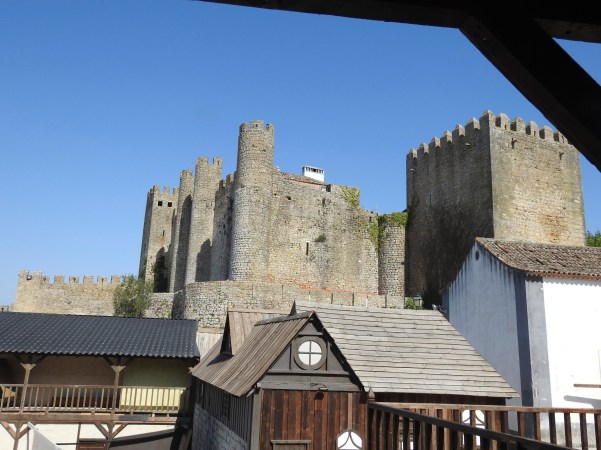
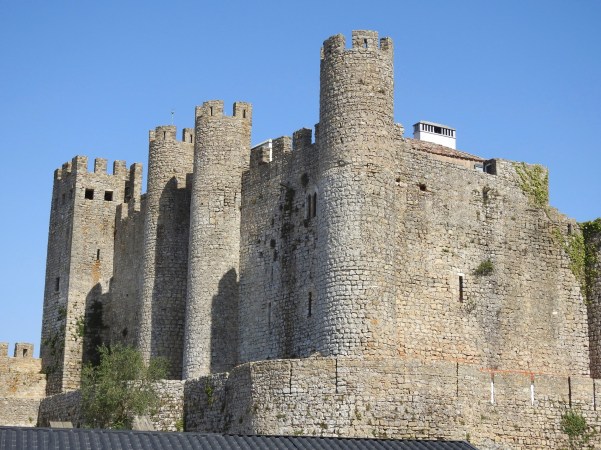
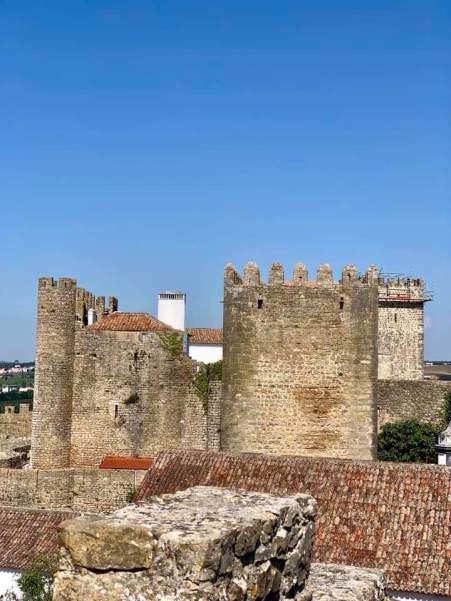
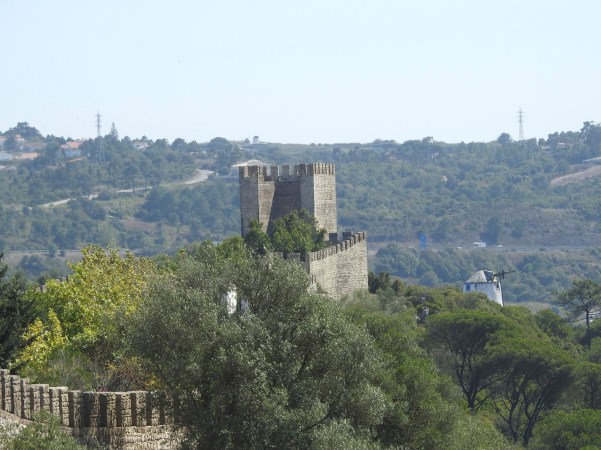
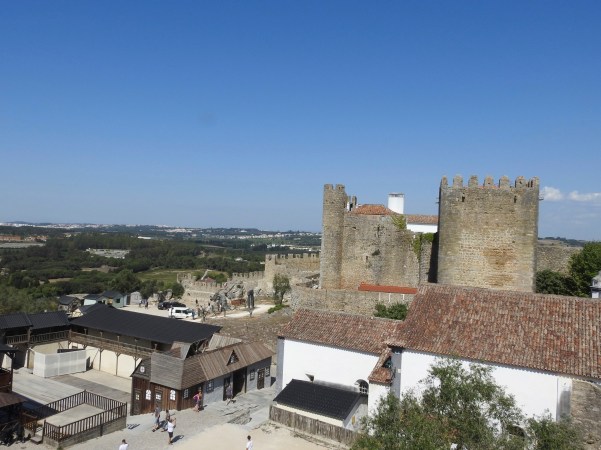
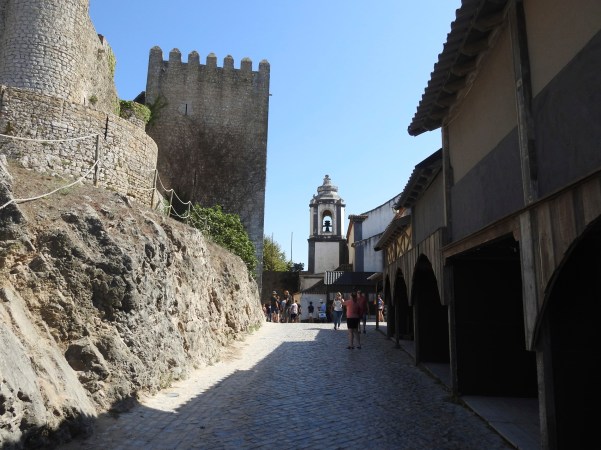
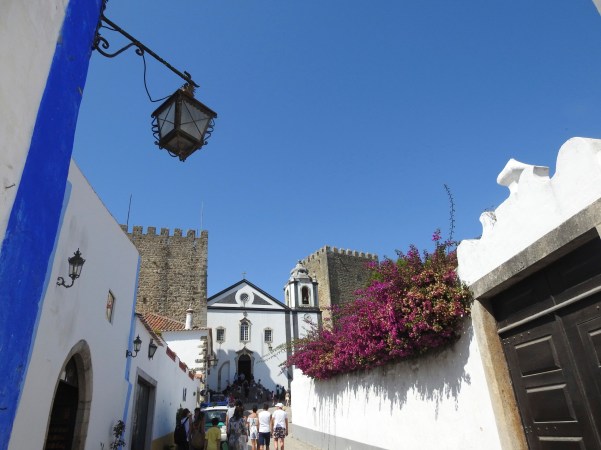
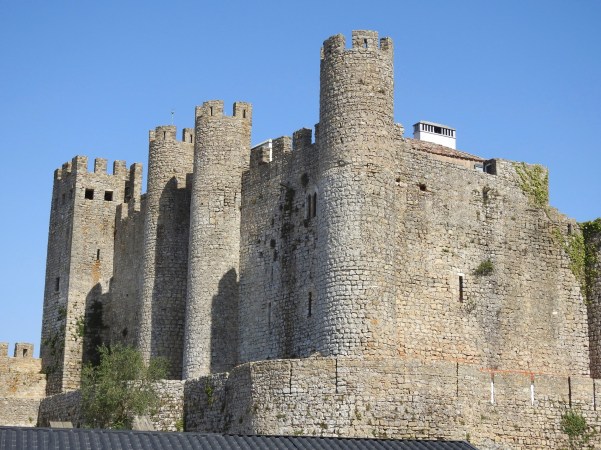
…deixámos o Santuário de Fátima e, guiados pela nossa filha Sandy, que recorreu às vias de comunicação modernas, como por exemplo o GPS, guiando o seu dedicado marido Brian em direcção ao sul e oeste, pelas novas estradas que hoje existem em Portugal e que cruzam o país em diferentes direcções, até ao Castelo de Óbidos, que é um castelo medieval bem preservado, localizado na freguesia de Santa Maria, São Pedro e Sobral da Lagoa, no município de Óbidos, região portuguesa do Oeste!. (We left the Shrine of Fatima and, guided by our daughter Sandy, who used modern roads such as GPS, guiding her devoted husband Brian south and west along the new roads that exist today in Portugal and crossing the country in different directions, to the Óbidos Castle, which is a well preserved medieval castle, located in the parish of Santa Maria, São Pedro and Sobral da Lagoa, in the municipality of Óbidos, western Portuguese region)!.

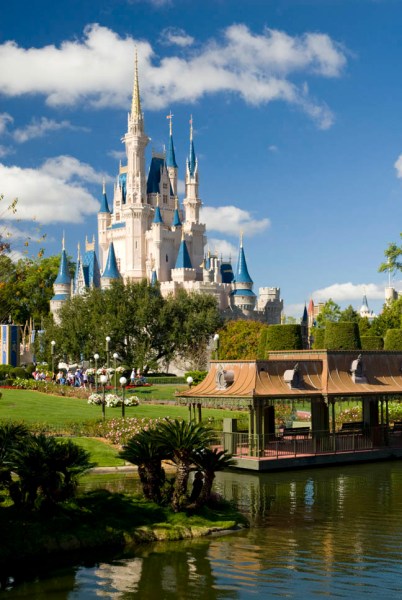
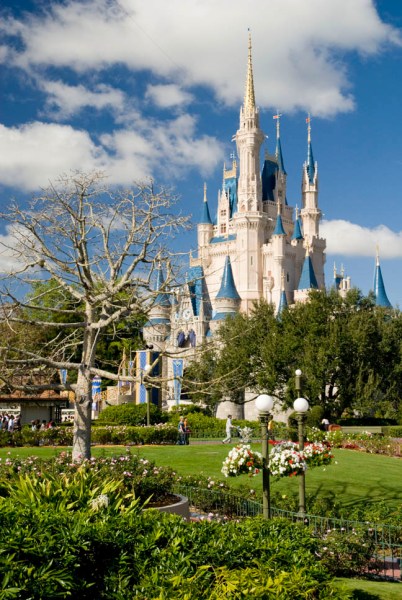
…é um pouco diferente do Castelo de Neuschwanstein, que tem um visual de conto de fadas e que inspirou Walt Disney a criar o Parque Temático Magic Kingdom, aqui no estado da Flórida onde vivemos e que, literalmente se traduz no castelo New Swan Stone que está localizado na Baviera, Alemanha, sendo hoje um dos destinos turísticos mais populares do mundo, onde todos os anos, mais de 1.300.000 pessoas cruzam seu portão!. (Is a bit different from the fairytale-looking Neuschwanstein Castle that inspired Walt Disney to create the Magic Kingdom Theme Park here in the state of Florida where we live and which literally translates to New Swan Castle Stone which is located in Bavaria, Germany, being today one of the most popular tourist destinations in the world, where every year over 1,300,000 people cross its gate)!.

…este maravilhoso Castelo de Óbidos, é um castelo medieval, construído numa área que foi posteriormente colonizada pelos lusitanos, desde o século IV aC e pelos romanos no primeiro século, mas depois ocupada pelos visigodos durante o século V e VI e pelos muçulmanos, responsáveis pela fortificação da cidade, já no século VIII!. (This beautiful Obidos Castle is a medieval castle, built in an area that was later colonized by the Lusitanians from the 4th century BC and the Romans in the first century, but later occupied by the Visigoths during the 5th and 6th centuries and by the Muslims, responsible for the fortification of the city, as early as the eighth century)!.

…dizem-nos que, durante a Reconquista Cristã, as forças sob o comando do primeiro Rei português D. Afonso I, derrotaram as defesas do assentamento por meio de um ardil, por volta do ano de 1148 e os primeiros levantamentos do castelo foram realizados no ano de 1153, embora o castelo nunca tenha sido completamente conquistado até ao reinado do Rei D. Sancho I, já no ano de 1195, que converteu a torre de Albarra em prisão, quando as suas muralhas foram reformuladas!. (Tell us that during the Christian Reconquest, the forces under the command of the first Portuguese King D. Afonso I, defeated the defenses of the settlement by means of a ruse, around the year 1148 and the first lifts of the castle were made in the year 1153, although the castle was never completely conquered until the reign of King D. Sancho I, as early as 1195, which converted the tower of Albarra into prison, when its walls were reformulated)!.

…a história também nos diz que, Portugal e Espanha, sempre estiveram em conflito, principalmente no contexto das crises sucessórias portuguesas e, muitas vezes contra a vontade de seus habitantes, alguns membros da família real, ou por casamentos de conveniência ou outro qualquer motivo, aliavam-se aos reis de Castela, resultando em guerras e guerrilhas, como na Batalha de Aljubarrota, em que Óbidos e o seu Castelo, foram reconquistados e entregues ao reino de Portugal!. (History also tells us that Portugal and Spain have always been in conflict, especially in the context of Portuguese succession crises and often against the will of its inhabitants, some members of the royal family, or for marriages of convenience or other for whatever reason, they allied themselves with the kings of Castile, resulting in wars and guerrillas, as in the Battle of Aljubarrota, in which Óbidos and its Castle were reconquered and delivered to the kingdom of Portugal)!.

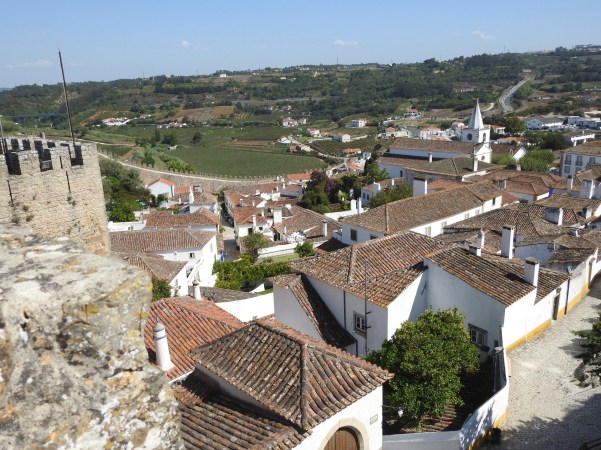
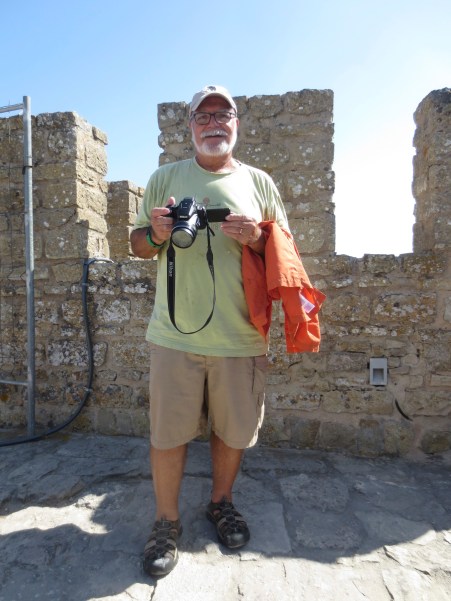
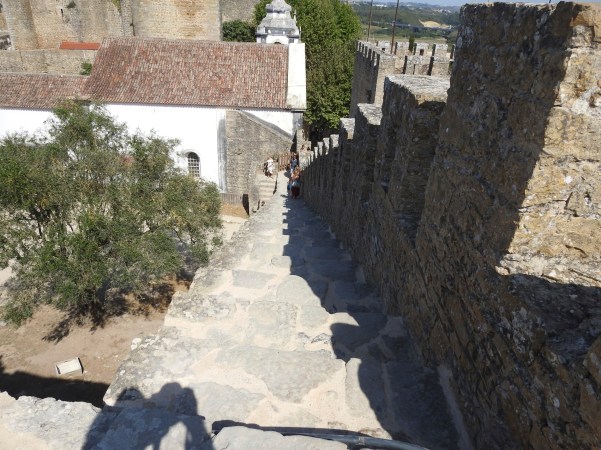
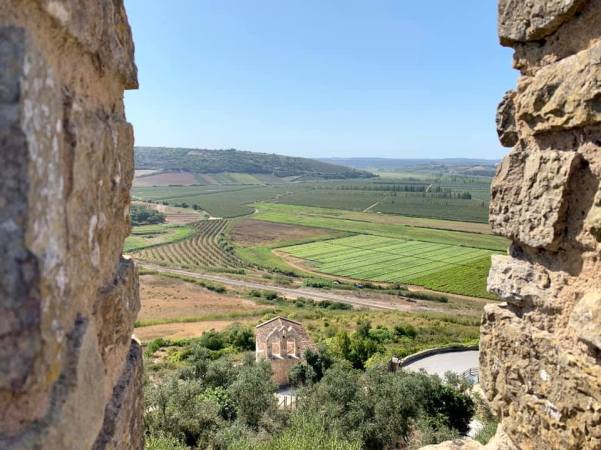
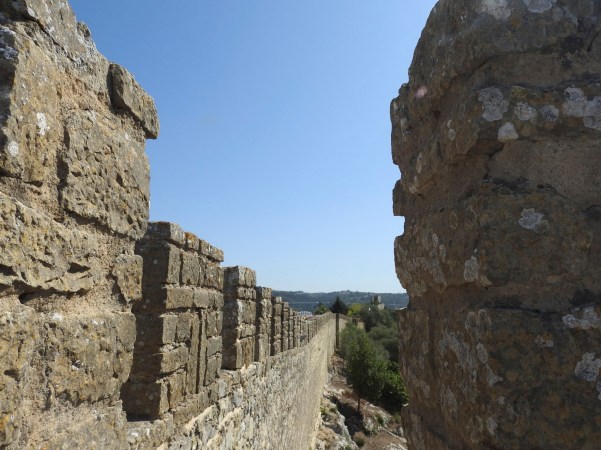
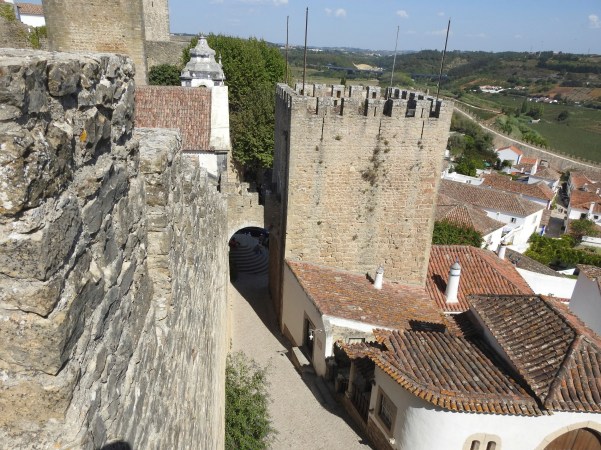
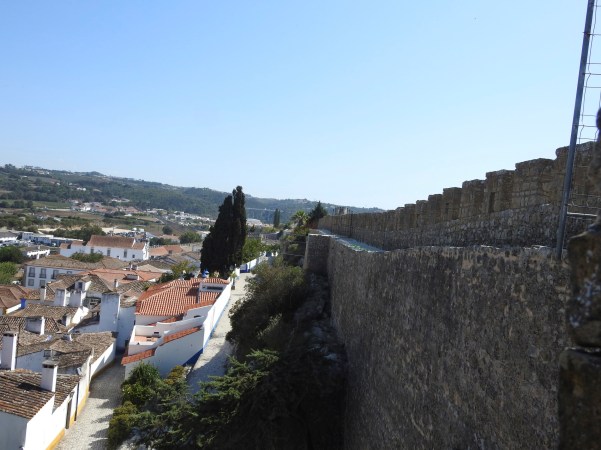
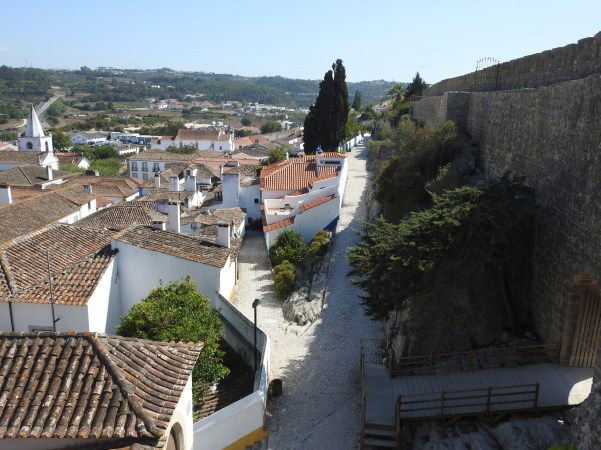
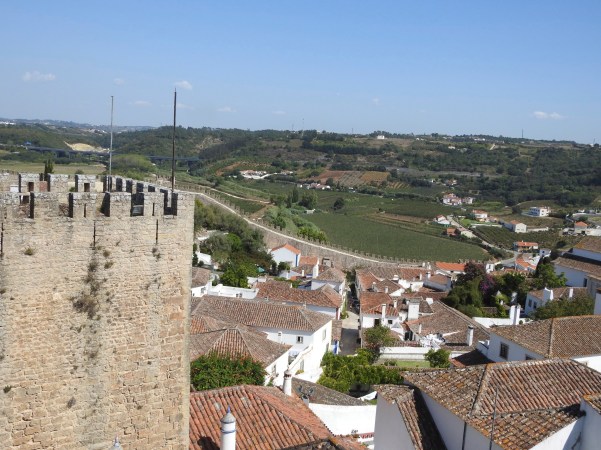
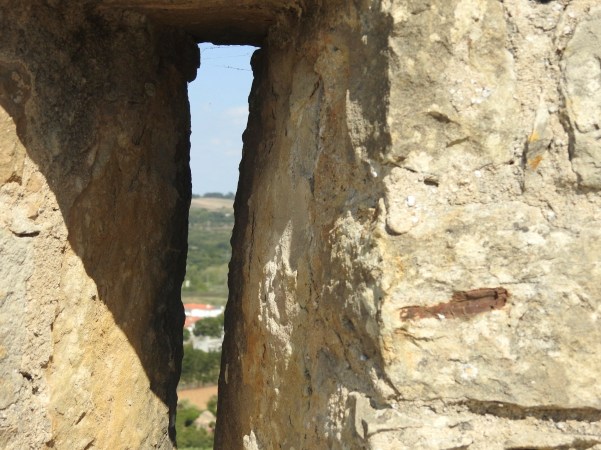
…subimos ao cimo das suas muralhas, apreciando um cenário de planície, vista cá de cima, exemplificando-nos o que aconteceu durante o contexto da Guerra Peninsular, onde esta fortificação situada em Óbidos, disparou as primeiras rodadas de artilharia na Batalha de Roliça, que resultaram na primeira derrota das forças napoleônicas!. (We climbed to the top of its walls, enjoying a plain scenery seen from above, exemplifying what happened during the context of the Peninsular War, where this fortification in Óbidos fired the first artillery rounds at the Battle of Roliça, which resulted in the first defeat of the Napoleonic forces)!.

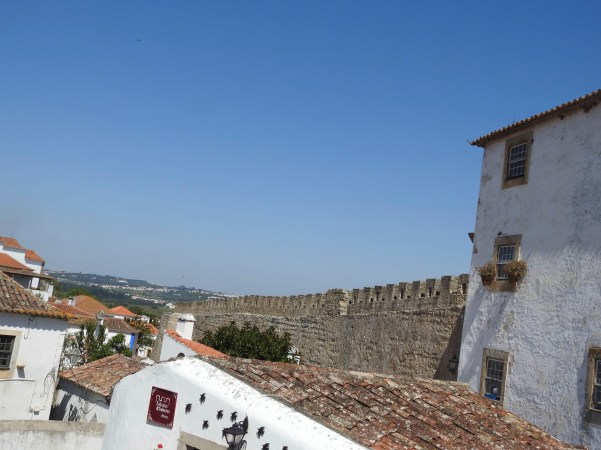
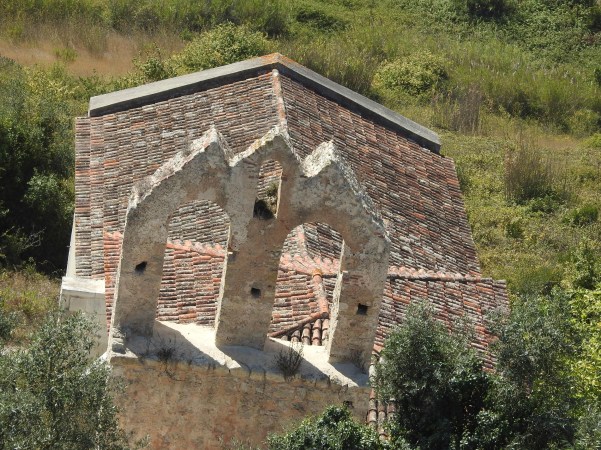
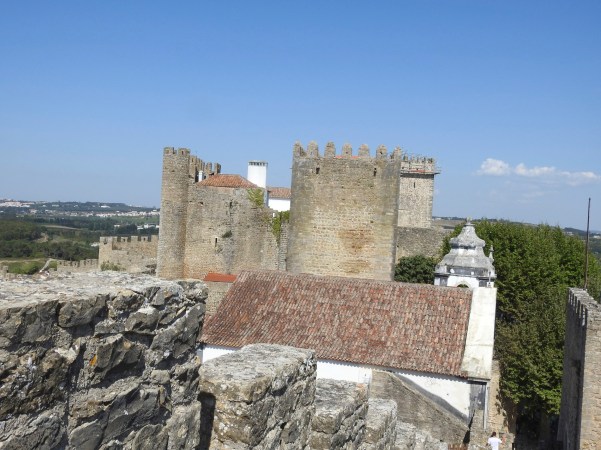
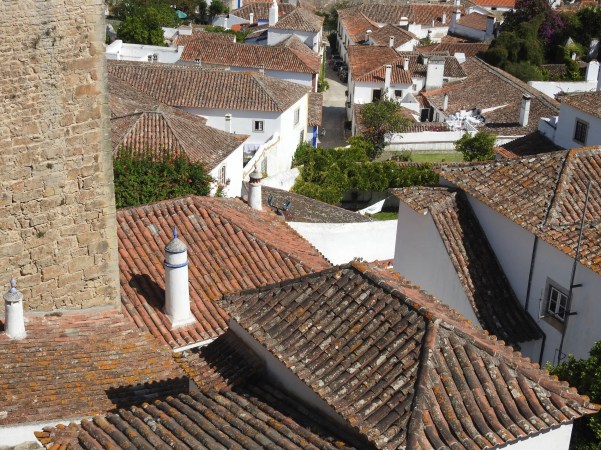
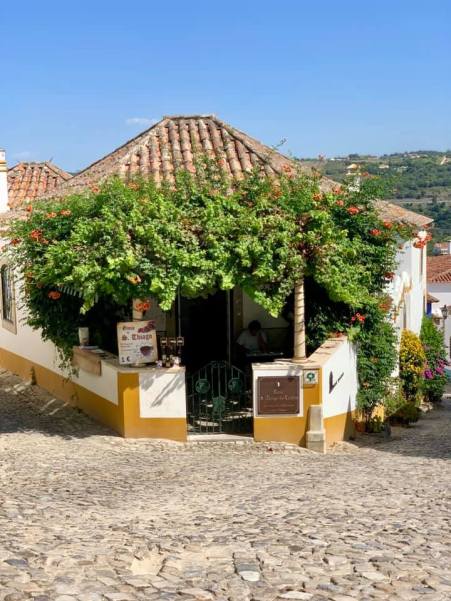
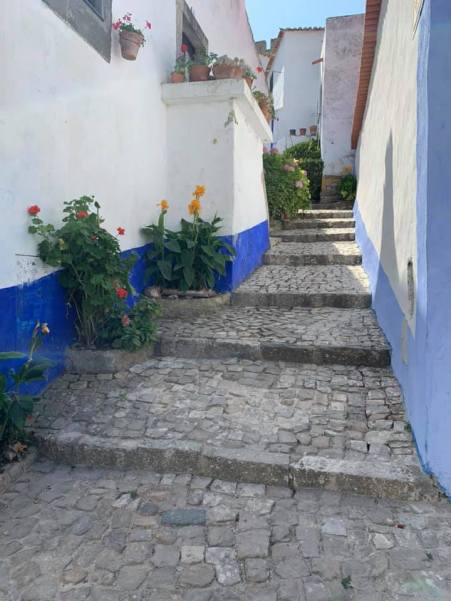
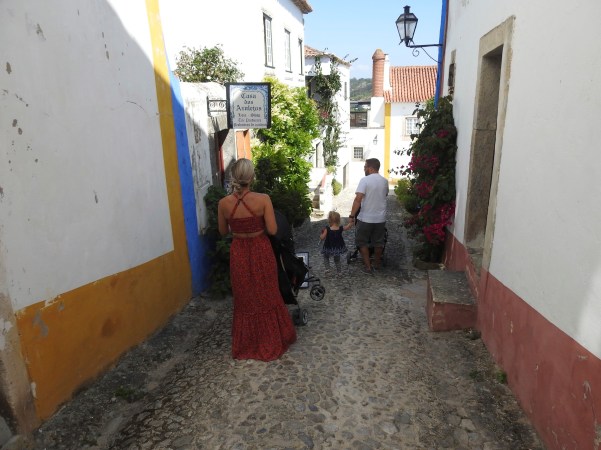
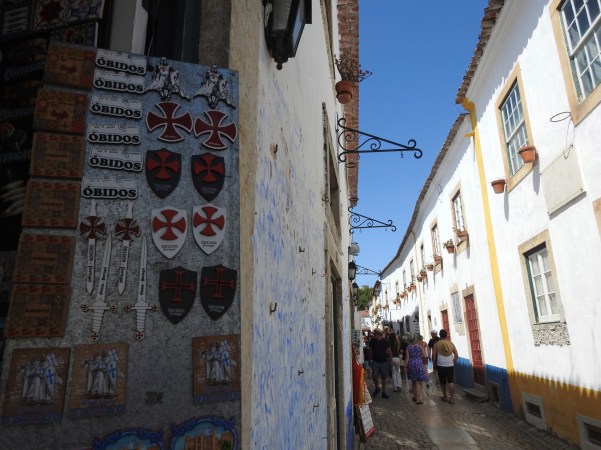
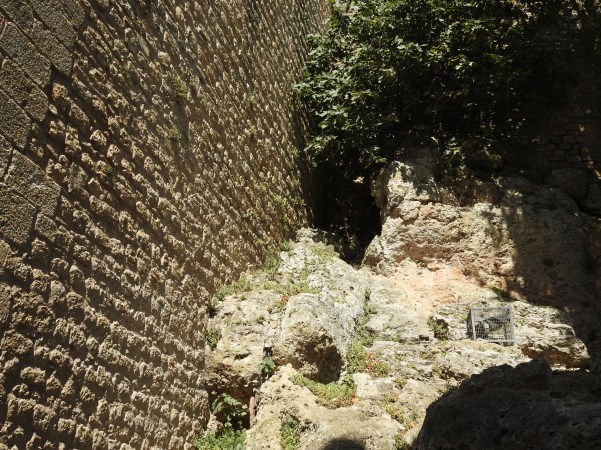
…hoje, dentro das suas muralhas, existe a cidadela, que é visitada por milhares de turistas, tal como nós desejosos de apreciar este cenário medieval, reforçado por torres e pedregulhos sobre falésias, que nos leva no pensamento a admirar um cenário de centenas de anos e lutas por um território que não pertence a nenhum mortal, mas sim ao mundo real, ou seja à natureza pura!. (Today, within its walls, there is the citadel, which is visited by thousands of tourists, just as we are eager to enjoy this medieval setting, reinforced by towers and boulders on cliffs, which leads us in thought to admire a scenery of hundreds of years and struggles for territory that belongs to no mortal, but to the real world, that is to the pure nature)!.

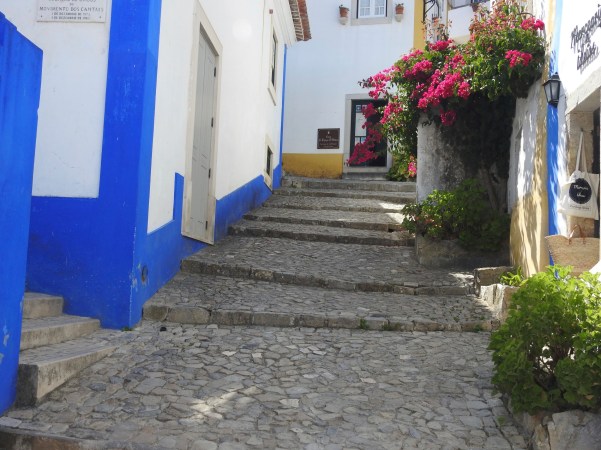
…as crianças, brincavam na nossa frente, por vezes tropeçando no piso de pedra original, que representam as ruelas onde outrora os cavaleiros medievais montavam os seus cavalos, e nós, parávamos aqui e ali, apreciando sobretudo a bebida regional que dá pelo nome de “Ginja com Chocolate de Óbidos”!. (The children played in front of us, sometimes stumbling over the original stone floor, which represent the alleys where the medieval knights once rode their horses, and we would stop here and there, especially enjoying the regional drink given by name “Ginja with Chocolate of Óbidos”)!.

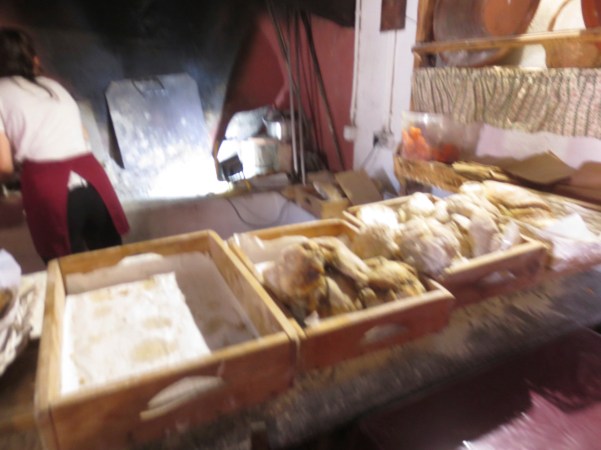
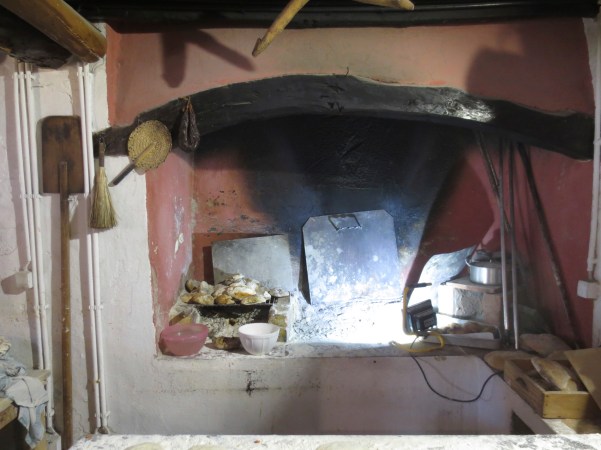
…num qualquer recanto da cidadela, descendo umas escadas de pedra, encontrámos uma pequena padaria que vendia pão com chouriça, cozido num forno aquecido a lenha e vinho tinto da região que comprámos para toda a família, fazendo-nos lembrar os nossos tempos de criança!. (In any corner of the citadel, down stone stairs, we found a small bakery that sold bread with chorizo, baked in a wood-fired oven and red wine of the region that we bought for the whole family, reminding us of our times of child)!.

…do cimo das suas muralhas também avistámos o cenário orientado para o sudeste que se eleva 79 metros acima do nível do mar e está situado no extremo noroeste das fortificações muradas, sendo reforçado no norte por três cordéis semicirculares ou retangulares, vendo-se ao longo da parede que divide os dois pátios, onde existe um arco retangular e suave, conhecido como torre da Albarrã!. (From the top of its walls we also saw the south-east facing landscape that rises 79 meters above sea level and is situated at the northwest end of the walled fortifications, being reinforced in the north by three semicircular or rectangular cords. along the wall that divides the two courtyards, where there is a smooth rectangular arch known as the Tower of Albarrã)!.

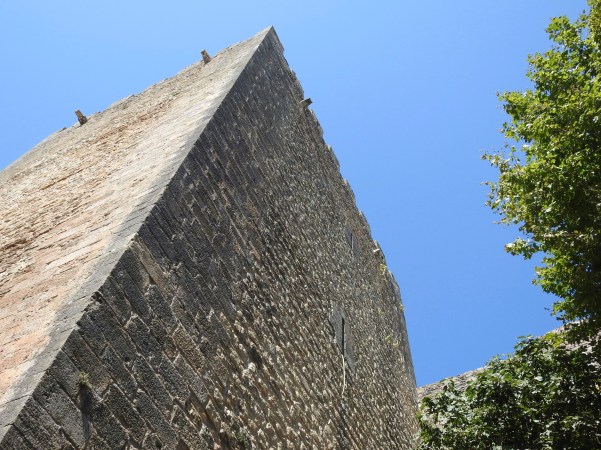
…a oeste, avistamos uma linha de muralhas que acompanha as falésias montanhosas, reforçadas por grandes torres retangulares, sendo esta linha de muralhas apenas quebrada pelo Portão da Cerca, pelo Portão da Talhada e pela torre de vigia do Jogo da Bola, terminando no sudoeste pela Torre Facho, tendo a particularidade de em alguns lugares, as paredes terem à volta de 13 metros de altura!. (To the west, we see a line of walls that accompanies the mountain cliffs, reinforced by large rectangular towers, and this line of walls is only broken by the Gate of the Fence, the Gate of Talhada and the watchtower of the Game of Ball, ending in the southwest by the Facho Tower, with the particularity that in some places the walls are around 13 meters high)!.

…também podemos ver, construído pela rainha Catarina da Áustria, esposa do rei João III, um aqueduto com cerca de 3 quilômetros de comprimento, que foi construído para transportar água das montanhas de Usseira para Óbidos, abastecendo as fontes da cidade!. (We can also see, built by Queen Catherine of Austria, wife of King John III, an aqueduct about 3 kilometers long, which was built to carry water from the mountains of Usseira to Óbidos, supplying the city’s fountains)!.

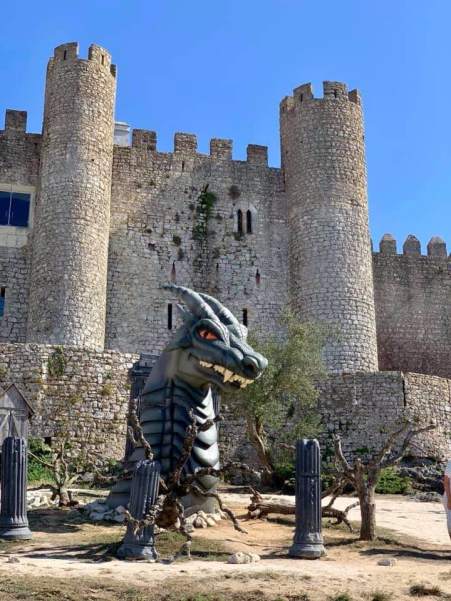
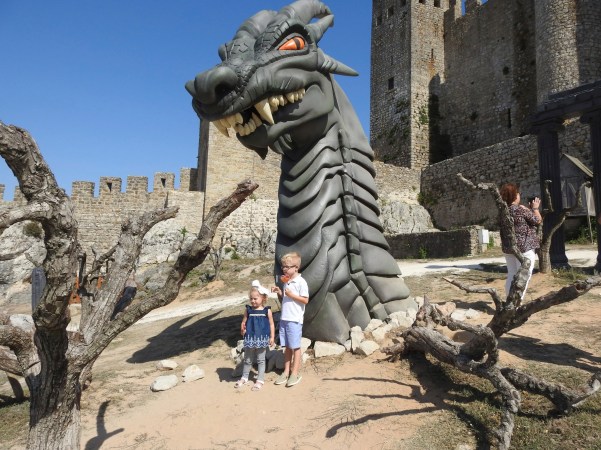
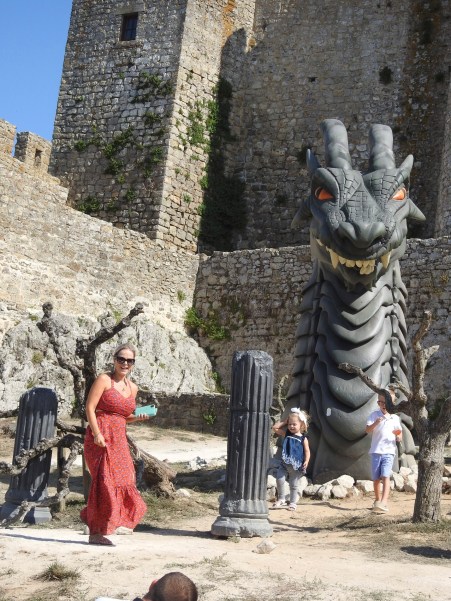
…dentro da cidadela, uma das nossas netas, em determinado momento veio despertar-nos a atenção, puxando-nos pela mão, para ir-mos na sua companhia apreciar a imagem de um “Dragão”, que cremos nós, faz parte das atracções do Mercado Medieval de Óbidos, que se realiza todos os anos em alguns meses de verão!. (Inside the citadel, one of our granddaughters, at a certain moment came to draw our attention, pulling us by the hand, to go in her company to enjoy the image of a “Dragon”, which we believe, is part of of the attractions of the Medieval Market of Óbidos, which takes place every year in some summer months)!.

…maravilhados por ter tido o previlégio de admirar este célebre monumento, rumámos ao norte, seguindo as vias de comunicação modernas, ou seja o GPS!. (Amazed to have had the privilege of admiring this famous monument, we headed north, following the modern ways of communication, ie the GPS)!.

…parando já próximo da Praia da Barra de Aveiro, numa vila piscatória, que dá pelo nome de Praia da Vagueira, cujo cenário é muito parecido com qualquer praia da Província Canadiana de Terra Nova!. (Stopping right next to Barra de Aveiro Beach, in a fishing village, called Praia da Vagueira, whose scenery is very similar to any beach in the Canadian Province of Newfoundland)!.

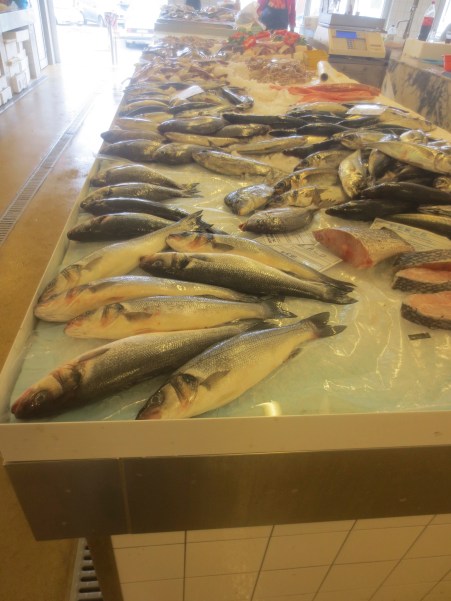
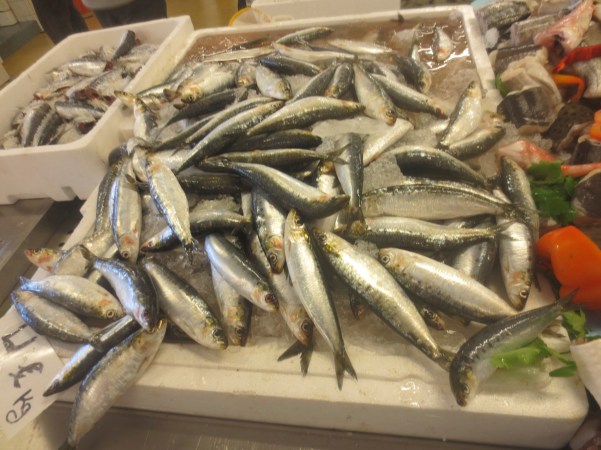
…havendo peixe fresco à venda!. (With fresh fish for sale)!.

…aqui, frequentámos um restaurante onde na recepção nos perguntaram quantos éramos, respondendo a já célebre frase: “somos sete, tal qual “Os Sete Magnificos”! (Here, we went to a restaurant where at the reception we were asked how many we were, answering the already famous phrase: “we are seven, just like “The Seven Magnifices”)!.

(continua) (to be continued)

Tony Borie, September 2019.

…fomos a Portugal!, (We went to Portugal)!.

…fomos a Portugal!, (We went to Portugal)!.

…fomos a Portugal!. Éramos “Os Sete Magníficos”!. (We went to Portugal!. We were “The Seven Magnificent”)!.

…primeira parte!. (First part)!.

…alguns anos atrás, quando viajávamos com os nossos filhos à Europa, mais propriamente a Portugal, eram momentos que nos proporcionavam algumas aventuras tal como em qualquer película, onde se podiam ver cenas como em “Sound of Music” (“Música no Coração”)!. (A few years ago, when we were traveling with our children to Europe, more specifically to Portugal, were moments that gave us some adventures just like in any film, where you could see scenes like in “Sound of Music”)!.

…desta vez não!. Nestes dez dias passados em Portugal, o nome mais apropriado será “The Magnificent Seven” (“Os Sete Magníficos”)!. Todavia, os entervenientes não eram os actores Yul Brynner, Steve McQueen, Charles Bronson, James Cobum, Eli Wallach ou aquela jovem bonita com cara de anjo, que era a Rosenda Monteros, entre outros!. (Not this time!. In the last ten days in Portugal, the most appropriate name will be “The Magnificent Seven”!. However, the inconvenient ones were not the actors Yul Brynner, Steve McQueen, Charles Bronson, James Cobum, Eli Wallach or that pretty angel-looking young woman, Rosenda Monteros, among others)!.

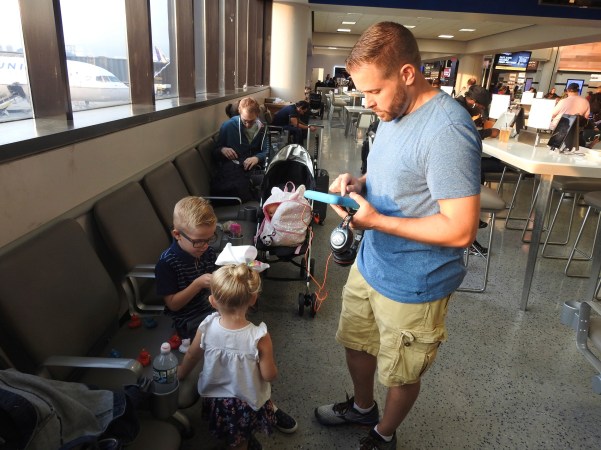
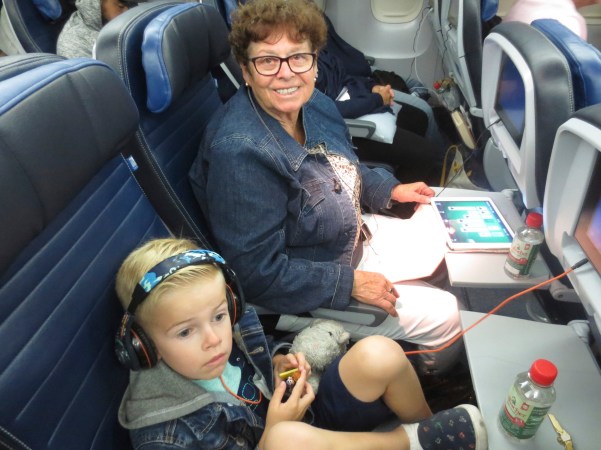
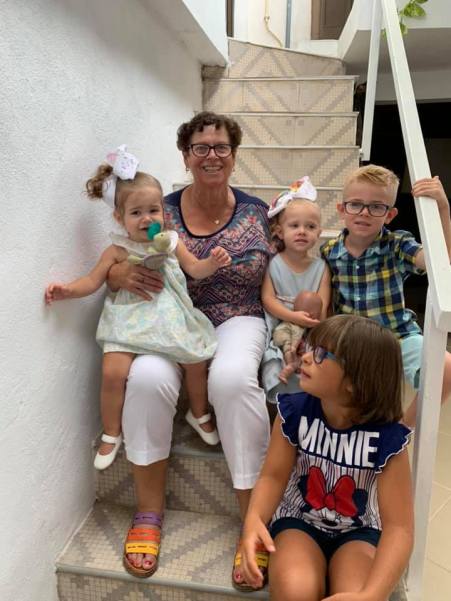
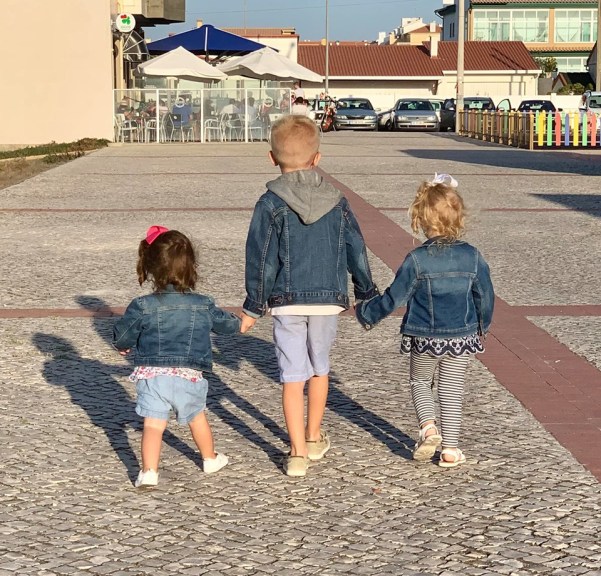
…mas sim nós próprios, a nossa dedicada esposa Isaura, a nossa filha Sandy, o seu dedicado marido Brian, os nossos netos Brian Anthony, a Eva Monroe e a Leyla James!. (But ourselves, our devoted wife Isaura, our daughter Sandy, her devoted husband Brian, our grandchildren Brian Anthony, Eva Monroe and Leyla James)!.

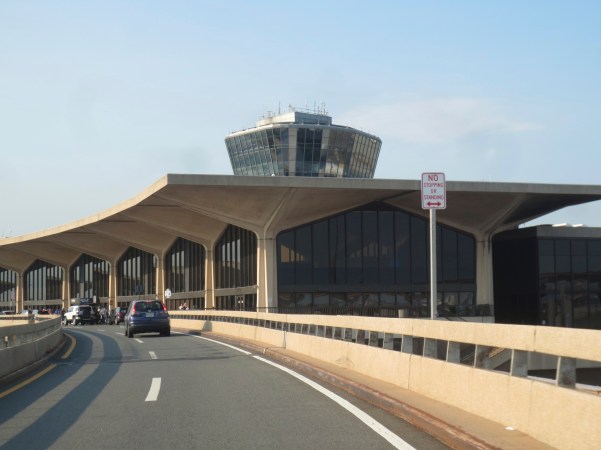
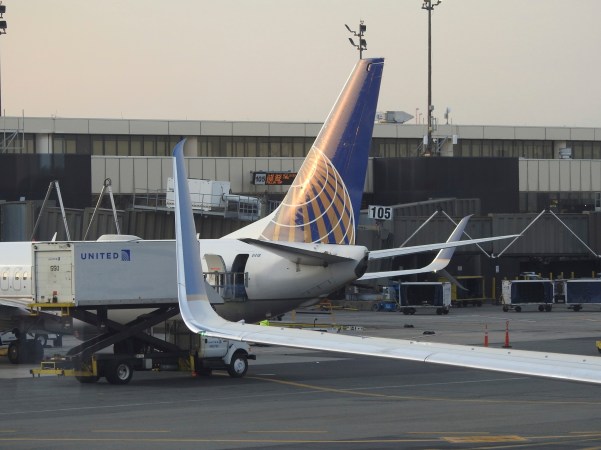
…a aventura começou imediatamente à saída, no Aeroporto de Newark, no estado de New Jersey!. (The adventure began immediately outside Newark Airport in the state of New Jersey)!.

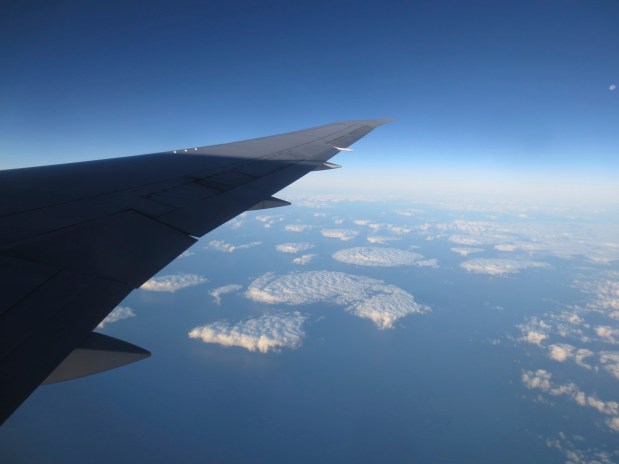
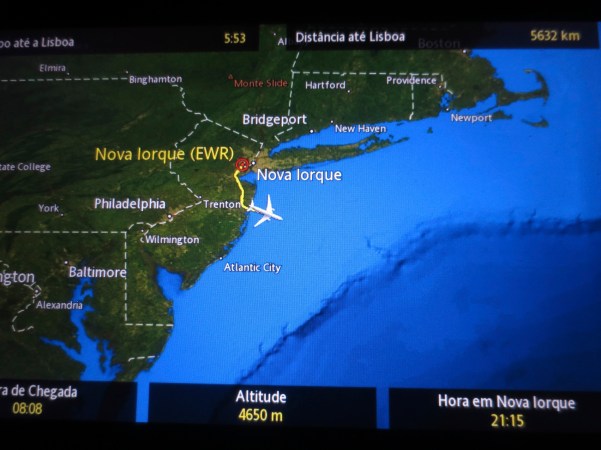
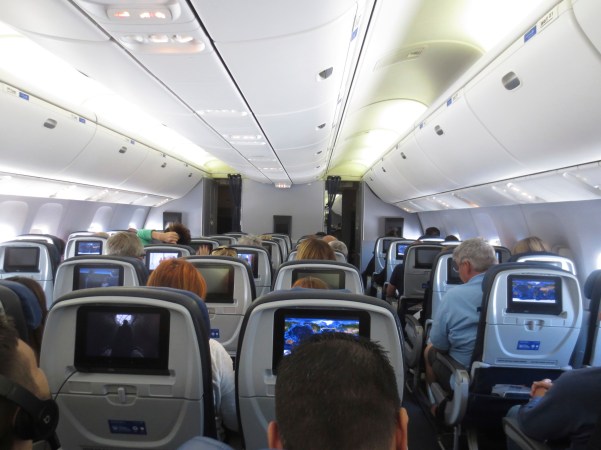
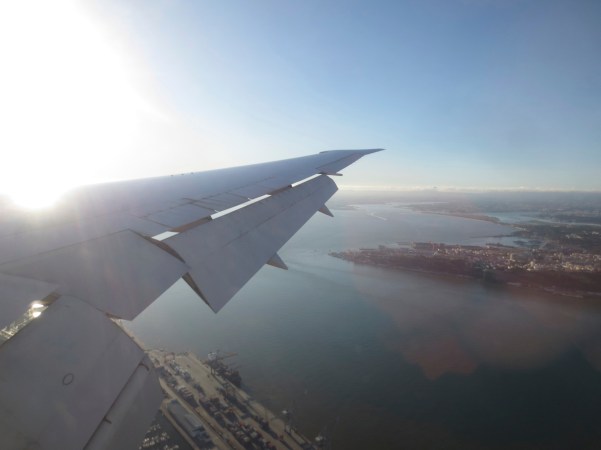
…prolongando-se por toda a viajem que decorreu pela noite dentro, aterrando pela manhã, já na Europa, no aeroporto da cidade de Lisboa em Portugal!. (Extending throughout the overnight trip, landing in the morning, already in Europe, at the Lisbon city airport in Portugal!).

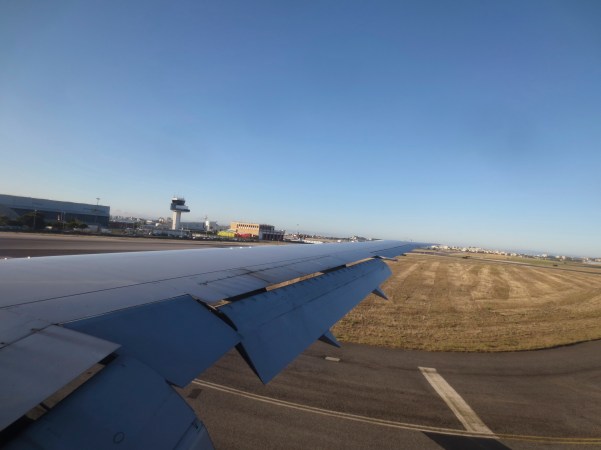
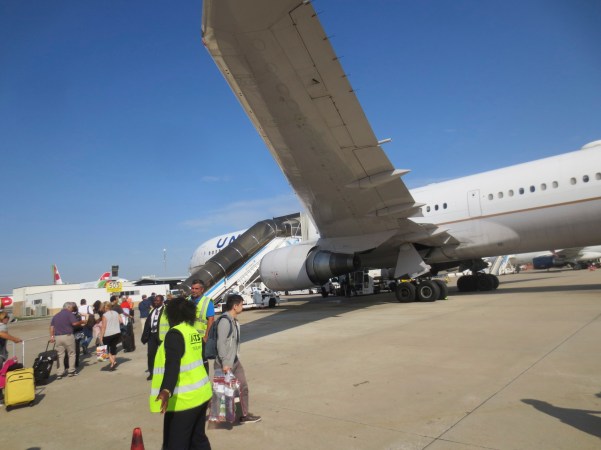
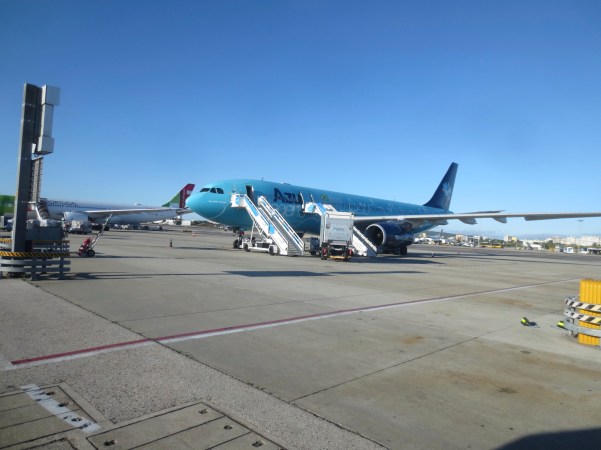
…ao desembarcar no Aeroporto de Lisboa em Portugal, o avião ficou estacionado junto das diversas pistas que lá existem, sendo o trajecto para o edifício principal do aeroporto feito de autocarro e, chegados lá, sempre existem aqueles pequenos pormenores do mês de Agosto, que é o mês em que mais pessoas, sobretudo imigrantes visitam o País, e claro, proporcionam algumas filas nas linhas da burocracia, como por exemplo no levantamento da viatura que tinha sido prèviamente alugada mas, no momento do seu levantamento, “o que era, já não era, e o que não era, já era”, todavia nós viajávamos com o “passaporte diplomático”, ou seja “três crianças”, onde bastava um mostrar um pequeno “choro” ou desagrado e, talvez incomodados com a “alteração no ambiente”, logo nos colocávam na frente das linhas!. (When landing at Lisbon Airport in Portugal, the plane is parked next to the various runways there, with the bus being taken to the main airport building and once there, there are always those little details of August, which is the month when more people, especially immigrants visit the country, and of course, provide some lines in the lines of bureaucracy, as for example in the pickup of the car that had previously been rented but at the time of its pickup, “what was, was not, and what was not, was”, yet we traveled with the “diplomatic passport”, ie “Three Kids”, just showing a little “crying” or displeasure and, perhaps bothered by the “change in environment”, would soon put us in front of the lines)!.

…se pensam que as crianças não são recomendáveis para quando os adultos viajam, talvez não seja certo, porque as suas brincadeiras permitem que elas usem a sua criatividade enquanto desenvolvem a sua imaginação, destreza, força física e emocional, permitindo-lhes que explorem o mundo, pratiquem papéis de adultos e ganhem confiança!. (If you think children are not recommended for when adults travel, it may not be right, because their play allows them to use their creativity while developing their imagination, dexterity, physical and emotional strength, allowing them to explore the world, play adult roles and gain confidence)!.

…estávamos em Portugal, onde ainda existe um povo que acreditamos nós, ao andarem pela Península Ibérica, se devem ter localizado nas colinas do noroeste, entre os rios Tormes, Douro e Tejo, do que é hoje o país que dá pelo nome de Portugal, talvez por causa da aproximação ao mar, adoptando formas de vida mais urbanas, chegando mesmo a cunhar moedas, com inscrições celtibéricas!. (We were in Portugal, where there is still a people that we believe, when walking through the Iberian Peninsula, must have been located in the northwestern hills, between the rivers Tormes, Douro and Tagus, which is today the country that gives its name of Portugal, perhaps because of the approach to the sea, adopting more urban life forms, even minting coins, with celtibérica inscriptions)!.

…talvez sejam descendentes do povo Celta, pois por norma ainda somos guerreiros, aventureiros e gostamos do mar e, particularmente nós, quando ainda crianças em pleno crescimento, corríamos, descalços e com pouca roupa no corpo, descendo e subindo as encostas daquele vale, onde ao fundo corria um pequeno ribeiro, formando alguns pequenos lagos de água limpa e pura, onde nos podíamos banhar e beber a sua água e, tudo o que poderíamos pensar o que era lá, estava lá à nossa espera!. (Perhaps they are descendants of the Celtic people, as we are usually still warriors, adventurers and we like the sea, and particularly we, when still growing children, ran, barefoot and with little clothes on, going down and up the slopes of that valley, where at the bottom ran a small stream, forming some small lakes of clean and pure water, where we could bathe and drink its water and, all we could think of was what was there, waiting for us)!.

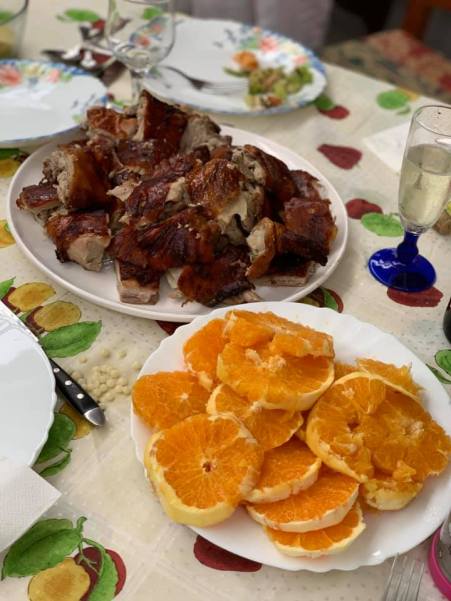
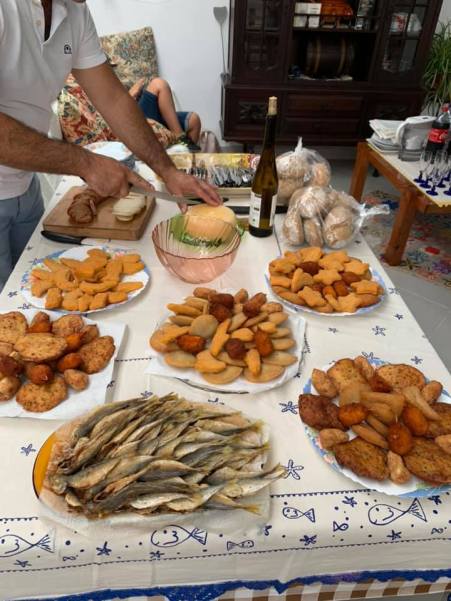
…a família, alguns amigos felizmente ainda vivos e o cenário de sonho de uma criança que éramos quando lá vivemos, a maioria das amostras dos seus produtos, portanto, as refeições com “leitão assado”, “caldeirada de enguias”, “chanfana de cabra velha”, pão quente a sair do forno aquecido a lenha, hortaliças, peixe e frutas frescas, camarão, polvo, vinho de “cepas milenárias”, amêndoas, azeitonas, nozes, queijo confecionado com leite de ovelha e, muito mais!. (The family, some happily still-alive friends, and a child’s dream scenario that we were when we lived there, most of the samples of their products, so the meals with “roast suckling pig”, “eel stew”, “old goat chanfana”, wood-fired warm bread, vegetables, fish and fresh fruits, shrimp, octopus, “millenarian strains” wine, almonds, olives, walnuts, sheep’s milk cheese and much more)!

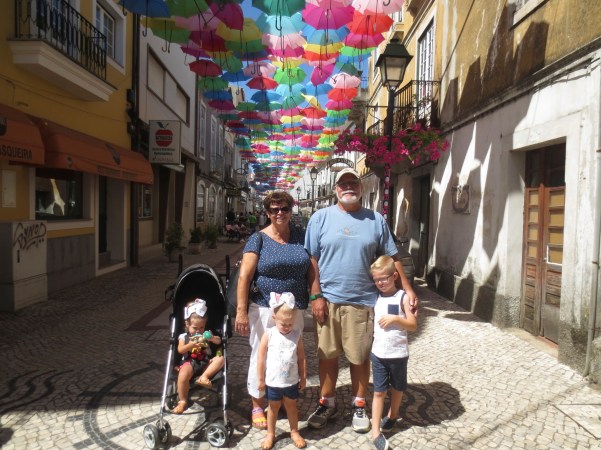
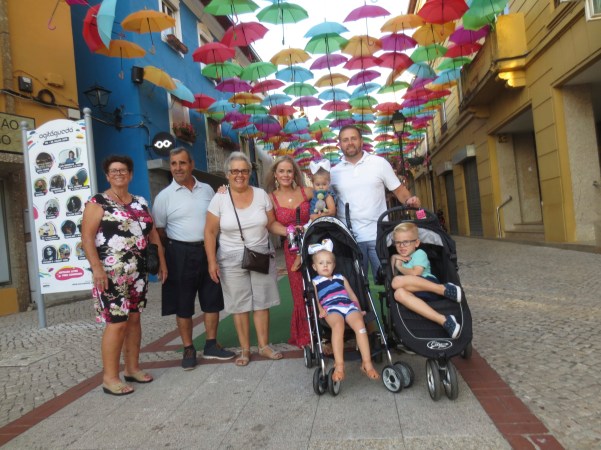
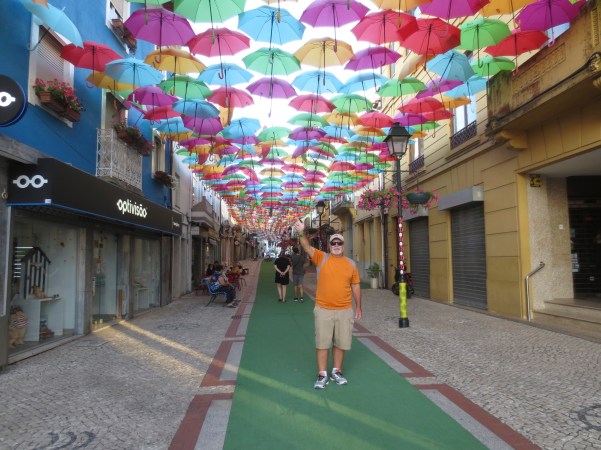
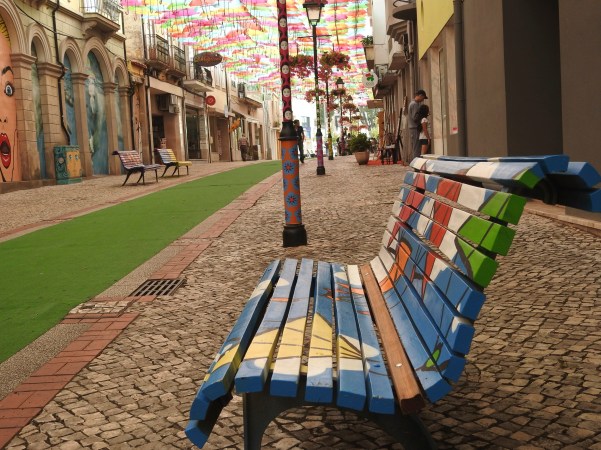
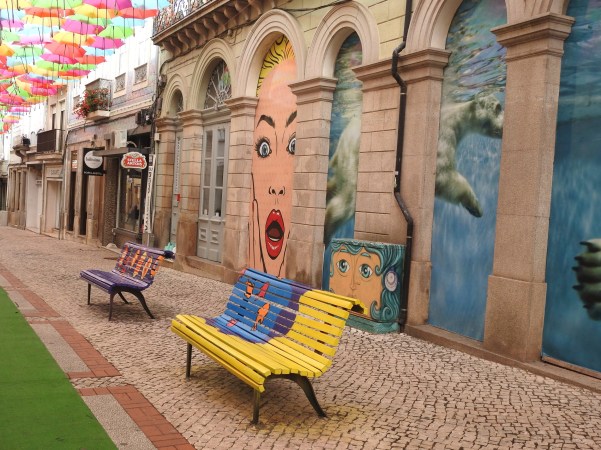
…ficámos uns dias na hoje cidade de Águeda, apreciando a sua prosperidade, com muitos turistas enchendo as suas ruas ou apreciando o seu rio, que não tem qualquer comparação com a pequena “vila” que deixámos há quase cinquenta anos!. (We stayed in the city of Águeda for a few days, enjoying its prosperity, with many tourists filling its streets or enjoying its river, which has no comparison with the small “village” we left almost fifty years ago)!.

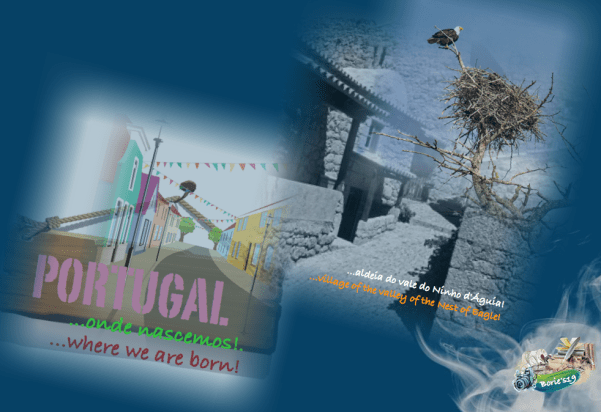
…onde nascemos, crescemos e vivíamos, lá naquela aldeia remota do Vale do Ninho d’Águia!.(Where we were born, grew up and lived, there in that remote village of Vale do Ninho d’Águia)!.

…onde, já no século vinte, com uma nova urbanização e em homenagem à nossa querida avó materna, a Avó Agar, que sempre trazia nos pés umas sandálias que tinham sido sapatos no Brazil e andava embrulhada num xaile preto, com um lenço da mesma cor amarrado na cabeça, que lhe cobria o seu cabelo branco, também trazendo uma cinta bem amarrada, que a fazia segurar-se a si mesma, usando uma saia grossa de burel preto, sobre a qual pendia uma pequena bolsa, bordada com um desenho imitando um coração, que sempre continha um “cruzado” para nos dar!. (Where, in the twentieth century, with a new urbanization and in honor of our dear maternal grandmother, Grandmother Agar, who always had on her feet some sandals that had been shoes in Brazil and she was wrapped in a black shawl with a matching scarf tied over her head, which covered her white hair, also with a tightly tied strap that made her hold on to herself. , wearing a thick black burel skirt, on which hung a small bag embroidered with a heart-like design, which always contained a “crusade” to give us)!.

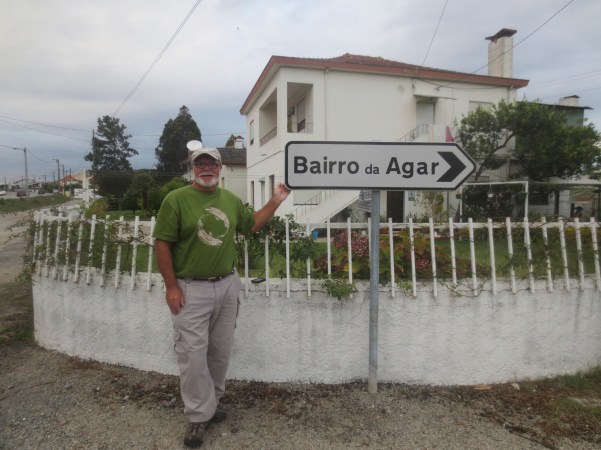
…a essa aldeia remota deram o seu nome, chamando-se agora “Bairro da Agar”, onde ela e nós nascemos, lá naquela encosta agreste da montanha do Caramulo, quase uma divisão entre a montanha e o mar, onde pela noite, não havendo luz eléctrica, se a terra tremesse, nascendo dos céus uma pequena luz, que seria uma qualquer estrela, talvez uma estrela nova, daquelas que fazem oscilar um continente, ninguém dava por isso!. (To this remote village they gave their name, now called “Bairro da Agar”, where she and we were born, there on that rugged slope of Caramulo mountain, almost a division between the mountain and the sea, where at night If there was no electric light, if the earth trembled, a little light rising from the heavens, which would be any star, perhaps a new star, those that make a continent oscillate, no one noticed)!.

…o tronco de uma árvore, era o lugar onde se sentava, andava sempre na companhia do seu cão amigo, que era um descendente, talvez na sexta ou sétima geração, do cão de guarda “lobo”, o seu primeiro cão, e de um pequeno pau, ao qual se amparava e ajudava a dar uns passos sózinha!. O tronco da árvore e ela, juntos, deviam de andar próximo das duas centenas de anos, pois ela, a Avó Agar, não se lembrava da idade, mas dizia: “havia guerra, entre o norte e sul, houve um grande combate aqui, no Vale do Ninho D’Águia, os soldados, alguns feridos, com muita fome, vinham aqui a casa roubar comida e, diziam nessa altura que aqueles soldados, que aqui combatiam, traziam doenças, tal como o “tifo”, a “difteria” ou a “tuberculose”, que não perdoavam, pois matavam mesmo e, pensando que eu também ia morrer, a minha mãe levou-me à frente do padre, para me baptizar, eu já era uma menina”!. (The trunk of a tree, where he sat, was always in the company of his friend dog, who was a descendant, perhaps in the sixth or seventh generation, of the “wolf” watchdog, his first dog, and of a small stick, which was supported and helped to take a few steps alone !. The trunk of the tree and she together must have been close to two hundred years old, for she, Grandmother Hagar, could not remember her age, but said, “There was war, between north and south, there was a great fight here, in Vale do Ninho D’Águia, the soldiers, some wounded, very hungry, came here to steal food and, at that time, said that those soldiers, who were fighting here, were carrying diseases, such as “typhus”, “ diphtheria ”or“ tuberculosis ”, which they didn’t forgive, because they really killed and, thinking that I was going to die too, my mother took me in front of the priest, to baptize me, I was already a girl”)!.

…por vezes parávamos, vendo as crianças brincar com qualquer objecto ou cenário que lhes surgia pela frente e, nesse momento verificávamos que é muito importante que as crianças tenham tempo livre e desestruturado para brincar, pois ajuda-as a obter um desenvolvimento emocional saudável que lhes permite expressar as suas experiências conscientes e inconscientes em relação aos seus sentimentos sobre a vida e as coisas que estão acontecendo ao seu redor!. (Sometimes we would stop and watch the children play with any object or scenario that came their way, and at that moment we realized that it is very important for the children to have free and unstructured time to play, as it helps them to get emotional development. healthy that allows them to express their conscious and unconscious experiences regarding their feelings about life and the things that are happening around them)!.

…esse foi um dos motivos desta nossa paragem por esta região, onde a sua ocupação antiga remonta à Idade do Bronze, marcada por diversos monumentos megalíticos, como por exemplo, a alguma distância ao norte da nossa aldeia, está o sítio arqueológico do “Cabeço do Vouga”, uma importante fortificação militar romana ao longo das rotas de Olissipo (Lisboa) até Bracara Augusta (Braga), que foi povoada por sucessivos habitantes, onde por certo se incluíam os celtas, os turdulianos ou os lusitanos!. (This was one of the reasons for our stopping by this region, where its ancient occupation dates back to the Bronze Age, marked by several megalithic monuments, such as, some distance north of our village, is the archaeological site of the “Cabeço do Vouga”, an important Roman military fortification along the routes from Olissipo (Lisbon) to Bracara Augusta (Braga), which was populated by successive inhabitants, which certainly included the Celts, Turdulians or Lusitanos)!.

…e nós, querendo mostrar à família que nos acompanhou as nossas raízes, visitámos alguma família felizmente ainda viva e algumas aldeias vizinhas por onde andámos enquanto crianças!. (And we, wanting to show the family that accompanied our roots, we visited some family happily still alive and some neighboring villages where we walked as children)!.

…as brincadeiras inocentes, são muito importantes para o seu desenvolvimento, sendo uma parte integrante do estágio inicial da criança e também apoia a sua jornada de aprendizagem!. (Innocent play is very important for their development, being an integral part of the child’s early stage and also supports their learning journey)!.

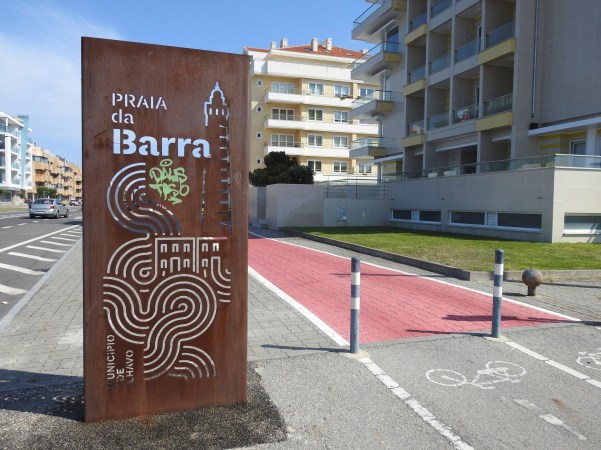
…uns dias depois deixámos a montanha indo viver na Praia da Barra de Aveiro, que nos dizem que não pertence à cidade de Aveiro, mas sim à cidade de Ílhavo!. (A few days later we left the mountain going to live in Barra de Aveiro Beach, which tells us that it does not belong to the city of Aveiro, but to the city of Ílhavo)!.

…assim, seguindo a rota do mar, ou seja viajando junto do Rio Águeda, depois o Rio Vouga e a Ria de Aveiro, chegámos à região das Gafanhas, região esta que começou a ser habitada por volta do século desassete, onde se construíu um pequeno farol e um forte junto à foz do Rio Vouga para facilitar a navegação naquela barra, que envolveu dragagens, remodelação da linha de costa e o aumento de um banco de areia adjacente!. (Like this, following the sea route, that is, traveling along the Águeda River, then the Vouga River and Ria de Aveiro, we came to the Gafanhas region, which began to be inhabited around the seventeenth century, where a small lighthouse and a fort were built near the mouth of the Vouga River to facilitate navigation in that bar, which involved dredging, remodeling the shoreline and raising an adjacent shoal)!.

…nós adultos, também aprendemos com os pequenos pormenores de uma criança brincando, vendo a sua interação com as outras crianças estranhas, apreciando o seu desenvolvimento de habilidades, de emoções, de criatividades, tanto na sua linguagem como na escuta, e mais ainda, a sua comunicação, pois estas não falavam o mesmo idioma!. (We adults also learn from the small details of a child playing, seeing his interaction with other strange children, appreciating his development of skills, emotions, creativity in both language and listening, and more. still, your communication, because they did not speak the same language)!.

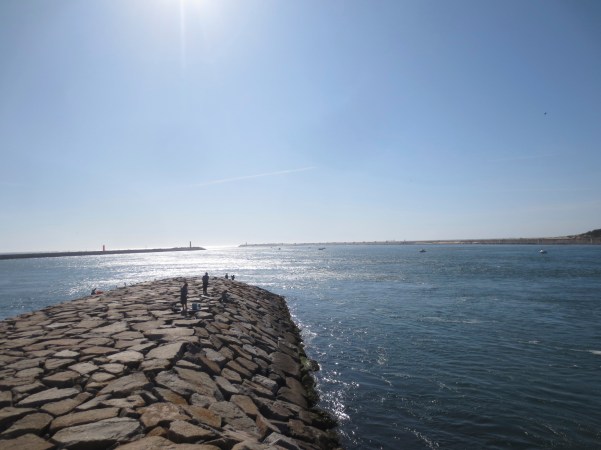
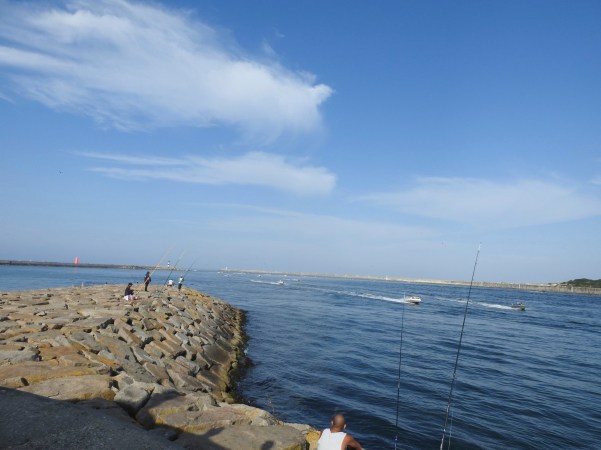
a história diz-nos que este forte nunca teve funções militares importantes, pois o assoreamento que progredia na foz do Rio Vouga desde o século quinze fez avançar mais a linha da costa, com interrupções intermitentes do acesso ao mar, onde a situação veio a conhecer o seu estado presente com a abertura da Barra de Aveiro já próximo do fim do século desanove, que separou a aldeia de São Jacinto, localizada ao norte, com a Barra Nova, e a construção do do Farol de Aveiro e de dois molhes que entram no mar, que actualmente guardam a actual foz da Ria de Aveiro!. (History tells us that this fort has never had any important military functions, as the silting that has been progressing at the mouth of the Vouga River since the 15th century has pushed the coastline further along, with intermittent interruptions of access to the sea, where the situation came to know its present state with the opening of Barra de Aveiro near the end of the century, which separated the village of São Jacinto, located to the north, with Barra Nova, and the construction of the Lighthouse of Aveiro and two jetties that enter the sea, which currently guard the current mouth of the Ria de Aveiro)!.

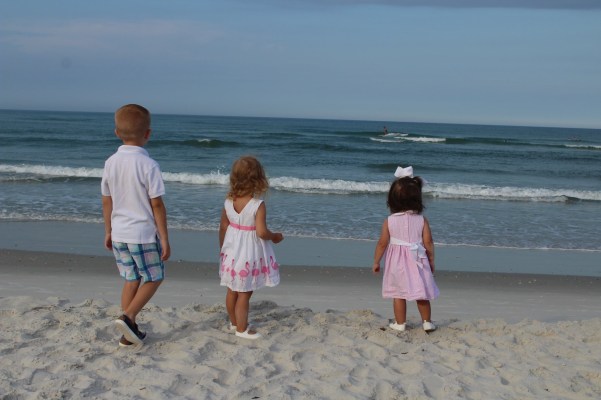
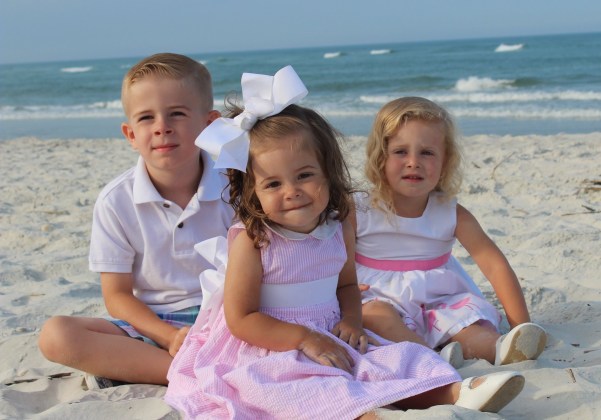
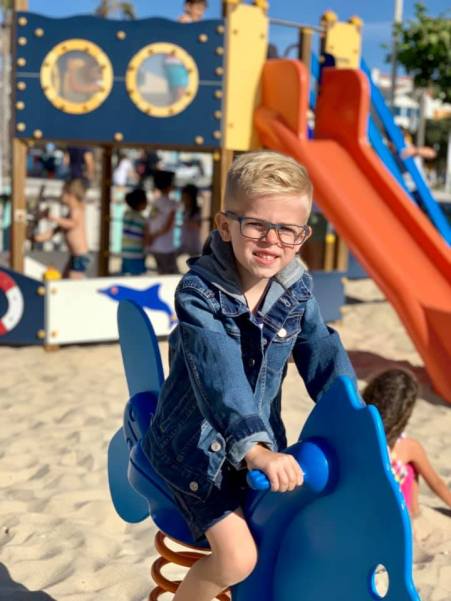
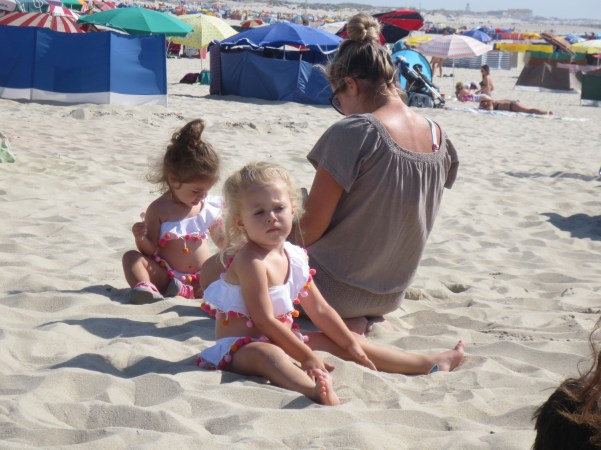
…se as crianças adoram tudo sobre a praia do mar, então este é um lugar ideal para as crianças!. (If kids love everything about sea beach then this is an ideal place for kids)!.

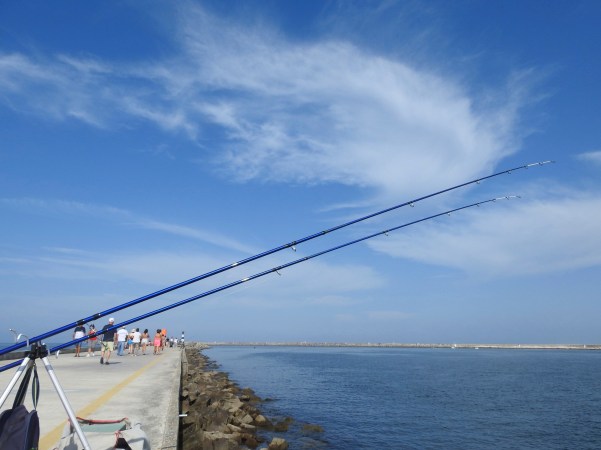
…estávamos próximo do Farol e da praia, podendo ainda passear pela avenida junto à foz da Ria de Aveiro, onde principalmente pela manhã havia muitos pescadores populares experimentando a sua sorte!. (We were close to the Lighthouse and the beach, and could also stroll along the avenue near the mouth of the Ria de Aveiro, where mainly in the morning there were many popular fishermen trying their luck)!.

…é um ótimo lugar para levar as crianças, que por natureza são curiosas, onde existe um lindo cenário de mar e, onde nos podemos sentar na parede do canal, deixando as crianças correr e imaginar como é bom fazer parte de uma paisagem linda e agradável!. (Is a great place to take the kids, who are curious by nature, where there is a beautiful sea scenery and where we can sit on the canal wall, letting the kids run around and imagine how good it is to be part of a landscape beautiful and nice)!.

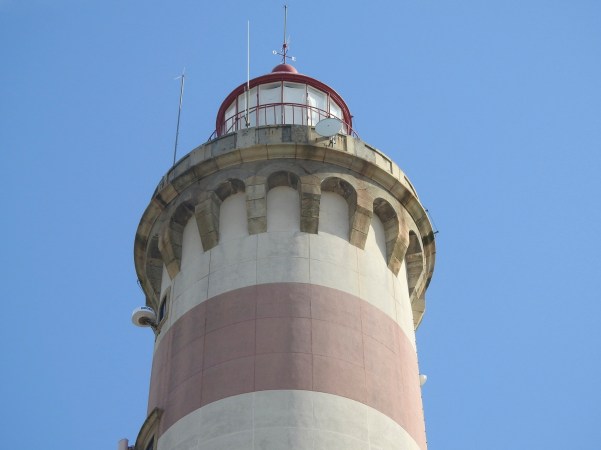
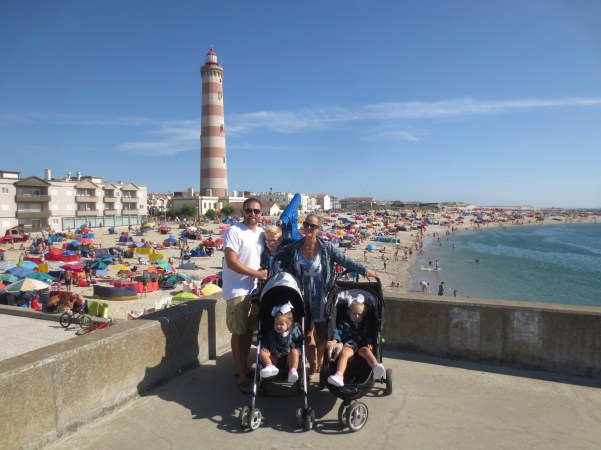
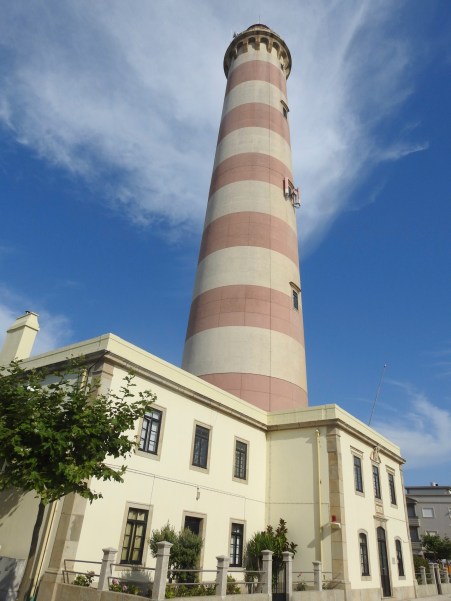
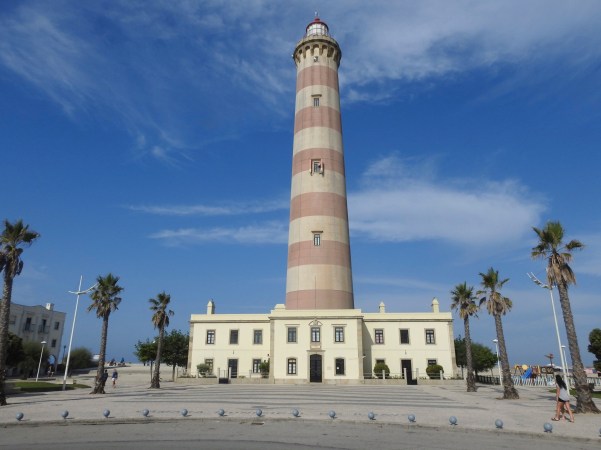
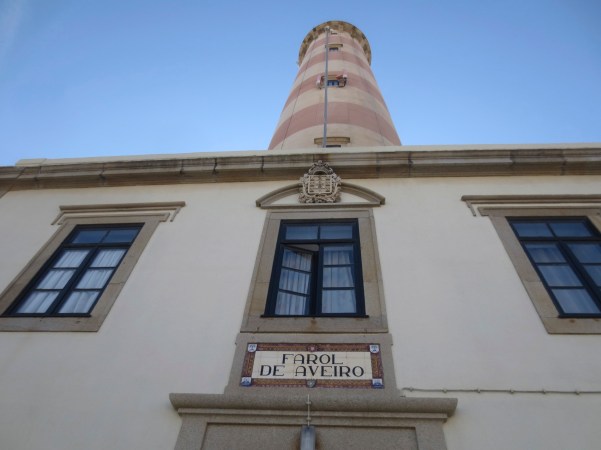
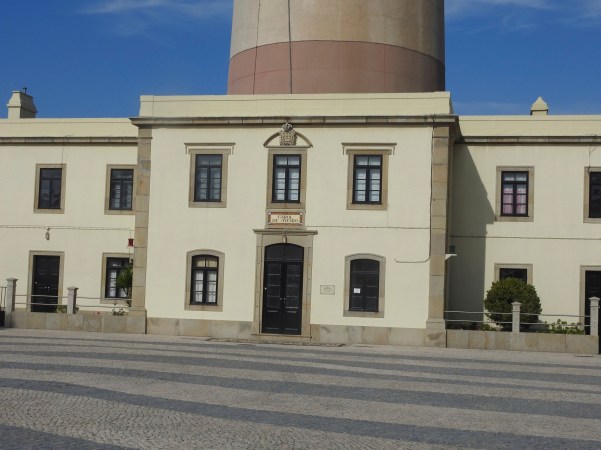
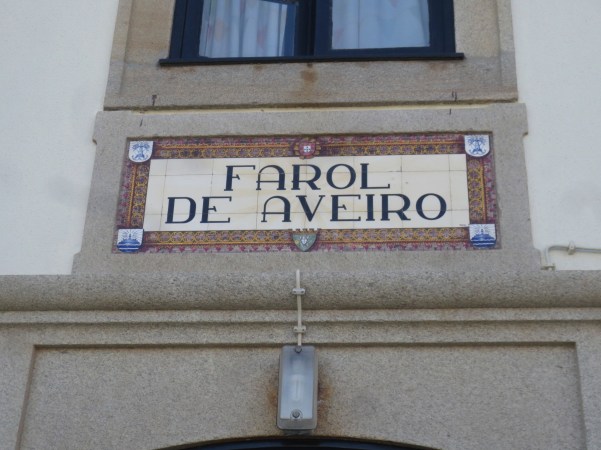
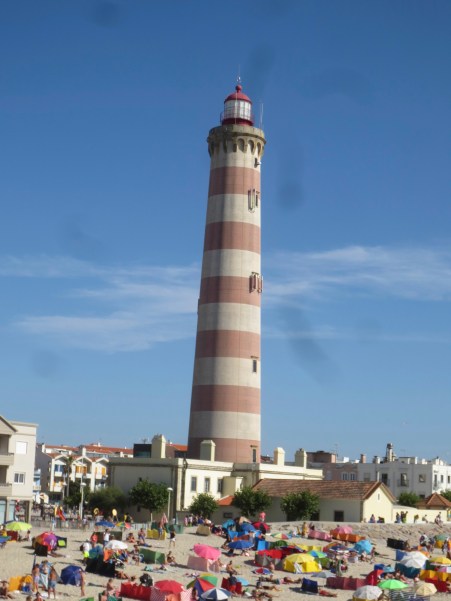
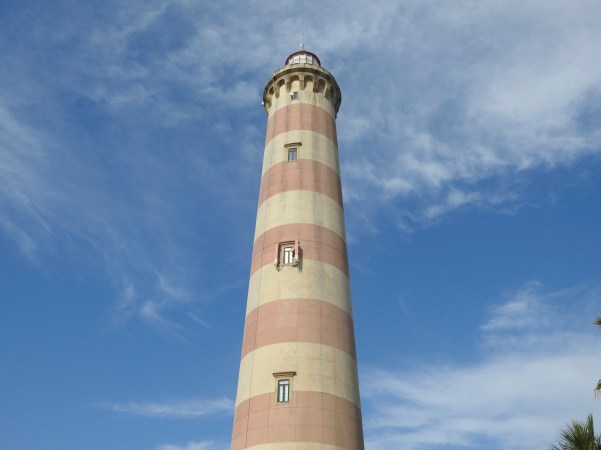
…sempre que por lá passávamos, tínhamos que parar para apreciar com mais um pequeno pormenor o Farol da Barra de Aveiro que, tem a particularidade de ser o maior Farol de Portugal e, à data da sua construção, era o sexto maior do mundo em alvenaria de pedra, continuando a ser actualmente o segundo maior da Península Ibérica, estando incluído nos 26 maiores do mundo!. (When we passed by, we had to stop to appreciate in more detail the Barra de Aveiro Lighthouse, which has the peculiarity of being the largest Lighthouse in Portugal and, at the time of its construction, was the sixth largest in the world, in stone masonry, currently remaining the second largest in the Iberian Peninsula, being included in the 26 largest in the world)!.

…falando um pouco da sua história, dizem-nos que foi construído entre os anos de 1885 e 1893, entrando imediatamente em funcionamento, ou seja, fazendo o seu serviço de sinalização para o tráfico das embarcações que entravam e saiam a Barra, passando por diversas fases de iluminação tais como uma fonte luminosa de incandescência produzida pelo vapor de petrólio, fazendo-se a rotação da óptica através de uma máquina de relojoaria, todavia, mais tarde foi-lhe instalado um aparelho lenticular de “Fresnel” de 1ª ordem, produzindo grupos de 4 relâmpagos, sendo electrificado no ano de 1936 e, no ano de 1947 o aparelho óptico foi substituído por outro idêntico, mas de 3ª ordem, sendo ligado à rede pública de distribuição de energia em 1950 e mais tarde, já no ano de 1958 foi montado um elevador para acesso à sua torre!. Hoje, este maravilhoso Farol, encontra-se automatizado!. (Telling us a little about its history, we are told that it was built between 1885 and 1893, and immediately went into operation, that is, making its signaling service for the traffic of vessels entering and leaving Barra, going through various lighting stages such as an incandescent light source produced by the petroleum vapor, rotating the optics through a clock machine, but later a lenticular ‘Fresnel’ apparatus was later installed. produced groups of 4 lightning bolts, being electrified in 1936 and in 1947 the optical device was replaced by an identical but 3rd order optical apparatus, being connected to the public power distribution network in 1950 and later, already In 1958 an elevator was mounted to access its tower!. Today this wonderful Lighthouse is automated)!.

…quando reparamos neste histórico monumento, o seu aspecto é de uma torre com faixas brancas e vermelhas, que se ergue a aproximadamente 66 metros acima do nível do mar, com uma altura de 62 metros, sendo a sua fundação construída por um maciço de betão de 6 metros de espessura assente sobre estacas à altura das mais baixas águas do mar, e hoje, o seu alcance luminoso, em condições normais de transparência atmosférica é de 23 milhas náuticas, ou seja, cerca de 43 quilómetros!. (When we look at this historic monument, it looks like a tower with white and red strips, which stands approximately 66 meters above sea level, with a height of 62 meters, and its foundation is built by a massive of 6 meters thick concrete resting on piles up to the lowest waters of the sea, and today its luminous range, under normal conditions of atmospheric transparency is 23 nautical miles, or about 43 kilometers)!.

…hoje a Barra de Aveiro é quase uma cidade, mas ainda por lá existem as típicas barracas da “Bolacha Americana” e a venda na praia das “Bolas de Berlim” e, se estamos com fome de uma refeição, existem várias barracas que são ótimas para um almoço mais barato, e claro, as crianças ainda podem construir castelos na areia, em pelo menos quase trezentos dias de sol por ano!. (Today Barra de Aveiro is almost a city, but still there are the typical “Bolacha Americana” tents and the sale on the beach of “Berlin Balls” and, if we are hungry for a meal, there are several tents which are great for a cheaper lunch, and of course kids can still build sandcastles on at least nearly three hundred sunny days a year !.

…todavia nós, quando visitávamos um restaurante, e na recepção nos perguntavam quantos éramos, logo respondíamos, “somos sete, tal qual “Os Sete Magnificos”!. (But when we were visiting a restaurant, and at the front desk we were asked how many we were, then answered, “We are seven, just like The Seven Magnificent”)!.

(continua) (to be continued)

Tony Borie, September 2019.

…ouvindo e  sentindo o vento do oeste!. (Listening and feeling the wind from the west)!.

…ouvindo e sentindo o vento do oeste!. (Listening and feeling the wind from the west)!.

…ouvindo e sentindo o vento do oeste!. (Listening and feeling the wind from the west)!.

…um dos motivos porque viajamos é, porque preferimos olhar para a nossa já um pouco avançada idade e dizer-mos, “Não acreditamos que fizémos isto”, em vez de dizer “Se ao menos tivéssemos feito aquilo”!. (One of the reasons why we travel is because we prefer to look at our old age and say, “We don’t believe we did this”, instead of saying “If only we had done that”)!.

…é também certo que as nossas aventuras nos aproximam mais, mesmo quando nos levam para longe do estado da Flórida!. (It is also true that our adventures bring us closer, even when they take us away from the state of Florida)!.

…mas, já andávamos a algum tempo longe da nossa casa, do nosso quintal, do nosso jardim, da nossa praia, dos nossos vizinhos e, era frequente nas nossas conversações manifestar-mos uma certa nostalgia daquele costume de vida com aquele conforto rotineiro, onde nós, às vezes nos sintimos algo desconfortáveis, por estarmos confortáveis demais!. (But we have been walking for some time now from our house, our backyard, our garden, our beach, our neighbors, and often in our conversations we expressed a certain nostalgia for that habit of life with that routine comfort, where we sometimes feel uncomfortable because we are too comfortable)!.

…décimo dia!. (Tenth day)!.

…estávamos no estado de Oklahoma onde a cor da terra é mais branca e o cenário é quase plano, continuando a viajar no sentido leste na auto-estrada 40, desviando-nos sempre que era possível para a Histórica Estrada 66 que segue ao seu lado!. (We were in the state of Oklahoma where the color of the earth is whiter and the scenery is almost flat, continuing to travel east on Highway 40, diverting as far as possible onto Historic Highway 66 following the your side)!.

…no entanto este cenário plano, era diferente, mesmo muito diferente, daquele cenário do sul do estado do Utah, daquela região onde tal como nós, os amantes da natureza e aventureiros vão à procura de uma experiência ao ar livre, caminhar entre penhascos de arenito vermelho, fluxos de lava negra com paisagens desérticas!. (Yet this flat scenery was different, even very different, from that southern Utah scenery, from that region where like us, nature lovers and adventurers are looking for an outdoor experience, walking amongst Red sandstone cliffs, black lava flows with deserted landscapes)!.

…aqui, no estado de Oklahoma, podemos viajar por longas e desérticas rectas, no entanto tal como já mencionámos anteriormente, sempre que nos era possível, também usávamos alguns troços da famosa e Histórica Estrada 66, que ainda estavam lá, oferecendo-nos o prevlégio de os usar, tal como os nossos antepassados fizeram muitos anos atrás a caminho da Califórnia!. (Here, in Oklahoma, we can travel long and deserted straits, but as we mentioned earlier, whenever possible, we also used some sections of the famous and historic Highway 66, which were still there, offering give us the privilege of using them, just as our ancestors did many years ago on their way to California)!.

…viajando por aqui, talvez usássemos as mesmas trilhas que as evidências sugerem quando os povos indígenas caminharam por o território que hoje é o estado de Oklahoma desde a última era do gelo, ou pelos seus antepassados de Wichita, Kichai, Teyas ou Escanjaques, que por aqui viviam, caçando ou pescando, sobretudo nos afluentes do rio Mississippi!. (Traveling here, we might use the same trails as the evidence suggests when indigenous people walked through the territory that is now the state of Oklahoma since the last ice age, or by their ancestors of Wichita, Kichai, Teyas or Escanjaques, who lived here, hunting or fishing, especially in the tributaries of the Mississippi River)!.

…pensando na história destes povos, onde nós, vindos do oeste, depois de atravessar o estado do Texas, mais propriamente a região das planícies do sul, ou seja, a região do “Texas Panhandle”, onde as pessoas adquiriram a cultura “Panhandle”, porque os povos da cultura “Caddoana do Mississippi”, eram aqueles que viviam na parte oriental deste estado, mais propriamente próximo do rio Mississippi!. (Thinking of the history of these peoples, where we, coming from the west, after crossing the state of Texas, more specifically the southern plains region, that is, the region of the “Texas Panhandle”, where people acquired the culture “Panhandle”, because the peoples of the “Caddoana of Mississippi” culture were those who lived in the eastern part of this state, closer to the Mississippi River)!.

…assim, chegámos a Oklahoma City, a capital do estado, onde seguindo por algum tempo a rota da velha e famosa Histórica Estrada 66, passámos quase em frente ao Capitólio!. (So we came to Oklahoma City, the state capital, where for a while following the route of the famous old Historic Highway 66, we passed almost in front of the Capitol)!.

…despedindo-nos desta famosa estrada, dizendo “até qualquer dia”, recordando os momentos passados nela, nesta estrada a que também chamam a “Estrada Mãe”, que vai desde a Rua Adams, na cidade de Chicago, no estado de Illinois, até ao cais de Santa Mónica, na cidade de Los Angels, no estado da Califórnia, cujo trajecto agora seguia para norte/leste e a nossa rota, agora era sul/leste, a caminho do estado da Flórida!. (Saying goodbye to this famous road, saying “until any day”, remembering the moments spent on it, on this road which they also call the “Mother Road”, which runs from Adams Street in the city of Chicago, Illinois, to the Santa Monica Pier in the city of Los Angels, California, whose route was now north / east and our route was now south / east, heading for the state of Florida)!.

…depois, foi seguir um trajecto que nos levasse no mais curto espaço de tempo e milhas, por estradas com frequentes estações de serviço e, sobretudo próximas de ajuda hospitalar em caso de qualquer possível acidente, até à nossa casa no estado da Flórida!. (Then went on a journey that took us in the shortest possible time and miles, along roads with frequent service stations, and especially near hospital help in the event of any possible accident, to our home in the state of Florida)!.

…assim, atravessámos a fronteira para o estado de Arkansas, próximo da cidade de Forte Smith, que é uma cidade que traça as suas origens como um posto militar durante a “era da fronteira”!. (So we crossed the border into the state of Arkansas, near the city of Fort Smith, which is a city that traces its origins as a military post during the “border age”)!.

…continuando a nossa rota rumo ao leste, entrámos no estado do Tennessee, mais propriamente próximo da cidade de Memphis!. (Continuing our route east, we entered the state of Tennessee, closer to the city of Memphis)!.

…a cidade de Memphis é a maior cidade ao longo do rio Mississippi, considerada a cidade âncora do oeste do estado de Tennessee e da região centro-sul, que inclui partes dos estados vizinhos de Arkansas e Mississippi!. (The city of Memphis is the largest city along the Mississippi River, considered the anchor city of western Tennessee and the south central region, which includes parts of neighboring states of Arkansas and Mississippi)!.

…aqui foi o tempo suficiente para mudar de estrada e de rota, pois agora seguindo em direcção ao sul, onde pouco tempo depois atravessámos a fronteira para o estado de Mississippi!. (Here was enough time to change the road and route, for now heading south, where a short time later we crossed the border into the state of Mississippi)!.

…Mississippi, Mississippi, um dos estados que mais admiramos, não só por termos convivido por um período de mais de trinta anos, com um companheiro de profissão, que tanto ele como a sua família, constantemente nos explicavam a vivência dos seus avós, talvez pais e avós dos seus bisavós, que sofreram no corpo e na alma, as amarguras de um colonialismo agressivo!. (Mississippi, Mississippi, one of the states we admire most, not only because we had been living for a period of more than thirty years with a professional companion, who both he and his family constantly explained to us about their grandparents’ experience, perhaps parents and grandparents of their great-grandparents, who suffered in body and soul, the bitterness of an aggressive colonialism)!.

…querendo prestar uma última homenagem a este companheiro que infelizmente já não pertence ao mundo dos vivos e, contando um pouco da sua história, o “Mississippi”, pois era assim que carinhosamente o chamávamos, era um desses homens a quem a sorte não protegeu lá muito enquanto jovem!. Tinha orgulho em nos dizer que os seus bisavós ou pais dos seus bisavós, tinham vindo de África e, quando chegaram a este continente foram escravos, explicava-nos ao pormenor que o pai do seu bisavô foi escravo na plantação com o nome tal, sendo vendido duas vezes, pois era muito valente e todos o queriam ter naquelas plantações de tabaco, de algodão, de cana de açúcar ou de outra qualquer coisa, no estado do Mississippi!. (Wanting to pay one last tribute to this fellow who unfortunately no longer belongs to the world of the living and, telling a little of his story, the “Mississippi”, as that was affectionately called him, was one of those men to whom luck did not protect there much while young!. He was proud to tell us that his great-grandparents, or parents of his great-grandparents, had come from Africa, and when they came to this continent they were slaves, explaining to us in detail that his great-grandfather’s father was a slave on the plantation with such a name, sold twice, because he was so brave and they all wanted to have him on those tobacco, cotton, sugar cane, or anything else in the state of Mississippi)!.

…ele próprio tinha algumas marcas, no peito, no braço e uma outra ao lado, um pouco abaixo da orelha esquerda, com que os pais o marcaram quando nasceu, orgulhando-se de nos mostrar essas marcas!. Eram desenhos na pele, parecidos com os que nós próprios víamos frequentemente em África, quando também sofremos no corpo e na alma, o mêdo e a angústia da Guerra Colonial Portuguesa em África, para onde fomos ainda jovens, sendo arrancados da nossa aldeia pelo governo colonial de então, mobilizados e forçados a participar!. Nasceu e cresceu, numas terras, por onde passava um comboio, ao lado do rio Mississippi, que os seus pais não sabiam a quem pertenciam, simplesmente nasceu lá, com mais três irmãos e seis irmãs!. Aprendeu a nadar no rio Mississippi e não tinha receio de cobras, nem de “alligatores”, uma espécie de crocodilos, pelo contrário, caçava-os e comia-os!. (He himself had some marks on his chest, arm, and one beside him, just below his left ear, which his parents marked him with when he was born, proud to show us those marks!. They were drawings on the skin, similar to the ones we often saw in Africa, when we also suffered in body and soul, the fear and anguish of the Portuguese Colonial War in Africa, where we went when we were young, being torn from our village by the colonial government of the time, where we were mobilized and forced to participate!. He was born and raised in a land where a train was passing by the Mississippi River, which his parents did not know to whom they belonged, he was simply born there, with three brothers and six sisters!. He learned to swim in the Mississippi River and was not afraid of snakes or “alligators”, a kind of crocodile, on the contrary, he hunted them and ate them)!.

…um dia, seguindo o exemplo de muitos jovens na sua situação, pois era normal naquela época, e querendo fugir da fome e da miséria que levava, entra, juntamente com outro irmão mais velho, com a roupa que traziam vestida, pela calada da noite, numa carruagem dum comboio de mercadorias que por lá passava!. Vieram parar ao estado de Nova Jersey, onde nós tivémos residência por mais de trinta anos e o ajudámos a ele, ao nosso amigo “Mississippi”, a recomeçar a sua vida, constituindo uma linda família!. Paz à sua alma!. (One day, following the example of many young people in their situation, because it was normal at that time, and wanting to escape the hunger and misery that it carried, enters, along with another older brother, with the clothes they were wearing, for quiet of the night in a carriage of a freight train passing by!. They came to the state of New Jersey, where we had resided for over thirty years, and helped him, our friend “Mississippi”, to start your life again, making a beautiful family!. Peace to your soul)!.


…no entanto, vale a pena recordar um pequeno extracto da história de sofrimento deste povo que muito respeitamos, onde muitos dos seus descentes talvez sejam hoje os habitantes do estado do Mississippi, cá vai:

“Durante o século XVIII, a área foi governada de maneira variada pelos governos coloniais espanhóis, franceses e britânicos!. Os colonos importaram escravos africanos como trabalhadores!. Sob o domínio francês e espanhol, desenvolveu-se uma classe de pessoas livres de cor (gens de couleur libres), na maioria descendentes multirraciais de homens europeus e mulheres negras escravizadas ou livres, e seus filhos mestiços!. Nos primeiros dias, os colonos franceses e espanhóis eram principalmente homens e, mesmo quando mais mulheres européias se uniram aos assentamentos, os homens tinham uniões inter-raciais entre mulheres de descendência africana (e cada vez mais descendentes multirraciais), tanto antes como depois de casamentos com mulheres européias!. Frequentemente, os homens europeus ajudavam seus filhos multirraciais a se formar ou ganhar aprendizado para ofícios e, às vezes apegavam-se a eles, onde muitas vezes libertavam as mães e seus filhos escravizados, como parte de contratos de plaçagem!. Com esse capital social, as pessoas de cor livres tornaram-se artesãs e às vezes tornaram-se comerciantes e proprietários, formando uma terceira classe entre os europeus e a maioria dos africanos escravizados nos assentamentos franceses e espanhóis, embora não tão grande comunidade livre quanto na cidade de Nova Orleans, no estado de Louisiana”!.

(However, it is worth remembering a small excerpt from the history of suffering of this people we respect very much, where many of their descendants may today be the inhabitants of the state of Mississippi, here goes:

“During the eighteenth century, the area was governed to varying degrees by the Spanish, French, and British colonial governments!. The settlers imported African slaves as workers!. Under French and Spanish rule, a class of free-colored people (gens de couleur libres), mostly multiracial descendants of European men and enslaved or free black women, and their mestizo children, developed!. In the early days, French and Spanish settlers were mainly men, and even as more European women joined the settlements, men had interracial unions between women of African descent (and increasingly multiracial descent), both before and after. weddings with european women!. Often European men helped their multiracial children graduate or gain apprenticeship for trades and sometimes clung to them, where they often freed their mothers and their enslaved children as part of pledge contracts!. With this social capital, free-colored people became artisans and sometimes traders and owners, forming a third class between Europeans and most enslaved Africans in French and Spanish settlements, though not as large a free community as they were, in New Orleans, Louisiana”)!.

…dormimos neste estado, na cidade de Tupelo, que tem uma conexão profunda com a história da música do Mississippi, sendo associada a artistas tão diversos como Elvis Presley, Rae Sremmurd ou Diplo!. Esta cidade também abriga várias instituições artísticas e culturais, incluindo o local de nascimento de Elvis Presley, sendo a única cidade no sul dos Estados Unidos a ser nomeada “uma cidade de toda a América”, cinco vezes!. (We sleep in this state, in the city of Tupelo, which has a deep connection to the history of Mississippi music, being associated with artists as diverse as Elvis Presley, Rae Sremmurd or Diplo!. This city also houses a number of artistic and cultural institutions, including Elvis Presley’s birthplace, and is the only city in the southern United States to be named “a city of all America” five times)!.

…décimo primeiro e último dia!. (Eleventh and last day)!.

…foi a continuação de uma autêntica maratona, ao atravessar alguns estados que, tal como já acima mencionámos, procurando sempre estradas com estações de serviço frequentes, assim como assistência hospitalar próxima, em caso de possível acidente!. (Was the continuation of a true marathon, crossing some states that, as we mentioned above, always looking for roads with frequent service stations, as well as close hospital care in case of a possible accident)!.

…assim, atravessámos a fronteira para o estado do Alabama, cuja história é muito semelhante ao estado de Mississippi!. (So we crossed the border to the state of Alabama, whose history is very similar to the state of Mississippi)!.

…depois de algumas horas, atravessámos a fronteira para o estado da Geórgia!. (After a few hours, we crossed the border to the state of Georgia)!.

…chegando próximo da cidade de Atlanta!. (Coming close to the city of Atlanta)!.

…desviando-nos para sul, onde depois de viajar por algumas horas, atravessámos a fronteira para o estado da Flórida!. (Turning south, where after traveling for a few hours, we crossed the border to the state of Florida)!.

…viajando até nossa casa onde, antes de nela entrar e reparando no contador de milhas da nossa “White Fox” (Caravana), existia uma diferença de aproximadamente 6.000 milhas!. (Traveling to our house where, before entering it and noticing the miles counter of our “White Fox” (Caravan), there was a difference of approximately 6,000 miles)!.

…hoje, ao escrever este resumo, já sentimos saudades daquele cenário onde, “sentiamos e ouviamos o vento do oeste”, que era tal qual o dos filmes do Oeste, que logo nos fez lembrar a célebre frase do actor John Wayne, quando exclamava, “So this is where God put the west” (então é aqui que Deus colocou o oeste)!. (Today, in writing this summary, we already miss that scenario where, “we felt and heard the wind from the west”, which was just like the movies from the west, which soon reminded us of the famous phrase of actor John Wayne, when he exclaimed, “So this is where God put the west”)!.

…sentimos alguma felicidade por nos acompanharem nesta viajem ao oeste e, agora vamos então uns dias visitar Portugal, esperando não sentir muitas dificuldades mas, neste momento dizem que vai haver greve dos camionistas, portanto não vai haver gasolina nos postos de abastecimento mas, isto não vai ser muita dificuldade para pessoas como nós que, entre outras aventuras, já fizémos o inteiro trajecto, por duas vezes e nos dois sentidos, do famoso e desértico “Alaska Highway”!.  (We feel some happiness to accompany us on this trip to the west, and now we are going to visit Portugal for a few days, hoping not to feel much difficulties, but at this moment they say there will be truckers’ strike, so there will be no gasoline at the gas stations but this will not be too much trouble for people like us who, among other adventures, have already made the entire two-way and two-way journey of the famous and deserted “Alaska Highway”)!.

Tony Borie August 2019.

…Borie’s five, is cool!.

…Borie’s five, is cool!.


Borie’s five, is cool!.


…mais um tempo de verão!. (Another summer time)!.

…os netos vão crescendo num ambiente de família!. (The grandchildren grow up in a family environment)!.

…procuram a praia, divertem-se, correm na areia, nadam, desfrutavam de viagens em família na companhia dos seus pais que, lhes ensinam programas de enriquecimento, com anos de experiência recebida dos seus avós!. (Seek the beach, have fun, run on the sand, swim, enjoy family trips with their parents, who teach them enrichment programs with years of experience from their grandparents)!.

…o nosso filho Tony, a sua esposa Kathy, com os nossos netos Cody e Dawson, disfrutam das praias de New Jersey e Virgínia!. (Our son Tony, his wife Kathy, with our grandchildren Cody and Dawson, enjoy the beaches of New Jersey and Virginia)!.

…não importa o cenário, no entanto é óbvio que desfrutam de uma série de aventuras neste verão, com as suas ocasiões mais favoritas, procurando o seu “velho farol”, que na sua imaginação vão subir até ao topo, para um dia contarem aos seus descendentes com todos os pormenores!. (No matter what the scenery, however it is obvious that you enjoy a series of adventures this summer, with your most favorite occasions, looking for your “old lighthouse”, which in your imagination will rise to the top for one day tell their descendants in full detail)!.

na praia, têm as sua lutas com as ondas, onde defrontam “golfinhos’ e “piratas” que para eles avançam furiosos, alguns de espada em punho, mas os nossos netos, na sua imaginação travam tremendas lutas, vencendo-os, dando outro mergulho nas águas do oceano!. (On the beach, have their struggles with the waves, where they face “dolphins” and “pirates” who advance furiously at them, some with sword in hand, but our grandchildren, in their imagination, fight tremendously, winning them, taking another dip in the waters of the ocean)!.

… a nossa filha Sandy, o seu marido Brian, com os nossos netos Brian Anthony, Eva Monroe e Leyla, vieram visitar-nos aqui na Flórida este verão!. (Our daughter Sandy, her husband Brian, with our grandchildren Brian Anthony, Eva Monroe and Leyla, came to visit us here in Florida this summer)!.

…nos primeiros dias fomos à praia, à noite comemos pizza, todos em volta da mesa, “roubando” bocados uns aos outros!. (In the early days we went to the beach, at night we ate pizza, all around the table, “stealing” bits of each other)!.

…um dia fomos a um dos parques do Walt Dysney, visitámos um restaurante popular, vimos aves tropicais, lagos, barcos de corsários, as pessoas divertindo-se, foi um dia de aventuras incríveis!. (One day we went to one of Walt Dysney’s parks, visited a popular restaurant, saw tropical birds, lakes, privateers boats, people having fun, it was a day of amazing adventures)!.

…esperamos viver muitos mais anos, ser visitados pela família, pois o verão é um óptimo momento, sobretudo para passar na companhia da família, pois as actividades são muitas e desafiantes, onde até nem é preciso planejar algo mais divertido, pois as ocasiões em família são sempre divertidas, pelo menos para nós, “avós babados”!. (Hope to live many more years, to be visited by the family, because summer is a great time, especially to spend with the family, because the activities are many and challenging, where not even need to plan something more fun, because the Family occasions are always fun, at least for us frilly grandparents)!.

…continuando este verão do ano de 2019, vamos uns dias de visita a Portugal, lá na Europa, na companhia da nossa filha Sandy, do seu marido Brian e dos nossos netos Brian Anthony, Eva Monroe e Leyla!. Sobretudo eles, vão visitar as nossas “raízes”, talvez ver o cenário de alguns lugares e costumes onde nascemos!. Quando regressar, vamos contar tudo!. (Continuing this summer of 2019, we will visit Portugal in Europe with our daughter Sandy, her husband Brian and our grandchildren Brian Anthony, Eva Monroe and Leyla!. Above all, they will visit our “roots”, maybe see the scenery of some places and customs where we were born!. When you get back, we’ll tell you everything)!.

Tony Borie, August 2019.


…ouvindo e sentindo o vento do oeste!. (Listening and feeling the wind from the west)!.

…ouvindo e sentindo o vento do oeste!. (Listening and feeling the wind from the west)!.

…ouvindo e sentindo o vento do oeste!. (Listening and feeling the wind from the west)!.

…uma das razões porque viajamos é, para não nos lembar das dezenas de anos que passámos trabalhando!. (One of the reasons why we travel is, so as not to remember the tens of years we spent working)!.

…isto dá-nos alento para subir aquela maldita montanha!. (This gives us encouragement to climb that damn mountain)!.

…nono dia!. (Ninth day)!.

…a nossa “White Fox” (Caravana), necessitava de alguma atenção, pois já nos tinha transportado por alguns milhares de milhas e, por estradas, algumas não muito recomendáveis!. Portanto, procurávamos uma estação de serviço recomendável para, entre outras coisas lhe mudar o óleo no seu motor!. (Our “White Fox” (Caravan) needed some attention, as it had already transported us for a few thousand miles and, by roads, some not very recommendable!. So we were looking for a recommended service station to, among other things, change the oil in your engine)!.

…era manhã, a auto-estrada 40 no estado de Novo México, era mesmo ali!. (It was morning, highway 40 in the state of New Mexico was right there)!.

…para nós, esta auto-estrada representa a Histórica Estrada 66, que foi uma auto-estrada que se tornou histórica, que ia desde a cidade de Chicago, no estado de Illinois, até à cidade de Los Angeles, no estado da Califórnia, passando pelo Meio Oeste, pelas Grandes Planícies e pelo Sul Oeste!. Embora esta histórica estrada já não exista, podemos seguir o caminho que ela percorria, usando outras auto-estradas ou simples estradas ou carreiros!. (For us, this highway represents Historic Highway 66, which was a historic highway that ran from the city of Chicago, Illinois, to the city of Los Angeles, California, passing through the Midwest, the Great Plains and the South West!. Although this historic road no longer exists, we can follow the path it took, using other highways or simple roads or paths)!.

…entrando nela, já viajámos por algum tempo, parando na povoação de Rio Puerco, onde entre outros afazeres, queríamos comprar gasolina, numa estação de abastecimento, onde se destacavam alguns sinais em neón anunciando um casino gigante, com duas flechas também gigantes!. (Entering it, we already traveled for some time, stopping in the village of Rio Puerco, where among other things, we wanted to buy gasoline, in a filling station, where some signs in neon stood out announcing a giant casino, with two also giant arrows)!.

…do outro lado da estrada avista-se a ponte de ferro entrelaçado, sobre o Rio Puerco, construída no ano de 1933, sobre dois pilares maciços de cimento, que transportou um alinhamento da Histórica Estrada 66 por muitos anos!. (On the other side of the road is the intertwined iron bridge over the Puerco River, built in 1933, on two massive cement pillars, which carried an alignment of Historic Highway 66 for many years)!.

…o alimento para a nossa “White Fox” (Caravana) é tão importante como comida para nós e, pelo menos na parte oeste desta famosa e histórica estrada, as estações de combustível (pelo menos as abertas), podem distar mais de 160 km, por tal às vezes levamos gasolina extra!. Os serviços de reparação são também raros, assim, parámos na cidade de Albuquerque, para única e simplesmente mudar o óleo no motor, pois já tínhamos visitado a cidade muito recentemente!. (Food for our “White Fox” (Caravan) is as important as food for us and, at least on the west side of this famous and historic road, fuel stations (at least open ones) can be more than 160 km, so sometimes we take extra gasoline!. Repair services are also rare, so we stopped in the city of Albuquerque to simply and simply change the engine oil as we had visited the city very recently)!.

…continuando a nossa jornada rumo ao Atlântico, numa extensão de estrada aberta de aproximadamente de 280 milhas de solidão e bastante desolada, entre Albuquerque, Novo México e Amarillo, Texas, onde além de paragens para camiões onde ocasionalmente existe algumas lojas de conveniência para viajantes, não há muito para ver ou fazer!. (Continuing our journey to the Atlantic, on a stretch of approximately 280 miles of lonely and desolate open road between Albuquerque, New Mexico and Amarillo, Texas, where in addition to truck stops where there are occasionally a few convenience stores for travelers, there’s not much to see or do)!.

…recordamos que a Histórica Estrada 66 é um ícone da América, tanto para americanos como para estrangeiros, representando uma multiplicidade de ideias tais como, a liberdade, o velho oeste ou a solidão do interior americano! (Remember that Historic Highway 66 is an icon of America for both Americans and foreigners, representing a multitude of ideas such as freedom, the old west or the solitude of the American interior)!.

…aqui e ali vão aparecendo placas de sinalização indicando desvios para se poder circular por alguns troços da Histórica Estrada 66, e nós não resistimos, tivémos que nos desviar para atravessar um dos pontos mais icónicos da Histórica Estrada 66, a hoje cidade de Tucumcari, onde o tempo quase se esqueceu!. (Here and there signposts are appearing to take detours to be able to circulate through some sections of Historic Highway 66, and we can’t resist, we had to detour to cross one of the most iconic spots on Historic Highway 66, the city of today Tucumcari, where time almost forgot)!.

…esta hoje cidade, com pouco mais de cinco mil habitantes é considerada uma cidade grande do leste do estado do Novo México!. Todavia um facto que a destaca é o quão lindamente desolada é a maior parte da sua área circundante que funciona como um centro dos fazendeiros rurais do Novo México, oferecendo um hospital, algumas lojas de conveniência, pequenos restaurantes e outras necessidades para a civilização, com a esperança de um renascimento que de algum modo está começando a tomar forma!. (This city today, with just over 5,000 inhabitants, is considered a large city in eastern New Mexico!. But one thing that stands out is how beautifully desolate most of its surrounding area functions as a rural New Mexico farmers’ center, offering a hospital, some convenience stores, small restaurants and other needs for civilization, with the hope of a rebirth that is somehow starting to take shape)!.

…muitos anos atrás, Tucumcari tem uma história única e fascinante, repleta de contos de índios Comanches e, mais tarde quando ali construiram um campo de construção para o Chicago, Rock Island e Pacifico Railroad, que logo foi apelidado de “Six Shooter Siding” (tapada dos seis atiradores), devido a inúmeros tiroteios, pois contam a existência de famosos ladrões de combóios e trabalhadores da construção do caminho de ferro que eram muito propensos em puxar por pistolas uns contra os outros!. (Many years ago, Tucumcari has a unique and fascinating story, filled with tales of Comanches Indians, and later on when they built a building site for the Chicago, Rock Island and Pacific Railroad, which was soon dubbed “Six Shooter Siding”, due to numerous shootings as they tell of famous train thieves and railroad construction workers who were very likely to pull pistols against each other)!.

…também dizem que este assentamento teve o primeiro nome formal de Douglas, que foi usado apenas por um curto período de tempo, sendo renomeado Tucumcari, nome este que foi tirado da Montanha Tucumcari, que fica perto desta comunidade, por volta do ano de 1908!. (They also say that this settlement had the first formal name of Douglas, which was only used for a short time and was renamed Tucumcari, which was taken from Tucumcari Mountain, which is near this community, around the year. from 1908)!.

…nós, atravessámos um trecho de estrada meio próspero e meio abandonado, que nos conta parte da história da cidade, os seus dias de negócios, os seus dias de declínio ou os seus dias de avivamento, que nos parece crescente!. (We have crossed a half-prosperous and half-abandoned stretch of road that tells us part of the city’s history, its business days, its days of decline or its days of revival, which we find growing)!.

…tentando capturar um panorama das duras décadas e dos incríveis lugares da Histórica Estrada 66 que resistiram às tempestades, uma das últimas lojas de curiosidades remanescentes no Novo México, é o Tee-Pee Curios, que não é apenas incrível do lado de fora, mas é embalado com todas as lembranças desta famosa e histórica estrada!. (Trying to capture a panorama of the harsh decades and amazing places on Historic Highway 66 that have weathered the storm, one of the last remaining curiosity stores in New Mexico, is Tee-Pee Curios, which isn’t just amazing outside, but it is packed with all the memories of this famous and historic road)!.

…outros antigos edifícios que nos fizeram parar para melhor os fotografar, foram o Histórico Route 66 Motel, ou o Motel Safari, ou ainda o Blue Swallow Motel, com o seu fabuloso mostrador de néon, que serviram os viajantes ao longo desta famosa Estrada Mãe desde o ano de 1939, dando-nos uma agradável lembrança de como era viajar pelos EUA nos “bons e velhos tempos”. (Other old buildings that made us stop for better photography were the Historic Route 66 Motel, or the Safari Motel, or the Blue Swallow Motel with its fabulous neon dial, which served travelers along this famous Mother Road since 1939, giving us a nice reminder of what it was like to travel around the US in the “good old days”)!.

…andar por aqui é como dar um passo atrás para um tempo mais simples!. (Walking around here is like stepping back for a simpler time)!.

…numerosos antigos postos de gasolina, que receberam uma pequena reparação de conservação, para se assemelharem à cadeia de gasolina que existia nesta área, durante os horários de maior movimento da Histórica Estrada 66!. (Numerous former gas stations, which have received a minor repair, to resemble the gas chain that existed in this area during the busy hours of Historic Highway 66)!.

…alguns até têm novos negócios reaproveitando os edifícios!. Muitas dos antigos postos de gasolina, mostram alguns carros antigos para dar a sensação certa, foram pintados por voluntários para fazer a cidade parecer ainda mais antiga, e claro, para eliminar um pouco a sua deterioração constante!. (Some even have new businesses reusing the buildings!. Many of the old gas stations, showing some old cars to get the right feel, have been painted by volunteers to make the city look even older, and of course, to eliminate its constant deterioration a bit)!.

…com esta bela recordação atravessámos a fronteira para o estado do Texas!. (With this beautiful memory we crossed the border to the state of Texas)!.

…ironicamente, o maior dos 48 estados mais baixos, acolheu o segundo alinhamento mais curto da Histórica Estrada 66!. Somente o estado de Kansas, com aproximadamente 13 milhas, possui um comprimento menor da famosa Estrada Mãe!. A figura geralmente aceite é que havia 178 milhas desta famosa e histórica estrada velha, através do estreito do “Texas Panhandle”!. Disto, cerca de 150 milhas permanecem, se quisermos contar a estrada de terra onde ainda se pode conduzir, porque muito da velha 66 é agora estrada de fachada, mas ainda recompensa conduzir por ela!. (Ironically, the largest of the 48 lowest states, hosted the second shortest alignment of Historic Highway 66!. Only the state of Kansas, about 13 miles, has a shorter length than the famous Mother Road!. The generally accepted figure is that there were 178 miles of this famous and historic old road across the strait of the Texas Panhandle!. Of this, about 150 miles remain, if we want to count the dirt road where you can still drive, because much of the old 66 is now a front road, but still rewarding to drive through it)!.

…assim, chegámos à localidade de Adrian, já no estado do Texas, que entre outras curiosidades assinala geograficamente o ponto médio entre Chicago e Los Angeles, da Histórica Estrada 66!. (So we arrived at the town of Adrian, already in the state of Texas, which among other curiosities geographically marks the midpoint between Chicago and Los Angeles on Historic Highway 66)!.

…a sinalização na localidade de Adrian, orgulhosamente declara uma distância de 1139 milhas para cada lado, ostentando um slogan de que “quando você está aqui, você está no meio do caminho”!. (The signage at Adrian locality proudly declares a distance of 1139 miles to either side, bearing a slogan that “when you are here, you are halfway there”)!.

…aqui existe um Café, construído por volta do ano de 1928, que operava 24 horas por dia durante o auge da Histórica Estrada 66, sendo considerado hoje, o mais antigo café, operando continuamente entre Amarillo, no estado do Texas e Tucumcari, já no estado de Novo México!. (There is a Café, built around 1928, operating 24 hours a day during the heyday of Historic Route 66, being considered today as the oldest coffee shop operating continuously between Amarillo, Texas and Tucumcari, already in the state of New Mexico)!.

…claro, tal como muitas outras localidades, Adrian foi contornado por volta do ano de 1969, pela auto-estrada Interstate 40, levando a um declínio abrupto no tráfego que passava pela antiga rua principal, que foi transformada em estrada de fachada e, com o declínio dos negócios, a população local de Adrian caiu bastante!. (Of course, like many other localities, Adrian was circumvented around the year 1969 by the Interstate 40 highway, leading to an abrupt decline in traffic passing through the old main street that was turned into a facade and, with the decline of business, the local population of Adrian fell a lot)!.

…desviámo-nos de novo, agora para atravessar a localidade de Vega, ainda no estado de Texas e, naqueles anos, embora muito dos troços da Histórica Estrada 66 só fosse pavimentada décadas depois, pouco demorou até que se tornasse muito popular, pois era a via a percorrer dos migrantes em busca de uma vida melhor na Califórnia!. (We were off again, now to cross the town of Vega, still in the state of Texas, and in those years, although much of the sections of Historic Route 66 were paved only decades later, it did not take long until it became very popular, because it was the way to go for the migrants in search of a better life in California)!.

…passando por esta localidade, que por volta do ano de 1903, alguém construiu uma loja a que deu o nome de Vega, que reflectia o lado do cenário circundante, porque Vega em espanhol, quer mais ou menos dizer Prado, Quinta ou mesmo extensas áreas verdes!. (Passing by this locality, that around the year 1903, someone built a store that gave the name of Vega, which reflected the side of the surrounding scenery, because Vega in Spanish, more or less say Prado, Quinta or even extensive green areas)!.

…e, como se situava na rota onde mais tarde passaria a Histórica Estrada 66, depressa apareceram postos de gasolina, cafés e pequenas garagens para consertos de automóveis, o suficiente para manter uma localidade viva, contudo dependente desta famosa e histórica estrada!. (And as it was on the route where the Historic Route 66 would pass later, petrol stations, cafes and small garages for car repairs soon appeared, enough to keep a lively town yet dependent on this famous historic road)!.

…e nós, passando pelo troço desta famosa estrada, vislumbrámos a antiga glória da localidade de Vega!. (And we, passing by the section of this famous road, glimpsed the ancient glory of the locality of Vega)!.

…estávamos de novo na auto-estrada, lembrando aquela famíla que, nos anos trinta do século passado, para se prepararem para a sua viagem até à Califórnia, meteram tudo da sua quinta num calhambeque de 50 dólares, matando os seus dois últimos porcos para fazer um barril de carne de porco salgada, para alimentar as 14 pessoas a bordo do seu calhambeque!. (We were on the freeway again, remembering that family who, in the thirties of the last century, preparing for their trip to California, put everything from their farm in a $ 50 jalopy, killing their last two pigs to make a barrel of salted pork, to feed the 14 people aboard your jalopy)!.

…claro que isto provavelmente já não se adequa aos viajantes de hoje, mas as partes desérticas desta estrada são muito quentes e solitárias, portanto nós, levamos ao nosso lado uma caixa geladeira, com água e fruta, enchendo-a de gelo todos os dias!. (Of course this is no longer suitable for today’s travelers, but the desert parts of this road are very hot and lonely, so we took a refrigerator box with water and fruit on our side, filling it with ice all the days)!.

…continuámos viajando em direcção ao leste e, próximo de Wildorado Creek, talvez a umas tantas milhas de distância já se notava o cheiro no ar, tivemos que fechar as janelas da nossa “White Fox” (Caravana)!. (We continued traveling east, and near Wildorado Creek, perhaps a few miles away we could already smell the air, we had to close the windows of our “White Fox” (Caravan)!

…era um cheiro mau, muito mau e não sabiamos o que seria, mas quando nos fomos aproximando, descobrimos a maior manada de vacas da nossa vida, deviam ser milhares, nunca tínhamos visto tantas vacas juntas!. (It was a bad smell, very bad and we did not know what it would be, but when we approached, we discovered the biggest herd of cows in our lives, there must be thousands, we had never seen so many cows together)!.

…afrouxámos a velocidade, encostando ao lado da estrada, a nossa dedicada esposa Isaura foi fotografando talvez milhares e milhares de manadas de gado bobino, em currais, talvez esperando o transporte no caminho de ferro ou esperando um possível abate, não sabemos, mas o cenário era incomum para quem vive longe do campo e de extensas áreas de pastagem!. (We slowed down, leaning against the side of the road, our devoted wife Isaura was photographing perhaps thousands upon thousands of herds of coiled cattle, in corrals, perhaps awaiting transportation on the railroad or waiting for a possible slaughter, we do not know, but the scenery was unusual for those who live far from the countryside and for extensive grazing areas)!.

… Wildorado Creek, é uma comunidade que foi fundada por volta do ano de 1900 como uma localidade ferroviária ao longo da Chicago, Rock Island e Gulf Railroad e, no final dos anos vinte e trinta, Wildorado Creek foi torturado por tempestades de areia e secas mas, o elemento turbulento de algumas localidades em expansão no “Texas Panhandle”, viu o Wildorado Creek como um alvo fácil e, bancos e lojas foram roubados frequentemente!. (Wildorado Creek, is a community that was founded around the year 1900 as a railroad locale along the Chicago, Rock Island and Gulf Railroad, and in the late twenties and thirties, Wildorado Creek was tortured by sandstorms and dry but the turbulent element of some sprawling locales in the “Texas Panhandle” saw the Wildorado Creek as an easy target and banks and shops were often stolen)!.

…estávamos de novo próximos da cidade de Amarillo da qual já aqui falámos num dos primeiros textos desta nossa viajem!. (We were once again near the city of Amarillo, which we have already spoken of in one of the first texts of our journey)!.

…os anúncios de estrada, principalmente de restaurantes que serviam bifes de boi eram muitos e, nós não resistimos, fomos lá de novo, comendo uma doze de bife que foi dividida por nós os dois!. (The road ads, mostly from restaurants serving steaks were many and, we did not resist, we went there again, eating a dozen of steak that was split by the two of us)!.

…continuando viajem no estado do Texas, desviámo-nos de novo na povoação de Groom, parando para fotografar a torre de água inclinada, que serve como um item decorativo!. (Continuing to travel in the state of Texas, we diverted again in the village of Groom, stopping to photograph the sloping water tower, which serves as a decorative item)!.

…originalmente era uma torre de água, que devido aos anos de serviço, estava condenada à demolição, até que Ralf Britten a comprasse e a movesse, para servir como um sinal para sua paragem de camiões e centro de informação turista, localizada numa saída da estrada, que era parte da rota 66!. (Originally was a water tower, which due to the years of service, was doomed to demolition, until Ralf Britten bought it and moved it, to serve as a signal for its truck stop and tourist information center, off the road, which was part of route 66)!.

…a torre de água inclinada, ainda permanece um alvo popular para ser fotografada!. (The sloping water tower, still remains a popular target to be photographed)!.

…deixámos o estado doTexas, entrando no estado de Oklahoma!. (We left the state of Texas, entering the state of Oklahoma)!.


…o dia já ia longo e, mesmo sabendo que nos anos 80, muitas partes da velha e histórica estrada foi fechada, sendo substituida por novas auto-estradas mais largas, mas para nós, a aura da Histórica Estrada 66 permanece sempre viva, porque nós vimos, presenciámos que, milhares e milhares de pessoas nos dias de hoje, continuam a percorrer o que resta desta histórica estrada desde a cidade de Chicago à cidade de Los Angeles!. (The day was already long and even though in the 80’s many parts of the old and historic road were closed, being replaced by new, larger motorways, but for us the aura of the Historic Route 66 is always alive, because we have seen, we have witnessed that thousands upon thousands of people these days continue to tread on what remains of this historic road from the city of Chicago to the city of Los Angeles)!.

…por tal, ainda viajámos até à cidade de Clinton, onde entre outras atracções, existe aqui um Museu desta famosa estrada que, no parque de campismo onde pernoitámos nos explicaram que possui o “Maior Gabinete Curioso do Mundo”, lar de tesouros especiais colectados ao longo desta famosa estrada, sendo um guia narrado da história da estrada ao longo de seis décadas, descrevendo a construção de estradas, transporte, hospedagem, restaurantes, garagens, lojas curiosas, atrações e outros artefactos!. (For this, we still traveled to the city of Clinton, where among other attractions, there is a Museum of this famous road here, that in the camping where we spent the night we explained that it has the “Biggest Curio Cabin in the World”, home of treasures specials collected along this famous road, being a narrated guide to the history of the road over six decades, describing the construction of roads, transportation, lodging, restaurants, garages, curious shops, attractions and other artifacts)!.

…e, voltando como quando começámos este texto, não foi a maldita montanha que conquistamos, mas foi nós mesmos, porque na nossa já um pouco avançada idade, sentimos a necessidade de nos pôr em perigo de vez em quando, pois viajar não é realmente deixar nossa casa, mas sim deixar os nossos hábitos!. (And coming back as when we started this text, it was not the damn mountain we conquered, but it was ourselves, because at our very old age, we feel the need to endanger ourselves from time to time, because traveling does not It is really leaving our home, but leaving our habits)!.

…continua!. (To be continued)!.

Tony Borie, July 2019

…ouvindo e sentindo o vento do oeste!. (Listening and feeling the wind from west)!.

…ouvindo e sentindo o vento do oeste!. (Listening and feeling the wind from west)!.


…ouvindo e sentindo o vento do oeste!. (Listening and feeling the wind from the west)!.

…oitavo dia!. (Eighth day)!.

….viajar nem sempre é bonito, nem sempre é confortável!. (Traveling is not always beautiful, not always comfortable)!.

…às vezes dói, até quebra o nosso coração mas, no final está tudo bem, porque a jornada muda-nos!. (Sometimes it hurts, even our heart breaks, but in the end everything is fine, because the journey changes us)!.

…deixa marcas na nossa memória, na nossa consciência, no nosso coração e talvez até no nosso corpo mas, existe sempre a esperança de que algo de bom, algo de nós, ficou para trás, trazendo apenas as memórias, deixando por lá única e simplesmente as nossas pegadas!. (Leaves marks in our memory, in our conscience, in our heart and perhaps even in our body but, there is always the hope of that something good, something of us, was left behind, bringing only the memories, leaving there only and simply our footprints)!.

…deixámos Las Vegas, no estado de Nevada, era madrugada, todavia o tráfico e as pessoas nas ruas era constante, pois a cidade não dorme!. Este era o ponto mais a oeste que estava no nosso roteiro, por tal, a partir deste ponto era rumo ao leste, rumo a nossa casa no estado da Florida!. (We left Las Vegas in the state of Nevada, it was dawn, the traffic and the people in the streets was constant, because the city does not sleep!. This was the westernmost point on our itinerary, so from this point it was heading east toward our home in the state of Florida)!.

…onde agora todas as nossas atenções eram focadas em seguir o roteiro de algumas cidades, vilas e aldeias que fizeram parte da Histórica Estrada 66 e, não admirámos completamente quando anos atrás fizemos o seu total percurso, durante a nossa viajem desde a Rua Adams, na cidade de Chicago, no estado de Illinois, até ao Cais de Santa Mónica, na cidade de Los Angeles, no estado da Califórnia!. (Where now all our attention was focused on following the script of some cities, towns and villages that were part of the Historic Route 66 and, we did not completely admire when years ago, we made our full journey during our journey from Adams Street in the city of Chicago, Illinois, to Santa’s Wharf Monica, in the city of Los Angeles, California)!.

…como tal, tomando a estrada US-93, no sentido sul/leste que, umas milhas em frente transporta a auto-estrada Interstate 11, onde, já na área de Recreação Nacional do Lake Mead, a aproximadamente 30 milhas (48 km) a sudeste de Las Vegas!. (As such, taking US-93 highway, heading south / east, which a few miles ahead carries the Interstate 11, where, already in the National Recreation area of Lake Mead, approximately 30 miles (48 km) southeast of Las Vegas)!.

…atravessámos a Mike O’Callaghan-Pat Tillman Memorial Bridge, que como devem compreender, era impossível para nós tirar estas fotos, pois não temos recursos financeiros para sobrevoar a ponte, por tal tomámos a liberdade de as tirar de um lugar na internet, também responsável pelo projecto da sua construção, que até nos aconselha a divulgar as suas fotos, o que muito agradecemos, para vos mostrar a grandiosidade desta ponte!. (We crossed Mike O’Callaghan-Pat Tillman Memorial Bridge, which, as you must understand, it was impossible for us to take these pictures, as we do not have the financial resources to fly over the bridge, so we took the liberty of taking them from a place in the internet, also responsible for the project of its construction, which even advises us to spread your photos, which we thank you, to show you the grandeur of this bridge)!.

…esta ponte sobre o rio Colorado, passou a ser histórica, pois possui o maior arco de concreto da América do Norte, formando um corredor de 5,5 quilômetros, que inclui 1 milha de estradas de aproximação no estado do Arizona, 2,1 milhas de estradas no estado de Nevada e uma travessia de quase 1.900 pés de comprimento sobre o Rio Colorado, situada a aproximadamente 1.500 pés a jusante da represa da Barragem Hoover!. (This bridge over the Colorado River, became historic, since it has the largest concrete arch in North America, forming a corridor of 5.5 kilometers, which includes 1 mile of approach roads in the state of Arizona, 2 , 1 miles of roads in the state of Nevada and a nearly 1,900-foot-long crossing over the Colorado River, approximately 1,500 feet downstream from the Hoover)!.

…já por diversas vezes visitámos a Barragem Hoover, algumas ainda com esta ponte em construção, mas neste momento queríamos passar sobre ela, que é um componente-chave do projeto Hoover Dam Bypass, que desviou o US 93 da sua rota anterior ao longo do topo da Barragem Hoover e removeu várias curvas fechadas e curvas cegas desta rota!. (We have visited the Hoover Dam a number of times, some still with this bridge under construction, but at the moment we wanted to pass over it, which is a key component of the Hoover Dam Bypass project, which diverted US 93 from its previous route to over the top of Hoover Dam and removed several closed curves and blind curves of this route)!.

…para encontrar a estrada que nos levasse à Histórica Estrada 66, continuámos no sentido sul/leste e, próximo da cidade de Kingman, já no estado de Arizona, desviámo-nos para oeste!. (To find the road that led us to Historic Route 66, we continued south / east, and near the town of Kingman, already in the state of Arizona, we turned west)!.

…onde visitámos a cidade de Bullhead, que é uma cidade de fronteira, localizada no Rio Colorado no Condado de Mohave, já no estado de Arizona, a aproximadamente 140 km ao sul de Las Vegas, Nevada, e diretamente do outro lado do Rio Colorado, mais propriamente da cidade de Laughlin, Nevada, cujos casinos e serviços auxiliares fornecem grande parte do emprego para a cidade de Bullhead!. (Where we visited the city of Bullhead, which is a border city, located on the Colorado River in Mohave County, already in the state of Arizona, approximately 140 km south of Las Vegas, Nevada, and directly across the Colorado River, more specifically to the city of Laughlin, Nevada, whose casinos and ancillary services provide much of the employment for the town of Bullhead)!.

…esta cidade está localizada na fronteira sul do Lago Mohave e, juntamente com as comunidades vizinhas, quase todas cidades fronteiriças de Laughlin, Fort Mohave, Mohave Valley e Needles, esta já no estado da Califórnia, elevam a população total da região desta área para cerca de 100.000 habitantes, tornando-a a maior área micropolitana no condado de Mohave!. (This city is located on the southern border of Lake Mohave and, along with neighboring communities, almost all of the border towns of Laughlin, Fort Mohave, Mohave Valley and Needles, are already in the state of California, area to about 100,000 inhabitants, making it the largest micropolitan area in Mohave County !.

…por algum tempo seguimos para sul, quase sempre junto à fronteira com o estado da Califórnia, seguindo a possível rota que, por volta do ano de 1540, os primeiros exploradores espanhóis seguiram, deixando documentado que conheceram uma grande população de nativos que se referiam a si mesmos como Pipa Aha Macav, que significa mais ou menos “Pessoas à beira do rio”!. (For some time we continued to the south, almost always near the border with the state of California, following the possible route that, around the year 1540, the first Spanish explorers followed, letting documented that they knew a great population of natives who they referred to themselves as Pipa Aha Macav, meaning more or less “People by the river”)!.

…deste um pouco complicado nome de Pipa Aha Macav, surgiu a abreviatura “Mohave”, acreditando-se que estes sejam um dos primeiros habitantes do vale do rio Colorado, que trabalhavam um solo rico e abundante em água, que lhes forneciam as necessidades para criar uma comunidade agrícola próspera, não como as terras secas e áridas da montanha!. (From this somewhat complicated name of Pipa Aha Macav, the abbreviation “Mohave” was created, believed to be one of the first inhabitants of the Colorado River valley, who worked a rich and abundant soil in water, that provided them with the needs to create a thriving agricultural community, not like the dry, arid mountain lands)!.

…e nós, desviando-nos um pouco para leste, procurávamos encontrar uma estrada secundária que nos levasse a atravessar as montanhas negras de Mohave, no estado de Arizona, tal como os viajantes que em tempos usaram a Histórica Estrada 66, para chegar à aldeia de Oatman, que é uma antiga aldeia de mineração!. (And we, turning a little eastward, sought to find a secondary road that would take us across the black mountains of Mohave in the state of Arizona, just like travelers who once used Historic Route 66 to reach to the village of Oatman, which is an old mining village)!.

…a aldeia de Oatman é parte da rota da Histórica Estrada 66 e está localizada numa elevação de 2700 ft / 896m, começando como um acampamento de barracas, logo depois que dois prospectors encontraram um achado de ouro de $10 milhões por volta do ano de 1915, embora a área tivesse sido estabelecida já por alguns anos!. (The village of Oatman is part of the Historic Route 66 and is located at an elevation of 2700 ft / 896m, starting as a tent camp, shortly after two prospectors found a $ 10 million gold find around the year of 1915, although the area had already been established for a few years)!.

…com este achado de ouro, no decurso de aproximadamente um ano a sua população cresceu para mais de 3.500!. (With this finding of gold, in the course of approximately a year its population has grown to more than 3,500)!.

…os “Burros Selvagens” de Oatman, são os descendentes de burros trazidos para aqui pelos primeiros mineiros de ouro nos anos de 1800, quando os mineiros desanimados com a sua prospecção, deixaram a aldeia e foram soltos!. (Oatman’s “Wild Burros” are the descendants of donkeys brought here by the first gold miners in the 1800’s, when the miners discouraged by their prospecting, left the village and were released)!.

…aqui, passámos algum tempo, admirando com algum pormenor todo este espólio da Histórica Estrada 66, que continua com algum grau de conservação!. (Here, we spent some time, admiring in some detail all this estate of the Historic Route 66, which continues with some degree of conservation)!.

…sempre rumo ao leste, parámos na “Sitgreaves Pass”, que é uma passagem, (onde se forma um pequeno desfiladeiro), a uma altitude de 3.586 pés / 1.093 metros, nas Montanhas Negras do Condado de Mohave, Arizona!. (Always heading east, we stop at “Sitgreaves Pass,” which is a passage, where a small gorge forms, at an altitude of 3,586 feet / 1,093 meters, in the Black Mountains of Mohave County, Arizona)!.

…o nome foi dado a este local, em homenagem à expedição de Sitgreaves, que nunca cruzou as Montanhas Negras por esta passagem, mas foi mais ao norte, no Passo Secreto ou no Passe da União, nunca ninguém soube ao certo!. (The name was given to this place, in honor of the Sitgreaves expedition, which never crossed the Black Mountains by this passage, but it was more to the north, in the Secret Step or in the Pass of the Union, nobody never knew for sure)!.

…sempre ficaram com a impressão, talvez errônea de que Sitgreaves e a sua expedição haviam cruzado o desfiladeiro, por tal o nome foi-lhe dado por um tenente do Corpo de Engenheiros Topográficos, no ano de 1858, quando passava a leste para inspecionar o planalto do Colorado, a caminho de Fort Defiance, após a sua exploração do rio Colorado!. (They were always left with the impression, perhaps erroneous, that Sitgreaves and his expedition had crossed the gorge, so the name was given to him by a lieutenant of the Topographical Engineer Corps, in the year 1858, when he passed eastward to inspect the Colorado plateau, en route to Fort Defiance, after your exploration of the Colorado River)!.

…fomos parando aqui e ali, até que chegámos à área do “Ed’s Camp”, perto da  povoação de Cool Springs!. (We stopped here and there, until we reached the area of “Ed’s Camp” near the village of Cool Springs)!.

…o acampamento de Ed, remonta aos primeiros dias da famosa e Histórica Estrada 66!. (Ed’s camp, dates back to the early days of the famous and Historic Route 66)!.

…Ed, originalmente veio para a área como um mineiro por volta do ano de 1917 e, logo percebeu que o ouro real poderia ser encontrado, ao mesmo tempo que ia atendendo os viajantes da Histórica Estrada 66!. Ele estabeleceu este acampamento por volta de 1919 e o negócio era tão bom que ele nunca conseguia tempo para construir um prédio apropriado, simplesmente construiu um telhado para fornecer alguma medida de proteção contra o sol quente do deserto, e foi assim que o Ed’s Camp nasceu!. Hoje o campo está deserto!. (Ed originally came to the area as a miner by the year 1917 and soon realized that the actual gold could be found, while attending to the travelers of Historic Road 66!. He established this camp around 1919 and the business was so good that he never got the time to build a proper building, simply built a roof to provide some measure of protection against the hot desert sun, and that’s how Ed’s Camp was born!. Today the countryside is deserted)!.

…continuámos descendo a montanha, com temperaturas altas, entre 100 e 110 graus, o tráfico era pouco, onde tudo está quase seco na beira da estrada!. É um pouco difícil viajar nesta zona, mas o cenário compensa!. (We continued descending the mountain, with high temperatures, between 100 and 110 degrees, the traffic was little, where everything is almost dry at the roadside!. It’s a bit difficult to travel in this area, but the scenery makes up for it)!.

…mais do que uma vez já aqui dissémos que uma jornada é melhor medida em cenário do que em milhas, como tal finalmente chegámos à auto-estrada 40, que nos havia de levar por dias para leste, rumo ao Atlântico!. (More than once we have already said that our journey is better measured in scenery than in miles, as such we have finally reached Highway 40, which was to take us east for the Atlantic)!.

… sempre surgiam placas de informação de desvios para cidades, vilas ou aldeias que se tornaram famosas, devido a serem paragens obrigatórias dos viajantes da Histórica Estrada 66, que nos anos trinta se dirigiam para oeste!. (There were always signs of detour information for cities, towns or villages that became famous because they were obligatory stops for travelers on Historic Route 66, who headed west in the 1930s)!.

…passámos pela cidade Seligman, mas não parámos!. (We passed by the city Seligman, but we did not stop)!.

…desviámo-nos para, viajando num pequeno troço da Histórica Estrada 66, atravessar a localidade de Ash Fork, que se proclamou a si mesma “a capital de lajes do mundo”, devido ao grande número de pedreiras e pátios de pedra em torno desta localidade!. (We took a detour, traveling on a small stretch of Historic Route 66, through the town of Ash Fork, which proclaimed itself “the slab capital of the world”, due to the large number of quarries and stone courtyards in around this locality)!.

…esta comunidade foi estabelecida como um desvio da Estrada de Ferro do Atlântico e Pacífico, mais tarde conhecida como Ferrovia de Santa Fé, por volta do ano de 1882, todavia depois de um incêndio incontrolável no ano de 1885, toda a localidade ardeu, mas no ano de 1893 foi reconstruída no lado oposto dos trilhos do combóio, a partir da sua localização original, onde permanece até hoje!. (This community was established as a diversion of the Atlantic and Pacific Railroad, later known as Santa Fe Railroad, around the year 1882, however after an uncontrollable fire in the year 1885, the whole locality burned , but in the year 1893 was rebuilt on the opposite side of the tracks from the train, from its original location where it remains until today)!.

…fizémos o mesmo na cidade de Williams, passando por dentro da cidade, usando o troço da Histórica Estrada 66, que foi fundada no ano de 1881 e nomeada para o famoso caçador, escoteiro e homem da montanha, “Old Bill Williams”, cuja estátua de “Old Bill” fica no Monument Park, localizado no lado oeste da cidade!. (We did the same in the city of Williams, passing through the city, using the section of Historic Route 66, which was founded in 1881 and named for the famous hunter, scout and mountain man, “Old Bill Williams” , whose statue of “Old Bill” stands in Monument Park, located on the west side of the city)!.

…Williams foi a última cidade a ter o seu troço da Histórica Estrada 66 ignorado, devido a processos que impediram que a última secção da auto-estrada Interstate 40, no estado do Arizona fosse construída em torno da cidade, passando assim esta nova auto-estrada a usar o troço da Histórica Estrada 66, ou seja, passando pelo interior da cidade!. (Williams was the last city to have its section of Historic Route 66 ignored because of lawsuits that prevented the last section of the Interstate 40 highway from Arizona from being built around the city, highway to use the section of the Historic Route 66, ie passing through the inner city)!.

…depois, os seus habitantes pediram que a nova auto-estrada Interstate 40 fosse construída e aberta ao redor da cidade e, o estado construísse três saídas para a cidade de Williams!. (Then its inhabitants asked that the new Interstate 40 motorway be built and opened around the city, and the state built three exits for the city of Williams)!.

…pouco tempo depois, a Histórica Estrada 66 foi desactivada, passando a fazer parte do cenário antigo desta cidade e, foi adicionada ao Registro Nacional de Lugares Históricos!. (Soon after, the Historic Route 66 was deactivated, becoming part of the ancient scenery of this city and was added to the National Register of Historic Places)!.

…continuando a viajar no sentido leste, quase sempre junto à linha do caminho de ferro e da antiga rota da Histórica Estrada 66, desviámo-nos de novo, agora no sentido sul para visitar a Meteor Crater (Cratera do Meteoro), onde dispendemos algum tempo!. (Continuing eastward, almost always along the railroad line and the old route of Historic Route 66, we turned again, now heading south to visit the Meteor Crater (Crater of the Meteoro), where we spent some time)!.

…a Cratera do Meteoro é uma cratera de impacto de meteorito localizada no norte do deserto do Arizona!. (Meteor Crater is a meteorite impact crater located in the northern desert of Arizona)!.

…o local era conhecido anteriormente como a Cratera Canyon Diablo e os fragmentos do meteorito são oficialmente chamados de Meteorito Canyon Diablo, que foram produzidos pelo impacto de meteoritos!. (The site was formerly known as the Crater Canyon Diablo and the fragments of the meteorite are officially called the Meteorite Canyon Diablo, which were produced by the impact of meteorites)!.

…toda a área da cratera é propriedade privada, que a proclama como a “melhor preservada cratera de meteoritos da Terra”! (The entire crater area is private property, which proclaims it as the “best preserved meteorite crater on Earth”)!.

apesar de sua importância como um sítio geológico, a cratera não é protegida como um monumento nacional, um status que exigiria propriedade federal, no entanto foi designado um marco natural nacional no ano de 1967!. (Despite its importance as a geological site, the crater is not protected as a national monument, a status that would require federal ownership, however was designated a national natural landmark in the year of 1967)!.

…a Cratera do meteoro encontra-se a uma altitude de cerca de 5.710 pés (1.740 m) acima do nível do mar, tendo cerca de 3.900 pés (1.200 m) de diâmetro, cerca de 170 m (560 pés) de profundidade e é cercado por uma borda que se eleva a 45 m acima das planícies ao redor!. (Meteor Crater is at an altitude of about 5,710 feet (1,740 m) above sea level, having about 3,900 feet (1,200 m) in diameter, about 170 m (560 ft) deep and is surrounded by a ledge that rises to 45 m above the surrounding plains)!.

…foi criada há cerca de 50.000 anos durante a época do Pleistoceno, quando o clima local no Planalto do Colorado era muito mais frio e húmido, pensando-se que a área era uma pastagem aberta pontilhada de florestas habitadas por mamutes e preguiças gigantes!. (Was created about 50,000 years ago during the Pleistocene era when the local climate on the Colorado Plateau was much colder and more humid, and the area was thought to be an open pasture dotted with forests inhabited by mammoths and giant sloths)!.

…o objeto que escavou a cratera era um meteorito de ferro-níquel de cerca de 160 pés (50 metros) de diâmetro, no entanto a velocidade do impacto tem sido objecto de algum debate!. A modelagem inicialmente sugeria que o meteorito atingia até 20 km / s (45.000 mph), mas pesquisas mais recentes sugerem que o impacto foi substancialmente mais lento, a 298 km / s.! (The object that excavated the crater was an iron-nickel meteorite about 160 feet (50 meters) in diameter, however the speed of impact has been the subject of some debate!. The modeling initially suggested that the meteorite was up to 20 km / s (45,000 mph), but more recent research suggests that the impact was substantially slower at 298 km / s.)!

…a idade relativamente jovem da cratera do meteoro, emparelhado com o clima seco do Arizona, permitiu que esta cratera permanecesse quase inalterada desde a sua formação, onde a falta de erosão que preservou a sua forma ajudou a levá-la a ser a primeira cratera reconhecida como uma cratera de impacto de um corpo celeste natural!. Para nós, valeu bem a pena o tempo aqui perdido!. (Tthe relatively young age of the meteor crater, paired with Arizona’s dry climate, allowed this crater to remain almost unchanged since its formation, where the lack of erosion that preserved its shape helped to make it first crater recognized as an impact crater of a natural celestial body!. For us, it was well worth the time lost here)!.

…retomando a nossa jornada em direcção ao Atlântico, chegámos à cidade de Winslow, que todos ou quase todos os viajantes da Histórica Estrada 66 visitam!. (Resuming our journey towards the Atlantic, we reached the town of Winslow, which all or almost all travelers on Historic Route 66 visit)!.

…existem algumas versões de quem deu o nome à hoje cidade de Winslow!. Uns dizem que foi em honra a Edward F. Winslow, presidente dos Caminhos de Ferro St. Louis e San Francisco, que possuía metade da antiga Estrada de Ferro do Atlântico e do Pacífico, outros dizem que em honra de Tom Winslow, um garimpeiro que vivia nesta área!. (There are some versions of who gave the name to today’s city of Winslow!. Some say it was in honor of Edward F. Winslow, president of the St. Louis and San Francisco Railways, who owned half of the former Atlantic and Pacific Railroad, others say in honor of Tom Winslow, a prospector who lived in this area)!.

…de uma maneira ou de outra, a Histórica Estrada 66, foi originalmente roteada pelo centro da hoje cidade!. (In one way or another, the Historic Route 66, was originally routed through the center of today’s city)!.

…e, quando se construiu a auto-estrada Interstate 40, tal como em outras
localidades teve que se desviar, neste caso pelo norte!. Aliás, a auto-estrada Interstate 40, substituiu a Histórica Estrada 66 no estado do Arizona, na sua totalidade!. (And, when the Interstate 40 highway was built, as in other locations it had to be diverted, in this case from the north!. Incidentally, the Interstate Highway 40, replaced the Historic Route 66 in the state of Arizona in its entirety)!.

deixando a Histórica Estrada 66 em paz, que hoje faz parte do cenário desta cidade!. (Leaving the Historic Route 66 in peace, which is now part of the scenery of this city !.

…a cidade de Winslow alcançou fama nacional no ano de 1972 com a música “Take it Easy”, de Eagles / Jackson Browne, que tem a linha “de pé em uma esquina em Winslow, Arizona”, onde nós, apreciadores desta música, tirámos uma foto!. (The city of Winslow achieved national fame in 1972 with the song “Take It Easy” by Eagles / Jackson Browne, which has the line “standing on a corner in Winslow, Arizona”, where we, lovers of this music, we took a picture)!.

…o dia estava quase no final, ainda atravessámos a fronteira para o estado de Novo México, onde pernoitámos num parque de campismo na cidade de Grants, visitando um restaurante de estrada, restaurado com motivos alusivos à Histórica Estrada 66!. (The day was almost at the end, we still crossed the border into New Mexico, where we spent the night in a camping site in the city of Grants, visiting a road restaurant, restored with motifs alluding to the Historic Route 66)!.

…nós viajamos para não ir a lugar nenhum, única e simplesmente, ir, ou talvez pelo amor da viagem, porque o grande motivo é mudar de cenário!. (We travel not to go anywhere, simply and simply, to go, or perhaps for the love of the trip, because the great reason is to change scenery)!.

…continua!. (To be continued)!.

Tony Borie July 2019.

…listening and feeling the wind from the west!.

…listening and feeling the wind from the west!.

…ouvindo e sentindo o vento do oeste!. (Listening and feeling the wind from the west)!.

…sétimo dia!. (Seventh day)!.

…pernoitámos num parque de campismo do estado do Utah, numa cidadezinha que dava pelo nome de Hurricane, mesmo junto da auto-estrada 15, que vem lá do norte, mesmo da fronteira com o Canadá e, sem nos preocupar com o tráfico ou possíveis obras na estrada, que defacto até existiam aqui e ali, pois o que queríamos era aproveitar a viagem!. (We spent the night in a Utah camping site in a little town called Hurricane, just off Highway 15 north of the border with Canada, and without worrying about traffic or possible road works, that defacto until there existed here and there, because what we wanted was to enjoy the trip)!.

…assim, nela entrámos em direcção ao sul, onde pouco depois atravessámos de novo a fronteira para o estado de Arizona!. (So in it we entered towards the south, where shortly after we crossed again the border for the state of Arizona)!.

…sempre na direcção do sul, entrámos no estado de Nevada!. (Always heading south, we entered the state of Nevada)!.

…e a cidade de Las Vegas, já se avistava!. (And the city of Las Vegas, already saw)!.

…aqui chegados, procurámos um parque de campismo, que já conhecíamos de outras estadias onde, por um preço baixo, havia o benefício de transporte gratuito, com partidas e chegadas com intervalos de mais ou menos duas horas, para o centro da cidade!. (Arrived here, we searched for a camping site, which we already knew of other stays where, for a low price, there was the benefit of free transportation, with departures and arrivals at intervals of more or less two hours, to the center of the city)!.

…ei-nos na avenida principal de Las Vegas, a Las Vegas Boulevard!. (See us on the main strip in Las Vegas, Las Vegas Boulevard)!.

…pensamos que, às vezes não fomos aonde pretendíamos ir, mas no fundo no fundo, sempre acabamos por ir onde pretendíamos estar!. (We thought that sometimes we did not go where we wanted to go, but deep down, we always ended up going where we wanted to be)!.

…estávamos na Las Vegas Boulevard, a tal a que chamam “Strip”, onde as pessoas caminham em qualquer sentido, numa avenida que não dorme, tanto de um lado como do outro!. Onde jovens, adultos e idosos de ambos os sexos caminham, entram e saiem dos diversos casinos!. (We were on Las Vegas Boulevard, the so-called “Strip”, where people walk in any direction, on an avenue that does not sleep, both on one side and the other!. Where young people, adults and seniors of both sexes walk, enter and exit the various casinos)!.

…desta vez encontrámos Las Vegas mais sexista!. Jovens de ambos os sexos, com o mínimo de roupa vestida, exibem os seus esculturais corpos, onde nos olham e nos procuram, distribuindo cartões de apresentação, nem sempre sendo de assuntos honestos, oferecem-se, dão alguns sorrisos, procuram companhia, num local onde companhia não falta, pois por ali circulam milhares de pessoas!. (This time we found Las Vegas more sexist!. Youths of both sexes, dressed in the least of their clothes, display their sculptural bodies, where they look at us and look for us, handing out presentation cards, not always of honest business, offering themselves, giving some smiles, seeking company, place where company is not missing, because thousands of people circulate here)!.

…caminhámos por algum tempo nesta área metropolitana, que é onde se concentra a sua população, que até dizem que é a maior aglomeração urbana do estado de Nevada, sendo composta por pessoas oriundas não só de diversos estados dos USA, como até dos mais remotos países de todo o mundo, pois as pessoas comunicam-se nos mais variados idiomas!. (We have been walking for some time in this metropolitan area, which is where its population is concentrated, which is even said to be the largest urban agglomeration in the state of Nevada, consisting of people from different states of the USA, more remote countries around the world, because people communicate in the most varied languages)!.

…damos por nós a pensar em alguém de ascendência europeia, um tal Rafael Rivera, que por volta do ano de 1829, nomeou o que hoje é a cidade de Las Vegas, para os espanhóis, que utilizaram a água da área durante a jornada iniciada em Texas e direcionada ao norte e a oeste, ao longo da Antiga Trilha Espanhola!. (We think of someone of European descent, a certain Rafael Rivera, who around the year 1829 named what is now the city of Las Vegas, for the Spaniards, who used the water of the area during the journey started in Texas and directed north and west, along the Old Spanish Trail)!.

…já antes, por volta do ano de 1800, os domínios de Las Vegas Valley, continham poços artesianos que suportavam extensas áreas verdes ou prados, “vegas” em espanhol, daí veio o nome de Las Vegas!. (Already before, around the year 1800, the Las Vegas Valley domains contained artesian wells that supported extensive green areas or meadows, “vegas” in Spanish, hence the name Las Vegas)!.

…esquecendo por momentos o passado e voltando ao presente, ou seja ao ano de 2019, tal como milhares de pessoas, andámos de casino em casino, vendo festas, as pessoas alegres, talvez gastando o que têm e o que não têm!. (Forgetting for a moment the past and returning to the present, that is to the year 2019, like thousands of people, we went from casino to casino, watching parties, people happy, maybe spending what they have and what they do not have)!.

…em alguns casinos vimos pessoas famosas cantando, num desses locais, aproximámo-nos do balcão do bar, pedimos um copo com bebida, o empregado muito sorridente, colocou-nos na frente uma garrafa, cheia da referida bebida, um copo, e que podíamos beber o que quiséssemos, pois era de graça, e muito sorridente disse que nos queria ver feliz!. Como nós o compreendíamos!. (In some casinos we saw famous people singing, in one of these places, we approached the bar counter, we asked for a glass with drink, the very smiling employee, put us in front of a bottle, full of that drink, a glass, and that we could drink what we wanted, because it was free, and very smiling said he wanted to see us happy!. How we understood it)!

…voltando por momentos ao passado, contam-nos dezenas de histórias sobre Las Vegas, onde pessoas importantes queriam converter a população indígena, construindo igrejas e fortalezas, servindo de uma importante escala de viajantes, no “Corredor Mormon”, entre Salt Lake City e uma próspera colónia em São Bernardino, na California!. (Going back to the past, there are dozens of stories about Las Vegas, where important people wanted to convert the indigenous population, building churches and forts, serving as an important stopover for travelers in the “Mormon Corridor” between Salt Lake City and a thriving colony in San Bernardino, California)!.

…tal como nesses tempos distantes, essas pessoas importantes queriam converter a população indigena, construindo igrejas e fortalezas, hoje erguem-se casinos gigantes, restaurantes, torres altíssimas, até um moderno monorail, que rola sobre uma estructura de cimento e aço, conectando os principais casinos, talvez para convidar e converter as normais pessoas, entre outras coisas ao vício do jogo, nesta cidade que não dorme!. (As in these distant times, these important people wanted to convert the Indian population, building churches and fortresses, nowadays they rise giant casinos, restaurants, towering towers, until a modern monorail, that rolls on a structure of cement and steel, connecting the main casinos, perhaps to invite and convert normal people, among other things to gambling addiction, in this city that does not sleep)!.

…nas horas que aqui passámos, aproveitámos para ver o que ainda não tinhamos visto, como tal viajámos de monorail, que é um sistema de transporte sem motorista!. (In the hours we spent here, we used to see what we had not yet seen, as such we traveled from Monorail, which is a system of transportation without a driver)!.

…por uma distância de aproximadamente de 6,3 km, que fica ao lado da Las Vegas “Strip”, conectando vários casinos, fornecendo um serviço que dizem que é público!. (For a distance of approximately 6.3 km, which is next to the Las Vegas “Strip”, connecting several casinos, providing a service that they say is public)!.

…visitando a torre gigante que dá pelo nome de Stratosphere Las Vegas (antigo Vegas World) que em baixo é um hotel casino e, está localizada na Las Vegas Boulevard, ao norte da Las Vegas “Strip”!. (Visiting the giant tower that goes by the name of Stratosphere Las Vegas (formerly Vegas World) below is a casino hotel and is located on Las Vegas Boulevard, just north of the Las Vegas “Strip”)!.

…a Torre Stratosphere, de 1.150 pés (350,2 m), é a mais alta torre de observação dos Estados Unidos e a segunda mais alta do Hemisfério Ocidental!. (The Stratosphere Tower, 1,150 feet (350.2 m), is the tallest observation tower in the United States and the second highest in the Western Hemisphere)!.

…superada apenas pela CN Tower, em Toronto, Ontário, que em tempos tivémos o previlégio de também subir ao seu topo!. (Surpassed only by the CN Tower in Toronto, Ontario, which once had the privilege of also climbing to its top)!.

…é a torre mais alta a oeste do rio Mississippi e também a estrutura mais alta em Las Vegas, sendo frequentemente incluída em guias de viagem como uma atração da “Strip”!. (Is the tallest tower west of the Mississippi River and also the tallest structure in Las Vegas, often being included in travel guides as a “Strip” attraction)!.

…nesta pequena viajem, caminhámos num pequeno percurso, já próximo da torre, onde tivémos o previlégio de observar a outra parte que não se mostra, ou seja a tal “cidade da perdição”, onde quase 15%, das habitações, é ocupada por famílias com mulher sem marido presente como chefe de família!. E mais ainda, mais de 25% de todas residências são habitadas por apenas uma pessoa, e quase 10% das pessoas com 65 anos ou mais de idade, que por aqui moram, estão vivendo abaixo da linha de pobreza!. (On this little trip, we walked on a small route, near the tower, where we had the privilege of observing the other part that does not show itself, that is to say the “city of perdition”, where almost 15% occupied by families with wife without husband present as head of family!. What’s more, more than 25% of all households are inhabited by just one person, and almost 10% of those 65 years of age or older living here live below the poverty line)!.

…regressámos à Las Vegas Boulevard, a tal que chamam “Strip”, onde as pessoas transitam, atarefadas, entrando e saindo dos casinos ou restaurantes, alguns procurando encontros de ocasião, enfim divertindo-se nesta cidade que muitos dizem que é a “cidade da perdição” mas, se perguntar-mos a mil pessoas se ganharam algo nos casinos de jogo em Las Vegas, talvez cinco, vão dizer que sim!. (We have returned to Las Vegas Boulevard, the so-called “Strip”, where people walk, busy, going in and out of casinos or restaurants, some looking for occasion meetings, finally having fun in this city that many say is the “City of perdition” but if we ask a thousand people if they won anything at the gambling casinos in Las Vegas, maybe five, they will say yes)!.

…isto é Las Vegas, Las Vegas, onde existem luxuosos casinos, o dinheiro rola nas mesas de jogo, onde exibem os melhores Circos, os melhores espectáculos, os melhores actores, cantores, actrizes e cantoras do mundo!. (This is Las Vegas, Las Vegas, where there are luxurious casinos, money rolls at the gaming tables, where they exhibit the best Circos, the best shows, the best actors, singers, actresses and singers in the world)!.

…e aqui vêm na procura de protagonoismo, campeões do mundo de boxe, colocam nos seus contratos que só colocarão o seu título em disputa, se combaterem em Las Vegas, existem Feiras Internacionais, Eventos e Convenções!. (And here come in search of protagonoismo, champions of the world of boxing, put in their contracts that only put their title in dispute, if they fight in Las Vegas, there are International Fairs, Events and Conventions)!.

…mas não existe uma equipa de futebol ou basebol, com nome firmado, porque podia haver concorrência nas apostas e, apostas é só nos casinos!. (But there is no football or baseball team, with a firm name, because there could be competition in bets and bets are only in casinos)!.

…isto é Las Vegas!. Tudo, ou quase tudo é livre, casamentos, divórcios, encontros amorosos, traições, (o que se passa em Las Vegas, fica em Las Vegas), vivendo-se vinte e quatro horas ao dia!. (This is Vegas!. Everything, or almost everything, is free, marriages, divorces, dating, betrayals (Las Vegas, Las Vegas), living twenty-four hours a day)!.

…onde existem restaurantes com especialidades de todo o mundo, e nós, visitámos um de especialidade francesa, onde por um módico preço, nos foi servido um bufete com várias e diferentes iguarias, só que, era demais, não precisávamos nem de metade!. (Where there are restaurants with specialties from all over the world, and we visited a French specialty, where for a modest price, we were served a buffet with several different delicacies, but that was too much, we did not even need half)!.

…os melhores artistas do momento procuram protagonismo, filmam-se películas na Las Vegas Boulevard, pessoas com grandes possibilidades financeiras, chegam de helicóptero ou em aviões privados, chegam aos casinos com grandes mordomias e de limousine!. (The best artists of the moment are looking for action, films are filmed on Las Vegas Boulevard, people with great financial possibilities, arriving by helicopter or in private planes, arrive at the big-ticket and limousine casinos)!.

…todavia, também se podem ver na rua alguns “descamisados”, trajando roupa suja e, fora da medida do seu corpo, alguns empurrando um carrinho, talvez “desviado” de algum supermercado, cheio de latas vazias, de sacas de plástico, de nada que possa ter valor a não ser para eles, pois um simples naco de pão, ou o resto de uma garrafa de água, tudo apanhado no caixote do lixo, equivale a uma majestosa refeição!. (However, you can also see some “shirtless” in the street, wearing dirty clothes and, out of the measure of your body, some pushing a cart, perhaps “diverted” from a supermarket, full of empty cans, plastic sacks , of nothing that could be of any value except for them, for a mere loaf of bread, or the rest of a bottle of water, all caught in the dustbin, is equivalent to a meal majestic)!.

…para estes “descamisados”, toda esta pobreza, tem o mesmo significado, tal como para esses milionários, que se alimentam de “steak & lobster” (Bife e lagosta), com lagosta fresca, vinda do estado do Alaska, e o steak vindo do estado do Wyoming ou de Montana, de carne curada de búfalo, tudo regado com champanhe da Califórnia, servida por vários empregados, com todas as mordomias, num dos luxuosos restaurantes, lá no vinte, ou trinta andar, com paisagem para o deserto do Nevada, equivalente a milhares de dollares!. (For these “shirtless”, all this poverty, has the same meaning, as for those millionaires who feed on steak & lobster, with fresh lobster from the state of Alaska, and the steak from the state of Wyoming or Montana, from cured buffalo meat, all washed down with California champagne, served by several servants, with all the stewardship, in one of the upscale restaurants, there in the twenty- or thirty-floor, the Nevada desert, equivalent to thousands of dollars)!.

…e, esses “descamisados” por vezes acariciando um animal, que pode ser um cão ou um gato, que também deve passar fome, mas tem algum carinho e não os abandona, calçando um sapato diferente do outro, onde transportam toda a sua fortuna!. (And, these “shirtless” sometimes caressing an animal, which may be a dog or a cat, which must also starve, but has some affection and does not abandon them, wearing a shoe different from the other, where they carry the whole your fortune)!.

…na nossa idade não podemos pensar em “justiças ou injustiças”, pois este cenário não se passa só em Las Vegas, passa-se em quase todo o mundo, e nós, em cada caminhada com a natureza, recebemos muito mais do que ela nos leva, como tal vamos tentar viver o melhor possível os anos que nos restam e, no próximo episódio cá estaremos, continuando a contar-vos como “ouvimos e sentimos o vento do oeste”! (At our age we can not think of “justice or injustice”, because this scenario is not only in Las Vegas, it is happening almost everywhere in the world, and we, in every walk with nature, receive much more that she takes us, as such we will try to live the best we can the years that we have left, and in the next episode here we will be, continuing to tell you how “we heard and felt the wind from the west”)!.

Tony Borie, July 2019.

…listening and feeling the wind from west!.

…listening and feeling the wind from west!.

…ouvindo e sentindo o vento do oeste!. (Listening and feeling the wind from the west)!.

…para algumas pessoas, viajar é uma brutalidade!. Porquê?. Porque força-nos a confiar em estranhos, a perder de vista todo aquele conforto familiar da nossa casa, da família e dos amigos, parecendo que tudo está desiquilibrado, parecendo até que o mundo nos vai engolir!!. (For some people, traveling is brutality!. Because?. Because it forces us to trust strangers, to lose sight of all that familiar comfort of our house, family and friends, seeming that everything is unbalanced, looking like the world will swallow us)!!.

…todavia para nós é totalmente diferente, é o descobrir de novas cidades, montanhas e oceanos!. (Yet for us it is totally different, it is the discovery of new cities, mountains and oceans)!.

…é ver e admirar as coisas boas e essenciais, como a água fresca, a luz natural, o sol, a chuva, o respirar o ar puro, sentir o vento na face, contemplar os rios, os lagos!. (Is to see and admire the good and essential things, like fresh water, natural light, sun, rain, breathing air pure, to feel the wind in the face, to contemplate the rivers, the lakes)!.

…o luar, os animais e aves selvagens no seu próprio território, o adormecer vendo as estrelas do céu, os sonhos, tudo coisas tendendo para o eterno ou o que imaginamos que defacto ele é!. Uau!. Que passeio!. (The moon, the animals and wild birds in its own territory, to fall asleep seeing the stars of the sky, the dreams, all things tending to the eternal or what we imagine defacto it is!. Wow!. What a ride)!.

…sexto dia!. (Sixth day)!.

…saindo do parque de campismo pela manhã, abandonámos o deslumbrante cenário do Vale do Monumento!. (Leaving the campsite in the morning, we abandoned the breathtaking scenery of the Monument Valley)!.

…seguindo na direcção sul/oeste pela estrada cénica US-163, entrámos no estado de Arizona, sempre rodeados de pequenas formações geológicas em arenito, que ao construirem esta estrada, as deixaram intactas ao seu lado, para que fossem admiradas, preservando-as para a eternidade!. (Going south / west along the US-163 scenic road, we entered the state of Arizona, always surrounded by small geological formations in sandstone, which, when they built this road, left them intact at their side, so that they would be admired, preserving them for eternity)!.

…seguimos uma rota que nos levasse ao redor da parte leste do Grand Cayon National Park (Parque Nacional do Grande Desfiladeiro), por tal, trocámos diversas vezes de direcção e de estrada, sempre rodeados de desfiladeiros, curvas, planícies e pequenas montanhas, descidas e subidas com algum grau de precipitação!. (We followed a route that took us around the eastern part of Grand Cayon National Park, so we changed several times of direction and road, always surrounded by canyons, curves, plains and small mountains , descents and ascents with some degree of precipitation)!.

…fomos percorrendo as mais de 277 milhas de comprimento e as 18 milhas de largura que o Grand Canyon tem na sua largura máxima, com mais de um quilómetro de profundidade, vendo aqui e ali o rio que o esculpiu, que é o rio Colorado, que tem apenas 100 metros de largura!. (We were traveling more than 277 miles long and 18 miles wide that the Grand Canyon has at its maximum width, over a kilometer deep, seeing here and there the river that carved it, which is the river Colorado, which is only 100 feet wide)!.

…o Grand Canyon é considerado um dos melhores exemplos de erosão das terras áridas, esculpido pelo rio Colorado!. O desfiladeiro é imenso, com uma média de 4.000 pés de profundidade!. (The Grand Canyon is considered one of the best examples of erosion of the arid lands, carved by the Colorado River!. The gorge is immense, with an average of 4,000 feet deep)!.

…o significado das palavras Grand Canyon não se limitam à sua geologia, pois o parque contém vários ecossistemas importantes, continuando a ser um marco que atrai milhões de visitantes todos os anos, onde as rochas lá encontradas remontam a aproximadamente dois bilhões de anos e, a sua área de terra abriga cerca de 70 espécies diferentes de animais!. (The meaning of the words Grand Canyon are not limited to its geology, as the park contains several important ecosystems, continuing to be a landmark that attracts millions of visitors each year, where rocks found there date back approximately two billion years and, its land area houses about 70 different species of animals)!.

…em determinada etapa do nosso percurso atravessámos o leito do rio Colorado, mais propriamente na área do Marble Canyon (Desfiladeiro de Mármore), pela Ponte de Navajo, passando a viajar numa área remota do norte/oeste do Grand Canyon!. (At a certain stage of our journey we crossed the Colorado River, more precisely in the area of the Marble Canyon, the Navajo Bridge, traveling in a remote north / west area of the Grand Canyon)!.

…parámos e caminhámos sobre a Ponte Navajo, admirando e fotografando o par de pontes em arco de aço que atravessam o rio Colorado, no norte do estado do Arizona!. (We stopped and walked on the Navajo Bridge, admiring and photographing the pair of steel arch bridges crossing the Colorado River in northern Arizona)!.

…são duas pontes!. A mais nova transporta o tráfego de veículos na US Route 89A, sobre o Marble Canyon entre o sul de Utah e o norte do Arizona que, como já anteriormente mencionámos, permitindo-nos viajar para uma região remota ao norte do Rio Colorado, incluindo a borda norte do Grand Canyon National Park (Parque Nacional do Grande Desfiladeiro)!. (Are two bridges!. The youngest transports vehicle traffic on US Route 89A, over Marble Canyon between southern Utah and northern Arizona, as we have already mentioned, allowing us to travel to a remote region north of the Colorado River, including North Rim of the Grand Canyon National Park)!.

…a sua história diz que, antes da conclusão da primeira ponte Navajo, uma das únicas travessias do rio Colorado entre Arizona e Utah localizava-se a cerca de 8 km a montante do local da ponte, na foz do Glen Canyon, onde o serviço Lee’s Ferry operava desde 1873!. (His story says that before the completion of the first Navajo bridge, one of the only crossings of the Colorado River between Arizona and Utah was located about five miles upstream from the bridge site at the mouth of Glen Canyon, where the Lee’s Ferry service operated from 1873)!.

…o local da jangada havia sido escolhido como o único acesso relativamente fácil ao rio para os viajantes do norte e do sul!. (The raft site had been chosen as the only relatively easy access to the river for travelers from the north and south)!.

…todavia na década de 1920, o tráfego de automóveis começou a usar o serviço de balsas, embora não fosse considerado uma travessia segura e confiável, uma vez que o clima adverso e as inundações às vezes impediam o seu normal funcionamento!. (However in the 1920s, car traffic began to use the ferry service, although it was not considered a safe and reliable crossing, since adverse weather and floods sometimes prevented its normal operation)!.

…a ponte original, foi baptizada com o nome oficial de Ponte do Grand Canyon, no entanto a legislatura estadual mudou o seu nome para Navajo Bridge (Ponte Navajo), cinco anos depois da sua inauguração!. (The original bridge, was christened with the official name of Grand Canyon Bridge, however the state legislature changed its name to Navajo Bridge, Navajo Bridge, five years after its inauguration)!.

…sendo fechada ao tráfico de veículos e aberta apenas para uso pedestre e equestre, uma vez que a nova ponte foi aberta, no ano recente de 1995!. (Being closed to vehicular traffic and open only for pedestrian and equestrian use, once the new bridge was opened in the recent year of 1995)!.

…os dois vãos da Ponte Navajo estão situados em nono lugar entre as pontes mais altas dos Estados Unidos, com alturas quase idênticas de 142 metros para o vão original e 143 metros para o segundo vão e nós, cá de cima, podemos ver lá no fundo o rio Colorado, onde alguns aventureiros navegam, divertindo-se!. (The two spans of the Navajo Bridge are in ninth place among the highest bridges in the United States, with almost identical heights of 142 meters for the original span and 143 meters for the second span and we, from above, can see deep in the Colorado River, where some adventurers sail, having fun)!.

..nós viajamos porque nos faz perceber o quanto ainda não vimos, o quanto vamos indo vendo e, o quanto ainda precisamos de ver!. (We travel because it makes us realize how much we have not yet seen, how much we are going to see and how much we still need to see)!.

…assim, continuamos a nossa jornada, agora entrando na área do Vermilion Cliffs National Monument, que está localizado no Arizona, imediatamente ao sul da linha do estado de Utah!. (Thus, we continue our journey, now entering the area of the Vermilion Cliffs National Monument, which is located in Arizona immediately to the south of the Utah state line)!.

…este monumento nacional, com área de aproximadamente 300.000 acres, protege o Planalto de Paria, os Penhascos Vermilion, o Coyote Buttes e o Paria Desfiladeiro, cujas elevações variam entre os 3.000 e os 9.000 pés acima do nível do mar, que continuamos a percorrer por planícies ou subindo e descendo pequenas montanhas!. (This 300-acre national monument protects the Paria Plateau, the Vermilion Cliffs, the Coyote Buttes and the Paria Gorge, whose elevations range from 3,000 to 9,000 feet above sea level, which we continue to go through plains or up and down small mountains)!.

…os Penhascos Vermilion são escarpas de erosão acentuada consistindo principalmente de arenito, siltito, calcário e xisto, que se elevam até 910 m acima das suas bases.. (The Vermilion Cliffs are steep erosion cliffs consisting mainly of sandstone, silt, limestone and shale, which rise up to 910 m above their bases)!.

…estas rochas sedimentares foram profundamente erodidas por milhões de anos, expondo centenas de camadas e camadas de rochas ricamente coloridas!. (These sedimentary rocks have been deeply eroded for millions of years, exposing hundreds of layers and layers of richly colored rocks)!.

…áreas lisas, montículos e grandes planaltos são intercalados com desfiladeiros íngremes, onde alguns riachos fornecem humidade suficiente para suportar uma amostragem de vida selvagem, onde mais de vinte espécies de aves de rapina, incluindo águias, águias-reais, falcões-peregrinos e várias espécies de gaviões têm sido observados!. (Smooth areas, mounds and large plateaus are interspersed with steep canyons, where some streams provide enough moisture to support a sampling of wildlife, where more than twenty species of birds of prey, including eagles, royal eagles, peregrine falcons and several species of hawks have been observed)!.

…a história diz que os assentamentos humanos na região datam de 12.000 anos e, centenas de pueblos nativos americanos estão espalhados pelo monumento, onde ainda se pode observar restos das aldeias dos nativos, com casas, celeiros, áreas de enterro e ruínas associadas, onde sobressaiem alguns sitios de arte rupestre!. (History tells us that the human settlements in the region date back to 12,000 years, and hundreds of Native American pueblos are scattered around the monument, where remains of native villages can still be seen, with houses, barns, burial grounds and associated ruins, where some sites of rock art stand out)!.

…percorrendo estes lugares, desviámo-nos demasiado para norte, tendo que, num determinado lugar estratégico voltar a viajar por uma estrada única para sul, atravessando a Floresta Nacional de Kaibab, que faz fronteira com as margens norte e sul do Grand Canyon, no centro-norte do estado do Arizona!. (Traveling through these places, we have gone too far north, having to travel in a certain strategic place on a single road to the south, crossing the Kaibab National Forest, which borders the north and south banks of the Grand Canyon, in the north-central part of the state of Arizona)!.

…esta floresta, que agora atravessámos única e simplesmente para visitar as margens norte/oeste do Grand Canyon Nacional Park (Parque Nacional do Grande Desfiladeiro), é um lugar para a proteção de animais e aves de caça e é reconhecido como um local de reprodução que, por volta do ano de 1908, a Reserva Florestal ao norte do Grand Canyon, incluindo esta reserva de caça, foi renomeada Floresta Nacional de Kaibab, sendo criada a partir das terras de serviço florestal ao redor do Grand Canyon!. (This forest, which we have now crossed only and simply to visit the north / west shores of the Grand Canyon National Park, is a place for the protection of animals and game birds and is recognized as a local which by the year 1908, the Forest Reserve north of the Grand Canyon, including this hunting reserve, was renamed Kaibab National Forest, being created from the forest service lands around the Grand Canyon)!.

…chegámos lá!. Abrindo os braços, murmurámos, “Oh meu Deus! Somos muito afortunados”!. (We got there!. Opening our arms, we murmured, “Oh my God, we are very fortunate”)!.

…é absolutamente espectacular!. É a história do planeta Terra, que incorpora quantidades tremendas da história cultural humana!. (It’s absolutely spectacular!. It is the story of planet Earth, which incorporates tremendous amounts of human cultural history)!.

…e, quando estamos vendo o cenário de um mundo, onde pequenas grutas estão cobertas de pequenas árvores, musgo e flores, de esquilos brincando, pendurados em arbustos que rodeiam a água, onde por sua vez o sol brilha em amplas praias arenosas, desfiladeiros entalhados e tortuosos, corredores silenciosos e imponentes de pedra, riachos e cachoeiras reluzentes, que nos parecem autênticos e maravilhosos abismos naturais, isto não é um mundo, isto é um milhão de mundos em um!. (And when we are seeing the scenery of a world where small caves are covered with small trees, moss and flowers, playing squirrels hanging from shrubs that surround the water, where in turn the sun shines on broad sandy beaches , carved and tortuous gorges, silent and imposing corridors of stone, streams and glistening waterfalls, which seem to us authentic and wonderful natural abysses, this is not a world, this is a million worlds in one)!.

…o Grande Desfiladeiro, não é apenas um ambiente natural, é um ambiente que nos tira o fôlego!. É um ambiente que bate na cabeça com a profundidade da evolução do planeta Terra!. (The Grand Canyon, it’s not just a natural environment, it’s a breathtaking environment!. It is an environment that hits the head with the depth of the evolution of planet Earth)!.

…olhando para este buraco incompreensivelmente grande, situado aqui na Terra, pensando nas forças da erosão que moldaram isto e, pensando quanto tempo levou, dá-nos a capacidade de pensar sobre coisas muito além da escala de tempo humana e da perspectiva também humana!. (Looking at this incomprehensibly large hole, situated here on Earth, thinking about the forces of erosion that shaped it and, thinking how long it took, gives us the ability to think about things far beyond the human time scale and perspective too human)!.

…olhando esta maravilha da natureza, perdemos a noção do tempo e do que a água e o vento pode fazer ao longo de milhões e milhões de anos!. (Looking at this wonder of nature, we lose track of time and what water and wind can do over millions and millions of years)!.

…nós, viajantes do mundo, cremos que a história deste imenso desfiladeiro é uma história de amor, vida, morte, perda, fascínio, obsessão e de muitas paixões humanas, onde a maior parte da sua erosão não foi apenas a água, foi também o vento, o tal vento do oeste!. (We, travelers of the world, believe that the history of this immense canyon is a story of love, life, death, loss, fascination, obsession and many human passions, where most of its erosion was not only water, it was also the wind, the wind of the west)!.

…pensando que a aventura não está pendurada numa corda ao lado de uma montanha, pois a aventura é uma atitude que devemos aplicar aos obstáculos do dia-a-dia das nossas vidas, voltámos ao estado do Utah, dormindo num parque de campismo já perto da auto-estrada 15, que ao outro dia pela manhã, nos havia de levar à cidade que não dorme e que quase todos conhecem, talvez pelos filmes e fotografias, que é “Las Vegas, Las Vegas” e dizem que, “o que se passa em Las Vegas, fica em Las Vegas”, mas nós no próximo capítulo vamos contar!. (Thinking that adventure is not hanging on a rope at the side of a mountain, because adventure is an attitude that we must apply to the everyday obstacles of our lives, we have returned to Utah, sleeping in a camping site already near the highway 15, that the other day in the morning, would take us to the city that does not sleep and that almost everybody knows, perhaps by the films and photographs, that is “Las Vegas, Las Vegas” and they say, “what happens in Las Vegas, is in Las Vegas”, but we’ll tell you in the next chapter)!.

…continuação!. (Continuation)!.

Tony Borie, July 2019!.