…South Pass, Wyoming!

…South Pass, Wyoming!


…Passagem Sul!. (South Pass, Wyoming)!.

…viajávamos para oeste, na estrada rápida número 80, no estado do Nebraska!. Aqui e ali iam surgindo letreiros de estrada, informando que próximo passava a Trilha de Oregon, a Trilha Mormon ou a Trilha da Califórnia, que era por onde também viajavam os cavaleiros do histórico Pony Express!. (We were traveling west on the 80th freeway in the state of Nebraska!. Here and there came road signs, informing that the Oregon Trail, the Mormon Trail, or the California Trail, which was where the knights of the historic Pony Express were also traveling)!.

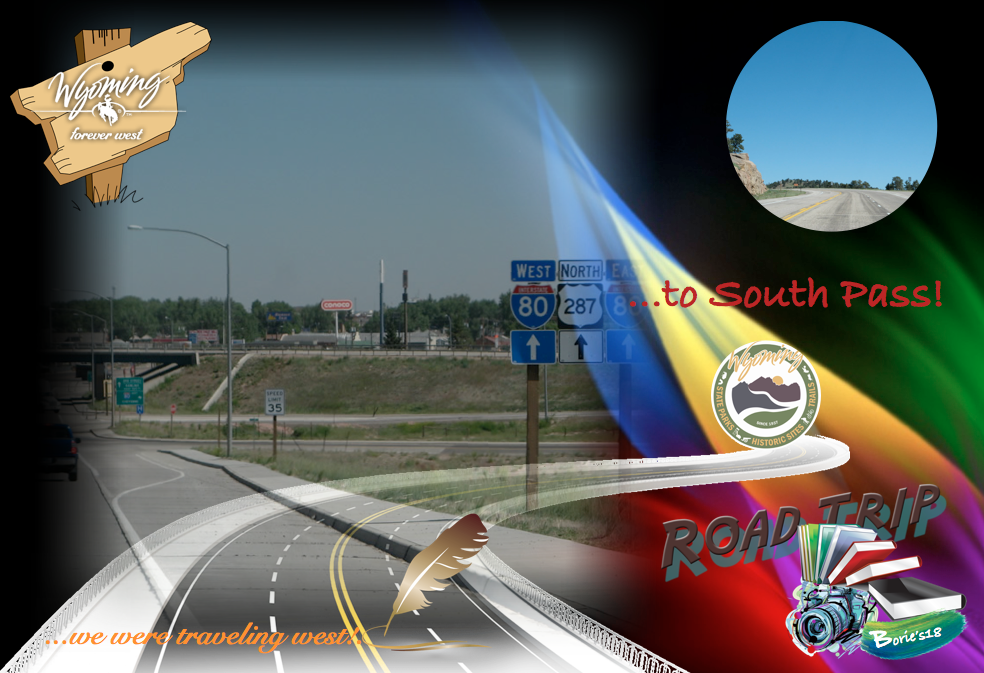
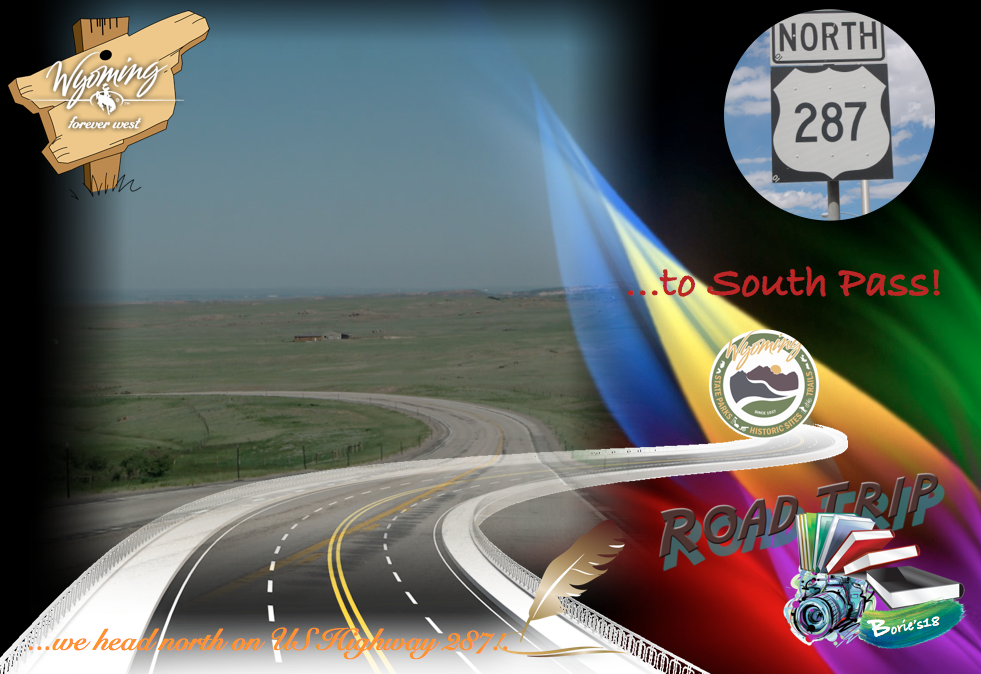
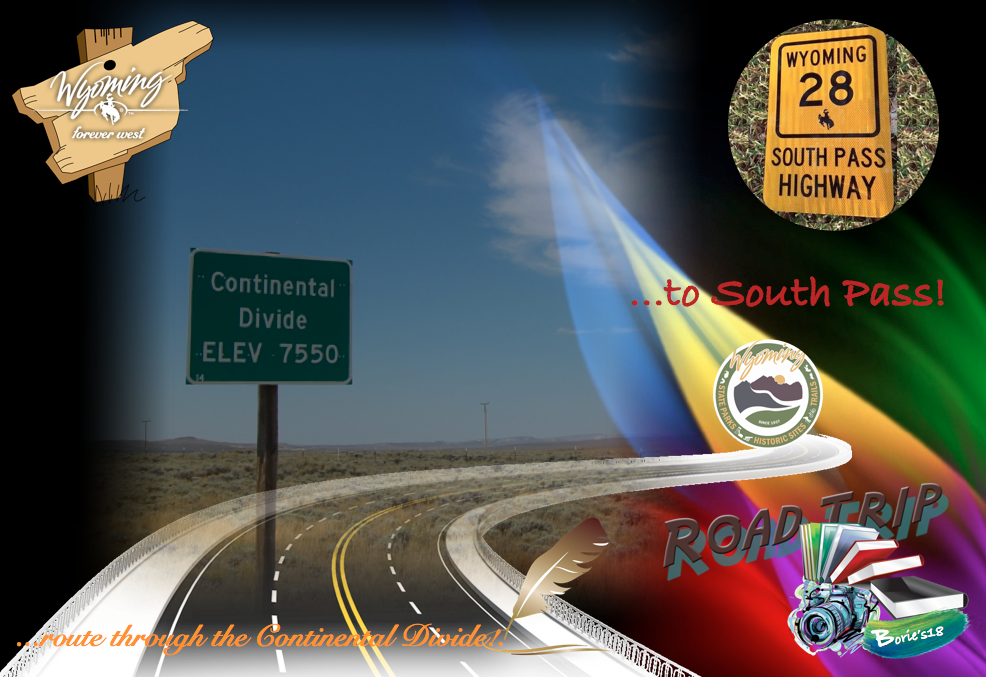
…entrámos no estado de Wyoming, sendo os letreiros ainda mais frequentes e, como adoramos caminhar, observar a natureza, ver locais históricos relacionados com as viajens dos nossos antepassados emigrantes, a nossa curiosidade aumentou quando verificámos que, o célebre “South Pass”, (Passagem Sul), era próximo!. Deixando a estrada rápida número 80, seguimos para norte na estrada US 287, onde algum tempo depois, nos surge a estrada estadual de Wyoming número 28, que segue para oeste, também conhecida como “South Pass Highway”, (estrada da Passagem Sul)!. (We entered the state of Wyoming, with signs being even more frequent, and as we love to walk, observe nature, see historical sites related to the journeys of our emmigrant ancestors, our curiosity increased when we noticed that the celebrated “South Pass “, (South Pass), was close!. Leaving Highway 80, we head north on US Highway 287, where some time later, we come to the Wyoming State Highway 28, heading west, also known as the “South Pass Highway”)!.

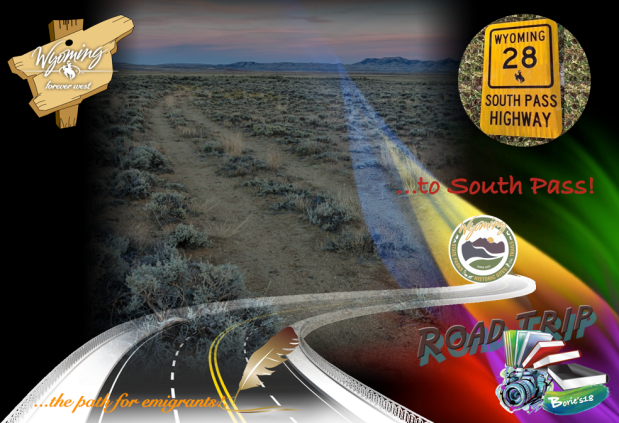
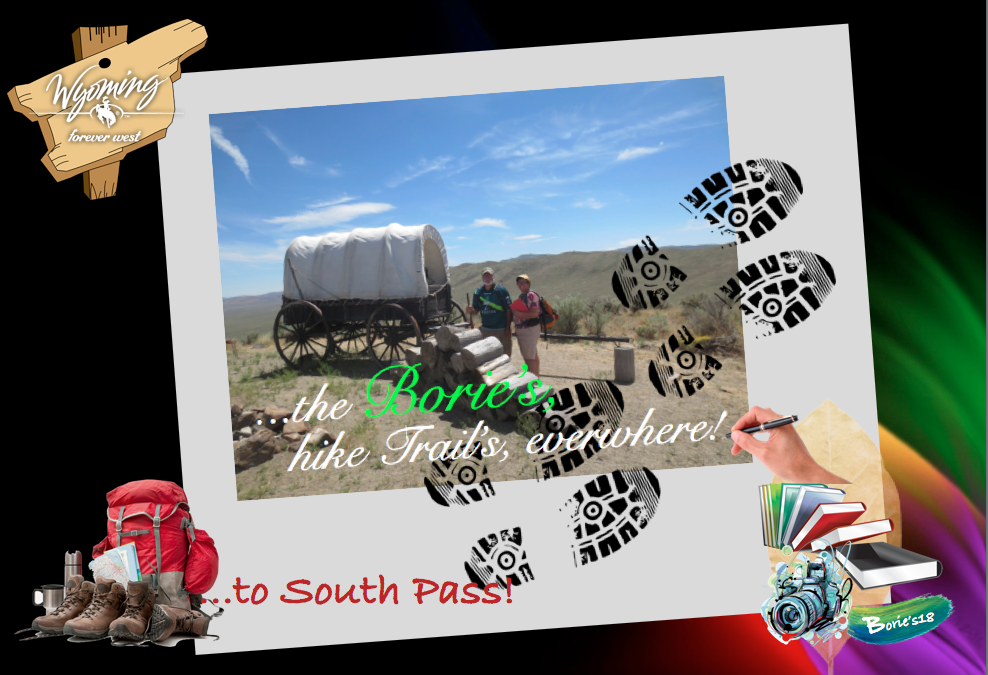
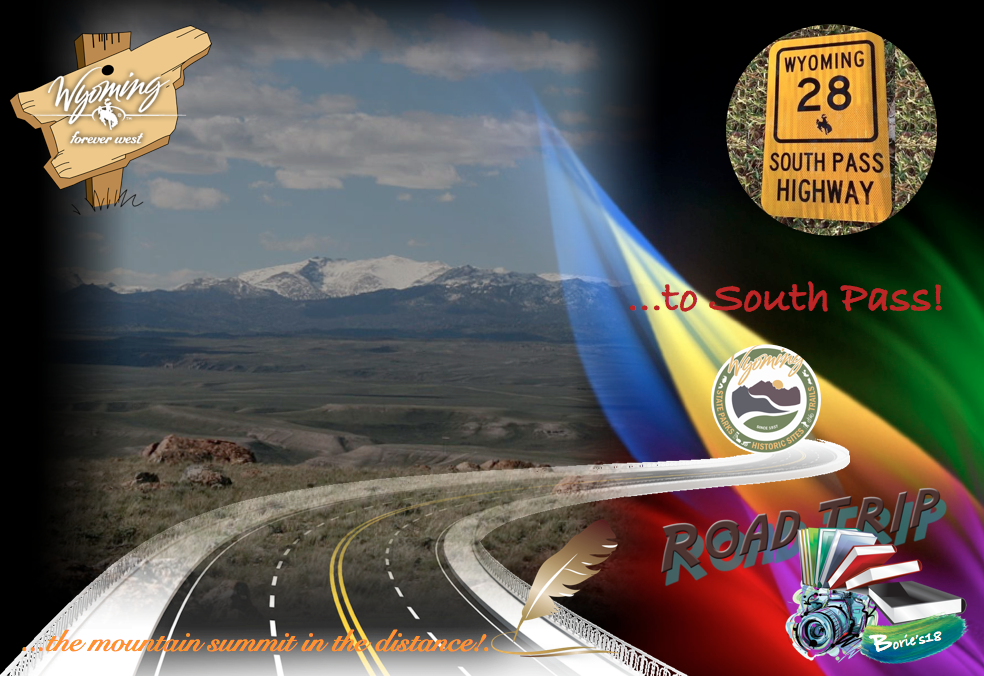
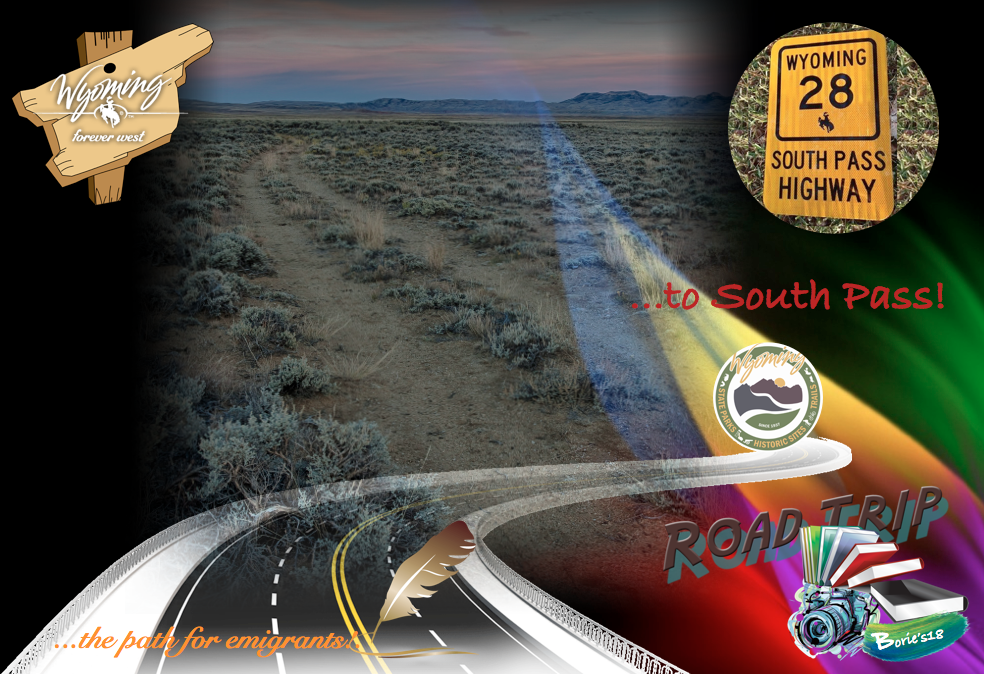
…seguindo por esta estrada, o cenário é deslumbrante!. Parando aqui e ali, podemos observar a sombra das nuvens brancas, ocultando o cume das montanhas ao longe, algumas ainda com neve!. Desligando o motor do veículo, apreciámos o silêncio, caminhámos, ouvimos a brisa, respirámos o aroma que vem da vegetação rasteira, cheirámos a terra branca das marcas profundas do trilho das rodas, que as caravanas puxadas por animais, fizeram ao longo dos anos, descendo a encosta da montanha, rumo ao oeste!. Apreciámos aqueles rebanhos de antílopes que por ali andam, movendo-se e pastando, que naquela época distante, eram a principal fonte de alimentação dos emigrantes que por aqui passavam!. (Following this road, the scenery is stunning!. Stopping here and there, we can observe the shadow of the white clouds, hiding the mountain summit in the distance, some still with snow!. Turning off the engine of the vehicle, we enjoyed the silence, we walked, we heard the breeze, we breathed the scent that came from the undergrowth, we smelled the white soil of the deep marks of the wheel tracks, that caravans pulled by animals, down the mountainside, heading west!. We appreciated those herds of antelopes that walk around, moving and grazing, that in that distant time, were the main source of food of the emigrants that passed here)!.

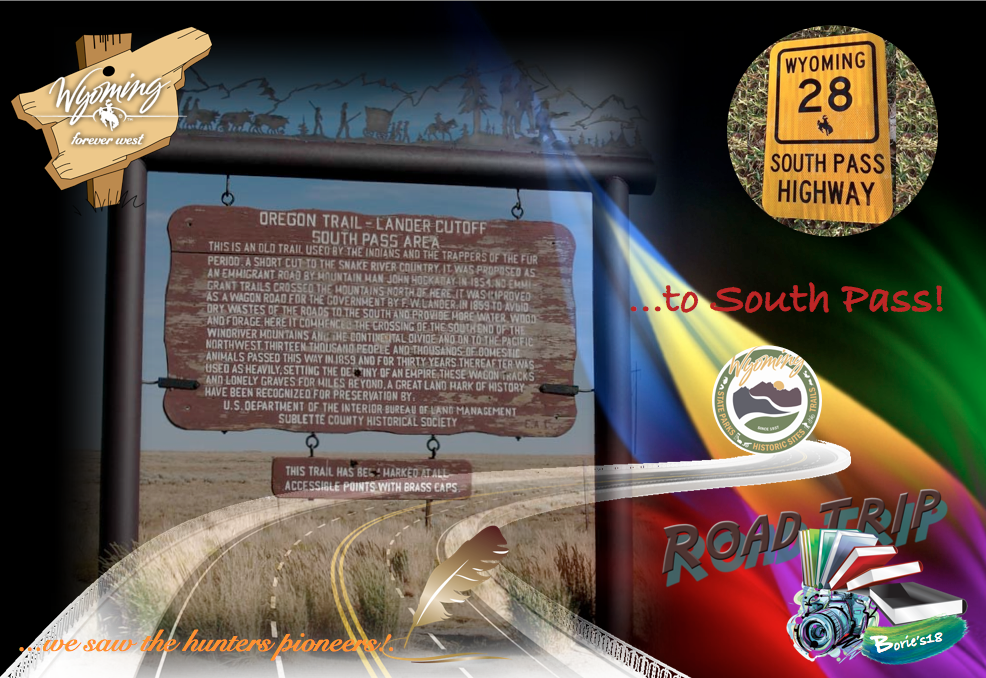
…fechámos os olhos, imaginámos o vento a uivar, ouvimos o som do casco dos cavalos dos mensageiros do Pony Express, que levavam uma carta de St. Joseph, Missouri, via “South Pass” (Passagem Sul), para Sacramento, Califórnia, em apenas duas semanas, o gemido das rodas das caravanas, o som do chicote dos condutores, as vozes das mulheres e crianças, vimos os caçadores de peles, os pioneiros, os missionários ou emigrantes com destino a Oregon, ávidos pelo ouro da Califórnia ou os récem convertidos Mormons, récem chegados da Escandinávia!. Imaginámos os mais de um milhão de emigrantes em busca de residência no oeste, iniciando uma caminhada, que se prolongava por anos, saindo de St. Louis, no estado de Missouri, com dois filhos, chegando ao estado da Califórnia com cinco!. (We closed the eyes, we imagined the wind howling, we heard the sound of the hoof of the horses of the couriers of the Pony Express, who carried a letter from St. Joseph, Missouri, via the South Pass to Sacramento, California, in just two weeks, the moan of the caravan wheels, the sound of the whip of the drivers, the voices of the women and children, we saw the hunters pioneers, missionaries or emigrants to Oregon, eager for gold from California, or the newly converted Mormons, are coming back from Scandinavia! We imagined the more than one million emigrants seeking residency in the west, starting a long-standing trek out of St. Louis, Missouri, with two children, arriving in the state of California with five)!.

…O “South Pass”, (Passagem Sul), é o nome que se dá para as duas passagens de montanha no Continental Divide, nas Montanhas Rochosas, no sudoeste do estado de Wyoming, cujas passagens estão localizadas numa região baixa e larga entre diversas cordilheiras!. É o ponto mais baixo da divisão continental entre as Montanhas Rochosas Central e do Sul, fornecendo um ponto de passagem natural, ampla e aberta!. É uma passagem histórica e um marco histórico nacional, tornando-se o caminho para os emigrantes nas Trilhas do Oregon, Califórnia e Mormon, para o ocidente, durante o século XIX!. (The South Pass is the name given to the two mountain passes in the Continental Divide in the Rocky Mountains in southwestern Wyoming whose passages are located in a low, wide region among several mountain ranges!. It is the lowest point of the continental divide between the Central and South Rockies, providing a natural, wide and open waypoint!. It is a historic passage and a national landmark, making it the path for emigrants on the Oregon, California and Mormon Trails to the west during the nineteenth century)!.

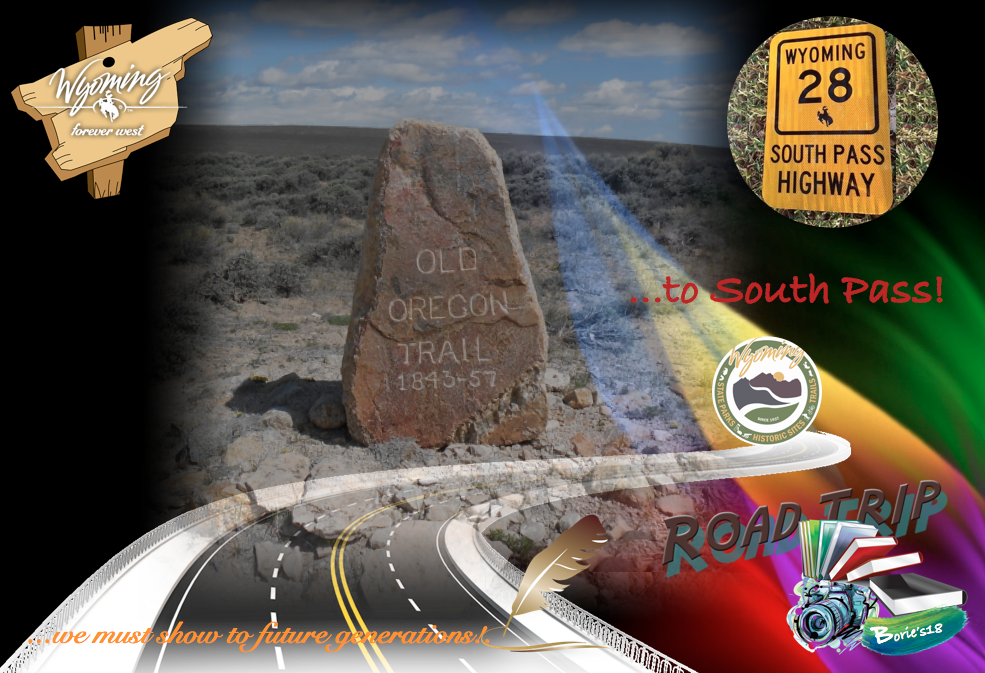
…entre “Marias Pass” (Passagem Maria), perto da fronteira do Canadá e “Guadalupe Pass” (Passagem Guadalupe), não muito longe do México, “South Pass”, (Passagem do Sul), era a única maneira fácil de atravessar a enorme cordilheira das Montanhas Rochosas!. É para nós, um lugar especial, onde podemos agora, viver os anos do século XIX, quando um grupo de comerciantes de peles por aqui passou, passando a ser uma rota regular de emigrantes e pesquizadores de ouro, representando hoje um tesouro nacional, que devemos mostrar às gerações futuras!. (Between “Marias Pass”, near the border of Canada and “Guadalupe Pass”, not far from Mexico, “South Pass”, was the only easy way to cross the huge mountain range of the Rocky Mountains!. For us, it is a special place, where we can now live the nineteenth century, when a group of fur traders here passed, becoming a regular route of emigrants and gold fishers, representing today a national treasure, which we must show to future generations)!.


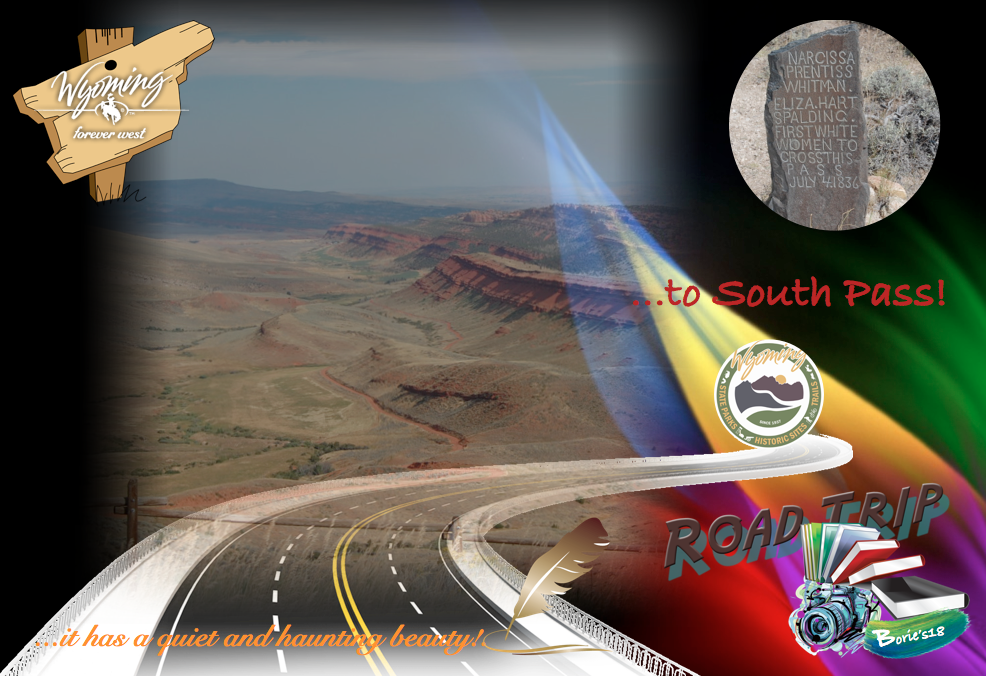
…por volta do ano de 1832, um tal capitão Benjamin Bonneville, com uma caravana de 110 homens e 20 carroças, foram o primeiro grupo a levar vagões de caravana pelo “South Pass” (Passagem Sul) e, no ano de 1836, Narcisa Whitman e Eliza Spalding foram as primeiras mulheres brancas pioneiras a atravessar esta passagem!. A descoberta desta rota terrestre, através do Continental Divide, que é a divisão hidrológica principal e, em grande parte, montanhosa da América, que se estende desde o Estreito de Bering até ao Estreito de Magalhães, separando as bacias hidrográficas que drenam para o Oceano Pacífico, dos sistemas fluviais que drenam para o Oceano Atlântico, tem um grau relativamente fácil, sendo considerada uma dádiva, para aqueles que esperavam ver os Estados Unidos da América se estendendo do oceano Atlântico ao Pacífico!. (Around the year 1832, a certain captain Benjamin Bonneville, with a caravan of 110 men and 20 carts, was the first group to carry caravans through the South Pass, and in the year 1836, Narcisa Whitman and Eliza Spalding were the first pioneering white women to cross this passage! The discovery of this land route through the Continental Divide, which is the major and largely mountainous hydrological division of America, stretching from the Bering Strait to the Strait of Magellan, separating the watersheds that drain into the Ocean Pacific Ocean, from the river systems draining into the Atlantic Ocean, has a relatively easy degree, being considered a gift, to those who expected to see the United States of America stretching from the Atlantic to the Pacific)!.

…este local remoto, não é um espectáculo grandioso como por exemplo, o Yellowstone Nacional Parque ou o Grand Canyon Nacional Parque, todavia tem uma beleza tranquila e assombrosa, que escapou à devastação do progresso!. Claro, também foi procurado pelos pesquizadores de ouro, mas diziam que em “South Pass” (Passagem Sul), era muito difícil ficar rico, sendo até um lugar terrível para se ficar rico rápidamente, talvez só os negociantes do comércio de peles, que compravam a mercadoria aos que caçavam os lindos e inocentes animais, por um centavo de dólar, vendendo o produto por fortunas nas cidades de St. Louis, San Francisco ou Nova Iorque!. (This remote location is not a grand spectacle such as the Yellowstone National Park or the Grand Canyon National Park, yet it has a quiet and haunting beauty that has escaped the devastation of progress!. Of course, it was also sought by the gold researchers, but they said that in the South Pass, it was very difficult to get rich, even being a terrible place to get rich quick, maybe only fur traders, who bought the merchandise of those who hunted the beautiful and innocent animals for a cent, and sold the product for fortunes in the cities of St. Louis, San Francisco, or New York)!.

Tony Borie, June 2018.

…reading the war diary!

…reading the war diary!


…lendo o diário de guerra! (reading the war diary)!.

…hoje vamos contar uma história pitoresca passada em cenário de guerra!. Vamos esquecer mecanismos para governar uma guerra, tratados para proteger os direitos humanos, impedir o genocídio, restringir as armas mais perigosas, pois tudo isso só existe no papel, guerra é guerra, quando existe é para vencer ou perder, quase vale tudo, esses esforços, quase nunca são bem sucedidos, as guerras são terríveis, são travadas e atrocidades são cometidas, essa é a verdade!. (Today we will tell a past picturesque story in a scenario of war!. Let us forget mechanisms to govern a war, treats to protect human rights, prevent genocide, restrict the most dangerous weapons, because all this only exists on paper, war is war, when there is to win or lose, almost anything, these efforts are almost never successful, wars are terrible, they are fought and atrocities are committed, that is the truth)!.

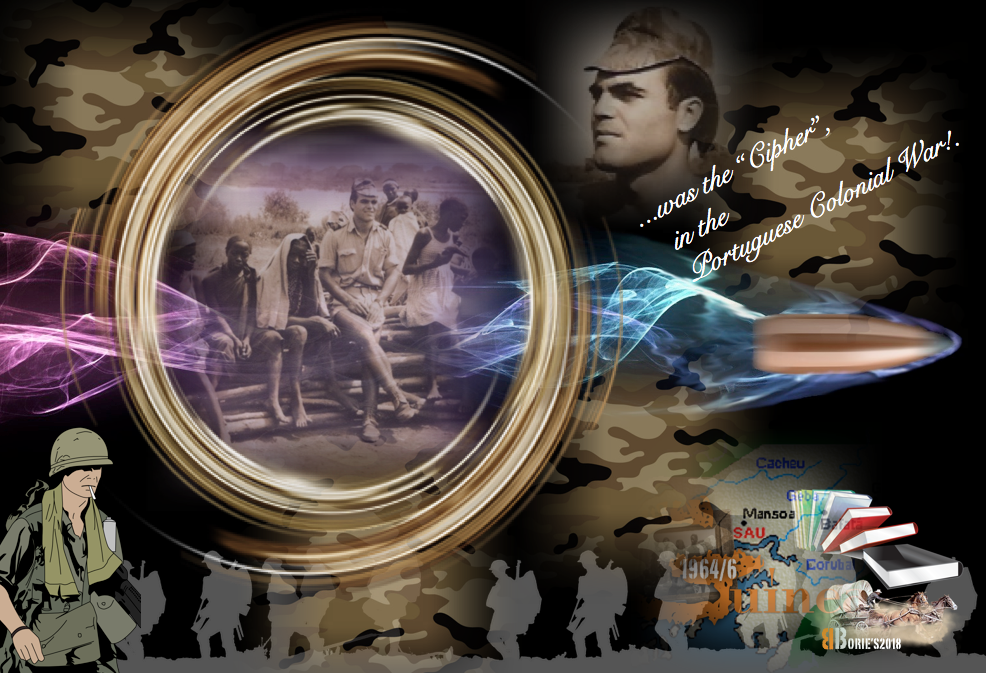
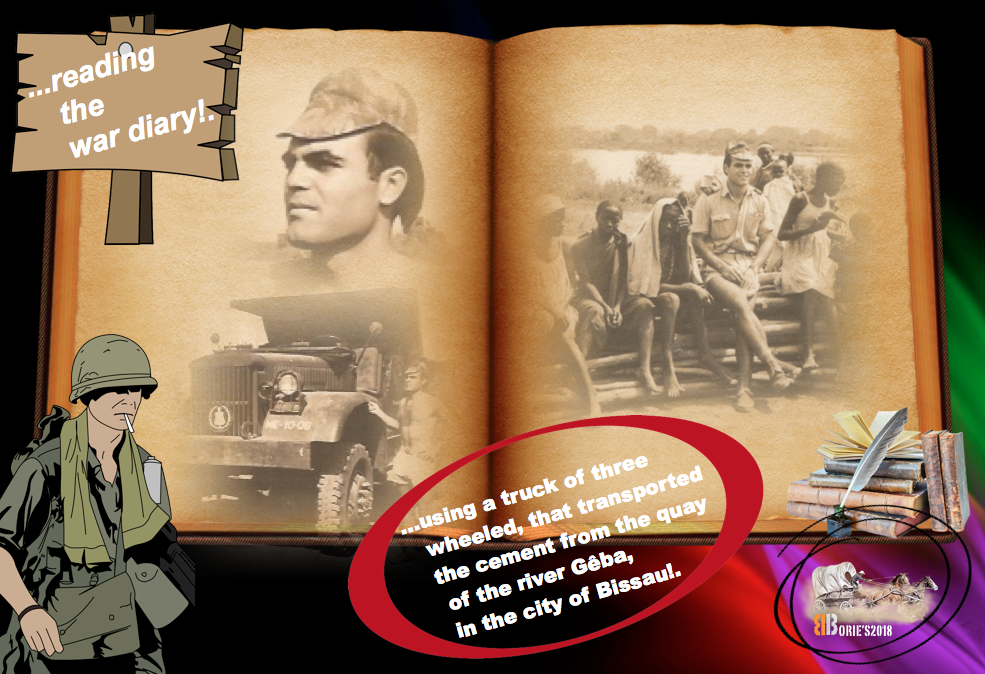
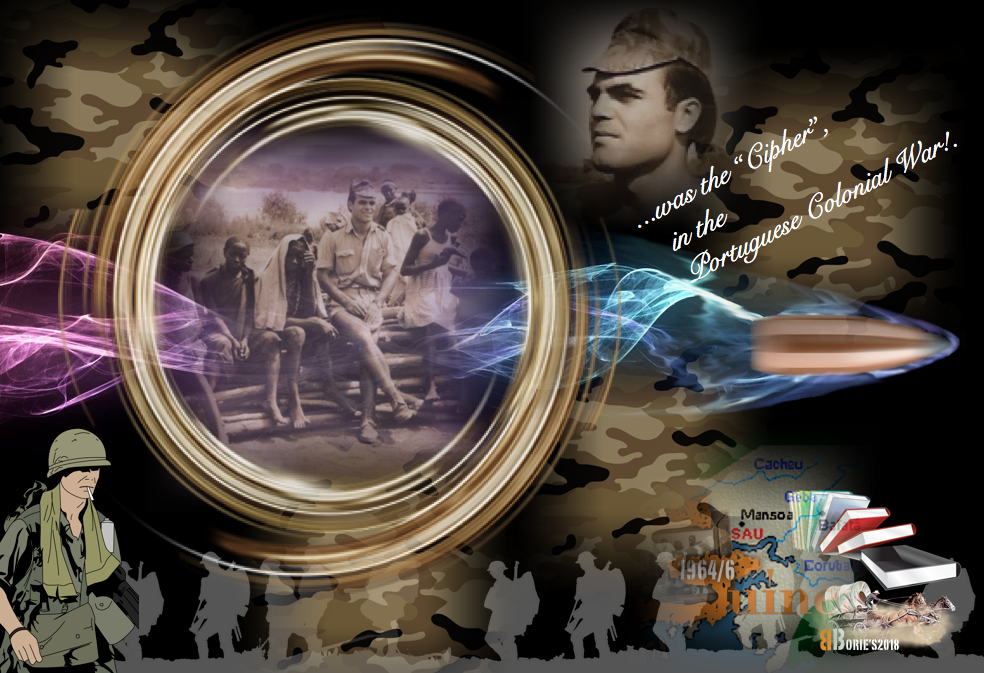
…abrimos o nosso diário de guerra, lá vêm duas páginas, onde com alguma dificuldade se pode ler que no dia 4 de Novembro, que devia de ser do ano de 1964, fomos jantar a casa do Primeiro Sargento de uma Companhia de Engenharia, que estava estacionada na vila de Mansoa durante a construção do novo aquartelamento e, que vivia numa casa do Libanês, com sua esposa, sendo o responsável por tudo o que dizia respeito a uso de cimento, nas obras do novo aquartelamento, usando um camião de três rodados, que transportava o cimento desde o cais do rio Gêba, na cidade de Bissau!. Alguns militares, diziam que o referido camião não era lá muito seguro, pois “deixava cair” alguns sacos de cimento antes de chegar à vila de Mansoa, chegando quase sempre, pouco mais que meio!. (We open our war diary, there come two pages, where with some difficulty one can read that on November 4, which should have been from the year 1964, we went to dinner at the home of the First Sergeant of an Engineering Company, who was stationed in the village of Mansoa during the construction of the new barracks, and who lived in a Lebanese house with his wife and was responsible for all that was involved in the use of cement in the construction of the new quarters using a truck of three wheeled, that transported the cement from the quay of the river Gêba, in the city of Bissau!. Some soldiers said that the truck was not very safe there, as it “dropped” some sacks of cement before arriving at the village of Mansoa, arriving almost always, little more than half)!.

…o Primeiro Sargento, sempre guardava algum cimento para usar nas fundações das futuras barracas que se iam construindo, roubando terreno aos pântanos que circundavam a área!. Se roubava cimento, era parte do comércio que uniu parte do mundo, onde milhões, dizemos até combóios de dinheiro, são constantemente retirados da classe de pobreza que em algumas partes do globo existem, onde quadrilhas organizadas funcionam, contrariando os ideais de liberdade e igualdade de um estado de direito, que infelizmente continuam a avançar, impossíveis de parar em algumas partes do nosso planeta!. Enfim, é um legado do qual somos herdeiros da fortaleza de gerações passadas!. (The First Sergeant, he always kept some cement to use on the foundations of future tents that were being built, stealing land from the marshes that surrounded the area!. Stealing cement, it was part of the trade that united part of the world, where millions, we even say trains of money are constantly removed from poverty class that in some parts of the globe exist, where organized gangs work, contrary to the ideals of freedom and equality of a state of law, which unfortunately continue to advance, impossible to stop in some parts of our planet!. At last, it is a legacy of which we are heirs of the fortress of past generations)!.

…nós neste momento, somos pessoas com uma idade um pouco avançada, talvez fora do tempo, da actualidade e, o que acabamos de escrever são apenas “off words”, (palavras de fora), não estavam escritas no nosso diário de guerra, portanto vamos continuar a ler o que lá está escrito!. Aquele jantar, foi um grande convívio, havia lá uma gazela, que tinha sido assada no forno do aquartelamento, batatas cozidas com a pele, pão e azeitonas, regadas com muito vinho, não sendo necessário explicar que tudo isto foi roubado no aquartelamento, (da tal parte do comércio que uniu parte do mundo)!. (We at this moment are people of a slightly advanced age, perhaps out of time, of the present day, and what we have just written are just “off words”, were not written in our diary of war, so let’s continue reading what’s written there!. That dinner was a great joie de vivre, there was a gazelle, which had been roasted in the oven of the barracks, potatoes cooked with the skin, bread and olives, washed with plenty of wine, not having to explain that all this was stolen in the barracks, (of that part of the trade that united part of the world)!.

…não explica porque nos convidaram, mas falando no forno do aquartelamento, devia de ter havido a influência do “Arroz com Pão”, que era o companheiro responsável pelas refeições servidas aos militares, e também do “Tótó”, que era o padeiro, também responsável pela distribuição do vinho, tudo nomes de guerra com que foram baptizados, por isto ou por aquilo, por algumas peripécias em que foram protagonistas, mas que eram nossos amigos e, não se realizava nenhuma “patuscada”, em que não nos avisassem!. (Does not explain why they invited us, but speaking in the furnace of the barracks, there must have been the influence of “Rice with Bread,” which was the companion responsible for the meals served to the military, and also of the “Tótó”, which was the baker, also responsible for the distribution of wine, all names of war with which they were baptized, for this or that, for some adventures in which they were protagonists, but that were our friends and, there was no “spree”, in which they warned us)!.

…numa das páginas seguintes, um pouco à frente vem escrito numa linguagem um pouco primitiva que, viémos à capital da então província, a cidade de Bissau, na camionete dos doentes, na companhia do “Furriel Miliciano”, (outro nome de guerra), que andava sempre a fumar um cigarro feito à mão, todavia não estávamos doentes, estávamos única e simplesmente de folga das nossas tarefas militares!. Viémos sem licença, portanto “desenfiados”, como se então se dizia!. Na cidade, visitámos os pontos de referência que normalmente os militares visitavam quando vinham do “mato”, metemo-nos nos “copos”, talvez pensando que não tínhamos solução definitiva para os problemas da guerra, talvez pensando numa nova maneira sobre a noção de uma guerra justa, que não existia nem nunca existirá, ou no imperatiivo de uma paz, que sim, seria justa!. (In one of the following pages, a little later, written in a somewhat primitive language, we came to the capital of the then province, the city of Bissau, in the van of the sick, in the company of the “Furriel Miliciano” (another name for war), who was always smoking a handmade cigarette, yet we were not sick, we were simply and simply absent from our military tasks!. We saw without license, therefore “unmanned”, as if it were said!. In the city, we visited the landmarks that the military usually visited when they came from the bush, got into the “cups”, perhaps thinking that we had no definitive solution to the problems of war, perhaps thinking in a new way about the notion of a just war, that did not exist and never will exist, or in the imperative of a peace, that yes, would be just)!.

…não regressámos à camionete dos doentes, dormimos num local, que segundo o que diz no diário, era “piolhoso”, ao norte da cidade, onde havia uma grande “tabanca”, (aldeia), com muitas “moranças”, (casas), e raparigas africanas, que não falavam “crioulo” (dialecto local), nem usavam sómente um pano em volta da cinta, não tinham “mama firme”, (peito duro e saliente), ou argolas no pescoço e nas pernas servindo de enfeite, nem andavam descalças!. Pelo contrário, usavam roupas de cor berrante, justas ao corpo, principalmente a segurarem a mama, que não era firme, lábios com alguma pintura, um perfume barato cheirando a álcool, com gestos sensuais e provocatórios!. Quando se aproximavam, falavam algumas palavras obscenas num português acrioulado, dizendo:

– és pessoal do Lisboa?. Queres água ou licor do Lisboa?. Olha aqui, “mama firme” (peito duro e saliente)?. Anda cá, dá “patacão, (dinheiro)!.

(We did not return to the van of the sick, we slept in a place, which according to what it says in the diary, was “lousy”, to the north of the city, where there was a big “tabanca” (village) with many “morances” (houses), and African girls, who did not speak “Creole” (local dialect), nor did they use only a cloth around the strap, had no “firm breast” (hard and salient chest), or rings on the neck and legs they did not even walk barefoot! On the contrary, they wore gaudy garments, tight to the body, especially to hold the breast, which was not “firm”, lips with some paint, an inexpensive scent smelling of alcohol, with sensual and provocative gestures! When they approached, they spoke some obscene words in an acriled Portuguese, saying:

– Are you personal to Lisboa?. Do you want water or liqueur from Lisbon?. Look here, “firm breast” (hard and salient chest)?. Come on, give me “patacão”, (money)!.

…no diário continua escrito que, ao outro dia acordámos não sabíamos onde, mas sem perdermos a calma, com uma certa compostura, retirámos algumas garrafas já vazias de bebida ao nosso redor, sem nenhum “patacão” (dinheiro) nos bolsos, não sabendo se fomos roubados ou se simplesmente gastámos tudo, sentindo algum orgulho no que fizémos, com o braço no ombro um do outro, pois mal nos contínhamos em pé, apresentámo-nos no aeroporto militar de Bissalanca, pregando uma grande mentira, dizendo que tínhamos sido agredidos e roubados, no entanto estávamos bem, mas tínhamos que regressar já ao aquartelamento de Mansoa!. (In the diary it continues written that the next day we woke up we did not know where, but without losing our calm, with a certain composure, we took some already empty bottles of drink around us, without any “patacão” (money) in our pockets, not knowing if we were stolen or if we simply spent everything, feeling some pride in what we did, with the arm in the shoulder of each other, since we were still standing, we introduced ourselves in the military airport of Bissalanca, preaching a great lie, saying that we had been beaten and robbed, but we were fine, but we had to go back to Mansoa)!.

…o furriel Honório, o piloto da avioneta do correio, a quem chamávamos o “Pardal” pelas suas acrobacias, ia levar correio e medicamentos à vila de Mansabá, trouxe-nos na avioneta!. Quando a avioneta sobrevoou o aquartelamento de Mansoa e, a secção de combate foi prestar segurança à pequena abertura que havia no capim ao norte do aquartelamente, a que nós chamávamos aeroporto, pensando recolher os sacos do correio, onde não vinha correio nenhum, deparando com nós, ambos com aspecto de militares abandonados, logo nos disseram:

– só podiam ser vocês!. O comandante vai dar-vos uma “porrada” (castigo disciplinar), que estão fodidos!.

(The furriel Honorius, the pilot of the mail plane, whom we called the “Sparrow” for his acrobatics, was going to take mail and medicines to the village of Mansabá, he brought us in the plane! As the plane flew over Mansoa’s barracks and the combat section went to secure the small opening in the grass north of the village, which we called the airport, thinking of picking up the mail bags, where no courier came, we, both looking like abandoned soldiers, soon told us:

– It could only be you!. The commander is going to give you a “stuck” (disciplinary punishment), you are fucked)!.

…nunca sabemos porquê, mas mais nada nos aconteceu!. Que “porrada”, maior podíamos levar, se tínhamos sido “agredidos e roubados” e, mesmo assim, obedientes, regressámos ao local de tortura!. (We never know why, but nothing else happened to us!. What a “stuck” we could take, if we had been “beaten and robbed” and yet obedient, we went back to the torture place)!.

Tony Borie, May 2018.

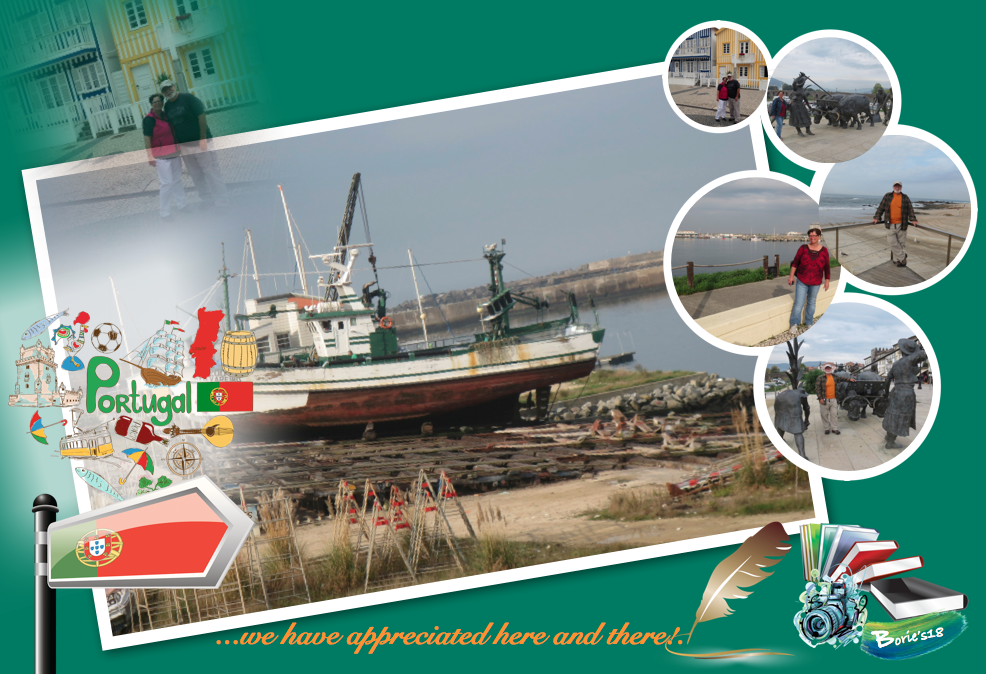
…a few days in Portugal!.

…a few days in Portugal!.


…alguns dias em Portugal!. (a few days in Portugal)!.

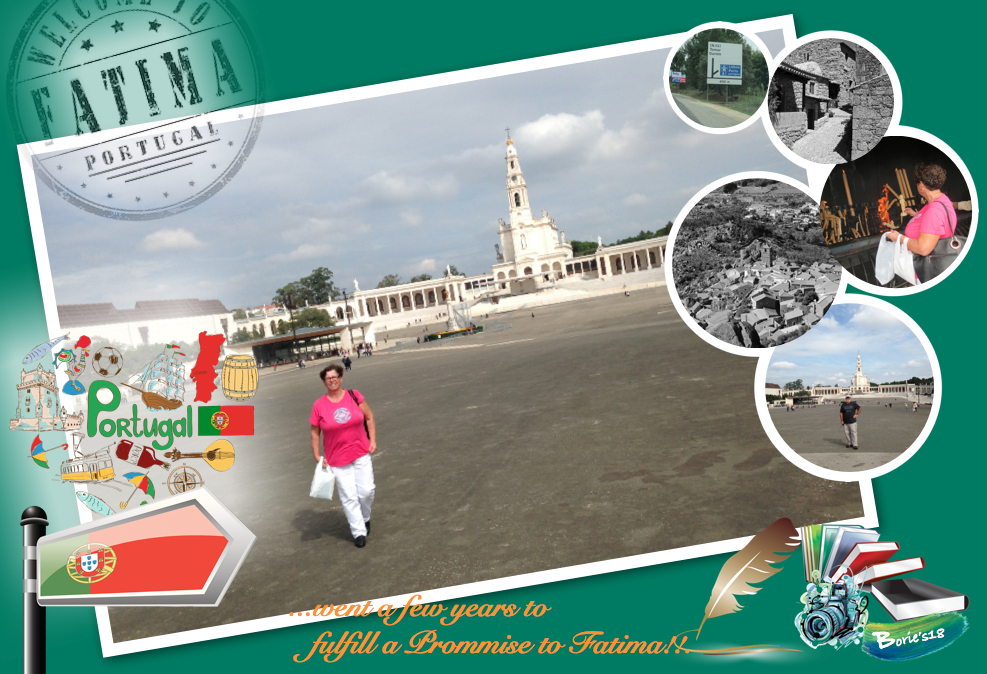
…a nossa esposa Isaura, seguindo os princípios com que foi educada em jovem, fiel na devoção à religião católica, andava a alguns anos para cumprir uma “Promessa a Fátima” e nós, acompanhando-a, também tínhamos algumas saudades da nossa aldeia do Vale do Ninho d’Águia, lá na vertente agreste da Montanha do Caramulo, onde a crosta terrestre, lentamente começava a ser plana, flutuando por perto as zonas ribeirinhas do Rio Águeda, onde pela noite, não havendo luz eléctrica, se a terra tremesse, nascendo dos céus uma pequena luz, que seria uma qualquer estrela, talvez uma estrela nova, daquelas que fazem oscilar um continente, ninguém dava por isso!. (Our wife Isaura, following the principles with which she was educated as a young woman, faithful in devotion to the Catholic religion, went a few years to fulfill a “Promise to Fatima” and we, along with her, also missed some of our village of the Ninho d’Águia Valley, there on the rugged slope of Caramulo Mountain, where the earth’s crust slowly began to be flat, floating near the riverine areas of the Águeda River, where at night, there being no electric light, if the earth tremendo, a small light rising from the sky, that would be any star, maybe a new star, those that make a continent oscillate, no one gave it)!.

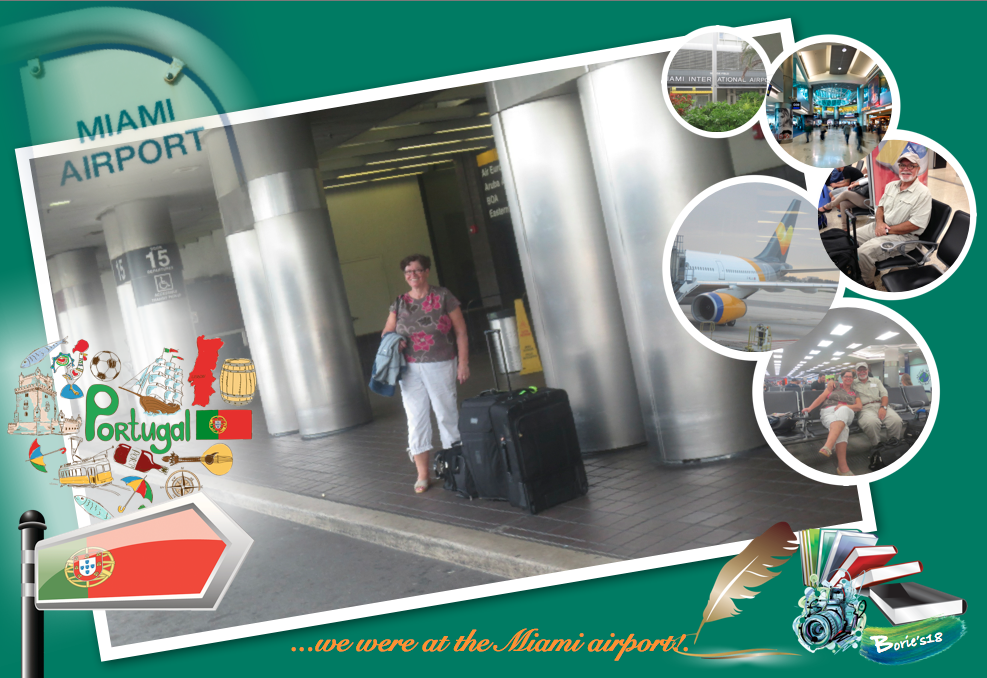
…estávamos no aeroporto da cidade de Miami esperando, quando em conversa com um casal de pessoas idosas que viajavam para Inglaterra, ao saber que viajávamos para Portugal, nos explicou para não falarmos no idioma espanhol em Portugal, pois eles lá, tinham o seu próprio idioma!. Claro, logo lhe proporcionámos uma pequena e gratuita classe de história, dizendo que nascemos em Portugal e, muito orgulhosos de sabermos falar português, que não éramos “Hispânicos” e que a língua Portuguesa, na época dos descobrimentos foi espalhada pelos quatros cantos do mundo, sendo o 5.º idioma mais falado no mundo!. (We were at the Miami airport waiting, when in conversation with a couple of elderly people traveling to England, on learning that we were traveling to Portugal, he explained to us not to speak the Spanish language in Portugal, because they had the your own language!. Of course, we soon offered a small and free class of history, saying that we were born in Portugal and, very proud to know how to speak Portuguese, that we were not “Hispanics” and that the Portuguese language at the time of the discoveries was spread throughout the four corners of the world, being the 5th most spoken language in the world)!.

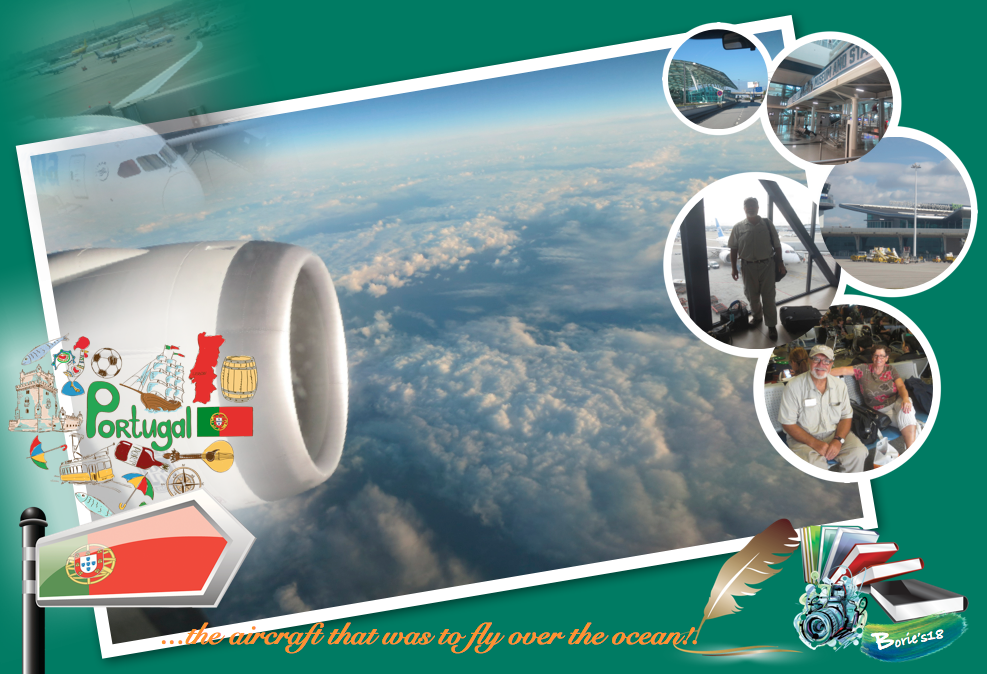
…depois de alguns sorrisos, entrámos na aeronave que havia de sobrevoar o oceano, levando-nos com destino à cidade de Madrid em Espanha, seguindo depois para a cidade do Porto, em Portugal!. Era uma viajem um pouco cansativa, mas como na nossa idade todos os centavos contam, embora a época fosse de Outono, o preço da viajem era muito inferior ao normal, portanto, embora na Europa que se diz unida, nos exigisse duas passagens pelos serviços de formalização alfândegária de fronteira, no entanto compensou, pois a amabilidade com que nos trataram, não tem preço!. (After a few smiles, we got into the aircraft that was to fly over the ocean, taking us to the city of Madrid in Spain, then to the city of Porto, Portugal! It was a rather tiring journey, but as in our age all cents count, although the season was Autumn, the price of travel was much lower than normal, so although in Europe it is said to be united, it required us to pass through two services of frontier customs formalization, however compensated, because the kindness with which they treated us, has no price)!.

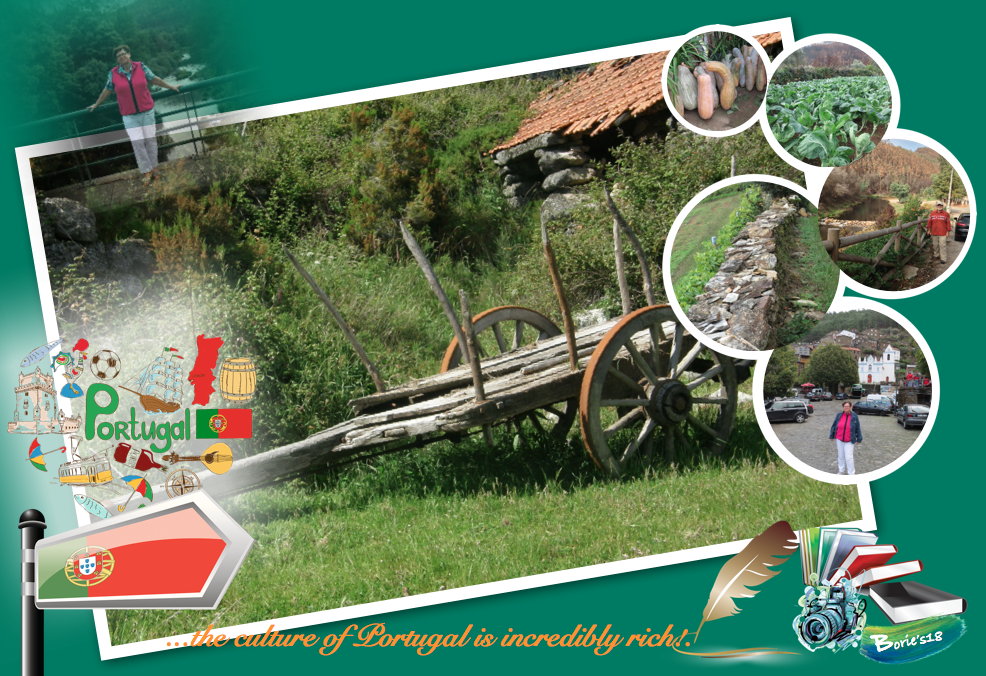
…em Portugal nos dias de hoje, tudo ou quase tudo é diferente mas, a magia do velho mundo, as praias, os campos, as montanhas, as aldeias, vilas ou cidades pequenas, mostram-nos porque a cultura de Portugal é incrívelmente rica!. Remonta de à muitos séculos, o país é o mais antigo da Europa, conservando os mesmos limites da época quando, D. Afonso Henriques desavindo com sua mãe D. Tereza, a venceu na batalha de São Mamede, dominando o Condado Portucale!. (In Portugal these days, everything or almost everything is different, but the magic of the old world, the beaches, the fields, the mountains, the villages, towns or small towns, show us why the culture of Portugal is incredibly rich!. It dates back to many centuries, the country is the oldest in Europe, retaining the same limits of the time when, D. Afonso Henriques, disrupting with his mother D. Tereza, won it in the battle of São Mamede, dominating the Portucale County)!.

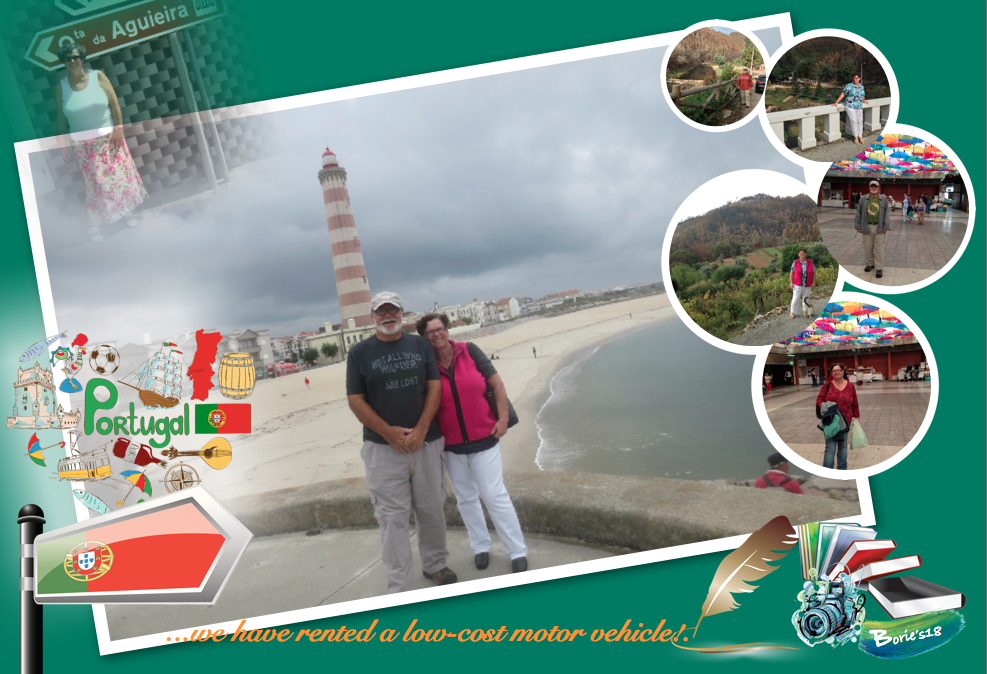
…alugámos um veículo automóvel de classe económica, para viajar pelos cerca de 2500 quilómetros de auto estradas e, talvez outro tanto em estradas complementares (IC), ou estradas principais (IP), onde em algumas se paga portagem, num sistema de pagamento através de débito bancário chamado “Via Verde”, onde não é necessário parar para pagar, o que sempre nos causou alguma confusão!. Fizémos um seguro contra qualquer risco, pois apesar do limite de velocidade imposto, os condutores ultrapassam em muito esses limites, existindo infelizmente uma taxa de alta sinistralidade!. (We have rented a low-cost motor vehicle to travel for about 2500 kilometers of motorways, and perhaps as much on complementary roads (IC), or main roads (IP), where in some tolls, payment via bank debit called “Via Verde” where you do not need to stop to pay, which has always caused us some confusion!. We made insurance against any risk, because despite the speed limit imposed, drivers far exceed these limits, unfortunately there is a high accident rate)!.

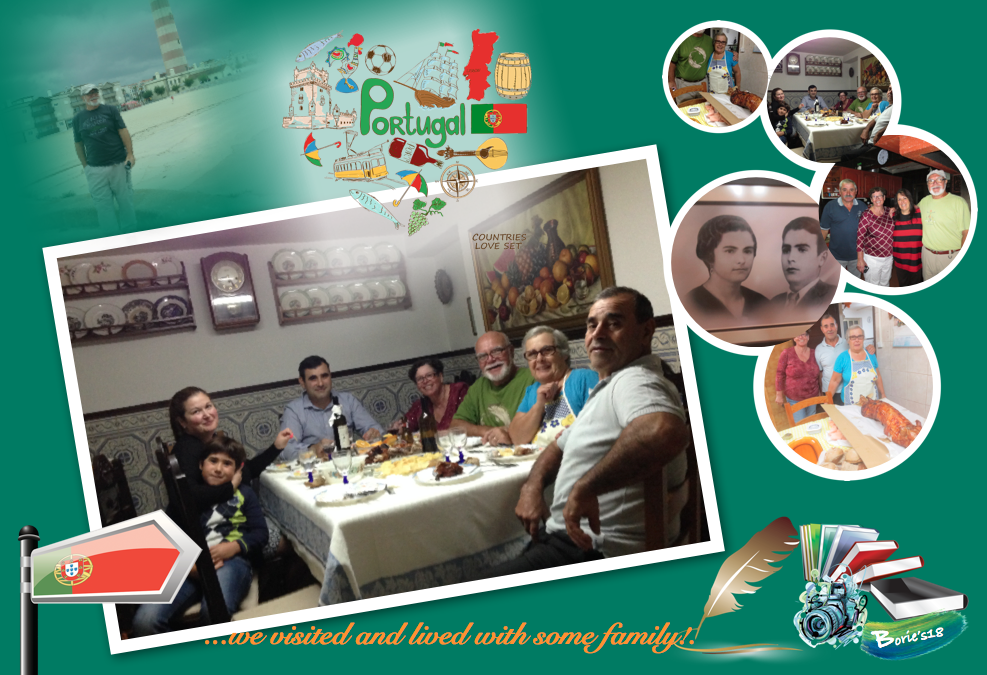
…visitámos e convivemos com alguma família e seus descendentes, recordámos familiares e alguns amigos na juventude, mas que infelizmente já não pertencem ao mundo dos vivos, todavia continuam no nosso coração, prestando-lhe o sentimento, meditação e homenagem, no lugar onde se encontram repousando para a eternidade, lembrando que, pessoas como estas, de outras gerações, continuaram as várias batalhas com os Mouros ou com o Condado de Leão, até à independência do Reino de Portugal! (We visited and lived with some family and their descendants, we remembered relatives and some friends in their youth, but unfortunately they no longer belong to the world of the living, yet they remain in our hearts, giving them the feeling, meditation and homage in place where they are resting for eternity, remembering that people like these from other generations continued the various battles with the Moors or the County of Leon until the independence of the Kingdom of Portugal)!.

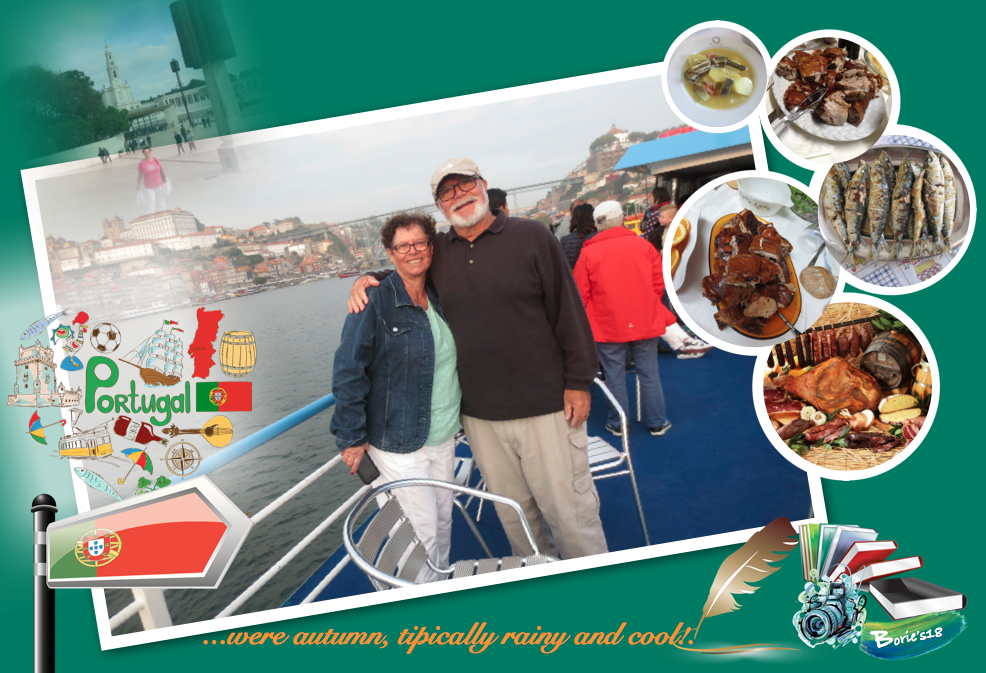
…os dias eram de Outono, típicamente chuvosos e frescos, principalmente nas áreas por onde vagueámos, que era a região centro/norte, no entanto esquecendo o sistema de calorias do nosso já um pouco velho corpo, deliciámo-nos com a típica culinária de cariz essencialmente mediterrânica, incidindo em peixe e grelhados mas, não se podia ignorar o bacalhau, o caldo verde, as sardinhas assadas tripas à moda do Porto, cabrito assado no forno, papas de sarrabulho, leitão assado à bairrada ou o cozido à Portuguesa, que consiste numa mistura de carnes e legumes, cozidos de forma suculenta, sem esquecer o azeite Português, que vai a todas as mesas, o presunto, os enchidos, os doces de uma receita centenária!. (The days were autumn, typically rainy and cool, especially in the areas where we wandered, which was the center / north region, however forgetting the calorie system of our already somewhat old body, we delighted in the typical mainly Mediterranean cuisine, focusing on fish and grilled but you could not ignoe cod, green broth, roasted sardines, porridges in the style of Oporto, roasted kid in the oven, potatoes of sarrabulho, suckling pig roasted or the stew to Portuguese, which consists of a mixture of meats and vegetables, cooked in a juicy way, not forgetting the Portuguese olive oil, which goes to all tables, ham, sausages, sweets of a recipe centenary)!.

…andámos por lá, subimos à montanha, saboreando o queijo, fresco ou curado, especialmente de leite de ovelha, criada na montanha mais alta de Portugal!. Percorremos parte do centro interior, quando da nossa visita ao Santuário de Fátima, que de uma pequena aldeia, se tornou num lugar que despertou a atenção do mundo, principalmente para os crentes na religião católica!. Descemos ao Rio Douro, navegando atá à sua foz, apreciando os 900 anos de história de um País que teve um papel crucial nos destinos do mundo!. Visitámos algumas praias, num litoral com centenas de quilómetros de distância, de onde saíram os marinheiros aventureiros que levaram, entre outras coisas, os usos e costumes da Europa, para outros continentes!. (We went up there, climbed the mountain, savoring the cheese, fresh or cured, especially of sheep’s milk, raised on the highest mountain in Portugal!. We went through part of the interior center, when we visited the Shrine of Fatima, which from a small village became a place that aroused the attention of the world, especially for the believers in the Catholic religion!. We descend to the River Douro, navigating to its mouth, enjoying the 900 years of history of a Country that played a crucial role in the destinies of the world!. We visited some beaches, on a coastline hundreds of kilometers away, from where the adventurous sailors who took, among other things, the customs and customs of Europe to other continents)!.

…apreciámos aqui e ali, algumas maravilhas de um país cheio de habitantes, onde alguns ainda são felizes, amistosos e divertidos, incrívelmente repleto de coisas simples, como saborear uns carapaus fritos em molho de escabeche, acompanhados de um maravilhoso copo de vinho tinto, numa qualquer taverna da aldeia mais remota, onde a civilização tenta entrar com os cafés de esplanada, que já vendem hamburgueres e coca-cola e, onde no aeroporto, no momento do regresso, uma jovem bonita, querendo saber a nossa opinião sobre a nossa visita, nos respondeu que, Portugal é agora um país moderno e desenvolvido, acompanhando o século XXI!. (We have appreciated here and there some wonders of a country full of inhabitants, where some are still happy, friendly and entertaining, incredibly full of simple things, such as savoring some fried horse mackerels in marinade sauce, accompanied by a wonderful glass of wine red, in any taverna of the most remote village, where civilization tries to enter with the esplanade cafes that already sell hamburgers and coke and, where at the airport, at the time of the return, a beautiful young girl, wanting to know our opinion on our visit, we replied that, Portugal is now a modern and developed country, following the twenty-first century)!.

…sim, um país moderno e desenvolvido, acompanhando o século XXI!. Bastante bonito, com um clima agradável, uma história que até determinado tempo nos orgulha mas, na nossa simples mas honesta opinião, com um pequeno defeito!. É povoado e governado por alguns portugueses!. Dissémos governado por ALGUNS portugueses, não todos, onde um verdadeiro herói, sobrevivente da miserável Guerra Colonial Portuguesa, que defendendo a bandeira do seu país, para onde foi mobilizado e forçado a lutar durante dois anos nas savanas, pântanos e florestas do interior africano, hoje, velho e doente é um descamisado (sem abrigo), dorme debaixo de uma ponte ou em qualquer outro local menos recomendável, com uma pensão que não chega às três centenas de euros!. (Yes, a modern and developed country, following the twenty-first century!. Quite beautiful, with a pleasant climate, a history that until certain time prides us but, in our simple but honest opinion, with a small defect!. It is populated and ruled by some Portuguese!. We have been ruled by SOME Portuguese, not all, where a true hero, survivor of the miserable Portuguese Colonial War, defending the flag of his country, where he was mobilized and forced to fight for two years in the savannas, marshes and forests of the African interior, today, old and sick is a shirtless (homeless), sleeps under a bridge or in any other place less advisable, with a pension that does not reach three hundred euros)!.

…no entanto, um representante da nação, frequentando meia dúzia de vezes a Assembleia da República, além das elevadas mordomias, leva por mês, talvez mais de 5.000 euros para casa, passeando-se pelas ruas da capital, com uma imagem de distanciamento regional ou até provinciano!. Tudo isto para não falar-mos nas reformas avultadas, (que os meios de comunicação apregoam), difíceis de o normal cidadão acreditar, que alguns previligiados recebem pelos bons (ou maus) serviços prestados!. Pelo que observámos, nesta curta estadia no país onde nascemos, o povo continua hospitaleiro, bom e humilde, todavia em termos sociais, oxalá não seja, um hoje país faz-de-conta!. Para nós, que vivemos e sofremos as agruras e o mêdo da miserável Guerra Colonial Portuguesa em África, (oxalá nenhum descendente da nova geração viva o terror que lá vivemos) mas, passando uns dias neste cantinho à beira-mar-plantado, vendo a nossa aldeia, o carinho das pessoas humildes do povo, a palavra saudade continue a ser verdadeiramente portuguesa!. (However, a representative of the nation, attending a half-dozen times the Assembly of the Republic, in addition to the high stewardship, leads by month, perhaps more than 5,000 euros home, strolling through the streets of the capital, with an image of distancing regional or even provincial!. All this in order not to mention the large reforms (which the media hail), difficult for the ordinary citizen to believe, that some privileged people receive for the good (or bad) services rendered!. From what we have observed, in this short stay in the country where we were born, the people remain hospitable, good and humble, albeit in social terms, may it not be, today a country makes-believe!. For us, who live and suffer the hardships and fear of the miserable Portuguese Colonial War in Africa, (hopefully no descendants of the new generation live the terror we live there) but, spending a few days in this secluded seaside corner, watching the our village, the affection of the humble people of the people, the word saudade continue to be truly Portuguese)!.

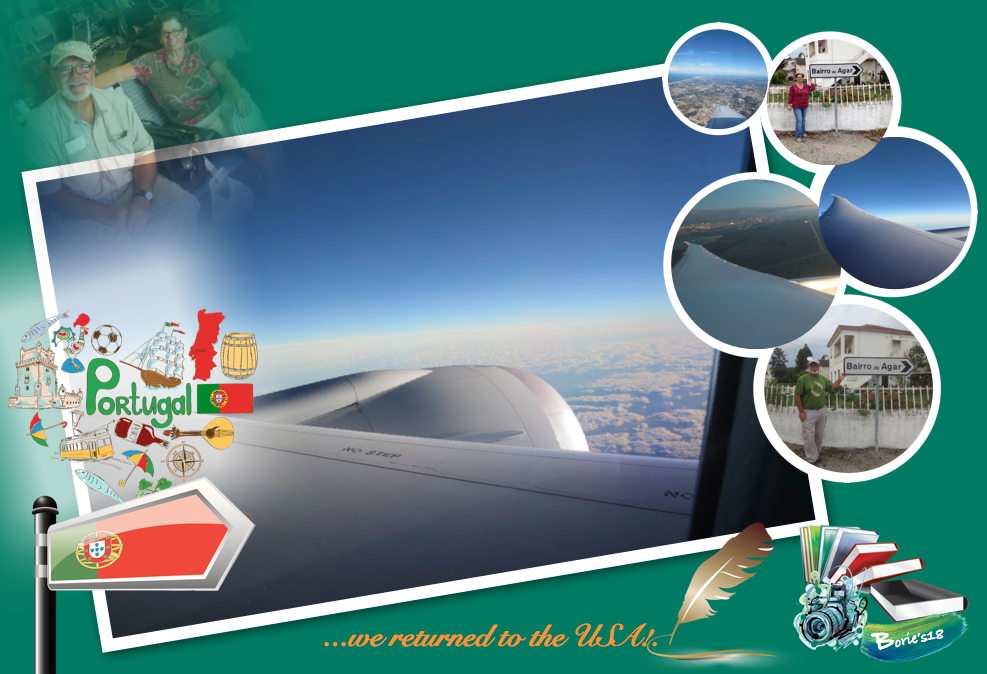
…regressámos aos USA, ainda com mais saudades do país onde nascemos, principalmente da aldeia do Vale do Ninho d’Águia, que com a nova urbanização se passou a chamar, o “Bairro da Agar”, em homenagem à nossa avó materna e, o tal país moderno e desenvolvido, acompanhando o século XXI, já lá fez instalar, um desses cafés esplanadas!. (We returned to the USA, still with more homesickness of the country where we were born, mainly of the village of the Valley of the Ninho d’Águia, that with the new urbanization happened to call, “Neighborhood of the Agar”, in homage to our maternal grandmother and the modern and developed country, following the twenty-first century, has already installed one of those terraced cafes)!.

Tony Borie, June 2018.

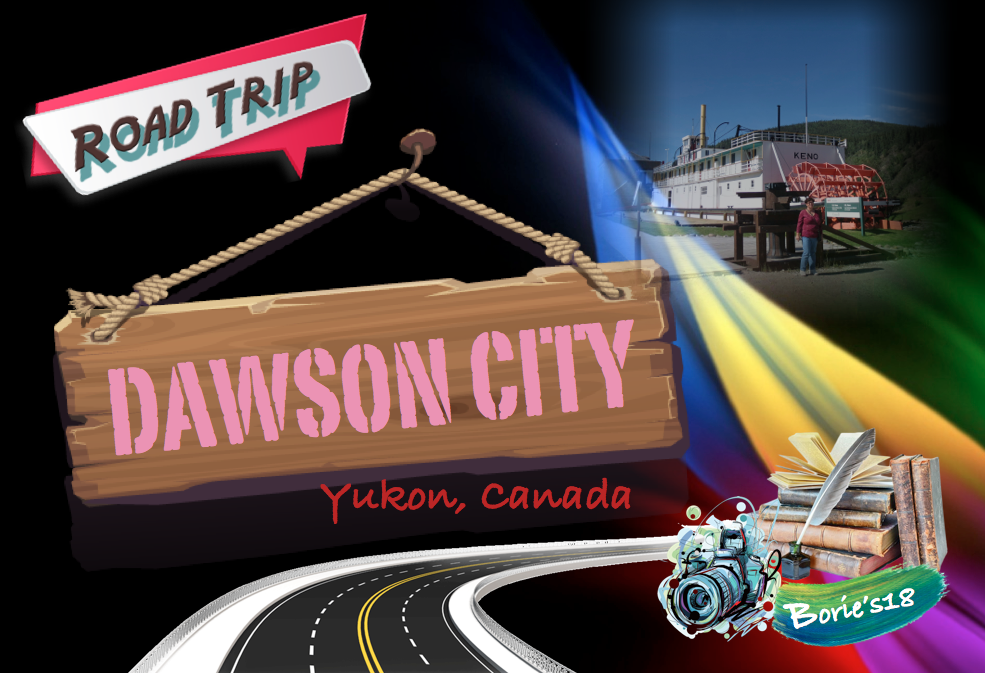
…a few hours in the lost city of Dawson!.

…a few hours in the lost city of Dawson!.

…umas horas na cidade perdida de Dawson!. (a few hours in the lost city of Dawson)!.

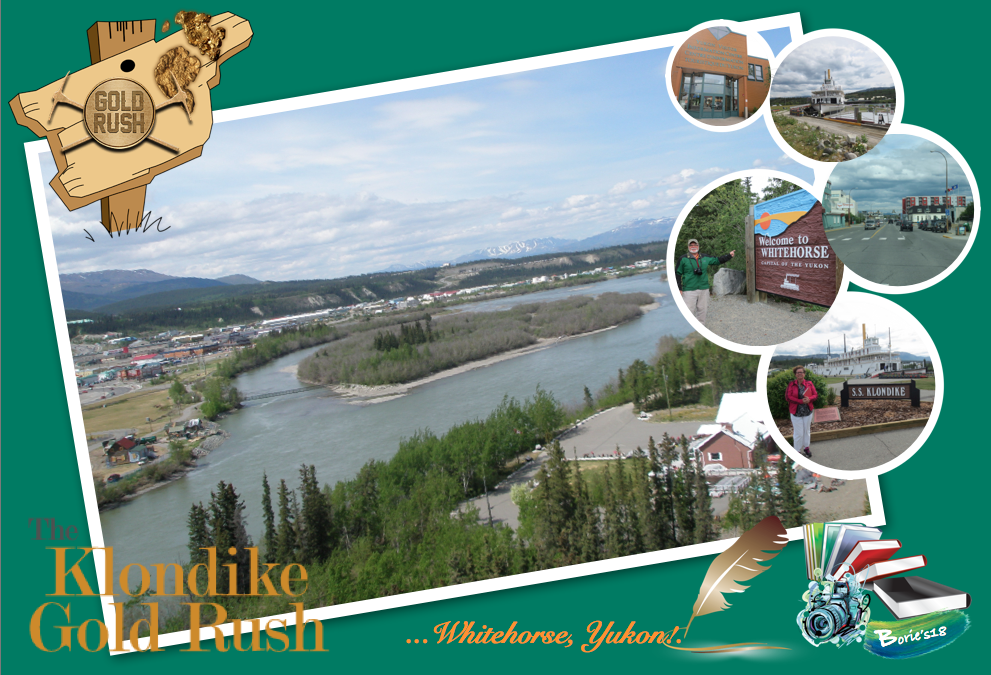
…já a alguns dias que viajávamos na histórica Estrada do Alaska, chegando ao quilómetro, 1426, onde se localiza a cidade de Whitehorse, no vale com o mesmo nome, ocupando ambas as margens do rio Yukon, que se origina na província de Columbia Britânica e desagua no Mar de Bering, já no estado do Alaska!. Estávamos na província de Yukon, para lá do paralelo 48 N, onde os dias de inverno são curtos e os de verão chegam a ter 19 horas do dia!. Esta cidade é um pequeno “oásis”, pois além de hoteis, restaurantes, estações de serviço, estabelecimentos comerciais ou lojas de conveniência, existe um centro de informação com todas as facilidades, incluindo internete, sendo a cidade com menos poluição em todo o mundo!. (A few days ago we were traveling on the historic Alaska Highway, arriving at kilometer 1426, where the town of Whitehorse, in the valley of the same name, occupies both banks of the Yukon River, which originates in the province of British Columbia and empties into the Bering Sea, already in the state of Alaska!. We were in the province of Yukon, beyond the parallel 48 N, where the winter days are short and the summer days get to have 19 hours of the day!. This city is a small “oasis”, as besides hotels, restaurants, petrol stations, shops or convenience stores, there is an information center with all the facilities, including Internet, being the city with the least pollution in the world!.

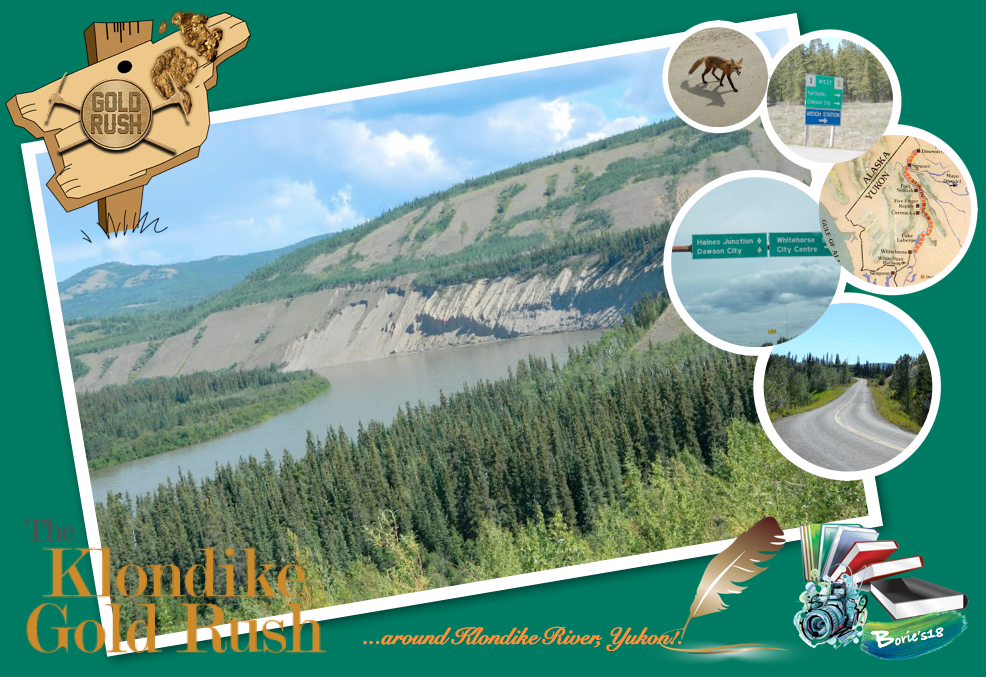
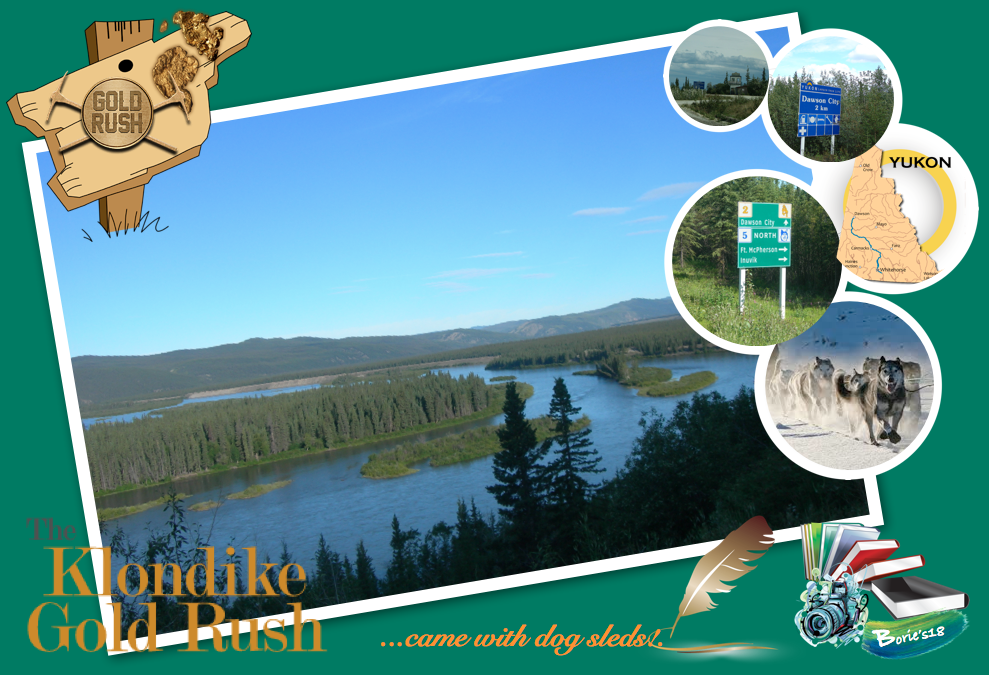
…estávamos em território da província do Yukon, no noroeste do Canadá, a leste da fronteira do estado do Alaska!. Seguimos em direcção ao norte, em torno do rio Klondike, um afluente que entra no rio Yukon a partir do leste, na distante cidade de Dawson, que era o nosso destino!. Para que se perceba melhor a região por onde seguíamos, o nome Klondike, evoluiu de uma palavra difícil de pronunciar, que significa “água do martelo”, no dialecto das tribos das Primeiras Nações, sendo o resultado dessa má pronúncia que os pesquizadores de ouro adoptaram, na época da famosa corrida ao ouro na região, que começou no ano de 1897 e durou até 1899!. (We were in the territory of the Yukon province, in northwestern Canada, east of the border of the state of Alaska!. We headed north, around the Klondike River, a tributary that enters the Yukon River from the east, into the distant city of Dawson, which was our destination!. In order to better understand the region we were following, the name Klondike evolved from a difficult word to pronounce, which means “hammer water” in the dialect of the tribes of the First Nations, being the result of this poor pronunciation that the gold researchers adopted, at the time of the famous gold rush in the region, which began in the year 1897 and lasted until 1899)!.

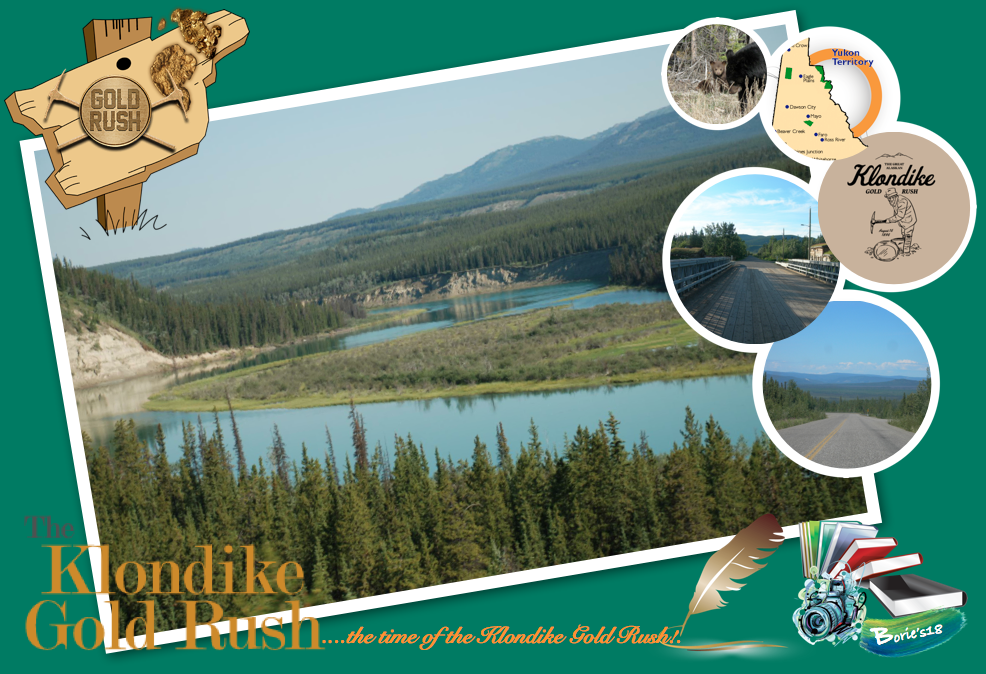
…no momento em que viajávamos por esta região, numa estrada com algum alcatrão, pedra, terra e lama, quase deserta, aberta durante todo ano, no entanto na época de inverno, quando o tempo é de tempestade, algumas partes do trajecto fecham, com alguns animais selvagens a mostrarem-se aqui e ali, íamos recordando que na época da corrida ao ouro de Klondike, uma migração de cerca de 100.000 aventureiros pesquizadores de ouro, naqueles distantes anos de 1897 e 1899, por aqui passaram, quando as notícias chegaram às cidades de Seattle e São Francisco, que havia ouro em Klondike!. Alguns ficaram ricos, mas a maioria não, muitos morreram, uns doentes, outros derivado da fome e do frio!. (As we traveled through this region, on a road with some tar, stone, earth and mud, almost deserted, open all year, however in the winter season, when the weather is stormy, some parts of the route with some wild animals showing up here and there, we recalled that at the time of the Klondike gold rush, a migration of about 100,000 gold-digging adventurers in those distant years of 1897 and 1899, here passed, when the news reached the cities of Seattle and San Francisco, that there was gold in Klondike!. Some were rich, but most were not, many died, some sick, others derived from hunger and cold)!.

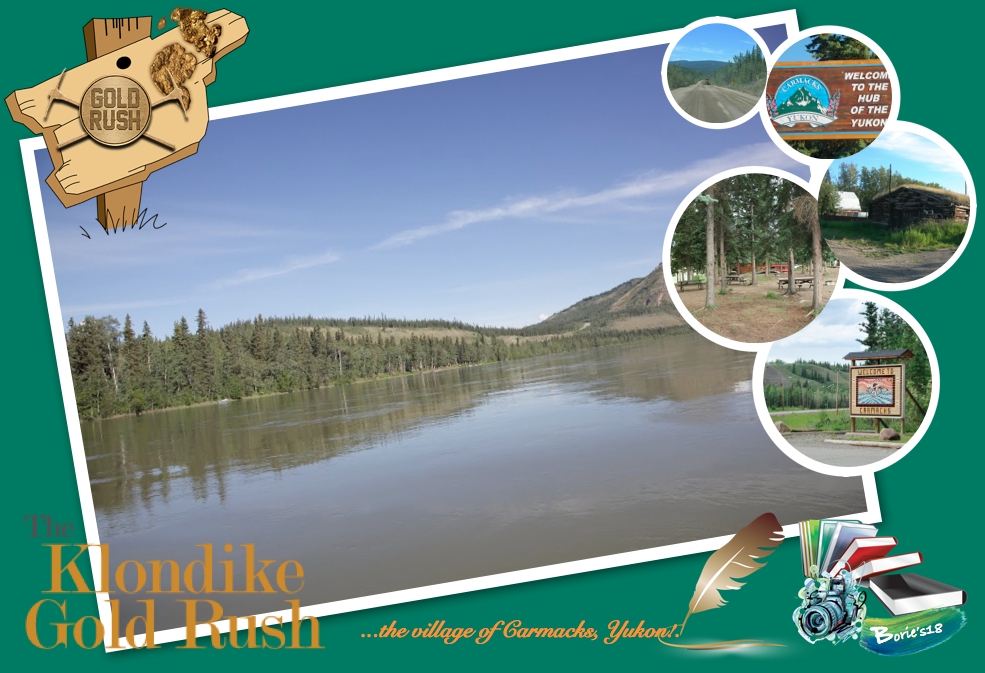
…a luz do dia estava a ir embora, parámos para dormir na povoação de Carmacks, onde cremos que quase tudo começou, quando um pesquizador americano, chamado George Carmack, sua esposa, oriunda da comunidade Tagish e alguns seus familiares, chegaram ao sul do rio Klondike, começando a procurar ouro num dos seus afluentes, onde o ouro estava presente em grandes quantidades!. George Carmack, apareceu como o descobridor oficial, porque temiam que as autoridades, não reconhecessem uma reinvidicação feita por uma Pessoa Indígena!. (Daylight was leaving, we stopped to sleep in the village of Carmacks, where we believe that almost everything began, when an American researcher, named George Carmack, his wife, from the Tagish community and some of his relatives, south of the Klondike River, beginning to look for gold on one of its tributaries, where gold was present in large quantities! George Carmack, appeared as the official discoverer because they feared that the authorities would not recognize a claim made by an Indigenous Person)!.

…uns meses depois, toda aquela área estava reivindicada pelos novos pesquizadores, algumas áreas eram de novo vendidas por quantias consideráveis, pois apesar de ser inverno, novos pesquizadores chegavam com trenós puxados por cães, ansiosos por ficarem ricos!. O mundo exterior ainda não tinha conhecimento das notícias da descoberta de ouro, era inverno, impedia o tráfico fluvial, só em Junho de 1897 é que os primeiros barcos deixaram a área, carregando o ouro recem extraído, com a história completa das descobertas!. (A few months later, the whole area was claimed by the new researchers, some areas were again sold for considerable amounts, because despite being winter, new researchers came with dog sleds, anxious to get rich! The outer world was not yet aware of the news of the discovery of gold, it was winter, prevented the river traffic, it was only in June 1897 that the first boats left the area, carrying the gold just extracted, with the complete history of the discoveries)!.

…quando os navios Excelsior e Portland, chegaram aos portos de Seattle e San Francisco, com os primeiros pesquizadores, trazendo consigo grandes quantidades de ouro, avaliadas no dia de hoje em mais de 1.000 milhões de dollares, atraíu uma atenção que, deu início a uma debandada para a área de Klondike, onde mais de 100.000 pessoas tentaram alcançar os campos de ouro, dos quais apenas cerca de 30.000 a 40.000 acabaram conseguindo!. (When the Excelsior and Portland ships arrived at the ports of Seattle and San Francisco, with the first gold miners, bringing with them large quantities of gold, evaluated today in more than 1,000 million dollars, attracted attention that gave beginning a stampede to the Klondike area, where more than 100,000 people tried to reach the gold fields, of which only about 30,000 to 40,000 succeeded!

…a região era montanhosa, os rios sinuosos e por vezes intransponíveis, os verões curtos que poderiam ser quentes, enquanto de Outubro a Junho, durante os longos invernos, as temperaturas eram geladas!. O Klondike, apenas poderia ser alcançado pelo rio Yukon, ou através de alguns dos seus afuentes, mesmo assim com uma viajem dificultada pela geografia e pelo clima!. (The region was hilly, the rivers winding and sometimes insurmountable, the short summers that could be warm, while from October to June, during the long winters, the temperatures were icy!. The Klondike, could only be reached by the Yukon River, or through some of its affuentes, even so with a journey made difficult by geography and climate)!.

…todavia, os aventureiros pesquizadores de ouro, de uma maneira ou de outra, alguns, traziam cães, cavalos, mulas ou bois, enquanto outros, carregavam o equipamento nas costas ou em trenós puxados à mão!. As autoridades, depois da debandada do ano de 1897, prevendo acidentes fatais, introduziram algumas regras, exigindo que qualquer pessoa que entrasse no território de Yukon, levasse consigo um ano de fornecimento de alimentos!. Isso pesava mais de 500 quilos, no entanto, com equipamento de acampar, ferramentas e outros utensílios essenciais incluídos, um típico pesquizador de ouro, transportava uma tonelada de peso!. Sem qualquer surpresa, o preço dos animais de carga subiu, onde um cavalo, mesmo já velho e de baixa qualidade, no preço de hoje poderia custar 20 mil dollares e, o seu aluguer por o período de um dia, também por um preço nos dias de hoje, poderia ser equivalente a 1.000 dollares!. (Yet, the adventurous gold researchers, in one way or another, some brought dogs, horses, mules or oxen, while others carried the equipment on their backs or in hand-drawn sleds! Authorities, after the stampede of 1897, foreseeing fatal accidents, introduced some rules, requiring anyone entering Yukon territory to carry a year’s supply of food! That weighed over 500 pounds, however, with camping gear, tools and other essential tools included, a typical gold digger, carried a ton of weight!. Not surprisingly, the price of pack animals went up, where a horse, even old and of poor quality, at today’s price could cost $ 20,000 and his rental for a day, also for a price in the today, could be equivalent to 1,000 dollars)!.

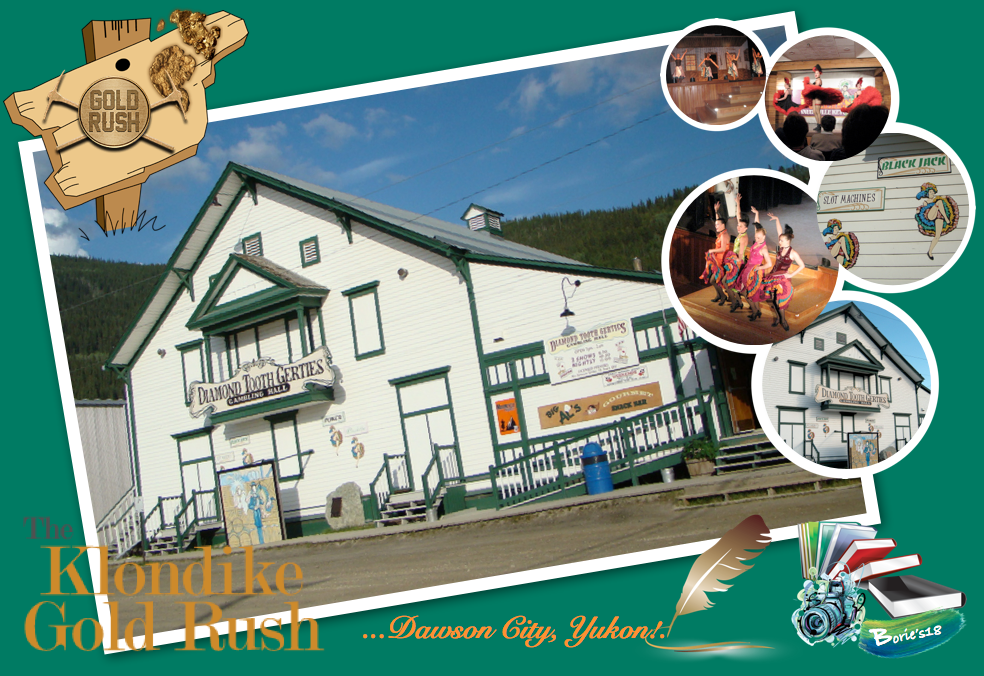
…com o afluxo maciço de pesquizadores de ouro, levou à formação de diversas cidades em expansão ao longo das rotas de Klondike!. As novas cidades estavam lotadas, muitas vezes caóticas, algumas desaparecendo ainda antes de começarem, onde a maioria da população eram homens!. No entanto as mulheres também viajavam para a região, típicamente como sendo a esposa de um pesquizador de ouro, onde algumas se divertiam em salões de jogos e dança construídos por homens e mulheres de negócios, que eram encorajados pelo gasto generoso de mineiros bem sucedidos!. (With the massive influx of gold researchers, led to the formation of several expanding cities along the routes of Klondike!. The new cities were crowded, often chaotic, some disappearing even before they began, where the majority of the population were men! Women, however, also traveled to the region, typically as the wife of a gold-digger, where some had fun in game and dance halls built by business men and women who were encouraged by the generous spending of successful miners)!.

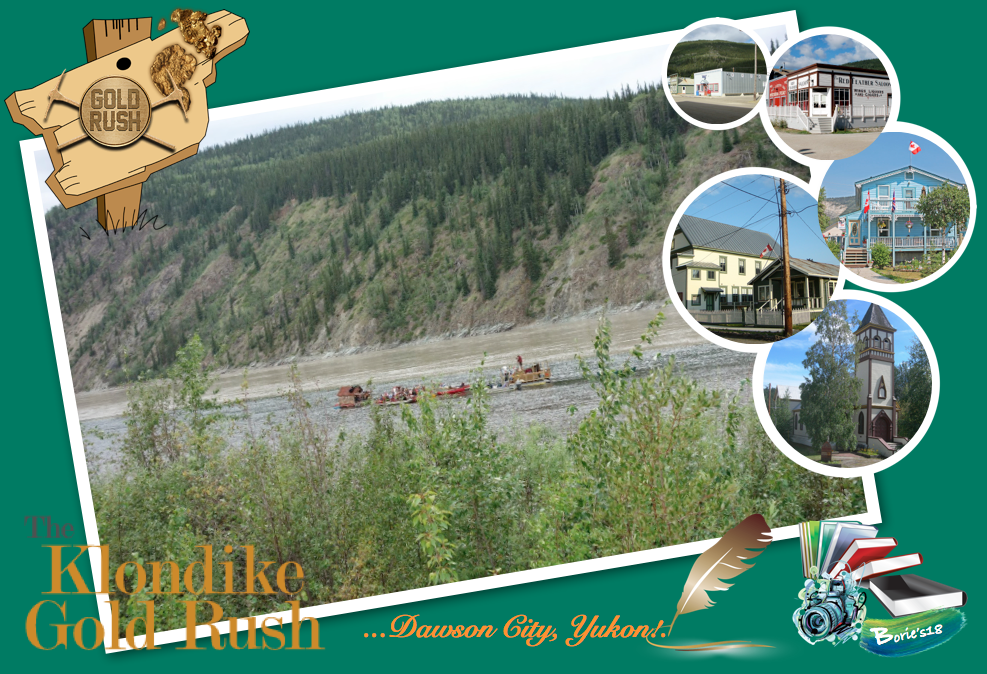
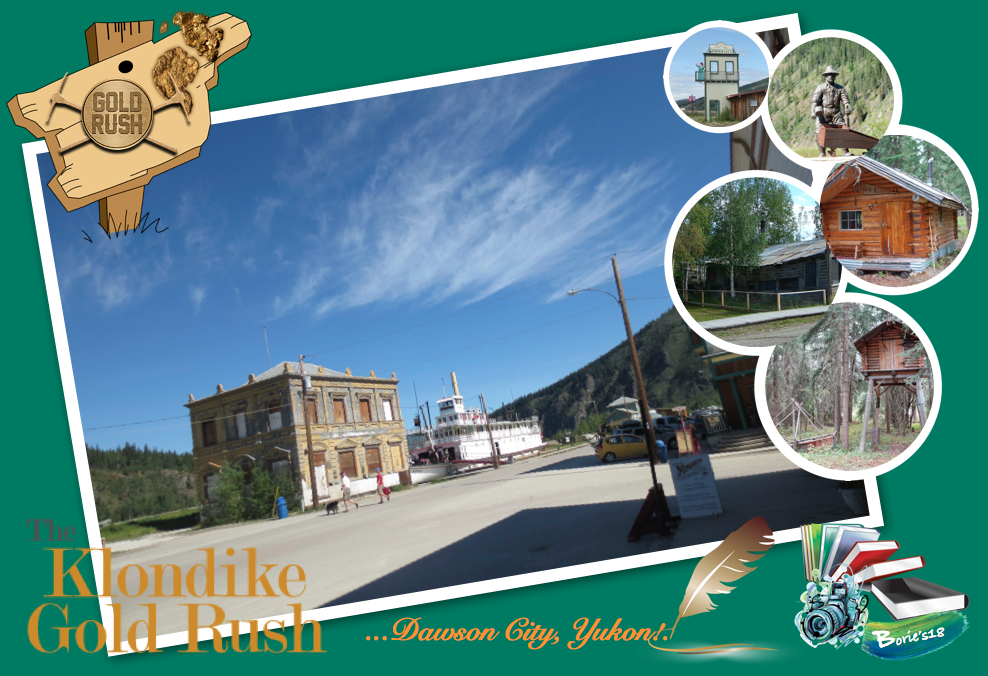
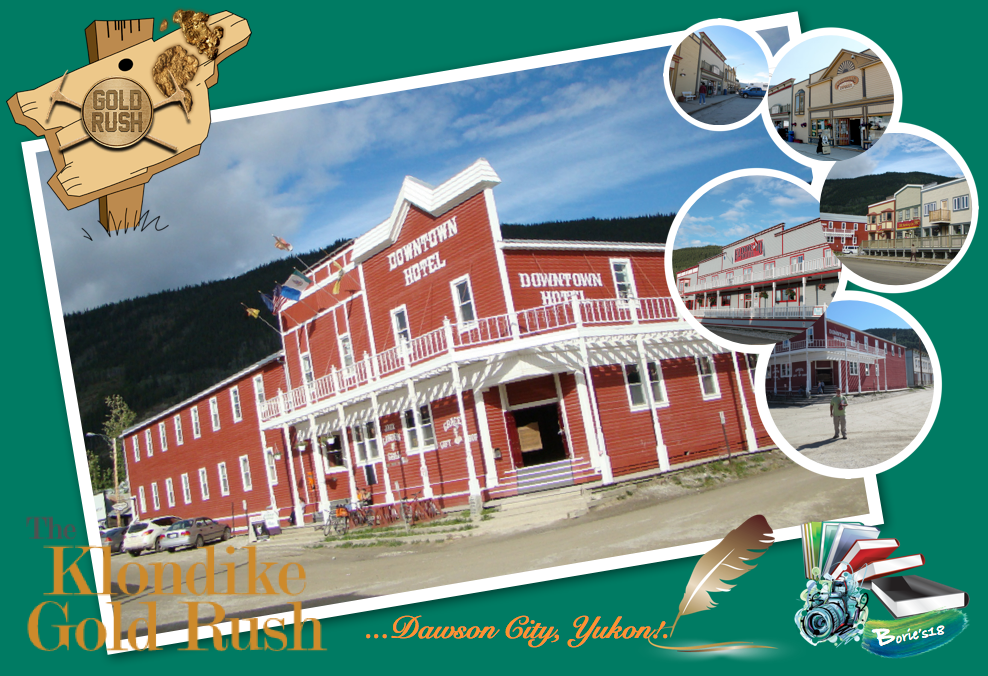
…como por exemplo a cidade de Dawson, onde entretanto chegámos!. Esta cidade permaneceu relativamente legal, protegida pela Polícia Montada do North West, o que significava que o jogo e a prostituição eram aceites, enquanto o roubo e o assassinato eram mantidos baixos!. Quando da sua fundação, situada na confluência do rio Klondike e do rio Yukon, com uma população de 500 habitantes por volta do ano de 1896, a cidade cresceu para abrigar cerca de 30 mil pessoas no verão de 1898!. Construída em madeira, isolada e não higiénica, sofria incêndios, preços altos e epidemias. (As for example the city of Dawson, where we have arrived in the meantime!. This town remained relatively legal, protected by the North West Mounted Police, which meant gambling and prostitution were accepted, while robbery and murder were kept low!. When it was founded at the confluence of the Klondike River and the Yukon River, with a population of 500 inhabitants circa 1896, the city grew to house about 30,000 people in the summer of 1898! Constructed of wood, isolated and unhygienic, it suffered fires, high prices and epidemics)!.

…a cidade de Dawson, foi criada nos primeiros dias da corrida ao ouro, de Klondike, quando um pesquizador de ouro, talvez bem sucedido, se juntou a um comerciante e, decidiram lucrar com o influxo de pessoas para esta região, comprando 178 acres de lodaçais na junção dos rios Klondike e Yukon ao governo, traçando o plano da nova cidade, trazendo madeira e outros equipamentos, para vender aos que a todo o momento chegavam!. No entanto, existia uma aldeia de nativos que era considerada próxima, que o governo transferiu os seus habitantes rio abaixo, para uma pequena reserva!. A cidade cresceu rápidamente, com os lotes a serem vendidos a 400 mil dollares cada, equivalente ao preço de hoje!. (The city of Dawson was created in the early days of the Klondike gold rush, when a perhaps successful gold researcher joined a trader and decided to profit from the influx of people to this region by buying 178 acres of mudflats at the junction of the Klondike and Yukon rivers to the government, tracing the plan of the new city, bringing in wood and other equipment, to sell to those who were arriving at all times! However, there was a village of natives that was considered close, that the government transferred its inhabitants downstream, to a small reserve!. The city grew rapidly, with lots to be sold at 400 thousand dollars each, equivalent to today’s price)!.

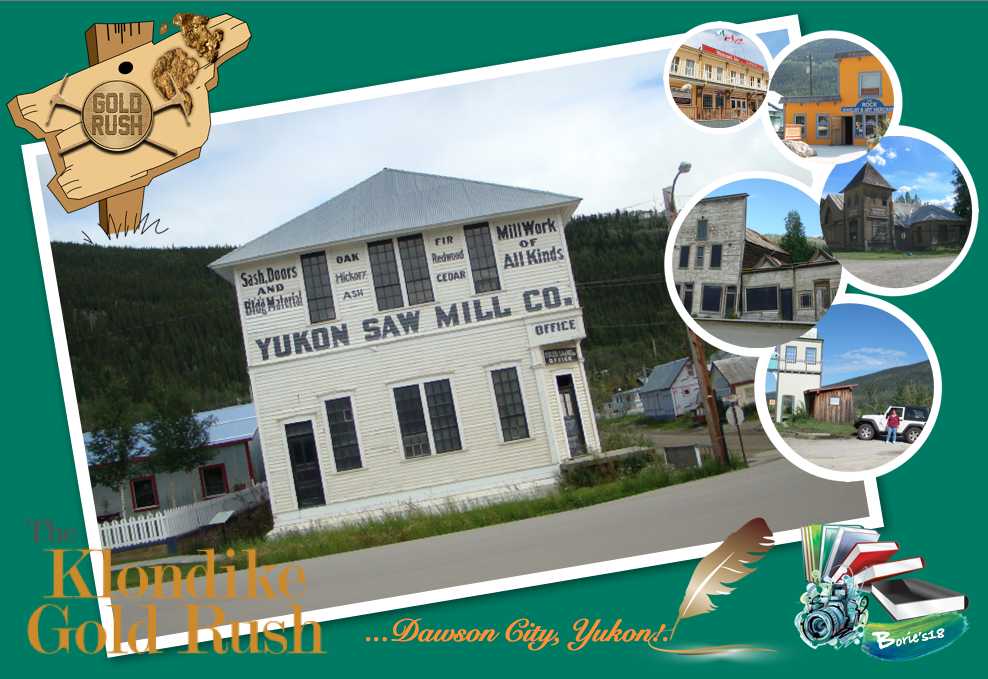
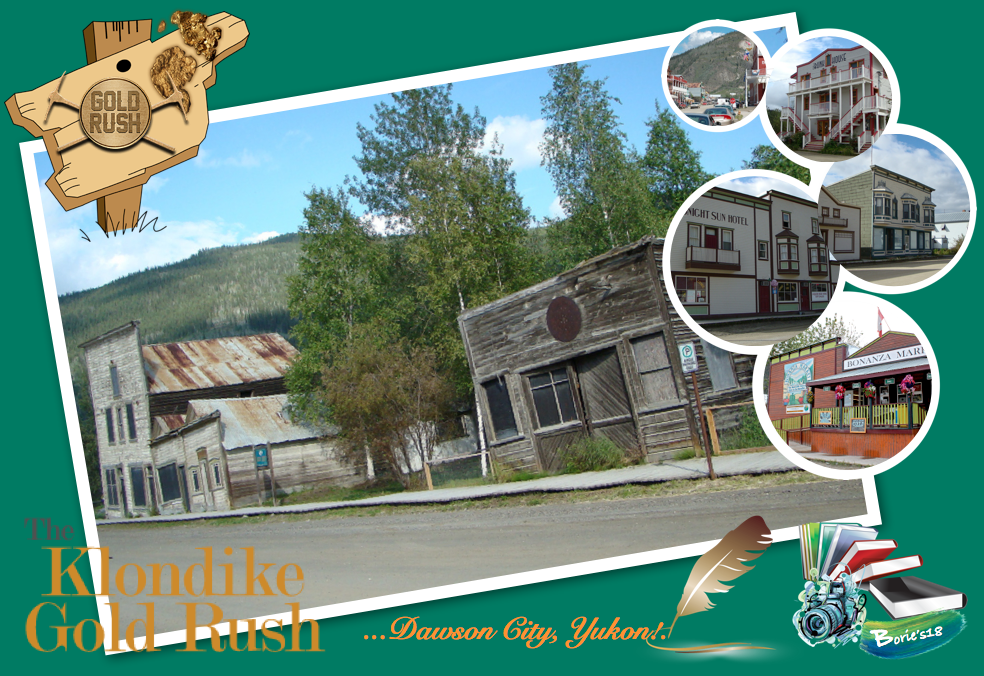
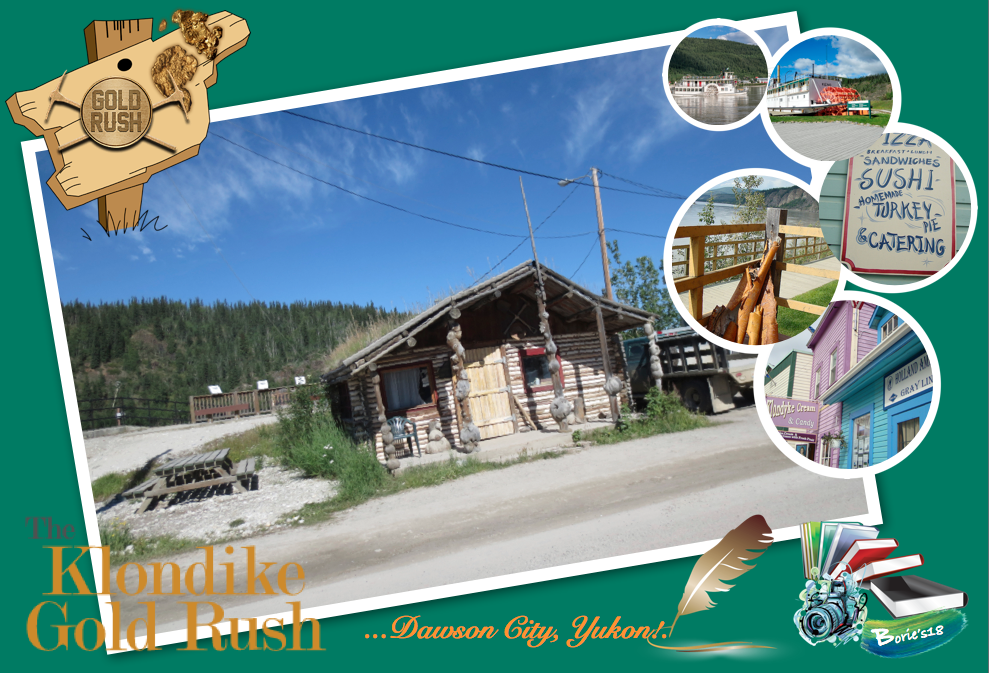
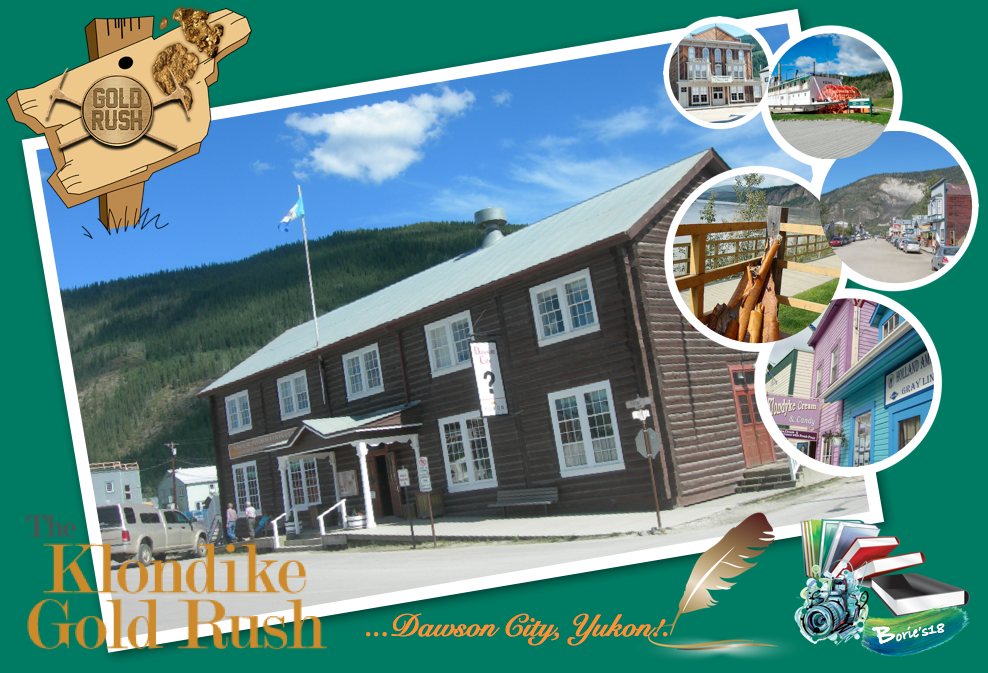
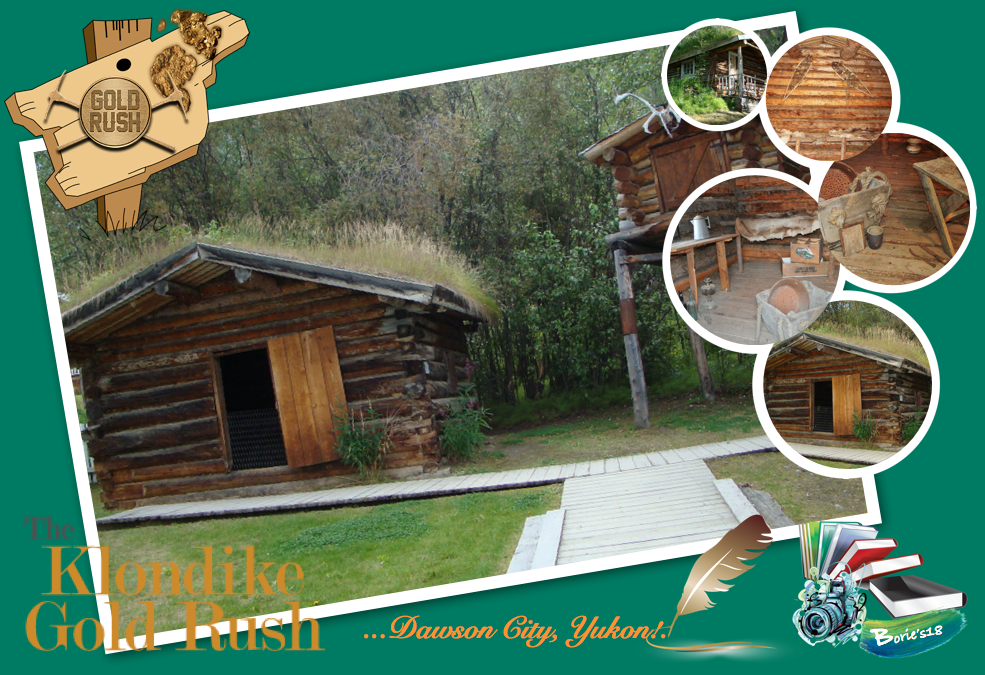
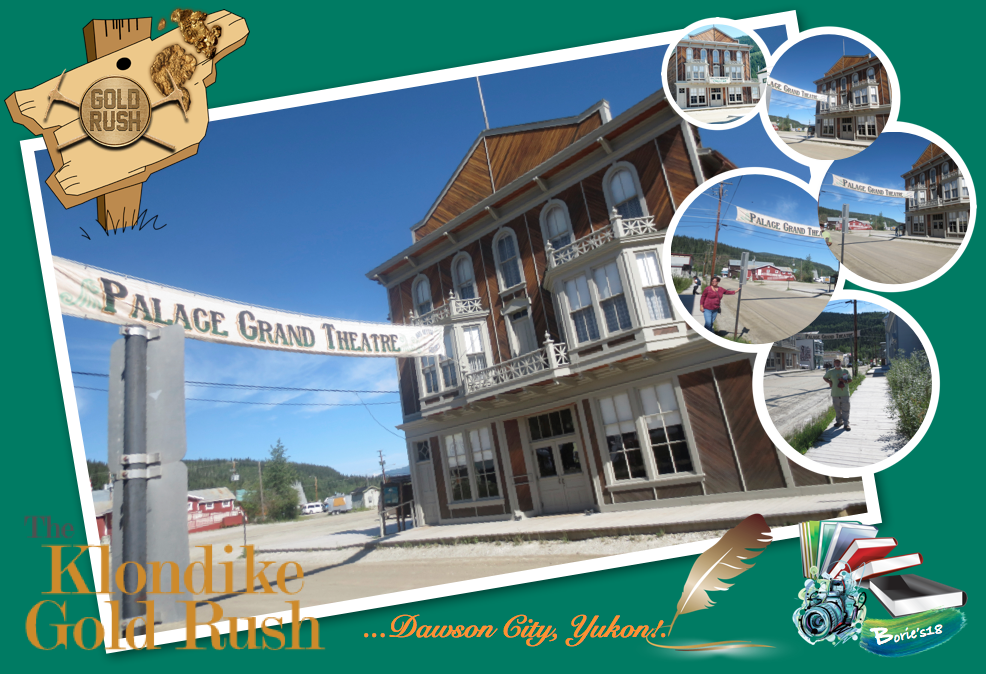
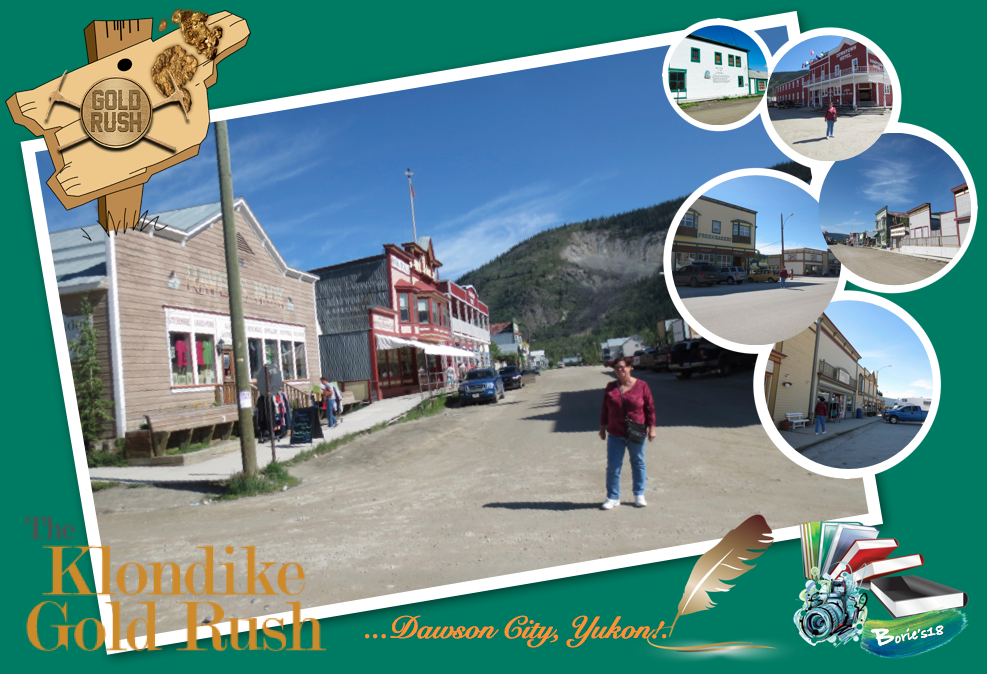
…andámos por ali, as ruas continuam térreas, o centro da cidade, a Front Street, era naquela época, ladeada de prédios e armazéns, (alguns ainda lá se encontram, quase em ruínas), construídos à pressa, juntamente com cabanas de madeira e tendas espalhadas pelo resto do assentamento!. Não havia água potável para suplementar o rio, cada vez mais poluído!. Na primavera, as ruas transformavam-se em lama grossa, e no verão, o povoado cheirava mal, com detritos humanos, sendo atormentado pelas moscas e outros insectos!. (We walked there, the streets were still flat, the center of the city, Front Street, at that time, lined with buildings and warehouses (some still lying there, almost in ruins), built in haste along with cabins of wood and tents scattered throughout the rest of the settlement!. There was no drinking water to supplement the increasingly polluted river! In the spring, the streets turned into thick mud, and in summer, the village smelled bad, with human debris, being plagued by flies and other insects)!.

…no entanto, um pequeno lote de terra na nova cidade, agora era escasso, chegando a ser vendido, por o equivalente a 8 milhões de dollares nos dias de hoje e, nos locais previligiados na Front Street, podiam chegar ao dobro, enquanto uma pequena cabana em madeira, podia ser alugada por o equivalente, nos dias de hoje, a 28.000 dollares por mês!. Claro, tudo era pago em pepitas de ouro que se encontravam nos rios e ribeiros próximos!. Como resultado, a cidade espalhou-se, ocupando a tal aldeia de nativos, que o governo tinha transferido os seus habitantes rio abaixo!. (However, a small plot of land in the new city was now scarce, being sold, for the equivalent of 8 million dollars these days, and in the previleged places on Front Street they could double, while a small wooden hut could be rented for the equivalent, today, to 28,000 dollars a month! Of course, everything was paid for in gold nuggets found in nearby rivers and streams! As a result, the town spread, occupying such a village of natives, that the government had transferred its inhabitants downstream)!.

…a cidade, com casas feitas em madeira, aquecidas com fogões e iluminadas por velas e lâmpadas de óleo, a água para emergências ia faltando, especialmente nos invernos congelados, os incêndios iam ocorrendo, com os rios congelados o transporte de fornecimento de alimentos era um problema, não havia suficiente comida, os preços aumentaram, o sal ganhou o seu peso em ouro, uma lata de manteiga era vendida por o equivalente nos dias de hoje a 1,500 dollares, os oito cavalos que existiam na cidade foram abatidos, para comida dos cães, pois não podiam ser mantidos vivos durante o inverno, uma maçã, se a havia, custava no equivalente nos dias de hoje a 100 dollares!. (The city, with houses made of wood, heated with stoves and lit by candles and oil lamps, water for emergencies was missing, especially in the frozen winters, fires were occurring, with the frozen rivers transporting the supply of food was a problem, there was not enough food, prices increased, salt gained its weight in gold, a can of butter was sold for the equivalent today to 1,500 dollars, the eight horses that existed in the city were slaughtered, for dogs’ food, for they could not be the robes of the living during the winter, an apple, if any, cost the equivalent today at 100 dollars)!.

…com estas condições de vida, o escorbuto, uma doença potencialmente fatal, causada pela falta de vitamina C, provou ser um grande problema na cidade de Dawson, particularmente no inverno, quando o fornecimento de alimentos frescos não estava disponível, chegando a chamar a cidade de “perna negra canadiense”, devido aos efeitos desagradáveis desta doença!. Disenteria e malária, também eram comuns na cidade, quando uma epidemia de febre tifóide ecloia, especialmente no verão!. (With these living conditions, scurvy, a potentially fatal disease caused by a lack of vitamin C, proved to be a major problem in the town of Dawson, particularly in winter, when fresh food supplies were not available, call the city “Canadian black leg” due to the unpleasant effects of this disease!. Dysentery and malaria, were also common in the city, when an epidemic of typhoid fever, especially in summer)!.

…a história diz-nos que só um punhado das 100.000 pessoas que partiram para a área do Klondike, durante a corrida ao ouro, ficaram ricas!. Quase todos perderam as suas fortunas nos anos subsequentes, tentando reproduzir a sua boa sorte anterior, em novas oportunidades!. Alguns, com ganância desmedida, continuaram a acumular terras e, quando acabou a corrida do ouro, o dinheiro acabou, morrendo na pobreza!. Outros abusaram do álcool e do jogo de azar, dissiparam a sua fortuna, acabando por trabalharem na cozinha do navio, para pagarem a sua viajem de regresso a São Francisco!. Outros morreram em acidentes, relacionados com o álcool!. Alguns, ficando por longo tempo em zonas primitivas, acumulando ouro, não resistiram ao clima, morrendo congelados, doentes ou atacados por animais selvagens!. Os mais ricos donos de Salões, empresários e apostadores de Klondike, também perderam as suas fortunas, morrendo na pobreza!. (History tells us that only a handful of the 100,000 people who left for the Klondike area during the gold rush were rich! Almost everyone lost their fortunes in subsequent years, trying to replicate their former good fortune in new opportunities! Some, with unlimited greed, continued to accumulate land, and when the gold rush ended, the money was gone, dying in poverty!. Others abused alcohol and gambling, dissipated their fortune, eventually worked in the ship’s kitchen, to pay for their return trip to San Francisco!. Others died in accidents, related to alcohol!. Some, staying long in primitive zones, accumulating gold, did not resist the weather, dying frozen, sick or attacked by wild animals!. Klondike’s richest Hall owners, entrepreneurs and gamblers, also lost their fortunes, dying in poverty)!.

…os povos indígenas, prosperaram a curto prazo, trabalhando como guias ou transportando alimentos e ferramentas de prospecção de ouro para os pesquizadores!. Em longo prazo, com os danos ambientais da mineração de ouro nos rios e florestas, a sua população começou a declinar, caindo catastroficamente após a tal mudança para reserva, resultante do fornecimento de água contaminada e da varíola, encontrando poucas maneiras de beneficiarem económicamente da corrida ao ouro nas suas áreas de pesca e caça, que foram amplamente destruídas, onde os sobreviventes, precisaram da ajuda do governo para evitarem a fome!. (The indigenous peoples, prospered in the short term, working as guides or carrying food and gold prospecting tools for the fishermen!. In the long run, with the environmental damage of gold mining in rivers and forests, its population began to decline, falling catastrophically after such a shift to reserve, resulting from the supply of contaminated water and smallpox, finding few ways to economically benefit from the gold rush in their areas of fishing and hunting, which were largely destroyed, where survivors needed the government’s help to avoid starvation)!.

…visitámos o centro de turismo da cidade, onde uma senhora, usando um trajo imitando o usado nos anos em que a cidade se iniciou, contou-nos, com alguns detalhes que, naquela época não havia correio ou notícias do exterior!. Por exemplo, um qualquer pesquizador de ouro, num regresso da cidade de Seattle, comprou uma edição do jornal Seattle-Post e, cobrava um dollar a cada espectador para que ele fosse lido em voz alta, num dos salões da cidade de Dawson!. (We visited the tourist center of the city, where a lady, wearing a suit imitating the used in the years in which the city began, told us, with some details that at that time there was no mail or news from abroad!. For example, any gold researcher on a return from Seattle bought an edition of the Seattle-Post newspaper and charged each spectator with a dollar to read aloud at one of the salons in the city of Dawson)!.

…esta simpática senhora, também nos explicou, que a população feminina na região do Klondike era de aproximadamente oito por cento, no entanto, as mulheres que viviam na cidade de Dawson, subiu para doze por cento!. Muitas vieram com seus maridos ou famílias, outras chegaram sózinhas, por razões económicas e sociais, semelhantes ao pesquizadores de ouro!. Muitas, principalmente as jovens e solteiras, foram encorajadas com propostas de negócios, para casar com mineiros ricos, no entanto, poucos desses casamentos, se é que os houve, ocorreram, mas a senhora dizia-nos que algumas mulheres solteiras viajaram por conta própria, na esperança de encontrar maridos prósperos!. (This nice lady, she also explained to us, that the female population in the Klondike region was about eight per cent, however, women living in the town of Dawson, rose to twelve per cent!. Many came with their husbands or families, others came alone, for economic and social reasons, similar to gold-diggers! Many, especially the young and single, were encouraged by business proposals to marry wealthy miners; however, few of these marriages, if any, occurred, but the lady told us that some single women traveled through own hope, in the hope of finding prosperous husbands)!.

…a élite dessas mulheres, eram atrizes e cortesãs, altamente pagas!. Um número relativamente pequeno, trabalhava nas indústrias do entretenimento e do sexo, que se fundiu, como por exemplo, com o trabalho de bailarinas, recepcionistas, ou outros serviços em salões de dança, trabalhando longas horas, mas muito bem remuneradas!. Havia mesmo uma área na cidade, com uma hierarquia de emprego sexual, com bordéis e casas de paródia, pequenas tabacarias, onde as prostitutas trabalhavam em pequenas cabanas!. A vida dessas trabalhadoras era uma luta contínua, onde a taxa de doenças e suicídios era muita alta!. (The elite of these women, were actresses and courtesans, highly paid!. A relatively small number worked in the entertainment and sex industries, which merged, for example, with the work of dancers, receptionists, or other services in dance halls, working long hours but very well paid!. There was even an area in the city, with a hierarchy of sexual employment, with brothels and parody houses, little tobacconists, where prostitutes worked in small huts! These workers’ lives were a continuous struggle, where the rate of illness and suicide was very high)!.

…anos depois, a cidade de Dawson declinou após a corrida ao ouro em outras regiões, mais para oeste!. A cidade ficou cada vez mais deserta, alguém dizia que, com o lixo da corrida do ouro, os fogões, móveis, panelas de ouro, jogos e pratos, frascos de gás, pilhas de máquinas de mineração enferrujadas, caldeiras, guinchos ou carrinhos de mão, ficaram pelas ruas, abandonados, ditando o seu declínio e, a esperança em outros lugares!. (Years later, the city of Dawson declined after the gold rush in other regions, further west!. The town became increasingly deserted, someone said that with the rubbish of the gold rush, stoves, furniture, pots gold, games and dishes, gas bottles, piles of rusty mining machines, boilers, winches or wheelbarrows, stood in the streets, abandoned, dictating their decline and hope in other places)!.

…hoje a cidade vive essencialmente do turismo, as ruas estão conservadas tal como naquela época, as casas antes de se entrar têm uma “escova” pregada no chão, para se limpar os sapatos ou botas, os bares têm no chão um cimento um pouco detiorado, coberto com serrim, a cerveja é servida à temperatura ambiente, as cascas de amendoim vão para o chão!. Os preços de comida, hotéis, gasolina ou aquelas pequenas coisas a que chamamos “lembranças”, como se compreende, derivado à sua localização, longe da civilização, são acima da média!. (Today the city lives essentially on tourism, the streets are preserved as at that time, the houses before entering have a “brush” nailed to the floor, to clean their shoes or boots, the bars have on the floor a cement a little stained, covered with sawdust, the beer is served at room temperature, the peanut shells go to the floor!. Food prices, hotels, gasoline or those little things we call “souvenirs,” as one understands, derived from their location, far from civilization, are above average)!.

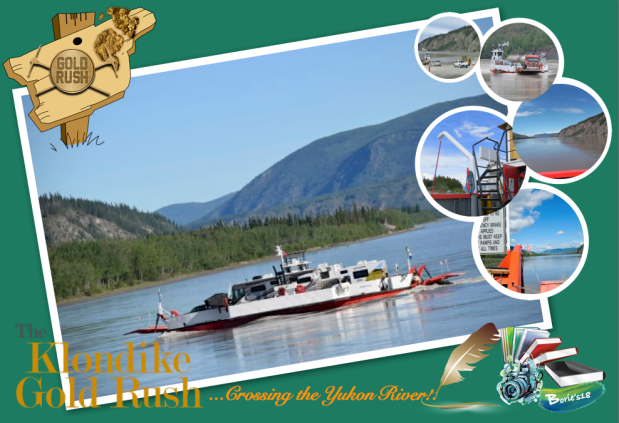
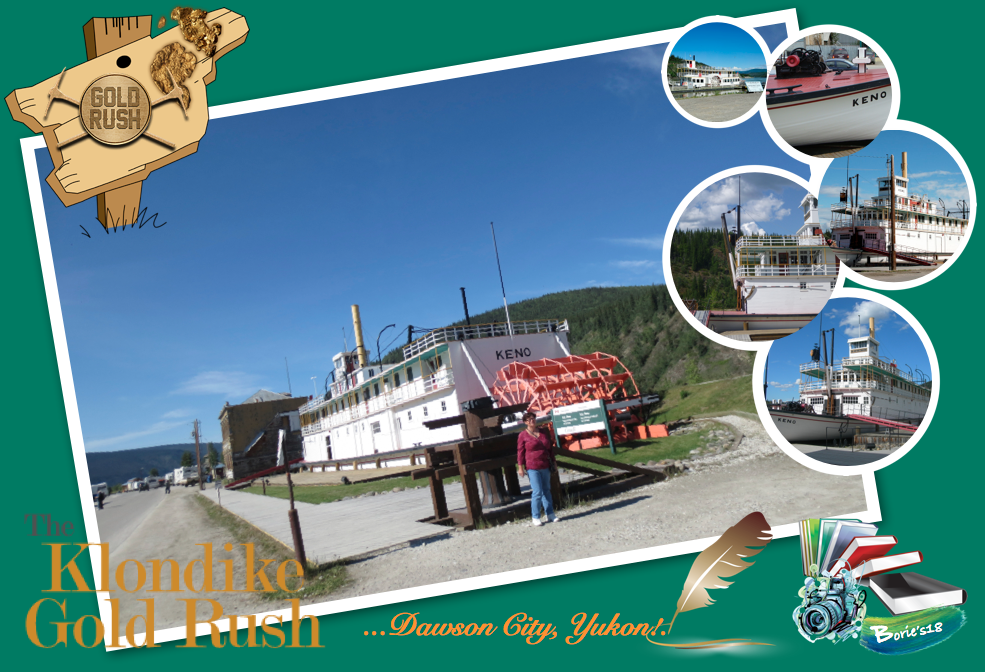
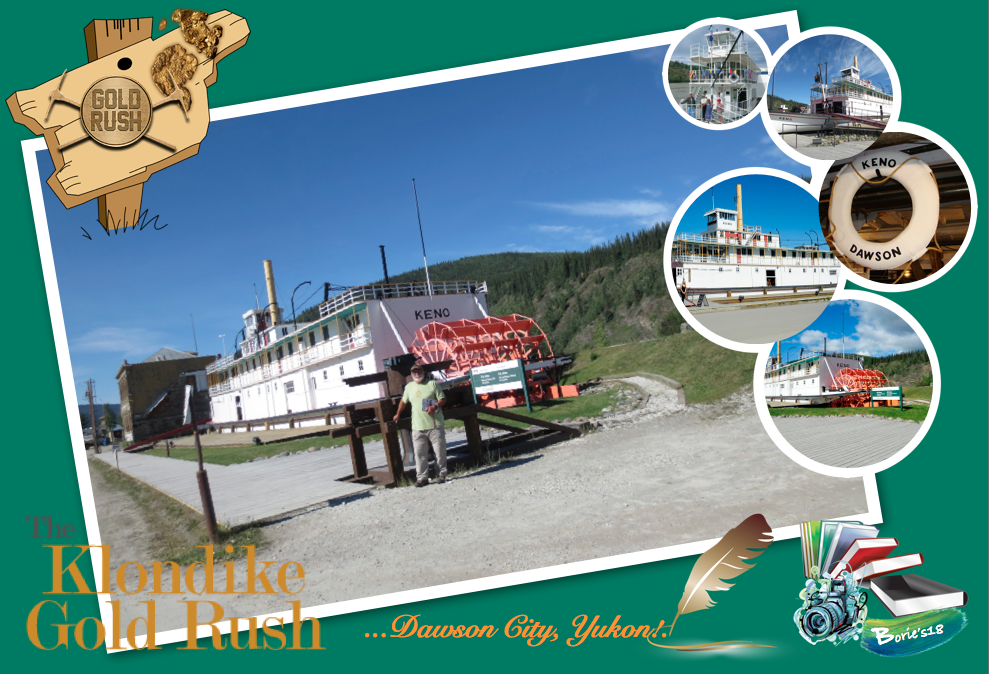
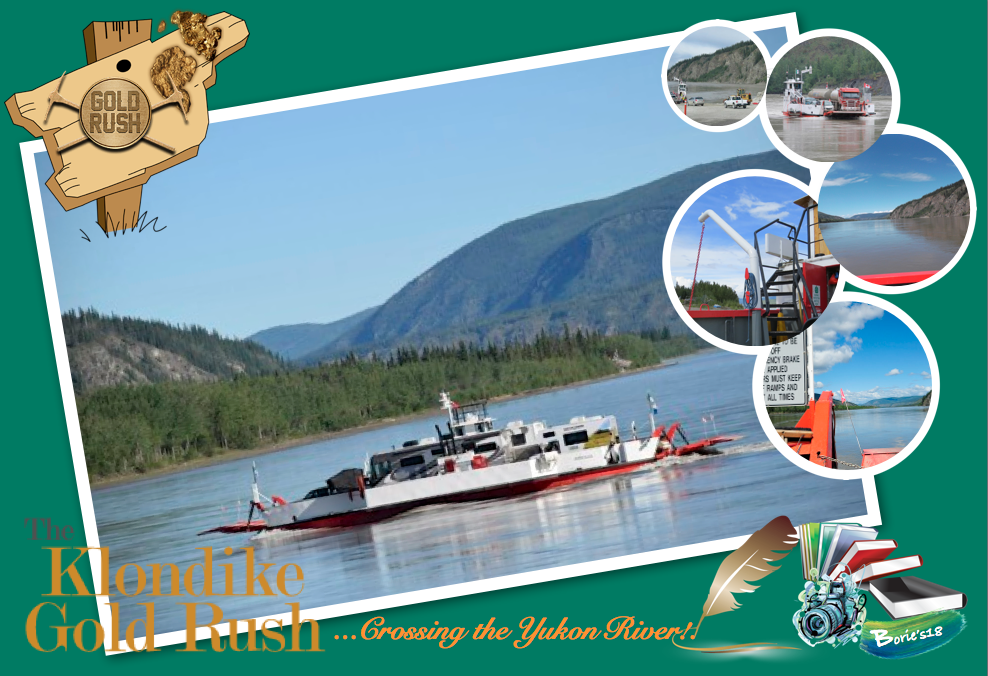
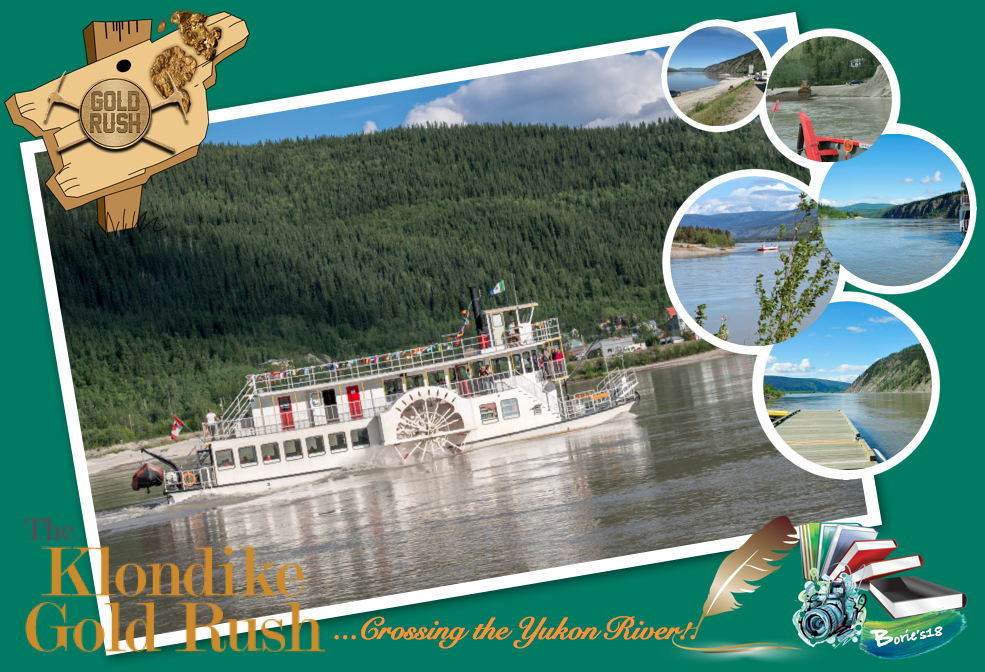
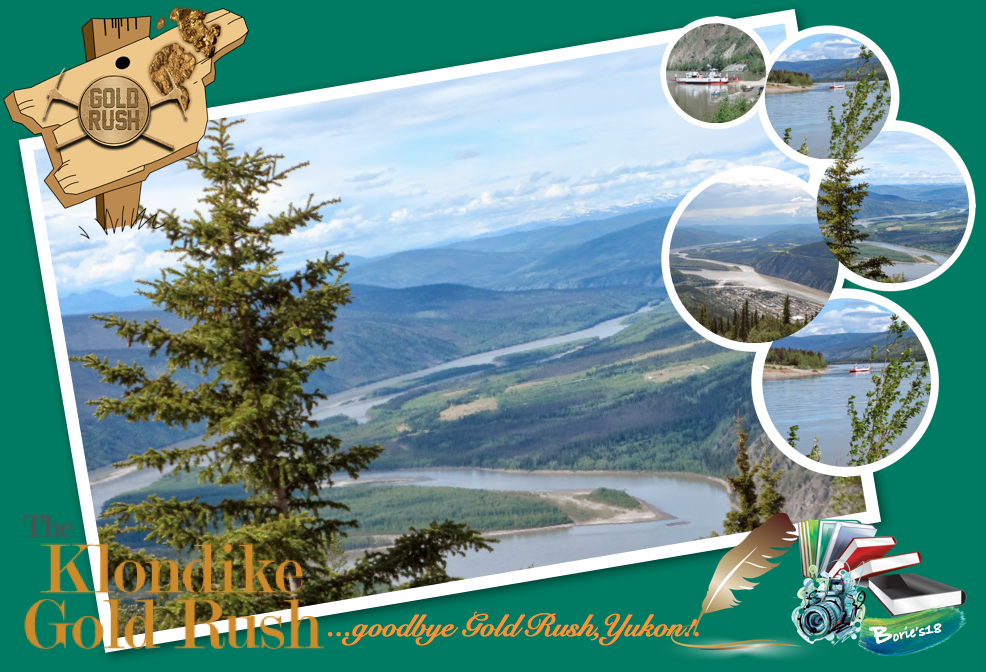
…no entanto é uma cidade pequena e muito linda!. Fica no pensamento vista do cais do rio Yukon, onde depois de mais de 2 horas, na linha de espera do “Ferry”, que é de graça e atraca na margem do rio Yukon, onde se encontra em ambas as margens uma máquina, tipo “Caterpilar”, para ajeitar o “cais de embarque”, em areia, que varia de superfície, conforme a corrente do rio, atravessámos, subindo uma pequena montanha, onde tem um miradouro, para se poder apreciar a cidade perdida de Dawson, que ficou para trás, do lado de lá do rio e, como antes dizíamos, nos fica no pensamento!. (Nevertheless it is a small and very beautiful town!. It is in the thought view of the Yukon river wharf, where after more than 2 hours, in the waiting line of the “Ferry”, that is for free and docks in the bank of the river Yukon, where there is a “Caterpilar” type machine on both sides of the river, to set up the “embarkation pier” in sand, which varies according to the river’s current. We cross a small mountain, where there is a viewpoint, so that we can appreciate the lost city of Dawson, which lay behind the river, and, as we said before, lies in the thought)!.

Tony Borie, June 2018!

…sex in the war!

…sex in the war!

…sexo na guerra!. (sex in the war)!.

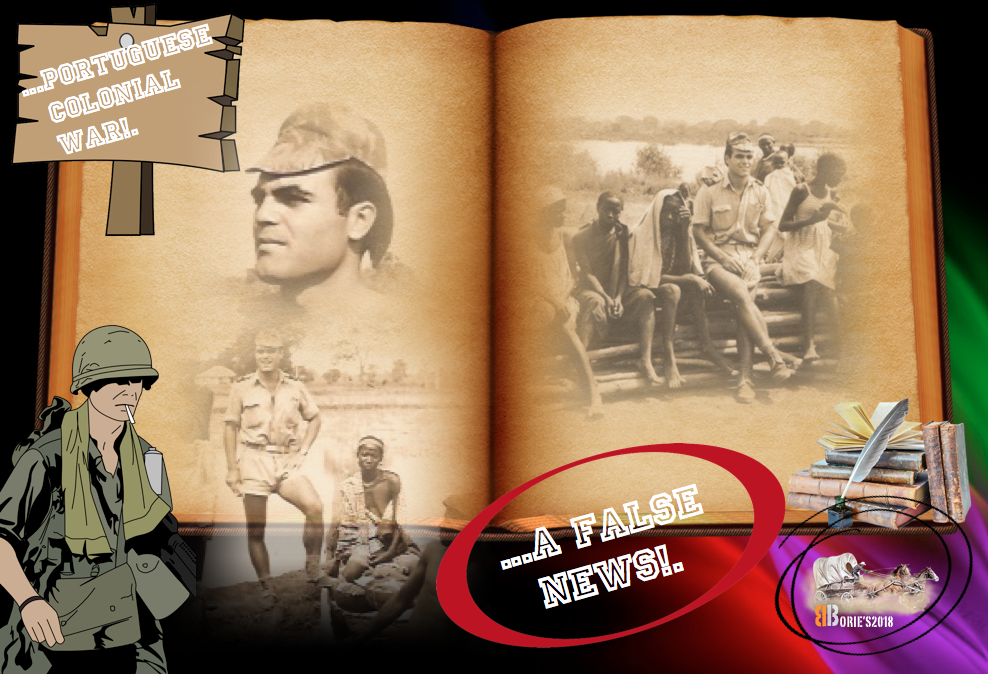
…nos anos da Guerra Colonial Portuguesa, as atitudes não eram livres, tal como ainda hoje muitas não são  e, já lá vão mais de cinquenta anos!. Pensar profundamente sobre a diversidade das Forças Armadas de então e, colectar ensaios de especialistas em toda a gama de questões sociais contenciosas, catalizar discussões que sejam produtivas entre nós, antigos combatentes, que hoje escrevemos sobre a nossa experiência em cenário de guerra, sobre os mais diversos assuntos, incluindo temas como, a luta debaixo de fogo pela sobrevência, o mêdo, a angústia, a coragem ou talvez desespero, a pobreza extrema das populações civis, a fome, a doença e falta de assistência médica, a raça, a etenia ou a sexualidade em cenário de combate, são temas muito sensíveis, são relatos de assuntos que não se dirigem a ninguém, mas dirigem-se a todos nós, tanto de gerações passadas, como as que hão-de vir!. (In the years of the Portuguese Colonial War, attitudes were not free, as they are today many are not, and they have been going on for more than fifty years! To think deeply about the diversity of the Armed Forces of that time and to collect expert essays on the full range of contentious social issues, to catalyze productive discussions between us, former combatants, which we are writing today about our war scenario experience, the subjects such as the fight under fire for survival, fear, anguish, courage or perhaps despair, extreme poverty of civilian populations, the hunger, illness and lack of medical care, race, ethnicity or sexuality in a combat scenario, are very sensitive subjects, they are stories of subjects that are not addressed to anyone, but they are addressed to all of us, both from past generations and those who will come)!.

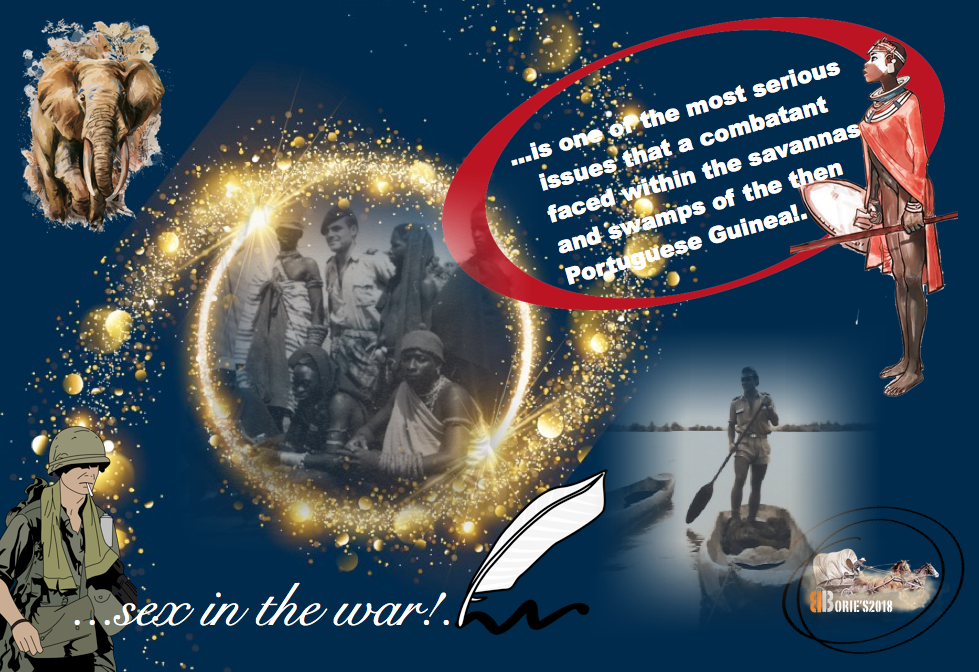
…este último subjecto, a sexualidade em cenário de guerra, é um dos temas mais sérios, que um combatente enfrentava no interior das savanas e pântanos da então Guiné Portuguesa!. Naquele tempo, chegados a um diferente continente, única e simplesmente, não sabíamos, não tínhamos qualquer informação a respeito deste tema!. Hoje, as novas gerações têm uma mentalidade bastante mais aberta, falam, discutem, vêm jornais, televisão, os computadores com ascesso à internete levam-nos a qualquer lugar no mundo, além ainda de outros meios de comunicação!. Alguns descendentes de populações martirizadas pela guerra, das tais pessoas desarmadas que viveram cenários de combate, expõem as vivências, suas e dos seus antepassados, explicam que a avó, a mãe, a irmã, a prima ou a tia, foram entre outras coisas, abusadas, maltratadas, talvez até violadas!. (This last subjecto, sexuality in a scenario of war, is one of the most serious issues that a combatant faced within the savannas and swamps of the then Portuguese Guinea!. At that time, arriving at a different continent, we simply did not know, we had no information on this subject! Today, the new generations have a much more open mind, talk, discuss, come newspapers, television, computers with Internet access take them anywhere in the world, in addition to other means of communication!. Some descendants of populations martyred by war, of such unarmed people who have lived combat scenarios, expose the experiences, his and his ancestors, explain that grandmother, mother, sister, cousin or aunt, were among other things, abused, mistreated, perhaps even raped)!.

…isto é um tema sério demais para ser tratado de ânimo leve!. Existem hoje, milhares, talvez até milhões de pessoas africanas com feições europeias, pessoas europeias com feições asiáticas, pessoas europeias e asiáticas com feições africanas que, não sabem quem foram o seu pai ou a sua mãe!. (This is too serious a subject to be treated lightly! Today there are thousands, perhaps even millions of African people with European features, European people with Asian features, European and Asian people with African features who do not know it was your father or your mother).

…lá, na então Guiné Portuguesa, nós, falamos do que vimos, da nossa vivência, não só pelo nosso convívio com a população civil, como também pelo nosso relacionamento com alguns militares recrutados na então província, que constantemente, nos convidavam para sua casa, proporcionando-nos o convívio amoroso com algumas jovens raparigas, suas familiares!. Poderíamos ir a sua casa, mas sempre recusámos qualquer convívio amoroso com essas jovens!. Primeiro, pelos princípios morais que sempre tentámos seguir!. Segundo, pensando que a nossa atitude, (naquela época, as atitudes não eram livres), podia ser ainda mais fatal, para estas simples pessoas que, sem qualquer dúvida, eram as maiores vítimas desta miserável guerra!. Terceiro, pela total falta de informação!. No entanto, sim, era verdade, estas simples jovens raparigas, tinham alguns particulares preconceitos sobre os militares europeus, sobretudo algum fascínio pela farda, talvez também alguma curiosidade pela nossa cor da pele!. (There, in what was then Portuguese Guinea, we talked about what we saw, our experience, not only because of our relationship with the civilian population, but also because of our relationship with some of the soldiers recruited in the then province that constantly invited us to their home, providing us with a loving relationship with some young family members!. We could go to her house, but we have always refused any kind of loving relationship with these girls!. First, for the moral principles we have always tried to follow!.  Second, thinking that our attitude (at that time, attitudes were not free), could be even more fatal, for these simple people who, undoubtedly, were the greatest victims of this miserable war!. Third, by the total lack of information!. However, yes, it was true, these simple young girls had some particular prejudices about the European military, especially some fascination with the uniform, perhaps also some curiosity about our skin color)!.

…sim curiosidade, que nós europeus, também éramos confrontados com casos não frequentes da vida europeia de então, como por exemplo, para o nosso amigo Iafane, conhecido como o “barqueiro”, que fazia o transporte fluvial de pessoas e bens, durante a maré cheia para a vila de Mansoa, vindo das aldeias ribeirinhas, navegando sobre a água lamacenta do rio, completamente nú, só colocava um farrapo a cobrir-lhe o sexo, quando chegava a terra, depois de ancorar a canoa!. Nós, quando livres das nossas tarefas militares, andando por ali, passávamos grande parte do nosso tempo ouvindo-o, junto da sua casota coberta de colmo, às vezes construindo uma nova canoa, fumávamos um cigarro feito à mão, ele ia falando, naquele português acrioulado, que nós compreendíamos, contando-nos entre outras coisas, as “encomendas”, que tinha de pedidos de novas raparigas, para alguns “homens grandes”, (homens donos de terras e rebanhos de animais, normalmente chefes de aldeias)!. Ele, o Iafane, ficava muito admirado, quando lhe explicávamos que na Europa, o homem casava com uma só mulher!. (But curiosity, that we Europeans, were also confronted with unusual cases of European life at the time, for example, for our friend Iafane, known as the “boatman”, who made the river transport of people and goods, during the full tide to the village of Mansoa, coming from the riverside villages, sailing on the muddy water of the river, completely naked, only put a rag to cover her sex, when she landed, after anchoring the canoe!. When we were freed from our military duties, we spent a great deal of our time listening to him, at his flat-roofed cellar, sometimes building a new canoe, smoking a hand-made cigarette, he was talking in that Portuguese acrioulado, that we understood, among other things, the “orders”, that had of requests of new girls, for some “great men” (men who own land and herds of animals, usually heads of villages)! . He, Iafane, was much astonished when we explained that in Europe, the man married with only one woman)!.

…a sua Guiné, era um refúgio seguro, onde podia ter relações legalmente, quase como se fosse um casamento, com três, quatro ou cinco mulheres, longe da Europa, do resto do mundo, Guiné esta, em algumas zonas, profundamente racista!. No entanto, o mesmo nosso amigo Iafane, era subestimado, a sua acção era ignorada, fazia parte da história colonial, daquele braço português de opressão racial e subjugação dos civis guinéus, especialmente nas áreas rurais, para projectar, entre outras coisas, o poder do homem, e claro, o medo, e voltamos a dizer, a subjugação entre a população feminina, onde as mulheres por norma, tinham por obrigação trabalhar de sol a sol e, repartir o seu marido por três, quatro ou cinco companheiras, tudo isto enquanto estivessem na idade de dar alguns filhos, porque depois, eram única e simplesmente colocadas de lado, para trabalhos menores, como cozinhar, tomar conta dos animais e filhos das novas esposas, do senhor seu marido!. (His Guinea, was a safe haven, where he could have legal relations, almost as if it were a marriage, with three, four or five women, far from Europe, from the rest of the world, Guinea is in some areas deeply racist!. However, the same our friend Iafane, was underestimated, his action was ignored, it was part of colonial history, that Portuguese arm of racial oppression and subjugation of the civil guineas, especially in the rural areas, to project, among other things, the power of man, and of course fear, and we say again, the subjugation among the female population, where women as a rule, had to work from sun up to sun, and to divide her husband by three, four or five companions, all so long as they were of the age to give some children, because afterwards they were simply put aside for minor work, such as cooking, taking care of the animals and children of the new wives, the lord your husband)!.

…nós, andámos pelo interior das aldeias rurais, vimos, os nossos olhos viram, era uma verdade daquele tempo que, felizmente deve de estar ultrapassada, oxalá que sim!. Depois destes anos todos, muita água passou debaixo da ponte do lamacento rio Mansoa, que ainda hoje não sabemos se era um rio ou um braço de mar, se pelo seu leito corria água fresca ou salgada, lá naquela Guiné, duma África de terra vermelha, onde naqueles anos de combate, tudo era um pretexto para os guerrilheiros, que lutavam pela independência do seu território, nos combaterem, usando as suas armas para nos ferirem e matarem, culpando a invasão do tal militar europeu, que era para lá mandado pelo então governo de Portugal, que mobilizado e forçado, ia alimentar uma guerra que, hoje sabemos que era injusta!. (We walked through rural villages, we see, our eyes saw, it was a truth of that time that, fortunately must be outdated, hopefully yes!. After all these years, much water passed under the bridge of the muddy river Mansoa, which we still do not know today whether it was a river or an arm of the sea, if in its bed there was fresh or salty water, in that Guinea, of a red earth Africa, where in those years of fighting everything was a pretext for the guerrillas, who fought for the independence of their territory, to fight us, using their arms to wound us and to kill, blaming the invasion of that European military, who was sent there by the then government of Portugal, which mobilized and forced, was going to fuel a war that, today we know it was unfair)!.

…mas onde alguns irmãos combatentes, que faziam parte das Forças Armadas de Portugal, soldados africanos recrutados nas aldeias ao norte no aquartelamento onde estávamos estacionados, que ao nosso lado combatiam os guerrilheiros, ajudavam a criar caminhos para atitudes raciais, compartilhando perconceitos profundamente desonestos, pois muitas vezes ofereciam as tais irmãs, primas ou tias, ao tal militar europeu, a preço de pequenos previlégios, como por exemplo serem candidatos a vestir a farda camuflada, com uma boina militar na cabeça, ou levarem uma lata com algum resto de comida para as suas aldeias, pois num país em guerra e sem qualquer futuro, eles ainda jovens, viam nessa atitude, enfim, algum modo de sobrevivência!. (But where some fighting brothers, who were part of the Armed Forces of Portugal, African soldiers recruited in the villages to the north in the barracks where we were stationed, who fought against the guerrillas, helped to create paths for racial attitudes, sharing deeply dishonest, because they often offered such sisters, cousins or aunts, to such a European military man, at the price of small privileges, such as being able to wear the camouflage uniform with a military beret on his head or take a can with some of food for their villages, because in a country at war and without any future, they still young, saw in this attitude, anyway, some way of survival)!.

…também temos a consciência, de que naquele tempo, se o homem africano, neste caso o nosso amigo Iafane, tentasse alguma vez convidar a mulher europeia para uma aventura na cama, se essa mulher não gostasse do convite, seria imediatamente considerado um “estrupador”, sujeito a levar dois tiros em qualquer parte do seu corpo, ali mesmo à “queima roupa”, tudo isto passado na sua terra natal!. Todavia, se o “Liebuoy”, cujo nome de guerra lhe foi colocado porque vendia entre ouras coisas, sabonetes lá no aquartelamento e, às vezes andava de namoro com uma das filhas do Libanês, que era um soldado europeu, muito popular no aquartelamento de Mansoa, convidasse a filha do “homem grande”, da tabanca ao norte, que tinha sómente treze anos de idade, para a mesma aventura sexual, e ela não acedesse, fazendo queixa ao pai, o crime do soldado europeu “Libebuoy”, era culpado única e simplesmente de uma aventura sexual, considerada uma pequena diversão!. (We are also aware that at that time, if the African man, in this case our friend Iafane, ever tried to invite the European woman to an adventure in bed, if that woman did not like the invitation, she would immediately be considered a “rapper”, subject to taking two shots anywhere on his body, right there to “burn clothes”, all this spent in his homeland!. However, if the “Liebuoy”, whose war name was put to him because he sold in other things, soaps in the barracks, and sometimes went out to court with one of the daughters of the Lebanese, who was a European soldier, very popular in the barracks of Mansoa, to invite the daughter of the “big man” of the tabanca to the north, who was only thirteen years old, for the same sexual adventure, and she did not accede to the crime of the European soldier “Libebuoy” guilty only and simply of a sexual adventure, considered a little fun)!.

…infelizmente, era o sistema implantado naquele tempo, que ajudou a fazer a história colonial, que motivou as populações africanas a pegarem em armas, revoltando-se, como aconteceu em outras partes do mundo!. Mas voltando ao sexo em zona de guerra, alguns de nós, pelo menos os que estiveram estacionados no interior de África, nas aldeias rodeadas de savanas e pântanos, depois de algum tempo, aprendemos, sabíamos que as raparigas africanas tinham algum fascínio pelo homem europeu, porquê, verdadeiramente não sabemos, todavia elas, podiam não saber ler ou escrever, tinham pouco contacto com o exterior mais civilizado, mas sabiam as “luas”, tinham a sua medicina à base de ervas e outros ingredientes, algumas afrodisíacas, conheciam o seu corpo, tinham conhecimento sobre sexo, sobre a procriação, sabiam os segredos do prazer e do amor, “estava-lhes no sangue”, tudo isto fazia parte da sua educação nas aldeias rurais, que lhe eram ministrados pelas mães, irmãs ou avós, conhecimentos esses que o resto do mundo talvez nunca chegará a saber, representavam a natureza, sabiam quando procurar a companhia do homem, ou quando deviam fugir dele!. Era uma África um pouco selvagem!. (Unfortunately, it was the system implanted at that time, which helped to make colonial history, which motivated the African populations to take up arms, revolting, as happened in other parts of the world! But back to war zone sex, some of us, at least those who were stationed in the interior of Africa, in the villages surrounded by savannas and swamps, after a while we learned, we knew that the African girls had a fascination for the European man, because we really do not know, yet they could not know how to read or write, they had little contact with the more civilized exterior, but they knew the moons, they had their medicine based on herbs and other ingredients, some aphrodisiacs, their bodies, had knowledge about sex, about procreation, knew the secrets of pleasure and love, “it was in their blood,” all this was part of their education in the rural villages given to them by mothers, sisters or grandmothers , knowledge that the rest of the world might never know, represented nature, knew when to seek the company of man, or when to flee from it! It was a little wild Africa)!.

…nós somos os herdeiros de gerações passadas, é um legado que faz parte da história da civilização, estamos em crer que na maioria dos casos, se houve sexo em cenário de guerra, foi um acto que teve atracção mútua, e nós, sobreviventes de uma guerra de guerrilha, ainda por cá andamos, mas hoje, o planeta Terra vai estremecer diante da perspectiva de uma guerra que pode envolver duas ou mais superpotências nucleares, cuja proliferação pode aumentar o risco de uma catástrofe onde a espécie humana, além de outras coisas, precisará muito sexo para continuar a escrever a história da civilização!. (We were the heirs of past generations, it is a legacy that is part of the history of civilization, we believe that in most cases, if there was sex in a war scenario, it was an act that had mutual attraction, survivors of a guerrilla war, we are still here, but today planet Earth will shudder at the prospect of a war that may involve two or more nuclear superpowers, whose proliferation may increase the risk of a catastrophe where the human species, besides other things, will need much sex to continue to write the history of civilization)!.

Tony Borie, May 2018.

…a false news!

…a false news!

…uma falsa notícia!. (a false news)!.

…já por diversas vezes dissémos que nunca tivémos heróis, pelo menos os mencionados na história dos países, mas para nós existiam alguns que, pela coragem que demonstravam, pelo menos as mulheres, no meio de um país em conflito, continuavam a trabalhar na agricultura, tratavam dos seus filhos, dos seus animais, colocavam uns ramos de palmeira ou de colmo sobre as suas miseráveis casas, que tinham voado depois de um bombardeamento, parecendo que os horrores daquele conflito armado não existiam, tentando sobreviver, continuando no seu dia a dia!. (we have said several times that we have never had heroes, at least those mentioned in the history of the countries, but for us there were some who, because of the courage they showed, at least the women in the middle of a country in conflict, continued to work in agriculture, they treated their children, their animals, put a bough of palm or thatch over their miserable houses, which had flown after a bombing, it seemed that the horrors of that armed conflict did not exist, trying to survive, continuing in their day by day)!.

…eram as pessoas desarmadas e sem uniforme, os tais Guinéus, que viviam nas aldeias ao lado norte do aquartelamento militar da vila de Mansoa, que também sofriam com os ataques que regularmente sofríamos, e que nós os militares, não ajudávamos, não tínhamos um programa que oferecesse ajuda nas colheitas, a encontrar água limpa, dar comida às pessoas famintas que por lá havia, oferecer medicamentos e vacinas, que eram necessárias, ou ensinar a cultivar uma terra com um solo rico e fértil!. (were the unarmed and unarmed people, the Guineans, who lived in the villages on the north side of the military barracks of the village of Mansoa, who also suffered from the attacks that we suffered, and which we military men did not help, we did not have a program that would help crops, find clean water, feed hungry people there, provide medicines and vaccines that were needed, or teach cultivating a land with rich, fertile soil)!.

…no entanto aparecemos lá em África, e em força, como nos mentalizaram durante o pequeno treino que tivémos em Portugal, com aviões, armas e bombas, numa tarefa de combate, de agressividade, ignorando os analfabetos, os famintos e os doentes!. O que mais interessava ao então governo de Portugal, era o poder político, manter aquela área de África sobre administração Portuguesa, ignorando maneiras humanas para ajudar o progresso das populações, isso não existia, não estava no programa do então governo!. (but we did appear there in Africa, and in force, as they mentalized us during the small training that we had in Portugal, with airplanes, arms and bombs, in a task of combat, of aggression, ignoring the illiterate, hungry and sick!. What was most interesting to the then Portuguese government was political power, to maintain that area of Africa over Portuguese administration, ignoring human ways to help the progress of the population, that did not exist, was not in the program of the then government)!.

…era este cenário que nós, chegados a África não havia muito tempo, ainda num estado de ambientação, encontrámos!. Eram algumas destas pessoas, que connosco viajavam em qualquer coluna militar, quando se queriam deslocar para outras aldeias, onde nós também seguíamos em todos os final de mês, na nossa tarefa de distribuição do novo código de cifra, pelas diversas unidades de acção, que essas sim, se encontravam na verdadeira zona de conflito!. (it was this scenario that we, arrived in Africa not long ago, still in a state of ambiance, we found!. They were some of these people, who traveled with us in any military column, when they wanted to move to other villages, where we also continued at the end of the month, in our task of distributing the new cipher code, by the various units of action that they were in the real zone of conflict)!.

…nesta tarefa de final de cada mês, usávamos os mais variados meios de transporte, eram os que nessa ocasião se deslocavam de unidade militar para outra unidade militar, podíamos viajar numa coluna militar, na avioneta do correio ou num qualquer helicóptero, mas quase sempre era a célebre coluna militar!. Ainda hoje não sabemos porquê, mas era onde nos sentíamos mais seguros, no meio de pessoas civis, dos naturais, que viajavam connosco, claro, levávamos a espingarda metralhadora G-3 entre as pernas, mas de pouco serviria em caso de um ataque ou rebentamento de qualquer mina ou fornilho, embora o companheiro “Setubal”, a tivesse limpado e oleado, dizendo-nos que estava operacional, nós normalmente íamos quase sempre tremendo de medo, tentando falar com alguém, para desanuviar a mente, pois sempre que ouvíamos um ruído ou um movimento fora do normal, ficávamos em pânico!. (in this task at the end of each month, we used the most varied means of transport, those who traveled from military to another military unit on that occasion, we could travel in a military column, in the light aircraft or in any helicopter, but it was almost always the famous military column!. Even today we do not know why, but it was where we felt safer, among civilians, natural people, who traveled with us, of course, took the G-3 machine gun between our legs, but would be of little use in the event of an attack or breakdown of any mine or fodder, even though our companion “Setubal” had cleaned and oiled it, telling us which was operational, we would usually be shaking with fear, trying to talk to someone to clear our minds, because whenever we heard a noise or an unusual movement, we were in a panic)!.

…um dia chegámos à aldeia de Olossato, quase na fronteira norte!. Encontrava-se lá estacionado um companheiro oriundo de uma aldeia vizinha da nossa, em Portugal, conversámos, onde ele nos contou a sorte que tivémos, pois dois dias antes houve um ataque a uma coluna na estrada, que parecia mais um carreiro, por onde tínhamos passado, havendo alguns feridos que foram evacuados para o hospital da capital, Bissau!. Talvez esse companheiro, tivesse escrito essa notícia aos familiares, dizendo que tinha havido um ataque, ouve militares feridos, tinha falado connosco, enfim!. (one day we reached the village of Olossato, almost on the northern border!. A companion from a neighboring village of ours was stationed in Portugal, we talked, where he told us how lucky we were, for two days before there was an attack on a column on the road, which looked like another road, where we had passed, with some injured who were evacuated to the hospital of the capital, Bissau!. Perhaps this fellow, had written this news to relatives, saying that there had been an attack, heard wounded military, had talked to us, anyway)!.

…daí, correu a “falsa notícia”, lá na aldeia do Vale do Ninho d”Águia, na agreste encosta da montanha do Caramulo, em Portugal, de que nós, tínhamos sido feridos em combate!. Como quem conta um conto, acrescenta um ponto, a menina Tereza, a tal costureira solteirona, que por saber ler e escrever, entre outras coisas era a conselheira da família, estava na cabeleireira da vila, fazendo a permanente e a eliminar o bigode, com um produto novo, que até cheirava muito mal, que tinha vindo de França, ouvindo dizer que tinha morrido um rapaz na Guiné, que era do norte da vila, mas não sabiam o nome!. (from there, ran the “false news”, there in the village of Vale do Ninho d “Eagle, on the rugged slope of the mountain of Caramulo, in Portugal, that we had been wounded in combat!. As one who tells a tale, she adds a point, the girl Tereza, to such a maiden seamstress, who by knowing how to read and write, among other things was the family counselor, was in the village’s hairdresser, making permanent and eliminating the mustache, with a new, very foul-smelling product that had come from France, hearing that a young man in Guinea, who was from the north of the village, had died but did not know the name)!.

…tudo isso foi o suficiente para chegar ao conhecimento da mãe Ilda que, o seu filho não tinha sido ferido, mas sim morto em combate, onde tinha lutado contra muitos guerrilheiros, disparado muitos tiros, morrendo abraçado aos restos da bandeira nacional, que nessa ocasião já estava em farrapos, dos tiros e da explosão das granadas!. Na boca dos vizinhos da aldeia, nós éramos um herói, pois naquela época, a então província da Guiné era um inferno, onde alguns contingentes de tropas tinham sido desviados das também então províncias de Angola e Moçambique, para irem de emergência, alguns mal preparados, diga-se de passagem, para a então província da Guiné!. (all this was enough to get to the knowledge of Ilda’s mother that her son had not been injured but rather killed in combat where he had fought many guerrillas, fired many shots, dying hugged to the remnants of the national flag, which on this occasion was already in tatters, shots and the explosion of grenades!. In the mouths of the neighbors of the village, we were a hero, for at that time the then province of Guine was hell, where contingents of troops had been diverted from the then provinces of Angola and Mozambique to emergency, some ill-prepared, by the way, to the then province of Guinea)!.

…a aflição e o terror da mãe Ilda não tinha limites!. Gritava aflita, não querendo saber se o seu filho era um herói, se tinha morrido abraçado à bandeira nacional naquele momento em farrapos, o seu coração é que estava em farrapos, o que ela queria era o seu filho vivo!. Com a roupa que tinha vestida, mudando apenas de avental, vem correndo para a vila, seguida da menina Tereza, foi ao quartel da vila, onde todos os meses recebia o dinheiro por o seu filho andar lá na África a dar o corpo às balas, perguntando aflita se era verdade, onde lhe disseram que não sabiam de nada, mas imediatamente iam telefonar, que esperasse, já lhe respondiam!. (the distress and terror of Mother Ilda had no limits!. She screamed in distress, not wanting to know if her son was a hero, if she had died hugged to the national flag at that moment in tatters, her heart was in tatters, what she wanted was her living son! With the clothes she had dressed, changing only her apron, she ran to the village, followed by the girl Tereza, went to the village headquarters, where every month she received the money for her son to walk there in Africa to give bullets , wondering if it was true, where they told him they did not know anything, but immediately they were going to call, to wait, they answered)!.

…era mentira!. Estava vivo e sem problemas, pelo menos era a informação oficial!. No próximo aerograma, que a mãe Ilda notou e a menina Tereza escreveu, contando-nos toda esta história!. Nós, respondemos só com as seguintes palavras: “Mãe, estou vivo e com saúde!. Morto, só se for afogado em álcool que roubo ao “Pastilhas”, (enfermeiro) ou de saudades vossas”!. (it was a lie!. It was alive and without problems, at least it was official information!. In the next aerogram, that Mother Ilda noticed and girl Tereza wrote, telling us the whole story! We answer with the following words: “Mother, I am alive and well! Dead, only if you are drowned in alcohol that steals the “Pastilhas”, (nurse) or miss you)”!.

…e da unidade militar, onde tínhamos recebido o treino, antes de ir para a então província da Guiné, onde tiveram conhecimento das investigações, sobre a dita falsa nossa morte, a nossa mãe Ilda, recebe uma carta de encorajamento, onde entre outras coisas dizia: “minha senhora, o vosso filho António…,aqueles sentimentos que dignificam e enobrecem o homem…, a família militar, é uma extensão da família de cada um de nós…,podeis ligitimamente, orgulhar-vos do vosso filho…, aprumado e respeitador, qualidades estas que a par de óptimos sentimentos e carácter, o tornam digno de ser considerado como um exemplo a seguir pelos seus camaradas e igualmente digno do apreço dos seus superiores!. E se uma mãe, se pode orgulhar de um filho assim, permita-me minha senhora que, sem querer ferir a vossa modéstia, afirme que esse filho, se pode orgulhar também de sua mãe, por esta ter sabido educá-lo de tal forma”!. E assinava por baixo, Mário Belo de Carvalho, Major de Artilharia!.

(and the military unit, where we had received the training, before going to the then province of Guinea, where they learned of the investigations, about our false death, our mother Ilda, receives a letter of encouragement, where other things said: “my lady, your son Antonio … those feelings that dignify and ennoble the man … the military family is an extension of the family of each of us …, you can lightly, your son …, upright and respectful, qualities which, along with optimum feelings and character, make him worthy of being considered as an example to be followed by his comrades and equally worthy of the esteem of his superiors! And if a mother can be proud of such a child, let my lady allow me, without wanting to harm your modesty, affirm that this son can also be proud of his mother, because she has known how to educate him in such a way”!. And he signed underneath, Mário Belo de Carvalho, Artillery Major)!.

…estas palavras serenaram a nossa mãe Ilda, que não se cansava de mostrar esta carta a todos os vizinhos, pois já não se lembrava se a bandeira nacional estava em farrapos, o que talvez até já estivesse, pois o povo andava triste, com a Guerra Colonial Portuguesa a continuar a levar os jovens das aldeias, vilas e cidades para a África, ficando assim despovoadas, deixando as raparigas solteiras, sem namorados, algumas jovens viúvas com filhos!. (these words appealed to our mother Ilda, who never tired of showing this letter to all the neighbors, since she no longer remembered if the national flag was in tatters, which perhaps was already, since the people walked sad, with the Portuguese Colonial War continuing to take young people from villages, towns and cities to Africa, thus becoming depopulated, leaving single girls with no boyfriends, some young widows with children)!.

…a nossa mãe Ilda, agora estava orgulhosa pelo seu filho estar vivo, todos os dias se levantava ao passar o combóio das seis e meia, que apitando aflito ao descer a aldeia do Vale do Ninho d’Águia, em direcção ao oceano, a acordava e, mesmo antes de acender a fogueira na lareira, onde fervia a água para fazer o café de chicória, numa grande panela de três pernas, que era o utensílio mais importante da casa, pois essa panela cozinhava todas as refeições e, também alguns vegetais para os animais, acendia uma vela ao Santíssimo, rezava um Pai Nosso e uma Avé Maria à Nossa Senhora de Fátima, para que o seu filho regressasse vivo, daquela maldita Guiné!. (our mother Ilda was now proud of her son to be alive, she rose every day as she passed the six-and-a-half-hour train, whistling anxiously as she descended the village of the Ninho d’Águia Valley towards the ocean, he would wake her, and even before lighting the fire in the fireplace, where the water boiled to make the chicory coffee, in a large three-legged pot, which was the most important utensil of the house, for this pot cooked all meals, also some vegetables for the animals, lit a candle to the Blessed Sacrament, prayed a Our Father and a Hail Mary to Our Lady of Fatima, so that her son would return alive, of that damned Guinea)!.

Tony Borie, May 2018.

…few hours in Roma!

…few hours in Roma!

…umas horas em Roma!. (few hours in Roma)!

…nascemos na Europa, no país Portugal do passado, numa aldeia onde não nos lembramos de haver alguém que não gostasse de trabalhar, frequentando uma escola onde nos ensinavam o valor das letras e dos números e, uma história onde entravam sempre conquistas e heróis que, desbravavam mares nunca antes navegados!. Naquela história, não havia derrotas, se as havia, os protagonistas eram “Santos”, que ainda vivem e, que um dia hão-de voltar, vitoriosos!. Todavia do resto do mundo, não sabíamos nada, ou quase nada!. (we were born in Europe, in the country Portugal of the past, in a village where we do not remember having someone who did not like to work, attending a school where they taught us the value of letters and numbers, and a story where conquests and heroes who broke through seas never before navigated! In that story, there were no defeats, if there were any, the protagonists were “Saints”, who still live and who will one day return, victorious!. Yet from the rest of the world, we knew nothing, or almost nothing)!.

…como complemento, esse Portugal do passado, na idade jovem, quando ocasião de iniciar o futuro, enviou-nos para um cenário de guerra, de combate, de morte, noutro continente, na distante África negra!. Aí sim, fomos navegar o oceano, (nunca antes navegado), conhecer novos mundos, o mundo da morte, da terra vermelha, das savanas, dos pântanos, da selva, do mêdo, onde uma bala de qualquer metralhadora, a explosão de qualquer mina ou fornilho, podia fazer com que a alma do nosso jovem corpo, amedrontada, nos abandonasse, procurando refúgio numa qualquer galáxia, distante deste planeta, a que ainda vamos chamando Terra!. (as a complement, this Portugal of the past, at the young age, when the opportunity to begin the future, sent us to a scene of war, of combat, of death, in another continent, in distant black Africa!. So yes, we went to navigate the ocean, (never before navigated), to know new worlds, the world of death, the red earth, the savannas, the marshes, the jungle, the fear, where a bullet of any machine gun, any explosion of any mine or fornillo, could cause the soul of our young body, frightened, to abandon us, seeking refuge in any galaxy, far from this planet, which we still call Earth)!.

…mas, embora com uma idade um pouco avançada, ainda continuamos a respirar, vamos sobrevivendo e, hoje vamos contar uma aventura feliz, passada num lugar da Europa que, como explicámos antes, sendo Europeus quase vizinhos, nada sabíamos, ou quase nada, pois o que sabíamos do país Itália, eram as raras conversas que mantínhamos com alguns vizinhos, aqui deste lado do Atlântico!. (but although at a slightly advanced age, we still continue to breathe, we are surviving, and today we are going to tell a happy adventure, spent in a place in Europe that, as we explained before, being Europeans almost neighbors, we did not know, or almost nothing, because what we knew of the country Italy, were the rare conversations that we had with some neighbors, here on this side of the Atlantic)!.

…a mais frequente frase em qualquer conversação era, “forget about it”, (esquece isso), esta frase finalizava todas as conversações, fosse a respeito do que fosse, no entanto não era para se esquecer nada, não era depreciativa, era como se fosse, sim, não, talvez, bem, muito bem, mal, amanhã, hoje, gosto ou não gosto!. Outra frase, que não mais nos esqueceu era, “favors kill more than a bullet”, (os favores matam mais do que uma bala), que nos queria dizer que, nunca aceitar um grande favor de desconhecido, sem uma razão, porque mais cedo ou mais tarde, alguém vem para trás pedir o retorno do favor, o qual nós não podemos retribuir, e aí, pode ser fatal para nós, pessoas honestas!. (the most frequent phrase in any conversation was, “forget about it,” this sentence ended all the conversations, whatever it was, nevertheless it was not to forget anything, it was not depreciative, it was like it was, yes, no, maybe, well, very well, ill, tomorrow, today, I like or do not like!. Another phrase, which no longer forgot us was, “favors kill more than a bullet”, which meant us to never accept a great favor from stranger, without a reason, because more sooner or later, someone comes back asking for the return of the favor, which we can not repay, and then it can be fatal to us, honest people)!.

…pouco mais do que isto, era o nosso conhecimento do país Itália, quando um dia, ao começar a noite deste lado do Atlântico, voando para a cidade de Roma, pela janela da aeronave começámos a ver terra, já era madrugada na Europa, uns minutos depois aterrávamos no Aeroporto Leonardo da Vinci, a que também chamam Fiumicino Aeroporto, que é o maior aeroporto de Itália!. Usando o transporte público do combóio, chegámos à estação de Termini, quase no centro da cidade, onde na área encontrámos hotel, só para dormir!. (little more than that, it was our knowledge of the country of Italy, when one day, as the night began on this side of the Atlantic, flying to the city of Rome, through the window of the aircraft we began to see land, it was already dawn in the Europe, a few minutes later we landed at Leonardo da Vinci Airport, which we also call Fiumicino Airport, which is the largest airport in Italy!. Using public transport from the train, we arrived at Termini station, almost in the center of the city, where in the area we found hotel, just to sleep)!.

…num modesto hotel, na área da estação Termini, logo a simpática pessoa que atendeu, nos explicou algumas recomendações para passar uns dias na cidade de Roma, como por exemplo, cuidado com os “carteiristas”, não aceitar sugestões de pessoas que se aproximem oferecendo algo, não mostrar motivos de riqueza, levar dinheiro e outros bens em diferentes bolsos do vestuário e, para se conhecer um pouco da cidade, era melhor usar o sistema de autocarros que circulam pela cidade, cujo bilhete dá por um determinado tempo, podendo sair e entrar em diferentes pontos, explicados num pequeno mapa!. (in a modest hotel, in the area of Termini station, then the friendly person who attended, explained us some recommendations to spend a few days in the city of Rome, for example, beware of pickpockets, do not accept suggestions from people who to offer something, not to show reasons for wealth, to carry money and other goods in different clothing pockets, and to get to know the city a little, it was better to use the bus system that circulates around the city whose ticket gives for a certain time, being able to go out and enter different points, explained in a small map)!.

…seguimos as recomendações e, já no autocarro, subindo para o primeiro andar, logo começámos a ouvir um pouco da história de Roma, onde nos diziam que é uma cidade histórica, localizada na parte central da península italiana, onde passa o Rio Tibre, a cerca de 24 quilómetros do mar!. É a capital de uma antiga república e império, cujos exércitos e governo definiram o mundo ocidental na antiguidade, deixando marcas que não se podem apagar, sendo a sede espiritual e física da Igreja Católica Romana e o local de grandes pináculos de realizações artísticas e intelectuais, sendo uma “Cidade Eterna”, permanecendo uma capital política, um centro religioso e um memorial para a imaginação criativa do pssado!. (we followed the recommendations and, on the bus, up to the first floor, soon we began to hear a little of the history of Rome, where we were told that it is a historic city, located in the central part of the Italian peninsula, where the river passes Tiber, about 24 kilometers from the sea!. It is the capital of an ancient republic and empire, whose armies and government defined the western world in antiquity, leaving marks that can not be erased, being the spiritual and physical seat of the Roman Catholic Church and the site of great pinnacles of artistic and intellectual achievements, being an “Eternal City”, remaining a political capital, a religious center and a memorial for the creative imagination of the pssado!.

…entretanto chegamos ao Coliseu, que é um anfiteatro oval, localizado no centro da cidade, cuja construção começou sob o governo do Imperador Vespasiano, no ano 72 DC e concluído em 80, sob o regime do seu sucessor e herdeiro, Tito. Este edifício era usado para combates de gladiadores e espectáculos públicos, tais como, caças de animais selvagens, execuções ou encenações de batalhas famosas, no entanto deixou de ser usado para entretenimento na era medieval!. Hoje, parcialmente arruinado por causa de danos causados por terremotos e saques, é ainda um símbolo da Roma Imperial e, uma das atrações turísticas mais populares da cidade, também com conexões com a Igreja Católica Romana, pois a cada Sexta-feira Santa, o Papa guia a Via Crúcis, que começa na área do Coliseu!. (meanwhile we arrived at the Colosseum, which is an oval amphitheater, located in the center of the city, whose construction began under the rule of Emperor Vespasian in 72 AD and completed in 80, under the regime of his successor and heir, Tito. This building was used for gladiatorial combat and public spectacles such as wild animal fights, executions or staged famous battles, however it was no longer used for entertainment in the medieval era! Today, partially ruined by earthquake and looting damage, it is still a symbol of Rome’s Imperial and one of the city’s most popular tourist attractions, also with connections to the Roman Catholic Church, as every Good Friday, Pope guides the Via Crúcis, which starts in the area of the Colosseum)!.

…entrámos de novo num outro autocarro por pouco tempo, continuando a ouvir a história de Roma, onde nos diziam que, por mais de um milénio, Roma controlou o destino de toda a civilização conhecida na Europa, mas depois entrou em dissolução e degradação!. Fisicamente mutilada, económicamente paralizada, politicamente senil e impotente militar, no final da Idade Média, Roma permaneceu como uma idéia do que era o poder mundial, no entanto a sua força continuou a irradiar por toda a Europa, embora a situação dos Papas do século VI ao século XV, fosse muitas vezes precária, mas Roma conhecia a glória como a fonte de cristianismo, acabando por recuperar o seu poder e riqueza, restabelecendo-se como um local de beleza, fonte de aprendizagem e capital das artes!. (we went on another bus for a short time, continuing to listen to the history of Rome, where we were told that, for more than a millennium, Rome controlled the fate of all known civilization in Europe, but then went into dissolution and degradation!. Physically crippled, economically paralyzed, politically senile and impotent military, in the late Middle Ages, Rome remained as an idea of what was world power, yet its strength continued to radiate throughout Europe, although the situation of the Popes of the century VI to the fifteenth century, was often precarious, but Rome knew the glory as the source of Christianity, eventually regaining its power and wealth, reestablishing itself as a place of beauty, source of learning and capital of arts)!.

…saímos de novo, pois chegámos à área do Circus Maximus que é, um monumento que na era da sua construção se estima que tinha capacidade para 200 a 300 mil espectadores, sendo o maior complexo de divertimentos da história, tendo em conta que os romanos, apesar da sua engenharia avançada, utilizando um número relevante de mão de obra escrava, não contavam com os meios actuais de construção!. As suas dimenções, deviam andar pelos 600 metros de comprimento por 140 de largura, onde as corridas, fazendo equipas com estandartes de diferentes cores, com quadrilhas de quatro cavalos, dominadas pela perícia dos seus condutores, que em certas ocasiões sofriam acidentes mortais, ao ser embestidos e arrolados por outros carros!. Contam que as corridas, duravam desde a manhã até à tarde, chegando a haver 100 competidores!. (we left again, because we came to the area of the Circus Maximus which is, a monument that in the era of its construction is estimated that had capacity for 200 to 300 thousand spectators, being the largest complex of amusements in history, taking into account that the Romans, despite their advanced engineering, using a relevant number of slave labor, did not count on the current means of construction!. Their dimensions were to be 600 meters long and 140 meters wide, where races, making teams with standards of different colors, with quadrilles of four horses, dominated by the skill of their drivers, who at times suffered fatal accidents, be rammed and tracked by other cars!. They say that the races lasted from morning until afternoon, reaching 100 competitors)!.

…entrámos noutro autocarro, a história continua!. Agora diziam que, a história contemporânea de Roma reflete a longa tensão entre o poder espiritual do papado e o poder político da capital do estado Italiano. Roma foi a última cidade a se tornar parte de uma Itália unificada e, só o fez sob pressão, após a invasão das tropas italianas em 1870. Então o Papa, refugiou-se no Vaticano!. (We went on another bus, the story continues!. Now they said that the contemporary history of Rome reflects the long tension between the spiritual power of the papacy and the political power of the capital of the Italian state. Rome was the last city to become part of a unified Italy and only did so under pressure after the invasion of Italian troops in 1870. Then the Pope took refuge in the Vatican)!.

…continuavam a contar a história de Roma, mas saímos de novo, pois chegávamos à área da Fonte de Trevi e das Escadas de Espanha, onde está uma fonte, que é a “Mostra da Água Virgem”!. A lenda da sua descoberta está escrita num baixo relêvo situado no alto da fachada, dizendo que uma jovem indica às tropas de Marco Vipsânio Agripa, cansadas, e com muita sede, onde está a fonte e poderem beber água!. Tem alguns detalhes interessantes, ao centro está representado o Deus do Oceano, que conduz um carro em forma de concha, puxado por dois cavalos marinhos!. É costume do turistas jogarem para lá uma moeda, de costas voltadas para a fonte, na esperança de um dia voltarem a Roma!. (continued to tell the story of Rome, but we left again, as we reached the area of the Trevi Fountain and the Spanish Steps, where there is a fountain, which is the “Virgin Water Show!”. The legend of their discovery is written in a low relief placed on the top of the facade, saying that a young woman indicates to the troops of Marco Vipsânio Agripa, tired, and with much thirst, where is the source and can drink water!. It has some interesting details, to the center is represented the God of the Ocean, who drives a car in the shape of a shell, pulled by two seahorses!. It is customary for the tourists to throw a coin there, with their backs to the fountain, hoping to one day return to Rome)!.

…de novo no autocarro, ouvimos mais um pouco da história de Roma, onde nos diziam que, Roma foi feita a capital da Itália, não sem o protesto de Florença, que tinha sido a capital desde 1865 e, que a partir desse momento o novo estado encheu a cidade de ministérios e quartéis, no entanto, a Igreja Católica continuou a rejeitar o ditador da autoridade italiana, Benito Mussolini, em 1929, quando a Itália e a Cidade do Vaticano, reconheceram a soberania um do outro!. (again on the bus, we heard a little more of the history of Rome, where we were told that Rome was made the capital of Italy, not without the protest of Florence, which had been the capital since 1865 and that from that at the time the new state filled the city with ministries and barracks, however, the Catholic Church continued to reject Italian dictator Benito Mussolini in 1929 when Italy and Vatican City recognized each other’s sovereignty)!.

…viajando num sentido, onde passámos por locais já conhecidos, pois numa cidade tão grande, às vezes ficamos confusos, saímos de novo, agora já próximos da Praça Veneza que, é uma grande praça, onde muitas das principais avenidas da cidade se intersectam, dominada pelo enorme monumento a Vittorio Emanuele II primeiro rei da Itália unificada!. A praça fica no sopé do monte Capitolino, onde a principal artéria da cidade, a “Viale dei Fori Imperiali” começa, atravessando o Fórum Romano, em direcção ao Coliseu!. Por aqui ficámos algum tempo e, numa qualquer rua adjacente, fomos provar “pizza”, num estabelecimento com um grande letreiro dizendo “a melhor pizza do mundo”!. Nós provámos, no entanto continuamos com a convicção de que, a melhor “pizza” do mundo é no estado de Nova Iorque, no condado de Staten Island, ou mesmo na cidade de Chicago!. (traveling in a direction, where we passed by known places, because in such a big city, sometimes we get confused, we leave again, now near Venice Square, which is a large square, where many of the main avenues of the city intersected, dominated by the huge monument to Vittorio Emanuele II the first king of unified Italy!. The square is at the foot of Mount Capitolino, where the main artery of the city, the “Viale dei Fori Imperiali” begins, crossing the Roman Forum, towards the Colosseum!. Around here we stayed for some time and, in any adjacent street, we went to taste “pizza”, in an establishment with a big sign saying “the best pizza in the world” !. We have tasted it, however we continue with the conviction that the best “pizza” in the world is in the state of New York, in the county of Staten Island, or even in the city of Chicago)!.

…de novo no autocarro, fomos ouvindo a história de Roma, onde continuavam dizendo que, muitos dos tesouros de Roma já não podem ser vistos onde foram colocados originalmente, muitos podem ser vistos apenas em outras cidades do mundo, no entanto, muitos outros ainda em Roma, representam os espólios de conquista trazidos para a cidade de todo o mundo antigo, ou mesmo do canibalismo de uma era ou de uma fé, sobre as criações de uma época muito anterior!. (again on the bus, we heard the history of Rome, where they kept saying that, many of Rome’s treasures can no longer be seen where they were originally placed, many can be seen only in other cities of the world, however many still others in Rome, represent the spoils of conquest brought to the city of the whole ancient world, or even the cannibalism of an era or a faith, on the creations of a much earlier era)!.

…entretanto, já era quase noite, chegámos à area do hotel, procurámos um restaurante, de acordo com a nossa situação financeira, recomendado pela manhã, pelo amável funcionário do hotel, onde pedimos “bife e batatas fritas”, pois assim sabíamos que gostávamos, onde ao nosso lado estava um casal sentado, oriundo de Inglaterra, que se lastimavam que tinham sido roubados na visita ao Coliseu!. Nós, perguntando onde estavam alojados, coincidência, era no nosso hotel, perguntando nós se tinham dificuldade em comprar comida, disseram que sim, pagando nós a comida que depois ordenaram!. No próximo dia, no hotel, encontrámo-nos de novo, dizendo que a situação do dinheiro ficava resolvida naquele dia, convidando-nos para um restaurante com algum luxo, o que aceitámos, trocando a direção, pelo Natal desejamos Boas Festas!. (meanwhile, it was almost night, we arrived at the hotel area, we looked for a restaurant, according to our financial situation, recommended by the morning by the kind hotel employee, where we ordered “steak and chips”, as we knew that we liked, where on our side were a couple sitting, from England, who were sorry that they had been robbed on their visit to the Coliseum! We, asking where they were lodged, coincidence, was at our hotel, asking us if they had difficulty in buying food, they said yes, paying us the food they then ordered!. The next day at the hotel, we met again, saying that the cash situation was resolved that day, inviting us to a restaurant with some luxury, which we accepted, changing the direction, for Christmas we wish Happy holidays!!.

…o bilhete do autocarro, era para dois dias, portanto no próximo dia, continuámos viajando pela cidade, visitámos alguns pontos com interesse como a Praça Barberini, a Praça Navona, o magnífico Panteão, de novo as Escadas de Espanha, e outros locais, continuando a ouvir a história de Roma, onde nos diziam que, Roma foi saqueada primeiro pelos gauleses no ano de 390 AC e, subsequentemente pelos visigodos no ano de 410 DC, os vândalos em 455, os normandos em 1084, e as tropas do imperador romano Carlos V, em 1527!. Os muçulmanos sitiaram a cidade no ano de 846!. O Grande Incêndio de Roma, o incêndio de Nero, ocorreu em 64 AC, e incêndios e terremotos devastaram prédios e áreas inteiras com bastante frequência ao longo dos milénios, mas, de todos esses flagelos, foi o desmonte das estruturas da antiguidade para materiais de construção, especialmente a partir do século IX, até ao século XVI, que destruiu mais a Roma Clássica, do que qualquer outra força!. (the bus ticket was for two days, so the next day, we continued to travel around the city, we visited some points of interest such as Barberini Square, Piazza Navona, the magnificent Pantheon, again the Spanish Steps, and others places, continuing to listen to the history of Rome, where we were told that Rome was first sacked by the Gauls in the year 390 BC and subsequently by the Visigoths in the year 410 AD, the Vandals in 455, the Normans in 1084, and the emperor’s troops Roman Charles V, in 1527!. The Muslims besieged the city in the year 846!. The Great Fire of Rome, the fire of Nero, occurred in AD 64, and fires and earthquakes devastated buildings and entire areas quite frequently over the millennia, but of all these scourges was the dismantling of antiquity structures for building materials construction, especially from the 9th century until the 16th century, which destroyed more Classical Rome than any other force)!.

…terminavam dizendo que, a herança do passado que sobrevive em Roma é, no entanto, insuperável em qualquer cidade do Ocidente!. Neste preciso momento, chegávamos ao local onde devíamos tomar outro autocarro, este dos transportes públicos que nos levou junto do Estádio Olímpico de Roma, que é dedicado para a prática de futebol, foi a sede principal dos Jogos Olimpicos de 1960, e nós, de origem Europeia desejávamos admirar este estádio, onde jogaram algumas equipas de Portugal, algumas de boa memória!. (ended by saying that the heritage of the past surviving in Rome is, however, unsurpassed in any city in the West! At this very moment, we arrived at the place where we were to take another bus, this public transport that took us to the Olympic Stadium in Rome, which is dedicated to practice football, was the headquarters of the Olympic Games of 1960, and we, of European origin we wanted to admire this stadium, where they played some teams from Portugal, some of good memory)!.

…no próximo dia pela manhã, viajando de Metro, chegámos ao Vaticano, numa colina situada na região noroeste de Roma, que não possui ligação com as sete colinas de Roma, sendo o local dos oráculos muito antes da Roma pré-cristã!. É uma cidade estado desde 1929, distinta da Santa Fé, que remonta do Cristianismo Primitivo, sendo a principal Sé Episcopal de 1,5 bilião de católicos romanos de todo o mundo!. Andamos por lá, percorremos a Basílica de São Pedro, subindo à sua cúpola, admiramos a Praça de São Pedro, onde se destaca entre outras coisas o obelisco originalmente trazido do Egipto por Calígula!. Pela manhã foi celebrada missa, com o Papa João Paulo II a vir à janela, visitámos alguns museus com relíquias valiosas, ocupando o resto do tempo na área circundante deste Estado soberano e independente, com defesa da responsabilidade de Itália, enquanto a segurança do Papa, fica a cargo da sua Guarda Suíça!. (the next day in the morning, traveling by Metro, we arrived at the Vatican on a hill in the north-west of Rome, which has no connection with the seven hills of Rome, being the site of the oracles long before pre-Christian Rome!. It is a state city since 1929, distinct from Santa Fe, dating back to Primitive Christianity, being the main Episcopal see of 1.5 billion Roman Catholics from around the world!. We walk there, walk through St. Peter’s Basilica, climb up to its cupola, admire St. Peter’s Square, where stands out among other things the obelisk originally brought from Egypt by Caligula!. In the morning Mass was celebrated, with Pope John Paul II coming to the window, we visited some museums with valuable relics, occupying the rest of the time in the surrounding area of this sovereign and independent State, defending the responsibility of Italy, while the Pope’s safety, is in charge of your Swiss Guard)!.

…pela manhã do próximo dia, no transporte público de combóio, viajámos para o aeroporto Leonardo da Vinci, voando de volta aos USA!. (on the morning of the next day, on public transportation by train, we traveled to Leonardo da Vince airport, flying back to the USA)!.

Tony Borie, May 2018.

…the Union!

…the Union!

…o sindicato!. (the union)!.

…nos anos setenta do século passado e, por um período de tempo superior a trinta anos, iniciámos o nosso período de trabalho, na sucursal de uma multinacional no estado de Nova Jersey, que se dedicava à fundição, transformação e acabamento de diversos metais, alguns preciosos!. Naquela época e, dada a sua dimensão, tinha contratos com agências do governo, para fornecimento de alguns materiais exclusivos, como tal, também era obrigada a receber alguns reclusos/trabalhadores que, quase no final de cumprirem o castigo imposto por lei, por terem praticado algum crime, encontrando-se num período de análise, todos os dias pela manhã, chegavam num carro celular oriundos de uma prisão estatal, que existia a sul do estado, que à tarde os recolhia!. (In the seventies of the last century, and for a period of more than thirty years, we began our work in the branch of a multinational in the state of New Jersey, which was dedicated to the foundry, transformation and finishing of several metals, some precious!. At that time, and because of its size, it had contracts with government agencies to supply some exclusive materials, as such, it was also obliged to receive some inmates / workers who, almost at the end of complying with the punishment imposed by law, for having committed a crime, being in a period of analysis, every day in the morning, arrived in a cell car from a state prison, which existed to the south of the state, which in the afternoon collected them)!.

…exerciam as suas funções, como qualquer normal empregado, todavia, alguns chefes, já com uma certa idade, oriundos das montanhas do estado de Pennsylvania, mascavam tabaco e falavam pouco, eram um pouco rudes, praticavam alguma descriminação, não só com estas personagens, a quem a vida não sorriu, como com qualquer outra pessoa oriunda de outro país!. (They performed their duties, like any normal employee, however, some bosses, from a certain age, from the mountains of the state of Pennsylvania, chewed tobacco and talked little, were rude, practiced some discrimination, not only with these characters, to whom life did not smile, as with any other person coming from another country)!.

…nos primeiros três meses trabalhámos a seu lado, até ser-mos colocados numa posição permanente!. Certas atitudes eram incompreensíveis, chegava a haver algum contacto físico, pelo menos com os afro-americanos que, com receio de que a sua punição se agravasse, calavam-se, alguns até pediam desculpa, o que fazia esses chefes tornarem-se ainda mais agressivos!. Nós, talvez pela nossa vivência na Guerra Colonial Portuguesa em África, intercedíamos a favor destes homens, chegávamos mesmo a enfrentar esses chefes, além de físicamente pararmos os seus movimentos, denunciámos a sua atitude na gerência da sucursal!. (In the first three months we worked at his side, until we were placed in a permanent position! Certain attitudes were incomprehensible, there was some physical contact, at least with the African Americans who, fearing that their punishment would worsen, shut up, some even apologized, which made these bosses become even more aggressive!. We, perhaps because of our experience in the Portuguese Colonial War in Africa, interceded in favor of these men, even managed to confront these leaders, besides physically stopping their movements, we denounced their attitude in the management of the branch)!.

…estas atitudes correram fama em toda a zona de trabalho e, nas próximas eleições da “United Steelworkers of America”, (sindicato dos metalúrgicos), propuseram-nos para seu representante!. Somos eleitos por um período de três anos, o “rótulo” de “Union Men”, (homem do sindicato), fica para sempre gravado no nosso corpo como “nome de guerra”!. Seguem-se mais nove eleições, com períodos de três anos cada, fomos propostos e eleitos, desempenhando todos os cargos eligíveis nesta sucursal da “United Steelworkers of America”!. Durante trinta anos, fomos propostos a eleições, sendo sempre eleitos, muitas das vezes, dizendo que a idade já não nos dava a força suficiente para a luta, pois a pressão emocional do cargo era imensa, mas o nosso nome estava lá, éramos de novo eleitos!. (These attitudes have raged throughout the work zone, and in the next United Steelworkers of America elections, they have proposed us to their representative! We are elected for a period of three years, the “label” of “Union Men”, is forever engraved on our body as “name of war”!. This is followed by nine more elections, with periods of three years each, we have been nominated and elected, holding all the eligible positions in this branch of the United Steelworkers of America!. For thirty years, we were proposed to elections, always being elected, many times, saying that age no longer gave us enough strength to fight, because the emotional pressure of the post was immense, but our name was there, we were new elect)!.

…era raro o dia em que não havia conflitos!. O que era verdade pela manhã, à tarde era mentira!. Sempre havia alguém descontente!. Não era fácil, perante uma entidade patronal, com advogados especializados em conflitos laborais, defender alguém zangado, atolado na lama de pó de cobre, ou na poluição tanto física como sonora, ou trabalhar numa área junto de fornos de fundição de metais, onde a temperatura sempre passava os 100 graus e que, era acusado de parar o seu trabalho por um período superior a quinze minutos, que era acusado de ter um conjunto de atitudes, que chamavam de tóxicas e de mentalidade sindical, de confrontar a intimidação, de constantemente ser acusado de tentar infuenciar o colectivismo!. (It was a rare day when there were no conflicts!. What was true in the morning, in the afternoon was a lie! There was always someone disgruntled! It was not easy for an employer, with lawyers specializing in labor disputes, to defend someone angry, stuck in the mud of copper dust, or in both physical and sound pollution, or work in an area near metal smelting furnaces, where He was accused of stopping his work for more than fifteen minutes, which was accused of having a set of attitudes, which he called toxic and union-minded attitudes, of confronting intimidation, constantly be accused of trying to infuence collectivism)!.

…se um fantasma dos nossos avós, andasse hoje por aqui, ficaria surpreendido por ver alguém trabalhar sòmente oito horas por dia, pois muitos anos atrás, as pessoas trabalhavam de sol a sol, sete dias por semana, era normal o trabalho infantil, algumas pessoas eram parte das emprezas, portanto eram exploradas sem qualquer remuneração!. Era quase proibido, uma qualquer pessoa do povo, adoptar metas ou objectivos de construir uma empreza!. O relacionamento com a pessoa trabalhadora era considerado como um adversário, estava do lado de lá, tinha que se vencer em todos os aspectos!. Ao senhor patrão, nunca lhes passava pelo seu pensamento, que se o empregado vivesse com algum conforto, alimentasse bem a sua família, contente, poderia produzir mais!. (If a ghost of our grandparents was walking here today, I would be surprised to see someone work only eight hours a day, because many years ago, people worked from sunrise to sunset, seven days a week, child labor was normal , some people were part of the enterprises, so they were exploited without any compensation!. It was almost forbidden, any one of the people, to adopt goals or objectives to build an enterprise! The relationship with the working person was considered as an opponent, was on the side of there, had to overcome in every way!. To his master, it never crossed his mind that if the employee lived in comfort, he could feed his family well, he could produce more)!.

…voltando à nossa experiência de oficial do sindicato, se a entidade patronal aplicava um qualquer castigo a algum empregado, ou modificava alguma lei interna a seu favor, e nós ao intevir não saíamos vencedores, todos os pormenores eram escrutinados, toda a culpa da derrota era nossa, a nossa mãe Ilda era insultada, o nosso nome era escrito em letras grandes em alguns locais menos recomendáveis da zona de trabalho!. Se em qualquer outro conflito laboral, o empregado era compensado, portanto saíamos vencedores, a entidade patronal, proibía-nos de frequentar as instalações, onde íamos algumas vezes buscar uma caneca de café negro sem açúcar!. A nossa vitória para a entidade patronal era uma intransigência egocêntrica da mesquinhez de uma mentalidade sindical!. (Returning to our experience as a union officer, whether the employer applied any punishment to any employee, or modifying some internal law in his favor, and we did not win, all the details were scrutinized, all guilt of the defeat was ours, our mother Ilda was insulted, our name was written in large letters in some less desirable places of the zone! If in any other labor dispute, the employee was compensated, so we were winners, the employer, forbade us to go to the premises, where we would sometimes get a mug of black coffee without sugar!. Our victory for the employer was an egocentric intransigence of the pettiness of a trade union mentality)!.

…a lógica de que todos os sindicalistas são pessoas gananciosas e preguiçosas é uma mentira, acreditamos que exista alguma regra, mas no nosso caso, em mais de trinta anos de trabalho, perdemos apenas 13 dias por doença, uma semana (três dias no hospital), por intoxicação de gas, num espaço com uma saída difícil, onde infelizmente morreu um companheiro!. (The logic that all trade unionists are greedy and lazy people is a lie, we believe that there is some rule, but in our case, in more than thirty years of work, we lost only 13 days for illness, a week (three days in the hospital), for gas intoxication, in a space with a difficult exit, where unfortunately a companion died)!.

…temos a consciência de fomos um razoável mediador, em qualquer conflito laboral!. Muitas presenças em tribunal, defendendo o que a nossa consciência nos indicava uma resolução justa!. Quando a culpa recaía no empregado, sempre tentámos uma segunda ou terceira oportunidade!. Quando alguém, já sem qualquer recurso era despedido, por vezes andávamos deprimidos por algum tempo!. (We are aware that we have been a reasonable mediator in any labor dispute! Many presences in court, defending what our conscience indicated to us a just resolution! When it was the fault of the employee, we always tried a second or third opportunity! When someone, already without any appeal was fired, sometimes we were depressed for some time)!.

…quando deixámos de fazer parte da força de trabalho, reformando-nos, ainda ficámos uns anos ligados ao sistema da “United Steelworkers of America”, mas sómente como consultores, até se resolverem alguns casos em que estávamos envolvidos!. Na despedida, recebemos um relógio de ouro, entregue pela primeira vez, na história deste sindicato, por trinta anos de dirigente, proposto e eleito e, também pelos bons serviços prestados em favor da tal classe, acusada de confronto e intimidação, da resistência à inovação e a supressão da iniciativa, do colectivismo, do tal direito da intransigência egocêntrica, da mesquinhez de uma mentalidade sindical, mas que de uma maneira ou de outra, hoje é muito mais respeitada!. (When we ceased to be part of the workforce, reforming ourselves, we still spent a few years connected to the United Steelworkers of America system, but only as consultants, until some of the cases we were involved were solved! In the farewell, we received a gold watch, delivered for the first time in the history of this union, for thirty years of leader, proposed and elected, and also for the good services rendered in favor of this class, accused of confrontation and intimidation, resistance to innovation and the suppression of initiative, of collectivism, of the right of egocentric intransigence, of the pettiness of a trade union mentality, but which in one way or another is today much more respected)!.

Tony Borie, May 2018.

…the Hyena!

…the Hyena!

…a Hiena!. (the Hyena)!.

…fora das nossas tarefas militares andávamos por ali, naquela aldeia ao norte do aquartelamento, onde as crianças nos rodeavam porque no bolso, sempre trazíamos rebuçados comprados na loja do “Libanês”!. Nós, éramos um militar desarmado, reconhecendo a opressão e a luta pela dignidade, vivendo num cenário de guerra mas, lutando pela paz, fazendo o papel de protogonistas de uma história do progresso humano, que sempre foi uma esperança em todo o mundo mas, naquela época e naquele local, era um desafio difícil, muito difícil, ver uma mãe que, enfrentando a punição da pobreza, não tinha quase nada, talvez mesmo nada, para oferecer a uma criança que, começava a acreditar num mundo cruel, sem lugar para sonhos bonitos de criança!. (Outside our military tasks we were walking around in that village north of the barracks, where the children surrounded us because in our pockets we always brought sweets bought in the store of the Lebanese! We were a disarmed military man, recognizing the oppression and the struggle for dignity, living in a scenario of war but fighting for peace, playing the role of protogonists of a history of human progress, which has always been a hope throughout the world, at that time and in that place, it was a difficult, very difficult challenge to see a mother who, faced with the punishment of poverty, had almost nothing, perhaps nothing at all, to offer a child who was beginning to believe in a cruel, for beautiful child dreams)!.

…atrás das crianças vinham os adultos, entre os quais as “Bajudas”, (jovens raparigas), falávamos disto e daquilo, no entanto nunca perdíamos a nossa bússula moral porque, perdendo a moral, os bons e honestos princípios que devem guiar um ser humano, que muitos consideram tolos ou ingénuos, divorciando-nos das decisões que podemos tomar, mesmo naquele cenário de guerra, podiam ser ainda mais fatais, pelo menos para estas simples pessoas, que eram sem qualquer dúvida, as maiores vítimas da miserável Guerra Colonial Portuguesa, que infelizmente vivemos e, nos ficou marcada para o resto das nossas vidas, não só no corpo, como também na alma!. (Behind the children came the adults, among them the “Bajudas” (young girls), we spoke of this and that, nevertheless we never lost our moral compass because, losing the moral, the good and honest principles that must guide a human being whom many consider foolish or naive, divorcing us from the decisions we can make, even in that scenario of war, could be even more fatal, at least for these simple people who were without a doubt the greatest victims of the miserable Colonial Portuguese War, which we unfortunately live in, and has been marked for the rest of our lives, not only in the body, but also in the soul)!.

…muitos “homens grandes”, (chefes de famílias ou mesmo aldeias), falando num português acrioulado, que sem muita dificuldade compreendíamos, tratavam-nos por “irmão”!. Falavam com alguma sabedoria, pois tinham muitas “chuvas” (anos de idade), com uma espécie de bengalim em suas mãos, com o qual afugentavam os muitos insectos ou cães famintos, que por ali havia, e nós, sem nunca duvidar das suas palavras, pois eram sinceras, diziam-nos:

– olha ali, aquela, “cabaço, cá tem” (já tinha tido relações sexuais), anda aqui, aquela tem “mama firme”, (peito duro e saliente, sinal que não tinha amamentado criança), porque depois de “manga di sabe sabe”, (conversa de namoro), está na altura de “conversa giro”, (conversar, combinando sexo)!. Hó “irmão Cifra”, fica no Guiné, “ca bai”, (não vai), no Portugal!.

…e quando nos despedíamos, agarravam na nossa mão e diziam:

– “mantenhas” (saudades, gostámos de te ver)!.

…às vezes, até ficavam”tchora”, (chorando)!.

(Many “big men”, (heads of families or even villages), speaking in an acriled Portuguese, which we understood without difficulty, “brother”!. Spoke with some wisdom, because there were many “rains” (years) with a kind of Bengalim in his hands, with which the many hungry insects or dogs that were there were driven away, and we, without ever doubting their words, for they were sincere, they said to us:

– He looks there, that one, “cabaço, cá tem” (already had sex), walks here, that one has “mama firme”, (hard and salient breast, sign that had not breastfed child), because after “manga di sabe sabe” (dating conversation), it’s time for “conversa giro”, (talk, combining sex)! The “brother Cipher”, is in Guinea, “ca bai”, (not going), in Portugal!.

… and when we said goodbye, they would take hold of our hand and say:

– “mantenhas” (I miss you, we liked to see you!).

… sometimes they even “tchora”, (crying)!.

…todos sabemos que é verdade que a segurança não existe onde os seres humanos não têm acesso a comida suficiente, a água limpa, a medicina ou a um abrigo decente para se viver!. Onde as crianças não possam aspirar a uma educação decente, ou os seus pais tenham oportunidade a usufruir de uma ocupação que sustente a sua família!. A ausência de esperança pode destruir uma sociedade!. É por isso que o planeta Terra se deve unir, parar com os conflitos e, sobretudo ajudar as áreas rurais, para que as pessoas, como era o caso ali, naquela África do interior, que necessitavam de tudo, onde havia um solo rico, mas abandonado devido à guerra, sem oportunidade de cuidar dos doentes ou educar os seus filhos!. (We all know that it is true that security does not exist where human beings do not have access to enough food, clean water, medicine or a decent shelter to live! Where children can not aspire to a decent education, or their parents have the opportunity to enjoy an occupation that supports their family!. The absence of hope can destroy a society!. That is why planet Earth must unite, stop conflicts and, above all, help rural areas, so that people, as was the case there, in that inland Africa, who needed everything, where there was a rich soil, but abandoned due to war, no opportunity to care for the sick or educate their children)!.

…as crianças, que por ali andavam, tocavam em tudo o que reluzisse!. Por exemplo, a fivela do cinto, o emblema da boina, os ilhós das botas, os botões ou o relógio de pulso que algumas vezes usávamos!. Faziam guerra entre elas para se aproximarem de nós!. Numa dessas vezes, estando em pleno convívio, com alguma alegria própria de crianças, num instante desaparecem correndo para junto de suas “moranças”, (casas)!. Nós admirados com a situação, abrindo os braços em sinal de não compreender-mos a atitude, quando uma das “bajudas”, (jovens raparigas), que também estavam presentes, logo nos explicaram, sorrindo:

– o lobo do mato, come criança e, anda por aí!.

…o lobo do mato a que se referia, era uma hiena, que já lá ia algum tempo, andava rondando a aldeia!.

(The children, who walked around, touched everything that glittered! For example, the belt buckle, the beret emblem, the eyelets of the boots, the buttons or the wristwatch that we sometimes used! They were fighting between them to get close to us! In one of these times, being in full contact, with some joy of children, in an instant they disappear running to their “morances” (houses)! We were amazed at the situation, opening their arms in sign of not understanding the attitude, when one of the “bajudas” (young girls), who were also present, soon explained to us, smiling:

– The wolf in the bush, eat as a child, and walk around)!.

… the wolf of the bush to which he referred, it was a hyena, who had been there for some time, was prowling around the village)!.

…não precisamos de pensar que a natureza humana é perfeita para acreditar-mos que a condição humana pode ser aperfeiçoada, pois nós, não tínhamos ouvido nenhum ruído, nenhuma movimentação em redor, como era possível as crianças, terem dado pela presença da referida hiena!. Ainda hoje não sabemos, só temos uma explicação, a tal condição humana aperfeiçoada, talvez o olfacto, o instinto natural de protecção, mas só sensível para alguns!. Era mesmo uma hiena, pois passado uns minutos, passou ao longe, com o rabo curto, caído quase entre as pernas!.
(We do not need to think that human nature is perfect for us to believe that the human condition can be perfected, for we, we had not heard any noise, no movement around, as was possible the children, have given by the presence of said hyena!. Even today we do not know, we have only an explanation, to that perfected human condition, perhaps the smell, the natural instinct of protection, but only sensible for some! It was a hyena, for after a few minutes, she passed in the distance, her tail short, almost between her legs)!.

…o Mamadú, um caçador que costumava passar as madrugadas, esperando que os animais viessem beber água a uma pequena “bolanha” (pântano), que existia para os lados da aldeia de Porto Gole, pois era aí o seu local predilecto para caçar, apresenta-se um dia no aquartelamento, dizendo:

– pessoal vai buscar lobo do mato, que está morto, não come mais criança!.

(Mamadú, a hunter who used to spend the night, waiting for the animals to come and drink water to a small “bolanha” (swamp), which existed to the side of the village of Porto Gole, because it was his favorite spot there hunt, one day appears in the barracks, saying:

– People will get wolf from the bush, that is dead, do not eat more child)!.


…e lá foi a caminho da casa do “Libanês”, levando outra preza, uma gazela morta, pendurada à tiracol, ao qual vendeu, levando uma nota de cinquenta pesos, (dinheiro), embrulhada, metida na sacola do seu farnel, onde não faltava “coca”, (mistura de ervas, algumas afrodisíacas), que mascava quase vinte e quatro horas por dia!. (And there he went on his way to the “Lebanese” house, carrying another pretzel, a dead gazelle, hung on the shoulder, which he sold, carrying a note of fifty pesos (money), wrapped in his bag, where there was no lack of “coca”, (a mixture of herbs, some aphrodisiacs), that chewed almost twenty-four hours a day)!.

Tony Borie, may 2018.

…a few hours in Rio!.

…a few hours in Rio!.

…algumas horas no Rio!. (a few hours in Rio)!.

…nós ainda crianças, em casa de nossos pais na aldeia do Vale do Ninho d’Águia, na encosta agreste da montanha do Caramulo, em Portugal, ouvíamos frequentemente falar do Brazil!. A avó Agar usava nos seus pés umas chinelas que tinham sido sapatos no Brazil!. O Alberto, namorado da menina Tereza, (que por saber ler e escrever era a conselheira da família), tinha imigrado para o Brazil e, por lá ficou, deixando de lhe escrever cartas de amor!. Alguns portugueses lá imigrados, vinham a Portugal procurar esposa, que fosse donzela, boa cozinheira, saudável, vacinada e se possível boa parideira, para lhe darem muitos filhos!. Enfim, naquele distante tempo, até pensávamos que além de Portugal, só existia outro país no mundo, que era o Brazil!. (We were still children, at our parents’ house in the village of Valley of the Nest of Eagle, on the rugged hillside of Caramulo mountain in Portugal, we often heard of Brazil! Her grandmother Agar had on her feet slippers that had been shoes in Brazil!. Alberto, the boyfriend of the little girl Tereza (who knew how to read and write was the family counselor), had immigrated to Brazil, and left behind to write letters of love to her!. Some Portuguese immigrants came to Portugal to find a wife, to be a maid, a good cook, healthy, vaccinated and, if possible, a good “parideira”, to give her many children! At last, in that distant time, we even thought that besides Portugal, there was only one other country in the world, which was Brazil)!.

…portanto, já pensávamos naquela região, que alguns séculos antes, tinha sido habitada pelos povos Tupi, Puri, Botocudo e Maxakalí, que por ali viviam da pesca e da caça, antes dos europeus encontrarem pela primeira vez a Baía de Guanabara, em 1 de Janeiro de 1502, daí o nome Rio de Janeiro!. Era uma expedição portuguesa, sob o comando do explorador Gaspar de Lemos, capitão de um navio da frota de Pedro Álvares Cabral, mas alegadamente nesta expedição, o explorador florentino Amerigo Vespucci, também participou como observador, a convite do Rei D. Manuel I!. (So we already thought of that region, which some centuries before, had been inhabited by the Tupi, Puri, Botocudo and Maxakalí peoples who lived there fishing and hunting, before the Europeans first encountered the Guanabara Bay on January 1, 1502, hence the name Rio of January!. It was a Portuguese expedition, under the command of the explorer Gaspar de Lemos, captain of a ship of the fleet of Pedro Álvares Cabral, but allegedly on this expedition, Florentine explorer Amerigo Vespucci also participated as an observer, at the invitation of King Manuel I)!.
…sim, sempre falámos do Brazil, havia em nós um certo fascínio e, algumas vezes dizíamos que havíamos de visitar o país nem que fosse por umas horas, pelo menos a cidade do Rio de Janeiro, que tinha sido fundada pelos portugueses no longínquo ano de 1565, recebendo o nome de São Sebastião do Rio de Janeiro, talvez em homenagem a São Sebastião, o monarca de São Sebastião!. Havia na nossa família alguns parentes que também imigraram para esta cidade e, enviavam, quando havia portador, embalagens de doce de goiaba, roupas usadas com aspecto diferente, diziam que eram roupas tropicais!. (Yes, we always talked about Brazil, there was a certain fascination with us, and sometimes we said that we should visit the country for a few hours, at least the city of Rio de Janeiro, which had been founded by the Portuguese in the distant year 1565, receiving the name of São Sebastião do Rio de Janeiro, perhaps in honor of St. Sebastian, the monarch of St. Sebastian!. There were in our family some relatives who also immigrated to this city and sent, when there was a carrier, packs of guava candy, used clothes with a different appearance, they said they were tropical clothes)!.

…chegou o dia!. O nosso filho Tony, apreciando o nosso desejo, disse-nos:

– quando for em trabalho ao Rio de Janeiro, vou levá-los comigo!.

…era madrugada, o nosso avião voava a baixa altitude, da janela já se podia ver uma floresta verde, pequenas montanhas, com algumas nuvens brancas cruzando pequenos vales, mais além alguns imensos lagos dividindo as montanhas, um cenário bonito, parecendo um quadro desenhado!.

(The day has arrived!. Our son Tony, appreciating our desire, told us:

– When I go to work in Rio de Janeiro, I’ll take them with me!.

It was dawn, our plane was flying at low altitude, from the window one could already see a green forest, small mountains, with some white clouds crossing small valleys, beyond some immense lakes dividing the mountains, a beautiful scenery, looking like a picture drawn)!.

…estávamos perto de aterrar no Aeroporto Internacional António Carlos Jobim, mais conhecido como Aeroporto do Galeão, localizado na Ilha do Governador, na cidade do Rio de Janeiro, uma das principais portas de entrada na cidade, é funcional, mostrando até um certo luxo, com lojas, restaurantes, bancos e outras facilidades, aumentando a nossa curiosidade e, lembrando-nos que, no final do século XVII, ainda na época Açucareira, os Bandeirantes descobriram ouro e diamantes na vizinha capitania de Minas Gerais, tornando a cidade do Rio de Janeiro num porto muito prático para exportar riqueza, ouro ou pedras preciosas, além do açúcar, do que mesmo Salvador, na Bahia, muito mais a nordeste!. (We were close to landing at the António Carlos Jobim International Airport, better known as Galeão Airport, located on Ilha do Governador, in the city of Rio de Janeiro, one of the main ports of entry into the city, is functional, showing up to a certain luxury, with shops, restaurants, banks and other facilities, increasing our curiosity and, reminding us that, at the end of the 17th century, still in the Sugarcane era, the Bandeirantes discovered gold and diamonds in the nearby captaincy of Minas Gerais, making the city of Rio de Janeiro a very practical port for exporting wealth, gold or precious stones, besides sugar, even Salvador, Bahia, farther northeast)!.
…depois de passar pelos serviços de formalização alfandegária de fronteira, o nosso filho Tony, explicou-nos para ignorar-mos os serviços bancários do aeroporto, pois havia pessoas de confiança fora do aeroporto que praticavam qualquer serviço de câmbio, em qualquer moeda estrangeira, com rapidez e muito mais vantagem para o visitante!. Seguindo o conselho do nosso filho, logo nos lembrámos de que, o nome Rio de Janeiro, era o nome da Baía de Guanabara, que no início do século XVIII, era constantemente ameaçada e invadida por piratas e bucaneiros!. No entanto era verdade, o serviço foi rápido e eficiente!. (After going through customs border formalization services, our son Tony explained to us to ignore the airport’s banking services, as there were reliable people outside the airport who practiced any foreign exchange service in any  currency foreign, quickly and much more advantage to the visitor!. Following the advice of our son, we soon remembered that the name Rio de Janeiro was the name of the Bay of Guanabara, which at the beginning of the 18th century was constantly threatened and invaded by pirates and buccaneers!. However it was true, the service was fast and efficient)!.

…seguimos numa pequena camionete, atravessando parte da cidade em direção à zona sul, no Vidigal, onde próximo está situada a favela do Morro do Vidigal, um bairro embora pobre, como todas as favelas, situa-se entre os bairros mais nobres da cidade, como Leblon e São Conrado, sobre o Morro dos Dois Irmãos, sendo o reduto de diversos animais e plantas da Mata Atlântica, onde estava localizado o nosso hotel, que seria a nossa morada por algum tempo!. Esta zona é considerada por muitos um cartão-postal da cidade do Rio de Janeiro, um local favorável à pesca, maravilhoso para se contemplar uma vista única do mar, onde alguns afirmam que a vista do mar a partir do Vidigal é a mais bela da cidade!. (We continue in a small van, crossing part of the city towards the south, in Vidigal, where the favela of Morro do Vidigal is situated, a poor neighborhood, like all favelas, it is located between the noblest neighborhoods of the city, as Leblon and São Conrado, on the Morro dos Dois Irmãos, being the stronghold of several animals and plants of the Atlantic Forest, where our hotel was located, which would be our abode for some time!. This area is considered by many a postcard of the city of Rio de Janeiro, a place favorable to fishing, wonderful to contemplate a unique view of the sea, where some affirm that the view of the sea from Vidigal is the most beautiful of the City)!.
…depois da troca de roupa, seguindo algumas recomendações de segurança, estávamos prontos para percorrer alguns lugares históricos da cidade, para ir ver o que aconteceu, quando por volta do ano de 1763, a administração colonial na América Portuguesa foi transferida da cidade de Salvador, na Bahia, para a cidade do Rio de Janeiro, quando a cidade permaneceu basicamente como uma capital colonial até 1808, quando a família real portuguesa e a maioria dos nobres da cidade de Lisboa, fugindo da invasão de Napoleão a Portugal, se mudaram para a cidade do Rio de Janeiro!. (After the change of clothes, following some safety recommendations, we were ready to go through some historical places of the city, to see what happened, when around the year 1763, the colonial administration in Portuguese America was transferred from the city of Salvador, from Bahia, to the city of Rio de Janeiro, when the city remained basically a colonial capital until 1808, when the Portuguese royal family and most of the nobles of the city of Lisbon, fleeing the invasion of Napoleon, moved to the city of Rio de Janeiro)!.
…o hotel chamou um taxi, certificado, com segurança, que nos havia de transportar, pois por algumas décadas, junto de outras favelas, o Vidigal foi considerado um dos locais de maior perigo da cidade, devido entre outras coisas, à guerra do tráfico!. A primeira paragem foi junto da Lagoa Rodrigo de Freitas que, recebe águas de diversos rios afluentes, que descem das encostas circundantes, entre os quais se destaca o Rio dos Macacos, representando uma das principais atracções turísticas da cidade, conhecida como “O Coração do Rio de Janeiro”, talvez devido ao seu formato semelhante a um coração!. (The hotel called a taxi, certified, with security, that we had to transport, because for some decades, with other favelas, Vidigal was considered one of the most dangerous places in the city, due, among other things, to war of traffic!. The first stop was at the Rodrigo de Freitas Lagoon, which receives water from several tributary rivers that descend from the surrounding slopes, among which stands the Macacos River, representing one of the main tourist attractions of the city, known as “The Heart of the Rio de Janeiro”, perhaps due to its shape similar to a heart)!.

…esta bonita Lagoa, era habitada pelos índios Tamoios, que a chamavam de Piraguá, que significa enseada de peixe, todavia, com a chegada do colonizador português, o governador e capitão-geral da Capitania do Rio de Janeiro, António Salema, com o pensamento na ganância e ficar rico o mais rápido possível, pretendeu instalar um engenho de açúcar nas margens da lagoa e, para livrar-se da presença indesejável dos indígenas, recorreu ao estratagema de fazer espalhar roupas anteriormente utilizadas por doentes de varíola nas margens da lagoa, vindo assim a exterminá-los!. Iniciou-se então, o plantio de cana de açúcar e a montagem do Engenho d’El-Rey, onde actualmente funciona o Centro de Recepção aos visitantes do Jardim Botânico do Rio de Janeiro, onde entretanto chegámos!. (This beautiful lagoon was inhabited by the Tamoios Indians, who called it Piraguá, which means fish cove, however, with the arrival of the Portuguese colonizer, the governor and captain-general of the Captaincy of Rio de Janeiro, Antonio Salema, with the thought in greed and get rich as fast as possible, intended to install a sugar plantation on the banks of the lagoon and, in order to get rid of the undesirable presence of the natives, resorted to the stratagem of spreading clothes formerly used by smallpox patients on the banks of the lagoon, thereby exterminating them! We started planting sugar cane and installing the Engenho d’El Rey, where the Reception Center currently operates for visitors to the Rio de Janeiro Botanic Garden, where we meanwhile have arrived)!.

…o Jardim Botânico da cidade do Rio de Janeiro, é uma das mais belas e bem preservadas áreas verdes da cidade, sendo um exemplo da diversidade da flora brasileira e até estrangeira, onde podem ser observadas cerca de 6.500 espécies, (algumas ameaçadas de extinção), numa área ao ar livre ou em estufas!. Por aqui existem monumentos de valor histórico, artístico e arqueológico e também a mais completa biblioteca do país especializada em botânica!. A sua origem remonta entre 1808 e 1821, quando da transferência da corte portuguesa para o Brazil, que se fixou na cidade do Rio de Janeiro, que já era a sede do Estado do Brazil, uma colónia portuguesa que assim, se tornou na sede do Império Português, sendo a única capital europeia fora da Europa!. (The Botanical Garden of the city of Rio de Janeiro, is one of the most beautiful and well preserved green areas of the city, being an example of the diversity of Brazilian and even foreign flora, where about 6,500 species can be observed (some endangered extinguishing), in an outdoor area or in greenhouses!. Around here there are monuments of historical, artistic and archaeological value and also the most complete library of the country specializing in botany!. Its origin dates back to 1808 and 1821, when the Portuguese court was transferred to Brazil, which settled in the city of Rio de Janeiro, which was already the seat of the State of Brazil, a Portuguese colony, Portuguese Empire, being the only European capital outside Europe)!.

…depois de respirar o ar fresco e puro admirando este maravilhoso espaço, o nosso próximo destino era o Cristo Redentor, em cujo trajecto, num labirinto de ruas, onde algumas casas rodeadas de pequenos jardins, nos mostravam que talvez algumas destas, tivessem sido usadas pelos nobres da Família Real Portuguesa que, quando chegaram à cidade, como não havia espaço físico ou estructura urbana para acomodar centenas de nobres que de repente chegaram, muitos habitantes foram simplesmente expulsos de suas casas!. (After breathing in the fresh, pure air admiring this wonderful space, our next destination was Christ the Redeemer, in whose path, in a labyrinth of streets, where some houses surrounded by small gardens, showed us that perhaps some of these had were used by the nobles of the Portuguese royal family who, when they arrived in the city, as there was no physical space or urban structure to accommodate hundreds of nobles who suddenly arrived, many inhabitants were simply expelled from their houses)!.

…chegámos à área do Cristo Redentor, ou seja à área do Parque Nacional Tijuca!. Usámos a linha férrea do Cosme Velho, a que quase todos chamam o Trem do Corcovado, que segue por entre um arvoredo cerrado, subindo lentamente até próximo do topo da montanha, onde existem alguns elevadores panorâmicos e algumas escadas rolantes, no entanto nós, preferimos caminhar, apreciando aqui e ali, um cenário deslumbrante!. O Cristo Redentor, é uma estátua, construída em cimento armado e pedra-sabão, com trinta metros de altura, sem contar os oito metros do seu pedestal e, os seus braços, estendem-se por 28 metros de largura!. (We have reached the area of Christ the Redeemer, or to the area of the Tijuca National Park!. We used the railway line of Cosme Velho, which almost everyone calls the Corcovado Train, that follows through a closed grove, rising slowly until near the top of the mountain, where there are some panoramic elevators and some escalators, however we prefer walk, enjoying here and there, a breathtaking scenery!. The Christ the Redeemer, is a statue, built in reinforced concrete and soapstone, thirty meters high, not counting the eight meters of its pedestal and, its arms, extend for 28 meters of width)!.
…esta estátua gigante, está localizada no topo do morro do Corcovado, a 709 metros acima do nível do mar, no Parque Nacional Tijuca, com uma vista deslumbrante para a maior parte da cidade!. Foi eleito como uma das “sete maravilhas do mundo moderno” e, a UNESCO considerou o Cristo Redentor como parte da paisagem do Rio de Janeiro, incluída na lista de Patrimónios da Humanidade!. Representa também o símbolo do cristianismo brazileiro, tornando-se um ícone da cidade do Rio de Janeiro e um dos maiores símbolos da América Latina!. Vamos recordar este monumento e o cenário que se desfruta deste local, pelo resto das nossas vidas!. (This giant statue, is located at the top of Corcovado hill, at 709 meters above sea level, in the National Park Tijuca, with a breathtaking view to most of the city!. It was elected as one of the “Seven Wonders of the Modern World” and UNESCO considered the Christ Redeemer as part of the Rio de Janeiro landscape, included in the list of World Heritage Sites!. It also represents the symbol of Brazilian Christianity, becoming an icon of the city of Rio de Janeiro and one of the greatest symbols of Latin America!. We will remember this monument and the scenery that is enjoyed by this place, for the rest of our lives)!.
…antes de subir ao morro do Corcovado, já um pouco familiarizados com a cidade, deixámos o transporte de taxi, agradecendo ao seu condutor toda a boa vontade e informação que nos prestou, começando por usar os transportes públicos do “bonde” ou “bondinho” (carro eléctrico), que são a última lembrança viva, uma autêntica atracção turística e relíquia histórica de um nostálgico e saudoso meio de transporte urbano, que está práticamente extinto nos dias de hoje, embora ainda usado como meio de transporte em cidades como Lisboa, Portugal, São Francisco e Nova Orleans, nos USA ou aqui no Brazil!. (Before ascending to the Corcovado hill, already a little familiar with the city, we left the taxi transport, thanking its driver for all the goodwill and information he gave us, beginning with using the public transport of the tram or “tram”, which is the last living memory, an authentic tourist attraction and relic of a nostalgic and longing for urban transportation, which is practically extinct nowadays, although still used as a means of transportation in cities like Lisbon, Portugal, San Francisco and New Orleans, in the USA or here in Brazil)!.

…seguindo na direção à área da praia de Copacabana, fomos vendo algumas praças, monumentos e casas com alguma beleza exterior, que nos lembram as primeiras décadas da cidade, quando o Brazil foi elevado ao Reino, por volta do ano de 1815, tornando-se a capital do Reino Unido de Portugal, Brazil e dos Algarves, até ao retorno da Família Real Portuguesa a Lisboa, que se realizou por volta do ano de 1821, todavia permanecendo como capital do Reino do Brazil!. (Going towards the Copacabana beach area, we saw some squares, monuments and houses with some exterior beauty that remind us of the first decades of the city, when Brazil was elevated to the Kingdom, around the year 1815, becoming the capital of the United Kingdom of Portugal, Brazil and the Algarves, until the return of the Portuguese Royal Family to Lisbon, which took place around the year 1821, yet remaining as the capital of the Kingdom of Brazil)!.

…chegámos à praia de Copacabana, que séculos atrás se chamava Sacopenapã, um nome “tupi”, que significa “caminho de socós”!. A lenda diz-nos que, após a chegada dos espanhóis à região da Copacabana Boliviana, Nossa Senhora teria aparecido no local a um jovem pescador, que em sua homenagem teria esculpido uma imagem da Santa, que ficou conhecida como Nossa Senhora de Copacabana, imagem esta, vestida de dourado pousada sobre uma meia-lua!. Muitos anos depois, comerciantes bolivianos e peruanos de prata, chamados na época de “peruleiros” trouxeram uma réplica dessa imagem para esta praia do Rio de Janeiro, construindo uma capela num rochedo em homenagem à Santa, daí nasceu o nome de praia de Copacabana!. (We arrived at the beach of Copacabana, that centuries ago was called Sacopenapã, a name “Tupi”, that means “way of punches”!. Legend tells us that after the arrival of the Spaniards in the region of Copacabana Boliviana, Our Lady would have appeared in the place a young fisherman, who in his honor would have carved an image of the Santa, which became known as Our Lady of Copacabana, image this one, dressed in gold on a half moon!. Many years later, Bolivian and Peruvian silver merchants, called in the time of “peruleiros”, brought a replica of this image to this beach in Rio de Janeiro, building a chapel on a rock in honor of the Santa, hence the name of Copacabana beach)!.

…o sol e a aragem eram fortes, queríamos percorrer outros lugares, portanto parámos pouco tempo, no entanto admirámos um pouco de uma praia e de um dos bairros mais famosos e prestigiados do Brazil e um dos mais conhecidos do mundo, onde na orla do mar, é um lugar previligiado para variados eventos nacionais e internacionais durante o ano inteiro, pois o seu clima convida, que hoje tem como apelido, “Princesinha do Mar e Coração da zona Sul”!. Á noite havíamos de aqui voltar!. (The sun and the breeze were strong, we wanted to go other places, so we stopped a short time, however we admired a bit of a beach and one of the most famous and prestigious neighborhoods of Brazil and one of the best known in the world, where the sea is a privileged place for various national and international events throughout the year, because its climate, which today has its nickname, “Princess of the Sea and Heart of the South”!. In the evening we would have to come back)!.

…sentindo vontade em comer algo, seguindo uma tradição carioca, comprámos o Biscoito Globo e Mate, (Biscoito Globo, é um bolo que parece ser feito de farinha de mandioca de cor amarela e, o Mate é uma bebida tipo chá, que deve de ser bebida fresca), a um dos muitos vendedores ambulantes, que num movimento incansável, para a frente e para trás, a apregoar pregões ou pequenos refrões, mostrando uma alegria ímpar, considerados personagens tradicionais, que fazem parte de um património cultural, que se confunde perfeitamente, com a paisagem desta maravilhosa praia!. (Feeling the desire to eat something, following a tradition in Rio de Janeiro, we bought the Biscoito Globo e Mate, (Biscoito Globo, it is a cake that seems to be made of yellow cassava flour and, Mate is a tea type drink, which must be a fresh drink), to one of the many street vendors, who in a tireless movement, back and forth, to proclaim pregões or small refrains, showing a unique joy, considered traditional characters, that are part of a cultural heritage, which is perfectly blended with the landscape of this wonderful beach)!.

…nos transportes públicos de ónibus (camionete), seguimos em direção à área do Pão de Açúcar, apreciando algum cenário de mar e praia selvagem, onde possívelmente muitos anos atrás, talvez do período colonial até às primeiras décadas independentes, a hoje cidade do Rio de Janeiro, era naquele tempo uma cidade de escravos, havendo um grande fluxo de escravos africanos para o Rio de Janeiro, onde alguns historiadores dizem que, por volta do ano de 1819, havia 145.000 escravos na capitania e, por volta do ano de 1840, o seu número cresceu para 220.000, sendo o porto do Rio de Janeiro, o maior porto de escravos da América!. (In public transport by bus, we head towards the Sugar Loaf area, enjoying some scenery of sea and wild beach, where possibly many years ago, perhaps from the colonial period to the first independent decades, today’s city of Rio de Janeiro, was at that time a city of slaves, with a great flow of African slaves to Rio de Janeiro, where some historians say that around the year 1819, there were 145,000 slaves in the captaincy and, around the year of 1840, its number increased to 220,000, being the port of Rio de Janeiro, the largest port of slaves of America)!.

…chegámos à área do Pão de Açúcar!. É um complexo de morros, localizado no bairro de Urca, composto pelo Morro do Pão de Açúcar, pelo Morro da Urca e pelo Morro da Babilónia que, pelas características únicas, margeado pelas águas da Baía de Guanabara, constitui uma referência turística internacional da cidade!. Perdendo algum receio, pois visto de baixo parece-nos impossível de alcançar o seu cume, fizémos um passeio de teleférico, interligando a Praia Vermelha, o Morro da Urca e o Morro do Pão de Açúcar!. (We arrived at the area of the Sugar Loaf!. It is a complex of hills, located in the neighborhood of Urca, made up of the Sugar Loaf Mountain, Morro da Urca and Morro da Babilónia, which, due to its unique characteristics bordered by the waters of Guanabara Bay, is an international tourist reference of the city!. Losing some fear, as seen from below it seems impossible to reach its summit, we did a cable car ride, connecting Praia Vermelha, Morro da Urca and Morro do Sugar Loaf)!.

…é uma aventura com muita excitação, pois o teleférico, inaugurado no ano de 1912, tornando-se o primeiro teleférico instalado no país e o terceiro no mundo, nestes mais de cem anos de existência, já transportou mais de quarenta milhões de pessoas e, quando se tem ascesso à última estação de paragem, mais ou menos com 396 metros de altitude, podemos presenciar um cenário, com uma vista panorâmica das cidades de Rio de Janeiro e Niterói, única, impossível de se imaginar, fica gravada na memória para o resto dos nossos dias!. (Is an adventure with great excitement, because the cable car, inaugurated in 1912, becoming the first cable car installed in the country and the third in the world in these more than one hundred years of existence, has already carried more than forty million people, and when you arrive at the last stop, at a height of 396 meters, we can see a scene with a panoramic view of the cities of Rio de Janeiro and Niteroi, unique, impossible to imagine, engraved in the memory for the rest of our days)!.

…em complemento a esta maravilha da natureza, cumpre-nos dizer que, ao sul da cidade, existem praias em mar aberto, a noroeste algumas planícies compostas por sedimentos marinhos e continentais, com colinas e várias montanhas rochosas, onde entre outras se destaca este Morro do Pão de Açúcar, constituído por um bloco único de gnaisse-granito, com mais de seiscentos milhões de anos de idade, que surgiu da separação entre continentes sul-americano e o africano, que sofreu alterações por pressão e temperatura!. É rico em espécies de plantas rupícolas, estando presentes, em suas diversas faces, espécies endêmicas de bromélias e orquídeas e, a face sul é especialmente rica, práticamente toda tomada por um tapete vegetal, contrastando com a face norte, que apresenta pouca vegetação, sendo também circundado por uma Mata Atlântica!. (In addition to this marvel of nature, we must say that, to the south of the city, there are beaches in the open sea, to the northwest some plains composed of marine and continental sediments, with hills and several rocky mountains, among which this Sugar Loaf Hill stands out, constituted by a unique block of gnaisse-granite, more than six hundred million years old, that arose from the separation between South American and African continents, which underwent changes by pressure and temperature!. It is rich in species of rupicolous plants, with endemic species of bromeliads and orchids in its various faces, and the south face is especially rich, practically all taken by a vegetal carpet, contrasting with the north face, which has little vegetation, being also surrounded by an Atlantic Forest)!.

…a luz do dia estava a terminar, viajando no mesmo transporte público, regressámos de novo à área da praia de Copacabana, pensando na música oficial da cidade que é, “Cidade Maravilhosa”!. Aqui apreciámos, caminhando no “Calçadão” da praia de Copacabana, que consta de um traçado em pedras portuguesas, igual ao que existe na Praça do Rossio, na cidade de Lisboa, em Portugal!. O desenho simboliza em Portugal, o encontro do Rio Tejo com o oceano, na cidade de Rio de Janeiro, simboliza as ondas do mar!. A ideia foi homenagear os colonizadores Portugueses, sendo este traçado conhecido como “Mar Largo”!. O seu autor, não poderia imaginar que para ilustrar a calçada da avenida, que estava a ser ampliada, criaria o principal símbolo do bairro de Copacabana e, também da praia mais famosa do mundo!. (The daylight was ending, traveling in the same public transport, we returned again to the beach area of Copacabana, thinking about the official music of the city that is, “Wonderful City”!. Here we enjoyed walking on the “Calçadão” beach of Copacabana, which consists of a tracing in Portuguese stones, just like there is in Rossio Square, in the city of Lisbon, in Portugal!. The drawing symbolizes in Portugal, the meeting of the Tagus River with the ocean, in the city of Rio de Janeiro, symbolizes the waves of the sea!. The idea was to pay homage to the Portuguese settlers, this route known as “Largo Mar”!. Its author, could not imagine that to illustrate the sidewalk of the avenue, which was being enlarged, would create the main symbol of the neighborhood of Copacabana and also the most famous beach in the world)!.

…nesta área da praia de Copacabana, visitámos um dos muitos restaurantes que por aqui existem!. Era nossa intenção apreciar a culinária local, entrámos num, havia uma mesa longa com diferentes qualidade de comida, tipo bufete, podíamos apreciar o churrasco do Rio Grande do Sul, o acarajé da Bahia ou o pão de queijo de Minas Gerais mas, as comidas cariocas estão directamente ligadas à gastronomia portuguesa, talvez consequência da colonização do estado durante quase dois séculos, que no decorrer do tempo se foram adaptando à realidade do Rio de Janeiro!. (In this area of Copacabana beach, we visited one of the many restaurants that exist here!. It was our intention to enjoy the local cuisine, we entered one, there was a long table with different quality of food, buffet style, we could enjoy the barbecue of Rio Grande do Sul, the acarajé of Bahia or the bread of cheese of Minas Gerais but, the foods Cariocas are directly linked to Portuguese gastronomy, perhaps a consequence of the colonization of the state during almost two centuries, that in the course of time have been adapted to the reality of Rio de Janeiro)!.

…assim, havia diversos pratos à base de bacalhau ou peixe fresco mas, o que nos despertou a atenção, foi a feijoada à brazileira, uma herança dos escravos africanos que foi aperfeiçoada ao longo dos anos, cuja receita leva algumas partes do porco (focinho, pé, toucinho, etc), acompanhada com farofa e arroz branco, que é a favorita dos cariocas!. Estava deliciosa!. Para sobremesa, comemos “Chuvisco”, um doce típico feito à base de ovos, de algumas aldeias do interior do Rio da Janeiro!. (So there were several dishes based on cod or fresh fish, but what aroused our attention was the Brazilian feijoada, a heritage of the African slaves that has been perfected over the years, whose recipe takes some parts of the pig (muzzle, foot, bacon, etc), accompanied with farofa and white rice, which is the favorite of the cariocas!. It was delicious!. For dessert, we eat “Chuvisco”, a typical sweet made from eggs, from some villages in the interior of Rio de Janeiro)!.

…regressámos à praia, onde alguns quiosques, ainda abertos ao público, vendiam recordações, e nós, comprando algo, pagávamos com uma nota, cremos de cinquenta reais, onde a pessoa que nos atendia, nos disse imediatamente que não tinha troco e que devíamos esconder o dinheiro, pois éramos uma possível vítima de roubo!. Ignorámos as suas palavras, percorremos aquela área procurando que nos trocassem o dinheiro, acabando por mandar parar um taxi, que nos havia de levar ao hotel, que nos trocou o dinheiro, oferecendo-se para esperar, dando-nos tempo para que voltássemos ao quiosque comprar a recordação!. (We returned to the beach, where some kiosks, still open to the public, sold souvenirs, and we, buying something, paid with a bill, we credited fifty reais, where the person who attended us, told us immediately that there was no change and that we should hide the money because we were a possible victim of theft!. We ignored his words, we went through that area, trying to get them to exchange the money, and ended up ordering a taxi to take us to the hotel, who exchanged the money, offering to wait, giving us time to go back to the kiosk to buy the souvenir)!.

…já no hotel, contámos esta aventura, onde o amável empregado nos explicou que tinha sido um “milagre”, estarmos vivos, sem qualquer ferimento ou trauma, pois os assaltos são frequentes àquela hora da noite, naquela área de Copacabana!. (Already in the hotel, we told this adventure, where the kindly employee explained to us that it had been a “miracle”, to be alive, without any injury or trauma, since robberies are frequent at that hour of the night, in that area of Copacabana)!.

…parte do próximo dia, como adoramos futebol, visitámos o estádio do Maracanã, que foi e continua a ser palco de grandes momentos de futebol e não só!. Visitámos no interior norte da cidade, uns parentes, filhos de uns tios em segunda geração, que não conhecíamos, mas sabíamos que existiam!. Cerca do meio dia, na companhia de um familiar, primo em segunda geração, fomos comer a um restaurante nos subúrbios da cidade, era um “Boteco”, (bar ao virar da esquina, o bar da vizinhança, o bar da convivência com amigos, que não é extravagante ou numa rua ou bairro chique, sendo um ponto discreto que todos sabem que está lá), com alguma apresentação e limpeza, serviram-nos peixe fresco, limpo e confecionado no momento, vinho em garrafa com rótulo do sul do Brazil e como sobremesa um doce de goiaba, tudo para quatro pessoas, pagando um preço (fazendo o câmbio), quase igual a um pequeno almoço para uma pessoa, aqui na Flórida!. (Part of the next day, as we love football, we visited the stadium of Maracanã, which was and continues to be the stage of great moments of football and not only!. We visited in the north of the city, some relatives, children of uncles in second generation, that we did not know, but we knew that they existed!. Around noon, in the company of a family member, a second-generation cousin, we went to a restaurant in the suburbs of the city, it was a “Boteco” (bar around the corner, the neighborhood bar, the bar with friends , which is not extravagant or in a street or upscale neighborhood, being a discreet point that everyone knows is there), with some presentation and cleanliness, they served us fresh fish, cleaned and confectioned at the time, bottle wine with southern label Brazil and for dessert a guava jam, all for four people, paying a price (making the exchange), almost equal to a breakfast for one person, here in Florida)!.

…antes da noite, regressámos ao Aeroporto do Galeão, onde lá estava a tal personagem que, de novo nos fez o câmbio ao resto do dinheiro, tudo muito certinho, desejando-nos boa viagem em idioma inglês, tal como podia ser em francês, alemão, italiano, japonês ou chinês, sempre sorrindo!. (Before the night, we returned to the Galeão Airport, where there was such a character that, once again, made us exchange the rest of the money, all very correct, wishing us good travel in English language, as it could be in French, German Italian, Japanese or Chinese, always smiling)!.
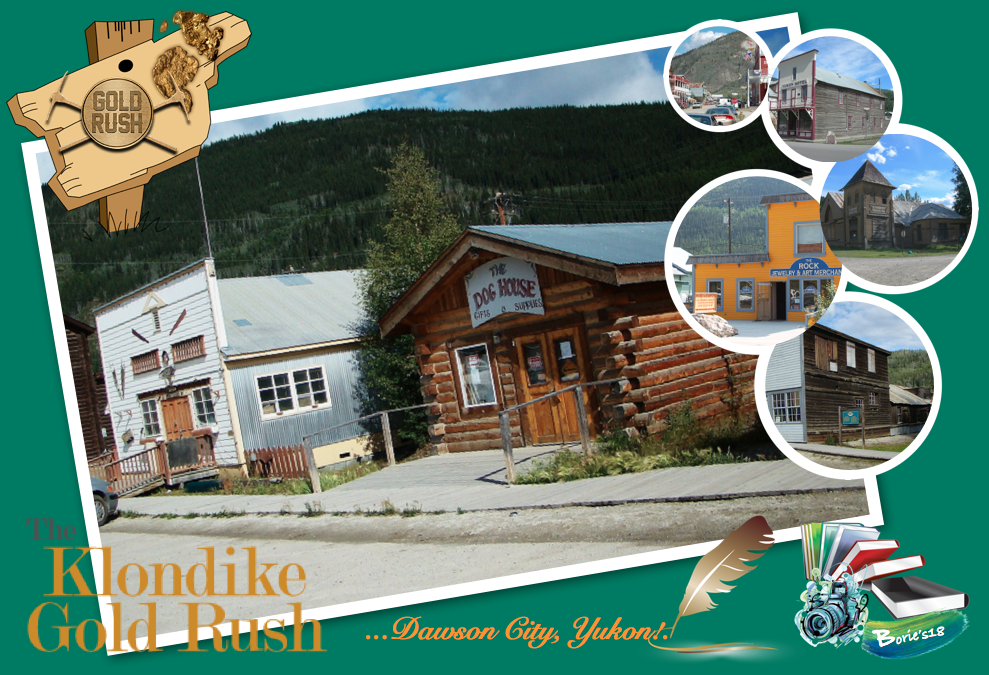
…finalmente, embarcando de regresso aos USA!. (Finally, embarking back to the USA)!

Tony Borie, May 2018.