…a Tundra do Ártico, Alaska!. (…the Artic Tundra, Alaska)!.

…”quando cruzámos aquela grande linha, lá no polo norte, viajando numa estrada deserta construída sobre a Tundra, que é uma área onde o subsolo é “permafrost”, ou seja, solo permanentemente congelado, formando uma planície sem árvores ou plantas de baixo crescimento, como o musgo ou a urze, onde a terra é nua e às vezes rochosa que inclui vastas áreas do norte da Rússia e Canadá, até à região de Prudhoe Bay, junto do Oceano Ártico, onde ao tocar-mos naquele chão e naquela água, tivémos a sensação do previlégio que é viver, de que a vida deve ser preservada e de quanto importante ela é!.

(…”when we crossed that great line, down at the north pole, traveling on a desert road built over the Tundra, which is an area where the subsoil is“ permafrost ”, that is, permanently frozen soil, forming a plain without trees or plants below growth, such as moss or heather, where the land is bare and sometimes rocky that includes vast areas of northern Russia and Canada, up to the Prudhoe Bay region, next to the Arctic Ocean, where when we touch that ground and that water, we had the feeling of the privilege that it is to live, that life should be preserved and how important it is)!.

…porquê?. Porque no nosso caso, descendentes do povo “Celta”, que formaram um ramo da família indo-europeia e se espalharam por grande parte da Península Iberica, onde está localizado o país Portugal onde nascemos e, quando crianças em pleno crescimento, corríamos descalços e com pouca roupa no corpo, descendo ou subindo aquelas encostas agrestes, imitando os guerreiros medievais, e claro, por norma ainda somos aventureiros, gostamos do mar, da natureza pura e de procurar lugares exóticos!.

(…because?. Because in our case, descendants of the “Celtic” people, who formed a branch of the Indo-European family and spread over a large part of the Iberian Peninsula, where the country where Portugal was born is located and, when children were growing up, we ran barefoot and with little clothes on their bodies, going down or going up those rough slopes, imitating medieval warriors, and of course, as a rule we are still adventurers, we like the sea, the pure nature and looking for exotic places)!.

…uau, desculpem o desabafo e vamos à história de hoje!. 

…wow, sorry for the outburst and let’s go to today’s story)!.

…ao contrário da maioria das pessoas que experimentaram o extremo norte, vimos a “Tundra Ártica” viajando na companhia da nossa dedicada esposa Isaura, companheira de vida por mais de meio século, numa rota de aventura para o norte, desde a cidade de Fairbanks, no Alaska e, não havendo sinal de GPS, seguimos guiados quase pelo nosso fascínio infantil por aventuras e mapas descrevendo lugares exóticos, como acima já explicámos!.

(…unlike most people who have experienced the far north, we saw the “Arctic Tundra” traveling in the company of our dedicated wife Isaura, life companion for more than half a century, on an adventure route north from the city of Fairbanks , in Alaska and, with no GPS signal, we continue to be guided almost by our childhood fascination with adventures and maps describing exotic places, as we explained above)!.

…não era a primeira vez!. Alguns anos atrás já tínhamos tentado, entrando no início desta famosa rota, percorrendo mesmo algumas milhas, mas a chuva, o nevoeiro, o vento, o frio, a neve e os acidentes que havia pelo percurso, além dos avisos feitos pelas pessoas de uniforme, alguns militares, que frequentemente nos apareciam, fizeram com que desanimados, voltásse-mos para trás, desistindo, percorrendo um caminho de regresso com alguma revolta, jurando que um dia havia-mos de nela viajar, pelo menos até ao Circulo Ártico!. 

(…it was not the first time!. A few years ago we had already tried, entering the beginning of this famous route, covering even a few miles, but the rain, the fog, the wind, the cold, the snow and the accidents that were on the route, in addition to the warnings given by the people in uniform , some military personnel, who frequently appeared to us, made us discouraged, turning back, giving up, following a path of return with some revolt, swearing that one day we would travel there, at least to the Arctic Circle)!.

…assim começámos de novo esta nossa aventura, que frustrados e revoltados, fomos obrigados a desistir uns anos atrás!. Agora o tempo estava a nosso favor, um céu limpo, não sendo necessário esperar por outros aventureiros para seguir em “combóio”!. Seguimos sózinhos em frente, convictos de que o lema é, “Conduzir no Dalton Highway, é uma aventura, talvez uma vez na vida, mas os viajantes devem preparar-se para se saber defender sózinhos”!.

(…so we started this adventure again, which, frustrated and angry, we were forced to give up a few years ago!. Now the weather was on our side, a clear sky, and there was no need to wait for other adventurers to go on “train”!. We move on alone, convinced that the motto is, “Driving on the Dalton Highway is an adventure, maybe once in a lifetime, but travelers should be prepared to know how to defend alone”)!.

…era num mês de verão e naquela posição geográfica, porque viajávamos para lá do paralelo 48.º N, havia pelo menos mais de vinte horas com luz do dia e até algum sol, como tal, por mais que os nossos olhos se concentrássem no horizonte, nunca veríamos a aurora boreal com as suas cores verde, azul ou amarelas, dançando no alto das cristas dos picos brancos e brilhantes, alguns cobertos de neve, enquanto cruzávamos a divisão do Ártico!. Assim, além da aventura, era uma exploração diferente, e daquele dia em diante, um pequeno pedaço do ártico, para nós, não era mais apenas um ponto atraente no mapa!.

(…it was a summer month and in that geographical position, because we traveled beyond the parallel 48º N, there were at least more than twenty hours in daylight and even some sun, as such, no matter how much our eyes focused on horizon, we would never see the aurora borealis with its green, blue or yellow colors, dancing on top of the ridges of the white and shiny peaks, some covered with snow, while crossing the Arctic division !. So, in addition to the adventure, it was a different exploration, and from that day on, a small piece of the arctic, for us, was no longer just an attractive point on the map)!.

…pela manhã, ao deixar-mos a cidade de Fairbanks, a floresta boreal no sopé das montanhas mostrava um cenário brilhante e, ao longe erguiam-se os cumes rochosos e acidentados, polvilhados com neve, fazendo sobressair um céu azul cobalto!. As vistas da vida selvagem não eram muitas mas ouviam-se as corujas-gavião ou mesmo algumas águias, que voavam daqui para ali e até um urso pardo cruzando um pequeno lago onde os castores nadavam activamente, talvez preparando-se para a sua vida de inverno!.

(…in the morning, when we left the city of Fairbanks, the boreal forest at the foot of the mountains showed a brilliant scenery and, in the distance, the rocky and rugged peaks sprinkled with snow, making a cobalt blue sky stand out!. The views of the wildlife were not many, but the hawks owls or even some eagles could be heard flying from here to there and even a grizzly bear crossing a small lake where the beavers were actively swimming, perhaps preparing for their life Winter)!.

…já por diversas vezes escrevemos sobre a Estrada James Dalton, no Alaska, que alguns chamam “Haul Road”, que é uma das poucas estradas na terra que nos conecta ao Ártico!. Construída no ano de 1974 para atender ao Oleoduto Trans-Alaska e aos campos de petróleo ao redor de Prudhoe Bay e que divide algumas das áreas selvagens mais remotas e atraentes do Alaska!. Não é realmente uma estrada, mas uma faixa de serviço ampla, onde nos aparecem longos troços de lama ou cascalho grosseiro, a “Dalton Highway” começa na floresta boreal do Alaska, aproximadamente a 85 milhas (135 Km) ao norte de Fairbanks!. 

(…we have written several times about James Dalton Road in Alaska, which some call “Haul Road”, which is one of the few roads on earth that connects us to the Arctic!. Built in 1974 to serve the Trans-Alaska Pipeline and the oil fields around Prudhoe Bay and it divides some of the most remote and attractive wilderness areas in Alaska !. It is not really a road, but a wide service strip, where long stretches of mud or coarse gravel appear, the “Dalton Highway” begins in the boreal forest of Alaska, approximately 85 miles (135 km) north of Fairbanks)!.

….segue sinuosamente para o norte, atravessando a floresta, rios frígidos, a tundra alpina, os contrafortes e montanhas da cordilheira Brooks e da encosta norte e, 414 milkas (666 km) depois, termina na planície costeira ártica, a algumas milhas do Mar de Beaufort, no pequeno posto avançado industrial de Deadhorse, porta de entrada para o enorme complexo industrial de petróleo que domina quase toda a planície costeira!. 

(…winds northwards, crossing the forest, frigid rivers, the alpine tundra, the foothills and mountains of the Brooks mountain range and the northern slope and, 414 milkas (666 km) later, ends in the Arctic coastal plain, a few miles from Mar de Beaufort, at the small industrial outpost of Deadhorse, gateway to the huge industrial oil complex that dominates almost the entire coastal plain)!.

…a estrada é acidentada e os serviços são extremamente limitados e, como anteriormente já explicámos, os viajantes devem ser auto-suficientes e bem preparados!. Mas para aqueles que são atraídos por espaços vazios e exóticos tal como nós, esta rota oferece-nos uma oportunidade incomparável de descobrir um pedaço de deserto ártico e alguma vida selvagem que lá existe!. 

(…the road is bumpy and services are extremely limited and, as we have already explained, travelers must be self-sufficient and well prepared!. But for those who are attracted to empty and exotic spaces just like us, this route offers us an incomparable opportunity to discover a piece of arctic desert and some wildlife that exists there)!.

…o Oleoduto Trans-Alaska quase que nos acompanha e, a cada subida, descida ou curva da estrada, revela-nos a imensidão da paisagem!. Nas encostas, os abetos escuros retorcem-se no meio de alguns álamos verdes aqui e ali, mostrando vestígios de incêndios de verão!. Mais ao norte, além do pequeno povoado de Coldfoot, onde parámos para comprar gasolina e café, o sopé acidentado da cordilheira Brooks começa a invadir a estrada!.

(…the Trans-Alaska Oil Pipeline almost accompanies us and, with each climb, descent or curve of the road, it reveals the immensity of the landscape!. On the slopes, the dark fir trees twist in the middle of some green poplars here and there, showing traces of summer fires!. Further north, beyond the small town of Coldfoot, where we stopped to buy gasoline and coffee, the rugged foothills of the Brooks mountain range begin to invade the road)!.

…a Dalton Highway é a única rota no estado do Alaska que atravessa o Círculo Polar Ártico, que é o ponto mais ao norte, dos abstratos ou imaginários principais círculos de latitude, como é mostrado nos mapas da Terra!. Ele marca o ponto mais setentrional no qual o sol do meio-dia é visível no solstício de inverno do norte e, a região ao norte deste círculo é conhecida como o Ártico, e a zona apenas para o sul é chamada de Zona Temperada Norte!

(…the Dalton Highway is the only route in the state of Alaska that crosses the Arctic Circle, which is the most northerly point of the abstract or imaginary main circles of latitude, as shown on Earth maps!. It marks the northernmost point at which the midday sun is visible on the northern winter solstice, and the region to the north of this circle is known as the Arctic, and the area just to the south is called the North Temperate Zone)!.

…nós, ficámos fascinados e algo surpresos por ver este fenómeno, pois ao norte do Círculo Ártico, o sol está acima do horizonte por vinte e quatro horas contínuas pelo menos uma vez por ano, portanto, visível à meia-noite e, abaixo do horizonte por vinte e quatro horas contínuas pelo menos uma vez por ano, portanto, não visíveis ao meio dia, isso também é verdade dentro do Círculo Polar equivalente no Hemisfério Sul, o Círculo Antártico. A posição do Círculo Ártico não é fixa, mas o normal é 66º33’46.8 ao norte do Equador!

(…we were fascinated and somewhat surprised to see this phenomenon, because to the north of the Arctic Circle, the sun is above the horizon for twenty-four continuous hours at least once a year, therefore visible at midnight and, below the horizon for twenty-four continuous hours at least once a year, therefore, not visible at noon, this is also true within the equivalent Polar Circle in the Southern Hemisphere, the Antarctic Circle. The position of the Arctic Circle is not fixed, but the normal is 66º33’46.8 north of the Equator)!.

…depois, já no pequeno conforto da nossa “White Fox” (caravana), descansando desta jornada e derivado sobretudo à nossa já um pouco avançada idade, admirando os contrafortes que se erguerem sobre o vale do rio Middle Fork Koyukuk onde à medida que as montanhas ficavam maiores, as árvores ficavam menores e mais dispersas, resolvemos virar para sul!.

(…then, in the small comfort of our “White Fox” (caravan), resting from this journey and derived mainly from our already a little old age, admiring the foothills that rise over the Middle Fork Koyukuk river valley where as the mountains got bigger, trees got smaller and more dispersed, we decided to turn south)!.

…continuando a viajar na intimidade de uma estrada algo perigosa e deserta, muito primitiva em alguns locais, com rochas afiadas, buracos, saliências no seu piso, tipo “tábua de lavar”, que fazem estremecer tudo dentro veículo, mas que nos proporcionava um espectáculo maravilhoso, sendo perigo e aventura da cabeça aos pés e, entre nós e um urso castanho, que ao atravessar a estrada parava para “cagar”, não existia nenhuma diferença, porque nós fazíamos o mesmo, porque não existiam “áreas de descanso” e, no fundo, no fundo, esta animalidade toda, de tão natural, acabava por ser pura e limpa como a “cagada” do urso!.

(…continuing to travel on the intimacy of a somewhat dangerous and deserted road, very primitive in some places, with sharp rocks, holes, protrusions on its floor, like a “washing board”, which make everything shake in the vehicle, but which provided us with a wonderful spectacle, being danger and adventure from head to toe and, between us and a brown bear, that when crossing the road stopped to “shit”, there was no difference, because we did the same, because there were no “rest areas” and, at the bottom, at the bottom, this whole animality, so natural, turned out to be pure and clean like the “shit” of the bear)!.

…até que eventualmente as árvores desaparecem completamente, deixando uma paisagem pintada por plantas, rochas e neve que se estendiam por todo o solo, onde há muitas dezenas de anos atrás, alguns pioneiros na preservação da natureza, exploram as partes da Cordilheira Brooks a pé, de barco ou de trenó, descrevendo o cenário como “montanhas infinitas subindo e descendo como as ondas de um oceano gigantesco, se tivessem de repente congelado em pleno movimento”!.

(…until eventually the trees disappear completely, leaving a landscape painted by plants, rocks and snow that stretched across the soil, where many decades ago, some pioneers in nature preservation, explored the parts of the Brooks Mountain Range on foot , by boat or sled, describing the scenery as “infinite mountains rising and falling like the waves of a gigantic ocean, if they had suddenly frozen in full motion”)!.

…não queremos terminar sem explicar uma pequena curiosidade que é, durante o nosso percurso, por vezes éramos seguidos ou seguíamos os camionistas da rota Dalton Highway, que têm os seus próprios nomes para as várias áreas, existindo mesmo algumas placas de sinalização (rudimentares e escritas à mão), como por exemplo, “The Taps”, “The Shelf”, “The Bluffs”, “Oil Spill Hill”, “Beaver Slide”, “Two and Half Mile”, “Oh Shit Corner” ou “Roller Coaster”!.

(…we don’t want to end without explaining a small curiosity that is, during our journey, we were sometimes followed or followed the truck drivers on the Dalton Highway route, who have their own names for the various areas, even with some signposts (rudimentary and handwritten), such as “The Taps”, “The Shelf”, “The Bluffs”, “Oil Spill Hill”, “Beaver Slide”, “Two and Half Mile”, “Oh Shit Corner” or “Roller Coaster”)!.

…a “Tundra do Ártico”, que foi o local mais a norte no planeta Terra que já visitámos em toda a nossa existência, pode ser perigosa para os humanos, mas é um lugar fascinante e, antes de começar a longa jornada para o sul, não conseguíamos evitar a sensação de que estávamos deixando algo que talvez nunca mais iríamos ver, porque experimentar o ártico no seu pico de vida, compreendemos totalmente a sua beleza, mas ao mesmo tempo a sua fragilidade e, a grande urgência que existe em preservá-la!.

(…the “Arctic Tundra”, which was the most northerly place on planet Earth that we have visited in our entire existence, can be dangerous for humans, but it is a fascinating place and, before starting the long journey south , we couldn’t help feeling that we were leaving something that we might never see again, because experiencing the arctic at its peak, we fully understand its beauty, but at the same time its fragility and the great urgency that exists to preserve -there)!.

…enfim, isto são curiosidades do Alaska, Terra da Última Fronteira!. 

(…anyway, these are curiosities from Alaska, Land of the Last Frontier)!.

Tony Borie, Século XXI. (Tony Borie, 21st Century).

…veterano de guerra!. (…war veteran)!.

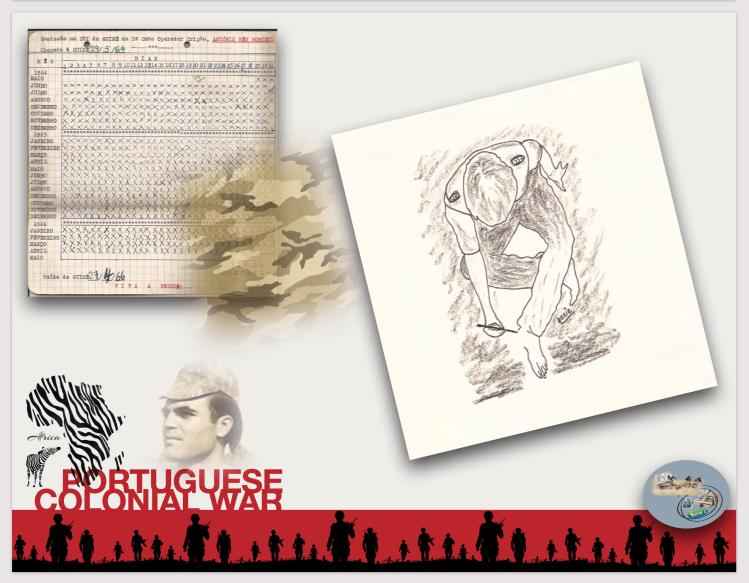
…éramos um soldado desarmado que, dada as nossas tarefas sabíamos mais do que devíamos saber mas, continuamos vivos, sendo hoje “um veterano de guerra”!. Fizémos coisas, passando momentos horríveis de desespero e angústia quando de ataques e emboscadas, ao local por onde estávamos ou passávamos, deixando por lá companheiros enterrados, por não os poder resgatar, cenários de combate que hoje ainda nos assombram pelo menos durante noite, não nos deixando dormir!. Ainda quase crianças, estivémos longe da nossa família, noutro continente, sacrificando a nossa liberdade, contribuindo para que vocês, novas gerações, podessem hoje viver em liberdade!. E fizémos tudo isto porquê?. Porque fizémos um juramento ao nosso país e, viveremos por este juramento até ao dia da nossa morte, porque somos e seremos sempre “um veterano de guerra”!.

 (…we were an unarmed soldier who, given our tasks, knew more than we should have known, but we are still alive, being today “a war veteran”!. We did things, going through horrible moments of despair and anguish when attacked and ambushed, to the place where we were or passed, leaving companions buried there, for not being able to rescue them, combat scenarios that today still haunt us at least during the night, no letting us sleep!. Still almost children, we were far from our family, on another continent, sacrificing our freedom, contributing so that you, new generations, could today live in freedom!. And why did we do all this?. Because we have taken an oath to our country and we will live by this oath until the day we die, because we are and will always be “a war veteran”)!.

…voltamos a repetir a frase, “e tudo isto porquê?. Porque o país onde nascemos que dá pelo nome de Portugal, depois de 500 anos de domínio colonial, não só não conseguiu produzir nenhum governador negro, director, inspetor de polícia ou professor, mas também não conseguiu produzir um único comandante de patente sénior nas suas forças Armadas!. Como tal, por várias gerações, os ditos administradores coloniais portugueses foram vítimas do legado de suas próprias políticas discriminatórias, beneficiando e enriquecendo algumas élites, onde se incluiam alguns governantes, limitando a população local na educação, o que, em grande parte, barrou negros africanos indígenas de uma educação igual e adequada até bem depois do início da sua insurgência!.

(…we repeat the phrase, “and why is this?. Because the country where we were born, which gives the name of Portugal, after 500 years of colonial rule, not only failed to produce a black governor, director, police inspector or teacher, but it also failed to produce a single senior patent commander in his armed forces!. As such, for several generations, the so-called Portuguese colonial administrators were victims of the legacy of their own discriminatory policies, benefiting and enriching some elites, which included some rulers, limiting the local population in education, which, in large part, barred blacks indigenous Africans with an equal and adequate education until well after the start of their insurgency)!.

…e uma das vítimas fomos nós, antigos combatentes da Guerra Colonial Portuguesa, sendo mobilizados, forçados e treinados para combate, para ir lutar contra pessoas que nunca antes tínhamos visto e nada tínhamos em contra, tal como a população local, que ficou a viver num cenário onde uma das partes mais trágicas, talvez para alguns esperançosa, era a cara da necessidade humana, era o doente abandonado, a família faminta, a criança que não sabia ler, eram homens e mulheres, alguns sem abrigo, com roupa em farrapos, lutando pela sobrevivência, numa terra muito rica e com um solo muito fértil!. 

(…and one of the victims was us, former combatants of the Portuguese Colonial War, being mobilized, forced and trained to fight, to go and fight against people we had never seen before and had nothing against, just like the local population, who lived in a scenario where one of the most tragic parts, perhaps for some hopeful, was the face of human need, it was the abandoned patient, the hungry family, the child who could not read, they were men and women, some homeless, with clothes in tatters, fighting for survival, in a very rich land with very fertile soil)!.

…e, no nosso caso fomos parár à então província colonial da Guiné, viver uma guerra de guerrilha, que ficou denominada como “o Vietname de Portugal”, onde se iniciou um conflito, contra alguns movimentos armados que lutavam pela independência do seu território, querendo expulsar os Europeus que por lá andavam há mais de quinhentos anos, como acima já mencionámos!.

(…and, in our case, we went to the then colonial province of Guinea, to live a guerrilla war, which became known as “the Vietnam of Portugal”, where a conflict started, against some armed movements that were fighting for the independence of their territory, wanting to expel the Europeans who had been there for more than five hundred years, as mentioned above)!.

…lutávamos contra movimentos com guerrilheiros bem armados, bem treinados, bem liderados e equipados, que recebiam apoio substancial de portos seguros em países vizinhos, tornando assim as savanas, pântanos e rios da então Guiné, num cenário de combate, que a proximidade dos seus aliados perto da fronteira provaram ter uma vantagem significativa em fornecer uma superioridade táctica  de combate, durante ataques transfronteiriços e missões de reabastecimento para os guerrilheiros desses movimentos armados, que lutavam pela independência daquele território, como acima já referenciámos!. 

(…we fought against movements with well-armed, well-trained, well-led and equipped guerrillas, who received substantial support from safe ports in neighboring countries, thus making the savannas, swamps and rivers of then Guinea, a combat scenario, that the proximity of their allies close to the border proved to have a significant advantage in providing tactical superiority in combat, during cross-border attacks and resupply missions for the guerrillas of these armed movements, who were fighting for the independence of that territory, as we have already mentioned)!.

…este conflito armado, envolvendo os guerrilheiros e o Exército Português provaria ser o mais intenso e prejudicial de todos os conflitos na Guerra Colonial Portuguesa, bloqueando as tentativas portuguesas de pacificar o território, porque entretanto apareceu mais do que um movimento armado e insurgente, mas muito activos, pelo menos no norte do território, que também lutava pela independência e, a luta foi-se intencificando, espalhando-se para a parte oriental e sul do território, e claro, depois começaram a receber abertamente outros apoios não só militares, de outros países não fronteiriços, e claro, além das populações rurais que iam aderindo a esses movimentos de libertação!.

(…this armed conflict, involving guerrillas and the Portuguese Army would prove to be the most intense and damaging of all conflicts in the Portuguese Colonial War, blocking Portuguese attempts to pacify the territory, because in the meantime more than an armed and insurgent movement has appeared, but very active, at least in the north of the territory, which was also fighting for independence and, the struggle was intensified, spreading to the eastern and southern part of the territory, and of course, afterwards they began to openly receive other support, not only military, from other non-border countries, and of course, in addition to the rural populations that were joining these liberation movements)!.

…quando regressámos à Europa em Maio de 1966, já era difícil transitar de uma aldeia ou vila para outra sem ser acompanhados por colunas das forças armadas, onde frequentemente havia emboscadas, onde muitos dos nossos companheiros morreram, ficando por lá para sempre, embrulhados no seu camuflado, perfurado pelas balas e sujo com o seu próprio sangue!. 

(…when we returned to Europe in May 1966, it was difficult to move from one village or town to another without being accompanied by armed forces columns, where there were often ambushes, where many of our comrades died, staying there forever, wrapped up in the his camouflage, pierced by bullets and dirty with his own blood)!.

…mas o mais lamentável é que, tal como já por diversas vezes referimos nos nossos escritos, os famintos, os doentes, os analfabetos e a miséria que naquela época eram constantes, infelizmente continuaram, mesmo depois, quando parecia que já havia paz, fazendo-me lembrar que defacto nós os militares de Portugal, saímos de África físicamente, mas possívelmente não trouxémos as armas, as bombas e as balas, deixando lá apenas, como seria nossa inteira obrigação, todas as maravilhosas armas da paz do século XX!. 

(…but the most regrettable thing is that, as we have already mentioned several times in our writings, the hungry, the sick, the illiterate and the misery that were constant at that time, unfortunately continued, even afterwards, when it seemed that there was peace, making remind me that we, the military of Portugal, left Africa physically, but possibly we did not bring the weapons, bombs and bullets, leaving there, as would be our entire obligation, all the wonderful weapons of peace of the 20th century)!.

…e, quando regressámos à Europa, ao fim de dois longos anos, como veteranos de guerra, passando por algumas experiências de vida mais traumáticas que se possam imaginar, a família que nos recebeu, sabia, notava imediatamente, que alguma coisa estava mal connosco, pela nossa linguagem, maneira de nos comportar, que estávamos diferentes, talvez um pouco loucos e algo agressivos!.

(…and when we returned to Europe, after two long years, as war veterans, going through some of the most traumatic life experiences imaginable, the family that received us, knew, immediately noticed, that something was wrong with us, because of our language, the way we behave, that we were different, maybe a little crazy and a little aggressive)!.

…e claro, o mêdo ou talvez a coragem, que nos ajudou a sobreviver num campo de batalha, não funciona muito bem agora, nesta avançada idade, porque o pensamento caça-nos na vida!. Sim, ele, o pensamento anda sempre lá, por vezes ameaçando a nossa consciência, a memória ainda existe hoje, enterrada lá no fundo, é parte antiga do também já um pouco selvagem, mas que  ainda vamos dominando, que é presentemente o nosso cérebro, lembrando-nos constantemente o desastre que foi a Guerra Colonial Portuguesa, em África!.

(…and of course, fear or perhaps courage, which helped us to survive on a battlefield, does not work very well now, at this advanced age, because thought hunts us in life!. Yes, he, the thought is always there, sometimes threatening our conscience, the memory still exists today, buried deep inside, it is an old part of the already a little wild, but that we are still dominating, which is presently our brain , constantly reminding us of the disaster that was the Portuguese Colonial War, in Africa)!.

Tony Borie, Século XXI. (Tony Borie, 21st Century).

…cortámos a nossa árvore Magnólia!. (…we cut down our Magnolia tree)!.

…ainda não sabemos porquê e qual a razão de estar contentes, mas ao mesmo tempo muito tristes!. Existem poucas coisas que adoramos na vida, mas as árvores que fazem parte da natureza, essas, adoramos!.

…we still don’t know why and why we are happy, but at the same time very sad!. There are few things that we love in life, but the trees that are part of nature, these, we love)!.

…continuando, estamos tristes e um pouco confundidos com a sua perda, mas felizes com o tal “futuro”!. Porquê?. Porque a nossa magnólia estava enorme, parecia um gigante que assombrava a nossa casa a todo o momento, estava prigosa, porque num dia destes e na zona onde vivemos, aproximando-se a época dos tornados, a mesma natureza que adoramos podia trazer um dia de chuva com vento ciclónico e, causaria uma pequena catástrofe, até talvez morte para os humanos, pois junto a si estava um poste de electricidade com material bastante perigoso!.

…continuing, we are sad and a little confused by his loss, but happy with that future!. Because?. Because our magnolia was huge, it looked like a giant that haunted our house all the time, it was dangerous, because on a day like this and in the area where we live, the time of the tornadoes approaching, the same nature that we love could bring one day rain with cyclonic wind and, it would cause a small catastrophe, maybe even death for humans, because next to it was an electricity pole with very dangerous material)!.

…ela era bonita, tinha flores mostrando uma linda vista panorâmica, fornecia sombra, os esquilos e as rolas faziam lá o seu ninho, mas infelizmente, às vezes demonstrava alguma tristeza e deixava cair as suas folhas durante um certo tempo, onde a nossa dedicada esposa Isaura, varria e as colectava constantemente e, se por algum período de tempo se tivesse que ir ao norte ver a família ou qualquer outra viajem, quando regressávamos, a nossa área até parecia de uma casa abandonada!.

…she was beautiful, she had flowers showing a beautiful panoramic view, she provided shade, squirrels and doves made her nest there, but unfortunately, sometimes she showed some sadness and dropped her leaves for a while, where our dedicated wife Isaura, swept and collected them constantly and, if for some period of time one had to go north to see the family or any other trip, when we returned, our area even looked like an abandoned house)!.

…quando se falava sobre ela aos nossos vizinhos e as outras pessoas que nos visitavam, sim, ouviam-nos e compreendiam quando a elogiávamos mas, talvez dando um sinal de que viam o mesmo problema que nós, acabavam sempre por dizer, “é melhor cortá-la, essa árvore é idiota, produz muitas raízes, alguns arboristas até brincam, dizendo que essas árvores estarão aqui depois de um apocalipse!. 

…when we talked about it to our neighbors and the other people who visited us, yes, they listened to us and understood when we praised it, but, perhaps giving a sign that they saw the same problem as us, they always ended up saying, “it is better cut it, this tree is stupid, it has many roots, some arborists even play, saying that these trees will be here after an apocalypse)!.

…enfim, escrevemos tudo isto para dizer que a nossa magnólia se foi!. E, já não sintimos tanta falta de quanto pensávamos que sentiríamos. Há por aqui, ainda em zonas desocupadas, outras árvores que tornam o solo saudável para sequestrar o carbono, fornecendo-nos oxigênio e refúgio para os animais!.

…anyway, we wrote all this to say that our magnolia is gone!. And, we no longer miss as much as we thought we would. There are other trees around here, still in unoccupied areas, that make the soil healthy to sequester carbon, providing us with oxygen and refuge for the animals)!.

Tony Borie, Século XXI. (Tony Borie, 21st Century).

…o ceú toca o mar!. (…sky touches the sea)!.

…a nossa dedicada esposa Isaura, companheira de vida por mais de cinco décadas, apanhou-nos nesta foto ao pôr do sol, durante as nossas caminhadas pela praia!. É um fenómeno da natureza que, no hemisfério norte, onde actualmente nos encontramos, o sol se põe a oeste, pelo menos da primavera até ao outono e, a sua hora é definida como o momento em que o sol desaparece abaixo do horizonte, tudo isto devido à rotação do nosso planeta!.

(…our dedicated wife Isaura, life partner for more than five decades, caught us in this photo at sunset, during our walks on the beach!. It is a phenomenon of nature that, in the northern hemisphere, where we are currently, the sun sets in the west, at least from spring until autumn, and its time is defined as the moment when the sun disappears below the horizon, everything this due to the rotation of our planet)!.

…ao longe vemos um distinto crepúsculo, que se vai apagando, entrando no escuro da noite, não iluminando mais o céu, tal como a nossa já um pouco longa vida, que também já é quase um crepúsculo, onde lutamos para que não desapareça no horizonte da vida, e volte sempre amanhã, nem que seja só para ver o pôr do sol por momentos, mesmo lá no horizonte, naquela ilusão de ótica, semelhante à ilusão da lua!.

(…in the distance we see a distinct twilight, which fades, entering the dark of the night, no longer illuminating the sky, just like our already a little long life, which is also almost a twilight, where we fight so that it does not disappear in the horizon of life, and always come back tomorrow, if only to watch the sunset for a moment, even there on the horizon, in that optical illusion, similar to the illusion of the moon)!.

…durante os dias da nossa vida, tivémos o previlégio de admirar milhares  e milhares de dias com aqueles lindos componentes azuis e verdes, (quando dizemos: “hoje está um lindo dia”), que ao cair da tarde são removidos quase completamente, deixando os tons de laranja e vermelho em comprimentos de onda mais longos, que podemos ver a essas horas!. 

(…during the days of our life, we had the privilege to admire thousands and thousands of days with those beautiful blue and green components, (when we say: “today is a beautiful day”), which in the evening are removed almost completely, leaving the shades of orange and red at longer wavelengths, which we can see at these hours)!.

…continuamos a adorar e respeitar a natureza!. Todavia, compreendemos que as cores do pôr-do-sol são geralmente mais brilhantes do que as cores do nascer do sol!. E porquê?. Porque entre outros fenómenos, (cinzas das erupções vulcânicas), o homem, fazendo quase tudo o que lhe dá lucro fácil, tenta destrui-la, não a respeitando, poluindo-a, contribuindo diáriamente para que o ar ao final da tarde contenha mais partículas do que o ar da manhã!.

(…we continue to adore and respect nature !. However, we understand that the colors of the sunset are generally brighter than the colors of the sunrise !. It’s because?. Because among other phenomena (ashes from volcanic eruptions), man, doing almost everything that gives him an easy profit, tries to destroy it, not respecting it, polluting it, contributing daily so that the air at the end of the afternoon contains more particles than the morning air)!.

…para nós, o pôr do sol foi sempre melhor do que o nascer do sol, pela simples razão de que o pôr do sol adicionou-nos a experiência de viver um dia inteiro e, não importa o lugar onde nos encontramos, a linguagem do pôr do sol é aquela que todos entendem, onde observar o sol a pôr-se abaixo do horizonte enquanto o céu está inundado de vermelho, claro, é sempre um momento especial!.

(…for us, the sunset was always better than the sunrise, for the simple reason that the sunset added to the experience of living a whole day and, no matter where we are, the language of the sunset is one that everyone understands, where watching the sun set below the horizon while the sky is flooded with red, of course, is always a special moment)!.

…e, a Mãe Natureza não precisa de filtro, quando há um belo pôr do sol!. Deixe os seus olhos banquetearem-se com o pôr do sol, lembrando-se sempre que a vida é preciosa!.

(…and, Mother Nature does not need a filter, when there is a beautiful sunset!. Let her eyes feast on the sunset, always remembering that life is precious)!

Tony Borie Século XXI. (Tony Borie 21st Century).

…Fort Mose, St. Augustine, Florida!.

…é história!. No entanto a história faz parte do nosso futuro e, ela conta-nos que infelizmente, centenas de milhares de africanos escravizados, foram importados no século 18, enviados através do Atlântico para as Carolinas, onde o seu trabalho era essencial para a economia das plantações!.

(…it is history!. However, history is part of our future and, she tells us that unfortunately, hundreds of thousands of enslaved Africans were imported in the 18th century, sent across the Atlantic to the Carolinas, where their work was essential for plantation economics.)!

….e a história é-nos contada durante a nossa visita guiada, por actores vestidos a rigor num cenário de floresta tropical, onde se cruzam alguns pântanos, inundados de água e lama escondendo conchas partidas e afiadas, fazendo-nos meditar naquilo que foi o caminho que há mais de 300 anos atrás, corajosos africanos escaparam da escravidão nas colónias britânicas das Carolinas e da Geórgia, fugindo para o sul a pé, buscando a ajuda dos nativos, que viviam no entnao assentamento de Santo Agostinho na Flórida, criando assim a primeira “Ferrovia Subterrânea”!.

(…and the story is told to us during our guided tour, by actors dressed strictly in a tropical forest setting, where some marshes, flooded with water and mud, hiding broken and sharp shells, making us meditate on what it was the path that more than 300 years ago, courageous Africans escaped slavery in the British colonies of the Carolinas and Georgia, fleeing south on foot, seeking the help of the natives, who lived in the then settlement of St. Augustine in Florida, creating thus the first “Underground Railway”)!.

…num breve resumo explicamos as palavras “Ferrovia Subterrânea”, que era uma rede de pessoas, tanto afro-americanas como brancas, que oferecia abrigo e ajuda aos escravos fugitivos do sul, e que lembra o episódio passado no ano de 1831, quando o homem escravizado, de nome Tice Davis, escapou de Kentucky para Ohio, e o seu proprietário culpou uma “ferrovia subterrânea” por ajudar Davis à liberdade e, passados 8 anos, em 1839, um jornal de Washington relatou que um homem escravo fugitivo chamado Jim, revelou sob tortura, todo o seu plano de ir para o norte, seguindo uma “ferrovia subterrânea para Boston”!.

(…in a brief summary we explain the words “Underground Railroad”, which was a network of people, both African-American and white, that offered shelter and help to runaway slaves from the south, and reminiscent of the episode that took place in 1831, when the enslaved man, Tice Davis, escaped from Kentucky to Ohio, and its owner blamed an “underground railroad” for helping Davis to freedom and, 8 years later, in 1839, a Washington newspaper reported that a runaway slave man called Jim, he revealed under torture his whole plan to go north, following an “underground railway to Boston”)!.

…continuando, nem todos sobreviveram!. Aqueles que conseguiram chegar a Santo Agostinho receberam asilo do governo espanhol, recebendo também uma oferta que era única, que era, “a liberdade, em troca de conversão ao catolicismo”, recebendo assim nomes cristãos e, para os homens, um período de serviço militar!.

(…continuing, not everyone survived!. Those who managed to reach Saint Augustine received asylum from the Spanish government, also receiving an offer that was unique, which was, “freedom, in exchange for conversion to Catholicism”, thus receiving Christian names and, for men, a period of service military)!.

…voltando ao nosso percurso por esta floresta tropical, que é a área de Forte Mose, aqui e ali surgiam-nos as personagens que exemplificavam aquela época, explicando que, os primeiros buscadores da liberdade chegaram por volta do ano de 1687, num grupo que incluía oito homens, duas mulheres e uma criança de três anos de idade!.

(…returning to our journey through this tropical forest, which is the area of Forte Mose, here and there the characters that exemplified that time appeared to us, explaining that, the first searchers of freedom arrived around the year 1687, in a group that included eight men, two women and a three-year-old child)!.

…o sabor da liberdade fazia crescer o desejo de muitos homens e mulheres!. A sua bravura era evidente, porque a sua perseguição era interminável!. A viajem incómoda por bosques densos, pântanos e medo de serem capturados mantinha-os em movimento e, aqueles que conseguiram chegar à Florida, estavam livres!.

(…the taste of freedom made the desire of many men and women grow!. His bravery was evident, because his pursuit was endless!. The uncomfortable journey through dense forests, swamps and fear of being captured kept them moving and those who made it to Florida were free)!.

…e, meio século depois, mais de 100 pessoas em busca da liberdade, haviam obtido asilo numa pequena aldeia fortificada, chamada “Gracia Real de Santa Teresa de Mose” que ia sendo construída na fronteira norte de Santo Agostinho!.

(…and, half a century later, more than 100 people in search of freedom, had obtained asylum in a small fortified village, called “Gracia Real de Santa Teresa de Mose” that was being built on the northern border of Saint Augustine)!.

…assim, “Gracia Real de Santa Teresa de Mose”, ou Forte Mose, tornou-se o local da primeira comunidade negra livre, no que hoje são os Estados Unidos!.

(…thus, “Gracia Real de Santa Teresa de Mose”, or Forte Mose, became the site of the first free black community, in what today is the United States)!.

…também nos explicaram que foi um ex-escravizado africano, (era um Mandinga, nascido na região da Gâmbia ou da Guiné, em África, e baptizado como Francisco Menéndez, que havia sido capturado por traficantes de escravos e enviado através do Atlântico para a colónia da Carolina), que liderou a milícia negra livre de Forte Mose!. Como acima explicámos, o seu nome era Capitão Francisco Menéndez, que durante anos, com outros guerreiros, protegeram valentemente a então aldeia de Santo Agostinho!.

(…also explained to us that he was a former African slave, (he was a Mandinga, born in the Gambia or Guinea region in Africa, and baptized as Francisco Menéndez, who had been captured by slave traders and sent across the Atlantic for the Carolina colony), which led the free black militia of Forte Mose!. As we explained above, his name was Captain Francisco Menéndez, who for years, with other warriors, valiantly protected the then village of Saint Augustine!.

…no entanto, quando a Espanha cedeu toda a “La Florida” para a Inglaterra, no ano de 1763, infelizmente os cidadãos de Forte Mose mais uma vez enfrentaram a escravidão!. Assim, os que conseguiram, abandonaram o forte e buscaram segurança na ilha de Cuba, então ainda espanola!.

(…however, when Spain gave up all of “La Florida” to England, in the year 1763, unfortunately the citizens of Forte Mose once again faced slavery!. So, those who succeeded, left the fort and sought security on the island of Cuba, so it still spanks)!.

…e nós, no final da nossa visita a este lugar histórico, prestámos a nossa homenagem silenciosa a estes heróis, abandonando este que foi um refúgio para escravos refugiados das colónias do sul ao norte, porque hoje “Gracia Real de Santa Teresa de Mose, ou Forte Mose, é considerado o “local principal na Trilha do Património Negro da Flórida”, destacando-se como um local precursor da “Ferrovia Subterrânea”!.

(….and at the end of our visit to this historic place, we paid our silent tribute to these heroes, abandoning what was a refuge for refugee slaves from the colonies from south to north, because today “Gracia Real de Santa Teresa de Mose”, or Fort Mose, is considered the “main site on the Florida Black Heritage Trail”, standing out as a precursor to the “Underground Railroad”!.

Tony Borie, Século XXI. (Tony Borie, 21st Century).
…os sinos tocavam!. (…the bells were ringing)!.

…já por diversas vezes escrevemos que às vezes sentimos uma “inveja-invejosa” por quem não recorda!. São seres livres, rebeldes e indomáveis, que quando lhes apetece partir, vão embora sem pesos ou remorsos!. Ao contrário de nós que, por mais que queiramos, não nos desligamos de sotãos e sotãos de relíquias e memórias, colecionando sensações, histórias e lendas!.

(…we have already written several times that we sometimes feel “envious-envious” for those who do not remember!. They are free, rebellious and indomitable beings who, when they feel like leaving, leave without any regrets or regrets!. Unlike us who, as much as we want to, do not disconnect from lofts and lofts of relics and memories, collecting sensations, stories and legends)!.

…a Páscoa já se foi, e o Natal virá!. De uma maneira ou de outra, já quase que não existem, tal como a bondade no coração do homem ou da mulher, é rara ou próxima da extinção!. Também já se foram os usos e costumes do antigamente, a agricultura de subsistência respeitando os ciclos da mãe natureza como a dos nossos avós, que criavam os animais domésticos, plantavam as couves e as batatas para criarem grandes famílias de 8 e 10 filhos!.

(…Easter is already gone, and Christmas will come!. In one way or another, they are almost nonexistent, just as goodness in the heart of man or woman is rare or close to extinction!. The uses and customs of yesteryear are gone, subsistence agriculture respecting the cycles of mother nature like that of our grandparents, who raised domestic animals, planted cabbages and potatoes to create large families of 8 and 10 children)!.

…ao contrário de hoje, onde existe um mundo agitado, com programas de televisão que nos entram pela porta dentro, presenteando-nos com alguma violência e mal dizer, incendiando a sociedade com notícias terríveis e escandalosas, instigando a população à agressividade e à revolta, semeando neste planeta, não a tal agricultura de subsistência respeitando os ciclos da mãe natureza, mas sim angústia e depressão, pelo menos às mentes mais frágeis!.

(…unlike today, where there is an agitated world, with television programs that come through the door, presenting us with some violence and ill saying, igniting society with terrible and scandalous news, instigating the population to aggression and revolt , sowing on this planet, not such subsistence agriculture respecting the cycles of mother nature, but anguish and depression, at least to the most fragile minds)!.

…já chega de blá, blá, blá, vamos à hitória de hoje!. 

(…enough of blah, blah, blah, let’s go to today’s story)!.

…quando os pais desejam ensinar valores específicos aos seus filhos, devemos fazê-lo por meio do exemplo, porque o exemplo tem mais significado para uma criança do que podemos pensar!.

(…when parents want to teach their children specific values, we must do it by example, because example has more meaning for a child than we can think)!.

…assim, numa das nossas viajens à Europa, sempre acompanhados da nossa dedicada esposa Isaura e dos nossos filhos ainda crianças, assistimos a uma “procissão” religiosa!. E eles, os nossos filhos ainda crianças, foram protagonistas da já referida “procissão”, onde a sua dedicada mãe Isaura, alugando uns trajos, os vestiu a ambos, imitando uns “santos e santas”, para desfilarem na “procissão”, e nós, claro, fotografámos, e vamos hoje recordar todo este evento, tentando colocar um pouco de “animação” nas palavras para que se torne mais interessante a sua leitura, cá vai:

(…so, on one of our trips to Europe, always accompanied by our dedicated wife Isaura and our children as children, we witnessed a religious “procession”! And they, our children as children, were protagonists of the aforementioned “procession”, where their dedicated mother Isaura, renting some clothes, dressed them both, imitating some “saints” to parade in the “procession”, and we, of course, we took pictures, and today we are going to remember this whole event, trying to put a little “animation” in the words so that it becomes more interesting to read, here it goes):

…era uma festa religiosa na aldeia onde nasceu a nossa dedicada esposa Isaura, companheira por mais de cinco décadas!. Algumas pessoas usavam a roupa domingueira, ouviam-se os sinos que tocavam na torre da igreja e havia rosmaninho e alecrim pelo chão, os foguetes estalavam no céu, havia um ambiente de alegria e respeito, abrindo-se fileiras para passar a “procissão” e, ao nosso lado uma mulher vestida de negro, dizia: “saiam da minha frente, porque vivi todo o ano para assistir a este momento“!.

(…it was a religious celebration in the village where our dedicated wife Isaura was born, companion for more than five decades !. Some people wore Sunday clothes, the bells were ringing in the church tower and rosemary and rosemary were on the floor, rockets crackled in the sky, there was an atmosphere of joy and respect, opening lines to pass the procession and, beside us, a woman dressed in black, said: “get out of my way, because I have lived all year to watch this moment”)!.

…mesmo na frente da procissão, vinham os irmãos da confraria, muito solenes nas suas opas vermelhas!. Desfilavam, uns com a ajuda de um grande pau, outros segurando uma linda lanterna!. Agora a mulher vestida de negro, dizia: “nunca pensei que na nossa aldeia houvesse tantos bigodes e tão barrigudos”!. Entretanto, o rosmaninho e o alecrim dificultava o andar dos “anginhos”, onde vinha a nossa filha que desfilava vestida de “Santa Terezinha” e o nosso filho vestido de “Santo António” e, a mulher vestida de negro dizia: “que Deus os proteja”!.

(…right in front of the procession, the brothers of the brotherhood came, very solemn in their red opas, paraded, some with the help of a big stick, others holding a beautiful lantern!. Now the woman dressed in black, said: “I never thought that in our village there were so many mustaches and so big bellies”!. However, rosemary and rosemary made it difficult for “angels” to walk, where our daughter who paraded dressed in “Santa Terezinha” and our son dressed in “Santo António” came, and the woman dressed in black said: “May God protect them”)!.

…de seguida vinha um homem grande segurando a bandeira, com dois meninos vestidos de “anginhos”, um de cada lado segurando uma corda de seda equilibrando a bandeira, e a mulher vestida de negro logo dizia: “Deus é grande, felizmento não está vento”!. Entretanto, um cão tenta atravessar para o outro lado da rua, e a mulher vestida de negro, dizia: “fora daqui, raio de cão”!.

(…next came a big man holding the flag, with two boys dressed as “angels”, one on each side holding a silk rope balancing the flag, and the woman dressed in black immediately said: “God is great, happiness is not wind”!. However, a dog tries to cross over to the other side of the street, and the woman dressed in black, said: “get out of here, damn dog”)!.

…mas voltando atrás, quando os nossos filhos passaram por nós, olharam-no e sorriram, e a mulher vestida de negro, dizia: “ai que bonitos vão estes anginhos, com que cuidado os vestiram, aquele leva uma coroa de espinhos e o mais pequeno perdeu uma asa”!. Continuava a ouvir-se o sino na torre da igreja, o rosmaninho e o alecrim já estavam pisados, eram escorregadios, portanto um pouco perigoso, no entanto a “procissão” ia passando!.

(…but going back, when our children passed us, they looked at him and smiled, and the woman dressed in black, said: “oh how beautiful are these little angels, how carefully did they dress them, the one with a crown of thorns and the little one lost a wing”!. The bell in the church tower continued to be heard, the rosemary and rosemary were already stepped on, they were slippery, so a little dangerous, however the “procession” was passing)!.

…em algumas casas ao lado da rua, estavam pessoas às janelas, com ricas colchas penduradas tornando os rostos das jovens ainda mais bonitos, e a mulher vestida de negro, dizia: “parecem anjos que vieram do céu”!. Fazia calor, o Padre ia aflito debaixo do manto, o povo ajoelhava ao passar o andor, e a mulher vestida de negro, dizia: “não há nesta aldeia nada mais bonito, que estes passeios de Nosso Senhor”!.

(…in some houses beside the street, people were at the windows, with rich quilts hanging making the faces of the young women even more beautiful, and the woman dressed in black, said: “they look like angels that came from heaven”!. It was hot, the Father was afflicted under his cloak, the people knelt when the walk passed, and the woman dressed in black, said: “there is nothing more beautiful in this village than these walks of Our Lord”)!.

…a seguir vinham os músicos, marchando a compasso, com as fardas novas, cremos que tocavam o “solidó”, e quando o regente acenava com o braço, logo o homem do trombone fazia popopóropópó…, o do clarinete fazia pimpimrripimpim…, o dos pratos fazia tamtamtam… e o do tambor fazia pompompom… e, ao nosso lado a mulher vestida de negro dizia: “olha que músicos tão bem alinhados que tocam tão bem”!. E a multidão, alguma cumprindo “promessas”, seguia a procissão até ao adro da igreja!.

(…then came the musicians, marching to the beat, with the new uniforms, we believe they played the “solos”, and when the conductor waved his arm, soon the man with the trombone was doing popopóropópó…, the one with the clarinet was doing pimpimrripimpim… he did tamtamtam… and the drum one made pompompom… and, beside us, the woman dressed in black said: “look at musicians so well aligned that they play so well”!. And the crowd, some of them keeping “promises”, followed the procession to the churchyard)!.

…também lá ia o “Zé Manco” pedindo esmola, coxiando, estendendo o boné aqui e ali, tal como aquela criança descalça, com o dedo na boca e ranho no nariz, que nos olhava com uns olhos humildes a pedir qualquer coisa, talvez carinho, e a mulher vestida de negro dizia: “fora daqui, que raio de gente, só sabem pedir e onde andará a mãe que deixa andar por aqui esta criança”!. 

(…there was also “Zé Manco” begging for money, limping, extending his cap here and there, just like that barefoot child, with his finger in his mouth and snot on his nose, who looked at us with humble eyes asking for something, maybe affection, and the woman dressed in black said: “out of here, what the hell, people only know how to ask and where will the mother who lets this child walk here”)!.

…depois, todos fomos festejar, uns para a taverna, outros para casa, onde havia as iguarias de dia de festa e, a mulher vestida de negro lá ia, agora a caminho da igreja, talvez rezar dois Padres-Nossos e Três Avé-Marias, dando graças a Deus por mais um ano que se tinha passado, esperando que o povo saísse da rua, recolhendo o rosmaninho e o alecrim, para fazer a cama aos seus animais ou fertilizar a sua agricultura de subsistência, respeitando os ciclos da mãe natureza!.

(…afterwards, we all went to party, some to the tavern, others to the house, where there were the feast day delicacies and, the woman dressed in black was going there, now on her way to the church, perhaps to pray two Our Fathers and Three Heavens- Marias, giving thanks to God for another year that had passed, waiting for the people to leave the street, collecting rosemary and rosemary, to make the bed for their animals or fertilize their subsistence agriculture, respecting the mother’s cycles nature)!.

…e nós, neste continente do lado de cá do oceano, lembramos com alguma nostralgia os sinos na torre da igreja que continuavam tocando, o cheiro do rosmaninho e do alecrim que ia ficando pisado e perigoso, os foguetes que continuavam estalando no céu, pois a procissão já tinha passado e, a mulher vestida de negro, parece que a ouvimos dizer: “que Deus proteja a nossa aldeia, que tão linda é”!.

(…and we, in this continent on this side of the ocean, remember with some nostralgia the bells in the church tower that kept ringing, the smell of rosemary and rosemary that was getting trampled and dangerous, the rockets that kept popping in the sky, because the procession had already passed and, the woman dressed in black, it seems that we heard her say: “may God protect our village, how beautiful it is”)!.

Tony Borie, Século XXI. (Tony Borie, 21st Century).
Harpers Ferry, West Virginia!.

…a tarde já ia avançada, quando chegámos ao vale de Shenandoah na confluência dos rios Potomac e Shenandoah, onde se juntam os  estados de Maryland, Virgínia e West Virgínia!. Pernoitámos por ali e, ao outro dia caminhámos pelas ruas calcetadas em pedra, pelas encostas agrestes e pela margem dos rios, parecendo-nos que viajávamos no tempo!.

(…the afternoon was already late, when we arrived in the Shenandoah valley at the confluence of the Potomac and Shenandoah rivers, where the states of Maryland, Virginia and West Virginia join!. We spent the night there and, the other day we walked through the cobbled streets, the rough slopes and the riverside, looking like we were traveling in time)!.

…já lá iam uns anos em que a curiosidade em visitar esta simpática cidade museu crescia em nós!. Porquê? Porque a sua história, pelo menos durante a Guerra Civil Americana, foi considerada o ponto mais ao norte do território controlado pelos confederados, embora um pouco mais a norte, mesmo a muito pouca distância, era unionista, e claro, falando da Guerra Civil, era considerado “o melhor ponto estratégico de todo o Sul”!.

(…there were some years when the curiosity to visit this nice museum city grew in us!. Because? Because its history, at least during the American Civil War, was considered the most northerly point in the territory controlled by the Confederates, although a little further north, even at a very short distance, it was unionist, and of course, speaking of the Civil War, it was considered “the best strategic point in the whole South”)!.

…caminhando por aqui, verificamos que as características geográficas de Harpers Ferry, são as principais razões para sua colonização e eventual desenvolvimento, tornando este local como um centro de transporte natural, situado na encosta de um grande rio, o Shenandoah, que se junta ao Rio Potomac, dando-nos a entender que   Harpers Ferry guardava a entrada do grande Vale Shenandoah, na Virgínia, enquanto o rio Potomac proporcionava fácil acesso à capital  Washington!. 

(…walking here, we find that the geographical characteristics of Harpers Ferry, are the main reasons for its colonization and eventual development, making this place as a center of natural transport, located on the side of a large river, the Shenandoah, which joins the Potomac River, implying that Harpers Ferry guarded the entrance to the great Shenandoah Valley in Virginia, while the Potomac River provided easy access to the capital Washington)!.

…e mais, os vales dos rios possibilitaram a construção do canal de Chesapeake e Ohio, (que nunca foi concluído), e depois os caminhos de ferro de Baltimore e Ohio, logo seguidos dos caminhos de ferro de Winchester e Potomac, perfazendo assim o primeiro entroncamento ferroviário nos Estados Unidos, sendo a primeira e por muitos anos a única ponte ferroviária sobre o rio Potomac!.

(…and more, the river valleys made it possible to build the Chesapeake and Ohio canal, (which was never completed), and then the Baltimore and Ohio railways, soon followed by the Winchester and Potomac railways, thus making the first rail junction in the United States, being the first and for many years the only railway bridge over the Potomac River)!.

…e claro, seguiram-se as linhas telegráficas e todas as outras componentes de um progresso e, a palavra Ferry (balsa) que dá o nome à cidade, terminou, quando uma ponte rodoviária em madeira coberta foi construída e, nenhuma das pontes de Washington D.C. conectando com a Virgínia, transportava mais tráfego de cavalos, pelo menos até depois da Guerra Civil!.

(…and of course, telegraph lines and all other components of progress followed, and the word Ferry that gives the city its name ended when a covered wooden road bridge was built and none of the bridges Washington DC connecting with Virginia, carried more horse traffic, at least until after the Civil War)!.

…vale a pena caminhar por aqui, onde a parte inferior e original da cidade se situa numa planície de inundação criada pelos dois rios,  cercada por um terreno mais alto, fazendo parte do Parque Histórico Nacional Harpers Ferry, que inclui a área mais populosa, onde está incluído o distrito histórico, fazendo parte do Registro Nacional de Lugares Históricos e, adjacentes à cidade, estão o Baltimore e Ohio  Railroad Potomac River Crossing e a Igreja Católica Romana de São Pedro!.

(…it is worth walking here, where the lower and original part of the city is located on a floodplain created by the two rivers, surrounded by higher ground, forming part of the Harpers Ferry National Historical Park, which includes the most populous area, where the historic district is included, forming part of the National Register of Historic Places and, adjacent to the city, are the Baltimore and Ohio Railroad Potomac River Crossing and the Roman Catholic Church of St. Peter)!.

…vários presidentes dos USA visitaram Harpers Ferry e, Thomas Jefferson viu “a passagem do Potomac através do Blue Ridge” de uma rocha que agora leva seu nome!. Esta paragem ocorreu quando Jefferson estava viajando para Filadélfia com a sua filha Patsy, chamando ao local de “talvez uma das cenas mais estupendas da natureza”, afirmando que, “esta cena vale uma viagem através do Atlântico”!.

(…several presidents of the USA visited Harpers Ferry and, Thomas Jefferson saw “the passage of the Potomac through the Blue Ridge” of a rock that now bears his name!. This stop occurred when Jefferson was traveling to Philadelphia with his daughter Patsy, calling it “perhaps one of the most amazing scenes in nature”, stating that, “this scene is worth a trip across the Atlantic”)!.

…e George Washington, viajou para Harpers Ferry durante o verão de 1785 para determinar a necessidade de canais de desvio e, em 1794,  a sua familiaridade com a área o levou a propor o local para um novo Arsenal dos Estados Unidos!. Como tal, no ano de 1796, o governo federal comprou um terreno de 125 acres e, três anos depois iniciou a construção do Arsenal dos Estados Unidos em Harpers Ferry!. Esta foi uma das duas únicas instalações nos EUA, sendo a outra Springfield, Massachusetts, onde juntos, produziram a maioria das armas pequenas para o Exército dos EUA!.

(…and George Washington, traveled to Harpers Ferry during the summer of 1785 to determine the need for diversion channels and, in 1794, his familiarity with the area led him to propose the site for a new United States Arsenal!. As such, in the year 1796, the federal government purchased 125 acres of land and, three years later, began building the United States Arsenal on Harpers Ferry!. This was one of only two facilities in the US, the other being Springfield, Massachusetts, where together they produced most of the small arms for the US Army)!.

…assim, a cidade foi transformada num centro industrial entre 1801 e 1861, quando o Arsenal foi destruído para evitar a captura durante a Guerra Civil!. O Arsenal produziu mais de 600.000 mosquetes, rifles e pistolas, onde o capitão inventor John H. Hall foi o pioneiro no uso de peças intercambiáveis ​​em armas de fogo fabricadas nos seus trabalhos de rifle neste Arsenal e, o seu rifle M1819 Hall foi a primeira arma de carregamento por culatra adotada pelo Exército dos EUA!. 

(…thus, the city was transformed into an industrial center between 1801 and 1861, when the Arsenal was destroyed to avoid capture during the Civil War!. Arsenal produced more than 600,000 muskets, rifles and pistols, where captain inventor John H. Hall pioneered the use of interchangeable parts in firearms manufactured in his rifle work at this Arsenal, and his M1819 Hall rifle was the first back-loaded weapon adopted by the US Army)!.

…mas, históricamente, Harpers Ferry também é conhecida pelo ataque do abolicionista John Brown, que liderou um grupo de 22 homens numa invasão ao Arsenal!. Cinco dos homens eram negros, sendo três negros livres, um escravo libertado e um escravo fugitivo, trazendo também 1.000 lanças de aço, que foram forjadas em Connecticut por um ferreiro e simpatizante deste abolicionista!. No entanto, as lanças, uma arma que não requer treinamento, nunca foram usadas porque Brown falhou em reunir mais escravos à revolta!.

(…but, historically, Harpers Ferry is also known for the attack by abolitionist John Brown, who led a group of 22 men in an invasion of Arsenal!. Five of the men were black, three of them free blacks, a freed slave and a fugitive slave, also bringing 1,000 steel spears, which were forged in Connecticut by a blacksmith and supporter of this abolitionist!. However, the spears, a weapon that requires no training, were never used because Brown failed to bring more slaves into revolt)!.

…continuando, atacaram e capturam vários edifícios, chegando a manter como refém o sobrinho de George Washington, o coronel Lewis Washington, na esperança de proteger o depósito de armas e armar os escravos, iniciando uma revolta no sul, nas montanhas Blue Ridge de Virginia!. 

…continuing, they attacked and captured several buildings, even holding George Washington’s nephew, Colonel Lewis Washington, hostage, hoping to protect the weapons depot and arm slaves, starting a revolt in the south, in the Blue Ridge Mountains of Virginia)!.

…no entanto, os homens de John Brown foram rapidamente imobilizados por cidadãos locais e milícias, e forçados a se refugiar na casa de bombeiros (mais tarde chamada de Forte de John Brown), na entrada do Arsenal!. Uma unidade de fuzileiros navais do Washington Navy Yard, as tropas mais próximas, receberam ordens de levar uma força de 86 fuzileiros para a cidade, onde o tenente-coronel do exército, Robert E. Lee, foi encontrado em licença em sua casa na vizinha Arlington, sendo designado como comandante!.

(…however, John Brown’s men were quickly immobilized by local citizens and militias, and forced to take refuge in the firehouse (later called John Brown Fort), at the entrance to Arsenal!. A marine unit from the Washington Navy Yard, the nearest troops, was ordered to take a force of 86 marines to the city, where army lieutenant colonel Robert E. Lee was found on leave at his neighboring home  Arlington, being appointed as commander)!.

…junto com o seu ajudante de campo, Lee liderou a unidade com roupas civis, já que nenhum de seus uniformes estava disponível!. O contingente chegou de combóio e, após o fracasso das negociações, invadiram o corpo de bombeiros e capturaram a maioria dos invasores, matando alguns!. 

(…along with his field assistant, Lee led the unit in civilian clothes, as none of his uniforms were available!. The contingent arrived by train and, after the failure of the negotiations, they invaded the fire department and captured the majority of the invaders, killing some)!.

…Brown foi rapidamente julgado em Charles Town, sede do condado de Jefferson, por traição contra a Comunidade da Virgínia, assassinato e fomento de uma insurreição de escravos, sendo condenado por todas as acusações!. Foi enforcado em 2 de dezembro de 1859!. As palavras de John Brown, tanto da sua entrevista com o governador da Virgínia, quanto do seu famoso “último discurso”, “capturaram a atenção da nação como nenhum outro abolicionista ou proprietário de escravos antes ou depois”!.

(…Brown was quickly tried in Charles Town, Jefferson County, for treason against the Commonwealth of Virginia, murder and fomenting a slave uprising, and was convicted on all charges! He was hanged on December 2, 1859!. John Brown’s words, both from his interview with the governor of Virginia, and from his famous “last speech”, “captured the nation’s attention like no other abolitionist or slave owner before or after”)!.

…devido sobretudo à sua localização estratégica, a cidade era “fácil de conquistar mas difícil de segurar”!. Assim a Guerra Civil foi desastrosa para Harpers Ferry, que mudou de mãos oito vezes entre 1861 e 1865, apresentando um quadro bastante sombrio, onde os melhores edifícios foram totalmente destruídos e nada restava, excepto as suas fundações para marcar o local onde eles estiveram!. O Arsenal foi totalmente queimado e aquela parte do prédio onde o velho John Brown fez uma resistência tão fatal, ainda permaneceu como um monumento à sua memória!. 

(…due mainly to its strategic location, the city was “easy to conquer but difficult to insure”!. Thus, the Civil War was disastrous for Harpers Ferry, who changed hands eight times between 1861 and 1865, presenting a rather bleak picture, where the best buildings were totally destroyed and there was nothing left, except their foundations to mark the place where they were!. The Arsenal was totally burned and that part of the building where old John Brown made such a fatal resistance, still remained as a monument to your memory)!.

…como acima já mencionámos, por causa da sua localização estratégica e do caminho de ferro da Baltimore & Ohio, no extremo norte do Vale Shenandoah, as tropas da União e dos Confederados  deslocavam-se com frequência através da Harpers Ferry e, a guarnição da cidade de 14.000 soldados federais atraiu 1.500 contrabandos (escravos fugidos) que infelizmente foram devolvidos à escravidão quando as forças confederadas tomaram Harpers Ferry por volta do ano de 1862!.

(…as we have already mentioned, because of its strategic location and the Baltimore & Ohio railroad, at the northern end of the Shenandoah Valley, Union and Confederate troops frequently moved through Harpers Ferry and, the garrison of the the city of 14,000 federal soldiers attracted 1,500 smugglers (escaped slaves) who unfortunately were returned to slavery when the Confederate forces seized Harpers Ferry around 1862)!.

…depois, a Guerra Civil prolongou-se, onde de acordo com a história,  Harpers Ferry desempenhou um papel fundamental e, em pouco mais de uma semana antes de uma das muitas batalhas, o general Robert E. Lee havia perdido mais da metade de seu exército e, durante o cerco de Petersburgo em Junho de 1864 a abril de 1865, Lee tinha cerca de 60.000 homens famintos e desmoralizados sob seu comando para se opor a mais de 100.000 soldados da União!. Nesse momento observou que para evitar uma destruição desnecessária ao sul, “não havia mais nada a fazer” do que render-se ao tenente-general Ulysses S. Grant, após uma batalha naquela manhã!.

(…then the Civil War went on, where according to history, Harpers Ferry played a key role and, in just over a week before one of the many battles, General Robert E. Lee had lost more than half of his army and, during the siege of Petersburg in June 1864 to April 1865, Lee had about 60,000 hungry and demoralized men under his command to oppose more than 100,000 Union soldiers!. At that moment he observed that to avoid unnecessary destruction to the south, “there was nothing more to be done” than surrender to Lieutenant-General Ulysses S. Grant, after a battle that morning)!.

…a cidade também é a sede da Appalachian Trail Conservancy, porque a Trilha dos Apalaches passa diretamente pela cidade, (e nós percorremos parte do seu pequeno percurso), que alguns consideram o ponto médio psicológico desta famosa trilha, embora o ponto médio físico exacto seja mais ao norte, no estado da Pennsilvânia, (que era o nosso destino original), todavia, excepcionalmente, as cidades de Harpers Ferry e Bolivar fizeram parceria com a Appalaches Trail Conservancy, para serem declaradas uma Comunidade unida da Trilha dos Apalaches!.

(…the city is also the headquarters of the Appalachian Trail Conservancy, because the Appalachian Trail passes directly through the city, (and we cover part of its short route), which some consider the psychological midpoint of this famous trail, although the exact physical midpoint be further north, in the state of Pennsilvania, (which was our original destination), however, exceptionally, the cities of Harpers Ferry and Bolivar have partnered with the Appalaches Trail Conservancy, to be declared a united Community of the Appalachian Trail)!.

…e, alguns dos edifícios históricos da cidade, são usados ​​pelo National Park Service para um de seus quatro centros de treinamento nacionais, sendo hoje o National Park Service, o maior empregador da Harpers Ferry do século XXI!.

(…and some of the city’s historic buildings are used by the National Park Service for one of its four national training centers, today being the National Park Service, the largest employer of the 21st century Harpers Ferry)!.

…e nós simples visitantes de Harpers Ferry, continuámos a nossa jornada rumo ao estado de Pennsylvania, lembrando de que a cidade foi reconstruída pelo National Park Service, pois estava em ruínas no final da Guerra Civil e, em parte inundada pelos rios que por lá passam!.

(…and we as simple visitors to Harpers Ferry, we continued our journey towards the state of Pennsylvania, remembering that the city was rebuilt by the National Park Service, because it was in ruins at the end of the Civil War and, in part, flooded by the rivers that there. pass)!.

Tony Borie, Século XXI. (Tony Borie, 21st Century). 
…para sul pelo sueste!. (…to south by the south east)!.

…estamos de volta, viajando para sul numa estrada para onde já não queríamos vir!. 

(…we’re back, traveling south on a road we didn’t want to come to anymore)!.

…não nos importava a buzina apressada de um qualquer carro ou camião que nos queria passar, o incoveniente de parar e pagar as portagens (pelo menos lá no norte), ou os engarrafamentos causados por alguns acidentes, que nos faziam viajar mais devagar, porque as saudades da família que por lá ficou no norte, tornava o céu da nossa vida perder o azul, e claro, aquela alegria e vontade indomável que tivémos na ida, ia desaparecendo!. 

(…we didn’t care about the hurried horn of any car or truck that wanted to pass us, the inconvenience of stopping and paying tolls (at least in the north), or the traffic jams caused by some accidents, which made us travel more slowly, because the longing for the family that stayed there in the north, made the sky of our lives lose the blue, and of course, that joy and indomitable will that we had on the way, was disappearing)!.

…porquê?. Porque durante uns dias, “EMPANTURÁMO-NOS DE SORRISOS”, vivendo no mundo das crianças, brincando, contando-lhes histórias das coisas da nossa juventude do antigamente, onde tudo era incrível para os dias de hoje!. 

(…because?. Because for a few days, “WE SMILE WITH SMILES”, living in the world of children, playing, telling them stories of the things of our youth from the old days, where everything was incredible for today)!.

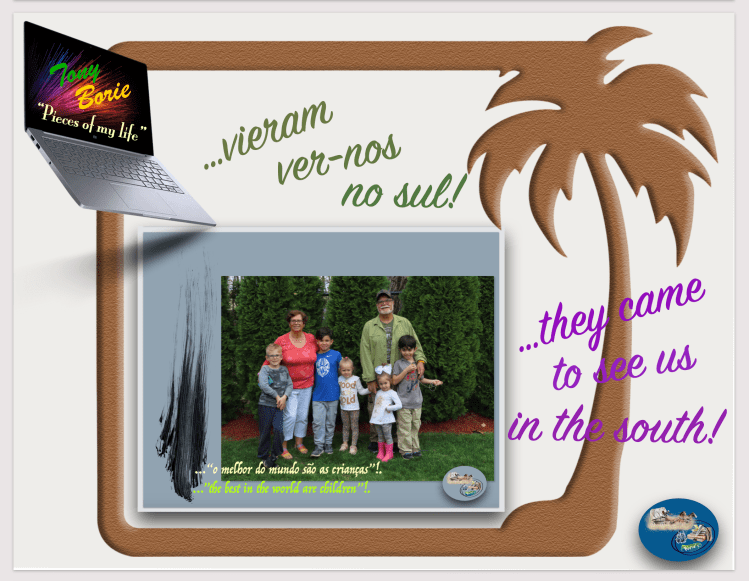
…não existe qualquer dúvida, “o melhor do mundo são as crianças”.

(…there is no doubt, “the best in the world are children”).

…e claro, ouvindo-os nas suas alegres aventuras, onde não faltavam gestos, cantigas e sorrisos inocentes, que só nós, os mais antigos sabemos e compreendemos a riqueza de um sorriso alegre de uma criança, porque nascer nos anos quarenta, numa aldeia perdida na Europa, calcando neve, pedras e lama era difícil e, havia poucos sorrisos!.

(…and of course, listening to them in their joyful adventures, where innocent gestures, songs and smiles were not lacking, that only we, the oldest ones know and understand the richness of a child’s happy smile, because being born in the forties, in a village lost in Europe, treading snow, rocks and mud was difficult and, there were few smiles)!.

…sabemos que a sociedade vive hoje acelarada, basta estar atento às notícias, no entanto, felizmente nestes dias passados no norte, verificámos que o tal fenómeno da falta de comunicação real entre famílias, pelo menos na nossa, “NÃO EXISTE”, continuam a conviver alegremente, juntando períodicamente as crianças que correm e brincam juntas!.

(…we know that society is accelerated today, just be aware of the news, however, fortunately in these days spent in the north, we found that the phenomenon of lack of real communication between families, at least in ours, “DOES NOT EXIST”, continue to live happily, periodically joining children who run and play together)!.

…ao escrever as rotas destes dias por lá passados, emocionamo-nos, mesmo não sabendo se alguém nos lê, até ficando desesperados se alguma frase possa ter outra interpretação ou ferir alguém, mas estes dias para nós, foram dias de uma primavera azul!. Tudo foi “5 estrelas”, o cenário de família, as flores da primavera no norte, o cantar da passarada, o sol aquecia-nos no horizonte, os netos queriam saber coisas de nós, faziam perguntas, rodeávam-nos, o nosso computador era deles, não havia sossego, mas era um agitação encantadora!.

(…when writing the routes of these past days, we were thrilled, even though we did not know if anyone would read us, even getting desperate if any sentence could have another interpretation or hurt someone, but these days for us, were days of a blue spring! . Everything was “5 stars”, the family scene, the spring flowers in the north, the singing of the catwalk, the sun warmed us on the horizon, the grandchildren wanted to know about us, asked questions, surrounded us, our computer it was theirs, there was no rest, but it was a lovely excitement)!.

..e nós, preparando-nos para entrar talvez na última década da vida, que de certeza vai passar num ápice, vergando-nos nesta inevitabilidade vamos murchando aos poucos, contudo, ainda vamos sendo úteis, pelo menos para a família, mesmo sabendo que às vezes errámos, não acertando no centro do alvo, muitas vezes nem no alvo acertávamos, mas felizmente na família, tivémos alguma sorte, fomos bafejados pela benção do criador e, afinal, por mais caos e destruição que haja no mundo ao nosso redor, são a nossa família e as nossas memórias que nos dão o poder de continuar!.

(…and we, preparing to enter perhaps the last decade of life, which will surely pass at a glance, sinking into this inevitability, we are slowly wilting, however, we are still being useful, at least for the family, even though we know that we sometimes missed, not hitting the center of the target, many times we didn’t even hit the target, but luckily in the family, we were lucky, we were blessed by the blessing of the creator and, after all, by more chaos and destruction in the world around us , it is our family and our memories that give us the power to continue)!.

Tony Borie, Século XXI. (Tony Borie, 21st Century).

…vamos para norte!. (…let’s go north)!.

…as pessoas, ou seja, o comum dos mortais tal como nós, quando atingimos uma certa idade e as coisas não correm em conformidade com os nossos desejos, normalmente dizemos: “é o destino”!.

(…people, that is, ordinary mortals like us, when we reach a certain age and things do not go according to our wishes, we usually say: “it is destiny”)!.

…e, o destino foi entre outros, termos nascido na Europa, naquele cantinho “à beira-mar plantado”, que é como chamam à “Peninsula Ibérica”, termos idade adulta naqueles anos, podendo ser militares e como tal forçados a participar na maldita Guerra Colonial em África que o país Portugal manteve “orgulhosamente só” e, foi não ter lá oportunidade de vida e de liberdade para criar uma família!. 

(…and, the destination was, among others, that we were born in Europe, in that little corner “planted by the sea”, which is what they call the “Iberian Peninsula”, that we had adulthood in those years, being able to be military and as such forced to participate in the damn Colonial War in Africa that the country Portugal kept “proudly alone” and, it was not having the opportunity of life and freedom to raise a family there)!.

…como tal, vimos essa oportunidade na emigração, deste lado do Atlântico, longe daquele sol radiante, onde às vezes fazia geada pela manhã, a que os nossos vizinhos chamavam “orvalho” e, como tudo o que acima escrevemos não fosse o suficiente, fomos agora visitados pela também maldita pandemia “Coronavírus 19”!.

(…as such, we saw this opportunity in emigration, on this side of the Atlantic, away from that radiant sun, where it was sometimes freezing in the morning, which our neighbors called “dew” and, as everything we wrote above was not enough, we have now been visited by the also accursed pandemic “Coronavirus 19”)!.

…resultado!. Ficámos confinados, e no nosso caso de pessoas que tentam cumprir as regras impostas pelas autoridades médicas e científicas, que nos recomendam ficar em casa, usar máscara, não se expor, tratando os vizinhos e amigos como se fossem estranhos, ou seja, fugir deles e não lhes falando ou cumprimentando, e claro, causando-nos muitas restrições em viajar e, a família vive no norte, as saudades em os ver aumentam todos os dias!. 

(…result!. We were confined, and in our case of people who try to comply with the rules imposed by the medical and scientific authorities, who recommend us to stay at home, wear a mask, not expose ourselves, treating neighbors and friends as if they were strangers, that is, running away from them and not talking to or greeting them, and of course, causing us a lot of restrictions on traveling and, the family lives in the north, the longing to see them increases every day)!.

…como tal, não é nossa intenção ir para uma aventura na cidade arqueológica Maya de “Chichén Itzá”, cujo nome significa “pessoas que vivem na beira da água”, no norte no México, que funcionou como centro político e económico da civilização Maya!. Tal como não queremos ir ao Curral das Freiras na Ilha da Madeira, situado no interior da ilha e, onde no princípio da colonização, quando havia saques à hoje cidade do Funchal por corsários franceses, as religiosas do convento de Santa Clara se refugiavam ali, talvez para não serem violadas!.

(…as such, it is not our intention to go on an adventure in the Maya archaeological city of “Chichén Itzá”, whose name means “people who live on the water’s edge” in northern Mexico, which functioned as the political and economic center of the Maya civilization!. Just as we do not want to go to Curral das Freiras on the island of Madeira, located in the interior of the island and, where in the beginning of colonization, when there were looting in the city of Funchal today by French corsairs, the religious of the convent of Santa Clara took refuge there, maybe not to be violated)!.

.…não!. Não queremos parecer uns verdadeiros “Indiana Jones”!. O que queremos é ir visitar a família lá no norte, nos estados de Nova Jersey e Pennsylvania, abraçar os nossos netos e os seus pais!. No passado era tão simples, são apenas mil milhas de boa estrada!.

(…not!. We don’t want to look like real “Indiana Jones”!. What we want is to go visit the family in the north, in the states of New Jersey and Pennsylvania, to hug our grandchildren and their parents!. In the past it was so simple, it is only a thousand miles of good road)!.

…já estamos vacinados, pelo menos dizem-nos que ficámos imunes a esse maldito “Coronavírus19”, sendo agora potenciais candidatos a um novo rosto da comunidade de imunização, dando assim a nossa contribuição para a saúde pública e, contra tudo e contra todos vamos de nova para a estrada!.

(…we are already vaccinated, at least they tell us that we were immune to that damn “Coronavirus19”, being now potential candidates for a new face of the immunization community, thus giving our contribution to public health and, against everything and against everyone we will back to the road)!.

…vamos tentar a tão esperada “reunião familiar”!. O pensamento agita o nosso cérebro, misturando a alegria com um toque de ansiedade e, sabemos que a palavra “ansiedade” não devia de estar lá, mas na verdade, as oportunidades de nos reunirmos em família têm sido poucas, devido à época que atravessamos como acima já explicámos por causa da presença da maldita pandemia “Coronavírus19”!.

(…let’s try the long-awaited “family reunion”!. The thought agitates our brain, mixing the joy with a touch of anxiety and, we know that the word “anxiety” should not be there, but in fact, the opportunities to get together as a family have been few, due to the time we are going through, as we explained above because of the presence of the damn pandemic “Coronavirus19”)!.

…vamos ver sobretudo os netos, porque nós quando crianças, os nossos progrenitores seguindo uma tradição de há séculos, também ficavam felizes quando nos viam, e nós como crianças, tínhamos a felicidade de não perceber coisa nenhuma e, de não ter as esperanças que os outros tinham, porque na idade de ter esperanças, infelizmente já não sabíamos ter esperanças, tudo talvez por causa de ainda quase crianças, ser-mos forçados a ir combater na maldita Guerra Colonial em África!.

(…we will see grandchildren above all, because we as children, our parents following a tradition of centuries, were also happy when they saw us, and we as children, were fortunate to not perceive anything and to not have the hopes that the others did, because at the age of hope, unfortunately we no longer knew how to hope, all perhaps because we were still almost children, we were forced to go and fight in the bloody African Colonial War)!.

…também sabemos que nesta já um pouco avançada idade, devemos estar preparados para as perguntas a questões, que eles sempre gostam de saber,  como por exemplo: “quem somos, de onde viémos ou o que fizémos durante a nossa vida”, pois nestas reuniões é uma boa oportunidade para as histórias de família se desenrolarem e, acreditamos que não lhes devemos esconder nada, até as nossas aventuras!.

(…we also know that in this already a little old age, we must be prepared for questions to questions, which they always like to know, such as: “who we are, where we came from or what we did during our life”, because in these meetings it is a good opportunity for family stories to unfold and, we believe that we should not hide anything from them, even our adventures)!.

…alguns dos nossos netos já são grandotes, e claro, em parte vamos ser  “aquelas pessoas da história da família” e incorporar algumas histórias onde vão surgir muitas perguntas e, quando surgir qualquer assunto que nos cause algum embaraço, eles vão dizer: “vamos conversar sobre isso”!. Mas no fundo, no fundo, ao contar-mos para eles as nossas histórias da infância ou do início da nossa vida, algumas de que já nos devíamos ter esquecido, vai ser um “reviver”, que para nós representa um dos presentes que mais valor e significado têm!.

(…some of our grandchildren are already big, and of course, in part we will be “those people from the family history” and incorporate some stories where many questions will arise and, when any issue that causes us any embarrassment comes up, they will say: “let’s talk about it”!. But deep down, deep down, when we tell them our stories from childhood or the beginning of our life, some of which we should have already forgotten, it will be a “relive”, which for us represents one of the gifts that most value and meaning have)!.

…enfim, vamos para o norte, a aventura espera-nos, talvez agora pendurada numa corda, não na beira de uma qualquer montanha, mas sim nos braços e no afecto da família!.

(…in short, we are going north, the adventure awaits us, perhaps now hanging from a rope, not on the edge of any mountain, but in the arms and affection of the family)!.

Tony Borie, Século XXI. (Tony Borie, 21st Century).
…Autocarro Mágico 142!. (Magic Bus 142)!.

…já por diversas vezes escrevemos sobre as nossas aventuras pelo distante estado do Alaska e, sem qualquer dúvida ver um urso pardo arrebatando salmão de um qualquer riacho do Alaska, é a memória de uma vida, tal como admirar no seu próprio habitate, as águias, os ursos negros tímidos ou as baleias jubarte acrobáticas!.

(…we have already written about our adventures in the distant state of Alaska several times and, without any doubt, seeing a brown bear snatching salmon from some Alaska stream, is the memory of a life, just like admiring the eagles in their own habitat , shy black bears or acrobatic humpback whales)!.

…ou mesmo caminhar sobre a cor da neve gelada de um qualquer glaciar, agraciados e aquecidos pela maravilhosa luz do sol que, depois de passar aproximadamente pelo paralelo 43º N, nos beneficia de 16 a 20 horas por dia, às vezes mais e, nos ilumina em algumas das mais belas paisagens do mundo, onde a natureza ainda é pura!. Claro, toda esta beleza natural nos faz recordar o Alaska para sempre e, em parte continuarmos a receber notícias e seguir o que por lá se passa!.

(…or even to walk on the color of the icy snow of any glacier, graced and warmed by the wonderful sunlight that, after passing through the parallel 43º N, benefits us from 16 to 20 hours a day, sometimes more and, in illuminates in some of the most beautiful landscapes in the world, where nature is still pure !. Of course, all this natural beauty reminds us of Alaska forever and, in part, we continue to receive news and follow what is going on there)!.

…e, chegou ao nosso conhecimento a notícia de que, “o hoje famoso autocarro 142 foi transferido em Junho de 2020 para tentar impedir as pessoas de se colocarem em perigo!. Foi retirado da trilha Stampede por um helicóptero CH-47 Chinook e levado até ao Museu do Alaska, para que todos possam ver e aproveitar o famoso autocarro com segurança!. Agora, pode ser que menos pessoas estejam tentando a caminhada por si mesmas ou que estejam mais preparadas para os perigos que se avizinham”!.

(…and the news came to our attention, “the now famous bus 142 was transferred in June 2020 to try to prevent people from putting themselves in danger!. It was removed from the Stampede trail by a CH-47 Chinook helicopter and taken to the Alaska Museum, so that everyone can safely see and enjoy the famous bus!. Now, it may be that fewer people are trying to walk on their own or are more prepared for the dangers ahead”!.

…e, parece que as palavras deste último capítulo ditas assim, não fazem muito sentido, mas fazem!. Porquê?. Porque são parte daquilo que lá se desenrolou, neste estado do norte, que muitos consideram a “última fronteira”!. É uma história que cresceu, tornando-se num fenómeno cultural, chegando mesmo a Hollywood, com o título de “Into the Wild”, fazendo-nos pensar o que leva as pessoas a fazer certas coisas e, se houvesse uma resposta para isto, parece-nos que o mundo seria muito mais fácil!.

(…and, it seems that the words of this last chapter said thus, do not make much sense, but they do!. Because?. Because they are part of what unfolded there, in this northern state, which many consider to be the “last frontier”!. It’s a story that grew, becoming a cultural phenomenon, even reaching Hollywood, with the title “Into the Wild”, making us think what makes people do certain things and, if there was an answer to that, it seems to us that the world would be much easier)!.

…porquê?. Porque ser-mos diferentes uns dos outros é o que torna o mundo tão incrível, no entanto, só porque preferimos um certo estilo de vida, não significa que todos concordem, mas empurrar o barco da nossa vida para mais longe do que qualquer outra pessoa, ao ponto de acabar com a própria vida, cremos que estamos a ir longe de mais!.

(…because?. Because being different from each other is what makes the world so amazing, however, just because we prefer a certain lifestyle does not mean that everyone agrees, but pushing the boat of our lives further than anyone else , to the point of ending our own lives, we believe that we are going too far)!.

…esta verdadeira e trágica história que envolve este hoje famoso autocarro 142 e, que se desenrolou perto da cidade de Fairbanks, onde já estivémos por diversas vezes, acampando, pernoitando, visitando parques e museus ou de simples passagem e, como tal conhecemos com algum pormenor as zonas  desertas ou de floresta, das montanhas cobertas de gelo e dos rios ainda selvagens, que de pequenos se tornam gigantes consoante o gelo que se vai derretendo nas montanhas que os rodeiam!.

(…this true and tragic story that surrounds this now famous bus 142 and, which took place near the city of Fairbanks, where we have been several times, camping, staying overnight, visiting parks and museums or simply passing by, and as such we know with some detail the deserted or forested areas, the mountains covered with ice and the rivers still wild, that from small become giant according to the ice that melts in the mountains that surround them)!.

…dito isto, sabíamos que o dito famoso autocarro 142 existia!. (…having said that, we knew that the famous bus 142 existed)!.

…que é parte da história de vida do jovem Chris McCandless e, chegámos a querer ir vê-lo, mas os obstáculos para essa jornada, não eram compatíveis com a nossa um pouco avançada idade, no entanto procurámos mais informação!. Encontrámo-la, agradecemos entre outras publicações, à fundação em memória do Chris pelas fotos, tomando a liberdade de as publicar no nosso blogue e, perfazemos a história de hoje!.

(…which is part of the life story of young Chris McCandless and, we even wanted to go see him, but the obstacles for that journey, were not compatible with our slightly advanced one age, however we looked for more information !. We found it, thanks, among other publications, to the foundation in memory of Chris for the photos, taking the liberty to publish them on our blog and, make up today’s story)!.

…continuando, se já assistiram ao filme biográfico de drama “Into the Wild”, há uma boa chance de que esta não seja a primeira vez que ouvem o nome de Chris, no entanto, acontece que o filme é muito mais do que uma história inventada num estúdio de Hollywood!. É a história de como Chris tentou construir uma vida para si mesmo na floresta, apenas para descobrir que a Mãe Natureza tem que ser tratada com amor e dedicação e, quando isso não acontece, é uma das amantes mais cruéis!. 

(…continuing, if you’ve watched the biopic drama film “Into the Wild”, there’s a good chance that this isn’t the first time they’ve heard Chris’s name, however, it turns out that the film is much more than a story invented in a Hollywood studio!. It is the story of how Chris tried to build a life for himself in the forest, only to discover that Mother Nature has to be treated with love and dedication and, when it does not, she is one of the most cruel lovers)!

…tentando explicar quem era verdadeiramente o jovem Chris, sabemos que nasceu em El Segundo, Califórnia e cresceu nos subúrbios de Annandale, Virgínia!. Depois de se formar em Maio de 1990 com notas altas na Emory University, na Georgia, parou de se comunicar com a sua família, deu o fundo da faculdade de $24.500 para a caridade e começou a viajar pelo oeste dos USA, partindo para a aventura!. 

(…trying to explain who the young Chris really was, we know he was born in El Segundo, California and grew up in the suburbs of Annandale, Virginia!. After graduating in May 1990 with high marks from Emory University in Georgia, he stopped communicating with his family, gave the $24,500 college fund to charity and started traveling the western USA, going on an adventure)!.

…a sua viajem para o norte começou no ano de 1992 e, para chegar ao Parque Nacional de Denali, no Alaska, pelo menos desde o estado de Dakota do Sul, ia pedindo boleia, parando aqui e ali, até que chegou à cidade de Fairbanks!. Aqui, saindo da cidade, conseguiu uma última boleia de uma pessoa gentil, até ao início da pista acidentada de Stampede Trail, nos arredores da pequena cidade de Healy, (onde também já acampámos), onde foi visto pela última vez com vida!.

(…his journey to the north began in 1992 and, to reach Denali National Park, Alaska, at least from the state of South Dakota, he hitchhiked, stopping here and there, until he arrived in the city of Fairbanks!. Here, leaving the city, he got a last ride from a kind person, until the beginning of the rugged trail of Stampede Trail, on the outskirts of the small town of Healy, (where we also camped), where he was last seen alive)!.

…essa gentil pessoa disse mais tarde que estava seriamente preocupada com a segurança do Chris, depois de notar que a sua mochila era leve, com equipamento mínimo, rações escassas e óbvia falta de experiência, dizendo ter profundas dúvidas sobre a capacidade de Chris sobreviver à selva áspera e implacável do Alaska, tentando persuadi-lo para atrasar a viagem, oferecendo-lhe até um desvio para a cidade de Anchorage e comprar-lhe equipamentos e suprimentos adequados!. 

(…that kind person later said that he was seriously concerned for Chris’s safety, after noting that his backpack was light, with minimal equipment, meager rations and an obvious lack of experience, saying he had deep doubts about Chris’s ability to survive the Alaska’s rugged and relentless jungle, trying to persuade you to delay the trip, even offering you a detour to Anchorage and buying you the right equipment and supplies)!.

…infelizmente, Chris ignorou todos os avisos e recusou todas as ofertas de ajuda, apenas concordou em usar umas botas de borracha antes de partir!. Esta gentil pessoa, infelizmente foi a última a ver Chris vivo e, enquanto este jovem aspirante a explorador descia o caminho da floresta coberta de neve, com o nome de Stampede Trail, é que verificou que Chris havia deixado o seu único mapa e o relógio no seu veículo, mas já era tarde demais!. Ele já tinha desaparecido na floresta, no entanto, antes de partir, Chris pediu-lhe que tirasse uma foto dele com a sua câmera!.

(…unfortunately, Chris ignored all the warnings and refused all offers of help, just agreed to wear some rubber boots before he left!. This kind person, unfortunately, was the last to see Chris alive and, while this young aspiring explorer was walking down the snow-covered forest path, named Stampede Trail, he found that Chris had left his only map and clock in your vehicle, but it was too late!. He had already disappeared in the forest, however, before leaving, Chris asked him to take a picture of him with his camera)!.

…caminhando por esta trilha coberta de neve, Chris encontrou o hoje famoso autocarro 142 do sistema de transporte da cidade de Fairbanks, abandonado, onde montou o seu acampamento, não demorando muito para que se instalasse, pois não levava nenhum tipo de barraca ou material de acampar e, provavelmente foi um alívio para si quando encontrou este tipo de abrigo!.

(…walking along this snow-covered trail, Chris found the now famous bus 142 of the transport system of the city of Fairbanks, abandoned, where he set up his camp, and it didn’t take long for him to set up, as he didn’t carry any type of tent or material. camping and it was probably a relief for you when you found this type of shelter)!.

…e, nas anotações do seu diário, que mais tarde foi encontrado, afirmam que Chris planejava caminhar ao longo desta trilha até ao Mar de Bering, mas ficou por aqui, apenas com 20 milhas de viagem!. Porquê?. O autocarro 142 agora famoso, estava quase em ruínas, quase totalmente coberto pela neve e pela vegetação e os pneus estavam vazios, todavia isso não importava, pois era um abrigo perfeito!.

(…and, in his diary notes, which was later found, they say that Chris planned to walk along this trail to the Bering Sea, but he stayed here, with only 20 miles of travel! .Because?. Bus 142, now famous, was almost in ruins, almost completely covered by snow and vegetation and the tires were empty, however that did not matter, as it was a perfect shelter)!.

…uma das janelas do autocarro 142 já não existia, tinha sido substituída por um pedaço de madeira, onde Chris escreveu uma nota sobre como ele finalmente estava livre das correntes do resto do mundo e como “depois de dois anos errantes”, ele estava prestes a começar “a última e maior aventura”, terminando  com as palavras “na selva”!.

(…one of the windows of bus 142 no longer existed, it had been replaced by a piece of wood, where Chris wrote a note about how he was finally free from the chains of the rest of the world and how “after two wandering years”, he was about to beginning “the last and greatest adventure”, ending with the words “in the jungle”)!.

…manteve o seu diário detalhado, contando a sua jornada na selva, querendo tentar sobreviver fora da civilização, o que significa que levou com ele apenas 10 libras de arroz, um pequeno rifle de caça, várias caixas de cartuchos, uma câmera e uma pequena selecção de material de leitura, incluindo um guia de plantas comestíveis da região!.

(…kept his detailed diary, telling his journey in the jungle, wanting to try to survive outside civilization, which means he took with him just 10 pounds of rice, a small hunting rifle, several boxes of cartridges, a camera and a small selection of reading material, including a guide to edible plants from the region)!.

…passando 16 semanas aprendendo como viver da terra, todavia, não conseguiu encontrar muita comida!. Conseguiu capturar alguns porcos-espinhos, esquilos e gansos canadienses, mas um grande alce que ele caçou, apodreceu antes que ele pudesse comer a sua carne!. Assim, as coisas tomaram um rumo ainda mais trágico à medida que ele continuou a documentar todas as emoções e aspectos da sua odisséia!. 

(…spending 16 weeks learning how to live off the land, however, he couldn’t find much food!. He managed to catch some porcupines, squirrels and Canadian geese, but a large moose that he hunted, rotted before he could eat his meat!. Thus, things took an even more tragic turn as he continued to document all the emotions and aspects of his odyssey)!.

…apenas dois meses depois de ir para a selva já queria voltar para casa!. Infelizmente, não tinha ideia de como voltar. Tentou sair do parque nacional enquanto arrumava as suas coisas e caminhava de volta ao rio Teklanika, no entanto, havia um problema!. O rio não era mais o riacho gotejante quando ele cruzou a água pela primeira vez, mas agora, a neve derretida e o gelo descongelado significavam que tinha mais de 25 metros de largura e a água estava fora de controle!. 

(…just two months after going to the jungle he already wanted to go home!. Unfortunately, he had no idea how to get back. He tried to leave the national park while packing up and walking back to the Teklanika river, however, there was a problem!. The river was no longer the trickling stream when it first crossed the water, but now, melted snow and thawed ice meant it was over 25 meters wide and the water was out of control)!.

…não teve outra escolha a não ser voltar para o autocarro 142 e esperar, porque o rio Teklanika estava no seu caminho e, enquanto tentava prosseguir na sua jornada a água turbulenta tornou impossível a sua travessia, mesmo que ele estivesse acostumado a tentar qualquer coisa,  sabia que não conseguiria chegar ao outro lado!.

(…he had no choice but to return to bus 142 and wait, because the Teklanika river was in his way and, while trying to continue on his journey the turbulent water made it impossible to cross, even though he was used to trying anything, I knew I couldn’t get to the other side)!.

…escreveu que estava “Solitário, com medo”, no entanto, se ele tivesse o mapa ou se estivesse mais preparado para esta aventura, poderia ter percebido que haviam várias cabanas na área que continham alimentos, equipamentos de sobrevivência e até a existência de um teleférico abandonado, operado manualmente, a 1⁄2 milha (800 m) a jusante de onde ele havia cruzado o rio anteriormente, que talvez teriam sido suficientes para salvar a sua vida!.

(…wrote that he was “Lonely, scared”, however, if he had the map or was more prepared for this adventure, he could have realized that there were several huts in the area that contained food, survival equipment and even the existence of a abandoned cable car, operated manually, 1⁄2 mile (800 m) downstream from where he had crossed the river previously, which perhaps would have been enough to save his life)!.

…no seu diário explicava como lidava com o facto de ficar preso na neve, ficando mais fraco a cada dia e as suas muitas tentativas de sobrevivência, porque quando esqueceu o seu mapa, significava que não tinha ideia de que a ajuda estava mais perto do que ele percebia e, as últimas páginas do diário foram as que documentaram o quão desesperado ele estava por ajuda!. 

(…in his diary he explained how he dealt with being trapped in the snow, getting weaker every day and his many attempts at survival, because when he forgot his map, it meant he had no idea that help was closer to him. that he noticed and, the last pages of the diary were the ones that documented how desperate he was for help)!.

…estava usando mais energia do que comia, o que significava que continuava a ficar mais fraco a cada dia que passava!. As suas anotações no diário ficavam mais curtas e trágicas e a sua última entrada escrita foi no 107º dia onde ainda conseguiu escrever “Beautiful Blueberries” (Mirtilos lindos)!. Daí até ao 113º dia, Chris não escreveu mais nada para cada dia!.

(…he was using more energy than he ate, which meant that he continued to get weaker with each passing day!. His diary entries became shorter and more tragic and his last entry was on the 107th day where he still managed to write “Beautiful Blueberries”! From then until the 113th day, Chris did not write anything else for each day)!.

…no entanto acredita-se que perto da hora da sua morte, tirou uma foto de si mesmo acenando enquanto segurava uma nota escrita, que dizia: TIVE UMA VIDA FELIZ E AGRADEÇO AO SENHOR!.  ADEUS E QUE DEUS ABENÇOE A TODOS!.

(…however it is believed that near the time of his death, he took a picture of himself waving while holding a written note, which said: I HAD A HAPPY LIFE AND I THANK YOU!. GOODBYE AND GOD BLESS ALL)!.

…tudo isto até que um grupo de caçadores que procurava abrigo para passar a noite encontrou o hoje famoso autocarro 142, onde Chris estava hospedado e, ao entrarem, sentiram o cheiro do que pensaram ser comida podre e descobriram “um caroço” mum velho saco de dormir na parte de trás do autocarro, contactaram a polícia, que chegou no dia seguinte, verificando que eram os restos em decomposição do jovem Chris!. Já lá iam 132 dias após o início da jornada do Chris!.

(…all this until a group of hunters looking for shelter to spend the night found the now famous bus 142, where Chris was staying and, when they entered, they smelled what they thought was rotten food and discovered “a lump” in an old sack sleeping in the back of the bus, they contacted the police, who arrived the next day, checking that it was the decomposing remains of young Chris!. It was already 132 days after Chris journey began)!.

…muitas pessoas tentaram descobrir o que fez Chris perder a vida!. Durante anos, as pessoas presumiram que tinha ficado sem comida e simplesmente morrido de fome, no entanto, alguns acreditam que Chris comeu sementes venenosas que causariam muitos danos a uma pessoa, todavia, tragicamente Chris estava incrivelmente fraco e poderia ter comido as sementes como uma última tentativa de sobreviver!.

(…many people tried to find out what made Chris lose his life!. For years, people assumed that he had run out of food and simply starved to death, however, some believe that Chris ate poisonous seeds that would do a lot of damage to a person, however, tragically Chris was incredibly weak and could have eaten the seeds as a last attempt to survive)!.

…Chris tirou dezenas de fotos ao longo da sua aventura, tirou muitos auto-retratos e fotos de paisagens que mostram tragicamente como ficou fraco no final da sua jornada, mostrando que o seu corpo estava literalmente definhando, mas apesar de tudo o que ele estava lutando, ainda tinha um grande sorriso no rosto em cada uma das fotos!.

(…Chris took dozens of pictures throughout his adventure, took lots of self-portraits and pictures of landscapes that tragically show how weak he was at the end of his journey, showing that his body was literally withering, but despite everything he was struggling, still had a big smile on his face in each of the photos)!.

…já se passaram quase 30 anos desde que Chris embarcou na sua jornada, no entanto, o mundo nunca esquecerá o legado e o fenômeno cultural que Chris deixou no seu rastro, quando ainda um jovem decidiu viajar para o deserto do Alaska, nunca mais voltando a sua casa!. Porquê?. Porque era ambicioso e queria fazer tudo sozinho, insistindo em fazer a viagem sem ninguém ao seu lado e, a história diz-nos que, juntos, é mais fácil vencer!.

(…almost 30 years have passed since Chris embarked on his journey, however, the world will never forget the legacy and cultural phenomenon that Chris left in his wake, when still a young man decided to travel to the Alaska desert, never to return your house!. Because?. Because he was ambitious and wanted to do everything himself, insisting on making the trip without anyone by his side, and history tells us that together, it is easier to win)!

…o autocarro 142, onde o Chris viveu e morreu, tornou-se num destino conhecido para caminhantes, com o nome de  “Magic Bus”!. É um 1946 International Harvester, que foi abandonado pelos trabalhadores da  estrada em 1961, na hoje também famosa “Stampede Trail” e, a vida do jovem Chris, tornou-se num assunto de uma série de artigos, livros, filmes e documentários que ajudaram a elevar a sua vida ao status de um mito moderno, tornando-se numa figura romântica para alguns, talvez  inspirados pelo que vêem no seu idealismo de espírito livre, mas para outros, é uma figura controversa e algo equivocada!. 

(…bus 142, where Chris lived and died, has become a popular destination for walkers, with the name “Magic Bus”!. It is a 1946 International Harvester, which was abandoned by road workers in 1961, on the now also famous “Stampede Trail” and, the life of young Chris, became the subject of a series of articles, books, films and documentaries that helped to raise his life to the status of a modern myth, becoming a romantic figure for some, perhaps inspired by what they see in his free spirit idealism, but for others, he is a controversial figure and something wrong)!.

…o exemplo de toda esta aventura é que, o agora famoso autocarro 142, se tornou o centro das atenções de muitas pessoas, (incluindo nós) que desejavam recriar a jornada do Chris, mas infelizmente os perigos que ele enfrentou eram reais, e muitos deles ainda são um problema até hoje!. Os residentes locais costumam se referir às pessoas que viajam para o local onde estava o famoso autocarro 142, como “peregrinos”!.

(…the example of this whole adventure is that, the now famous bus 142, became the center of attention for many people (including us) who wanted to recreate Chris’ journey, but unfortunately the dangers he faced were real, and many of them are still a problem today!. Local residents often refer to people traveling to the place where the famous bus 142 was located, as “pilgrims”)!.

…encontrámos o exemplo de um jovem casal que, inspirados pela verdadeira história da busca implacável do Chris pela liberdade e aventura, num mês de Abril, portanto com neve, caminharam pela Stampede Trail até ao “Mágico Bus” e escreveram que:

(…we found the example of a young couple who, inspired by the true story of Chris’s relentless search for freedom and adventure, in April, therefore with snow, walked the Stampede Trail to the “Mágico Bus” and wrote that:)

…”a trilha não era uma rota única, na verdade, havia várias trilhas passando por entre as árvores e podemos ver que algumas haviam sido usadas recentemente por condutores de cães e motos de neve!. O tempo estava claro e calmo, mas ainda tão frio que não conseguíamos ficar parados por muito tempo e a neve seca e crocante rangia sob os pés!.

(…”the trail was not a single route, in fact, there were several trails going through the trees and we can see that some had been used recently by dog ​​and snowmobile drivers !. The weather was clear and calm, but still so cold that we couldn’t stand still for a long time and the dry, crunchy snow creaked underfoot)!.

…havia uma vasta planície aberta dentro de um vale de montanhas cobertas de neve, apenas se podendo distinguir o formidável pico do Monte McKinley ao fundo!. Cruzámos o rio Teklanika, que ainda estava totalmente congelado em ambas as direções!. Parecia que estávamos caminhando há anos, portanto o “Mágic Bus”, certamente não poderia estar muito longe, mas de acordo com o mapa, ainda ficava a uma distância mais distante, e claro, nesta área remota do Alaska, sentimos uma ansiedade nervosa enquanto fazíamos uma curva e, finalmente avistamos o “Mágic Bus”!.

(…there was a vast open plain within a snow-capped mountain valley, only the formidable peak of Mount McKinley in the background! We crossed the Teklanika River, which was still totally frozen in both directions! It felt like we had been walking for years, so the “Magic Bus” certainly couldn’t be very far away, but according to the map, it was still a farther distance away, and of course, in this remote area of ​​Alaska, we felt nervous anxiety while we made a turn and, finally, we saw the “Magic Bus”)!.

…a primeira reação foi de espanto, seguido por um pouco de tristeza com o estado do “Magic Bus”!. Estava cheio de centenas de buracos de bala e várias das janelas tinham sido destruídas!. Fizemos uma verificação rápida para nos certificarmos de que não havia ursos ou outros animais dormindo lá dentro!. Apesar do seu estado de degradação sentimos a história que nos rodeava e, também apesar de termos uma barraca, de jeito nenhum passaríamos outra noite na barraca, quando poderíamos estar dentro do “Magic Bus” com o fogo rugindo, mesmo se esta fosse a mesma cama em que o Chris havia falecido!. 

(…the first reaction was astonishment, followed by a little sadness at the state of the “Magic Bus” !. It was filled with hundreds of bullet holes and several of the windows had been destroyed! We did a quick check to make sure there were no bears or other animals sleeping in there !. Despite its state of degradation, we felt the history that surrounded us and, even though we had a tent, there was no way we would spend another night in the tent, when we could be inside the “Magic Bus” with the fire roaring, even if it was the same bed in which Chris had passed away)!.

…lá, vimos sinais das pessoas que visitaram este local por toda parte, desde nomes escritos em preto em todas as paredes até a quantidade de comida que foi deixada para trás para garantir que ninguém mais passasse fome ali!. Havia vários diários de bordo onde as pessoas expressavam os seus pensamentos sobre Chris e sua história, bem como compartilharam a sua própria história de como chegaram ali!. Muitos falaram sobre seus problemas para cruzar o rio Teklanika, enquanto outros vieram em motos de neve, quadriciclos, jangadas ou até bicicletas de montanha”!.

(…there, we saw signs of people who visited this place everywhere, from names written in black on all the walls to the amount of food that was left behind to ensure that no one else went hungry there !. There were several logbooks where people expressed their thoughts about Chris and his story, as well as sharing their own story of how they got there !. Many talked about their problems crossing the Teklanika River, while others came on snowmobiles, ATVs, rafts or even mountain bikes”)!.

…tentando chegar ao local, pelo menos 15 pessoas tiveram que ser resgatadas, e pelo menos duas pessoas morreram ao tentar atravessar o Rio Teklanika e, a informação pública do parque nacional, diz que policias estaduais, o corpo de bombeiros e os guardas-florestais são chamados para tentar resgatar caminhantes presos a cada ano, e as tropas estaduais do Alaska ainda acreditam que 75% dos seus resgates ocorrem na Stampede Trail!.

(…trying to reach the site, at least 15 people had to be rescued, and at least two people died while trying to cross the Teklanika River and, the national park’s public information, says state police, the fire department and the rangers they are called on to try to rescue trapped hikers each year, and Alaska state troops still believe that 75% of their rescues occur on the Stampede Trail)!.

…e, como no princípio escrevemos, “o hoje famoso autocarro 142 foi transferido em Junho de 2020 para tentar impedir as pessoas de se colocarem em perigo!. Foi retirado da trilha Stampede por um helicóptero CH-47 Chinook e levado até ao Museu do Alaska, para que todos possam ver e aproveitar o famoso autocarro com segurança!. Agora, pode ser que menos pessoas estejam tentando a caminhada por si mesmas ou que estejam mais preparadas para os perigos que se avizinham”!.

(…and, as we wrote in the beginning, “the now famous bus 142 was transferred in June 2020 to try to prevent people from putting themselves in danger !. It was removed from the Stampede trail by a CH-47 Chinook helicopter and taken to the Alaska Museum, so that everyone can safely see and enjoy the famous bus !. Now, it may be that fewer people are trying to walk on their own or are more prepared for the dangers ahead ”)!.

…e, o Museu do Norte da Universidade do Alaska (Fairbanks) anunciou que, o que se tornou a casa permanente de Chris, com o nome de “Magic Bus 142”, será restaurado e uma exposição ao ar livre será criada!.

(…and the Museum of the North of the University of Alaska (Fairbanks) has announced that what has become Chris’s permanent home under the name “Magic Bus 142” will be restored and an outdoor exhibition will be created)!.

…isto são curiosidades do Alaska, a última fronteira!. 

(…these are curiosities of Alaska, the last frontier)!.

Tony Borie, Século XXI. (Tony Borie, 21st Century).